Why Visit Auvergne? The Quiet Heartbeat of France
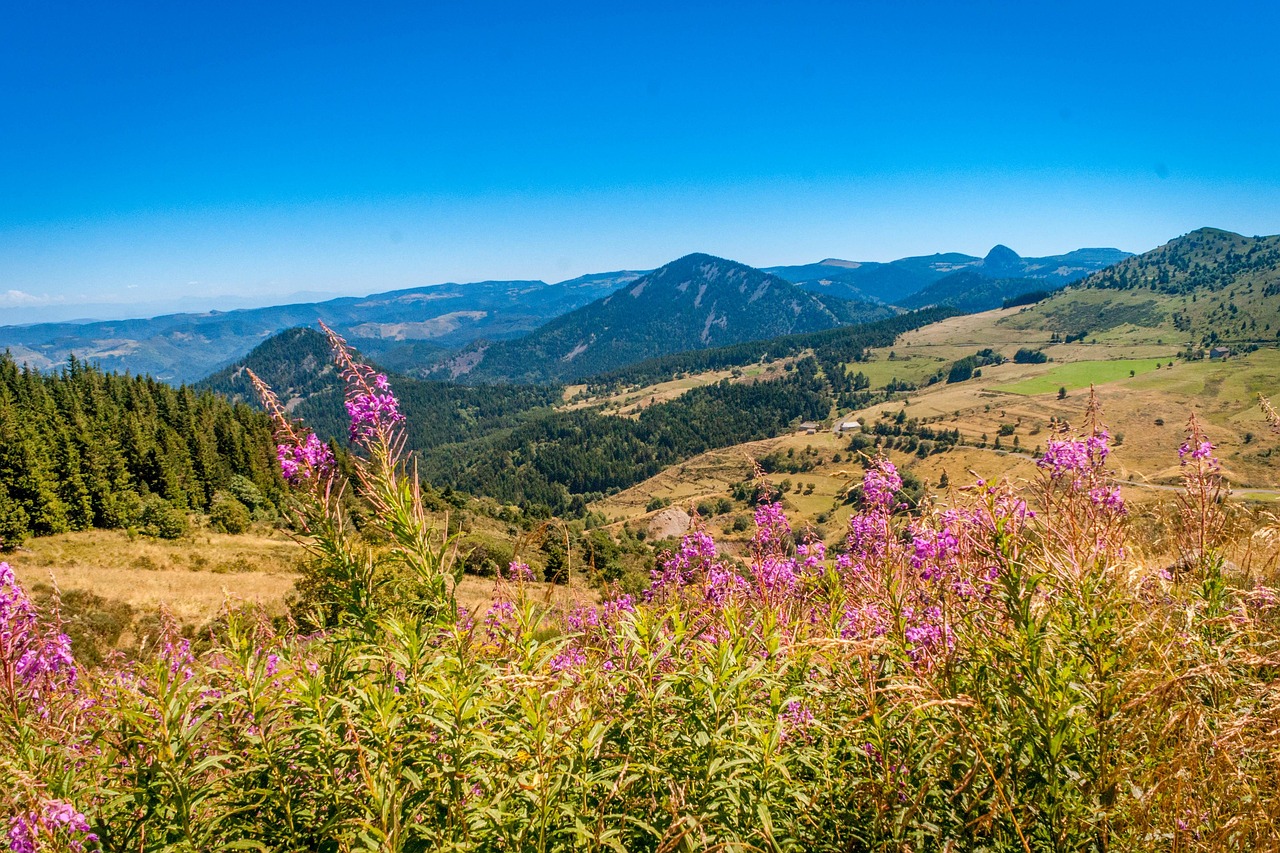
Auvergne is the region where France exhales. Tucked into the country’s central massif, it’s all sleeping volcanoes, deep forests, cows with liquid-brown eyes, and villages that look as though the 19th century forgot to move on. It’s not a place you “do” between Paris and the Riviera; it’s a place you surrender to.
I first came to Auvergne more than a decade ago on a rushed two-day detour from Lyon. I expected a pleasant rural interlude, some cheese, maybe a hike. I did not expect to be standing on the lip of an ancient crater at dawn, clouds pooled in the valley like spilled milk, bells from an invisible cow herd floating up through the mist. Since then I’ve returned almost every year — in snow, summer heat, autumn blaze, and wet spring — and each visit has been different.
Auvergne in 2026 is still blissfully under-touristed compared to Provence or the Loire, but it’s no longer the overlooked cousin. New hiking routes are better marked, farm stays are more comfortable, small-town bistros have grown quietly ambitious, and there’s a new energy in Clermont-Ferrand’s arts scene. Yet the essential character remains: slow, grounded, and defiantly local.
This long-form travel guide is written for travelers who want more than a postcard stop: hikers, food lovers, families looking for space and fresh air, couples chasing quiet romance, and road-trippers in search of France with its make-up off.
Table of Contents
- Why Visit Auvergne
- Understanding Auvergne in 2026
- 18 Essential Towns, Sub-Areas & Landscapes
- Clermont-Ferrand
- Puy de Dôme & Chaîne des Puys
- Le Mont-Dore & Sancy Massif
- Super-Besse & Lac Pavin
- Orcival & Romanesque Heartland
- Issoire & Allier Valley
- Saint-Nectaire & Cheese Country
- Salers & Cantal Highlands
- Le Puy-en-Velay
- Livradois-Forez & Ambert
- Thiers & Knife-Making Heritage
- Aurillac & Jordanne Valley
- Murat & Plomb du Cantal
- Brioude & Upper Allier
- Vichy
- Saint-Flour & Margeride Plateau
- Gorges de l’Allier
- Lac Chambon & Murol
- 4–7 Day Itineraries & Personal Stories
- Regional Cuisine & Where to Taste It
- Evenings in Auvergne
- Cultural Etiquette & Local Customs
- What’s New: Events & Festivals 2026–2027
- Day Trips Beyond Auvergne
- Getting Around, SIMs, Money-Saving Tips
- Practical Travel Advice for Auvergne
- Summary & Best Seasons to Visit
Auvergne in 2026: The Volcanic Region at a Glance
Administratively, “Auvergne” has been merged into the larger Auvergne–Rhône-Alpes region, but locals still talk about Auvergne as its own entity, anchored around four historic départements: Puy-de-Dôme, Cantal, Haute-Loire, and Allier. For travelers, that’s how it makes sense too.
Auvergne is defined by its geology: three main mountain chains (Chaîne des Puys, Massif du Sancy, Monts du Cantal), a web of rivers (Allier, Loire, Sioule), and a necklace of crater lakes. Between them lie cow-dotted plateaus, beech forests, and modest towns where black volcanic stone gives villages a serious, grounded look.
Clermont-Ferrand is the main gateway, served by trains and a small airport. From there, distances are modest but rarely fast; you’re mostly on scenic two-lane roads. A car is extremely useful — almost essential if you want to explore beyond the main axes — but you can still stitch together a satisfying trip using trains and local buses if you’re patient.
18 Essential Towns, Sub-Areas & Landscapes in Auvergne
1. Clermont-Ferrand: Volcanic Capital with a Student Soul
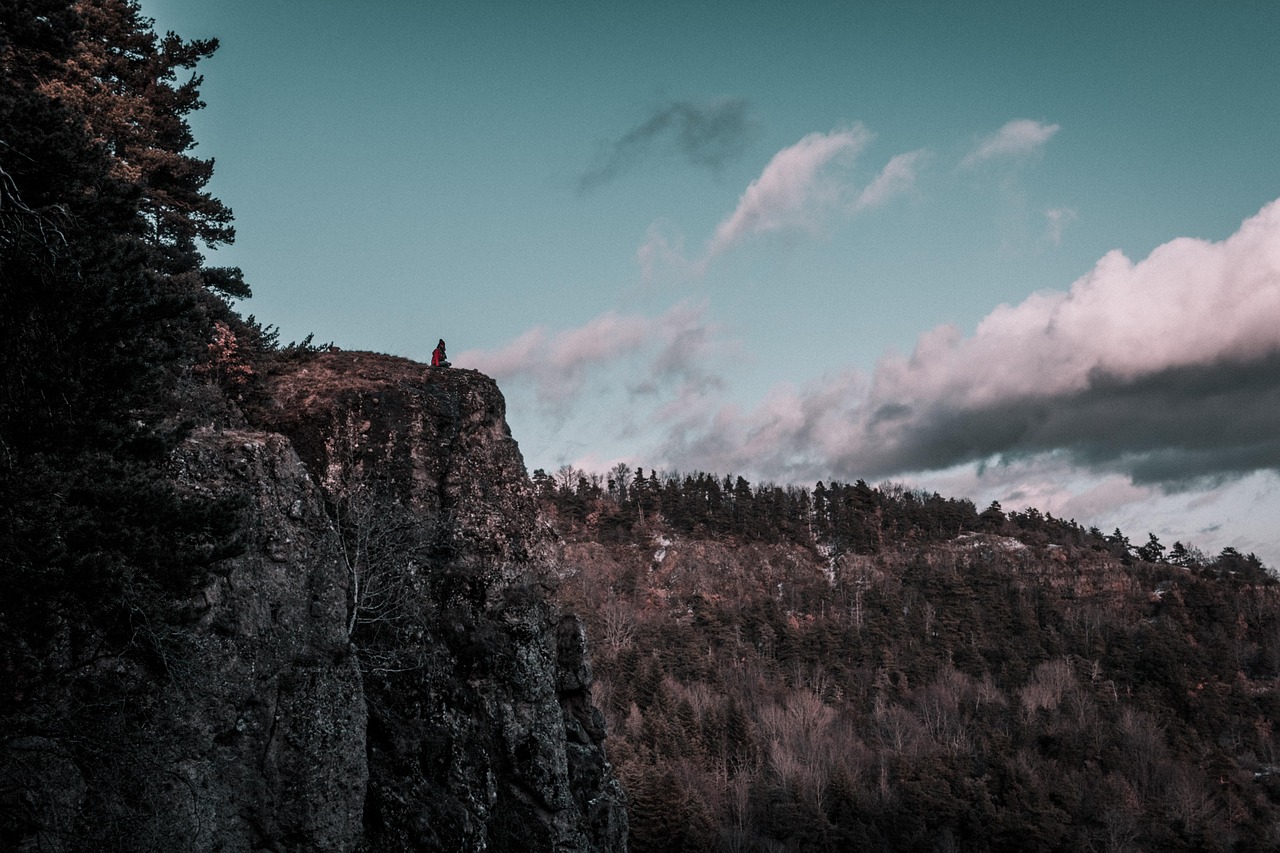
I’ve lost count of the number of times I’ve arrived in Clermont-Ferrand by train at dusk. The approach is always the same: a sudden glimpse of the twin spires of the black cathedral, the dark line of the Puy de Dôme brooding behind, and a quick feeling that you’re entering an almost secret city.
Clermont-Ferrand is a working city — Michelin’s historic headquarters, a big university, a rugby-obsessed fan base — but it’s also where you’ll find the liveliest mix of bars, creative bistros, and culture in Auvergne. I usually recommend at least one night here at the beginning or end of a trip, both to get your bearings and to enjoy a bit of urban energy before heading into the hills.
Highlights & Things to Do
- Cathédrale Notre-Dame-de-l’Assomption — Built from dark lava stone, the Gothic cathedral seems to grow out of the basalt. Climb the tower (when open) for a first orientation over the city and Chaîne des Puys.
- Basilique Notre-Dame-du-Port — A UNESCO-listed Romanesque basilica, small, golden, and intimate. I like going at the beginning or end of the day when the interior is quiet and the capitals’ carvings feel almost alive.
- Place de Jaude — The city’s main square, busy with trams and terraces, dominated by a statue of Vercingetorix. Good for people-watching over a coffee or verre de vin.
- Old Town (Montferrand) — Often overlooked, this historic quarter is a separate, older core with narrow streets and Renaissance houses. I’ve had some of my best serendipitous evenings here.
Food & Drink
Clermont offers the broadest choice in Auvergne, from bistro modern to hearty traditional. Don’t miss:
- Traditional brasseries around Place de Jaude for truffade (potato and cheese skillet) and saucisse de choux.
- Wine bars pouring Saint-Pourçain and Côtes d’Auvergne by the glass; I like slipping into one after a day on the Puy de Dôme trails.
Getting There & Practical Tips
Clermont-Ferrand is the main transport hub: direct trains from Paris (~3.5–4 hours), Lyon (~2–2.5 hours), and Bordeaux (~5 hours). The airport has limited flights, mostly domestic or seasonal. It’s an ideal place to pick up a rental car; I usually book ahead and choose pickup at the train station to avoid airport transfers.
2. Puy de Dôme & Chaîne des Puys: Walking the Volcanoes
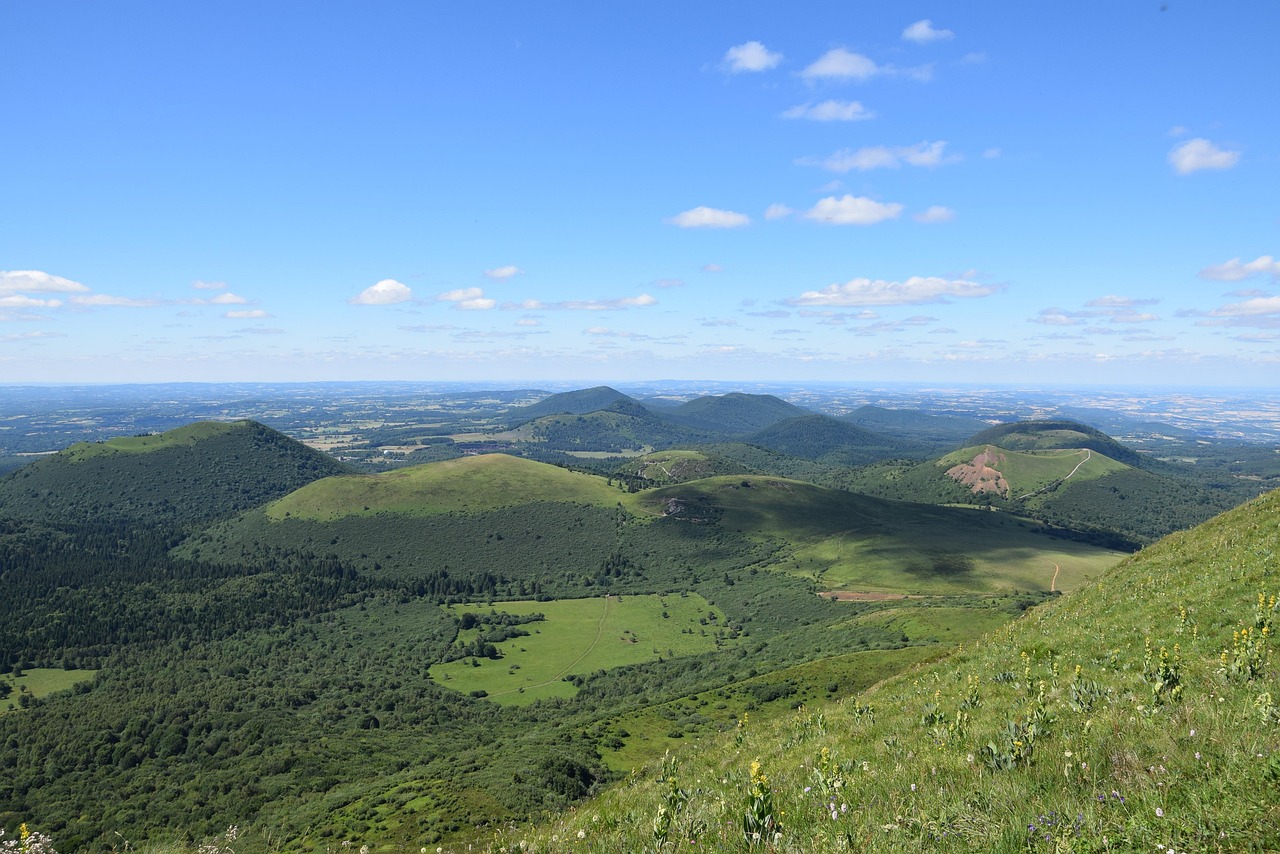
This is Auvergne’s postcard face and a UNESCO World Heritage site: a chain of 80 or so cinder cones, domes, and maars strung across the skyline west of Clermont. I’ve hiked here in July heat, in October fog, and once under a sudden June snow flurry. Every time, the same mixture of wildness and calm.
Puy de Dôme Summit
At 1,465 m, Puy de Dôme isn’t especially high, but its profile dominates the region. You have two main ways up:
- Panoramique des Dômes train — A cog railway that glides to the summit in about 15–20 minutes. It’s perfect for families or anyone with mobility issues. In peak season, reserve ahead online, especially for weekend afternoons.
- Chemin des Muletiers trail — A steep but straightforward 45–70 minute hike from the Col de Ceyssat. On my last trip, I walked up in the golden hour; the view over the chain of volcanoes in raking light felt almost unreal.
At the summit you’ll find remains of a Roman temple to Mercury, a visitor center, a restaurant, and a 360° panorama over the Limagne plain and the Chaîne des Puys. On clear days you can see the distant Sancy Massif.
Other Chaîne des Puys Walks
- Puy Pariou — A near-perfect crater with a photogenic bowl you can walk into. The trail is family-friendly but can be busy in summer; arrive before 9:00 or after 16:00.
- Puy de la Vache & Puy de Lassolas — Red-sand cinder cones with lunar landscapes. Less crowded, especially off weekends. I once watched a thunderstorm slide past here without a drop of rain — unforgettable.
Base yourself in Clermont-Ferrand, Orcines, or one of the small villages like Orcines or Laschamps for easy access.
3. Le Mont-Dore & Sancy Massif: Alpine Auvergne
Le Mont-Dore is where Auvergne starts to feel almost Alpine: steep valleys, waterfalls, ski lifts, and that particular mountain-town smell of wet pine and woodsmoke. I’ve stayed here in mid-winter for snowshoeing and hot chocolate, and again in late June when the snowline retreats and wildflowers colonize the slopes.
Things to Do
- Puy de Sancy — At 1,886 m, the highest peak of the Massif Central. In summer you can take a cable car from nearby Super-Besse or hike up on various routes. The last stretch is via wooden stairs; in 2026, trail maintenance has improved and signage is clearer than a few years ago.
- Waterfalls — The Cascade du Queureuilh and Cascade du Rossignolet are short, easy walks from town, good with kids.
- Spa heritage — Le Mont-Dore is a Belle Époque spa resort. Pop into the thermal baths (even just for a look at the architecture) or book a treatment.
My Favorite Moment
One September, I hiked early from Le Mont-Dore up toward the Col de la Croix-Morand. Mist hung in the valley, but as I climbed, it broke into rivers of cloud flowing between the ridges. I didn’t see another person for two hours, just a shepherd on a quad bike and a very self-important sheepdog.
4. Super-Besse & Lac Pavin: Lakes, Lava, and Family Adventures
Super-Besse is a purpose-built ski resort that, frankly, I find a bit charmless in architecture — but it’s superb as a family base, especially in winter and shoulder seasons, and it’s the launchpad for exploring Lac Pavin, one of Auvergne’s most intriguing crater lakes.
Lac Pavin
A nearly perfect circle, intensely deep and dark, Lac Pavin has collected legends from fishermen and hikers for centuries. In reality, it’s a meromictic lake with layers of water that don’t mix — which is why it has that unusual, almost inky blue. I like to walk the easy loop trail (about 45 minutes) in late afternoon, when the light filters through the beech forest and the water mirrors the trees.
Family-Friendly Activities
- Summer luge & bike trails at Super-Besse.
- Boat rental on nearby Lac Chambon (see below).
- Short volcano walks with interpretive panels explaining geology in kid-friendly terms.
5. Orcival & the Romanesque Heartland
Orcival is where I go when I need to slow down. It’s a small village cupped in a green valley, dominated by one of Auvergne’s most beautiful Romanesque churches, the Basilique Notre-Dame d’Orcival. I’ve sat on its front steps in drizzle, snow, and hot sun, always with the same feeling of deep calm.
Why Go
- The basilica — A masterpiece of Auvergnat Romanesque architecture, perfectly proportioned, with a famous Black Madonna statue inside.
- Nearby walks — Easy hikes fan out into the surrounding pastures and forests. I particularly like the loop up toward the plateau overlooking the village.
Orcival also makes a good quieter base for exploring the Chaîne des Puys and Sancy if you have a car.
6. Issoire & the Allier Valley
Issoire is often just a name on the A75 motorway exit signs for people speeding south toward Languedoc. It shouldn’t be. This small town, with its ochre roofs and plane-tree-lined squares, has a gentle charm and one of the most luminous churches in Auvergne.
Abbaye Saint-Austremoine
The abbey is a riot of polychrome capitals, striped arches, and painted details — more colorful than most Romanesque churches in the region. I remember walking in on a hot June afternoon, grateful for the cool nave, and standing under the crossing for a long time, tracing the patterns with my eyes.
Market & Local Life
The weekly market (usually Saturday) spills through the streets around the abbey: cheese stalls, cured meats, honey, and seasonal produce. It’s a good place to stock up if you’re self-catering in a gîte.
7. Saint-Nectaire: Cheese, Springs & Stone
Saint-Nectaire is synonymous with cheese — that supple, washed-rind disk that slides so perfectly onto a slice of country bread. The village itself is split in two: lower Saint-Nectaire with its old spa buildings and upper Saint-Nectaire crowned by a church that seems to hover over the valley.
Things to Do
- Visit a cheese farm — Many fermes around the village welcome visitors. I still remember the first time a farmer handed me a just-cut wedge of Saint-Nectaire fermier, still cool from the cellar, and insisted I eat it with nothing but my fingers and a grin.
- Église de Saint-Nectaire — Another beautiful Romanesque church, with sculpted capitals and views over the valley.
- Grotte du Cornadore — Ancient Roman thermal baths cut into the rock, a quirky and fascinating visit.
8. Salers & the Cantal Highlands
If I had to choose one village that captures the essence of Cantal, it would be Salers. Perched at around 950 m, built from dark volcanic stone, framed by high pastures and the pyramidal peaks of the Cantal range, it’s both dramatic and deeply rooted.
Village Atmosphere
Salers can be busy in high summer, but evenings and shoulder seasons are magical. On my last autumn visit in 2025, I spent a week here writing and hiking; each evening I would sit on the main square with a glass of Gentiane aperitif, watching the light drain from the mountains.
What to Eat
- Salers cheese — Hard, raw-milk, intense. Look for Salers Tradition, made only when the cows are grazing outside.
- Salers beef — Deeply flavored, often served as a simple entrecôte with truffade.
Outdoor Activities
- Hikes toward the Puy Mary massif (see below) and along high ridges.
- Scenic drives across the Plateau de Salers; in late May and June, it’s a tapestry of wildflowers and young calves.
9. Le Puy-en-Velay: Pilgrims, Needles of Rock, and Lace
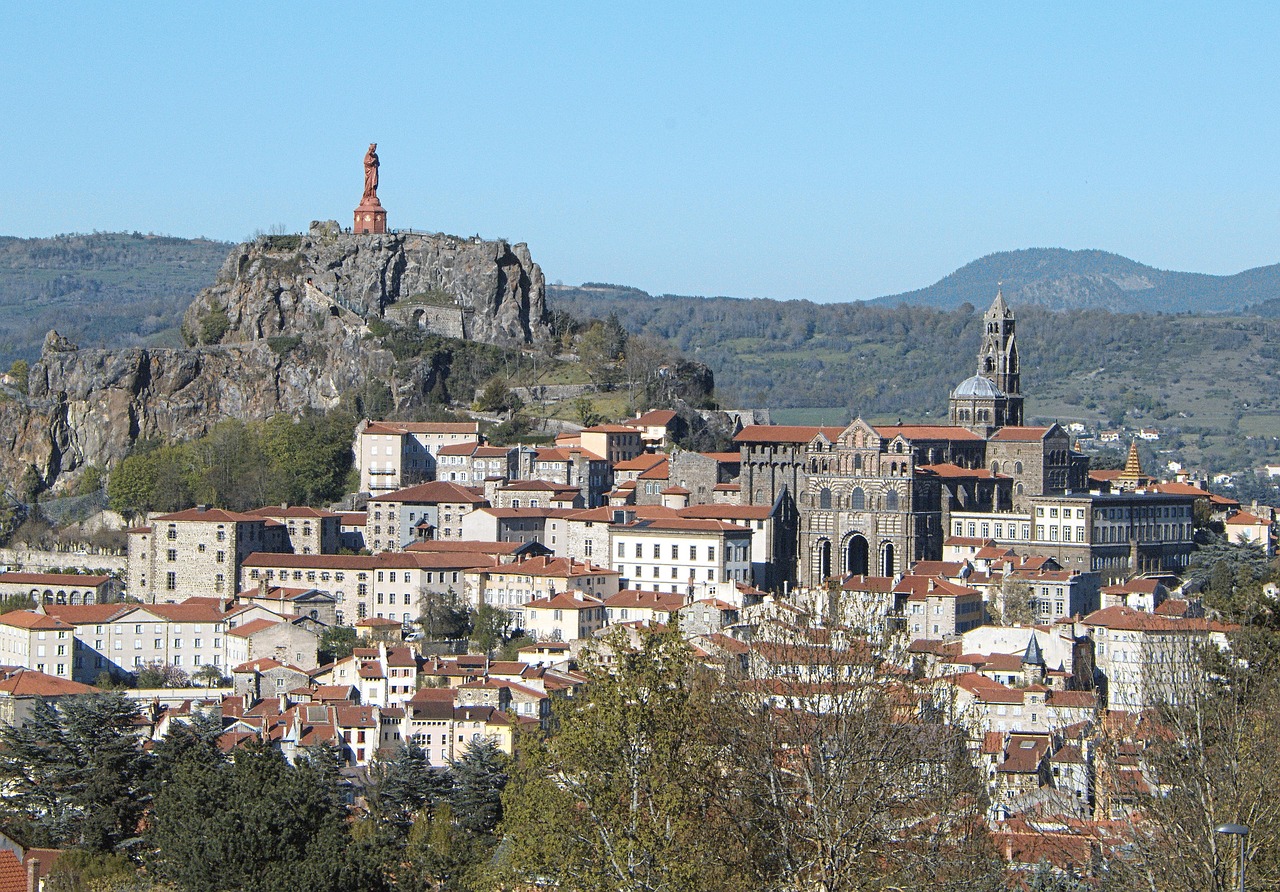
Le Puy-en-Velay looks like something dreamed up by a slightly gothic illustrator: a cathedral on a volcanic outcrop, a chapel glued to a needle of rock, and a giant statue of the Virgin Mary surveying it all from yet another summit. It’s also one of the starting points of the Chemin de Saint-Jacques, the French Camino.
Highlights
- Cathédrale Notre-Dame — A UNESCO-listed beauty with striped arches and a dramatic staircase spilling down to town.
- Rocher Saint-Michel d’Aiguilhe — A chapel perched on a needle of volcanic rock. The climb is short but steep; best in the early morning before the heat and day-trippers.
- Pilgrim atmosphere — In the mornings, especially in spring and early autumn, you’ll see backpacked pilgrims setting out on the GR65 toward Conques.
I love arriving in Le Puy by late afternoon, climbing up through the old streets to catch sunset from the upper esplanades, then drifting back down for dinner on a shaded terrace.
10. Livradois-Forez & Ambert: Green, Gentle Auvergne
East of Clermont-Ferrand, the Livradois-Forez Regional Nature Park is a softer landscape: rolling hills, dense forests, woodworking villages, and small towns like Ambert that feel quietly self-contained. It’s where I go when I want to be away from even the modest tourist traffic of the volcanic core.
Ambert
Known for its circular town hall and Fourme d’Ambert blue cheese, Ambert is unpretentious and friendly. On my last visit, I rented a little stone house in a hamlet above the town; mornings were misty, afternoons full of bees and the sound of chainsaws in distant woods.
Activities
- Cheese visits — Cooperative dairies and small farms open for tours and tastings.
- Forest hikes & mountain biking — Well-marked trails, rarely crowded.
- Artisanal workshops — Looms, woodturning, and small galleries scattered across the park.
11. Thiers: Knives, Cliffs & Industrial Heritage
Thiers is not conventionally pretty — at least not at first glance. Perched above the narrow Durolle gorge, its old half-timbered houses seem to lean over the void, and former knife workshops cling to the cliffs. But if you’re interested in craft and industrial history, it’s one of the most fascinating towns in Auvergne.
Why Visit
- Cutlery museums & workshops — Thiers has been making knives for 700+ years. Today, you can visit museums and small coutelleries where artisans still grind blades by hand.
- Old town walks — Narrow lanes, stairways, and viewpoints over the gorge.
I once spent a rainy November day here, ducking from workshop to café, and came away with a pocketknife that now travels with me everywhere — my most-used Auvergne souvenir.
12. Aurillac & the Jordanne Valley
Aurillac is Cantal’s main town, a practical base ringed by hills. While the town itself is modest, its location is excellent for reaching the Jordanne valley, the Puy Mary area, and the southern Cantal plateaus.
Things to Do
- Stroll the old quarter — Stone houses, quiet squares, and a handful of good restaurants and wine bars.
- Vallée de la Jordanne — A lush valley cutting into the Cantal massif, with hiking trails and scenic viewpoints.
Aurillac also hosts a famous street-theatre festival each August, when the town transforms into a giant open-air stage (see Events section).
13. Murat & the Plomb du Cantal
Murat is one of my favorite Cantal bases: a compact town wedged between volcanic outcrops, with easy rail access and quick drives up to the high country. The peaks of the Cantal massif rise almost immediately behind it.
Outdoor Focus
- Plomb du Cantal — One of the major peaks, accessible by trail or, in winter, lifts from Lioran ski station.
- Village walks — Climb up to the Chapel of Saint Antoine for views over Murat and the valley.
I’ve based myself here twice in winter; mornings were spent snowshoeing along the ridges, afternoons writing in a café with a view of the rock outcrops glowing orange at sunset.
14. Brioude & the Upper Allier
Brioude sits on the upper Allier river in Haute-Loire and feels almost Mediterranean on hot summer days: colorful facades, café terraces, and a basilica with an unexpectedly airy interior.
Key Sights
- Basilique Saint-Julien — The largest Romanesque church in Auvergne, with patterned stonework and beautiful stained glass.
- Allier riverbanks — Perfect for lazy walks or a picnic, especially in late spring.
It’s a good stop if you’re driving between Le Puy-en-Velay and Clermont-Ferrand via the more scenic interior routes.
15. Vichy: Belle Époque Elegance & Thermal Waters
Vichy, in the Allier département, has complicated history but undeniable grace. Its parks, Art Deco pavilions, and riverside promenades make it a lovely detour if you’re circling north Auvergne.
What to Do
- Stroll the Parc des Sources — Thermal pavilions, bandstands, and old hotels.
- Taste the waters — At the thermal kiosks, you can sample various mineral waters (some are an acquired taste).
- Riverside walks — Along the Allier, especially at sunset.
I like Vichy as a gentle urban pause in a mostly rural itinerary, especially on shoulder-season trips.
16. Saint-Flour & the Margeride Plateau
Saint-Flour is dramatically perched on a volcanic promontory above the valley, its cathedral square opening onto a sheer drop. It feels remote, even by Auvergne standards, and I mean that as a compliment.
Why Go
- Upper town — Narrow lanes, stone houses, and views over the Planèze plateau.
- Nearby Garabit viaduct — Designed by Eiffel, spanning the Truyère river in a graceful arc of iron.
I remember arriving here one cold October evening, fog wrapped around the town like wool, and waking up to a sky so clear the plateau seemed endless.
17. Gorges de l’Allier: Wild River Country
The Allier river carves a sinuous, untamed course between Langeac and Brioude, with cliffs, forests, and tiny hamlets clinging to the banks. It’s one of my favorite places in Auvergne to feel properly “away.”
Activities
- White-water rafting & kayaking — Spring and early summer are best, when water levels are higher.
- Train line — A scenic local train still runs along parts of the gorge; sitting by the window as you twist along the river feels like stepping back in time.
- Hiking — Sections of the GR470 follow the river.
18. Lac Chambon & Murol: Lakeside Castle Country
For families, Lac Chambon is one of the best bases in Auvergne: a swimmable lake with small beaches, pedal boats, and ice cream stands, framed by the Sancy peaks. Just above it, the ruined castle of Murol commands the valley.
Things to Do
- Lake activities — Swimming, kayaking, paddle-boarding in summer. Safe for kids, with lifeguards on the main beach in high season.
- Château de Murol — A dramatically-sited fortress with costumed tours and evening shows in summer — excellent for children and still fun for adults.
- Walks — Easy lakeside strolls and low-effort viewpoints.
I spent a week here in July 2024 with friends and their two small children. Days fell into an easy rhythm of morning excursions into the Sancy, lazy afternoons at the lake, and early dinners on a terrace watching the castle catch the last light.
4–7 Day Itineraries in Auvergne (With Personal Notes)
These itineraries are based on trips I’ve actually taken (and retaken) over the years, refined with each visit. They’re designed to help you structure 4 days in Auvergne up to a full 7 day itinerary for Auvergne, with a balanced mix of iconic highlights and quieter corners.
4 Day Itinerary for Auvergne: Volcanic Highlights
If you have just 4 days in Auvergne, focus on the core volcanic landscapes around Clermont-Ferrand and the Sancy massif. This is the itinerary I usually suggest to first-time visitors who tell me they “don’t like to rush but don’t want to miss the must-see attractions.”
Day 1: Clermont-Ferrand & First Glimpse of the Volcanoes
Arrive in Clermont-Ferrand by late morning or early afternoon. Drop your bags at your hotel near the center; I prefer staying within walking distance of Place de Jaude or the cathedral to avoid dealing with parking.
Spend the afternoon wandering the old town. Step into the black-stone cathedral, then descend to the Romanesque basilica of Notre-Dame-du-Port. Let yourself get lost in the lanes between them; stop at a café for a café crème and indulge in people-watching.
As afternoon shadows lengthen, ride the tram or walk to a viewpoint like Montjuzet Park for your first panorama of the Chaîne des Puys. It’s here, on a mild April evening in 2023, that I watched storm clouds roll behind the Puy de Dôme while the city glowed briefly golden — the contrast between wild and urban summed up the region perfectly.
Dinner: choose a bistro that leans into local food in Auvergne: salade auvergnate with blue cheese and walnuts, charcuterie, and a glass of red Côtes d’Auvergne. Sleep in Clermont.
Day 2: Puy de Dôme & Chaîne des Puys
Have an early breakfast; today is about the must-see attractions in Auvergne’s volcanic chain.
- Morning: Drive or take a shuttle to the Panoramique des Dômes base station. If you enjoy hiking and are reasonably fit, I strongly recommend walking up the Chemin des Muletiers and taking the train down. Start by 8:30–9:00 to beat both heat and crowds.
- Summit time: At the top, walk the circular trail for 360° views. On clear days, the entire Chaîne des Puys and even the distant Sancy massif are visible. Visit the Mercury temple ruins and small exhibits.
- Lunch: Simple picnic at the summit (there are designated areas), or eat at the café if weather is poor.
- Afternoon: Drive to the Puy Pariou trailhead. Hike the loop that drops into the crater; it’s one of the best places to viscerally understand you’re walking inside an extinct volcano.
Return to Clermont in late afternoon. If your legs still cooperate, a glass of wine on a terrace near Place de Jaude is well-earned.
Day 3: Sancy Massif – Le Mont-Dore & Lac Chambon
Pick up a rental car in Clermont this morning if you haven’t already. Drive about an hour to Le Mont-Dore via Orcines and the Col de Guéry — a route I never tire of, especially in autumn when the beech forests are copper and gold.
Park in Le Mont-Dore and choose your adventure:
- For hikers: Follow a marked trail toward the Sancy area (there are circuits of various lengths; the tourist office is very helpful). Even a modest 2–3 hour loop will give you sweeping views.
- For families or relaxed travelers: Take the cable car (seasonal) from the nearby station (Super-Besse side or Sancy lifts, depending on operations in 2026) for high views with minimal effort.
In mid-afternoon, drive to Lac Chambon. Swim or rent a pedal boat if it’s warm, or simply walk the lakeside path. Visit Château de Murol for a dash of medieval drama, especially fun if you catch one of the costumed shows. Overnight in a lakeside hotel or gîte; the evening calm here is heavenly.
Day 4: Saint-Nectaire & Return via Issoire
After breakfast by the lake, drive to Saint-Nectaire (about 15–20 minutes). Visit a cheese farm for a tasting and short explanation of how the famous rounds are made. Pop up to the Romanesque church for valley views.
Continue toward Issoire, detouring through small villages if you like scenic meanders. Stop in Issoire for lunch and a visit to the colorful abbey. From here it’s a straightforward drive back to Clermont-Ferrand or on to your next destination.
This 4 day itinerary for Auvergne covers the most iconic landscapes without feeling impossibly rushed, especially if you’re comfortable with a bit of driving.
5 Day Itinerary for Auvergne: Volcanoes, Villages & Views
With 5 days in Auvergne, you can keep the volcanic core and add a taste of Cantal’s highlands or Le Puy-en-Velay’s unique skyline. Here’s a version that many of my readers have followed (and loved).
Day 1–3: As per 4-Day Itinerary
Follow Days 1–3 above, but consider staying a second night at Lac Chambon or Le Mont-Dore to slow the pace: more time for hot springs, forest walks, or just sitting in a café watching mountain weather roll through.
Day 4: Orcival & Country Roads
From your Sancy base, take a looping drive through the countryside:
- Stop in Orcival to see the basilica and stroll the village.
- Picnic on a roadside verge overlooking patchwork fields; this is the Auvergne of cheese labels and childhood storybooks.
- Optionally detour via the Lac de Guéry viewpoint.
End the day back in Clermont-Ferrand or in a countryside chambre d’hôtes near Orcival or Orcines.
Day 5: Le Puy-en-Velay or Salers (Choose Your Flavor)
With one extra day you can choose between:
- Le Puy-en-Velay (cultural & historic) — Drive 2–2.5 hours from Clermont. Spend the day exploring the cathedral, volcanic pinnacles, and old town. Overnight, then depart next morning.
- Salers (mountain village & cheese) — Drive about 3 hours from Clermont. Wander the village, sample Salers cheese and beef, and, if time allows, do a short hike on the plateau.
I lean toward Le Puy for first-timers interested in cultural experiences in Auvergne, and Salers for hikers or committed cheese lovers.
6 Day Itinerary for Auvergne: Deep Volcanoes & Cantal Highlands
Six days in Auvergne lets you experience both the Chaîne des Puys/Sancy and the wilder Cantal range without too much hurry. This 6 day itinerary for Auvergne is loosely based on a June 2022 trip I took with a friend who had never been before; watching them fall for the region day by day was a joy.
Day 1–3: Clermont-Ferrand & Volcano Core
Follow Days 1–3 of the 4-day plan, but I suggest:
- 2 nights in Clermont-Ferrand
- 1–2 nights in the Sancy area (Le Mont-Dore or Lac Chambon)
Day 4: Transition to Cantal via the Cézallier Plateau
Instead of the motorway, take the slower, stunning route south-west via the Cézallier plateau, sometimes called “Auvergne’s little Mongolia” for its rolling, treeless expanses.
We left Lac Chambon after an early swim, drove through Besse and the Cézallier, stopping whenever the cows and views demanded (often). The road undulates across open country, with almost no traffic. Pack a picnic; there are few services, and that’s the point.
By late afternoon, drop into the Cantal valleys and continue to Salers or Aurillac for the night.
Day 5: Puy Mary & Cantal Peaks
Dedicate this day to the Puy Mary area, one of the most dramatic landscapes in the Massif Central.
- Drive to the Pas de Peyrol pass (beware narrow, winding roads; not ideal for very nervous drivers).
- Climb the short but steep path to the Puy Mary summit. Even on cloudy days, the radiating ridges give a sense of the ancient super-volcano that shaped this region.
- Hike a ridge trail if you have energy, or descend and drive one of the signed “Route des Montagnes” scenic routes.
Families can still enjoy this day with shorter walks and roadside viewpoints; bring layers, as weather on the passes changes fast.
Day 6: Salers & Return or Onward
Use your last day for a slow morning in Salers — coffee on the square, a stroll around the walls, maybe a last cheese shop raid. After lunch, begin your return toward Clermont-Ferrand (~3 hours) or onward to your next destination.
This 6 days in Auvergne route is a superb compromise between breadth and depth, and works well by rental car.
7 Day Itinerary for Auvergne: A Week Inside the Volcanoes
A 7 day itinerary for Auvergne is, in my view, ideal. You can explore the major ranges, linger in villages, and still have time for markets, long lunches, and spontaneous detours — the things that make travel here special.
Day 1: Arrival in Clermont-Ferrand
Settle in as described earlier; perhaps add a visit to the modern art museum or a rugby match if ASM Clermont Auvergne are playing at home — an intense cultural experience in its own right.
Day 2: Chaîne des Puys (Full Day)
Devote the entire day to volcano hikes and viewpoints: Puy de Dôme, Puy Pariou, and, if time, the red cones of Puy de la Vache. Pack snacks and plenty of water; shade is scarce on the ridges.
Day 3: Lac Chambon & Murol
Transfer to Lac Chambon for a softer day: castle visit, lake time, and a gentle evening. Families will appreciate this break between hiking-heavy days.
Day 4: Sancy High Country from Le Mont-Dore
Drive to Le Mont-Dore, ride lifts if operating, and spend a full day on the Sancy slopes. If you’re adventurous, choose one of the longer ridge hikes; if not, there are plenty of mid-level trails.
Day 5: Orcival & Country Stay
Relocate to a rural guesthouse near Orcival, Saint-Nectaire, or on the road toward Issoire. This is your chance to experience agritourism in Auvergne: dinners made from garden and farm, evenings under impossible stars.
Day 6: Le Puy-en-Velay or Thiers/Vichy Combo
With a car, you can make a day trip to:
- Le Puy-en-Velay — Long but doable day, better as an overnight if you can stretch; or
- Thiers & Vichy — Knife workshops in the morning, Belle Époque strolls in the afternoon, then back to your base.
Day 7: Market Morning & Slow Farewell
Reserve your last morning for a local market — Issoire, Ambert, or a Clermont neighborhood market if you’ve looped back. This is the best moment to stock up on cheese, lentils from Le Puy, honey, and cured meats.
Afternoon: drive back to Clermont-Ferrand, return your rental car, and catch an evening train. On my most recent week-long stay, I did exactly this, ending with a paper-wrapped wedge of Saint-Nectaire and a small bottle of gentiane tucked into my bag, smelling faintly of hay all the way back to Paris.
Regional Cuisine: Eating Your Way Through Auvergne
Auvergne’s cuisine is rustic, unapologetically hearty, and built for cold winters and long days in the fields. Come hungry — and perhaps with forgiving pants.
Signature Dishes by Sub-Area
- Truffade (Puy-de-Dôme & Cantal) — Sliced potatoes sautéed in pork fat and bound with tome fraîche cheese until it stretches in glorious strands. Often served with cured ham and green salad.
- Aligot (bordering Aubrac) — Mashed potatoes whipped with fresh cheese into an elastic, almost fondue-like ribbon. You’ll see it more in neighboring Aubrac, but it appears in some Auvergne menus too.
- Pounti (Cantal) — A savory loaf or terrine of chard, prunes, pork, and herbs, sliced and browned in a pan.
- Green Lentils from Le Puy (Haute-Loire) — Small, firm, and nutty, often served with sausages or goat cheese.
- Charcuterie — Cured ham, sausages, and patés everywhere; I’m particularly fond of the smoky mountain hams from Cantal.
Cheeses of Auvergne
The region boasts several AOP cheeses, and tasting them in situ is non-negotiable:
- Saint-Nectaire — Semi-soft, creamy, hazelnutty. Best “fermier,” from a single farm.
- Cantal — A firm cow’s cheese, young (jeune) to very aged (vieux), flavor intensifying with time.
- Salers — Like Cantal’s more intense cousin, made only when cows graze outdoors.
- Bleu d’Auvergne — Creamy blue with a strong but not aggressive flavor.
- Fourme d’Ambert — Mild, cylindrical blue, lovely with pears or honey.
Where to Taste: Farm Stays, Inns & Markets
- Agriturismi / Farm-stays — In Auvergne they’re fermes-auberges or chambres d’hôtes à la ferme. Around Salers, Saint-Nectaire, and the Cézallier, you’ll find farms serving multi-course dinners based largely on their own production.
- Family-run inns — Look for “Logis” hotels and small auberges in villages; many still offer classic menus at fair prices.
- Local markets — Clermont-Ferrand, Issoire, Ambert, Brioude, and Le Puy-en-Velay all host excellent weekly markets. I usually plan itineraries so at least one market morning falls mid-trip.
Wine & Drinks
Auvergne’s wines were once dismissed as rustic, but there’s a quiet renaissance underway, particularly in the Côtes d’Auvergne and Saint-Pourçain appellations. Expect light reds from Gamay and Pinot Noir, and fresh whites from Chardonnay and Tressallier.
For something stronger, try gentiane, a bitter aperitif made from gentian root, best cut with plenty of ice or sparkling water. Locals also drink Verveine du Velay, a lemon verbena liqueur from the Le Puy area, often as a digestif.
Evenings in Auvergne: After Dark in the Quiet Heartland
Auvergne is not nightlife territory in the clubbing sense, and that’s precisely the appeal. Evenings are about soft light on stone walls, the clink of cutlery in small-town restaurants, church bells, and, in summer, the murmur of festivals in village squares.
Small-Town Squares & Terraces
In places like Salers, Le Mont-Dore, and Le Puy-en-Velay, evenings gather around the main square or pedestrian streets. Families stroll, children dart between tables, and older locals occupy their habitual benches. The rhythm is unhurried; you can often linger long after your plates are cleared.
Sunset Viewpoints
- Puy de Dôme — Last train down times vary by season; an evening ascent can be magical if you plan your descent carefully.
- Murol Castle — Golden-hour light on stone walls and the lake below.
- Plateau above Salers — Park at a safe pull-out and walk a little away from the road; the ridges glow as the sun falls behind the Cantal peaks.
Seasonal Celebrations
Summer brings music festivals, village fêtes patronales, and open-air theatre. In autumn, harvest festivals and cow descents (désalpe-style events) dot the calendar, with brass bands and communal meals. Ask your host or the local tourist office; many events are poorly advertised online but beloved locally.
Cultural Etiquette & Local Customs in Auvergne
Auvergne is conservative in the best sense: attached to tradition, wary of fads, and very loyal to its land. As an outsider, a bit of cultural sensitivity goes a long way.
Everyday Politeness
- Always greet — Entering a shop, café, or even a busy market stall, say “Bonjour, Madame/Monsieur” first. Then make your request.
- Use “vous” — Stick with the formal “vous” unless explicitly invited to use “tu.”
- Patience with pace — Service can be slow by big-city standards, especially in family-run places. It’s rarely rudeness; more often, it’s simply a different rhythm.
Food & Table Customs
- Meal times — Lunch is usually 12:00–14:00, dinner 19:30–21:30. Many rural restaurants close outside these windows.
- Menu du jour — The fixed-price daily menu is often the best value and a reliable way to experience local specialties.
- Cheese course — Expect cheese before dessert, not as a substitute for the main course.
On the Trails
- Close gates — Pastures are often crossed by public trails; leave gates as you find them.
- Give way — Step aside for herds and farm vehicles, especially on narrow lanes.
- Greet fellow hikers — A simple “Bonjour” is standard when passing on trails.
Local Pride
Auvergnats are fiercely proud of their cheeses, their rugby, and their volcanic identity. Show curiosity without clichés; don’t joke about the region being “backward” or “the middle of nowhere.” Ask about seasonal life, transhumance, or how climate change is affecting grazing — you’ll often unlock thoughtful, candid conversations.
What’s New: Events & Festivals in Auvergne 2026–2027
Event details can shift, so always confirm closer to your travel dates, but as of early 2026, here are key fixtures on the Auvergne calendar:
- Festival International de Théâtre de Rue d’Aurillac (Aurillac, August 2026 & 2027) — One of Europe’s major street-theatre festivals, turning Aurillac into a carnival of performances. Book accommodation months in advance.
- Europavox (Clermont-Ferrand, June 2026/2027) — A music festival highlighting European acts, with stages spread across Clermont.
- Festival du Court Métrage (Clermont-Ferrand, February 2026 & 2027) — The world’s leading short-film festival; the city buzzes with cinephiles.
- Rendez-vous du Carnet de Voyage (Clermont-Ferrand, November 2026) — Travel sketchbooks, illustrators, and writers; a gem if you love slow travel and drawing.
- Transhumance & Cow Festivals (various Cantal and Sancy villages, May–June & September) — Celebrations marking the cows’ movement to and from summer pastures, with decorated herds and communal meals.
- Local cheese fairs — Saint-Nectaire, Salers, and other cheese towns host annual fairs; expect tastings, contests, and cheerful cheese nerds.
In 2026, several hiking trails in the Chaîne des Puys have updated signage and improved erosion control, making some routes easier to follow than in earlier years. There’s also a modest push toward electric shuttle services in peak season from Clermont to the Puy de Dôme base to reduce car traffic.
Day Trips & Nearby Attractions from Auvergne
While you could spend weeks just within Auvergne, it also makes a good base or stopover between other French regions.
- Lyon — Around 2–2.5 hours by train from Clermont-Ferrand; an easy overnight or long day trip for city food and culture.
- Loire Valley (upper stretches) — From Le Puy-en-Velay or Brioude, you can follow the young Loire toward more famous châteaux regions if you’re road-tripping.
- Aubrac plateau — South of Saint-Flour and the Truyère valley, straddling the border with Occitanie; huge skies and the birthplace of aligot.
- Millau Viaduct & Gorges du Tarn — A longer day trip from southern Auvergne bases like Saint-Flour or Murat; spectacular drives and engineering.
Getting Around Auvergne & Money-Saving Tips
Car vs Train vs Bus
For a multi-town, landscape-focused trip, a car remains the most practical option in 2026.
- Car — Best for accessing trailheads, lakes, and small villages. Roads are generally good but can be narrow and winding in the mountains. Distances: Clermont–Le Mont-Dore ~1 hour; Clermont–Salers ~3 hours; Clermont–Le Puy-en-Velay ~2–2.5 hours.
- Trains — Reliable on main lines: Paris–Clermont, Clermont–Brioude–Le Puy, Clermont–Murat–Aurillac. Frequency isn’t high, so check timetables carefully.
- Buses — Regional buses connect some towns and villages, but schedules can be sparse and primarily school-oriented.
Where to Pick Up a Rental & Parking
- Clermont-Ferrand — Easiest place to rent, especially at the train station. I usually avoid picking up downtown if I’m tired; instead, I walk or tram to a slightly peripheral agency with easier exit routes.
- Parking — Historic centers like Le Puy, Salers, and Saint-Flour often have peripheral car parks; walking in is part of the charm. In high season, arrive before midday to find spots easily.
Saving Money Over a Multi-Day Trip
- Self-cater breakfasts & some dinners — Renting a gîte or apartment lets you shop at markets and reduce restaurant costs.
- Lunch = main meal — Take advantage of formule déjeuner menus, which offer excellent value.
- Stay longer in fewer bases — Weekly rentals outside peak season can be very reasonable, especially in rural areas.
- Free activities — Hiking, village wandering, churches, and viewpoints are mostly free; paid attractions (castles, themed parks) can be reserved for occasional treats.
SIM Cards & Connectivity
Coverage is generally good in towns and along main roads, but patchy in deep valleys and on high plateaus.
- eSIMs — For most visitors, an international eSIM (Airalo, Holafly, etc.) is the easiest solution in 2026.
- Physical SIMs — Available from major operators (Orange, SFR, Bouygues) in Clermont-Ferrand, Le Puy, Vichy, etc. Bring ID.
- Offline maps — Download maps in advance; many trails are well-marked, but GPS is handy at junctions.
Practical Travel Advice for Auvergne
Visas & Entry Requirements
Auvergne follows France’s national rules:
- Schengen Area — Many travelers (EU, UK, US, Canada, Australia, etc.) can enter visa-free for short stays; check up-to-date Schengen rules for your nationality.
- Passport validity — Typically must be valid for at least 3 months beyond planned departure from the Schengen zone.
Driving & Licenses
- Foreign licenses — EU/EEA licenses are fully recognized. Many other licenses (US, Canada, Australia, UK) are accepted for short stays; an International Driving Permit is recommended and sometimes required by rental agencies.
- Rules — Right-hand driving, seat belts mandatory, strict drink-driving limits. Speed cameras are common on major roads.
- Winter conditions — From November to March, expect snow or ice in higher areas. Some sections may require winter tyres or chains; check local regulations before travel.
Best Seasons for Activities
- Spring (April–June) — Wildflowers in the Cézallier and Cantal, brisk but pleasant hiking, rivers fuller for rafting. Some high trails can still be snowy in April.
- Summer (July–August) — Warm to hot, busiest season. Ideal for lake swimming, family holidays, and festivals. Book accommodation early near lakes and major villages.
- Autumn (September–October) — My favorite: fall color in beech forests, grape harvest in nearby wine areas, cooler hiking temps, and fewer crowds.
- Winter (December–March) — Skiing and snowshoeing around Super-Besse, Le Mont-Dore, and Lioran. Many rural accommodations reduce services out of ski zones; plan ahead.
Hidden Tips for Travelers
- Plan around markets — Build at least one market morning into your itinerary early on; it shapes your cooking and snacking for days.
- Ask about “fermier” vs “laitier” cheeses — Farmers love explaining the difference, and you’ll taste it.
- Bring layers — Weather in the mountains shifts quickly; I’ve worn a down jacket and T-shirt on the same Sancy hike in June.
- Use tourist offices — Local offices de tourisme are extremely helpful, with updated trail info, event flyers, and suggestions that rarely make it online.
- Respect siesta-ish hours — Many rural shops close for a long lunch. Stock up in the morning where possible.
Summary & Final Recommendations
Auvergne is not a region of single blockbuster sights. Its magic lies in the accumulation of small, grounded experiences: the way clouds cast giant moving shadows on the Cantal ridges; the smell of hay and woodsmoke at dusk in a village above Ambert; the quiet pride of a cheesemaker showing you the salt crystals on an aged Salers rind.
If you’re planning 4 days in Auvergne, anchor yourself in Clermont-Ferrand and the Chaîne des Puys/Sancy area. With 5 or 6 days in Auvergne, add a foray into Cantal or Le Puy-en-Velay. A full 7 day itinerary for Auvergne lets you do all this without rush and still have room for markets, festivals, and the occasional rainy afternoon spent reading in a café while storms circle the volcanoes.
For most travelers, the best seasons are late May–June and September–early October: mild weather, open trails, alive but not overcrowded villages. July and August are buzzing and fun, especially for families who want lake time and events, while winter shows a different, quieter Auvergne in snow.
Come with a car if you can, good walking shoes, and a willingness to let your plans bend around the weather and the terrain. Auvergne rewards that kind of flexibility — and once you’ve stood on a volcanic ridge at sunset with nothing but cowbells and wind for company, you may find yourself, like me, quietly plotting your return before you’ve even left.