Why Travel the Auvergne Volcano Route?
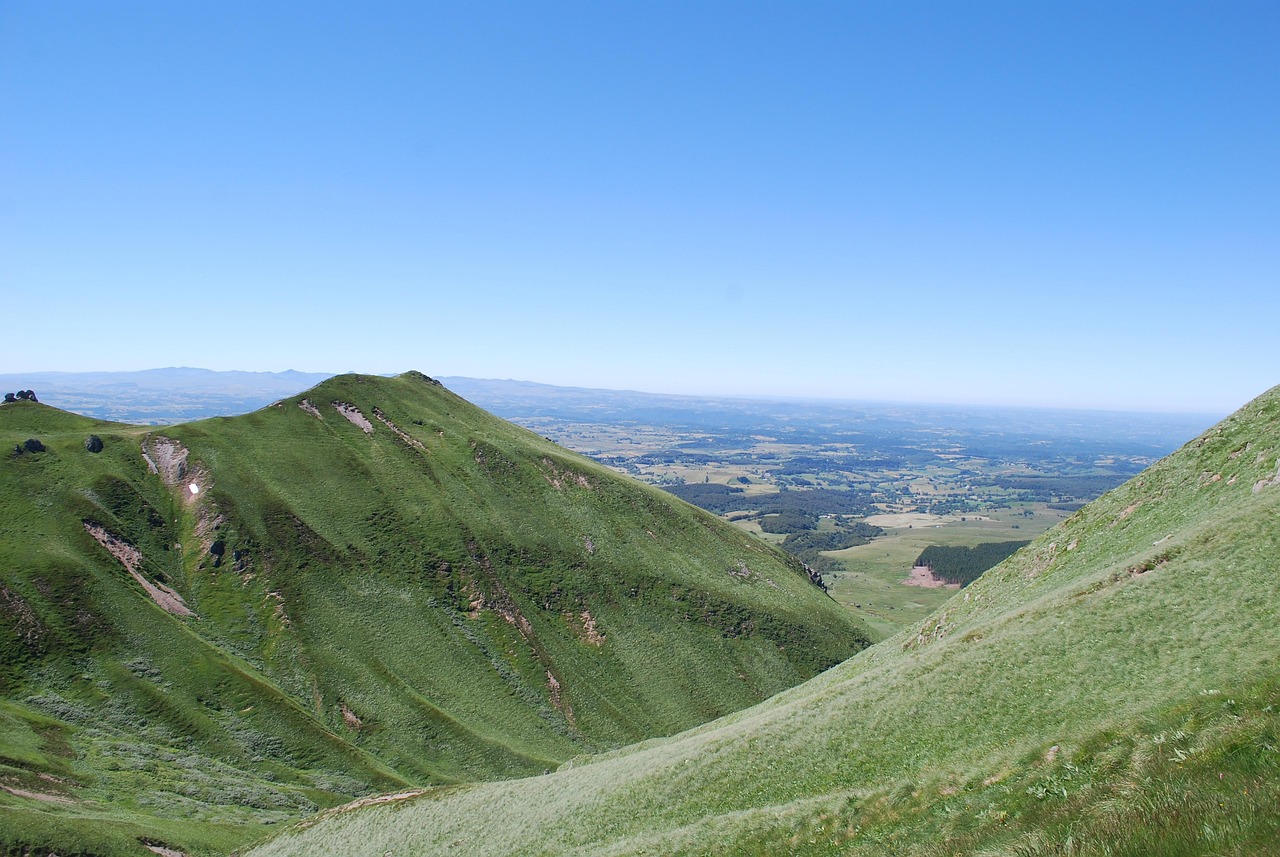
The Auvergne Volcano Route is where France forgets to be polished and remembers how to be wild. Between Clermont-Ferrand and the Cézallier plateau, a chain of extinct volcanoes – the Chaîne des Puys and beyond – rolls across the horizon like a frozen wave. Crater lakes shine, black lava stones hold centuries of stories, and tiny villages smell of woodsmoke, Saint-Nectaire cheese, and wet basalt after rain.
I first drove this route in a battered Twingo in 2012, in early October, chasing photos of the Puy de Dôme for a magazine piece. I meant to spend two days. I stayed two weeks. Since then I’ve driven it in all seasons – with a hire car and a campervan, alone and with friends’ children in the back – and each time it feels like someone quietly added a new curve, a new cheese farm, another hot spring.
In 2026, the Auvergne Volcano Route (often centered on the D941/D983/D996 corridor looping around the Chaîne des Puys, the Sancy massif, and the lakes) is finally getting the attention it deserves. Yet it still feels refreshingly unhurried compared with France’s better-known scenic roads.
This travel guide is a deep dive into the road itself: a 7–14 leg itinerary along the Auvergne Volcano Route, with 18 major stops, personal anecdotes, practical logistics, and plenty of places where I’ve lingered over coffee or watched storms roll over old craters. Think of it as a long letter from someone who’s driven this road too many times and still isn’t done.
Table of Contents
- Why Travel the Auvergne Volcano Route?
- Overview: What and Where Is the Auvergne Volcano Route?
- 7–14 Leg Itinerary for the Auvergne Volcano Route
- Leg 1 – Clermont-Ferrand to Puy de Dôme & Orcines
- Leg 2 – Puy de Dôme to Vulcania & Orcival
- Leg 3 – Orcival to Lac de Servières & Mont Dore
- Leg 4 – Mont Dore, Puy de Sancy & Vallée de la Dordogne
- Leg 5 – Lac Chambon, Murol & Saint-Nectaire
- Leg 6 – Besse-en-Chandesse, Super-Besse & Lac Pavin
- Leg 7 – Cézallier Plateau & Hidden Pastures
- Optional Legs 8–14 – Extending the Volcano Road Adventure
- 18 Essential Stops & Viewpoints Along the Route
- Eating & Sleeping on the Auvergne Volcano Route
- Evenings on the Road
- Day Trips & Nearby Attractions
- Cultural Etiquette & Local Customs
- Practical Logistics & How to Drive the Route
- Auvergne Volcano Route in 2026–2027: What’s New
- Money-Saving Tips, SIM Cards & Visas
- Summary & Best Seasons to Visit
Overview: What and Where Is the Auvergne Volcano Route?
The “Auvergne Volcano Route” isn’t a single official highway with a logo (though you’ll see brown tourist signs referencing Route des Volcans and Route des Lacs). It’s a loosely defined but wonderfully driveable loop that threads between Clermont-Ferrand and the volcanic highlands of Puy-de-Dôme and Cantal.
For this guide, I treat it as a loop starting and ending in Clermont-Ferrand, circling:
- The Chaîne des Puys ridgeline: Puy de Dôme, Puy de Pariou, Puy des Goules.
- The Sancy Massif: Puy de Sancy, Mont Dore, Super-Besse.
- The volcanic lakes: Servières, Chambon, Pavin.
- The pastures and plateaus: Cézallier, Artense.
- Historic spa towns and villages: Orcival, Saint-Nectaire, Besse, La Bourboule.
You can comfortably drive a compact version in 7 legs (one week), or really savor it with 10–14 legs over two weeks. This flexibility is why you see so many queries for “7 leg itinerary for Auvergne Volcano Route” or “10 legs of Auvergne Volcano Route”. You can compress or expand the same core loop depending on time and weather.
7–14 Leg Itinerary for the Auvergne Volcano Route
Here’s how I usually break it down when friends ask for a 7–10 day Auvergne Volcano Route road trip itinerary, with options to stretch it to a 12 or 14 leg itinerary if you want slow mornings and extra hikes.
Leg 1 – Clermont-Ferrand to Puy de Dôme & Orcines (1–2 Days)
I always begin in Clermont-Ferrand, partly because trains here are easy, partly because the first view of the black lava-stone cathedral against a backdrop of volcanoes sets the tone. In 2026, the station square is mid-renovation, but the tram still whisks you up to the historic center in minutes.
Morning: Black Stone & Coffee in Clermont
Arrive early. The city wakes slowly; bakeries open before the boutiques, and the basalt cobbles hold last night’s cool. I like to start at Place de Jaude, watching the light slide down the Cathédrale Notre-Dame-de-l’Assomption.
Walk up to the cathedral – it’s built entirely from local pierre de Volvic, dark volcanic stone that absorbs heat and history. Step inside for a few minutes: even if you’re not religious, the stained glass glows like molten lava. On my last visit in spring 2026, an organist was rehearsing Bach; the sound vibrated through the floor like a distant eruption.
Then wander the old town streets: Rue des Gras, Rue des Chaussetiers. Pick up picnic supplies at the Marché Saint-Pierre (mornings, except Monday): local cheeses (Saint-Nectaire, Cantal, Bleu d’Auvergne), charcuterie, and a still-warm baguette.
Driving Out: Clermont-Ferrand to Orcines
Leave Clermont-Ferrand via the D941 towards Orcines. This is the ceremonial start of the Auvergne Volcano Route in my mind. The city falls away fast; within 15 minutes you’re already watching the silhouettes of the Chaîne des Puys stack on the horizon.
At Orcines, the air smells of pine and wet earth. It’s a practical base with a couple of small hotels and B&Bs, good if you want an early start on Puy de Dôme the next day. In 2024 and 2025 I stayed twice at a modest guesthouse run by a retired couple who keep bees; breakfast featured their own honey and a lecture (welcome) on local bees’ adaptation to altitude.
Puy de Dôme – Iconic Volcano, Easy Access
Puy de Dôme is the superstar of the route: a broad, symmetrical dome that dominated Roman religion, 19th-century science, and 21st-century Instagram feeds.
From Orcines, follow signs to the Panoramique des Dômes – the rack railway that climbs gently to the summit. In summer, book tickets online in advance for weekends and school holidays; in 2026, timed entry is more strictly enforced to limit summit crowding.
Family-Friendly Summit
The train is smooth and stroller-friendly; children love watching paragliders launching from the slopes. At the top, the Temple of Mercury ruins highlight the Roman worship of mountain gods. The visitor center has clear bilingual exhibits about the volcanoes’ formation, with 3D models that finally make sense of that jagged horizon you’ll be driving along.
Hiking Up (and Down)
If you arrive outside the hottest part of the day and the weather is clear, hike up via the Chemin des Muletiers – about 45–60 minutes uphill on a well-maintained trail from the Col de Ceyssat. I’ve done this in all seasons; in winter, spikes are helpful, and the wind can be brutal at the summit, but the snow-sculpted craters are otherworldly.
On one October evening in 2023, I lingered too long on the summit watching the sunset paint Puy de Pariou orange and had to jog down the trail by headlamp, accompanied by a local trail runner who spent the descent explaining which nearby cones are the most “honest” (unspoiled) to hike.
Where to Sleep & Eat – Leg 1
For a 7 leg itinerary for the Auvergne Volcano Route, I usually overnight either in Orcines (quiet, close to Puy de Dôme) or back in Clermont-Ferrand (more dining options) depending on how urban I’m feeling.
- Budget stays: Small B&Bs in Orcines, simple hotels near Place de Jaude.
- Food: Try truffade (potato and cheese skillet) and potée auvergnate (hearty pork and cabbage stew) in Clermont. In Orcines, smaller menus, but you’ll get straightforward mountain fare.
Leg 2 – Puy de Dôme to Vulcania & Orcival (1–2 Days)
From Orcines, the Auvergne Volcano Route bends north-west then south-west, tracing the backbone of the Chaîne des Puys. This is the leg where the landscape shifts from “that’s a nice hill” to “oh, these are volcanoes.”
Vulcania – Science Park in a Volcano
Vulcania is a volcanic theme and science park cut into the basalt. I’m generally skeptical of theme parks, but Vulcania has grown on me over repeat visits, especially with friends’ children in tow. It’s a must on any family-focused Auvergne Volcano Route road trip itinerary.
Expect 4D films about eruptions, interactive geology exhibits, and rides that simulate earthquakes. The newer sections (updated up to 2025) incorporate climate science and planetary volcanology – useful context before you start climbing real cones.
- Timing: Allow a full day with kids; half a day if you’re just curious adults.
- Tip: Buy tickets online; in 2026 they’re experimenting with dynamic pricing – weekday afternoons outside French school holidays can be significantly cheaper.
Detour: Puy de Pariou – The Perfume-Bottle Crater
From the Vulcania area, it’s a quick hop to the trailhead for Puy de Pariou, the perfectly shaped cone you’ve probably seen on Volvic water bottles. It’s my favorite half-day hike in the region.
The trail loops up through beech forest, then suddenly the trees fall away and you’re on the rim of a vast, green bowl. You can descend into the crater – kids love scrambling down and shouting to hear their voices bounce. Come in late afternoon for softer light and fewer crowds.
Onward to Orcival – A Calm, Stone Village
Continue south on the D27/D941, then branch towards Orcival, a small village folded into a narrow valley. The road begins to twist more tightly here, and the landscape feels intimate – pastures, low stone walls, sometimes cows right up against the roadside.
Orcival is dominated by the Basilique Notre-Dame d’Orcival, a Romanesque church that seems too big for the village. Step inside around late afternoon when the sunlight slices through the nave; the stone glows warm, and the carved capitals reveal tiny scenes of medieval imagination – griffins, vines, and stern saints.
One rainy March day in 2022, I sheltered for an hour in the basilica with a handful of locals while a storm hammered the valley. When the bells rang at six, we all stepped out into the steam of the street, and the smell of wet woodsmoke and cow barns felt like the essence of Auvergne.
Overnight in Orcival
Orcival makes a gentle overnight stop on a 9 leg itinerary for the Auvergne Volcano Route – quieter than the spa towns, with good access to tomorrow’s lakes and passes.
- Stay: Rustic inns and B&Bs; book ahead in July–August and for Easter weekend.
- Eat: Local menus tend to be short and cheese-forward; try pounti (a prune and chard loaf) if it’s offered – sounds odd, tastes comforting.
Leg 3 – Orcival to Lac de Servières & Mont Dore (1–2 Days)
This leg is all about water-filled craters and gaining altitude. It’s where the Auvergne Volcano Route starts to feel like a true mountain drive.
Lac de Servières – A Windy, High Crater Lake
From Orcival, follow the D27 to intersect the D983 and climb towards Lac de Servières, a round crater lake perched at about 1,200 m. It’s usually windy; even on hot days bring a light layer.
There’s an easy loop path around the lake, with pine reflections and views to distant cones. On calm autumn mornings, the mirror effect is stunning – I’ve lost an hour more than once just watching mist lift off the surface. There are picnic tables and, in summer, a small snack kiosk.
- Family-friendly: Flat path, good for strollers if not too muddy.
- Romantic: Sunset picnics on the western shore, especially in September.
Col de Guéry & Lac de Guéry – Basalt Cliffs & Pastures
Soon you crest the Col de Guéry, with a parking area and far-reaching views over the Sancy massif. Below sits Lac de Guéry, Auvergne’s highest lake.
In late winter, Guéry used to be famous for ice-fishing; climate change has made reliable ice rarer, but 2026 still sees a February weekend festival if conditions permit. The basalt cliffs above the lake, called the Tuilière and Sanadoire, look like giant ruined castles, especially in low cloud.
There’s a simple lakeside inn where I’ve eaten steaming bowls of lentil soup while watching snow fall on the water. They also do rooms – a nice, slightly isolated stop for those stretching to a 12 leg itinerary for the Auvergne Volcano Route who want extra nights in nature.
Descent to Mont Dore – Classic Spa Town
The D983 winds down to Mont Dore, a 19th-century spa town huddled at the foot of the Sancy massif. The architecture is a mix of Belle Époque spa buildings and solid mountain houses. The thermal baths have been updated but still keep an old-world air; in 2026, digital booking joined marble columns.
Walk the main street in the late afternoon. In shoulder seasons, you’ll see hikers nursing beers on terraces, older spa clients strolling slowly with Nordic walking poles, and kids pestering parents for crêpes. This is a good place to pause for two nights if you’re doing a 10 leg itinerary for the Auvergne Volcano Route and want time for proper hiking.
Evening in Mont Dore
I like to go for a short walk along the Dordogne river (this is near its source) at dusk; the sound of the water and the smell of resin from nearby forests settle the mind after driving. Restaurants fill quickly on weekends; reserve if you have your heart set on somewhere particular.
- Specialty: Potée auvergnate, local trout, and desserts heavy on blueberries.
Leg 4 – Mont Dore, Puy de Sancy & Vallée de la Dordogne (1–2 Days)
Leg 4 is your high point – literally. It’s dominated by Puy de Sancy, the highest peak in the Massif Central (1,885 m), and the dramatic valleys that radiate from it.
Climbing Puy de Sancy
From Mont Dore, drive or take the shuttle up to the Val de Courre cable car station. The cable car does much of the vertical gain; from the top, wooden staircases and paths lead you up the final stretch to the summit. The last push can feel like a stairmaster at altitude, but families with reasonably active kids manage it fine.
On a clear day, the view is enormous: waves of green and brown hills, jagged ridges, and the glint of distant lakes. You realise how compact and yet how dense the Auvergne Volcano Route really is – so many of your past and future legs visible at once. On my best visit (June 2021), a storm had just cleared, leaving a double rainbow hanging over the Vallée de Chaudefour.
Vallée de Chaudefour – Wild Reserve
From the Sancy area, detour east to the Vallée de Chaudefour, a protected nature reserve carved into the volcanic massif. Here the cliffs are sharp, spiky, and dramatic – remnants of eroded volcanoes. Several trails of varying difficulty wind into the valley; even the shorter ones pay off with waterfalls and high meadows.
Respect the reserve rules: stay on marked paths, no picking flowers, keep dogs on leads. Marmots whistle from the rocks in summer; kids love spotting them.
La Bourboule & Vallée de la Dordogne
Back near Mont Dore, you can loop via La Bourboule, another spa town with more Belle Époque facades. The riverside promenade is pleasantly old-fashioned. If you’re traveling with children, the Parc Fenestre offers playgrounds and mini rides – a reward after hikes.
For a 9 leg itinerary for the Auvergne Volcano Route, I often overnight one night in Mont Dore and one in La Bourboule, using the second as a quieter base and enjoying the different evening atmosphere.
Leg 5 – Lac Chambon, Murol & Saint-Nectaire (1–2 Days)
From the Sancy highlands, the road sweeps you southeast towards warmer, gentler landscapes – lakes ringed with reeds, castle-topped hills, and villages that smell faintly of cheese caves.
Lac Chambon – Lakeside Leisure
Lac Chambon is one of the most accessible and family-friendly spots on the Auvergne Volcano Route. In summer, there are supervised swimming areas, paddleboat rentals, and lakeside cafés serving ice cream and crêpes. It’s touristy by local standards, but after a few days on windy passes, the flat lakeshore feels luxurious.
- Romantic: Early morning or evening walks on the quieter western trail.
- Family: Shallow swimming areas, easy loop paths.
- Tip: Parking fills on August weekends; arrive before 10:00.
Murol – Storybook Castle
Overlooking the lake, Château de Murol is a proper medieval pile perched on a volcanic spur. It’s particularly fun for kids: costumed guides, mock combats, and falconry demonstrations in high season.
I once attended a summer evening event here where local musicians played traditional Auvergnat tunes as the sun set behind Sancy. The castle walls glowed orange, and bats darted through the air. It’s one of those moments that made me realise why so many people ask for “cultural experiences in Auvergne Volcano Route” rather than just hikes.
Saint-Nectaire – Cheese & Romanesque Splendour
Drive a short distance to Saint-Nectaire, split between le Bas (lower, spa quarter) and le Haut (upper, historic church). The Église de Saint-Nectaire is one of the great Romanesque churches of Auvergne, with elegant proportions and a hilltop setting.
Below, cheese shops offer tastings of the village’s namesake cheese, a soft, washed-rind marvel aged in volcanic caves. Many farms around town welcome visitors; I’ve spent happy hours in damp-aging cellars learning to tell a fermier (farm-made) Saint-Nectaire from an industrial one.
- Must-try: Saint-Nectaire melted over potatoes, or simply sliced with local honey.
Overnight Options – Leg 5
Saint-Nectaire and nearby Chambon both work well as overnight stops. For a 10 legs of Auvergne Volcano Route style trip, I like one night by the lake and one in the cheese village.
Leg 6 – Besse-en-Chandesse, Super-Besse & Lac Pavin (1–2 Days)
This leg folds you back into more serious altitude, but with a distinctly human layer: a medieval village, a ski resort, and one of my favorite crater lakes.
Besse-en-Chandesse – Medieval Lava-Stone Village
Besse-en-Chandesse is a compact village built almost entirely from dark volcanic stone, giving it a slightly solemn air that’s quickly offset by flower boxes and bakery smells. The narrow lanes invite aimless wandering. Look for sculpted lintels and old wine cellars.
On market days, stalls overflow with charcuterie, cheeses, and stacks of pain de seigle (rye bread). A café on the main square does the best hot chocolate I’ve had in Auvergne – dangerously thick on a cold day.
Super-Besse – High-Altitude Playground
Just above Besse, Super-Besse is a purpose-built mountain resort from the 1960s–70s. Architecturally it’s no one’s dream, but it’s incredibly convenient if you want easy access to slopes in winter or family activities in summer (zip lines, luge tracks, mountain biking).
I treat Super-Besse as a practical overnight on 11 leg itineraries for the Auvergne Volcano Route when I’m prioritising outdoor sports over charm. In 2026, the resort is pushing more strongly into green-energy initiatives, with additional EV chargers installed in the main parking zones.
Lac Pavin – Dark, Deep Crater
A short drive from Besse leads to Lac Pavin, a nearly perfect circular crater lake, deep and dark. Legends say it’s bottomless and home to monsters; in reality it’s about 92 m deep, with a meromictic structure that fascinates scientists.
The path around the lake is atmospheric rather than panoramic – you’re often in the forest, with glimpses of still water. I like it best on misty mornings when the lake feels like a secret. There’s a small café near the parking area; I keep a mental rating of their crêpes over the years (still good in 2025).
- Tip: Parking is limited; avoid peak midday in August.
Leg 7 – Cézallier Plateau & Hidden Pastures (1–2 Days)
The Cézallier plateau is where the Auvergne Volcano Route changes tempo. Gone are the dramatic cones; instead you get rolling high pastures, big skies, and the feeling that you’ve driven into a painting of rural France.
The Lonely Roads of Cézallier
From the Besse area, choose small departmental roads heading south or southeast into the plateau: D36, D678, and their cousins. The exact choice matters less than the experience: long, gentle bends, almost no traffic, and cows that stare as you pass.
On a 14 leg itinerary for the Auvergne Volcano Route, I’ll often spend two unrushed days here, with frequent stops just to stand by the roadside and listen to cowbells.
Burons & Pastoral Life
You’ll see burons – traditional stone huts where cheese was once made in the high pastures. Some have been restored as simple restaurants or guesthouses serving aligot (potato purée whipped with cheese) and truffade. I still remember a lunch in 2019 where the only choice was “small truffade or large,” and the host refused to let me order small.
Staying in a converted buron is one of the best hidden gems in Auvergne Volcano Route travel: basic but cosy, with stars so bright at night you’ll feel as if the plateau is a boat sailing through space.
Looping Back towards Clermont-Ferrand
Eventually, the roads will guide you back north towards Issoire or directly to Clermont-Ferrand, depending on how much time you have. I like to end my loop with one more night in Clermont, trading cowbells for café buzz and reflecting on the journey over a glass of local wine.
Optional Legs 8–14 – Extending the Volcano Road Adventure
If you have more than a week, you can easily turn this into an 8, 9, 10, 11, 12, 13 or even 14 leg itinerary for the Auvergne Volcano Route by:
- Adding extra nights in Mont Dore or La Bourboule for hiking.
- Staying two nights in the Cézallier to really disconnect.
- Adding detours to Volvic, Issoire, and Issoire’s Saint-Austremoine Abbey.
- Exploring the Artense plateau between La Bourboule and the Cantal region.
The core sequence remains the same; you simply slow down and deepen it. That flexibility is what makes this such a perfect road trip for varied travelers: couples, families, solo drivers, motorcyclists, and even campervans.
18 Essential Stops & Viewpoints on the Auvergne Volcano Route
Below are deeper dives into 18 of the best places to visit on the Auvergne Volcano Route, beyond the quick mentions above. These are the must-see attractions in Auvergne Volcano Route terms – the points where I always, always stop, even if “only for a minute.”
1. Puy de Dôme – The Watchtower of Auvergne
Puy de Dôme is both a geological icon and a cultural symbol. The Romans built a temple to Mercury here; in the 19th century, it hosted scientific experiments on atmospheric pressure; today, it’s where local teenagers take their first sunset selfies with friends from the plains below.
Come in early or late light; midday flattens the view. On my most recent ascent (May 2025), I took the first morning train and had the summit almost to myself, sharing it only with a couple of paragliders laying out their canopies like bright petals on the grass. Watching them step off into the void is a reminder that these volcanoes are playgrounds as much as relics.
Tip: Don’t rush back down. Walk a short section of the ridgeline path, even just 15 minutes, to feel how the landscape shapes your sense of direction.
2. Vulcania – Learning the Language of Lava
Vulcania’s architecture alone – a deep cylinder sunk into the earth, clad in lava stone – makes a statement: volcanoes are not just scenic backdrops; they’re the bones of this region. Inside, exhibits walk you through the basics: types of eruptions, tectonic plates, comparing Auvergne’s dormant cones with the world’s active volcanoes.
In 2026, a new temporary exhibition focuses on volcanic soils and food – a subtle but important link to local wine, lentils, and pasture. It’s a brilliant way to get kids to care about geology: tell them their cheese exists because of lava.
3. Puy de Pariou – The Classic Cone
The symmetry of Puy de Pariou is almost unnerving. Walk the upper rim path slowly and you’ll notice how sound changes: one side catches the wind, the other holds stillness. I once lay on my back in the grass here for an hour, listening to skylarks and thinking about how this perfect shape was once chaos.
Bring water; there’s no café at the summit, and the sun can be strong even when the air is cool.
4. Lac de Servières – Reflections & Wind
Lac de Servières is less busy than Chambon or Pavin and feels wilder. Fishermen line the banks in the quieter months; in winter, ice sometimes forms in delicate sheets along the edge. I’ve camped nearby in a van and woken to ice on the inside of the windows and a lake steaming in the first light.
5. Col & Lac de Guéry – High Pastures & Cliffs
Guéry is a crossroads: hikers, Sunday drivers, motorcyclists all pause here. On a 7 legs of Auvergne Volcano Route style trip, this is often your first serious “wow” panorama of the Sancy massif. Look for the distinct shapes of the Tuilière and Sanadoire rock formations; they’re like sentinels guarding the lake.
6. Mont Dore – Spa Architecture & Mountain Air
Mont Dore’s thermal baths are a fascinating mix of ornate and clinical. Inside, people in white robes shuffle between treatments; outside, teenagers skateboard in the square. I love this collision of eras – the 19th-century conviction that water can heal everything, and the 21st-century need for Wi-Fi in the lobby.
Stroll up to the Chemin des Planches, a boardwalk path above town, in the evening for views back over the roofs and up to the Sancy ridges.
7. Puy de Sancy – Roof of the Massif Central
Puy de Sancy isn’t technically a volcano in the simple cone sense – it’s the eroded remnant of a much larger volcanic edifice. But from a hiker’s perspective, what matters is the drama: steep ridges, knife-edge paths, and in June, slopes dotted with wildflowers.
On a clear day, linger at the summit. You’ll see the Chaîne des Puys to the north, the Cézallier plateau rolling south-east, and, far off, hints of the Cantal mountains if the air is sharp. It’s like reading the index of your Auvergne Volcano Route road trip from a single viewpoint.
8. Vallée de Chaudefour – Protected Wild Heart
Chaudefour feels wilder than most spots on this route because of its reserve status. Rangers may check that you’re respecting the rules, especially in high season. Take only photos, as the saying goes, and leave only bootprints.
On a misty day in 2020, I watched clouds snag on the jagged rock pinnacles here, like smoke from an invisible fire. It reminded me that these are not “dead” landscapes; they’re just old and patient.
9. La Bourboule – Family Spa Town
La Bourboule is where many French families come for cures thermales – multi-week spa treatments prescribed for respiratory conditions. This gives the town a languid rhythm: people here aren’t rushing; they’re on doctor-ordered rest.
The Parc Fenestre is a boon on road trips with kids: lawns, trees, playgrounds, and a few small rides in summer. It’s an easy way to give children a break from car seats and hiking boots.
10. Lac Chambon – Accessible Water
Chambon is less about wilderness and more about simple pleasures: sand between toes, the smell of sunscreen, the clink of ice in drinks. I often plan it as a “rest” afternoon on longer Auvergne Volcano Route itineraries – somewhere to read a book by the water and let the mind digest all the peaks and passes.
11. Château de Murol – Living History
Murol’s castle is best experienced when the reenactment teams are on duty: falcons swooping, knights clanking, cooks stirring cauldrons. Yes, it’s theatrical, but it’s also rooted in serious local interest in history. Many of the participants are from the area and fiercely proud of their fortress.
12. Saint-Nectaire – From Altar to Cellar
I love the contrast here: you start in the Romanesque church, all symmetry and stone, then descend into cheese cellars that feel almost monastic in their own way – rows of wheels aging in the cool dark, tended like congregants.
Ask to taste cheeses at different stages of aging; you’ll discover your personal sweet spot between young, lactic tang and older, mushroomy depth.
13. Besse-en-Chandesse – Cobbles & Cellars
Besse’s narrow streets twist unexpectedly; one moment you’re in shadow between tall lava-stone houses, the next you pop into a sunlit square. Duck into any open cellar doors – many house small wine or cheese shops, happy to chat if you show interest.
14. Super-Besse – Activity Hub
Super-Besse is practical more than pretty, but it’s unbeatable if you want lift-served mountain biking in summer or multiple ski lifts in winter, all within quick reach of your accommodation. For many families, this is a central base on an 8 or 9 legs of Auvergne Volcano Route style trip, with day excursions radiating out.
15. Lac Pavin – Dark Mirror
At Pavin, look closely at the color gradients of the water; they hint at the lake’s layered structure. Local legends talk about swallowed villages and cursed depths; scientists talk about stratification and gas exchanges. Both have their poetry.
16. Cézallier Plateau – Land of Big Skies
Cézallier is less photographed than Sancy or Puy de Dôme, yet it’s where many locals go to breathe. The sense of space is enormous. On my last trip across in 2024, I drove 45 minutes without seeing another car, only herds of Salers cows and a lone cyclist grinding up a gentle incline.
Pull over often; these views are made to be absorbed slowly.
17. Volvic – Stone & Water
North of Clermont-Ferrand, the town of Volvic is famous worldwide for bottled water, but locally more for its pierre de Volvic quarries. Guided tours (check seasonal schedules) take you into old extraction sites, where you learn how this dense, workable stone shaped the region’s architecture.
If you’re interested in how landscapes become buildings, Volvic is a rewarding half-day detour.
18. Issoire & Saint-Austremoine – Romanesque Finale
South-east of Clermont, Issoire offers one of the most beautiful Romanesque churches in France: the Abbaye Saint-Austremoine. Its colorful exterior patterns and serene interior make a fine cultural bookend to Puy de Dôme’s stark natural drama.
On my last visit (2025), a choir was rehearsing; their voices rose into the rounded vaults, echoing softly, a human counterpoint to the silent volcanoes outside town.
Eating & Sleeping Along the Auvergne Volcano Route
One of the pleasures of driving the Auvergne Volcano Route is how naturally food and lodging align with the landscape: hearty mountain dishes in high villages, lighter options by lakes, simple inns in tiny valleys.
Local Food on the Auvergne Volcano Route
Auvergne cuisine is unapologetically rustic. Expect potatoes, pork, cheese, and lentils, with occasional fish and lighter touches in spa towns.
- Truffade: Sliced potatoes sautéed with garlic and melted tome fraîche, usually served with salad and jambon d’Auvergne. Best after a cold hike.
- Aligot: Mashed potatoes beaten with cheese until they stretch in ribbons – more common towards Aubrac but increasingly found here.
- Saint-Nectaire, Cantal, Bleu d’Auvergne, Fourme d’Ambert: The big four cheeses; you’ll see them everywhere.
- Pounti: A loaf-like dish of chard, herbs, and prunes – surprisingly good cold in sandwiches.
- Auvergne charcuterie: Cured hams and sausages, often smoked.
- Lentilles blondes de Saint-Flour: Delicate local lentils, usually as a side.
Vegetarians do reasonably well with truffade, omelettes, salads, and cheese boards; vegans will need to self-cater more, though spa towns like Clermont-Ferrand and Mont Dore have slowly improving options.
Where to Sleep – Types of Accommodation
- Village inns & B&Bs: Found in Orcival, Besse, Saint-Nectaire, Murol – often family-run, with half-board options (dinner + breakfast) that simplify logistics.
- Spa hotels: In Clermont-Ferrand, Mont Dore, La Bourboule – more amenities, sometimes access to thermal facilities.
- Mountain gîtes & burons: Rustic stays in Sancy and Cézallier – fewer frills, more starry nights.
- Camping & campervan sites: Around lakes (Chambon, Guéry) and in valleys; some with direct lake access.
Planning Fuel Stops & Daily Distances
The full loop described rarely has you driving more than 150–200 km a day, often less. On twisting mountain roads, that’s plenty. Aim for 2–4 hours of driving plus stops per day.
- Fuel: All larger towns (Clermont-Ferrand, Mont Dore, La Bourboule, Issoire) have fuel stations. Smaller villages may have only one or none; don’t let your tank drop below a quarter.
- EV charging: Growing fast. As of 2026, Clermont, Mont Dore, Super-Besse, Saint-Nectaire, and some lakeside areas have chargers – but plan with an app like Chargemap.
- Overnights: I recommend at least 6–8 overnights for the full loop, more if you want rest days.
Budget-wise, mid-range travelers can expect:
- €70–120 per night for a double room in a small hotel or B&B.
- €15–30 per person for dinner in a simple restaurant.
- €7–10 for a substantial picnic lunch from markets.
Evenings on the Road in Auvergne Volcano Route
Evenings are when the Auvergne Volcano Route quietly shines: traffic thins, the mountains change color, and small-town main streets reveal their real selves.
Small-Town Nights
In Mont Dore and La Bourboule, you’ll find bars with low-key live music on weekend nights – local rock, chanson, or the occasional folk session. These aren’t party towns; last orders often come earlier than in cities, especially outside July–August.
Star-Camping Spots
The Cézallier and high areas near Lac de Servières and Guéry are renowned for dark skies. If you’re in a campervan, choose official spots, respect local regulations, and keep noise down. On clear nights you’ll see the Milky Way arch over the sleeping volcanoes.
Where to Linger vs. Blow Through
- Worth a full evening: Clermont-Ferrand, Mont Dore, La Bourboule, Saint-Nectaire, Besse.
- Good for a quiet dinner & early night: Orcival, Murol, lakeside campgrounds.
- Best driven through late afternoon: Smaller hamlets on Cézallier; enjoy them by day, sleep where there’s more infrastructure.
Day Trips & Nearby Attractions from the Auvergne Volcano Route
Salers & Cantal Mountains
From the western edge of the route (La Bourboule/Mont Dore), you can push further west into the Cantal massif, home to equally impressive volcanic landscapes and the beautiful village of Salers. It’s best as an overnight or two, but hardcore drivers sometimes do it as a long day trip.
Clermont-Ferrand’s Michelin Adventure Lab
In Clermont, the L’Aventure Michelin museum offers an unexpectedly engaging look at the history of Michelin – including their famous maps and guidebooks, which shaped early road trip culture in France. A fitting indoor activity before or after your own Auvergne Volcano Route road trip.
Cultural Etiquette & Local Customs
Rhythm of the Day
- Lunch: 12:00–14:00. Many restaurants close outside these hours.
- Dinner: 19:30–21:30. In rural areas, kitchens may close by 21:00 on quiet nights.
- Shops: Often close for lunch (12:00–14:00) and on Sunday afternoons or Mondays.
Politeness
Always greet shopkeepers and staff with a “Bonjour” (day) or “Bonsoir” (evening) before asking questions. A simple “Merci, bonne journée” when leaving goes a long way. In smaller villages, you’ll often exchange greetings with people you pass on quiet lanes.
Language
Outside Clermont-Ferrand, English is less common. A few phrases in French help enormously. Locals are generally patient if you try. Some older residents still speak snippets of Auvergnat, the regional language, but they don’t expect visitors to.
Driving & Rural Courtesy
- On narrow roads, slow early and use passing places; locals often give a friendly wave.
- Don’t block farm tracks or gates when parking for hikes.
- Respect “Propriété privée” signs; many pastures are private even if unfenced.
Practical Logistics & How to Drive the Auvergne Volcano Route
Which Direction to Drive?
I recommend a clockwise loop from Clermont-Ferrand → Puy de Dôme → Vulcania/Chaîne des Puys → Orcival → Guéry → Mont Dore → Sancy → La Bourboule → Lac Chambon/Murol/Saint-Nectaire → Besse/Super-Besse/Lac Pavin → Cézallier → Clermont-Ferrand. This builds drama gradually and ends with the calm plateau before returning to the city.
Vehicle Suitability
- Regular car: Perfectly adequate for all main roads in normal conditions.
- Campervan/RV: Manageable; some village streets are narrow, but main routes and many parkings are RV-friendly. Check height limits in old centers.
- Motorcycle: Superb riding roads; watch for changeable weather on passes.
- 4x4: Only needed if you plan off-road tracks, which are often restricted. For the usual Auvergne Volcano Route road trip itinerary, it’s not necessary.
Seasonal Closures & Weather
- Winter (Dec–March): Snow common above 1,000 m. Some small roads can close temporarily; Sancy and Super-Besse become ski hubs. Carry chains; check local bulletins.
- Spring (April–May): Unstable weather; some high paths may still be snowy or muddy. Waterfalls and flowers at their best.
- Summer (June–August): Warm to hot days, cool nights. Busiest season around lakes and popular hikes. Storms can roll in quickly on hot afternoons.
- Autumn (Sept–Nov): Glorious colors, cooler temps, fewer crowds. My personal favorite time for hiking and photography.
Breakdowns & Emergency
Carry a charged phone; coverage is decent but can be patchy in some valleys. Roadside assistance comes with many rental contracts; otherwise, numbers are on fuel receipts and inside toll stations on approach to the region.
Permits & Fees
No special permits are needed for the core Auvergne Volcano Route. Cable cars (Puy de Dôme, Sancy, Super-Besse) require tickets; some parking areas around lakes and viewpoints have small fees in high season.
Auvergne Volcano Route in 2026–2027: Events & What’s New
Major Events (2026–2027)
- Volcanic Arts Festival, Clermont-Ferrand (May 2026 & 2027): A growing festival combining landscape photography, film, and local crafts, with many events themed around the Chaîne des Puys.
- Trail du Sancy (Sept 2026 & 2027): Major trail running races in the Sancy massif; book accommodation early if traveling these weekends.
- Fête de la Transhumance (Early June): Various villages celebrate moving herds to high pastures; Cézallier is especially atmospheric.
Changes in the Travel Scene
- More EV infrastructure along major legs of the route.
- Expansion of guided tours in English at Vulcania and Volvic.
- Slow but steady growth in farm stays and agritourism experiences.
Money-Saving Tips, SIM Cards, Visas & Transport
Saving Money on the Auvergne Volcano Route
- Choose B&Bs with breakfast included and picnic for lunch.
- Stay slightly outside the most famous spots (e.g., near but not in Mont Dore) to lower accommodation costs.
- Use free viewpoints and trails – most volcano hikes have no entry fee.
- Fill up fuel in larger towns where prices are usually lower than tiny stations.
SIM Cards & Connectivity
French SIM cards from Orange, SFR, Bouygues, Free are easy to buy in Clermont-Ferrand. Data coverage is good on main roads and in towns, patchier in deep valleys and some plateau areas. Download offline maps (Google Maps, Maps.me) before driving remote stretches.
Visas & Driving Licenses
- Visas: France is in the Schengen Area. Many nationalities can stay visa-free up to 90 days; check current rules before travel.
- Driving licenses: EU/EEA licenses are fully valid. Many non-EU licenses are accepted; an International Driving Permit is recommended if your license is not in French or another EU language.
Car Rental & Public Transport
To really experience the Auvergne Volcano Route, a car or motorcycle is best. You can rent in Clermont-Ferrand (city or airport). Public transport will get you to main towns like Mont Dore or La Bourboule, but not easily between all lakes, passes, and small villages.
Summary & Best Seasons to Visit the Auvergne Volcano Route
The Auvergne Volcano Route is a journey through deep time and quiet places: from Puy de Dôme’s sweeping views to Puy de Pariou’s perfect crater, from Mont Dore’s spa streets to Cézallier’s endless pastures. Whether you choose a compact 7 leg itinerary for the Auvergne Volcano Route or a leisurely 12–14 legs of Auvergne Volcano Route exploration, you’ll find a road that rewards slowness and curiosity.
Best Seasons
- Spring (late April–June): Best for wildflowers, cooler hikes, and waterfalls. Some high routes may still hold snow early on.
- Summer (July–August): Ideal for lakes, family activities, and longer days. Busier; book ahead.
- Autumn (Sept–Oct): My personal choice: golden forests, comfortable temperatures, fewer crowds.
- Winter (Dec–March): Best if you want skiing and snowy landscapes; be prepared for winter driving.
Pack layers, leave time for unscheduled detours, and don’t underestimate the pleasure of a simple picnic of Saint-Nectaire and bread overlooking an old crater. The Auvergne Volcano Route isn’t just about ticking off viewpoints; it’s about allowing these quiet mountains to rearrange your sense of distance and time, one bend at a time.