Why Visit Blois?
Blois is the kind of city that sneaks up on you. You arrive thinking you’re here for “just another castle,” and end up lingering over riverside sunsets, chatting with wine growers in tiny bars, and getting lost in medieval alleys that feel like a film set – only they’re very real, and blissfully un-crowded compared to the bigger Loire Valley stars.
I’ve lived in the Loire Valley for years and return to Blois again and again – to meet friends on café terraces, to catch the evening light on the Château Royal, and to wander the steep stairways that tumble down toward the Loire. It’s compact, walkable, and yet packed with history: royal intrigue, Renaissance art, quirky museums, and a very real local life that continues beyond the tourist season.
Whether you’re planning a 3 day itinerary for Blois, stretching it to 4 days in Blois, or luxuriating with a full 5 day itinerary for Blois, this travel guide for Blois will help you find the best places to visit in Blois, taste authentic local food in Blois, uncover hidden gems in Blois, and understand the local customs in Blois that make the city feel genuinely welcoming.
Think of Blois as your ideal Loire Valley base: big enough to have culture and nightlife, small enough to feel intimate, and perfectly placed for day trips to Chambord, Cheverny, Chaumont-sur-Loire, and more.
Table of Contents
- 1. Blois at a Glance (2026 Overview)
- 2. 20 Must-See Attractions in Blois (In Depth)
- 3. Suggested Itineraries: 3, 4 & 5 Days in Blois
- 4. Neighborhoods & Areas to Explore
- 5. Local Food & Drink in Blois
- 6. Nightlife, Entertainment & Cultural Experiences
- 7. Events & Festivals in 2026–2027
- 8. Best Day Trips from Blois
- 9. Cultural Etiquette & Local Customs
- 10. Practical Travel Tips for Blois
- 11. Summary & Best Time to Visit Blois
Blois at a Glance (2026 Overview)
Blois (pronounced “Blwah”) sits on the banks of the Loire River, roughly halfway between Orléans and Tours. With around 46,000 inhabitants, it feels like a small city with the soul of a village: everyone seems to know each other, and you’ll quickly become a familiar face at your favorite bakery.
In 2026, Blois continues to balance its royal past with a creative present: new exhibitions at the Château Royal, evolving street art around the station district, refurbished riverside promenades, and a growing reputation for natural wine and local gastronomy.
- Region: Centre-Val de Loire
- Population: ~46,000
- Known for: Royal château, Loire River views, Renaissance architecture, magic history, easy access to Loire châteaux
- Perfect for: Couples, families, history lovers, architecture nerds, food & wine lovers, slow travelers
20 Must-See Attractions in Blois (With Personal Notes)
I’ve ordered these starting with big, iconic must-see attractions in Blois, then easing into quirkier spots and true hidden gems in Blois. You absolutely don’t need to see all 20 on a short trip, but this section gives you options to build a 3, 4, or 5 day itinerary around what you love most.
1. Château Royal de Blois – The Beating Heart of the City
The Château Royal is the icon of Blois, perched above the river like a stone crown. I still remember the first time I walked into the courtyard: four wings of entirely different styles (medieval, Gothic, Renaissance, classical) rising around me like a crash course in French architectural history.
Originally a fortress, the château became a royal residence and a center of power in the 15th and 16th centuries. Kings Louis XII and François I both left their mark here, as did Catherine de’ Medici and Henri III. This is also where the Duke of Guise was assassinated in 1588 – a key episode in the French Wars of Religion.
What to see inside:
- The flamboyant François I wing with its famous external spiral staircase – I always stop halfway up just to look back at the courtyard.
- The richly painted Salle des États Généraux, one of the oldest and largest Gothic halls in France.
- The Royal Apartments, full of vibrant 19th-century reimaginings (not always historically perfect, but very atmospheric).
- The small but satisfying Fine Arts Museum on site, often pleasantly quiet even in high season.
Personal tip: Aim to arrive when doors open in the morning. I love having the courtyard nearly to myself, especially in spring or autumn when the light is soft. If you’re doing a 3 day itinerary for Blois, this is usually my recommended first stop on Day 1.
Family-friendly: The audio guides and occasional kids’ trails make this engaging for children, especially if you weave in a bit of royal gossip: poison, betrayals, secret meetings – it’s basically a historical soap opera.
Romantic angle: Come back in the late afternoon, then head down to the river for golden-hour photos of the château from the bridge.
Practical info: The château is in the very center of town, a 10–15 minute walk from Blois–Chambord train station (uphill on the way there). Combined tickets with the sound-and-light show are available in season.
2. Château de Blois Sound & Light Show (Son et Lumière)
On warm nights from spring to autumn, the château courtyard transforms into a giant open-air cinema. The sound-and-light show projects animated scenes across the façade, telling Blois’ story with dramatic narration, music, and playful special effects.
The first time I saw it, I went in skeptical (I’ve seen a lot of cheesy shows at French monuments), but this one is genuinely well done – especially the way the architecture becomes part of the storytelling. Kids love the “thunder and lightning” moment tied to the Duke of Guise’s assassination.
Tips:
- Bring a light jacket even in summer; the stone courtyard can feel chilly after dark.
- Buy the combined château + show ticket earlier in the day to skip queues later.
- If you’re short on time on a 3 days in Blois schedule, do the château by day and this in the evening of the same day.
3. Vieux Blois – The Old Town’s Medieval Maze
Step out of the château and you’re already in the Vieux Blois, a labyrinth of cobblestone lanes, timber-framed houses, and secret staircases. This is where I send every friend who asks for “real Blois.”
My ideal route: wander down Rue du Puits Châtel, detour along Rue Pierre de Blois, and meander toward the river, ducking into courtyards when doors are open (be respectful – many are private). Around every corner you’ll find crooked façades, worn stone steps, and sometimes a view over the red roofs toward the Loire.
Don’t miss:
- Maison de la Magie façade with its surprise mechanical dragons (more below).
- Little artisan workshops – I still have a ceramic bowl from a tiny studio I found by accident off Rue Saint-Lubin.
- The various “escaliers” (stairways) that shortcut between upper and lower town.
Photography tip: Come early in the morning or around sunset. The narrow streets mean harsh midday light can be tricky.
4. Pont Jacques-Gabriel & Loire Riverside
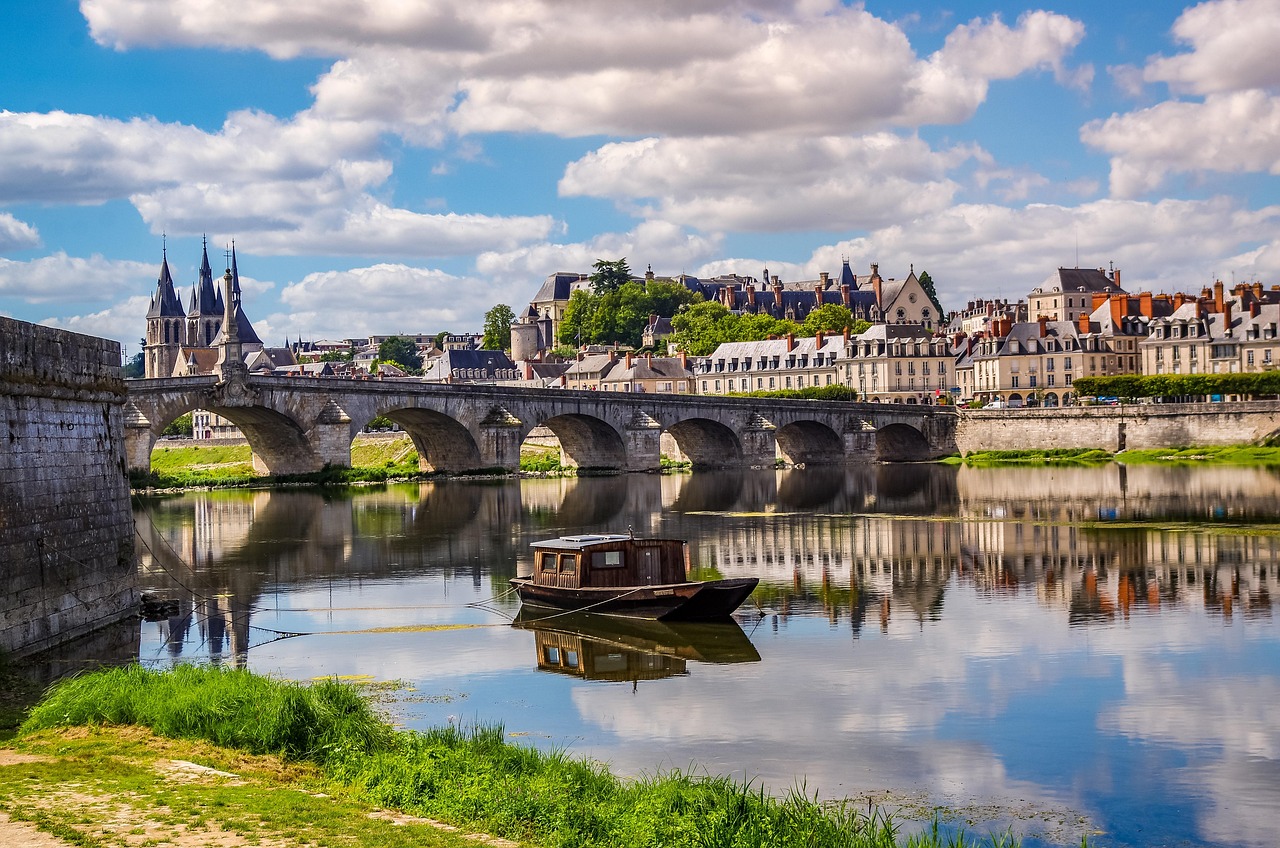
The 18th-century Pont Jacques-Gabriel is Blois’ main stone bridge and the city’s classic postcard view. I’ve lost count of the evenings I’ve spent here, watching the sky shift pink and orange behind the château.
Walk across the bridge to the north bank for a full skyline view: the château, church spires, terracotta roofs stacked on the hillside. It’s the closest Blois comes to a “skyline” – no skyscrapers, just layers of history.
What to do:
- Stroll the Loire riverbank on both sides; there are benches, bike paths, and good bird-watching opportunities on the sandbanks.
- In summer, look for pop-up guinguettes (open-air bars) along the river, with live music and casual food.
- Sunsets here are a must-do on any 3, 4 or 5 days in Blois itinerary.
5. Cathédrale Saint-Louis de Blois
From almost anywhere in Blois, you’ll see the elegant spire of Saint-Louis Cathedral rising above the rooftops. The church you see today is largely 17th century (after earlier buildings suffered storm damage), with a surprisingly luminous interior.
On one of my first visits, I ducked inside during a sudden rainstorm and ended up staying for nearly an hour, listening to someone practice the organ in the dim light. It’s that kind of place: calm, cool in summer, reflective.
Highlights:
- The soaring nave and clean lines of the architecture – more restrained than some Gothic cathedrals.
- Modern stained glass windows, which give a different character depending on the weather.
- The views from the little square outside over the lower town and river.
Tip: Combine a cathedral visit with a wander through the nearby streets; there are some lovely quiet residential corners and hidden stairways.
6. Maison de la Magie Robert-Houdin – The House of Magic
Blois is the birthplace of Jean-Eugène Robert-Houdin, the 19th-century magician often called the father of modern magic. The Maison de la Magie is part museum, part theater, part curiosity cabinet – and a huge hit with kids.
Every hour, giant dragon heads pop out of the windows of the façade, to the delight of everyone in the square. Inside, you’ll find interactive exhibits on illusions, automata, and the history of magic, as well as live shows depending on the schedule.
I’ve taken friends’ children here several times; they always come out re-enacting tricks and begging for magic kits. But even as an adult, I find the old mechanical devices fascinating.
Family-friendly: Very. Plan at least 1.5–2 hours if your kids are into it.
Tip: Check show times in advance, especially in low season, and buy tickets early in the day as capacities can be limited in summer or rainy weekends.
7. Fondation du Doute – Contemporary Art with a Dada Spirit
One of Blois’ most surprising places is the Fondation du Doute (“Foundation of Doubt”), a contemporary art space inspired by the Fluxus movement and curated with a distinctly playful, questioning spirit.
From the wild façade covered in quirky letters to the installations and performances inside, the whole place feels like an invitation to not take art (or life) too seriously. I still remember an exhibition where visitors were encouraged to rearrange elements of the artwork – it completely changed how I thought about “museum rules.”
Why go:
- To balance all the royal and Renaissance history with something modern and irreverent.
- To experience a side of Blois that most quick day-trippers never see.
- To hang out at the on-site café-bar, a favorite of local students and creatives.
Tip: Check their 2026 program; they often host performances, workshops, and late openings that are great for an alternative evening.
8. Jardins de l’Évêché & Panoramic Terrace
Behind the cathedral, you’ll find the Jardins de l’Évêché, terraced gardens that spill gently down toward the river. They’re not huge, but they’re one of my favorite spots to escape the crowds, especially in late afternoon.
These gardens were once part of the bishop’s palace. Today, they’re carefully landscaped, with a mix of flower beds, shaded benches, and – best of all – a lookout point with one of the best panoramic views over the Loire and the bridge.
Romantic: Very. I’ve watched more than one proposal happen here, often at sunset.
Family note: There’s enough space for kids to run around, though it’s more contemplative garden than playground.
9. Halle aux Grains – Cultural Center in a Former Grain Hall
The Halle aux Grains is a circular former grain market transformed into a cultural hub. Architecturally, it’s an interesting example of 19th-century industrial design; culturally, it’s where Blois residents come for concerts, theater, dance, and festivals.
I’ve seen everything here from small jazz ensembles to international dance companies. Even if you don’t speak French, performances can be a great way to experience local culture beyond the museums.
Tip: Check the 2026 program online before your trip; it’s worth planning an evening around a show if something catches your eye.
10. Escaliers Denis-Papin – Blois’ Grand Staircase
The Escaliers Denis-Papin are Blois’ grand ceremonial staircase, cascading down from the upper town toward the station. Beyond being a practical route up and down the hill, they’re often used as a giant outdoor art canvas.
A few years ago, the central steps were covered with a huge trompe-l’œil image; in 2026, the city is continuing the tradition of changing the staircase artwork annually. It’s always fun to see what’s new, and locals love to debate whether they like the current design.
Tip: Pause at the top for a straight-on view over the bridge and river; at night, the staircase is beautifully lit.
11. Église Saint-Nicolas
Down in the lower town near the river, Saint-Nicolas Church is a lovely mix of Romanesque and early Gothic architecture. It’s less imposing than the cathedral, but perhaps more intimate.
I sometimes slip in here on market mornings to enjoy a few minutes of quiet before diving back into the bustle. The stone feels older, worn smoother by centuries of footsteps.
Combine with: A stroll along the river and a stop at a nearby café terrace.
12. Muséum d’Histoire Naturelle de Blois
Blois’ small Natural History Museum is a surprisingly engaging place, especially for families. Exhibits focus on the Loire’s ecosystems and local wildlife, with taxidermy, fossils, and interactive elements that kids can actually touch.
I first wandered in on a cold, rainy January day and ended up staying for nearly two hours. It’s a nice way to connect with the natural side of the Loire beyond just pretty river views.
Family tip: Pair this with a walk along the river spotting birds and discussing what you saw inside.
13. Port de la Creusille & Loire Sandbanks
On the south bank of the Loire, opposite the old town, you’ll find the Port de la Creusille, a former river port turned leisure area. Here, traditional Loire boats (gabares) are moored, and in warmer months it becomes a relaxed hangout spot.
I love biking here in the evening, parking my bike in the grass, and watching the last light hit the city. In summer, a guinguette usually sets up with drinks, simple food, and live music.
Adventurous: Some operators offer boat trips on traditional flat-bottomed boats, giving you a completely different perspective on the city.
14. Blois Weekly Markets
The markets are where you feel the real rhythm of Blois. The biggest is usually on Saturday morning, spilling through streets with stalls of local cheese, seasonal produce, flowers, and cooked food.
The first time I came to the Blois market, I ended up carrying far more than I intended: goat cheeses from the Sologne, strawberries from the Loire farms, and still-warm bread. It’s also one of the best ways to sample local food in Blois on a budget: grab picnic supplies and eat by the river.
Money-saving tip: Markets are perfect if you’re staying in an apartment and can cook, or just for assembling your own lunch instead of a restaurant meal.
15. Hôtel de Ville & Place Louis XII
Place Louis XII is Blois’ central square and social heart, ringed by cafés with terraces that fill rapidly on sunny days. The Hôtel de Ville (town hall) anchors one side, housed in a former episcopal palace.
This is where I often meet friends: “Under the statue of Louis XII at 6?” and we take it from there. It’s also a good orientation point if you’re feeling turned around in the old town.
Tip: Prices on the square are a bit higher than some side-street cafés, but the people-watching makes up for it.
16. Street Art & Modern Murals
Blois isn’t just about old stones. Over the past decade, a growing number of street art pieces and murals have appeared, especially around the train station district and some residential areas.
On one of my more recent visits, I joined a small guided walk focused on these works; it was eye-opening to see how the city’s contemporary identity is playing out on its walls.
Adventurous / offbeat: Grab a city map or ask at the tourist office about current street art routes; they sometimes change as new works appear.
17. Loire à Vélo Cycling Route (Blois Section)
The Loire à Vélo is a famous long-distance cycling route that passes directly through Blois, following the river. Even if you’re not an avid cyclist, renting a bike for a day or half-day is one of the best things to do in Blois.
I often ride from Blois to nearby villages like Saint-Dyé-sur-Loire or toward Chaumont; the paths are mostly flat and well signposted, passing through fields, vineyards, and small hamlets.
Family-friendly: Great with older kids; just make sure everyone has a properly sized bike and helmets. Many rental places offer child seats or trailers.
18. Local Wine Bars & Caves
Blois sits at a crossroads of several Loire wine appellations: Cheverny, Cour-Cheverny, Touraine, and more. The city’s wine bars and caves are a great way to sample a broad range without leaving town.
There’s one tiny bar near the château where I’ve spent many evenings chatting with the owner about the difference between a Sauvignon from Cheverny and one from Sancerre. The pours are generous, the advice spot-on, and the atmosphere laid-back.
Tip: Ask specifically for natural wines if you’re curious; the Loire is a hotspot for low-intervention winemaking and Blois is part of that scene.
19. Parc des Mées & Other Green Escapes
Beyond the more formal gardens near the center, Blois has green spaces like the Parc des Mées where locals jog, picnic, and walk dogs. They’re not “sights” in the touristy sense, but they reveal how the city actually lives.
When I’m staying in Blois for a longer stretch, I often start my day with a run here before diving back into castles and cafés.
3, 4 & 5 Day Itineraries for Blois
Below are flexible outlines you can adapt. They’re written as if I’m taking you along with me – mixing the well-known must-see attractions in Blois with local experiences and hidden gems in Blois. For each, I’ll note how to scale up or down depending on whether you’re doing a 3 days in Blois, 4 days in Blois, or a full 5 days in Blois trip.
3 Day Itinerary for Blois – Essentials & Atmosphere
Day 1 – Royal Blois & Riverside Magic
Morning: Château Royal & Old Town
On your first morning in Blois, start where the city began: the Château Royal de Blois. I like to arrive right when it opens, coffee in hand from a nearby bakery. Give yourself at least 2–3 hours to explore the different wings, the Royal Apartments, and the small Fine Arts Museum.
As you move from wing to wing, notice how the architecture changes – it’s like walking through centuries. I always linger in the François I wing; the painted ceilings and the famous staircase are endlessly photogenic.
Lunch: Wander down into the Vieux Blois and choose a bistro on a side street off Place Louis XII. Look for daily specials (plats du jour) – they’re usually the best value. I often order a simple goat cheese salad (the Loire is goat cheese heaven) and a glass of local white.
Afternoon: Maison de la Magie & Wandering
After lunch, step into the Maison de la Magie. Even if you only spend an hour, it’s a fun counterpoint to all that solemn royal history. Kids can burn some energy, and adults will find the history of illusions surprisingly compelling.
Once you’ve had your fill of magic, spend the rest of the afternoon meandering through the old town: seek out timber-framed houses, duck into Saint-Nicolas Church, and let curiosity guide you. I always recommend putting the phone away for at least an hour and letting yourself get pleasantly lost.
Evening: Loire Sunset & Sound-and-Light Show
Before dinner, walk across the Pont Jacques-Gabriel to the north bank and watch the light fade over the city. This is the Blois skyline at its best – château, spires, and huddled roofs.
Then head back toward the château for the sound-and-light show if it’s in season. Afterwards, a late dinner in the old town: I like to choose somewhere with a short menu (a good sign everything is fresh) and at least a couple of dishes featuring regional ingredients (pike-perch, goat cheese, local vegetables).
Personal tip: On my favorite first night in Blois, we ended up sharing a bottle of Cheverny rouge with the table next to us after bonding over the sound-and-light show. Blois can be unexpectedly social like that.
Day 2 – Gardens, Panoramas & Loire à Vélo
Morning: Cathedral & Jardins de l’Évêché
Start at Cathédrale Saint-Louis, enjoying the quiet interior and the play of light through the stained glass. Then step behind it into the Jardins de l’Évêché. Sit on a bench, breathe, and enjoy the view over the Loire – this is one of my favorite coffee-thermos spots when I’m in town for work.
If you’re here in spring or early summer, the gardens will be full of color; in autumn, the foliage turns a rich gold and red that contrasts beautifully with the grey-blue of the river.
Late Morning to Afternoon: Loire à Vélo Ride
Rent bikes from one of the shops near the station or riverfront and join the Loire à Vélo route. For a gentle ride, I recommend heading east toward Saint-Dyé-sur-Loire or west toward Chaumont-sur-Loire (even if you don’t go all the way to the château).
The first time I cycled this section, I stopped every few minutes to take photos: vineyards, old stone farmhouses, river views with sandbanks shimmering in the sun. It’s also a great way to stumble upon tiny village cafés or picnic spots.
Picnic option: Pick up supplies at a bakery and cheese shop in the morning and stop along the route for lunch – riverside picnics are one of the biggest joys of a Loire trip.
Evening: Wine Bar & Local Cuisine
Back in Blois, shower off the bike dust and then head to a wine bar in the old town. Ask for recommendations of local whites (Sauvignon, Romorantin) and light reds. I usually let the staff choose a glass or two for me based on what’s open that night.
For dinner, look for somewhere with a good selection of seasonal dishes – mushroom dishes in autumn, asparagus in spring, and hearty stews in winter. If you’re on a budget, consider doing a more substantial lunch and a lighter evening meal with wine and shared plates.
Day 3 – Markets, Museums & Hidden Corners
Morning: Market & Old Town Life
If it’s a Saturday, head straight to the market. Watch how locals shop: they chat with producers, ask for cooking advice, and choose ingredients with care. I usually do at least one loop to see what’s on offer, then circle back to buy.
If it’s another day, simply treat the morning as a “Blois life” morning: linger over coffee on Place Louis XII, wander streets you haven’t seen yet, maybe pick up a book in a local bookstore or a souvenir from an artisan shop.
Afternoon: Fondation du Doute or Natural History Museum
For something different, head to the Fondation du Doute for contemporary art or the Natural History Museum for a quieter, educational afternoon. I personally love doing Fondation du Doute on a gloomy day – the playful art always lifts my mood.
If you still have energy, climb the Escaliers Denis-Papin and explore the neighborhoods between the station and the upper town, keeping an eye out for street art and everyday life: kids on scooters, neighbors chatting from windows, dogs trotting loyally behind their owners.
Evening: Farewell to Blois
On your last evening, return to your favorite spot – whether that’s a particular terrace, the riverbank, or a viewpoint. When I’m leaving Blois after a short trip, I almost always walk the bridge one last time, just to fix that skyline in my mind.
Scaling this to 4 or 5 days: If you have more time, Days 1–3 are still your core, and you’ll add deeper explorations and day trips (see below).
4 Day Itinerary for Blois – Add a Château Day Trip
With 4 days in Blois, you can follow the 3-day plan above and add a dedicated château day trip, using Blois as a comfortable base.
Day 4 – Château de Chambord from Blois
Morning: Getting to Chambord
Chambord is about 20–25 km from Blois and easily reached by car, organized shuttle, or bike (for the sporty). I’ve done all three, but if you’re not an experienced cyclist, I recommend the shuttle or a rental car; the ride is long for casual riders.
The château opens in the morning; arrive as early as you can. Even in 2026, Chambord can be busy in peak months, but early birds get a calmer experience.
At the Château
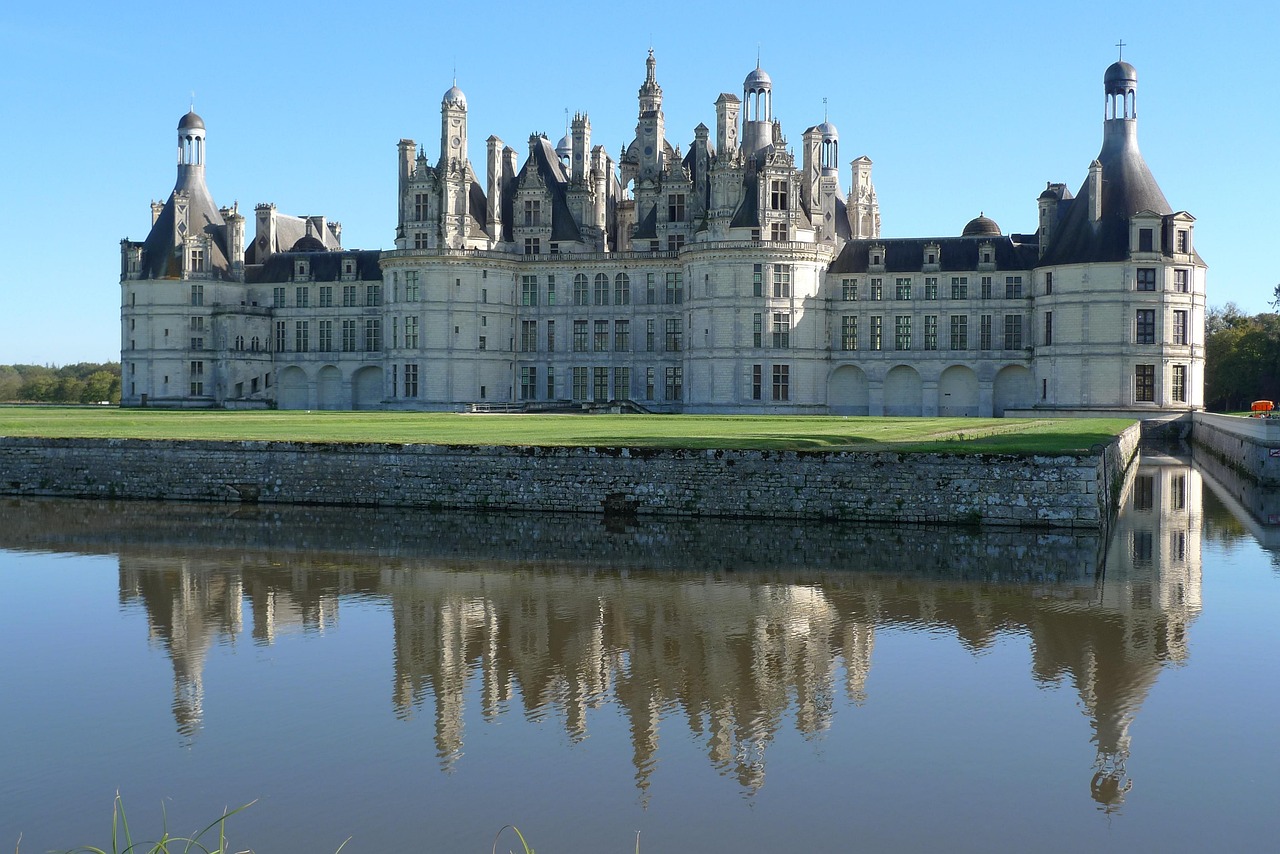
Chambord is almost absurdly grand – a hunting lodge the size of a palace, designed in part by Leonardo da Vinci. Climb the famous double-helix staircase, wander the terraces with their forest views, and take time to walk a bit in the surrounding park.
I like to bring a sandwich or picnic bits; there are on-site options but they can be pricey and crowded. Sitting under a tree on the grounds with a view of those ornate rooftops feels wonderfully indulgent.
Afternoon: Back to Blois
Return to Blois by late afternoon. Use the rest of your day to simply stroll, do some shopping, or revisit a favorite spot. A relaxed dinner in town is the perfect way to wind down – perhaps trying any restaurant you bookmarked earlier but didn’t have time for.
Alternative: If you’ve already visited Chambord elsewhere on your trip, swap it for Château de Cheverny or Chaumont-sur-Loire (see Day Trips section for details).
5 Day Itinerary for Blois – Slow Travel & Deeper Dives
With a full 5 days in Blois, you can really embrace slow travel: taking more time in the city itself and adding two distinct day trips.
Day 4 – Chaumont-sur-Loire & Garden Festival
Morning: Train or Bike to Chaumont
Chaumont-sur-Loire is about 15–20 minutes by train from Blois, plus a short walk, or a longer but scenic bike ride along the Loire à Vélo. I usually take the train there to arrive fresh and bike or train back depending on my energy.
At Chaumont
The Domain of Chaumont-sur-Loire is famous for its International Garden Festival (spring to autumn), where avant-garde gardens and landscape art installations are created around different themes each year. In 2026–2027, expect new experimental designs – the program tends to be playful and thought-provoking.
Spend several hours exploring the gardens and the château; there are art installations tucked all over the grounds.
Evening: Back in Blois
Back in Blois, choose a cozy restaurant – perhaps one specializing in seasonal, vegetable-forward cuisine to echo the garden day you just had.
Day 5 – Cheverny & Wine Country, or Just Blois
Option A: Château de Cheverny & Vineyards
Cheverny, about 30 minutes by car or shuttle from Blois, is known for its impeccably furnished château (one of the best-preserved interiors in the Loire) and its connections to Tintin (it inspired Captain Haddock’s Marlinspike Hall).
Combine a visit here with a tasting at a nearby winery; Cheverny appellation wines are fresh and food-friendly. I’ve had some wonderful conversations with small producers in this area, often in very informal cellar spaces.
Option B: Extra Slow Day in Blois
If you’re traveled-out, keep Day 5 just for Blois: revisit favorite cafés, read in the gardens, hunt for more street art, or join a guided walking tour focusing on a theme you haven’t explored yet (architecture, royal history, or even food).
On my longest stay in Blois, my fifth day was spent entirely in the city, and it was one of the most memorable: no agenda, just living the city as if I were a resident. Highly recommended if your travel style leans slow.
Neighborhoods & Areas to Explore in Blois
Vieux Blois (Old Town)
This is the historic core around the château and cathedral: steep streets, timber-frame houses, hidden courtyards. It’s where most visitors spend the bulk of their time.
Vibe: Romantic, photogenic, full of cafés and restaurants.
Stay here if: You want to step out of your door straight into history and don’t mind hills and stairs.
Lower Town & Riverside
Along the river and below the château, the lower town has a slightly more relaxed feel, with residential streets, small shops, and access to the Loire paths.
Vibe: Everyday life, quieter, good for morning and evening walks.
Gare (Train Station) District
A more modern area around Blois–Chambord station, with some newer hotels, basic services, and growing street art. It’s not as charming as the old town, but it’s practical if you’re arriving late or leaving early by train.
Vibe: Functional, up-and-coming, a bit more urban.
North Bank (Across the Loire)
The area across the bridge is mostly residential, with some lovely riverfront paths and that iconic view back to Blois. Fewer tourists venture here, so it feels more local.
Vibe: Quiet, family-oriented, great views.
Local Food & Drink in Blois
What to Eat: Loire Valley Specialties
Goat Cheese (Fromage de Chèvre) – The surrounding countryside is famous for goat cheeses like Selles-sur-Cher and Valençay. I often order a salade de chèvre chaud (warm goat cheese salad) as a light main.
Freshwater Fish – Look for dishes featuring sandre (pike-perch) or brochet (pike), often served with beurre blanc or light sauces.
Rillons & Rillettes – Pork specialties from the wider region; rillons are caramelized pork chunks, rillettes a kind of spread. Perfect on bread with a glass of red.
Tarte Tatin – The famous upside-down caramelized apple tart was invented not far from here; many Blois restaurants serve a version.
What to Drink: Loire Wines
From Blois, you’re within reach of appellations like Cheverny, Court-Cheverny (Romorantin grapes), Touraine, and a bit further afield, Sancerre and Vouvray.
Try:
- Cheverny Blanc – Typically Sauvignon-based, fresh and aromatic.
- Court-Cheverny – Made from Romorantin, a quirky local grape with real personality.
- Crémant de Loire – Sparkling wines perfect as an aperitif.
Where to Eat & Drink (With Money-Saving Tips)
Blois has a good mix of traditional bistros, more modern restaurants, and casual spots. You’ll find clusters around Place Louis XII, the streets near the château, and some hidden gems on quieter lanes.
Tips from my own routines:
- Menu du jour for lunch: Most places offer a fixed-price lunch menu that’s much cheaper than dinner for similar quality.
- Picnics: On longer stays, I often do one sit-down meal a day and one picnic from market supplies to save money.
- Reservations: For popular spots Friday–Sunday or in July–August, reserve ahead; otherwise you can usually walk in if you’re flexible.
Nightlife, Entertainment & Cultural Experiences in Blois
Evenings in Blois
Blois isn’t a party town, but it has a pleasant evening scene: bars in the old town, riverside guinguettes in summer, and cultural venues like the Halle aux Grains.
I tend to structure evenings around:
- Aperitif at a wine bar – Tasting local wines and chatting with owners.
- Dinner – Either traditional or contemporary Loire cuisine.
- Post-dinner walk – Across the bridge or through lit-up old town streets.
Cultural Experiences
In addition to the château’s sound-and-light show and the Halle aux Grains, keep an eye out for:
- Temporary exhibitions at the château or Fondation du Doute.
- Classical concerts in churches, especially in summer.
- Local festivals (see Events section) with music and performances.
Major Events & Festivals in Blois (2026–2027)
Dates can shift slightly year to year, but these are key events to look out for in 2026–2027:
- Printemps des Arts (Spring Arts) – Spring 2026: exhibitions, performances, and workshops across the city.
- International Garden Festival at Chaumont-sur-Loire – Typically April to October 2026 and 2027, with easy access from Blois.
- Summer Guinguettes – June to August along the Loire banks, with music and open-air dining.
- Heritage Days (Journées du Patrimoine) – September 2026 and 2027: special access to historic sites, many of them free.
- Christmas Markets – December 2026: Blois hosts festive lights, a small market, and seasonal activities.
Check the official tourism website closer to your travel dates for exact schedules and any new events in the Blois travel scene for 2026.
Best Day Trips from Blois
Château de Chambord
Distance: ~20–25 km from Blois
How to get there: Car (30–40 min), shuttle buses in season, or guided tours from Blois. Confident cyclists can ride, but it’s a long round trip.
Why go: It’s one of the most iconic Loire châteaux, with its mind-bending roofline and double staircase. Pair the visit with a walk or bike ride in the surrounding forested park.
Château de Cheverny
Distance: ~17 km from Blois
How to get there: Car, shuttle, or bike via quiet country roads.
Why go: For its perfectly preserved interiors, beautiful grounds, and the chance to combine it with wine tasting in the Cheverny appellation.
Chaumont-sur-Loire
Distance: ~18 km from Blois along the Loire
How to get there: Short regional train ride or bike along the Loire à Vélo.
Why go: For the International Garden Festival and contemporary art installations throughout the estate.
Amboise & Clos Lucé
Distance: ~35–40 minutes by train or car
Why go: Another Loire gem, with a royal château and the Clos Lucé, Leonardo da Vinci’s last residence, now a museum with models of his inventions.
Cultural Etiquette & Local Customs in Blois
Basic politeness: Always greet shopkeepers and staff with a “Bonjour, Madame/Monsieur” when you enter. It sets the tone. A simple “Merci, au revoir” when leaving is appreciated.
Dining etiquette: It’s normal to linger over meals; you won’t be rushed. If you want the bill, ask for it (“L’addition, s’il vous plaît”). Tipping is not obligatory (service is included), but rounding up or leaving a small extra (5–10%) for good service is common.
Quiet in churches: Dress modestly inside religious buildings and speak softly. Photography may be restricted in some areas.
River respect: The Loire is beautiful but can be dangerous; currents are strong and unsupervised swimming is not advised. Stick to designated spots and follow local signs.
Language: Many people in tourism speak some English, but not everyone. A few French phrases go a long way, and locals in Blois are generally patient if you try.
Practical Travel Tips for Blois (2026–2027)
Getting Around Blois
On Foot: The historic center is compact but hilly; expect stairs and slopes. Wear comfortable shoes.
By Bike: Ideal for river paths and reaching nearby villages; several rental options exist near the station and center.
Public Transport: Local buses connect parts of the city and nearby towns, but for deeper countryside and château-hopping, a car or organized tours are more efficient.
Car Rental: Available in Blois and nearby larger cities. Parking in central Blois is a mix of paid and limited free zones; watch signs carefully.
SIM Cards, Connectivity & Money
SIM cards: In 2026, you can easily buy prepaid SIMs from major French providers (Orange, SFR, Bouygues) in phone shops or some supermarkets. eSIM options are increasingly common.
Wi-Fi: Most hotels, many cafés, and some public spaces offer free Wi-Fi. Speeds are generally good.
Money: Euro (€). Cards are widely accepted, including contactless. Still, carry a bit of cash for markets and smaller places.
Visa Requirements & Driving
Visas: France is part of the Schengen Area. Many nationalities can visit visa-free for short stays (usually up to 90 days in 180). Check the latest requirements for your passport before traveling.
Foreign driver’s license: Visitors from the EU/EEA can drive with their home licenses. Many other nationalities can use their license plus an International Driving Permit (IDP) – check current rules. Car rental companies will require a valid license and usually a credit card.
Best Seasons & What They’re Good For
Spring (April–June): Ideal mix of mild weather, blooming gardens, and fewer crowds. Perfect for cycling and gardens like Chaumont.
Summer (July–August): Warmest and busiest; long days, lively riverside scene, but higher prices and more visitors at major châteaux.
Autumn (September–October): My personal favorite: grape harvest vibes, golden foliage, cooler temperatures, and still-active cultural scene.
Winter (November–March): Quiet, some attractions have reduced hours, but you’ll have places almost to yourself. Cozy for castle interiors and long café sessions.
How to Save Money in Blois
- Use lunch menus: Eat your main meal at midday when prices are lower.
- Picnic often: Markets and bakeries offer delicious, affordable options.
- Combined tickets: Look for château + sound-and-light combos or multi-site passes.
- Walk and bike: The city is small enough that you rarely need taxis.
- Travel shoulder season: Late spring and early autumn offer lower accommodation prices.
Summary & Final Recommendations
Blois isn’t trying to impress you with flashy skyscrapers or massive boulevards; its charms are quieter and deeper. It’s a city where you wander stone alleys, climb staircases worn by centuries of footsteps, and watch the Loire shift colors under changing skies. It’s big enough for culture and good food, small enough that after a couple of days you’ll recognize faces at the bakery.
For a 3 day itinerary for Blois, focus on the château, old town, riverfront, and one day of cycling or museums. With 4 days in Blois, add a major château day trip like Chambord. A full 5 day itinerary for Blois lets you settle in properly: two château day trips, more time in gardens, and space to simply live the city.
In terms of timing, the best time to visit Blois is spring or autumn for pleasant weather and fewer crowds, though summer brings a festive riverside atmosphere and winter offers peace and low-key charm.
However you structure your stay, leave room for serendipity: a detour up an unknown staircase, a conversation in a wine bar, or an extra ten minutes on a bench overlooking the Loire. That’s where Blois really reveals itself – and why I keep coming back.