Why Visit the Canal du Midi?
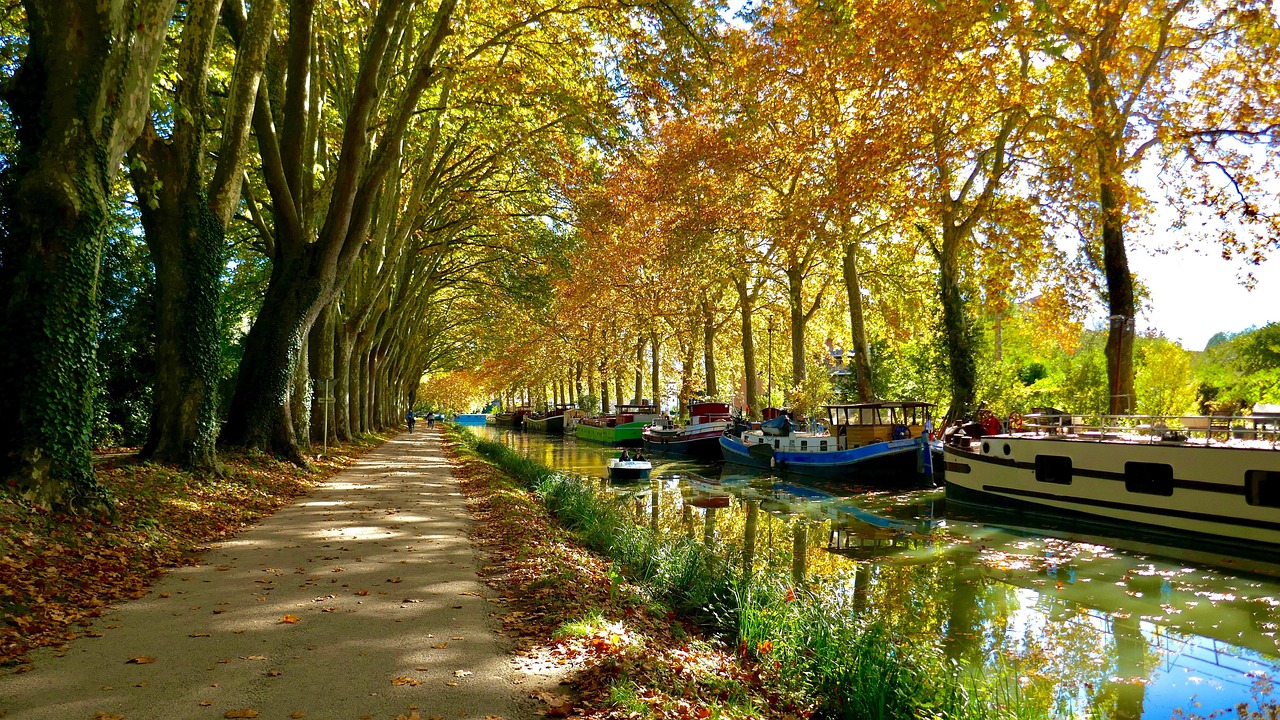
The Canal du Midi is not just a waterway; it’s a 17th-century line of quiet magic stretching roughly 240 km from Toulouse to the Mediterranean near Sète. Every time I return – most recently in spring and late autumn 2025 – I’m struck by how it slows the world down. Plane trees lean over the water, villages drift by at walking pace, and you find yourself lingering over lunches that would count as dinners anywhere else.
Whether you’re driving alongside the canal, cycling its towpaths, or captaining a rented pénichette, this is one of Europe’s great slow-travel routes. It’s also one of the most flexible: you can design a 7 leg itinerary for Canal du Midi, stretch it to 14 legs, or just cherry-pick a single dreamy weekend around Carcassonne or Béziers.
The Canal du Midi is special because it layers experiences: engineering marvels like the Fonserannes Locks, UNESCO-listed heritage, vineyard-dotted hills, big-city culture in Toulouse and Béziers, and tiny hamlets that seem to exist purely to serve cassoulet and rosé. It’s family-friendly (locks and bike rides), romantic (sunset moorings and wine tastings), and gently adventurous (kayaking, long cycling days, or piloting your own boat).
If you’re weighing European trips for 2026–2027 and you’re tired of crowds and checklists, the Canal du Midi offers something rarer: time. Time to dawdle, to talk, to watch light move across the water. This travel guide for Canal du Midi is built around that idea – a sequence of legs, stops, and stories from my own journeys.
Canal du Midi Overview & Route Basics
The Canal du Midi runs between Toulouse and Sète (via the Étang de Thau lagoon and a short link on the Canal du Rhône à Sète). In practice, most travellers treat Toulouse as the western anchor and Marseillan or Agde as the eastern finish.
Along the way, it threads through the Lauragais plain, the Aude and Hérault departments, and the wine regions of Minervois and Languedoc. This is where the idea of “legs of Canal du Midi” becomes useful. You can carve the journey into 7 legs of Canal du Midi for a brisk week, or stretch to 14 legs of Canal du Midi for a deep, meandering exploration.
My preferred direction is west to east – starting in Toulouse, rolling through Carcassonne and Béziers, and finishing on the Mediterranean near Sète. Psychologically, it feels like a gentle descent from city to sea, with the canal itself following that logic: it climbs from Toulouse to the Seuil de Naurouze (its watershed summit), then drops gradually toward the coast.
Suggested Multi-Leg Itineraries (7–14 Legs)
To help you plan, here’s how I think about different Canal du Midi road trip itineraries, whether you’re driving, cycling, or boating. All can be reversed.
7 Leg Itinerary for Canal du Midi (Fast but Flavorful, ~7–10 Days)
- Leg 1: Toulouse to Castelnaudary
- Leg 2: Castelnaudary to Carcassonne
- Leg 3: Carcassonne to Homps
- Leg 4: Homps to Le Somail & Narbonne (detour)
- Leg 5: Le Somail to Béziers
- Leg 6: Béziers to Agde
- Leg 7: Agde to Marseillan & Sète
10–12 Leg Itinerary for Canal du Midi (My Favorite Pace, ~12–16 Days)
This guide is effectively a 12–14 leg itinerary for Canal du Midi, broken down into manageable ~1–2 day sections:
- Toulouse
- Toulouse–Montgiscard–Gardouch
- Gardouch–Castelnaudary
- Castelnaudary–Carcassonne
- Around Carcassonne & Trèbes
- Trèbes–Homps–Argens-Minervois
- Homps–Le Somail–Ventenac
- Le Somail–Narbonne–Sallèles-d’Aude
- Le Somail–Capestang–Poilhes
- Capestang–Béziers
- Béziers–Colombiers–Tunnel du Malpas
- Colombiers–Agde
- Agde–Marseillan
- Marseillan–Sète
Below, I’ll treat each as a distinct leg with a personal narrative, history, and concrete tips – so you can string them together into a 7, 8, 9, 10, 11, 12, 13, or 14 leg itinerary for Canal du Midi, depending on how many you choose to keep.
Leg 1 – Toulouse: The Red City & Canal Gateway
I always start in Toulouse. It’s not just convenience (excellent train connections and flights); it’s the way the city eases you into canal time. On my most recent trip in April 2025, I arrived on a drizzly afternoon, checked into a small guesthouse near the Canal du Midi, and went out walking with a coffee in hand. The canal was quiet, the towpath slick and reflective, and every now and then a cyclist flicked past, the only sound the soft hiss of tires.
Why Toulouse Belongs in Every Canal du Midi Itinerary
Toulouse is the westward anchor of the Canal du Midi and the starting point for most boat-hire bases, cycling routes, and road itineraries. Historically, it’s where Pierre-Paul Riquet’s audacious 17th-century project connected the Atlantic world (via the Garonne) to the Mediterranean, allowing boats to bypass the treacherous route around Spain.
For you, it’s where you collect your rental car or bike, pick up last-minute supplies, and adjust to the rhythm of southern France. It’s also flat-out beautiful: red-brick facades glowing at sunset, the wide Garonne River, and a network of canals radiating from the city like veins.
Things to Do in Toulouse Before You Hit the Canal
- Stroll the Canal du Midi embankments: Start at the Port Saint-Sauveur or Port de l’Embouchure and walk a stretch of towpath. It gives you a preview of the journey ahead.
- Visit the water-related museums: The city occasionally hosts temporary exhibitions about the canal at the Musée des Augustins or in civic venues. In 2026, look for the special 350+ years of Canal du Midi engineering exhibits scheduled for summer (dates TBA).
- Evening at Place du Capitole: Have a glass of Gaillac wine under the arcades, watch students and families drift by, and remind yourself that the next days will be slower still.
Food: Cassoulet Starter & Local Bistronomy
While Castelnaudary claims cassoulet supremacy, Toulouse makes a strong case. On my last visit, I had an early “pre-canal” cassoulet at a tiny place near the Canal de Brienne. It was lighter than the stereotype – beans with real bite, duck confit falling off the bone, crust crackling under my spoon. Pair it with a glass of Fronton red or a local beer from one of Toulouse’s microbreweries.
Don’t miss:
- Duck magret with honey and spices, common in traditional brasseries.
- Market lunches at Marché Victor Hugo – upstairs restaurants serve grilled meats, seafood, and daily specials.
Where to Stay in Toulouse
For a Canal du Midi road trip itinerary, I like to stay close to the canal to simplify loading the car or starting a bike ride:
- Mid-range: Canal-side boutique hotels near Port Saint-Sauveur, with secure parking and bike storage.
- Budget: Simple guesthouses around the Matabiau station area – not glamorous, but perfectly placed for an early start.
- Family-friendly: Apartment hotels with kitchenettes near the Jeanne-d’Arc district.
Practical Tips for Leg 1
- Car rental: Pick up in the late afternoon or early evening before departure day to avoid morning queues.
- Bike setup: If you’re cycling, use your arrival day to test-ride, tweak saddles, and buy last-minute panniers.
- Groceries: Stock up at one of the city’s supermarkets – you’ll pay a premium if you wait for smaller canal-side villages.
Leg 2 – Toulouse to Montgiscard & Gardouch: First Miles of Quiet
Distance-wise, this is a short leg – about 40 km along the canal – but psychologically, it’s huge. You leave the urban hum of Toulouse and, within an hour, the soundscape changes to birds, the soft clunk of mooring lines, and occasional lock-keepers greeting you with a nod.
Driving, Cycling, or Boating?
I’ve done this section three ways. By car, you’ll hop on and off the D813 and smaller local roads, crossing the canal at intervals. By bike, you’re hugging the towpath, weaving under old stone bridges. By boat, it’s perhaps the purest experience: low speed, locks every few kilometers, and time to watch herons stalk the banks.
Montgiscard: A First Proper Pause
Montgiscard is where I like to have my first “we’re really doing this” coffee. The canal curves gently, shaded by plane trees, and a small bridge leads up into the village. It’s not a must-see attraction in the glossy-guide sense, but that’s exactly why it feels right.
- Coffee stop: A modest café-bar near the bridge serves espresso, croissants, and – later in the day – cold beers to boaters and cyclists.
- Quick stroll: Walk up into the village, peek inside the church, and enjoy the views back down onto the canal and the Lauragais plain.
Gardouch: Locks, Picnics & First Night Option
Gardouch is one of those small canal villages that ends up in more of my photos than I expect. On a June evening in 2024, I sat on the grass here with friends, sharing a simple picnic of baguette, cheese, and local rosé. Boats were queuing at the lock, dogs were trotting along the towpath, and the air smelled faintly of cut grass.
Things to do in Gardouch and nearby:
- Watch the locks in action: If you’re travelling with kids, this is an excellent, low-stress place to see how locks work. Boaters are generally happy to explain, and the lock-keepers keep a close eye on safety.
- Short walks: Head east or west along the towpath for easy, flat walks under the trees. Good for stretching legs at the start of a drive.
- Canal-side dinner: A small cluster of restaurants and pizzerias cater to canal traffic. It’s not haute cuisine, but after a day outside, a wood-fired pizza and a pichet of house wine are perfect.
Overnighting on Leg 2
If you’re planning an 11 or 12 leg itinerary for Canal du Midi, consider spending your first night near Gardouch or in a nearby farmhouse B&B. You’ll wake up already in the countryside, with Toulouse comfortably behind you.
- For couples: Look for chambres d’hôtes in converted farmhouses with views over the fields. Many include a home-cooked dinner.
- For families: Rural gîtes with gardens and small pools, a short drive off the canal.
Travel Tips
- Fuel stop: Fill up before leaving Toulouse; fuel stations become less frequent on the smaller roads.
- Lock hours: If boating, remember that canal locks have set operating hours and can close over lunch or evenings, especially outside peak season.
- Picnic supplies: Grab market produce in Toulouse; small canal villages have limited options, especially on Sundays.
Leg 3 – Gardouch to Castelnaudary: Cassoulet & Big Skies
This is where the Canal du Midi starts to feel like a grand project. The Lauragais plain opens out, the canal runs straighter, the locks become more frequent, and the sky seems to stretch in every direction.
Along the Way: Avignonet-Lauragais & Lauragais Windmills
On a bright October day, I diverted up to Avignonet-Lauragais. It sits slightly above the canal, a handsome village with a past tangled up in the religious conflicts of the Cathar era. The church is austere, the streets quiet, the views over the plain wide and peaceful.
Nearby, old windmills dot the horizon. Some have been restored, others stand as half-ruined silhouettes. If you’re driving, it’s worth the short detour for photos and the sense of history – this is the agricultural heartland that fed the canal’s traffic in grain and goods.
Castelnaudary: The Cassoulet Capital
Castelnaudary is a must-stop town on any Canal du Midi itinerary – one of the best places to visit in Canal du Midi if you care about food and canal history. The canal widens into the Grand Bassin, an expansive artificial lake that once facilitated the loading and unloading of barges. Today, pleasure boats line its edges and ducks patrol the shallows.
What to Do in Castelnaudary
- Walk the Grand Bassin: The loop around the water is one of my favorite evening strolls on the canal – particularly at sunset, when the sky reflects in the still water.
- Visit the windmill: The Moulin Cugarel is a restored windmill on a hill above town; it’s a short, steep walk with rewarding views over both Castelnaudary and the canal basin.
- Explore the old town: Narrow streets, shaded squares, and a handful of churches and small museums give a sense of the town’s working past.
Local Food in Canal du Midi: Cassoulet in Castelnaudary
On one chilly February evening in 2023, I arrived in Castelnaudary hungry and a little damp from an unexpected squall. I checked into a small canal-side hotel, took one look at the menu, and went straight for the cassoulet. The earthenware dish arrived still bubbling, crust browned and crackling, the aroma filling the entire room.
This is the dish of the region: white beans, duck confit, Toulouse sausage, and sometimes pork, slow-cooked until everything melds into something greater than the sum of its parts. It’s rich, but after a day walking or cycling, it feels exactly right.
Sleeping in Castelnaudary
- Canal-side hotels: A handful of modest hotels and B&Bs line the Grand Bassin. Ask for rooms with water views.
- Gîtes and farm stays: If you have a car, consider staying just outside town on a small farm. Waking up to fields and distant church bells is part of the charm.
Travel Tips
- Parking: There is ample free or low-cost parking near the basin, but it can fill on summer weekends.
- Boat hire: Castelnaudary is a good alternative starting point if you’d rather skip the urban locks around Toulouse.
- Budgeting: Cassoulet is hearty and often enough to share if you’re not ravenous – useful if you’re trying to keep restaurant costs in check.
Leg 4 – Castelnaudary to Carcassonne: Hilltop Villages & Medieval Walls
This leg is one of the most quietly beautiful stretches of the Canal du Midi. The landscape rolls more, the Pyrenees sometimes appear faintly on the southern horizon, and the canal crosses small valleys on elegant stone aqueducts.
Seuil de Naurouze: The Canal’s Watershed
A key stop – and one often missed in rushed itineraries – is the Seuil de Naurouze, the canal’s summit point and watershed. This is where waters divide: one way toward the Atlantic, one toward the Mediterranean. Riquet chose this high point for his grand project, and commemorative obelisks and trees mark the site.
I stopped here on a blustery day in March 2025, the wind whipping through the trees. A few other travellers were picnicking by the water, reading the plaques about Riquet’s life. It’s not dramatic in a mountain-pass way, but historically, this is one of the most important places on the canal.
Approaching Carcassonne
As you near Carcassonne, the canal runs through increasingly cultivated countryside – vineyards, sunflower fields (in summer), and occasional stands of poplars. The first time I arrived by bike, the sight of the double-walled Cité de Carcassonne rising above the Aude River was one of those pinch-me moments.
Carcassonne: Medieval Icon & Canal Town
Carcassonne is easily one of the must-see attractions in Canal du Midi region, and it deserves at least two nights if you can spare them. The lower town (the Bastide Saint-Louis) hugs the canal and railway, while the medieval citadel sits on a hill across the river.
Things to Do in Carcassonne
- Explore the Cité: Walk the double ramparts, visit the château, and take time in the basilica to let the stained glass work on you. Early mornings and late evenings are best to avoid crowds.
- Stroll along the Aude: The river path offers some of the best views back toward the citadel, especially from the old stone bridge.
- Canal-side wandering: Down by the Canal du Midi, pleasure boats moor near simple cafés and plane-tree-lined promenades – a different, calmer Carcassonne.
Food & Wine in Carcassonne
This is a good place to dive deeper into Languedoc wines: Minervois, Corbières, and Cabardès are all within easy reach. Many wine bars offer flights or by-the-glass tastings. Food ranges from tourist-oriented medieval-themed menus (skip those if you can) to serious modern bistro cooking in the Bastide.
Family-Friendly Activities
- Ramparts walks: Kids love the sense of being in a fairy-tale fortress; just watch for steep drops and hold hands where needed.
- Boat tours: Short sightseeing cruises on the Canal du Midi depart from Carcassonne’s canal port, ideal if you’re not renting a boat for the full journey.
Travel Tips
- Parking: Dedicated lots below the Cité; expect to pay and walk uphill.
- Best time: Shoulder seasons (April–June, September–October) give you the best balance of weather and manageable crowds.
- Overnight choices: For canal ambience, stay nearer the canal; for drama, book a hotel inside or just below the Cité.
Leg 5 – Around Carcassonne & Trèbes: Wine Roads & River Bends
This leg often gets compressed in a 7 leg itinerary for Canal du Midi, but if you’re following a slower 10–12 leg itinerary, give it room. East of Carcassonne, the canal threads quietly through vines, small villages, and the gentle curves of the Aude valley.
Trèbes: A Canal Village with Character
Trèbes is one of my favorite small stops along the whole route. The canal squeezes through a set of locks here, with stone bridges and waterside terraces lined with cafés. On a warm June afternoon in 2024, I lingered over a late lunch under the plane trees, watching boats navigate the lock sequence with varying degrees of grace.
Things to do in Trèbes:
- Lock-watching: Grab a table or a spot on the railing and treat it like live theatre.
- Short walks: Follow the canal towpath east or west for easy, scenic strolls.
- Visit the church: The parish church of Saint-Étienne has small but beautiful details and offers a cool respite from summer heat.
Wine Tasting Detours
From Carcassonne and Trèbes, it’s easy to reach small wineries in the Cabardès and Minervois appellations. On one trip, I spent a half-day visiting a family-run domaine south of Trèbes, tasting peppery reds and crisp whites in a barn that smelled of old oak barrels and fermenting juice.
If you’re driving, designate a driver or spit; if you’re boating or cycling, time tastings to avoid hot midday rides back.
Travel Tips
- Market days: Check local listings; markets in Carcassonne and nearby villages rotate through the week.
- Lunch hours: Rural restaurants still respect traditional lunch hours (roughly 12:00–14:00). Outside that window, options thin dramatically.
Leg 6 – Trèbes to Homps & Argens-Minervois: Vineyard Heartland
This is where the Canal du Midi feels most intimately tied to wine country. The Minervois hills rise gently to the north, dotted with vines, and the light has that particular Languedoc clarity that photographers chase.
Homps: A Classic Canal Port
Homps is a major hire base for boats and a natural overnight stop on many Canal du Midi road trip itineraries. The port is busy but relaxed – kids with ice creams, couples leaning on railings, and boat crews figuring out ropes and fenders.
Things to do in Homps:
- Walk the port: Evening light is especially lovely, with boats reflected in the water and the hum of restaurant terraces.
- Wine bar stops: Several spots offer regional wines by the glass; ask for recommendations from the Minervois appellation.
- Swim in Lac de Jouarres: A short drive or bike ride away, this lake offers swimming, paddle-boarding, and a change from canal life.
Argens-Minervois: Hilltop Charm
Just a few kilometers further, Argens-Minervois rises above the canal, its stone houses clustered around a small château. I like to moor or park below and walk up at golden hour – the views back over the canal, vineyards, and distant hills are quietly spectacular.
Food & Drink
This is an excellent region for local food in Canal du Midi: grilled meats, duck, goat cheeses, and vegetable tarts, all paired with Minervois reds and rosés. In Homps and Argens, look for:
- Canal-side bistros: Fresh salads, simple fish dishes, and daily specials focused on what’s in season.
- Wine caves: Small wine shops offering tastings and bottles to take on the road or back to your boat.
Travel Tips
- Heat management: In July–August, afternoons can be scorching. Plan rides and walks for morning or late afternoon, and rest midday.
- Reservations: In high season, book canal-side restaurants a day in advance, especially if you want a terrace seat.
Leg 7 – Homps to Le Somail & Ventenac-en-Minervois: Bookshops & Wine Châteaux
If I had to pick a single favorite cluster of villages on the Canal du Midi, this might be it. Le Somail in particular feels like a stage set dreamt up by a romantic director: stone bridge, small chapel, old inn, and a bookshop overflowing with volumes.
Le Somail: A Canal Du Midi Icon
Le Somail is one of the best places to visit in Canal du Midi region if you love atmosphere. On my last visit in September 2023, I arrived just before sunset. The bridge was backlit, boats were moored along both banks, and the tiny hamlet was humming with gentle life – diners on terraces, kids fishing, a couple walking a small dog along the towpath.
Don’t miss:
- The bookshop: A labyrinth of secondhand books in multiple languages. I always find some unexpected travel or history volume here.
- Canal bridge views: Stand at the center of the stone bridge and look both ways along the canal; it’s one of the classic Canal du Midi perspectives.
- Canal-side dining: A handful of restaurants line the banks – ideal for a romantic dinner or a leisurely family meal.
Ventenac-en-Minervois: Wine & River Views
A short way from Le Somail, Ventenac-en-Minervois sits slightly above the canal, dominated by its château-like wine cooperative. It’s another must-pause town, especially if you’re interested in regional wines.
The cooperative has a grand entrance and a vaulted tasting room. On a hot August afternoon, I ducked in here for shade and ended up chatting for nearly an hour with the staff about changing wine styles, climate, and the ebb and flow of canal tourism. I left with two bottles and a renewed appreciation for how deeply entwined the canal is with local agriculture.
Travel Tips
- Parking at Le Somail: It’s limited and can be tight in peak season; arrive earlier in the day if possible.
- Bookshop hours: They can be irregular; if it’s closed when you first pass, check posted times and loop back if needed.
- Family-friendly: Kids tend to love Le Somail for its small scale, bridges, and ice-cream stops; just watch younger ones near the water’s edge.
Leg 8 – Le Somail to Narbonne & Sallèles-d’Aude: Roman Echoes
This leg includes a bit of a detour – Narbonne sits slightly off the main Canal du Midi line – but it’s worth every extra kilometer. Narbonne was once a major Roman port, and today it offers one of the liveliest food markets in the region.
Sallèles-d’Aude: Canal Junctions
Sallèles-d’Aude sits at the junction of the Canal de Jonction (which links to Narbonne) and the Canal de la Robine. It’s a compact, pleasant village with terraced cafés and a gentle pace.
Narbonne: Market Halls & Cathedral Towers
Narbonne is one of the great day trips off the Canal du Midi. On a rainy morning in November 2022, I drove in for the market and ended up staying most of the day.
- Les Halles: The covered market is a feast of local produce – olives, charcuterie, seafood, cheeses, and pastries. It’s perfect for assembling a picnic or sitting at a counter for oysters and wine.
- Cathedral: The partially completed Gothic cathedral dominates the skyline; the cloister and surrounding streets are atmospheric and relatively uncrowded outside peak season.
- Canal walks: The Canal de la Robine runs through the city, lined with promenades and cafés – a nice urban echo of the quieter Canal du Midi stretches.
Travel Tips
- Parking: Multi-storey car parks around the historic center; follow signs and be patient in summer.
- Market hours: Mornings are best; many stalls wind down by early afternoon.
Leg 9 – Le Somail to Capestang & Poilhes: Stone Bridges & Secret Tables
Returning to the main canal east of Le Somail, you roll into one of my favorite “everyday life” sections of the route. Capestang and Poilhes may not headline glossy brochures, but they’re full of the small pleasures that make slow travel sing.
Capestang: Tower Views & Low Bridges
Capestang’s church tower dominates the village and offers a fantastic viewpoint if you’re up for the climb. The canal skirts town, and a famously low bridge at Capestang tests the nerves of taller boat owners; watching them inch through with centimetres to spare is a low-key spectator sport.
Poilhes: Quiet Charm
Poilhes is smaller, quieter, and – in my mind – a quintessential Canal du Midi village. On a warm evening in May 2024, I ended up at a tiny restaurant here on the recommendation of a boat crew. We ate on a terrace under vines, the canal a few metres away, the air filled with the murmur of conversation and clink of glasses.
This is where the phrase “hidden gems in Canal du Midi” feels most accurate. There’s no single must-see attraction, just the cumulative charm of stone houses, slow boats, and genuinely local eateries.
Travel Tips
- Evening stops: Both Capestang and Poilhes make great overnight haunts for road trippers – small hotels, B&Bs, and simple inns cater to canal travellers.
- Bridge clearance: If you’re on a rental boat, listen carefully to base briefings about clearance at Capestang; do not attempt if your boat is too high.
Leg 10 – Capestang to Béziers: The Legendary Locks of Fonserannes
This is one of the most famous sections of the Canal du Midi, and for good reason. The approach to Béziers is dramatic: the canal crosses the Orb River on an aqueduct, and the Fonserannes Locks form a grand staircase that drops boats down toward the plain.
Fonserannes Locks: Engineering Spectacle
The Neuf Écluses de Fonserannes (Nine Locks of Fonserannes, though fewer are in current operation) are a UNESCO-highlighted engineering feat. Boats ride the steps up or down, water surging in and out, as crowds watch from walkways and terraces.
I’ve visited in both high season and deep autumn. In August, it’s bustling – families, tour groups, and boat crews all jostling for the best views. In October, it’s calmer; you can linger and watch the choreography without feeling rushed.
Orb Aqueduct: Canal Above River
Just beyond the locks, the canal crosses the Orb River on an elegant aqueduct. Driving or walking below, it’s striking to see boats seemingly gliding through the air above. From the canal itself, the experience of crossing feels subtly surreal.
Béziers: City on a Hill
Béziers is a city with layers – Roman roots, Cathar history, and a wine-trade heyday. The cathedral looms above the river and canal, and the old town is a warren of narrow streets, squares, and cafés.
- Cathedral of Saint-Nazaire: Climb for views over the Orb, the aqueduct, and surrounding vineyards.
- Old town wander: Explore the squares, stop for a coffee, and let yourself get a little lost.
- Canal-side promenade: Down by the canal, the atmosphere is quieter; it’s a nice contrast to the urban bustle above.
Travel Tips
- Lock schedules: Fonserannes has structured opening hours and sometimes requires booking for passage; check ahead if you’re boating.
- Parking: Dedicated lots near the locks and on the city’s outskirts; inner streets can be tricky for larger vehicles.
- Families: Fonserannes is a hit with kids; there’s space to run and plenty to watch, but keep a close eye near water edges.
Leg 11 – Béziers to Colombiers & the Malpas Tunnel: Engineering Wonders
East of Béziers, the canal passes through one of its most technically impressive sections, including the Tunnel de Malpas – Europe’s first canal tunnel.
Colombiers: Canal Village with a Curve
Colombiers sits at a graceful curve of the canal, its small port lined with boats and restaurants. I’ve overnighted here twice, and each time the pattern was the same: arrive late afternoon, shower off the day’s dust, then wander out for an apéro as the sun drops.
Tunnel de Malpas: Through the Hill
The Malpas Tunnel is short by modern standards, but it was revolutionary in its day. The canal bores through a sandstone hill, and you can walk or ride along the towpath through the tunnel (with lights – bring a headlamp or rely on your phone torch if needed).
Nearby, archaeological remains and viewpoints reveal layers of older infrastructure – including a Roman road and an earlier drainage tunnel. It’s a reminder that the Canal du Midi didn’t appear in a vacuum; it’s part of a much longer story of human engineering in this landscape.
Travel Tips
- Lights: The tunnel is lit, but having a small extra light helps, especially for cyclists.
- Parking: Small car parks near the tunnel and viewpoints; arrive early on weekends.
Leg 12 – Colombiers to Agde: Volcanic Towns & Fishing Ports
This leg gradually swaps vineyards for more Mediterranean landscapes. You start to feel the sea’s influence – in the light, the breeze, and the vegetation.
Agde: The Black Pearl
Agde, built from dark volcanic stone, has a distinct character among Canal du Midi towns. The Hérault River runs through it, and the canal connects nearby, tying inland waterways to the sea.
Things to do:
- Explore the old town: Dark-stone buildings, narrow lanes, and a more maritime feel than the inland villages.
- Visit the cathedral: The fortified church of Saint-Étienne stands above the river.
- Boat junction: Watch boats navigate the meeting of canal and river, a bustling aquatic crossroads.
Family & Beach Time (Nearby Cap d’Agde)
If you’re travelling with kids, this is a good leg to insert a beach day. Cap d’Agde, a short drive away, offers sandy beaches, water parks, mini-golf, and all the trappings of a modern seaside resort.
Travel Tips
- Parking: Old-town streets are narrow; use designated lots on the periphery.
- Heat & crowds: In July–August, Cap d’Agde can be very busy; shoulder seasons are calmer.
Leg 13 – Agde to Marseillan: Lagoon Light & Oysters
This leg shifts from canal to lagoon – the Étang de Thau – and marks the transition from inland waterways to the open sense of the Mediterranean. The light changes again, becoming almost silvery over the shallow waters.
Marseillan: Lagoon Port & Noirmoutier Vibes
Marseillan sits on the edge of the lagoon, with a pretty port lined with restaurants and wine cellars. I love arriving here in the late afternoon, when the sun hangs low over the water and the sound of cutlery and conversation drifts across the quays.
Things to do:
- Oyster tasting: The Étang de Thau is famed for its shellfish. Several producers offer tastings right on the lagoon.
- Noilly Prat: Visit the Noilly Prat vermouth cellars for a tour and tasting – a fascinating look at a local aromatic tradition.
- Lagoon walks: Wander along the waterfront, watching fishing boats and birds work the shallow waters.
Romantic Evenings
Marseillan is one of the most romantic stops on the Canal du Midi route, especially if you’re doing a 9 or 10 leg itinerary and want a special finale before Sète. Canal-side and lagoon-side restaurants lean into candlelight and seafood feasts.
Travel Tips
- Reservations: Book dinners in advance for summer weekends; locals love this spot as much as visitors.
- Wind: The tramontane wind can whip across the lagoon; bring a light layer even on warm days.
Leg 14 – Marseillan to Sète: Sea Breezes & Journey’s End
The final leg takes you along or near the Étang de Thau to Sète – a working port, fishing town, and lively cultural hub. While the historical Canal du Midi technically ends at the Étang de Thau, most modern travellers psychologically finish in Sète, where the lagoon meets the open Mediterranean.
Sète: Venice of Languedoc
Sète is criss-crossed with canals and backed by a modest hill (Mont Saint-Clair) that offers panoramic views over town, sea, and lagoon. It’s busy, salty, and alive – a vibrant contrast to the quieter villages inland.
Things to do:
- Climb or drive Mont Saint-Clair: For a last big view of your route and the sea.
- Canal jousting (in season): Sète is famous for water jousting tournaments in summer; if your dates align, don’t miss it.
- Seafood feasts: Finish your trip with bouillabaisse-style fish soups, grilled seafood, and local white wines.
Journey’s End Reflections
On my most recent Canal du Midi journey, I arrived in Sète just before dusk. Cars honked, ferries moved in the harbour, and gulls wheeled overhead. After days of slow water and village quiet, the energy felt almost shocking – in the best way. I found a terrace overlooking the fishing port, ordered a plate of grilled octopus, and watched the sun sink over the Mediterranean, thinking about the small stone locks and tree-lined paths miles behind me.
Travel Tips
- Parking: Use structured car parks; street parking can be tight.
- Train connections: Sète has good rail links along the coast (to Montpellier, Marseille) and back inland if you’re looping to Toulouse.
Eating & Sleeping Along the Canal du Midi
One of the joys of a Canal du Midi road trip itinerary is the rhythm of days: café breakfasts, towpath picnics, canal-side dinners, and quiet nights in small inns or B&Bs.
Signature Dishes & Local Food in Canal du Midi
- Cassoulet: The cassoulet triangle (Toulouse–Castelnaudary–Carcassonne) is your playground. Try it at least once, ideally in Castelnaudary.
- Duck & foie gras: Common throughout; look for grills, confit, and terrines.
- Seafood & oysters: Particularly around Agde, Marseillan, and Sète.
- Cheeses & charcuterie: Ideal for picnics; markets in Toulouse, Carcassonne, and Narbonne are your best hunting grounds.
Where to Sleep: From Farmhouses to Canal Boats
- Chambres d’hôtes (B&Bs): My default choice – personal, often with home-cooked breakfasts and local tips.
- Canal-side hotels: In major towns (Castelnaudary, Carcassonne, Béziers, Agde, Sète), these give you easy walking access to both canal and historic centers.
- Boat cabins: If you’re cruising, your boat is also your hotel. Cabins are compact but cosy; bring soft luggage, not hard suitcases.
- Camping: Numerous campsites line the route, many with direct canal access and pools – great for families or budget-conscious travellers.
Planning Fuel Stops & Overnights
For drivers, fuel is easy on major roads but less frequent on the smallest lanes. I aim to refill when I hit half a tank, especially on Sundays when some rural stations close or switch to card-only.
In terms of overnight pacing, a comfortable daily distance is:
- Driving: 50–80 km along canal-adjacent roads, with plenty of stops.
- Cycling: 30–60 km per day, depending on fitness and heat.
- Boating: 4–6 hours of cruising, allowing time for locks and mooring.
Evenings on the Road: Canal Du Midi After Dark
Nights on the Canal du Midi are often quiet in the best way. Small-town main streets slow after dinner; canal-side bars glow softly under plane trees; the sky, away from big cities, fills with stars.
Where Evenings Shine
- Castelnaudary: Sunset over the Grand Bassin, then dinner with views of the water.
- Carcassonne: The Cité lit up at night is a true spectacle; evening walks around the walls are magical.
- Le Somail & Poilhes: Tiny, intimate, perfect for slow dinners and quiet walks.
- Béziers: Lively old-town bars and riverfront promenades for a slightly more urban night out.
- Marseillan & Sète: Buzzing quays, live music in summer, and long, late dinners.
Star-Camping & Night Walks
On some legs – especially around Homps, Argens, and Capestang – the skies are dark enough for proper stargazing. If you’re camping or on a boat, take a late-night stroll along the towpath. The stillness of water and the silhouettes of trees against the sky are unforgettable.
Extras: Day Trips & Nearby Attractions
While the canal itself offers more than enough, a few side trips can deepen your sense of the region.
Minerve
A perched village above a dramatic gorge, Minerve is a short drive north from Homps or Le Somail. Its stone houses and Cathar history make it a popular day trip; go early or late in the day to avoid midday crowds.
Montolieu (Book Village)
Near Carcassonne, Montolieu has reinvented itself as a “book village,” with multiple bookstores and artisan workshops. It’s a bibliophile’s delight and pairs well with a Carcassonne stay.
Pyrenees Foothills
From Carcassonne or Castelnaudary, you can drive south into the foothills for mountain walks, Cathar castle ruins (like Lastours or Peyrepertuse, though the latter is a longer drive), and cooler air in summer.
Cultural Etiquette & Local Customs
Canal-side life follows both French norms and its own gentle rhythms. A few notes to help you blend in:
- Greetings: Always say “Bonjour” or “Bonsoir” when entering shops, cafés, or addressing people. It matters.
- Meals: Lunch is typically 12:00–14:00, dinner from 19:30 onward. Many rural restaurants close between services.
- Tipping: Service is included, but leaving 5–10% for good service is appreciated.
- Quiet hours: Canal moorings and small villages tend to quieten after 22:00–23:00; keep noise low.
- Lock etiquette: If you’re watching, don’t crowd the edge; if you’re boating, follow staff instructions and be patient with fellow travellers.
Practical Travel Advice & Route Logistics (2026–2027)
Best Direction: West to East or East to West?
I prefer west-to-east (Toulouse to Sète). You begin in a vibrant city, climb gently to the Seuil de Naurouze, then descend psychologically and physically toward the sea. That said, east-to-west works just fine, especially if you’re coming from Provence or Italy.
Vehicle Suitability
- Regular car: Perfect for a Canal du Midi road trip. Roads are mostly paved and in good condition.
- RV / campervan: Feasible, but some village streets are narrow; plan parking and overnight stops carefully.
- Motorcycle: Lovely in shoulder seasons; be prepared for heat and carry plenty of water in summer.
- Cycling: Increasingly popular, though towpaths can be rough in sections; gravel or touring bikes are ideal.
Fuel & Charging Stations
Fuel stations are common in and around Toulouse, Carcassonne, Narbonne, Béziers, Agde, and Sète, and scattered in between. For EVs, public chargers are currently clustered in larger towns and along main highways; in 2026, additional fast-charging points are planned around Carcassonne and Béziers (check updated maps before departure).
Seasonal Considerations
- Spring (April–June): Ideal – mild temperatures, lush greenery, fewer crowds.
- Summer (July–August): Hot, busy, buzzing. Great for festivals and beach time, but plan for heat and book early.
- Autumn (September–October): My favorite: warm days, cooler nights, grape harvest atmosphere, beautiful light.
- Winter (November–March): Quiet, some businesses closed or on reduced hours; good for introspective travel but less ideal for boating (parts of the canal may have maintenance closures).
Permits, Borders & Closures
The Canal du Midi is entirely within France; no border crossings. No special permits are needed for driving, cycling, or walking. Boating requires either a rental (bases provide orientation and license exemptions) or a French inland waterways license for private boats.
Maintenance works periodically close sections of the canal in low season; check VNF (Voies Navigables de France) notices if boating in winter or early spring.
SIM Cards & Connectivity
- EU visitors: Roaming is usually included in home plans; check your provider.
- Non-EU visitors: Buy a French SIM (Orange, SFR, Bouygues) at airports, major stations, or supermarkets. Expect good 4G coverage in towns and along much of the route, with occasional rural dead spots.
Public Transport vs Car Rental
- Public transport: Trains connect major towns (Toulouse, Carcassonne, Narbonne, Béziers, Agde, Sète). Buses fill some gaps, but coverage is patchy along the exact canal line.
- Car rental: Best for flexibility and exploring hidden gems in Canal du Midi region. Book early for summer 2026–2027.
Visa & Driving License Requirements
- Schengen visa: Required for some nationalities; check French consular sites.
- Driving license: Most foreign licenses are accepted for tourist use; some non-EU visitors may need an International Driving Permit (IDP) alongside their national license.
Money-Saving Tips
- Picnics: Alternate restaurant meals with market picnics; the quality is high and the savings real.
- Travel in shoulder season: Lower accommodation prices, fewer crowds, and easier last-minute bookings.
- Houseboat sharing: If boating, share a larger boat with friends/family to reduce per-person cost.
- Multi-night stays: Negotiate better rates for 3+ nights in B&Bs or gîtes.
Breakdown & Emergency Options
Roadside assistance is widely available; ensure your rental or personal insurance covers it. For boats, rental bases include emergency contacts and support; response times can vary with location and season.
Upcoming Events & Festivals (2026–2027)
Event dates can shift slightly each year; confirm closer to travel, but here’s what to watch for in 2026–2027:
- Carcassonne Festival (Summer 2026 & 2027): Music, theatre, and fireworks in and around the medieval Cité, usually in July.
- Fête du Cassoulet (Castelnaudary, August 2026 & 2027): Several days of food, music, and local pride dedicated to the region’s signature dish.
- Water Jousting Tournaments (Sète, summer): Traditional canal jousting events on boats – loud, joyful, and unique.
- Canal du Midi Heritage Days (various towns, September 2026 & 2027): Special guided tours, historical reenactments, and open-doors at normally closed sites, aligned with European Heritage Days.
Summary & Final Recommendations
The Canal du Midi is less a checklist and more a mood: dappled light under plane trees, the slow rise and fall of locks, conversations with strangers at tiny bar terraces, and the gradual shift from city to sea. Whether you design a compact 7 leg itinerary for Canal du Midi or luxuriate in 12–14 legs of Canal du Midi, the route rewards slowness and curiosity.
Key Takeaways
- Best seasons: April–June and September–October for weather, light, and manageable crowds.
- Don’t rush: Build in at least two nights in Carcassonne, and consider extra time around Le Somail, Homps, and Marseillan.
- Mix modes: Combine driving with day-bike rentals or short boat excursions if you’re not committing to a full cruise.
- Eat locally: Cassoulet in Castelnaudary, oysters on the Étang de Thau, and market picnics throughout.
- Stay flexible: The canal invites detours – to hilltop villages, bookshops, wineries, and viewpoints you only discover because you allowed yourself to stop.
In 2026–2027, as travel patterns continue to normalize and sustainable, slower journeys gain appeal, the Canal du Midi stands out as a route that has always known the value of taking your time. However many legs of Canal du Midi you choose to travel – 7, 8, 9, 10, 11, 12, 13, or 14 – let the water set your pace, and the journey will take care of the rest.