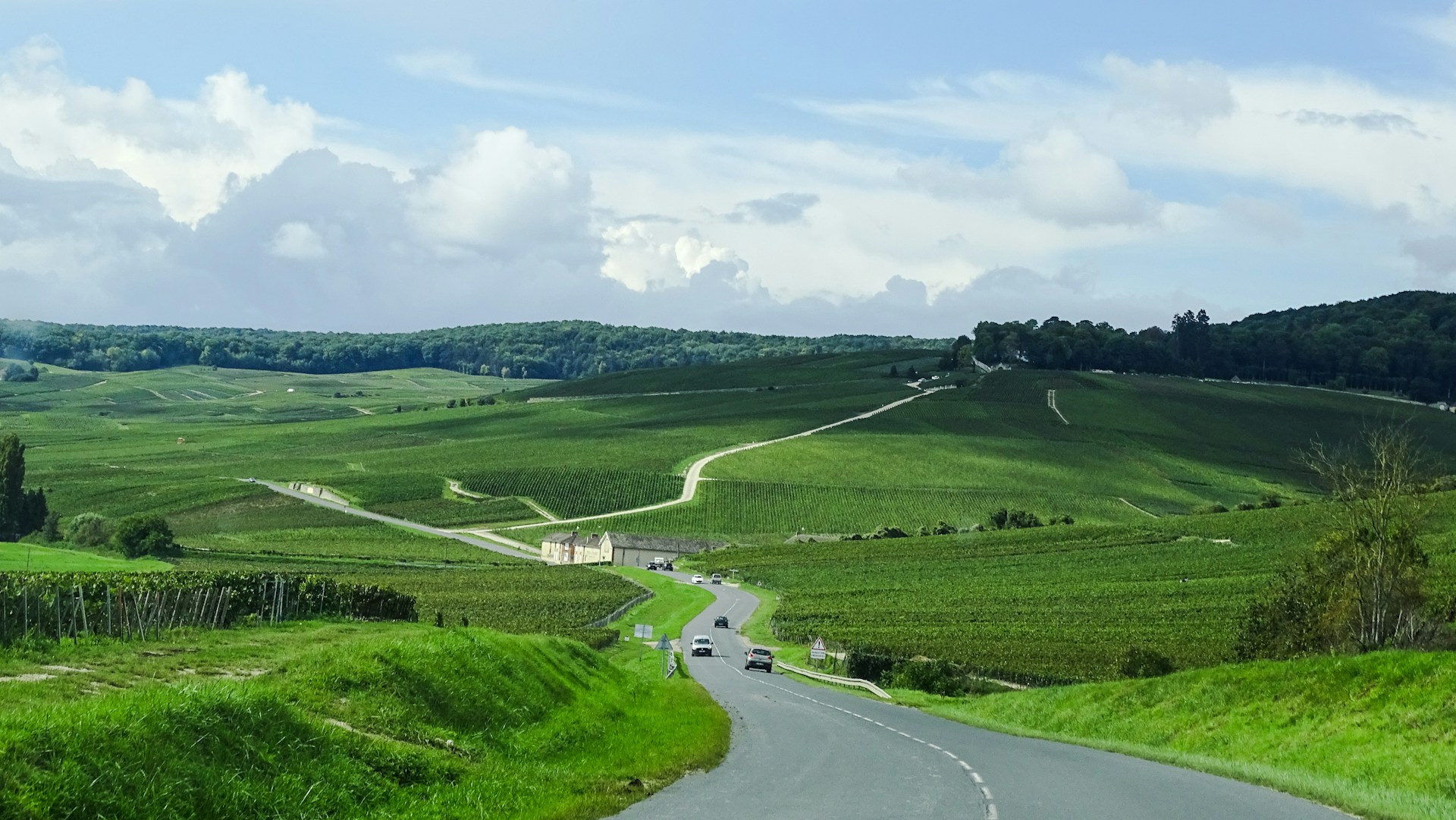
Why Visit the Champagne Wine Route?
The Champagne Wine Route (Route Touristique du Champagne) is not a single road but a lacework of lanes, vineyard tracks, and tiny village streets that crisscross the officially protected Champagne region of France. I’ve been driving, cycling, and occasionally getting lost among these vines since my early twenties, and it still feels new each time.
What makes it special is the contrast: grand names like Dom Pérignon and Veuve Clicquot perched above village cafés where the lunch special is still under €20; polished tasting rooms beside family-run cellars where the owner will pour you a glass in muddy boots; sunrise over the Montagne de Reims forests and sunset across the open chalky plains of the Côte des Bar.
In 2026 the region feels particularly alive. New independent growers are opening tasting rooms, small bistros are leaning into seasonal, local food, and there’s a quiet shift towards sustainable viticulture you can actually see as you drive: grassy rows between vines, insect hotels, and electric charging points in unexpected villages.
Whether you’re planning a 7 leg itinerary for Champagne Wine Route or stretching it into a leisurely 14 leg itinerary for Champagne Wine Route, this guide is built as a flexible road trip story. You can follow my route north to south or dip in for just a weekend. I’ll walk you through the best stops on Champagne Wine Route, the hidden lanes, and the places where you should absolutely stay the night instead of pressing on.
Table of Contents
- Overview of the Route & Itinerary Options
- 7–14 Leg Itinerary: Detailed Road Trip Legs
- Leg 1 – Reims & Montagne de Reims North: Cathedrals and First Bubbles
- Leg 2 – Montagne de Reims Ridge: Viewpoints, Forests & Grower Champagnes
- Leg 3 – Épernay & Avenue de Champagne: The Golden Mile
- Leg 4 – Hautvillers & the Marne Valley: Monks, Meanders & River Roads
- Leg 5 – Côte des Blancs: Chardonnay Hills & Quiet Villages
- Leg 6 – Vitry-le-François & the Vitryat: Chalk Plains and Hidden Cellars
- Leg 7 – Sézanne & Petit Morin Valley: Timbered Streets & Country Charm
- Leg 8 – Côte de Sézanne to Côte des Bar: The Long, Beautiful Transition
- Leg 9 – Bar-sur-Aube & Clairvaux: Abbeys and Vine Rows
- Leg 10 – Bar-sur-Seine & the Heart of Côte des Bar
- Leg 11 – Les Riceys: Three Appellations, One Village
- Leg 12 – Essoyes & Renoir Country
- Leg 13 – Southern Detours & Lakes of the Forêt d’Orient
- Leg 14 – Troyes & Return: Medieval Finale
- Eating & Sleeping Along the Champagne Wine Route
- Evenings on the Road in Champagne
- Cultural Etiquette & Local Customs
- Events & What’s New in 2026–2027
- Day Trips & Nearby Attractions
- Practical Logistics & Driving Advice
- Money-Saving Tips, SIM Cards & Visas
- Summary & Best Seasons to Visit
Overview: How the Champagne Wine Route Fits Together
The Champagne Wine Route road trip itinerary can be imagined as a north–south spine with a few scenic ribs branching east and west. Most travelers start in Reims or Épernay, both reachable by fast train from Paris in under 1.5 hours, then follow the Marne River and its flanking hills before drifting south to the wilder Côte des Bar.
For this guide I’ll describe the route in 14 legs, each comfortable as a day’s travel. If you prefer a 7 leg itinerary for Champagne Wine Route, just combine two legs per day; for an 8, 9, 10, 11, 12 or 13 leg itinerary for Champagne Wine Route, pick and choose which days to stretch with extra tastings or hikes.
Typical start and end points:
- Start: Reims (cathedral city and Champagne capital)
- Middle hub: Épernay (Avenue de Champagne and Marne Valley)
- End: Troyes or back to Reims via motorway, after exploring the Côte des Bar
Across these 14 legs we’ll explore at least 18 major stops and viewpoints: Reims, the Montagne de Reims viewpoints (Verzenay, Verzy, Mailly, etc.), Épernay, Hautvillers, the Marne Valley villages, Côte des Blancs (Cramant, Avize, Oger, Le Mesnil-sur-Oger), Vitry-le-François, Sézanne, Bar-sur-Aube, Bar-sur-Seine, Les Riceys, Essoyes, the lakes of the Forêt d’Orient, Troyes and more. These are the must-see attractions in Champagne Wine Route plus a few places I’m slightly reluctant to share because they’ve stayed quiet for so long.
Detailed 14-Leg Itinerary for the Champagne Wine Route
I usually drive this route north to south. It lets you begin with big, polished Champagne houses, then gradually sink into a more rural, intimate world. It’s an ideal direction if you’re new to France, because you can get used to how to drive Champagne Wine Route on wider roads before dealing with the tiniest lanes.
Leg 1 – Reims & Montagne de Reims North: Cathedrals and First Bubbles
Distance: 20–40 km of gentle driving
Recommended time: 1–2 days (family-friendly, cultural, easy walking)
My most recent first day on the route, in April 2026, began under cold blue skies in Reims. The vines were just starting to leaf, the city still shaking off winter. I always recommend easing into the region here rather than tearing straight into tastings along the smaller roads.
Reims: Gothic Heart of Champagne
Reims Cathedral (Notre-Dame de Reims) is more than a religious site; it’s where French kings were crowned and where, in the quiet of early morning, you can hear the echo of centuries under stone vaults. I like to arrive as the doors open, around 8–9 am, when the tour groups haven’t yet formed.
After that, I usually wander east towards the grand maisons. In 2026, there’s a subtle shift: more houses are offering “sustainable vineyard” tours, and Reims has added new bilingual signage explaining the region’s UNESCO heritage status.
Big-Name Champagne Houses in Reims
If it’s your first visit, start with at least one of the major houses – Veuve Clicquot, Taittinger, Pommery, or Ruinart. I’ve been to each several times; they’re touristy, yes, but also genuinely impressive. The chalk crayères (underground chalk pits) are the star: cool, silent, and etched with carvings from generations of cellar workers.
- With kids: Taittinger’s tour is relatively short and clear; older children usually find the caves fascinating, though tastings are adults only.
- For design lovers: Pommery’s art installations in the caves can be surprisingly bold – in 2026 they’re planning a rotating contemporary art program.
- Reservations: Book online 1–3 weeks ahead, especially from May to October and during weekends.
Local Food in Reims
For lunch, avoid the obvious tourist menus directly around the cathedral if you care about authentic local food in Champagne Wine Route. I often walk 10 minutes south into the quieter streets by the covered market, the Halles Boulingrin. A plate of jambon de Reims (local ham), lentil salad, and a glass of a small-producer Champagne is usually under €18 and far better than anything on the main squares.
Driving Out: First Taste of the Montagne de Reims
By mid-afternoon, I like to pick up the car and head south towards the Montagne de Reims, a forested plateau whose flanks carry some of the most prestigious Pinot Noir vineyards in the region. The transition from city streets to vines happens quickly: within 15 minutes you’re skating between rolling hills and tidy stone villages.
For this first leg, keep driving short. Aim for a village like Mailly-Champagne, Ludes, or Rilly-la-Montagne as your overnight stop. These are perfect introductions to the quieter side of Champagne: one bakery, one or two vignerons (growers), and a small square where evenings unfold slowly.
Mailly-Champagne: Grand Cru Village with a View
Mailly is one of my favourite bases. In April 2026, I arrived just as the light turned golden over the vines. There’s a viewpoint at the top of the village where you can watch the sun sink behind a sea of trellises, the city of Reims faint in the distance. The Coopérative Mailly Grand Cru offers tastings with a broad range – ideal if you’re still learning your way around Champagne styles.
Practical Tips for Leg 1
- Driving: Reims is well-signed; pick up the car after you’ve visited the big houses to avoid parking hassles.
- Overnight: Small B&Bs in Rilly-la-Montagne or Ludes are quieter than staying in Reims itself; book ahead for weekends.
- Budget: A big-house tour in Reims costs €30–€50 per person in 2026; balance it with a free village walk and a picnic from the market.
Leg 2 – Montagne de Reims Ridge: Viewpoints, Forests & Grower Champagnes
Distance: 40–60 km looping drive
Recommended time: 1–2 days (romantic, scenic, light hiking)
Leg 2 is about the ridge itself: the forest of the Parc Naturel Régional de la Montagne de Reims and the amphitheatre of vines that drops away beneath it. I try to do this loop in slow motion, staying off the main D944 where possible and following the brown “Route Touristique du Champagne” signs instead.
Verzenay Lighthouse & Windmill Viewpoint
From Mailly, head east on minor roads towards Verzenay. Here, a lighthouse stands improbably in the middle of the vineyards – the Phare de Verzenay. It was built as an advertising stunt in the early 20th century and now houses a wine museum.
I usually skip the museum (it’s fine, but not essential) and climb the surrounding hill instead. From here you get one of the best places to visit in Champagne Wine Route for sheer panoramic drama: rows of vines radiating out like contour lines, the forested plateau rising behind you.
Verzy & the Faux de Verzy Forest
A short drive farther brings you to Verzy, gateway to a small but magical forest. The Faux de Verzy are twisted, dwarf beech trees found almost nowhere else in the world. Take the family-friendly loop trail (about an hour, easy even with kids). I walked it on a misty June morning last year, and the contorted branches looked like something straight out of a fairy tale.
This is an excellent leg to balance tastings with things to do in Champagne Wine Route beyond wine. The forest is cool and shaded; bring a light jacket even in summer.
Lunch in Ambonnay or Bouzy
Continue along the ridge through Ambonnay and Bouzy, two Grand Cru villages whose names you’ll recognise from wine labels. These villages have a slightly more lived-in feel than the postcard-perfect images might suggest: tractors rumbling through, dogs barking, the smell of must in the air during harvest.
For lunch, look for a small restaurant de village serving classics like poulet au Champagne or andouillette (for the brave). Ask for a glass of a local grower’s Champagne rather than the big houses; it’s usually better priced and more interesting.
Afternoon Tastings with Grower-Producers
This is where the region becomes deeply personal. In Ambonnay, Bouzy, and neighbouring villages, many families have made Champagne for generations. They may not speak perfect English, but their hospitality is genuine.
- How to visit: Look for “Vente de Champagne” signs. It’s best to call a day ahead, but many still welcome walk-ins outside harvest time.
- Tasting etiquette: Usually 3–5 wines for €10–€20, often refunded if you buy bottles. Always ask about dosage (sugar level) if you prefer drier styles.
Evening in a Vineyard Village
I tend to base myself in a B&B on the ridge for this leg – somewhere like Verzy or Trépail. In April 2026 I sat on a small terrace overlooking the vines, listening to the faint hum of a distant tractor as the sky went from pale pink to deep blue. It’s quietly romantic, perfect for couples; children, meanwhile, can roam safely around the village square.
Practical Tips for Leg 2
- Driving: Roads are narrow but well maintained; drive slowly and be patient with tractors.
- Parking: Verzy and Verzenay have marked parking areas; don’t park in vineyard access lanes.
- Budget: Plan for one paid tasting (€15–€25) plus one or two informal visits with modest purchases.
Leg 3 – Épernay & Avenue de Champagne: The Golden Mile
Distance: 30–50 km
Recommended time: 1–2 days (iconic, good for first-time visitors, easy walking)
From the Montagne de Reims ridge, the road dips gently south towards Épernay, a compact town whose modest centre hides some 110 km of underground Champagne cellars. This leg is essential for any travel guide for Champagne Wine Route, because it’s here that you feel the full weight of Champagne’s global reputation.
Approach to Épernay: Vineyard Roads
I love approaching Épernay via the minor roads through Aÿ-Champagne rather than the main highway. The road snakes between tight-packed vines and stone walls, occasionally opening to reveal the Marne River glinting below. Pull over at designated lookouts whenever you see them; they’re rarely crowded before 10 am.
Avenue de Champagne: The Showpiece
The Avenue de Champagne is exactly as grand as you’ve heard. Mansion after mansion, wrought-iron gates, and manicured lawns hide vast cellars beneath your feet. Houses like Moët & Chandon, Mercier, and De Castellane all offer tours, each with its own style.
- Moët & Chandon: Polished, classic, with historical focus; best if you’re fascinated by big brands and history.
- Mercier: Fun, especially for families – their cellar train ride is kitschy but entertaining.
- De Castellane: Offers tower views over Épernay; climb if you’re chasing city panoramas.
Lunch & Food Experiences in Épernay
The centre of Épernay is full of brasseries and wine bars. For something less formulaic, I like the smaller spots one or two streets off the Avenue. A typical lunch for me: rillettes de poisson de rivière (river fish rillettes), a salad of local cheeses, and a glass of brut nature Champagne.
For families, look for restaurants with a menu enfant (kids’ menu) – usually steak haché or pasta, around €10–€12. Most are used to a bit of noise and stroller parking, but avoid peak Sunday lunch if you want a calmer atmosphere.
Boat Trip on the Marne
If you need a break from cellars, a short boat trip on the Marne is a gentle way to enjoy the scenery. In summer 2026, more operators are adding picnic cruises with Champagne by the glass. They’re not cheap, but the view back towards the vine-clad hills is unforgettable, especially in late afternoon light.
Evening on the Avenue
By evening, the Avenue de Champagne softens. The day-trippers depart, and you’ll see locals strolling with dogs, glasses on terraces flickering with candlelight. This is a leg where I always stay in town rather than a village – there’s something about walking home after a late dinner under the lit façades that feels properly celebratory.
Practical Tips for Leg 3
- Parking: Free and paid options near the Avenue; check signs, as some are limited to 2–3 hours.
- Reservations: Book at least one cellar tour and one dinner in advance from May to September.
- Budget: Épernay is pricier than villages; balance with picnic breakfasts or market-sourced snacks.
Leg 4 – Hautvillers & the Marne Valley: Monks, Meanders & River Roads
Distance: 40–70 km, looping along the river
Recommended time: 1–2 days (romantic, very photogenic, good with kids if paced)
Leg 4 may be my favourite, because it blends iconic history with everyday life in the Marne Valley villages. I usually do it as a lazy loop: Épernay → Hautvillers → Cumières → Damery → back via the opposite bank.
Hautvillers: Village of Dom Pérignon
Perched above the Marne River, Hautvillers markets itself as the cradle of Champagne. It was here that the monk Dom Pérignon worked in the 17th century. The abbey is private, but you can visit the church and his gravesite, which is usually surrounded by a small cluster of visitors taking quiet photos.
In my journal from May 2026 I wrote: “Hautvillers is busy but still charming if you stay after 5 pm.” That still holds. Day-trippers from Paris swarm the main street, but by evening, the village exhale is palpable.
Wrought-Iron Signs & Village Walks
Stroll the narrow lanes and look up: almost every house has a beautifully crafted wrought-iron sign illustrating the trade or family history. It’s a small detail, but it gives Hautvillers a storybook quality that children love spotting and photographing.
Tastings in Hautvillers & Cumières
Hautvillers and neighbouring Cumières are full of récoltant-manipulant (grower) producers. I often choose one in the morning and one in the afternoon, with a proper lunch in between to keep the day balanced.
- With limited time: Choose a producer that offers a quick vineyard walk plus tasting – ideal for understanding terroir.
- For enthusiasts: Seek out single-parcel cuvées; ask specifically for parcellaire wines.
Picnic by the Marne
The riverbanks near Damery have grassy spots where locals picnic on sunny days. Grab bread, cheese, and fruit from a village bakery and find your own slice of shade. On my last visit, a group of teenagers were quietly fishing while an older couple sipped coffee from a thermos – simple, unpretentious, and very Champagne.
Family-Friendly Activities
- Bike rentals: Several outfits in Épernay and Cumières now rent e-bikes suitable for teens and adults; paths along the river are mostly flat.
- Playgrounds: Small but serviceable playgrounds in Damery and Hautvillers help kids burn off energy between tastings.
Practical Tips for Leg 4
- Driving: River roads are narrow; watch for cyclists and avoid speeding.
- Parking in Hautvillers: Dedicated lots just outside the village; don’t attempt to drive into the tightest streets.
- Budget: Tasting flights are often slightly cheaper than in Épernay; expect €10–€18.
Leg 5 – Côte des Blancs: Chardonnay Hills & Quiet Villages
Distance: 40–60 km
Recommended time: 1–2 days (wine-focused, calm, best for couples or serious enthusiasts)
The Côte des Blancs, south of Épernay, is Chardonnay’s kingdom. This is where some of the most precise, mineral Champagnes are born, on chalky slopes that glow almost white under strong sun.
Villages of the Côte des Blancs
From Épernay, head south through Cramant, Avize, Oger, and Le Mesnil-sur-Oger. Each village has its own character, but all share a sense of quiet seriousness about wine. You’ll see fewer casual tourists here; this is where more experienced Champagne lovers tend to spend their time.
Viewpoint at Cramant
Above Cramant, a small road curls up to a viewpoint overlooking a patchwork of Chardonnay vines. I like to stop mid-morning when the sun slants sideways, revealing the subtle variations in slope and planting that define each parcel. Bring a light jacket; the wind can be sharp even in spring.
Tastings: Blanc de Blancs Heaven
This is the place to dive into blanc de blancs (100% Chardonnay Champagne). In Avize and Le Mesnil-sur-Oger, many growers specialise in pure, chalk-driven wines that age beautifully.
- Ask about: Vintage vs non-vintage, dosage levels, and ageing on lees – the “bread and butter” of Champagne geekery.
- Expect: More technical explanations; even if your French is basic, you’ll pick up key words like “craie” (chalk) and “fraîcheur” (freshness).
Lunch in Avize or Oger
Avize has a handful of small restaurants that do excellent lunch menus with local ingredients. I still remember a spring lunch of white asparagus with Champagne sabayon, followed by trout from a nearby river. Prices are fair for the quality; plan around €30–€40 for three courses without wine.
Walking the Vine Rows
Several villages have marked vineyard walks, usually 3–6 km, with interpretive panels explaining grape varieties and viticulture. They’re among my favourite hidden gems in Champagne Wine Route, because you’re often alone among the vines.
Overnight in a Wine Village
Staying in a B&B in Le Mesnil-sur-Oger or Avize means waking up to the sound of distant pruning shears in winter or tractors in summer. It’s a more immersive experience than staying in a town: fewer amenities, but much more sense of place.
Practical Tips for Leg 5
- Driving: Village streets are narrow; drive slowly and be ready to back up if you meet a delivery truck.
- Reservations: Many growers here work by appointment only; email or call a few days ahead.
- Budget: Wines are often slightly pricier due to prestige, but still excellent value compared to big brands.
Leg 6 – Vitry-le-François & the Vitryat: Chalk Plains and Hidden Cellars
Distance: 60–90 km
Recommended time: 1 day (off-the-beaten-path, value-focused)
From the Côte des Blancs, most tourists swing back to Épernay or head for the motorway. Instead, I like to push east into the Vitryat, around Vitry-le-François. This area is less known internationally but increasingly interesting, with energetic small producers and more open space.
Landscape of the Vitryat
The landscapes here are broader, more open. Vines alternate with fields of cereals and colza (rapeseed). The skies feel bigger, the villages quieter. This is where I go when I want to see Champagne without the gloss.
Small Producers & Great Value
Many growers here are relatively young, experimenting with lower dosage, organic viticulture, and unusual blends. Their prices, at least in 2026, remain refreshingly reasonable.
- Expect: Warm welcomes, fewer crowds, and more time to talk.
- Tip: This is a good region to stock up if you’re driving home – prices per bottle are often €16–€25 for excellent quality.
Vitry-le-François Town
Vitry itself is a modest town with a grid layout, rebuilt after WWII. It’s not conventionally pretty, but it has honest cafés, a few simple hotels, and a Saturday market where you can people-watch and pick up picnic supplies.
Practical Tips for Leg 6
- Driving: Distances are longer; fuel up in Épernay or Vitry-le-François.
- Overnight: Either in Vitry or back towards the Côte des Blancs; nightlife is limited.
- Budget: This is where you can save; accommodation and meals are generally cheaper than in Reims/Épernay.
Leg 7 – Sézanne & Petit Morin Valley: Timbered Streets & Country Charm
Distance: 60–80 km
Recommended time: 1 day (historic, quiet, good transition south)
From the Vitryat or Côte des Blancs, start angling southwest towards Sézanne, a small hilltop town that feels like a bridge between the more intensively visited northern Champagne and the wilder south.
Sézanne Old Town
The old town of Sézanne has timbered houses, a lovely church, and narrow streets that invite aimless wandering. It’s not as polished as Troyes, but that’s part of the charm. On my last visit, I watched a game of pétanque unfold in the main square while the baker across the way sold out of tarte aux mirabelles in record time.
Vineyards of the Côte de Sézanne
South of Sézanne, the Côte de Sézanne carries Chardonnay vines similar to the Côte des Blancs but with subtle differences in soil and exposure. The wines here are often rounder, slightly more generous, and excellent value.
Practical Tips for Leg 7
- Driving: Good roads, but distances can feel longer due to slower speeds through villages.
- Overnight: Sézanne makes a good halfway stop; limited but charming accommodation.
Leg 8 – Côte de Sézanne to Côte des Bar: The Long, Beautiful Transition
Distance: 90–130 km
Recommended time: 1 day (road-trip feel, scenic, good for those who enjoy driving)
Leg 8 is about the journey itself. You’re now heading towards the Côte des Bar, the southern outpost of Champagne near the Aube River. The drive feels like slipping away from the mainstream and into a region that, while officially Champagne, has its own personality.
Changing Landscapes
The landscape softens into rolling hills, with more forests and mixed agriculture. You’ll see fewer Champagne signs and more general farm life. This is where I like to put on a good playlist, roll down the windows in summer, and simply enjoy the open road.
Lunch Stop in a Country Inn
Along this stretch, look for small auberges with hand-written menus. I’ve had some of my best meals in places whose names I can never quite remember: slow-cooked beef in red wine, local cheeses, simple desserts like crème brûlée with a glass of rosé des Riceys (foreshadowing our later stop).
Arriving in the Côte des Bar
By late afternoon you’ll see the first slopes of the Côte des Bar rising around Bar-sur-Aube and Bar-sur-Seine. The vines look subtly different, the villages a bit more rustic. This is where our southern exploration begins in earnest.
Practical Tips for Leg 8
- Driving: This is one of the longest legs; fill the tank before leaving Sézanne area.
- Stops: Take a break every 60–90 minutes; small roadside chapels and viewpoints make natural pauses.
Leg 9 – Bar-sur-Aube & Clairvaux: Abbeys and Vine Rows
Distance: 40–70 km
Recommended time: 1 day (history, culture, wine, family-friendly with older kids)
Bar-sur-Aube makes a good base for exploring the eastern side of the Côte des Bar. The town straddles the Aube River and has enough services (supermarkets, bakeries, fuel) to restock before heading deeper into the vines.
Clairvaux Abbey (Abbaye de Clairvaux)
Just outside Bar-sur-Aube lies Clairvaux Abbey, founded by Saint Bernard in the 12th century. Much of it was turned into a prison after the Revolution, and parts remain off-limits, but guided tours offer a fascinating, sobering look at history. It’s one of the most significant cultural experiences in Champagne Wine Route beyond wine.
Vineyards Around Bar-sur-Aube
The hills around Bar-sur-Aube are planted mostly to Pinot Noir, with pockets of Chardonnay and other varieties. The wines here can be more fruit-forward, with a different profile to those around Reims.
Practical Tips for Leg 9
- Booking Clairvaux: Guided tours at fixed times; check schedules in advance.
- Overnight: Bar-sur-Aube has simple hotels; book ahead in peak season.
Leg 10 – Bar-sur-Seine & the Heart of Côte des Bar
Distance: 40–80 km
Recommended time: 1–2 days (wine-focused, scenic, excellent for enthusiasts)
Bar-sur-Seine sits on the Seine River and feels like a rural cousin to the busier northern Champagne towns. Timbered houses, small bridges, and a relaxed rhythm define the town.
Exploring the Côte des Bar Villages
From Bar-sur-Seine, you can radiate out to villages like Celles-sur-Ource, Gyé-sur-Seine, and Polisot. This is the beating heart of the Côte des Bar, full of independent producers whose names you might recognise if you follow Champagne closely.
Why Côte des Bar Is Special
Geologically, this area has more in common with Burgundy than with the chalky soils around Reims. The wines can be more textural, often with ripe red fruit from Pinot Noir. Many of the region’s most exciting grower-producers are based here, and tastings can feel more like visiting a friend’s cellar than a business.
Practical Tips for Leg 10
- Appointments: Many top producers are appointment-only; plan 2–3 weeks ahead if you have specific names in mind.
- Driving: Hills are steeper here; in winter, check conditions.
Leg 11 – Les Riceys: Three Appellations, One Village
Distance: 20–40 km
Recommended time: 1 day (wine-focused, unique terroir, good for adventurous palates)
Les Riceys is a singular place: one village with three appellations – Champagne, Coteaux Champenois (still wine), and the famous Rosé des Riceys. The village actually comprises three hamlets (Ricey-Haut, Ricey-Bas, and Ricey-Haut-Rive), linked by winding streets and surrounded by steep vineyards.
Rosé des Riceys
This still rosé, made from Pinot Noir, is unlike typical Provence rosé: deeper in colour, with savoury notes, and capable of ageing. It’s a hidden gem in Champagne Wine Route for wine lovers. I still remember my first bottle, drunk with grilled sausages and lentils on a chilly evening – unforgettable.
Village Walks
Walk between the hamlets, noticing the different churches and small squares. It’s easy to imagine this village a century ago; not much has changed.
Practical Tips for Leg 11
- Overnight: Limited options but very atmospheric; book early.
- Driving: Very narrow lanes; park and explore on foot where possible.
Leg 12 – Essoyes & Renoir Country
Distance: 30–60 km
Recommended time: 1 day (art, gentle countryside, family-friendly)
Essoyes is best known as the summer home of painter Pierre-Auguste Renoir. The village has leaned into this heritage with sensitivity, creating one of the more rewarding cultural experiences in Champagne Wine Route.
Renoir’s House & Workshop
You can visit Renoir’s home, studio, and garden, which have been carefully restored. Even if you’re not an art buff, the story of his family life here is touching and offers a window into the region a century ago.
Riverside Walks
The Ource River winds gently through Essoyes. A riverside path makes an easy walk with children, with ducks to feed and plenty of benches for grandparents to rest.
Practical Tips for Leg 12
- Opening times: Renoir sites have seasonal hours; check ahead, especially outside summer.
- Food: A couple of good bistros in town; reservations recommended on weekends.
Leg 13 – Southern Detours & Lakes of the Forêt d’Orient
Distance: 60–90 km
Recommended time: 1 day (outdoorsy, family-friendly, swimming and nature)
After so much wine and village life, I like to pivot to water and forest. The Parc naturel régional de la Forêt d’Orient lies north of Troyes and offers lakes for swimming, sailing, and birdwatching.
Lakes & Beaches
Artificial lakes like Lac d’Orient and Lac du Temple were created for flood control but have become leisure hubs. In summer 2026, lifeguarded beaches, canoe rentals, and cycling paths make this great for families needing a break from tasting rooms.
Nature & Night Skies
Campsites and cabins around the lakes offer a different kind of evening: stars reflected on still water, the occasional call of waterfowl. On a clear night, far from city lights, the Milky Way is clearly visible.
Practical Tips for Leg 13
- Seasonality: Best from late May to early September; many services close or reduce hours in winter.
- Gear: Pack swimsuits and light jackets; evenings can be cool even in summer.
Leg 14 – Troyes & Return: Medieval Finale
Distance: 40–80 km
Recommended time: 1–2 days (cultural, shopping, good for all travelers)
End your journey in Troyes, a beautifully preserved medieval city whose narrow lanes and half-timbered houses feel like a film set. It’s technically just outside the core Champagne vineyard area but very much part of the wider region’s story.
Old Town & Cathedral
Troyes’ old town is compact and perfect for walking. The cathedral and churches house remarkable stained glass, and the crooked timbered houses lean towards each other like gossiping neighbours.
Evening in Troyes
After so many quiet villages, Troyes offers a livelier evening: wine bars, small concert venues, and a student population that keeps things energetic without tipping into chaos. I like to find a table under the eaves of a medieval house, order a glass of local Champagne or Coteaux Champenois, and toast the end of the route.
Return Logistics
- To Paris: Direct trains from Troyes (about 1.5–2 hours) or drive via the A5/A26 motorways.
- To Reims: About 2 hours by car; you can loop back if you need to return a hire car there.
Eating & Sleeping Along the Champagne Wine Route
Across all 14 legs of this Champagne Wine Route road trip itinerary, food and lodging will shape your experience almost as much as tastings.
Roadside Diners & Village Cafés
Avoid motorway service areas whenever you can; the best meals are in small-town cafés and auberges. Look for places with hand-written menus and locals inside at 12:30 – that’s your sign.
Signature Dishes to Try
- Jambon de Reims: Local ham, often served with pickles and bread.
- Andouillette de Troyes: Intense tripe sausage – love it or hate it.
- Biscuits roses de Reims: Pink biscuits often dipped in Champagne.
- Chaource cheese: Creamy local cheese from Aube.
Accommodation Types
- Route-side inns: Simple rooms, hearty meals, often family-run.
- B&Bs in villages: My favourite option – meet locals, breakfast on homemade jams.
- City hotels: In Reims, Épernay, and Troyes – more facilities, easier late check-ins.
- Camping & cabins: Around the Forêt d’Orient lakes for outdoor lovers.
Planning Fuel & Overnight Stops
I like to refuel when the tank drops below half – rural stations close earlier and are rarer. In terms of lodging, aim for no more than 2–3 consecutive nights in villages without much evening life; break it up with stays in Reims, Épernay, or Troyes.
Evenings on the Road in Champagne
Evenings along the Champagne Wine Route vary from hushed village streets to lively city squares.
Village Nights
In places like Mailly, Avize, or Les Riceys, nights are quiet. One or two bars, perhaps a restaurant, and then darkness over the vines. It’s ideal for couples and those who enjoy early mornings.
Small-Town Bars & Live Music
Bar-sur-Seine, Bar-sur-Aube, and Sézanne occasionally host small concerts, especially in summer festivals. Posters appear in bakery windows; that’s how I usually find out.
Star-Camping Spots
Campsites around the Forêt d’Orient and in the Aube countryside make excellent bases for stargazing. Light pollution is low once you’re away from Reims and Troyes.
Where to Linger vs. Blow Through
- Linger: Reims, Épernay, Troyes, Côte des Bar villages (for intimate evenings).
- Blow through: Larger transit towns without historic cores; use them for fuel and groceries, not overnights.
Cultural Etiquette & Local Customs
Understanding local customs can transform your experience from tourist to welcomed guest.
Basic Politeness
- Always greet with “Bonjour” (daytime) or “Bonsoir” (evening) when entering shops, cafés, or tasting rooms.
- Use “Merci” (thank you) and “S’il vous plaît” (please) generously.
Tasting Room Etiquette
- Don’t wear heavy perfume; it interferes with aromas.
- Spitting is normal in professional tastings; ask if a spittoon is available.
- Buying after a tasting is appreciated, especially at small family domaines.
Meal Times
Lunch is typically 12:00–14:00; many kitchens close afterwards. Dinner often starts around 19:30. Plan your tastings around these windows.
Driving & Alcohol
France’s legal blood alcohol limit is strict. Designate a driver or spit during tastings. Police checks are not uncommon on weekends.
Events & What’s New in 2026–2027
Champagne’s calendar for 2026–2027 is full of harvest festivals, cultural events, and evolving wine tourism.
Major Events (Dates Subject to Change)
- Habits de Lumière (Épernay): December 2026 – Light shows, tastings, and street performances along Avenue de Champagne.
- Fêtes Johanniques (Reims): Early June 2026 & 2027 – Medieval festivals celebrating Joan of Arc and the cathedral’s coronation history.
- Viti Vini (Épernay): Trade fair held every two years; 2026 edition expected to highlight sustainable viticulture.
- Harvest Festivals: Late September to early October across many villages; expect parades, open cellars, and communal meals.
Trends & Changes in 2026
- More electric vehicle charging stations in Reims, Épernay, and several villages.
- Increasing number of English-language vineyard tours focusing on ecology.
- New walking and cycling routes signposted in the Montagne de Reims and Marne Valley.
Day Trips & Nearby Attractions
Once you’ve explored the core things to do in Champagne Wine Route, consider these side trips:
Paris
Reims and Épernay are under 1.5 hours by train from Paris. A Champagne day trip from the capital is possible, though I always suggest at least one overnight in the region instead.
Nancy & Metz
From Reims, trains and roads connect easily to these eastern cities, known for Art Nouveau architecture and contemporary art museums.
Burgundy (Côte d’Or)
From Troyes, you can continue south towards Dijon and Beaune, trading bubbles for still Pinot Noir and Chardonnay – a natural extension if you’re on a longer French wine road trip.
Practical Logistics & Driving Advice
Which Direction to Drive
I recommend north to south (Reims → Épernay → Côte des Blancs → Vitryat → Sézanne → Côte des Bar → Troyes). It lets you start with major sites, then gradually deepen into quieter wine country.
Realistic Daily Distance
- Short days: 40–60 km, ideal for in-depth tastings and walks.
- Longer hops: 80–130 km, used sparingly (e.g., Legs 8 and 13).
Fuel & Charging Stations
- Fuel stations in Reims, Épernay, Vitry-le-François, Bar-sur-Aube, Bar-sur-Seine, Troyes.
- EV chargers increasingly available at supermarkets and some village car parks; check apps before you go.
Vehicle Suitability
- Regular car: Perfectly adequate for all legs.
- RV/campervan: Manageable but tight in villages; check campsite availability.
- Motorcycle: Glorious on dry days; watch for gravel on minor roads.
- 4x4: Unnecessary; all official roads are paved.
Seasonal Considerations
- Winter (Dec–Feb): Quiet; some producers closed or on reduced hours. Occasional snow or ice; check forecasts.
- Spring (Mar–May): Budbreak and green hills; cooler, fewer crowds.
- Summer (Jun–Aug): Warm, lively, more traffic; ideal for lake activities.
- Harvest (Sep–Oct): Fascinating but busy; some producers too occupied for visits, roads crowded with tractors.
- Late Autumn (Nov): Calm, atmospheric, shorter days.
Breakdown & Assistance
Most rental cars include roadside assistance; keep the contact number handy. In villages, local garages can handle basic repairs, but major issues may require towing to Reims, Épernay, or Troyes.
Permits & Borders
The Champagne Wine Route is entirely within France, with no border crossings or special permits required beyond standard vehicle documents.
Money-Saving Tips, SIM Cards & Visas
How to Save Money
- Mix big houses with small growers; the latter often charge less for tastings and bottles.
- Book B&Bs with breakfast included; picnic for lunch, dine out for dinner.
- Travel in shoulder seasons (April–May, October–early November) for lower accommodation prices.
SIM Cards & Connectivity
France has good coverage across Champagne, though some valleys have weaker signals. Options in 2026:
- Prepaid SIMs from Orange, SFR, Bouygues at airports or city shops.
- EU visitors can usually roam on their home plans without surcharges.
- Many accommodations offer Wi-Fi, though speeds vary in rural areas.
Public Transport vs. Car Rental
Trains connect major towns (Reims, Épernay, Troyes), and some buses serve larger villages, but to fully enjoy the best stops on Champagne Wine Route, a car is strongly recommended. For wine-focused travelers, consider:
- Hiring a local driver-guide for 1–2 days of intensive tastings.
- Using taxis or pre-booked transfers for evenings when you plan to drink.
Visa Requirements & Driving Licenses
For 2026, most visitors from the EU, UK, US, Canada, Australia, and many other countries can enter France visa-free for short stays (up to 90 days in 180) – but always check current rules.
- EU/EEA & UK: National driving licences accepted.
- Others: Most rental agencies accept your home licence if in Roman alphabet; an International Driving Permit is recommended but not always required.
Summary & Best Seasons to Visit the Champagne Wine Route
The Champagne Wine Route is as much about the journey as the tastings: the narrow lanes of Hautvillers, the cool hush of Reims’ crayères, the wild slopes of the Côte des Bar, and lake sunsets in the Forêt d’Orient. Whether you follow all 14 legs of Champagne Wine Route or compress them into a 7, 8, 9, 10, 11, 12, or 13 leg itinerary for Champagne Wine Route, the rhythm is the same: drive a little, walk a little, taste a little, repeat.
Best Seasons by Traveler Type
- Spring (Apr–May): Ideal for first-timers; vines awakening, manageable crowds, cool for walking.
- Summer (Jun–Aug): Best for families and lake activities; book ahead, expect higher prices.
- Harvest (Sep–Oct): Magical for wine lovers who don’t mind crowds and occasional closures.
- Late Autumn/Winter (Nov–Feb): Quiet, introspective, good for deep tastings and city time in Reims/Troyes.
If you remember only a few travel tips for Champagne Wine Route, let them be these: book key tastings ahead, drive slowly and sober, greet everyone with a simple “bonjour,” and leave space in your days for the unplanned – the roadside viewpoint, the village fête, the impromptu tasting in a courtyard you almost drove past. In Champagne, the most memorable bubbles often come with a story, and many of the best stories begin when you give yourself time to wander.