Why Visit Château de Beynac: The Cliff-Top Heart of the Dordogne
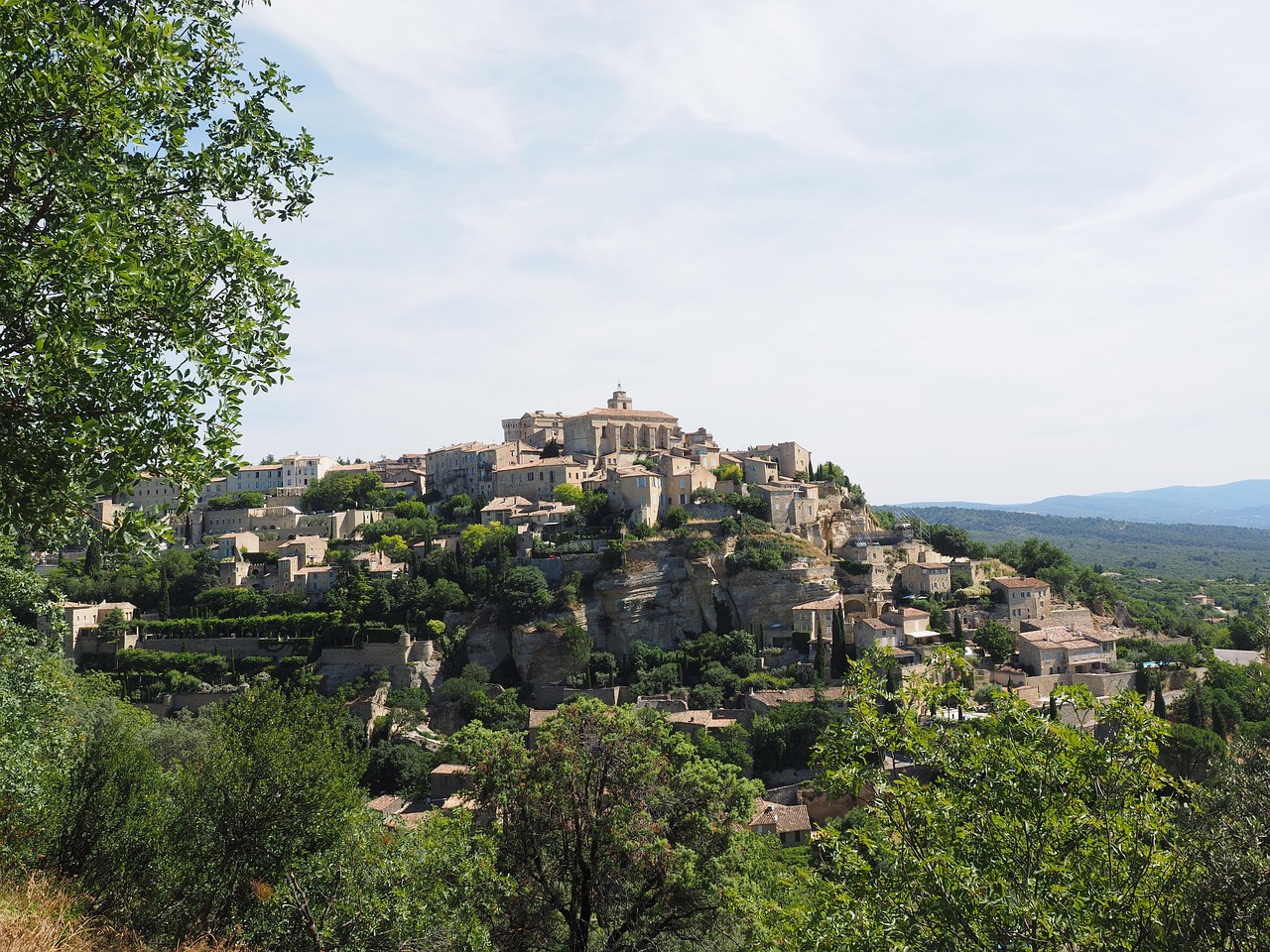
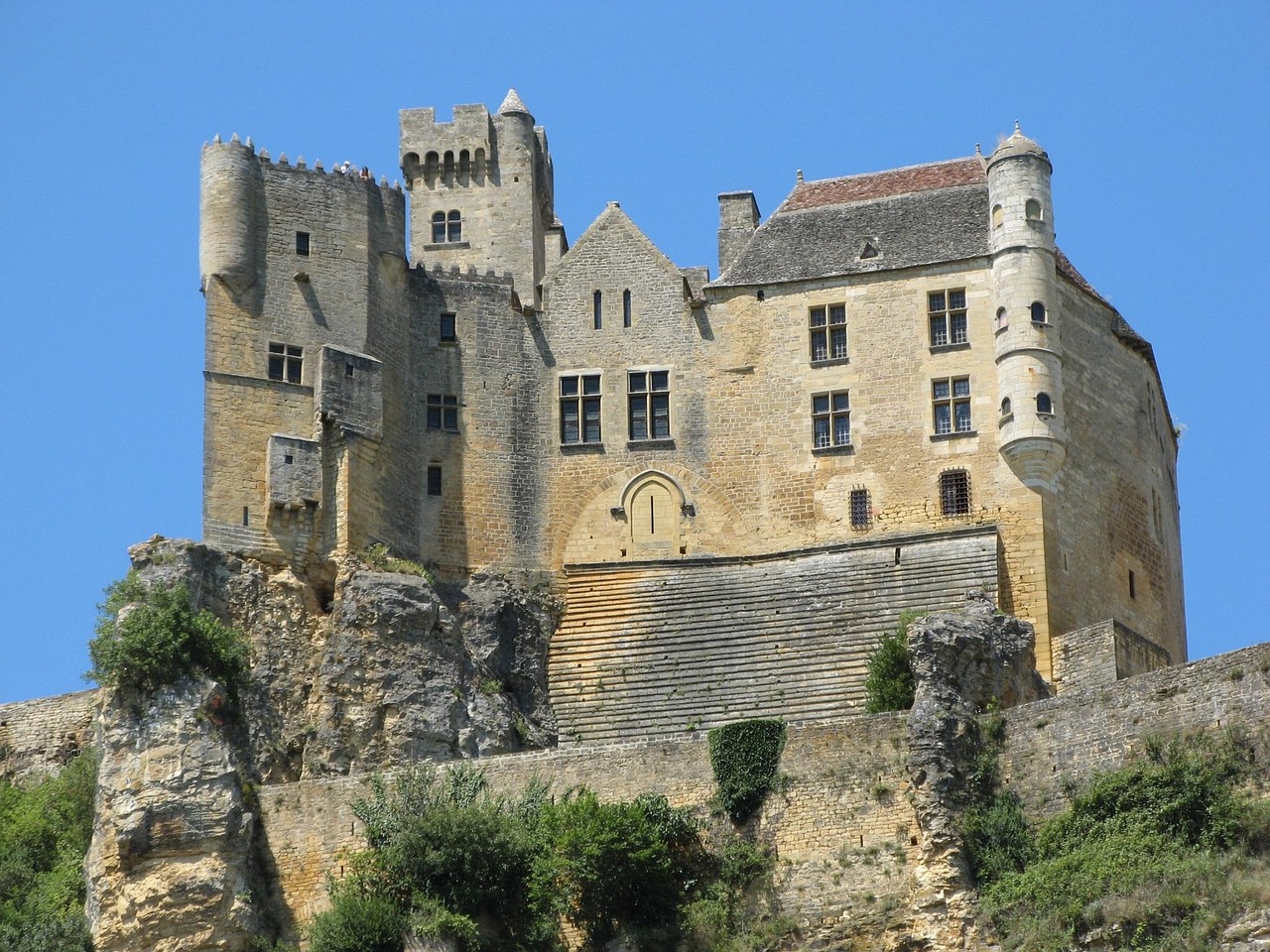
I still remember the first time I saw Château de Beynac properly. It was a misty April morning, sometime after sunrise, and I was driving along the D703, that winding ribbon of road that hugs the Dordogne River. The fog was slowly lifting off the water when the cliff appeared – sheer, honey-coloured limestone rising straight from the river, and on top of it, like some stubborn stone crown, the fortress of Beynac.
Even after several returns in 2023–2025, that approach has never lost its impact. In 2026, with travel patterns shifting again, Beynac is still one of the rare places in France that feels genuinely medieval without being staged. This is not some manicured blockbuster château with perfect lawns and bus queues lined like airport gates. It’s rough stone, worn staircases, wind in the battlements, ravens circling overhead, and a drop to the river that makes your stomach flutter when you look down.
What makes Château de Beynac special is the combination of three things:
- Authentic medieval architecture: Much of what you walk through dates back to the 12th–15th centuries. It was a real fortress in the Hundred Years’ War, not just a pretty residence.
- Commanding views of the “Valley of the Five Castles”: From the ramparts, you see Château de Castelnaud, Les Milandes, Fayrac, and Marqueyssac lined up along the Dordogne. It’s like looking at a living history map.
- A living village under the walls: Beynac-et-Cazenac is one of the most atmospheric villages in the Périgord Noir, with steep cobbled lanes, lauze-stone roofs, and a rhythm that changes dramatically between early morning, midday crowds, and quiet evenings.
For families, there are ramparts to conquer, river beaches to splash in, and canoe trips that feel like time travel. For couples, there are golden-hour strolls through the village, candlelit dinners on terraces, and starlit drives back along the Dordogne. For adventurous travellers, there’s the climb up from the river, the high winds on the battlements, and the chance to link Beynac into multi-day hiking or canoeing routes through the valley.
This long-form travel guide for Château de Beynac is written the way I share it with friends who come to stay in the Dordogne: personally, with a mix of practical detail and lived-in anecdotes. I’ll walk you through the castle, the village streets you’ll actually tread, the food you should absolutely not miss, and honest advice on how to shape a 1 day itinerary for Château de Beynac, stretch it into 2 days in Château de Beynac, or linger over a generous 3 day itinerary for Château de Beynac.
Table of Contents
- Why Visit Château de Beynac
- Orientation: Where You Are & How Beynac Feels
- 1–3 Day Itineraries for Château de Beynac
- Inside Château de Beynac: A Room-by-Room Walkthrough
- Eight Essential Sections, Viewpoints & Adjacent Sites
- Eating & Drinking Around Château de Beynac
- Where to Stay Near Château de Beynac
- Château de Beynac After Dark & Off-Hours Magic
- Day Trips & Nearby Must-See Attractions
- Cultural Etiquette & Local Customs
- Practical Logistics: Tickets, Transport, SIMs & Money Savers
- What’s New: Events & Trends for 2026–2027
- Best Time to Visit Château de Beynac
- Summary & Final Recommendations
Orientation: Where You Are & How Beynac Feels
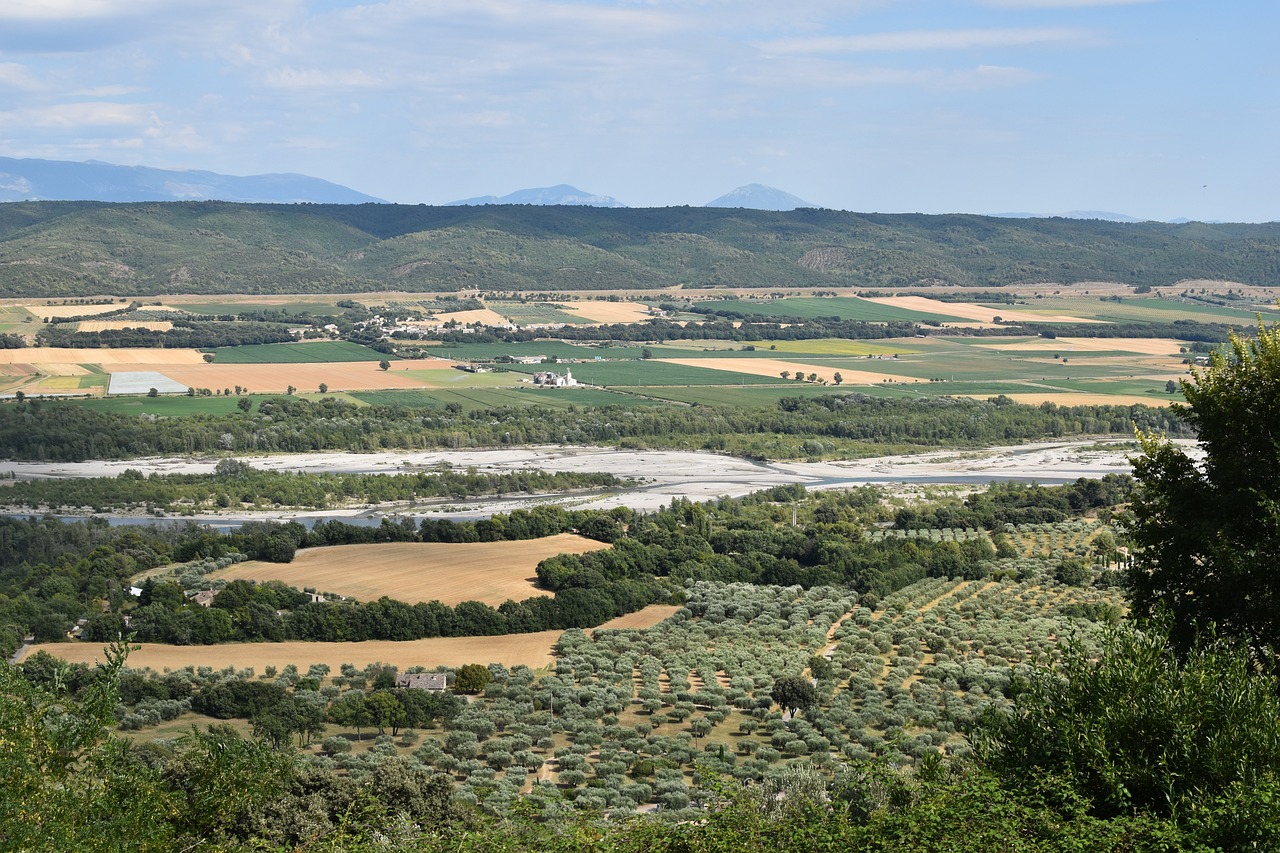
Château de Beynac sits in the Périgord Noir region of the Dordogne department in southwest France, about 10 km from Sarlat-la-Canéda and just over two hours by car from Bordeaux or Toulouse. The Dordogne River arcs below the cliff in a slow brown-green curve, bordered by walnut groves, fields of maize, and clusters of stone hamlets.
The village of Beynac-et-Cazenac clings to the rock below the château. The lower, riverside portion is where most visitors first arrive: a small waterfront promenade, canoe rental stands, a handful of restaurants with shaded terraces, and the main parking lots. From there, two worlds unfold:
- Upwards: A steep, car-scarce climb through cobbled lanes and stone houses to the castle gate. This is the route that gives you the full drama of the setting.
- Along the river: A gentler stroll or drive along the D703 to nearby castles, gardens, and viewpoints.
In high summer, Beynac is busy in the middle of the day. But come between 9–10 a.m. or after 6 p.m., or in shoulder seasons (late April, May, June, September, early October), and you’ll find the village unexpectedly peaceful. The stone holds the day’s warmth, the river reflects the pastel sky, and you can walk through the same gate that medieval soldiers rushed through, but in almost total quiet.
1–3 Day Itineraries for Château de Beynac
Below are lived-in itineraries based on visits in 2022–2025 that I’ve refined for 2026 crowds and opening hours. Whether you’re planning 1 day in Château de Beynac, considering a more relaxed 2 days in Château de Beynac, or giving yourself 3 days in Château de Beynac and the surrounding valley, these are realistic, walkable, and layered with little detours I’d send a good friend on.
Day 1 – The Iconic Château de Beynac Experience
Morning: Slow Arrival & The Climb Through the Village
On your first day, give Beynac time to reveal itself. I usually arrive between 8:30 and 9:00 a.m., before the tour buses and day-trippers from Sarlat. In 2026, with more visitors returning, those extra 60–90 quiet minutes are gold.
Park in the lower village (look for the main riverside lot near the canoe bases). It’s paid during the day, free at night; machines accept cards. From here, the château looms above you, almost vertical. Don’t be tempted to drive up to the upper car park unless mobility is an issue; you’ll miss half the magic.
Instead, follow the stone lane that begins near the mairie and winds up past honey-coloured houses and flower-filled terraces. The path is steep but short; allow 20–30 minutes with stops. Each twist reveals a new angle on the river below, framed by slate-coloured lauze roofs. In the morning, shutters creak open, bread is delivered, and cats stretch on warm sills. It’s the closest thing to time travel you’ll get before your first coffee.
First Glimpse: The Castle Gate
After the last bend, the houses thin and the stone mass of the fortress fills your view. The outer wall, with its towers and massive gate, is formidable. There’s usually a brief line for tickets at the small booth just inside.
Tickets & Timing (2026):
- Standard adult tickets are sold on-site; check the official website shortly before you go for updated prices.
- No timed-entry system as of early 2026, but in peak July–August weekends, they may briefly meter entry if the courtyard is packed.
- Arrive before 10:30 a.m. or after 4:30 p.m. to avoid the worst of the crowds and tour groups.
- Guided tours in French are offered most days in summer; audio guides or printed information sheets are available in English and other languages.
Inside the Walls: A Walk Through Time
Once you step past the gate, you are in the lower courtyard. The stone underfoot is irregular, smoothed by centuries of boots and sabots. To your left, the ramp climbs towards the keep; to your right, you get your first taste of the view, a sliver of river far below.
I like to follow a simple loop: courtyard → barbican → state rooms → kitchens → chapel → ramparts and upper terraces → final panoramic terrace. You can do it in an hour, but give yourself at least two; this is the heart of any 1 day itinerary for Château de Beynac.
The Barbican & Defensive Works
The barbican is your introduction to Beynac’s role in the Hundred Years’ War. The lower walls are squat, thick, and practical. Standing here, it’s easy to imagine lookouts scanning for English forces sailing up the Dordogne. The information panels (recently updated again in 2024–2025) are concise and well translated, explaining how the cliff itself was as much a defensive weapon as the walls.
Tip: If you’re visiting with children, this is a good place to explain the basic story of France vs. England, 14th–15th centuries in simple terms, so the rest of the castle feels like a stage set for that saga.
The Great Hall & State Rooms
The great hall is the dramatic heart of the residence. High ceilings with heavy beams, thick stone walls, and a grand fireplace tall enough to stand in. In cooler months, you can still feel the chill that would have seeped through these stones in winter; in July, it’s a welcome refuge from the sun.
In 2026, the castle continues to host occasional evening concerts and historical reenactments in the hall (check the events section below for dates). I’ve sat through a Baroque music performance here while thunderstorms rattled the shutters outside – it felt almost too atmospheric, like being dropped into a film set.
Look for the small details: the window seats worn smooth where people once sat to gossip and stitch; the coats of arms carved above fireplaces; arrow-slit windows that frame absurdly picturesque views of the valley.
The Kitchens & Domestic Spaces
Down a short flight of uneven stone steps, the castle’s kitchens give a human scale to the fortress. Massive hearths, hooks for cauldrons, and the faint smell of damp stone. Panels explain how food was stored and cooked, and how logistics worked in a cliff-top stronghold that couldn’t exactly pop down to the market on a whim.
Tip: The floors here can be slippery when wet. Wear shoes with good grip; this is not a flip-flop destination.
The Chapel & Quiet Corners
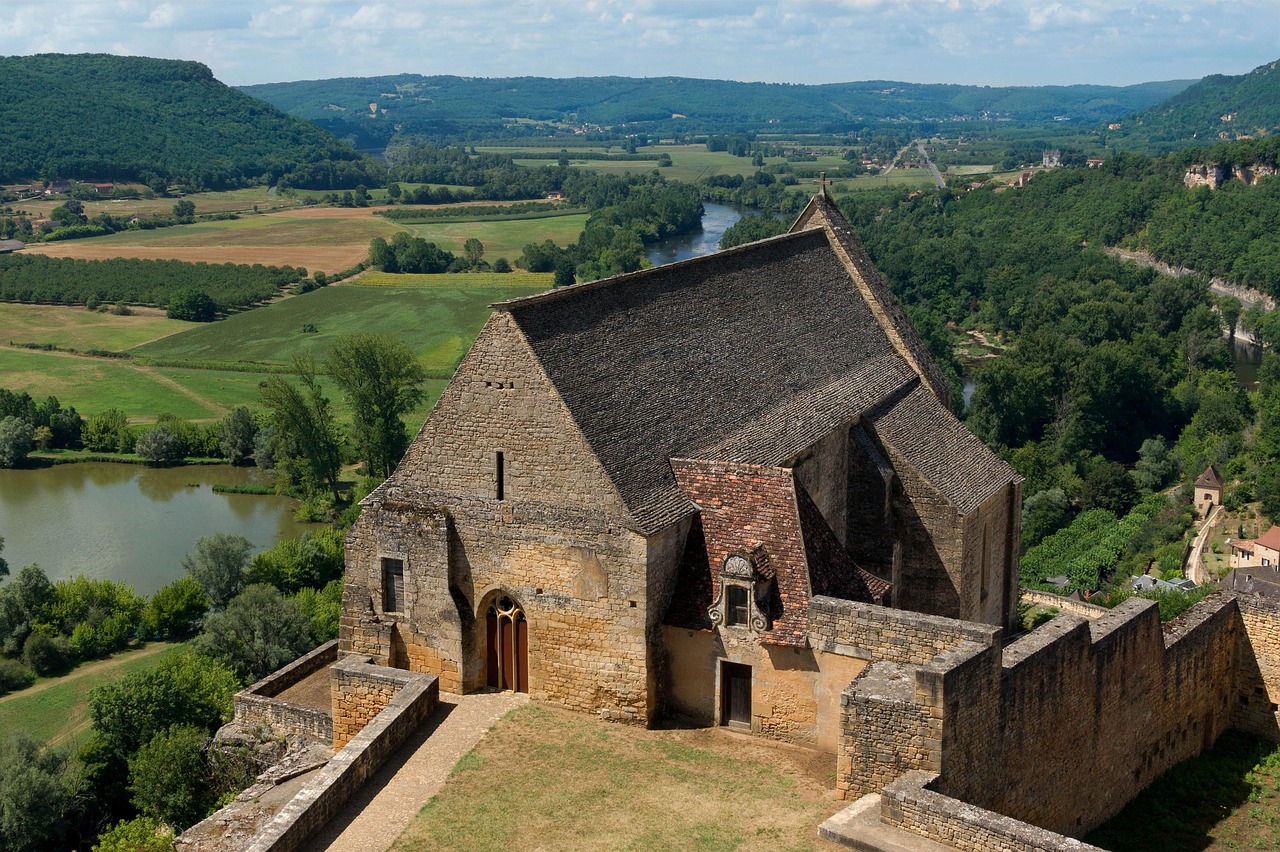
The small chapel, tucked quietly within the complex, is easy to rush past, but pause here. The dim light, simple altar, and faint traces of old paintings give you a sense of the private devotion that once underpinned this very public seat of power. I’ve twice found myself alone here in mid-afternoon, which is rare elsewhere in the castle; it’s a good place to rest and reset if the crowds get to you.
Ramparts, Terraces & The Famous View
Eventually, all paths lead up. The climb to the highest terraces is short but steep, with low walls in places and dizzying drops. If you’re even mildly afraid of heights, take your time and keep your eyes on the path rather than the abyss below.
From the main panoramic terrace, the Dordogne spreads out like a tapestry. Directly across the river, you’ll spot the rival fortress of Château de Castelnaud. To the left, in the distance, the elegant silhouette of Château des Milandes, once home to Josephine Baker. Downriver, the manicured boxwood of Marqueyssac Gardens curls over the opposite cliff. This is the “Valley of the Five Castles,” and standing here feels like reading a living story of medieval borderlands.
I always try to come up to this terrace twice per visit: once in late morning, once closer to golden hour. The light shifts dramatically, painting the limestone from pale cream to burnished gold.
Late Lunch in the Village
After two to three hours inside the castle, you’ll be ready for food. Instead of grabbing something right at the castle gate, wander a little way down into the village. The most convenient restaurants cluster along the path between the upper and lower parts of Beynac. In 2026, a few new places have opened, but the classics remain.
My go-to is a small terrace restaurant about halfway down (names can change ownership; ask your accommodation host or check current reviews when you arrive). The dishes to look for on any menu:
- Magret de canard (duck breast), often grilled and served pink.
- Confit de canard (slow-cooked duck leg) – rich, crisp-skinned, essential Périgord fare.
- Salade périgourdine with gizzards, smoked duck, walnuts, and sometimes slivers of foie gras.
- Cabécou – small local goat’s cheese, perfect to end the meal.
For a lighter option, order just cheese, charcuterie, and a glass of local Bergerac or Cahors wine. And always ask for a carafe of tap water (une carafe d’eau); it’s free and perfectly good.
Afternoon: River-Level Perspective
After lunch, continue down to the riverbank. Walking along the quay and turning back to look up at the castle you’ve just explored is wonderfully satisfying. Most first-time visitors underestimate how vertical the site really is until they look up from water level.
If you still have energy, this is the time for a short river activity:
- Gabarre boat cruise: Traditional flat-bottomed boats that leave from Beynac and offer 50–60 minute commentary trips along the Dordogne. Great for families and for those who prefer not to paddle.
- Canoe rental: Several operators along the quay offer routes like Vitrac → Beynac or La Roque-Gageac → Beynac. You’re dropped upstream and paddle back with the current. Allow 2–3 hours including shuttle time.
Golden Hour: The Classic Dordogne Drive
As the day cools, take the D703 in the direction of La Roque-Gageac and Domme. There are several small lay-bys where you can pull over and photograph Beynac’s profile against the sky. In 2026, more people than ever are chasing that perfect Instagram shot, but outside the main viewpoint lay-by, you’ll often have the road almost to yourself in shoulder seasons.
On one July evening in 2025, I drove this route under a sky streaked with pink and gold, the castle turning deep ochre as the sun slipped behind the hills. Swallows darted over the river, and in the distance, I could hear the muffled voices of canoeists pulling their boats ashore. It’s hard to think of a more romantic way to end a first day.
Evening: Quiet Streets & Simple Suppers
Back in Beynac, the riverfront restaurants fill with diners between 8 and 9 p.m. If you’re staying in the village, wander the lanes once more after dark. The castle is lit softly, not garishly, and the streets are almost empty. This is when Beynac feels less like a destination and more like a place people simply live – which, of course, it is.
Day 2 – River Life, Hidden Corners & Nearby Castles
If you’re lucky enough to have 2 days in Château de Beynac, your second day should weave Beynac into its wider landscape. The castle makes more sense when you see its rivals and neighbours.
Morning: Sunrise or Early Walk Above the Village
On my second morning in Beynac, I like to do something simple: walk. Above the château, small country lanes thread between fields and woodland. From the upper car park, follow the road away from the castle for 10–15 minutes; you’ll find yourself above the cliff, with scattered farmhouses and broad views back over the Dordogne.
It’s peaceful here even in August, and it gives you a sense of how the fortress was anchored not just to a village, but to a whole rural economy of farmers, woodsmen, and river traders.
Late Morning: Crossing the River to Château de Castelnaud
Castelnaud is Beynac’s story told from the other side. Historically allied with the English in the Hundred Years’ War, it stares directly back at Beynac from the opposite bank. If you’re crafting a 2 day itinerary for Château de Beynac, Castelnaud is almost compulsory.
Drive (or cycle) along the D703, cross the bridge at Vézac, and follow signs to Château de Castelnaud. The drive is 15–20 minutes. Castelnaud is steeper and more crowded than Beynac but offers superb collections of medieval weaponry and excellent views back to Beynac.
Allow at least 2–3 hours for Castelnaud. With kids, the demonstrations of trebuchets and crossbows are a hit. With adults, the detailed exhibitions on siege warfare complement what you saw in Beynac’s more austere halls.
Lunch in Castelnaud or Vézac
The village below Castelnaud has several cafés and restaurants, but in high season they can feel packed. A quieter option is to drive back towards Vézac and find a simple roadside restaurant or picnic spot along the river.
On one blazing August day, I bought bread, cheese, fruit, and a bottle of local cider in Castelnaud’s small épicerie and picnicked on the shaded bank just east of the bridge, watching canoes drift past. There’s something deeply luxurious about eating simply with such a view.
Afternoon: The Gardens of Marqueyssac
Next, head to Les Jardins de Marqueyssac, perched high on a promontory overlooking the valley. The gardens are famous for their undulating boxwood hedges and strategic viewpoints. From here, you see Beynac, Castelnaud, and La Roque-Gageac lined up along the river – it’s the best single overview of the region.
Families will appreciate the playgrounds, small climbing areas, and shaded walking paths. Couples will love strolling the “Promenade des Falaises” together, especially if you time your visit towards late afternoon.
In summer, Marqueyssac hosts Candlelit Evenings on certain nights – thousands of candles, live music, and the valley twinkling below. Dates vary each year; expect several evenings per week between July and late August. If you can, align your 2 day itinerary for Château de Beynac to include one of these nights.
Evening: Candlelight at Marqueyssac or Dinner Back in Beynac
If you stay for the candlelight, you’ll leave Marqueyssac late, walking back along paths lit by flickering lanterns. It’s magical, but popular; buy tickets in advance online once dates are announced for 2026.
Otherwise, return to Beynac for a quieter dinner. After a day of castles and gardens, I tend to crave something simple: grilled fish or duck, a shared dessert, and then a slow stroll along the riverfront before bed.
Day 3 – Deeper Périgord Noir: Markets, Gardens & Prehistory
If you’re allowing 3 days in Château de Beynac, you can widen the circle again. This is when Beynac becomes not just a destination, but a base to explore the Périgord Noir’s other layers: food, prehistory, and charming nearby towns.
Morning: Market Day in Sarlat
Check which day you’re here: Sarlat’s main markets are typically Wednesday and Saturday mornings. On those days, be in Sarlat by 9 a.m. Park on the outskirts and follow the crowds into the medieval centre. Stalls spill through the streets with cheeses, charcuterie, walnuts, strawberries (in season), truffles (in winter), and endless variations on duck.
Even on non-market days, Sarlat is worth a wander. Its honey-coloured stone, mansard roofs, and narrow lanes are gorgeous, though much busier than Beynac. After an hour or two, you may find yourself grateful for Beynac’s smaller scale.
Midday: A Prehistoric Detour
The Dordogne is as famous for prehistory as it is for castles. From Beynac, drive 45–60 minutes to the Vézère Valley, where some of Europe’s most important Paleolithic sites are clustered. The original Lascaux cave is closed to the public, but Lascaux IV offers a state-of-the-art reproduction. For a slightly less polished but more atmospheric experience, consider sites like Font-de-Gaume (limited access, book far ahead) or Rouffignac.
If you’re travelling with children or teens, the shift from knights and fortresses to mammoths and cave art can be a revelation. It’s a reminder that this region has been home to humans far longer than its castles suggest.
Afternoon: River Beach or Walnut Groves
On your way back towards Beynac, consider a stop at one of the Dordogne’s river beaches – shallow, pebbly stretches where locals swim in summer. Ask your host for the current favourite; they shift with seasons and river conditions.
Alternatively, visit a walnut farm or small producer. The region’s noix du Périgord are protected by AOP designation, and many farms offer tastings of walnut oil, kernels, and related products. You’ll never look at a humble walnut quite the same way again.
Evening: Farewell to the Fortress
On your final evening, climb partway up Beynac’s lanes one last time. Sit on a low wall or a quiet doorstep (without blocking anyone’s entrance, of course) and simply look. The castle above you, the river below, swallows looping overhead, and somewhere in the distance, the muffled chug of a gabarre’s engine returning to the quay.
This is when the castle stops being just a must-see attraction and becomes a place you’ll carry with you long after you’ve gone.
Inside Château de Beynac: What You Actually Walk Through
Because many guides skim over the practical side of walking through the château, here’s a concise but detailed walkthrough of the main areas, how long to spend, and what to look for.
The Main Approach & Ticket Area
- Time: 10–15 minutes from lower village; 2–3 minutes from upper car park.
- Look for: Changing views of the cliff and walls as you climb; stone gutters and drains cut into the path; small shrines and carved door lintels.
- Tip: Buy tickets on-site; check for any combination tickets if they’re trialling cooperative offers with nearby sites (this has popped up occasionally in recent summers).
Outer Courtyard & Barbican
- Time: 15–20 minutes.
- Look for: Murder holes above the gate; angles of walls designed to deflect projectiles; the way the cliff itself forms an impenetrable side.
- Tip: This is a good place for a first family photo with the inner keep behind you.
Inner Courtyard & Great Hall
- Time: 30–45 minutes.
- Look for: Carved coats of arms; reused stones from earlier phases of construction; subtle differences in masonry that reveal additions over centuries.
- Tip: In summer, duck into the hall when the sun is hottest; it’s naturally cooler.
Residential Rooms, Kitchens & Service Areas
- Time: 30–45 minutes.
- Look for: Narrow spiral staircases (always keep right to let others pass); traces of soot above old hearths; water channels and storage niches.
- Tip: If you have mobility issues, ask at the ticket office which rooms are currently most accessible; improvements have been gradual but ongoing.
Chapel & Quiet Corners
- Time: 10–15 minutes.
- Look for: Faded wall paintings; small, well-worn steps into side chapels; simple wooden benches.
- Tip: If visiting with kids, frame this as a “secret quiet room” and ask them to listen for echoes.
Ramparts, Watchtowers & The High Terrace
- Time: 30–45 minutes.
- Look for: Strategic line of sight to Castelnaud, Fayrac, Milandes, and Marqueyssac; arrow slits; changes in the colour of limestone where repairs were made.
- Tip: Hold onto hats and loose items; the wind can be fierce at the top, especially in spring and autumn.
Secondary Sites with the Same Ticket
Currently, your ticket is primarily for the château itself. Occasionally, temporary exhibitions spill into adjacent buildings within the walls. There’s no separate annex museum as you see in some larger châteaux, which keeps the experience pleasantly focused.
Eight Essential Sections, Viewpoints & Adjacent Sites
These are the places and views I consider musts, each with enough character to merit a short sub-article of its own.
1. The Riverfront of Beynac-et-Cazenac
The riverfront is where your relationship with Beynac begins. It’s simple – a few hundred metres of quay, some stone houses, the occasional ice cream stand – but the way the cliff rears up behind it is spectacular. In early morning, mist often clings to the water; in evening, the cliff glows orange.
On one particularly still morning in September, I watched a fisherman cast slowly, rhythmically, near the far bank. A gabarre slid past without a wake, and for a moment the castle appeared doubled in the water, a perfect reflection. I’ve seen more technically dramatic landscapes, but few as quietly enchanting.
Tips:
- Walk both east and west along the quay for slightly different angles of the castle.
- There are benches where you can sit with coffee and simply watch the light change.
- Late evenings in July–August can be lively with families and couples strolling; spring and autumn evenings are often hushed.
2. The Steep Lanes of the Upper Village
Many visitors rush straight from the lower car park to the castle, but the lanes themselves are a highlight. They twist and turn, occasionally opening into tiny squares or terraces with potted geraniums and well-tended vines. Cars are rare and slow; this is a pedestrian’s realm.
Over multiple visits, I’ve noticed how the same corners change with the seasons: bright flowers in June, dry grasses and heavy figs in August, russet leaves and curling smoke from chimneys in October. These lanes also reveal the village’s lived reality – recycling bins, children’s bicycles, laundry lines – tucked alongside postcard-ready vistas.
Tips:
- Wear proper walking shoes; some stones are polished and slippery.
- Be discreet when photographing; people live behind those pretty doors and windows.
- Pause occasionally and turn around; some of the best views are behind you.
3. The Main Panoramic Terrace of Château de Beynac
This is the terrace everyone comes for, and for good reason. It’s the classic postcard view: the Dordogne looping below, fields patchworked in green and gold, the dark streak of woodland, and castles strung along the horizon.
What I love most here is watching other visitors’ faces as they first step forward to the low wall: the brief intake of breath, the reflexive reach for a phone, the slow turning as they try to take it all in. Yet if you step back a little from the main knot of people, you can usually find a quieter corner even at busy times.
Tips:
- Come early or late to avoid harsh midday light if you care about photography.
- On windy days, secure hats and scarves; the gusts can be sudden.
- Respect the low wall; don’t sit or climb on it – the drop is serious.
4. The Cliff-Edge Path Below the Castle Walls
Just below the castle, a path skirts the base of the upper walls. It’s not a long walk, but it gives a thrilling sense of the cliff’s verticality and the ingenuity of building here. Sections of the wall are almost fused with the rock; in other places, you can see where masons extended natural outcrops.
On a hot June afternoon in 2024, I walked this path in almost complete shade, accompanied only by the buzz of insects and the occasional caw of a crow. It felt like stepping out of the main narrative of the château into a backstage corridor where the rock itself is the main character.
Tips:
- Some sections are uneven; watch your footing.
- Use this path to loop between different parts of the upper village without retracing your steps.
- In wet weather, check for mud and slippery leaves.
5. The Parish Church of Beynac-et-Cazenac
Set slightly apart from the main tourist flow, the parish church is simple but lovely, with thick stone walls and a small, sheltered churchyard. It’s easy to imagine generations of villagers trudging up here for baptisms, weddings, and funerals while the château’s lords looked on from above.
On one rainy afternoon, I ducked inside and sat for a while listening to the soft ping of raindrops on the roof and the occasional creak of old wood. It’s a good place to reflect on the everyday faith that underpinned the grander dramas playing out in the fortress above.
Tips:
- Check the door; it’s often open during daylight hours but respect any posted hours.
- Keep voices low; it’s still a functioning place of worship.
- The churchyard offers a quiet view back over part of the village.
6. The Dordogne River by Canoe or Gabarre
Seeing Beynac from the water changes everything. From this angle, the cliff seems even more improbable, the castle more defiant. Canoeing is my preferred way: the slow rhythm of paddling, the sensation of passing not just Beynac but also Castelnaud and La Roque-Gageac in a single smooth journey.
I’ve done the Vitrac–Beynac route three times, in different seasons. In May, the river is fuller, the banks lush. In late August, sandbanks emerge, and children splash in the shallows. Each time, the moment when Beynac finally comes into full view around a bend is quietly thrilling.
Tips:
- Book canoes or gabarre cruises in advance in high summer, especially weekends.
- Wear water shoes or sandals you don’t mind getting wet.
- Bring a dry bag for phones and cameras; even gabarres can kick up spray on windy days.
7. The Viewpoint Lay-Bys along the D703
Driving east or west along the D703, you’ll spot several small pull-offs designed for drivers to stop and admire the view. Don’t ignore them. These modest lay-bys offer some of the best “signature” views of Beynac’s silhouette, especially in late afternoon.
In 2025, I spent nearly an hour at one such lay-by, camera forgotten in my lap, simply watching the light change on the cliff as clouds moved across the sun. Cars came and went, people hopped out for a quick photo and drove on, but for me, it was the most peaceful hour of that trip.
Tips:
- Signal early and pull off fully; traffic can be brisk in summer.
- Some spots have low walls or unfenced edges; keep an eye on children.
- Sunset here can be stunning; bring a light jacket as temperatures drop quickly.
8. Marqueyssac’s Cliff Walk Facing Beynac
Though technically a separate site, the cliff walk at Marqueyssac belongs spiritually to Beynac’s story. From the belvederes, you look straight back at the fortress, now part of a wider pattern of river, fields, and villages. It’s the best place to understand how Beynac fits into its landscape, not just dominates it.
At dusk, especially during one of Marqueyssac’s candlelit evenings, the castle glows warmly in the distance, a fixed point while the valley below twinkles and murmurs. It’s hard not to feel a bit of awe that such places still exist in a world that often feels flattened by sameness.
Tips:
- Give yourself at least 2 hours for Marqueyssac; more if you like meandering paths.
- Check the weather; the cliff walk is exposed in sun and wind.
- Photographers: bring a zoom lens to pick out details of Beynac from across the valley.
Eating & Drinking Around Château de Beynac
Beynac’s immediate riverfront has some pleasant spots, but like any picturesque village, a few places lean heavily on the view and less on the plate. Step a little away from the quay and you’ll eat better, often for less.
What to Eat
- Duck in all its forms: Magret (breast), confit (leg), gésiers (gizzards, usually in salads), rillettes (potted meat).
- Foie gras: Controversial, but central to local gastronomy. If you choose to try it, ask for small portions and seek farms with better animal welfare standards.
- Walnuts: In salads, cakes, and as walnut oil sprinkled on everything.
- Cheeses: Cabécou (local goat’s cheese) is a must, often warmed on toast in salads.
- Strawberries & other fruit: In spring and early summer, local strawberries are exceptionally fragrant.
Where Locals Actually Go (2026 Snapshot)
In and around Beynac, locals tend to avoid the most obvious riverside tourist traps for everyday meals, favouring:
- Simple bistros in nearby villages along the D703 or slightly inland.
- Country auberges that offer hearty set menus at lunch (menu du jour).
- Picnics assembled from local bakeries and markets, eaten on the riverbank or at designated picnic tables.
Your accommodation host is your best source for the latest good addresses. Ownership changes, and what was a gem in 2022 may be resting on its laurels by 2026.
What to Bring into the Site
- Water: At least a small bottle per person, especially in summer. There are few places to buy drinks once you’re inside the château.
- Light snacks: A piece of fruit, nuts, or a small pastry. Avoid messy foods; there are no picnic areas within the castle itself.
- Coffee: Grab one before you start the climb; options near the castle gate are limited.
Where to Stay Near Château de Beynac
Where you base yourself shapes your experience of Beynac. Staying in the village lets you enjoy early mornings and late evenings when day-trippers are gone. Staying in the countryside nearby gives you more quiet and space.
Staying in Beynac-et-Cazenac Itself
Options include small hotels, chambres d’hôtes (B&Bs), and holiday rentals. I’ve stayed in a stone house halfway up the hill twice – waking to the sound of swallows and distant church bells, stepping out directly onto the lane with the castle looming above. It’s hard to beat that for atmosphere.
Pros: Walkability, atmosphere, no need to drive in the evening, easy access to castle at off-peak times.
Cons: Limited parking, more noise in high season near the riverfront, higher prices for prime views.
Nearby Countryside & Hamlets
Within a 10–20 minute drive, you’ll find gîtes (self-catering cottages), small hotels, and farm stays buried among walnut groves and fields. I often recommend this option for families or longer stays; you get a sense of rural life along with space for children to run.
Sarlat-la-Canéda & Other Towns
Sarlat offers more restaurants, nightlife, and services, and is only a 15–20 minute drive from Beynac. If you prefer a town base with evening buzz and don’t mind driving in and out, it’s a good choice, especially in shoulder seasons when roads are quieter.
Château de Beynac After Dark & Off-Hours Magic
Beynac’s character changes dramatically with the light. Knowing when to be where can transform your visit.
Dawn
In summer, dawn comes early, but if you’re staying nearby, a pre-breakfast stroll along the riverfront around sunrise is worth the effort. The castle often sits in a faint haze, and you’ll share the quay with fishermen and dog walkers rather than tour groups.
Golden Hour
The hour before sunset is the most flattering for both the stone and the river. From the upper terraces of the château (check closing times – in high summer they usually remain open late enough), the light slants across the valley, deepening colours. From the D703 lay-bys, you get the classic silhouette shot.
Blue Hour & Night
After the sun slips behind the hills, a gentle blue settles over the valley. The castle’s lighting is discreet – enough to outline its shape, not enough to turn it into a theme park. Walking the village lanes at this time feels almost conspiratorial, like you’ve stayed after the show while everyone else has gone home.
Evening Events & Programs (2026–2027)
- Occasional night tours of the castle in July–August with guides in period costume (French-led, sometimes with English summaries).
- Selected concerts in the great hall – classical or medieval music, usually advertised locally and on the château’s website.
- Nearby Marqueyssac Candlelight Evenings on set summer nights, offering a night-time counterpart to Beynac’s daytime dominance.
Day Trips & Nearby Must-See Attractions
Château de Beynac sits in one of France’s richest small regions for day trips. Within 30–60 minutes you can reach:
- La Roque-Gageac: Another cliff-hugging village with a troglodyte feel, boat cruises, and a subtropical microclimate. Great for a half-day.
- Domme: A bastide town on a hilltop with sweeping views and interesting cave systems beneath the main square.
- Château des Milandes: Josephine Baker’s former home, mixing romantic architecture with a powerful story of civil rights and adopted children.
- Vézère Valley sites: Lascaux IV, Rouffignac, Font-de-Gaume, and various prehistory museums.
- Rocamadour: A spectacular pilgrimage site built into a cliff, about 1.5 hours away – doable as a longer day trip.
For each, driving is the simplest option. Public transport is sparse; in 2026 there are still no convenient direct buses from Beynac to these sites, though local shuttle services sometimes run in peak summer between major villages.
Cultural Etiquette & Local Customs in and Around Château de Beynac
The Dordogne is used to visitors, but it’s still deeply local and rural at heart. A few points of etiquette go a long way.
Greetings & Politeness
- Always say bonjour (daytime) or bonsoir (evening) when entering shops, restaurants, or small museums.
- Use s’il vous plaît (please) and merci (thank you) liberally.
- A nod or brief greeting when passing people on quiet lanes is normal.
In Restaurants
- Table turnover is slower than in many countries; once seated, the table is usually yours for the evening.
- Asking for the bill: catch the server’s eye and say l’addition, s’il vous plaît.
- Tipping: Service is included, but rounding up or leaving 5–10% for good service is appreciated.
In the Village & Castle
- Keep noise levels moderate, especially early morning and late evening; sound carries up and down the cliff.
- Don’t sit on private doorsteps or low walls clearly belonging to houses.
- In the château, follow staff directions, avoid touching fragile surfaces, and respect any roped-off areas.
Dress & Behaviour
- Dress is casual but neat; beachwear is out of place away from the river.
- In churches, avoid very revealing clothing and keep voices low.
- Picnics are welcome along the river and at designated spots, but not inside the château proper.
Practical Logistics & Travel Advice for Château de Beynac
Tickets, Opening Hours & Reservations (2026)
Opening hours: Vary by season; typically mid-morning to late afternoon in winter, extended to early evening in summer. Check the official château website close to your visit; times can shift slightly year to year.
Ticket types:
- Standard adult, reduced (students, seniors), child, and sometimes family tickets.
- Guided tour supplements in high season.
- Occasional combined tickets with local events or partner sites; these are advertised locally when available.
Reservations: As of early 2026, general entry doesn’t require advance booking. Special events (night tours, concerts) usually do; book as soon as dates are published, as they often sell out a week or two in advance.
Peak Hours to Avoid
- July–August: 11:00–15:30 is the busiest. Aim for 9:30–11:00 or after 16:30.
- Shoulder seasons: Mornings are usually quiet; afternoons can see bursts of group visits.
- Rainy days: Crowds thin, but interior spaces feel more congested; bring rain gear.
Photography Restrictions
- Handheld photography is generally allowed throughout the château; no flash where indicated.
- Tripods and drones are typically not permitted without prior authorization.
- Respect other visitors’ space; step aside in narrow corridors once you’ve taken your shot.
Accessibility
Château de Beynac is an authentic medieval fortress; accessibility is limited.
- Steep approach from the village; upper car park reduces but doesn’t eliminate slopes.
- Inside: numerous uneven steps, narrow passages, and limited handrails.
- Some courtyards and lower levels may be accessible to those with reduced mobility; check at the ticket office for current conditions.
Security & Queue Times
- Bag checks are occasional but not as formal as major city landmarks.
- Queues for tickets rarely exceed 15–20 minutes except at peak midday in August.
- To minimize waiting, arrive early or late, and have payment ready.
How to Get There
By car: The easiest option. From Sarlat, follow signs towards Beynac along the D57 then D703. From Bergerac or Bordeaux, use the A89 and local roads.
Public transport: Sparse. The nearest train station with some connections is Sarlat; from there, you’d need a taxi or seasonal shuttle if available.
Car rental: Best arranged in larger towns/cities (Bergerac, Bordeaux, Brive, Toulouse). Manual transmission is common; automatic cars must often be booked in advance.
Foreign Driving Licences & Rules
- Many foreign licences (including most from the EU, UK, US, Canada, Australia, etc.) are accepted for short stays; check your country’s specific agreement with France.
- An International Driving Permit (IDP) is recommended if your licence is not in French or English.
- Drive on the right; seatbelts mandatory; mobile phone use while driving is illegal without hands-free.
SIM Cards & Connectivity
- French SIMs from providers like Orange, SFR, Bouygues, and Free are widely available in larger towns; not in Beynac itself.
- EU visitors can usually roam without extra charges (check your plan).
- Rural coverage is generally good but can dip in valley bottoms and deep countryside.
Money-Saving Tips
- Visit in shoulder seasons (May–June, September–early October) for lower accommodation prices and fewer crowds.
- Make lunch your main restaurant meal; lunch menus are often cheaper than dinner.
- Self-cater breakfasts and some dinners if you have a kitchen, using local markets and bakeries.
- Combine sites geographically to reduce fuel and parking costs.
Visa Requirements
France is part of the Schengen Area. Most visitors from the EU, UK, US, Canada, Australia, New Zealand, and several other countries can enter visa-free for short stays (typically up to 90 days within a 180-day period). Always check the latest regulations and any new electronic entry systems (like ETIAS) that may apply in 2026–2027 before travel.
What’s New: Events & Trends for 2026–2027
As of 2026, several trends and events shape the experience of visiting Château de Beynac and the surrounding Dordogne:
- Continued growth in shoulder-season travel: More visitors are coming in May–June and September–October, easing (but not eliminating) peak summer pressure.
- Local festivals: Expect village fêtes, night markets (marchés gourmands), and music events in nearby towns from June through September. Schedules are usually finalised in spring each year and advertised locally.
- Castle events: Château de Beynac continues occasional historical reenactments, themed visits, and concerts, especially around summer and certain public holidays.
- Regional focus on sustainable tourism: More encouragement to use bikes, canoes, and walking routes; some modest improvements in waymarked trails around Beynac and the valley.
For 2026–2027 specifically, check regional tourism sites for up-to-date calendars once your travel dates are firm; events are often confirmed only a few months ahead.
Best Time to Visit Château de Beynac
Each season brings a different flavour to Beynac:
- Spring (April–June): Fresh green, wildflowers, fewer crowds. Some rainy days, but magical light and cooler temperatures for climbing and walking. Ideal for photographers and hikers.
- Summer (July–August): Long days, river swimming, all sites and restaurants fully open, lively evening markets and events. Also the busiest and hottest; plan your castle visit early or late in the day.
- Autumn (September–October): Warm days, cool nights, golden foliage, grape and walnut harvests. Slightly quieter than summer but still active. My favourite time for a balanced visit.
- Winter (November–March): Short days, some closures or reduced hours, but deep quiet and evocative misty landscapes. Good if you value solitude and don’t mind limited services.
For most travellers, the best time to visit Château de Beynac is late May–June and September–early October: enough life and warmth, without the peak-season crowds and heat.
Summary & Final Recommendations
Château de Beynac is more than a tick-box “must-see attraction in Château de Beynac.” It’s a place where architecture, landscape, and everyday village life mesh into something quietly powerful. If you:
- Give yourself at least 1 day in Château de Beynac, you can climb through the village, explore the castle in depth, and see it from the river.
- Stretch to 2 days in Château de Beynac, you can add Castelnaud and Marqueyssac, understanding the wider “Valley of the Five Castles.”
- Allow 3 days in Château de Beynac, you can weave in Sarlat’s markets, prehistory in the Vézère Valley, and slower, more local experiences.
Plan your visit around light as much as around time: dawn by the river, morning in the castle, afternoon on or beside the water, golden hour from a terrace or roadside viewpoint, and blue hour wandering the lanes. Respect the village as a living place, not just a backdrop. And leave space in your schedule to simply sit and watch the cliff – because in the end, it’s that stubborn fusion of rock, stone, and river that will stay with you longest.