Why Visit Château de Castelnaud?
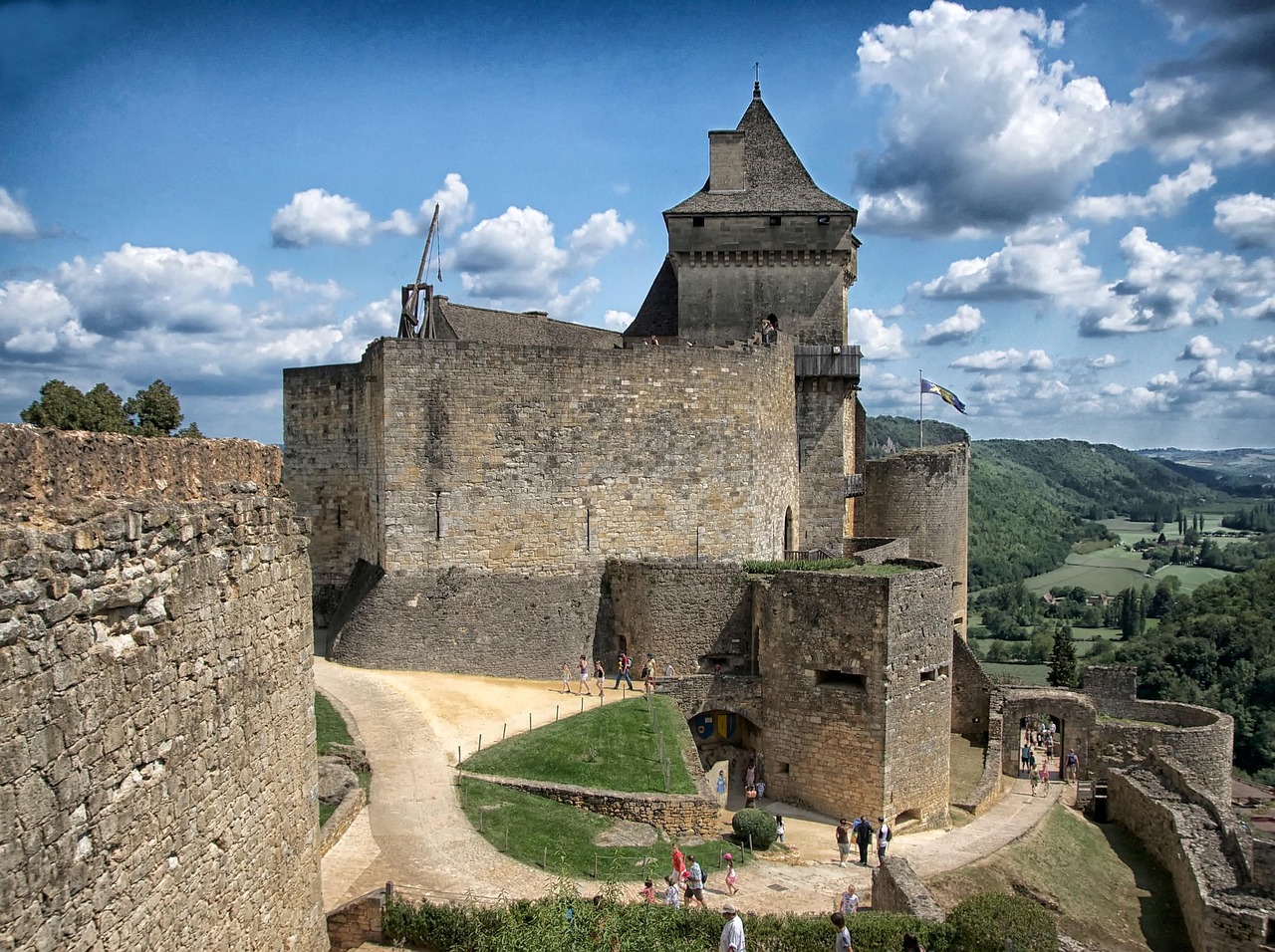
Château de Castelnaud is the quintessential medieval fortress: thick walls, working trebuchets, vertiginous ramparts, and a dizzying view over rival strongholds like Beynac. But what makes it special is the way it blends vivid storytelling with serious historical depth. It is both a child’s dream of knights and sieges, and a historian’s delight of weaponry and strategy.
When people ask me why to visit, I usually answer with a memory. One June evening in 2026, I stood on the main battlement just before closing time. The last families were drifting out, the staff were gently herding stragglers toward the exit, and the valley below dissolved into peach and violet layers of light. Beynac glowed across the Dordogne, La Roque-Gageac’s cliffs caught the last sun, and the swallows performed their last aerobatics around the towers. That layered landscape – castles staring each other down across a fertile valley – is the Dordogne distilled, and Castelnaud is the best balcony seat to take it all in.
If you’re planning anything from a 1 day itinerary for Château de Castelnaud to a full 3 days in Château de Castelnaud and its surroundings, this guide is designed to feel like you’re traveling with a knowledgeable local friend: opinionated, practical, and honest about what’s worth your time.
Table of Contents
- Why Visit Château de Castelnaud?
- Essential Overview & Practical Basics
- 1–3 Day Itineraries for Château de Castelnaud
- Key Sections, Viewpoints & Adjacent Sites (In-Depth)
- Eating & Staying Around Château de Castelnaud
- Château de Castelnaud After Dark & Off-Hours Magic
- Cultural Etiquette & Local Customs
- Events, Festivals & What’s New in 2026–2027
- Best Day Trips & Nearby Attractions
- Logistics: Tickets, Opening Hours & On-Site Practicalities
- Essential Travel Tips for Château de Castelnaud & Dordogne
- Summary & Final Recommendations
Essential Overview & Practical Basics
Château de Castelnaud sits in Castelnaud-la-Chapelle, in the Périgord Noir area of the Dordogne, southwestern France. It’s about 12 km from Sarlat-la-Canéda, the region’s main medieval town and the best base for most visitors.
The fortress itself is privately owned and impeccably maintained. Inside, the curated “Musée de la Guerre au Moyen Âge” (Museum of Medieval War) houses one of the best collections of medieval arms and armor in Europe. It’s surprisingly hands-on and family friendly without dumbing anything down.
From a travel planning perspective, Castelnaud works beautifully as:
- A focused 1 day itinerary for Château de Castelnaud (castle + village + river).
- Part of 2 days in Château de Castelnaud and nearby castles and gardens.
- The anchor of a 3 day itinerary for Château de Castelnaud and the central Dordogne valley.
It’s open year-round, but hours and programming change seasonally. Spring and autumn are the sweet spots: softer light, quieter lanes, and more time to linger on the ramparts.
1–3 Day Itineraries for Château de Castelnaud
Below are three sample itineraries I’ve personally followed (and tweaked) during multiple visits in 2024–2026. They blend must-see attractions in Château de Castelnaud with quieter corners, plus plenty of food and river time. I’ll summarize the days rather than drown you in minute-by-minute detail, so you can adapt them to your pace.
Day 1 – The Fortress, the Village & the River (Classic Highlights)
When friends ask for a 1 day itinerary for Château de Castelnaud, this is the day I describe. It’s the essence of the place: the approach, the castle, the village, and the Dordogne river all in one satisfying arc.
Morning: The Approach & First Glimpse
On my last spring visit in May 2026, I left Sarlat just after 9:00, grabbing a still-warm croissant from a bakery near the Place de la Liberté. The drive to Castelnaud takes about 20–25 minutes, winding down through walnut groves and stone hamlets. As you cross the Dordogne and look up, the castle appears like a stone ship riding the ridge.
Park in the main car park below the village (it’s well signposted). From there, you walk uphill through narrow lanes of golden stone. I always slow down here: the climb is short but steep, and it’s the first moment you feel the fortress looming above you, glimpsed between rooftops.
Allow 10–15 minutes to stroll up; more if you stop for photos or a coffee in the village café. I like to arrive at the castle gate within 15–30 minutes of opening, when the tour buses haven’t yet arrived and the air on the ramparts is still cool.
Late Morning: Exploring the Castle Interior
Once inside, resist the temptation to rush straight to the viewpoints. Castelnaud’s magic lies in the way the interior spaces build anticipation. Start with the lower courtyard and follow the signposted route up through the keep and museum rooms.
The Museum of Medieval War is spread through various rooms: crossbows and longbows in one, suits of armor in another, beautifully restored siege engines in scale models. During my July 2026 visit, I watched a father explain to his wide-eyed daughter how a trebuchet worked, using the models as props. The staff encourage questions, and most speak at least some English.
Tip: If you’re visiting with kids, pick up the children’s booklet at the ticket desk. It turns the museum into a treasure hunt and buys you more lingering time at the displays.
Midday: The Panoramic Terrace
Eventually, the path funnels you up to the panoramic terrace at the top of the great tower. This is the postcard moment: the Dordogne looping below, Beynac perched defiantly on its own cliff, Marqueyssac’s clipped gardens trailing along the ridge opposite.
I try to time this for late morning, before the haze thickens but after the early mist has lifted. Spend at least 20–30 minutes here. Walk the full length of the terrace; the view changes subtly with each step. Facing downstream, you can trace the river to La Roque-Gageac’s ochre houses glued to the cliffside.
Photography tip: For the classic establishing shot, position yourself at the eastern edge of the terrace, framing the Dordogne in a lazy S-curve with Beynac in the upper right. Morning light from behind you keeps details crisp.
Early Afternoon: Trebuchets, Battlements & Demonstrations
After descending from the tower, follow signs to the outer ramparts. This is where the big toys live: full-scale trebuchets, mangonels, and ballistae poised towards the valley. Several times a day in high season (and on weekends in shoulder season), there are live demonstrations explaining how these siege engines worked.
On a hot afternoon in August 2025, I watched a demonstration where the guide, in period-inspired garb, made the crowd guess how many people it took to operate a trebuchet. Children shouted numbers; a few adults tried to do the math. It was a reminder that behind every great machine is a lot of human muscle – a theme that runs through the entire museum.
Plan for 60–90 minutes around the battlements, including time to simply lean on the wall and let the view soak in. This is also the breeziest part of the castle on hot days.
Lunch: Village Terrace with a View
For lunch, I generally skip the snack bar right at the castle exit and walk 5 minutes down into the village instead. The immediate cluster of restaurants just below the castle have fine views but can be touristy; if you want something a bit more genuine, continue further down to a small terrace restaurant overlooking the Dordogne valley.
In June 2026, I had a simple but perfect lunch here: duck confit (this is Périgord, after all), a crisp salad with walnuts from the surrounding groves, and a glass of Bergerac rosé. I watched canoes drift by below and debated whether to join them that afternoon. Spoiler: I did, and you should too.
Afternoon: Canoeing the Dordogne
One of the most satisfying things to do in Château de Castelnaud is to see the castle from the river. Several canoe rental outfits line the Dordogne within a short drive of the village. My favorite is a family-run base a few minutes upstream; they’re efficient without being pushy, and the equipment is well maintained.
For a relaxed half-day, choose a route that starts upstream (often at Vitrac or Cénac) and ends near Castelnaud. The rental company shuttles you to the start, and you paddle back at your own pace. Along the way, you’ll float beneath Beynac, La Roque-Gageac, and finally Castelnaud itself, each castle revealing a new profile from the water.
As I passed under Castelnaud’s cliffs last September, I looked up at the very terrace I’d been standing on that morning. The stone bulk of the fortress suddenly felt more imposing from below, the ramparts almost vertical, the treeline framing it in green. It’s a brilliant way to appreciate the castle’s defensive position and to give your legs a break after the morning’s staircases.
Late Afternoon & Early Evening: Slow Stroll & Golden Hour
Back in the village, late afternoon is ideal for a quiet wander. The day-trippers are starting to drift away, and the lanes soften into evening. Duck into the small artisan shops – a woodworker here, a local preserves producer there – and pick up edible souvenirs like walnut oil or foie gras.
If you still have energy, climb a little way down toward the river road to catch a classic silhouette view of Castelnaud at golden hour. The castle turns honey-colored, and the valley fills with birdsong. On my last visit, I sat on a low stone wall with a takeaway coffee, listening to swifts scream overhead and feeling very reluctant to leave.
Who This Day Is For
- Families: The mix of interactive museum, real siege engines, and canoeing is perfect for kids.
- Couples: The terrace views and sunset strolls through the village are quietly romantic.
- First-timers: If you only have 1 day in Château de Castelnaud, this covers the essential experiences.
Day 2 – Villages, Gardens & River Adventures
With a 2 day itinerary for Château de Castelnaud, you can start to explore the wider valley tapestry: rival castles, hanging gardens, and river-level villages that put the fortress into context.
Morning: Beynac – The Rival Fortress
Start with Beynac, Castelnaud’s historic rival across the river. It’s about a 15-minute drive away. On a misty October morning in 2025, I walked up through Beynac’s steep lanes while the Dordogne was still half-hidden in fog. From the ramparts, Castelnaud floated on the opposite ridge like a ghost ship.
Exploring Beynac’s stone halls and austere chapel is the perfect historical counterpoint to Castelnaud’s more curated museum experience. Together, they’re among the best places to visit in Château de Castelnaud’s orbit if you’re interested in medieval geopolitics.
Midday: La Roque-Gageac – Cliffside Charm
Drive or boat down to La Roque-Gageac, officially one of “Les Plus Beaux Villages de France.” Houses are wedged between river and cliff, with Mediterranean plants thriving in the sheltered microclimate.
Have lunch on a shaded terrace; I like to order a salad périgourdine – greens with duck gizzards, smoked duck breast, walnuts, and local goat cheese. It’s hearty enough to keep you going for an afternoon of walking.
Afternoon: Marqueyssac Gardens – The Best Balcony on Castelnaud
If you only add one major adjacent site to your travel guide for Château de Castelnaud, make it the Jardins de Marqueyssac. These dreamy, sculpted boxwood gardens line a long ridge directly opposite Castelnaud, offering what is arguably the single best panoramic view of the fortress.
On a clear afternoon, walk the “Promenade des Falaises” to the belvédère. Castelnaud appears in full profile, its towers and curtain walls clearly articulated. I spent nearly an hour here one April 2026 day, watching light and shadow travel across the stone. Bring binoculars if you have them; you can sometimes see people moving along Castelnaud’s own terrace, tiny against the masonry.
Evening: Marqueyssac by Candlelight (Summer)
On Thursday evenings in summer, Marqueyssac holds candlelit nights: thousands of candles are lit along the paths, musicians perform in tucked-away corners, and the valley twinkles below. The view across to the softly lit silhouette of Castelnaud is unforgettable and makes an exquisite romantic evening if you’re traveling as a couple.
Who This Day Is For
- Sightseers: You’ll tick off multiple must-see attractions in a compact area.
- Romantic travelers: Candlelit Marqueyssac and riverfront dinners are a highlight.
- Photography lovers: The cross-valley views of Castelnaud are some of the best photo ops.
Day 3 – Hidden Dordogne, Markets & Slow Travel
With 3 days in Château de Castelnaud’s orbit, you can lean into slower pleasures: markets, quiet walks, and lesser-known villages.
Morning: Sarlat Market & Food Forays
If your visit overlaps with Sarlat’s big market days (usually Wednesday and Saturday mornings), devote a morning to it. In spring 2026, I arrived just after 9:00 and followed my nose through stalls of goat cheese, cèpes, duck rillettes, and glossy walnuts. This is the place to assemble a picnic for another riverbank lunch with a castle view.
Pick up bread, cheese, charcuterie, fruit, and a bottle of Bergerac wine (or locally pressed apple juice if you prefer non-alcoholic). Many vendors are happy to recommend combinations. This is also an easy spot to observe local customs in action: greetings, bargaining style, and the gentle choreography of French market life.
Midday: Picnic with a View of Castelnaud
Drive back towards Castelnaud and find a quiet riverside spot. There are several grassy pull-offs along the Dordogne where locals picnic; look for parked cars and canoes stacked nearby. I usually choose a bend in the river where Castelnaud or Beynac is visible but not overwhelming, so the landscape rather than the castle is the star.
Spread your market finds, kick off your shoes, and watch the flat-bottomed gabarres and canoes drift past. On a warm June day, this is one of the most restorative things to do in Château de Castelnaud’s surroundings.
Afternoon: Quiet Villages & Countryside Walks
Spend the afternoon exploring lesser-known hamlets: places like Vitrac, Domme’s back lanes (beyond the main viewpoint), or the tiny churches that dot the countryside. In 2026, I re-walked a favorite short loop from the outskirts of Castelnaud through walnut groves and back along a rural lane, hardly seeing another person for an hour.
Many local tourist offices now publish short walking routes (boucles) with clear signage. These are ideal for families or anyone wanting a taste of rural Périgord without committing to a full-day hike.
Evening: Farewell to the Castle
For your final evening, return to Castelnaud village one last time. Even if you don’t re-enter the castle, climb up to the church square for a final view over the Dordogne and Beynac. In late September 2025, I sat here as the sky turned indigo, listening to the muffled conversations from a nearby terrace and the occasional bark of a village dog.
It’s a modest viewpoint compared to the great terrace, but it feels more intimate – like saying goodbye to a friend rather than a monument.
Who This Day Is For
- Slow travelers: Ideal if you want to go beyond checklists and into rhythms of local life.
- Food lovers: Market mornings and long picnics are the highlight.
- Families: A low-pressure day with flexible activities and plenty of space for kids to roam.
Key Sections, Viewpoints & Adjacent Sites (In-Depth)
Beyond the itineraries, let’s dive deeper into at least eight of the most prominent sections, viewpoints, and adjacent sites that define the Château de Castelnaud experience. These are the places you’ll actually walk through, linger in, and remember long after the trip.
1. The Approach & Gatehouse
Your relationship with Castelnaud begins before you even cross the threshold. The last stretch up from the village is a compressed history lesson: houses huddled under the protective gaze of the fortress, narrow lanes acting as natural choke points. It’s easy to imagine medieval villagers scrambling up this same slope in times of alarm.
The gatehouse itself, with its heavy wooden doors and murder holes overhead, sets the tone. During my last visit in March 2026, a light drizzle made the stone glisten, and the dripping water emphasized just how impenetrable these walls must have felt to would-be attackers. Look up as you pass under the arch – the slots above were designed for dropping stones or boiling liquids on unwelcome guests.
Practical tip: This is often where queues form in high season, especially late morning. To avoid the longest waits, aim for opening time or mid-afternoon after the coach tours have cycled through. If you’ve pre-booked a timed ticket (recommended in July–August), have your confirmation ready; the staff here are efficient but can’t work miracles when large groups arrive all at once.
Photography note: Just inside the gate, turn around and look back through the arch to frame the village street below. The contrast between dark stone and bright sky is dramatic, particularly on sunny days.
2. Inner Baileys & Courtyards
Once inside, Castelnaud reveals itself in layers: lower bailey, inner bailey, and finally the keep. Each courtyard has its own mood. The lower areas, once home to workshops and stables, now host some of the larger siege engines and interpretive panels. Children tend to fan out here, drawn to anything they can touch.
The inner courtyard, by contrast, feels more domestic. Here you’ll find cisterns, staircases, and balconies that hint at the daily life of the castle’s lords. On a bright July day, the stone reflects heat and light; on a grey November afternoon, it becomes a somber canyon.
During a 2024 winter visit, I lingered in a corner of the inner bailey while a guide explained, in French, how refuse was managed in such a cramped, vertical space. It was a reminder that real medieval life was less about gallant knights and more about logistics, hygiene, and hierarchy.
Allow 30–45 minutes to explore these courtyards without rushing. Look for the small details: grooves worn into stone steps by centuries of feet, carved lintels over doorways, tiny arrow loops framing slices of the landscape outside.
3. Museum of Medieval War
Officially the “Musée de la Guerre au Moyen Âge,” this museum is the intellectual heart of the castle. It transforms what could have been a generic fortress visit into a deep dive into medieval warfare, from personal armor to large-scale siege tactics.
Spread across multiple levels and rooms, the collection includes authentic swords, helmets, chainmail, crossbows, and early firearms, as well as detailed models of siege engines. Explanatory panels are available in French and English, and the tone is clear without being simplistic.
On my most recent visit in February 2026, I found myself alone in a room lined with suits of armor, their polished surfaces catching the low winter light from narrow slits in the wall. It was eerily quiet; you could almost hear the clank of metal that used to echo here. Another room hosts a fascinating timeline of the Hundred Years’ War, giving context to why this region bristled with fortresses like Castelnaud and Beynac.
For families, the museum offers just enough interactivity – models to crank, videos to watch, and occasional demonstrations – without turning into a theme park. For history buffs, it’s one of the must-see attractions in Château de Castelnaud and a strong reason to budget at least 2–3 hours for your visit.
Tip: If you’re short on time, prioritize the rooms on siege warfare and the evolution of defensive architecture. They illuminate what you’re seeing outside on the ramparts and make your walk along the walls much more meaningful.
4. The Great Tower & Panoramic Terrace
The great tower, or keep, is the vertical spine of Castelnaud. Its thick walls and narrow windows were designed for defense and surveillance, not comfort. Climbing the internal staircases – some wide, some tight spirals – is like moving through a stone lung. You feel the weight of centuries overhead.
Rooms inside the keep host more museum exhibits, but the real prize is the panoramic terrace at the top. When people talk about the best places to visit in Château de Castelnaud, this terrace is what they mean. It’s the 360-degree stage on which the entire Dordogne valley performs: rolling hills, silver river, patchwork fields, and rival strongholds catching the light.
I’ve been up here in all seasons. In April, fresh green laces the trees and the valley looks newly painted. In high summer, heat shimmers above the river and canoes move like lazy beetles. In late October, the walnut trees turn bronze, and the castles seem to rise out of a bowl of autumn color. If you’re crafting your own 1 day or 2 day itinerary for Château de Castelnaud, anchor your timing around this terrace at a moment of good light – late morning or golden hour.
Accessibility note: The climb includes uneven steps and some narrow stretches; it is unfortunately not suitable for travelers with significant mobility limitations. If that’s you, focus instead on lower-level viewpoints and the village balconies, which still offer superb vistas with less effort.
5. Battlements, Trebuchets & Demonstrations
If the terrace is about the view, the battlements are about the mechanics of power. Walking along the walls, you see the logic of every curve and angle: how archers could cover blind spots, how attackers would be funneled into kill zones, how elevation translated into control.
The full-scale trebuchets and other siege engines stationed here are faithful reconstructions based on historical sources. They’re not just for show; during scheduled demonstrations, staff explain (and sometimes partially operate) them, describing counterweight systems, ranges, and the human effort involved.
On a bright August afternoon in 2024, I watched a guide walk a group of teenagers through the physics of a trebuchet. He handed them a rope and had them feel the force needed just to lift the counterweight. Their expressions changed from amusement to genuine respect. It’s an effective way to turn abstract “medieval warfare” into something tactile and real.
For photographers, the battlements are a chance to capture close-ups of arrow slits, machicolations, and stone textures. For families, they’re a place where children can safely feel like lookouts (within reason – the walls are protected, but keep an eye on very young kids).
6. Village of Castelnaud-la-Chapelle
Many visitors treat the village as a mere conduit to the castle, but it rewards a slower look. The stone houses, with their steeply pitched roofs and small gardens, cling to the hillside as if seeking the castle’s protection. Chickens scratch behind low walls, cats sun themselves on window sills, and in shoulder season you’re more likely to hear local conversation than tourist chatter.
On a quiet Monday in March 2026, I wandered the back lanes and discovered a tiny communal bread oven, preserved as a reminder of how villagers once shared resources. Another alley led to a small viewpoint over the confluence of the Dordogne and Céou rivers – not marked on most tourist maps, but cherished by locals for its tranquillity.
The village church, slightly removed from the main tourist flow, offers another perspective. Step inside for a moment of cool shade and to see how faith anchored this community beneath the looming fortress. The church square outside is one of my favorite low-key viewpoints for sunset, especially if you’ve already done the castle terrace.
Tip: If you’re staying nearby, come down early one morning before the castle opens. With shutters still closed and only the bakery awake, the village has an authenticity that’s easy to miss during peak hours.
7. Dordogne River & Canoe Views
The Dordogne is more than a scenic backdrop; it’s the axis around which this whole landscape turns. Historically, it was a lifeline for trade, communication, and military movement. Today, it’s the stage for some of the most memorable outdoor experiences in the region.
Canoeing between Vitrac and Castelnaud, you’ll experience a rolling slideshow of castles, cliffs, and villages. I’ve paddled this stretch in both high summer and crisp September, and each time I’m struck by how the river reorganizes the landscape. From water level, Castelnaud seems less like a lofty icon and more like a watchful guardian, its walls following the contours of the rock.
For non-paddlers, traditional flat-bottomed gabarre boats offer shaded, narrated cruises. They’re especially good for families with small children or anyone with mobility issues who still wants a sense of scale from the river. Look for departures that include commentary on the history of Castelnaud and its neighbors.
Practical tip: In peak summer, book your canoe slot a day ahead, especially for morning departures. Bring water shoes or sandals that can get wet, sun protection, and a dry bag for electronics. Even if you’re only planning 1 day in Château de Castelnaud, squeezing in a short paddle is worth the effort if the weather cooperates.
8. Nearby Castles: Beynac, Marqueyssac & Beyond
Château de Castelnaud doesn’t exist in isolation. It’s part of a dense constellation of castles and manors, many of which can be comfortably visited on a 2 day or 3 day itinerary for Château de Castelnaud.
- Château de Beynac: The stern elder sibling, with more raw stone and fewer displays, but extraordinary authenticity and views back to Castelnaud.
- Château des Milandes: A romantic, turreted castle associated with Josephine Baker, with lush grounds and a falconry show – very family friendly.
- Château de Marqueyssac: Technically a manor with gardens rather than a fortress, but its vantage point makes it inseparable from the story of Castelnaud’s landscape.
On a long summer weekend in 2025, I did what I jokingly called the “castle triangle”: Castelnaud in the morning, Beynac in the afternoon, and Marqueyssac’s candlelit gardens in the evening. It was intense but immensely rewarding – a crash course in regional history, architecture, and aesthetics.
Travel tip: If you’re visiting multiple sites, ask about combined tickets or discounts at local tourist offices. While there isn’t a universal pass, occasional promotions make a multi-castle day slightly easier on the wallet.
Eating & Staying Around Château de Castelnaud
Where to Eat (Beyond the Tourist Traps)
Within a few hundred meters of the castle gate, you’ll find several restaurants with fine views – and mostly middling food. They’re not terrible, but if you care about what’s on your plate, walk a little further or drive down to the river level.
My pattern over the last few years has been:
- Village terraces slightly downhill: These often have more locals and fewer laminated menus. Look for handwritten daily specials (plat du jour) featuring duck, confit de canard, magret, or omelettes with local cèpes.
- Riverside spots near the bridge: A few simple bistros and cafés line the Dordogne within a short drive. They’re excellent for long, relaxed lunches after a canoe trip.
- Picnics: Honestly, some of my best meals have been market-driven picnics on the riverbank, with the castle as a backdrop.
Typical regional dishes to try:
- Duck confit: Crisp skin, tender meat, usually served with potatoes sarladaises (potatoes fried in duck fat with garlic and parsley).
- Salade périgourdine: A hearty salad with duck gizzards, smoked duck breast, walnuts, and local cheese.
- Walnut tart: Sweet, nutty, often drizzled with caramel – a perfect afternoon treat.
Where Locals Actually Go
Locals from Castelnaud and nearby hamlets often head to slightly larger villages or the outskirts of Sarlat for meals out, where prices are gentler and cuisine more traditional. In conversations with shopkeepers in 2025–2026, a few common themes emerged:
- They avoid peak lunch hours at the closest castle-adjacent restaurants, preferring early or late seatings.
- They favor places with short menus (a sign of fresh, local sourcing) and menus du jour under €20 at lunch.
- They’ll happily drive 10–15 minutes for a truly good meal rather than settle for convenience.
If you’re staying several nights, ask your host for their personal favorites. I’ve discovered some of my best meals that way, including a tiny auberge hidden on a back road that serves an outstanding walnut-crusted goat cheese salad.
What to Bring with You On-Site
- Water: Especially in summer; shade can be limited on the ramparts.
- Light snacks: Nuts, fruit, or a small sandwich – there are designated picnic areas outside the immediate castle precincts where you can refuel.
- Layers: Stone retains coolness; even on warm days, interior rooms can be chilly, while the terrace can be windy.
Where to Stay Nearby
For most travelers, I recommend one of three base options:
- Sarlat-la-Canéda: Best for first-time visitors who want restaurants, markets, and night life. About 20–25 minutes’ drive to Castelnaud.
- Rural gîtes near Castelnaud: Rental cottages or B&Bs in the countryside give you early-morning and late-evening access to the valley, plus starry skies.
- Riverside villages: Staying in La Roque-Gageac, Vitrac, or Beynac lets you combine castle visits with lazy river evenings.
On my last long stay in 2025, I rented a small stone house within a 10-minute drive of Castelnaud. Mornings began with mist lifting over the Dordogne; evenings ended with the distant silhouette of the castle catching the last light. Being close meant I could time my visits to avoid crowds and catch those magical off-hours without much planning.
Château de Castelnaud After Dark & Off-Hours Magic
Castelnaud is primarily a daytime attraction, but the hours bookending opening and closing are when it truly breathes. Sunrise, golden hour, and blue hour all transform the fortress in subtle ways.
Sunset & Golden Hour
From the castle terrace, late-afternoon light rakes across the valley, emphasizing every fold in the land. Beynac turns the color of toasted bread; the river mirrors the sky. If your timing allows, plan your castle visit to reach the terrace 60–90 minutes before closing, especially outside peak summer when the light is softer.
From the village, golden hour lights up the castle walls from below. My favorite spot is a bend in the lane between the village and the lower car park: look back up and you’ll see the fortress rising above clustered roofs, perfectly framed.
Night-Lit Views
Even after the castle closes, its silhouette remains commanding. Exterior lighting gently bathes the walls, giving it a watchful presence in the night sky. From across the river near Beynac or from certain bends in the road, you can see Castelnaud glowing softly above the dark valley.
Evening Programs & Seasonal Events
In high season, Château de Castelnaud usually offers occasional evening events: torchlit tours, storytelling sessions, or special demonstrations. The exact program changes year to year, but in 2026 the management has announced expanded summer night openings on select dates, with themed visits focusing on life in the castle after dark (check their official website for details as dates approach).
For couples and older children, these evenings can be a highlight: fewer people, a different atmosphere, and the simple thrill of being in a fortress as dusk falls.
Cultural Etiquette & Local Customs
The Dordogne is welcoming, but a few cultural cues will smooth your way and deepen your experience.
Greetings & Politeness
- Always greet shopkeepers and staff with a “Bonjour, Madame/Monsieur” when entering, and a “Merci, au revoir” when leaving.
- In restaurants, wait to be seated rather than assuming any table is free.
- Smiles go a long way, especially if your French is limited.
Restaurant Customs
- Lunch service typically runs 12:00–14:00. Arriving at 15:00 hoping for a full meal will often end in disappointment.
- It’s normal to linger over meals; staff won’t rush you, but don’t expect rapid turnover either.
- Tip by rounding up or leaving 5–10% for good service; service is officially included, but small extras are appreciated.
Castle Etiquette
- Don’t climb on walls or barriers, even for a photo – it’s unsafe and damages the site.
- Keep voices moderate inside museum rooms; sound carries in stone spaces.
- Supervise children on stairs and battlements; there are protective rails, but it’s still a fortress.
Local Rhythms
Life in villages like Castelnaud follows a slower cadence. Shops may close for long lunches, and Sunday afternoon can feel almost entirely still. Embrace this. Plan practical errands for mornings, and use the quiet hours for walks or siestas.
Events, Festivals & What’s New in 2026–2027
The Dordogne’s event calendar is rich, and while Château de Castelnaud isn’t a major festival hub in itself, it participates in regional rhythms. For 2026–2027, a few highlights and trends relevant to visitors:
1. Expanded Summer Evening Openings at Castelnaud (2026)
The castle management has announced a series of summer evening openings in July and August 2026, with thematic visits on medieval daily life and defense at night. Expect guided tours (French first, with some English-language options), subtle lighting, and occasional musical interludes.
2. Medieval-Themed Weekends
On select weekends in spring and autumn 2026–2027, Castelnaud plans to host small-scale medieval reenactment days: costumed interpreters, craft demonstrations, and extra activities for children. These events make the castle especially vibrant – and busier – so book tickets early and arrive at opening time.
3. Regional Festivals
- Sarlat Film Festival (Autumn 2026 & 2027): A French cinematic event that fills Sarlat’s streets with filmgoers. Castelnaud becomes a popular day trip during the festival; book accommodation months ahead if you plan to combine the two.
- Walnut and Foie Gras Fairs (Winter 2026–2027): Held in various villages, celebrating two pillars of Périgord cuisine. Castelnaud is quieter then, but the castle offers atmospheric, near-empty visits.
Best Day Trips & Nearby Attractions from Château de Castelnaud
If you’re using Castelnaud or nearby Sarlat as a base, several worthwhile day trips are within easy reach.
1. Lascaux & Prehistoric Dordogne
About 45–60 minutes’ drive away lies the Vézère valley, cradle of prehistoric art. Lascaux IV, the latest and most sophisticated replica of the famous painted cave, is a must for anyone interested in deep history. Combine it with a visit to the National Museum of Prehistory in Les Eyzies.
2. Rocamadour
About 1.5 hours by car, Rocamadour clings to a cliff above a gorge in neighboring Lot. It’s more overtly religious than Castelnaud, with chapels and sanctuaries stacked above each other, but the vertical drama echoes that of the Dordogne’s castles.
3. Domme & Belvès
These bastide towns offer ramparts, viewpoints, and a taste of medieval urban planning. Domme in particular has a commanding view over the Dordogne valley, including a lateral perspective on Castelnaud’s ridge.
4. Local Markets Circuit
Plan a market-hopping day based on the regional schedule: Sarlat, Saint-Cyprien, Le Bugue, and others. It’s an excellent way to experience cultural experiences in Château de Castelnaud’s broader region and stock up on picnic supplies.
Logistics: Tickets, Opening Hours & On-Site Practicalities
Understanding how to visit Château de Castelnaud without friction will save you time and frustration.
Tickets & Entry Types
- Standard entry: Includes access to the entire castle, museum, and ramparts.
- Guided tours: Offered in French several times a day in high season; occasional English tours. Check schedules at the ticket office or online.
- Evening/special event tickets: Sold separately for night openings or themed events; advance booking strongly recommended.
In July–August, consider buying tickets online to avoid queueing at the ticket office. While same-day tickets are usually available, timed entry slots for popular hours (late morning, mid-afternoon) can get congested.
When Reservations Open & How Fast They Sell Out
For regular daytime visits, you generally don’t need to book weeks in advance, except around major holidays. For special evening events or large groups, reservations may open 1–2 months ahead and can sell out quickly, particularly in 2026 as post-pandemic travel demand continues to be strong.
Opening Hours
Hours vary by season, but as a rule of thumb:
- Winter: Shorter hours, often late morning to late afternoon.
- Spring & Autumn: Extended daylight hours, typically opening around 10:00.
- Summer: Long days, sometimes with evening openings on select dates.
Always double-check current Château de Castelnaud opening hours on the official website before you go, as they can shift slightly year to year.
Peak Hours to Avoid
- Late morning (10:30–13:00) in July–August is the busiest, especially on sunny days.
- Rainy days can paradoxically be crowded as people shift from outdoor river activities to indoor castles.
- Arrive at opening or after 16:00 for a more relaxed visit.
Dress Code & Behavior
There is no formal dress code, but consider:
- Wear comfortable shoes with good grip; surfaces can be uneven and, in wet weather, slippery.
- Bring a light layer even in summer; interior rooms can be cooler than outside.
- Respect roped-off areas; they’re there to protect both you and the structure.
Photography Restrictions
Photography for personal use is generally allowed throughout the castle, including the museum, but tripods, drones, and commercial shoots require prior permission. Avoid flash in sensitive exhibition rooms, especially where indicated.
Accessibility
As a medieval fortress perched on a steep hill, Castelnaud presents challenges for visitors with limited mobility:
- The approach from the car park involves a significant uphill walk.
- Interior staircases are narrow, steep, and uneven; there are no elevators.
- Some lower courtyards and museum rooms are reachable with help, but the terrace and upper ramparts are not wheelchair accessible.
If mobility is a concern, focus on exterior viewpoints from the village and riverside, and consider complementing your visit with more accessible sites like certain sections of Marqueyssac’s gardens or boat trips on the Dordogne.
Security & Queue Times
Security is present but unobtrusive. Bag checks may occur during busy periods or special events. Typical waits at peak times range from 10–30 minutes; again, arriving early or late in the day helps.
Best Season & Time of Day to Visit
- Spring (April–June): Ideal balance of mild weather, long days, and manageable crowds. Wildflowers and fresh foliage make the valley especially photogenic.
- Autumn (September–October): Warm days, cooler nights, and beautiful foliage. My personal favorite season.
- Summer (July–August): Vibrant but crowded and hot; prioritize early mornings and late afternoons, and book accommodation early.
- Winter (November–March): Quiet, atmospheric, with shorter opening hours and occasional closures in poor weather. Great for contemplative visits if you’re prepared for chill and possible rain.
Essential Travel Tips for Château de Castelnaud & Dordogne
How to Get There Without Wasting Time
By Car: Driving is by far the easiest way. From Sarlat, follow signs towards Vitrac and then Castelnaud-la-Chapelle. Allow 20–30 minutes depending on traffic and photo stops.
By Public Transport: Options are limited. Regional buses may get you to Sarlat or nearby towns, but the last stretch to Castelnaud usually requires a taxi or rideshare, which can be sporadic. If you’re relying on public transport, consider joining an organized day tour from Sarlat that includes Castelnaud.
Getting Around the Area
- Car rental: Available in Sarlat and larger towns; book ahead for summer. An international driver’s license is recommended (see below).
- Cycling: Enthusiasts will enjoy the rolling terrain, but some roads are narrow with fast-moving traffic. Stick to designated bike routes where possible.
- Walking: Short hikes and village walks are rewarding, but distances between major sites can be longer than they appear on the map.
Visa Requirements & Driving Licenses
As of 2026, France is part of the Schengen Area. Many visitors (including from the EU, UK, US, Canada, Australia, New Zealand, and others) can enter visa-free for short stays, but rules are tightening with the rollout of ETIAS (a pre-travel authorization system). Always check the latest requirements with official sources before your trip.
For driving:
- EU/EEA licenses are fully recognized.
- UK, US, Canadian, Australian, and many other licenses are accepted for short stays, but an International Driving Permit (IDP) is recommended and may be required by some rental companies.
SIM Cards & Connectivity
Mobile coverage around Castelnaud is generally good, though some rural pockets have weaker signals.
- eSIMs: Convenient for many modern phones; purchase a European data eSIM before arrival.
- Local SIM: French operators like Orange, SFR, and Bouygues offer prepaid SIMs; buy in larger towns or at airports.
- Wi-Fi: Widely available in hotels, gîtes, and many cafés; less so in tiny village bars.
Money-Saving Tips
- Visit in shoulder season (April–June, September–October) for better value accommodation and fewer crowds.
- Make lunch your main meal; many restaurants offer excellent set menus at midday for less than dinner prices.
- Use markets and supermarkets for picnic supplies rather than eating every meal out.
- Combine nearby attractions into full days to minimize driving back and forth.
Seasonal Advice
- Spring: Bring layers and a light rain jacket; weather can shift quickly.
- Summer: Pack a hat, sunscreen, and refillable water bottle. Book accommodation, canoe trips, and special event tickets weeks in advance.
- Autumn: Ideal for hiking and photography; morning fog adds drama to castle views.
- Winter: Check opening days and hours for all sites; some restaurants and smaller attractions close or limit operations.
Hidden Tips from Repeat Visits
- Arrive twice: If you’re staying nearby, visit Castelnaud once in the morning for the museum and terrace, and once just before closing another day just to walk the ramparts and soak in the atmosphere.
- Carry small change: Useful for parking meters, small purchases, and rural markets where card readers occasionally fail.
- Ask about local walks: Tourist offices and even castle staff sometimes have insider suggestions for short, scenic loops starting near the village.
- Balance castles and rivers: Too many fortresses in one day can blur together. Alternate castle-heavy days with river or village-focused ones.
Summary & Final Recommendations
Château de Castelnaud is more than a single tick on a Dordogne checklist. It’s a layered experience of stone, story, and landscape – a place where you can feel the weight of medieval conflict and the lightness of a summer picnic within the same day.
If you’re pressed for time, a well-planned 1 day itinerary for Château de Castelnaud will give you the essentials: the ascent through the village, the museum of medieval war, the panoramic terrace, and a glimpse of the castle from the river. With 2 days in Château de Castelnaud’s orbit, you can weave in rival Beynac, Marqueyssac’s gardens, and a slow evening in the village. With 3 days in Château de Castelnaud and the surrounding valley, you’ll start to feel the rhythms of local life – markets, walks, and quiet viewpoints that don’t make it onto postcards.
As of 2026, the castle is in excellent condition, programming is lively, and travel infrastructure is solid. The best time to visit Château de Castelnaud, in my view, is spring or autumn, when the valley is at its most beautiful and crowds are manageable. But even in high summer or on a misty winter day, the fortress retains its charisma.
However long you stay, give yourself time to simply stand on the ramparts or a village balcony and look. Let your eye wander from stone to river to distant ridge. That quiet act of looking – unhurried, curious, anchored in place – is where Castelnaud really reveals itself.