Why Visit Colorado Provençal? The Soul of Provence in Ochre and Light
There are landscapes that look good in photos, and there are places that change you a little when you walk through them. Colorado Provençal, just outside the small village of Rustrel in the Luberon, is firmly in the second category.
I’ve been wandering these ochre canyons since my early twenties, and I still remember my first glimpse: stepping out of the pine shade and suddenly confronting a cliff of blazing orange, red, and white sand that looked more like Arizona than Provence. The air smelled of hot pine resin and dusty clay, cicadas were screaming from every tree, and somewhere a family was laughing in Italian. It felt both wildly foreign and deeply, quietly Provençal.
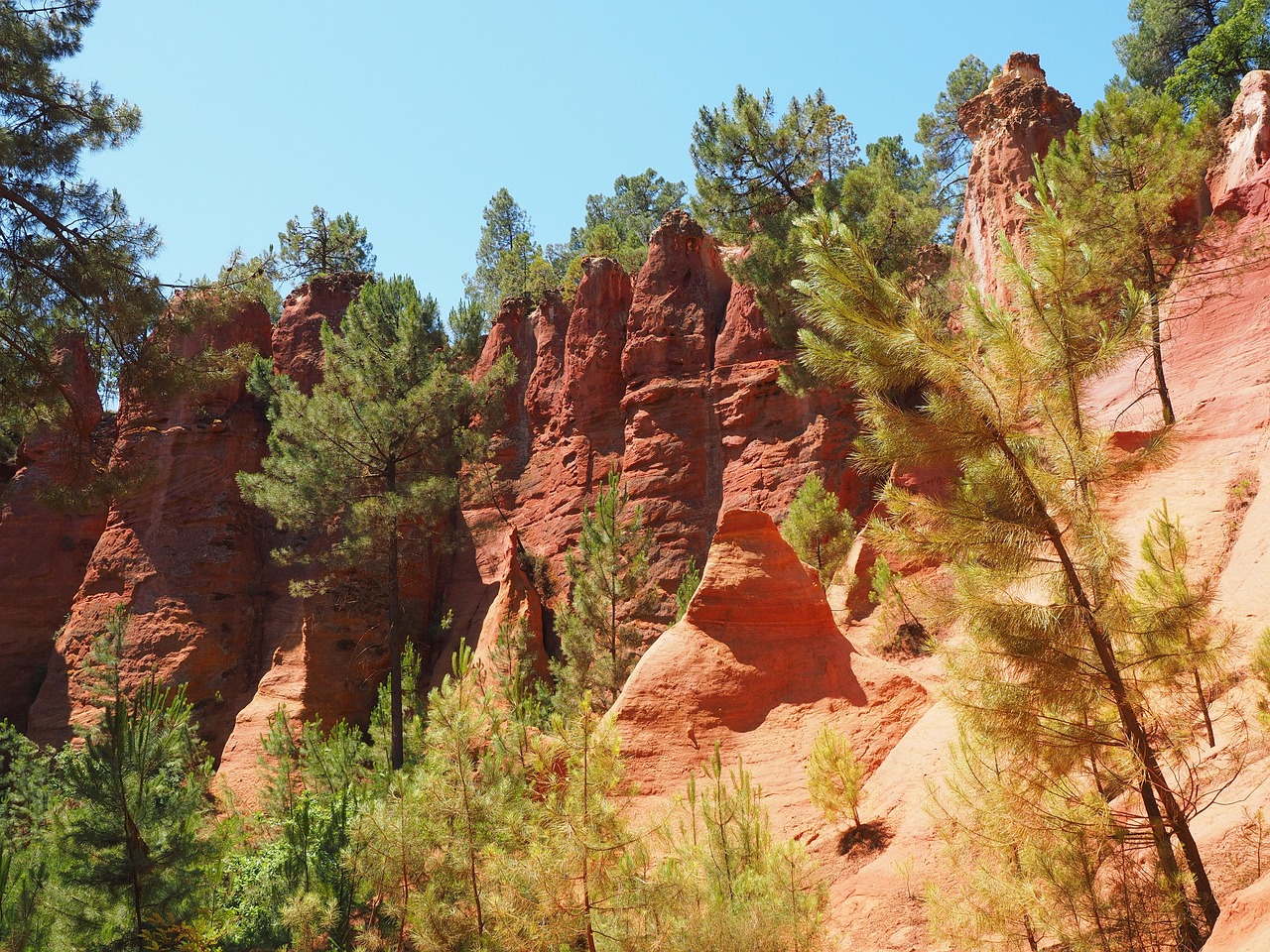
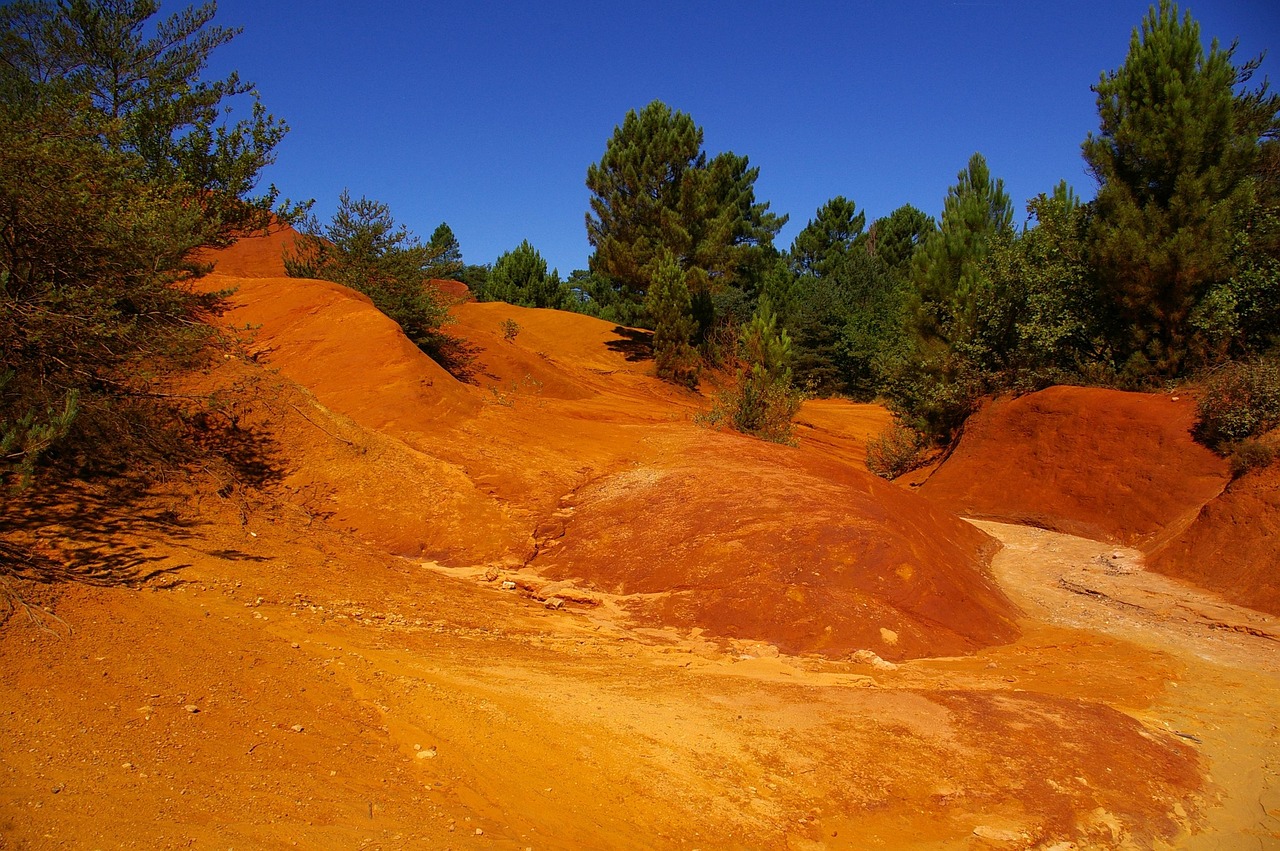
Colorado Provençal isn’t a theme park or a fake “Western” set. It’s an old ochre quarry, shaped by both nature and a century of human labor. The result is a maze of amphitheaters, chimneys, and ravines painted in every shade of yellow, orange, and rust, framed by dark green pines and bright Provençal sky. It is, quite simply, one of the most photogenic and atmospheric corners of southern France.
What makes it special enough to plan a whole trip around?
- Otherworldly scenery – Sand dunes, sculpted cliffs, and narrow ravines that feel like a cross between the American Southwest and a painter’s palette.
- Walkable scale – Two well-marked loops mean you can see the best of it in a half-day, but there’s enough nuance to reward a full day (or two) of slow exploration.
- Family-friendly adventure – Kids can scramble, dig, and get gloriously dirty; adults get the views and the history.
- Romantic and atmospheric – Late-afternoon light turns the cliffs into glowing embers, perfect for couples watching the sun slip toward the Luberon ridge.
- Gateway to the Luberon – Nearby villages like Rustrel, Roussillon, Gordes, and Saignon are among the loveliest in Provence, with serious food and wine to match.
In this long-form travel guide for 2026, I’ll walk you through everything: how to build a 1 day itinerary for Colorado Provençal, stretch it into 2 days in Colorado Provençal or even a fully immersive 3 day itinerary for Colorado Provençal, the must-see attractions in Colorado Provençal, cultural nuances, where to eat nearby, and the tiny practical details (parking, tickets, footwear, mobile coverage, SIM cards, opening hours) that can quietly make or break your visit.
Table of Contents
- Why Visit Colorado Provençal?
- Colorado Provençal Overview & How It Works
- Main Sections & Viewpoints: 8 Essential Areas to Explore
- 1. The Ochre Trail (Sentier Ocre)
- 2. The Grand Amphitheatre
- 3. The Fairy Chimneys & “Desert” Plateau
- 4. The White Desert & Chalky Cliffs
- 5. Forest Edges & Panoramic Lookouts
- 6. Old Quarry Installations & Industrial Heritage
- 7. Rustrel Village & the Château
- 8. Roussillon Ochre Village & Sentier des Ocres
- 1–3 Day Itineraries (With Personal Stories)
- Eating & Drinking Around Colorado Provençal
- Where to Stay Nearby
- How to Get There & Get Around
- Colorado Provençal at Off-Hours: Sunrise, Sunset & After Dark
- Day Trips & Nearby Attractions
- Culture, Etiquette & Local Customs
- Practical Travel Tips & Logistics (2026–2027)
- Events & What’s New in 2026–2027
- Summary & Final Recommendations
Colorado Provençal Overview & How It Works
Colorado Provençal sits in the northern Luberon, about 10–15 minutes’ drive from Apt and a short walk from the village of Rustrel. It’s a privately managed natural site, but very much part of the local identity; many Rustrel families have parents or grandparents who worked the ochre quarries.
When you arrive, you park in the large paid car park (the fee doubles as your entrance ticket; there’s no separate gate ticket in 2026). From there, a wide track leads you in a few minutes to the start of the ochre formations. You’ll see a small cabin selling maps and sometimes ice cream; a simple snack bar; and clear signs describing the two official walking loops:
- Short loop (“Sentier du Sahara”) – ~40–50 minutes, easy, reaches the main amphitheater and sandy “desert”. Perfect with kids or in strong heat.
- Long loop (“Belvédères” route) – ~1.5–2.5 hours, moderate, adds viewpoints over the whole site and some steeper, dusty paths.
There’s no timed entry system as of early 2026, but in peak July–August there are informal capacity controls; the car park simply closes when full. This is one of the reasons I strongly recommend morning visits and, if you can, coming in shoulder seasons (May–June or September–October).
Think of Colorado Provençal as a compact, walkable amphitheater of experiences rather than a single viewpoint. You’ll wander through pine forest, walk along ochre cliffs, cross sandy bowls, and end up with your shoes and ankles stained a deep saffron by the time you leave.
Main Sections & Viewpoints: 8 Essential Areas to Explore
Over the years I’ve learned to think of the site in eight key areas. Each has its own character, light, and rhythm. Here’s how to understand and savor them, in the order you’ll most likely encounter them.
1. The Ochre Trail (Sentier Ocre): First Steps Into Another World
The first time I brought my young niece here, she stopped dead where the pines give way to the ochre basin and whispered, “It’s like Mars.” That’s exactly what the start of the Sentier Ocre feels like: a soft, sandy basin of intense orange and yellow, surrounded by sculpted cliffs.
From the information cabin, follow the wide, gently descending path. Within five minutes, you’ll see your first serious ochre formations on the left – low, eroded mounds streaked with yellow and red, often dotted with kids digging with plastic shovels. This initial section is your warm-up: flat, easy, and visually striking but not yet overwhelming.
What to look for:
- The way the ochre dust collects in tree roots and cracks – you’ll see entire pine trunks stained halfway up.
- Subtle color shifts: bright lemon yellow near the surface, deep orange in shaded hollows, almost blood-red streaks where iron is richer.
- The contrast between the crunchy pine needles underfoot and the powdery sand. Kids love running their hands through it.
How long to spend: Even if you’re in a hurry, give this first section 20–30 minutes. It’s where your eyes adjust to the colors and your brain stops saying “this can’t be France.” I often linger here longer than I plan, especially in early morning when the light is soft and side-lit.
Personal tip: On my last autumn visit (October 2025), I arrived just after opening and had this whole first basin to myself. I walked a slow loop, taking low-angle photos of boot prints in the sand before the day’s crowds smudged everything into a uniform orange. If you’re into photography, this is your golden quiet half-hour.
2. The Grand Amphitheatre: The Iconic Heart of Colorado Provençal
The Grand Amphitheatre is the money shot: a sweeping, horseshoe-shaped cliff of orange, red, and white, rising out of a sandy floor. You reach it as the short trail curves and the forest suddenly opens to an immense, bowl-shaped depression.
Each time I walk in, I instinctively slow down. The scale is deceptive in photos. In person, the verticality of the cliffs, the way the light slides across ridges and gullies, and the muffled acoustics (voices seem to bounce and soften) give it the feel of a natural cathedral.
What to look for:
- Stratified color bands – Layers of white, pale yellow, ochre, and red tell the geological story. Kids often turn it into a guessing game: “Which layer is the oldest?”
- Wind-carved details – Get closer to see tiny flutes, fins, and hollows sculpted by wind and occasional rain. These make wonderful close-up photos.
- Photographer’s ridge – To the right as you enter the bowl, a low rise gives you a slightly elevated, head-on view of the amphitheater. This is where most of the famous wide shots are taken.
How long to spend: Plan at least 30–45 minutes just here. I like to walk the perimeter slowly, then sit in the sand for a while, watching people react as they arrive: the sudden silence, the “wow,” the phones coming out. If you’re on a family trip, this is a good spot to let kids dig, build tiny ochre castles, or roll down gentle slopes (be prepared for serious laundry).
Best time: Late afternoon (around 16:00–18:00 in spring and autumn) is magical. The amphitheater glows like a lit lantern, and shadows add depth to every ridge. Midday, the light is harsher but colors are still vivid; morning gives softer hues but the cliffs can feel flatter in photos.
Personal anecdote: One June evening I watched an impromptu “concert” here: a teenage boy testing the echo with a few notes of a chanson his grandmother had taught him. The amphitheater gave his voice a strange, warm resonance, and a spontaneous little audience formed, applauding quietly. No official events, just the place working its quiet magic.
3. The Fairy Chimneys & “Desert” Plateau: Playful Formations and Big Skies
Beyond the amphitheater, the trail climbs slightly and the landscape opens into what locals call the “Sahara” – a sandy plateau dotted with whimsical pillars and hoodoos often described as “fairy chimneys”. This area feels drier and more exposed, with fewer trees and more sky.
The formations here are smaller in scale than in the amphitheater but more varied in shape: squat towers with flat capstones, thin elegant spires, and lumpy, almost anthropomorphic silhouettes. Children inevitably assign them nicknames: “the troll”, “the castle”, “the giraffe”. I still do the same, if I’m honest.
What to look for:
- Caprock balance – Some chimneys have harder, darker stones perched improbably on softer ochre columns. They’re a live demonstration of erosion at work.
- Footpath textures – The sand here is finer and paler, almost white in some patches, which makes the orange chimneys pop even more.
- Panoramas – Turn around regularly. The view back toward the amphitheater and the forested slopes beyond is among my favorites.
How long to spend: Another 30–45 minutes if you’re doing the short loop; longer if you’re looping around on the extended route. This is the area where people most often underestimate sun exposure: there’s very little shade, and the pale sand reflects the light upward.
Family-friendly factor: High. The sandy surface is forgiving for tumbles, and the sense of open space is freeing. On one August visit we ended up in an international game of “who can build the tallest ochre tower” with a German family and a pair of Spanish sisters. The kids negotiated rules in three languages; the adults negotiated shade.
Tip: If the amphitheater feels crowded, I often encourage people to continue to the chimneys and plateau. The crowd thins noticeably here; many visitors turn back too soon. You get a quieter, more contemplative experience without sacrificing the drama.
4. The White Desert & Chalky Cliffs: A Subtle, Lunar Beauty
As you continue on the longer loop, the palette shifts. The fierce oranges soften into creamy yellows and almost pure white cliffs, streaked with pale grey. It’s as if the site is gently turning the volume down after the visual intensity of the amphitheater.
This “white desert” section, less photographed and less hyped, has become one of my favorite parts of Colorado Provençal. It’s quieter, both in sound (fewer people linger) and in visual noise. The pines edge closer again, and the interplay of dark green, pale rock, and deep blue sky feels more typically Provençal – yet the ground under your feet is still that same strange, fine quarry sand.
What to look for:
- Subtle color gradations – Look closely at the “white” cliffs; they’re rarely truly white. You’ll see faint bands of champagne, ivory, even hints of pink.
- Vegetation reclaiming the quarries – Small shrubs and pioneer plants push up through the sand, a reminder that this was once an industrial extraction zone now being slowly rewilded.
- Shadow play – In late afternoon, gentle shadows emphasize the folds and bulges of the cliffs, turning an apparently flat wall into a textured relief.
How long to spend: 20–30 minutes if you’re moving steadily; I easily spend longer when I bring guests who enjoy photography or just quiet walking. Benches are rare, but the sand itself makes a comfortable seat for a brief rest.
Personal note: On a cool, clear January morning, I walked this section practically alone. The low winter sun made the white cliffs almost iridescent, and the frosty breath of the pines mixed with the faint mineral smell from the sand. If you’re in Provence in winter, don’t dismiss Colorado Provençal – it can be chilly, yes, but eerily beautiful.
5. Forest Edges & Panoramic Lookouts: The Belvédères
The “Belvédères” – the lookouts – are the reward for choosing the longer loop. Here, the trail climbs gently through thicker pine forest before emerging at a series of natural balconies overlooking the ochre formations from above.
It’s from these points that you really understand the layout of Colorado Provençal: ochre basins scooped into the hillside, sandy tongues reaching into the trees, the broader Luberon landscape beyond. On clear days you’ll see the blue line of the Luberon ridge to the south and, if you’re lucky, a glimpse of Mont Ventoux to the north.
What to look for:
- Overhead perspective – The fairy chimneys and amphitheater look entirely different from above: more abstract, more obviously shaped by human quarrying as well as erosion.
- Forest/ocher boundary – Notice how sharply the pine forest stops at certain lines; those edges often mark the historical limits of extraction.
- Light over the valley – Late afternoon brings long shadows over Rustrel and the surrounding fields; sunrise, when the site is rarely visited, bathes everything in cold blue and pink tones.
How long to spend: If you’re on a 1 day itinerary for Colorado Provençal and reasonably fit, do not skip this. Allow at least 45–60 minutes extra for the full belvédère loop, including stops. There are a couple of slightly steeper, sandy sections where walking sticks can help, especially going downhill.
Romantic factor: High, if you time it right. One September evening my partner and I reached the highest lookout just as the sun dipped below the Luberon ridge. The ochre cliffs below us glowed for a final two minutes, then fell into deep shadow while the sky held on to a soft lavender. We didn’t say much, and we didn’t need to.
6. Old Quarry Installations & Industrial Heritage: The Human Story
It’s easy to see Colorado Provençal as purely a natural wonder, but the shapes you’re walking through are also the product of human labor. Scattered along the trail – especially nearer the entrance and on discreet side paths – are remnants of the ochre industry: low brick structures, rusting metal, channels carved in stone.
From the late 19th century to the mid-20th, this area was a working quarry. Ochre was extracted, washed, dried, and ground here, then shipped around Europe as pigment for paints, dyes, and even cosmetics. Older locals in Rustrel still remember parents coming home stained orange from long shifts.
What to look for:
- Settling basins – Shallow rectangular basins where ochre-rich water was left to settle, leaving pigment at the bottom.
- Brick kiln remains – Low, half-collapsed structures where ochre was dried. Interpretive panels (in French and sometimes English) help make sense of the ruins.
- Water channels – Narrow, often mossy channels carved into rock or lined with stone, guiding water to various processing areas.
How long to spend: If you’re interested in industrial history, plan 30–45 minutes to follow the side spur trails and read the panels. If not, at least pause at one of the main installations; it adds a welcome layer of context to the beauty you’re seeing.
Personal anecdote: I once walked this section with an elderly man from Apt whose father had worked these very basins. He pointed out where workers hid their lunch in the shade, how they’d mark levels on the walls to track pigment settling, how children would sneak in after hours to slide down the sand slopes (some things never change). It completely changed the way I look at the site; I can’t walk past a rusted wheel now without seeing hands on it.
7. Rustrel Village & the Château: Life at the Edge of the Ochre
Many visitors treat Rustrel as a mere access point to Colorado Provençal, but this little village is worth a slow wander before or after your hike. Clustered around a small château and a handful of cafés, Rustrel is a lived-in, working village rather than a polished museum piece.
What to see:
- Château de Rustrel – A modest, pale-stone château that now houses the mairie (town hall). The square in front is a pleasant, shady place to rest with a coffee.
- Église Saint-Romain – A simple village church with a bell tower that rings the hours. Step inside for a moment of cool shade and to see local votive plaques.
- Fountain and washhouse – As in many Provençal villages, the fountain and old lavoir (washhouse) hint at the daily rhythms before running water in every home.
Food tip: On the north side of the main square, a modest-looking bar-restaurant (names and management change, but there’s usually at least one) serves workers’ lunches on weekdays: generous plats du jour, carafes of local rosé, and a mix of quarry workers, artisans, and a smattering of visitors. I’ve had some of my most enjoyable, unpretentious meals here – think hearty daube provençale or grilled lamb with ratatouille.
How long to spend: 45–90 minutes is enough for a stroll, a drink, and a simple meal. If you’re staying nearby, Rustrel makes a quiet, practical base: fewer tourists than Gordes or Roussillon, more of a sense of real village life.
Personal note: During the 2024 heatwave, I ducked into Rustrel’s bar after a morning hike, absolutely parched. The owner, seeing my ochre-streaked legs, chuckled and brought an extra carafe of cold tap water alongside my demi of beer, unasked. “On n’abandonne pas les gens du désert,” he joked – “We don’t abandon people from the desert.” That’s Rustrel in a nutshell.
8. Roussillon Ochre Village & Sentier des Ocres: A Perfect Complement
Strictly speaking, Roussillon is a separate site, about 25–30 minutes’ drive from Colorado Provençal, but for any traveler spending 1–3 days in the area, it’s an essential counterpart. Where Colorado Provençal is wild and quarry-like, Roussillon is both village and curated trail, with ochre cliffs facing a village of ochre-painted houses.
Sentier des Ocres: The “Ochre Path” here is a short, well-maintained loop (two lengths available, 30 or 60 minutes) that winds through vivid cliffs and pillars. Wooden steps and railings make it very accessible, and interpretive boards explain the geology and industry in detail. It’s more developed than Colorado Provençal, but also more concentrated: color everywhere you look.
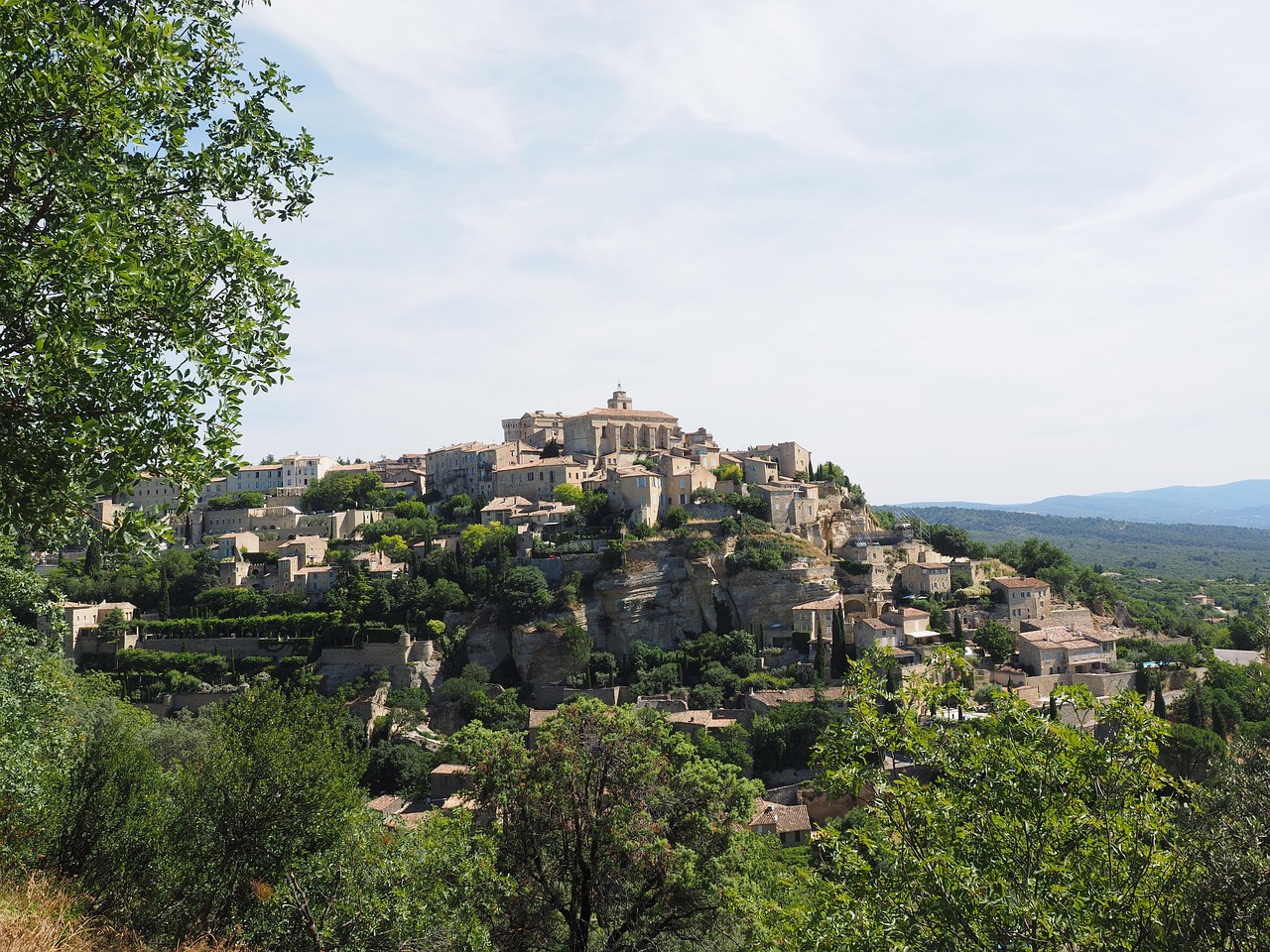
Roussillon village: Above the path, the village itself is a warm cascade of orange, red, and yellow houses, with art galleries, cafés, and small boutiques. It’s touristy, yes, but charming nonetheless. The viewpoint at the top of the village offers sweeping views over the Luberon.
How it fits your itinerary: If you’re building a 2 day itinerary for Colorado Provençal or a 3 day itinerary for Colorado Provençal and surroundings, I suggest pairing one morning at Colorado Provençal with an afternoon in Roussillon, or vice versa. The two sites together give you a fuller understanding of the ochre culture of the Luberon.
Personal preference: When friends visit with children, I often start with Roussillon’s Sentier des Ocres – the steps, railings, and short length make it easy with little legs – then “graduate” to Colorado Provençal the next day as the wilder, more adventurous cousin.
1–3 Day Itineraries for Colorado Provençal (With Personal Stories)
How you structure your time in and around Colorado Provençal depends on your pace, your interests, and who you’re traveling with. Below are three itineraries – 1, 2, and 3 days – that I’ve tested, tweaked, and lived through multiple times, each balancing the best places to visit in Colorado Provençal with quieter, more local experiences.
1 Day Itinerary for Colorado Provençal: The Essential Highlights
If you only have 1 day in Colorado Provençal, focus on the core: a full exploration of the site itself, a simple meal in Rustrel, and a relaxed Provençal evening. This is roughly the schedule I follow when I’m guiding friends up from Aix or Avignon for a day trip.
Morning: Early Start & The Heart of Colorado Provençal
08:30–09:15 – Arrival & Parking
Arrive just after opening if possible (check current Colorado Provençal opening hours; in 2026 they are typically around 09:00–18:00 in shoulder seasons, extended in high summer). The drive in from Apt or Bonnieux in the early light is a pleasure in itself: vineyards, cherry orchards, and the first slanting rays on the Luberon ridge.
At the entrance, pay your parking/entrance fee (cash or card, but I’ve had card machines hiccup – keep some cash). Grab a map if you like, though the trails are well-marked.
What I do: I always take a moment here to slather on sunscreen, swap city shoes for sturdy trainers, and transfer valuables to a small backpack. I leave anything white (shirts, trousers) in the car – ochre dust is more tenacious than you think.
09:15–11:30 – Short Loop with Deep Exploration
Start on the Sentier du Sahara (short loop). Take your time, especially through the first ochre basin and the Grand Amphitheatre. Walk slowly, double back, sit in the sand. This is not the time for a fitness march; it’s a time to let your eyes and nose (pine, warm mineral dust) adjust.
Tips for your 1 day itinerary for Colorado Provençal:
- Pause often and look behind you; some of the best compositions are backward glances.
- Keep water handy; even in spring, the combination of sand and sun dries you out quickly.
- Teach kids a simple “leave no trace” rule: we walk on paths, we don’t carve into cliffs or climb fragile formations.
If the weather is cool and you’re feeling good, by the time you reach the fairy chimneys, decide whether to extend to the belvédère loop. On a 1-day visit I generally recommend it unless someone in your group is struggling with the heat or footing.
Midday: Forest Shade & Picnic Lunch
11:30–13:00 – Belvédère Loop & Viewpoints
Assuming you opt for the longer loop, climb slowly up into the pines. The respite from direct sun is welcome, especially on hot days. At the main viewpoints, step aside from the path, take your photos, but also just stand still for a few minutes. This is where the 1 day itinerary for Colorado Provençal becomes more than a checklist – you see the site as a whole, not as separate “Instagram spots”.
13:00–14:00 – Picnic or Simple Snack
Officially, the site discourages full-on picnics in the formations themselves (too much risk of litter and erosion), but there are designated picnic areas near the entrance and along the access track. Personally, I prefer to snack lightly on the trail – a handful of nuts, some fruit – then have a more substantial lunch just outside.
What to bring:
- A baguette and a chunk of local goat cheese (from Apt’s market if you passed through on a Saturday).
- Seasonal fruit: cherries in late May–June, apricots in June–July, grapes in September.
- Plenty of water; you can refill in Rustrel later, but there’s limited potable water at the site.
On my last spring visit, I bought a still-warm fougasse (olive-studded flatbread) in Apt early in the morning and ate it sitting on a fallen pine trunk near the car park, my boots and calves dusted in ochre, watching a steady stream of latecomers begin their hike in the worst of the midday sun. Smug? A little. Satisfied? Very.
Afternoon: Rustrel Village & A Lazy Provençal Break
14:00–16:00 – Explore Rustrel
Drive or walk the short distance up to Rustrel village. Park near the square and stroll the lanes, peeking into side streets and up at wrought-iron balconies. Step into the church for a dose of cool dimness and the faint smell of candle wax.
Settle at a café terrace (I often choose the one facing the château; shade patterns shift through the afternoon, so move chairs if needed). Order a coffee, a citron pressé, or, if you’re not driving further, a glass of pale local rosé. This is where you’ll see the daily life of a Luberon village: kids cycling through, a van delivering bread to the bar, a couple of hikers with walking sticks planning their next stop.
Late Afternoon & Evening: Optional Detour & Sunset
16:00–18:00 – Optional Nearby Stop (Apt or Saignon)
If you still have energy, use the late afternoon for a nearby excursion:
- Apt – Head into town for a wander through its old streets and stock up on candied fruit, local honey, or wine. On Saturdays, the market is superb.
- Saignon – A small hilltop village with a dramatic rock outcrop and sweeping views over the Apt plain. Quieter than Gordes, wonderfully atmospheric at sunset.
18:00–21:00 – Dinner & Golden Hour
For a 1-day trip, I usually book dinner near where I’m staying (Apt, Bonnieux, or Saint-Saturnin-lès-Apt are good bases). If you’re staying close by and it’s summer, consider an early dinner and then a quick drive back toward Colorado Provençal’s approach road just to watch the light slide off the cliffs from a distance as the sun drops. The site itself closes in the evening, but the surrounding countryside still catches that last, soft, honeyed light.
2 Day Itinerary for Colorado Provençal: Ochre & Village Life
With 2 days in Colorado Provençal, you can slow the pace, add Roussillon, and weave in more of the Luberon’s village life and food. This is my favorite rhythm for couples and families who want both adventure and lazy café time.
Day 1: Deep Dive into Colorado Provençal & Rustrel
Follow the 1 day itinerary structure for the core of Day 1, but with less clock-watching and more lingering. On 2-day visits, I often:
- Spend extra time in the Grand Amphitheatre, experimenting with different vantage points.
- Take a slower pace on the belvédère loop, sitting on a rock or fallen trunk to simply listen to the wind in the pines.
- Explore the industrial heritage side trails more thoroughly.
In the evening, base yourself in Rustrel, Saint-Saturnin-lès-Apt, or Apt for a relaxed dinner and a bottle of local wine. I’ve lost count of the evenings I’ve spent on small terraces here, feet sore in the best way, replaying the day’s colors in conversation.
Day 2 Morning: Roussillon & the Sentier des Ocres
09:30–12:30 – Roussillon Village & Ochre Path
Drive to Roussillon (allow 30–40 minutes, more in July–August). Aim to arrive by 09:30 to snag easier parking and a quieter village. Wander the lanes: art galleries, boutiques, little squares. The entire place feels painted with the same pigments you saw in Colorado Provençal.
Head down to the Sentier des Ocres by late morning. The paths here are shorter and more “domesticated” than Colorado Provençal – wooden stairs, railings, and clear interpretive panels. If you’re traveling with older parents or very young kids, they may find this more comfortable.
Tip: The 2 day itinerary for Colorado Provençal gains a lot from seeing both sites. Roussillon’s trail gives you tidy, dense ochre formations and detailed explanations; Colorado Provençal gives you space, wildness, and silence.
Day 2 Afternoon: Long Lunch & Luberon Wandering
12:30–14:30 – Lunch in Roussillon or Nearby
Have a terrace lunch in Roussillon (yes, it’s touristy, but in shoulder season I still enjoy it), or drive out to a countryside auberge. Order something regionally rooted: lamb with thyme, a tian de légumes (layered vegetable bake), or a salade de chèvre chaud (warm goat cheese salad). Pair with a glass of Luberon white or rosé.
14:30–18:00 – Choose Your Flavor of Afternoon
You have options; pick what suits your traveling style:
- Village-hopping – Gordes (dramatic but busy), Bonnieux (elegant terraces), or Lacoste (with its castle ruins) all work well in this slot.
- Winery visit – Stop at a vineyard near Bonnieux or Ménerbes for a tasting. Call ahead where possible; in high season, some places require reservations.
- Slow return & siesta – Especially with kids, heading back to your base town for pool time or a nap can make the whole 2 days in Colorado Provençal feel like a real holiday, not a race.
On one memorable 2-day trip in late September, we spent the second afternoon at a small family winery outside Ménerbes, sitting under plane trees while the owner poured us successive vintages and told stories about wild boar raids in his vines. We left with a case in the trunk and bright red dust still on our boots – the perfect souvenir duo.
3 Day Itinerary for Colorado Provençal: Slow Travel, Deeper Layers
With 3 days in Colorado Provençal and its surroundings, you can truly relax into the Luberon rhythm: a blend of ochre hikes, village mornings, long lunches, and late sunsets. This is the pattern I suggest to friends who want a base in one gîte or B&B and three unhurried days of immersion.
Day 1: Colorado Provençal Unrushed
Use the 1 day itinerary as your structure but expand generously. Arrive early, walk the full loop, sit and sketch or journal in the amphitheater if that’s your thing, linger over industrial relics, have a picnic, then coffee and cake in Rustrel. You’re not squeezing anything in; you’re stretching everything out.
Day 2: Ochre, Art & Hilltop Villages
Morning – Roussillon & Art
Return to Roussillon not just for the Sentier des Ocres but to dip into its art scene. Several galleries work directly with ochre pigments; some even offer short workshops where you can test painting with natural ochre (worth inquiring ahead in 2026, as more studios are adding these experiences).
Afternoon – Gordes or Bonnieux
Spend the afternoon in one major hilltop village:
- Gordes – Famous, photogenic, and busy. Great for an iconic “I’m in Provence” photo, plus a visit to the Abbey of Sénanque if lavender is blooming (June–early July).
- Bonnieux – My personal favorite: layered streets, excellent bakeries, and a slightly less showy, more lived-in vibe. The view toward Lacoste is wonderful at sunset.
Return to your base for dinner or choose a countryside restaurant. Book ahead in July–August and on weekends from May–September; the Luberon is no longer a sleepy secret in peak season.
Day 3: Hidden Corners & Active Adventure
The third day in a 3 day itinerary for Colorado Provençal is where you can tailor things to your interests:
- Hiking day – Explore trails near Saint-Saturnin-lès-Apt or up onto the Luberon ridge itself. Pack a picnic; enjoy big views and solitude.
- Family fun – Opt for a bike rental (e-bikes make hills kinder) and pedal quiet country lanes between villages, stopping for ice cream and fountains.
- Market & cooking – Hit Apt’s market (Saturday) or smaller village markets, then take a cooking class in a local home or cooking school, using what you bought.
On one 3-day stretch in June, I split the final day exactly this way: a solo morning hike along an old mule track above Saint-Saturnin, lunch under fig trees back at my B&B, then a late-afternoon e-bike ride down to a farm shop for goat cheese and olive oil. That evening, my host grilled lamb while we shared stories of childhood summers in Provence. It’s these layered, unhurried days that make three days feel like a week in the best way.
Eating & Drinking Around Colorado Provençal
There’s no fine dining inside Colorado Provençal itself, and that’s a blessing: it keeps the site simple and focused. But within a 15–30 minute radius, you’ll find plenty of options from no-frills workers’ cafés to stylish bistros.
On-Site & Immediate Vicinity: What to Expect
At the parking area you’ll usually find a seasonal snack bar: cold drinks, ice creams, basic sandwiches. It’s fine for an emergency sugar hit but not what I’d call a meal. Prices are slightly inflated, as you’d expect.
Bring with you:
- Water (1–1.5L per person in summer; less in spring/autumn but don’t skimp).
- Light snacks: nuts, dried fruit, maybe a small sandwich.
- A cloth napkin or light scarf to sit on if you want to rest on the sand without wearing half of it home.
Rustrel: Simple, Satisfying, Local
Rustrel’s main square and nearby streets typically host:
- A bar-tabac with terrace, serving coffee, drinks, and simple platters.
- At least one restaurant or bistro offering a daily menu: think grilled meats, salads, pasta for kids.
- In season, a small épicerie or bakery truck where you can grab bread, cheese, and fruit.
I’ve had consistently good luck with plat du jour lunches here: stews in cooler months, grills in summer, always with a carafe of Luberon wine and a side of local gossip drifting from the next table.
Apt & Surrounding Villages: Stepping Up the Food Game
Apt has the widest range, from budget pizza to creative bistros. On Saturday market day, I often graze on:
- Olive tapenade smeared on hunks of bread.
- Local goat cheeses in various stages of ripeness.
- Seasonal fruit (the cherries are legendary).
Nearby villages like Bonnieux, Saint-Saturnin-lès-Apt, and Gargas have strong restaurant scenes, some with views over the valley. Book ahead for dinners in high season; many places are small and fill quickly.
What to Eat: Dishes & Specialties
Look out for:
- Daube provençale – Slow-cooked beef with red wine, olives, and herbs.
- Lamb with thyme and rosemary – Often grilled or roasted.
- Ratatouille – Done right, it’s not a soggy mess but a rich, layered vegetable stew.
- Tian de légumes – Thinly sliced vegetables baked with olive oil and herbs.
- Salade de chèvre chaud – Toasted goat cheese on salad greens, a ubiquitous and very satisfying starter or light meal.
Wine & Drinks
The Luberon produces excellent, food-friendly wines, especially rosés and whites. In summer, ask for a carafe of house wine; it’s often local and good value. For a non-alcoholic refresh, order a citron pressé (fresh lemon, water, sugar you add yourself) or a sirop à l’eau (flavored syrup with water – mint is a classic).
Where to Stay Near Colorado Provençal
Choosing your base shapes your experience. You can sleep in a quiet village a few minutes away or in a livelier town with more dining options.
Rustrel: Closest & Quietest
Staying in or just outside Rustrel means you’re minutes from Colorado Provençal. Expect:
- Small B&Bs and gîtes (self-catering cottages).
- Very quiet nights; limited nightlife, early closures.
- Easy early-morning access to the site, perfect for beating heat and crowds.
I love basing here for a 2–3 day immersion; the trade-off is fewer restaurant choices within walking distance.
Apt: Practical & Lively
Apt is a workaday town about 15–20 minutes’ drive from Colorado Provençal. Its advantages:
- More accommodation options, including budget hotels and apartments.
- A real local market, supermarkets, and services.
- Some evening life: bars, occasional concerts, night markets in summer.
Hilltop Villages: Romantic but a Drive
Villages like Bonnieux, Gordes, and Roussillon are undeniably romantic, but you’ll drive 25–40 minutes to reach Colorado Provençal. Great if:
- You’re on a romantic getaway and prioritize village ambiance.
- You’re combining ochre visits with broader Luberon touring.
How to Get There & Get Around
Reaching Colorado Provençal
Colorado Provençal is rural. Public transport exists, but it’s sparse; a car (own or rental) is overwhelmingly the easiest option.
- By car – From Apt, follow signs toward Rustrel (D22 then D30). From Avignon, allow ~1h15; from Aix-en-Provence, about 1h30. Roads are paved but narrow in places.
- By public transport – As of 2026, regional buses serve Apt from Avignon and Cavaillon; from Apt you may find a local bus to Rustrel on limited schedules, but timing it with your hike is tricky. Check current Vaucluse bus timetables and be prepared for long waits.
Driving & Parking Tips
- Parking at Colorado Provençal is paid; the fee includes your access to the site.
- Arrive before 10:00 in July–August to avoid the “car park full” sign.
- The access road is narrow; drive slowly and be ready to pull aside for oncoming vehicles.
Getting Around the Area
Realistically, for flexible day trips and sunset chases, you want a car.
- Car rental – Rent at airports (Marseille, Nice) or major train stations (Avignon TGV, Aix TGV). In 2026, automatic transmissions are more available than a few years ago, but still cost more.
- Foreign driver’s license – Non-EU visitors can generally drive with their home license for short stays; an International Driving Permit is recommended, especially if your license isn’t in French or English.
- Cycling – E-bikes make Luberon hills manageable and are a delightful way to hop between nearby villages, but I wouldn’t rely on them for reaching Colorado Provençal unless you’re already staying close by.
Colorado Provençal at Off-Hours: Light, Atmosphere & After Dark
Colorado Provençal closes overnight, so there’s no official night visit, but time of day still changes the experience dramatically.
Golden Hour: Late Afternoon
The last two hours before closing (times vary by season, check on-site signage) are often the most beautiful. Colors deepen; crowds thin as families head back to dinners; the air cools just enough. If you’re building a 1 day itinerary for Colorado Provençal in high summer, consider a late-afternoon visit instead of midday.
Blue Hour: From Afar
While you can’t be inside the site after closing, you can still enjoy the broader landscape. I’ve often pulled off small side roads near Rustrel to watch the sky go from gold to blue over the pine ridges, with just a hint of ochre cliffs visible through the trees.
Sunrise: Quiet & Cool
In shoulder seasons, being at the gate right at opening feels almost like a private visit. The light is cooler, shadows longer, and you’ll share the amphitheater with only a handful of other early risers. In summer, this is also the best way to avoid heat.
Evening Programs
As of 2026, there are occasional special events – guided evening walks, small-scale concerts – but they’re not regular. Check the Rustrel mairie bulletin or tourist office websites before your trip; offerings vary year to year, and some 2026–2027 experimental “sound-and-light” initiatives are being discussed but not yet confirmed at the time of writing.
Day Trips & Nearby Attractions from Colorado Provençal
Colorado Provençal sits in a particularly rich corner of Provence. Within 30–60 minutes you can reach a dozen worthwhile sites. A few highlights:
Roussillon & Sentier des Ocres
Covered in detail above, this is your twin ochre experience. Combine it with Colorado Provençal in a 2- or 3-day plan.
Gordes & Abbey of Sénanque
Distance: ~45 minutes by car.
Gordes clings to a rocky outcrop and looks like it was designed for postcards. It’s busy, but for good reason. Nearby, the Abbey of Sénanque sits in a bowl of lavender fields (best mid-June to early July). Respect quiet zones and dress modestly; it’s a working monastery.
Bonnieux, Lacoste & Ménerbes
These three villages make a perfect triangle for a slow day of wandering, tasting, and photographing. Between them you’ll find wineries, bakeries, and stunning viewpoints toward Mont Ventoux and the Luberon.
Saint-Saturnin-lès-Apt
A personal favorite for its ruined castle and old windmills on a ridge above the village. A short, rewarding hike leads up to big views and, usually, very few people. Great in late afternoon.
Culture, Etiquette & Local Customs
Provence is famously relaxed, but there are still a few cultural notes that make life smoother – especially around a fragile natural site like Colorado Provençal.
Greetings & Politeness
- Always begin interactions with a “Bonjour, monsieur/madame” before asking a question or making a request.
- “S’il vous plaît” and “merci” go a long way; staff at the site and in cafés appreciate basic courtesies.
On the Trails
- Stay on marked paths; off-trail scrambling accelerates erosion and damages fragile formations.
- Don’t carve names into cliffs or pick up “souvenirs” of ochre; it’s both disrespectful and, in some areas, technically forbidden.
- Keep voices low in the amphitheater and at viewpoints; sound carries, and part of the site’s charm is its relative quiet.
Dress & Behavior
There’s no strict dress code, but:
- Avoid swimwear or very revealing outfits in villages and restaurants; it’s seen as out of place.
- In churches (Rustrel, Roussillon, etc.), cover shoulders and avoid hats.
Meals & Timing
- Lunch service usually runs from ~12:00 to 14:00; after that, you may find only snacks or drinks.
- Dinner starts around 19:30; arriving at 18:30 expecting a full meal can lead to confusion.
- In small villages, some restaurants close one or two days a week; check ahead.
Practical Travel Tips & Logistics (2026–2027)
Tickets, Entry, & Opening Hours
Tickets & Fees:
- Access is via a paid car park; the fee covers entrance to the site. Pedestrian/bicycle access is also possible with a reduced fee.
- No timed entry as of 2026; first-come, first-served capacity via parking.
- Cash and cards usually accepted; small rural card machines occasionally fail, so carry some euros.
Opening Hours: Vary by season; broadly:
- Spring & autumn: ~09:00–18:00.
- Summer: extended hours, often ~08:30–19:30.
- Winter: reduced hours; some maintenance closures possible after heavy rain.
Always check most recent information via local tourist offices or posted boards at the entrance; minor shifts occur year to year.
Best Time to Visit Colorado Provençal
- April–June – Ideal: wildflowers, mild temperatures, long days.
- July–August – Hottest and busiest. Visit early morning or late afternoon; book accommodation well ahead.
- September–October – Warm days, cooler nights, golden light. My favorite window.
- November–March – Quieter, can be chilly or wet. Colors are still beautiful; bring layers.
Weather, Clothing & Footwear
- Wear closed-toe shoes with good grip; sand can be slippery on inclines.
- Avoid white or delicate fabrics; ochre stains are stubborn.
- Bring a hat, sunscreen, and sunglasses; shade is limited on the sandy sections.
- Carry a light jacket in spring/autumn; the forested upper paths can feel cool.
Accessibility
The first part of the trail from the car park to the initial ochre basin is relatively wide and flat but unpaved, with sandy sections. Wheelchair access is limited and depends heavily on conditions. The main loops involve stairs, uneven ground, and slopes; they are not suitable for all mobility levels.
If mobility is an issue, consider enjoying the site from the first accessible viewpoints near the entrance, then focusing on nearby villages where streets and viewpoints are easier to navigate (with some cobbles and slopes, as everywhere in Provence).
Photography & Drones
- Photography for personal use is allowed and encouraged.
- Drones are generally not allowed without special permission; the site is sensitive, and noise disturbs visitors and wildlife.
- Tripods are fine if you don’t block paths; be ready to move quickly if groups approach.
Money-Saving Tips
- Visit in shoulder season; accommodation and sometimes car rental are cheaper.
- Self-cater some meals from markets and supermarkets; enjoy picnics at designated spots.
- Use tap water; it’s safe to drink, so refill bottles instead of buying new ones.
- Combine sites in logical loops to minimize driving (and fuel costs).
SIM Cards & Connectivity
- EU visitors – Roaming is generally included; check your plan.
- Non-EU visitors – Consider buying a French SIM (Orange, SFR, Bouygues) at airports or larger towns, or an eSIM before arrival.
- Mobile coverage at Colorado Provençal is patchy but usually adequate for basic calls and messages; data can be slow in some forested spots.
Visa Requirements
Colorado Provençal is in France, thus in the Schengen Area. Visa requirements depend on nationality:
- EU/EEA/Swiss citizens: no visa needed.
- Many other nationalities (including US, Canada, UK, Australia, etc.) can enter visa-free for short stays (up to 90 days in 180) but may need to complete new EU entry formalities (such as ETIAS) expected to roll out during 2025–2026. Check the latest official EU/Schengen guidance before travel.
Events & What’s New in 2026–2027
While Colorado Provençal itself doesn’t host big festivals (partly to protect the site), the surrounding region is lively.
Local & Regional Highlights
- Rustrel Village Fête – Summer weekend (typically July) with music, communal meals, and sometimes small guided walks around the ochre areas just outside the main site.
- Apt Saturday Market – Year-round, but it ramps up in spring and summer 2026–2027 with more producers and occasional live music.
- Ochre & Pigment Workshops – Increasingly common in Roussillon and Apt: half-day sessions using local ochre to create paints and art. Expect more offerings in 2026–2027 as interest in natural pigments grows.
Travel Scene Changes (2026–2027)
- Continued emphasis on sustainable tourism – Expect more messaging around staying on trails, seasonal closures after heavy rain to protect paths, and possibly small adjustments to parking capacity on peak days.
- Improved signage & interpretation – Local authorities and site managers are gradually updating information panels with clearer English translations and QR codes linking to deeper content.
- Potential introduction of online information portals – While full online ticketing isn’t in place as of early 2026, watch for more official digital resources with up-to-date opening hours and weather-related notices.
Summary & Final Recommendations
Colorado Provençal is one of those rare places that manages to be dramatic, photogenic, family-friendly, and genuinely meaningful all at once. It’s not a park you stroll through in 20 minutes; it’s a landscape you inhabit for a few hours, coming away with orange-stained shoes and a head full of color.
Key takeaways from this travel guide for Colorado Provençal:
- Plan at least a half-day for the site itself; a full day if you want to linger and pair it with Rustrel or Apt.
- If you can, give yourself 2–3 days in the area to add Roussillon, one or two hilltop villages, and some slow Provençal meals.
- The best time to visit Colorado Provençal is May–June and September–October: comfortable temperatures, rich colors, and manageable crowds.
- Arrive early or late in the day in summer to dodge heat and bus tours, and wear clothes and shoes you don’t mind tinting permanently ochre.
- Respect the site: stay on marked paths, don’t carve or collect, and keep noise down – you’re walking through both a fragile ecosystem and a chapter of local history.
On my most recent visit, I left the amphitheater as the sun touched the ridge, looking back one last time at the cliffs glowing like embers. Behind me, in the pines, a child was explaining in earnest detail to his grandfather how the “fairy chimneys” were made. Ahead, Rustrel’s rooftops were catching the first blue of evening. That, for me, is Colorado Provençal in 2026: a bridge between wonder and work, between wild earth and village life, between the timeless and the very much alive.
If you’re weighing destinations for your next trip, and you like the idea of walking through a living painting, eating well, and watching the light change slowly over a landscape that’s both surprising and deeply human, then Colorado Provençal deserves a place high on your list.