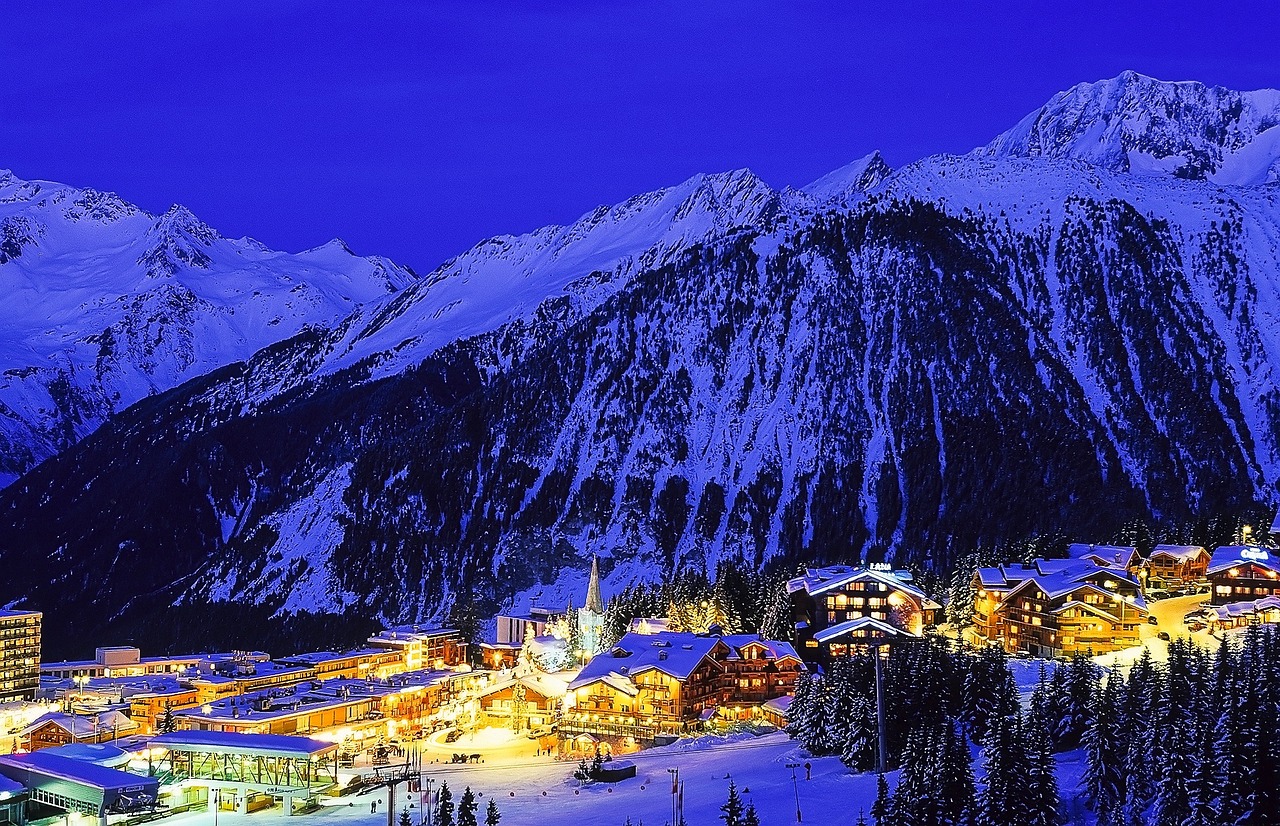
Why Visit Courchevel in 2026
In 2026, Courchevel feels both polished and alive. The buzz from recent international ski events has nudged infrastructure and lift systems to an even higher standard, yet the villages have managed not to turn into theme parks. Snowmaking is impressive, grooming is meticulous, and the network of pistes, trails, and lifts is so vast that even in peak weeks you can still find your own rhythm.
You should consider Courchevel for your next trip if:
- You love variety: gentle family slopes in 1650 (Moriond), steeper playgrounds above 1850, tree skiing into Le Praz, plus access to Méribel, Val Thorens, and beyond.
- You travel with mixed abilities: first-timers, kids, and experts can all ski different runs and still meet up for lunch easily.
- You’re a foodie: few mountain destinations rival Courchevel’s concentration of serious restaurants alongside cozy, genuinely local spots.
- You like comfort, but not necessarily glitz: five-star palaces rub shoulders with modest apartments and family-run chalets.
- You want a year-round mountain base: winter for skiing, spring and autumn for quiet escapes, and summer for hiking, cycling, and alpine lakes.
What makes Courchevel special to me is the way you can wake up in a world-class resort and still stumble into an old stone chapel, share génépi with a ski instructor who was born in Le Praz, or follow a snowshoe track to a hidden hamlet where the only sound is the crunch of your steps and the distant thrum of a helicopter ferrying provisions.
Table of Contents
- Courchevel at a Glance
- The Four Villages of Courchevel
- Must-See Attractions & Signature Experiences
- 3–7 Day Itineraries in Courchevel (2026)
- On-Property Amenities & Nearby Spots: 10 Deep-Dive Stories
- Dining in Courchevel & Local Food
- Evenings & Nightlife in Courchevel
- Cultural Etiquette & Local Customs
- Day Trips & Nearby Excursions
- Events & What’s New in 2026–2027
- Practical Travel Tips for Courchevel
- Summary & Final Recommendations
Courchevel at a Glance
Courchevel is one arm of the vast Les 3 Vallées ski area in the French Alps, in the Savoie region. It’s made up of four main villages at different altitudes, all interconnected by pistes, lifts, and roads:
- Courchevel 1850: the highest and most famous; luxury hotels, designer boutiques, and prime ski-in/ski-out access.
- Courchevel 1650 (Moriond): sunnier, more relaxed, with great intermediate terrain and family-friendly vibe.
- Courchevel 1550 (Village): quieter, good value, with fast lift access up to 1850.
- Courchevel Le Praz (1300): traditional village with stone houses, a lake, and access via gondola to 1850.
The ski season usually runs from early December to late April. Summer season (late June to early September) is increasingly popular for hikers, cyclists, and families who’d rather swap saltwater beaches for mountain lakes.
The Four Faces of Courchevel: Choosing Your Base
Courchevel 1850: Glamour on the Snowline
My first stay in 1850 was in 2013, and I remember stepping out of the hotel at 8:30 a.m. into that strange hush of money and fresh snow. Everything felt impossibly polished: doormen brushing off ski boots, the soft clack of poles, the faint hum of a helicopter in the distance.
This is where you’ll find the grand five-star “palace” hotels, the chicest spas, the flagship boutiques, and a roster of Michelin-starred restaurants that would be showy anywhere, let alone on a mountain. It’s also one of the best spots for those who want genuine ski-in/ski-out convenience.
Best for: couples, luxury-seekers, serious skiers who want instant access to high-altitude terrain, and anyone planning a splurge trip.
Courchevel 1650 (Moriond): Sun, Space & Easygoing Charm
Over the years, 1650 has become my default recommendation when friends ask where to stay for their first 3 or 5 day itinerary in Courchevel. The slopes here catch the sun early, the pistes are broad and forgiving, and the main lift hub is a quick stroll from most accommodations.
Best for: families, intermediate skiers, groups of friends, and travelers who want the Courchevel experience without the 1850 price tag.
Courchevel 1550 (Village): Quiet Nights, Fast Lifts
Courchevel Village sits tucked just below 1850, a cluster of chalets and small residences that share a direct high-speed lift link up to the main ski area. I’ve used 1550 as a base twice when traveling with friends who cared more about first lifts than fancy lobbies.
Best for: budget-conscious skiers, families with older kids, and anyone who values sleep over nightlife.
Courchevel Le Praz (1300): Tradition with a Lift to the Sky
Le Praz is where I go when I want Courchevel to feel like an actual place rather than a stage set. Narrow lanes, stone farmhouses, a proper village square, and a lake that freezes over in winter and becomes a picnic magnet in summer.
Best for: authenticity, summer stays, mixed-activity groups (not only skiers), and those who enjoy a village atmosphere with modern lift access.
Must-See Attractions & Signature Experiences in Courchevel
The Three Valleys Ski Area
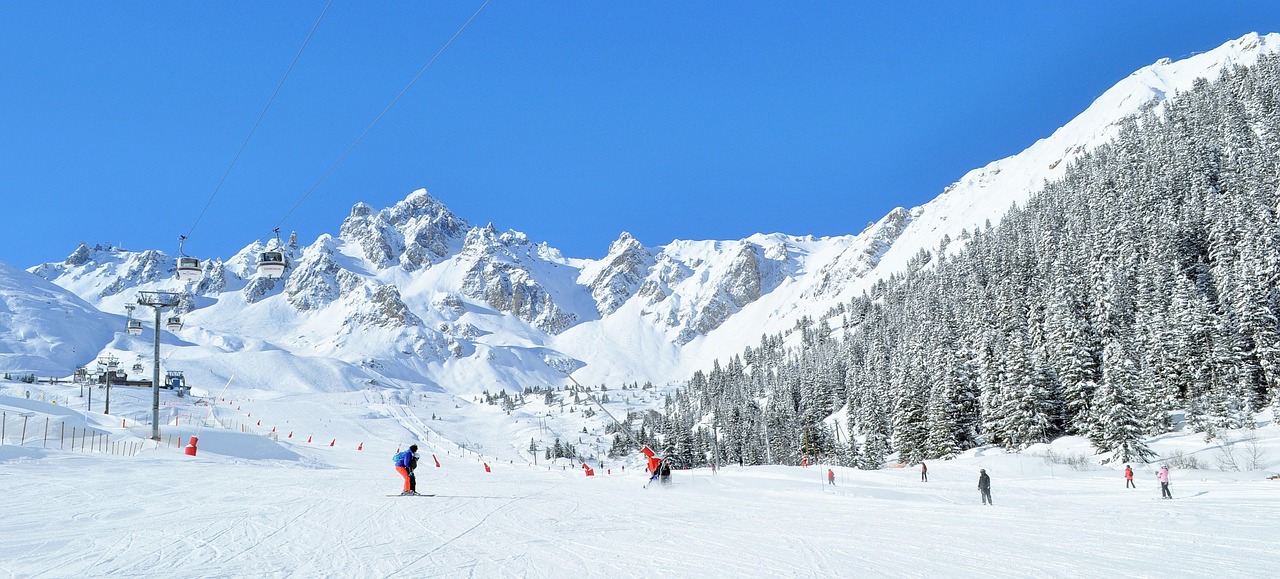
The reason most people come: more than 600 km of interconnected pistes, from green nursery slopes to double-black couloirs. On a clear day, you can ski from Courchevel to Val Thorens and back, crossing three valleys and several micro-climates without ever taking your skis off.
La Saulire & Creux Noirs
La Saulire is the iconic peak between Courchevel and Méribel. The cable car drops you at 2,738 m, with sweeping views all the way to Mont Blanc. On my last visit in early 2025, I rode up just as the morning light was catching the ridgeline – a good reminder that first lifts aren’t only for powder days.
Aquamotion: The Mountain Aquatic Playground
Half spa, half water park, Aquamotion is one of the real on-property-style amenities in Courchevel, even if it’s technically a stand-alone complex between 1550 and 1650. I tend to end at least one ski day here, floating between the heated outdoor pool and the salt cave.
Altiport & Scenic Flights
Courchevel’s tiny altiport is legendary among pilots for its short, sloped runway. For the rest of us, it’s a jumping-off point for scenic helicopter and small-plane flights over the Three Valleys and the Mont Blanc massif.
La Rosière Forest & Snowshoe Trails
On storm days, when the higher lifts shut down, I head into the woods near La Rosière. Snowshoe trails wind through silent fir trees to a frozen lake and a tiny oratory chapel.
Courchevel’s Lake & Olympic Ski Jumps in Le Praz
At Le Praz, the Olympic ski jumps loom above the lake like giant, skeletal sculptures. In winter, they’re floodlit; in summer, they host competitions and training sessions that are oddly hypnotic to watch.
Courchevel Itineraries: 3–7 Days of Snow, Food & Hidden Corners
These itineraries are built around how I actually structure my own trips now: a few high-energy days early on, then a shift towards slower mornings, long lunches, and side trips. You can compress them into a tight 3 day itinerary for Courchevel or stretch them into a full 7 days in Courchevel, depending on your pace.
3 Days in Courchevel: A Focused Taste of the Three Valleys
Day 1 – Arrival, First Turns & Village Wanders
When I only have three days, I base myself in Courchevel 1650: easy access, good-value accommodation, and a village that’s small enough to feel manageable after a travel day. In 2024, I arrived on a late-morning shuttle from Moutiers, checked into a small chalet hotel just off the front de neige, and was on the slopes by 2 p.m.
Morning / Early Afternoon:
- Arrive via train to Moûtiers-Salins-Brides-les-Bains, then take the bus or taxi up to Courchevel (45–60 minutes).
- Drop bags, pick up ski rental (I like shops near the lifts; many offer overnight boot drying).
- Buy a 3 Vallées pass if conditions are good and you’re a strong intermediate; otherwise, start with a Courchevel-only pass for day one.
My ritual on this first day is always the same: a few warm-up laps on the mellow blues above 1650 – “Indiens” and “Bel Air” are friendly favorites – then a coffee stop on a sunny terrace to recalibrate body and brain.
Late Afternoon:
- Finish with a long, easy descent back into the village, following the blue runs down to 1650.
- Return rental gear to the shop for overnight storage if available (worth it to avoid carrying skis through town).
Evening:
- Stroll through the village, noting bakery, supermarket, and bus stops. It’s easier to orient yourself now than in the morning rush.
- Dinner at a casual Savoyard restaurant – raclette or fondue for the full “first night in the Alps” experience.
- Early night; 3 days in Courchevel go quickly, and jet lag isn’t a good ski buddy.
Day 2 – Iconic Courchevel: Saulire & Long Lunch
This is your classic big ski day. Aim to catch one of the first lifts. The air is sharp, the pistes are freshly groomed, and the crowds have not yet spilled onto the mountain.
Morning:
- From 1650 or 1550, make your way to Courchevel 1850 via connecting lifts and pistes. Follow the signs; it’s well-marked.
- Ride the Verdons gondola and then the Saulire cable car to the summit.
- At the top, pause at the viewpoint. On a clear day, you can see an endless chain of peaks. It’s worth the chill.
Depending on your level, pick a suitable descent: confident skiers might tackle the red runs dropping towards Courchevel or Méribel, while cautious intermediates can opt for gentler routes back towards Verdons.
Lunch:
- Book ahead for a mountain restaurant near 1850. Even when I travel off-peak, I reserve if I want a proper sit-down meal.
- Try local dishes: diots (Savoyard sausages), crozets pasta baked with cheese, or hearty soups.
Afternoon:
- Explore the network of blue and red runs above 1850, looping through the Biollay and Plantrey sectors.
- If energy allows, dip briefly into Méribel and then return to Courchevel via Saulire.
- Plan your last runs to bring you directly back to your base village.
Evening:
- If you’re staying near a spa or pool, this is the night to book a massage or hammam slot.
- For dinner, I like to switch to lighter fare – grilled fish or roasted vegetables – to balance the heavy mountain lunches.
Day 3 – Hidden Corners, Aquamotion & Departure
On a 3 day itinerary for Courchevel, your last day is about savoring what you’ve discovered and sneaking in something different from pure skiing.
Morning:
- Explore a quieter sector. I like the tree runs down towards Le Praz when conditions are good.
- Alternatively, book a snowshoe or ski touring guide for a half-day introduction; many local guides are happy to tailor the outing to your fitness level.
Afternoon:
- Drop your skis and head to Aquamotion. There’s a free shuttle from many villages; otherwise, it’s a short bus or taxi ride.
- Float in the indoor-outdoor pools, try the waterslides if you’re with kids (or just young at heart), and save time for the spa’s quiet area.
Evening / Departure:
- Pick up luggage, return rentals, and take the shuttle back to Moûtiers for onward connections.
- If you have a late train or flight, an early dinner in Moûtiers at a simple brasserie is a nice way to transition out of the mountain bubble.
Three days vanish fast, but if you prioritize Saulire, one big ski day, and one slower afternoon at Aquamotion or in Le Praz, you’ll leave with a surprisingly complete snapshot of Courchevel.
4 Days in Courchevel: Adding Depth & a Taste of Méribel
Day 1 – Settle In & Get Your Bearings
With four days, I’m more relaxed. I might arrive mid-afternoon, check into a family-run hotel in Le Praz or 1550, and spend the first evening wandering, picking up groceries, and planning routes over a glass of Savoie wine.
Day 2 – Courchevel Classics & 1850 Stroll
This day mirrors the “iconic” day from the 3-day plan: Saulire summit, long ski runs, and a proper look around 1850 in the late afternoon.
- Ski hard until about 3 p.m., focusing on the Saulire and Biollay sectors.
- Return gear to your accommodation, then take the bus or lift up to 1850 in comfortable shoes.
- Window-shop the designer boutiques along the main drag; it’s people-watching gold.
- Have a drink at a hotel bar with a view over the slopes – many welcome non-guests.
Day 3 – Méribel for Lunch
A 4 day itinerary for Courchevel almost demands a foray into Méribel. I like to frame it around lunch: ski over, eat well, and drift back in the late afternoon.
- Start early to cross Saulire before 10 a.m., when the connecting runs get busier.
- Drop into Méribel via the wide red and blue pistes; if you’re nervous, talk to ski patrol or lift staff for the gentlest options.
- Book lunch at a slopeside restaurant in Méribel – something hearty but not sleep-inducing.
- Head back to Courchevel by mid-afternoon, leaving time for a last few laps on familiar runs.
On my most recent Méribel day, I ended up chatting with a local ski patroller over coffee; he traced his favorite spring routes on my piste map, including a few quiet corners I’d never noticed on previous visits.
Day 4 – Forest, Lake & Leisure
Use your last day to slow down. My ideal final morning is a snowshoe loop around La Rosière or Le Praz lake, with frequent photo stops and perhaps a thermos of coffee in my pack.
- Book a guide if you’re new to winter hiking; they’ll also share stories about local wildlife and avalanche awareness.
- Lunch in Le Praz at a traditional inn, then an afternoon stroll through the village streets.
- If you’re departing next morning, pack and enjoy one last sunset over the peaks from your balcony or a nearby viewpoint.
5 Days in Courchevel: Balancing Adventure & Wellness
Day 1 – Arrival & Gentle Slopes
For a 5 day itinerary for Courchevel, I usually spend the first afternoon on the easiest slopes, especially if traveling with friends or family who are new to skiing. The beginner zones near 1650 and 1850 are efficient and well-supervised.
Day 2 – Three Valleys Taster
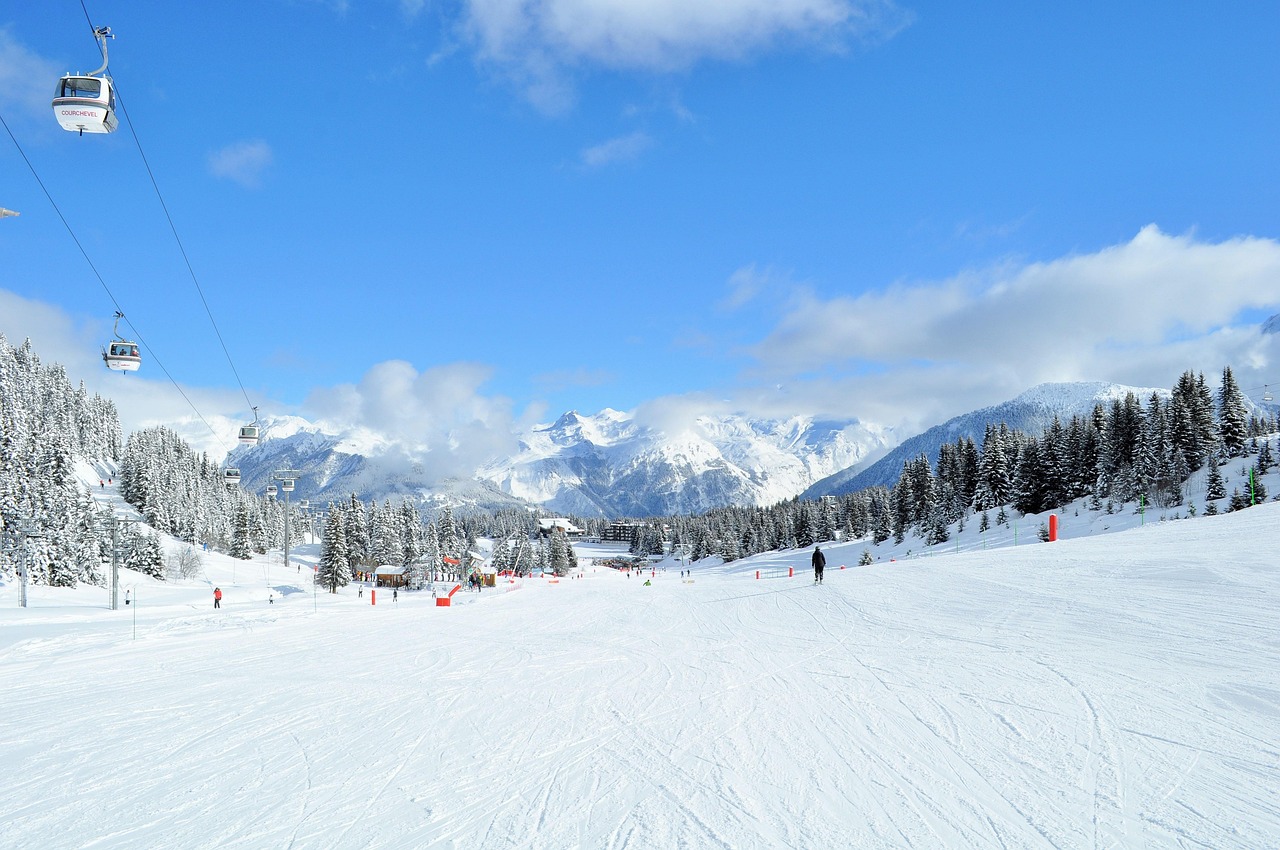
This is a big, looping day: Courchevel to Méribel, perhaps a brief dip into Les Menuires, and then back. Start early and watch the time – it’s easy to end up far from home when the sun starts dropping.
Day 3 – Aquamotion & Spa Evening
Midway through 5 days in Courchevel, my legs tend to stage a quiet rebellion. I placate them with a lazy morning, coffee in the village, and an unhurried few hours at Aquamotion.
- Try the climbing wall above the pool if you’re feeling playful.
- Book a late-afternoon spa treatment in your hotel or at Aquamotion’s wellness area.
- Dinner somewhere special – perhaps your splurge night, with a tasting menu and Savoie wine pairings.
Day 4 – Off-Piste or Ski Touring with a Guide
If you’re an advanced skier and conditions allow, this is the day to hire a mountain guide for off-piste explorations or an introduction to ski touring. I’ve done this twice in Courchevel – once in perfect, cold powder, and once in heavy spring snow – and both days rank among my favorite mountain memories.
Day 5 – Culture & Village-Hopping
Wrap up with a slower, more cultural day: visit small chapels, peek into art galleries (1850 has a few excellent ones), and wander the streets of Le Praz. If the timing lines up with an event at the Olympic jumps, join the locals in the stands.
6 Days in Courchevel: Slow Travel in the Snow
Days 1–3 – As per 3-Day Itinerary
For 6 days in Courchevel, I basically run the full 3 day itinerary for Courchevel, then add day trips and rest days in between ski sessions.
Day 4 – Day Trip to Annecy or Chambéry
Midway through the trip, I like to descend from the mountains for a day in a nearby town:
- Annecy: canal-laced “Venice of the Alps” with a gorgeous lake; about 1h45–2h30 by car/bus.
- Chambéry: former capital of the Duchy of Savoy; a bit closer and less touristed.
It’s an easy way to reset, shop for non-ski souvenirs, and enjoy a different culinary scene.
Day 5 – Forest Skiing & Hidden Runs
Back on the slopes, I devote a full day to the lower, wooded sectors of Courchevel – they’re magical after fresh snow and stay sheltered in bad weather.
Day 6 – Last Laps & Sunset Aperitif
Your last full day is for greatest hits: repeat your favorite runs, revisit the restaurant that surprised you, and time your final descent so you can watch the last pink light brushing the peaks from a terrace with a drink in hand.
7 Days in Courchevel: A Full Alpine Week
Days 1–3 – As per 3-Day Itinerary
Start with the three-day framework to get acquainted, including Saulire, Aquamotion, and at least a taste of Méribel.
Day 4 – Full Three Valleys Traverse
In a 7 day itinerary for Courchevel, I dedicate one day to a full Three Valleys traverse: Courchevel → Méribel → Les Menuires → Val Thorens → back again. This is an ambitious day that requires decent fitness, good navigation, and a strict eye on closing times for lifts.
Day 5 – Rest, Spa & Local Food
Sleep in, stroll the village, maybe take a short snowshoe or toboggan outing with the kids, and focus on slow enjoyment: a long lunch, a spa treatment, and perhaps a cooking class or cheese tasting if offered by your hotel or a local provider.
Day 6 – Adventure Day (Paragliding or Snowmobiling)
I like to put the “big” non-ski adventure here:
- Paragliding: tandem flights from the top of lifts are unforgettable, with minimal effort for you.
- Snowmobiling: usually offered after lifts close, with guided routes through quieter sectors.
Day 7 – Farewell Runs & Hidden Cafés
Finish your 7 days in Courchevel with a mellow ski day, hitting your softest favorite runs and ducking into smaller, more local cafés for hot chocolate or a final tarte aux myrtilles (blueberry tart).
Deep Dive: 10 Key Amenities & Nearby Spots (Through a Local-Lover’s Lens)
Over multiple seasons, I’ve gravitated to a handful of places and experiences that shape every trip. Think of these as the anchors around which you can build your own personal itinerary.
1. Aquamotion: Steam, Slides & Snowflakes
Aquamotion opened in 2015 and quickly became the unofficial fifth “village” of Courchevel. Positioned between 1550 and 1650, it’s a huge glass-and-wood complex that feels like a cross between a Nordic spa and an upscale leisure center.
My most vivid memory here is from a stormy January evening in 2024: after a whiteout afternoon, I slipped into the outdoor pool, steam wreathing my shoulders, snowflakes landing on my face and melting instantly. I floated on my back, watching the lifts disappear and reappear in the swirling snow, thinking that this was as close to alpine magic as you can get without skis.
What to expect:
- Large indoor and outdoor heated pools with jets and lazy rivers.
- Waterslides and a dedicated kids’ area – excellent for families.
- A separate wellness zone with saunas, steam rooms, and treatment rooms (extra fee).
- Climbing walls, fitness classes, and sometimes yoga sessions by the pool.
Tips:
- Arrive by free shuttle bus from most Courchevel villages; check timetable at your hotel.
- Bring flip-flops and a swimsuit; towels are usually rentable but it’s cheaper to bring your own.
- Reserve spa treatments at least a day ahead in peak weeks (Christmas, New Year, February).
2. Les 3 Vallées: The Superhighway of Snow
The Three Valleys aren’t unique just because of their size; it’s the coherence that’s impressive. Lifts link logically, signage is clear, and grooming is obsessive. You can ski all day without repeating a run – though I always find myself drawn back to a few favorites: the red descent from Saulire into Méribel, the rolling blues above Les Menuires, and the long, leg-burning routes back into Courchevel at day’s end.
History & significance:
The idea of linking these valleys with lifts dates back to the mid-20th century, when local visionaries (and, frankly, some risk-takers) began stringing cables and dreaming big. Today, the Three Valleys are a benchmark for mega-resorts worldwide, and Courchevel sits at one of its most snow-sure and luxurious corners.
Tips:
- For a first full day, stick mostly to the Courchevel valley to avoid getting stranded in another resort.
- Carry a paper piste map as backup; phone batteries die quickly in cold weather.
- Check the daily avalanche and weather bulletin; the network is big enough that conditions can vary dramatically between sectors.
3. La Rosière & the Snowy Forest Trails
La Rosière is one of my favorite escapes when I’m tired of lift queues and high-speed carving. It’s a small hamlet tucked into the woods above Courchevel, accessible by road or on foot (or snowshoe) along marked trails.
The frozen lake, the tiny chapel, the hush of snow-laden branches – it feels a world away from the glossy boutiques of 1850. I often come here alone with a thermos and a book, just to sit on a bench and watch the light shift through the trees.
Tips:
- Visit on a non-ski day or in the afternoon; the light can be beautiful around 3–4 p.m.
- Even in winter, wear proper boots with grip; paths can be icy.
- If you’re nervous about navigation, book a guided snowshoe outing.
4. Le Praz Lake & Olympic Ski Jumps
Le Praz’s lake and Olympic jumps are a year-round focal point. In winter, you might catch an evening competition, floodlights slicing through the darkness as jumpers arc improbably far through the air. In summer, the lake becomes a picnic spot and launching point for easy walks.
On a balmy July evening in 2023, I sat here eating a simple jambon-beurre baguette, watching kids paddle in the shallows while older siblings practiced flips off the training ramp. It felt more like a village fête than a high-profile resort.
5. Hotel Spas: Quiet Sanctuaries Above the Snow
Many hotels in Courchevel – especially in 1850 – harbor quietly spectacular spas behind unassuming doors: indoor pools lit like grottoes, treatment rooms with panoramic windows, and saunas that open directly onto the snow.
During a late-season stay in 2025, I booked a late-afternoon massage in a small 4-star hotel in 1650. The therapist, a local woman who’d grown up in Le Praz, told me stories about how the valley had changed: the shift from cows and hay to helicopters and haute cuisine, the way seasonal workers now outnumber long-term residents. Her stories grounded the glitter in something more human.
Tips:
- Even if you’re not a guest, some hotel spas offer day passes; ask politely at reception.
- Late-afternoon slots (4–7 p.m.) are prime time; reserve early during holidays.
- For couples, look for duo treatment rooms or private spa suites for a romantic evening.
6. Kids’ Clubs & Beginner Zones: Stress-Free Family Days
One of the reasons families love Courchevel is the sheer professionalism of its kids’ clubs and ski schools. I’ve watched shy 4-year-olds transform into confident little rockets over the course of a week, thanks to patient instructors and safe, well-designed beginner slopes.
What to know:
- Most major hotels have partnerships with ski schools and sometimes on-site kids’ clubs with activities off the slopes.
- Group lessons are usually in French and English; check language options when booking.
- Peak weeks sell out early – reserve lessons and childcare at the same time you book accommodation.
I often recommend families structure their 5 day itinerary for Courchevel around kids’ energy: ski school in the mornings, family skiing or sledding in the afternoon, and one or two non-ski days (Aquamotion, snowshoeing) to prevent meltdowns.
7. Mountain Restaurants: From Self-Service to Starred Dining
Courchevel’s on-slope dining is a microcosm of the resort as a whole: you can grab a tray of fries and a carafe of house wine at a basic self-service, or drop a week’s rent on a single lunch at a Michelin-starred establishment with white tablecloths and serious wine cellars.
Over the years, I’ve settled into a pattern: one splurge lunch per trip, a couple of mid-range sit-down meals, and several quick self-service stops where the real pleasure is the sun on my face and the clink of cutlery all around.
Tips:
- Reserve any popular mountain restaurant, especially if you’re a group of four or more.
- Ask about the plat du jour – often good value and seasonally appropriate.
- For budget days, consider a picnic: many lifts have benches with spectacular views.
8. Apres-Ski & Nightlife: From Cozy Pubs to Champagne Bars
Courchevel’s nightlife runs the gamut: low-key pubs in 1650, chic lounges in 1850, and the occasional, slightly surreal late-night club where DJs play to a mix of ski instructors, staff, and guests who forgot their early morning commitments.
Personally, I tend to favor fireplace bars and wine-focused spots. One of my go-to rituals is to stop for a simple vin chaud (mulled wine) at a bar in 1550 on my way back to the hotel, warming up before the downhill walk in the twilight.
9. Summer Courchevel: Trails, Lakes & Alpine Meadows
Courchevel in summer is a different world. The pistes become meadows, the lifts carry hikers and mountain bikes, and the villages exhale after the intensity of winter. I’ve spent three summers here now, and some of my favorite days involved nothing more than a gentle hike, a picnic by a stream, and a lazy coffee on a terrace.
Highlights:
- Hikes from 1850 to high-altitude lakes and viewpoints.
- Mountain biking on marked trails (and e-bikes if you want a boost).
- Paragliding in thermals that carry you far above the valley floor.
- Local fêtes and small summer festivals in Le Praz and surrounding villages.
10. Nearby Villages & Real-Life Savoie
When I need to remind myself that life exists beyond lift passes and tasting menus, I drive down the valley to smaller villages: Bozel, Brides-les-Bains, or even just the outskirts of Moûtiers. Here, bakeries aren’t styling croissants for Instagram; they’re simply feeding locals on their way to work.
One gray November day, long before the lifts opened, I sat in a café in Bozel listening to a group of retired men argue (good-naturedly) about cheese. It anchored Courchevel for me, turning it from a winter fantasy into a place with roots and rhythms.
Dining in Courchevel: From Haute Cuisine to Hidden Bistros
Courchevel’s dining scene is as stratified as its slopes. You can spend €15 on a tartine in a café or €350 on a tasting menu with wine pairing; both can be memorable, for different reasons.
On-Property vs. Village Dining
Many high-end hotels – especially in 1850 – have genuinely excellent in-house restaurants and bars. If you’ve booked half-board (breakfast + dinner), you may be tempted to eat on-property every night, and if you’re traveling with kids or elderly relatives, that convenience is real.
Personally, I prefer bed & breakfast (European plan) and the freedom to explore. My last stay in Le Praz, I alternated between a modest hotel dining room one night and a tiny village bistro the next; the latter served the best tartiflette I’ve had in years, in a room that felt more like a friend’s living room than a restaurant.
Is All-Inclusive Worth It in Courchevel?
True all-inclusive packages (in the Caribbean sense) are rare here. You’ll find half-board, sometimes full-board, and occasionally inclusive drinks packages in certain properties, but Courchevel is more about à la carte freedom.
If you’re on a budget, half-board in a mid-range hotel can be a smart move: hearty breakfasts and solid dinners, with lunch on the slopes or picnic-style. If you’re a foodie, though, lock yourself into as few fixed meals as possible; there are too many interesting restaurants to explore.
Signature Dishes & Local Food in Courchevel
- Tartiflette: potatoes, reblochon cheese, lardons, and onions baked together – best on cold days.
- Fondue Savoyarde: melted local cheeses with bread; ask for a salad on the side to cut the richness.
- Raclette: half-wheel of cheese melted under a grill, scraped onto potatoes and charcuterie.
- Croziflette: like tartiflette, but with tiny buckwheat pasta squares (crozets) instead of potatoes.
- Diots: Savoyard sausages, often served in white wine sauce.
- Tarte aux myrtilles: blueberry tart, a lovely way to finish a heavy meal.
Best Nearby Restaurants Worth a Taxi or Shuttle
Without naming specific venues (as chefs and concepts change frequently), my general pattern:
- Le Praz: small, atmospheric inns with classic Savoyard menus and fair prices.
- 1650: relaxed bistros and pizzerias ideal for groups and families.
- 1850: Michelin-starred destinations and chic lounge-restaurants; worth at least one splurge if your budget allows.
I often take the free shuttle bus down to Le Praz for dinner even when staying higher up; the contrast between the glitz of 1850 and the cozy, stone-walled dining rooms of Le Praz is part of Courchevel’s charm.
Tipping, Hidden Charges & Room Service
In France, service is included in restaurant bills, so there’s no need to tip 15–20% as in North America. That said, rounding up or leaving a few euros for good service is appreciated – I usually leave 5–10% in cash.
Be aware of:
- Bread and water: tap water (carafe d’eau) is free; bottled still or sparkling will be charged.
- Room service fees: trays sometimes carry a supplementary charge; check your hotel’s policy.
- Hotel bars: prices can be significantly higher than village bars, especially in 1850.
Evenings in Courchevel: Firelight, Cocktails & Quiet Streets
In winter, nights are long in the mountains, and how you spend them shapes your memory of the trip as much as the skiing.
On-Property Entertainment
Many higher-end hotels offer low-key evening programs: live jazz in the bar, wine tastings, occasional movie screenings for kids. I’ve stumbled upon impromptu piano recitals in lobbies and small art exhibitions curated by local galleries.
Bars & Lounges
For couples, I like candlelit lounge bars with armchairs and a curated cocktail list – perfect after a day of cold fingers and bright light. Solo travelers often gravitate towards more casual pubs where ski instructors and seasonal workers unwind; they’re friendly, talkative, and full of tips you won’t find in brochures.
Evening Spa Sessions
Some spas in Courchevel stay open until 8 or 9 p.m., and an evening soak can be wonderfully restful. I particularly enjoy watching snow fall outside a sauna window, the glass slowly fogging up as the day’s exertions melt from my muscles.
Nearby Towns After Dark
Courchevel itself is where you’ll spend most evenings, but if you’re here in summer with a car, an evening drive down to Bozel or even Moûtiers for a different restaurant scene can be refreshing. In winter, I don’t generally recommend night driving unless you’re very comfortable on icy mountain roads.
Cultural Etiquette & Local Customs in Courchevel
Courchevel is international, but it’s still in rural France, and a few cultural basics go a long way.
Greetings & Politeness
- Always greet shop staff and restaurant servers with a simple “Bonjour” (daytime) or “Bonsoir” (evening) when entering.
- “S’il vous plaît” (please) and “Merci, bonne journée/bonne soirée” (thank you, have a good day/evening) are appreciated.
Language
English is widely spoken in Courchevel, particularly in 1850 and within hotels, but making a small effort in French softens interactions. If someone doesn’t speak English, they’ll often find a colleague who does.
Dining Customs
- Meals are generally slower and more structured than in Anglo-Saxon countries; don’t expect the bill automatically – ask for it with “L’addition, s’il vous plaît.”
- Sharing dishes is less common, though staff are usually accommodating if you explain.
- In busy periods, time slots may be limited; be punctual for reservations.
On the Slopes
- Observe right-of-way rules: the skier downhill has priority.
- Don’t stop in the middle of a narrow piste or just below a blind roll; move to the side.
- Queue politely at lifts; cutting in line is frowned upon.
Local Rhythms
Staff often work intense seasonal shifts. A bit of patience – especially during peak lunch and après-ski hours – goes a long way. Remember that behind the façade of a luxury resort are real people living year-round lives.
Day Trips & Nearby Attractions from Courchevel
Annecy
Why go: canals, pastel façades, lake views, and a vibrant food scene.
Getting there: about 1h45–2h30 by car, or via train from Moûtiers with a change in Chambéry.
What to do: stroll the old town, walk along the lake promenade, visit the château, and enjoy a long lunch. In winter, it’s a charming contrast to the snowbound world above.
Chambéry
Why go: history, less touristed streets, and excellent markets.
Getting there: around 1h30–1h45 by car from Courchevel.
Thermal Spas in Brides-les-Bains
At the foot of the valley, Brides-les-Bains has been a thermal spa destination since the 19th century. Its waters and classic spa architecture offer a very different vibe from the sleek modernism of Aquamotion.
Events & What’s New in Courchevel 2026–2027
Courchevel’s event calendar is busy, especially in winter. For 2026–2027, expect:
- FIS World Cup Races: Courchevel often hosts women’s technical races (slalom, giant slalom). Dates are usually in December; check the official FIS calendar closer to the season.
- New Year’s Eve Celebrations: fireworks, torchlight descents, and village parties across the different altitude stations.
- Spring Ski Festivals: music and food events in March/April as the season winds down.
- Summer 2026 Trail & Bike Events: trail running races and mountain bike gatherings are increasingly common; the tourist office publishes updated listings each spring.
On the infrastructure side, 2026 sees continuing investment in snowmaking and lift upgrades, particularly in the lower sectors to improve early- and late-season reliability. Several hotels are also rebranding and renovating, so double-check reviews and opening dates when booking.
Practical Travel Tips for Courchevel (2026)
Getting There & Airport Transfers
The nearest major airports are:
- Geneva (GVA): about 2.5–3 hours by road.
- Lyon (LYS): about 2.5–3 hours.
- Chambéry (CMF): about 1.5–2 hours (seasonal flights only).
Most travelers take a train to Moûtiers-Salins-Brides-les-Bains, then a shared shuttle or taxi up to Courchevel. In peak weeks, book transfers well in advance.
Getting Around Courchevel
- Free shuttle buses link the different villages; they run frequently in winter.
- Walking between close-together stations (e.g., 1550 and 1850 via lifts or paths) is common; ask locals for the easiest routes.
- Driving is possible but not always pleasant: parking is limited and expensive, roads are snowy, and you won’t need a car once you’re settled.
SIM Cards & Connectivity
In 2026, EU roaming is straightforward for EU SIM holders. For non-EU visitors:
- Consider buying a French SIM from providers like Orange or SFR in larger towns (Moûtiers, Chambéry, or at airports).
- Many accommodations offer reliable Wi-Fi, but speeds vary; if you work remotely, confirm before booking.
Visa Requirements & Foreign Driver’s Licenses
France is in the Schengen Area. Visitors from many countries (including the UK, US, Canada, Australia, and much of Asia and Latin America) can enter visa-free for short stays, but always check current rules with official sources.
If you plan to rent a car:
- Most rental agencies accept a valid license printed in Roman alphabet; if not, an International Driving Permit (IDP) is recommended.
- Winter tires and snow chains are often mandatory in the Alps during winter; check your rental contract.
Money-Saving Tips
- Avoid peak weeks: Christmas–New Year and French school holidays (especially February) are the most expensive.
- Stay lower: Le Praz and 1550 often offer better value than 1850.
- Cook some meals: apartments with kitchens can dramatically cut costs; stock up in Moûtiers supermarkets before heading up.
- Take advantage of lunch menus: some restaurants offer fixed-price midday options that are better value than dinner.
- Lift passes: consider Courchevel-only passes if you don’t plan to ski extensively in Méribel/Val Thorens.
All-Inclusive vs. European Plan
As mentioned earlier, classic all-inclusive isn’t the norm. A mix of:
- European Plan (room only or B&B) for maximum flexibility.
- Half-board if you want predictable costs and are staying somewhere with a restaurant you genuinely like.
Family vs. Adults-Only vs. Couples-Oriented Properties
- Families: look to 1650 and 1550, plus any property with ski-in/ski-out or minimal walking to lifts, kids’ clubs, and family rooms.
- Couples: adults-oriented boutiques in 1850 or romantic chalets in Le Praz; seek properties with spa facilities and quiet bars.
- Groups: apartments and chalets with shared living spaces in 1650 and 1550; easier on the budget and sociable.
Seasonal Pricing & When to Go
Winter:
- Early December: quieter, good deals, snow reliability improving each year thanks to snowmaking.
- Christmas–New Year: peak prices, festive atmosphere, busy slopes.
- January: often excellent snow and slightly lower prices than holidays.
- February: French school holidays – busiest and most expensive; book far ahead.
- March–April: sunnier, longer days; early March is ideal for a 4 day itinerary for Courchevel with good snow and pleasant temps, while April is best for relaxed spring skiing.
Summer: late June to early September offers hiking, biking, and a calmer, less costly Courchevel. Perfect for families and couples who prefer wildflowers to whiteouts.
Weather, Water & Electricity Quirks
Winters can be very cold, particularly at night and at higher altitudes. Dress in layers and carry an extra mid-layer in your backpack. Tap water is safe to drink unless otherwise indicated; I fill a reusable bottle every morning. Electricity is 230V; bring appropriate adapters (Type C/E plugs).
Tipping Culture & Service Charges
As noted earlier, service is included. Rounding up bills in cafés and leaving 5–10% in restaurants for good service is appreciated but not obligatory. For hotel staff, a few euros for housekeeping at the end of your stay, and tips for exceptional concierge assistance, are common.
Summary & Final Recommendations: Making Courchevel Yours
Courchevel in 2026 is a place of layers: glossy and rustic, frenetic and peaceful, familiar and surprising. After years of visits in winter and summer, what stays with me isn’t just the perfect piste or the Michelin-starred dinner; it’s the quiet walk back to a chalet under a sky full of stars, the chat with a liftie about snow conditions, the sound of cowbells echoing across green slopes in July.
For a 3 day itinerary for Courchevel, focus on the essentials: Saulire, one big ski day, and a restorative afternoon at Aquamotion or in Le Praz. For 4–5 days in Courchevel, add a foray into Méribel, a spa evening, and slower explorations of the villages. For a full 6 or 7 day itinerary for Courchevel, give yourself time for a Three Valleys traverse, a day trip down-valley, and at least one adventure beyond skiing – paragliding, snowshoeing, or simply a long, contemplative hike in summer.
In terms of timing, my own favorite windows are:
- Mid-January: excellent snow, fewer crowds, good value.
- Early March: longer days, often stable conditions – ideal for 4–6 days in Courchevel.
- Late June / early July: quiet, green, and perfect for hikers and families avoiding heatwaves elsewhere.
However you structure your stay, let Courchevel be more than just a backdrop for skiing. Linger in its chapels, talk to its year-round residents, taste its cheeses and wines, and follow the smaller paths as well as the main pistes. That’s where the real memories hide.