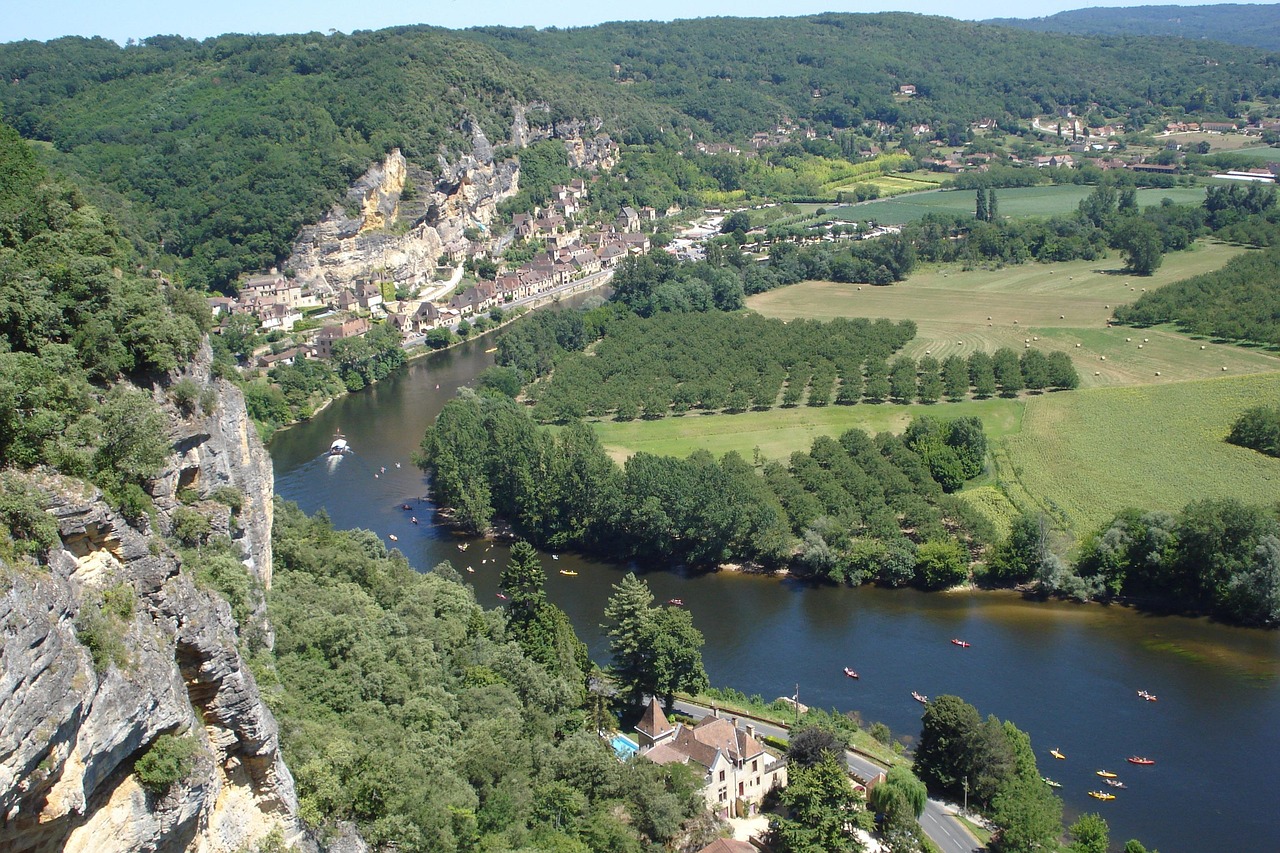
Why Paddle the Dordogne River Canoe Route
The Dordogne River Canoe Route is the road trip you do without a road. It’s a slow, meandering passage through the limestone spine of southwest France, where medieval citadels cling to cliffs, walnut groves slope down to the water, and the evenings smell of woodsmoke and duck fat. I’ve driven most of France’s great routes, but the Dordogne is the one I return to when I want to feel time stretch.
Unlike a typical “route nationale” journey, this is essentially a river corridor that you follow by canoe or kayak, stitched together with riverside villages, châteaux, and a lattice of tiny departmental roads. The main navigable and popular canoe stretch runs roughly from Argentat-sur-Dordogne in Corrèze through the historic heart of Périgord Noir—past Beaulieu-sur-Dordogne, Carennac, Gluges, Souillac, Saint-Julien-de-Lampon, Carlux, Vitrac, La Roque‑Gageac, Castelnaud, Beynac, Les Milandes—before spilling out towards Lalinde, Trémolat, Limeuil, and Bergerac.
In 2026, the Dordogne River Canoe Route is as alive as ever: new farm-to-table tables d’hôtes, electric shuttle services between put-in points, and a welcome emphasis on preserving the river’s quiet. It’s family‑friendly (calm water in summer, plenty of beaches), romantic (golden evening light on honey‑stone villages), and low‑key adventurous (cliff‑side castles, hidden caves, and the occasional wilder stretch upstream).
What makes it special is the way each paddling day turns into a complete little story: a misty launch in the morning, a mid‑day swim under a stone bridge, a picnic below a château, an afternoon glide past fishermen, and an evening spent in a village square with confit de canard, a glass of Bergerac rouge, and the sound of church bells. It’s a route that rewards lingering, improvising, and looking up from the map.
Overview: How the Dordogne River Canoe Route Unfolds
I like to think of the Dordogne River Canoe Route as a necklace of 18 major beads (villages, castles, viewpoints), strung along a mostly gentle river. The classic paddling route for travelers covers around 120–150 km, broken into manageable daily canoe legs or “etapes.” In driving terms, you’re never far from the D703 or its siblings: you can shadow the river by car or campervan while hopping in and out of the water as it suits you.
Most travelers choose to move east to west: starting upstream in Argentat (or sometimes Beaulieu) and finishing in the vine‑striped lowlands around Bergerac. This direction is slightly more downhill in feel: the landscapes open gradually from tight, green gorges to broad, lazy meanders through walnut and vineyard country.
Over the years, I’ve experimented with many versions: a compact 7 leg itinerary for the Dordogne River Canoe Route when I was guiding families with limited time; more sprawling 10 legs of Dordogne River Canoe Route when I wanted to linger in Périgord Noir; even a detailed 14 leg itinerary for Dordogne River Canoe Route that allowed me to spend half‑days in markets and caves. In this travel guide, I’ll outline how to build anything from a 7 to 14‑leg trip and then take you leg by leg through my own favorite version.
Designing Your 7–14 Leg Dordogne River Canoe Route Itinerary
This guide focuses heavily on itineraries: 7 legs of Dordogne River Canoe Route for those in a hurry, right up to 14 legs of Dordogne River Canoe Route for those who want to savor every bend. Whichever you choose, the core logic is the same: keep your daily paddling between 12–22 km (3–6 hours at an unhurried pace), and anchor each night in a village with a bakery, a restaurant or two, and a camping or B&B.
Suggested Structures
- 7 Leg Itinerary for Dordogne River Canoe Route: Argentat → Beaulieu → Carennac → Souillac → Vitrac → La Roque‑Gageac → Beynac → Limeuil/Trémolat → Bergerac (combining some legs below).
- 8 Leg Itinerary for Dordogne River Canoe Route: Split the Vitrac–Beynac centre into two: Vitrac → La Roque‑Gageac → Beynac → Les Milandes/Limeuil.
- 9–10 Leg Itinerary for Dordogne River Canoe Route: Add Gluges/Martel and Saint-Julien-de-Lampon as separate legs, letting you enjoy caves and markets.
- 11–12 Leg Itinerary for Dordogne River Canoe Route: Include off‑river detours to Domme, Rocamadour, and Le Bugue.
- 13–14 Leg Itinerary for Dordogne River Canoe Route: My preferred slow version in this guide, with short paddling days, time for long lunches, and ample margin for storms or “we love it here, let’s stay another night.”
In the detailed sections that follow, I describe the route as 14 nuanced legs, but I’ll note where you can sensibly merge or skip if you’re building a shorter Dordogne River Canoe Route road trip itinerary.
Leg 1 – Argentat-sur-Dordogne to Beaulieu-sur-Dordogne
Distance: ~18–20 km by river | Time: 4–5 hours paddling | Vibe: Green, slightly wilder, few crowds
The High, Green Dordogne
I like to start my Dordogne journeys in Argentat-sur-Dordogne, a small slate‑roofed town in Corrèze where the river still feels like it belongs to fishermen and herons, not tourists. My most recent start here was in May 2026, after a wet spring; the river was full but well within the safe range posted by local outfitters (always ask about conditions before renting).
Argentat’s old quay, once busy with flat‑bottomed gabares that carried oak and chestnuts downstream, is now lined with cafés and canoe bases. I dropped my bag at a simple chambres d’hôtes above the quay and strolled the narrow lanes the evening before departure. The sound of the river, low and steady, is the town’s background music.
On the Water: Argentat to Beaulieu
Leaving Argentat by water feels like stepping off the map. The upper Dordogne here is flanked by forested slopes, with the occasional farmhouse or hamlet. There are a couple of mild rapids and riffles—nothing serious in normal summer levels, but enough to make kids squeal and adults pay attention. I usually pack a waterproof dry barrel with a picnic: fresh baguette, local cheese (Cantal or Salers from the market), saucisson, tomatoes, and peaches.
Mid‑morning, there’s a gravel bar I almost always stop at on river right, just before a bend where the valley begins to widen. No signpost, just a sense memory: a flat grey shingle, a view of the hills, and kingfishers flashing electric blue down the current. These are the sorts of hidden gems in Dordogne River Canoe Route that don’t appear on Google Maps—you need to look for them from the water.
Arrival in Beaulieu-sur-Dordogne
Beaulieu is your reward for the first full paddling day. As the river curves, the town appears in layers: first the bell tower of the abbey church, then the cluster of stone roofs, then the promenades lined with plane trees. Most canoe outfitters have a landing place just upstream from the town bridge, and they’ll shuttle you back to Argentat if you’re doing a day trip. I prefer to keep moving downstream, overnighting in Beaulieu.
In 2026, my go‑to dinner here remains a tiny bistro tucked in a side street off the main square. The dish that hooked me on my first visit years ago—magret de canard with a walnut and honey glaze—tastes even better when you’ve earned it with 20 km of paddling. For dessert, try a walnut tart; this stretch of the Dordogne is serious walnut country.
Practical Tips for Leg 1
- Family‑friendly? Yes, in normal summer conditions. Life jackets are mandatory for kids; most local rental companies are excellent with families.
- Best time of year: Late May–early July and September. In August, it’s busier and hotter, though still manageable.
- Where to stay: Small B&Bs in Argentat and Beaulieu; one simple riverside camping near Beaulieu for those with tents or campervans.
- Driving option: If you’re doing a how to drive Dordogne River Canoe Route style trip, you can shadow this leg via the D1120 and small side roads, stopping at viewpoints above the river.
Leg 2 – Beaulieu-sur-Dordogne to Carennac & Loubressac
Distance: ~22 km by river | Time: 5–6 hours paddling | Vibe: Gentle river, big skies, storybook villages
Slow Morning in Beaulieu
The morning I left Beaulieu last June, the bells from the abbey were still echoing as we hauled the canoes back to the water. I always suggest a quick stroll through town before launching: buy pastries for a river‑bank breakfast (the local patisserie does excellent chouquettes), top up your water, and check your sunscreen. By about 9:30, the sun is already licking the surface of the water in summer.
Paddling into Lot Country
This stretch marks your transition towards the Lot department. Limestone cliffs begin to appear, the valley broadens, and old stone barns lean towards the river. The Dordogne here is wide and smooth, with occasional islands that split the current into two narrow braids. Choosing the right braid is half the fun; I usually aim for whichever looks shadier in the midday sun.
There’s a long, straight reach where the river feels almost lazy. I like to tie the canoes together here and let the current do the work while we drift in near‑silence. Swallows skim the surface, cows graze in riverside pastures, and, in 2026, you’ll see more stand‑up paddleboards than a decade ago—but it’s still blissfully quiet compared to downstream hotspots.
Carennac: One of France’s Most Beautiful Villages
Carennac is a jewel. Officially a “Plus Beaux Villages de France,” it sits slightly above the river on a terrace of golden stone. The approach by canoe is unforgettable: you round a bend and see the church tower and château framed by trees. There’s a small landing spot; from there, it’s a short climb into the heart of the village.
I once spent three nights in Carennac in late September, using it as a base to explore by both canoe and car. In the soft autumn light, the cloister of the 11th‑century church was completely empty. A local historian I met over coffee told me how the village prospered in the Middle Ages from river trade, then declined, then was rediscovered by artists in the 20th century. Today, it retains a rare quietness, especially in the evening when day‑trippers have left.
Side Detour: Loubressac & Autoire
Though not directly on the river, Loubressac and Autoire make a sublime afternoon or next‑morning detour if you have a car. Both are perched villages with wide views over the Dordogne and Cère valleys. From Carennac, it’s a 20–25 minute drive; you can also arrange a taxi if you’re vehicle‑free.
Loubressac’s viewpoint is one of my favourite signature panoramas on the whole route: a sweep of hills, the Dordogne snaking below, and the distant silhouette of Castelnau‑Bretenoux castle. In 2026, a small café has added a simple terrace with local beers and plates of charcuterie—perfect for watching the light change.
Practical Tips for Leg 2
- Family‑friendly? Absolutely. Long but mellow; plan a generous lunch stop on a beach.
- Romantic? Carennac in the evening is made for couples: lamplit lanes, riverside strolls, and a couple of quietly excellent restaurants.
- Where to stay: Stone guesthouses in Carennac; a rustic riverside camping below the village.
- Driving the leg: D940 and D803 shadow the river; detour up to Loubressac and Autoire for classic “things to do in Dordogne River Canoe Route” beyond the water.
Leg 3 – Carennac to Gluges & Martel
Distance: ~18 km by river | Time: 4–5 hours | Vibe: Higher cliffs, hints of adventure, access to Rocamadour
Into the Cliffs: Carennac to Gluges
Leaving Carennac, the river deepens and the banks grow steeper. You’re now entering the stretch that first made me fall in love with this route: the cliffs around Gluges. As you approach, the rock faces rear straight from the water, streaked with orange and grey. In my notebook from a 2024 trip, I wrote, “Feels like paddling into a stone amphitheatre.” That description still holds.
Gluges itself is a small hamlet, tucked into a bend beneath towering cliffs. There’s a simple beach landing and a snack bar that opens in summer. I like to arrive mid‑afternoon, swim in the clear, cool water (deep here—take care with kids), and watch local climbers testing new routes on the overhanging rock.
Martel: The “Town of Seven Towers”
From Gluges, it’s a short drive or cycle up to Martel, an inland medieval market town nicknamed the “Town of Seven Towers.” This is one of my essential best places to visit in Dordogne River Canoe Route even though it sits a few kilometres from the water. The cobbled streets, arcaded squares, and weekly market will anchor you firmly in the Lot’s rural rhythms.
On my last visit in June 2025, I timed my stay to catch the Wednesday market. Stalls overflowed with Rocamadour goat’s cheese (small, round, creamy), walnuts, strawberries from the nearby valleys, and slabs of pâté de campagne. If you’re self‑catering, stock up here; if not, at least buy picnic supplies for the next river day.
Side Detour: Rocamadour
Martel makes an ideal base for a side trip to Rocamadour, about 30–40 minutes by car. Though not on the Dordogne itself, this cliff‑hanging pilgrimage village is a major must‑see attraction in Dordogne River Canoe Route itineraries. Clinging to a sheer gorge above the Alzou, its sanctuaries and chapels have drawn pilgrims for centuries.
In 2026, Rocamadour is as busy as ever, so go early or late in the day. I like to park at the top, walk down through the sanctuaries, then exit at the bottom and ride the elevator back up if legs are tired. Regardless of your faith, the view from the esplanade at golden hour is unforgettable.
Practical Tips for Leg 3
- Adventure factor: Medium. Deep water and cliffs at Gluges, but still safe with standard precautions.
- Where to stay: Camping or small hotels in Gluges; more options and atmosphere in Martel.
- Combining legs: For a tighter 9 leg itinerary for Dordogne River Canoe Route, you can merge Carennac–Gluges–Souillac into a single long day if you’re strong paddlers.
Leg 4 – Gluges to Souillac
Distance: ~20 km | Time: 4–5 hours | Vibe: Transition from wild to more settled, riverside towns
Gliding Down to Souillac
This is a contemplative leg. Leaving Gluges, the cliffs gradually soften into wooded hills. By midday, the river widens and the valley feels more open. I often see anglers here, standing in waders up to their hips, apparently unbothered by flotillas of canoes. Respect their space: give them a wide berth and pass quietly.
Halfway down, there’s a sandbank on river left where I love to have lunch. A farmer once ambled down from the fields and chatted with us about recent floods, shaking his head at how much the river had changed in his lifetime. “But it always comes back to itself,” he said. That sense of resilience is part of the Dordogne’s charm.
Souillac: Abbey, Market & Food
Souillac is the biggest town you’ve hit so far and an important stop in any travel guide for Dordogne River Canoe Route. Its Romanesque abbey with domes that resemble those of the Périgord churches is worth a lingering visit. Inside, the carved capitals and quiet nave offer a cool refuge on hot days.
Souillac’s Friday market is one of my favourites. The smell of rotisserie chickens and garlic hits you as you turn into the main street. For local food in Dordogne River Canoe Route, this is where to sample croustade (a flaky, apple‑filled pastry), duck in myriad forms, and local wines from nearby Cahors and Bergerac. I often stay two nights here: one to arrive and rest, another to enjoy the market and maybe an evening concert in summer, when the town hosts the Souillac en Jazz festival.
Practical Tips for Leg 4
- Family‑friendly? Yes, though Souillac can feel busy after quieter upstream towns.
- Accommodation: Several mid‑range hotels, riverside campings, and B&Bs.
- Transport hub: Souillac has a train station on the Paris–Brive–Toulouse line, making it an entry or exit point for those without a car.
Leg 5 – Souillac to Saint-Julien-de-Lampon & Carlux
Distance: ~15 km | Time: 3–4 hours | Vibe: Gentle waters, perfect for families
A Short, Sweet Family Leg
Whenever I’m guiding families with younger kids, this is where I schedule a shorter day. The river between Souillac and Saint-Julien-de-Lampon is wide, gentle, and full of sandy beaches that cry out for sandcastle competitions. In 2026, the riverside base at Saint‑Julien is even more family‑oriented than a few years ago: playgrounds, snack stands, and shaded picnic tables.
Saint-Julien-de-Lampon: River Life
Saint-Julien itself is a modest village but it punches above its weight in summer atmosphere. On my last visit, we arrived to find an impromptu guinguette (open‑air tavern) set up by the water: strings of lights, long wooden tables, a band playing covers of 80s French pop, and grills smoking with sausages and duck skewers.
For those craving a touch more quiet and elevation, the nearby hill village of Carlux is a delight. A short drive or a longer uphill walk brings you to lanes of honey‑coloured stone, with views back across the Dordogne valley. There’s a small castle ruin and, increasingly, small artist workshops and guesthouses.
Practical Tips for Leg 5
- Best for: Families, beginners, those wanting a slower day.
- Camping: Several large, well‑equipped campings near Saint‑Julien with pools, kids’ clubs, and direct river access.
- Dining: Simple riverside grills and pizzerias; for something more refined, you’ll find options a short drive away in Carlux or towards Sarlat.
Leg 6 – Saint-Julien-de-Lampon & Carlux to Vitrac & Domme
Distance: ~18 km | Time: 4–5 hours | Vibe: Gateway to Périgord Noir, busier river, legendary hilltop views
Towards the Heart of Périgord Noir
This leg ushers you into the best‑known core of the Dordogne, the Périgord Noir. The density of castles and “must‑see” villages increases, as does the number of canoes in peak summer. Don’t let that put you off: the scenery deserves its reputation.
Vitrac: Classic Launch Point
Vitrac is one of the main starting points used by outfitters for those doing shorter “day‑trip” canoe outings. In my own Dordogne River Canoe Route road trip itinerary, I treat Vitrac as both a waypoint and a logistics hub: easy parking, numerous canoe bases, and quick access to nearby Domme and Sarlat by road.
Domme: Balcony Over the Dordogne
Domme is a fortified bastide town perched high above the river, with one of the best views of Dordogne River Canoe Route you will find. From Vitrac, it’s a 10‑minute drive or a more ambitious uphill cycle. I’ve stood at the belvedere here in every season: in spring with lime‑green leaves, in high summer with the river a ribbon of emerald, and in autumn when the walnut trees burn gold.
The town itself is touristy but still retains layers of history: Templar graffiti in the prison, underground caves beneath the central square, and stout ramparts. For a romantic evening, I like to book a terrace table at one of the restaurants along the walls and watch the sunset over the valley.
Practical Tips for Leg 6
- Crowds: This is where the Dordogne begins to feel busy in July–August. Start your paddle early (before 9 am) for quieter water.
- Overnight options: Vitrac has riverside campings and small hotels; Domme offers characterful B&Bs with views.
- Combining legs: Many shorter 7 leg itineraries for Dordogne River Canoe Route will merge Saint‑Julien–Vitrac–La Roque‑Gageac into one or two long days.
Leg 7 – Vitrac to La Roque-Gageac
Distance: ~9–10 km | Time: 2–3 hours | Vibe: Short, iconic, photogenic at every bend
The Signature Stretch
If you’ve seen a postcard of the Dordogne, odds are it was taken somewhere along this leg. Between Vitrac and La Roque‑Gageac, the river curves gently under limestone cliffs, past walnut groves, with Domme watching from above. It’s the most popular section for short rental outings, and it’s easy to see why.
La Roque-Gageac: Cliff-Hugging Beauty
La Roque‑Gageac is wedged between cliff and river, its ochre houses stacked in tiers. Palms, banana plants, and fig trees give it a slightly Mediterranean feel thanks to a protected microclimate. I remember arriving here on my first Dordogne trip, wet from an unexpected thunderstorm, and still being floored by how otherworldly it looked, water streaming off the rock faces.
Climb the narrow lanes up to the troglodyte fortifications for sweeping views. In 2026, a few new artisan shops have opened—ceramics, local honey, walnut oil—alongside the ever‑present ice cream stands. It’s busy mid‑day, so I prefer mornings and evenings.
Practical Tips for Leg 7
- Short but sweet: Use the extra time to explore Domme or La Roque‑Gageac on foot.
- Caution: Many gabarre (tourist boats) operate here; stay clear of their paths and wake.
- Romantic? Very. Evening strolls and dinner by the water are as dreamy as the brochures suggest.
Leg 8 – La Roque-Gageac to Castelnaud-la-Chapelle
Distance: ~8–10 km | Time: 2–3 hours | Vibe: Castles, confluences, history
Castle Country Begins
This leg is where castle silhouettes begin to dominate. Leaving La Roque‑Gageac, the river swings past more cliffs and woods before the Château de Castelnaud appears, stern and martial, on a rocky spur at the confluence of the Dordogne and Céou rivers.
Castelnaud-la-Chapelle: Fortress with a View
The village of Castelnaud‑la‑Chapelle spills down the hill below the castle. The château itself is one of the best‑restored medieval fortresses in France and a thrill for kids and history buffs. Inside, interactive displays and full‑scale catapults bring the region’s turbulent past to life.
I once watched a catapult demonstration here with a group of teenagers who had been unimpressed by “old stones” up to that point. The moment the projectile sailed out over the valley, they were completely converted.
Practical Tips for Leg 8
- Family‑friendly: Yes; short paddle plus exciting castle makes for a big day.
- Dining: A few good crêperies and bistros in the village; more variety a short drive away in Sarlat.
- Parking: Large car park below the village; shuttle in peak season.
Leg 9 – Castelnaud-la-Chapelle to Beynac-et-Cazenac
Distance: ~12 km | Time: 3–4 hours | Vibe: The classic Dordogne tableau, rival castles facing each other
A River of Castles
This is one of my favourite legs for pure theatre. As you paddle away from Castelnaud, you soon glimpse Château de Fayrac and then the formidable bulk of Beynac-et-Cazenac looming on the opposite bank. In medieval times, these fortresses glared at each other across the river as English and French territories; today, they just make for extraordinary photos.
Beynac-et-Cazenac: Cliff-Top Stronghold
Beynac is one of the great must‑see attractions in Dordogne River Canoe Route. The village is steep; the cobbled lane from river to castle is a workout, but every pause offers views back down to the water. The castle itself is stark, powerful, and less polished than Castelnaud, which I like: thick walls, narrow passageways, and a sense of real defensive purpose.
On a misty morning in October a few years ago, I stood alone on the battlements, the river hidden under a blanket of fog. As the sun rose, the fog shredded and the Dordogne emerged far below—one of the most atmospheric moments I’ve had anywhere in France.
Practical Tips for Leg 9
- Physical effort: The paddle is moderate, but the climb to Beynac castle is steep—wear good shoes.
- Accommodation: Charming B&Bs in the upper village; riverside lodging below.
- Photography: Late afternoon light is magical on Beynac’s cliff‑face; early morning for foggy mood shots.
Leg 10 – Beynac to Les Milandes & Saint-Cyprien
Distance: ~15 km | Time: 3–4 hours | Vibe: Softer valley, music history, quieter banks
Pasture, Walnut Groves & Josephine Baker
Downstream from Beynac, the valley softens. You pass more orchards, especially walnuts, and the villages spread out a little. The key cultural stop here is Château des Milandes, once home to American‑French entertainer and civil rights activist Josephine Baker. Her story—adopted children, wartime resistance, financial highs and lows—is woven into the château’s rooms.
I brought my teenage niece here in 2023, and she emerged inspired, having known nothing about Baker beforehand. In 2026, the château continues to expand its exhibits on Baker’s activism, making this one of the richer cultural experiences in Dordogne River Canoe Route territory.
Saint-Cyprien: A Lived-In Bastide
Inland a short distance, Saint‑Cyprien is a working bastide town with a great Sunday market. It’s less manicured than some of the “postcard” villages, which I appreciate. I like to base myself here for a couple of nights when I want to feel the local rhythm—kids going to school, neighbours chatting on doorsteps, a proper grocery store where you can buy everything from fishing lures to walnut oil.
Practical Tips for Leg 10
- Family‑friendly: Yes, especially with the château’s falconry displays and gardens.
- Overnight: Rural gîtes and B&Bs on both sides of the river; more services in Saint‑Cyprien.
- Hidden gem: Look for small farm shops selling walnut oil and vin de noix (walnut liqueur) along the minor roads.
Leg 11 – Les Milandes to Le Buisson-de-Cadouin & Limeuil
Distance: ~20 km | Time: 4–5 hours | Vibe: Confluences, gardens, river beaches
Le Buisson-de-Cadouin: Gateway to the Vézère
As you slide downstream, you’ll pass near Le Buisson‑de‑Cadouin, a small town that serves as a bridge between the Dordogne and the Vézère valleys. It’s not the prettiest stop architecturally, but it’s useful: train station, supermarkets, and access to the Cistercian abbey at Cadouin, which has a gorgeous cloister.
Limeuil: Where Two Rivers Meet
Limeuil sits at the confluence of the Dordogne and the Vézère, and its upper gardens offer one of the most satisfying views on the route: both rivers converging, sandbanks gleaming, and hills rolling away in layers. The village itself is steep but compact, with artists’ studios and a quietly bohemian feel.
I like to paddle right onto the big gravel bar at the confluence, pull up the canoe, and simply sit with my feet in the shallows. It’s a natural pause point in any Dordogne River Canoe Route road trip itinerary, a place where you can decide: follow the Dordogne west, or detour up the Vézère towards prehistoric caves.
Practical Tips for Leg 11
- Swimming: Excellent beaches and shallow areas at the confluence; always watch currents with children.
- Camping: Several idyllic campings along this stretch, shaded by trees with direct river access.
- Side trips: From Limeuil, it’s easy to reach Le Bugue, Les Eyzies, and the Vézère valley (more in the “Extras” section).
Leg 12 – Limeuil to Trémolat & Lalinde
Distance: ~22 km | Time: 5–6 hours | Vibe: Broad meanders, tranquil countryside, gastronomic stops
The Cingle de Trémolat: A Perfect River Bend
Downstream from Limeuil, the Dordogne carves one of its most elegant meanders: the Cingle de Trémolat. Seen from above, it’s a near‑perfect loop, the river almost circling back on itself. From the water, you feel the slow arc as you paddle, fields and woods sliding by.
Trémolat village has become something of a quiet gastronomic destination, with a renowned hotel‑restaurant that food‑loving travelers work into their travel guide for Dordogne River Canoe Route plans. I splurged on dinner here once: a long, slow parade of courses featuring river fish, seasonal vegetables, and, of course, duck. It turned a simple river day into a special occasion.
Lalinde: Canal, Locks & History
Lalinde was the first English bastide in Périgord, and traces of its medieval layout remain. The nearby canal and locks, once key to navigation, are now scenic walking routes. It’s a workaday town rather than a museum piece, but I like that: you can sit in a café and watch real life unfold rather than just tourism.
Practical Tips for Leg 12
- Daily distance: Longer; consider breaking it into Limeuil–Trémolat and Trémolat–Lalinde in a 13 leg itinerary for Dordogne River Canoe Route.
- Vehicle access: Plenty of bridges and roads; easy to hop on/off the river for those mixing paddling with driving.
- Food: Trémolat for fine dining; Lalinde for simple brasseries and bakeries.
Leg 13 – Lalinde to Bergerac
Distance: ~25 km | Time: 5–6 hours | Vibe: Wine country emerging, broader river, gentle finale
Towards the Vines
As you leave Lalinde, the landscape shifts subtly. More vineyards begin to appear, especially as you approach Bergerac. The river is broader and, in low water, slower; wind can pick up in the afternoons, making the last hour a mild workout. I like to start early on this leg to avoid paddling into a headwind under a hot sun.
Bergerac: Wines, Old Port & Cyrano
Bergerac is an attractive small city with a beautifully restored old town near the river. Half‑timbered houses lean over cobbles, and terraces cluster around small squares. Down by the quay, replica gabares now carry tourists rather than barrels, but the sense of a river port remains.
For wine lovers, Bergerac and its surrounding appellations—Monbazillac, Pécharmant, Saussignac—offer a softer, often better‑value alternative to Bordeaux. I like to end my canoe journey here and spend a couple of nights exploring vineyards by car or e‑bike, tasting whites, reds, and the luscious sweet Monbazillac that pairs so well with foie gras.
Practical Tips for Leg 13
- Urban landing: Outfitters have specific landing points in or near Bergerac; know where you’re heading and how you’ll get your gear to accommodation.
- Transport: Bergerac has a small airport with flights to various European cities and train connections to Bordeaux.
- Celebration dinner: This is a good place to end the trip with a blow‑out meal and local wine pairing.
Leg 14 – Bergerac to the Lower Dordogne Vineyards
Distance: Variable (mostly by road) | Time: 1–2 days exploring | Vibe: Wine, bastides, slow back‑roads
Beyond the Paddles: Wine Road Extension
While most canoe itineraries “end” in Bergerac, I often add a non‑paddling epilogue, driving or cycling through the lower Dordogne vineyards and bastide towns like Issigeac, Monpazier, and Eymet. These days are about markets, wine tastings, and terrace lunches rather than paddling.
If you’re building a 10 leg itinerary for Dordogne River Canoe Route that blends river and road, you might shorten the upstream sections slightly and allocate more time here. It’s a peaceful, rural area where British expats rub shoulders with old Périgourdin families, and where vineyards still often feel like family farms rather than industrial operations.
Practical Tips for Leg 14
- Vehicle: Regular car or e‑bike is fine; roads are narrow but generally good.
- Wine tasting: Many domaines welcome visitors without appointments, but call ahead for more in‑depth visits.
- Overnight: Charming B&Bs in Issigeac and Monpazier; quiet, starry nights.
The 18 Key Stops & Viewpoints Along the Dordogne River Canoe Route
Below are sub‑profiles of at least 18 of the most important towns, castles, and viewpoints along the route, with history, significance, and on‑the‑ground tips from multiple visits over the past decade.
1. Argentat-sur-Dordogne
Once a bustling gabare port, Argentat’s long quays and timber‑framed houses speak of its trading past. The town’s prosperity peaked in the 18th–19th centuries when barges carried wood, wine, and chestnuts downstream. Today it’s quieter, but if you walk the quay at dusk, you can still sense the ghosts of that traffic.
In 2026, Argentat is a practical gateway: several good canoe bases, bakeries, and modest but pleasant lodgings. I usually arrive by late afternoon, wander the old streets, and eat in one of the riverside restaurants that serve trout and local beef. The next morning, the put‑in is a matter of a few steps.
2. Beaulieu-sur-Dordogne
Nicknamed “The Riviera of Limousin” for its mild microclimate, Beaulieu grew around its Benedictine abbey founded in the 9th century. The abbey’s Romanesque church still dominates the town, its sculpted tympanum a minor gem. The old streets radiate from the church and the river, lined with cafes and galleries.
Each May, Beaulieu hosts a strawberry festival, with stalls piled high with gariguettes and maras des bois. In 2026, the festival is scheduled for the second weekend of May—if your trip can align, you’ll taste strawberries like nowhere else.
3. Carennac
Carennac grew around a priory affiliated with the powerful abbey of Cluny. Its Romanesque church, cloister, and the Château des Doyens anchor a warren of cobbled lanes. Prosper Mérimée and other 19th‑century writers helped “rediscover” it, and it’s easy to see why: the proportions feel just right, the scale human.
Stay the night if you can. Once day visitors leave, the village is extraordinarily peaceful. On one September evening, I sat on a low stone wall with a glass of local wine, listening to nothing but cicadas and the distant murmur of the river.
4. Gluges
A riverside hamlet dominated by dramatic cliffs, Gluges was historically prone to flooding and has always had an intimate, if occasionally fraught, relationship with the Dordogne. The small church is notable for its location tucked right under the rock. Today, Gluges is mostly about nature: swimming, climbing, and lazy afternoons in the shade.
5. Martel
Martel’s fortunes rose with the medieval trade routes that passed through it; its tall stone houses and towers bear witness to merchant wealth. The “Town of Seven Towers” nickname references this skyline. Its weekly market is one of the best for foodies along the extended route: cheeses from the Causse, truffles in season, and jars of chestnut cream.
6. Rocamadour (Side Trip)
A vertical village clinging to a cliff, Rocamadour has drawn pilgrims since at least the 12th century, who climb the Grand Staircase to the sanctuary. Even if you’re not religious, the sight of the layered chapels and houses against the rock is breathtaking. Come early or late to dodge crowds; I like dawn best, when the sun first hits the stone.
7. Souillac
Souillac’s abbey was once an important stop on the pilgrimage routes, and its domes show Byzantine influence. Bombing in WWII damaged parts of the town, but the centre has been carefully restored. Today, it’s a lively services hub: markets, supermarkets, canoe outfitters, and trains.
8. Saint-Julien-de-Lampon
This small riverside village has reinvented itself as a family‑friendly holiday base. In summer, its river beaches buzz with children, and an evening guinguette pops up with live music. Outside high season, it’s a sleepy, pleasant spot with easy river access.
9. Carlux
Carlux is a hilltop village with castle ruins and spreading views over the Dordogne valley. It’s a quieter alternative to more famous bastides, and I’ve found some of the friendliest chambres d’hôtes hosts here—people delighted that you’ve taken the time to climb up from the river.
10. Domme
Founded as a bastide in 1281, Domme’s grid of streets and fortified gates testify to its strategic importance. The town’s most striking feature today is its belvedere terrace, with a panorama that captures the essence of the Dordogne: looping river, patchwork fields, walnut groves, and cliff‑side villages.
11. Vitrac
More a cluster of hamlets than a town, Vitrac’s importance lies in its river access. Several canoe bases, parkings, and a riverside path make this a logistical pivot. There’s also a small riverside bar where I’ve spent many late afternoons watching canoes glide past while sipping a cold panaché.
12. La Roque-Gageac
Once a strategic port and troglodyte stronghold, La Roque‑Gageac was partially destroyed by a rockfall in the 1950s, leading to significant restoration. Its south‑facing cliff creates a microclimate where exotic plants thrive. In 2026, the village carefully balances tourism with preservation; follow marked paths and respect closure signs on the cliff‑side.
13. Castelnaud-la-Chapelle
Castelnaud’s castle swapped hands multiple times during the Hundred Years’ War and eventually fell into ruin before a 20th‑century restoration. Today, its collections of arms and siege engines make history tangible. The views from the ramparts over the confluence of Dordogne and Céou are among my favourites.
14. Beynac-et-Cazenac
Beynac’s clifftop castle was another linchpin in medieval border disputes, facing off against Castelnaud across the river. Filmmakers love it: scenes from “Joan of Arc,” “Chocolat,” and others were shot here. The village’s steep ascent repays effort with extraordinary views and quiet corners even in high season.
15. Château des Milandes
Built in the late 15th century, Les Milandes owes its current fame to Josephine Baker, who made it her home in the mid‑20th century. Exhibits trace her career, wartime intelligence work, and “Rainbow Tribe” of adopted children. In 2026, the château continues to position itself as both a heritage site and a place of memory for anti‑racist and humanitarian work.
16. Saint-Cyprien
Saint‑Cyprien, with its hilltop abbey church, grew around an Augustinian monastery. Its Sunday market is the main draw for visitors today, though its lanes lined with stone houses are worth a wander. I like it as a base because it feels lived‑in rather than curated.
17. Limeuil
Limeuil was once an important port at the confluence of Dordogne and Vézère. As river trade waned, it drifted into quietness before being revitalized as a “Plus Beau Village.” The panoramic gardens at the top, created in cooperation with a landscape school, blend botanical interest with big views.
18. Trémolat & Lalinde
Trémolat, with its elegant meander and gastronomic reputation, and Lalinde, with its canal and bastide history, form a pair of underappreciated stops. Together they mark the transition from classic “castle country” to the softer wine and bastide landscape of the lower Dordogne.
Eating & Sleeping Along the Dordogne River Canoe Route
Food is half the pleasure of this region. A few themes emerge wherever you go: duck, walnuts, foie gras, goat’s cheese, and strawberries in season. The trick is knowing when to picnic and when to splurge on a sit‑down meal.
Local Dishes to Look For
- Magret de canard: Duck breast, typically grilled or pan‑fried, often with a walnut or berry sauce.
- Confit de canard: Duck leg slow‑cooked in its own fat; crispy on the outside, melting within.
- Pommes sarladaises: Potatoes sautéed in duck fat with garlic and parsley.
- Salade périgourdine: Salad topped with gizzards, duck breast, walnuts, and often foie gras.
- Cabécou / Rocamadour: Small, round goat’s cheeses, perfect with salad or on bread.
- Walnut tart & gâteau aux noix: Essential dessert or snack.
Where & How to Eat
My pattern on long trips is simple: picnic lunches on riverbanks, restaurant dinners. Markets in Martel, Souillac, Saint‑Cyprien, Sarlat (if you detour), and Bergerac give you everything you need for picnic feasts. For dinners, I oscillate between rustic bistros and the occasional fine‑dining blow‑out in Domme, Trémolat, or Bergerac.
Types of Accommodation
- Riverside campings: Scattered all along the route—perfect for those who like sleeping close to the water. Facilities range from basic to resort‑like.
- Chambres d’hôtes (B&Bs): My favourite option. You get local hosts, often home‑cooked breakfasts, and tips on hidden spots.
- Hotels: Found in bigger towns like Souillac, Sarlat (nearby), and Bergerac.
- Gîtes: Self‑catering cottages, ideal for longer stays or families.
My Overnight Pacing Tips
I try never to change base more than two days in a row. A good rhythm for a 10–12 leg trip is two nights in Argentat or Beaulieu, two in Carennac/Martel, two in Souillac, two in the Vitrac/Domme area, two near Beynac/La Roque, two around Limeuil/Le Bugue, and a final two in Bergerac. This reduces packing and unpacking and gives you time to explore beyond the river.
Evenings on the Dordogne: Small-Town Nights & Starry Campgrounds
The Dordogne isn’t about wild nightlife, but evenings here have their own magic. In small towns, café terraces fill as the heat ebbs; kids lick ice creams while parents linger over coffee or a digestif. In campsites, barbecues glow and conversations drift in multiple languages.
Where to Linger After Dark
- Carennac: Quiet, romantic, lamplit lanes.
- Souillac: Occasional jazz or live music in summer, more bustle.
- Domme: Sunset drinks at the belvedere, then a stroll through the bastide.
- La Roque-Gageac: Riverbank walks with reflections of the cliff and lights.
- Bergerac: Old town bars, occasional festivals and concerts.
Star-Camping Spots
Many riverside campings enforce quiet hours after 10 or 11 p.m., which makes them excellent for stargazing. On clear nights around Limeuil or between Les Milandes and Le Buisson, I like to walk down to the riverbank and lie on the shingle, watching satellites and shooting stars. Light pollution is low away from towns, and the Milky Way is often visible.
Extras: Day Trips & Nearby Attractions
Even if your main focus is the Dordogne River Canoe Route, there are nearby attractions that enrich the trip.
Vézère Valley & Prehistoric Sites
From Limeuil or Le Bugue, it’s a short drive to the Vézère valley, home to some of Europe’s greatest prehistoric art: Lascaux (now experienced via the excellent Lascaux IV replica), Font‑de‑Gaume, and a host of smaller caves and rock shelters. Book Lascaux in advance online; summer slots fill fast.
Sarlat-la-Canéda
Though not directly on the river, Sarlat is the region’s most famous medieval town and an essential side trip from Vitrac, Domme, or Beynac. Its Wednesday and Saturday markets are a paradise for gourmets. Evenings see street performers, outdoor dining, and a soft golden glow on the honey‑stone facades.
Caves & Chasms
Gouffre de Padirac (near Martel) and Gouffre de Proumeyssac (near Le Bugue) offer underground boat rides and cathedral‑like chambers. They are especially good on hot or rainy days.
Cultural Etiquette & Local Customs
Southwest France is relaxed but traditional in some ways. A few simple habits will smooth your way.
Greetings & Politeness
- Always say Bonjour (daytime) or Bonsoir (evening) when entering shops, markets, or restaurants, and when approaching someone for help.
- Use Madame / Monsieur with strangers; first names come later.
- A simple “Merci, bonne journée” when leaving is appreciated.
Meal Times & Restaurant Norms
- Lunch service typically runs 12:00–14:00; dinner 19:30–21:30. Outside these hours, full meals may be hard to find, especially in villages.
- Don’t seat yourself unless clearly indicated; wait to be shown a table.
- Tap water (une carafe d’eau) is free and normal to request.
- Tipping is modest: service is included, but rounding up or leaving 5–10% for good service is appreciated.
River & Nature Etiquette
- Take all rubbish with you; riverbanks are not bins.
- Respect private land: many beautiful meadows are private property; stick to obvious public beaches and landings.
- Keep noise reasonable, especially early and late in the day.
Market & Shop Culture
Handle produce gently and ask before touching if in doubt. In small markets, it’s fine (and normal) to chat with producers and ask to taste. Buying a small amount is a nice way to thank them.
Route-Specific Logistics & Practical Travel Advice
Direction: East to West or West to East?
I strongly recommend traveling east to west (Argentat → Bergerac). It mirrors the river’s natural flow, gives you a sense of descending from wilder headwaters to gentler vineyard country, and aligns with how most canoe outfitters operate. Paddling upstream is not realistic; if doing this as a road‑only trip, direction matters less, but I still find east–west more satisfying.
Daily Distances & Legs
Realistic paddling distances per day are 12–22 km. Beginners and families should aim for 12–18 km; fit paddlers can go further. For driving, distances between main hubs are short (often 20–40 km), but roads are winding; allow more time than GPS suggests.
Vehicles & Suitability
- Regular car: Perfect. Narrow village streets demand care but are manageable.
- Campervan / RV: Very common. Many riverside campings cater to vans; some villages have dedicated motorhome areas (aires).
- Motorcycle: A joy on twisty D‑roads; watch for gravel and tractors.
- 4x4: Not necessary; most access is via paved roads.
Fuel & EV Charging
Petrol stations are found in larger towns (Souillac, Sarlat, Le Bugue, Bergerac). Don’t let your tank drop too low if you’re exploring side roads late in the day. For EVs, chargers are increasingly common in town car parks and larger supermarkets; check apps like Chargemap before relying on a specific station.
Seasonal Considerations
- Spring (April–June): Lush landscapes, variable water levels. May and early June are superb, with wildflowers and fewer crowds.
- Summer (July–August): Warm water, long days, busy on popular stretches. Book accommodation and canoe rentals in advance.
- Autumn (September–October): My favourite: golden light, walnut and grape harvests, quieter river, cooler nights.
- Winter (Nov–March): Many canoe outfitters close; some accommodation and restaurants shut or reduce hours. Beautiful in its own way but requires more planning and is mainly a road rather than river season.
Safety & River Conditions
Always check water levels and conditions with local outfitters. After heavy rains, currents can be stronger and debris more common. Life jackets are mandatory and should be worn, not just stowed. Sun protection is critical: the water reflects light, and I’ve seen many burned shins and knees.
Permits & Regulations
No special permits are needed for recreational paddling on the main tourist stretches, but organized groups should coordinate with outfitters. Fishing requires a licence, available locally.
Transport: Getting There & Around
- By air: Nearest airports are Brive‑Vallée de la Dordogne, Bergerac, and, further afield, Toulouse and Bordeaux.
- By train: Souillac, Le Buisson‑de‑Cadouin, and Bergerac are on useful lines; Sarlat is reachable via a branch line.
- Local transport: Sparse buses; do not rely on them exclusively. Taxis exist but can be scarce outside main towns—book ahead.
SIM Cards & Connectivity
For non‑EU visitors, buying a local or EU‑wide SIM at a supermarket or phone shop in a larger town (Brive, Sarlat, Bergerac) is easy and cost‑effective. Coverage along the river is generally good but can drop in steep valleys between Argentat and Carennac. Campings often offer Wi‑Fi, though speeds vary.
Money-Saving Tips
- Self‑cater breakfasts and some lunches from markets and supermarkets.
- Stay in campings or gîtes slightly away from the most famous villages; you get better value.
- Travel in May–June or September for lower prices and fewer crowds.
- Use fixed‑price lunch menus (formule midi) for your main restaurant splurge of the day.
Visas & Driving Rules for International Visitors
France is part of the Schengen Area. Many nationalities (including US, UK, Canada, Australia, New Zealand, Japan, etc.) can enter visa‑free for short stays; check current rules before travel. From 2025, an ETIAS authorisation may be required for some non‑EU visitors—verify this before 2026 trips.
Driving is on the right. An International Driving Permit is recommended if your licence is not in French or another EU language. Seat belts are mandatory; speed cameras are common; drink‑driving limits are strict (0.5 g/L, lower for new drivers).
What’s New in 2026–2027: Events & Changes
Every year, the Dordogne region tweaks its offerings. For 2026–2027, a few highlights and shifts to note:
- Souillac en Jazz 2026: The long‑running jazz festival in Souillac is scheduled for mid‑July 2026, with more riverbank concerts planned.
- Josephine Baker Centennial Exhibits: Château des Milandes continues its expanded program marking 50+ years since Baker’s death, with new temporary exhibits through 2026.
- Green Transport Initiatives: Several canoe outfitters now offer electric shuttle vans between put‑ins and take‑outs, particularly between Vitrac, La Roque‑Gageac, and Beynac.
- Market Revitalisations: Carennac and Limeuil are trialling additional small evening craft markets in July–August 2026 and 2027.
- Trail Improvements: New signposting and minor rerouting of hiking trails above Domme, Beynac, and La Roque‑Gageac to reduce erosion—check current maps locally.
Summary & Final Recommendations
The Dordogne River Canoe Route is less about ticking off sights and more about stringing together days that feel full but unhurried: a few hours’ paddling, a long lunch, a castle or village, and an evening on a terrace or by a campfire. Whether you craft a compact 7 leg itinerary for Dordogne River Canoe Route or a luxuriant 14 legs of Dordogne River Canoe Route, the essentials stay the same: follow the river, eat well, talk to locals, and leave enough space in your plan for detours and serendipity.
Best seasons? For my money, May–June and September–early October offer the ideal balance of pleasant temperatures, manageable crowds, and beautiful light. July–August are vibrant, busy, and best for families who like a buzz and reliably warm water. April and late October can be lovely but require flexibility around weather and opening hours.
If you remember only a few key travel tips for Dordogne River Canoe Route, let them be these:
- Travel east to west along the river’s flow.
- Keep paddling days modest—12–20 km—and savour your stops.
- Alternate camping or simple stays with the occasional splurge night.
- Respect the river and the people who live along it: leave no trace, greet everyone, and slow down.
Do that, and the Dordogne will repay you with one of Europe’s most quietly rewarding journeys—a tapestry of water, stone, and good food that stays with you long after the last paddle stroke.