Why Visit Espelette in 2026?
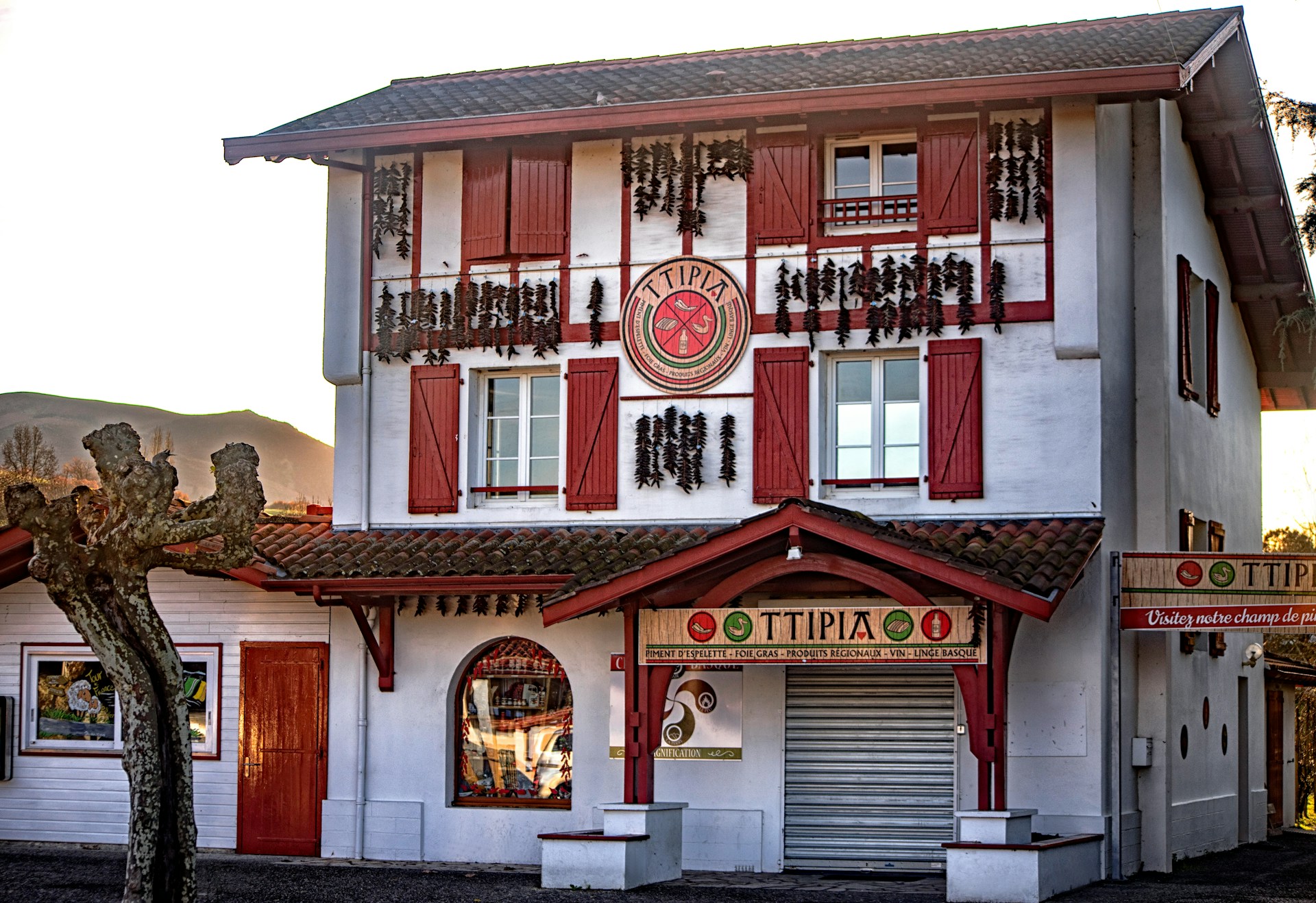
Espelette (Ezpeleta in Basque) is a small Basque village in the Pyrénées-Atlantiques, but it has a personality far bigger than its size. Whitewashed houses with deep red woodwork, strings of crimson peppers drying in the sun, the scent of piment d’Espelette drifting from every kitchen – this is a place that feels like a living postcard, yet it’s still wonderfully real and lived-in.
I’ve been coming back to Espelette almost every year for the past decade, usually in late summer or during the famous pepper festival. It’s one of those rare places where you can have a genuinely local experience without needing to “discover” it before everyone else. Families come for the calm and safe streets, couples for the romantic Basque countryside, food-lovers for the pepper-laced cuisine, and hikers for the nearby Pyrenees and coastal trails.
In 2026, Espelette is especially worth a visit: new farm-to-table spots have opened, local producers are offering more immersive workshops, and the pepper festival is expanding its cultural program with more Basque dance and music events. Yet the village still feels intimate: one main street, familiar faces, and that gentle rhythm of a place that follows the seasons, not the clock.
If you’re planning a 3 day itinerary for Espelette, a slower 4 days in Espelette, or a deep-dive 5 day itinerary for Espelette, this travel guide for Espelette is written as if I’m walking you through the village myself – with the places I personally return to, the little shortcuts, and the quiet benches with the best views.
Table of Contents
- Why Visit Espelette
- About Espelette & Getting Oriented
- 20 Must-See Attractions & Experiences in Espelette
- 3, 4 & 5 Day Itineraries for Espelette
- Neighborhoods & Surrounding Areas
- Local Food in Espelette & Where to Eat
- Nightlife, Entertainment & Cultural Experiences
- Day Trips from Espelette
- Local Customs, Culture & Etiquette
- Practical Travel Advice for Espelette (2026–2027)
- Summary & Best Time to Visit Espelette
About Espelette & Getting Oriented
Espelette sits about 25 minutes inland from the Atlantic coast and Biarritz, tucked among green hills that glow at sunset. It’s part of the French Basque Country, where French, Basque, and Spanish influences overlap in the language, food, music, and way of life.
The village itself is compact: one central street (Rue principale) with most shops and restaurants, a church and fronton (pelota court) at the heart, and farms and pepper fields fanning out into the countryside. You can walk from one end of the village to the other in about ten minutes, which makes it ideal for a slow-paced escape or a base for exploring the wider region.
Espelette is best enjoyed on foot: mornings wandering the market, afternoons strolling along quiet lanes, evenings with a glass of Irouléguy wine on a terrace. The real magic is in the details: the carved Basque symbols on the lintels, the friendly chats at the butcher, the way everyone watches the children playing around the fronton.
20 Must-See Attractions & Experiences in Espelette
These are the best places to visit in Espelette – a mix of iconic pepper landmarks, quiet corners, and nearby adventures. I’ve arranged them roughly from most famous to more hidden gems, with my own experiences and tips.
1. Espelette Village Center & Pepper-Festooned Houses
The heart of Espelette is the village itself: rows of white Basque houses with deep red shutters and beams, their facades covered in strings of drying peppers from late summer into autumn. The first time I arrived, I actually stopped the car just outside the village to take it all in – it looked almost too perfect to be real.
These peppers are piment d’Espelette, the village’s claim to fame and a protected AOP product. Locals string them up to dry on the walls, turning the village into an open-air art installation. On a sunny day, the contrast of red peppers, white walls, and blue sky is unforgettable.
What to do:
- Walk slowly along the main street, pausing at every little shop selling pepper products: powders, jams, chocolates, even piment-flavored beer.
- Look up at the house fronts – many have dates and Basque symbols carved above the doors, telling the story of the families who’ve lived there for generations.
- Grab a terrace seat for coffee or an apéritif and people-watch. I often end up at the same café near the fronton, watching kids play while grandparents chat nearby.
Best time: August–October when the peppers are fully on display. In winter and spring, the charm is still there, just a bit quieter and without the pepper “drapes.”
Tip: Arrive before 10:00 in high season to enjoy the streets before the day-trip buses arrive. In the evening, after 18:00, the village softens again and feels wonderfully local.
2. Église Saint-Étienne & Cemetery
Saint-Étienne Church is the spiritual and architectural heart of Espelette. From the outside, it’s a solid stone church surrounded by plane trees; inside, it’s a warm cocoon of carved wood and tiered galleries that wrap around the nave in classic Basque style.
I remember stepping inside one hot July afternoon; the cool, dim light and faint smell of wax and incense were a welcome pause from the sun and crowds outside.
Highlights:
- Wooden galleries: These multi-level balconies are where families traditionally sat, and they give the church an intimate, almost theater-like feel.
- Polychrome altarpiece: A richly decorated, gold-toned altar that always surprises first-time visitors with its detail.
- Cemetery: Around the church are unique Basque tombstones, some with lauburu (Basque cross) carvings. It’s peaceful and offers a quiet view back to the village.
When to visit: Mid-morning or late afternoon, when it’s open but less crowded. If you’re here on a Sunday, you might catch a bit of mass and hear choral singing in Basque.
Tip: Dress respectfully (shoulders covered) and speak softly inside; this is still an active parish, not just a monument.
3. Château d’Espelette (Espelette Castle)
The Château d’Espelette is more of a fortified manor than a fairytale castle, but it’s one of the best places to understand the village’s history and pepper culture. It’s right in the center, yet somehow I walked past it several times on my first visit without realizing there was more inside than the town hall.
Today, the castle hosts exhibitions about the region, the piment d’Espelette, and changing art shows. It’s also where you can pick up detailed information about local producers and trails.
What you’ll see:
- Exhibits explaining how pepper arrived from the New World in the 16th century and became Espelette’s emblem.
- Rooms devoted to local traditions, costumes, and Basque culture.
- Small art shows by regional artists (these change often; I’ve seen everything from photography to abstract painting here).
My experience: On a rainy October afternoon, I ducked into the château expecting a quick look and ended up staying over an hour, chatting with a staff member about how climate change is affecting pepper harvests. It gave me a much deeper appreciation for what I was seeing on the house facades outside.
Tip: Combine your visit here with lunch nearby; the castle is compact, so 45–60 minutes is enough for most.
4. Piment d’Espelette AOP Farms & Pepper Fields
You can’t talk about things to do in Espelette without visiting at least one pepper farm. This is where the famous piment d’Espelette is grown, harvested, dried, and ground into its distinctive smoky, gently spicy powder.
Several AOP-certified producers around the village offer visits and tastings. I’ve visited a few over the years; each has its own personality, but all share a deep pride in their peppers.
Typical visit includes:
- A walk through the pepper fields (seasonal – best July to October).
- Explanation of the growing, harvesting, drying, and grinding process.
- A tasting: peppers in sauces, jams, chocolates, and of course the pure powder.
- A small shop where you can stock up (this is where I buy gifts; the prices are better than in the center).
Personal moment: One September, the farmer handed me a freshly picked pepper to bite into. It’s not like a chili: more like a sweet red pepper with a gentle warmth that sneaks up. From then on, I understood why locals sprinkle it on everything from eggs to chocolate.
Tip: Book ahead in high season or weekends. If you don’t have a car, ask the tourist office which farms are walkable from the village center.
5. Espelette Weekly Market
The weekly market (often Wednesday or Sunday, check locally for current schedule) is where Espelette’s soul comes out: producers from the surrounding hills bring cheeses, cured hams, honey, seasonal vegetables, and of course, pepper products.
On my last visit, I arrived around 9:30 and the village was already buzzing: older men arguing (good-naturedly) about rugby, kids running around with pastries, and the smell of sheep cheese and grilled sausage in the air.
What to look for:
- Ossau-Iraty ewe’s milk cheese – pair it with black cherry jam.
- Basque charcuterie – especially lomo and chorizo with piment d’Espelette.
- Seasonal fruits – cherries in late spring, peaches and melons in summer.
- Local honey and jams – I always bring home jars of pepper-infused jam.
Budget tip: For a cheap, delicious lunch, buy cheese, bread, and charcuterie at the market and picnic at a bench near the fronton or on a trail outside the village.
6. Fronton & Basque Pelota Games
Every Basque village has a fronton, and Espelette’s is right in the heart of things. It’s a big, smooth wall where locals play various forms of Basque pelota – fast, skillful ball games that are part of daily life here.
In the evenings, especially in summer, you’ll see spontaneous games start up. I’ve spent many nights just leaning on the low wall, watching teenagers play while grandparents comment from the sidelines. Even if you don’t fully understand the rules, the rhythm and energy are captivating.
What to do:
- Watch an informal game in the late afternoon or evening.
- Look for posted schedules of official matches or demonstrations in summer and during festivals.
- If you’re with kids, let them run around the edges (when no serious game is in progress); it’s a safe, open place.
Tip: During the pepper festival, the fronton area becomes a central stage for music and dance. Arrive early if you want a good spot.
7. Pepper Festival (Fête du Piment) – 2026 & 2027
The Fête du Piment is Espelette’s big moment: usually held the last weekend in October, it celebrates the end of the pepper harvest with markets, parades, music, dance, and truly enormous crowds for such a small village.
I’ve been twice, and each time it felt like the entire Basque Country squeezed into Espelette for two days of joyful chaos. Streets are packed, bands play around every corner, and you can taste pepper in more forms than you thought possible.
What to expect in 2026–2027:
- Expanded cultural program with more Basque dance troupes and choirs.
- Cooking demonstrations focusing on creative uses of piment d’Espelette.
- Stalls from nearly all local producers, plus guests from other Basque regions.
Tips for surviving the festival:
- Book accommodation months in advance (more on this in the practical section).
- Arrive early each day; parking fills up quickly, and access roads get congested.
- Accept that it will be crowded. If you prefer quiet, come the week after: the decorations remain, but the village relaxes.
8. Local Pepper & Basque Product Boutiques
Beyond the farms, Espelette has several charming boutiques dedicated to pepper and Basque specialties. Over the years, I’ve developed a circuit: I know which shop has the best pepper chocolate, which one does the most interesting jams, and where to pick up a nice bottle of Irouléguy wine.
What to buy:
- Piment d’Espelette powder (in small tins or packets – easy to bring home).
- Pepper-infused olive oil and sea salt.
- Dark chocolate with piment (surprisingly addictive).
- Basque linens (tablecloths, aprons, and tea towels in red, green, and white stripes).
Tip: For serious cooks, ask staff about the different grinds and uses of pepper; they’re usually delighted to explain how locals use it daily.
9. Walking Paths Around Espelette
One of my favorite things to do in Espelette is to simply walk out of the village into the countryside. Within minutes, you’re surrounded by green hills, farmhouses, and grazing sheep, with the village bell tower always somewhere behind you.
There are marked trails of various lengths; the tourist office has updated maps in 2026 that are much clearer than the older versions.
Good options:
- Short loop (1–2 hours): Gentle paths through fields and small farms – ideal for families.
- Half-day hike: Trails that climb higher for broader views of the region and the Pyrenees in the distance.
My ritual: I like to do a morning walk, pick up picnic supplies on the way back into the village, then reward myself with a long lunch. On misty days, the hills feel particularly atmospheric, with cowbells echoing in the distance.
Tip: Wear proper shoes; even “easy” paths can be muddy after rain. Always close gates behind you – this is working farmland.
10. Espelette’s Basque Architecture & Scenic Corners
Espelette is one of the best places to appreciate traditional Basque architecture: white facades, half-timbering painted in deep red (or sometimes green), slate or tile roofs, and wooden balconies.
I often spend an hour just wandering side streets, noticing how each house is similar yet subtly unique: a different carving here, a painted motif there.
Don’t miss:
- The cluster of houses around the church and fronton – pure postcard material.
- Side alleys leading to small courtyards; some have beautiful flower arrangements and pepper strings.
- Views back to the village from slightly elevated spots on the outskirts – great for photos.
Photography tip: Morning and late afternoon light are best. Respect privacy: many houses are private homes, so avoid shooting directly into windows or courtyards when people are clearly inside.
11. Artisanal Chocolate & Pastry Shops
The Basque Country has a serious sweet tooth, and Espelette is no exception. You’ll find bakeries and chocolatiers that blend local flavors – pepper, black cherry, almond – into irresistible treats.
What to try:
- Gâteau basque: A dense cake usually filled with black cherry jam or pastry cream.
- Chocolate with piment d’Espelette: Deep cocoa flavor with a warm finish.
- Macarons basques: Soft, almond-based cookies (different from Parisian macarons).
My favorite moment: One rainy afternoon, I ducked into a small chocolaterie “just to look” and ended up chatting with the owner about cocoa origins while sampling tiny squares of outrageously good chocolate. I left with a bag full of “souvenirs” that somehow didn’t survive the week.
12. Local Fromageries & Charcuterie Shops
Even if you’re not a hardcore foodie, stepping into a Basque fromagerie in Espelette is an experience: wheels of sheep cheese stacked to the ceiling, the smoky scent of cured hams, jars of pickled peppers glowing on the shelves.
What to do:
- Ask to taste a young vs. aged Ossau-Iraty – the difference in texture and flavor is fascinating.
- Pick up sliced charcuterie for a picnic or simple dinner if you’re staying in an apartment.
- Try a small jar of piment-flavored pâté; it’s intense but delicious on crusty bread.
Tip: If you’re flying home, ask which cheeses travel best and how to pack them. Vacuum-sealed portions are easier to transport.
13. Espelette’s Small Museums & Pepper Interpretation Spaces
Beyond the château, Espelette has a few small interpretation areas and museum-like spaces dedicated to pepper and Basque rural life. They’re often linked to producers or municipal buildings, and they’re a good way to deepen your understanding of the village’s main crop.
On a hot afternoon, I like ducking into these spaces for 20–30 minutes; they’re quiet, often free or inexpensive, and usually include old tools, photos, and explanatory panels (in French, sometimes Basque and English).
14. Traditional Basque Dance & Music Performances
Basque culture is very much alive in Espelette: you’ll often hear polyphonic singing in churches or squares, see dancers in traditional costumes at festivals, and encounter small musical groups playing trikitixa (diatonic accordion) and tambourines.
I still remember stumbling onto a dance performance one summer evening: children, teenagers, and adults all taking turns in complex, rhythmic dances. The pride and joy on everyone’s faces said everything about how much these traditions matter here.
When to see: Summer evenings, pepper festival weekend, and some religious feast days. Check posters around the village or ask at the tourist office for the latest program.
15. Espelette’s Playgrounds & Family Corners
For families, Espelette is wonderfully manageable: quiet streets, safe squares, and playgrounds where kids can burn off energy while grown-ups relax nearby. I’ve often traveled here with friends who have children, and they always comment on how easy it is to let kids run a bit freer than in big cities.
Look for the small playgrounds close to the center; they’re clean, well-maintained, and usually within sight of cafés and benches. The fronton itself is a giant, kid-friendly open space when no serious game is on.
16. Scenic Viewpoints Over Espelette
Espelette is in a shallow valley, which means even a short climb gives you wonderful views back over the red-and-white houses and surrounding hills. There are several easy-to-reach spots where I always end up taking too many photos.
Favorite viewpoint: A small rise just outside the village on the way to some of the pepper farms – the perfect place to see the village framed by fields. Ask locals for “le meilleur point de vue sur le village”; they’ll happily point you in the right direction.
Tip: Sunrise and sunset are especially beautiful, with long shadows over the hills and a warm glow on the facades.
17. Artisan Craft Shops & Basque Linen Boutiques
Beyond food, Espelette is a good place to pick up quality Basque crafts: colorful linens, pottery, woodwork, and small handmade items. While Biarritz and Bayonne have more variety, Espelette’s shops feel calmer and more personal.
What to look for:
- Striped tablecloths and napkins in Basque colors – perfect for recreating a Basque table at home.
- Ceramic dishes and bowls with pepper or lauburu motifs.
- Handmade cutting boards or pepper mills.
Tip: Many shops will ship large items abroad; useful if you fall in love with a big tablecloth or fragile ceramics.
18. Espelette’s Seasonal Events (2026–2027)
In addition to the pepper festival, Espelette hosts smaller events throughout the year: local fêtes, food fairs, and cultural weekends. For 2026–2027, the municipality is emphasizing sustainable agriculture and Basque heritage, so expect more workshops, tastings, and cultural evenings.
Typical events include:
- Spring food weekends celebrating local asparagus, lamb, and early-season peppers.
- Summer night markets with music and artisan stalls.
- Christmas market with Basque specialties and decorations.
Check the village website or tourist office for updated calendars; they’re usually posted by early spring each year.
19. Nearby River & Picnic Spots
Just beyond the village, small rivers and streams create peaceful picnic spots. On hotter days, I like to escape the village heat and sit under the trees by the water, with my feet dangling just above the surface.
These areas are simple – maybe a few tables, maybe just a grassy bank – but they’re ideal for a relaxed, low-cost afternoon with kids or a book.
Tip: Bring your trash back with you; these spots stay beautiful because locals take care of them.
20. Espelette as a Base for Basque Country Exploration
Espelette itself is small, but that’s part of its charm as a base: you get quiet nights, authentic village life, and you’re a short drive or bus ride from bigger destinations like Biarritz, Bayonne, Saint-Jean-de-Luz, and the Spanish side of the Basque Country.
On some trips, I’ve used Espelette as my “home” and done day trips to the coast, returning in the evening to calmer streets and familiar faces at the same café. It’s a great compromise if you want coastal energy but don’t want to sleep in a busy city.
Itineraries: 3, 4 & 5 Days in Espelette
Here’s how I’d structure a 3 day itinerary for Espelette, how to expand it for 4 days in Espelette, and what to add if you have a 5 day itinerary for Espelette. Each day mixes must-see attractions, hidden gems, and real local experiences.
3 Day Itinerary for Espelette
Day 1: First Impressions, Village Center & Pepper Culture
Morning – Arrival & Espelette Village Walk
Plan to arrive by late morning. Once you’ve dropped your bags at your accommodation (most places are within walking distance of the center), head straight for the main street. I like to start at one end and slowly make my way to the other, letting myself be pulled into whichever shop or café feels right.
Stop at the church square, step inside Église Saint-Étienne, and spend a few quiet minutes in the wooden galleries. Then wander through the cemetery, reading names and dates; it’s a gentle introduction to the deep roots of the community.
Lunch – First Taste of Piment
For lunch, choose a village bistro and order something simple that highlights local flavors: perhaps an omelette with piment d’Espelette, a plate of Basque charcuterie, or a salad with local sheep cheese. I always ask for a small basket of bread and a little extra pepper on the side – it’s the easiest way to start understanding how locals season their food.
Afternoon – Château d’Espelette & Pepper Boutiques
After lunch, visit the Château d’Espelette. Spend an hour exploring the exhibits and learning how this small village gained worldwide recognition through its pepper. Once you know the backstory, the strings of peppers outside take on a whole new meaning.
Later, stroll through the pepper and product boutiques. Don’t buy everything at once; use this first afternoon to taste and compare. I often do a little “research walk” on day one, then come back to my favorites later in the trip.
Late Afternoon – Fronton & Café Time
Grab a seat at a café near the fronton. Order a coffee, a glass of local cider, or a small beer and watch the world go by. If a game of pelota starts, you’ve got front-row seats. This is also a great time to jot down notes or circle interesting places on your map for the next days.
Evening – Dinner & Night Stroll
For dinner, choose a place that serves traditional Basque dishes: axoa (a veal or beef stew seasoned with piment), grilled trout from local rivers, or chipirons (small squid) if they’re on the menu. Pair it with an Irouléguy red or rosé.
After dinner, take a slow stroll through the village. Espelette at night is calm, with soft lighting on the facades and the church. It’s a lovely, gentle end to your first day.
Day 2: Pepper Farms, Countryside Walks & Local Flavors
Morning – Pepper Farm Visit
Book a morning visit to a piment d’Espelette AOP farm. Most visits last 1–1.5 hours and include a walk through the fields, an explanation of the growing and drying process, and a tasting.
I like to go early when the light is soft and the air still cool. Walking between rows of pepper plants, hearing the farmer talk about weather, soil, and tradition, gives you a connection to the village that you can’t get from just seeing the peppers on the walls.
Lunch – Picnic or Farm-to-Table
After the farm, either have lunch on-site (some offer simple farm-to-table meals) or return to the village and pick up picnic supplies from the market or fromageries: bread, cheese, charcuterie, fruit, and a small jar of pepper jam.
Find a shady bench or a grassy spot on one of the walking paths near the village and enjoy a slow, simple lunch.
Afternoon – Countryside Walk
Spend the afternoon on an easy loop walk around Espelette. Choose a marked trail that fits your energy level. I usually opt for a 2–3 hour loop that includes both open fields and some forested sections, with at least one viewpoint back over the village.
Bring water, sunscreen, and a light jacket; weather can change quickly in the hills. Take your time – this isn’t a race. Stop to watch sheep, listen to cowbells, and notice the small shrines and crosses along the way.
Evening – Wine & Tapas-Style Dinner
Back in the village, treat yourself to a glass of local wine or cider at a bar. For dinner, you can build a sort of tapas-style meal: small plates of charcuterie, cheese, peppers, and perhaps a shared main dish. It’s a relaxed end to an active day.
Day 3: Market, Culture & Last-Minute Discoveries
Morning – Market & Shopping
Time your 3 days in Espelette so that your last morning falls on market day if possible. Start early: wander through the stalls, taste cheeses and cured meats, buy a small stock of piment d’Espelette to take home, and pick out any last gifts (Basque linens, chocolates, jams).
This is also a good time to grab a coffee and croissant at a bakery, standing at the counter alongside locals who greet everyone by name.
Late Morning – Small Museums & Cultural Corners
Visit any small museum or interpretation center you may have missed: pepper exhibits, rural life displays, or temporary art shows. These usually don’t take long, but they round out your understanding of the village.
Lunch – Gâteau Basque & Coffee
For lunch, keep it light if you’re traveling later: maybe a salad or simple plat du jour, followed by a slice of gâteau basque and coffee for dessert. This cake has become my personal Espelette ritual; I rarely leave the village without one last slice.
Afternoon – Last Walk & Farewell
Spend your final hours revisiting your favorite corners: the church square, the fronton, that side street with the best pepper-covered facade. Take a last slow walk through the lanes and, if you have time, a short stroll out into the countryside.
Before you go, I always recommend one small gesture: buy something simple from a local shop – even just a baguette or a jar of jam – and say a proper goodbye. In a small village like Espelette, these recurring faces matter, and if you come back (and you might), you’ll be surprised how many people remember you.
4 Day Itinerary for Espelette
If you have 4 days in Espelette, add one more day dedicated to either deeper hiking or a first taste of the Basque coast while still sleeping in the village.
Day 4: Hills or Coast – Your Choice of Adventure
Option A – Hilltop Hike & Panoramic Views
Use your extra day for a longer hike in the nearby hills. The tourist office has updated maps in 2026 with several recommended routes. Choose one that includes a summit or ridge with wide views over the Basque countryside.
Pack a picnic, plenty of water, and your camera. On clear days, you may see as far as the Pyrenees or even catch a glint of the sea in the distance. I like to sit at the top for a while, watching the play of light over the fields and thinking about how small Espelette looks from above, despite how full it feels when you’re in the streets.
Option B – Coastal Excursion, Village Evening
If you’re more of a sea person, take a bus or drive to Biarritz or Bayonne for the day (details in the day trip section). Wander the old streets, walk along the ocean, maybe dip your feet in the Atlantic, and enjoy a seafood lunch.
The joy of this plan is returning to Espelette in the evening, swapping the bustle of the coast for the calm of the village. Have a simple dinner, maybe just a bowl of garbure (hearty soup) or a salad with local ingredients, and savor the quiet.
5 Day Itinerary for Espelette
With a 5 day itinerary for Espelette, you can truly slow down and weave in more cultural experiences and day trips. Add two extra days to the 3-day plan.
Day 4: Basque Culture Immersion
Dedicate this day to deeper cultural experiences in Espelette and surroundings.
Morning – Language & Heritage
Start slowly with a coffee and, if available, join a short cultural workshop or guided tour focusing on Basque history and language. In recent years, more local organizations have been offering these, sometimes even informal “intro to Basque” sessions where you learn a few words like egun on (good day) and eskerrik asko (thank you).
Afternoon – Dance or Music, Artisan Visits
Visit artisan shops and, if possible, arrange a short visit with a local craftsperson – perhaps a linen maker, potter, or woodworker. It’s a chance to see how traditional designs are kept alive in modern pieces.
Check if there are any scheduled dance or music rehearsals or performances in the village; sometimes groups allow visitors to quietly watch rehearsals from the back. It’s less polished than a big show, but more intimate.
Evening – Basque Dinner & Night Walk
For dinner, seek out dishes you haven’t tried yet: talo (corn flatbread) with fillings, pipérade (pepper and tomato stew, often with eggs), or a fish dish with pepper sauce. After dark, wander through the village one last time; the quiet streets and lit facades feel almost like a film set.
Day 5: Cross-Border Day Trip or Deep Countryside
For your fifth day, choose between:
Option A – Spanish Basque Town Day Trip
Drive or take transport to a Spanish Basque town like San Sebastián (Donostia) or Hondarribia. Spend the day exploring pintxo bars, beaches, and old streets, then return to Espelette in the evening for a final, quiet night. This cross-border contrast – two sides of the same culture – is one of my favorite things about the region.
Option B – Deep Countryside & Farm Visits
Stay on the French side and spend the day exploring smaller villages and farms in the interior Basque Country: perhaps Ainhoa, Sare, or Itxassou. Tie it together with one last pepper or cheese farm visit.
In the evening, have a farewell dinner in Espelette, toasting with a glass of Irouléguy wine and promising yourself you’ll come back.
Neighborhoods & Surrounding Areas of Espelette
Espelette is small enough that it doesn’t have “neighborhoods” in the city sense, but different parts of the village and its outskirts have distinct atmospheres that are useful to understand when choosing where to stay or wander.
1. Village Center (Around the Main Street & Fronton)
This is the heart of Espelette: shops, restaurants, the church, the fronton, and most of the day-to-day life. If you like being in the middle of things, stay here. You’ll hear morning deliveries, church bells, and evening chatter – in a good way.
2. Upper Lanes & Residential Streets
Step one or two streets up from the main road and you’re in quieter, more residential lanes, still with beautiful Basque houses and pepper strings, but fewer visitors. I often wander here in the late afternoon for a more “everyday life” feel.
3. Outskirts & Farm Roads
Within a 10–20 minute walk from the center, you’ll reach farms, fields, and guesthouses surrounded by greenery. Staying out here gives you quieter nights and easy access to walking trails, but you’ll want good shoes and a flashlight for late-night returns.
4. Nearby Villages (Ainhoa, Itxassou, Sare)
These aren’t Espelette neighborhoods, but they’re part of the same mental map. Many visitors split their stay between Espelette and one of these villages, or day-trip between them. Each has its own character: Ainhoa is picture-perfect, Itxassou is known for cherries, Sare for caves and a cog railway.
Local Food in Espelette & Where to Eat
If you love food, you’ll be very happy in Espelette. The village’s pepper shows up in subtle ways in many dishes, and Basque cuisine in general is generous, flavorful, and comforting.
Must-Try Dishes & Flavors
- Axoa: Finely chopped veal or beef stew, gently spiced with piment d’Espelette. Rustic and deeply satisfying.
- Pipérade: Stew of peppers, tomatoes, onions, and eggs, often served with ham or fish.
- Omelette au piment d’Espelette: Simple but perfect for tasting the pepper’s aroma.
- Ossau-Iraty cheese: Ewe’s milk cheese, often served with black cherry jam.
- Gâteau basque: Signature dessert, filled with black cherry jam or custard.
- Basque charcuterie: Hams, chorizo, and sausages often seasoned with pepper.
Drinks to Try
- Irouléguy wine: Local appellation, both red and rosé pair well with Basque dishes.
- Basque cider: Slightly tart, refreshing; served cold in summer.
- Local beers: Some microbreweries now make beers infused with piment d’Espelette.
Types of Places to Eat in Espelette
Given how often things change, I won’t lock you into specific restaurant names, but here’s the kind of places I return to on each trip:
- Traditional bistros: Offering axoa, pipérade, grilled meats, and hearty daily specials. Great for lunch menus (menu du jour) that are good value.
- Farm-to-table spots: Often on the outskirts or attached to farms, serving ultra-local ingredients with simple, seasonal menus.
- Cafés & bars: For morning coffee, afternoon drinks, and small plates of charcuterie or cheese.
- Bakeries & pastry shops: For breakfast, snacks, and of course gâteau basque.
Money-Saving Tips for Eating in Espelette
- Lunch menus: Many restaurants offer a fixed-price lunch that’s significantly cheaper than dinner – perfect for your main meal.
- Picnics: Use markets and fromageries to build picnic meals; it’s both cheaper and a great way to sample many things.
- Tap water: Ask for a “carafe d’eau” – free tap water, perfectly drinkable.
Nightlife, Entertainment & Cultural Experiences
Espelette is not a nightlife hub in the clubbing sense, but evenings here have their own charm: terrace conversations, occasional concerts, and cultural events.
Evening Atmosphere
Most nights, especially in summer, village life centers on the main square and fronton. Families stroll, children play, couples linger over wine, and groups of friends talk animatedly at bar terraces. It’s lively but never rowdy.
Cultural Experiences
- Basque music concerts: Often held in the church or outdoors in summer.
- Dance performances: During festivals and special weekends.
- Local fêtes: Village celebrations with food, music, and games around the fronton.
Romantic & Family-Friendly Evenings
For a romantic evening, share a bottle of wine and dessert at a quiet restaurant, then take a night walk through the softly lit streets. For families, early dinners and time at the fronton or playgrounds are ideal; children here are welcomed almost everywhere.
Day Trips & Nearby Attractions from Espelette
One of Espelette’s advantages is its location: you’re close to both mountains and sea, and several classic Basque destinations are within easy reach.
Biarritz
Travel time: About 25–35 minutes by car; bus options exist but can be slower and less frequent.
Why go: Famous surf beaches, elegant 19th-century architecture, sea views, and a lively food scene. Ideal for a contrast day: ocean energy vs. village calm.
Bayonne
Travel time: Around 25–30 minutes by car.
Why go: Beautiful old town, cathedral, half-timbered houses over the river, great chocolate and ham. Bayonne feels more “lived-in” than Biarritz and is excellent for a cultural city day.
Saint-Jean-de-Luz
Travel time: Around 40 minutes by car.
Why go: Lovely harbor, protected sandy beach, interesting history, and a very walkable center. Great for families.
Nearby Basque Villages (Ainhoa, Sare, Itxassou)
Travel time: 10–30 minutes by car.
Why go: Each village has its own specialty and charm, from cherries (Itxassou) to caves and heritage railways (Sare). They’re perfect for half-day or full-day excursions.
Spanish Basque Towns (Hondarribia, San Sebastián)
Travel time: About 1 hour or more by car depending on town and traffic.
Why go: Pintxo culture, beaches, old fortifications, and that distinct Spanish Basque flavor. Cross-border trips are easy for most nationalities within Schengen rules; just bring ID.
Local Customs, Culture & Etiquette in Espelette
Understanding a few local customs will make your stay in Espelette smoother and more enjoyable.
Language
- French is the main language; Basque (Euskara) is also present in signs and sometimes spoken among locals.
- Basic French greetings go a long way: start with “Bonjour” during the day and “Bonsoir” in the evening.
- Even if you don’t speak French, greeting staff and shopkeepers is important; it’s considered polite.
Greetings & Politeness
- Always say “Bonjour” when entering a shop, and “Merci, au revoir” when leaving.
- In small villages, it’s normal to greet people you pass on quiet streets with a nod or soft “Bonjour.”
In Restaurants & Cafés
- Table service is the norm; wait to be seated when in doubt.
- It’s fine to linger over coffee or wine; you won’t be rushed.
- Tip by rounding up or leaving 5–10% if service was especially good; service is technically included.
Respecting Local Life
- Espelette is a real village, not a theme park. Keep noise down at night, especially in residential lanes.
- Ask permission before photographing people, especially children or workers on farms.
- Stick to marked paths in the countryside; fields are working farms, not open parks.
Practical Travel Advice for Espelette (2026–2027)
Getting There & Getting Around
Nearest major hubs:
- Airport: Biarritz Pays Basque (BIQ) – about 25–35 minutes by car.
- Train: Bayonne or Biarritz stations – then car, taxi, or bus to Espelette.
By car: The easiest way to reach and explore Espelette. Roads are good, and driving gives you flexibility for day trips.
By public transport: Bus connections exist but may be infrequent, especially on weekends or evenings. Always check current timetables.
In the village: You’ll walk almost everywhere. Good walking shoes are more useful than a car once you’re in the center.
Car Rental & Driving Licenses
Car rental: Best arranged from Biarritz or Bayonne. Book ahead in high season (July–August, festival weekends).
Foreign driver’s licenses:
- Most non-EU licenses are accepted for short stays; an International Driving Permit (IDP) is recommended if your license is not in French or English.
- Always carry your physical license, passport, and rental documents when driving.
SIM Cards & Connectivity
SIM card options:
- Major French providers (Orange, SFR, Bouygues, Free) have tourist and prepaid SIMs; you’ll likely buy these in Biarritz, Bayonne, or at the airport.
- EU eSIMs are very convenient if your phone supports them.
Coverage in Espelette is generally good, though some rural pockets may be weaker. Most accommodations and some cafés offer Wi-Fi.
Costs & Money-Saving Tips
Espelette is not as expensive as the big coastal cities, but it’s not ultra-cheap either, especially in high season.
- Accommodation: Book well ahead for summer and the pepper festival. Off-season rates (November–March) can be significantly lower.
- Meals: Use lunch menus and picnics to keep costs down; splurge on one or two special dinners.
- Shopping: Set a budget for pepper products and linens – it’s easy to get carried away.
Visa Requirements
Espelette is in France, part of the Schengen Area. Visa rules depend on your nationality and can change, so always check official sources before traveling.
- EU/EEA/Swiss citizens: Can enter with valid ID; no visa needed.
- Many non-EU countries: Visa-free for short stays (usually up to 90 days in 180), but this may be subject to ETIAS or similar systems as EU border policies evolve.
- Others: May require a Schengen visa obtained before travel.
Always verify up-to-date requirements with your local French consulate or official government websites before 2026–2027 travel.
Best Seasons & What They’re Good For
Spring (April–June):
- Green hills, fewer crowds, mild temperatures.
- Great for hiking, photography, and quieter cultural visits.
Summer (July–August):
- Warmest weather, long days, bustling village.
- Ideal for families, outdoor dining, and coastal day trips.
- Most crowded and expensive period; book everything early.
Early Autumn (September–October):
- Peak for pepper displays; harvest season atmosphere.
- Pepper festival at end of October – vibrant but very busy.
Late Autumn & Winter (November–March):
- Very quiet, some places may close or reduce hours.
- Atmospheric for those who like calm and cooler weather; good value for money.
Safety & Health
Espelette generally feels very safe. As in any tourist destination, keep an eye on your belongings, but petty crime is relatively low compared to big cities.
- Tap water is safe to drink.
- Pharmacies in nearby towns can handle minor health issues; for serious concerns, nearest hospitals are in larger cities like Bayonne.
- Travel insurance is always recommended.
Summary & Final Recommendations for Visiting Espelette
Espelette may be small, but it offers a rich blend of must-see attractions, hidden gems, and quietly powerful cultural experiences. From pepper-covered facades and warm wooden churches to pepper farms, countryside walks, and neighboring Basque villages, it’s a place that rewards slowing down.
For most travelers, a 3 day itinerary for Espelette is enough to see the essentials and feel the village’s rhythm. 4 days in Espelette lets you add either a coastal excursion or longer hikes, while a 5 day itinerary for Espelette allows you to weave in deeper cultural immersion and cross-border Basque experiences.
Best time to visit Espelette:
- September–October if you want pepper displays and festival buzz.
- May–June for green hills, milder weather, and fewer crowds.
- July–August if you’re combining Espelette with beach days on the coast and you don’t mind higher prices and more people.
Whether you come for the local food in Espelette, the calm Basque countryside, or as a base for wider exploration, this village has a way of getting under your skin. I’ve left Espelette many times already, but each time, somewhere between the last glance at the pepper-strung houses and the curve in the road out of town, I find myself already planning the next visit.