Why Visit Étretat, France?
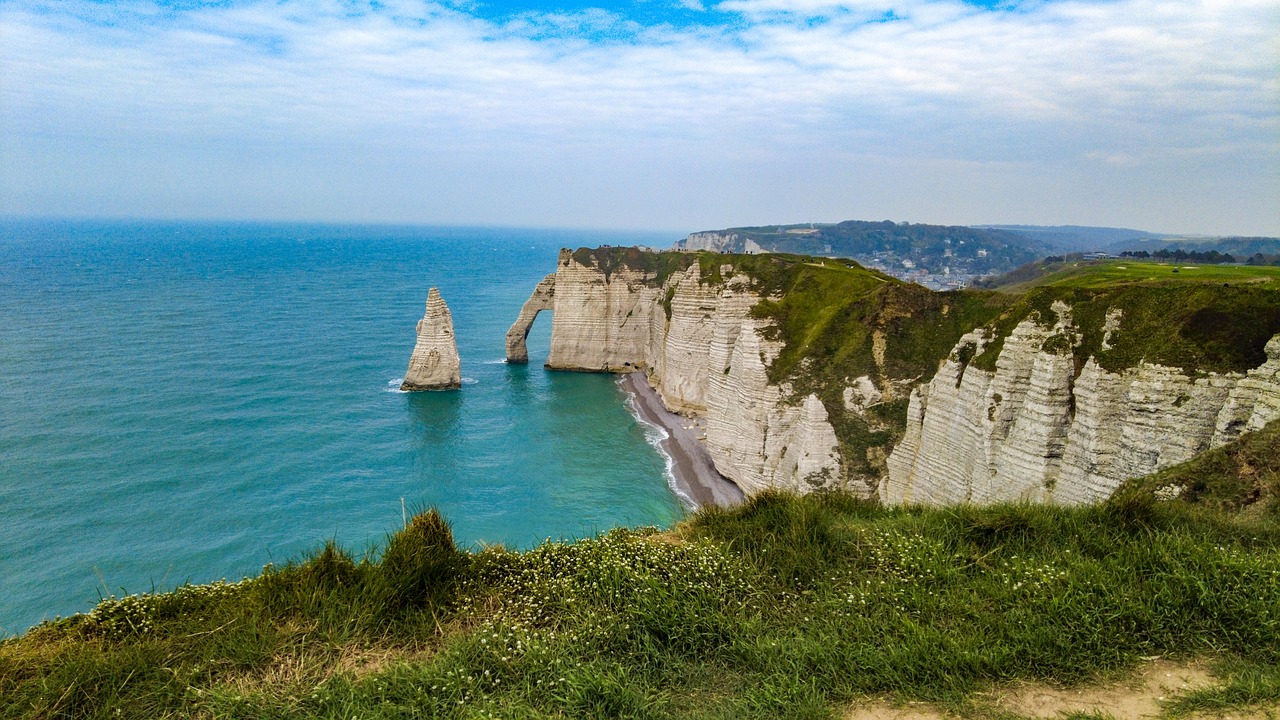
If you’ve ever seen a photograph of dramatic white cliffs plunging into a steel-blue sea, framed by a natural stone arch and a needle-like rock rising out of the water, there’s a good chance you were looking at Étretat. This tiny seaside town on the Alabaster Coast of Normandy looks like a painting long before you know that Monet actually painted it dozens of times.
I’ve been returning to Étretat regularly since my first slightly chaotic weekend here over a decade ago. Back then, I arrived on a misty spring evening and walked straight from the bus to the pebbled beach, suitcase in hand. The tide was high, the cliffs were almost looming, and I remember thinking: “This is what the edge of the world feels like.” Each trip since has revealed something different—sunrise hikes, stormy winter days when the waves roar like a train, slow afternoons over mussels and cider, and evenings listening to the town fall completely silent once the day-trippers leave.
Étretat is small, but it’s not a one-hour photo stop. It’s a place to walk, to watch the tides, to eat well, and to feel the rhythm of a coastal village that’s more than its famous cliffs.
This in-depth travel guide for Étretat (written for 2026) is meant to be the guide I wish I’d had on my first visit: a mix of detailed itineraries (3–5 days in Étretat), stories, practical tips, and local-style advice about must-see attractions in Étretat, hidden gems, local food, cultural experiences, and customs.
Whether you’re planning a 3 day itinerary for Étretat or stretching it into 4 or 5 days in Étretat, you’ll find ideas, routes, and honest opinions here to help you make the most of your time.
Table of Contents
- Quick Overview of Étretat
- Top 20 Attractions & Experiences (With Stories & Tips)
- 3–5 Day Itineraries in Étretat
- Neighborhoods & Areas to Explore
- Local Food & Drink in Étretat
- Nightlife, Culture & Entertainment
- What’s New & Upcoming Events 2026–2027
- Day Trips from Étretat
- Cultural Etiquette & Local Customs
- Practical Travel Advice for Étretat
- Summary & Best Seasons to Visit Étretat
Quick Overview of Étretat
Étretat is a small coastal town in Normandy, in the Seine-Maritime department, roughly 30 km north of Le Havre and about 2.5–3 hours from Paris by car or train-plus-bus. The population sits around 1,200 residents, but that number swells in summer with visitors drawn to its iconic cliffs, pebble beach, and Belle Époque villas.
It’s best known for:
- The white chalk cliffs and natural arches: Porte d’Aval, Porte d’Amont, and the needle (L’Aiguille).
- Connections to Monet, Courbet, and other artists who painted these landscapes obsessively.
- Its role in Arsène Lupin stories (the gentleman thief of Maurice Leblanc), which adds a playful literary layer.
- Seafood, cider, and Normandy cuisine in tiny bistros and creperies.
- Laid-back, walkable streets and a village atmosphere—especially in the evenings when buses leave.
Étretat is compact enough to explore on foot, but varied enough to keep you busy for several days if you slow down and look beyond the postcard viewpoints.
Top 20 Attractions & Experiences in Étretat
Below are twenty of the best places to visit in Étretat, with personal impressions, history, and practical tips. These are woven into the 3–5 day itineraries later, but if you prefer to build your own plan, you can use this as your master list of things to do in Étretat.
1. Falaise d’Aval & L’Aiguille (The Famous Arch & Needle)
If Étretat had a skyline, this would be it. The Falaise d’Aval is the western cliff that forms the most iconic natural arch, with the slender limestone needle (L’Aiguille) standing just offshore. No matter how many photos you’ve seen, the first time you stand in front of it in person is electric.
I still remember the first time I climbed here at sunrise. The town was quiet, the bakery had just opened (I tucked a warm croissant into my backpack), and the path up from the south end of the beach was slick with dew. When I reached the viewpoint, the sea was a mirrored silver and the arch glowed faintly pink. There was only one other person—a local fisherman checking the tide.
History & Significance
The chalk cliffs here are part of the same geological formation as the White Cliffs of Dover across the Channel. Wind, rain, and sea have carved the arches over millennia. Painters like Monet, Boudin, and Courbet fell in love with the dramatic shapes and changing light, and their works helped popularize Étretat in the late 19th century.
How to Visit
- Access: Walk south along the seafront promenade toward the Falaise d’Aval; a marked path leads up the cliff. It’s a short but steep walk (10–20 minutes).
- Best time: Sunrise or late afternoon. Midday in summer can be very busy.
- Family-friendly? Yes if kids are steady on their feet. Keep a close eye near the edge—the cliffs are high and unguarded in places.
My Tips
- Wear proper shoes (not flip-flops); the path can be muddy after rain.
- Take a windproof layer—even in July, it can feel surprisingly cold at the top.
- If you’re into photography, plan two visits: sunrise for soft light and evening for the golden glow on the chalk.
2. Falaise d’Amont & Chapelle Notre-Dame de la Garde
Opposite Falaise d’Aval, on the eastern side of the bay, you’ll find Falaise d’Amont crowned by the small stone Chapelle Notre-Dame de la Garde. If Falaise d’Aval is about drama, Falaise d’Amont is about perspective: from here you see the entire town cradled between the cliffs.
One windy March afternoon, I huddled behind the chapel wall with a thermos of hot chocolate, watching a storm roll in from the horizon. The waves slammed into the beach in slow motion, and the town below flickered to life with lights as the sky darkened. It was one of those moments when Étretat feels much wilder than its postcard image suggests.
History & Significance
The chapel dates from the 19th century (rebuilt after WWII) and is dedicated to sailors—a reminder that, before tourism, this was a fishing village with lives tethered to the tides. The statue of the Virgin and Child looking out to sea is a quiet, powerful symbol of protection.
How to Visit
- Access: From town, follow signs for “Chapelle Notre-Dame de la Garde” or “Falaise d’Amont.” You can hike up in 15–25 minutes, or drive to the parking lot near the top.
- Best time: Sunset for a glowing view of Falaise d’Aval across the bay. Also lovely on slightly cloudy days when the light is dramatic.
- Romantic? Very. I’ve seen more than one proposal happening quietly near the chapel.
My Tips
- Bring a picnic and sit on the grass below the chapel on calmer days.
- There are orientation tables showing the coastline; useful for kids and anyone curious about geography.
- In peak season, arrive early evening to find parking; spaces fill up quickly.
3. Étretat Pebble Beach & Seafront Promenade
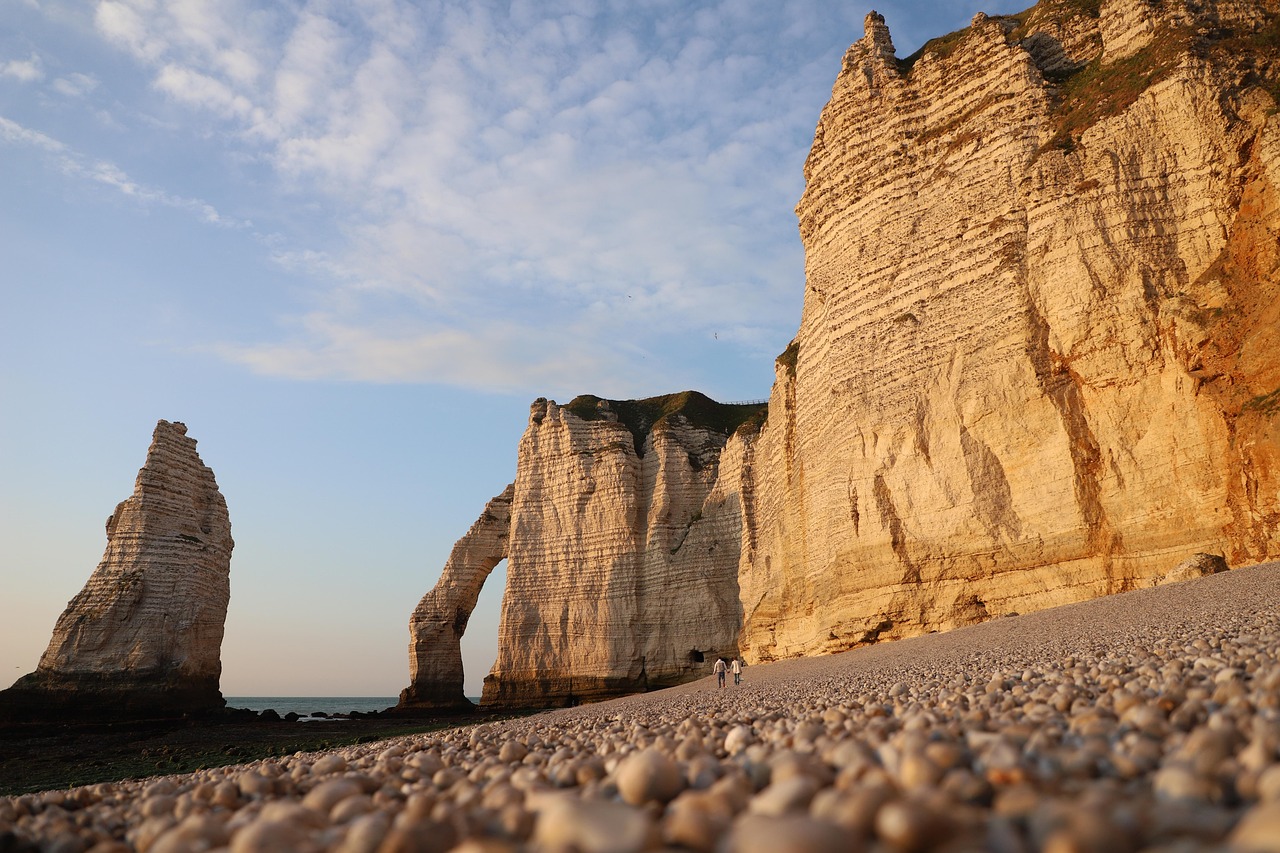
The beach is the heart of daily life in Étretat. It’s not sandy; it’s made of rounded white pebbles (“galets”) that crunch pleasantly underfoot. On sunny days, families set up with blankets and umbrellas; on gray days, locals walk the promenade, hands in pockets, watching the ever-changing sea.
I’ve spent entire afternoons here doing nothing but reading, people-watching, and occasionally wandering to the water’s edge to feel the icy Channel on my ankles. When the tide is low and the sea is calm, you’ll see brave swimmers and paddle-boarders venturing out, though the water is rarely warm.
What to Do
- Walk the length of the promenade from cliff to cliff.
- Rent a deckchair in summer and settle in for a lazy afternoon.
- Watch the local pétanque players behind the promenade.
- Enjoy ice cream or a crêpe from one of the stands along the seafront.
My Tips
- Bring thick towels or a foam mat; pebbles are hard to lie on directly.
- Water shoes make getting in and out of the sea more comfortable.
- Respect the red flags and lifeguard instructions—the currents here are strong and deceptive.
4. Historic Town Center & Market Square
Move a block or two back from the seafront and you’ll find narrow lanes of timber-framed houses, tiny courtyards, and small boutiques. The town center is where Étretat’s personality really lives, especially outside high season.
My favorite ritual is an early-morning wander through the quiet streets before the day-trippers arrive. Bakers stack fresh baguettes in the windows, delivery vans navigate improbable corners, and cats claim sunny spots on window ledges.
Highlights
- The covered market hall area (Place du Marché) with craft shops and local food.
- Art galleries featuring coastal and impressionist-inspired works.
- Small épiceries selling cider, Calvados, and local cheeses.
My Tips
- Explore side alleys; many look like dead ends but reveal courtyards or small shops.
- In 2026, look out for seasonal evening markets announced on local posters.
5. Les Jardins d’Étretat
Perched above the Falaise d’Amont, the Jardins d’Étretat are a whimsical blend of landscaping, sculpture, and contemporary art. Think carefully clipped green forms, surreal faces emerging from hedges, and views that frame the cliffs like living paintings.
The first time I visited, I expected a small, pretty garden and ended up staying nearly two hours. The experience is part dreamscape, part viewpoint hunt. Kids love it because there’s always another nook to explore; adults love the calm and the photo opportunities.
History & Significance
The gardens were inspired by the actress Madame Thébault, a friend of Monet who created a garden here in the early 20th century. The modern version is a contemporary reinterpretation, opened in the 2010s and constantly evolving with new art installations.
Practical Info
- Location: Above the Falaise d’Amont, a short walk from the chapel parking area.
- Tickets: Paid entry; prices updated yearly, check official site before visiting.
- Time needed: 1–2 hours.
- Family-friendly: Yes, but watch kids near the cliff-edge viewpoints.
My Tips
- Combine your visit with the Falaise d’Amont walk to avoid going up twice.
- On sunny days, bring a hat; shade is limited in parts of the garden.
- Visit early or late to avoid group tours.
6. Vieux Marché & Local Artisan Shops
The old market area near the center of town is small but atmospheric, with wooden beams, stone floors, and stalls that have shifted from fish and produce to crafts, textiles, and gourmet souvenirs.
I once spent a rainy hour here chatting with a ceramicist about her sea-inspired glazes, watching the rain drip from the old beams. It’s one of those places where you feel the older, slower Étretat beneath the tourist surface.
What to Look For
- Handmade ceramics and pottery with ocean motifs.
- Locally produced cider, pommeau, and Calvados in pretty bottles.
- Salted caramels and butter biscuits in decorative tins (easy gifts).
My Tips
- Ask stall owners about their work; many are happy to share their stories.
- Check for seasonal markets—especially around Christmas and summer weekends in 2026–2027.
7. Coastal Hiking Paths (GR21 & Local Trails)
Étretat is not just about standing at viewpoints; it’s about walking between them. The long-distance GR21 trail, voted one of France’s favorite hiking routes, passes right through here, hugging the cliff tops in both directions.
On my last visit, I walked the stretch from Étretat to Yport, a village about 8–9 km away. The path rose and fell along the cliffs, passing empty fields, grazing cows, and silent wartime bunkers. The whole time, the sea was on my left, sometimes calm, sometimes raging.
What to Expect
- Uneven, sometimes muddy paths—good shoes required.
- Sheer drops in places; stay away from unstable edges.
- Views that change every few minutes as you round each headland.
My Tips
- Carry water and snacks; there are stretches with no services.
- Check tide and weather before long hikes; fog can roll in quickly.
- Families with smaller kids might prefer shorter out-and-back walks rather than full segments.
8. Porte d’Amont (The Eastern Arch)
While the western arch at Falaise d’Aval gets all the fame, the eastern arch—Porte d’Amont—is just as beautiful and often quieter. Seen from the beach or from the cliff-top paths, it creates a more subtle, layered seascape.
One of my favorite sunset walks is along the path just east of the chapel, where you can look back and see the Porte d’Amont framing the town in miniature.
My Tips
- Bring binoculars or a zoom lens; details of the arch are more visible from a distance.
- Combine with a visit to the nearby golf course paths (see below) for varied views.
9. Golf d’Étretat (Clifftop Golf Course & Viewpoints)
Even if you don’t play golf, the Golf d’Étretat is worth visiting for its extraordinary location. The greens and fairways sit right on the cliffs east of town, giving you open, panoramic views of the Alabaster Coast.
I’m not a golfer, but I’ve walked the public paths that cross parts of the course more than once. On a clear day, the combination of green grass, white cliffs, and endless blue sea is almost too perfect.
Practical Info
- Location: Above the Falaise d’Amont area, reachable by car or via hiking paths.
- Facilities: Clubhouse, restaurant, terrace with sea views (nice spot for a drink even if you’re not playing).
My Tips
- If you walk near the course, respect golfers and stay on marked paths.
- The terrace is a good place for a late-afternoon coffee with a view, away from the crowded seafront.
10. Église Notre-Dame d’Étretat
Set slightly back from the busiest streets, this solid stone church is a reminder of Étretat’s deeper history. It’s Romanesque-Gothic in style, with thick walls and a cool, calm interior that feels worlds away from the cliffs and crowds.
When I need a break from the sun or the wind, I often duck in here for a few quiet minutes. The stained glass windows cast colored light on the stone, and there’s a faint smell of wax and old wood.
History
Parts of the church date back to the 12th and 13th centuries, with later additions. It has witnessed centuries of storms, wars, and changing fortunes for the town.
My Tips
- Check the noticeboard for small concerts or organ recitals, especially in summer 2026–2027.
- Dress modestly and speak quietly; it’s an active place of worship.
11. Le Clos Arsène Lupin – Maison Maurice Leblanc
If you’ve ever read about Arsène Lupin, the gentleman thief, this museum will make Étretat instantly more fun. Le Clos Arsène Lupin is the former home of author Maurice Leblanc, turned into an immersive, slightly theatrical museum.
I visited on a gray November afternoon and ended up grinning like a kid. The audio-guided tour (also available in English) leads you through rooms filled with clues, letters, and props, as if you’re inside one of Lupin’s stories.
Practical Info
- Location: A short walk from the town center, in a quiet residential street.
- Time needed: About 1 hour.
- Great for: Rainy days, families, literature fans.
My Tips
- Book ahead in peak season; the house is small and numbers are controlled.
- If you’re visiting Étretat with kids, tell them a bit about Arsène Lupin beforehand; they’ll love “solving” the little mysteries.
12. Old Fishing Port Remnants & Beach Boats
Étretat no longer has a large working harbor, but you’ll still see small fishing boats pulled up on the pebbles and remnants of the village’s maritime past along the seafront.
On misty mornings, when the clink of rigging is the loudest sound, it’s easy to imagine the beach lined with fishing families waiting for the boats to come in.
My Tips
- Look for information panels along the promenade that explain the town’s fishing and seaweed-harvesting history.
- Try to buy fish or seafood from local suppliers when you see them—ask restaurants which dishes are truly local catch.
13. Local Art Galleries & Studios
Given Étretat’s place in art history, it’s no surprise that small galleries and studios still thrive here. Many focus on seascapes, abstract interpretations of the cliffs, or impressionist-style works that nod to Monet.
I like to wander through them in the late afternoon, when the sun slants in through the windows and the streets are starting to cool. Sometimes you’ll find the artist themselves behind the counter, happy to talk about their process.
My Tips
- Even if you’re not planning to buy, it’s polite to greet the gallery owner (“Bonjour”) and say a brief goodbye (“Merci, au revoir”) when you leave.
- Ask if they ship internationally if you’re tempted by a larger piece.
14. Sunset & Night Sky Viewpoints
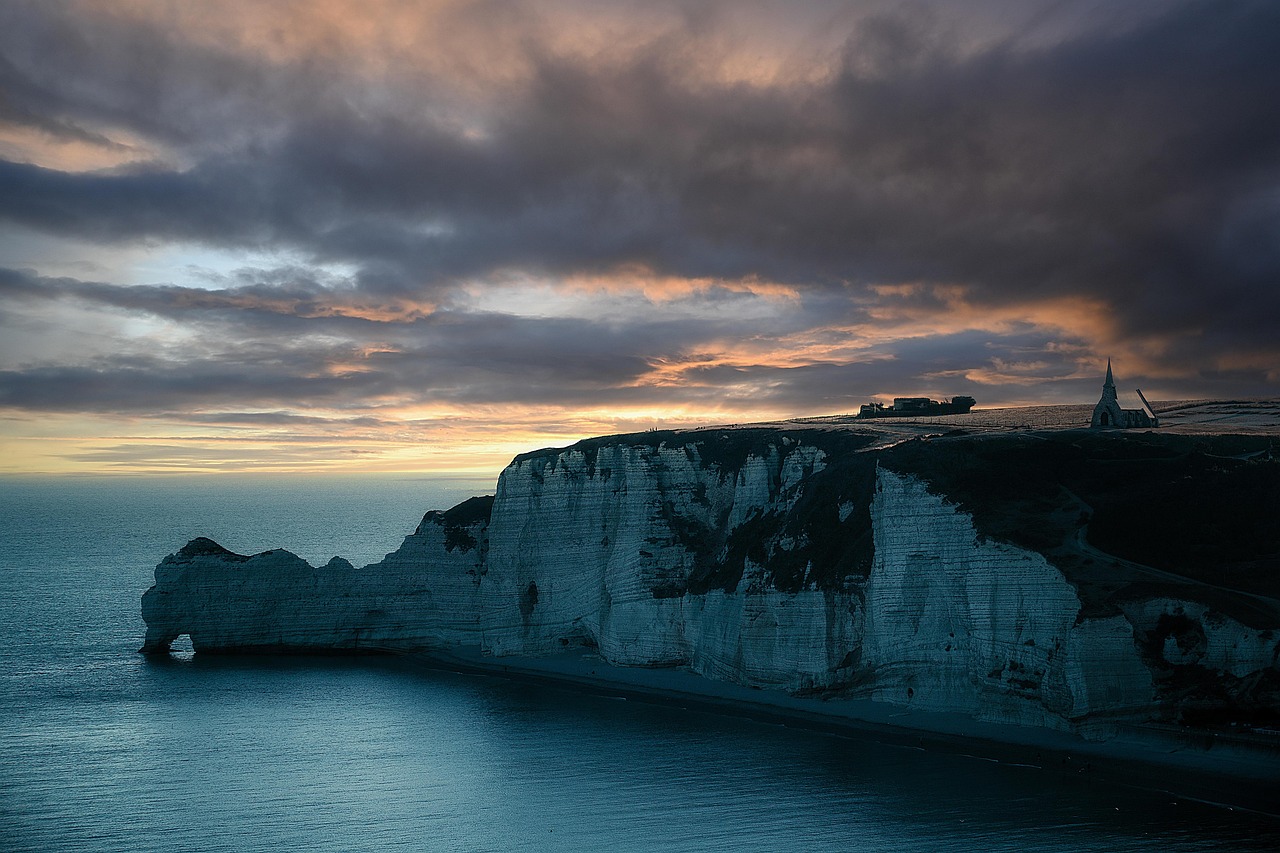
Étretat sunsets are a show. On clear or partly cloudy evenings, the cliffs turn soft gold, then orange, then nearly purple as the sun drops toward the horizon. After dark, on moonless nights, you can sometimes see an impressive spread of stars—especially outside peak season when light pollution is lower.
Some of my most peaceful moments here have been watching the last light fade from the Falaise d’Aval, then walking back into town as the restaurants fill and the smells of garlic and butter drift out.
Best Spots
- Midway up the Falaise d’Aval path, looking back over the arch and needle.
- The grassy area near Chapelle Notre-Dame de la Garde.
- The eastern paths near the golf course (less crowded).
My Tips
- Bring a flashlight or use your phone for the walk back; some paths are unlit.
- In summer, sunsets are late—plan dinner either early or after dusk.
15. Weekly Market & Food Shops
Depending on the season, Étretat hosts small local markets where you can buy cheese, charcuterie, vegetables, and of course apples and cider products. Even when the full market isn’t on, the town has several excellent food shops.
One of my traditions: picking up a wedge of Neufchâtel cheese (the heart-shaped one), a baguette, some cherry tomatoes, and a bottle of cider, then assembling a picnic on the cliffs.
What to Try
- Normandy cheeses: Camembert, Pont-l’Évêque, Livarot, Neufchâtel.
- Apple-based drinks: cider (cidre), pommeau, and Calvados.
- Salted butter (beurre demi-sel) and salted butter caramels.
16. Sea Kayaking & Paddleboarding (In Season)
On calm summer days, you can see sea kayaks and paddleboards gliding along the base of the cliffs. It’s a completely different perspective: you feel tiny under the arches and can peek into sea caves at low tide.
The first time I went out in a kayak here, I was surprised by how quickly the town disappeared behind the rock face. It was just water, chalk, and the sound of waves echoing off the stone.
Practical Info
- Season: Generally late spring to early autumn (check 2026 operators’ dates).
- Book with: Licensed outfitters on or near the seafront; always check safety credentials.
- Skill level: Calm days are fine for beginners with a guide; rough seas are not suitable.
My Tips
- Wear layers that can get wet; the Channel is cold even in summer.
- Listen carefully to tide and cave safety briefings.
17. Paragliding Over the Cliffs
For adventurous travelers, tandem paragliding offers the ultimate bird’s-eye view of Étretat. When conditions are right, colorful wings float along the cliffs like silent birds.
I haven’t yet worked up the nerve to try it myself, but friends who did described the experience as “like hanging in a moving painting.” You see the curves of the coast, the patchwork fields inland, and the tiny town clinging to its bay.
Practical Info
- Book with certified paragliding schools in the region (often based in Normandy coastal towns, with flights over Étretat when weather allows).
- Weather-dependent: strong winds or poor visibility will cancel flights.
18. Festival & Event Venues
Étretat’s small squares and seafront areas sometimes transform into open-air stages or festival grounds, especially in summer. From classical concerts in the church to small outdoor theater inspired by Arsène Lupin, the cultural calendar is richer than you might expect for a town this size.
My Tips
- Check the tourist office and town hall noticeboards for 2026–2027 event posters.
- Arrive early for free events; seating is often limited.
20. Night Strolls Through a Quiet Étretat
When the last buses leave and day-trippers fade away, Étretat exhales. Streetlights reflect on damp cobbles, and you can hear the sea more clearly than the traffic. This is when I love the town the most.
Walking from the church down to the beach after dinner, you’ll pass shuttered shops, late diners lingering over dessert, and the occasional group of friends with a guitar on the pebbles. It feels intimate, almost secret.
My Tips
- Bring a light jacket, even in summer; temperatures drop quickly at night.
- Stay on main, lit streets if you’re alone late at night—Étretat is generally safe, but common-sense precautions apply.
3–5 Day Itineraries for Étretat (With Personal Stories)
Because Étretat is compact, you can see the main sights in a single long day, but that would be like skimming the surface of a book. These itineraries are based on trips I’ve taken over the years, adjusted for 2026, and designed for different lengths of stay:
- 3 days in Étretat: Perfect for a long weekend of highlights and a bit of coastal walking.
- 4 days in Étretat: Adds deeper exploration and a half-day trip.
- 5 days in Étretat: Lets you blend cliffs, culture, food, and real downtime.
Given space, I’ll outline each day in a focused, story-driven way, then you can adjust based on your pace and interests.
3 Day Itinerary for Étretat – A Long Weekend by the Cliffs
Day 1: Arrival, First Cliffs & Seafront Stroll
I like to arrive in Étretat by midday if possible, so the first day feels like a full one rather than a scramble before dinner.
Morning: Arrival & First Glimpse of the Cliffs
If you’re coming from Paris in 2026, you’ll likely take a train to Le Havre or Bréauté-Beuzeville, then a bus to Étretat. The last stretch is my favorite: the road dips through fields and suddenly the sea appears on the horizon.
Drop your bags at your accommodation—even if check-in isn’t until later, most places will hold luggage. Then head straight to the seafront promenade.
That first sight of the Falaise d’Aval and L’Aiguille never gets old. I usually walk right down to the pebbles, pick one up, and just listen to the waves for a few minutes. It’s a small ritual that says, “I’m here.”
Lunch: Simple Normandy Classics
For your first meal, choose something close to the seafront so you don’t waste time hunting. A favorite pattern of mine:
- Start with moules marinières (mussels in white wine, garlic, and cream) or a fish soup.
- Order a glass of dry Normandy cider (cidre brut) instead of wine to lean into local flavors.
Afternoon: Walk Up Falaise d’Aval
With some food in your belly, follow the marked path up the Falaise d’Aval. Take it slowly—the climb is short but steep, and you’ll want to stop often for photos anyway.
At the top, spend time walking along the cliff path. You’ll find several viewpoints where the arch and needle line up differently. On my last early-summer visit, I sat on the grass for nearly an hour watching tiny specks of kayaks move below and kites wheeling in the sky above.
Families usually turn back after the main viewpoint; hikers often continue further west toward more remote headlands. Choose based on your energy and weather.
Late Afternoon: Town Center & Old Market
Back in town, wander through the historic center and Vieux Marché. This is the time to pick up snacks for the next day: fruit, cheese, bread, and maybe a small bottle of cider if you have a fridge.
I like to browse the artisan shops here without rushing—especially the ceramics and local photo prints. Some of my favorite souvenirs from Étretat are small, practical things I use at home: a mug, a tea towel, a tiny framed print of the cliffs in winter.
Evening: Seafront Dinner & Night Walk
For dinner, pick a bistro a block or two back from the seafront to save a few euros and avoid the heaviest crowds. Look for:
- Seafood platters if you like oysters and shellfish.
- Galettes (savory buckwheat crêpes) with cheese, ham, or smoked salmon if you want something more casual.
After dinner, take a slow stroll back down to the beach. The cliffs are floodlit in the evenings, and the air often smells faintly of salt and grilled fish. Sit for a bit on the pebbles, listen to the sea, and let your body adjust to Étretat’s slower rhythm.
Day 2: Eastern Cliffs, Gardens & Arsène Lupin
Morning: Chapelle Notre-Dame de la Garde & Falaise d’Amont
Start your second day with a climb to the Chapelle Notre-Dame de la Garde above the Falaise d’Amont. I like to buy a still-warm baguette and a few pastries when the bakery opens, then carry them up for a “cliff-top breakfast.”
The climb is gentler than the Falaise d’Aval path but still enough to warm you up. At the top, sit near the chapel and enjoy the sweeping view: the curve of the beach, the town’s slate roofs, and the western arch in the distance.
Late Morning: Les Jardins d’Étretat
From the chapel area, it’s a short walk to Les Jardins d’Étretat. Arrive close to opening time to avoid crowds, especially in summer 2026.
Wander slowly through the sculpted greenery, pausing at viewpoints and contemporary sculptures. The garden is not huge, but it’s layered; every time I return I notice new details—a face hidden in foliage, a line of sight I’d previously missed.
Lunch: Picnic or Cliff-View Terrace
If the weather is kind, this is a perfect picnic day. Pick a less windy spot near but not too close to the cliff edge, spread out a light blanket, and assemble your lunch: bread, cheese, fruit, and maybe a slice of local pâté.
On windier days, head back toward town and choose a café with a terrace overlooking the sea, or the golf clubhouse terrace further east for a more relaxed vibe.
Afternoon: Le Clos Arsène Lupin – Maison Maurice Leblanc
In the afternoon, dive into Étretat’s playful literary side at Le Clos Arsène Lupin. The audio tour (available in multiple languages) is theatrical and fun; you move from room to room as if solving a gentle mystery.
On my last visit, a family with two kids was touring at the same time, and watching their expressions as they pieced together clues was half the fun. If you’ve watched the modern “Lupin” series on Netflix, you’ll catch references and see how this old character keeps inspiring new stories.
Late Afternoon: Beach Time & Optional Swim
By now your legs have earned a rest. Head back to the beach for a few hours of downtime. In late spring and summer, if the lifeguards are on duty and the flags indicate safe conditions, you can brave a swim.
I’m honest: the water is cold, but the feeling of emerging from the Channel, skin tingling, and warming up on the pebbles is incredibly refreshing.
Evening: Crepes, Cider & Night Walk
Tonight is a good time to lean into Normandy comfort food: galettes and crêpes. Order a savory galette first (with cheese, ham, egg, or smoked fish), then a sweet crêpe for dessert—try one with salted butter caramel and apple.
Pair it all with a carafe of cider and you’ve got a meal that feels very “Normand” without breaking the bank.
End with another night stroll. Take a slightly different route through town: maybe up toward the church, then down again toward the seafront. Notice how quiet side streets get after 10 pm—a reminder that many locals live regular, early-starting lives here.
Day 3: Coastal Hike or Relaxed Shopping & Departure
Option A (Active): Half-Day Hike on the GR21
If your departure time allows and you’re up for it, spend your last morning on a section of the GR21 coastal path. My favorite manageable route is:
- Étretat to Vattetot-sur-Mer or Yport: 6–9 km, rolling cliffs, stunning sea views.
Start early, carry water, and wear good shoes. You’ll pass farmland, bunkers, and stretches where the only sounds are wind and waves. In 2026, parts of the path may have improved signage thanks to ongoing development—watch for updated markings.
From Yport, you can usually catch a regional bus back to Étretat or Le Havre; check the latest timetables at the tourist office before you set out.
Option B (Relaxed): Shopping, Art & Coffee
If your legs are done with climbing, keep things slow:
- Browse local galleries and pick up a small piece of art.
- Buy edible souvenirs: caramels, cider, biscuits, mustard.
- Sit in a café with a view of the street or sea and just watch Étretat go about its day.
One of my favorite “last-day” cafés sits slightly uphill, with a view down a narrow street toward the cliffs. I’ve written many notes here about trips, letting the coffee grow cold as I remember small details.
Departure
When it’s time to leave, give yourself a final moment on the beach or promenade. I often pick one small pebble (if allowed and in tiny quantity—respect local rules) to keep on my desk as a reminder that the sea is always waiting.
4 Day Itinerary for Étretat – Slower Rhythms & A Short Day Trip
With 4 days in Étretat, you can follow the 3-day itinerary above and add an extra day for deeper exploration or a nearby village.
Day 4: Day Trip to Yport or Fécamp
On my favorite 4-day trip, I spent the extra day in Yport, a smaller, quieter seaside village a short drive or bus ride away. Its beach is also pebbled, but the atmosphere is more local, with fewer souvenir shops and more everyday life.
Alternatively, you can head to Fécamp, a larger town with the impressive Palais Bénédictine distillery and museum dedicated to the famous herbal liqueur.
Option A: Yport – A Quieter Seaside Village
- Morning: Bus or drive to Yport, walk through the village, explore the beach, and enjoy a simple seafood lunch.
- Afternoon: Short coastal walks, photography, and maybe a drink at a terrace watching local life.
Option B: Fécamp – Bénédictine & Harbor
- Visit the Palais Bénédictine: learn about the liqueur’s history, admire the architecture, and taste a sample.
- Walk along the harbor and seafront; enjoy fish and chips or classic French seafood.
Evening: Back to Étretat
Return to Étretat in time for a final dinner and perhaps one last climb up a cliff for sunset if your energy allows.
5 Day Itinerary for Étretat – Deep Dive into Cliffs, Culture & Calm
With 5 days in Étretat, you can truly settle into the town’s rhythm. In addition to the 3–4 day plans, you’ll have another full day to explore hidden lanes, do a longer hike, or simply rest.
Day 5: Free Day – Hidden Lanes, Villas & Your Own Pace
On my longest stay here, the fifth day was the one that made Étretat feel less like a destination and more like a temporary home. I did very little: wandered side streets, read on the beach, and had a long lunch with no agenda.
Ideas for Your Free Day
- Hidden lanes walk: Head uphill from the town center and explore residential streets lined with Belle Époque villas. Go slowly, notice details: wrought-iron balconies, carved doorways, patterned brickwork.
- Gallery hopping: Spend a couple of hours visiting art galleries and small studios, talking with artists where possible.
- Extended hike: Tackle a longer GR21 segment in the opposite direction of your previous hike.
- Absolute rest: Read, nap, and enjoy long café sessions. Sometimes the best travel memories happen when nothing “special” is planned.
Farewell Dinner
For your final evening, choose a restaurant you’ve been eyeing all week. Order something you haven’t tried yet: maybe coquilles Saint-Jacques (scallops), sole meunière, or a hearty Norman-style chicken in cream and cider if you’re taking a break from seafood.
Toast Étretat with a glass of Calvados or pommeau and promise yourself you’ll be back.
Neighborhoods & Areas of Étretat
Étretat is small, but it has distinct pockets worth knowing about when choosing where to stay or wander.
Seafront & Promenade
This is the busiest area, with hotels, restaurants, and constant movement in high season. Great if you want to be close to the beach and don’t mind noise; less ideal if you crave quiet nights.
Historic Center & Market Area
Just behind the seafront, the old streets and squares offer a mix of shops, cafés, and small guesthouses. It feels more “village-like” and is my personal favorite area to stay: central yet slightly calmer than the front line.
Upper Residential Streets & Villas
Climbing inland, you’ll find residential lanes and villas. Many have partial sea views and gardens. It’s quieter here, and at night you’ll mostly hear the wind and occasional distant waves.
Clifftop Areas (East & West)
Accommodation is limited directly on the cliffs, but if you find a guesthouse or small hotel up here, you’ll trade a bit of convenience for dramatic views. You’ll also be more dependent on a car or good legs for frequent uphill walks.
Local Food & Drink in Étretat
Normandy’s cuisine is comfort food for people who walk in wind and rain: rich, creamy, buttery, and apple-scented. In Étretat, the sea adds a briny note. Here are the local foods and drinks you shouldn’t miss.
Seafood Specialties
- Moules marinières: Mussels in a broth of white wine, onions, garlic, and cream. Dip your fries in the sauce.
- Coquilles Saint-Jacques: Scallops, often served in a gratin with cream and cheese. Seasonal; best in colder months.
- Fish of the day: Often cod, sole, or sea bass, simply grilled or pan-fried with butter and lemon.
- Seafood platters: Oysters, whelks, prawns, crab—great for sharing.
Normandy Comfort Dishes
- Galettes & crêpes: Buckwheat for savory, wheat for sweet. Try one with Camembert and ham, then one with apples and salted caramel.
- Chicken in cider & cream: A classic, usually served with potatoes.
- Tarte aux pommes: Simple apple tart, sometimes with Calvados.
Drinks: Cider, Pommeau & Calvados
- Cidre brut: Dry cider, lightly sparkling, often served in bowls or small glasses.
- Pommeau: A mix of apple juice and Calvados; sweet, served as an aperitif.
- Calvados: Apple brandy; sip slowly after dinner.
Saving Money on Food
- Eat your main meal at lunch when fixed-price menus are cheaper, then have lighter food (galettes, picnic) at night.
- Shop at the market and food shops for picnic supplies; cliff-top picnics are a highlight and cost-effective.
- Avoid the most obvious seafront tourist traps—walk one or two streets inland for better value.
Nightlife, Culture & Entertainment in Étretat
Étretat is not a clubbing destination, and that’s part of its charm. Even in summer, nightlife is more about lingering meals, wine bars, and quiet conversations than loud music.
Evening Atmosphere
- Seafront bars: Ideal for a drink at sunset, watching the cliffs glow.
- Wine & cider bars: Some offer tastings of Normandy ciders and Calvados.
- Cafés: Stay open late enough for a post-dinner coffee or digestif.
Cultural Experiences
- Concerts or recitals at Église Notre-Dame (check local listings).
- Outdoor performances and small festivals on the seafront in peak season.
- Occasional Arsène Lupin-themed events, especially if new adaptations boost interest.
Family-Friendly Evenings
- Evening walks on the promenade and beach pebble-skipping contests.
- Ice cream or crêpes as a nightly ritual.
- Early dinners; many restaurants welcome children, but very late eating is less common with locals.
What’s New in 2026 & Upcoming Events 2026–2027
While exact dates can shift each year, here are types of events and trends to look for in Étretat’s 2026–2027 travel scene:
- Summer cultural festivals: Expect a mix of music, street performances, and art installations, often tied to the town’s artistic heritage.
- Guided walks & nature events: Growing focus on sustainable tourism may mean more guided hikes and educational walks about cliff erosion and coastal ecosystems.
- Arsène Lupin-themed happenings: If the character continues to be popular globally, you may see more Lupin nights, treasure hunts, or readings.
- GR21 promotions: Normandy has been actively promoting the GR21; in 2026, watch for special hiking events or group walks along sections near Étretat.
Before your trip, check:
- The official Étretat tourist office website.
- Local social media pages (often updated more frequently than official sites).
- Posters on noticeboards around the town center once you arrive.
Day Trips & Nearby Attractions from Étretat
Étretat makes a good base for exploring parts of the Alabaster Coast and inland Normandy.
Yport
A small village with a pebbled beach, colorful boats, and a more local feel than Étretat. Great for a half-day of wandering and lunch.
Fécamp
A larger town with a busy harbor, Palais Bénédictine, and longer promenades. Easy bus connection from Étretat (check 2026 schedules).
Le Havre
A UNESCO-listed city rebuilt in concrete after WWII, with striking modernist architecture and museums. Contrasts sharply with Étretat’s quaintness.
Honfleur (Longer Day Trip)
Further afield, Honfleur’s picturesque old harbor and half-timbered houses are a classic Normandy postcard. Best visited if you have a car or are comfortable with multiple bus/train changes.
Cultural Etiquette & Local Customs in Étretat
Normandy is French but with its own coastal character: practical, a bit reserved at first, warm once you’ve broken the ice. Understanding a few customs makes your stay smoother and more respectful.
Greetings & Politeness
- Always greet shopkeepers and staff with a “Bonjour, Madame/Monsieur” when you enter.
- Say “Merci, au revoir” when you leave, even if you didn’t buy anything.
- English is not guaranteed, but many people speak at least a little. Start in French, then politely ask, “Parlez-vous anglais ?”
Restaurant Etiquette
- Table service is slower than in many countries; meals are meant to be enjoyed, not rushed.
- It’s normal to linger after dessert; ask for the bill (“l’addition, s’il vous plaît”) when you’re ready—waiters won’t assume.
- Tip: Service is included, but rounding up or leaving 5–10% for good service is appreciated.
Cliff & Nature Respect
- Stay behind fences and obey signage; cliff edges are dangerous and erode unpredictably.
- Take all your trash with you; wind can carry even small bits over the edge or into the sea.
- Keep noise moderate on cliff paths; many people seek quiet and contemplation there.
Photography
- Ask permission before photographing people closely, especially children.
- In residential lanes, avoid obvious shots into private gardens or windows.
Practical Travel Advice for Étretat (2026)
Getting To Étretat
- From Paris: Train to Le Havre or Bréauté-Beuzeville (2–2.5 hours), then regional bus to Étretat (45–60 minutes).
- By car: About 2.5–3 hours, mostly on good highways, then smaller coastal roads.
Getting Around Étretat
- The town is very walkable; you don’t need a car once you’re here unless you plan multiple day trips.
- Regional buses connect Étretat with Le Havre, Fécamp, and some nearby villages—check updated 2026 timetables.
- Taxis are limited; arrange in advance if you need one early or late.
Car Rental & Driving
- Renting a car gives flexibility for exploring the coast; pick up in Le Havre, Rouen, or Paris.
- Foreign driver’s licenses from many countries are accepted; if you’re from outside the EU, an International Driving Permit (IDP) is often recommended in addition to your license.
- Parking in Étretat can be tight in summer; arrive early or choose accommodation with parking.
Visa Requirements (General)
Étretat is in France, which is part of the Schengen Area. For 2026:
- EU/EEA/Swiss citizens: no visa needed.
- Many other nationalities can visit short-term (up to 90 days in 180) visa-free but may need to complete ETIAS or similar pre-travel authorization once implemented.
- Always check the current French/Schengen visa rules for your passport before booking; they can change.
SIM Cards & Connectivity
- Major French providers (Orange, SFR, Bouygues, Free) offer prepaid SIMs; buy at airports, big city shops, or some supermarkets before arriving.
- Étretat has generally good 4G coverage; 5G is expanding but may be spotty on cliffs.
- Most hotels and many cafés offer Wi-Fi; ask for the code.
Money-Saving Tips
- Visit in shoulder seasons (April–early June, September–October) for lower prices and fewer crowds.
- Book accommodation early for summer 2026–2027; the town is small and fills quickly.
- Use picnics to balance out restaurant meals; markets and food shops are your friends.
- Walk instead of taking taxis; distances are short.
Best Seasons & Weather
- Spring (March–May): Cool to mild, variable weather, flowers in bloom, fewer crowds. Good for hiking and photography.
- Summer (June–August): Warm but rarely hot; busiest season, long days, best for swimming and water activities.
- Autumn (September–November): Beautiful light, fewer visitors, cooler evenings; sea can be rough but dramatic.
- Winter (December–February): Quiet, some closures, stormy seas; magical if you enjoy solitude and don’t mind wind and rain.
Safety Tips
- Respect red flags and lifeguard warnings on the beach; currents and waves are strong.
- Stay away from cliff edges and undercut sections; erosion is ongoing.
- Watch your footing on wet or pebbly paths.
- Crime rates are low, but standard precautions (watch valuables, lock cars) still apply.
Hidden Local Tips
- Wake up early at least once to see the cliffs almost empty—this alone can justify an overnight stay.
- Carry a light scarf or buff; it’s amazing how much warmer your neck feels on windy cliff paths.
- Check tides if you plan any beach or cave exploration; locals treat the tide tables with great respect, and you should, too.
Summary & Final Recommendations
Étretat may be small, but it holds multitudes: towering white cliffs, quiet stone churches, hidden gardens, hearty food, and a history woven with painters and fictional thieves. It’s a place where a 3 day itinerary gives you the highlights, 4 days lets you add nearby villages, and 5 days allows you to exhale and really feel the town.
If you love dramatic landscapes, coastal walks, good food, and small-town evenings, Étretat deserves a spot high on your list.
Best Time to Visit Étretat
- Best overall: Late April–June and September–early October for balance of weather, daylight, and crowds.
- For swimming & water sports: July–August.
- For quiet reflection & storms: Late autumn and winter, with a good coat and flexible plans.
However long you stay—3, 4, or 5 days in Étretat—give yourself enough time not just to see the arches, but to sit, listen to the waves, and let the place work its slower magic. That’s when Étretat stops being a postcard and becomes a memory that pulls you back.