Why Visit Haut-Koenigsbourg Castle in 2026
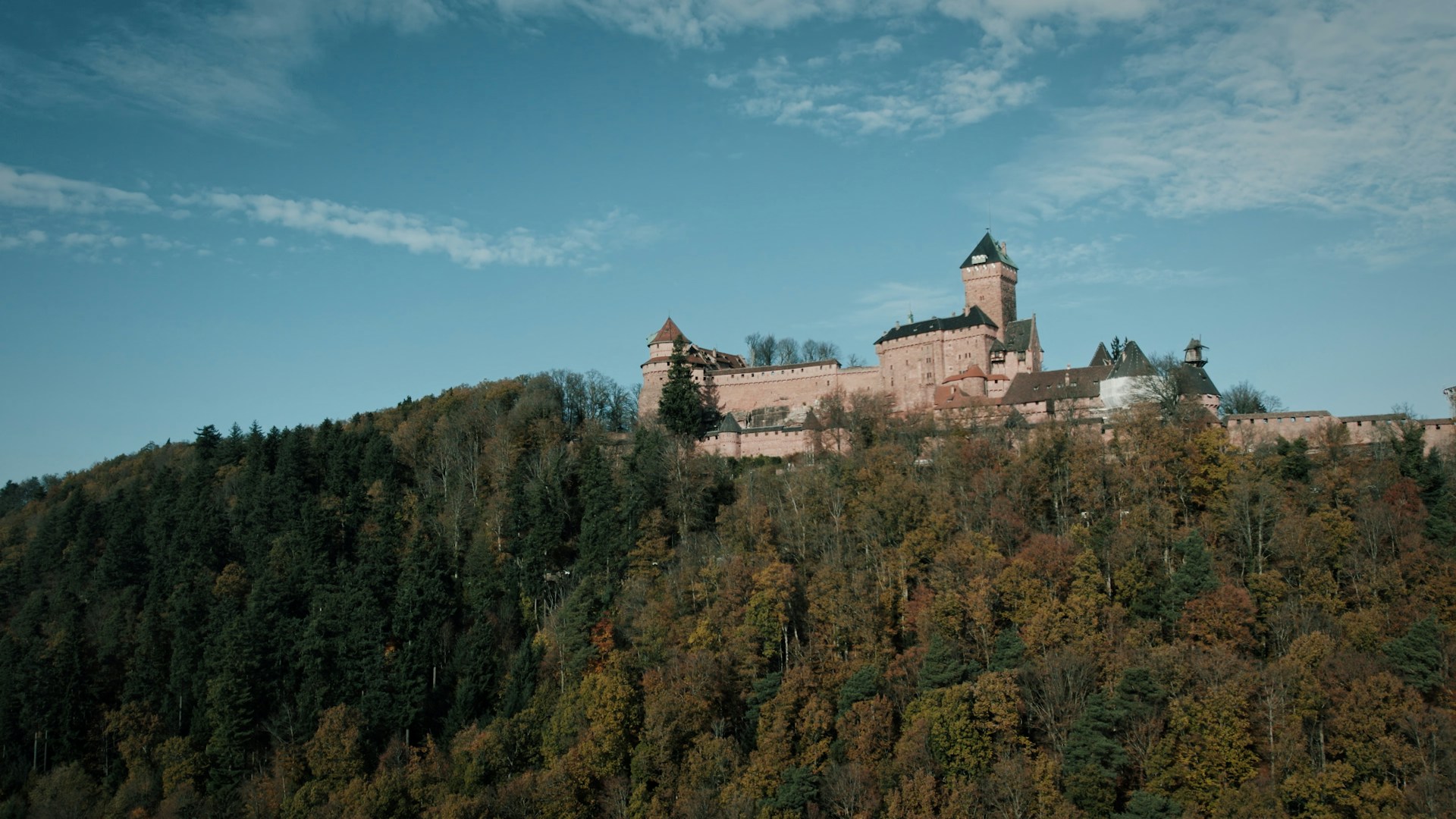
Perched at 757 meters on a rocky spur above the Alsatian plain, Haut-Koenigsbourg Castle looks exactly like the kind of fortress you’d have drawn as a child – red sandstone walls, spiky towers, a drawbridge, and a hawk’s-eye view over vineyards and half-timbered villages. But it’s not just postcard-pretty. It’s a place where European history, Alsatian culture, and the romance of the Rhine Valley collide.
Every time I return – most recently in spring 2026, on a hazy morning after rain – I’m struck by how immersive the experience is. The approach road winds up through dark forest, the castle suddenly appears through the trees, and the air turns cooler and sharper. Inside, you’re moving through centuries: medieval fortifications, Renaissance interiors, and the controversial but fascinating early-20th-century restoration ordered by Kaiser Wilhelm II.
You should seriously consider adding Haut-Koenigsbourg Castle to your 2026 France itinerary if you:
- Love cinematic castles with sweeping views and well-preserved interiors.
- Want a manageable day trip with rich history, especially if you’re based in Strasbourg, Colmar, or the Wine Route.
- Are traveling with family and need something that will thrill kids and still be meaningful for adults.
- Enjoy combining cultural visits with wine, food, and atmospheric Alsatian villages.
- Are interested in Central European history, from the Middle Ages to World War I.
In 2026–2027, the castle is also leaning more into cultural programming: themed night visits, living-history weekends, and special exhibitions that make repeat visits genuinely rewarding. This guide is written as a long-form, on-the-ground companion – not just a checklist of things to do in Haut-Koenigsbourg Castle, but a way to experience it deeply, whether you have 1, 2, or 3 days.
Table of Contents
- Why Visit Haut-Koenigsbourg Castle
- The Haut-Koenigsbourg Experience: What It’s Really Like
- Main Sections, Viewpoints, and Adjacent Sites
- 1. The Forest Approach & Main Entrance
- 2. Outer Fortifications & Ramparts Walk
- 3. Lower Bailey & Service Courtyards
- 4. Armoury, Weapons, and Military Heart
- 5. Residential Wing & Kaiser’s Apartments
- 6. The Keep, Towers & Best Panoramic Viewpoints
- 7. Chapel & Inner Courtyard
- 8. Forest Trails, Ruins & Nearby Lookouts
- Itineraries: 1–3 Days Around Haut-Koenigsbourg Castle
- Where to Eat and Drink Near Haut-Koenigsbourg Castle
- Where to Stay Nearby
- Haut-Koenigsbourg Castle After Dark & Off-Hours
- Cultural Etiquette & Local Customs
- Events & What’s New in 2026–2027
- Day Trips & Nearby Attractions
- Practical Tips & Travel Advice
- Tickets, Opening Hours & On-Site Logistics
- Best Time to Visit Haut-Koenigsbourg Castle
- Final Summary & Key Takeaways
The Haut-Koenigsbourg Experience: What It’s Really Like
My most recent visit was in late March 2026, when the last snow was still clinging to the forest shadows. I arrived just as the gates opened, and for almost 30 minutes, the upper ramparts were mine alone. The feeling is hard to overstate: you’re standing where medieval sentries once scanned for enemies, yet below you lies a peaceful patchwork of vineyards, villages, and, on a clear day, the Black Forest and sometimes even the Alps.
Haut-Koenigsbourg is not a ruin; it’s a fully reconstructed fortress. Purists sometimes bristle at the fact that Kaiser Wilhelm II restored it between 1900 and 1908, but the result is an extraordinarily coherent glimpse into what a late-medieval fortified castle might have looked and felt like. There are traps for invaders, murder holes, winding staircases, a drawbridge, and a cannon deck. Inside, richly furnished rooms, tiled stoves, tapestries, and weapon collections create a lived-in atmosphere.
The site is compact enough that you can see the main sections in 2–3 hours, but layered enough to reward a full day if you take your time, walk the surrounding trails, and combine the visit with nearby villages on the Alsace Wine Route. Think of this travel guide as your expanded notebook from someone who’s walked those ramparts many times, often with a baguette and Munster cheese in the backpack.
Main Sections, Viewpoints & Adjacent Sites
To make this travel guide for Haut-Koenigsbourg Castle as practical as possible, I’ll walk you through the eight main zones that shape most visits. These are the must-see attractions in and around the castle, the places where I recommend slowing down, noticing details, and sometimes ignoring the crowd flow altogether.
1. The Forest Approach & Main Entrance
Your experience starts before you even see a single stone of the castle. The winding road up from Saint-Hippolyte, Orschwiller, or Kintzheim threads through dense Vosges forest, the trees closing in as you gain altitude. When I’m not in a hurry, I like to park at one of the lower lots and walk the last stretch – about 20–30 minutes on a forest path that zigzags up through beech and fir. In spring, the undergrowth is full of wildflowers; in autumn, the leaves turn copper and gold, making it one of the most beautiful climbs in Alsace.
Walking up, you get a sense of why the Hohenstaufen dynasty built a fortress here in the 12th century: the rock is defensible, the cliffs steep, and the surrounding forest perfect for both hunting and hiding. The name “Koenigsburg” literally means “King’s Castle.”
As you approach the entrance, the first thing you’ll see is the lower gate and drawbridge, framed by thick walls of pink sandstone. The contrast between the dark forest and the warm stone is striking, especially in late afternoon light. If you’re here with children, this is where their eyes usually widen – it looks like every movie castle rolled into one.
Practical tip from repeated visits: arrive either right at opening or around 2 hours before closing. In peak season (July–August, and weekends from April to October), bus tours tend to clog the entrance from about 10:30 to 15:00. The earlier and later slots feel more intimate, and you’ll waste less time in queues.
Before crossing the drawbridge, I always pause to look back at the forest and the road curled below; it’s a great “before and after” moment to frame your visit and one of the best places to sense the castle’s isolation.
2. Outer Fortifications & Ramparts Walk
Once you’re inside the outer gate, you’re in the belly of a defensive machine. The outer fortifications of Haut-Koenigsbourg – bastions, curtain walls, arrow slits, and cannon platforms – tell the story of how warfare evolved from the bow to gunpowder.
Historically, the castle was destroyed more than once, most notably during the Thirty Years’ War in 1633, when Swedish forces burned it. It lay in ruins for two centuries until Kaiser Wilhelm II restored it as a symbol of his power and of Germanic history. The reconstructed bastions show off that early-20th-century vision of the late Middle Ages, with a few romantic flourishes.
The ramparts walk is one of the absolute best places to visit in Haut-Koenigsbourg Castle for views. From the cannon terrace, the panorama opens over the Rhine plain – the checkerboard of vineyards, the line of the Rhine itself, and the dark ridge of the Black Forest in Germany. On very clear winter days, I’ve seen the faint outline of the Swiss Alps. It’s windier here than you’d think, so even in summer, a light layer is wise.
What to look for:
- The angled bastions designed to deflect cannon fire – a Renaissance adaptation of a medieval castle.
- Openings for artillery and older arrow slits – a physical timeline of military technology.
- Carved stone details, including heraldic shields and gargoyles that are easy to miss if you rush.
If you’re doing a 1 day itinerary for Haut-Koenigsbourg Castle, don’t skim this area: I usually spend 30–45 minutes here alone, walking slowly, letting families move ahead, and photographing the changing light over the plain. It’s also one of the most romantic spots if you’re traveling as a couple – lean against the warm stone late in the day, and you’ll understand why so many proposals happen up here.
3. Lower Bailey & Service Courtyards
Moving inward, you pass through additional gates and find yourself in the lower bailey: a working zone in medieval times, and one of my favorite places to imagine the castle as a living organism. This is where animals were kept, supplies were stored, and everyday work happened.
On my autumn 2025 visit, a light drizzle turned the sandstone almost red-brown and brought out the smell of wet wood. Standing in the courtyard, I could almost hear the clatter of hooves and the grind of wagon wheels. Today, you’ll find interpretive panels, a few reconstructed outbuildings, and often school groups clustered around guides.
For families, this is an excellent area to slow down and explain how a castle functioned beyond battles and princes: where did food come from, how was water stored, how were animals housed? Look for the cistern systems and the steep roofs designed to shed snow.
If you’re short on time, you can pass through this area in about 15 minutes, but I recommend at least 30 to really absorb the atmosphere, especially if you’re following a 2 day itinerary for Haut-Koenigsbourg Castle and can afford to linger.
4. Armoury, Weapons, and the Military Heart
The armoury is where Haut-Koenigsbourg becomes a magnet for anyone who ever swung a toy sword as a child. The rooms are dimly lit, lined with halberds, swords, crossbows, suits of armor, and early firearms.
Historically, the castle was always more of a fortified residence than a front-line fortress, but it was positioned to control the strategic routes between the Lorraine plateau and Alsace, including vital wine and grain routes. The weapon collections reflect different periods of that defensive role.
Personally, I love slipping into a corner and watching visitors’ expressions as they realize the scale and weight of the weapons. On one visit in 2024, a guide let us handle a replica sword outside; the surprise at how heavy it was made the static displays far more real.
What to look for:
- The evolution from crossbows to arquebuses and cannons – a key reason castles like this became less defensible.
- Decorative armor details – etchings and engravings that show armor as status symbol as much as protection.
- Strategic arrow slits looking onto approach routes; imagine trying to hit a moving target from here in a storm.
This section is particularly engaging for older kids and teens; it’s also a good place to duck indoors if the weather turns. Plan 20–30 minutes here on a 1 day itinerary, more if you’re truly into military history.
5. Residential Wing & Kaiser’s Apartments
The residential wing is where Haut-Koenigsbourg becomes less fortress, more palace. Furnished rooms – some medieval in style, others reflecting early-20th-century romantic historicism – offer a window into how rulers wanted to be seen.
When Kaiser Wilhelm II took over the ruins after Alsace was annexed by the German Empire, he commissioned architect Bodo Ebhardt to restore the castle as a showpiece of Hohenzollern power and Germanic heritage. Some reconstructions are speculative; others are based on archaeological evidence. The result is a kind of “idealized” medieval castle with working fireplaces, carved wooden ceilings, and a banquet hall that feels ready for a feast.
On my 2026 visit, I lingered in the great hall while a school group passed through. Their guide asked them to imagine a winter night here: torches flickering, dogs under the tables, the smell of roasted game, and drafts sneaking in around the windows. That mental image is what you should carry as you walk through – don’t just look at furniture, try to picture sound, smell, and temperature.
Highlights:
- The great hall with its timbered ceiling and large fireplace – one of the most photogenic interiors (but avoid blocking traffic).
- Smaller chambers with tiled stoves (kachelofen), typical of upper Rhine region comfort in colder months.
- Decorative details with imperial eagles and heraldic motifs that reflect Wilhelm II’s political agenda.
This part of the castle is perfect for a slower, more reflective visit. If you’re following a 3 day itinerary for Haut-Koenigsbourg Castle, consider doing a guided tour one day and a self-guided wander another – you’ll notice completely different details when you’re not trying to keep up with a group.
6. The Keep, Towers & Best Panoramic Viewpoints
For many visitors, this is the emotional high point – literally and figuratively. The keep and towers are where the castle’s strategic location hits home. Narrow staircases spiral upward inside thick walls, emerging onto terraces with dizzying drops on one side and apparently endless horizons on the other.
Historically, the keep served as the last line of defense and as a status symbol. Its height made it a lookout, a signal point, and a visible statement of power over the surrounding lands. In storms, it must have been terrifying; in peace, it was a place to survey your domain.
I still remember a visit in January 2022, standing on a tower platform as snow flurries whipped across the plain. The vineyards below were a muted brown, the villages clumped like islands, and the Rhine a ghostly line in the distance. In summer 2026, the same spot was all bright greens and golds, with paragliders sometimes visible over the Vosges.
Tips:
- The stairs can be narrow and uneven – wear proper shoes, and if you have mobility issues or vertigo, take your time or skip certain sections.
- Wind is stronger up here than at the entrance; in shoulder seasons, bring a windproof layer.
- Photographers: golden hour (about an hour before sunset) is magical. The castle’s sandstone glows, and the plain below softens into layers of light.
For a 1 day itinerary for Haut-Koenigsbourg Castle, allocate at least 30–40 minutes for the towers and platforms, more if you love photography. These are also wonderful romantic spots – I’ve seen couples quietly sharing a bottle of Crémant d’Alsace (discreetly) against the parapet. Just remember: safety first, and no sitting on walls.
7. Chapel & Inner Courtyard
Tucked within the inner complex, the chapel is one of the most intimate spaces in Haut-Koenigsbourg Castle. Modest in size, with simple stained glass and pointed arches, it’s a reminder that medieval and early-modern life was structured around faith as much as war and politics.
During a quiet weekday visit in May 2023, I sat on one of the wooden benches while a soft rain pattered outside. The people around me fell silent almost instinctively. You don’t need to be religious to feel the weight of time here – hundreds of years of prayers, oaths, and whispered deals.
The adjoining inner courtyard is another favorite. Bounded by galleries and timbered upper levels, it feels almost like a stage set, especially when occasional medieval-themed events or demonstrations are held here. Look up to see how differently the castle’s residential and defensive elements were organized.
If you’re visiting with kids, this is a good place to regroup, drink some water, and let them count windows or spot carved faces in the stone. For couples, it can be surprisingly romantic when less crowded – especially early or late in the day.
8. Forest Trails, Ruins & Nearby Lookouts
One of the most overlooked parts of a visit to Haut-Koenigsbourg is what lies just beyond the ticketed area. The surrounding forest is threaded with well-marked trails, some leading to smaller ruins, rock outcrops, and little-used viewpoints that locals favor.
My favorite loop starts from the upper parking area, skirts the castle, then drops into the woods toward the Saint-Hippolyte side before looping back. In about 1.5–2 hours, you get shifting perspectives on the castle silhouetted against the sky, see how it clings to its rocky pedestal, and experience the Vosges forest away from the crowds.
A few of the best unofficial viewpoints (ask locally or consult current trail maps, as signage can change) give that classic wide shot of the castle floating above the trees. These are the places where local photographers come at dawn or dusk, especially in autumn when low fog drapes the plain and the castle emerges above a white sea.
For adventurous travelers and photographers, including at least one forest walk is a must-do among the things to do in Haut-Koenigsbourg Castle area. For families, choose a shorter, clearly marked loop; kids tend to love “hunting” for the next trail blaze.
1–3 Day Itineraries for Haut-Koenigsbourg Castle
Most people see Haut-Koenigsbourg in a rushed half-day. That’s enough to tick it off a list, but it doesn’t do justice to its setting among vineyards, forests, and storybook villages. Based on repeated visits, here’s how I’d structure 1, 2, or 3 days in and around the castle.
1 Day Itinerary for Haut-Koenigsbourg Castle
If you have just 1 day in Haut-Koenigsbourg Castle area, you can still craft a rich, varied experience: a deep dive into the fortress itself, a taste of local wine and food, and a sunset moment that stays with you long after you’ve left Alsace.
Morning: Early Arrival & Castle Immersion
I like to arrive about 15–20 minutes before opening time. In 2026, that usually means 9:00 (check up-to-date Haut-Koenigsbourg Castle opening hours just before your trip). The forest parking lots are quiet, birds are loud, and you often hear nothing but the wind.
Walk up from the parking area instead of waiting for a closer spot; it gets you into the right headspace. Once the gates open:
- Head straight for the outer fortifications and ramparts before they fill with tour groups.
- Spend a solid 45–60 minutes just on the views, walking the perimeter, and reading the panels.
- Take your time in the lower bailey, imagining the practical life of the castle.
From my notes during an October 2024 visit: “By 10:00, the first big groups arrived, but because I’d already done the ramparts, I could duck into quieter corners – the armoury and smaller chambers – and then circle back when the flow reversed.”
If you’re the kind of traveler who loves context, consider joining the first guided tour of the day (usually in French, sometimes in German; English audioguides are available). Otherwise, the free brochure and on-site panels are adequate.
Midday: Interiors, Chapel & Keep
Late morning is perfect for the interiors:
- Start with the armoury and military sections, where you can move at your own pace even when it’s busier.
- Continue through the residential rooms; pause in the great hall and in any room with a view over the plain.
- Visit the chapel and inner courtyard – good spots to slow your rhythm as crowds thicken.
- Finish with the keep and towers around or just after lunchtime, when many people are down in the cafés.
I usually spend about 3–4 hours inside, including photo stops and a short snack break. That’s enough to see all the must-see attractions in Haut-Koenigsbourg Castle without feeling rushed.
Lunch: Picnic with a View or Village Restaurant
There is a simple café near the castle, but the food is unremarkable and prices are predictably touristy. My strong recommendation: bring a picnic.
Before driving up to the castle, stop in a village like Saint-Hippolyte or Bergheim and pick up:
- Fresh baguette or pain paysan from a boulangerie.
- A wedge of local Munster or Tomme d’Alsace.
- Some charcuterie – jambon cru, saucisson.
- Fruit (in season, Alsace cherries, plums, or apples are wonderful).
Eat at one of the picnic tables near the parking areas or on a quiet rock along a forest path. On one memorable May 2022 visit, I watched a storm sweep across the plain as I ate, the castle looming behind me, the smell of wet pine in the air. No restaurant can replicate that.
Afternoon: Forest Walk & Wine Route Village
After lunch, dedicate your afternoon to the surrounding landscape:
- Take a 1–2 hour forest loop around the castle, using marked trails (check the map at the parking area).
- Drive down to nearby villages on the Alsace Wine Route: Ribeauvillé, Riquewihr, or Bergheim are all excellent options.
In 2026, Ribeauvillé remains my go-to for a 1 day itinerary for Haut-Koenigsbourg Castle: it’s close, atmospheric, and less overwhelmed than Riquewihr in peak summer. Wander its main street, peek into wine cellars, and taste a Riesling or Pinot Gris. Many domains are family-run; if things aren’t too busy, they’ll happily talk about vintages and the impact of recent hot summers.
Evening: Sunset Viewpoint & Dinner
For sunset, you have two great options:
- Drive to a lower hillside viewpoint where you can see the castle glowing orange against the darkening forest.
- Or, if the castle is offering a special evening opening in 2026 (check the events calendar), book it and enjoy blue-hour views from the ramparts.
For dinner, head to a winstub (traditional Alsatian tavern) in Ribeauvillé or Bergheim. Tarte flambée (flammekueche), baeckeoffe, or a choucroute garnie paired with local wine make for a hearty end to the day. On my last 1-day-style visit in June 2025, I ended with a tarte flambée forestière (with mushrooms and cream) and a glass of Pinot Noir on a terrace in Ribeauvillé as swallows swooped overhead – the perfect bookend to a castle morning.
2 Day Itinerary for Haut-Koenigsbourg Castle
With 2 days in Haut-Koenigsbourg Castle area, you can slow the pace, revisit favorite corners, and explore deeper into the wine villages that spread out beneath the castle. This is my favorite rhythm for couples and families.
Day 1: Deep Dive into the Castle & Forest
Follow the 1 day itinerary for Haut-Koenigsbourg Castle for your first day, but allow more breathing room:
- Spend extra time in the residential wing and chapel, perhaps joining a guided tour.
- Pause on the ramparts to sketch, journal, or simply watch clouds slide across the plain.
- Extend your forest loop to 2–3 hours, bringing a more substantial picnic.
On a two-day visit in September 2023, I dedicated almost an entire afternoon just to wandering the forest trails. I stumbled upon a small rocky outcrop with an unobstructed side view of the castle, utterly alone. I sat there for an hour, reading and listening to woodpeckers. That kind of unhurried moment is what 2 days in Haut-Koenigsbourg Castle area buys you.
Day 2 Morning: Wine Route Villages & Cultural Experiences
Start in one of the nearby villages:
- Bergheim – slightly less famous, beautifully preserved walls, and a slower vibe. Great for morning coffee and a stroll.
- Ribeauvillé – atmospheric, with three ruined hilltop castles above the town if you’re in a hiking mood.
- Riquewihr – very picturesque but busier; best early in the morning.
Wander their cobbled streets, visit a small local museum (like the Alsatian house museums), and step into one or two wine cellars for tastings. In 2026, many domains now offer short, structured tastings in English – check ahead if you have a particular winery in mind.
Cultural experiences in Haut-Koenigsbourg Castle area often revolve around food and wine:
- Look for vendanges (harvest) events in September/October – some villages host small festivals or open days at wineries.
- Try a winstub lunch featuring local specialties like presskopf (head cheese), tarte à l’oignon, or coq au Riesling.
Day 2 Afternoon: Return to the Castle at a Different Time of Day
One of my favorite travel tips for Haut-Koenigsbourg Castle is to visit twice at different times of day. With a 2 day itinerary for Haut-Koenigsbourg Castle, you can:
- Visit in the morning on Day 1, then come back for late afternoon on Day 2 (or vice versa).
- Use the second visit to focus on what you loved most: maybe just the ramparts and towers, or the forest paths and viewpoints.
In July 2022, I did exactly this. The first visit was mid-morning, bright and crowded; the second was a near-deserted late afternoon, with long shadows and cooler air. The castle felt like two different places.
If there are any special temporary exhibitions or themed tours in 2026 (check the official site), slot them into this second visit.
Evenings: Slow Dinners & Night Walks
Evenings on a 2 day itinerary are about savoring:
- Choose a different village each night for dinner.
- After dinner, take a short walk among vineyards at dusk; the castle often glows faintly above, especially in summer when the sky stays light late.
One of my most quietly magical memories is from an evening walk above Saint-Hippolyte: the sound of crickets, the smell of warm earth, and the silhouette of Haut-Koenigsbourg Castle against a slowly darkening sky. Nothing dramatic happened. It was just deeply peaceful.
3 Day Itinerary for Haut-Koenigsbourg Castle
With 3 days in Haut-Koenigsbourg Castle area, you can weave the fortress into a wider exploration of northern Alsace and the Vosges foothills. This is ideal for travelers who like to mix culture, light adventure, and gastronomy.
Day 1: Classic Castle + Village Combination
Follow the 1 day itinerary for Haut-Koenigsbourg Castle as your foundation: early castle visit, picnic, forest loop, and one wine village. Don’t rush. The goal is to get a baseline feel for the site and its surroundings.
Day 2: Hiking & Ruins Above Ribeauvillé or Kintzheim
Use Day 2 to explore the broader fortress landscape of the region:
- Ribeauvillé’s Three Castles (Saint-Ulrich, Girsberg, Haut-Ribeaupierre) – a moderate hike with stunning views and atmospheric ruins.
- Château de Kintzheim – smaller and ruined, now home to a birds-of-prey show (La Volerie des Aigles), which is hugely popular with families.
On a three-day stay in May 2024, I hiked up from Ribeauvillé to the three castles, then looked back toward Haut-Koenigsbourg, visible in the distance like a sentry watching over the whole valley. It gave me a new appreciation for how this region bristled with fortifications in the Middle Ages.
Pack water, snacks, and good shoes. Many of these trails are suitable for active families and couples who enjoy mild adventure. They are some of the best places to visit in Haut-Koenigsbourg Castle area if you want to understand the broader strategic landscape.
Day 3: Colmar, Museums & Optional Second Castle Visit
Dedicate your third day to Colmar (about 30–45 minutes’ drive from the castle area). Its old town, canals, and museums (especially the Unterlinden Museum with Grünewald’s Isenheim Altarpiece) provide a different kind of cultural hit.
If you’re a true castle enthusiast or photographer, you can:
- Start Day 3 with a dawn or blue-hour visit to a viewpoint overlooking Haut-Koenigsbourg.
- Or end the day with a last swing past the castle, catching it in different light.
On my last 3 day itinerary for Haut-Koenigsbourg Castle area in 2025, I did exactly this: a pre-breakfast drive to a hill opposite the castle, tripod set up, watching the first pastel light hit the walls. Then I drove down for coffee in Bergheim and continued to Colmar. It felt like saying goodbye properly.
Eating & Drinking Around Haut-Koenigsbourg Castle
The immediate vicinity of the castle has basic food options – a snack bar, simple café – but they’re functional rather than memorable. If you care about what you eat (and in Alsace, you should), look slightly further afield.
Closest Worthwhile Restaurants (Avoiding the Tourist Trap Radius)
Without naming specific establishments (which change hands and quality over time), here’s where I consistently eat:
- Saint-Hippolyte – A short drive down from the castle, with several solid winstubs and small hotels with restaurants. Good for regional classics and hearty lunches.
- Bergheim – My favorite for slightly more refined but still traditional Alsatian cuisine, often with better value than the most famous villages.
- Ribeauvillé – Wider range, from rustic winstubs to modern bistros with lighter takes on Alsatian dishes.
What to Eat
Alsace is where French and German culinary traditions intertwine. When visiting Haut-Koenigsbourg Castle, I always try to include:
- Tarte flambée (flammekueche) – Thin dough with crème fraîche, onions, and lardons, blistered in a wood-fired oven.
- Baeckeoffe – Slow-cooked casserole of meats, potatoes, and onions in white wine; perfect in cooler months.
- Choucroute garnie – Sauerkraut with an assortment of sausages and smoked meats.
- Kugelhopf – A yeasted cake, best in the morning with coffee.
What to Drink
The vineyards you see from the castle make some of Europe’s finest whites:
- Riesling – Dry, mineral, perfect with choucroute and fish.
- Gewürztraminer – Aromatic and spicy, great with Munster cheese.
- Crémant d’Alsace – Local sparkling wine; my go-to aperitif after a long hike.
What to Bring with You to the Castle
Based on many visits:
- A reusable water bottle (there are limited fountains; buy water in a village beforehand if needed).
- A light snack or picnic; there are scenic spots just outside the main ticketed area.
- A small bag for any trash – bins are present but not everywhere.
Where to Stay Near Haut-Koenigsbourg Castle
Where you base yourself shapes your experience. For a focused stay around Haut-Koenigsbourg, I recommend:
- Saint-Hippolyte / Orschwiller – Closest to the castle; small, quiet villages with a handful of hotels and guesthouses. Ideal if your priority is being up at the castle early or late.
- Ribeauvillé – Livelier, with more dining options and charm; a good all-round base, especially for 2–3 day itineraries.
- Bergheim – A personal favorite: walled, atmospheric, and slightly less on the tour-bus circuit.
- Colmar – Better if you want a larger town with museums and train connections, treating the castle as a day trip.
I usually choose a small family-run guesthouse in a wine village. Breakfasts are generous, with local jams and cheeses, and you can often walk to vineyards at dusk after dinner. In 2026, more places than ever offer EV charging and bike rentals, which is a nice plus for sustainable travel.
Haut-Koenigsbourg Castle After Dark & Off-Hours
The castle’s personality changes dramatically with the light. Some of my most vivid memories come from off-hours – dawn, sunset, and occasional night events.
Sunrise & Dawn
The castle itself usually isn’t open at dawn, but nearby viewpoints and forest paths are. On a cold February morning in 2021, I watched the sky lighten from a forest clearing opposite the castle. The walls turned from gray to rose, and a sea of fog covered the plain. It felt otherworldly.
Golden Hour & Sunset
Golden hour (about an hour before sunset) is the best time for photographers and romantics:
- The red sandstone glows in low light.
- The plains below soften into layers of color; vineyards catch the last rays.
- In summer, swifts and swallows dart around the towers.
If the castle’s opening hours in 2026 align with late sun (they often extend in high season), plan your visit to peak at the ramparts during golden hour.
Evening & Night Events
In recent years, Haut-Koenigsbourg has hosted:
- Night tours with lanterns and costumed guides, focusing on legends, ghosts, and lesser-known stories.
- Sound-and-light shows in the courtyard on select summer nights, projecting historical imagery and animations onto the walls.
For 2026–2027, expect a continuation of these programs, often themed around medieval life or the castle’s 20th-century restoration. Check the official calendar and book in advance; these events can sell out weeks ahead, particularly in July and August.
Cultural Etiquette & Local Customs in the Haut-Koenigsbourg Area
Alsace has its own rhythm – a blend of French and German influences with a strong local identity. Around Haut-Koenigsbourg Castle, most people are used to visitors, but a bit of cultural awareness goes a long way.
- Greetings – A simple “Bonjour” (before 6pm) or “Bonsoir” (after) when entering shops, restaurants, or ticket offices is expected.
- Language – Many locals speak some English, especially in tourism, but starting with French pleasantries is appreciated. Alsatian (a Germanic dialect) is still spoken among locals; hearing it in a winstub is part of the cultural experience.
- In the castle – Keep voices low in the chapel and smaller rooms; don’t touch fragile surfaces or lean over low walls.
- Photography – It’s generally allowed, but avoid flash in interior rooms and be mindful not to block narrow passages with tripods.
- Dining customs – Lunch is typically 12:00–14:00; dinner from 19:00. Don’t expect all-day kitchen service in villages.
- Tipping – Service is included, but rounding up or leaving 5–10% for good service is common and appreciated.
A little patience and courtesy – especially in summer when staff are stretched – will usually be met with warmth. I’ve had countless conversations spark simply from asking a winemaker or restaurateur about their favorite view of the castle.
Events & What’s New in 2026–2027
While specific programming can change, here’s what the 2026 travel scene around Haut-Koenigsbourg Castle is shaping up to include:
- Seasonal Night Tours (2026–2027) – Expanded schedules for summer and autumn, often themed around legends, restoration stories, or astronomy nights on the ramparts.
- Living History Weekends – Re-enactment groups staging medieval crafts, combat demonstrations, and daily-life scenes in the courtyards on select weekends from May to September.
- Exhibitions on Climate & Heritage – The region has been increasingly open about climate impacts on forests and vineyards; expect interpretive displays linking the castle’s history to environmental change.
- Wine & Harvest Festivals (Autumn 2026) – Nearby villages will continue their wine-related festivals, often including grape harvest parades, street music, and open cellars.
If you’re planning precisely, check the castle’s official agenda 2–3 months ahead; major night events and some guided tours now use timed-ticketing.
Day Trips & Nearby Attractions from Haut-Koenigsbourg Castle
Haut-Koenigsbourg is a superb hub for short explorations. Within 30–60 minutes, you can reach:
- Ribeauvillé & the Three Castles – Hike, history, and wine all in one.
- Château du Hohlandsbourg – Another restored fortress with panoramic views, closer to Colmar.
- Mont Sainte-Odile – Spiritual site and monastery with vast views, excellent for a contemplative half-day.
- Colmar – Museums, canals, and colorful half-timbered houses; easy to pair with one of your castle days.
- Strasbourg – About an hour away; a logical bookend to a trip that includes Haut-Koenigsbourg Castle.
Public transport is limited directly to the castle, but combining regional trains (to Sélestat or Colmar) with buses or taxis makes most of these day trips feasible without a car if you plan ahead.
Practical Tips & Travel Advice for Haut-Koenigsbourg Castle
How to Get There Without Wasting Time
By Car: The easiest and most flexible option.
- From Strasbourg: about 1 hour via A35, exit at Sélestat, then follow signs.
- From Colmar: about 35–45 minutes north on A35.
- Parking: Several lots below the castle; arrive early in summer to avoid overflow.
By Public Transport:
- Train to Sélestat from Strasbourg or Colmar.
- From Sélestat, seasonal bus services or shuttles to the castle (check 2026 schedules; they change annually).
- Alternatively, taxi or rideshare from Sélestat station; book in advance on busy days.
Saving Money
- Bring your own picnic instead of eating at the top.
- Look for combined tickets or regional passes that include multiple sites (castles, museums) if you’re exploring Alsace widely.
- Travel slightly off-peak (May–June, September–early October) for lower accommodation costs.
SIM Cards & Connectivity
In 2026, France offers:
- Prepaid SIMs from major carriers (Orange, SFR, Bouygues) available at airports, big supermarkets, and phone shops.
- EU residents can usually roam without extra charges.
- Signal at the castle is generally good but can be patchy on some forest trails.
Driving & Visa Requirements
Visas: France is in the Schengen Area. Most visitors from the EU, UK, US, Canada, Australia, and many others can enter visa-free for short stays; always confirm current rules, especially as ETIAS and related systems evolve toward 2026–2027.
Driving:
- EU/EEA licenses are valid.
- Many other foreign licenses are accepted; an International Driving Permit is recommended if your license isn’t in Latin script.
- Roads to the castle are paved but winding; drive cautiously in winter or wet conditions.
Public Transport vs Car Rental
Car rental gives maximum flexibility for sunrise/sunset visits, forest hikes, and spontaneous village stops. Public transport works if you base in Colmar or Strasbourg and plan your day trips carefully. In 2026, more organized tours from these cities include Haut-Koenigsbourg Castle as a highlight – a decent option if you don’t want to drive.
Seasonal Considerations
The best time to visit Haut-Koenigsbourg Castle depends on your priorities:
- Spring (April–June) – Lush forests, moderate temperatures, wildflowers; ideal for hiking and photography.
- Summer (July–August) – Long days, more events, and night visits; also the busiest and hottest.
- Autumn (September–November) – Vineyards blazing with color, wine harvest festivals; my personal favorite season.
- Winter (December–March) – Quiet, atmospheric, occasional snow; some facilities and events limited, shorter opening hours.
Tickets, Opening Hours & On-Site Logistics
Ticket Types & Timed Entry
As of 2026, Haut-Koenigsbourg Castle typically offers:
- Standard adult tickets.
- Reduced tickets (youth, students, seniors, groups).
- Family passes.
- Occasional combined tickets with other sites or special exhibitions.
Timed entry is sometimes used during peak seasons or for special events and night visits. Reservations can open several weeks to months in advance; high-season weekends may sell out their prime slots, so book early if you have limited flexibility.
Opening Hours & Peak Times
Opening hours vary by season (shorter in winter, extended in summer). In general:
- Best times to visit: right at opening or 2 hours before closing.
- Peak hours: roughly 10:30–15:00 in high season, especially on weekends and public holidays.
Dress Code & Behavior Rules
- No strict dress code, but comfortable walking shoes are essential – lots of uneven surfaces and stairs.
- Dress in layers; even in summer, interiors and ramparts can be cooler and windy.
- No climbing or sitting on walls; respect barriers and safety signage.
Photography Restrictions
Photography for personal use is generally allowed throughout the castle, but:
- Avoid flash in interior rooms, especially where indicated.
- Tripods may be restricted in busy areas; check on-site rules if you’re a serious photographer.
- Drones are not allowed around the castle without special authorization.
Accessibility
Haut-Koenigsbourg is a medieval fortress on a rocky spur, and full accessibility is unfortunately impossible. However:
- Some areas near the entrance and courtyards are accessible to visitors with limited mobility.
- Many interior sections and towers require stairs and narrow passages.
- If mobility is a concern, consult the official accessibility information in advance and plan a shorter, tailored visit.
Security & Queues
Bag checks at the entrance are standard but usually quick. To minimize waiting:
- Arrive outside peak hours.
- Buy tickets in advance when possible, especially in summer.
- Travel light; large backpacks may be inconvenient in narrow interiors.
Best Time to Visit Haut-Koenigsbourg Castle
After more than a decade of repeat visits, I’d summarize the best time to visit Haut-Koenigsbourg Castle like this:
- For views & photography: Clear days in spring and autumn, especially at golden hour.
- For cultural experiences: Summer, when events, night visits, and re-enactments are most frequent.
- For peace & atmosphere: Winter weekdays and shoulder-season mornings in April or November.
- For wine & harvest energy: Late September to mid-October, when vineyards are at their most dramatic.
If I had to choose a single ideal window for a first visit in 2026, it would be late September: warm but not hot, vineyard colors just beginning to turn, fewer crowds, and plenty of wine-related festivals in the villages below.
Summary & Final Recommendations
Haut-Koenigsbourg Castle is more than a single attraction; it’s a vantage point on Alsace – physically, historically, and emotionally. From its ramparts, you see the patchwork of vineyards and villages that define the region. Within its walls, you trace the arc from medieval stronghold to romantic restoration.
For a 1 day itinerary for Haut-Koenigsbourg Castle, focus on an early or late castle visit, a forest walk, and one wine village. For a 2 day itinerary, return to the castle at a different time of day and give yourself space for longer hikes and slower meals. With a 3 day itinerary, weave in Colmar, neighboring ruins, and more intimate cultural experiences in the villages.
Whenever you come, come with time. Linger on the ramparts, smell the forest, taste the wines grown on the slopes you see from the towers. Haut-Koenigsbourg Castle rewards those who treat it not as a box to tick, but as a place to inhabit – if only for a day or three.