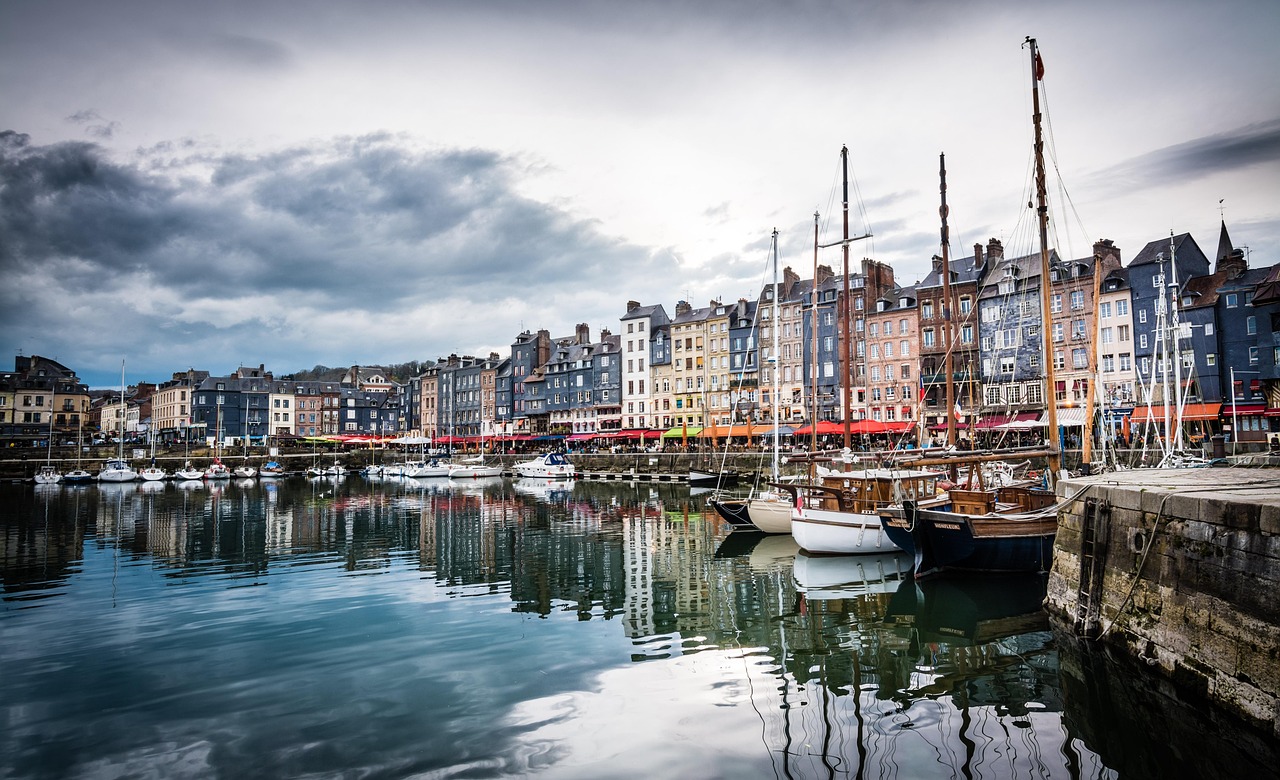
Why Visit Honfleur in 2026
Honfleur is the kind of place that gets under your skin quietly. The first time I stepped onto the cobbled quays of the Vieux Bassin, with its tall, skinny houses reflected in the water and the cries of gulls overhead, I thought, “This is exactly how I imagined old Normandy.” Every time I’ve gone back since, that first impression returns—only deeper.
Honfleur isn’t a big city with skyscrapers; it’s a compact Norman harbor town that somehow manages to be romantic, family-friendly, and pleasantly slow all at once. It’s where impressionist painters once set up their easels, where sailors left for long voyages, and where today you can drift between half-timbered houses, galleries, and creperies in just a few minutes on foot.
In 2026, Honfleur is especially worth visiting. The town is leaning into its artistic heritage with new exhibitions, upgraded harborfront promenades, and more bilingual signage and tours than ever. It’s still authentically French, but easier for visitors to navigate. Whether you’re planning a 3 day itinerary for Honfleur, stretching to 4 days, or indulging in a 5 day itinerary for Honfleur and its surroundings, this small town rewards slow travel and lingering meals.
In this travel guide for Honfleur, I’ll walk you through must-see attractions, hidden gems, local food in Honfleur, and cultural experiences that make the town feel alive rather than staged. I’ll also share personal stories from many visits—like the time I got caught in a sudden sea fog on the jetty or discovered the best tarte tatin in town by complete accident.
Table of Contents
- Quick Overview of Honfleur
- Neighborhoods and Areas to Explore
- Top 20 Must-See Attractions in Honfleur
- Suggested 3–5 Day Itineraries
- Local Food and Drink in Honfleur
- Nightlife, Entertainment & Cultural Experiences
- Best Day Trips from Honfleur
- What’s New & Events in 2026–2027
- Cultural Etiquette & Local Customs in Honfleur
- Practical Travel Advice for Honfleur
- Summary & Best Time to Visit Honfleur
Quick Overview of Honfleur
Honfleur sits on the southern bank of the Seine estuary in Normandy, facing Le Havre across the water and framed by the dramatic sweep of the Pont de Normandie. It’s about 2.5 hours from Paris by car or bus, making it a classic weekend escape for Parisians—and a perfect base if you have 3 days in Honfleur or more to explore the Normandy coast.
- Region: Normandy, Calvados department
- Population: Around 7,500 residents (and many, many visitors in summer)
- Vibe: Artistic harbor town, maritime heritage, slow-paced, atmospheric
- Best for: Couples, families, food lovers, art lovers, photographers, soft adventure travelers
Honfleur is one of the best places to visit in Normandy if you enjoy walking, as the historic center is compact. You’ll spend most of your time between the Vieux Bassin, the old fishermen’s quarter of L’Enclos, and the heights of Côte de Grâce, where the town climbs uphill toward chapels and leafy viewpoints.
Honfleur’s Neighborhoods & Areas to Explore
Vieux Bassin & Harborfront
This is the postcard view: the old harbor ringed by tall, narrow houses with slate roofs and pastel shutters, their reflections rippling in the water. I always stay within a 5–10 minute walk of the Vieux Bassin because it’s where I inevitably start and end my days, whether for a morning coffee or a late-night calvados.
Expect cafés, crêperies, bustling terraces, and street musicians in high season. It’s touristy, yes, but still charming—especially early in the morning or on misty weekdays outside of July–August.
L’Enclos (Old Quarter)
Just behind the harbor, L’Enclos is the historic heart: a maze of narrow lanes, timber-framed houses, and secret courtyards. This is where I like to wander without a map, ducking into galleries and tiny workshops. It feels more local and less polished than the harborfront.
Côte de Grâce & Heights of Honfleur
Climbing up from the town center, Côte de Grâce offers sweeping views over Honfleur, the Seine estuary, and the Pont de Normandie. It’s a lovely residential area of gardens, old estates, and chapels. If you have 4 days in Honfleur or more, plan a couple of unhurried hours up here.
La Plage & Seafront Promenade
Honfleur’s beach area lies a short walk northwest from the harbor. You’ll find a sandy stretch, dunes, a landscaped promenade, and the quirky Jardin des Personnalités. It’s not as dramatic as the cliffs of Étretat, but it’s perfect for a family afternoon, a jog, or a sunset stroll.
Outskirts & Countryside
Just beyond the town limits, half-timbered farmhouses, apple orchards, and rolling hills define the landscape. A bike ride or short drive takes you into classic “Pays d’Auge” scenery—think cider farms, cheese producers, and sleepy stone villages.
Top 20 Must-See Attractions in Honfleur (With Personal Notes)
These are the things to do in Honfleur that I return to on almost every trip. I’ve grouped them roughly from the most iconic to more hidden gems. Each one can anchor part of a day, especially if you’re building a 3–5 day itinerary for Honfleur.
1. Vieux Bassin (Old Harbor)
The Vieux Bassin is the beating heart of Honfleur and arguably one of the most photogenic urban spaces in France. Established in the 17th century, this harbor once bustled with fishing boats and merchant ships. Today, pleasure boats and small yachts line the quays, but the sense of history is palpable.
I still remember arriving one October afternoon: the light was soft, the sky threatening rain, and the façades along Quai Sainte-Catherine glowed in shades of grey, cream, and faded terracotta. I grabbed a seat at a café, ordered a bolée of cider, and watched as the masts created a forest of lines against the sky. That moment sold Honfleur to me.
What to do:
- Walk the full loop around the basin at different times of day—morning, golden hour, and after dark all feel different.
- Sit at an outdoor terrace (even just for a coffee) to absorb the rhythm of the town.
- Photograph the tall, narrow houses; each floor is slightly different, and the slate-clad sides are a Honfleur signature.
Tips: To avoid the most touristy menus, walk one or two streets back from the waterfront for meals. Prices drop, and quality often improves. Also, visit early morning; the reflections are best before the wind picks up, and you’ll share the space mostly with locals walking dogs.
How to get there: It’s right in the center; from anywhere in historic Honfleur you’re likely within a 10-minute walk.
Family & romance: Kids love the boats, and couples will appreciate the evening ambiance—musicians often play along the quays in summer.
2. Église Sainte-Catherine
Sainte-Catherine is Honfleur’s wooden soul. Built by shipwrights in the 15th and 16th centuries, this church looks like an upside-down boat inside. No stone vaulting here—just warm, honey-colored beams and the faint smell of old wood. The separate bell tower stands across the square, another quirk that makes the place feel unique.
The first time I walked in, it was drizzling outside and the dim light through the small windows felt incredibly cozy. A local choir was rehearsing, their voices echoing softly under the timber arches.
History in brief: Constructed after the Hundred Years’ War, Sainte-Catherine replaced a stone church destroyed during conflict. Timber was more affordable and available thanks to the shipbuilding craft in town.
What to do:
- Admire the twin naves (another unusual feature) and look up at the hull-like ceiling.
- Step into the detached bell tower—part church, part small museum of religious art.
- Visit during a service or concert if you can; the acoustics are lovely.
Tips: Dress modestly (covered shoulders) and keep voices very low—this is a working church, not just an attraction. Early evenings often see fewer tour groups.
3. Maisons Satie
Honfleur was the birthplace of eccentric composer Erik Satie, and Maisons Satie is one of the most playful museums in town. It combines music, light, and quirky installations to bring his world to life. If you’re traveling with older kids or teens, this is a winner.
The first time I visited, I went in expecting a standard composer house-museum and emerged feeling like I’d stepped out of a surrealist dream. You move from room to room with an audio guide, interacting with objects as Satie’s compositions swirl around you.
What to do:
- Give yourself at least 60–90 minutes; rushing ruins the whimsical pacing.
- Use the audio guide fully—it’s essential for understanding the installations.
Tips: Check opening hours ahead, as they can be seasonal. It’s a great rainy-day option and a good way to balance more traditional sights like churches and galleries.
4. Musée Eugène Boudin
Eugène Boudin, born in Honfleur, was one of the first French landscape painters to work outdoors (en plein air) and a key influence on Monet. The museum dedicated to him is small but rich, with seascapes, skies, and local scenes that feel like love letters to Normandy.
On my second visit to Honfleur, I spent almost an hour in front of a single painting of clouds over the estuary—the shifting light over Honfleur really does look like that on certain days.
What to do:
- Explore Boudin’s works, then compare them with the actual sky outside afterward.
- Don’t skip the smaller rooms with works by other artists of the “Honfleur school.”
Tips: This is an excellent stop if you’re interested in the impressionist trail through Normandy. Go in the late morning when your feet need a break from the cobbles.
5. Greniers à Sel (Salt Warehouses)
Two massive stone buildings from the 17th century, the Greniers à Sel once stored up to 10,000 tons of salt used to preserve fish. Today they host exhibitions, concerts, and cultural events, yet stepping inside you can still imagine barrels and sacks stacked to the rafters.
I caught a contemporary art show here one spring; the contrast between modern installations and rough stone walls was striking.
Tips: Check the local tourist office or town website for current events—2026 has a few planned photo exhibitions around maritime heritage scheduled here.
6. Jardin des Personnalités
Half-park, half-sculpture garden, the Jardin des Personnalités pays tribute to famous figures linked to Honfleur—Boudin, Satie, Baudelaire, and others. Paths wind between landscaped ponds, hedges, and busts of these personalities, all near the estuary.
When I need a breather from the busy harbor, I walk out here with an ice cream and wander the paths. It’s rarely crowded, even in summer.
Family note: Kids can run safely here, and there’s plenty of room for picnics.
7. Chapelle Notre-Dame de Grâce & Mont-Joli Viewpoint
Perched above Honfleur amid trees and lawns, this small chapel is dedicated to sailors who survived rough passages. Inside, model ships hang from the ceiling, and plaques of gratitude cover the walls. Outside, the viewpoint over Honfleur, the Seine, and the Pont de Normandie is one of the best in town.
I’ve walked up here in sun, fog, and drizzle. My favorite memory is a late-afternoon visit in early spring: the air smelled of damp earth and woodsmoke, and the estuary below was wrapped in a silver haze.
How to get there: A steep but rewarding walk (about 30–40 minutes uphill) from the center, or a short drive if you have a car. In any 4 day itinerary for Honfleur, I’d dedicate a half-day to the Côte de Grâce area including this chapel.
Tips: Bring a light jacket—even in summer, it can be breezy. Be respectful: locals come here to pray and to remember lost sailors.
8. Jetée de l’Ouest & Lighthouse
The western jetty extends out toward the estuary mouth, ending in a small lighthouse. On clear evenings, this is where I walk to catch the last light over the water. It feels slightly wild—windy, gulls circling, the smell of salt and seaweed.
What to do:
- Stroll out near sunset and watch the sky change color.
- Look back toward town for a low, panoramic view of Honfleur’s skyline and church towers.
Tips: It can be slippery when wet—wear proper shoes, especially with kids. Avoid in heavy storms.
9. Honfleur Beach (La Plage)
Honfleur’s beach isn’t flashy, but it’s a comfortable, family-friendly stretch of sand and dunes. Wooden beach huts line parts of it in summer; kids dig in the sand while parents read under striped umbrellas.
On one July trip, I rented a deckchair for the afternoon, alternating between reading and people-watching as kites danced overhead.
Tips: The water can be chilly, even in summer. Bring a light windbreaker—Normandy’s sea breeze is no joke. There are public restrooms and seasonal kiosks nearby.
10. La Lieutenance
Standing guard at the entrance to the Vieux Bassin, La Lieutenance is a 16th–17th century fortified building that once housed the King’s Lieutenant. Half fortress, half gateway, it’s one of Honfleur’s most photographed structures.
I usually pass it several times a day without intending to—it sits right where the harbor narrows. Look for the mix of stone and timber that hints at its age.
Tip: It’s especially photogenic in the soft morning light when reflections in the water are crisp.
11. Rue du Dauphin & Rue des Lingots
These narrow, winding streets are lined with half-timbered houses, art galleries, boutiques, and tiny restaurants. They’re the essence of old Honfleur.
I’ve lost count of how many times I’ve stopped here to photograph crooked beams or a window overflowing with geraniums. It’s also where I’ve stumbled upon some of the best small bistros and creperies, away from the harborfront crowds.
Tip: Come early if you want photos without people. Late afternoon is best for shopping and popping into galleries.
12. Église Saint-Léonard & Quarter
Saint-Léonard is a Gothic church with a flamboyant façade and a tall, elegant tower. The surrounding area feels more local, with fewer tourists and more everyday shops and bakeries.
I like to start some mornings here with a pastry from a nearby boulangerie, sitting quietly on a bench while the town wakes up.
Tip: Step inside to admire the stained glass, then explore the side streets to find more budget-friendly eateries.
13. Naturospace (Butterfly House)
Naturospace is a tropical greenhouse filled with butterflies and exotic plants—an unexpected attraction in Normandy, and a big hit with families.
On a drizzly April visit, I stepped inside and my glasses fogged instantly. Butterflies flitted everywhere, landing occasionally on shoulders and backpacks. It felt like stepping into another climate zone.
Family tip: Allow at least 1–1.5 hours; it’s compact but mesmerizing for kids. A good option combined with the beach and Jardin des Personnalités nearby.
14. Musée de la Marine & Maritime Heritage
Honfleur’s maritime museum, often housed in the former church of Saint-Étienne, covers the town’s seafaring past—fishing, long voyages, shipbuilding.
It’s not flashy, but if you’re even mildly interested in maritime history, it adds depth to all those boats you see in the harbor.
Tip: Pair this with a stroll along the harbor and perhaps a seafood lunch; you’ll appreciate your plate of mussels and oysters differently after seeing how hard the life of fishermen once was.
15. Art Galleries & Local Studios
Honfleur is saturated with art. Beyond the official museums, you’ll find dozens of small galleries and studios showcasing everything from impressionist-inspired seascapes to contemporary sculpture.
My ritual is to pick one or two streets—often Rue des Lingots or Rue du Puits—and simply wander in and out of open doors. I’ve had lovely chats with local artists about the changing light on the estuary and how summers have grown busier over the years.
Tip: If you’re considering buying art, ask about shipping; many galleries are well-practiced in sending works abroad.
16. Honfleur Market (Saturday Market)
On Saturday mornings, Honfleur’s center fills with stalls selling cheese, cider, produce, seafood, and all manner of regional goodies. The market sprawls around Sainte-Catherine and neighboring streets.
On one chilly November morning, I bought a still-warm baguette, a round of raw-milk Camembert, some apples, and a bottle of farmhouse cider, then picnicked on a bench above the harbor. It cost less than a café lunch and tasted infinitely better.
Tip: Go early (by 9 a.m.) for the best selection and to avoid crowds. Bring cash and your own tote bag if possible.
17. Pont de Normandie Viewpoints
The sweeping cable-stayed Pont de Normandie connects Honfleur to Le Havre. Even if you don’t drive across, you’ll see it from many vantage points. It’s a striking piece of modern engineering that contrasts beautifully with Honfleur’s historic rooftops.
From the heights near Notre-Dame de Grâce or from the estuary promenade, I love watching it catch the morning or evening light.
Tip: If you have a car, driving across at least once is worth it for the views—just be ready for tolls and keep your camera stowed (no photos while driving).
19. Cider & Calvados Tasting (Local Producers)
Honfleur sits near Normandy’s famous cider and calvados region. While the most traditional farms are a short drive away, you can taste plenty of local bottles in town—either in wine shops, bars, or tasting rooms.
On one 5 day itinerary for Honfleur and surroundings, I visited a small producer outside town for a tour and tasting, then picked up a bottle of 10-year calvados to enjoy in the evenings. It became a little ritual: one small glass, harbor lights, and the sound of distant conversation drifting up from the quays.
Tip: Ask shop staff for guidance; many are passionate about explaining differences between cider styles (brut, doux, demi-sec) and calvados aging.
20. Honfleur by Night Walk
Honfleur transforms after dark. Terraces glow, street lamps reflect in the Vieux Bassin, and the crowds thin a little. Even if you’re not much into nightlife, a simple night walk is one of the must-see experiences in Honfleur.
My favorite loop: start at Sainte-Catherine, loop through L’Enclos, descend to the Vieux Bassin, cross near La Lieutenance, and circle back. If you’re on a romantic trip, this may become your nightly ritual too.
Tip: Bring a light jacket, even in August—the coastal breeze can be cool late at night.
3–5 Day Itineraries for Honfleur (With Personal Stories)
Here are flexible itineraries you can adapt depending on whether you’re planning 3 days in Honfleur, 4 days, or a full 5 day itinerary for Honfleur and nearby sights. I’m writing these as I actually experience them—slow mornings, café stops, and the inevitable “let’s wander down that side street” moments included.
3 Day Itinerary for Honfleur
Day 1: First Impressions – Harbor, Old Town & Sainte-Catherine
I like to arrive in Honfleur by late morning. Dropping my bag at a small guesthouse near the Vieux Bassin, I always head straight for the water—no matter how many times I’ve been, that first view of the harbor makes me grin.
Morning:
- Check into your accommodation and walk down to the Vieux Bassin.
- Do a slow circuit around the harbor. Let yourself stop for photos and short pauses—this is your first taste of the town.
- Visit La Lieutenance and take note of the mix of defensive and decorative features.
I usually grab a simple lunch not directly on the harborfront to avoid inflated prices—often a galette (savory buckwheat crêpe) with ham, cheese, and egg from a side-street crêperie.
Afternoon:
- Explore Église Sainte-Catherine and its separate bell tower. Take your time inside.
- Wander Rue du Dauphin and Rue des Lingots, poking your head into galleries and artisan shops.
- Stop for a mid-afternoon coffee or cider in a quieter square off the main harborfront.
On one trip, it started to drizzle as I left Sainte-Catherine. I ducked into a tiny café where the owner had known half the customers for years; by the time the rain stopped, I’d been given detailed cheese recommendations and a local tip about a small concert that night.
Evening:
- Dinner at a mid-range bistro (look for chalkboards advertising seasonal dishes like moules marinières or fish of the day).
- Honfleur by Night walk: make a loose loop through L’Enclos and back around the Vieux Bassin.
If you’re jet-lagged, call it an early night. Honfleur rewards well-rested eyes in the morning.
Day 2: Art, Heights & Seafront
Morning: After a simple breakfast—coffee and a croissant or tartine—I like to start with culture while my energy is high.
- Visit Musée Eugène Boudin: spend 1–1.5 hours taking in the skies and seascapes.
- Walk uphill toward Chapelle Notre-Dame de Grâce, pausing at viewpoints along the way.
The walk can be a bit steep, but it’s one of those climbs where every turn offers another glimpse of the harbor shrinking below.
Midday at the Chapel:
- Visit the interior respectfully; notice the ship models and plaques.
- Soak in the panorama outside. This is one of my favorite spots to just sit, breathe, and take stock.
- If you’ve brought provisions (cheese, bread, fruit), enjoy a picnic on the grass nearby.
Afternoon:
- Walk or drive back down and head toward the beach and Jardin des Personnalités.
- Stroll through the garden, identifying famous faces if you can, then continue to the sand.
- Optional: Visit Naturospace, especially if you’re with kids or the weather is iffy.
On one windy May visit, I walked barefoot at the water’s edge, the sand cold but invigorating, then warmed up in Naturospace surrounded by butterflies—Normandy’s microclimate adventure.
Evening:
- Dinner focused on seafood near the harbor or in a side street (ask for the catch of the day).
- Walk out along the Jetée de l’Ouest for sunset if the weather cooperates.
Day 3: Markets, Hidden Corners & Maritime Heritage
Morning (Saturday ideal):
- Visit Honfleur’s market around Sainte-Catherine (if it’s Saturday). Sample cheeses, buy fruit, and observe locals shopping.
- Pick up picnic supplies for later.
If it’s not market day, wander L’Enclos in more depth, looking for hidden courtyards and architectural details.
Midday:
- Visit Musée de la Marine or the maritime exhibits in Saint-Étienne.
- Have a relaxed lunch—this might be the day to try a hearty Norman dish like poulet Vallée d’Auge (chicken with cream and apples).
Afternoon:
- Dip into a few art galleries you missed on Day 1.
- Find a quiet bench above the harbor to enjoy your market-bought treats.
- Optional: Book a short boat tour from the harbor to see the coastline from the water (seasonal).
Evening:
- Final stroll through your favorite streets.
- Nightcap of calvados or cider at a bar you’ve walked past a few times and been curious about.
If you only have 3 days in Honfleur, you’ll leave with a solid sense of the town’s rhythm. For 4 or 5 days, read on.
4 Day Itinerary for Honfleur
With 4 days in Honfleur, you can add more depth—either through a half-day trip or by diving deeper into local life.
Day 4 Option A: Cider & Countryside
Rent a car (even just for the day) or join a small-group excursion into the Pays d’Auge countryside.
- Visit a cider and calvados producer: tour the orchards, see the presses, and taste different ciders and spirits.
- Stop in a village like Beaumont-en-Auge or Pont-l’Évêque for lunch and a stroll.
- Pick up a bottle or two to enjoy back in Honfleur.
On my last 4 day itinerary for Honfleur, this was the day that balanced the harbor bustle with rural calm. Sunset back in Honfleur felt even more magical after a day among apple trees and cows.
Day 4 Option B: Deep-Dive Honfleur & Creative Time
If you prefer to stay car-free:
- Spend a slow morning writing, sketching, or photographing around the harbor and old lanes.
- Revisit your favorite museum (Boudin or Maisons Satie) to see what you missed.
- Take a longer coastal walk from the beach area, following the paths along the estuary.
- Book a more special dinner—perhaps a tasting menu or higher-end seafood restaurant.
Honfleur is a place where doing “less” often leads to the most memorable moments—conversations with gallery owners, unplanned café stops, and the subtle shift of light over the water.
5 Day Itinerary for Honfleur
A 5 day itinerary for Honfleur lets you blend town, countryside, and a major nearby site.
Day 4: Countryside & Cider (as above)
Use the Day 4 Option A above.
Day 5: Day Trip to Étretat or Deauville/Trouville
Option 1 – Étretat (Adventurous & Scenic):
- Travel: By car (about 1.5–2 hours), or bus combinations via Le Havre.
- Activities: Hike along the white cliffs, photograph the natural arches, wander the seafront town.
- Tips: Wear good walking shoes; the paths can be steep and exposed.
Option 2 – Deauville & Trouville (Chic & Relaxed):
- Travel: By car or bus (around 30–45 minutes).
- Activities: Stroll Deauville’s elegant boardwalk and beach, then cross to Trouville for seafood and a more down-to-earth feel.
- Tips: Deauville can be pricier; plan one splurge and one simpler meal.
In my own 5 days in Honfleur, I’ve alternated—one trip with Étretat for rugged drama, another with Deauville/Trouville for a more leisurely seaside vibe. Both complement Honfleur beautifully.
Local Food & Drink in Honfleur
Eating well is one of the joys of visiting Normandy. Honfleur, despite its size, offers a solid mix of classic Norman dishes, seafood, and casual eats. If you’re looking for local food in Honfleur that won’t break the bank, there are plenty of options.
Must-Try Norman Specialties
- Seafood: Mussels (moules marinières), oysters, scallops (in season), and fish of the day. I’ve had some of my simplest and best meals as a steaming pot of mussels with fries, eaten outdoors.
- Camembert, Pont-l’Évêque, Livarot: The holy trinity of local cheeses. Try them on a cheese plate or get them at the market for picnics.
- Crêpes & Galettes: Sweet crêpes and savory buckwheat galettes are everywhere. My go-to lunch is a galette complète plus a bolée of cider.
- Apple Everything: Cider, calvados, pommeau (aperitif), apple tarts. Normandy is apple country.
- Teurgoule: A cinnamon rice pudding baked for hours—rustic, comforting, and not too sweet.
Where to Eat (Types of Spots & Personal Tips)
Rather than locking you into specific names that may change, here’s how I choose places:
- Harborfront restaurants: Great for atmosphere. I usually have one slightly more expensive harborfront meal per trip, mainly for the view.
- Side-street bistros: Better value. Look around Rue du Dauphin, Rue des Lingots, and the Saint-Léonard area.
- Crêperies: Ideal for budget-friendly lunches or dinners, especially with kids.
- Markets & bakeries: My favorite money-saver: buy bread, cheese, fruit, and some charcuterie for an impromptu picnic.
Money-saving food tips:
- Choose the menu du jour (daily set menu) at lunchtime—often the best value.
- Drink tap water (une carafe d’eau) instead of bottled if you want to save.
- Share a large seafood platter instead of ordering multiple mains.
Drinks: Cider, Calvados & More
In Honfleur, I rarely order wine with local meals—I stick to cider and calvados.
- Cider: Brut (dry), demi-sec (semi-dry), or doux (sweet). I often start with brut; it pairs beautifully with galettes and seafood.
- Calvados: Apple brandy aged in oak. Sipped slowly after dinner, it’s the taste of Normandy distilled.
- Pommeau: Fortified apple aperitif. Slightly sweeter and gentler than calvados—lovely before a meal.
Nightlife, Entertainment & Cultural Experiences in Honfleur
Nightlife in a Small Harbor Town
Honfleur is not a clubbing destination. Nightlife is about wine bars, cozy pubs, and lingering dinners. The liveliest areas at night are around the Vieux Bassin and some side streets off it.
- Wine & cider bars: Great for tastings and relaxed conversation.
- Pubs & cafés: Some have live music on weekends or in summer.
- Harborfront terraces: Ideal for a last drink with a view.
Cultural Experiences
- Concerts at Sainte-Catherine or Notre-Dame de Grâce: Check posters and the tourist office for schedules.
- Exhibitions at Greniers à Sel: Photography, painting, and mixed media shows, often tied to maritime or artistic themes.
- Seasonal festivals: Honfleur has a busy small-town calendar (more on specific 2026–2027 events below).
Best Day Trips & Nearby Attractions from Honfleur
If you’re extending your stay beyond a classic 3 day itinerary for Honfleur, these nearby spots make excellent day trips.
Étretat
Why go: Dramatic white cliffs and natural arches that have inspired artists for centuries.
From Honfleur: Best by car via Le Havre (about 1.5–2 hours). Public transport is possible but slower and requires connections.
What to do: Hike the cliff paths, photograph the arches, visit the small town and beach.
Deauville & Trouville
Why go: Deauville is chic and polished, famous for its film festival, casino, and boardwalk; Trouville is more down-to-earth, with a bustling fish market and lively seafront.
From Honfleur: Short drive or regional bus (check updated timetables in 2026).
What to do: Beach time, boardwalk strolls, seafood lunches, and people-watching.
Rouen
Why go: Gothic cathedral, half-timbered houses, Joan of Arc history.
From Honfleur: Around 1.5 hours by car, or a combination of bus and train via Le Havre or another hub.
What to do: Cathedral visit, old town walk, museums.
Normandy D-Day Beaches
Why go: For history, remembrance, and context on WWII.
From Honfleur: Around 1.5–2 hours by car, depending on which beach (Omaha, Utah, etc.). Better as a full-day guided tour if you don’t have a car.
What’s New in Honfleur in 2026–2027
As of 2026, Honfleur is gently upgrading infrastructure while preserving its charm:
- Improved pedestrian signage in English and French around key sites.
- More frequent seasonal shuttle buses connecting parking areas, the beach, and central town in peak months.
- Expanded cycling paths linking Honfleur with nearby villages and the estuary.
Recurring & Upcoming Events (Check Exact 2026–2027 Dates Locally)
- Honfleur Impressionist & Photography Exhibits (2026 Season): A series of temporary exhibitions at Musée Eugène Boudin and Greniers à Sel focusing on light and sea.
- Fête de la Mer & Sailors’ Blessing: Traditional maritime celebration with boat processions and blessings, usually in summer.
- Music & Organ Concerts: Regular classical and choral concerts in Sainte-Catherine and Notre-Dame de Grâce.
- Christmas Market & Winter Lights (Late 2026): Smaller than big-city markets, but charming, with mulled cider, crafts, and lights around the harbor.
Cultural Etiquette & Local Customs in Honfleur
Everyday Etiquette
- Greetings: Always start interactions with a polite “Bonjour” (daytime) or “Bonsoir” (evening), especially in shops and cafés. It sets the tone.
- Language: Many people in Honfleur speak some English, but making an effort in French—bonjour, s’il vous plaît, merci—goes a long way.
- Dining: Don’t expect rushed service. Meals are meant to be lingered over. Ask for the bill with “L’addition, s’il vous plaît” when you’re ready.
- Tipping: Service is usually included, but rounding up or leaving 5–10% for good service is appreciated.
Respecting Religious & Historic Sites
- Dress modestly when entering churches (covered shoulders, hats off).
- Keep voices low; people may be praying.
- Follow any photography restrictions inside.
Local Rhythms
- Shops may close midday or on Sundays, especially outside high season.
- Dinner rarely starts before 7 p.m., and many restaurants are quiet until 8 p.m.
- In peak summer, the harbor stays lively late; in winter, nights are much quieter.
Practical Travel Advice for Honfleur
How to Get To Honfleur
- From Paris: Around 2.5 hours by car via A13. By public transport, usually a train to Le Havre or Deauville/Trouville, then a regional bus.
- Nearest major airports: Paris Charles de Gaulle (CDG), Paris Orly (ORY), and Deauville-Normandie (seasonal flights).
Getting Around Honfleur
- On foot: The best way. The historic center and harbor are entirely walkable.
- By bike: Great for exploring the estuary and nearby countryside; rental shops exist in or near town.
- By car: Useful for day trips, but parking in high season can be tricky and often paid. Park slightly outside the core and walk in.
- Local buses/shuttles: In peak season, shuttle services connect main car parks and the center; schedules improve year by year.
SIM Cards & Connectivity
- EU visitors can typically roam as at home (check with your provider).
- Non-EU: Buy a French SIM (e.g., Orange Holiday, SFR, Bouygues) at airports, big supermarkets, or phone shops in larger towns before reaching Honfleur.
- Most hotels and many cafés offer free Wi-Fi.
Money & Costs
- Currency: Euro (€).
- Cards widely accepted, but carry some cash for markets and small purchases.
- Honfleur is not the cheapest Norman town due to its popularity, but you can eat and stay reasonably with smart choices.
Saving Money in Honfleur
- Travel outside peak season (May–June, September–October) for better rates.
- Choose lunch as your main restaurant meal and picnic for dinner occasionally.
- Opt for guesthouses or small hotels a few minutes’ walk from the harbor rather than right on it.
- Use public transport or shared tours for day trips if renting a car is too costly.
Accommodation Tips
- Harborfront hotels: Great view, higher price, sometimes noisier.
- Old town guesthouses: Atmospheric, often in historic buildings.
- Outskirts B&Bs: Better for drivers, often with gardens and parking.
Visa & Entry Requirements
- Honfleur follows French and Schengen Area rules.
- EU/EEA/Swiss citizens: ID card or passport, no visa required.
- Many non-EU visitors (e.g., US, Canada, UK, Australia) can enter visa-free for short stays but must respect Schengen time limits and any new ETIAS pre-travel authorizations when implemented.
- Always check the latest official French consulate or EU advice before travel.
Driving & Foreign Licenses
- Most foreign driver’s licenses are accepted for short tourist stays; some nationalities may need an International Driving Permit (IDP) in addition.
- Drive on the right; seatbelts mandatory; speed limits strictly enforced.
- Parking in Honfleur can be paid; watch signs carefully. Use designated car parks to avoid fines.
Best Seasons for Different Activities
- Spring (April–June): Ideal balance of mild weather, fewer crowds, and blooming gardens. Great for a 3 or 4 day itinerary for Honfleur.
- Summer (July–August): Warmest, but also busiest and pricier. Best for beach time and long evenings outdoors.
- Autumn (September–October): My personal favorite—harvest season, cider and apple festivals in the region, softer light, and fewer tourists.
- Winter (November–March): Quiet, some places may close; atmospheric if you like misty harbors and cozy cafés. Good for budget-conscious travelers and those who don’t mind chill and shorter days.
Hidden Tips from Many Visits
- Start your day early: The hour between 8 and 9 a.m. is magical around the harbor.
- Always carry a light rain jacket: Normandy weather changes quickly.
- Keep an eye on tides if you’re planning coastal walks or photography along the estuary.
- Ask locals for their favorite viewpoint—everyone seems to have a different answer, and that’s how I’ve found some of my best secret spots.
Summary: Planning Your Trip to Honfleur
Honfleur is a place to slow down, not to rush through. Whether you follow a 3 day itinerary for Honfleur, stretch to 4 days, or settle in for a 5 day itinerary that includes nearby countryside and coastal towns, you’ll find the town revealing itself in layers: harbor reflections, weather-worn beams, the echo of church bells, and the taste of apples in your glass.
Key takeaways:
- Must-see attractions in Honfleur: Vieux Bassin, Église Sainte-Catherine, Notre-Dame de Grâce, Musée Eugène Boudin, Greniers à Sel, beach & Jardin des Personnalités.
- Best for: Couples (romantic harbor walks), families (beach, Naturospace, gentle streets), and culture lovers (art, maritime history, local food).
- Best time to visit: Late spring and early autumn for ideal balance of weather, crowds, and prices; summer for long, lively evenings; winter for a quiet, moody harbor experience.
- How to enjoy Honfleur fully: Walk everywhere, eat local, linger over views, and allow time for unplanned wandering.
After several visits over the years, I still find myself discovering new angles, courtyards, and café corners here. Honfleur might be small, but it’s generous with its moments—if you give it time. Whenever you come in 2026 or beyond, come with comfortable shoes, an open schedule, and an appetite for both scenery and cider. The town will do the rest.