Why Visit Hospices de Beaune (and Beaune Itself)?
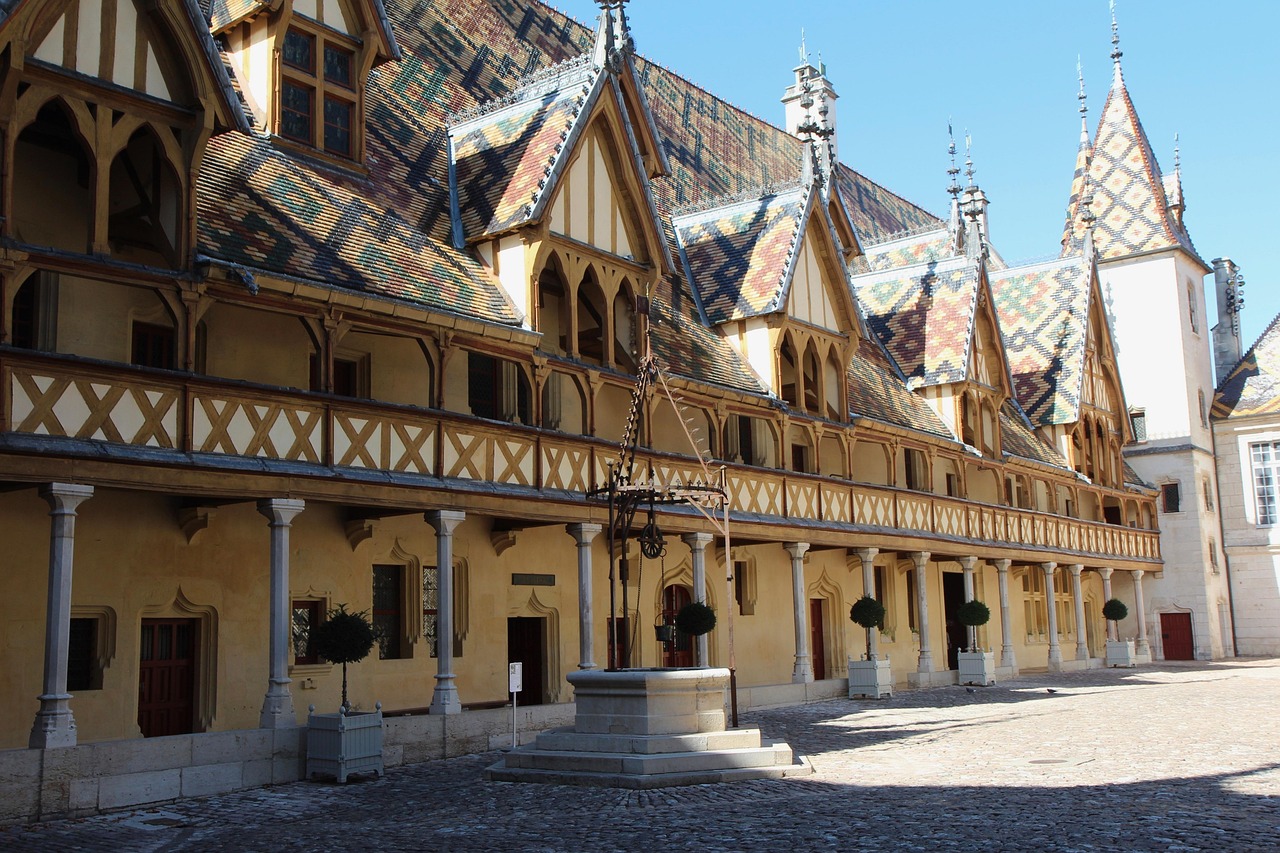
Stand in the courtyard of the Hospices de Beaune on a clear, crisp morning and you will understand why this small Burgundian town has long punched far above its weight. The glazed roof tiles flash mustard yellow, forest green, and earthy brick-red; the timber galleries creak softly as you walk; the air smells faintly of barrel cellars and woodsmoke. Yet for all its fame in the wine world, Beaune still feels human-sized, intimate, and—if you time it right—beautifully slow.
Technically, the Hospices de Beaune is a medieval charitable hospital complex founded in 1443, now the beating cultural and symbolic heart of Beaune. In practice, it’s much more: a time capsule of late-medieval medicine, a tapestry of Burgundian power politics, and the engine behind one of the most important charity wine auctions on the planet. Around it, the old town of Beaune unfurls: concentric rings of ramparts, churches, wine merchant townhouses, and vaulted cellars, edged by vineyards whose names feature on the world’s most coveted wine lists.
I’ve been visiting Beaune regularly for over a decade, and living close enough to pop in for market mornings or quiet off-season strolls. I’ve watched the Hospices flood with visitors on auction weekend and sat alone in the Hôtel-Dieu’s chapel on a drizzly January afternoon. This travel guide for Hospices de Beaune and the surrounding old town is written from those accumulated days—late dinners in family-run bistros, early-morning walks around the ramparts, and endless conversations with vignerons and hospital guides.
Whether you have a 2 day itinerary for Hospices de Beaune, a more leisurely 3 days in Beaune, or a deep-dive 4 day itinerary, this guide will help you structure your time so you see more than just the postcard courtyard. We’ll dive into the must-see attractions in Hospices de Beaune, the best places to visit in Beaune’s old town, and the hidden gems in quiet lanes just beyond the main drag.
Understanding Beaune & the Hospices: Layout & Layers
To really savor Hospices de Beaune, it helps to understand the way Beaune itself is shaped. Think of the town as a series of rings, like a cut tree trunk. The innermost circle is the Hôtel-Dieu and its immediate streets—Rue de l’Hôtel-Dieu, Rue de Lorraine, Rue du Paradis—dense with wine bars and boutiques. Surrounding that is the broader old town within the ring road, still marked in many stretches by medieval ramparts. Beyond the ring road are the vineyards and more modern residential areas.
Historically, Beaune’s power and wealth were concentrated inside those walls. The Hospices de Beaune, founded by Nicolas Rolin, chancellor to the Duke of Burgundy, was a statement as much as a charity: a “palace for the poor” that broadcast Burgundian grandeur. Over the centuries, as medicine modernized, the hospital’s patients moved to new buildings, but the medieval core remained. The Hospices accumulated vineyards through donations, and today it owns around 60 hectares of prime Burgundy, making its annual Vente des Vins wine auction central to the region’s economic and cultural life.
Walking the town, the chronology is layered but legible. The Hôtel-Dieu (mid-15th century) sits near Notre-Dame (12th–13th centuries with 19th-century restorations), wrapped in streets of Renaissance and 18th-century merchant houses. The ramparts and defensive towers date mostly from the 15th–17th centuries, and the 19th century added the train station and a more spacious, bourgeois southern quarter.
Most visitors start at the Hospices de Beaune itself and then loop outwards. I suggest a clockwise walk: enter the Hôtel-Dieu, then cross to Notre-Dame, wander east into quieter lanes, loop around the ramparts, and finish with a late-afternoon tasting in one of the historic cellars. In this guide, I’ll anchor you in 12 specific quarters, monuments, and key sites that together form a coherent portrait of Beaune and its Hospices.
12 Essential Quarters, Monuments & Sites Around the Hospices de Beaune
These are the places I return to every time I’m in Beaune—some obvious, some not, all within easy reach of the Hôtel-Dieu. I’ll share history, why they matter, and how they fit into a smart 2–4 day itinerary.
1. Hôtel-Dieu (Hospices de Beaune) – The Iconic Heart
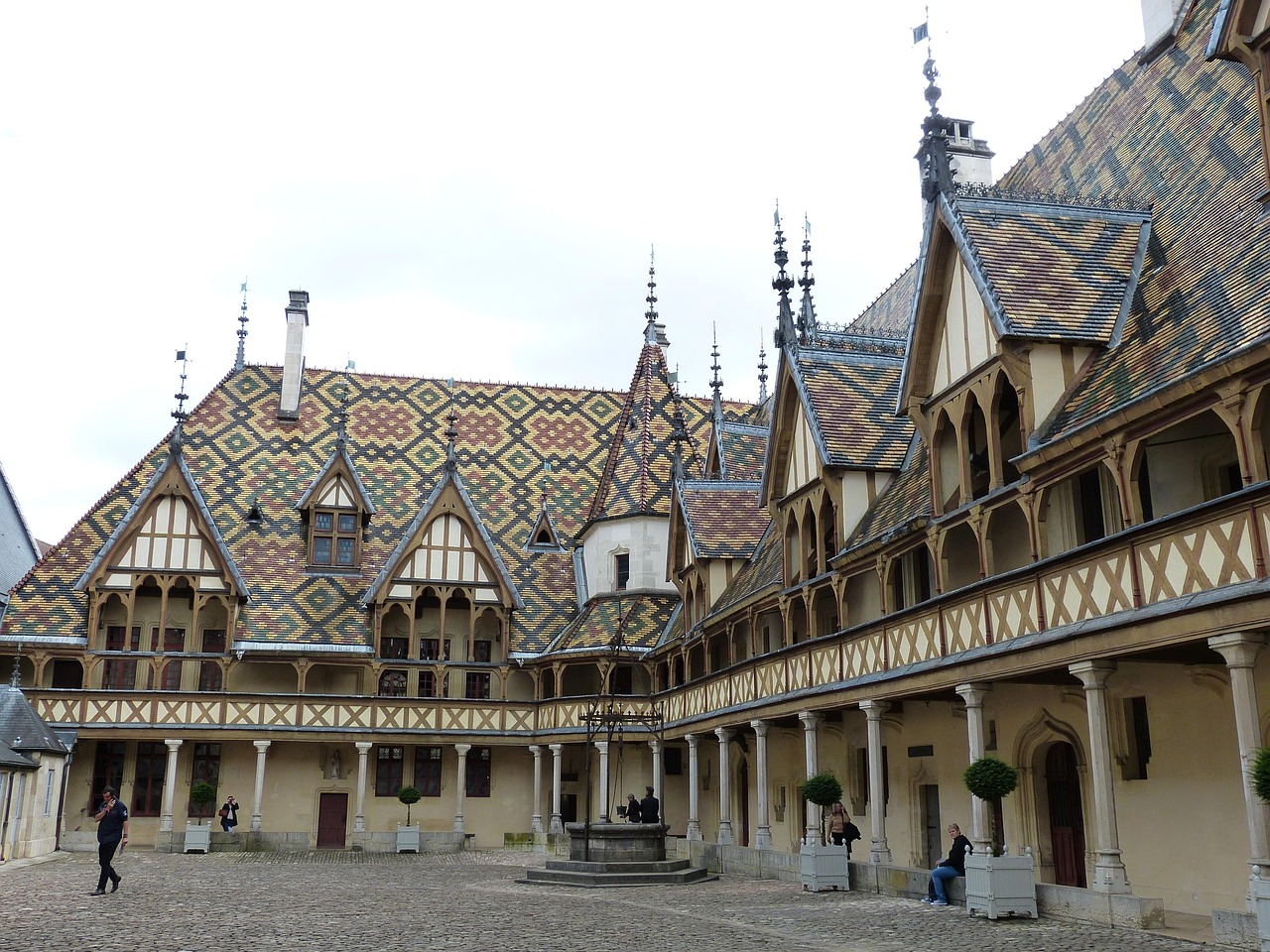
The Hôtel-Dieu is the image you’ve seen on postcards: that dreamlike courtyard with its patterned tile roof and steep gables. But every time I walk through its heavy wooden doors, I’m reminded how much more there is than a pretty façade.
The complex was founded in 1443 by Nicolas Rolin and his wife Guigone de Salins in the aftermath of the Hundred Years’ War, when famine and plague had devastated Burgundy. This “palace for the poor” offered free care, beds, and meals to the destitute. The building’s opulence was deliberate: suffering, Rolin believed, deserved beauty.
What it’s like to visit in 2026: You’ll enter via the modern ticket hall and slip straight into the courtyard. I still recommend pausing at the threshold—turn left to take in the full sweep of the polychrome tiles before you raise your camera. Mid-morning light from the east catches the colors beautifully; on my last visit in spring 2026, a light mist had just burned off, leaving the tiles gleaming like wet enamel.
The self-guided audio tour (available in several languages and included in your ticket) leads you first into the Grande Salle des Pauvres, the long ward where rows of red-canopied beds line a timber-vaulted hall. On winter visits I’ve found this room particularly moving: the wood dark, the space hushed, and the stained glass washing the floor with soft color. At the far end is the chapel, where patients could attend Mass without leaving their beds.
Don’t rush the detours: the pharmacy with its jars of dried herbs and leeches; the kitchen with its massive Gothic fireplace; and the tiny courtyard garden where medicinal plants still grow. In one room, ancient account books record donations of vineyards—names you’ll later see on wine lists. My favorite corner is the Salle Saint-Hugues, with 17th-century paintings by Isaac Moillon; it’s often less crowded, and you can stand quietly in front of scenes of charity that feel surprisingly intimate.
The climax of the visit is the small room containing Rogier van der Weyden’s “Last Judgment” polyptych. It originally hung above the ward, a reminder to the sick of the stakes beyond earthly suffering. Today it’s displayed behind glass, and the audio guide helps you decode the details: St. Michael weighing souls, the donors kneeling in the margins. I try to visit this room at quieter times (early morning or lunch hour) because the painting rewards slow, close looking. Step right up to the glass and let your eyes travel; its colors and expressions are astonishing after nearly six centuries.
Practical tips:
- Timing: Arrive at opening time or around 13:00–14:00 to avoid tour groups. Auction weekend in November is busiest; January–March is delightfully calm.
- Tickets: As of 2026, you can buy a combined ticket with the Hospices Museum of Wine and some municipal museums—ask at the counter for current combinations and save a few euros if you plan a full cultural day.
- Accessibility: The site is mostly accessible, but some floors are uneven; wear supportive shoes on the old tiles and cobbles.
- Photography: Photography without flash is allowed; avoid blocking narrow passages and be mindful when the rooms are busy.
2. Collégiale Notre-Dame – Stone, Tapestries & Quiet Light
A three-minute walk from the Hospices de Beaune, the Collégiale Notre-Dame feels older, more austere—and, if you catch it between services, deeply peaceful. Built largely in the 12th and 13th centuries, it’s a fine example of Burgundian Romanesque-Gothic transition, with a heavy, almost fortress-like western façade giving way to a surprisingly slender interior.
On a recent autumn afternoon I slipped inside just as a thin band of late sun hit the nave. The stone seemed to drink in the light. Unlike the Hospices, Notre-Dame is rarely crowded; you can usually find a pew and sit in silence. I always walk slowly along the side aisles to the choir, where 15th-century tapestries depict scenes from the life of the Virgin. The church’s caretakers sometimes control access, especially in off-season, but ask politely and they’ll usually let you approach for a closer look.
Outside, don’t miss the cloister on the south side. It’s modest compared to grand monastic cloisters elsewhere in Burgundy, but its arcades frame beautiful views of the church’s chevet. In 2026, the town continues to invest in gentle lighting for evening hours, and on a clear night the stone glows honey-gold against a dark sky—perfect for a romantic stroll after dinner.
Tip: If you’re visiting with children, Notre-Dame is a good place to balance history with a simple “treasure hunt”: ask them to find the carved capital with animals, or a particular color in the stained glass. It keeps them engaged while you soak up the atmosphere.
3. Rue du Paradis & Rue de l’Hôtel-Dieu – The Hospices Neighborhood
Step out of the Hôtel-Dieu and let yourself drift along Rue de l’Hôtel-Dieu and Rue du Paradis, the narrow streets that cradle the Hospices. Here the town’s medieval layout is still legible: irregular building lines, overhanging upper stories, sudden little courtyards and passages. It’s touristy, yes, but there’s a reason. The façades are handsome, the shop windows glow with bottles and mustard jars, and you can feel how the hospital shaped the urban fabric around it.
On market mornings (Wednesday and Saturday), I like to start early, around 8:30, when shopkeepers are rolling up shutters and the first deliveries are arriving. By 10:30 the streets are humming with visitors, but if you duck into side alleys—Rue Rousseau Deslandes, Rue Maizières—you can still find quiet corners and small, family-run wine shops that rely more on regulars than tour buses.
One of my favorite rituals is to buy a still-warm gougère (cheese puff) from a nearby bakery, then find a low stone ledge and simply watch the flow of people: groups hesitating at corners with maps, locals weaving through with shopping carts, guides shepherding small clusters into the Hôtel-Dieu. It’s a reminder that the Hospices is not an isolated monument but part of a living town.
Tip: If you’re assembling a picnic, this area is ideal for picking up cheese, charcuterie, and a half-bottle of wine. Just remember that many small shops close for a long lunch (typically 12:30–14:30).
4. Beaune’s Ramparts & Towers – Walking the Medieval Edge
The old town of Beaune is still roughly encircled by ramparts, punctuated by towers and bastions that have seen everything from Burgundian dukes to modern-day joggers. Walking the ramparts is one of the best free things to do in Beaune and an excellent way to orient yourself chronologically: outside the walls lie modern roads and roundabouts; inside, a dense knot of history.
I usually start at the Porte Saint-Nicolas in the north, where you can climb up to a section of wall and look down over tiled roofs. From here, if you walk clockwise, you’ll pass remnants of the Tour des Billes and the Bastion Saint-Martin, eventually looping back towards the Hospices on the southern side. The entire circuit, with photo stops, takes about an hour.
The ramparts have seen steady restoration; in 2026, more interpretive panels help you understand which chunks date from which centuries. Some stretches feel almost like a park, with benches and trees; others are rougher, more atmospheric, with ivy-clad stone and views into private gardens. At golden hour, when the low sun sets the stone alight, it’s irresistibly romantic. I’ve walked it in every season, but winter’s bare branches and clear air make the silhouettes especially striking.
Family tip: Kids love the mild sense of adventure up on the walls. Just keep an eye on younger children where the parapet is lower.
5. Musée du Vin de Bourgogne – Wine, but Make it Historical
It’s tempting to think of Beaune purely as a place to drink wine, but the Musée du Vin de Bourgogne (Burgundy Wine Museum) gives context to every glass. Housed in the former Palais des Ducs de Bourgogne, it traces viticulture from Roman times to today, with an emphasis on the region’s unique concept of terroir.
On a rainy afternoon in 2025 I ducked in here almost by accident and ended up spending nearly two hours. Old presses, maps showing the gradual delineation of climats (vineyard plots), historic tasting notes—it’s catnip if you have even a passing interest in wine. There are also sections on vineyard work through the seasons, which makes a later walk through the vines much more meaningful. When you stand in front of those tidy rows outside town, you’ll know what pruning in January feels like for the workers’ fingers.
Tip: Ask about a combined ticket with the Hospices; it’s often a good-value pairing. Panels are mostly in French, but leaflets or QR codes usually offer English explanations.
6. Historic Cellars – Patriarche, Marché aux Vins & Others
Beaune’s soul lies underground as much as on its cobbles. Beneath townhouses and courtyards runs a warren of vaulted cellars, cool and dim, lined with barrels and bottles. Several merchant houses open their historic caves to visitors, and while experiences vary, at least one cellar visit belongs on any 2 day or 3 day itinerary for Hospices de Beaune and Beaune.
Patriarche offers one of the most atmospheric experiences: a self-guided tour through kilometers of candlelit cellars. I still remember my first time descending the steps, the air cooling, the smell of damp stone and wine-soaked oak wrapping around me. Along the way you taste a series of wines from simple Bourgogne to more serious premier crus. It’s partly theater, of course, but the setting is magical.
Marché aux Vins, opposite the Hospices, is another classic option, with tastings arranged in a former church. I like it best at the end of the day, when the light is slanting in through high windows and my feet are tired from walking; sitting with a small tasting glass and working through their lineup feels like a reward.
Tips:
- Book ahead in peak season, especially for more intimate guided tastings at family domaines.
- Spit, or at least pace yourself; the pours add up quickly.
- If you’re driving, appoint a strict designated driver or rely on walking and trains. Burgundy’s roads are narrow, and local police are rightly unforgiving about drink-driving.
7. Place Carnot & Market Lanes – Beaune’s Social Living Room
Place Carnot is Beaune’s central square, edged with cafés whose terraces fill quickly on sunny days. It’s not spectacular in the way of the Hospices courtyard, but it’s where the town breathes. Children race around the fountain, older couples linger over coffee, and on Wednesdays and Saturdays the surrounding streets explode into the weekly market.
On market mornings, I like to weave slowly through the stalls—cheese pyramids dusted with ash, coils of saucisson, crates of seasonal produce. In late spring, there are fragrant garlands of white asparagus; in autumn, piles of mushrooms and displays of walnuts. Food here isn’t just delicious; it’s a direct line into Burgundian life. Most vendors are happy to chat if you show genuine interest; a few words of French go a long way.
From Place Carnot, the pedestrian shopping streets radiate out—Rue Carnot, Rue Monge—lined with a mix of boutiques, bakeries, and wine shops. This is where you feel Beaune’s role as a regional hub rather than just a tourist town. Late afternoons, especially outside peak season, are my favorite, when the light softens and locals emerge to run errands or meet for a drink.
8. Quartier Saint-Nicolas – North Gate & Quieter Lanes
North of the Hospices, near the Porte Saint-Nicolas, lies a slightly less polished but more lived-in quarter I’ve grown particularly fond of. Here, the stone houses feel a touch shabbier, the cafés fewer, the vibe more local. If you’re spending 3 or 4 days in Beaune, carving out time to wander these lanes gives you a sense of Beaune beyond wine commerce.
I often use this area as a “pressure valve” on busy days. When the Hospices area is thick with touring coaches, I slip up towards Rue du Faubourg Saint-Nicolas and its side streets. There are excellent bakeries, some unpretentious bistros, and small wine shops where the owners recognize regulars. It’s also a good residential area if you’re renting an apartment: close enough to walk everywhere, far enough that evenings are quiet.
9. Southern Quarter & Station Area – 19th-Century Beaune
South of the walled town, around the train station, Beaune spreads out into broad 19th-century boulevards and modest residential streets. It’s not as immediately charming as the old town, but it’s essential to the town’s story: the arrival of the railway in the 19th century supercharged Beaune’s role in the wine trade, allowing barrels and bottles to travel quickly to Paris and beyond.
If you’re arriving by train (highly recommended to avoid parking headaches), your first impression of Beaune will likely be this district. Don’t be put off. Walk straight up Avenue du 8 Septembre, and within 10 minutes you’ll hit the ring road and the old town gates. The transition from modern to medieval is satisfying; you can almost feel yourself stepping back in time as traffic noise softens and the streets narrow.
Practically, this area is also where you’ll find larger supermarkets, car rental agencies, and some budget-friendly hotels. For travelers prioritizing value over atmosphere, staying near the station can make sense, especially if you don’t mind a short stroll into the center.
10. Vineyard Fringe – From Beaune to Pommard & Savigny
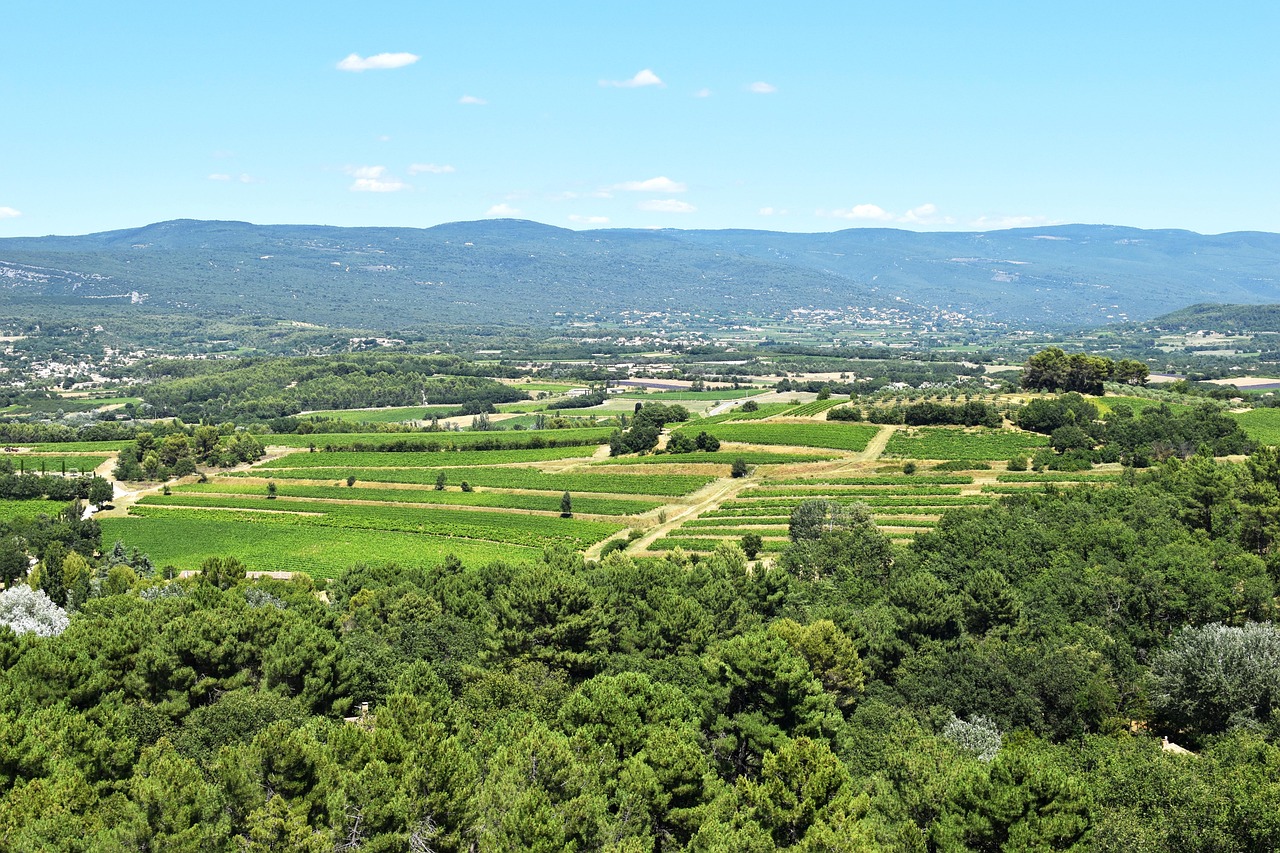
Leave the ring road in almost any direction and you’ll hit vines within 15–20 minutes on foot. To the south-west, the road slides out towards Pommard; to the north, towards Savigny-lès-Beaune. This vineyard fringe is where city and countryside blur, and it’s one of my favorite places to walk at dawn or late afternoon.
On many visits, I’ve followed the small lanes out past the last houses until the path narrows between low stone walls and neat rows of Pinot Noir. In winter, the vines are bare, their gnarled trunks stark against the soil; in summer, they form lush, sunlit corridors. The silence is broken only by distant tractors and birds. If you want a romantic stroll that still feels grounded in the real work of Burgundy, this is it.
Tip: Stay on marked paths and respect private property. Vineyard rows are workplaces, not hiking trails, and stepping between vines can damage fragile soils.
11. Parc de la Bouzaize – Green Refuge West of Town
About a 15–20 minute walk west of the old town, Parc de la Bouzaize offers a welcome dose of greenery and water. There’s a small lake with ducks, shady paths, and lawns where families spread out blankets on sunny days. Just beyond the park, the vineyards begin again, giving you that heady combination of city park and wine country.
With children, this is a must—space to run, a playground, and the novelty of pedal boats in summer. For couples, I love it as part of an evening walk: leave the old town around 17:30 in summer, wander the park as the heat eases, then loop back into town via the vines and ramparts in time for an apéritif.
12. Beaune by Night – Lit-Up Monuments & Quiet Alleys
If your only experience of Beaune is between 10:00 and 18:00, you’re missing half the magic. After dinner, as day-trippers drive away and shop shutters roll down, the town relaxes. The Hospices de Beaune’s exterior, Notre-Dame, and several towers are sensitively lit, their stone and tiles glowing softly against the dark. Cobbled alleys that felt busy at noon become almost filmic at 23:00.
I’ve often walked alone through the Hospices neighborhood at night, the air carrying faint traces of oak and distant laughter from wine bars. On some summer evenings, the town organizes evening tours or small-scale sound-and-light projections on the Hospices façade or ramparts (check the 2026 program at the tourist office). Even without organized events, the simple act of tracing your daytime route in reverse, under streetlamps instead of sun, will give you a fresh appreciation for the architecture.
Tip: Bring a light scarf or jacket; even in summer, temperatures drop after dark. And cobbles plus heels are rarely a happy combination—opt for flats.
Itineraries: 2–4 Days in Hospices de Beaune & Beaune
Below you’ll find suggested 2 day, 3 day, and 4 day itineraries. Each blends the must-see attractions in Hospices de Beaune with quieter corners, local food, and genuine cultural experiences. Treat them as frameworks; swap elements to suit your pace and interests.
2 Days in Hospices de Beaune & Beaune – Essential Highlights
Day 1 – Immersed in the Hospices & Old Town
When friends ask me how to spend a 2 day itinerary for Hospices de Beaune, I always say: start early, and start at the source. Day 1 is about the core monuments and the layout of Beaune’s old town.
Morning: Hôtel-Dieu & Hospices Quarter
Arrive at the Hôtel-Dieu at opening time. On one of my recent winter visits, I entered just as the doors opened, and for a few precious minutes I had the courtyard almost to myself. The quiet made it easier to imagine carts rolling in with the sick, nuns gliding through the galleries.
Follow the audio tour, but don’t be a slave to it. If a particular room pulls you in—maybe the pharmacy with its apothecary jars, or the kitchen with its copper pots—pause and linger. I like to sit for a moment on the wooden bench in the Grande Salle des Pauvres and look down the row of beds, imagining the rustle of straw and the soft murmur of prayer that once filled the space.
By late morning, you’ll emerge into Rue de l’Hôtel-Dieu, blinking in the light. Take a slow lap around the exterior of the building; from the streets behind, you get glimpses of the great roof at unexpected angles.
Lunch: Casual Old Town Bite
For lunch, aim for a simple, local bistro rather than a grand gastronomic table—save the blowout meal for your second evening. Around Rue de Lorraine and Rue Maizières are several spots where menus lean heavily on Burgundian classics: œufs en meurette (eggs poached in red wine sauce), jambon persillé (parsleyed ham), or a hearty bœuf bourguignon. I still remember a rainy January midday when a bowl of steaming œufs en meurette and a glass of basic Bourgogne Rouge felt like the most comforting thing on earth.
Afternoon: Notre-Dame & Market Streets
After lunch, wander towards Notre-Dame. Step into the cool dimness, let your eyes adjust, then explore at your own pace. If the tapestries are accessible, give them time; their narrative richness offers a counterpoint to the van der Weyden polyptych you saw at the Hospices.
From the church, drift back towards Place Carnot and the surrounding shopping streets. On a Wednesday or Saturday, you’ll bump into the market; otherwise, browse bakeries, mustard shops, and wine boutiques. This is a good time to choose a bottle (or half-bottle) to enjoy later in your accommodation. When shopkeepers ask where you’re from—as they often do—mention that you’re staying for a couple of days; it signals that you’re more than a fleeting bus-group visitor.
Late Afternoon: First Cellar Experience
Finish your first day with an accessible cellar visit, such as Marché aux Vins opposite the Hospices. The setting—a former church—is atmospheric, and a self-paced tasting is less demanding than a formal, seated tasting when you’re still absorbing the town.
If you prefer something more intimate, book ahead at a small domaine inside the walls; just be sure to confirm languages and whether children are welcome if you’re traveling as a family.
Evening: First Night in Beaune
After a brief rest, head out for a leisurely dinner. For your first night, choose somewhere with a good mix of locals and visitors—and try at least one escargots de Bourgogne dish (garlic-parsley snails) if you’re curious. I still recall bringing a snail-averse friend one year; by the third snail, he admitted they were “oddly addictive”.
Post-dinner, take a gentle loop around the lit-up Hospices façade and nearby streets. The difference between daytime bustle and nighttime quiet is striking. Couples will find this especially romantic, but even solo, the calm, amber-lit stones make for a beautiful stroll.
Day 2 – Wine, Ramparts & Vineyard Edges
Day 2 of your 2 days in Hospices de Beaune and Beaune stretches beyond the core monument into the vineyards and ramparts, layering in more wine and more walking.
Morning: Vineyard Walk & Parc de la Bouzaize
After breakfast, head west out of town towards Parc de la Bouzaize. Spend half an hour wandering its paths, then continue beyond the park into the vines. There are several clearly marked walking routes; even a simple out-and-back along the vineyard tracks gives you a feel for Burgundy’s patchwork of climats.
On a bright morning one May, I walked here as workers were tying up new shoots. Their quiet, repetitive motions, the soft clink of tools against posts, and the smell of damp earth were a reminder that the bottles in Beaune’s boutiques begin as fragile buds on these slopes.
Lunch: Picnic or Simple Lunch-Menu
Either picnic in the park (if weather allows) with supplies from the market or a bakery, or return towards town and choose a café with a plat du jour (daily special). Lunch menus are often the best-value way to sample local dishes without blowing your budget.
Afternoon: Wine Museum & Ramparts
Dedicate an hour or two to the Musée du Vin de Bourgogne. With yesterday’s tastings fresh in mind, the exhibits on terroir and vineyard history will click into place. Afterwards, ascend to the ramparts near Porte Saint-Nicolas and walk a clockwise loop, taking in towers, bastions, and views over tiled roofs.
Families can turn this into a game—spotting towers, counting cats in windows, or looking for the oldest date carved into a stone lintel. Couples might prefer to stroll hand in hand, letting the conversation wander as much as you do.
Late Afternoon: Deeper Cellar or Tasting
End your 2-day itinerary for Hospices de Beaune with a more focused wine experience. This might be a booked tasting at a domaine recommended by your accommodation or a deep-dive flight at a serious wine bar. With a few tastings already under your belt, you’ll start to notice differences between village-level wines and premier crus, between Beaune and neighboring Pommard or Savigny.
Evening: Farewell Dinner
For your final evening, consider splurging on a more refined table: one of Beaune’s better-known restaurants or a small contemporary bistro that plays with local ingredients. Order something distinctly Burgundian—maybe coq au vin or pôchouse (Burgundian fish stew)—and a bottle from a producer whose vines you walked past in the morning. It’s a satisfying loop to close.
3 Day Itinerary for Hospices de Beaune & Surrounds – Adding Depth
With 3 days in Hospices de Beaune and Beaune, you can slow down and add either an in-depth vineyard village visit or more time with local artisans and less-visited quarters.
Day 3 Option A – Pommard & the Southern Vineyards (Romantic & Wine-Focused)
Morning: Walk or taxi the short distance to Pommard, a classic wine village framed by serious Pinot Noir vines. The walk takes about an hour each way through vines; in summer, start early to avoid heat. In Pommard, stroll the quiet streets, peek into courtyards, and (with an advance booking) visit one or two domaines for tastings. The scale is more intimate than Beaune; you feel rooted in the countryside.
Lunch: Eat in a Pommard bistro or picnic among the vines (respect property and pack out all waste).
Afternoon: Return to Beaune via a slightly different route through the vineyards, enjoying changing perspectives on the town’s skyline. Back inside the walls, reward tired legs with a café stop or a nap.
Evening: Another relaxed dinner in Beaune, perhaps trying a restaurant in a different quarter (north of Place Carnot or near Porte Saint-Nicolas) to broaden your sense of the town.
Day 3 Option B – Savigny-lès-Beaune & Museums (Family-Friendly & Varied)
Morning: Head to Savigny-lès-Beaune, a nearby village with a quirky castle-museum (collections of race cars, planes, and more). Kids love it, and adults appreciate the odd juxtaposition of machinery and medieval stone. You can reach Savigny by short taxi ride, bike, or (for keen walkers) a longer hike through vineyards.
Lunch: Eat in Savigny or return to Beaune, depending on timing.
Afternoon: Back in Beaune, explore any museums you missed—perhaps a smaller municipal museum or a temporary art exhibition in a historic building. Or simply revisit a favorite spot (Notre-Dame, the ramparts) in different light.
Evening: Drag out the evening with a final, slow wander through Beaune’s night-lit alleys, perhaps with a last glass at a quiet wine bar. By now, the curves of the Hospices roof and the worn edges of its cobbles will feel almost familiar.
4 Day Itinerary for Hospices de Beaune & Beaune – Slow Travel & Side Trips
With 4 days in Hospices de Beaune and Beaune, you can blend everything above with more offbeat experiences: cycling the vineyard roads, visiting Dijon or Nuits-Saint-Georges, or simply savoring Beaune at a gentler rhythm.
Day 4 – Choose Your Own Adventure
Option 1: Cycling the Voie des Vignes (Adventurous & Scenic)
Rent bikes in Beaune and follow the well-marked Voie des Vignes south towards Meursault, passing through Pommard and Volnay. It’s a gentle ride with occasional small climbs, best in spring or autumn when temperatures are mild. Stop for tastings by prior appointment or simply enjoy the landscapes.
Option 2: Day Trip to Dijon (Cultural & Urban Contrast)
Hop on a train to Dijon (about 20 minutes by TER). The former capital of the Dukes of Burgundy offers grander urban architecture, excellent museums, and a very different city energy. You’ll return to Beaune in the evening with a renewed appreciation for its slower pace and more intimate scale.
Option 3: Do Less, See More
Sometimes, the best 4 day itinerary for Hospices de Beaune is not to add more sights but to deepen your relationship with the town. Sleep in, linger over coffee in Place Carnot, revisit the Hospices or Notre-Dame at different times of day, strike up conversations with shopkeepers, and spend a whole afternoon reading in Parc de la Bouzaize or on a rampart bench. Beaune rewards repetition—details emerge the third or fourth time you pass a doorway or corner.
Local Food in Hospices de Beaune & Beaune – Eating with Context
Burgundy’s cuisine is robust, rooted in local produce and wine. Eating well here doesn’t necessarily mean eating fancy; some of my most memorable meals in Beaune have been in unpretentious, family-run spots tucked down side streets.
Signature Dishes to Try
- Œufs en meurette: Poached eggs in a rich red wine sauce with lardons and onions. At its best, it’s velvety and deeply flavored, the perfect winter warmer.
- Bœuf bourguignon: Long-simmered beef in red wine. Authentic versions use tougher cuts that turn meltingly tender; served with potatoes or pasta.
- Escargots de Bourgogne: Snails baked with garlic-herb butter. Order half a dozen to test your courage; most people are surprised by how much they enjoy them.
- Jambon persillé: Ham in a parsleyed gelatin, often served as a starter. A classic charcuterie dish.
- Coq au vin: Chicken (traditionally rooster) braised in red wine. When done well, the sauce is the star.
- Pain d’épices: Spiced gingerbread, often from nearby Dijon, but common in Beaune bakeries too.
Where to Eat – Atmosphere Over Star Ratings
Inside the old town, look for stone-walled bistros and small restaurants on side streets rather than the busiest squares. Places that stay open year-round and fill with French voices midweek are usually a good bet. Menus chalked on blackboards, limited daily specials, and a short, focused wine list are all good signs.
In the Hospices quarter, a few restaurants have become popular with tour groups—fine if you need a sure thing, but I prefer walking 3–5 minutes further towards quieter alleys near Porte Saint-Nicolas or behind Notre-Dame. Here, I’ve had long, conversational dinners where the patron recommended wines from cousins’ or friends’ domaines and the dessert list was recited from memory.
Evening Alleys for an Atmospheric Meal
For a particularly atmospheric evening meal, consider the narrow streets just off Rue d’Alsace and Rue Maizières. Candlelit tables, low ceilings, and stone arches make you feel cocooned from the outside world. In summer, a few spots set up terraces in tiny courtyards; in winter, the appeal shifts indoors to fireplaces and the clink of cutlery echoing off old stone.
Local vs. Tourist-Oriented Places
Places that “survive on locals rather than tour buses” typically:
- Close one or two days per week (often Sunday night or Monday).
- Offer affordable lunch formulas popular with workers.
- Have servers who greet regulars by name.
Ask your accommodation or a trusted wine shop for recommendations—they’ll usually steer you towards their own favorites rather than the obvious choices.
Evenings in Hospices de Beaune & Beaune
Beaune’s evenings are shaped by the seasons. In summer, dinner terraces buzz and wine bars spill onto pavements. In winter, the town folds inward, into intimate dining rooms and quiet bars. Either way, there’s a gentle rhythm: apéritif, dinner, stroll.
Lit-Up Monuments & Night Walks
The Hospices exterior, Notre-Dame, and several towers are illuminated, but never garishly. I like to trace a simple loop: start at the Hospices, walk to Notre-Dame, drift along Rue Carnot and its side alleys, then climb briefly onto the ramparts near Porte Saint-Nicolas to look back at the town’s softly glowing roofs.
Evening Tours & Events
In 2026, the Beaune tourist office continues to offer occasional guided evening walks, sometimes with themes (medieval Beaune, wine merchants, Hospices history). These are worth booking if you enjoy stories and don’t mind a small group. On certain summer nights, there may be sound-and-light projections on selected façades; check current schedules.
Music & Performances
Beaune hosts a renowned Baroque music festival in July; during this period, evening concerts in Notre-Dame or nearby venues add another layer to the town’s cultural life. Outside festival times, small bars sometimes host live jazz or chanson. Ask around; posters in shop windows are your friend.
Romantic vs. Family-Friendly Evenings
For couples: Share a bottle at a candlelit wine bar, then wander back to your hotel through nearly empty alleys. The quiet is part of the allure.
For families: Aim for earlier dinners and then a brief post-dinner walk. Kids often love the novelty of being out after dark, especially if there’s a promise of a crêpe or ice cream along the way in warmer months.
Day Trips & Nearby Attractions from Beaune
Beaune makes an excellent base for short excursions. If you’re staying 3–4 days, consider one or two of these:
Pommard & Volnay
Distance: 5–8 km south-west. Reachable by foot, bike, taxi, or short drive.
These villages are names you’ll see on wine lists; visiting them anchors those labels in real places. Expect stone houses, small squares, and vineyard-lined roads. Book tastings ahead.
Meursault
Distance: ~10 km south. Famous for white wines. A lovely half or full-day trip combined with cycling the Voie des Vignes.
Savigny-lès-Beaune
Distance: ~5 km north. Ideal for families thanks to the castle’s quirky collections and pleasant village setting.
Nuits-Saint-Georges
Distance: ~25 km north. Accessible by regional train. Another emblematic wine town, with cellars and vineyard walks.
Dijon
Distance: ~40 km north. 20–25 minutes by train. A bigger city with excellent museums, grand architecture, and famous mustard shops—an excellent contrast to Beaune’s scale.
What’s New in 2026–2027: Events & Trends
Every year brings subtle changes to Beaune’s travel scene. For 2026–2027, keep an eye on:
- Vente des Vins des Hospices de Beaune (November 2026 & 2027): The annual charity wine auction held in the Hospices. Expect packed streets, special tastings, and a buzzy atmosphere. Book accommodation many months ahead.
- Beaune International Baroque Music Festival (July 2026 & 2027): Evening concerts in Notre-Dame and other venues. A highlight for classical music lovers.
- Ongoing restoration & interpretation upgrades: The town has been investing in subtle improvements—better multilingual signage at ramparts and museums, and occasional temporary exhibitions in Hospices-related spaces.
- Wine tourism evolution: More domaines now offer structured, advance-booking tastings with food pairings or vineyard walks. Booking early, especially for weekends, is increasingly important.
Cultural Experiences & Local Customs in Hospices de Beaune & Beaune
Beaune may live off wine and visitors, but it’s not a theme park. It’s a working town with its own rhythms, shaped by the vineyard calendar and a very French sense of time.
Daily Rhythms
- Lunch hours: Many restaurants serve lunch roughly 12:00–14:00; outside these times options are limited.
- Afternoon closure: Smaller shops often close between 12:30 and 14:30 or 15:00.
- Sunday & Monday: Some restaurants and shops close; plan ahead.
Politeness & Interaction
Always begin interactions with a “Bonjour, Monsieur/Madame” and end with “Merci, au revoir”. It sounds basic, but it transforms service. Beaune locals are used to visitors but appreciate simple courtesies.
Wine Tasting Etiquette
- It’s acceptable—and expected—to spit, especially at professional tastings.
- Don’t wear heavy perfume; it interferes with aromas.
- If tastings are free or low-cost, consider buying at least a bottle or two if you enjoyed the wines.
Religious & Quiet Spaces
In churches like Notre-Dame, dress respectfully (shoulders and knees covered is a good rule of thumb), speak softly, and avoid flash photography. If you stumble into a service, either sit quietly or slip out discreetly.
Practical Travel Advice for Hospices de Beaune & Beaune
Getting There
By train: Regular regional (TER) trains connect Beaune with Dijon and other Burgundy towns. From Paris, you typically take a high-speed TGV to Dijon, then a TER to Beaune.
By car: The A6 motorway runs nearby. Parking inside the walls is limited; consider parking just outside and walking in.
Getting Around
Beaune is compact; you can walk almost everywhere. For vineyard villages, options include:
- Walking (for nearby Pommard or Savigny-lès-Beaune).
- Cycling (rental shops in town; helmets recommended).
- Taxi or private driver, especially if you plan multiple tastings.
Money-Saving Strategies
- Use lunch menus instead of always dining à la carte.
- Ask for combined museum tickets (Hospices + Wine Museum + others) to save a bit.
- Stay just outside the most touristed streets or near the station for better-value accommodation.
- Limit paid tastings to a few well-chosen experiences; explore wine in restaurants by the glass.
SIM Cards & Connectivity
In 2026, European eSIMs and physical SIMs are easy to obtain in larger cities (Dijon, Paris). In Beaune itself, you can find phone shops or use vending machines at some train stations. Major French carriers (Orange, SFR, Bouygues) offer tourist-friendly data plans. Wi-Fi is common in hotels and many cafés.
Visa & Driving Requirements
Visas: Beaune follows France’s and the Schengen Area’s visa rules. Many nationalities can enter visa-free for short stays; check current regulations before travel.
Driving licenses: Visitors from the EU/EEA can use their licenses as-is. Others may need an International Driving Permit in addition to their home license; verify before renting a car. Rental agencies in Beaune (often near the station) can advise on local rules.
Historic-Area Logistics & Etiquette
- Combined tickets: Ask at the Hospices ticket desk or tourist office about multi-museum passes.
- Peak-hour avoidance: Visit the Hôtel-Dieu at opening or midday; avoid 10:00–11:30 if you dislike groups.
- Dress code: Comfortable shoes for cobbles. Light layers; old stone buildings can be cool even in summer.
- Photography: No flash in museums and churches; respect “no photo” signs, especially in small private domaines.
- Accessibility: Cobblestones and some steps can be challenging. Many sites have partial accessibility; check ahead if you have mobility concerns.
Best Seasons for Different Activities
- Spring (April–May): Blossoms, fresh greens in the vineyards, milder crowds. Ideal for walks and cycling.
- Summer (June–August): Warm, lively evenings, festivals, but more visitors and higher prices. Plan tastings and restaurants ahead.
- Autumn (September–October): Harvest energy, golden vines, often the most beautiful light. My personal favorite time.
- Late Autumn & Early Winter (November–December): Vente des Vins auction buzz in November; then a quieter, atmospheric town with fewer tourists. Great for cozy dinners and unhurried museum visits.
- Winter (January–March): Very calm; some restaurants may close for holidays, but you’ll have the Hospices and streets almost to yourself. Dress warmly.
Hidden Tips from Repeated Visits
- Walk the same streets at different times of day; the Hospices area at 08:30, 14:00, and 22:30 are three different worlds.
- Chat with cavistes (wine shop staff). They’re often generous with knowledge and recommendations for both wines and restaurants.
- Use Beaune as a base for train day trips to Dijon or Nuits-Saint-Georges; it’s often calmer to return here at night.
- Don’t over-schedule tastings; palate fatigue is real. Two focused tastings per day is usually plenty.
Summary & Final Recommendations – When & How to Visit Hospices de Beaune
The Hospices de Beaune is one of Europe’s most iconic historic hospitals, but its impact is amplified by the town that surrounds it. Spend 2 days in Hospices de Beaune and Beaune and you’ll see the essentials: the Hôtel-Dieu, Notre-Dame, ramparts, and a cellar or two. Stay 3 or 4 days and the town begins to open up—market rituals, quiet quarters, vineyard edges, and the subtle shifts from morning to night.
Best seasons overall: If you can choose, aim for late April–May or September–October. These windows balance good weather, vineyard beauty, and manageable crowds. November’s auction weekend is electrifying but requires early planning; winter is best for contemplative travelers who don’t mind cold air and shorter days.
Whichever season and itinerary you choose—2, 3, or 4 days—anchor your visit in the Hospices de Beaune itself, then let your steps spiral outward: through the old-town lanes, along the ramparts, into the vines, and back again to that unforgettable courtyard of colored tiles. Beaune is a place that rewards both first glances and repeated returns; after years of visiting, I still find new details every time I walk past the Hôtel-Dieu’s wooden doors.