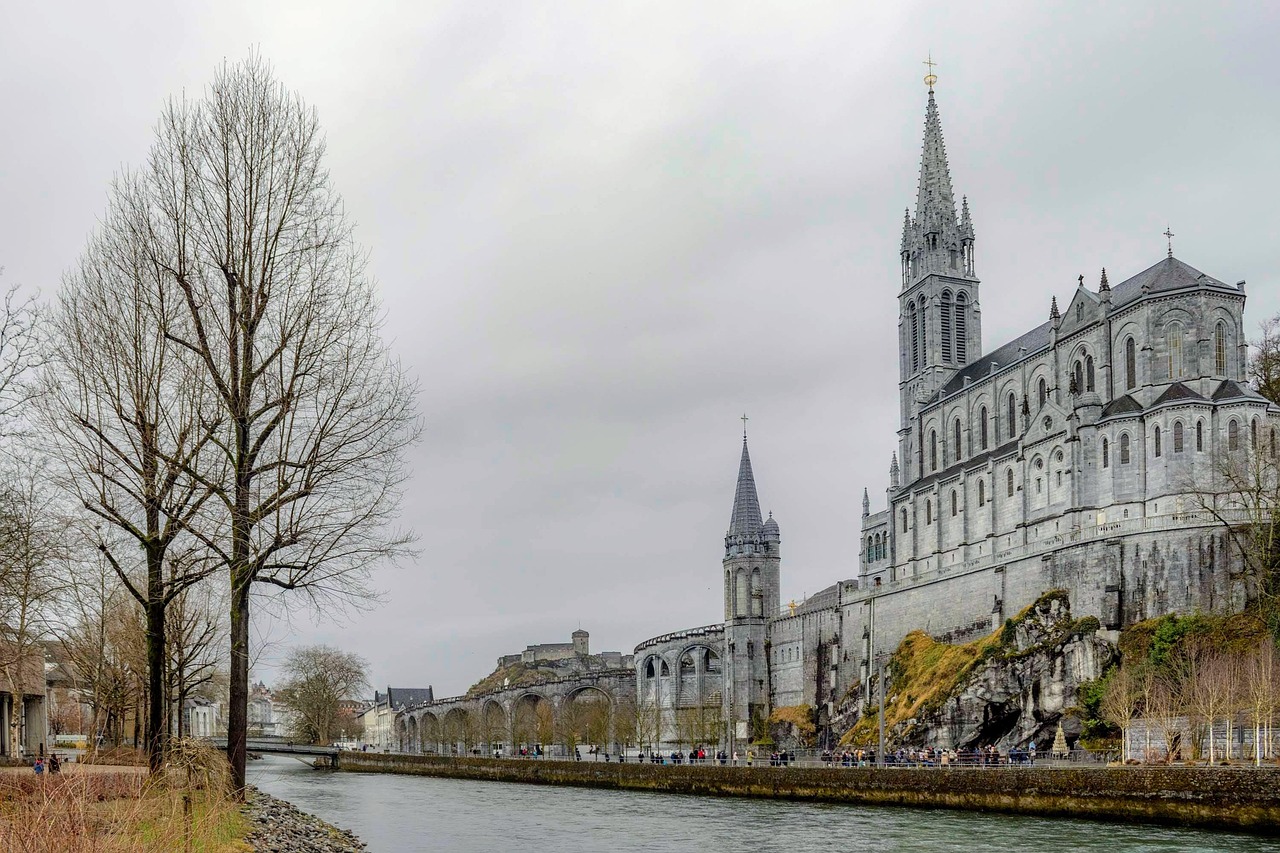
Why Visit Lourdes in 2026
Lourdes is best known as one of the world’s most important Catholic pilgrimage sites, but even if you’ve never set foot in a church, this small town in southwest France has a pull that’s hard to explain until you’re here. It’s a place where candlelight glows against stone basilicas, the Pyrenees rise on the horizon, shepherds still walk their dogs along the Gave de Pau river, and you can be sharing a table with pilgrims from five continents over a steaming plate of garbure (a local soup) within an hour of arriving.
I’ve been coming to Lourdes for more than a decade now—sometimes as a weekend escape from nearby Pau or Tarbes, sometimes for longer stays with friends who work in the hospitality sector and the sanctuaries. I’ve seen it in the quiet of January drizzle and during the mid-August Assumption crowds when the whole town buzzes day and night. Each visit has felt different, but the common thread is this: Lourdes forces you to slow down, to walk, to watch, to share space with people whose reasons for being here might be very different from your own.
In 2026–2027, Lourdes is leaning more than ever into its dual identity: sacred destination and gateway to the Pyrenees. There are new walking and cycling routes, more food-focused events, and subtle but important upgrades to accessibility, especially around the sanctuaries. If you’re looking for a trip that combines contemplation, mountain air, local food, and authentic cultural experiences, Lourdes deserves a spot high on your list.
- For families: Safe, walkable town, gentle hikes, fun mountain excursions, and moving candlelight processions that kids never forget.
- For couples: Romantic riverside walks, quiet chapels, spa hotels, and sunset views from medieval ramparts.
- For adventure lovers: Day trips into the high Pyrenees, canyoning, hiking, via ferrata, and skiing in winter.
- For culture seekers: Pilgrimage traditions, regional markets, Occitan and Basque influences, and small local museums.
Table of Contents
- Why Visit Lourdes
- Overview of Lourdes in 2026
- Suggested Itineraries (3–5 Days in Lourdes)
- 20 Must-See Attractions in Lourdes
- Neighborhoods & Areas to Explore
- Local Food & Drink in Lourdes
- Nightlife, Entertainment & Cultural Experiences
- Best Day Trips from Lourdes
- Cultural Etiquette & Local Customs
- Practical Travel Tips for Lourdes
- Major Events in 2026–2027
- Summary & Best Time to Visit Lourdes
Overview of Lourdes in 2026
Lourdes sits in the Hautes-Pyrénées department in the Occitanie region. The town itself is compact—about 13,000 residents—but each year it welcomes several million visitors, from devout pilgrims to hikers using it as a base. The heart of Lourdes is easy to grasp: a hillside crowned by a medieval fortress, a river looping in a wide arc, and below that, the vast complex of the Sanctuary of Our Lady of Lourdes.
When I first arrived by train more than ten years ago, what surprised me wasn’t the religious atmosphere but the geography. The station is above the town, and as you walk down toward the sanctuaries, you feel like you’re descending into an amphitheater framed by mountains. The air shifts from the exhaust of buses to the scent of candles and cool river mist. That contrast—between the ordinary and the extraordinary—is what defines Lourdes for me.
By 2026, Lourdes has:
- Improved pedestrian zones around the sanctuaries, making it easier and safer to walk.
- Expanded bike lanes and e-bike rental points, connecting with regional routes.
- More multilingual signage and accessibility services for visitors with reduced mobility.
- New and renovated guesthouses and boutique hotels in restored historic buildings.
Suggested Itineraries: 3–5 Days in Lourdes
Below are flexible itineraries based on how long you’ll stay. They blend the must-see attractions in Lourdes with quieter corners and nearby nature. I’ve personally followed all of these patterns in one way or another over multiple trips.
3 Day Itinerary for Lourdes
Spending 3 days in Lourdes gives you enough time to experience the sanctuaries in a meaningful way, explore the old town, and get at least a taste of the Pyrenees. When friends visit me in 2026 for the first time, this is usually the structure I suggest.
Day 1: First Encounter with the Sanctuaries & Old Town
I like to start Day 1 quietly, even if you’ve just arrived on a morning train or bus. Drop your bags at your hotel or guesthouse and head straight toward the Sanctuary of Our Lady of Lourdes. The first glimpse of the triple-spired basilica rising over the Gave de Pau never gets old.
- Morning – Sanctuary of Our Lady of Lourdes & Grotto
Walk down the Avenue de la Gare and follow the flow of people toward the sanctuary gates. Security is smooth but can be busy in peak season. Once inside, don’t rush. I usually suggest first-time visitors walk along the river promenade to take in the full view of the Basilica of the Immaculate Conception and the Basilica of Our Lady of the Rosary stacked above each other like a stone wedding cake.
From there, move toward the Grotto of Massabielle, where Bernadette Soubirous reported her visions in 1858. Even if you’re not religious, this is a powerful space: the rock is cool and damp, the line of people filing through is quiet and purposeful, and the candle flames dance constantly at the side. I like to stand off to the side for a few minutes just to watch the different faces and stories passing by.
After visiting the Grotto, you can choose to fill bottles with water from the springs (there are clearly marked taps). Bring a reusable bottle or buy a small plastic one from a nearby shop.
- Lunch – Local Food Near the Sanctuary
For your first lunch, I often take guests to a simple brasserie a few streets back from the main pilgrim routes, where prices and quality are better. Look for places serving garbure (a hearty cabbage and ham soup), confit de canard (duck confit), and truite des Pyrénées (Pyrenean trout). I still remember a rainy April day in 2024 when I warmed up with a huge bowl of garbure and a carafe of local red; it’s still my go-to order on a cool day. - Afternoon – Rosary Basilica, Upper Basilica & Crypt
After lunch, go back into the sanctuary complex and explore the basilicas in more depth. The Rosary Basilica has stunning mosaics, and I always point visitors toward the side chapels with depictions of Marian apparitions from around the world—they give a sense of how global Lourdes really is.
Climb up to the Basilica of the Immaculate Conception above; the stone staircases are a bit of a workout, but the views over the esplanade are worth it. Don’t miss the Crypt, tucked between the two; its low ceilings and quiet atmosphere are a stark contrast to the grand upper church.
- Evening – Candlelight Procession
If you’re in Lourdes between April and the end of October, don’t miss the Marian candlelight procession in the evening. Times vary slightly by season, but it usually starts around 9 p.m. Bring a light jacket; even in summer, the river air can be cool. The first time I joined the procession, I ended up walking next to a group of Italian teenagers singing enthusiastically in the rain, candles flickering under paper cones. It was chaotic, moving, and unforgettable.
Day 2: Castle, Old Town & Hidden Corners
Day 2 is about getting to know Lourdes beyond the sanctuaries: its medieval castle, local shops, and quieter viewpoints.
- Morning – Château Fort de Lourdes & Pyrenean Museum
Start your day at the Château Fort de Lourdes, the fortress that dominates the town. I like to go as soon as it opens to avoid crowds and catch the soft morning light over the mountains. You can either hike up the steep ramped path or take the elevator from the base.
The castle’s ramparts offer one of the best 360-degree views of Lourdes: the sanctuaries below, the town’s rooftops, and the Pyrenees in the distance. Inside, the Musée Pyrénéen gives a surprisingly rich insight into mountain life—traditional clothing, agricultural tools, and models of highland villages. I’ve spent rainy mornings here more than once, and each time I notice some new detail in the old photographs.
- Lunch – Old Town Bistros
Head into the old town just below the castle for lunch. This area has more locals than pilgrims, especially on weekdays. Look for a small bistro serving daily specials like axoa (a Basque-style veal stew) or omelette aux cèpes (mushroom omelette in season). I’m partial to places where the menu is on a chalkboard and changes daily. - Afternoon – Bernadette’s Childhood Homes
In the afternoon, explore sites connected to Bernadette’s life: Le Cachot (the tiny former jail where her family lived in extreme poverty) and the Moulin de Boly (her birthplace). Both are modest but incredibly evocative. I remember standing in Le Cachot one hot July afternoon, feeling how cool and dark it stayed even with the door open; it’s a visceral reminder of the hardship behind the story. - Late Afternoon – Riverside Walk & Café Stop
Walk along the Gave de Pau on the quieter side of town, following the path upstream. In spring and autumn, you’ll see kayakers training on the river and locals walking dogs. Stop at a café with a terrace and order a café crème or a glass of Jurançon (local white wine). This is my favorite time to simply watch the town move at its own pace. - Evening – Local Dinner & Quiet Night
For your second night, consider eating slightly outside the main pilgrimage streets, where restaurants cater more to locals. Try magret de canard (duck breast) or cassoulet (though that’s more typical of Toulouse). If you’re not too tired, take a last stroll through the sanctuary after dark; even without the procession, the lit basilicas are magical.
Day 3: Pyrenees Excursion
On your final day, get out into the nearby mountains. Depending on your energy and budget, there are several options.
- Option A – Pic du Jer (Easy, Close, Family-Friendly)
Take the historic funicular up Pic du Jer, whose rocky peak you can see from town topped with a cross. The lower station is about a 20–25 minute walk from the sanctuary area or a short bus ride. The funicular ride itself is a little time-travel machine; I’ve been in cabins with families from Brazil, elderly pilgrims, and local trail runners all heading up together.
At the top, you’ll find several walking paths with panoramic views over Lourdes and the surrounding valleys. There’s an easy loop suitable for kids, and more adventurous trails heading off the ridge. Bring a picnic or grab a simple snack at the café in season. On clear days, the snow-capped peaks of the high Pyrenees feel almost within reach.
- Option B – Day Trip to Gavarnie or Cauterets (More Adventurous)
If you’re comfortable with a longer day, catch a bus or drive to Gavarnie (for the UNESCO-listed cirque) or Cauterets (for waterfalls and spa vibes). I’ll detail these later in the day trip section, but in a 3 day itinerary for Lourdes, this is your nature-heavy finale.
Return to Lourdes by late afternoon. Spend your last evening picking up any small souvenirs (local cheese, a bottle of Madiran wine, or handmade rosaries if you’re religious) and having a relaxed farewell dinner. I like to walk past the Grotto one last time on my final night, even if just for a minute.
4 Day Itinerary for Lourdes
If you have 4 days in Lourdes, you can slow the pace and dive deeper into both the spiritual and natural sides of the town. This is ideal for couples and solo travelers who like a balance of culture and easy outdoor adventures.
Day 1–2: Follow the 3-Day Outline
Use the first two days from the 3 day itinerary for Lourdes (sanctuaries, castle, old town, Bernadette’s homes). With an extra day ahead, you can linger longer in the sanctuaries or add a midday rest at your accommodation, which I highly recommend if you’re visiting in peak summer.
Day 3: Deeper Sanctuary Experience & Baths
On my longer stays, I always dedicate a full extra day to the sanctuary area—not just to tick boxes, but to experience the rhythm of the place.
- Morning – International Mass or Quiet Time
If you’re religious or simply curious, consider attending the International Mass in the underground Basilica of St. Pius X. Its stark, modern interior contrasts with the ornate upper basilicas. The mix of languages in the liturgy and the sight of thousands of people gathered together is something you won’t soon forget.
Alternatively, find a quiet corner: a side chapel, the adoration tent, or a bench along the river. I’ve had some of my most reflective mornings in Lourdes just sitting and listening to the murmur of distant prayers mixed with birdsong.
- Midday – Baths / Water Experience
Lourdes is famous for its baths and the ritual of immersion in the spring water. In recent years, the format has evolved, with more emphasis on symbolic gestures and accessibility. Even if you don’t participate fully, you can visit the area and learn about the water’s role in the sanctuary’s life. - Afternoon – Stations of the Cross & Forest Paths
The Way of the Cross on the Espélugues hill behind the sanctuary is one of my favorite walks in Lourdes. The monumental stations with bronze sculptures wind up a forested hill, offering both physical effort and spiritual reflection. Wear comfortable shoes; some sections are steep and uneven. I like to go mid-afternoon when the light filters through the trees. - Evening – Dinner with a View
For your third night, try to find a restaurant or bar with a terrace overlooking the river or with glimpses of the sanctuary. Sharing a bottle of local wine and a plate of charcuterie while the basilica towers glow gold in the distance is one of the most quietly romantic experiences in Lourdes.
Day 4: Pyrenees Adventure or Spa & Slow Food
With 4 days in Lourdes, you can dedicate a full day to the mountains or opt for a slower wellness-focused day.
- Option A – Full Mountain Day Trip
Choose one major excursion: Gavarnie, Cauterets & Pont d’Espagne, or Lac de Gaube. I’ll detail routes later, but each offers classic Pyrenean scenery: waterfalls, cirques, alpine lakes. Pack layers, water, and snacks; mountain weather changes quickly. - Option B – Spa Day & Local Markets
If you’re tired or visiting with older relatives, consider a slower day. Visit a nearby thermal spa (like those in Argelès-Gazost or Bagnères-de-Bigorre, easily reachable by bus or car), then return to Lourdes for an evening market or food-focused wander.
Either way, your 4 day itinerary for Lourdes gives you both the town’s heart and its mountainous backdrop.
5 Day Itinerary for Lourdes
Spending 5 days in Lourdes is perfect if you want to mix pilgrimage, relaxation, outdoor activity, and a taste of nearby towns. When I host friends for a full week, this is roughly how we structure our time, with one or two free days added.
Day 1–3: Core Lourdes Experiences
Follow the 3 days in Lourdes plan above: sanctuaries, castle, Bernadette’s homes, Pic du Jer or a short mountain excursion.
Day 4: Hidden Gems & Local Life
Now that you know the main sights, use Day 4 to seek out hidden gems in Lourdes and nearby villages.
- Morning – Offbeat Chapels & Riverside Corners
Explore smaller chapels like Saint-Joseph or tucked-away oratories up side streets. Wander beyond the main sanctuary area along the river toward the camping grounds; this is where you’ll see local kids on bikes, fishermen, and older couples walking hand-in-hand. - Lunch – Picnic with Market Finds
Visit the local covered market (check current opening days, usually mornings) and pick up cheese, cured meats, seasonal fruit, and a baguette. I like to assemble a picnic and head to a quiet spot by the Gave or up on a small overlook near the castle. - Afternoon – Short Trip to Argelès-Gazost
Catch a bus or drive to nearby Argelès-Gazost, a charming spa town about 20–25 minutes away. Stroll its streets, visit the small park, and enjoy a pastry at a café. On one particularly hot August afternoon, I spent hours under the shade of plane trees there, sipping iced coffee and feeling far from the crowds. - Evening – Local Wine Bar & Conversation
Back in Lourdes, seek out a wine bar popular with locals. Try a glass of Madiran (robust red) or Pacherenc du Vic-Bilh (aromatic white) with a plate of tapas-style nibbles. I’ve had some of my best conversations with locals and long-term volunteers over these casual evenings.
Day 5: Big Mountain Finale
On a 5 day itinerary for Lourdes, I always recommend saving a big mountain day for last, both as a visual high point and as a way to let everything you’ve experienced settle.
- Option A – Gavarnie Cirque Hike
Take an early bus or drive to Gavarnie. Hike from the village up the wide valley toward the massive amphitheater of cliffs and waterfalls. The path is mostly gentle and suitable for families; you can rent ponies for kids in season. I still remember the first time I turned the corner and saw the full cirque: a huge stone wall with dozens of thin, silver waterfalls cascading down. It felt like walking into a fantasy novel. - Option B – Cauterets & Pont d’Espagne
Alternatively, head to Cauterets, then up to the Pont d’Espagne gateway with roaring rivers and forest trails. From there, you can hike to Lac de Gaube, a turquoise lake surrounded by peaks.
Return to Lourdes in the evening for a final candlelit walk or a quiet drink. Five days in Lourdes gives you the rare luxury of feeling you’ve truly lived in the town’s rhythm, not just passed through.
20 Must-See Attractions in Lourdes (With Local Insight)
Below are twenty of the best places to visit in Lourdes and its immediate surroundings. For each, I’ll share history, significance, and personal tips from my many visits.
1. Sanctuary of Our Lady of Lourdes (Sanctuaires Notre-Dame de Lourdes)
The Sanctuary of Our Lady of Lourdes is not just one building, but a vast complex of churches, chapels, open spaces, and paths that stretch along the Gave de Pau. This is the beating heart of Lourdes and the main reason millions come each year.
Historically, it grew up around the Grotto of Massabielle, where Bernadette Soubirous, a miller’s daughter, reported 18 apparitions of the Virgin Mary in 1858. The Church eventually recognized the apparitions, and Lourdes became a major pilgrimage site, especially for the sick and disabled seeking healing.
On my first trip, I tried to “do” the sanctuary in one afternoon and left feeling overwhelmed. Over time, I’ve learned to treat it like a small town within a town. Come back at different hours: early morning when the mist clings to the river, midday when processions pass through, and late at night when only a few pilgrims remain at the Grotto.
- Don’t miss: The Grotto, Rosary Basilica, Immaculate Conception Basilica, Crypt, St. Pius X underground basilica, and the candlelight procession.
- Best times: Early morning (before 9 a.m.) and late evening (after 9:30 p.m.) to avoid crowds.
- Dress & behavior: Modest clothing, quiet voices, and phones on silent. Photography is allowed in many areas but be discreet.
2. Grotto of Massabielle
The Grotto is the focal point of Lourdes, a natural rock cavity at the base of a cliff along the river. Here, in 1858, Bernadette said she saw “the Lady” who later identified herself as the Immaculate Conception. From a simple cave, it’s become a global symbol of hope and healing.
There’s a steady line of visitors moving through the Grotto, touching the damp rock as they pass. The sensation of that cool stone under your fingers, worn smooth by millions of hands, is something I still remember from my very first visit. On rainy days, water drips more heavily from the cave roof, adding to the sense of being in a living, breathing place.
- Tip: Visit very early (around sunrise) if you want a quieter moment. In winter, the Grotto in the half-light feels especially intimate.
- Water points: Right nearby, you’ll find taps to fill bottles with Lourdes water—the same spring that flows from the Grotto.
3. Basilica of Our Lady of the Rosary
Completed in 1899, the Rosary Basilica sits beneath the upper Basilica of the Immaculate Conception. Its semicircular façade with sweeping ramps has become one of Lourdes’ defining images.
Inside, you’re greeted by a ceiling of blue and gold mosaics and chapels adorned with scenes from the Rosary. On one visit in 2022, I spent nearly an hour wandering from chapel to chapel, drawn in by the different artistic styles: Byzantine-inspired here, almost Art Deco there.
- Highlight: The exterior mosaics over the main doors, best photographed in soft morning or late-afternoon light.
- Practical: It can be cooler inside than outside; bring a light layer if you tend to get cold.
4. Basilica of the Immaculate Conception
Perched directly above the Grotto, the Basilica of the Immaculate Conception was the first church built after the apparitions. Consecrated in 1876, it has a neo-Gothic silhouette, slender and luminous.
Climbing up to it via the side staircases, you pass plaques in dozens of languages commemorating pilgrimages from around the world. I remember spotting a weathered plaque from a small Pacific island nation one day and feeling how far Lourdes’ influence has spread.
- Viewpoint: Step out on the side balcony for a beautiful view over the esplanade and river.
- Timing: Visit in late afternoon when sunlight pours through the stained glass, bathing the interior in color.
5. The Crypt
The Crypt is tucked between the two main basilicas, a low, barrel-vaulted space that feels like the spiritual roots of the whole complex. It was the first chapel to be completed after the apparitions.
Compared to the grand churches above, the Crypt is intimate: rougher stone, lower ceilings, subdued lighting. I often recommend visitors come here when they feel overwhelmed by the scale of the sanctuary; it’s a place to breathe.
- Note: Because of its size, it can fill quickly during services; visit between liturgies for quiet.
6. Basilica of St. Pius X (Underground Basilica)
The St. Pius X Basilica is unlike any other church in Lourdes: a vast, underground concrete structure completed in 1958. It can hold up to 25,000 people, making it essential for large international ceremonies.
From the outside, it’s subtle—more like a modern civic building sunk into the ground. Inside, the low ceiling, concrete pillars, and long central aisle create a different kind of sacred space. I’ve attended several multilingual Masses here; the hum of thousands of voices responding together is extraordinary.
- Accessibility: Designed with wheelchair users and stretcher-borne pilgrims in mind; movement is generally easier here than in older churches.
- Tip: Even if you’re not attending a service, step inside when open just to experience the scale.
7. Château Fort de Lourdes & Musée Pyrénéen
The Château Fort has watched over the town for nearly a thousand years. Long before Lourdes was known for the Grotto, this fortified hill was its defining feature.
The castle has served as a military stronghold, a prison, and now houses the Musée Pyrénéen (Pyrenean Museum). The collections are a treasure trove of mountain culture: traditional costumes, everyday tools, models of pastoral villages. On one snowy December visit, I had the museum almost to myself and lingered over black-and-white photos of shepherds and smugglers crossing high passes.
- Views: Walk the full circuit of the ramparts; each angle gives a different perspective on the town and mountains.
- Kids: Children love exploring the towers and courtyards; it’s a great break from more solemn sites.
8. Pic du Jer & Funicular
The Pic du Jer is the rocky peak with a cross you can see from almost anywhere in Lourdes. Since 1900, a charming funicular railway has been carrying visitors up to its summit.
The ride itself, climbing through pine forest with glimpses of the town below, feels like stepping into another world. At the top, a network of trails leads to viewpoints and small caves. On a clear day in late spring, I hiked a longer loop and watched paragliders launch from nearby ridges, their canopies bright against the green landscape.
- Best season: Spring through autumn; operations may be limited in winter—check schedules.
- Food: There’s usually a small café at the summit in high season; I still prefer bringing picnic supplies from town.
9. Moulin de Boly – Bernadette’s Birthplace
The Moulin de Boly is the mill where Bernadette was born in 1844. Today, it’s a small museum that preserves the simple rooms and mill mechanisms of her childhood.
Inside, wooden beams and stone walls frame modest furnishings. Guided visits share stories of the Soubirous family’s life before poverty forced them to move to Le Cachot. Standing at the small window overlooking the stream, I’ve often imagined the young Bernadette watching the water—an everyday scene that would take on new meaning years later at the Grotto.
- Tip: Combine with a visit to Le Cachot for a fuller picture of her life.
10. Le Cachot – The Former Jail
Le Cachot was once Lourdes’ town jail. By the time the Soubirous family moved in, it was a damp, single-room space offered to them out of charity. Several of Bernadette’s apparitions took place while the family lived here.
The room today holds a few simple pieces of furniture and displays about the family’s situation. The contrast between the cramped, dark cell and the grandeur of the basilicas is striking. I’ve taken skeptical friends here who came away deeply moved by the tangible evidence of hardship.
- Practical: Located in the old town; easy to combine with market visits and a castle tour.
11. Parish Church of the Sacred Heart (Église du Sacré-Cœur)
The Parish Church of Lourdes, dedicated to the Sacred Heart, is where Bernadette was baptized. It’s less visited than the sanctuary basilicas, but I always recommend stopping by.
The baptismal font, a simple stone basin, stands as a quiet witness to history. On ordinary weekdays, you’ll often find only a few parishioners praying. I like coming here when I want to see Lourdes as the everyday town it still is, beyond its global fame.
12. Esplanade du Rosaire & Procession Route
The wide esplanade stretching in front of the Rosary Basilica is the gathering place for major ceremonies and processions. In the quiet of early morning, it’s just a broad, empty space with pigeons and a few walkers. By evening in high season, it’s filled with flickering candlelight and song.
On my favorite evenings, I arrive a bit early, find a spot along the route, and watch as groups assemble: stretcher-borne pilgrims in distinctive uniforms, bands tuning instruments, volunteers from dozens of countries gathering their groups.
- Photography: Respect privacy, especially of the sick and disabled; wide shots are generally better than close-ups.
13. Gave de Pau Riverside Walk
The Gave de Pau curves around the sanctuary, its glacial waters a milky turquoise in spring and early summer. Walking its banks is one of the best free things to do in Lourdes.
I like to follow the paved paths upstream in the late afternoon when the light slants across the water. You’ll pass under plane trees, see anglers on the banks, and occasionally spot rafts or kayaks. In winter, mist rises from the colder water, giving the sanctuary an almost ethereal backdrop.
- Family-friendly: Smooth paths suitable for strollers, with benches along the way.
14. Pont Vieux & Historic Bridges
The Pont Vieux (Old Bridge) is one of Lourdes’ historic river crossings, offering excellent views of the castle and sanctuary area. It’s easy to overlook when you’re fixated on the basilicas, but I always lead friends across it at least once.
From the middle of the bridge, look one way to see the fortress rising above the town; turn the other way for the flow of the river heading downstream. In the golden hour before sunset, the stone glows and the water sparkles—ideal for photos.
15. Lourdes Old Town Lanes
Beyond souvenir shops and hotels, Lourdes has a genuinely charming old town with narrow lanes, stone houses, and wrought-iron balconies. This area is where you’ll feel the town’s non-pilgrim life most clearly.
Wander aimlessly and you’ll find small bakeries, local bars with card games going on inside, and residents carrying groceries. On one drizzly morning, I ducked into a corner café here and ended up chatting with the owner about how the town has changed since the 1970s; his stories gave me a whole new appreciation for Lourdes’ resilience.
- Tip: Explore at midday when pilgrims are mostly in the sanctuary; you’ll have the streets more to yourself.
16. Lourdes Covered Market (Les Halles)
The covered market is where you meet the real Lourdes: farmers selling goat cheese, butchers with local charcuterie, stalls piled with seasonal fruit and vegetables.
I love coming here early, buying a still-warm baguette, some tomme des Pyrénées cheese, and a handful of cherries or apricots in season. Watching the banter between stallholders and regulars is a cultural experience in itself.
- Money-saving tip: Assemble a picnic here instead of eating out for every meal; it’s cheaper and delicious.
17. Chemin de Bernadette Walking Route
The Chemin de Bernadette is a marked route linking key places from Bernadette’s life: the mill, Le Cachot, parish church, and Grotto. Following it gives you a narrative thread through the town.
I walked the whole route one crisp October morning, audio guide in hand. Hearing excerpts from Bernadette’s own words at each stop made the story much more human and less distant. It’s a wonderful way to spend 2–3 hours.
18. Musée de Cire & Pilgrimage Museums
Lourdes has several small museums dedicated to the apparitions, including a wax museum that dramatizes scenes from Bernadette’s life and biblical stories.
These can feel a bit kitschy, but they’re surprisingly engaging for families. I once took my godchildren here on a rainy afternoon; they were enthralled by the life-size wax figures and the atmospheric lighting.
- Family tip: Good rainy-day activity when kids are tired of walking.
19. Lourdes Lakes & Campsites (Lac de Lourdes)
Just a few kilometers from town lies the Lac de Lourdes, a peaceful lake surrounded by woods and small beaches. In summer, this is where locals escape for swimming, paddle boating, and picnics.
I’ve cycled out here on rental bikes several times; the ride is gentle enough for most people, and reaching the cool, quiet lakeshore after the bustle of the sanctuaries feels like slipping into another dimension.
- Facilities: Campsites, a small beach area, and sometimes snack bars in high season.
20. Nighttime Basilica & City Lights Viewpoints
One of my absolute favorite “attractions” in Lourdes is simply the town at night: basilicas lit up, castle glowing on its hill, and a soft hum of voices along the river.
Walk up some of the side streets toward the castle or out onto quieter bridges for beautiful nighttime views. I’ve ended many long days here standing alone on a bridge, listening to distant hymns and the rush of the river, grateful for the strange, gentle energy of this place.
Neighborhoods & Areas to Explore in Lourdes
Sanctuary District
This is the bustling area of hotels, religious shops, and restaurants clustered around the sanctuary entrances. It’s practical and lively, especially during peak pilgrimage months.
- Best for: Convenience, first-time visitors, people with mobility challenges who need to be close to the sanctuaries.
- Character: Multilingual signs, late-opening cafés, processions constantly passing by.
Old Town & Castle Hill
Climbing away from the river toward the castle, streets narrow and become more residential. This is my favorite area for evening walks and local meals.
- Best for: Atmosphere, smaller guesthouses, feeling like you’re in a Pyrenean town rather than a pilgrimage hub.
- Highlights: Le Cachot, Moulin de Boly, parish church, small squares with café terraces.
Gare (Train Station) Area
Above the town center, the station area has a few budget hotels, supermarkets, and access roads leading out toward Tarbes and Pau.
- Best for: Travelers arriving late or leaving early, car rentals, quick supermarket runs.
Riverside & Camping Area
Further along the Gave de Pau beyond the sanctuary, you’ll find campsites, caravan parks, and green spaces. In summer, this area feels like a gentle holiday village.
- Best for: Budget travelers, families, and anyone who wants quieter evenings under the trees.
Local Food & Drink in Lourdes
What to Eat in Lourdes & the Pyrenees
- Garbure: A thick soup of cabbage, beans, potatoes, and usually ham or duck. Perfect on cool evenings. I order this at least once every trip.
- Confit de Canard: Duck leg slowly cooked in its own fat until meltingly tender; typically served with potatoes.
- Magret de Canard: Grilled duck breast, often with a fruity sauce (fig, cherry).
- Truite des Pyrénées: Trout from local rivers, simply grilled or baked with almonds.
- Fromage des Pyrénées: Semi-hard mountain cheeses, often served with black cherry jam.
- Gateau à la Broche: A cone-shaped cake baked on a spit over a fire; slices are especially good with coffee.
What to Drink
- Madiran: Robust red wine from nearby vineyards in Gascony.
- Jurançon: White wine, dry or sweet, with beautiful aromatic notes—lovely as an aperitif.
- Local Cidre: Light, refreshing cider sometimes found in more rustic eateries.
Recommended Restaurants & Cafés
Names and ownership can change, but here’s the kind of place I look for in Lourdes:
- Small bistro near the old town: Menu of the day (plat du jour) around 15–20€, home-cooked dishes, handwritten chalkboard outside.
- Traditional Pyrenean restaurant: Wooden interiors, local specialties (garbure, duck, trout), portions big enough to share.
- Riverside café: Great for afternoon coffee, ice cream, or an aperitif while people-watching.
- Boulangerie-pâtisserie: For breakfast croissants, pain au chocolat, and afternoon treats.
Money-Saving Food Tips
- Lunch deals: The best value is often at midday; look for set menus.
- Picnics: Use supermarkets and markets to build a picnic—cheaper and often more fun.
- Avoid main tourist strips: Walk two or three streets back from the sanctuary; prices drop and quality often rises.
Nightlife, Entertainment & Cultural Experiences
Candlelight Processions & Religious Events
The most iconic nighttime activity in Lourdes is the Marian candlelight procession (April–October). Even if you’re not religious, participating respectfully is a powerful cultural experience.
Bars, Wine & Casual Evenings
Lourdes isn’t a nightclub town, but it has:
- Wine bars: Perfect for tasting local wines with small plates.
- Hotel bars: Some have live piano or small ensembles in season.
- Local cafés: Where you’ll find card games, rugby on TV, and friendly conversation.
Cultural Performances & Concerts
Check the tourist office and sanctuary program for:
- Organ concerts in basilicas.
- Choir performances and pilgrim group concerts.
- Local festivals with folk music and dance in summer.
Best Day Trips from Lourdes
Gavarnie & the Cirque de Gavarnie
About 1.5 hours from Lourdes by car or organized shuttle, Gavarnie is a UNESCO World Heritage Site, famed for its enormous glacial cirque and cascading waterfalls.
- What to do: Gentle hike from village to cirque (2–3 hours round trip), pony rides for kids, terrace lunches with mountain views.
- Tip: Arrive early in peak summer to avoid parking issues and midday heat.
Cauterets & Pont d’Espagne
Cauterets is a charming spa town; from there, a short drive or bus brings you to the Pont d’Espagne, gateway to lakes and waterfalls.
- What to do: Walk to waterfalls, take cable cars (when operating), hike to Lac de Gaube, or simply enjoy spa facilities.
Tarbes & Pau
Tarbes (20 minutes by train) and Pau (40–50 minutes) are larger regional towns with more urban culture.
- Tarbes: National Stud Farm, gardens, and markets.
- Pau: Castle of King Henry IV, boulevard des Pyrénées with superb mountain views, more diverse restaurants.
Cultural Etiquette & Local Customs in Lourdes
In the Sanctuaries
- Dress modestly: Shoulders covered, shorts at least mid-thigh; no swimwear or beachwear.
- Quiet voices: Treat the area as a living place of worship.
- Photography: Allowed in many outdoor areas, but avoid flash during services and respect signs prohibiting photos in certain chapels.
- Processions: If you’re not participating, stand to the side; don’t cut through the procession.
General French Customs
- Always greet with a polite Bonjour when entering shops or cafés.
- Wait to be seated in restaurants; don’t assume you can just sit anywhere.
- Service is usually included; rounding up the bill or leaving 5–10% is appreciated but not mandatory.
Interacting with Pilgrims
Lourdes hosts many sick and disabled pilgrims. A few guidelines:
- Never photograph individuals in wheelchairs or on stretchers without explicit consent.
- Offer help if someone seems to struggle, but accept “no” gracefully.
- Be patient in queues; many volunteers are working under pressure.
Practical Travel Tips for Lourdes
Getting To & Around Lourdes
- By train: Direct and connecting trains from Toulouse, Bordeaux, Paris, and Pau. The station is uphill from the center; it’s a 15–20 minute walk or short taxi ride to the sanctuaries.
- By air: Lourdes–Tarbes–Pyrénées Airport has seasonal flights; otherwise, use Pau or Toulouse and continue by train or bus.
- Local transport: Town buses connect the station, sanctuaries, and nearby areas. Tickets are inexpensive and machines increasingly accept cards.
- On foot: Most of Lourdes is walkable; bring comfortable shoes.
Car Rental & Driving
- Car rental: Available at airports and some agencies in Lourdes or nearby cities.
- Foreign licenses: Most non-EU licenses are accepted for short stays; an International Driving Permit is recommended if your license isn’t in Latin script. Always check current regulations before travel.
- Parking: Paid parking near the sanctuary, free or cheaper options further out. Watch for narrow streets in the old town.
Money & Costs
- Currency: Euro (€).
- ATMs: Widely available in town.
- Budget tips: Choose lunch menus, cook or picnic for one meal a day, stay in guesthouses slightly away from the sanctuary.
SIM Cards & Connectivity
- EU travelers: Roaming often included; check your provider.
- Non-EU travelers: Buy a prepaid SIM (Orange, SFR, Bouygues, Free) at airports, larger shops, or some kiosks in Lourdes. You’ll usually need ID (passport).
- eSIM: Increasingly convenient option—purchase online before arrival for immediate activation.
Visa Requirements (2026)
- Lourdes is in France, part of the Schengen Area.
- Citizens of EU/EEA and many other countries (US, Canada, UK, Australia, etc.) can typically enter visa-free for short stays (up to 90 days in 180). Some will need to use the new ETIAS travel authorization system—check official EU sites for updated 2026 rules.
- Others will need a Schengen visa. Always verify requirements with your local French consulate before booking travel.
Safety & Health
- Safety: Lourdes is generally very safe. Standard precautions against petty theft apply, especially in crowds.
- Water: Tap water is safe; sanctuary water is non-chlorinated spring water traditionally considered drinkable, but if you have a sensitive stomach, start with small sips.
- Health care: Pharmacies are common; the nearest hospitals are in Lourdes and Tarbes. Bring insurance info and EU health card if applicable.
Best Seasons & Weather
- Spring (March–May): Mild temperatures, blooming landscapes, increasing pilgrim numbers but less crowded than summer. Great for walks and day hikes.
- Summer (June–August): Warm to hot, busiest pilgrimage season, long evenings. Best for families and mountain excursions, but expect crowds and higher prices.
- Autumn (September–November): Cooler, often beautiful light and fall colors in the mountains; pilgrim numbers taper off after major feasts. Ideal balance of atmosphere and space.
- Winter (December–February): Quietest time; some hotels and restaurants close or reduce hours. Sanctuaries remain active; nearby ski resorts open. Good for contemplative visits and budget travelers.
Hidden Tips for Travelers
- Early mornings are magic: Walk the sanctuary at dawn at least once; you’ll remember it for years.
- Stay slightly uphill: Accommodation above the sanctuary can be quieter and sometimes cheaper, with better views.
- Bring a light backpack: Essential for water, layers, and snacks, especially on procession days and day trips.
- Learn a few French phrases: Even basic Bonjour, S’il vous plaît, and Merci are warmly received.
Major Events in Lourdes 2026–2027
Lourdes hosts numerous recurring pilgrimages and special events. Schedules can shift slightly year to year, so always confirm closer to travel dates, but you can expect in 2026–2027:
- World Day of the Sick (February): Special liturgies and processions focusing on the sick and those who care for them.
- Anniversary of the Apparitions (11 February): High point in winter with large pilgrim groups.
- International Military Pilgrimage (May): Colorful parades and ceremonies with uniforms from many countries.
- Feast of the Assumption (15 August): One of the busiest times; book accommodation months in advance.
- Youth & Family Pilgrimages (Summer): Extra activities, concerts, and multilingual events.
In 2026, expect continued emphasis on sustainable pilgrimage and upgraded accessibility in sanctuary infrastructure, plus expanded multilingual services.
Summary & Final Recommendations
Lourdes is far more than a single sight; it’s a layered experience where sacred history, mountain landscapes, and everyday French life meet. Whether you follow a 3 day itinerary for Lourdes, extend to 4 days in Lourdes, or settle in for a full 5 day itinerary for Lourdes, you’ll find a rhythm that invites both exploration and reflection.
- Must-see attractions in Lourdes: Sanctuary complex, Grotto, Rosary & Immaculate Conception Basilicas, Château Fort, Pic du Jer, Bernadette’s homes.
- Best for 3 days in Lourdes: Core sanctuary experience, castle & old town, one short nature outing.
- Best for 4 days in Lourdes: Add deeper sanctuary time (baths, Stations of the Cross) and a solid Pyrenean excursion.
- Best for 5 days in Lourdes: Layer in hidden gems, lakes, nearby towns, and at least one big mountain day (Gavarnie or Cauterets).
- Best seasons: Spring and autumn for balance; summer for festivals and mountains; winter for quiet contemplation and budget-friendly stays.
Each time I leave Lourdes, I tell myself it might be the last for a while. Yet the combination of candlelight, mountain air, and genuine human encounters keeps pulling me back. Plan your trip with some structure—but leave enough space for unplanned moments by the river, chance conversations, and quiet pauses in chapels or on castle walls. That’s where Lourdes’ real magic lies.