Why Visit Monts du Cantal?
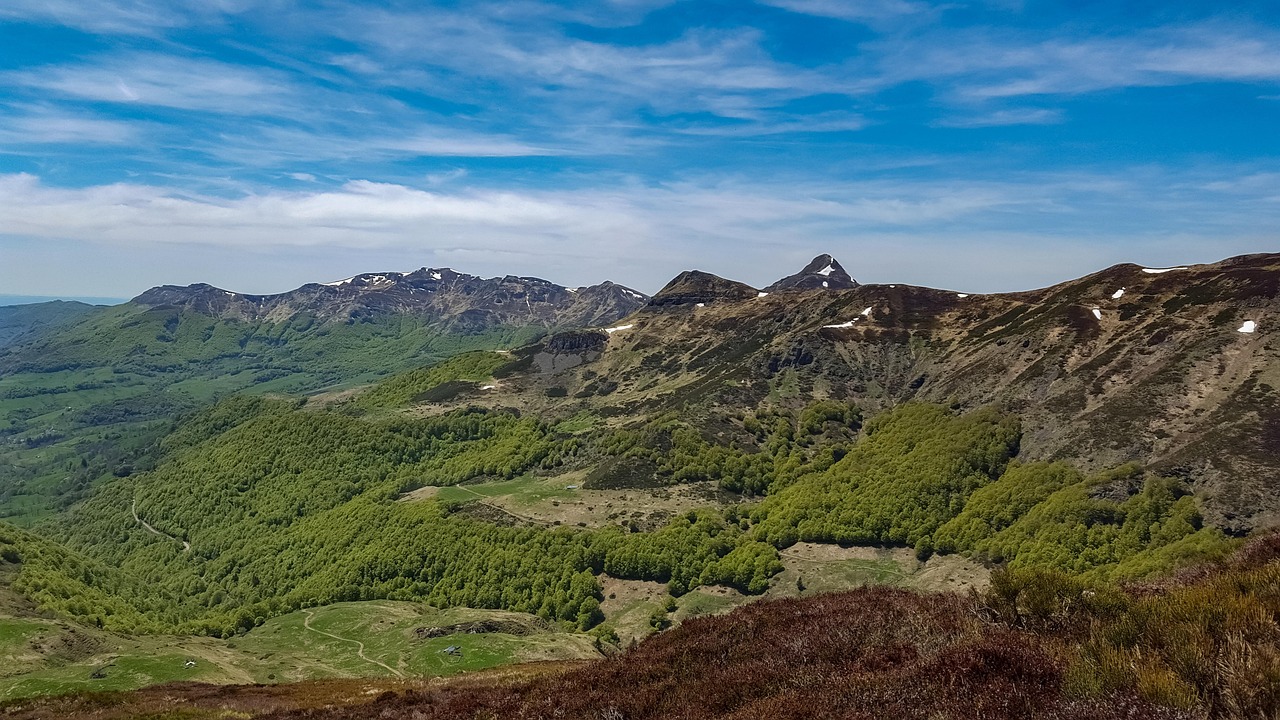
If you’ve ever looked at a map of France and wondered about that green, wrinkled heart in the middle – the part that never makes the glossy posters – you’ve been staring at my favourite mountains: the Monts du Cantal. They’re the eroded remains of one of Europe’s largest ancient volcanoes, a great collapsed cauldron of lava and time, fanned out into star-shaped valleys and soft, muscular ridges that still surprise me each season I return.
What makes Monts du Cantal special is not spectacle in the Alpine sense – no jagged 4,000 m peaks, no glitzy resorts – but a gentler, more intimate mountain world. Here, cows outnumber visitors, villages still run on church bells and market days, and you can hike an entire ridgeline in July and meet more marmots than people. Yet it has everything travelers dream of: sweeping panoramas, family-friendly hikes, wild winter skiing, hot springs, cheese caves, knife-makers, ancient burons (stone shepherd huts turned into tiny restaurants), and a quietly proud culture that rewards patience and curiosity.
I’ve been coming to the Monts du Cantal for over a decade now, most recently in spring and autumn 2026, and every visit has become a layered palimpsest of small details: the smell of wet hay near Pailherols, the way clouds snag on the Puy Griou like wool on a nail, the glow of Laguiole knives in a shop window in Murat, the taste of warm truffade after a freezing sunrise on the Plomb du Cantal. This guide is built from those days and nights on the slopes, valleys, passes, and in the villages – and it’s written for those who want more than a checklist.
Whether you’re planning a 4 day itinerary for Monts du Cantal or stretching it to 5, 6, or 7 days, this travel guide for Monts du Cantal will help you go deeper: from must-see attractions and hidden gems to local food, cultural experiences, and very practical travel tips.
Table of Contents
- 1. Understanding the Monts du Cantal
- 2. Suggested Itineraries (4–7 Days)
- 3. Peaks, Valleys, Passes & Villages – 15 Places in Depth
- 4. Mountain Dining & Local Food in Monts du Cantal
- 5. Evenings in Monts du Cantal
- 6. Day Trips & Nearby Attractions
- 7. Cultural Experiences, Local Customs & Etiquette
- 8. Practical Travel Advice & Logistics
- 9. Mountain-Specific Logistics & Safety
- 10. What’s New in 2026–2027: Events & Trends
- 11. Summary & Final Recommendations
Understanding the Monts du Cantal
The Monts du Cantal lie in the Auvergne region of central France, in the département of Cantal. At their core is an enormous ancient stratovolcano, active between 13 and 2 million years ago. Instead of one dramatic cone, erosion has left a starburst of valleys (the “vallées en étoile”) – each with its own character and villages, separated by grassy ridgelines and blunt puys (peaks).
The highest point is the Plomb du Cantal (1,855 m), followed closely by a family of peaks – Puy Mary, Puy Griou, Puy de Peyre Arse, Puy de Sancy farther north in the broader Massif Central – that offer superb hiking and, in winter, skiing and snowshoeing. The main valleys radiate to towns like Aurillac (west), Murat (east), Saint-Flour (farther east), Vic-sur-Cère (northwest), and Salers (north).
Unlike the Alps, public transport is limited, cable cars are sparse, and the vibe is decidedly rural. But with a car and a willingness to slow down, you can stitch together a rich tapestry of things to do in Monts du Cantal: hikes between burons, village markets, small ski areas, hot springs, wildflower meadows, waterfalls, and sleepy Romanesque churches.
Suggested Itineraries: 4–7 Days in Monts du Cantal
All of these suggested itineraries are based on trips I’ve made between 2018 and 2026, adjusting for current opening times and the latest trail conditions. Use them as flexible frameworks rather than strict schedules. You’ll see repeated themes – Salers, Puy Mary, Plomb du Cantal – because they are, quite simply, the must-see attractions in Monts du Cantal. But I also weave in hidden gems and my favourite local food stops.
4 Day Itinerary for Monts du Cantal – The Essentials
If you only have 4 days in Monts du Cantal, focus on the volcanic heart: Salers, Puy Mary, the high ridges, and one or two valleys. I’ll describe it as I lived it on a late September trip in 2026 – crisp mornings, golden light, and cows coming down from the summer pastures.
Day 1 – Salers & The Northern Valleys
I arrived in Salers on a misty Monday around 10 am, the basalt houses half-veiled, the sound of cowbells drifting up from the slopes below. Salers is one of the “Plus Beaux Villages de France” and, despite the label, it hasn’t tipped into caricature. The stone houses lean inwards, shutters painted deep red or moss green, and every second doorway seems to hide a cheese shop or a café.
Morning: Wander the village slowly. Start at the Place Tyssandier d’Escous, with its arcades and views out to the Puy Violent and Puy Mary ridges. Pop into the small church to admire the sombre interior, then climb to the viewpoint at the edge of the ramparts. On clear mornings, the Monts du Cantal stretch like a frozen wave across the horizon.
Food stop: My ritual is a coffee and pâté aux pommes de terre slice at a café near the main square – warm, creamy potato wrapped in pastry, perfect for fortifying yourself for an afternoon walk.
Afternoon – First hike: If you’re easing into things, take the gentle loop out of Salers towards the Burons de Salers. It’s a 2–3 hour walk across pastures with wide views back to the village. In late September 2026, I had the path almost to myself, aside from one elderly shepherd who chatted candidly about the summer’s storms and pointed out where wolves had been seen.
Evening: Salers is an excellent base for families and couples. Stay in a small guesthouse in the village center – you’ll be able to walk to dinner. Order a plate of truffade (potatoes and Cantal cheese, grilled until crusty on top) with Salers beef. For dessert, try a gentian liqueur to toast your first night in the mountains.
Tip: In peak seasons (July–August and French school holidays), book your accommodation in Salers well in advance. Parking just outside the old village is free and easy; you rarely need to drive inside the historic core.
Day 2 – Puy Mary & The Pas de Peyrol
On my second day, I woke before dawn to chase sunrise at Puy Mary, and I still recommend it to anyone who can handle an early start. Puy Mary (1,783 m) is one of the most iconic peaks in France – a perfect pyramidal volcano from certain angles – and the view from its summit explains the geography of the region better than any map.
Morning – Pas de Peyrol & Puy Mary: From Salers, drive up the winding D680 to the Pas de Peyrol (1,589 m), the highest road pass in the Massif Central. It usually opens from May to October, depending on snow. In 2026, unseasonal late snow kept it closed until mid-May; always check local info before you go.
Park at the pass and climb the signed path to Puy Mary’s summit – allow 30–45 minutes up, 20–30 down. It’s steep but stepped and family-friendly in good weather. Kids love the sense of achievement at the top, where orientation tables point out each valley and peak: the Jordanne to Aurillac, the Maronne to Tournemire, the Santoire to Murat, the Mars to Riom-ès-Montagnes.
Midday – Ridge hike (for the adventurous): If you’re fit and the weather is settled, continue along the ridgeline to the Puy de Peyre Arse or Puy de Chavaroche. On a clear September day in 2026, I walked the arc towards Peyre Arse, the path threading along the crest with the valleys plunging away on both sides, the air smelling of heather and dry grass. This is where you get that awe-inducing sense of the ancient volcano’s size.
Lunch: Pack a picnic from Salers (cheese, charcuterie, a baguette, apples) and eat it tucked behind one of the low stone walls near the trail. There is a café and information center at the Pas de Peyrol, but I prefer the quiet of the slopes.
Afternoon – Scenic drives & viewpoints: Descend from the pass towards Mandailles-Saint-Julien in the Jordanne valley, stopping at the roadside viewpoints. This valley, deeply carved and wooded, is one of my favourite drives in the region, particularly in autumn when the beeches burn copper.
Evening: Either stay a second night in Salers, or move bases to Mandailles or Vic-sur-Cère to shorten the next day’s drives. In Mandailles, a couple of charming gîtes and a modest auberge offer dinner and bed under a tight canopy of stars.
Day 3 – Plomb du Cantal & Le Lioran
The Plomb du Cantal (1,855 m) may not have the famous silhouette of Puy Mary, but it’s the highest point in the range and, on a clear day, the views stretch to the Monts Dore in the north and the Aubrac plateau in the south. It’s also home to a small ski area and a cable car, making it one of the more accessible high-altitude experiences for families.
Morning – Le Lioran & cable car: Drive to Le Lioran, a purpose-built resort town tucked in the forest between the Cirque de Font d’Alagnon and the Cère valley. In winter, it’s all about skiing; in summer, it’s a green base for hiking and mountain biking. In 2026, the cable car (téléphérique) to the Plomb du Cantal was operating daily from June to early September; shoulder seasons often move to weekend-only service.
Take the cable car up and wander the easy trails along the summit ridge. This is a perfect morning for mixed groups: serious hikers can branch off for a longer traverse to the Plomb du Cantal – Prat de Bouc route, while others linger at the top, enjoying the view with a coffee from the summit café.
Family-friendly option: From the cable-car top station, there’s a fairly flat walk to several viewpoints and a loop that my friends’ kids (aged 7 and 10) managed happily in about 90 minutes in August 2025. Sheep graze around you, bells clinking, and on weekends you may meet trail runners gliding past – the Monts du Cantal are quietly becoming a training ground for endurance athletes.
Afternoon – Cère valley & Vic-sur-Cère: After descending, follow the Cère valley down to Vic-sur-Cère. I usually stop at one of the picnic areas near the cascade de la Roucolle for a short walk and some shade. Vic-sur-Cère itself has a small, old spa-town atmosphere – faded villas, a park with mineral springs, cafés under plane trees. It’s a gentle contrast to the wildness of the morning.
Evening: Stay in Vic-sur-Cère or drive on to Aurillac (about 30–40 minutes) for a slightly more urban evening – restaurants, wine bars, and, if you’re lucky, a concert or festival event (Aurillac is famous for its street-theatre festival in August, though that’s outside this 4-day window for many).
Day 4 – Aurillac & Jordanne Valley Hidden Corners
Morning – Aurillac: Aurillac is the administrative heart of Cantal, a small town of slate roofs and umbrella factories (yes, really – it’s historically known for umbrella-making). I like to spend a morning here browsing the market (especially on Wednesday and Saturday), picking up local cheese (Cantal, Salers, Bleu d’Auvergne) and charcuterie. It’s also the place to stock up on any gear you forgot – from hiking socks to gas canisters.
Lunch: Grab a set lunch (menu du jour) at a brasserie on the main square. In 2026, many were offering hearty dishes for under €16 – a good way to save money in a high-cost mountain region compared to tourist menus in smaller villages.
Afternoon – Jordanne Gorges: Drive up the Jordanne valley towards Mandailles-Saint-Julien again, but this time stop at the Gorges de la Jordanne – an accessible, partly boardwalked trail through a narrow, mossy gorge. This is a wonderful family outing on a hot afternoon, shaded and cool. It’s also a romantic walk in shoulder seasons, when water levels are higher and the light slants between the trees.
Evening – Last-night feast: For your final night, I recommend returning to a valley village like Mandailles or Vic-sur-Cère for a slow dinner – local charcuterie, aligot or truffade, and a bottle of Auvergne red. Raise a glass to the fact that, despite being easily accessible with a car, the Monts du Cantal still feel like a secret.
This 4 day itinerary for Monts du Cantal gives you a strong sense of place: an iconic peak (Puy Mary), the highest summit (Plomb du Cantal), a beautiful village (Salers), and a lived-in town (Aurillac), with hikes suitable for varying levels. If you can, though, stay longer.
5 Day Itinerary for Monts du Cantal – Adding Depth
With 5 days in Monts du Cantal, you can slow down and add one more valley and village, plus a deeper hike. On a May 2026 trip, I followed the 4-day structure but wove in Saint-Flour and the Santoire valley.
Day 5 – Murat & The Santoire Valley (Extension)
Morning – Murat: Murat is a compact, basalt-stone town crouched below volcanic necks and cliffs. It has a slightly austere beauty – grey houses, steep lanes, and a church that seems to grow from the rock itself. I arrived on a damp May morning, clouds snagging the surrounding peaks, and spent an hour just wandering, photographing doorways and cats in windows.
Climb up to the Roc de Cheylade viewpoint for a panorama over the town. In 2026, a new interpretive panel explained the volcanic history in simple French and English – a welcome addition for geology-curious travelers.
Afternoon – Santoire valley & Puy de Peyre Arse access: From Murat, drive up the Santoire valley towards Laveissière and the trailheads for Puy de Peyre Arse and Puy de Chavaroche. Even if you don’t plan a full summit hike, the valley itself is lovely for shorter walks through meadows and alongside streams, particularly in late spring when wildflowers are at their peak.
For hikers: If conditions are good, tackle a half-day hike up towards Peyre Arse (1,806 m). The path is steeper and more rugged than Puy Mary’s tourist route and feels more remote. On my May 2026 ascent, snow still lingered in north-facing hollows, and the only people I saw were two local trail runners and a shepherd mending a fence.
Evening: Either overnight in Murat (there are a couple of characterful small hotels and guesthouses) or return to Le Lioran or Vic-sur-Cère, depending on your onward route. The extra day turns a 4 day itinerary for Monts du Cantal into a 5 day itinerary that earns you a deeper relationship with the landscape – you begin to recognize individual peaks and valleys from different angles, and that’s when the region really comes alive.
6 Day Itinerary for Monts du Cantal – Adding Hot Springs & Plateaux
For 6 days in Monts du Cantal, I recommend adding the thermal town of Chaudes-Aigues and the rolling plateaux towards Aubrac. On a chilly October 2024 trip, this combination of mountain and hot water felt just right.
Day 6 – Chaudes-Aigues & The Southern Edge
Morning – Drive to Chaudes-Aigues: From Saint-Flour or Murat, it’s about an hour to Chaudes-Aigues, a small spa town whose claim to fame is having some of Europe’s hottest natural springs (up to 82°C). The name literally means “hot waters.” Steam curls up from grates and fountains; in winter, the streets feel like they’re breathing.
Spa time: Book a morning or afternoon at one of the thermal centers – in 2026, several were offering affordable 2–3 hour packages. The pools are fed by the hot springs and are particularly welcome if you’ve been hammering your legs on the ridges.
Afternoon – Short walks & plateaux: Use the afternoon to explore the surrounding plateaux – softer landscapes than the central volcano, with rolling fields and distant views back to the Monts du Cantal. This is a good day for couples seeking something more romantic and less strenuous: picnic baskets, farm visits, and sunset walks rather than summit scrambles.
Evening: Stay in Chaudes-Aigues or nearby. Dinners here lean heavily into local beef, lentils, and creamy sauces. Ask for recommendations on which springs are safe to touch; some are so hot they will scald.
By the end of 6 days in Monts du Cantal, you’ll have touched multiple faces of the region: volcanic heart, deep valleys, forested ski areas, old towns, and hot-spring plateaux. For those who can stay a full week, however, I always suggest pushing into the quieter western valleys.
7 Day Itinerary for Monts du Cantal – A Full Week in the Volcano
With 7 days in Monts du Cantal, you can build a 7 day itinerary that balances iconic highlights and hidden gems. On my longest continuous stay, in July 2023, I structured the week like this:
Day 7 – Tournemire, Anjony Castle & The Maronne Valley
Morning – Tournemire: Tournemire is another “Plus Beau Village de France,” a string of stone houses along a ridge, dominated by the fairy-tale Château d’Anjony, a 15th-century fortress with four round towers. Arrive early to beat the tour groups and wander the lane, peeking through gates at vegetable gardens and cats sprawled on warm stone.
Castle visit: The château is still owned by the same family and can only be visited on guided tours (in French, with printed summaries in English). In 2026, new evening summer tours with lantern-light were being piloted – a romantic option for couples. Inside, the frescoes and furniture feel lived-in rather than museum-staged.
Afternoon – Maronne valley hiking: From Tournemire, drive or walk down into the Maronne valley. Trails thread through chestnut forests and past old mills. These paths are less frequented than those near Puy Mary and give a sense of everyday rural Cantal. I once spent an entire July afternoon following an unmarked farm track above the river, eventually sharing a beer with a farmer who found me studying his old stone barn as if it were an art installation.
Evening: End your week with a slow dinner back in Salers or Aurillac, depending on your departure plans. If the sky is clear, drive a little way out of town after dark, pull into a lay-by, and step into the quiet. The Milky Way is often visible to the naked eye here – one of my clearest memories from a summer night in 2023, lying on the bonnet of the car, counting shooting stars.
A 7 day itinerary for Monts du Cantal gives you not just a holiday but a relationship with the landscape. You start to recognize the curve of each peak, the smell of rain on basalt, the rhythm of cows and cheese and clouds. And when you leave, you’ll likely be planning your return.
15 Peaks, Valleys, Passes & Villages in Depth
Below is a sub-article within this travel guide: detailed portraits of fifteen of the best places to visit in Monts du Cantal – peaks, valleys, passes, and villages. I’ve grouped them roughly by geography and character. For each, you’ll find altitude, accessibility, what it’s best known for, seasonal advice, and my own experiences and tips.
1. Plomb du Cantal (1,855 m) – The High Roof of Cantal
Altitude: 1,855 m
Best for: Panoramic views, hiking, trail running, skiing (Le Lioran), family-friendly summit via cable car.
Bases: Le Lioran (winter/summer activities), Laveissière, Vic-sur-Cère.
The Plomb du Cantal doesn’t shout, it sprawls – a long crest of grass and rock that feels more like a high plateau than a single peak. I first climbed it on foot from Prat de Bouc in 2015, stumbling up through low cloud and cow pastures until I popped out into a sunlit world above the mist. Since then, I’ve returned half a dozen times, sometimes hiking, sometimes cheating with the Le Lioran cable car when traveling with family.
Access & routes: In summer, the easiest access is via the cable car from Le Lioran; from the top station, paths radiate along the crest. For a more “earned” summit, hike from the Col de Prat de Bouc (1,396 m), a broad pass with parking and a couple of auberges. The trail winds up through meadows and ski pistes, then along the ridge. It’s not technically difficult but can feel exposed in bad weather; lightning storms roll in fast here.
Seasonality: In winter, the Plomb du Cantal is the top of the Le Lioran ski area, with a mix of pistes and off-piste terrain. In shoulder seasons (April–May, October–November), expect snow patches and highly variable weather – bring layers, waterproofs, and, if there’s snow and ice, microspikes or light crampons.
My tip: On clear days, do a sunrise or sunset hike. In June 2022, I started from Prat de Bouc at 4:30 am, reaching the ridge as the sky turned violet. From the top, the Monts du Cantal appeared as dark islands in a sea of fog filling the valleys – one of the most quietly spectacular sights I’ve ever witnessed here.
2. Puy Mary (1,783 m) – The Volcanic Icon
Altitude: 1,783 m
Best for: Classic views, introductory summit for families, ridge traverses, photography.
Bases: Salers, Mandailles-Saint-Julien, Le Falgoux.
Puy Mary is the poster child of the Monts du Cantal – its pyramid shape graces postcards, cheese labels, and in 2026, the branding of a new regional hiking initiative. I’ve seen it in all moods: a snowcap in February, a green tooth in July, a rusted blade in October. It always feels different, but it’s always busy in high season.
Access: Most people start from the Pas de Peyrol pass, where a large parking area and visitor center sit directly below the summit. In July and August, there’s sometimes a shuttle system to reduce traffic; check for 2026 updates on the regional park website. The stepped path, while steep, is wide enough for two and has handrails on the more exposed sections.
Beyond the summit: From the top, signed paths lead off towards Puy de Peyre Arse, Puy de Chavaroche, and the Col de Serre. One of my favourite day hikes, done in a breezy September 2020, was a loop from the Pas de Peyrol to the Col de Serre and back via the southern slopes – fewer people, more solitude, and a shifting view of the peak’s dramatic profile.
Best time: Early morning or late afternoon for softer light and thinner crowds. On a mid-August midday visit in 2023, the path felt like a human ant-trail; at 8 am the next day, I shared the summit with only three others and a loudly whistling marmot.
Safety note: The weather can be brutal here – I’ve been sandblasted by hail in July. Always bring an extra layer and check forecasts. In strong winds or fog, consider staying on lower trails.
3. Puy Griou (1,690 m) – The Rocky Tooth
Altitude: 1,690 m
Best for: Slightly more adventurous summit scramble, photography, intermediate hikers.
Bases: Le Lioran, Saint-Jacques-des-Blats, Thiézac.
The Puy Griou is my personal favourite peak in the Monts du Cantal. Its sharp, rocky cone rises from the smoother surrounding ridges like a shark’s fin, and the final ascent has just enough scrambling to feel like a mini-adventure without being full-on mountaineering.
Access & route: The standard route starts from the Col de Rombière or nearby trailheads off the D317 between Le Lioran and Saint-Jacques-des-Blats. You ascend across meadows, passing a couple of old burons, before tackling the steeper, rockier summit cone. In dry, snow-free conditions, most reasonably fit hikers with decent footwear can manage it; there are a few hand-over-foot moves but no serious exposure.
On a bright October afternoon in 2021, I took a friend up for her first “scrambly” summit. We sat on the narrow top, boots dangling over the void, watching clouds racing over the Plomb du Cantal. She confessed it was just at the limit of her comfort zone – and that’s exactly what I love about it.
Seasonality: Late spring through autumn, avoiding wet, icy days when the rocks can be treacherous. Not recommended in winter conditions unless you have proper gear and experience; the summit cone can ice over.
Tip: Combine the Puy Griou with a stop at a nearby buron-restaurant for lunch (more on these in the dining section). A plate of pounti (a local prune-and-herb loaf) tastes especially good after a rocky scramble.
4. Puy de Peyre Arse (1,806 m) – The Wild Ridge
Altitude: 1,806 m
Best for: Longer hiking, solitude, ridge walking, trail running.
Bases: Murat, Laveissière, Le Lioran.
If Puy Mary is the charismatic celebrity, Peyre Arse is the serious actor: understated, demanding more from its audience, and incredibly rewarding when you put in the effort. I first traversed it on a grey June day in 2018, starting from the Col du Redondet and following the ridge, alone except for a few wiry sheep.
Routes: Common approaches start from the Col du Redondet or from trailheads in the Santoire valley. The ridge requires a decent head for heights in places, as the path runs close to drop-offs. There are no technical climbing sections, but it’s a solid mountain hike, best for those with some experience.
Why go: The views here feel wilder and more expansive than from Puy Mary, because you see fewer roads and more unbroken slopes. It’s a favourite of trail runners; I’ve met several local athletes using it as a training ground for longer races in the Pyrenees and Alps.
Seasonality & safety: Best from late spring to early autumn. Avoid in thunderstorms – the exposed ridge makes you feel very small and very metal-attracting. I once had to retreat rapidly as thunder rolled in, jogging downhill while counting seconds between lightning flashes.
5. Salers – The Basalt Jewel
Altitude: ~950 m
Best for: Architecture, food, markets, as a base for northern valley hikes.
Bases: Salers itself (chambres d’hôtes, small hotels, gîtes).
Salers is the village that made me fall in love with Cantal. I arrived first on a rainy afternoon in 2013 and felt immediately wrapped in its basalt embrace – narrow lanes, overhanging upper stories, carved stone lintels. The next morning, the sun came out and the village transformed into a film set, every angle a photograph.
History: Prosperous from wool and trade in the late Middle Ages and Renaissance, Salers shows off that past in its grander houses and arcades. Many façades bear carved coats of arms; one local guide delighted in pointing out details – a sheep, a sun, a stylized volcano – that most visitors miss.
Food & drink: Salers is synonymous with two things: fromage Salers (a raw-milk, farmhouse cheese made only when cows are on pasture) and viande de Salers (beef from the local red-brown cattle). Several restaurants in the village serve both, often in generously portioned menus. In 2026, a couple of younger chefs were putting modern spins on traditional dishes – think truffade with foraged herbs, or Salers beef tartare with smoked Cantal shavings.
As a base: Salers makes a superb base for 2–3 nights in a 4, 5, 6, or 7 day itinerary in Monts du Cantal if you’re focusing on the northern valleys and Puy Mary. However, parking can be tight in peak season, and prices in the most atmospheric inns are higher than in less famous villages. To save money, consider staying in a nearby hamlet and driving in for dinners and strolls.
6. Tournemire & Château d’Anjony – Medieval Storybook
Altitude: ~780 m
Best for: Castle visit, romantic village wander, Maronne valley hiking.
Bases: Tournemire (limited; mostly day-trip), Salers, Aurillac.
I often pair Salers and Tournemire in a single day, but Tournemire merits more time if you’re a castle lover. The Château d’Anjony is a vertical statement – four round towers with conical roofs, rising from the village like something from a child’s drawing of “castle.” Inside, rooms feel intimate and slightly worn, in a good way; you sense that people still live here.
Guided tours: Tours are in French, but non-speakers can still enjoy the atmosphere and the views from the upper levels. In 2026, a few English-language tours were being tested on summer Saturdays; check ahead if that’s important to you.
Village charm: The main street is short but sweet, lined with stone houses and tiny gardens. I like to buy a pastry and sit on the low wall at the village edge, watching swallows loop over the valley.
Hiking: Trails drop into the Maronne valley and climb the opposite side for wide panoramas. One September afternoon, I followed a waymarked loop that passed through chestnut woods dripping with moss, then back up to open pastures. I met no one for three hours, only the rustle of leaves and the occasional distant chainsaw.
7. Aurillac – The Everyday Heart
Altitude: ~620 m
Best for: Markets, shopping, culture, rainy-day fallback.
Bases: Aurillac is a good base if you want urban comforts with day trips to the mountains.
Most mountain guides gloss over Aurillac, but if you’re spending 5–7 days in Monts du Cantal, it’s worth at least half a day. It’s where locals actually live, work, and shop, and it’s where I go when I need something practical – a new gas canister, a phone SIM, or waterproof gloves after underestimating a storm.
Markets & food: The weekly markets are a showcase of local produce – cheeses, cured meats, honey, lentils, apples, and, in season, ceps and chanterelles. In autumn 2025, I watched a long, good-natured argument between two elderly men about the relative merits of different Salers producers. That’s the level of cheese seriousness you’re dealing with.
Culture: Aurillac hosts the famous Festival International de Théâtre de Rue (street-theatre festival) every August. For 2026–2027, organizers are planning expanded installations and a thematic focus on “mountains and memory.” If your trip coincides, expect surreal performances spilling into every square and alley.
Why include it: From a travel-advice perspective, Aurillac is where you’ll most easily sort out logistics: car rental, banking, SIM cards, medical care if needed. It anchors your 4, 5, 6, or 7 day itinerary in Monts du Cantal in the real rhythms of the region.
8. Murat – Basalt Town of Towers
Altitude: ~890 m
Best for: Medieval architecture, access to eastern peaks, quieter base.
Bases: Murat, Laveissière, nearby hamlets.
Murat’s charm is more subtle than Salers’. It’s a working town built almost entirely from dark volcanic stone, ringed by dramatic rock outcrops. From above – say, from the Roc de Cheylade – it looks like a model laid at the foot of cliffs.
History & feel: Once an important stop on the route between Clermont-Ferrand and Aurillac, Murat’s prosperity has waxed and waned. In the 2020s, a trickle of newcomers (artists, remote workers) began to open small galleries and cafés. I spent a rainy March afternoon in 2022 nursing a coffee in a new café-bookshop, chatting with the owner about the balance between tourism and everyday life.
Access to mountains: Murat is strategically placed for accessing the Santoire valley, Le Lioran, and the eastern ridges. For hikers and skiers who prefer a “real town” to a resort, it can be a good base, often cheaper than Le Lioran and with better year-round services.
9. Le Lioran – Forested Resort Hub
Altitude: ~1,160 m (village), up to 1,855 m (Plomb du Cantal)
Best for: Skiing, snowboarding, snowshoeing, family summer activities, cable car access.
Bases: Le Lioran itself (apartments, hotels), nearby villages.
Le Lioran is the closest thing the Monts du Cantal have to an Alpine-style resort, but it’s smaller, more understated, and firmly French-family-oriented. In winter, I’ve watched lines of children in fluorescent bibs wobbling through their first ski turns; in summer, the slopes transform into mountain-bike tracks and grassy hiking trails.
Winter: The ski area covers about 60 km of pistes, mostly beginner and intermediate, with some off-piste possibilities when snow is good. It’s not the Alps, but it’s fun, affordable, and far less crowded. Apres-ski is low-key: hot chocolate, crêpes, maybe a beer on a terrace if the sun is out.
Summer: The cable car runs up to the Plomb du Cantal, and there’s a web of signposted trails. In 2026, a new tree-top adventure park and a small indoor climbing wall were planned to open, adding rainy-day options for families.
Who it suits: Families wanting convenience and activities, beginners to snow sports, travelers without cars (there’s a train station at Le Lioran). For those seeking silence and old-stone charm, it’s better as a day-trip than a base.
10. Vic-sur-Cère & The Cère Valley – Gentle Mountains
Altitude: ~680 m
Best for: Spa-town atmosphere, easy walks, central base.
Bases: Vic-sur-Cère (hotels, campsites, gîtes).
Vic-sur-Cère has a slightly faded Belle Époque charm – old villas, a riverside park, traces of its spa-town past. I like it as a base because it sits roughly between Aurillac and Le Lioran, with quick access up the Cère valley to higher trails, but it also has enough cafés and shops to feel comfortable on a rainy afternoon.
Activities: Easy riverside walks, short viewpoints hikes, and in summer, family-friendly events in the park. There’s a small thermal establishment, though much more modest than Chaudes-Aigues.
Who it suits: Those doing a 4 or 5 day itinerary for Monts du Cantal who want one stable, central base; older travelers; families with young kids who need playgrounds as much as peaks.
11. Jordanne Valley & Mandailles-Saint-Julien – The Green Deep
Altitude: ~800–900 m in valley floor
Best for: Access to Puy Mary and ridges, Gorges de la Jordanne, quiet base.
Bases: Mandailles-Saint-Julien, small hamlets along the valley.
The Jordanne valley is one of the greenest, steepest cuts into the Monts du Cantal. Driving up from Aurillac, you feel the walls closing in, the road twisting ever more tightly, until you burst into the little bowl holding Mandailles-Saint-Julien – a cluster of stone houses with the ridges looming above.
Hiking: From Mandailles, trails climb to the Pas de Peyrol, Puy Mary, and neighbouring peaks. It’s a superb base for hikers wanting to explore multiple ridgelines without constantly driving around the massif. I once did a three-day mini-trek from here, linking ridges and returning each night to the same guesthouse, grateful for a hot shower and a familiar bed.
Gorges de la Jordanne: Downstream, the Gorges de la Jordanne offer an easier, more family-friendly way to taste the valley’s drama. In 2026, infrastructure improvements were planned to upgrade some walkways and add interpretive signage about geology and flora.
12. Santoire Valley – Quiet Eastern Slopes
Altitude: ~900–1,200 m
Best for: Quieter hiking, wildflower meadows, access to Peyre Arse.
Bases: Laveissière, Murat, small gîtes.
The Santoire valley feels like a whispered secret. It doesn’t have the big-name peaks looming directly over it or a famous village at its mouth, but its meadows and forested slopes are quietly lovely, especially in late spring when orchids, gentians, and buttercups turn fields into tapestries.
Hiking & flora: Several paths climb from the valley floor to the eastern ridges, including approaches to Puy de Peyre Arse. On a June 2024 botany walk, a local guide showed us how different grasses and flowers mark the boundaries of old, invisible fields. Cantal’s landscapes are as much about centuries of pastoralism as they are about volcanic drama.
Who it suits: Hikers and nature lovers who prefer understatement to spectacle. It’s a good choice for a base if you’re revisiting the region and have already ticked off Puy Mary and Salers.
13. Maronne Valley – Chestnuts & Old Mills
Altitude: ~500–900 m
Best for: Forest walks, cultural landscapes, Tournemire access.
Bases: Tournemire, small gîtes, Aurillac as day-trip base.
The Maronne valley, stretching west from Tournemire, is a softer landscape than the high cirques – chestnut woods, small farms, stone bridges over lazy water. It’s where you see how people have shaped the land for centuries: terraces, irrigation channels, crumbling mills now choked with moss.
Walking through history: One of my favourite half-day walks follows an old path that once connected hamlets to a now-ruined mill. My local friend Pierre, who grew up here, pointed out where his grandmother used to walk weekly to grind grain. These are the kinds of “cultural experiences in Monts du Cantal” that don’t appear on brochures but shape your understanding of the place.
14. Pas de Peyrol (1,589 m) – The High Road
Altitude: 1,589 m
Best for: Road pass views, access to Puy Mary, cycling challenges, scenic drives.
Bases: Salers, Mandailles-Saint-Julien, Le Falgoux.
The Pas de Peyrol is both a gateway and a bottleneck. It’s where hikers start for Puy Mary, where road cyclists test themselves on hairpins, and where, in high season, campervans creep nervously along the drop-offs.
Driving: The road usually opens sometime in May and closes with the first serious snow, often in November. In 2021, a late May storm dumped 20 cm of snow, catching out a few overly optimistic drivers in summer tires. Always check conditions if traveling in shoulder seasons.
Cycling: For cyclists, the climb from either Salers or Mandailles is a highlight of a 4, 5, 6, or 7 day itinerary in Monts du Cantal. The gradients are stiff but not monstrous; the reward at the top is a coffee at the café and a sense of accomplishment.
Tip: Arrive early in the day to secure parking and avoid the worst of the crowds. And never park blocking the bus or shuttle turnarounds – local patience is finite.
15. Col de Prat de Bouc (1,396 m) – Pastures & Crossroads
Altitude: 1,396 m
Best for: Family hikes, cross-country skiing, gateway to Plomb du Cantal.
Bases: On-site auberges, nearby villages like Albepierre-Bredons.
The Col de Prat de Bouc feels like an inland port – a wide, grassy saddle where paths, ski tracks, and transhumance routes meet. In summer, cows graze around the parking area; in winter, cross-country ski tracks lace the fields while downhill skiers head up towards the Plomb du Cantal.
Activities: Easy loops for families, longer hikes up to the Plomb du Cantal, picnics with 360-degree views. I’ve spent entire days here just meandering along low paths, stopping to watch clouds and cattle.
Seasonality: In winter 2026–2027, local authorities were investing in improved cross-country skiing signage and grooming equipment; expect better-maintained tracks than in the early 2020s.
Mountain Dining in Monts du Cantal
Mountain dining is one of the purest joys of traveling here. Forget delicate foams and tweezered herbs; this is the land of molten cheese, potatoes, and slow-cooked beef. After a long hike, a plate of truffade eaten in a stone buron with smoke-blackened beams feels almost sacramental.
Burons & Alpine Inns
Burons are old stone shepherd huts where cheese was traditionally made on the summer pastures. Many have been restored as tiny restaurants, often open only from late spring to early autumn and sometimes only for lunch.
On a July 2022 trek, I stopped at a buron above the Cère valley. Inside, a wood stove flickered, and the owner – whose family had made Cantal cheese there for generations – served us soup, charcuterie, and a truffade that nearly defeated us. No printed menu, just whatever he felt like cooking that day.
Tip: Always book if you can, especially on weekends. Burons are small and locals love them. Many accept cash only or have patchy card connections.
Signature Dishes
- Truffade: Sliced potatoes fried and then bound with Tome fraîche (young Cantal cheese), sometimes with garlic and herbs. Crispy outside, gooey inside.
- Aligot: Mashed potatoes whipped with Tomme cheese until they stretch into long, elastic ribbons. More common just south in Aubrac, but present in Cantal too.
- Pounti: A savoury loaf of batter, herbs, and prunes, sliced and fried. Sounds odd, tastes addictive.
- Salers beef: Deeply flavoured, often served as steak or stewed in red wine.
- Cheeses: Cantal (young, entre-deux, vieux), Salers, Bleu d’Auvergne, Saint-Nectaire (from neighbouring area).
Coffee & Pastry Culture
Cafés in Monts du Cantal are not about latte art; they’re about ritual. Morning coffee at the bar with locals leafing through newspapers, afternoon terrace stops for a noisette (espresso with a dash of milk) after a hike. Pastry-wise, look for tarte à la myrtille (blueberry tart), fouace (a brioche-like bread), and seasonal fruit tarts.
Where to Stay: Village vs Slope-side vs Refuge
Village stays: Villages like Salers, Murat, Vic-sur-Cère offer character, access to restaurants, and a sense of local life. They’re ideal for most travelers, especially those planning 4 or 5 days in Monts du Cantal.
Slope-side (Le Lioran): Convenient for skiing and cable-car access, good for families and those without cars. Less atmospheric but practical.
Refuges & gîtes d’étape: On longer hikes, stay in simple mountain accommodations, often dorm-style, with half-board (dinner and breakfast). In 2026, a couple of new gîtes were planned along popular GR routes crossing the massif.
Saving Money on Food
- Opt for menu du jour at lunch – often €14–18 for two or three courses.
- Picnic with market produce on hiking days instead of restaurant lunches.
- Self-cater some dinners if staying in a gîte with a kitchen.
- Drink carafes of tap water (une carafe d’eau), which are free and expected.
Evenings in Monts du Cantal
Evenings here are quiet compared to the Alps or big cities, but that’s part of the charm. The soundtrack is cowbells in the distance, church clocks, and the low murmur of conversation from village bars.
Après-Ski & Après-Hike
In Le Lioran in winter, après-ski means hot chocolate or mulled wine on a terrace, families streaming off the slopes, kids red-cheeked and exhilarated. In summer, après-hike tends to be a beer or diabolo (syrup with lemonade) on a village square.
Village Bars & Fondue Nights
Many small inns offer special evenings – fondue or truffade nights, sometimes with live accordion or folk music. In a tiny inn near Prat de Bouc, I once found myself swept into an impromptu dance lesson, learning a local circle dance from a farmer and his wife who’d “popped in for one drink” and stayed until midnight.
Stargazing
With low light pollution, the Monts du Cantal are excellent for stargazing. Bring a warm layer and a headlamp with a red light mode, drive a short distance from any village, and simply look up. In August, you may catch the Perseid meteor shower; in winter, Orion glitters above snowy ridges.
Seasonal Festivals
- Summer: Village fêtes with music and dancing, local produce fairs, and occasional night markets. Check posters at tourist offices; many events are not widely advertised online.
- Autumn: Harvest and chestnut festivals in lower valleys, often with tastings of new cheese and charcuterie.
- Winter: Christmas markets in towns like Aurillac and Saint-Flour, smaller and more local than big-city versions but charming.
Day Trips & Nearby Attractions
If you’re spending 6 or 7 days in Monts du Cantal, consider a day trip or two to nearby regions to round out your experience.
Aubrac Plateau
South of Cantal, the Aubrac plateau offers wide horizons, stone crosses, and a different style of mountain culture. It’s famous for aligot and Aubrac cattle. From Chaudes-Aigues, it’s an easy day trip: drive up, hike a gentle loop, eat lunch in a buron, and return by late afternoon.
Saint-Flour
Perched on a volcanic promontory, Saint-Flour is a striking small town with a dark cathedral and sweeping views over the Truyère valley. It’s worth a half-day, especially in bad weather when high trails are unpleasant. Combine with Chaudes-Aigues for a full-day circuit.
Vulcania & Puy de Dôme (Farther Afield)
About two hours north, near Clermont-Ferrand, lie the Chaîne des Puys (another volcanic chain) and the Puy de Dôme, plus the Vulcania theme park. These make a great “volcano nerd” day trip if you’re interested in geology and traveling with kids, but they’re at the edge of what I’d recommend as a day trip from central Cantal.
Cultural Experiences, Local Customs & Etiquette
Cantal is rural, conservative in some ways, and quietly proud. Visitors who slow down, greet people properly, and respect local rhythms are usually rewarded with warmth and generosity.
Everyday Etiquette
- Greetings: Always say Bonjour (daytime) or Bonsoir (evening) when entering shops, cafés, or passing people on quiet trails. Not doing so is considered rude.
- Language: French is dominant; English is spoken by some in tourism but not all. A few phrases (Bonjour, S’il vous plaît, Merci) go a long way. Older locals may also speak Occitan/Auvergnat dialects with each other.
- Meals: Lunch is often 12:00–14:00; many restaurants close in the afternoon and reopen around 19:00–19:30 for dinner. Don’t expect to eat dinner at 18:00.
Cheese & Cow Culture
Cows are not just landscape decoration; they’re central to economy and identity. Salers cows in particular are treasured. Respect fences, never approach calves, and never let dogs harass livestock. On a June 2021 hike, I watched a farmer politely but firmly explain to a visitor that drone-flying over his herd was distressing the animals – and that it was forbidden.
Markets & Buying Local
Buying directly from farmers at markets or farm shops is both a cultural experience and an ethical choice. Ask before photographing stalls or people; most will say yes if you ask kindly and show interest in their products.
Religious & Historic Sites
Many churches are open during the day. Dress modestly, keep voices low, and avoid using flash photography. In small villages, churches may be opened only on request; enquire at the mairie or local café.
Practical Travel Advice & Logistics
Getting There & Around
By train: Aurillac, Murat, and Le Lioran have train stations with connections from Clermont-Ferrand and other hubs. For those doing a 4 day itinerary for Monts du Cantal without a car, basing in Le Lioran or Aurillac and using local buses/taxis is possible but limiting.
By car: A car is by far the most flexible way to explore, especially for 5, 6, or 7 days in Monts du Cantal. Roads are generally good but narrow and winding near passes.
Driving & Licenses
- Most foreign driver’s licenses from EU/EEA and many other countries are accepted; check French government guidance for your nationality.
- Drivers from outside the EU may need an International Driving Permit (IDP) alongside their home license.
- Always carry license, passport, and insurance documents in the car.
SIM Cards & Connectivity
In 2026, major French providers (Orange, SFR, Bouygues, Free) all cover Cantal reasonably well in towns and valleys, but expect patchy or zero reception on ridges and in deep gorges.
- Buy prepaid SIMs in Aurillac or larger towns; bring your passport.
- eSIM options are increasingly available for tourists; check online before travel.
Money-Saving Tips
- Travel in shoulder seasons (May–June, September–early October) for lower prices and fewer crowds.
- Self-cater some meals and picnic for lunch.
- Base in less-famous towns (Murat, Vic-sur-Cère) rather than only Salers.
- Use regional tourist passes or combined museum tickets when available; check tourist offices for current offers.
Visa Requirements
Monts du Cantal is in France and the Schengen Area. Visa requirements depend on your nationality. Many travelers (e.g., EU/EEA, UK, US, Canada, Australia, New Zealand, Japan) can enter visa-free for short stays (up to 90 days in any 180-day period), but rules change – check official French consular websites before travel.
Mountain-Specific Logistics & Safety
Altitude & Acclimatisation
Heights in Monts du Cantal are modest (up to 1,855 m). Most people experience no altitude issues. However, rapid weather changes can make it feel more serious – don’t underestimate mountains just because they’re not the Alps.
Weather, Storms & Road Closures
- Storms: Afternoon thunderstorms are common in summer. Start hikes early, aim to be off exposed ridges by mid-afternoon.
- Snow & ice: Can linger into May on north-facing slopes and return as early as October.
- Road passes: Pas de Peyrol and some minor passes close in winter and during heavy snow. Check local authorities or tourist offices.
Avalanche Risk
In winter, avalanche risk exists on certain slopes, especially near Le Lioran and around steep couloirs. Check Météo-France avalanche bulletins if venturing off-piste or snowshoeing away from marked areas.
Gear & Clothing
- Summer: Sturdy hiking shoes/boots, waterproof jacket, warm mid-layer, hat, sunscreen, 1.5–2 L water, map or offline GPS, basic first-aid.
- Shoulder seasons: Add gloves, beanie, and consider light crampons/microspikes if snow/ice remains.
- Winter: Insulated layers, waterproof outerwear, gaiters, proper winter boots, avalanche gear if leaving groomed areas and you’re trained to use it.
Mountain Rescue & Insurance
France has a professional mountain-rescue system, but you should still carry appropriate travel insurance that covers hiking, skiing, and rescue costs. In emergencies, dial 112 (EU emergency number). Provide clear information on location, injuries, and weather.
Cable-Car & Lift-Pass Strategy
For Le Lioran:
- In winter, evaluate whether a multi-day ski pass or single days make more sense based on your itinerary.
- In summer, buy one-way or return tickets for the Plomb du Cantal cable car depending on whether you plan to hike down.
Best Seasons for Activities
- Hiking & wildflowers: Late May–June (depending on snow), and September for stable weather and fewer crowds.
- Summer family holidays: July–August, with all services open, but more crowds at Puy Mary and Salers.
- Fall colors: Late September–October in valleys (Jordanne, Cère, Maronne).
- Skiing & snowshoeing: Late December–March (conditions vary year to year).
What’s New in 2026–2027: Events & Trends
Tourism in Monts du Cantal remains relatively low-key, but 2026–2027 is seeing a few noteworthy developments:
- Expanded street-theatre festival in Aurillac (August 2026 & 2027): New programming focused on mountain themes, with performances in some valley villages as well as the town center.
- Burons heritage program (2026–2028): Regional funding to restore several historic burons, some of which will reopen as small museums or seasonal eateries. Expect new openings near the Cère and Jordanne valleys.
- Trail network improvements: Enhanced waymarking on certain GR (long-distance) routes crossing the Monts du Cantal, plus new interpretive panels about volcanic geology at major viewpoints (Puy Mary, Peyre Arse, Plomb du Cantal).
- Eco-transport initiatives: Pilot shuttle-bus services on busy summer weekends to the Pas de Peyrol from Salers and Mandailles, aiming to cut private-car traffic and parking pressure.
Summary & Final Recommendations
Monts du Cantal is not a place you “do” in a weekend; it’s a landscape you grow into, even if you’re only here 4 days. The more time you give it – 5 days, 6 days, 7 days in Monts du Cantal – the more it gives back: secret paths between burons, unexpected conversations with farmers at markets, the feel of basalt under your boots and above your head.
Key takeaways:
- For a 4 day itinerary for Monts du Cantal, focus on Salers, Puy Mary, Plomb du Cantal, and one valley (Jordanne or Cère).
- For 5–6 days, add Murat and the Santoire valley, plus Chaudes-Aigues and the southern plateaux.
- For a full 7 day itinerary for Monts du Cantal, weave in Tournemire, the Maronne valley, and extra ridge hikes on Peyre Arse or Puy Griou.
- Base strategically: mix one or two village bases (Salers, Murat, Vic-sur-Cère) with perhaps a night at Le Lioran or Prat de Bouc if you’re keen on early starts in the high mountains.
- Eat locally: burons, markets, and village inns are the best places to sample authentic local food in Monts du Cantal.
- Respect the mountains: watch the weather, carry proper gear, and remember that even “small” peaks can be serious in storms or winter conditions.
Best seasons overall:
- Late May–June: Ideal for hikers and flower lovers, quieter than peak summer.
- September–early October: My personal favourite – stable weather, warm days, cool nights, and golden light.
- Winter (Jan–March): Best if your focus is skiing or snowshoeing, with Le Lioran and Prat de Bouc as hubs.
If you come with curiosity, patience, and good boots, the Monts du Cantal will reward you with wide skies, honest food, and a sense of having discovered a corner of France that still belongs, mostly, to itself.