Why Visit Omaha Beach in 2026
Each time I return to Omaha Beach, I’m struck by the same contrast: the quiet hiss of waves rolling over a vast, pale-gold shoreline, and the weight of history that hangs in the air. In 2026, more than 80 years after D-Day, Omaha Beach is no longer just a battlefield; it’s a living stretch of Normandy coastline where families picnic, surfers chase soft Atlantic swells, and locals argue about the best place for moules-frites.
If you’re considering 3–5 days in Omaha Beach, you’re not just ticking off a World War II site. You’re stepping into a coastline of wide sandy beaches, cliff-top villages, and small fishing harbors that still feel surprisingly unhurried compared with France’s more famous shores. This travel guide for Omaha Beach is based on multiple visits between 2018 and early 2026, in every season from misty February mornings to fiery October sunsets.
What makes Omaha Beach special isn’t only what happened here on 6 June 1944. It’s how that memory coexists with normal, gentle seaside life: kids flying kites where soldiers once landed; couples walking dogs past bunkers half-buried in dunes; a glass of chilled cider in hand as the tide walks slowly out over the sand flats.
In the pages below, you’ll find 3, 4, and 5 day itineraries for Omaha Beach, detailed spot-by-spot breakdowns of the best places to visit in Omaha Beach, honest recommendations for local food in Omaha Beach, and a deeply practical section on travel tips for Omaha Beach: tides, transport, SIM cards, car rental, and how to keep your visit respectful in a place where so many people never got to leave.
Table of Contents
- Why Visit Omaha Beach in 2026
- Omaha Beach Overview: Geography, Vibe & When to Go
- The 10 Main Beach Sections & Nearby Coastal Spots
- 1. Colleville-sur-Mer & Eastern Omaha
- 2. Saint-Laurent-sur-Mer & The Heart of Omaha
- 3. Vierville-sur-Mer & Western Omaha
- 4. Pointe du Hoc Cliffs
- 5. Port-en-Bessin-Huppain Fishing Harbor
- 6. Arromanches-les-Bains & Gold Beach Remains
- 7. Grandcamp-Maisy & The Quiet Western Edge
- 8. Longues-sur-Mer Clifftop Battery & Coastal Path
- 9. Asnelles & Meuvaines: Wide Sands & Kites
- 10. The Hinterland Hamlets & Country Lanes
- Suggested Itineraries: 3, 4 & 5 Days in Omaha Beach
- Seafood, Beach Bars & Where Locals Actually Eat
- Evenings at Omaha Beach
- Cultural Etiquette & Local Customs
- Day Trips & Nearby Attractions
- Practical Travel Advice for Omaha Beach
- Beach-Specific Logistics: Tides, Safety, & Gear
- Events & What’s New in 2026–2027
- Summary & Best Seasons to Visit
Omaha Beach Overview: Geography, Vibe & When to Go
Omaha Beach unfolds along roughly 8 kilometers of Normandy’s Côte de Nacre, between the small villages of Vierville-sur-Mer in the west and Colleville-sur-Mer in the east. It’s one of the five Allied landing beaches, but unlike its neighbors, Omaha is framed by steep bluffs and soft, shifting dunes that give it a more dramatic, wild feel.
Today, the beach is divided more in spirit than by any official marker: each section carries its own character, based on the nearest village or landmark. Some parts are perfect for families, others feel almost made for quiet, romantic walks, and a few corners are where you’ll actually see surfers and kiteboarders on a good swell.
When to Visit: Seasons & What They’re Best For
- March–May: Cool, often bright, and relatively empty. Ideal for history-focused trips and hikers who don’t mind a bit of wind. Wildflowers along the clifftops.
- June: Historically the busiest period around the D-Day commemorations (early June), but after mid‑June it settles into a more typical early summer rhythm. The most poignant time for cultural experiences in Omaha Beach.
- July–August: Peak French holiday season, warmest water, longest days. Best for swimming and family beach time, but expect crowds at key sites and pricier accommodation.
- September–October: My personal favorite. Sea still relatively warm, light is golden, and there’s a relaxed, unhurried feel. Great for long walks, photography, and mixed itineraries.
- November–February: Stormy, atmospheric, and very quiet. Some restaurants and smaller museums close or reduce hours, but this is when you really feel the rawness of the coast. Bring layers and waterproofs.
The 10 Main Beach Sections & Nearby Coastal Spots
Below are ten key areas that together make up the soul of Omaha Beach and its immediate surroundings. I’ve visited each multiple times, in different seasons, to get a feel for how they change — and which ones I return to, even when I’m “off duty” as a writer.
1. Colleville-sur-Mer & Eastern Omaha: Quiet Reverence and Wide Sands
My first memory of Colleville-sur-Mer is a sunrise in late September 2020. I’d driven down from Bayeux in the half-dark, coffee in a travel mug, and reached the bluff just as a thin line of orange appeared over the English Channel. The tide was far out; the beach looked impossibly wide, a mirror of wet sand reflecting the sky. It was almost silent, apart from the distant crackle of waves and the occasional crow calling from the pine trees behind me.
This eastern sector of Omaha Beach is anchored by the Normandy American Cemetery, which sits above the sand like a perfectly tended garden of white crosses and Stars of David. It’s one of the most emotionally powerful places in Normandy, and even after a dozen visits, I still find myself walking more slowly as I approach.
Below the cemetery, a winding path leads down to the beach itself. At low tide, you can walk for what feels like miles, the sand firm and shallowly rippled. Families often cluster closer to the main access, but if you walk 10 minutes east or west, you can usually find your own quiet patch, even in summer.
History & Significance
This sector saw some of the heaviest fighting on D-Day. Today, interpretive panels on the path from the cemetery to the shoreline give context to what you’re seeing: the bluff that had to be scaled, the wide open killing field that the sand once represented. The contrast with the peaceful beach of 2026 is stark, and that’s part of what makes a visit here so powerful.
Best For
- Quiet reflection: Combining a visit to the cemetery with a contemplative walk on the sand.
- Couples & solo travelers: Romantic in a restrained way — especially at sunrise or sunset.
- Families with older kids/teens: To understand history beyond textbooks.
Swimming & Beach Use
The water here is the same as anywhere along Omaha — cool, clean, and very tide-dependent. In summer, you’ll see people wading and swimming, but there’s no big resort infrastructure at this end: think bring-your-own umbrella, and check the tide tables so you’re not caught off guard by the sea coming in across the flat sands.
How to Get There
- By car: About 25 minutes from Bayeux. Signposted “Colleville-sur-Mer” and “Cimetière Américain”. Large, free parking area.
- By public transport: Seasonal buses run from Bayeux in summer, but schedules vary year to year. In 2026, the Bayeux–Omaha shuttle is expected to operate May–September; check locally.
- On foot: Strong walkers can combine Colleville with Saint-Laurent via a beach or clifftop walk, tide and weather permitting.
Food & My Personal Ritual
There are no major restaurants on the bluff itself, which I’ve come to appreciate. After a visit, I usually drive 10 minutes to Port-en-Bessin-Huppain for seafood (more on that below). If I’m staying nearby, I’ll bring a simple picnic: a baguette, local cheese, and a flask of coffee from the bakery in Colleville village.
Tips for Visitors
- Arrive early morning to avoid bus tour crowds at the cemetery.
- Dress in layers; the bluff can be windy even on warm days.
- Allow yourself time just to sit — this isn’t a place to rush.
2. Saint-Laurent-sur-Mer & The Heart of Omaha: Memorials, Cafés & Families
If Colleville is the quiet, contemplative side of Omaha, Saint-Laurent-sur-Mer is its social heart. The first time I stayed here, in a small chambre d’hôtes two minutes from the sand, my host told me: “Colleville is where you bow your head. Saint-Laurent is where you look around and see life continuing.”
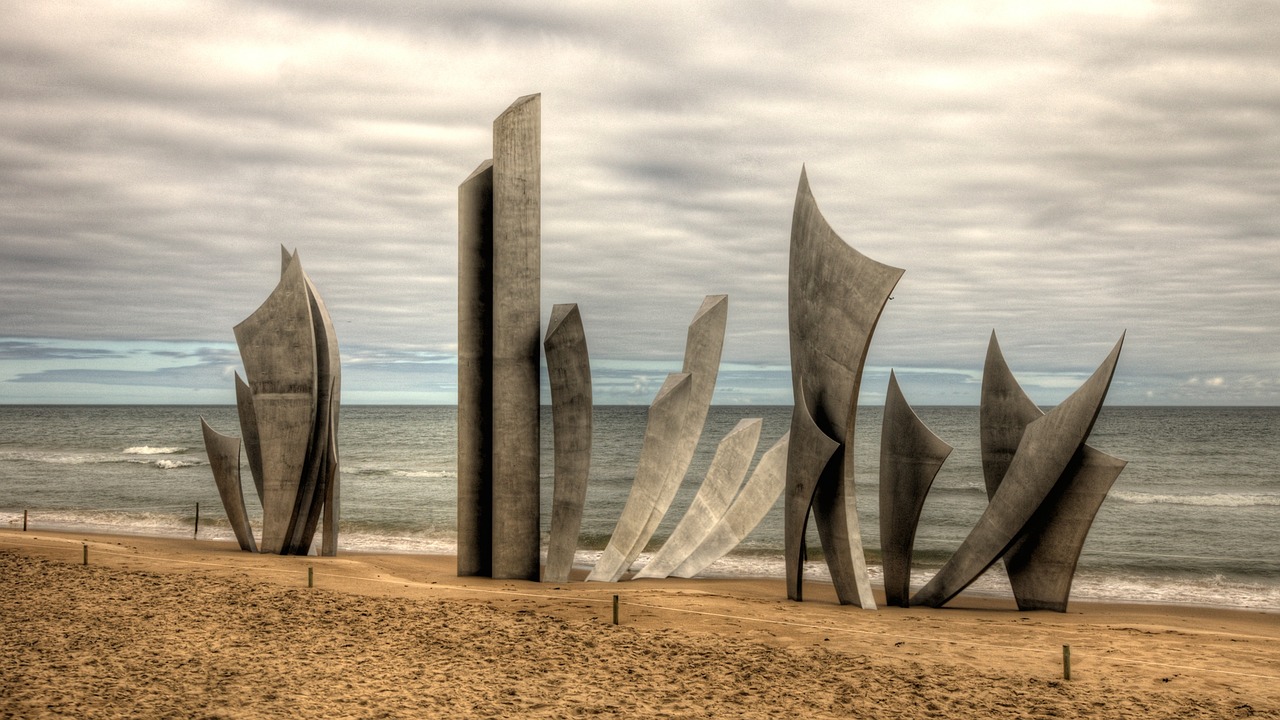
The beach here is broad and accessible, with a gently shelving entry to the water. In July 2022, I spent a full day watching families set up little beach camps — windbreaks, coolers, buckets, and spades — while older visitors moved between the Les Braves memorial, the Monument Signal d’Omaha Beach, and the cafés along the seafront.
Key Sights & Things to Do
- Les Braves Memorial: The striking stainless-steel sculpture rising out of the sand, created by French artist Anilore Banon, commemorating the courage of the Allied soldiers. Walk around it at low tide for the full effect.
- Omaha Beach Museum (Musée Mémorial d’Omaha Beach): A compact, well-curated museum with artifacts, vehicles, and personal stories that flesh out the events of D-Day. I still recommend this as the best first museum stop for context.
- Beachfront cafés and ice-cream stands: Simple, friendly, with menus that lean heavily on crêpes, galettes, and seafood. This is also the best area for boardwalk-style eating.
Best For
- Families with younger children: Easy access, gentle water (on calm days), and snacks close at hand.
- First-time visitors: A good base to understand the main must-see attractions in Omaha Beach.
- People-watching and relaxed afternoons: This is where Omaha feels most like a classic French seaside town.
Swimming & Amenities
In peak summer (roughly mid-July to late August), sections of the beach near Saint-Laurent are typically lifeguarded, making this one of the safest places for a swim. The tidal range is still huge; at low tide you’ll walk a long way to reach the water, but the sand is flat and firm.
You’ll find public toilets, a few showers, and seasonal beach gear rentals (umbrellas, chairs, sometimes kayaks or paddleboards). Prices are reasonable by French seaside standards, especially if you’re used to the Côte d’Azur.
Where I Like to Eat Here
I’ve tried three different spots along the seawall; my favorite for simple, satisfying food is the type of small brasserie that does a reliable moules-frites and a daily fish special. Look for places with a blackboard menu and a mix of locals and visitors — if you hear more French than English, that’s usually a good sign.
Don’t overlook the crêperies; a savory buckwheat galette with local Camembert, ham, and an egg, washed down with a bolée of cider, is as “Norman” a meal as you can get.
Personal Anecdote
One windy afternoon in May 2024, I sat on the seawall with an elderly French couple. We fell into conversation — as often happens here — and the gentleman pointed to the surf, remembering when the beach was still scarred by metal and debris. “Aujourd’hui, les enfants jouent ici,” he said. “C’est mieux comme ça.” (Today, children play here. It’s better this way.) That, to me, is the spirit of Saint-Laurent-sur-Mer.
3. Vierville-sur-Mer & Western Omaha: Quieter Sands, Big Skies
Drive west from Saint-Laurent and the beach stretches on, but the atmosphere changes. Vierville-sur-Mer feels more like a sleepy coastal village that just happens to sit on one of the most famous beaches in the world. The main access road drops down between houses with geraniums in the windows, and suddenly you’re on the front, with the sea ahead and low bluffs behind.
I’ve stayed in Vierville twice — once in a rental apartment right on the beach road, another time in a farmhouse up on the hill — and each time I’ve ended up thanking myself for choosing this quieter side of Omaha.
Character & Vibe
The western end of Omaha draws fewer tour buses and more independent travelers, especially those renting a car. The beach is just as wide and beautiful, but the crowds thin out the further you walk from the main access point. It’s ideal if you want the history and landscape without the constant hum of activity.
History & Features
- Remnants of German bunkers can still be seen in the dunes and on the bluff.
- Interpretive signs mark key points from D-Day, but the landscape feels less curated than around Saint-Laurent.
- The western sector is also where some amphibious vehicle and historic reenactment activities occasionally take place during major anniversaries.
Swimming & Surf
On days with a bit of swell, you’ll see a small contingent of local surfers and bodyboarders in Vierville. This isn’t a world-class surf spot, but the long, gentle waves can be fun for beginners or kids with bodyboards when the conditions are right. There’s no permanent surf school here as of 2026, but you can sometimes find mobile instructors setting up sessions in high season.
Best For
- Couples and photographers: The sunsets here can be extraordinary, especially in autumn and winter.
- Travelers with cars who want a base: Easy access to the rest of the coast, but calmer at night.
- Long walkers: Vierville makes a good starting or finishing point for a full-beach walk across Omaha (tide and fitness permitting).
Food & Stay
There are fewer dining options in Vierville than in Saint-Laurent, but you’ll find at least one beachfront restaurant or bar open in season, plus a small grocery or bakery inland. For a multi-night stay, I usually self-cater here, buying fresh produce from nearby markets (Isigny-sur-Mer is well known for dairy and caramels) and eating out every second night.
Accommodation ranges from simple B&Bs to beachfront rentals — the kind of place where you can fall asleep to the sound of waves and wake up to gulls arguing on the sand.
4. Pointe du Hoc Cliffs: Dramatic, Raw, and Unforgettable
Strictly speaking, Pointe du Hoc sits between Omaha and Utah Beaches, but if you’re staying anywhere along Omaha, it’s a non-negotiable visit. The first time I walked along the path here, in a winter storm in 2019, the wind was so strong it pushed against my chest; below me, waves smashed into the base of the 30-meter cliffs, sending spray almost up to the top.
This was where US Rangers scaled the cliffs under fire to neutralize German guns. Today, the site is preserved in a kind of purposeful disarray: cratered fields, shattered bunkers, and a small visitor center that frames the story.
What Makes Pointe du Hoc Special
- The landscape is almost lunar — huge bomb craters overgrown with grass, especially striking in low evening light.
- The clifftop path offers some of the best coastal views in the region, with long sightlines towards both Omaha and Utah.
- It’s less crowded than the American Cemetery, particularly in the late afternoon.
Best For
- History enthusiasts: To understand the sheer difficulty of the Rangers’ task.
- Adventurous walkers & photographers: Raw coastline and big skies.
- Older kids & teens: The terrain helps bring the battle to life in a way that facts alone don’t.
Practical Tips
- Wear sturdy shoes; the paths can be uneven and muddy.
- Stay behind barriers — the cliffs are unstable in places.
- Combine with Grandcamp-Maisy or western Omaha for a full half-day outing.
5. Port-en-Bessin-Huppain: Working Harbor, Seafood Heaven
Whenever someone asks me where to base themselves for 3 days in Omaha Beach if they want both history and atmosphere, I mention Port-en-Bessin-Huppain. It’s a small, working fishing harbor about 10–15 minutes east of Omaha by car, wedged between cliffs and the sea.
I’ve lost count of how many times I’ve eaten here. In late summer 2023, after a day of walking the clifftop paths above Omaha, I watched the fishing boats come in with the tide and unload crates of scallops and fish. By 8 p.m., those scallops were on my plate, seared in butter with a squeeze of lemon and a glass of chilled white wine.
Why It Belongs in an Omaha Beach Guide
- Seafood hub: This is where much of the region’s catch comes in, especially during scallop season (late autumn to early spring).
- Atmosphere: Cobbled quays, colorful boats, and a mix of locals and visitors in waterfront restaurants.
- Access: Easy to reach by car from Omaha; many travelers choose to stay here and day-trip to the beaches.
Best For
- Food lovers: Some of the best local food around Omaha Beach is served here.
- Evenings out: Perfect for a romantic dinner after a day of serious sightseeing.
- Families: Kids love watching the boats and seagulls; many restaurants are child-friendly.
What I Recommend Eating
Look for:
- Coquilles Saint-Jacques (scallops) when in season.
- Seafood platters (plateaux de fruits de mer) to share.
- Fish of the day — often listed by name and source.
- Norman desserts: Apple tart with Calvados, crème brûlée flavored with local vanilla or cider.
6. Arromanches-les-Bains & Gold Beach: Floating Harbors & Family-Friendly Sands
About 20 minutes east of Omaha sits Arromanches-les-Bains, technically part of Gold Beach, but so closely linked to Omaha itineraries that it might as well be next door. The beach here is shallower and more obviously “resort-like” than Omaha, with a tidy promenade, ice-cream stands, and pedalos in summer.
What makes Arromanches extraordinary are the remains of the Mulberry harbor — the artificial port the Allies built after D-Day. At low tide, massive concrete caissons lie stranded like beached whales, stretching out towards the horizon.
Best For
- Families: Calm water (on good days), amusements, and a gentler introduction to D-Day history.
- Beach walks: The sand is firm and wide at low tide.
- History buffs: To understand the logistics behind the invasion.
7. Grandcamp-Maisy & The Quiet Western Edge
Drive west beyond Pointe du Hoc and you reach Grandcamp-Maisy, a small harbor town that feels far removed from the more visited parts of the D-Day coast. I often suggest it as a half-day escape for those who need a break from heavy history.
There’s a modest beach, a little harbor, and several seafood spots where you’re more likely to hear Norman dialect than English. When I came here on a drizzly Tuesday in March 2025, the café owner seemed genuinely surprised to see me — and then proceeded to tell me about his grandfather’s memories of 1944 over a bowl of steaming fish soup.
Best For
- Travelers wanting quiet: Fewer crowds, more local life.
- Self-drivers: As part of a loop including Pointe du Hoc and western Omaha.
- Seafood and market lovers: Good for picking up fresh fish if you’re self-catering.
8. Longues-sur-Mer Clifftop Battery & Coastal Path
Between Arromanches and Port-en-Bessin sits the Longues-sur-Mer battery, one of the best-preserved German coastal artillery positions. The bunkers sit right on the cliff edge, and the guns are still in place — a rare, chilling sight.
I like to arrive here in late afternoon and walk the coastal path north from the parking area, where the land drops away to the sea. On one trip in April 2022, rapeseed fields blazed yellow inland while the water offshore shifted from steel-grey to turquoise with each passing cloud.
Best For
- Hikers: Combine Longues with walks to either Arromanches or Port-en-Bessin (or both, for the very fit).
- Photographers: Especially at sunrise or sunset.
- History & landscape together: Few places blend them as seamlessly.
9. Asnelles & Meuvaines: Wide Sands, Kites & Space to Breathe
Just east of Arromanches, the beaches of Asnelles and Meuvaines are long, grassy-backed stretches of sand with a quietly local feel. The first time I came here was almost by accident, following a tiny sign off the main road after seeing colorful kites dancing in the sky.
At low tide, the beach seems endless. You’ll see kite-buggy enthusiasts racing across the hard sand, families walking dogs, and the occasional rider on horseback. This is one of the best spots along this coast if you simply want space and sea air without many people.
Best For
- Quiet sunbathing & long walks.
- Kite sports and beach activities.
- Travelers who’ve “done” the main sites and just want a day with the tide and the sky.
10. The Hinterland Hamlets & Country Lanes
Although this guide focuses on the coast, some of my most cherished Omaha memories come from just inland: wandering through hamlets of stone farmhouses, past orchards and small chapels with war memorials out front.
If you have a car or bike, take an hour to explore the back roads between Vierville, Saint-Laurent, and Colleville. You’ll find tiny cider producers, farm shops selling cheese and butter, and viewpoints where you can see the sea between hedgerows.
Best For
- Cyclists and slow travelers.
- Those interested in rural Normandy life beyond the beaches.
- Photographers: Morning mist over fields, stone crosses, and old barns.
Recommended Itineraries: 3–5 Days in Omaha Beach
Below, I’ll lay out 3, 4, and 5 day itineraries for Omaha Beach based on how I actually move through the area when I’m here. Think of them as frameworks rather than strict schedules: the tides, weather, and your energy levels will all shape how each day unfolds.
3 Day Itinerary for Omaha Beach
This 3 day itinerary for Omaha Beach is ideal if you have a long weekend and want to balance the major historical sites with some time on the sand and in the villages.
Day 1: First Encounter with Omaha & the American Cemetery
I like to start at the eastern end, at Colleville-sur-Mer, because it sets the tone. On my most recent visit in May 2026, I arrived just after 9 a.m. The morning was still cool, the kind that makes a hot coffee taste even better.
Morning: Normandy American Cemetery & Descent to the Beach
- Begin at the Normandy American Cemetery Visitor Center. Give yourself at least an hour inside; the exhibits are well done and help anchor what you’ll see outside.
- Walk through the cemetery itself at your own pace. I always do a slow loop, pausing at names that catch my eye — a shared hometown with someone I know, a birth year matching a friend’s father.
- From the cemetery, follow the path down toward the beach. There’s a small gate and a winding trail through trees that opens suddenly onto sand and sea.
Standing on the beach, look back at the bluff and imagine what it would have felt like to run towards it under fire. It’s impossible, really, but the act of looking matters.
Lunch: Simple Picnic or Port-en-Bessin
If the weather is kind, I suggest a picnic on the beach — just be mindful of the tides and leave no trace. Otherwise, hop in the car and drive to Port-en-Bessin for a harbor-side lunch.
Afternoon: Port-en-Bessin & Clifftop Stroll
- Stroll along the quays, watch the fishing boats, and maybe stop for an ice cream or coffee.
- If you have energy, follow a section of the coastal path out of town towards Omaha — even an hour’s walk gives you sweeping sea views and a sense of the coastline’s scale.
Evening: Sunset Back on Omaha
Drive back to Omaha Beach in time for sunset — I recommend Saint-Laurent-sur-Mer for your first evening, where you can sit on the seawall with a drink or wander the sand as the light fades.
Day 2: Central Omaha, Les Braves & Local Food
On my last spring visit, Day 2 was when Omaha felt most alive: kids running in and out of the shallows, a line forming at the ice-cream stand, and tour guides pointing out details I still hadn’t noticed.
Morning: Omaha Beach Museum & Les Braves
- Start at the Omaha Beach Museum in Saint-Laurent. Two hours is enough for a thorough visit, but serious history buffs may want more.
- Walk down to the beach to see the Les Braves memorial. If the tide is low, wander around the sculpture — it changes character from different angles.
Lunch: Boardwalk Eating
Pick one of the beachfront cafés for lunch. A typical meal for me here: galette complète (ham, cheese, egg), a green salad, and a small carafe of cider. For dessert, a simple crêpe au sucre or with local salted caramel.
Afternoon: Free Beach Time
Use the afternoon to simply be on the beach. Swim if it’s warm enough, walk west towards Vierville if the tide allows, or sit and read with your feet in the sand. This is where Omaha shifts from a “lesson” into a place you feel in your bones.
Evening: Dinner in Port-en-Bessin or Local Village
For a more atmospheric evening, I often drive back to Port-en-Bessin for dinner — reservations recommended in July and August. Otherwise, look for a countryside auberge or restaurant inland, where you’re more likely to find Norman specialties like duck with apples, creamy sauces, and generous cheese boards.
Day 3: Pointe du Hoc & Western Omaha
Day 3 in this 3 days in Omaha Beach plan is a loop to the west, combining the stark drama of Pointe du Hoc with the softer, quieter sands of Vierville.
Morning: Pointe du Hoc
- Arrive early to beat the tour buses if possible.
- Walk the entire marked path, pausing in the craters and entering a bunker or two (where permitted). The audio guide, if available, is worth using.
- Stand at the cliff edge (safely behind barriers) and watch the waves below.
Lunch: Grandcamp-Maisy or Picnic
Drive into Grandcamp-Maisy for a simple lunch of fish soup or a seafood platter, or pick up provisions and picnic on a quieter stretch of beach nearby.
Afternoon: Vierville-sur-Mer
Return eastwards and spend your afternoon in Vierville. This is an excellent time for:
- Long, slow beach walks.
- Photography, especially of the changing light on the bluffs.
- Simply sitting on a dune, watching the tide creep in.
Evening: Last Light Over Omaha
For your final evening, stay in Vierville or return to your favorite spot along Omaha. If you’ve timed it well and the sky plays along, you’ll end your trip with that particular kind of Normandy sunset where the clouds turn every shade of pink and orange, and the wet sand becomes a mirror.
4 Day Itinerary for Omaha Beach
With 4 days in Omaha Beach, you can follow the 3-day plan and add a full day exploring the eastern neighbors: Arromanches, Longues-sur-Mer, and the quieter sands beyond.
Day 4: Arromanches, Longues & Asnelles
Morning: Arromanches-les-Bains
- Drive to Arromanches and start at the main square near the beach.
- Visit the Landing Museum (Musée du Débarquement) to understand the Mulberry harbor.
- Walk along the beach at low tide to see the concrete caissons up close.
Lunch: Seafront in Arromanches
Arromanches has a compact strip of restaurants and cafés facing the sea. Menus here tilt a bit more touristy, but I’ve had perfectly good fish dishes and galettes — look for places with daily specials written in French first, English second.
Afternoon: Longues-sur-Mer Battery
- Drive (or hike, if you’re keen) to Longues-sur-Mer.
- Explore the battery and follow the cliff path for views.
Late Afternoon: Asnelles & Meuvaines
Continue east to Asnelles or Meuvaines for a quieter stretch of sand to decompress. If you’re traveling as a couple, this is where you find that romantic, windblown walk you might have imagined when you first planned a Normandy trip.
Evening: Back to Base
Drive back to your accommodation near Omaha, stopping en route if you spot a promising village restaurant — some of my best meals have been in unassuming places on back roads, where the menu is short and handwritten.
5 Day Itinerary for Omaha Beach
With 5 days in Omaha Beach, you have the luxury of slowing down, adding inland excursions (like Bayeux), and allowing for a fully unscheduled day to follow the tides and your mood.
Day 5: Free Day & Inland Explorations
Option A: Bayeux & Tapestry
- Spend a day in Bayeux, about 30 minutes from Omaha.
- Visit the Bayeux Tapestry, which tells the story of another invasion — 1066 — in a stunning 11th-century embroidery.
- Wander the medieval streets, have lunch in a bistro, and perhaps visit the cathedral.
Option B: Country Lanes & Cider Routes
- Drive inland through the hinterland hamlets, stopping at cider farms and small producers.
- Pick up local cheese, butter, apples, and maybe a bottle of Calvados to take home.
Option C: Pure Beach Day
- Stay on the coast and choose your favorite sector of Omaha (or Asnelles/Meuvaines) for a full day of reading, swimming, and dozing.
- Rent a kayak or paddleboard if available in season.
However you spend Day 5, try to keep at least one evening free for a slow walk on the sand as the day fades — it’s often in those unstructured hours that a place truly settles into you.
Seafood, Beach Bars & Local Food Around Omaha Beach
Normandy is generous when it comes to food: rich dairy, apples in every form, and of course, the sea. Around Omaha Beach, the food scene is more understated than in bigger towns, but if you know where to look, you’ll eat very well — and without the sticker shock of more glamorous coasts.
Where Locals Actually Eat
- Port-en-Bessin-Huppain: My top pick for consistently good seafood, from casual to slightly dressy.
- Village auberges inland: Between Omaha and Bayeux you’ll find small restaurants serving hearty, traditional Norman dishes — think poulet Vallée d’Auge (chicken with cream and apples) and robust cheese boards.
- Crêperies in Saint-Laurent & Arromanches: Popular with families and great value for money.
What to Order: Local Specialties
- Seafood: Scallops, oysters, mussels, and fish of the day.
- Dairy: Camembert, Pont-l’Évêque, Livarot, Isigny butter.
- Apple-based drinks: Cider (cidre), Pommeau (apple aperitif), Calvados (apple brandy).
- Desserts: Tarte aux pommes, crêpes, and caramels d’Isigny.
Beach Bars & Sunset Drinks
Omaha is not a party beach. You’ll find casual bars and cafés with terraces facing the water, especially in Saint-Laurent and Vierville, but the vibe is more “glass of wine watching the sunset” than “clubbing until 3 a.m.”
My preferred sunset routine: a glass of chilled cider or white wine and a simple plate of charcuterie or cheese on a terrace overlooking the sand, followed by a slow walk as the sky darkens.
Saving Money on Food
- Opt for fixed-price lunch menus (formules or menus du jour), often excellent value.
- Buy breakfast items from bakeries and have coffee in your accommodation if possible.
- Self-cater every other night if you have a kitchen; markets and small supermarkets stock excellent ingredients.
Evenings at Omaha Beach
Evenings at Omaha Beach are about light, reflection, and quiet sociability rather than big events. The beach empties out a little, the wind usually drops, and locals appear with dogs and jackets, ready for their daily walk.
Bonfires & Beach Gatherings
Open fires on the beach are generally discouraged or regulated, and rules can change year to year. If you see a group with a small, contained fire, it’s typically locals who know the regulations. As a visitor, it’s best to ask at your accommodation before planning any bonfire, and always leave the beach clean.
Sunset Cruises & Harbor Evenings
From Port-en-Bessin, small boat tours sometimes operate in high season, offering short evening cruises along the coast. They’re weather-dependent and not as frequent as in bigger seaside towns, but worth seeking out if you love being on the water.
Boardwalk Strolls & Nighttime Beach Walks
My favorite evening activity here, regardless of season, is a simple walk along the waterline. In July, you might share the sand with families finishing late dinners; in November, you may have it almost to yourself, the only sound the shuffle of your shoes and the soft rush of the tide.
Cultural Etiquette & Local Customs
Normandy is warm and welcoming, but this coast holds particular sensitivities because of its history. A few guidelines will help you navigate respectfully and comfortably.
Respect at Memorial Sites
- Keep voices low at cemeteries and memorials; this is not the place for loud phone calls or music.
- Dress casually but avoid beachwear (bathing suits, bare chests) at formal sites like the American Cemetery.
- Drone use is often forbidden at memorials and over cemeteries — obey posted signs.
- Selfies are not banned, but consider context; photos that feel respectful are better than posed or joking shots.
Everyday French Norms
- Always greet with a “Bonjour, madame/monsieur” when entering shops or restaurants.
- Wait to be seated in most sit-down restaurants; don’t just grab a table.
- Tips are appreciated but not obligatory — rounding up or leaving 5–10% is normal for good service.
Beach Culture
- Topless sunbathing is less common here than on the Mediterranean, though not unheard of. The general tone is modest and family-oriented.
- Dogs are often allowed in certain seasons/areas but may be restricted in peak summer — check local signs.
- Alcohol on the beach is usually tolerated in moderation; rowdy behavior is not.
Day Trips & Nearby Attractions from Omaha Beach
While you could easily spend your entire stay along the Omaha stretch, there are several worthwhile day trips within easy reach.
Bayeux
- Distance: ~30 minutes by car.
- Highlights: Bayeux Tapestry, cathedral, charming old town.
- Tip: Combine with a market visit (Saturday is especially good) for picnic supplies.
Mont-Saint-Michel
- Distance: ~2.5 hours by car — a long day but doable if it’s your only chance.
- Tip: Go very early or late to avoid the worst crowds; check tide times, as they can affect access.
Other D-Day Beaches
- Utah Beach: More rural and open; excellent museum.
- Juno & Sword: Canadian and British sectors with their own memorials and museums.
Practical Travel Advice for Omaha Beach (2026–2027)
Getting There & Around
- Nearest major train hub: Bayeux (connections from Paris Saint-Lazare via Caen).
- Car rental: Strongly recommended for full flexibility, especially if you want to explore multiple sectors and inland villages.
- Public transport: Limited but improving. Seasonal shuttles connect Bayeux with Omaha and some other D-Day sites in summer.
Driving & Licenses
- Most foreign driving licenses are accepted for short stays; check if you need an International Driving Permit based on your country.
- Drive on the right, seatbelts required, and be ready for narrow lanes inland.
- Parking near major sites is generally well organized and often free or low-cost.
Visas & Entry
- France is in the Schengen Area. Many nationalities can enter visa-free for short stays; verify current rules before travel.
- From 2025 onward, the EU’s ETIAS travel authorization system is rolling out; by 2026, many non-EU visitors will need to complete it online before arrival.
SIM Cards & Connectivity
- Major French providers (Orange, SFR, Bouygues) offer prepaid SIMs easy to buy in larger towns like Bayeux or Caen.
- Coverage along the coast is generally good, though there may be occasional weak spots near cliffs or in remote hamlets.
- eSIM options are increasingly convenient for 2026 visitors.
Where to Stay & How to Save
- Oceanfront: Most atmospheric but pricier. Ideal if you want to fall asleep to the sound of waves and maximize sunrise/sunset walks.
- Inland villages: Better value, quieter at night, and often more “local” in feel.
- Port-en-Bessin: Great compromise between atmosphere, dining, and access.
- Saving tips: Travel in shoulder seasons (May–June, September–October), book early for June stays, and consider self-catering apartments.
Money-Saving Strategies
- Use fixed-price lunch menus and self-cater some dinners.
- Combine visits to multiple sites in one day to minimize driving back and forth.
- Look for museum passes or combined tickets when available.
Beach-Specific Logistics: Tides, Safety, & Gear
Tides & Swell
- Omaha has a large tidal range. At low tide, the water can retreat hundreds of meters, exposing huge sand flats.
- Always check tide tables (available online or posted locally) before long walks — especially if you plan to walk around headlands or near cliffs.
- Swell varies; some days the sea is flat as glass, other days wind and waves make swimming less inviting.
Swimming Safety
- In summer, some central sections (especially around Saint-Laurent) are lifeguarded. Swim between flags where present.
- Rip currents can occur, particularly near sandbars and inlets; if caught, swim parallel to shore.
- Jellyfish appear seasonally (usually not in dangerous numbers, but be aware).
- There are no sharks of concern for swimmers here.
Equipment Rental
- In high season, you can rent beach chairs, umbrellas, and sometimes kayaks or paddleboards near busier sectors.
- For surfing or more specialized gear, your best bet is to bring your own or arrange with surf schools along the wider Normandy coast (often closer to Courseulles or further east).
Sun & Weather
- Even on cool days, the reflection off wet sand can cause sunburn. Bring high-SPF sunscreen, a hat, and sunglasses.
- Weather changes quickly; a sunny morning can turn windy and cool by afternoon. Layers are essential, even in July.
Storms & Extreme Weather
- There is no hurricane season as such, but autumn and winter storms can be fierce, with strong winds and big surf.
- During heavy storms, stay well back from cliff edges and piers, and respect any temporary closures.
Parking Strategy
- Major sites like the American Cemetery, Pointe du Hoc, and Arromanches have dedicated parking.
- In smaller villages, park respectfully, without blocking driveways or narrow lanes.
- In peak season, arrive early at the most popular beaches to secure a spot close to the sand.
Events & What’s New in 2026–2027
While 2024 marked the 80th anniversary of D-Day, the years following continue to see commemorations, exhibitions, and cultural events related to the landings.
Key Events & Trends (2026–2027)
- Annual D-Day Commemorations (around 6 June): Ceremonies at Omaha Beach, the American Cemetery, and other sites. Expect heightened security, road closures, and larger crowds.
- Temporary Exhibitions: Local museums often mount special exhibits on specific units, personal stories, or aspects of the invasion — check websites for 2026–2027 themes as your trip approaches.
- Cultural Festivals: Nearby towns like Bayeux and Caen host music, film, and historical festivals throughout the year, some with D-Day or WWII themes, others celebrating Norman culture more broadly.
- Digital Enhancements: Increasing use of augmented reality and interactive apps at some sites, offering on-the-spot reconstructions of 1944 landscapes. In 2026, several pilot projects are set to expand around Omaha and Gold sectors.
Summary & Best Seasons to Visit Omaha Beach
Omaha Beach is not a place you “do” in a day. It’s a coastline that rewards time: time to stand in silence under the pines at the American Cemetery, time to walk the sand at low tide and high, time to sit with a bowl of mussels as fishing boats ease into harbor.
Key Takeaways
- 3 days in Omaha Beach lets you cover the essentials: eastern and central Omaha, the American Cemetery, Pointe du Hoc, and at least one good seafood dinner.
- 4 days in Omaha Beach adds Arromanches, Longues, and quieter eastern beaches to breathe a bit more.
- 5 days in Omaha Beach allows inland excursions, lazy beach time, and deeper exploration of local food and villages.
- For history-focused trips, aim for spring or autumn, when crowds are lighter and the light is softer.
- For swimming and family beach time, July–August are warmest, though busiest.
- For atmospheric walks and moody skies, late autumn and winter are unforgettable — just come prepared for wind and rain.
In 2026, as the world moves further from 1944 in years but not in memory, Omaha Beach remains a place where you can feel both the gravity of history and the lightness of everyday seaside life. Walk slowly, look closely, eat well, and let the tides and stories of this coast work their quiet way into you.