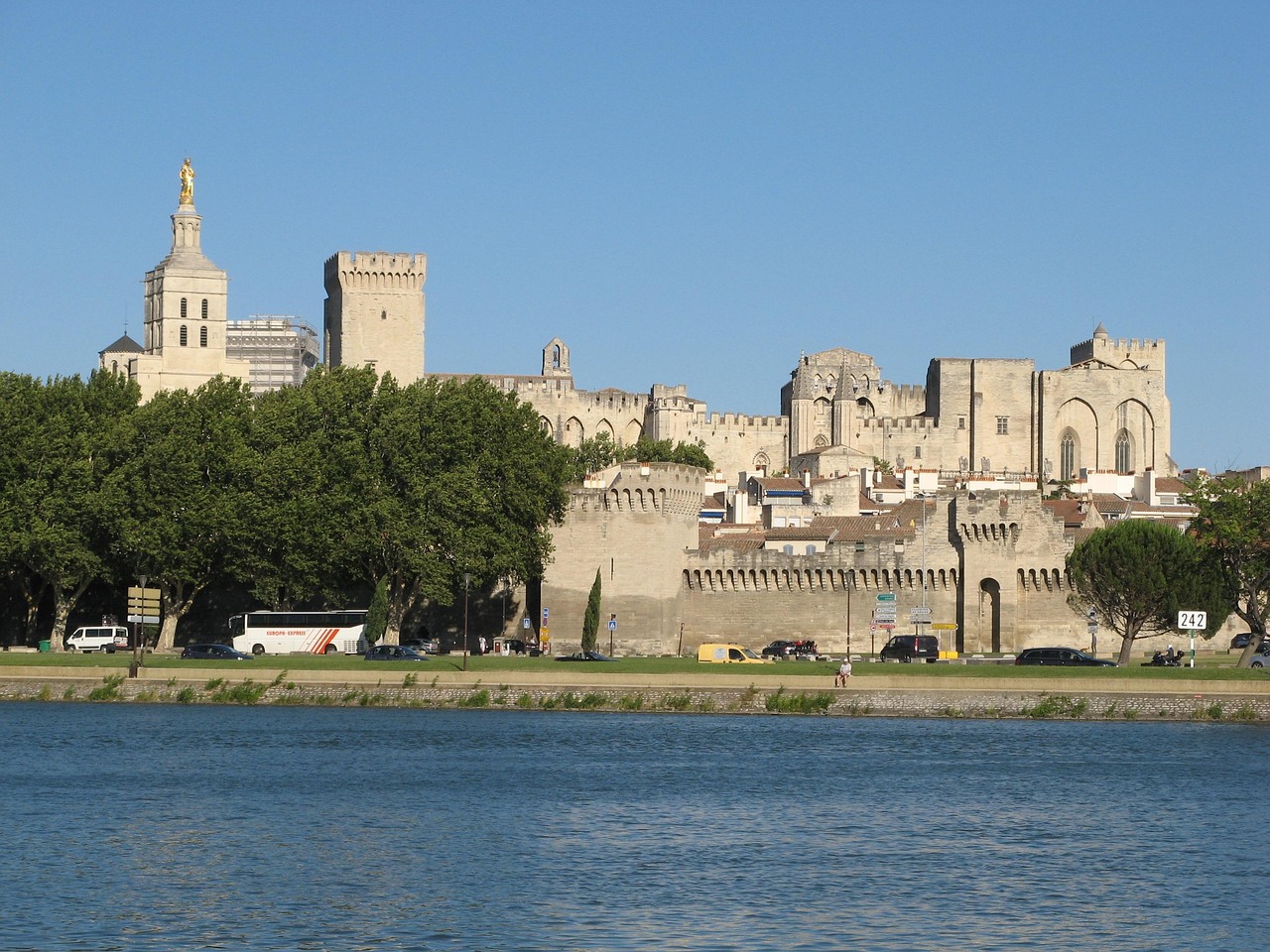
Why Visit the Palace of the Popes (Palais des Papes)?
I still remember the first time I stepped onto Place du Palais on a cool spring morning in 2016. The square was almost empty, the café chairs just being unstacked, and the mass of the Palace of the Popes rose above me like a stone ship. Even after a decade of returning—most recently in early 2026—it still makes me catch my breath every single visit.
The Palace of the Popes is not just another European “old building.” It’s one of the largest and most complete Gothic palaces in the world, a fortified papal court that once rivaled Rome in power, culture, and intrigue. Within its walls, popes schemed, poets read aloud, and artists decorated frescoed chapels that still glow with color if you know where to look.
Today, the palace is the anchor of Avignon’s UNESCO-listed old town, and exploring it properly means not only touring its grand halls but weaving through the alleys, cloisters, gardens, and riverbanks that grew up around it. It’s a place to:
- Lose yourself in huge stone halls, frescoed oratories, and quiet cloisters.
- Climb for sweeping Rhône River views from medieval terraces.
- Stroll through atmospheric lanes at blue hour when the façades are lit in gold.
- Sample local food in the Palace of the Popes area—from truffle omelettes to lavender desserts.
- Experience cultural experiences in the Palace of the Popes during the Avignon Festival and sound-and-light shows.
If you’re weighing a short break in Provence, a 2 day itinerary for the Palace of the Popes is perfect for first-timers. With 3 days in the Palace of the Popes, you can add gardens, museums, and riverside walks. A 4 day itinerary for the Palace of the Popes lets you slow down, explore hidden chapels, and take day trips to vineyards and Roman ruins—all while using Avignon’s papal quarter as your medieval “home base.”
Table of Contents
- Why Visit the Palace of the Popes?
- Understanding the Palace & Historic Layout
- 12 Key Quarters, Monuments & Sites Around the Palace
- Suggested Itineraries: 2–4 Days in and Around the Palace
- Traditional Cuisine & Where to Eat Nearby
- Evenings at the Palace of the Popes
- Day Trips & Nearby Attractions
- Cultural Etiquette & Local Customs
- Practical Travel Advice & Logistics (2026–2027)
- What’s New: Events & Festivals 2026–2027
- Summary & Best Seasons to Visit
Understanding the Palace & Historic Layout
To really enjoy the Palace of the Popes, it helps to understand how it’s layered in time and space. Think of it as a stone palimpsest: Roman foundations, medieval fortifications, Gothic papal splendor, and modern restorations all coexisting in one complex.
The Papal City on the Rock
The palace sits on the Rocher des Doms, a limestone outcrop that has attracted settlers since Celtic and Roman times. In the 14th century, when the papacy relocated from Rome to Avignon, this rock was crowned with what would become a two-part palace:
- Palais Vieux (Old Palace) – built by Pope Benedict XII from 1335; austere, fortress-like, monastic.
- Palais Neuf (New Palace) – added by Clement VI; more lavish, with grand ceremonial halls and chapels.
As you walk the interior route today, you’re zigzagging between these phases: thick-walled, almost military spaces in the Palais Vieux and wider, more theatrical rooms in the Palais Neuf.
Approach Routes & Gates
Within Avignon’s preserved medieval walls, there are several atmospheric approaches to the palace:
- From Rue de la République & Place de l’Horloge – the “showcase” tourist approach, emerging dramatically onto Place du Palais.
- Via Rue Peyrollerie – my favorite early-morning approach: a narrow, shadowy lane that suddenly reveals the palace’s flank.
- From the Rhône Quays – climb up from the river through the Jardin des Doms terraces; you arrive above the palace with a bird’s-eye view.
How the Layout Has Shifted Over the Centuries
Four big shifts matter for visitors:
- 14th-century Papal Boom – The palace dominates the skyline; the surrounding quarter fills with cardinals’ residences, chapels, and administrative buildings.
- Post-papal Decline – After the papacy returns to Rome, Avignon’s court shrinks. By the 18th–19th centuries, the palace is partly used as barracks and a prison; many interiors are whitewashed or damaged.
- 19th-century Rediscovery – Romantic-era fascination with the Middle Ages leads to restoration campaigns; frescoes are uncovered and preserved.
- Late 20th–21st-century Tourism – The palace is reclaimed as a cultural venue: festivals, exhibitions, immersive tours, and sophisticated visitor infrastructure.
What you see in 2026 is a carefully curated blend: restored frescoes, digital reconstructions, and open courtyards that host concerts and the famed Avignon Festival.
How to Walk It, in What Order
If it’s your first visit, I suggest this chronological walk:
- Start in Place du Palais for the big exterior view and historical orientation.
- Enter and head for the Cloister & Papal Apartments to feel the medieval core.
- Move into the Great Chapel & Great Audience Hall to sense the ceremonial life.
- Finish with terraces & ramparts for views over Avignon and the Rhône.
- Exit toward the Jardin des Doms and Pont Saint-Bénézet to complete the “papal city” picture.
12 Key Quarters, Monuments & Sites Around the Palace of the Popes
These are the places I return to on every trip. Some are inside the palace complex, others are in the immediate papal quarter or within a few minutes’ walk. Together they form the backbone of any travel guide for the Palace of the Popes and its surroundings.
1. Place du Palais – The Palace’s Grand Stage
If the palace is the heart, Place du Palais is its open-air living room. I like to arrive just after sunrise, when the cafés are setting out chairs and the stone façades shift slowly from grey to honeyed gold. By midday in high season it’s bustling, but those quiet morning hours feel almost private.
The square is framed by:
- The towering façade of the Palace of the Popes.
- The Notre-Dame des Doms Cathedral with its gilded Virgin Mary statue.
- Elegant 17th–18th century buildings and café terraces.
On more than one chilly January visit, I’ve nursed a café crème at the corner café while watching tour groups cluster under flapping umbrellas, guide flags held high. If you prefer a slower, more contemplative experience, come off-season (November–March) or in the shoulder hours (before 10:00 or after 18:00).
Tip: This is where many walking tours and evening son et lumière (sound-and-light) shows around the palace begin. In 2026, several companies offer themed tours—papal intrigue, medieval medicine, Avignon by night—that meet by the equestrian statue on the square’s edge.
2. The Interior of the Palace of the Popes – Halls, Chapels & Frescoes
The first time I walked into the Grand Tinel, the great banquet hall, I remember actually whispering “wow” under my breath, even though I was alone. The scale of these rooms is astonishing: high ribbed vaults, echoing stone, thick walls that once sheltered the most powerful men of their era.
Key spaces to linger in (don’t rush through):
- Grand Tinel – the vast dining hall where lavish papal feasts were held. Stand at one end and imagine the smell of roasting meat, the candles, the noise.
- Consistory Hall – where political and religious decisions were made; today it often hosts exhibitions.
- Saint Martial & Saint John Chapels – small, intimate chapels with precious 14th-century frescoes. The palette—deep blues, ochres, reds—still feels surprisingly vivid.
- Papal Apartments – more private rooms where you can sense daily life: study, bedchamber, private oratories.
Since 2023, the palace has leaned heavily into augmented reality. In 2026, the digital “Histopad” tablet is still an optional extra, and I do recommend it for at least your first visit. Hold it up to a bare stone wall and it reconstructs painted scenes, tapestries, and furniture. I’m usually skeptical of tech in historic sites, but here it genuinely helps you understand how dazzling the interiors once were.
Practical Tips:
- Tickets: Buy a combined ticket with the Pont Saint-Bénézet bridge online to skip lines and save a few euros.
- Timing: In peak months (June–August), aim for opening time or late afternoon to avoid cruise-ship and bus-tour surges between 10:30–15:30.
- Dress: No strict dress code, but modest attire is appreciated in chapels; bring a layer—stone halls stay cool even in summer.
3. Notre-Dame des Doms Cathedral – Papal Spiritual Core
Tucked just above and behind the palace, the Notre-Dame des Doms Cathedral often gets overshadowed by its gigantic neighbor. Don’t make that mistake. This is where popes prayed and where several are buried.
Inside, the atmosphere is softer and more intimate: cool stone, side chapels flickering with votive candles, the scent of incense lingering after Mass. I like to slip in during the late afternoon, when the west light falls through the stained glass and the day’s heat begins to ebb.
Climb the steps outside for a closer look at the gleaming golden Virgin Mary atop the tower—a 19th-century addition that’s now one of Avignon’s defining silhouettes.
Etiquette: This is an active place of worship. Dress modestly (shoulders covered, no beachwear), keep voices low, and avoid intrusive photography during services.
4. Jardin des Doms – The Palace’s Hanging Garden
If the palace interior is about stone and history, the Jardin des Doms above it is about air and light. This landscaped park crowns the Rocher des Doms cliff and offers the best panoramic views over the Rhône, the broken bridge, and the city roofs.
On my last spring visit in 2026, I walked up just before sunset. Children were racing scooters along the paths, older couples were reading on benches, and a busker with a guitar was playing soft jazz near the balustrade. Swifts darted overhead, and the palace’s towers, just below, glowed in the golden hour light.
From various viewpoints you can see:
- The Pont Saint-Bénézet (Avignon Bridge) arcing halfway into the river.
- The fortified city walls, still encircling Avignon like a stone clasp.
- The Île de la Barthelasse, the green island opposite the city.
Tip: There’s a small café-kiosk in the garden that’s perfect for a coffee or an ice cream. It’s a lovely, family-friendly pause if you’re visiting the palace with children.
5. Pont Saint-Bénézet – The Legendary Broken Bridge
No things to do in the Palace of the Popes area list is complete without the Pont Saint-Bénézet, just a short stroll down from the palace. The 12th-century bridge once spanned the Rhône, but floods repeatedly damaged it; today only four arches remain, jutting partway into the river like a broken arm.
In the 2020s, the bridge has had a digital renaissance. The visitor center includes interactive exhibits about medieval engineering and river life, with projections showing how the full bridge once looked. Walking out onto the remaining span, especially in early morning mist, is haunting.
Yes, you’ll hear the famous children’s song—“Sur le Pont d’Avignon”—more than once. Yes, it’s touristy. But lean on the parapet and watch the river slide past, and it’s easy to see why this spot has lodged itself in the world’s imagination.
Tip: Get the combined ticket with the palace. Visit early for quieter photos, or at blue hour when the bridge and palace are lit—very photogenic for couples on a romantic weekend.
6. Place de l’Horloge – Avignon’s Living Room
Walk a few minutes from the palace down Rue de la Peyrolerie and you spill into Place de l’Horloge, the city’s main square. It feels a world away from the solemnity of papal halls—a carousel turning, café terraces packed, buskers performing under plane trees.
For me, this is where a palace visit turns into everyday Avignon life. I often stop here between sights for a noisette (espresso with a dash of milk) or a glass of chilled rosé. In winter, there’s a Christmas market; in July, the square explodes with festival energy, flyers for performances plastered everywhere.
The square takes its name from the clock tower attached to the 19th-century city hall. Look up to see the mechanical figures that emerge hourly.
Local food note: While many restaurants here are touristy, a couple of bistros just off the square serve solid, reasonably priced plat du jour lunches—often a good way to sample Provençal stews or grilled fish without spending a fortune.
7. Rue des Teinturiers – Medieval Waterwheels & Bohemian Bars
A 10–15 minute walk from the palace brings you to one of my favorite streets in Avignon, especially in the evening: Rue des Teinturiers. Lined with cobblestones and old houses, it runs along a canal fed by the Sorgue, once home to textile dyers (hence the name).
Today, the preserved wooden waterwheels turn slowly in the current, and the street fills with cafés, wine bars, and small theaters. During the Festival d’Avignon, it’s the epicenter of off-program performances, but even in quieter months there’s a creative, slightly bohemian air.
I like to come here for an aperitif after a day at the palace: a glass of local Côtes du Rhône and a plate of olives or tapenade, sitting under fairy lights with the sound of the water nearby.
8. Les Halles Market – Flavors Behind the Palace
For a taste of local food in the Palace of the Popes area, head to Les Halles, the covered market about a 10-minute walk from the palace. The building’s exterior is covered in a vertical garden—a living wall of greenery that always surprises first-time visitors.
Inside, it’s a sensory riot: stalls piled with olives, cheeses, cured hams, seasonal produce, and pastries. On Saturdays, local chefs often do cooking demonstrations at the central bar area. I’ve learned more about Provençal cooking here than from any cookbook.
My usual ritual: pick up a slice of pissaladière (caramelized onion tart with anchovies), some fresh goat cheese, and a small bag of fougasse (olive-studded bread), then carry it back toward the Rhône for a picnic.
Tip: Come in the morning (7:00–13:00); many stalls close by early afternoon. It’s also cooler and less crowded then.
9. Quiet Backstreets of the Papal Quarter
One of the pleasures of exploring around the palace is getting lost on purpose. The backstreets between the palace and the city walls—around Rue des Lices, Rue de la Balance, and Rue du Roi René—are full of atmospheric houses, hidden courtyards, and tiny chapels.
On a misty February afternoon in 2025, I wandered here for nearly an hour without seeing more than a handful of people. Laundry hung from windows, a cat slept undisturbed on a stone doorstep, and through one open archway I glimpsed a vine-draped internal courtyard that could have been unchanged for centuries.
If you’re hunting for hidden gems in the Palace of the Popes area, this is where to come. No big “sights,” just mood and texture—and some of my favorite photographs from Avignon.
10. Medieval Ramparts & City Gates
Avignon is one of the rare European cities whose medieval walls remain almost entirely intact. These ramparts, built mainly in the 14th century to protect the papal city, still encircle the old town in a nearly unbroken ring.
While you can’t walk the full length on top, several stretches are accessible, and it’s worth seeking out at least one elevated viewpoint. I like the section near the Porte de la Ligne at sunset, when the stone glows and the modern traffic outside the walls feels far away.
Walking along the base of the walls from the Pont Saint-Bénézet around toward the river quays also gives you a good sense of how imposing the papal city must have seemed to travelers arriving by road or boat in the 14th century.
11. Rocher des Doms Viewpoints – Layers of History at a Glance
Several viewpoints around the Rocher des Doms and terrace paths link the palace, gardens, and riverbanks. Follow the signed footpaths and you’ll find balconies that look down onto:
- The palace’s defensive walls and private gardens.
- The cathedral’s apse and roofs from unusual angles.
- The Rhône flowing past sandbanks and the green Île de la Barthelasse.
When I bring friends here for the first time, this is usually where everything “clicks” historically. From one vantage point, you can see the papal fortress, the religious heart (cathedral), the lifeline river, and the protective walls all at once. It’s the quickest visual explanation of why Avignon became what it is.
12. Nighttime Illuminations – The Palace After Dark
If you only see the Palace of the Popes in daylight, you’re missing half the experience. At night, the façades are illuminated, shadows deepen in the buttresses, and the whole complex feels both more mysterious and more intimate.
During summer (and on select dates in shoulder seasons), the palace hosts “Luminessences”-style sound-and-light shows in the main courtyard. I attended one in 2024 and again in 2026; the technology has improved, with more immersive projections that map precisely onto the stone, telling the story of the papacy in Avignon through light, music, and narration.
Even without a show, I love to loop around the palace’s exterior after dinner. Couples linger under the trees, local teenagers skateboard on the edges of Place du Palais, and the streets south toward Place de l’Horloge hum with the clink of glasses from wine bars.
Itineraries: 2–4 Days Around the Palace of the Popes
The beauty of basing yourself near the Palace of the Popes is that you can shape your stay however you like: a brisk 2 days in the Palace of the Popes area for highlights, a more leisurely 3 day itinerary for the Palace of the Popes to add gardens and markets, or a 4 day itinerary for the Palace of the Popes with day trips and deeper dives.
Below are narrative-style itineraries drawn from my own visits in 2022–2026. Treat them as templates to adapt to your own pace and interests.
2 Day Itinerary for the Palace of the Popes
Day 1 – Immersive Papal History & Evening Glow
On a crisp March morning in 2026, I started my latest two-day stay the way I always do: with the palace itself. If it’s your first time, devote the better part of a day to it.
Morning: Place du Palais & Palace Interior
- Arrive at Place du Palais just after opening (usually 9:00). Take 15–20 minutes simply to walk the square, circle the façade, and watch the light change on the stone.
- Pick up your combined ticket for the palace and bridge; grab the optional Histopad if you enjoy immersive reconstructions.
- Inside, follow the official route but don’t be afraid to pause and backtrack. I like to do a “fast first pass,” then double back to rooms that hooked me—especially the frescoed chapels and the Cloister.
By late morning, you’ll likely feel visually saturated. That’s the moment to step into the palace café courtyard for a coffee or light snack. It’s not the cheapest option, but the setting—a sheltered, stone-walled space—is undeniably atmospheric.
Lunch: Simple & Nearby
For lunch, you have two options depending on your energy:
- Quick & close: Grab a tarte salée (savory tart) or sandwich from a nearby bakery on Rue de la Balance and eat on a bench in the Jardin des Doms.
- Sit-down: Choose a bistro on the quieter side streets off Place de l’Horloge. Many offer a plat du jour menu—look for dishes like daube provençale (wine-braised beef stew) or grilled sea bream with fennel.
Afternoon: Cathedral & Jardin des Doms
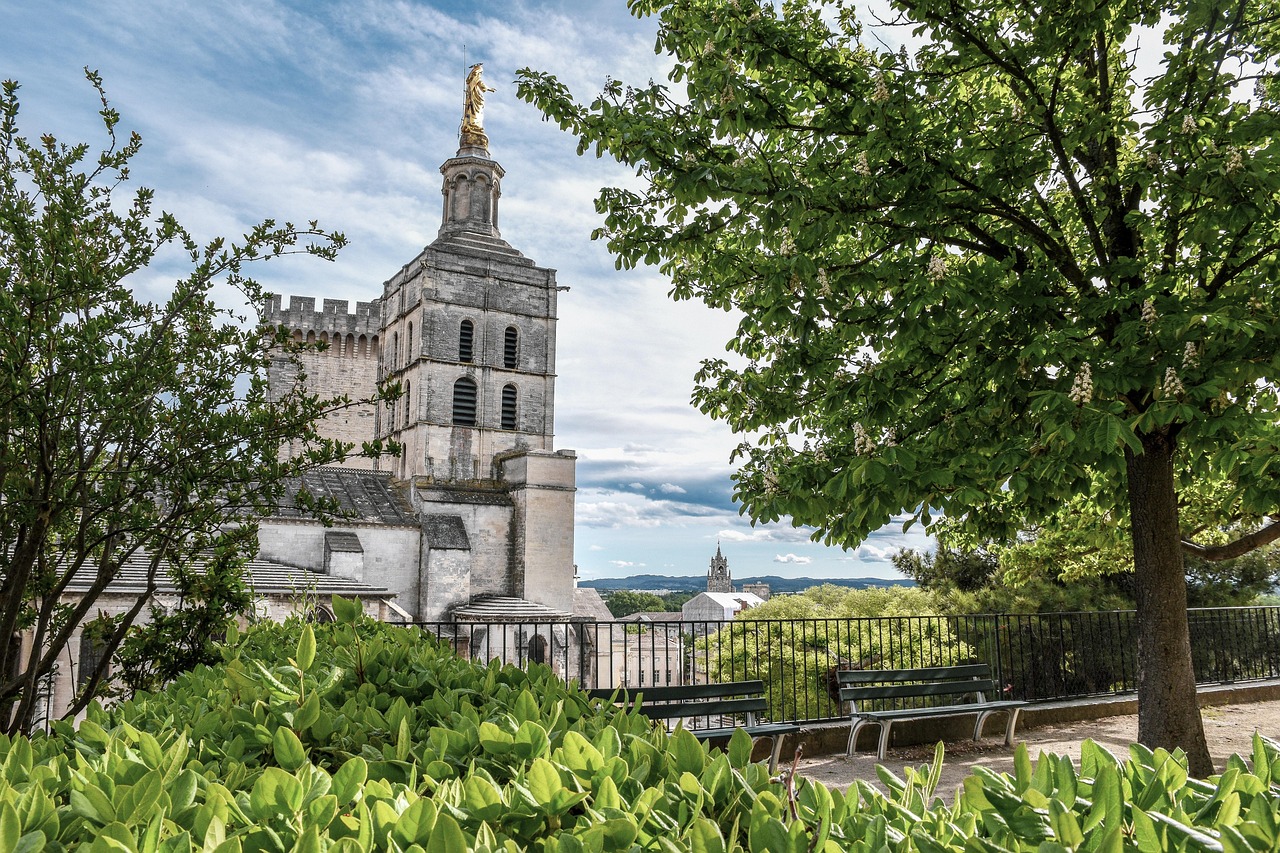
- Visit Notre-Dame des Doms Cathedral. Sit quietly for a few minutes to rest your feet and let the morning’s impressions settle.
- Continue up into the Jardin des Doms. Walk the loop path, pause at the viewpoints over the Rhône and broken bridge, and circle the pond at the garden’s center.
- If you’ve picked up picnic supplies from Les Halles earlier (or from a nearby bakery), this is a perfect spot for an informal afternoon snack.
Evening: Blue Hour Around the Palace
As evening approaches:
- Descend back to Place du Palais for blue hour. Watch the façades slowly light up; it’s one of the most photogenic times of day.
- For dinner, consider a restaurant in the medieval streets just south of the palace. Several family-run spots serve regional dishes in stone-vaulted dining rooms—romantic without being fussy.
- After dinner, stroll toward Rue des Teinturiers for a nightcap. In warm months, outdoor terraces hum with conversation, and you’ll often find live music.
Day 2 – Bridge, Markets & Hidden Alleys
Morning: Pont Saint-Bénézet & Ramparts
- Start early at the Pont Saint-Bénézet. The morning light on the river is beautiful, and crowds are thinner.
- Explore the interactive exhibits in the visitor center, then walk out onto the bridge. Take a moment just to stand still and feel the wind.
- After the bridge, walk along the ramparts toward the riverfront. The path gives lovely views back toward the palace and across to Barthelasse Island.
Late Morning & Lunch: Les Halles & Local Flavors
- Head to Les Halles. Wander the aisles, tasting where you can—most vendors will happily offer a sample if you show genuine interest.
- Pick up picnic supplies or grab a stool at one of the market bars serving simple, fresh plates: oysters in season, charcuterie boards, or salade niçoise-style dishes.
Afternoon: Hidden Gems & Backstreets
Dedicate your final afternoon to wandering the lesser-known corners around the palace:
- Loop through the quiet papal quarter backstreets—Rue des Lices, Rue du Roi René, and nearby lanes.
- Look for small plaques indicating former cardinals’ residences; many now house institutions or private apartments.
- Duck into any open churches or chapels you find; several contain overlooked Baroque altarpieces or medieval stonework.
End your 2-day itinerary with one last look at the palace from the Rhône embankment. Turn back, and the fortress-palace rises above the city walls—still guarding Avignon seven centuries on.
3 Day Itinerary for the Palace of the Popes
With 3 days in the Palace of the Popes area, you can keep Day 1 and Day 2 largely as above, then add a third day for deeper cultural experiences and some gentle “adventure.”
Day 3 – Museums, Art, and the Rhône
Morning: Art & Papal Splendor
Start by revisiting the palace area—but through an artistic lens. If there’s a temporary exhibition on inside the palace (in 2026, expect at least one major show focused on medieval or Renaissance art), time your visit for opening.
Then branch out to nearby museums, such as:
- Petit Palais Museum – just off Place du Palais, housing a rich collection of Italian and Provençal medieval and Renaissance paintings. It’s much quieter than the main palace and a delight for art lovers.
Savor the cool, cloistered spaces and take your time. The contrast between the palace’s grand public halls and these more intimate, devotional artworks is striking.
Lunch: Riverside or Market Redux
By Day 3, you’ll likely have favorite spots. Either:
- Return to Les Halles for a relaxed, graze-as-you-go lunch.
- Or head down to the Rhône quays and pick a café with river views for a simple salad or plat du jour.
Afternoon: Rhône Boat Ride & Barthelasse Island
For a gentle, family-friendly adventure, take the free shuttle boat across to the Île de la Barthelasse. From there, you can:
- Rent bicycles (in season) to loop around the island’s flat, green paths.
- Walk along the riverbank for postcard views back toward the palace and bridge.
- Spread out a blanket for a relaxed afternoon in the grass.
I’ve done this in both summer and crisp autumn weather; each time, the contrast with the dense medieval city is refreshing. It’s also a good way to let kids or teens burn off energy after more formal sightseeing.
Evening: Theater, Music, or a Night Tour
For your final evening, lean into cultural experiences in the Palace of the Popes area:
- Book a nighttime guided tour of the palace or old town (several companies offer English tours; check 2026 schedules in advance).
- Or catch a performance—classical concert, theater, or jazz—in one of the city’s intimate venues. Many are within a 10–15 minute walk of the palace.
Ending a 3-day itinerary with live music or theater, then walking back under the lit towers of the palace, feels like a fitting farewell.
4 Day Itinerary for the Palace of the Popes
With 4 days in the Palace of the Popes area, you can truly exhale. Use Days 1–3 as above, then turn Day 4 into a foray into the wider region while still framing your trip around the palace.
Day 4 – Day Trip & Return to the Palace
Popular day-trip options include:
- Châteauneuf-du-Pape – 20–30 minutes by car or 40–50 minutes by bus. Explore vineyards linked to the popes’ love of wine, taste world-class reds, and visit the ruined hilltop castle with views back toward Avignon.
- Orange – 20 minutes by train. Visit the magnificent Roman theater and triumphal arch; the layers of history nicely complement the medieval papal story.
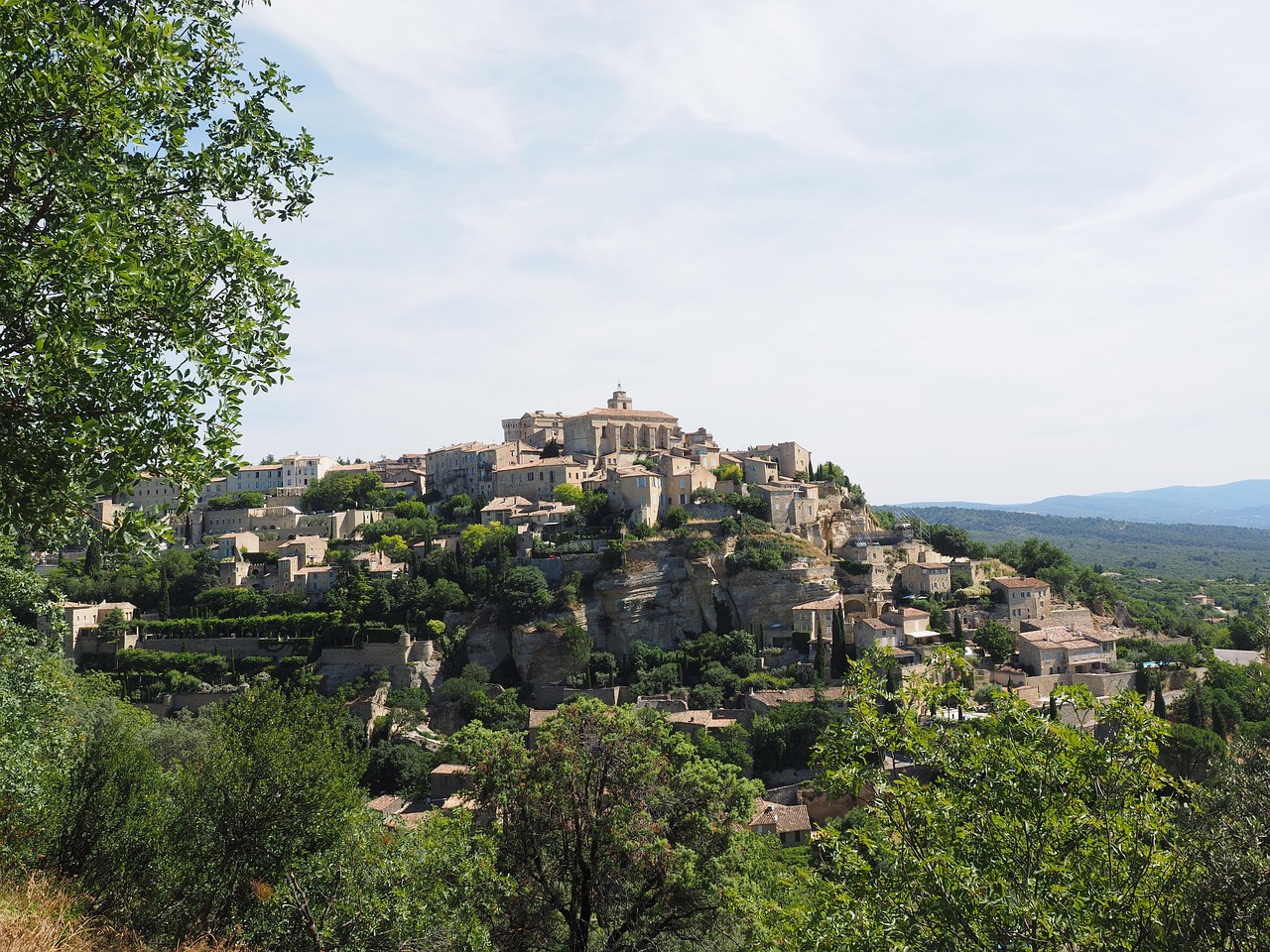
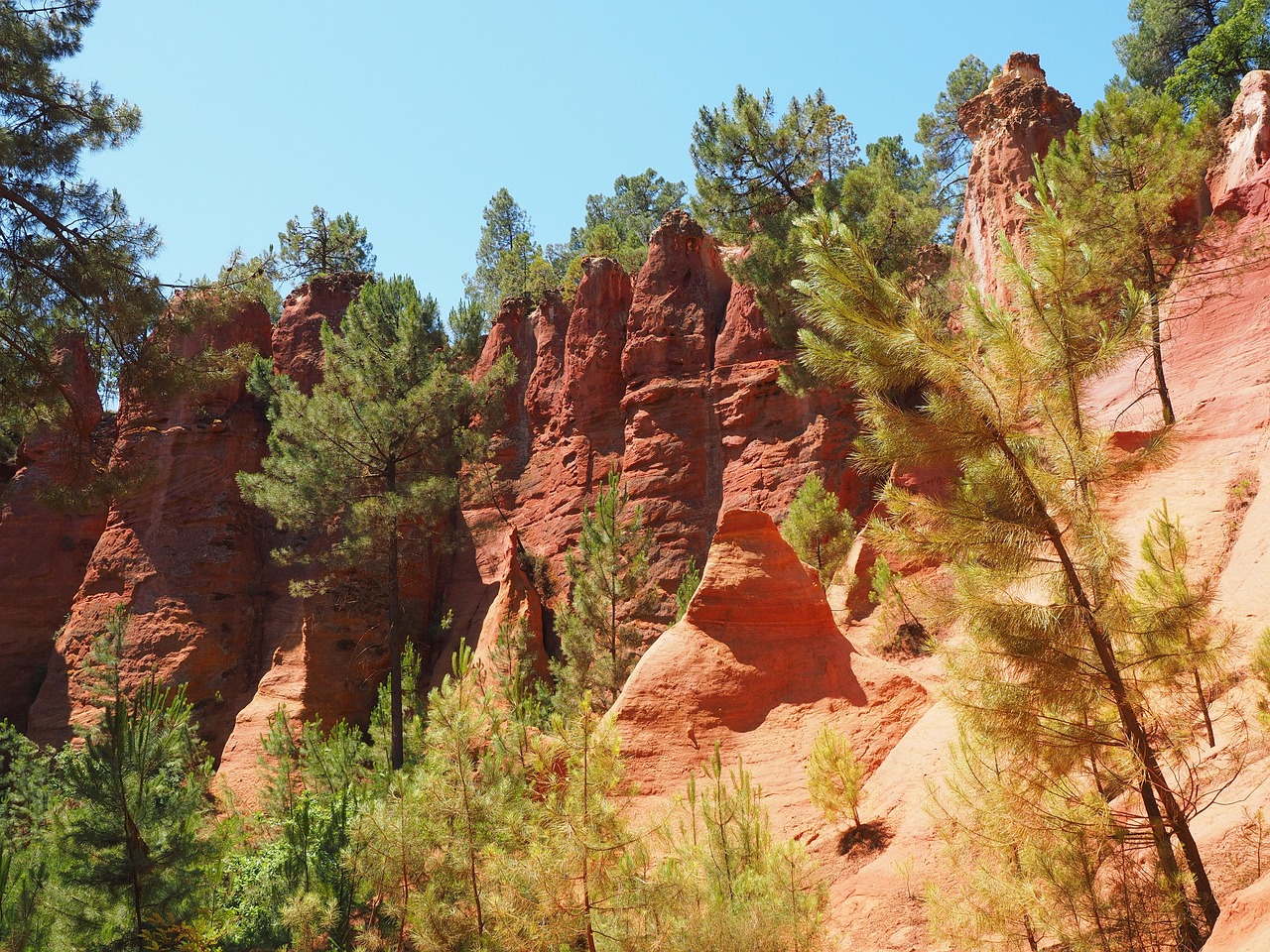
- Villages of the Luberon (Gordes, Roussillon, etc.) – best by car or organized tour; think hilltop villages, ochre cliffs, and market squares.
Whichever you choose, aim to be back in Avignon by late afternoon. I like to end my final day with a slow circuit: from the station or car park, walk back through the medieval gates, weave up toward the palace, and say a quiet goodbye in Place du Palais as the lights come on.
Every time I do this, I’m struck again by how the palace dominates yet doesn’t crush the city around it. Avignon is not a museum piece; it’s a living, breathing place, and the palace is simply its most dramatic neighbor.
Traditional Cuisine Around the Palace of the Popes
You don’t need to stray far from the palace to eat well—but you do need to be a bit selective. The most atmospheric dining is in the tangle of streets within a 10-minute radius of Place du Palais, where you’ll find everything from humble wine bars to white-tablecloth restaurants.
Signature Dishes Tied to the Area’s History
- Daube Provençale: Slow-cooked beef stew in red wine with olives and orange zest. Hearty, rustic, and perfect after a winter palace visit.
- Brandade de Morue: Salt cod whipped with olive oil and sometimes potatoes; a legacy of medieval trade routes supplying preserved fish.
- Gardianne de Taureau: A bull-meat stew from the nearby Camargue region—deep, rich, and often served with rice.
- Pissaladière: Onions, anchovies, and olives on a thick tart—ideal for a snack between sights.
- Tapenade & Olive-based Dishes: Olives were a staple in papal Avignon, and local varieties still dominate menus.
Where to Eat: Local-Favored Spots
Without listing specific names (as they sometimes change), here’s what I look for in restaurants around the palace:
- Streets like Rue des Teinturiers, Rue des Trois Faucons, and the quieter lanes just south of Place du Palais tend to have more local-leaning spots.
- Menus with plat du jour chalkboards in French (with translations if needed) are often a good sign; avoid places aggressively waving multilingual menus in your face.
- Short menus focused on seasonal products usually mean fresher, better meals.
Atmospheric Alleys for Evening Meals
For a romantic or simply atmospheric dinner, I like the narrow lanes just off Place du Palais—stone walls, ivy, and small terraces lit by candles. In summer, tables spill into alleys; in cooler months, many restaurants offer cozy interiors with low ceilings and exposed beams.
Staying Near the Palace: Old Quarter vs. Modern Town
Over the years, I’ve tried both:
- Inside the old quarter (intra-muros): Stay within the walls near the palace for maximum atmosphere. Expect historic buildings, narrow streets, and charming but sometimes compact rooms. You’ll be able to walk everywhere: the palace, theater venues, markets, and restaurants.
- Outside the walls or near the TGV station: More modern hotels with parking and larger rooms, often at lower prices. You’ll trade some charm for convenience, especially if you’re doing lots of day trips by car.
Personally, for a short stay focused on the must-see attractions in the Palace of the Popes area, I always choose a small hotel or apartment within a 10–15 minute walk of Place du Palais. There’s nothing like stepping outside at night and seeing the towers rise above the rooftops.
Navigating Narrow Historic Streets
Driving inside the walls is not for the faint-hearted: one-way alleys, tight corners, and occasional bollards that pop up from the ground. If you do have a car, I strongly suggest parking outside the walls (in one of the large lots) and walking or using the small local shuttle buses.
On foot, wear comfortable shoes with some grip; cobblestones can be slick in rain. Distances are short, but the constant up-and-down of small slopes and steps can add up over a long day.
Evenings at the Palace of the Popes
Even after multiple visits, evenings around the palace are my favorite time. The daytime crowds thin, the stone cools, and the whole quarter takes on an almost theatrical quality.
Lit-Up Monuments & Night Walks
From April through October (and around Christmas), the palace and key monuments are illuminated after dark. A simple loop I love:
- Start at Place de l’Horloge to feel the city’s evening pulse.
- Stroll up to Place du Palais as the lights come on.
- Continue toward the Jardin des Doms entrance for a quieter, more contemplative viewpoint.
- Loop back through side streets toward Rue des Teinturiers or your hotel.
Sound-and-Light Shows & Performances
In 2026, expect a continuation of the popular nighttime son et lumière shows within the palace courtyard, typically from late spring through early autumn. They’re family-friendly—kids are usually spellbound by the projections—and offer a very different, more emotional way to absorb the site’s history.
During the Avignon Festival (usually July), the palace also hosts theater and dance performances, some of which use the architecture itself as a stage set.
Busy Hours vs. Quiet Moments
One of the joys of staying nearby is experiencing the palace at different times:
- Early morning: Delivery vans, locals walking dogs, café staff setting up—almost no tourists.
- Midday: Crowds peak, especially on weekends and during school holidays.
- Late night: After 22:00–23:00, the square can be eerily quiet again, with just a few people crossing under the lit towers.
If you’re a photographer, or simply someone who likes to have big spaces “to yourself,” plan at least one early-morning or late-night walk. The contrast with peak tourist hours is striking.
Day Trips & Nearby Attractions from the Palace of the Popes
One of the reasons the Palace of the Popes makes such a great base is how easy it is to reach other highlights of Provence and the Rhône valley.
Châteauneuf-du-Pape – Papal Wines
A 20–30 minute drive north brings you to Châteauneuf-du-Pape, where the popes once kept their country residence and vineyards. Today, the ruined castle looks back toward Avignon, and the surrounding hills are covered in vines.
How to get there: By car is easiest; otherwise, local buses connect Avignon to the village. Several wine-tour companies also run half-day trips including tastings.
After walking the palace halls, sipping a glass of Châteauneuf in the landscape where the popes did the same centuries ago feels like completing a historical circle.
Orange – Roman Theater & Triumphal Arch
Just 20 minutes by train, Orange boasts one of the best-preserved Roman theaters in the world. Standing on the ancient stage, with the massive scaenae frons (stage wall) behind you, is another kind of awe—older than the palace, but equally powerful.
Pont du Gard – Roman Engineering Marvel
Accessible by car or organized tour, the Pont du Gard aqueduct is a majestic, three-tiered Roman structure spanning a river gorge. It makes a fantastic half-day or full-day outing, especially in warm weather when you can picnic and even swim nearby.
Luberon Villages & Provençal Countryside
If your 4 day itinerary for the Palace of the Popes includes a car, consider a loop through the Luberon: Gordes, Roussillon, Lourmarin. The contrast between hilltop villages and Avignon’s walled papal city is part of Provence’s charm.
Cultural Etiquette & Local Customs
France is generally relaxed, but a few local habits will make your time around the Palace of the Popes smoother and more pleasant.
Greetings & Politeness
- Always begin interactions with a polite “Bonjour, Monsieur/Madame” before asking a question.
- In shops and small restaurants, saying hello and goodbye matters; it’s seen as basic respect.
In Churches & Sacred Sites
Within the palace’s chapels and the nearby cathedral:
- Dress modestly—no bare chests, very short shorts, or beachwear.
- Keep voices low; avoid speakerphone or loud videos.
- Respect photography signs; flash is usually prohibited near frescoes.
Meals & Tipping
- Meal times are later than in some countries; many restaurants close between lunch and dinner.
- Service is included in prices, but leaving a small tip (5–10%) for good service in restaurants or rounding up in cafés is appreciated.
Photography & Archaeological-Site Etiquette
Inside the palace:
- Tripods may be restricted; check rules if you’re serious about photography.
- Don’t touch frescoed walls or lean on fragile stone; oils from hands accelerate deterioration.
Practical Travel Advice & Logistics (2026–2027)
Getting There & Around
By Train: Avignon TGV station is connected to Paris, Lyon, Marseille, and other cities by high-speed trains. A short shuttle (train or bus) links Avignon TGV with Avignon Centre, the station just outside the medieval walls.
By Car: Highways connect Avignon with the rest of Provence and the Rhône valley. Park outside the old town walls in paid lots; driving inside is stressful and parking scarce.
On Foot: Once inside the walls, you’ll rarely need transport to explore the palace and central sights. Distances are compact.
Public Transport & Car Rental
- Local buses run to suburbs and some nearby villages; they’re useful but not always frequent.
- For extensive day trips, renting a car (with pickup at Avignon TGV or near the center) offers the most flexibility.
SIM Cards & Connectivity
In 2026, major French providers (Orange, SFR, Bouygues, Free) all offer tourist-friendly prepaid SIMs with generous data. You can buy them at airports, major train stations, and phone shops in Avignon. EU residents can usually roam on their home plans.
Money-Saving Tips Around the Palace
- Buy combined tickets for the palace and Pont Saint-Bénézet.
- Check for city passes that include multiple museums and sometimes discounted transport.
- Eat your main meal at lunchtime when fixed-price menus are cheaper.
- Carry a refillable bottle; public fountains in the old town provide drinkable water (look for “eau potable”).
Accessibility
The palace is a medieval structure, so complete accessibility is challenging. However, recent improvements have added ramps, lifts, and alternative routes where possible. Expect uneven floors, stairs, and some tight passages. If mobility is an issue, check the official site in advance and allow extra time.
Visa Requirements & Driving Licenses
As of 2026, Avignon follows standard Schengen Area rules:
- EU/EEA/Swiss citizens can enter freely with ID.
- Many other nationalities (including US, UK, Canada, Australia) can enter visa-free for short stays; always check current rules before travel.
Foreign driving licenses from many countries are accepted in France for tourists, but carrying an International Driving Permit (IDP) alongside your national license is recommended, and sometimes required by rental agencies.
Best Seasons for Different Activities
- Spring (April–June): Ideal balance of pleasant weather and manageable crowds. Great for palace visits, gardens, and day trips.
- Summer (July–August): Hot, busy, and vibrant. Perfect for festival-goers and night events, but expect queues and midday heat.
- Autumn (September–October): Often my favorite: warm but not scorching, grape harvest in surrounding vineyards, softer light and fewer visitors.
- Winter (November–March): Quiet, sometimes rainy or chilly, but magical if you enjoy having big sites almost to yourself. Some services and tours run on reduced schedules.
Historic-Area Logistics & Rules of Thumb
- Peak-hour avoidance: Tour groups typically hit the palace from 10:00–15:00. Go early or late.
- Dress code: Casual but neat is fine almost everywhere; churches and chapels expect modesty.
- Photography rules: No flash near frescoes; respect “no photo” signs, especially in temporary exhibitions.
- Cobbles & steps: Plan short breaks, especially if you have knee or ankle issues. A lightweight walking stick can be helpful for some.
Hidden Tips from Repeat Visits
- Book palace tickets for the first or last slots of the day in high season—it transforms the experience.
- Always carry a light scarf or shawl; useful for sun, modesty, and sudden breezes in stone halls.
- If you’re a photographer, bring a fast lens; interior light can be dim, and tripods are often not allowed.
- Use the palace as your compass: getting “lost” is half the fun, and you can almost always reorient by walking uphill toward the towers.
What’s New: Events & Festivals 2026–2027
Avignon is famous for its cultural calendar, much of which swirls around the palace and its plazas.
Avignon Festival (Festival d’Avignon)
Each July, the city transforms into one of Europe’s largest theater festivals. The Palace of the Popes often hosts flagship performances in its courtyards, while the streets teem with actors promoting off-program shows.
Sound-and-Light Seasons at the Palace
Expect extended nighttime projection shows from late spring through early autumn in 2026 and 2027, with new themes and upgraded visuals compared to earlier years.
Special Exhibitions
The palace and nearby museums regularly host major exhibitions on medieval art, papal history, and related themes. For 2026–2027, anticipate at least one headline exhibition per year; details are usually announced 6–12 months in advance.
Christmas & Winter Events
In December and early January, Avignon’s squares—including those near the palace—host Christmas markets, light trails, and seasonal performances. The palace itself sometimes offers special guided tours or concerts in this period.
Summary & Final Recommendations
The Palace of the Popes is one of those rare places where history, architecture, and everyday life still overlap in a vivid way. It’s not just a monument; it’s the anchor of a living city.
For first-time visitors, a 2 day itinerary for the Palace of the Popes delivers the essentials: palace, cathedral, bridge, gardens, and a taste of local food. With 3 days in the Palace of the Popes area, you can breathe, add markets, museums, and riverside strolling. A 4 day itinerary for the Palace of the Popes lets you fold in day trips to vineyards and Roman ruins, all while returning each night to the glow of the papal fortress.
In terms of timing, late spring and early autumn (May–June, September–October) are the sweet spots: comfortable temperatures, lively but not overwhelming crowds, and full access to cultural events and outdoor dining. Summer brings festival energy and long evenings, but also heat and lines; winter trades some services for hushed, uncrowded visits.
However long you stay, give yourself at least one unstructured hour to wander the alleys around the palace with no plan—just following the curve of a wall, the echo of footsteps on stone, or the glimpse of a tower between rooftops. That’s when Avignon, and its Palace of the Popes, shifts from “sight” to place—somewhere you might find yourself, as I have, coming back to again and again.