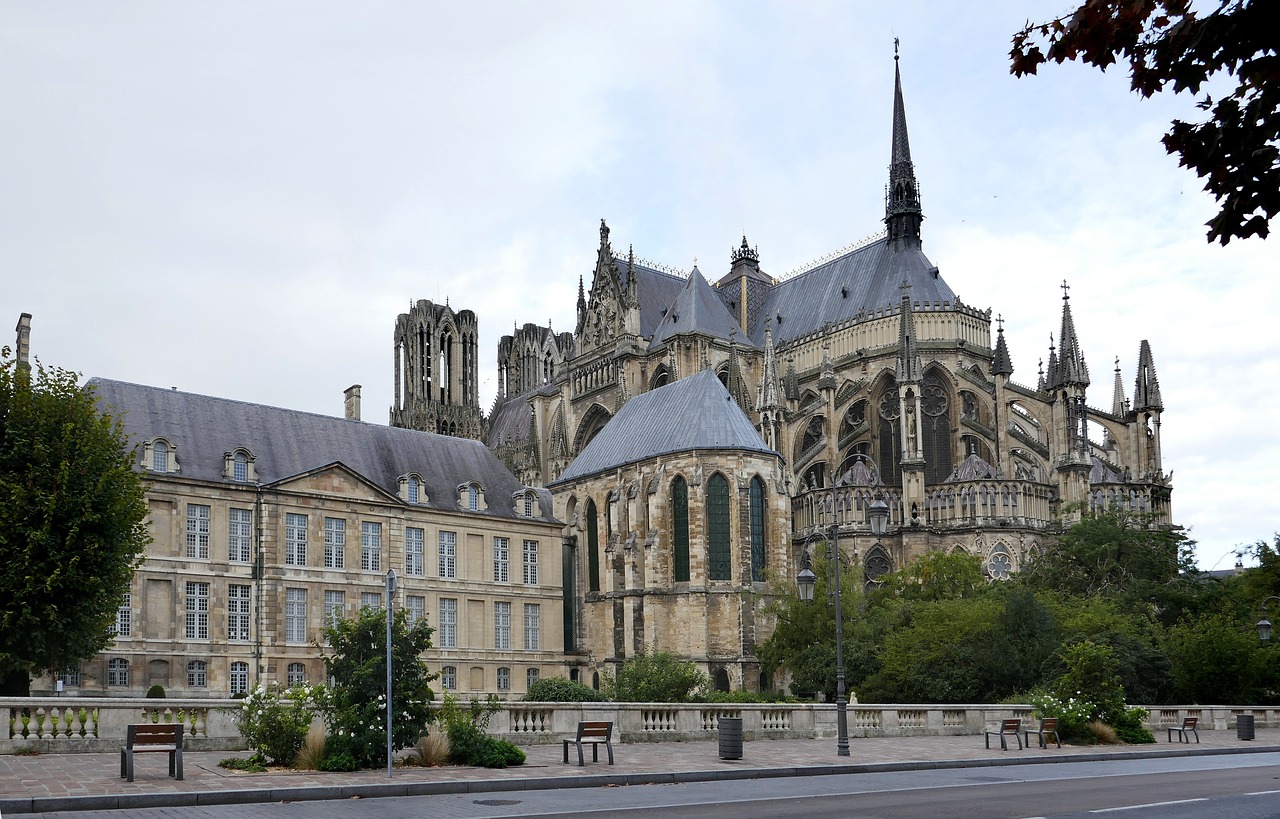
Why Visit Palais du Tau?
If you’re planning 2 days, 3 days, or even 4 days in Reims and wondering how deeply to dive into the historic heart, the Palais du Tau is not just a stop – it’s the lens through which the rest of the city snaps into focus.
- Coronation history under your feet: Almost every French king from the 11th century to Charles X in 1825 passed through this palace. You’ll walk the same stone floors they crossed to reach the cathedral
- Architecture as a timeline: The palace’s layers – Romanesque remnants, Gothic vaults, 17th‑century classical façades, 20th‑century reconstructions – make it a tangible crash course in French art and architecture.
- Masterpiece collections: Statues and gargoyles rescued from the cathedral, immense tapestries, reliquaries, coronation treasures – this is where the “missing pieces” of the UNESCO‑listed cathedral live.
- Atmosphere in spades: Compared with the often-crowded cathedral, the Palais du Tau can be surprisingly calm. You get space to linger, reflect, and photograph without being jostled.
- Perfect anchor for your Reims itinerary: Whether you’re on a 2 day itinerary for Palais du Tau and Reims, a long 3 day itinerary, or a slow 4 day itinerary, this is where your story of the city should begin.
Most travelers rush through in under an hour. I’d argue you should do the opposite: let the Palais du Tau set the pace for your whole stay. In this travel guide for Palais du Tau, I’ll suggest ways to weave it into 2–4 days in Reims, show you hidden gems inside and around the palace, and share practical travel tips for Palais du Tau from a repeat visitor’s perspective.
Table of Contents
- 1. Understanding the Palais du Tau: Layout, History & Atmosphere
- 2. Twelve Essential Quarters, Monuments & Key Sites in and around Palais du Tau
- 2.1 Cathédrale Notre-Dame & Cathedral Square
- 2.2 The Main Courtyard & Royal Gate
- 2.3 The Grand Staircase & Royal Apartments
- 2.4 The Salle du Tau (Banqueting Hall)
- 2.5 The Treasury & Coronation Regalia
- 2.6 The Statues & Gargoyles Gallery
- 2.7 The Palace Chapel & Sacred Spaces
- 2.8 Terrace & Cathedral Views
- 2.9 The Archbishop’s Quarter & Old Canon Houses
- 2.10 Traces of Roman Reims under the Palace
- 2.11 Tau Gardens & Quiet Corners
- 2.12 Surrounding Streets: Rue du Cloître & Hidden Alleys
- 3. Itineraries: 2, 3 and 4 Days around Palais du Tau
- 4. Local Food in and around Palais du Tau
- 5. Evenings at Palais du Tau: Lights, Performances & Night Walks
- 6. Cultural Etiquette & Local Customs
- 7. What’s New in 2026–2027: Events & Exhibitions
- 8. Day Trips from Palais du Tau & Reims
- 9. Practical Travel Advice for Palais du Tau
- 10. Summary & Final Recommendations
Understanding the Palais du Tau: Layout, History & Atmosphere
The first time I visited the Palais du Tau, I made the classic mistake: I treated it as an afterthought to the cathedral. I stepped in, marched through the rooms, admired the coronation regalia, and was out in barely 45 minutes. Only on my second visit, years later, when a spring storm forced me to linger, did the palace really reveal itself.
The building wraps itself around a central courtyard, forming a rough L-shape against the southern flank of the cathedral. Its name, “Tau,” comes from that T‑shaped ground plan. But the lines have wobbled and shifted over the centuries:
- Early Middle Ages: A bishop’s residence grew beside the cathedral, modestly at first, with Roman and Merovingian foundations beneath.
- 12th–13th centuries: As Reims became the coronation city, the residence expanded; Gothic halls and chapels were added to host royal entourages.
- Late 17th century: After a fire, the palace was largely rebuilt in a restrained classical style under Archbishop Charles-Maurice Le Tellier. This is the shell you see today: sober limestone façades, high windows, slate roofs.
- World War I: Reims was bombarded, the palace burned again. Much of what you walk through now is a careful 20th‑century reconstruction using surviving walls and fragments.
The chronological layering is what makes a slow visit so rewarding. You can stand in the Salle du Tau and sense the 15th‑century ribs overhead, the 17th‑century reconfiguration of the space, and the 20th‑century scars of war all at once.
In practical terms, the layout today is simple:
- You enter from the cathedral side, through a modest doorway that leads to the ticket desk and shop.
- From there, a processional route guides you through ground-floor rooms and up the grand staircase to the former royal apartments and the big ceremonial hall.
- Along the way, you’ll pass the treasury, the statue galleries, and views onto the courtyard and garden terrace.
I tend to do one “serious” loop – reading panels, listening to audio, taking notes – and then a second, looser wander: no agenda, just following whatever catches my eye. In this guide, I’ll walk you through each of the palace’s key spaces as I tend to approach them on those slower loops.
Twelve Essential Quarters, Monuments & Key Sites in and around Palais du Tau
2.1 Cathédrale Notre-Dame & Cathedral Square
Technically, the cathedral is a separate monument, but in lived experience it’s inseparable from the Palais du Tau. Every coronation moved along a tight axis: from the royal entry gate, through the palace, into the cathedral, and back again for celebration. To understand the palace, you need to step outside and breathe in the square.
I like to begin each visit here, early in the morning – around 8:30 in summer, when the first café chairs are scraping the cobbles. Stand between the cathedral’s façade and the palace’s long side: you’re in the hinge between crown and church.
- History in brief: The cathedral we see dates mostly from the 13th century, built after a fire destroyed its Carolingian predecessor. It became the near-exclusive coronation church for French kings, which is why the adjacent episcopal residence – the Palais du Tau – swelled into a royal-scale complex.
- What to look for: Note how the palace deliberately keeps a lower, longer, more horizontal profile, letting the cathedral soar above it. The rhythm of palace windows mirrors the bays of the nave; they’re architectural dance partners.
- Best time: Early morning for quiet photos; late evening when the stones glow rosy and the first champagne bars open.
Tip: If you’re doing a tight 2 days in Palais du Tau and Reims, buy a combined ticket that includes the cathedral towers and the palace. Climbing the towers first gives you an eagle’s-eye view of the palace roofscape you’ll walk through later.
2.2 The Main Courtyard & Royal Gate
Once you’ve entered the palace and stepped out into the cour d’honneur, the modern city drops away. The courtyard is hemmed in by smooth stone façades, punctuated by tall windows and topped with slate roofs that look almost blue in winter light.
On a drizzly November afternoon in 2024, I watched a school group race across this space, their umbrellas bobbing like bright mushrooms. Their teacher stopped them at the center and pointed: “Imagine this full of horses.” She was right – in its heyday, this was a stage set for royal arrivals.
- History: The courtyard took its current form in the late 17th century, when Archbishop Le Tellier rebuilt the palace with a more formal classical plan. The gate once framed views of processions moving in from the city.
- What to do: Before following the indoor route, take a slow lap. Notice the subtle differences between the wings: some windows still show traces of older Gothic openings; others are pure Louis XIV symmetry.
Photo tip: Late afternoon, when the light drops along the east wing, you get wonderful textures in the stone. Position yourself near the far corner and shoot back toward the gate to capture both the palace and a slice of cathedral tower.
2.3 The Grand Staircase & Royal Apartments
The grand staircase is where the palace begins to feel intimate. The stone steps are shallow and broad, designed for robed bishops and silk‑swaddled monarchs rather than modern sneakers. Each time I climb them I’m struck by how low-key the decor is: no Versailles‑style mirrors, no riot of gilding – just solid stone, a balustrade, and filtered light from high windows.
- Layout tip: The staircase connects the ground-floor service and reception rooms with the first-floor royal apartments and Salle du Tau. It’s the spine of the ceremonial route.
- What to notice: The way sound changes as you ascend – footsteps muffled, voices echoing softly. Look for the subtle wear in the center of each step, polished by centuries of procession.
On my last visit in 2026, I paused halfway up and glanced out toward the cathedral through a narrow window. A wedding party was spilling out of the western portal, the bride’s dress catching in the breeze. For a moment, it was easy to imagine a royal retinue instead, the palace and cathedral once again joined in a shared spectacle.
2.4 The Salle du Tau (Banqueting Hall)
This is the palace’s showstopper: a long, high hall with a timber or stone-vaulted roof (depending on the latest restorations), tall windows, and walls often lined with enormous tapestries. If you have limited time, this is where you should linger.
- History & function: The Salle du Tau was the scene of the coronation banquets. After the anointing in the cathedral, the newly crowned king would cross back into the palace to feast here with his court. Imagine tables stretching the length of the hall, flickering candlelight, the smell of roasted game and spiced wine.
- Tapestries: The current hangings often depict scenes from the life of Clovis or the history of the cathedral. They serve as both insulation and propaganda – woven storytelling that wraps visitors in the royal myth.
- Soundscape: When the room is quiet, clap gently once. The echo gives a sense of how music and voices must have carried during banquets.
I like to sit on the bench along the wall (there’s usually at least one) and trace the narrative of a single tapestry from left to right. On one winter visit, I spent nearly an hour following a procession of tiny woven figures as they crossed mountains and rivers, while a guide led a group through in ten brisk minutes. Different ways to travel through the same space.
2.5 The Treasury & Coronation Regalia
The Treasury is where the palace’s quiet grandeur sharpens into something more intense. Behind glass, under careful lighting, are objects that sat at the literal heart of French monarchy: reliquaries, chalices, vestments, and fragments of coronation regalia.
- Key pieces:
- Ornate reliquaries said to contain fragments of the Holy Ampulla used to anoint kings.
- Liturgical vestments embroidered with gold thread.
- Precious metalwork from the cathedral’s treasury, some of it astonishing in its detail.
- Lighting & mood: The rooms are dark, cool, and hushed – a shift from the airy halls. Move slowly to let your eyes adjust.
On my 2022 visit, a small boy beside me was peering intently at a gilded reliquary. “Is that real gold?” he whispered to his grandmother. She nodded, and he frowned. “But why is it in a box if it’s for God?” That’s the question the whole treasury poses, in a way: where spiritual devotion ends and royal power begins.
Tip: Flash photography is prohibited. If you’re keen on photos, crank up your ISO and brace your camera against a wall or display base to avoid blur.
2.6 The Statues & Gargoyles Gallery
One of my favorite “hidden gems in Palais du Tau” is the series of rooms where dislodged statues, gargoyles, and sculptural fragments from the cathedral now rest. It’s like a backstage area for Gothic art.
- History: Many of these pieces were brought in during restoration campaigns, especially after World War I, when the cathedral suffered heavy damage. Rather than discard or leave fragile originals outside, they were moved into the palace.
- What to look for:
- The expressive faces of kings and prophets, some weathered almost smooth, others startlingly fresh.
- Gargoyles whose details you’d never see from the ground – teeth, claws, even traces of original paint in sheltered crevices.
On a rainy afternoon in 2026, I found myself alone in one of these rooms. The only sound was the patter of rain on the palace roof. A row of solemn stone kings watched me; one had a mischievous twist to his lips that I’d never noticed when he was high on the façade. At eye level, these figures feel less like lofty symbols and more like a crowd of silent witnesses.
Family-friendly angle: Kids tend to love this section – it’s like a treasure hunt of strange faces and creatures. Ask them to pick their favorite gargoyle and invent its backstory.
2.7 The Palace Chapel & Sacred Spaces
The palace chapel is more modest than the cathedral, of course, but its intimacy is its strength. Here, archbishops and royal guests could attend private services, away from the crush of the public liturgy next door.
- Architecture: Depending on ongoing restorations, you may see a mix of Gothic ribs, later plasterwork, and 20th‑century repairs. Stained glass, when the sun hits it, paints the walls with soft color.
- Atmosphere: This is one of the most contemplative corners of the palace. Even when groups pass through, there are often a few seconds of near-silence between waves.
I make a point of sitting down here for a minute or two each visit – not out of religious devotion, but to reset my senses. The low murmur of footsteps, the coolness of the stone bench, the faint smell of wax and old dust: it’s a kind of palate cleanser before diving back into the narrative of kings and crowns.
Etiquette: Even though it functions more as a museum space now, treat it as you would an active chapel: speak softly, remove hats, and avoid phone calls.
2.8 Terrace & Cathedral Views
One of the joys of visiting the Palais du Tau is the chance to see Reims Cathedral from angles the general public often misses. Depending on which areas are open during your visit (access sometimes changes with exhibitions), you may be able to step out onto a terrace or loggia that offers close, lateral views of the cathedral’s flying buttresses and south flank.
- Best time: Late afternoon, when the sun slants along the stone and throws shadows under the tracery.
- What to look for: Details you can’t see from the square: crockets along the pinnacles, small sculpted figures tucked into niches, subtle variations in stone color where repairs have been made.
On a July evening in 2023, I watched swifts swoop and wheel around the towers from this vantage point. Below, the square was filling with chairs for a light show; up here, it was just me, the birds, and a few other strays who’d taken the time to wander.
Photography tip: Use the palace balustrades as makeshift tripods for low-light shots, especially if you stay near closing time when golden hour hits.
2.9 The Archbishop’s Quarter & Old Canon Houses
Step outside the formal tour route and walk along the streets wrapping around the palace – Rue du Cloître, Rue Robert de Coucy – and you’re in what was once the tightly controlled episcopal enclave. Low stone walls, old canon houses, and quiet gardens hint at a time when the church ruled this patch of Reims.
- History: Canons – clergy attached to the cathedral – lived and worked in this district. Many houses have been reconfigured over time but retain their medieval bones.
- What to do: Take a slow loop around the block after your palace visit. Peek through open gateways; sometimes you’ll catch glimpses of private courtyards with climbing roses and bicycles propped against mossy walls.
On a crisp morning in 2025, I watched an elderly man sweep the front step of a centuries‑old house, pausing to chat with a neighbor leaning from an upstairs window. It was a tiny, everyday moment, but it anchored the grandeur of the palace in a living neighborhood.
Hidden gem: A little further along Rue Chanzy, you’ll find smaller churches and façades with carved lintels that most visitors miss. They’re not headline “things to do in Palais du Tau”, but they deepen the story of the area.
2.10 Traces of Roman Reims under the Palace
Reims was once the Roman city of Durocortorum, and like much of the old town, the Palais du Tau stands above layers of antiquity. You won’t find a full-blown Roman museum under the palace, but you will notice reused stones, fragments, and occasional references to older foundations.
- What to look for: Blocks of stone with faint Roman tooling reinserted into later medieval walls; interpretive panels that mention archaeological digs beneath the palace.
- Context: The choice to build the episcopal residence here was no accident – it piggybacked on an already prestigious, central patch of land occupied since antiquity.
During a special guided tour in 2021, a curator pointed out a seemingly unremarkable block near a doorway. “That,” she said, “was part of a Roman cornice.” Once you start seeing those ghosts of earlier cities, the palace becomes less a single building than a palimpsest.
2.11 Tau Gardens & Quiet Corners
Though the Palais du Tau doesn’t boast vast formal gardens like Versailles, it does have small green pockets that feel worlds away from the tourist bustle. Depending on current arrangements, you may access a terrace garden or peek down into planted courtyards.
- Best season: Late spring and early summer, when roses climb the walls and the air smells faintly of cut grass.
- What to do: Use these spaces as rest points. I often bring a small notebook and jot impressions here while the cathedral bells mark the hours.
On a warm June day in 2026, I spent half an hour sharing a bench with a local woman who comes to the palace gardens every week with a paperback. “The library is too quiet,” she said with a shrug. “Here I have the bells and the birds.” It’s that mix of monumental setting and human-scale habit that makes these corners special.
2.12 Surrounding Streets: Rue du Cloître & Hidden Alleys
After you exit the palace, resist the urge to dive immediately back into the main square cafés. Instead, slip into the narrow streets that lace behind the cathedral – Rue du Cloître, Rue de l’Arbalète, Rue du Cardinal de Lorraine.
- Atmosphere: Cobblestones, uneven façades, the odd timber-framed house squeezed between stone neighbors. Laundry sometimes flutters above 18th‑century door lintels.
- Hidden gems: A tiny bookshop with a cat in the window; a wine bar favored by locals; a crêperie where the owner still knows half the customers by name.
One drizzly afternoon in 2020, I ducked into a small café on Rue du Cloître just as a downpour hit. The owner, seeing my damp map, asked where I was from and then launched into stories of growing up in the shadow of the cathedral. “The palace?” he said, nodding toward the wall behind us. “We used to sneak into the courtyard at night as teenagers. It felt like our secret castle.”
Itineraries: 2, 3 and 4 Days around Palais du Tau
How long do you need? With a focused 2 day itinerary for Palais du Tau and Reims, you can see the essentials. With 3 days, you add depth, food, and a taste of champagne culture. With 4 days in Palais du Tau’s orbit, you can slow the pace, explore hidden corners, and add day trips.
Below are narrative itineraries based on my own stays – stitched from multiple visits between 2018 and 2026. Treat them as flexible frameworks, not rigid schedules.
3.1 A 2 Day Itinerary for Palais du Tau & Reims
Day 1: Arrival, Cathedral Axis & First Encounter with the Palais du Tau
Morning – Arrive and Orient
Assuming you arrive by train from Paris (45 minutes on the fast line), you’ll likely roll into Reims Station mid-morning. From there, it’s a 15–20 minute walk up Avenue de Laon and Rue de Vesle toward the cathedral. I always feel the city snap into focus the moment the twin towers appear at the end of Rue Libergier.
Drop your bags at your accommodation. For a short stay, I strongly recommend staying within a 5–10 minute walk of the cathedral – in the old quarter if you like cobbles and character, or just off Place Drouet-d’Erlon if you prefer nightlife and easy dining. The old quarter’s narrow streets can be awkward if you’re driving, but on foot they’re perfect.
Late Morning – First Walk around the Cathedral & Square
Before you head into any ticketed sites, do a slow lap of the cathedral and the Palais du Tau exterior. Note how the palace tucks itself along the south flank of the cathedral, its modest height emphasizing the vertical thrust of the Gothic stonework above.
- Walk the full perimeter of the cathedral, including the quieter eastern end, where buttresses and chapels bloom out like stone petals.
- Pause in the small park to the south-east for one of the best “signature views” of the palace and cathedral together.
Grab an early lunch at one of the cafés on Rue Chanzy – away from the busiest strip but still close. A simple croque-monsieur and salad will fuel you without slowing you down.
Afternoon – Deep Dive into the Palais du Tau
Now for the heart of your 2 days in Palais du Tau: a proper, unhurried visit. Aim to arrive by 14:00–14:30, when the morning tour groups have thinned a bit.
- Tickets: Check for combined tickets with the cathedral towers; in 2026, these often save a few euros and some queueing time. EU residents under 26 frequently get discounts or free entry – always ask.
- Route: Follow the official circuit but build in pauses:
- Spend at least 20–30 minutes in the Salle du Tau, reading the room, not just the labels.
- Allow 20 minutes for the Treasury – more if religious art fascinates you.
- Give yourself time in the statue galleries to walk slowly, face to face with the kings and gargoyles.
Each time I bring friends here on a 2 day itinerary, I watch for the moment their pace slows. It’s usually in front of a single object – a reliquary, a tapestry panel, a chipped stone head. That’s your cue you’re no longer ticking a box but actually engaging with the place.
Late Afternoon – Terrace Views & Side Streets
As you exit, angle yourself toward any accessible terraces or windows that offer lateral views of the cathedral. Then, instead of heading straight back to the square, wander into Rue du Cloître and neighboring lanes.
- Stop for a coffee or early glass of champagne at a small bar patronized by locals (ask the staff where they go on their own evenings off; they’ll usually steer you right).
- Peek into doorways for glimpses of private courtyards – part of the quiet charm around the Palais du Tau.
Evening – Lit-Up Monuments & First Night in Reims
After a rest at your hotel, head back out just before dusk. In 2026, Reims continues to invest in tasteful lighting for its monuments, and the cathedral-palace ensemble is magical at night.
- Walk the square slowly as the lights come on, watching details emerge on the cathedral façade.
- Look toward the palace – its façades are more subtly lit, but you’ll see the windows glowing and the stone warmer in tone.
For dinner, choose a small, family-run restaurant in the old town rather than a tourist-oriented spot on the main drag. Look for simple chalkboard menus rather than laminated photo cards. Order something local: jambon de Reims, a plate of lentillons de Champagne (tiny pink lentils), or a rabbit terrine, with a glass of the region’s signature drink.
End the night with a short stroll around the quiet back streets – the cathedral and Palais du Tau will seem almost like sleeping giants compared to their daytime bustle.
Day 2: Cathedral, Towers & Neighborhood Layers
Morning – Inside the Cathedral & Tower Climb
Start early inside Cathédrale Notre-Dame. Even if you’re not religious, it’s a foundational part of any travel guide for Palais du Tau, because it explains why the palace exists at all.
- Arrive at opening if you can; the first half hour is often the quietest.
- Walk the main nave, then circle the aisles and chapels. Look for the spots where stained glass washes the stone with color.
- If you’ve bought a combined ticket, climb the towers. The ascent is a workout, but the views over the palace roofscape and old town are superb. You’ll see the T‑shape of the Palais du Tau from above, really understanding its name.
Midday – Champagne & Lunch
Reims is champagne country, and even on a tight 2 day itinerary you should make room for a tasting. Choose a nearby house for a tour, or simply pop into a wine bar that offers flights of small producers. Pair your tasting with a light lunch – a tartine or salad – so you don’t end up tipsy before the afternoon.
Afternoon – Return to the Palais du Tau or Explore the Quarter
This is where personal preference kicks in:
- If you fell hard for the palace yesterday, consider a second, shorter visit to revisit favorite rooms or catch a temporary exhibition you skimmed. You’ll notice different details this time.
- Otherwise, use the afternoon to explore the archbishop’s quarter more deeply: canon houses, small museums, and quiet churches within a 10–15 minute radius.
I like to weave a loose loop that takes in: side streets behind the palace → small church visits → a café stop → back to the cathedral square.
Evening – Farewell Walk
On your last evening, return once more to the square and the palace exterior. Walk the perimeter you traced on Day 1, but this time with a sense of what lies inside those stone walls. That’s the real reward of a well-planned 2 days in Palais du Tau: the exterior becomes a map of memories rather than just a pretty façade.
3.2 A 3 Day Itinerary for Palais du Tau & Reims
Day 1: Slow Immersion in Palace & Cathedral Axis
Follow the Day 1 plan from the 2 day itinerary but slow it down even more. With 3 days in Palais du Tau’s orbit, you can:
- Split your palace visit into two shorter sessions – one focused on architecture and layout, another on the collections.
- Attend any guided tour or short talk offered that day (check schedules at the ticket desk); these can unlock stories that panels can’t.
On my 3rd visit, I devoted almost an entire afternoon to the palace, including a coffee break mid-visit on the terrace. Freed from the sense of rushing, I started noticing tiny things: mason’s marks on stones, differences in window glazing, the way one particular tapestry’s colors had faded unevenly.
Day 2: Neighborhoods, Local Food & Hidden Corners
Morning – Old Town Streets & Markets
Dedicate this morning to exploring the old town beyond the immediate palace-cathedal core. If it’s a market day (often Saturday), wander through stalls piled with cheeses, charcuterie, and local produce.
- Look out for local specialties like biscuits roses de Reims (pink biscuits traditionally dipped in champagne).
- Pick up picnic supplies for later – a good way to save money compared to always eating in restaurants.
Midday – Local Food near the Palace
Circle back toward the Palais du Tau and choose a family-run restaurant along a side street. Some of my favorite meals have been in unassuming places with short menus: a bowl of onion soup, a plate of blanquette de veau, a generous cheese plate at the end.
Afternoon – Hidden Gems in and around the Palace
Use the afternoon to hunt for hidden gems in Palais du Tau and its surroundings:
- Return to any palace rooms you felt rushed in; sit quietly and notice who passes through and how the light shifts.
- Explore small streets behind the palace you haven’t yet walked; let curiosity dictate your turns.
- Visit a lesser-known church or small museum that complements the palace story (your accommodation or the tourist office will have up-to-date recommendations).
On one 3 day stay, I spent an hour simply sketching a corner of the palace courtyard, not because I’m a good artist (I’m not) but because the act of looking that closely rewired how I saw the whole building.
Evening – Romantic Angle
With an extra night, you can lean into the romantic side of the area. Reserve a table at a candlelit restaurant with views of the cathedral towers, then take a slow post-dinner stroll around the palace and square. Hold off on photos; just be in the space. The palace after 22:00 feels almost like a stage between performances.
Day 3: Champagne, Day Trip & Final Reflections
On your third day, you have options:
- Take a half-day trip to a nearby champagne village (see the Day Trips section below) and return via Reims in late afternoon.
- Or stay in town and dig into more cultural experiences in Palais du Tau’s orbit: special exhibitions, concerts, or themed tours.
However you spend the morning and early afternoon, I suggest reserving your final hours in Reims for a last circuit of the palace-cathedal ensemble – maybe from a vantage point you haven’t used yet (a rooftop bar, a bridge, a park bench).
Each time I leave after a 3 day itinerary, I make myself sit on the low wall near the palace for five quiet minutes, imprinting the sound of the bells and the feel of the stone under my hands. It’s a simple ritual, but it makes the departure easier.
3.3 A 4 Day Itinerary for Palais du Tau & Reims
Day 1–2: Core Experiences
Use the detailed Day 1 and Day 2 plans from the 2 day itinerary as your starting point, but stretch where it feels right. The whole advantage of 4 days in Palais du Tau’s orbit is that you can give yourself over to slow travel.
Day 3: Thematic Deep Dive – Architecture, Art or Coronation History
On Day 3, choose a theme and let it guide your day:
- Architecture focus: Spend extra time studying the palace’s different wings, tracing how the plan evolved. Join any architecture-focused tour if available. Compare stone, window shapes, rooflines.
- Art & sculpture focus: Do a “sculpture safari” between the palace’s statue galleries and the cathedral’s exterior; bring a small pair of binoculars for spotting details high up on the façade.
- Coronation history focus: Read up (or listen to audio guides) on specific coronations – Louis IX, Charles VII, Louis XVI – and then walk the coronation route from city approaches to palace to cathedral and back, imagining each ceremony layered over the other.
On my longest stay, I devoted an entire day to coronation routes. I walked in from the train station as if I were part of a royal procession, paused at key historic points, and timed my arrival at the palace with the cathedral bells. It may sound nerdy, but it transformed familiar streets into a story-rich map.
Day 4: Day Trip & Evening Sound-and-Light Show
Morning/Afternoon – Day Trip
With a fourth day, take a proper day trip (see the Day Trips section below for ideas: Hautvillers, Épernay, the battlefields). You’ll come back appreciating the relative compactness and walkability of the palace quarter even more.
Evening – Sound-and-Light Show
Plan your final evening around the Reims Cathedral sound-and-light show if it’s running during your visit (usually summer and early autumn). Though the show focuses on the cathedral façade, the entire square – including the shadowed bulk of the Palais du Tau – becomes a shared open-air theater.
- Arrive 20–30 minutes early for a good spot; sit on the edge of a planter or bring a small folding cushion.
- Watch how the projections pick out sculptural details you might have overlooked during the day.
As the crowd disperses afterward, linger for a last, late-night loop around the palace’s outer walls. This is the quietest, most atmospheric version of the site – the one I miss most when I’m away.
Local Food in and around Palais du Tau
Reims isn’t a huge city, but its culinary scene punches above its weight, thanks in part to its champagne wealth and long history of hosting visiting dignitaries. Around the Palais du Tau, you’ll find everything from simple cafés to white-tablecloth restaurants.
Traditional Cuisine & Family-Run Spots
- Jambon de Reims: A coarse, spiced ham often served cold, sliced, with pickles and bread. Look for it as a starter in traditional bistros.
- Lentillons de Champagne: Tiny pink lentils grown in the region, usually served warm with bacon or sausage. A comforting, budget-friendly dish on chilly days.
- Potée champenoise: Hearty cabbage and pork stew; not light, but perfect in winter.
- Biscuits roses de Reims: Pink biscuits, slightly dry, meant to be dipped in champagne; you’ll see them in bakery windows all around the cathedral quarter.
For a truly local feel, skip the places with aggressive “tour menu” boards right on the square and walk one or two streets back. On Rue du Cloître and its offshoots, you’ll find small, family-run restaurants where the lunch crowd is as likely to be office workers and retirees as tourists.
One of my favorite spots is a tiny bistro a three-minute walk from the palace, with maybe ten tables and a handwritten menu that changes daily. I’ve had everything there from delicate fish with fennel to a deep, peppery beef stew – always accompanied by generous bread and unsolicited local gossip from the owner.
Where to Eat near Palais du Tau
- Lunch: Opt for a formule (set menu) – starter + main or main + dessert. It’s usually better value than ordering à la carte and a good way to sample local dishes.
- Dinner: Reserve ahead, especially on weekends. Small places fill up fast with locals.
- Picnics: For budget travelers, pick up cheese, charcuterie, and bread at a market or supermarket and picnic in one of the small parks just beyond the cathedral quarter. Respect local rules and leave no trace.
Champagne & Wine Bars
You’re in the capital of champagne, so do make time for a tasting. Around the palace you’ll find:
- Bars specializing in grower champagnes – smaller producers whose names you may not recognize but whose bottles can be revelatory.
- Wine bars pairing local bubbles with small plates – cheese boards, charcuterie, tartines. Ideal for a light dinner.
If you’re watching your budget, ask for a glass of a house champagne rather than big-name labels. You’ll often get excellent quality for a fraction of the price.
Evenings at Palais du Tau: Lights, Music & Quiet Walks
The atmosphere around the Palais du Tau shifts dramatically after sunset. By early evening, day-trippers and tour groups have mostly melted away, leaving a looser, more local rhythm.
Lit-Up Monuments
The cathedral is the star of the night-time show, but pay attention to how the palace is lit: warm, understated washes of light on stone, glowing windows hinting at the volumes inside. The contrast between bright cathedral façade and softer palace walls is part of the charm.
Sound-and-Light Shows & Performances
In recent years, Reims has staged summer sound-and-light shows on the cathedral façade, usually from late June through September. While the projections focus on the cathedral’s sculptures and history, the experience transforms the whole square, including the silhouette of the Palais du Tau.
- Arrive early to grab a good vantage point with a view of both the cathedral and palace.
- Check current schedules at the tourist office or online; timings can shift year to year.
Occasional classical concerts or choral performances also take place in nearby churches. Attending one after a day in the palace can feel like closing the loop between the building’s historic function and contemporary life.
Early-Morning vs. Late-Night Walks
If you’re torn between waking early or staying up late, my advice is: do both at least once.
- Early morning: Almost no one around, delivery trucks rattling through, café chairs being set out. The palace and cathedral feel like they belong to the people who live and work with them daily.
- Late night: After 23:00, the square can be surprisingly empty, especially outside summer. The buildings loom more than they glow. The palace, in particular, feels like a hushed backstage between shows.
On my last winter visit, I walked a full circuit around the palace at midnight in a light snowfall. The flakes caught the streetlights, the stone was damp and dark, and the only other movement was a cat slipping along a wall. It was a completely different Palais du Tau than the one bustling with visitors at 15:00 the same day.
Cultural Etiquette & Local Customs
Reims and the Palais du Tau are used to visitors, but a few cultural notes will help you move more gracefully through the space.
General French Etiquette
- Greetings: Always start interactions with a polite “Bonjour, Madame/Monsieur” before asking for help or information. It makes a big difference.
- Volume: Keep voices moderate, especially indoors and in religious or semi-sacred spaces like the chapel and treasury.
- Dress: There is no strict dress code for the palace or cathedral, but avoid beachwear, extremely revealing clothing, and hats inside sacred spaces.
In the Palace & Cathedral
- Follow photography rules posted in each room; some forbid flash, others all photos.
- Do not touch statues, tapestries, or display cases; oils from hands damage surfaces over time.
- Keep children within reach, especially around fragile exhibits and staircases.
- Do not eat or drink inside exhibition rooms; save snacks for the courtyard or outside benches.
Local Rhythms
- Lunch hours: Many restaurants serve lunch roughly from 12:00–14:00. Arrive too late and the kitchen may be closed.
- Dinner: Locals often eat later than some visitors expect; 19:30–20:30 is standard. Showing up at 18:00 may find doors still shut.
- Sunday quiet: Expect a calmer city on Sundays; some shops close, but the palace and cathedral typically remain open.
What’s New in 2026–2027: Events & Exhibitions
As of 2026, the Palais du Tau continues to evolve as a museum and cultural venue. While specific programming can change, you can reasonably expect:
- Rotating exhibitions highlighting aspects of coronation history, medieval art, or restoration work on the cathedral. These often occupy one or two rooms and are included in the standard ticket.
- Guided tours in French (and occasionally English) focusing on themes like sculpture, tapestries, or the palace’s role during World War I.
- Evening openings on select dates in summer, sometimes paired with concerts or talks. These are superb chances to experience the palace atmosphere after hours.
Check the official websites for the Palais du Tau and Reims tourism shortly before your trip, as 2026–2027 schedules will be updated with specific dates for festivals, heritage days (Journées européennes du patrimoine in September), and special events.
Day Trips from Palais du Tau & Reims
One of the advantages of basing yourself near the Palais du Tau is how easy it is to escape into the surrounding countryside and return by evening to your familiar palace-cathedal silhouette.
Hautvillers
Often linked (somewhat mythically) to Dom Pérignon and the “invention” of champagne, Hautvillers is a pretty hilltop village surrounded by vineyards.
- Getting there: Around 20–30 minutes by car from Reims; also reachable by a combination of train and taxi via Épernay.
- What to do: Wander narrow lanes, visit the abbey church, sample champagne at small producers, and enjoy sweeping views over the Marne Valley.
Épernay
The self-styled “capital of champagne”, Épernay is home to big houses lining the famous Avenue de Champagne.
- Getting there: Direct trains from Reims (about 30–40 minutes), or car.
- What to do: Tour champagne cellars, stroll the avenue, compare the more blatantly commercial wine tourism scene with the quieter, history-focused ambiance of the Palais du Tau.
World War I Sites
The countryside around Reims is dotted with World War I memorials, cemeteries, and preserved trenches.
- Getting there: Car is by far the easiest for flexible exploration.
- What to do: Visit a selected memorial or museum, then return to Reims with a deeper understanding of why the palace and cathedral required such extensive restoration in the 20th century.
Practical Travel Advice for Palais du Tau
Getting Around Reims & the Palace Quarter
- On foot: The area around the Palais du Tau is compact and walkable. Wear decent shoes – some streets are cobbled and can be slippery when wet.
- Public transport: Reims has trams and buses, but you’re unlikely to need them often if you base yourself near the center.
- Car rental: Useful for day trips but more of a nuisance in the historic center. If you must drive, choose accommodation with parking and explore the palace quarter on foot.
Tickets, Passes & Money-Saving Tips
- Look for combined tickets that include the Palais du Tau, cathedral towers, and possibly other local museums. These can shave a few euros off individual prices.
- Off-peak visits: Mornings right at opening or later in the day (after 16:00) can be quieter, especially outside peak summer.
- Free days & discounts: EU residents under 26 often enjoy reduced or free entry; there may also be free or reduced admission days (e.g., first Sunday of the month in some seasons). Check ahead.
SIM Cards & Connectivity
- Major French carriers (Orange, SFR, Bouygues, Free) sell prepaid SIMs at shops in town or in Paris before you arrive. Coverage in Reims is generally good.
- Wi‑Fi is available in many hotels and some cafés around the palace quarter; speeds are usually sufficient for mapping and light research.
Visa & Driving Requirements
- Visas: Reims and the Palais du Tau are in France’s Schengen zone. Visitors from many countries can enter visa-free for short stays (up to 90 days in 180), but always check current regulations.
- Driving licenses: EU licenses are accepted as-is. Visitors from many non-EU countries can drive with their home license plus an International Driving Permit (IDP); confirm requirements before renting a car.
Accessibility
- The palace has stairs and some uneven surfaces; parts may be challenging for those with limited mobility.
- Check ahead for lift access, step-free routes, and available assistance; provisions have improved in recent years but not all historic areas can be made fully accessible.
- Outside, cobbled streets and narrow sidewalks require attention for wheelchair users or those with strollers.
Weather & Best Seasons
- Spring (April–June): Wonderful balance of mild weather and manageable crowds. Gardens around the palace begin to bloom.
- Summer (July–August): Busier, warmer, with longer opening hours and evening events. Book accommodation early.
- Autumn (September–October): Often my favorite – softer light, harvest season in the vineyards, and fewer tourists.
- Winter (November–March): Quiet, with shorter days and a higher chance of rain or cold. The palace and cathedral can feel especially atmospheric; bring layers.
Dress Code, Photography & Site Etiquette
- Dress: No strict code, but respectful attire is appreciated, especially in sacred spaces.
- Photography: No flash in sensitive areas; tripods are often prohibited without special permission. Respect “no photo” signs.
- Behavior: Do not climb on low walls, railings, or statues; keep food sealed and away from exhibition rooms.
Summary & Final Recommendations
The Palais du Tau is more than a museum; it’s the backstage, side-chapel, and quiet antechamber of French royal and religious history. Whether you’re on a tight 2 day itinerary for Palais du Tau and Reims or stretching to 3 or 4 days, letting the palace shape your sense of the city pays off.
- Use your first day to ground yourself in the palace-cathedal axis – courtyard, Salle du Tau, treasury, and statue galleries.
- On subsequent days, layer in neighborhood walks, local food, champagne tastings, and, if possible, evening light shows or performances.
- Walk the streets around the palace at different times of day – early morning, afternoon, late night – to appreciate how the atmosphere shifts.
- For best seasons, aim for late spring or early autumn if you can: enough light and warmth to enjoy the terraces and streets, without peak summer crowds.
Each of my returns to Reims and the Palais du Tau – in sun, in rain, under winter clouds and summer blue – has left me with a different texture of memory: the weight of a stone step underfoot, the hush of the treasury, the glow of evening on limestone. Let your own days there be equally layered, and you’ll carry the palace with you long after you’ve left its courtyard behind.