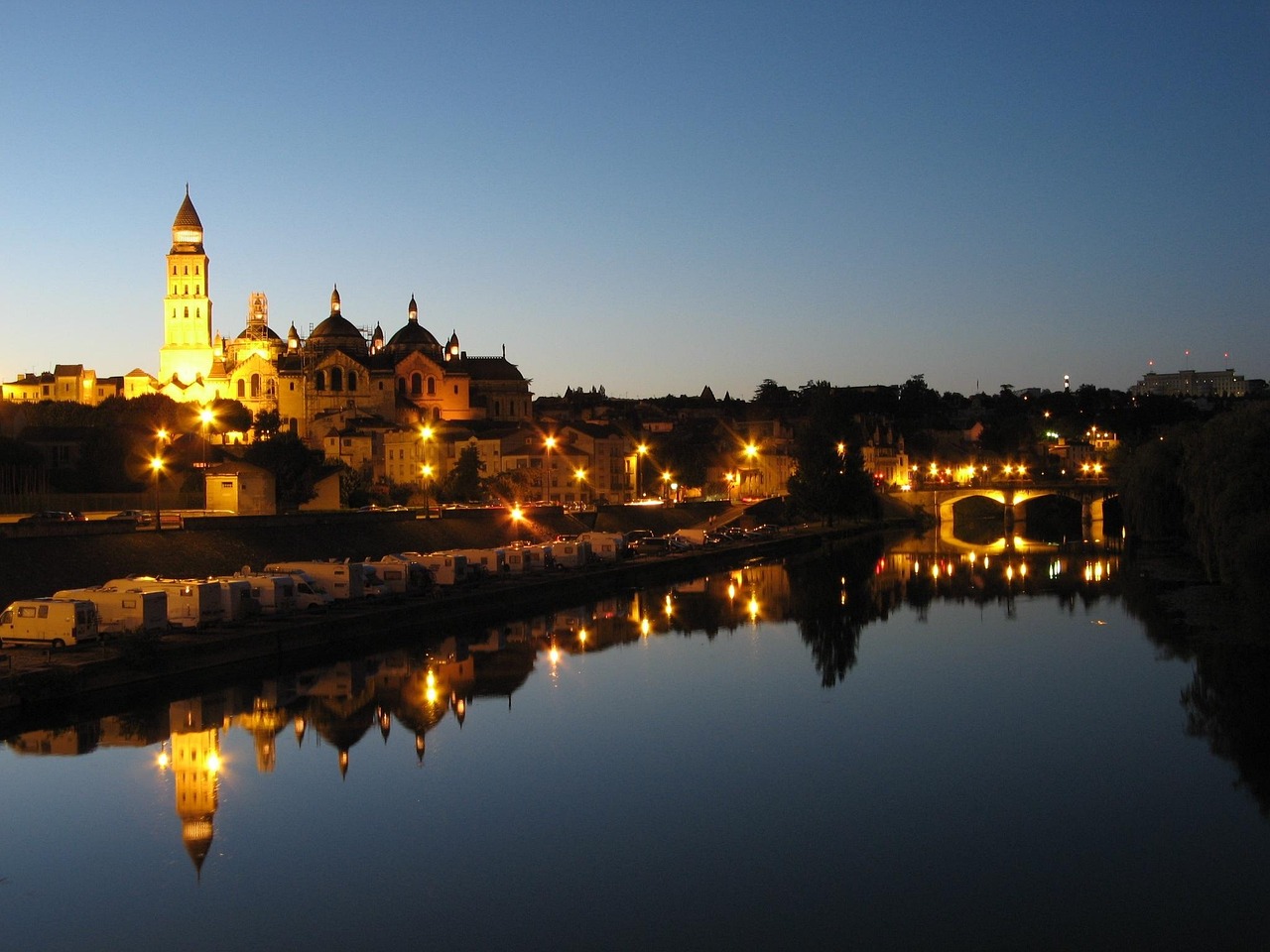
Why Visit Périgueux?
Périgueux is the kind of French city that quietly gets under your skin. It doesn’t shout like Paris, it doesn’t pose like Nice – it hums. Cobbled lanes that smell faintly of warm stone and confit de canard, Roman ruins peeking through glass floors, locals chatting in the market about which walnut oil is best for a salade périgourdine. It’s the capital of the Dordogne, and yet it still feels like a town where people greet each other by name.
I’ve been coming here on and off for more than a decade – at first as a broke backpacker chasing cheap wine and markets, later as a travel writer, and now as someone who slips back whenever I can to reset. I’ve visited in every season, with friends, solo, and once on a slightly chaotic family trip with three kids under eight. Périgueux has never disappointed me once.
What makes Périgueux special?
- Layers of history – You can stand in front of a Roman house, then wander five minutes to a medieval alley, then sip coffee under Renaissance facades.
- Food that actually lives up to the hype – This is foie gras, truffle, duck, walnut, and Bergerac wine country. The markets are outstanding and still feel local.
- A compact, walkable old town – You can cross central Périgueux in 20 minutes, yet you could spend days here uncovering details.
- Authenticity – This is a lived-in French city, not a theme park. Tourists are welcome, but life doesn’t revolve around them.
- Easy base for the Dordogne – You’re a short hop from castles, prehistoric caves, rivers, and some of France’s prettiest villages.
If you’re debating whether to spend 3, 4, or 5 days in Périgueux, my honest answer is: you can easily fill all of them. This travel guide for Périgueux is written as if we’re planning your trip over a glass of wine at a café on Place de la Clautre – with detailed itineraries, hidden gems, and the kind of small tips that make a visit smoother and cheaper.
Quick Overview & Orientation
Périgueux lies in southwestern France, in the Nouvelle-Aquitaine region, about 1 hour from Bordeaux by train. It’s the historic and administrative capital of the Dordogne (also called Périgord), a region famed for its rivers, castles, caves, and food.
The city is roughly divided into three main areas you’ll care about as a visitor:
- Le Puy-Saint-Front – The postcard old town around the cathedral, with medieval streets, half-timbered houses, and many of the must-see attractions.
- La Cité (Vesunna area) – The Roman quarter on a slight hill, home to the Vesunna museum, the amphitheater ruins, and quieter residential streets.
- Modern center & riverfront – Around the Préfecture, shopping streets, and the Isle River, with parks and walking paths.
The beauty of Périgueux is that you don’t really need a car once you’re in the city. Most things to do in Périgueux are within walking distance, and buses cover the rest. Save the car rental for day trips if you like.
3–5 Day Itineraries for Périgueux
Whether you’re planning 3 days in Périgueux or stretching to a 5 day itinerary, this city rewards slow travel. Below are flexible outlines mixing iconic sights, local food, hidden gems, and a few adventures. I’ve personally walked these days in different combinations over the years.
3 Day Itinerary for Périgueux
Day 1 – First Impressions: Cathedral, Old Town & Market Life
On your first morning, wake up early – Périgueux’s old town has a special quiet between 8–9 am when only bakers and dog-walkers are out. I like to start on Place de la Clautre, watching the cathedral’s domes glow as the sun hits them.
Grab a coffee and a still-warm croissant from a nearby bakery, then head straight into the heart of the city.
Cathédrale Saint-Front
This is the icon of Périgueux, the silhouette you see from almost every viewpoint. Inspired by Byzantine architecture and rebuilt in the 19th century, it’s now a UNESCO World Heritage stop on the Camino de Santiago routes.
- My routine: I usually circle the outside first, walking slowly down the side streets to catch different angles of its white domes. Then I head inside and sit quietly for a few minutes just to soak in the coolness and the faint smell of incense.
- Time needed: 30–60 minutes.
- Tip: Shoulders covered is appreciated; it’s still a working church. Visiting early also avoids coach groups.
Old Town Wander: Medieval Lanes & Renaissance Facades
From the cathedral, dive into the maze of streets like Rue Limogeanne, Rue de la Sagesse, and Rue Eguillerie. This is where you’ll find:
- Half-timbered houses leaning over narrow cobbles.
- Small boutiques (local artisans, books, food specialties).
- Hidden courtyards accessed via small stone arches.
One of my favorite things to do here is simply “get lost with intent.” When I first came in 2012, I followed the smell of roasted coffee and ended up at a tiny café with three tables, where the owner insisted I try the walnut cake “because you can’t understand Périgord without walnuts.” She was right.
Market Lunch: Place du Coderc
If it’s a market day (typically Wednesdays and Saturdays, with smaller markets other days), Place du Coderc is a feast for the senses. You’ll find:
- Stalls piled with duck, foie gras, and confits.
- Walnuts, walnut oil, and nut-based sweets.
- Seasonal produce – in winter, truffles and chestnuts; in summer, tomatoes and peaches.
For a budget-friendly lunch, I often buy:
- A piece of local cheese (try Trappe d’Echourgnac, a walnut liqueur-washed cheese).
- Some country bread from a baker’s stall.
- A few slices of cured duck or ham.
- Fruit for dessert.
Then I sit on a bench or in a park and assemble my own picnic.
Afternoon: Musée d’Art et d’Archéologie du Périgord
Walk 10 minutes to this underrated museum, one of the oldest provincial museums in France. It’s a surprisingly rich collection telling the story of the Périgord from prehistory through the Middle Ages and beyond.
- Why go: It gives context to the caves, castles, and ruins you’ll see in the region. Plus, it’s blissfully uncrowded.
- Time needed: 1.5–2 hours if you like history; 45 minutes for a skim.
- Tip: Look for the prehistoric section; Périgord was home to some of Europe’s earliest modern humans.
Evening: Riverfront Walk & Dinner
As the light softens, head down to the Isle River. There’s a long riverside path where locals jog, cycle, or just stroll. It’s one of my favorite family-friendly things to do in Périgueux: kids can run around, there are benches every few meters, and the views back toward the city are lovely.
For dinner, pick a bistro in the old town and dive into local food in Périgueux: magret de canard (duck breast), confit, or a hearty salade périgourdine with gizzards, walnuts, and foie gras. I always order a glass of Bergerac red with duck – they’re natural partners.
Day 2 – Roman Périgueux, Parks & Hidden Corners
Morning: Vesunna Gallo-Roman Museum
I still remember the first time I stepped into Vesunna. The museum is built over the remains of a Roman domus (house), with vast glass walls letting in the light. You literally walk above ancient mosaics on suspended walkways.
- Highlights: The preserved house layout, colorful fresco fragments, and everyday Roman objects that somehow make 2,000 years feel very close.
- Good for: Families (kids love the walkways), history lovers, rainy days.
- Tip: Combo tickets sometimes include other sites; ask at the desk.
Tour de Vésone & Roman Amphitheater Ruins
Right next to the museum stands the Tour de Vésone, the towering remnant of a Roman temple. It looks almost surreal rising from the park. A short walk away you’ll find the grassy remains of the amphitheater – now a peaceful park where kids kick a ball around where gladiators once fought.
I like to sit here with a take-away coffee and imagine the roar of a Roman crowd where there’s now birdsong.
Lunch in La Cité
La Cité, the Roman quarter, is quieter than the medieval center. Small residential streets, a few cafés, and a slower pace. I usually duck into a local restaurant for a set lunch (menu du jour) – they’re often the best value meals in town. Expect 2–3 courses for a very reasonable price compared to big French cities.
Afternoon: Jardins des Arènes & Green Spaces
If you’re visiting Périgueux with kids, the parks are a blessing. The Jardins des Arènes, built around the amphitheater, and the riverside Parc Gamenson are my go-tos for a break.
- What I do: Bring a book, grab a pastry, and treat this as a mid-trip recharge. Travel doesn’t have to be non-stop ticking off attractions.
Late Afternoon: Shopping & Café Hopping
Head back toward the modern center and Rue Limogeanne for small shops: local food, clothes, books, and regional products. One of my small rituals is buying walnut oil and a jar of duck rillettes to take home – they’re compact, delicious souvenirs.
Evening: Sunset Viewpoints & Wine
For a romantic thing to do in Périgueux, time your walk to catch the sunset from a spot where you can see the cathedral rising above the rooftops. Then head to a wine bar for a tasting of local Bergerac and Pécharmant wines. Ask for recommendations; I’ve discovered some of my favorite bottles by just saying “something local and not too expensive.”
Day 3 – Markets, Food, and Optional Mini-Adventure
Morning: Another Market & Food Focus
Even if you already wandered the market, give it another go – every day’s a bit different. Use this morning to focus on local food in Périgueux more deeply:
- Try pâté de campagne or foie gras mi-cuit from a reputable producer.
- Sample nougat aux noix (walnut nougat) if you have a sweet tooth.
- Buy a small bottle of vin de noix (walnut wine) to share in the evening.
Midday: Climb or Walk for a View
Depending on seasonal access and your energy, ask at the tourist office about current viewpoints – sometimes guided visits include higher vantage points. Otherwise, a slow loop around the river and back up toward the cathedral gives you those “skyline” glimpses that make Périgueux feel bigger than it is.
Afternoon Option 1: Canoeing on the Isle River
If you’re visiting in late spring to early autumn and feel like something active, rent a canoe or kayak for a couple of hours on the Isle River. It’s gentle, beginner-friendly, and a wonderful way to see the green side of the region. You’ll pass under bridges, see herons, and get that delicious feeling of being out of the city while still so close.
Afternoon Option 2: Short Excursion to a Nearby Village
If you only have 3 days in Périgueux but want a taste of the Dordogne countryside, take a short bus or train ride to a nearby small town (more ideas in the Day Trips section). You’ll be back in plenty of time for dinner.
Evening: Farewell Dinner
End your 3 day itinerary for Périgueux with a meal that sums up the region: duck or goose, something with walnuts or truffles if you like them, and a good glass of red. If you’ve grown fond of a particular square or café, go back – one of the nicest things about smaller French cities is that you’re often recognized by your second or third day.
4 Day Itinerary for Périgueux
If you have 4 days in Périgueux, follow the 3 day itinerary above and add:
Day 4 – Castles, Prehistory, or Wine Country
Use your extra day as a deeper dive into what excites you most:
- History lovers: Head toward the Vézère valley and prehistory (Lascaux area) – though this is easier from Sarlat, it’s still doable from Périgueux with planning.
- Castle fans: Visit a nearby château such as Château de Bourdeilles or Château de Puyguilhem.
- Wine lovers: Explore Bergerac wine country with a rented car or organized tour.
More detailed options appear in the Day Trips from Périgueux section, but whatever you choose, keep the evening in Périgueux relaxed – a casual dinner, a walk through the softly lit old town, maybe a nightcap at a wine bar.
5 Day Itinerary for Périgueux
A 5 day itinerary for Périgueux is my personal sweet spot. You can explore deeply without rushing and still have time to just be in the city.
Day 4 – Slow Day: Neighborhoods & Local Life
Instead of rushing off, use your fourth day to explore lesser-known corners and live like a local:
- Walk residential backstreets and see daily life beyond the tourist core.
- Settle into a café with a book or journal.
- Browse supermarkets to see what locals really buy (and pick up picnic supplies).
This is also a great day to catch any sites you missed – maybe a church, a small gallery, or a park.
Day 5 – Big Excursion or Adventure
Use your fifth day like the extra fourth day in the previous section, but go a bit further afield if you can: explore the Vézère valley, spend a full day at a castle and river combination, or hop to a different city like Bergerac and back.
By the time you leave after 5 days in Périgueux, the city starts to feel like “yours” – you’ll have a favorite bakery, a usual café, and a mental map of back alleys that most tourists never see.
Neighborhoods & Districts of Périgueux
Périgueux isn’t huge, but its distinct areas each have their own flavor.
Le Puy-Saint-Front (Medieval Center)
This is where you’ll spend most of your time: narrow lanes, the cathedral, old houses, and plenty of cafés and restaurants. It’s the best area to stay if you want everything walkable.
- Vibe: Lively but not hectic, atmospheric in the evenings.
- Best for: First-time visitors, couples, anyone without a car.
La Cité (Roman Quarter)
Centered around Vesunna and the Tour de Vésone, La Cité is more spread out, residential, and quiet. It feels almost like a small town inside the city.
- Vibe: Peaceful, historic, less touristy.
- Best for: Travelers wanting tranquility, longer stays.
Riverside & Modern Center
Along the Isle River and stretching back toward the train station, you’ll find parks, newer apartment blocks, shopping streets, and everyday life.
- Vibe: Practical, local, greener along the river.
- Best for: Families (parks), joggers, budget stays closer to the station.
20+ Must-See Attractions & Hidden Gems in Périgueux
Below are the best places to visit in Périgueux, mixing famous sites and less obvious corners. I’ve included history, what to look for, and personal tips from many repeat visits.
1. Cathédrale Saint-Front
Saint-Front is Périgueux’s crown jewel. With its cluster of white domes and Greek-cross layout, it looks more like something you’d find in Istanbul than in southwestern France.
The original church dates back to the 12th century, but much of what you see today is the result of 19th-century restoration by architect Paul Abadie (who also worked on Sacré-Cœur in Paris). It’s a major stop on the pilgrimage routes to Santiago de Compostela and part of a UNESCO listing.
Inside, the atmosphere is cool and soft. I usually walk slowly along the side aisles, pausing at the stained-glass windows, then sit for a while near the crossing to look up at the domes.
- Don’t miss: The view of the cathedral from small side streets – sometimes the best pictures are not from the main square.
- Photo tip: Early morning or golden hour give the stone a warm glow and fewer crowds in front.
- Respect: Keep voices low; services and private moments of prayer often happen even during visiting hours.
2. Place de la Clautre & Market Stalls
Right by the cathedral, this square comes alive on market mornings and stays busy with terrace cafés throughout the day. The first time I came here, I ordered a coffee and ended up staying two hours, just watching deliveries, greetings, and kids weaving between chairs.
It’s a perfect base to start a day: coffee, then wandering the market and streets that radiate out from the square.
3. Place du Coderc & Covered Market
This irregularly shaped square is the stomach of Périgueux. On market days it’s packed with stalls; on others, you’ll find a few stands and cafés spilling out onto the cobbles.
Historically, it’s been a trading place for centuries. The name “Coderc” likely comes from an old Occitan word for “courtyard” or “enclosure.” For me, it’s also the place where I finally understood what a “real” tomato tastes like in summer – almost jammy, sweet, and nothing like a supermarket version.
- Tip: Go early if you’re serious about shopping; late morning is more about atmosphere.
- Budget hack: Buy picnic supplies here and eat in a park instead of a sit-down lunch every day.
4. Rue Limogeanne
One of the city’s main historic shopping streets, Rue Limogeanne is lined with old stone houses, boutiques, bakeries, and small food shops. It gently slopes, giving you nice perspectives of facades and passersby.
I often treat it as a “spine” and then dart into side alleys whenever something looks interesting – a carved doorway, a glimpse of a hidden courtyard, or a chalkboard menu written only in French (often a good sign).
5. Musée d’Art et d’Archéologie du Périgord
This museum is a quiet surprise. Housed in a 19th-century building, it contains an impressive archaeological collection from prehistory to the medieval period, plus fine arts.
The prehistoric artifacts are particularly strong, reflecting the Dordogne’s status as a cradle of early modern humans. You’ll see stone tools, carved bones, and more, which later connect beautifully with any day trips you make to cave sites.
- Tip: Check for temporary exhibitions; they often focus on regional themes.
- Good for: Cooler or rainy days, or when you want a quiet, reflective couple of hours.
6. Vesunna Gallo-Roman Museum
As mentioned in the itinerary, Vesunna is built over the remains of a large Roman house. Architect Jean Nouvel designed the glass and steel structure to showcase the ruins while keeping them protected.
Walking above mosaics and foundations, you get a sense of scale – this wasn’t some humble dwelling, but a grand urban villa. Panels and displays explain Roman life here: heating systems, water, decoration, and daily routines.
The first time I brought friends with kids, we had to practically drag them out; they loved the idea of “walking on air” above such old remains.
7. Tour de Vésone
This massive, cylindrical Roman tower once formed part of a temple dedicated to the goddess Vesunna. Now it stands alone in a small park, its weathered stone catching the light differently throughout the day.
I like it best in late afternoon when the park is active but not crowded – locals walking dogs, kids playing, and the tower watching over it all silently.
8. Roman Amphitheater & Jardins des Arènes
The amphitheater ruins are more suggestive than complete – low stone arcs and outlines in a green park. But if you let your imagination fill in the gaps, it’s powerful. At its peak, it could seat thousands of people for games and spectacles.
Today the Jardins des Arènes are a local park: benches, lawns, a children’s play area. I come here to read and enjoy the strange mix of antiquity and everyday life.
9. Parc Gamenson
One of the city’s main green spaces, Parc Gamenson is a landscaped park with lawns, trees, and pathways. On nice days, it’s full of picnickers, students, and families.
When I’m working remotely from Périgueux, this is where I sometimes escape with a notebook – there’s something about being surrounded by greenery that makes trip-planning and writing feel easier.
10. Isle River Promenade
The Isle River curves gently around Périgueux, with long walking and cycling paths on its banks. This is one of the most relaxing parts of the city, especially in the late afternoon when the light hits the water and locals come out in force.
- Family-friendly: Flat paths, benches, ducks to watch – great with kids.
- Active: Ideal for jogging or a long walk to stretch your legs after days of urban wandering.
11. Place de l’Ancien Hôtel de Ville & Surrounding Lanes
This smaller square and its nearby streets are one of my favorite “wander zones.” There’s just enough bustle to feel alive, but not so much that it becomes overwhelming.
Look up as you walk – there are beautiful carved stone details, wrought-iron balconies, and signs of past trades painted faintly on walls.
12. Église Saint-Étienne-de-la-Cité
This church, in the Roman quarter, is partly a ruin and partly restored. Once the city’s cathedral, it was heavily damaged during the Wars of Religion. Today, the surviving part is a functioning church, while the ruined section adds drama to the site.
It’s a powerful reminder that cities are palimpsests – written, erased, and written over again.
13. Medieval & Renaissance Houses of the Old Town
There isn’t just one “medieval house” to see – the old town is packed with them. But some addresses and corners are particularly striking, with half-timbered upper floors, carved stone windows, and overhanging facades.
On my last visit, I spent an entire afternoon just hunting for these details with my camera. Some of the most beautiful are on narrow side streets off Rue Limogeanne and near Place du Coderc.
14. Gourmet Food Shops & Delis
Beyond the markets, Périgueux has numerous delicatessens and specialty food shops selling foie gras, truffles, walnut products, duck confits, and Bergerac wines. These are perfect for edible souvenirs (and gifts that will make friends back home actually excited).
My strategy is to visit two or three shops, ask about their specialties, and then buy a small selection of different products rather than loading up in just one place.
15. Street Art & Small Details
While Périgueux isn’t a graffiti capital, you’ll find pockets of street art and contemporary touches – small murals, stencils, and creative shopfronts. They’re especially noticeable if you wander a bit beyond the main tourist grid, toward more residential streets.
I like this contrast: 15th-century stones with a 21st-century stencil tucked in a corner.
16. Théâtre de Périgueux & Cultural Venues
The city’s theater and cultural venues host plays, concerts, and festivals throughout the year. Even if you don’t speak French, it’s worth checking the schedule – sometimes there are music or dance performances where language isn’t a barrier.
On a chilly autumn night a few years ago, I ducked into a small classical concert almost on a whim and ended up discovering a local ensemble that I now follow online. This is one of the joys of staying a bit longer in a place: you can say yes to serendipity.
17. Night Walks Through the Old Town
Not an “attraction” in the formal sense, but absolutely a must-do. After dinner, wander the old town streets again. The lighting is gentle; the cathedral glows against the dark sky; bars and cafés spill light and conversation onto the stone.
For couples, this is as romantic as it gets in Périgueux. For solo travelers, it’s peaceful and safe-feeling, with enough people around to be comfortable but not so many that it feels crowded.
18. Weekly Markets & Seasonal Fairs
Beyond the regular food markets, Périgueux hosts special events: truffle markets in winter, craft fairs, and seasonal food celebrations. In 2026–2027, expect renewed focus on local products and sustainable agriculture – a theme that’s been growing over the past few years.
19. Historic Bridges Over the Isle
The stone bridges crossing the Isle offer some of the best perspectives on the city, especially at sunrise or sunset. I like to cross over, walk a little way down the opposite bank, and look back at the skyline with the cathedral domes rising above everything.
More Things to Do in Périgueux
Beyond these 20 must-see attractions in Périgueux, the real joy is often in the in-between moments: sitting at a terrace with a glass of wine, chatting with a shopkeeper about the right way to cook duck, or figuring out your favorite bench by the river.
Local Food in Périgueux: What & Where to Eat
Périgueux is a paradise for anyone who enjoys rich, flavorful food. This is not the place for strict dieting – but it is the place for savoring.
Signature Dishes & Ingredients
- Foie gras – Goose or duck liver, prepared in various ways. Look for producers who emphasize ethical practices.
- Magret de canard – Duck breast, usually served pink, often with a sweet-savory sauce.
- Confit de canard – Duck leg slow-cooked in its own fat until meltingly tender.
- Salade périgourdine – A generous salad with gizzards, smoked duck breast, walnuts, and often foie gras.
- Walnuts & walnut oil – In salads, cakes, oils, and liqueurs.
- Truffles – Especially in winter; shaved over eggs, pasta, or in sauces (pricey, but worth experiencing at least once if your budget allows).
Where I Like to Eat (Types, Not Just Names)
Rather than listing a dozen specific restaurants that might change by the time you visit, here’s how I choose where to eat in Périgueux:
- Look for short menus – A handful of dishes that change with the seasons is a good sign of fresh cooking.
- Check the lunch “menu du jour” – Fixed-price lunch menus are often excellent value, especially Monday–Friday.
- Ask locals – I’ve gotten some of my best tips simply by asking, “Where would you go for a simple, good duck confit?” in a shop or at my accommodation.
Saving Money on Food
- Market picnics – As mentioned, this is the most enjoyable budget strategy.
- Big lunch, light dinner – Make lunch your main meal when set menus are cheaper, then have a light dinner later (soup, salad, or shared plates).
- Self-catering – If you stay in an apartment, you can cook simple meals from market ingredients and still enjoy top-quality local products.
What to Drink
- Bergerac reds & whites – Nearby wine region; often better value than bigger-name Bordeaux.
- Pécharmant – A robust red wine from a small area near Bergerac, great with duck.
- Monbazillac – A sweet white wine; try it with foie gras or dessert.
- Vin de noix – Walnut wine, usually as an apéritif or digestif.
- Coffee culture – Order a simple café (espresso) or café crème (coffee with milk) and linger.
Nightlife & Cultural Experiences in Périgueux
Périgueux isn’t a wild party city, but it has a pleasant, low-key nightlife that suits its size.
Evening Atmosphere
Most nightlife centers around the old town squares and a few streets with bars and wine bars. Terraces are lively on warm evenings, especially Thursdays to Saturdays. You’ll hear a mix of French and other European languages, but it’s mostly locals and regional visitors rather than large tour groups.
Types of Nightlife
- Wine bars – Great for tasting local Bergerac, Pécharmant, and other regional wines by the glass.
- Cafés & bistros – Many stay open late, morphing from coffee spots into places for after-dinner drinks.
- Live music – During summer and festival periods, look for outdoor concerts, jazz nights, and street performances.
- Theater & performances – Check the program at the main theater and cultural centers; even if you don’t speak French, music and dance can be rewarding.
Romantic Evenings
For a romantic night in Périgueux, my ideal sequence is: sunset walk along the river, dinner on a quiet square, then a slow meander through softly lit streets, stopping for a final glass of wine on a terrace where you can see the cathedral.
Events, Festivals & What’s New in 2026–2027
As of 2026, Périgueux continues to lean into its strengths: food, history, and culture. Schedules can shift, so always cross-check dates closer to your visit, but here are recurring highlights and trends:
- Food festivals – Expect annual events celebrating truffles, foie gras, and regional specialties in the colder months. These often include markets, cooking demos, and tastings.
- Summer cultural festivals – Open-air concerts, theater, and street performances enliven squares and parks, especially in July and August.
- Heritage Days (Journées du Patrimoine) – Usually in September, when many historic buildings open their doors and offer special tours.
- 2026–2027 focus: There’s increasing emphasis on sustainable tourism and local products, with more guided walks, tastings, and workshops highlighting traditional crafts and eco-conscious producers.
Day Trips from Périgueux
Périgueux makes a solid base for exploring the Dordogne. With a car you have maximum freedom, but even by train or bus you have options.
1. Brantôme
Often called the “Venice of the Périgord,” Brantôme is a beautiful village on the Dronne River, about 30–40 minutes’ drive from Périgueux. There’s an abbey, riverside walks, and canoeing in season.
- How to get there: Easiest by car; occasional bus connections exist but check current schedules.
- What to do: Visit the abbey, stroll the river, have lunch on a terrace, maybe rent a canoe.
2. Château de Bourdeilles
Near Brantôme, this castle complex includes a medieval fortress and a Renaissance residence. It’s set above the Dronne River and feels straight out of a storybook.
3. Château de Puyguilhem
About 30 km north of Périgueux, this charming Renaissance château has turrets and carved stone that look like something from the Loire Valley, but in miniature and without the crowds.
4. Bergerac & Wine Country
Bergerac, roughly an hour away, is a pleasant small town on the Dordogne River surrounded by vineyards. It’s a great day out if you’re interested in wine and river scenery.
5. Sarlat & Vézère Valley (Prehistory)
Further afield, but worth it if you have more time: Sarlat-la-Canéda and the Vézère Valley with sites like Lascaux. From Périgueux, this is better as an early-start full day with a car, or as an overnight side trip.
Cultural Etiquette & Local Customs in Périgueux
Understanding local customs in Périgueux makes travel smoother and more enjoyable. The Dordogne is friendly but appreciates a few basic courtesies.
Greetings & Politeness
- Always say “Bonjour, Monsieur/Madame” when entering a shop or café, and “Au revoir” when leaving.
- In smaller places, failing to greet can be seen as rude, even if you’re clearly a visitor.
- Smiles and a bit of effort in French go a long way, even if you switch to English afterwards.
Dining Etiquette
- Meals are not rushed experiences; expect to linger.
- Asking for tap water (“une carafe d’eau”) is perfectly normal.
- Splitting bills is less common; if you need separate checks, mention it politely at the start.
- Tipping: service is included, but rounding up or leaving a few euros for good service is appreciated.
Dress & Behavior
- Casual is fine, but very sporty or beachwear looks out of place in town, especially at dinner.
- Inside churches, dress modestly (no bare shoulders/very short shorts if you can help it).
- Public drunkenness is frowned upon; Périgueux is more about enjoying food and wine than rowdy nightlife.
Language
English is spoken in many tourist-facing businesses, but not everywhere. Learn a few basics: bonjour, s’il vous plaît, merci, excusez-moi, l’addition s’il vous plaît. Even imperfect French is usually met with kindness.
Practical Travel Tips for Périgueux
How to Get There
- By train: Regional trains connect Périgueux with Bordeaux, Limoges, and other cities. The station is walking distance (10–15 minutes) from the old town.
- By car: Périgueux is well-connected by regional roads; driving is handy for day trips but unnecessary within the city itself.
- By air: Nearest major airport is Bordeaux; from there, train or rental car.
Getting Around Périgueux
- On foot: The best way to see the city; most attractions are within a compact area.
- Local buses: Cover outlying neighborhoods and some nearby towns; buy tickets on board or via local apps (check current system in 2026).
- Taxi & rideshare: Available but not as ubiquitous as in big cities; it’s wise to have a local taxi number from your accommodation.
Car Rental & Driving
- Useful for exploring the wider Dordogne (castles, caves, villages).
- Old town streets are narrow; parking is easier in designated lots or slightly outside the core.
- Foreign driver’s licenses from many countries are accepted; some nationalities may need an International Driving Permit – check before travel.
SIM Cards & Connectivity
- EU travelers can usually roam on their existing plans.
- Non-EU visitors: buy a prepaid SIM from a major provider (Orange, SFR, Bouygues) in larger cities or at airports, or look for eSIM options that cover France.
- Wi-Fi is widely available in hotels and many cafés.
Money-Saving Tips
- Travel in shoulder seasons (spring and autumn) for lower accommodation prices and quieter streets.
- Lunch menus are often better value than dinner.
- Use markets and supermarkets for some meals instead of eating out three times a day.
- Walk as much as possible – the city is built for it.
Visa Requirements
Périgueux follows French and Schengen rules. For many visitors, a short stay (up to 90 days in 180) is visa-free; others need a Schengen visa in advance. Always check the latest requirements with official French consular sources well before you travel.
Safety
- Périgueux is generally safe, even at night, though normal urban common sense applies.
- Keep an eye on your belongings in markets and crowded areas.
- Emergency number in France: 112.
Best Seasons & What They’re Good For
- Spring (April–June): Mild weather, flowers, great for walking and early café terraces.
- Summer (July–August): Livelier, longer days, more festivals – but warmer and busier.
- Autumn (September–October): My personal favorite – harvest season, beautiful light, moderate crowds.
- Winter (November–March): Quiet, atmospheric, truffle and foie gras season. Some attractions in the wider Dordogne may have reduced hours, but city life continues.
Hidden Tips from Many Visits
- Start days early: You’ll see the city at its most “local” and enjoy empty streets for photos.
- Talk to market vendors: Ask how to cook what you’re buying; you’ll get recipes and smiles.
- Alternate “big” and “slow” days: Don’t try to pack every day with sights; leave space for wandering.
- Bring a small tote or backpack: Markets and food shops are hard to resist – you’ll want something to carry your finds.
Summary: Key Takeaways & Final Recommendations
Périgueux is one of those places that quietly exceeds expectations. It combines serious history – Roman, medieval, Renaissance – with some of the best food in France and a scale that invites walking rather than logistics planning.
- 3 days in Périgueux – Enough to see the main sights, enjoy markets, and feel the city’s rhythm.
- 4 days in Périgueux – Adds time for a relaxed day or a nearby excursion.
- 5 days in Périgueux – Ideal for combining city life with deeper forays into Dordogne villages, castles, or wine country.
For many travelers, the best time to visit Périgueux is spring or autumn, when the weather is kind, markets are full, and crowds are manageable. Summer brings festivals and long evenings; winter offers quiet streets and rich seasonal food.
If your idea of a perfect trip includes wandering stone alleys, eating extraordinarily well without breaking the bank, and feeling like you’ve actually stepped into everyday French life rather than a tourist bubble, then Périgueux deserves a place very high on your list.