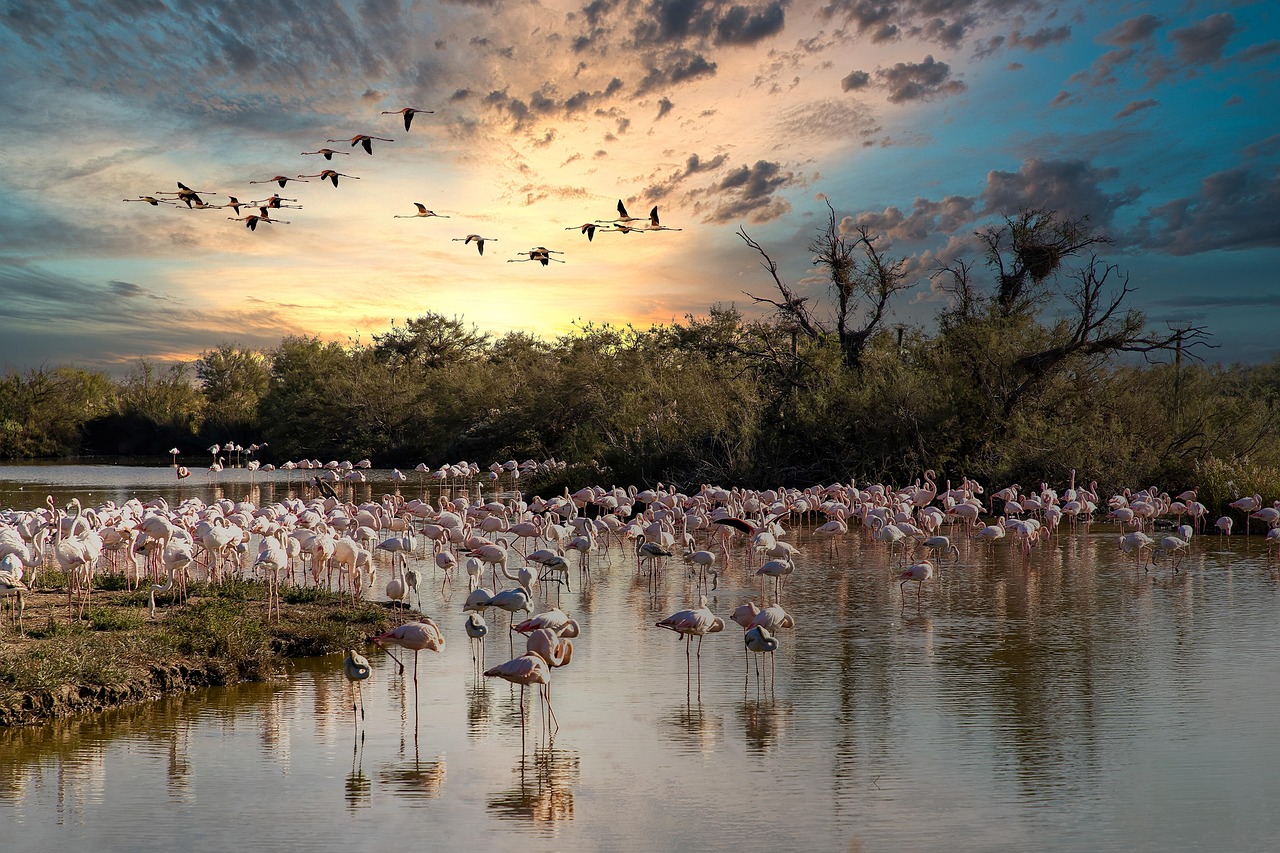
Why Visit Pont de Gau Bird Park – And Why I Keep Going Back
I live an hour’s drive away, on the edge of the Camargue, and I still find excuses to “just pop into” Pont de Gau Bird Park several times a year. It’s one of those places that never looks the same twice. One morning you’ll walk through mist and hear only the wingbeats of flamingos lifting off the marshes; another evening the sky will be orange and full of silhouettes heading to roost, while kids squeal every time a bird lands too close to their camera.
Pont de Gau isn’t a zoo in the traditional sense. It’s a managed slice of wild Camargue — 60+ hectares of reedbeds, lagoons, and salt ponds stitched together by footpaths and wooden boardwalks. The stars are the greater flamingos (you’ll see them in dizzying numbers in winter), but herons, egrets, storks, ibises, ducks, and a chorus of smaller birds keep things interesting year-round.
What makes Pont de Gau special, and why it deserves a spot in your 1 day itinerary for Pont de Gau Bird Park or a deeper 3 day itinerary for Pont de Gau Bird Park, is the intimacy. The birds are close — sometimes absurdly close — yet the park still feels natural. You can come with kids, a partner, a telephoto lens, or simply a picnic and a curiosity about wetlands, and you’ll leave with muddy shoes and a phone full of pink wings and sunset reflections.
Over the last few years (my latest visits were in March 2026 and again in late May 2026), I’ve watched the park add a few subtle improvements: better hides, clearer signage, and more shaded benches, while keeping its low-key, slightly rustic charm. This travel guide for Pont de Gau Bird Park distills those repeat visits into something practical and honest — the paths I actually walk, the viewpoints I linger at, where I grab a coffee before sunrise, and how to avoid both the tour-bus crowds and the worst of the mosquitoes.
Table of Contents
- 1. Getting Oriented: Layout & Atmosphere of Pont de Gau Bird Park
- 2. The Main Flamingo Lagoons & Classic Viewpoints
- 3. Northern Wetlands Loop: Quiet Reeds & Hidden Hides
- 4. Woodland & Canal Section: Egrets, Shadows & Family-Friendly Paths
- 5. Seasonal Pools & Migration Magic (Autumn & Spring)
- 6. Visitor Centre, Exhibits & Educational Experiences
- 7. Around Pont de Gau: Nearby Camargue Attractions & Day Trips
- 8. Suggested 1, 2 & 3 Day Itineraries
- 9. Eating & Drinking Around Pont de Gau Bird Park
- 10. Where to Stay Near Pont de Gau
- 11. Pont de Gau at Sunrise, Sunset & After Dark
- 12. Cultural Etiquette & Local Customs
- 13. Practical Logistics: Tickets, Opening Hours, and When to Visit
- 14. How to Get There & Get Around
- 15. 2026–2027 Events & What’s New
- 16. Money-Saving Tips, SIM Cards & Safety
- 17. Summary & Final Recommendations
Getting Oriented: Layout & Atmosphere of Pont de Gau Bird Park
The Parc Ornithologique du Pont de Gau sits directly off the D570 road between Arles and Saintes-Maries-de-la-Mer. If you’re driving south from Arles, it appears suddenly on your left: a modest parking lot shaded by tamarisk and pine, a low building with a wooden terrace, and, beyond the fence, a glimmer of water that barely hints at what’s inside.
Once you’ve paid at the entrance, you’ll step into a small courtyard with a café counter, toilets, and a few interpretive panels about the Camargue. From here, paths fan out in three main directions:
- The Main Flamingo Lagoons (Central Loop) – the most popular area, where you’ll get those ridiculously close flamingo encounters.
- The Northern Wetlands Loop – quieter, wilder, with wooden hides and long views over reedbeds and ponds.
- The Woodland & Canal Section – a slightly shadier, more intimate path that’s especially good in summer heat.
Most visitors do a simple loop of about 1.5–2 hours around the central lagoons, snap their flamingo photos, and leave. That’s fine for a 1 day in Pont de Gau Bird Park if you’re pressed for time, but it barely scratches the surface. If you push further, especially into the northern zones, you’ll find benches with nobody around, a soundtrack of frogs, and birds that behave as if you’re not there.
On my last spring visit, I arrived just after opening. A low mist curled over the nearest pond, and the first flamingos were lit from behind, their reflections trembling on the water. A group of photographers was already lined up along the railing, tripods splayed, whispering about aperture settings in four different languages. Ten minutes later, a French family arrived with a toddler in a stroller; his laughter when he saw his first flamingo was infectious, and for a second, everyone on the walkway turned and smiled.
The Main Flamingo Lagoons & Classic Viewpoints
If your mental image of Pont de Gau is a sea of pink birds framed by low blue mountains and big sky, this is where that shot is taken. The central lagoon area is the beating heart of the park and the first thing you should explore, whether you have a 1 day itinerary for Pont de Gau Bird Park or a longer stay.
Walking the Central Loop
From the entrance, follow the main gravel path straight ahead. Within a minute, you’ll hit the first large lagoon on your right, with a wooden railing and several small jetties that stick out into the water. This is the easiest place for families to linger: the path is wide, flat, and stroller-friendly, and the flamingos often stand ridiculously close to the edge of the walkway.
On a crisp January afternoon in 2026, I stood on one of these jetties and watched two flamingos perform a little courtship display — necks twisted, wings half-open, giving me a blaze of black and coral-pink feathers against the silver water. Behind them: a backdrop of snow-dusted Alpilles hills. It was one of those moments where you hear nothing but the clicking of camera shutters and the low honking calls of birds.
Best Spots for Iconic Photos
- The First Jetty (Near Entrance): Great for close-ups and portraits. You’ll often find a cluster of families here; it’s the easiest access.
- The Mid-Lagoon Curve: As you continue around the lagoon, the path curves and opens onto a wide panorama. This is the classic wide-angle shot with masses of flamingos and the landscape behind.
- The Slight Rise Near the Island: There’s a subtle mound on the path overlooking a small island often used by herons and cormorants. From here, you can line up flamingos in the foreground and roosting birds in the back.
Feeding Times & Ethics
The park supplements food in winter, which is partly why flamingos gather in such photogenic numbers. You won’t find a circus-like “show” with commentary, but early morning and late afternoon are when staff sometimes top up feeding areas. This concentrates birds near certain viewpoints, excellent for photography but also a reminder that your presence has an impact.
My rule of thumb: let the birds set the distance. If they’re relaxed enough to walk toward you, preen, or sleep, you’re fine. If they’re constantly looking up, shuffling away, or vocalising more loudly, you’re too close. Don’t tap railings, clap, or use recorded bird calls — it’s tempting for that “perfect shot,” but it stresses them and alters their behaviour.
Time Needed & Family Friendliness
For a quick visit, you can walk the central loop in about an hour, but I always recommend allowing at least 2–3 hours so you can sit on a bench, watch the light change, and notice the smaller things: an avocet sweeping its curved bill through the shallows, a kingfisher streaking past, the way flamingos shift in soft waves when the wind picks up.
This entire central area is very family friendly. The paths are broad, mostly level, and easy for strollers and wheelchairs. With kids, I like to bring a simple pair of binoculars and turn it into a treasure hunt: “Who can spot a bird with yellow legs? A bird with a black head?” It keeps them engaged when the flamingos lose their novelty after 20 minutes.
What to Look For
- Flamingo Plumage: Whiter birds are usually younger or less pigmented; deep coral-pink birds have rich diets and are often adults.
- Leg Bands: Some flamingos are ringed for research; if you see a coloured band, you’re witnessing ongoing scientific monitoring.
- Mixed Species Flocks: In winter, ducks, coots, and gulls mingle with flamingos. Look for graceful black-and-white avocets and bulbous-billed spoonbills.
Northern Wetlands Loop: Quiet Reeds & Hidden Hides
Once you’ve had your fill of flamingo crowds, push north. Most day-trippers don’t make it all the way around the larger outer loop, which is exactly why it’s worth the extra steps. Up here, Pont de Gau feels more like a nature reserve and less like an open-air gallery of pink birds.
Reaching the Northern Loop
From the far end of the central lagoon, follow the signs marked “Grand Circuit” or “Parcours Nord”. The gravel gives way to narrower dirt paths and occasional wooden boardwalks crossing wetter sections. In winter and early spring, these can be muddy; I’ve ruined more than one optimistic pair of white sneakers here — consider this your warning.
Bird Hides & Long Views
Scattered along this loop are several bird hides — low wooden structures with slotted windows. They’re unassuming (and occasionally a bit spider-webbed), but they offer excellent, low-disturbance views out over the reedbeds and ponds.
On a damp November morning in 2025, I sat in one of these hides, alone, listening to rain on the roof while a marsh harrier quartered the reeds. Every few minutes, a flight of teal or wigeon erupted from the water in that satisfying whirr of wings. At one point, a purple heron flapped slowly past, so close I could hear each wingbeat. The main lagoons felt far away; this was wild Camargue.
What You’ll See
- Herons & Egrets: Grey herons, little egrets, and, from spring, sometimes squacco and purple herons.
- Raptors: Marsh harriers are regulars, cruising low over the reeds. In migration seasons, look up for osprey or even the odd buzzard.
- Ducks & Waders: In winter, this is duck heaven. In spring and autumn, look for sandpipers, stilts, and other waders on the muddy edges.
How Long to Spend & Who It’s For
The full northern loop, at a relaxed pace with stops in the hides, needs at least 1.5–2 hours. It’s perfect for visitors on a 2 day itinerary for Pont de Gau Bird Park or a 3 days in Pont de Gau Bird Park stay, or anyone seriously into photography or birding.
With young kids, I’d only do a shorter out-and-back to one or two hides, unless they’re unusually patient. For older children, giving them their own little notebook to “log” species suddenly turns it into an adventure.
Woodland & Canal Section: Shade, Egrets & Slow Walks
On hot summer days, the woodland and canal section is where I flee the sun. Here, the path runs alongside a narrow canal fringed with willows and tamarisk, with pockets of woodland offering dappled shade. It’s less about dramatic flamingo spectacles and more about intimate encounters: a night heron hunched on a branch, a dragonfly hovering over still water, the sudden flash of a kingfisher.
Reaching the Canal Path
From the entrance courtyard, look for signs leading slightly left and downhill. You’ll cross a small bridge and almost immediately feel the temperature drop a notch as trees close in. The path here is narrower but still easy underfoot; it loops eventually back toward the main lagoons.
Highlights of This Area
- Canal Edge Perches: Check overhanging branches for black-crowned night herons, especially in late afternoon.
- Dragonflies & Butterflies: In late spring and summer, this is insect central. Bring a macro lens if you’re into photography.
- Songbirds: Nightingales, warblers, and finches call from the thickets. You’ll hear far more than you see, but it adds a lovely soundtrack.
Why I Love This Section
On a blazing August afternoon in 2024, when even the flamingos looked annoyed at the heat, I hid out along this canal path for almost an hour, parked on a bench under one of the taller tamarisk trees. I watched a family of moorhens bumbling around the bank while swallows skimmed the water surface for insects. It was blissfully quiet compared to the central lagoons, where bus tours had just arrived.
If you’re visiting as a couple and want a slightly more romantic feel — less jostling for space at railings, more hand-in-hand strolling — this section during golden hour is lovely. The low sun filters through leaves, and the water glows softly.
Seasonal Pools & Migration Magic
One of Pont de Gau’s secret strengths is how dramatically it changes with the seasons. The seasonal pools and damp meadows scattered around the park are like a stage that different species use throughout the year. If your idea of “things to do in Pont de Gau Bird Park” includes witnessing migration or breeding behaviour, this is where to linger.
Spring (March–May)
In spring, the pools brim with life: frogs croak incessantly, dragonflies emerge, and migrant birds refuel on their way north. On a late April morning in 2026, I watched a wood sandpiper delicately pick its way through the shallows while a glossy ibis probed nearby, its oil-slick plumage catching the sun.
Look for:
- Breeding Behaviour: Courtship displays, nest-building, and territorial squabbles among herons and egrets.
- Passage Waders: Sandpipers, stilts, plovers, and others making brief stops.
- Explosions of Green: Reeds and grasses shoot up; the whole park feels freshly painted.
Autumn (September–November)
Autumn in Pont de Gau has a different energy — calmer, golden, with birds drifting south and the first winter visitors arriving. I love coming in late October, when the light is low and the park is quiet.
Look for:
- Mixed Flocks: Ducks and waders sharing the same pools, constantly shuffling and reshuffling.
- Raptors Overhead: Migration brings through various birds of prey; always scan the sky.
- Subtle Colours: Faded reeds and soft skies make for moody, atmospheric photos.
Winter & Summer Extremes
In winter, some seasonal pools shrink, concentrating birds and making them easier to see. In high summer, a few may dry out or look less dramatic, but that’s when you can notice tracks in the mud and the survival strategies of resident species.
Visitor Centre, Exhibits & Educational Experiences
Don’t skip the visitor centre, especially if you’re visiting with children or want deeper context about the Camargue. It’s compact but well thought out, focusing on the wetlands’ ecology, the history of flamingos here, and the human role in shaping this landscape.
Inside the Visitor Centre
- Interpretive Panels: Clear, mostly bilingual (French and English) displays about salt production, rice paddies, and the water management that makes this region so unique.
- Species Guides: Big illustrated boards of the most common birds; I often snap photos of these with my phone to use as a quick reference out on the trails.
- Kids’ Corner: Simple interactive elements and sometimes colouring sheets or activity booklets.
Guided Walks & Talks (2026–2027)
As of 2026, Pont de Gau occasionally offers guided nature walks (mostly in French, with some English available on request in high season). These tend to focus on flamingo biology, wetland management, and seasonal highlights. They’re excellent if you’re building a more in-depth 2 day itinerary for Pont de Gau Bird Park and want at least part of your time to be structured.
Check the noticeboard near the entrance or the park’s official website a week or two beforehand for schedules. In my experience, you can often sign up on the day, but groups are capped, so in peak periods it’s worth arriving early.
Shop & Café
The small shop sells field guides, postcards, and a few bird-themed souvenirs. The café counter offers coffee, soft drinks, ice creams, and simple snacks. It’s not a full restaurant; think quick fuel rather than a lingering lunch. I like to grab a coffee and a pain au chocolat on the terrace before heading out at dawn, or an ice cream on the way out in summer.
Around Pont de Gau: Nearby Camargue Attractions & Day Trips
One of the joys of planning 2 days in Pont de Gau Bird Park or a longer stay is that you’re really situating yourself in the wider Camargue. Within a 20–40 minute radius, you can shift from wetlands to medieval stone, from pilgrimage churches to wild beaches. Here are some of my favourite nearby spots.
Saintes-Maries-de-la-Mer
Just 5–7 minutes’ drive south of Pont de Gau, Saintes-Maries-de-la-Mer is the de facto capital of the Camargue coast. Whitewashed houses, a Romanesque church, palm-fringed promenade, and a slightly bohemian energy — especially during festivals.
After a morning at Pont de Gau, I often head here for lunch, a stroll along the sea wall, and a climb up to the church roof for views over the town and marshes.
Arles
Arles, about 35–40 minutes north, is your Roman fix: a remarkably intact amphitheatre, narrow medieval streets, and Van Gogh history. If you’re doing a 3 day itinerary for Pont de Gau Bird Park, spending one late afternoon and evening in Arles makes a perfect cultural counterpoint to the birding.
Beaches & Dunes
The Camargue coastline has both busy family beaches near Saintes-Maries and wilder stretches further east and west. On a hot summer’s day, my favourite rhythm is: early morning at Pont de Gau, long lunch and siesta, then late-afternoon swim and sunset on the beach.
Horse & Bike Rides
Nearby ranches (called manades) offer horseback rides through marshes and along the sea. There are also rental bikes in Saintes-Maries, with cycle paths leading into the heart of the wetlands. For a romantic or adventurous twist to your visit, consider pairing a morning at Pont de Gau with a late-afternoon ride.
Suggested 1, 2 & 3 Day Itineraries
Here’s how I’d actually structure 1, 2, or 3 days in Pont de Gau Bird Park and its surroundings, based on multiple recent visits. These are flexible frameworks — adjust to your pace, energy, and season.
8.1 1 Day Itinerary for Pont de Gau Bird Park
If you only have 1 day in Pont de Gau Bird Park, focus on the heart of the site and one nearby town. This plan assumes you’re staying either in Saintes-Maries-de-la-Mer or Arles, but you can also come as a day trip from Nîmes or Montpellier.
Morning: Sunrise at the Main Lagoons
On my ideal one-day visit, I arrive a few minutes before opening time. In winter and early spring, that means the light is just softening; in summer, the sun is already up but still low enough for good photos. As soon as the gates open, I head straight down the main path to the largest lagoon.
Spend your first hour simply walking the central loop slowly, stopping at each jetty. Don’t rush to snap everything in the first 10 minutes; watch where the birds are naturally congregating and how the light shifts. If it’s cold, you’ll often see steam rising gently from the water, with flamingos emerging like ghosts.
Late Morning: Northern Wetlands Taster
After a full lap of the central lagoons, follow the signs toward the northern loop, but don’t feel obliged to do the whole thing. For a one-day visit, I usually walk to the first or second bird hide, spend 15–20 minutes quietly scanning, and then turn back.
This gives you a taste of the wilder side of the park without eating your entire day. If you’re into photography, this is often where you’ll get more natural, behaviour-focused images versus the dense flamingo masses.
Lunch: Picnic or Nearby Restaurant
Pont de Gau has a few benches and seating areas where you can picnic, and bringing your own food is both economical and pleasant. There’s no full restaurant inside the park. If you prefer a sit-down meal, drive the short distance to Saintes-Maries-de-la-Mer.
Afternoon: Visitor Centre & Woodland Loop
Back at the entrance, take some time to wander the visitor centre exhibitions; it helps connect what you’ve just seen with the broader Camargue story. Then, if you still have energy, loop through the woodland and canal section for a change of scenery and some shade.
Late Afternoon / Sunset: Return to Your Favourite Spot
The light in late afternoon is very different from morning. I always like to circle back to whichever viewpoint appealed to me most earlier in the day — often the mid-lagoon curve — and watch as the flamingos shift into roosting mode, the sky warms, and other visitors gradually drift away.
Evening: Dinner in Saintes-Maries or Arles
End your 1 day itinerary for Pont de Gau Bird Park with a seafood dinner in Saintes-Maries-de-la-Mer or a more urban meal in Arles, depending on where you’re staying.
8.2 2 Day Itinerary for Pont de Gau Bird Park
With 2 days in Pont de Gau Bird Park, you can slow down, explore the full outer loop, and integrate more of the surrounding Camargue.
Day 1: Deep Dive into Pont de Gau
Day 1 follows the 1-day plan but with less time pressure. Do the full northern loop, linger longer in hides, and perhaps join a guided walk if available. Take more frequent breaks — I’ve had some of my best sightings when I was just sitting quietly, not actively searching.
Day 2 Morning: Return in a Different Light
Come back at a different time of day than Day 1 — if you did sunrise, try mid-morning; if you were here in the afternoon, try dawn. Birds’ behaviour shifts with the light and temperature. I like to use this second morning to focus on photography or specific species I felt I missed the first day.
Day 2 Afternoon: Saintes-Maries & the Sea
After lunch, head to Saintes-Maries-de-la-Mer. Climb the church roof for views back over the marshes (you can often see flocks in the distance), wander the old streets, then walk or drive to a nearby beach for a swim or a barefoot stroll.
Day 2 Evening: Camargue Horses or Arles by Night
In high season, you could book a short late-afternoon horseback ride through a local manade to see another side of the wetlands. Alternatively, drive up to Arles for a golden-hour walk around the amphitheatre and dinner in one of its more atmospheric squares.
8.3 3 Day Itinerary for Pont de Gau Bird Park
A 3 day itinerary for Pont de Gau Bird Park lets you weave together birds, culture, and coast at an utterly relaxed pace. This is what I often recommend to visiting friends who want to really inhabit the Camargue for a long weekend.
Day 1: First Impressions & Flamingo Focus
Follow the 1-day structure: central lagoons, a taste of the northern wetlands, visitor centre, and a sunset return to your favourite viewpoint. Don’t worry about “seeing it all” — you have time.
Day 2: Full Outer Loop & Hidden Corners
On Day 2, set out with the goal of walking the entire outer circuit, including the more remote wetlands. Pack snacks, water, and sunscreen; you’ll likely spend 4–5 hours inside the park. This is the day to stake out a hide, wait for behaviour, and dive deeper into birdwatching or photography.
In the afternoon, retreat to your accommodation for a rest, then enjoy a low-key evening in Saintes-Maries or another nearby village.
Day 3: Arles & the Wider Camargue
On Day 3, you have two good options:
- Option A – Culture Day: Spend the morning in Arles exploring Roman ruins and art galleries, then swing by Pont de Gau late afternoon for one last sunset walk.
- Option B – Nature & Sea: Start with a short early-morning walk at Pont de Gau, then head deeper into the Camargue for a boat tour, bike ride, or horse trek, ending on a beach for sunset.
By the end of 3 days in Pont de Gau Bird Park and its surroundings, you’ll have a sense not only of the birds but of the broader mosaic: salt pans, rice paddies, bulls, horses, churches, and the ever-present wind.
Eating & Drinking Around Pont de Gau Bird Park
Inside Pont de Gau itself, food is simple: snacks, ice creams, drinks. For anything more substantial, you’ll want to eat just before or after your visit.
What to Bring into the Park
- Water: At least 1–1.5 litres per person in warm months; there’s not much shade on the main lagoons.
- Light Picnic: Sandwiches, fruit, nuts. Avoid very strong-smelling foods; you’re in a nature reserve and want to minimise litter and smells.
- Thermos in Winter: A small thermos of tea or coffee is a morale saver on cold, windy days.
Restaurants Nearby (Where Locals Actually Go)
Rather than grabbing the first tourist menu on the seafront in Saintes-Maries, walk a street or two inland and look for shorter menus and more locals than cameras. Dishes to look out for:
- Gardianne de Taureau: Slow-cooked Camargue bull stew, rich and winey, often served with riz de Camargue.
- Tellines: Tiny wedge clams sautéed with garlic and parsley — messy, addictive, perfect with a glass of white.
- Fish à la Plancha: Simple grilled fish, often whatever’s freshest that morning.
In Arles, the food scene is more diverse, with bistros mixing Provençal classics and modern twists. If you’re basing yourself there, plan main meals in town and treat Pont de Gau as your nature “excursion” between cafés and wine bars.
Where to Stay Near Pont de Gau
When friends ask where to stay for a visit to Pont de Gau, I usually suggest one of three options, depending on whether they prioritise atmosphere, convenience, or broader sightseeing.
Saintes-Maries-de-la-Mer: Sea & Flamingos
Ideal if your focus is the park plus beach time. You’re only a few minutes’ drive from Pont de Gau, with lots of restaurants and an easy seaside stroll in the evenings. Accommodation ranges from small hotels to apartments and campgrounds.
Arles: Culture Base with a Camargue Day Trip
Better if you want Roman ruins, galleries, and nightlife alongside your nature fix. The drive to Pont de Gau is 35–40 minutes, straight down the D570. Many visitors choose Arles for a longer stay and do 1 or 2 days in Pont de Gau Bird Park from there.
Rural Gîtes & Mas
The most atmospheric (and often most peaceful) option is a rural stay in a Camargue farmhouse (mas) or self-catering gîte somewhere between Arles and Saintes-Maries. Waking up to cranes calling or distant flamingos is hard to beat. Just be aware you’ll need a car, and services may be a drive away.
Pont de Gau at Sunrise, Sunset & After Dark
Technically, Pont de Gau closes in the early evening (exact hours vary by season), so you won’t be wandering the trails at midnight. But the time-of-day windows you choose within opening hours can transform your experience.
Sunrise (Dawn)
Dawn visits are my personal favourite. The park is at its quietest, both in human and bird terms, and the light is soft, often with mist. Animals are active, and you can sometimes hear wings before you see the birds emerging from the fog.
Golden Hour & Sunset
The hour before closing on a clear day is prime time for romantic walks and dramatic photos. The flamingos’ colours intensify in the warm light; reflections sharpen; and birds often fly in small groups to roost, giving you those classic silhouette shots.
Blue Hour & After Dark
On winter evenings, staff may gently usher you toward the exit as the sky turns cobalt. Even from the parking lot, you can sometimes hear the park “after hours”: a murmur of flamingos, frogs, and wind. In 2026–2027, there are no regular night-time sound-and-light shows — Pont de Gau’s magic is still resolutely natural, not choreographed — but keep an eye on their calendar for special evenings tied to festivals or migration peaks.
Cultural Etiquette & Local Customs
You’re not just visiting a bird park; you’re stepping into the Camargue, a region with its own identity, pride, and rhythms.
General French Etiquette
- Greetings: A simple “Bonjour” when you enter the visitor centre, a shop, or a café is essential politeness.
- Language: Staff at Pont de Gau generally speak at least some English, but starting with French is always appreciated.
- Volume: Keep voices low on trails and especially in hides; think of them as libraries of nature.
Nature-Respect Customs
- Stay on Paths: The marshes are fragile, and birds need undisturbed zones; never cross barriers or step into reedbeds.
- No Feeding: Do not offer bread or snacks to birds; it’s unhealthy and disrupts their patterns.
- Leave No Trace: Litter is not just ugly; it can harm wildlife. Carry out everything you bring in.
Local Camargue Culture
The Camargue is famous for its white horses, black bulls, and a blend of Provençal and Gypsy traditions. Festivals in Saintes-Maries can be exuberant, with music and processions. Dress modestly if you visit churches, and avoid blocking processions and working animals with cameras.
Practical Logistics: Tickets, Opening Hours & Best Time to Visit
Understanding how to visit Pont de Gau Bird Park efficiently will save you time and headaches.
Tickets & Entry (2026)
- Ticket Types: Single-entry tickets purchased on-site; there’s typically no timed entry system.
- Prices: Expect a modest adult fee, reduced rates for children and sometimes seniors. Check the official site for up-to-date prices.
- Reservations: Not usually required for individuals or small groups; larger groups should book ahead.
Opening Hours
Hours vary by season, generally opening in the morning and closing before or just after sunset. In summer, you’ll have longer days; in winter, shorter windows but more flamingos. Always check current Pont de Gau Bird Park opening hours before you go; they’re usually posted clearly online and at the park entrance.
Peak Times & How to Avoid Crowds
- Bus Tours: Often arrive late morning and early afternoon; aim for opening time or late afternoon to dodge them.
- Weekends vs Weekdays: Weekends, especially during school holidays, are significantly busier.
- Weather: Slightly overcast days can be magic — fewer people, softer light.
Best Time of Year to Visit
- Winter (Dec–Feb): Peak flamingo numbers, crisp light, fewer crowds. Can be cold and windy; dress warmly.
- Spring (Mar–May): Migration, breeding behaviour, lush greenery. My personal favourite season for variety.
- Summer (Jun–Aug): Long days and beach pairing, but heat, mosquitoes, and more visitors. Plan early/late visits.
- Autumn (Sep–Nov): Softer light, some migration, quieter trails. Great compromise season.
For most travellers, the best time to visit Pont de Gau Bird Park is March–May or late September–November, balancing birdlife, weather, and crowds.
Dress Code & Gear
- Footwear: Closed, sturdy shoes that you don’t mind getting muddy.
- Clothing: Layers, windproof jacket in cooler months, breathable long sleeves and trousers in summer for sun and mosquitoes.
- Gear: Binoculars, camera (with telephoto if you have one), hat, sunscreen, insect repellent.
Accessibility
The central lagoons and main paths are largely accessible for wheelchairs and strollers, with compact gravel and few steep gradients. Some outer trails and hides may be more challenging due to narrower paths or occasional mud. If mobility is a concern, stick to the central loop, which still provides outstanding views and encounters.
Photography Restrictions
Personal photography is encouraged; tripods are fine as long as you don’t block paths. Commercial shoots should clear permissions in advance. Drones are not allowed, both for safety and to avoid disturbing wildlife.
How to Get There & Get Around
Pont de Gau is straightforward to reach but not always simple by public transport.
By Car
The easiest way to visit. From Arles, follow the D570 south toward Saintes-Maries-de-la-Mer; the park is clearly signposted on the left before you reach town. From Montpellier or Nîmes, you’ll connect via Arles or cross the Petit Rhône by ferry/bridge depending on your route.
Parking is free and usually ample outside the busiest summer weekends.
By Public Transport
There are regional buses between Arles and Saintes-Maries-de-la-Mer, some of which stop near Pont de Gau or on the main road within walking distance. Schedules are limited and can be sparse on Sundays. If you’re relying on this, check timetables carefully and plan a generous buffer for your return.
By Bike
If you’re staying in Saintes-Maries-de-la-Mer, cycling to Pont de Gau is a pleasant option in good weather. The distance is short, and the road is flat, but traffic can be busy in high season, so visibility and caution are key.
Car Rental & Foreign Licences
Major car rental companies are available in Arles, Nîmes, Montpellier, and Marseille. Foreign driving licences are generally accepted in France for tourists, especially if they use the Roman alphabet; for others, an International Driving Permit is recommended. Roads are good, though narrow in places; watch for wildlife and farm vehicles, especially at dawn and dusk.
2026–2027 Events & What’s New
While Pont de Gau itself is more about seasonal rhythms than big events, the wider region has a rich calendar.
Seasonal Highlights at Pont de Gau (2026–2027)
- Winter Flamingo Displays (Dec–Feb): Expect especially dense flamingo gatherings; the park often highlights these on its channels and may organise extra-guided walks.
- Spring Migration Weeks (Mar–Apr): Informal focus periods where staff and local birders are particularly active, spotting and sharing rarer species.
Regional Festivals
- Les Saintes-Maries Pilgrimage (late May): A major religious and cultural event with processions, music, and crowds. Pont de Gau can be busier around these dates due to increased visitors.
- Arles Festivals: Photography and music festivals in Arles add cultural flavour to a longer stay, though they don’t directly affect park operations.
Changes in the Travel Scene (2026)
In 2026, there’s continued emphasis on sustainable tourism in the Camargue: better cycling infrastructure, more eco-certified accommodations, and ongoing habitat restoration. Pont de Gau’s paths have seen minor improvements for drainage and accessibility, but the core experience remains blissfully unchanged: birds, water, sky.
Money-Saving Tips, SIM Cards, and Travel Advice for Pont de Gau Bird Park
Saving Money
- Picnic Instead of Restaurant Lunches: Especially with families, this can dramatically cut costs.
- Combine Trips: If you have a rental car, plan Pont de Gau alongside Arles or other Camargue sights to minimise fuel and tolls.
- Off-Season Visits: Accommodation in Arles and Saintes-Maries is generally cheaper outside high summer and around major festivals.
SIM Cards & Connectivity
France has good mobile coverage, and Pont de Gau generally has a decent signal, though some corners of the park may be patchy. For extended stays:
- Prepaid SIMs: Available from Orange, SFR, Bouygues, and Free in major towns, supermarkets, and phone shops.
- eSIMs: Many travellers now use eSIM packages purchased online before arrival; they work well in this region.
Visa Requirements
France is part of the Schengen Area. Visitors from many countries can enter visa-free for short stays (typically up to 90 days in any 180-day period). Always check current requirements for your nationality before travel, as rules can change.
Health & Safety
- Sun & Heat: The Camargue can be brutally sunny. Use sunscreen, hats, and regular water breaks.
- Mosquitoes: In warmer months, especially at dawn/dusk and near still water, mosquitoes can be intense. Long sleeves, long trousers, and repellent are your friends.
- Wildlife: Snakes are shy and rare to see; just watch where you step off main paths (which you shouldn’t anyway).
How to Get Around Once You’re There
Inside Pont de Gau, everything is on foot. Outside, a car or bike is the most practical way to explore the wider Camargue. Public transport will get you to the general area but isn’t flexible enough for multiple early/late visits to the park.
Summary & Final Recommendations
Pont de Gau Bird Park is one of those places where your experience expands with the time you give it. A rushed hour will give you flamingos and a few good photos. A full 1 day itinerary for Pont de Gau Bird Park adds quiet hides, subtle behaviours, and a sense of the landscape. 2 or 3 days in Pont de Gau Bird Park and its surroundings open up the full Camargue — horses, bulls, Roman stone, sea light, and wind.
For most travellers, the best time to visit Pont de Gau Bird Park is between March and May or late September and November, when birdlife is rich and crowds are manageable. Winter is unbeatable for sheer flamingo numbers; summer pairs beautifully with beach days if you can handle the heat and mosquitoes.
However long you stay, slow down. Sit on a bench longer than feels “efficient.” Watch a single flamingo preen, a heron stalk, or swallows skim the water. Pont de Gau rewards attention and patience — and once you’ve watched the lagoon turn pink at sunset, you may, like me, find yourself planning your next visit before you’ve even left the parking lot.