Why Visit Reims Cathedral – And Why It Deserves Its Own Trip
Ask most travelers about Reims and you’ll hear “champagne” long before “cathedral.” Yet, when you stand in front of the west façade of Cathédrale Notre-Dame de Reims, you realise this isn’t just a church you pop into between tastings. This is the place where French kings were crowned for almost a thousand years, where Gothic architecture is stretched to its most theatrical, and where the scars of the world wars sit quietly beside stained glass by Marc Chagall and Imi Knoebel.
I’ve been coming back to Reims Cathedral since my student days, when I could barely afford a coffee on Place Drouet-d’Erlon. Over the years, I’ve watched the stone cleaned, new light-and-sound shows tested, and tour groups thin out once the buses leave at 4 p.m. It’s one of those rare landmarks that rewards repeat visits and slow wandering. You can absolutely design a 1 day itinerary for Reims Cathedral and feel satisfied, but give it two or three days and you start noticing the details that make this place unforgettable.
What makes Reims Cathedral special is the way it compresses French history, art, and daily life into one walkable square: coronations and champagne houses, medieval angels and modern glass, school groups and silent worshippers. It’s a place where you can sit on the parvis with a takeaway croissant at 8 a.m., have the whole façade almost to yourself, then return at blue hour to see it glow like a lit stage set.
In this long-form travel guide for Reims Cathedral, I’ll walk you through the spaces you’ll actually move through, the best ways to plan 1, 2, or 3 days in Reims Cathedral’s orbit, what to eat nearby (and what to avoid), and the local customs and etiquette that matter, especially if you visit during a service.
1. Reims Cathedral at a Glance
Notre-Dame de Reims is not just another Gothic cathedral; it’s where more than 30 French kings were crowned, from Louis VIII in 1223 to Charles X in 1825. Standing on the parvis, you’re essentially on the threshold of France’s royal stage. The building you see today dates mostly from the 13th century, rising from the ashes of a previous church destroyed by fire in 1210. It was later deeply scarred during World War I, then painstakingly restored in the 20th century.
From a visitor’s perspective in 2026, here’s how I’d sum it up:
- Scale & atmosphere: Immense yet strangely intimate once you step inside. The nave pulls your eyes straight up, but the side chapels and stained glass pull you back to human scale.
- Art & detail: Over 2,300 statues on the exterior alone, including the famous Smiling Angel. Inside, medieval glass mingles with modern works by Chagall and Imi Knoebel.
- Location: In the heart of Reims, a 5–10 minute walk from most central hotels and the main tram line. Easy day trip from Paris (46 minutes by TGV), but rewarding for a dedicated 2–3 night stay.
- Experiences: Free to enter the main cathedral; paid for tower climbs and the Palais du Tau museum. Seasonal evening illuminations and occasional concerts add entirely different layers.
For families, the scale and sculpted creatures are a hit; for couples, the evening light and nearby champagne bars create instant romance; for architecture lovers, you could spend three days just tracing structural lines and never get bored.
2. Approaching the Cathedral: First Impressions & Façade
My favourite way to arrive at Reims Cathedral is on foot from Rue de Vesle, turning up Rue Libergier so the west façade reveals itself slowly. It’s a theatrical approach: the street narrows, the traffic hum fades, and suddenly the cathedral explodes into view, filling the end of the perspective like a stone curtain.
The parvis (forecourt) is your stage for first impressions and one of the best places to visit in Reims Cathedral’s orbit. Take ten quiet minutes here before you rush inside; it changes your whole experience.
What to Look For on the West Façade
The west façade is a dense tapestry of stories. I usually start from left to right, then scan upwards, like reading a stone book:
- Portals: Three great portals, each with layers of sculpted biblical scenes, kings, prophets, and angels. The central one is the coronation portal, the most symbolically important.
- The Smiling Angel (L’Ange au Sourire): On the north portal (your left as you face the façade). She’s smaller than people expect but magnetic. During my last early-morning visit in 2026, a shaft of sunlight hit her face just as the bells rang; even the guide next to me fell quiet.
- Gallery of Kings: Above the rose window, a long row of kings, many of them the monarchs crowned inside. It’s easy to miss if you don’t step back far enough.
- Rose window: The outward face of one of the great roses; you’ll see its inner side later from the nave.
Practical Tips on the Approach
From my repeated visits, here’s what works best:
- Best time for façade photos: Late afternoon in spring and autumn, when the low sun warms the stone. Morning light can be beautiful too, but the façade will often be backlit.
- Where to stand: The far edge of the parvis, near the line of trees on the north side, gives a strong, slightly angled view capturing the twin towers and most of the sculptures.
- With children: Turn it into a “sculpture safari.” Ask them to find a specific creature or angel (there are some delightfully odd gargoyles if you walk around the sides).
Plan to spend at least 20–30 minutes outside before going in. This is also a pleasant spot to regroup if you’re meeting friends or starting a 1 day itinerary for Reims Cathedral.
3. Inside the Nave: Light, Height & First Walkthrough
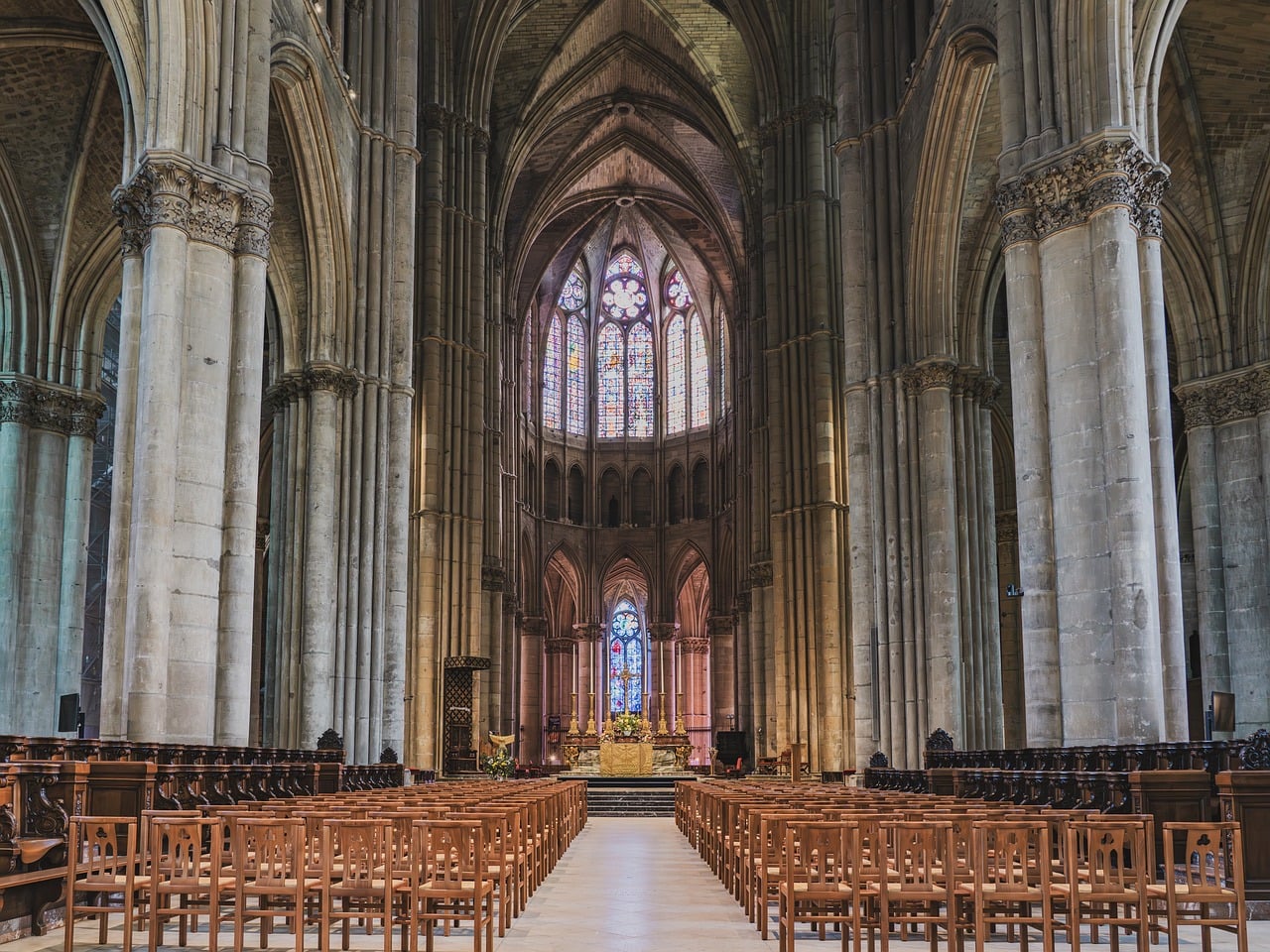
Stepping from the relatively noisy parvis into the cool half-dark of the nave is always a small shock. The sound changes first: footsteps become soft, voices drop. Then your eyes adjust and the verticality hits you. Even after a dozen visits, I still involuntarily tilt my head all the way back.
The Main Nave: How to Walk It
I recommend a slow, structured first pass, then a more intuitive second wander:
- Center aisle – first impression: Walk straight down the central axis from the main doors. Pause halfway, just after the midpoint, and look back at the rose window. This is your “wow” framing shot.
- Side aisles – human scale: Loop into the side aisles to feel the shift from monumental to intimate. Here you’ll find small chapels, candles, and beautiful views looking diagonally across the forest of columns.
- Transept crossing: Stand under the intersection of nave and transept and look up. You can sense the engineering audacity here: all that weight, all that glass.
Things to Notice Inside
- Vertical lines: Reims is all about height. Notice how the clustered columns rise almost seamlessly into the ribbed vaults.
- Light gradients: On sunny days, the interior shifts constantly. In winter 2025–2026, I came in three times on the same day just to watch the changing light on the floor.
- Traces of war: Look for plaques and images recalling the shelling during World War I. This was once a blackened, roofless shell; photos on site make the restoration all the more impressive.
Family-Friendly, Romantic & Quiet Corners
Families: The spacious nave is stroller-friendly, and kids usually react strongly to the echo and height. I often see parents sit on a side bench and play “find the animal” in the capitals and window motifs.
Couples: The dim side chapels along the south (right-hand) aisle are lovely spots to sit together for a few minutes, especially near late afternoon when the sun filters through the southern windows.
Solo/reflective visitors: Mid-morning on weekdays outside school holidays is the quietest. I like to sit close to the transept crossing, back against a column, and simply listen to the building breathe.
4. Choir, Apse & Stained Glass Masterpieces
If the nave is about pure structure, the eastern end – the choir, apse, and radiating chapels – is about colour and narrative. This is where the famous stained glass resides, old and new layered together.
The High Choir & Apse
Approach the choir slowly along the central axis. The stone screen that once separated clergy from laity is long gone, so you have a clear, almost theatrical view of the high altar and the apse behind it. Imagine coronation ceremonies here: new kings anointed with holy oil (from the sacred ampulla traditionally kept in Reims), choirs singing, incense rising into the vaults.
The Chagall Windows
On the right (south) side of the apse, Marc Chagall’s windows (installed in 1974) are unmistakable. Deep blues and floating figures recall Old and New Testament scenes interlaced with Reims themes. I remember bringing a friend here on a bleak February morning; she wasn’t particularly “into churches,” but she stood in front of the Chagall glass for 15 minutes without moving.
The Imi Knoebel Windows
More recently, German artist Imi Knoebel added boldly abstract windows in the transepts and other chapels. They’re controversial among some traditionalists, but I find them invigorating: blocks of colour that talk back to the older glass instead of imitating it.
Time & Tips
- How long: Allow at least 30–45 minutes just for the choir and chapels if you’re interested in art.
- Best time for glass: Late morning to early afternoon on a sunny day, when the light is most direct.
- Photography: Tripods are generally not allowed without permission. Handheld photos are fine, but avoid flash during services.
5. Towers, Roof Walks & Best Viewpoints
If your knees and the weather cooperate, the tower and roof visits are the most adventurous way to experience Reims Cathedral. Not all visitors do it; those who do tend to come back down with that slightly dazed, “did I really just stand up there?” expression.
Climbing the Towers
Access is via a side entrance (usually on the north side), and spaces are limited by timed slots. Check current details as they can shift by season, but in 2026 expect roughly:
- Duration: About 1–1.5 hours for the full visit.
- Stairs: Around 250–300 steps in a tight spiral, with some breaks at intermediate levels.
On my last tower climb in autumn 2025, I booked the first morning slot. The city was still half asleep, and light fog clung to the rooftops. From the upper gallery, the twin towers frame a sweeping view across Reims: tram lines, champagne houses, and the gentle ripple of the surrounding countryside.
What to Look For Up Top
- Gargoyles & chimera: Up close, these carved creatures feel more like characters than decorations.
- Roof structure: You can better appreciate how the flying buttresses knit the building together.
- City layout: Spot the basilica of Saint-Remi, the champagne cellars along the hillside, and the more modern districts spreading outwards.
Practical Climbing Tips
- Book ahead: In high season, tower climbs often sell out a few days in advance, especially weekends.
- Footwear: Closed, comfortable shoes are non-negotiable. The stone stairs can be slightly worn and uneven.
- With kids: Older children generally love it; toddlers and those who fear heights, less so. There’s usually a minimum age or height recommendation.
- Weather: Visits may be cancelled or modified in storms or high winds.
6. Palais du Tau & Coronation Treasures
Just south of the cathedral, connected by history and by ticket, lies the Palais du Tau, former residence of the archbishops of Reims and the backstage area for coronations. Architecturally, it’s more sober than the cathedral, but inside you’ll find the objects that made the coronation ceremonies tangible: vestments, reliquaries, and fragments of the original cathedral sculpture.
Highlights Inside Palais du Tau
- Coronation Hall: A vast, vaulted space where feasts were held after coronations. Stand at one end and imagine long tables, gilded plate, and perhaps a slightly overwhelmed new king.
- Treasure rooms: This is where you’ll see ornate liturgical objects, including items associated with the holy ampulla that contained the anointing oil.
- Original sculpture fragments: Weathered faces and figures that once adorned the exterior, now protected indoors. I find these rooms quietly moving; you’re face to face with the original skin of the cathedral.
Why It’s Worth Your Time
Many visitors skip the Palais du Tau, especially on short visits, but if you’re at all interested in the cultural experiences in Reims Cathedral and its royal history, this is where the coronation story really comes alive. It also tends to be calmer than the cathedral, a relief in high season.
Visit Logistics
- Tickets: Paid entry, often combined with other local heritage sites depending on current passes. Check for updated combined tickets in 2026.
- Time needed: 1–1.5 hours for a thoughtful visit; 45 minutes if you move briskly.
- Family note: Kids who like armour, treasure, or “royal” stories usually enjoy it if you frame it as the king’s backstage dressing room.
7. Around the Cathedral: Squares, Streets & Hidden Corners
Reims Cathedral doesn’t sit in isolation. Its setting – the surrounding streets, small gardens, and café terraces – shapes your experience just as much as the interior. This is where you’ll find many of the subtle things to do in Reims Cathedral’s neighbourhood that most day-trippers miss.
North Side: Quiet Benches & Side Views
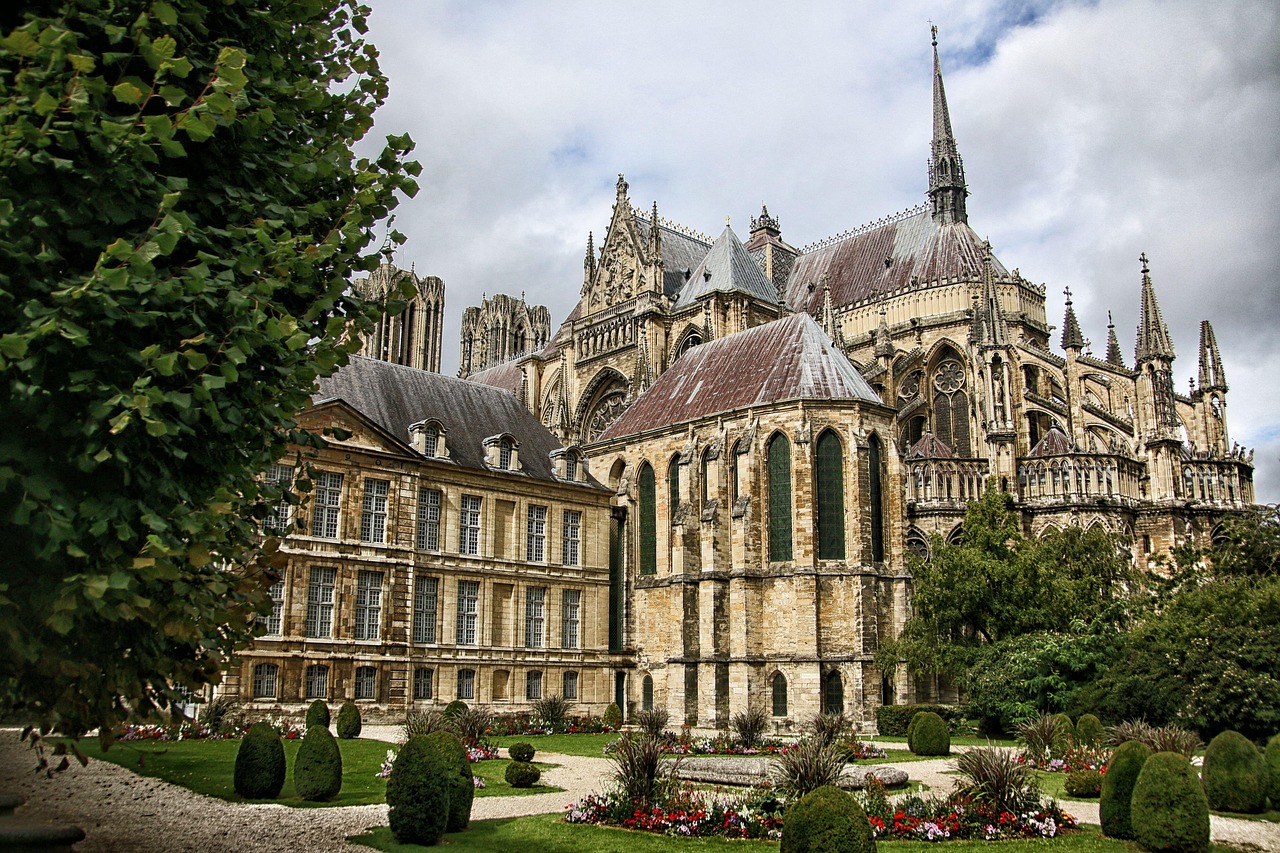
Walk around to the north flank and you’ll find one of my favourite views: the full stretch of flying buttresses arcing like stone ribs. There are usually fewer people here. It’s an excellent spot to sit on a bench, sip a takeaway coffee, and study the structural logic.
South Side: Garden & Palace Perspective
The small garden between the cathedral and the Palais du Tau offers softer, more intimate angles: ivy, foliage, and glimpses of tracery through leaves. In summer, I often bring a simple picnic snack here between visits.
Hidden Gems Nearby
- Rue de Tambour & Maison des Musiciens: A short stroll away, this narrow street preserves part of a medieval house with carved musician figures.
- Side chapels & small churches: Within a 10-minute walk you’ll find quieter parish churches like Saint-Jacques, offering a local, lived-in contrast to the great cathedral.
- Small galleries: Pop-up exhibitions and local art spaces near the cathedral come and go; check local listings or simply follow posters on lampposts.
8. Suggested 1, 2 & 3 Day Itineraries Focused on Reims Cathedral
Below are flexible itineraries based on multiple visits I’ve made, adjusted for 2026 conditions. They mix the must-see attractions in Reims Cathedral with nearby experiences, and they’re shaped by how the building feels at different times of day.
8.1 1 Day Itinerary for Reims Cathedral
If you only have 1 day in Reims Cathedral’s orbit, you can still enjoy a rich, layered experience. Here’s how I typically structure it when friends arrive on an early train from Paris.
Morning: First Encounter & Interior Walkthrough
08:30 – 09:00: Arrival & Coffee Nearby
Arrive at Reims station, drop bags if needed, and walk toward the cathedral. I like to grab a takeaway coffee and a pastry a few blocks away rather than on the parvis itself (where it’s more expensive and more generic). Then head to the parvis for your first full-frontal view.
09:00 – 10:30: Exterior & Nave
- Spend 20–30 minutes on the parvis and walking around the north and south sides, spotting gargoyles and buttresses.
- Enter the cathedral and follow the “first walkthrough” pattern: center aisle, side aisles, transept crossing, choir.
- Take time in front of the Chagall and modern windows; this will anchor your sense of the building’s evolution.
10:30 – 11:30: Palais du Tau
Head directly to Palais du Tau next door. If you’re short on time or energy, focus on the Coronation Hall and treasury. This gives you a clear story of why Reims mattered so much politically, not just spiritually.
Midday: Lunch & Gentle Wandering
12:00 – 13:30: Lunch Just Beyond the Tourist Ring
Walk a few minutes away from the cathedral to avoid the most obvious tourist traps. I’ll detail specific restaurants in the food section, but aim for a spot where locals are actually eating: a bistro on a side street, a small crêperie, or a brasserie that doesn’t plaster “tourist menu” in big letters.
13:30 – 15:00: Free Explore Time
- Return to the cathedral for a slower second pass, focusing on details you missed.
- Alternatively, wander the streets immediately around the cathedral, popping into small shops and side churches.
Afternoon: Tower Climb or Deeper Art Focus
15:00 – 16:30: Tower Visit (If Available)
If you’ve pre-booked a tower slot, aim for mid-afternoon. The light is often beautiful, and it breaks up the day physically. If towers aren’t running or you’d rather not climb, spend this time diving deeper into specific chapels and memorials.
Late Afternoon & Evening: Golden Hour & Cathedral After Dark
17:00 – 18:00: Golden Hour on the Parvis
Return to the front façade. As the sun lowers, the stone glows and shadows deepen in the sculptures. This is when I take most of my favourite photos.
18:30 – 21:30: Dinner & Night View
- Dine at a nearby restaurant (again, just beyond the immediate ring), possibly with a glass of champagne if you’re not driving.
- Afterwards, walk back to see the cathedral illuminated. If there’s a sound-and-light show scheduled in 2026, stay for it; the façade becomes a narrative screen.
Even in a single day, you’ve touched the building at multiple times of day – essential for understanding its moods.
8.2 2 Day Itinerary for Reims Cathedral
With 2 days in Reims Cathedral’s world, you can slow down and add context: more time for the city, more flexible weather options, and room for a side visit or champagne tasting.
Day 1: Immersive Cathedral Focus
Day 1 can follow the 1-day structure but at a calmer pace:
- Morning: Exterior, nave, choir, and a first experience of the building.
- Midday: Palais du Tau and a long lunch.
- Afternoon: Tower climb or deep-dive into specific art and chapels.
- Evening: Nighttime illumination or stroll and a relaxed dinner.
Day 2: Surroundings, Champagne & Second Impressions
Morning: Quiet Return & Side Churches
On my last two-day stay, I started the second morning with an early return to the cathedral around opening time. The difference from midday crowds is remarkable. I focused on small things: inscriptions, floor patterns, individual statues.
Afterwards, visit another nearby church such as Saint-Jacques, then wander the old streets that radiate from the cathedral like spokes.
Afternoon: Champagne or Museum Time
- Visit a champagne house within walking or short tram distance; several offer tours of cellars and tastings.
- Or spend a few hours at a city museum (Beaux-Arts or Saint-Remi), which will give you broader historical context.
Evening: Cathedral as Backdrop to Daily Life
By your second evening, the cathedral will feel less like a tourist site and more like a familiar neighbour. Sit at a terrace within view of the towers, order something simple, and enjoy the steady rhythm of locals passing through the square.
8.3 3 Day Itinerary for Reims Cathedral
Spending 3 days in Reims Cathedral’s orbit may sound excessive, but for architecture lovers, photographers, or slow travelers, it’s ideal. You’ll not only see the cathedral; you’ll understand how it sits in the life of the city and region.
Day 1: Classic Cathedral & Core History
Follow the 1-day itinerary, but stretch it out even more. Build in time simply to sit inside the nave at different times of day. If you’re a sketcher or photographer, this is your deep practice day.
Day 2: Neighbourhoods, Museums & Local Life
Use the second day to explore beyond the immediate cathedral cluster:
- Morning: Early cathedral visit, then head to the Saint-Remi Basilica and museum to see the Roman and early Christian roots of the city.
- Afternoon: Explore residential districts or markets; let the cathedral’s towers guide you back like a compass needle.
- Evening: Perhaps catch a concert if one is scheduled in the cathedral or nearby venues.
Day 3: Champagne Day Trip with Cathedral Bookends
On the third day, take a half- or full-day trip to nearby vineyards or smaller Champagne villages (more in the day trips section). Start or end the day with a brief visit to the cathedral at a time you haven’t yet experienced: dawn, for example, when the parvis is almost empty and the city is waking up.
By the time you leave, you’ll have experienced Reims Cathedral as a building, a historical stage, and a living neighbour.
9. Eating & Drinking Around Reims Cathedral
One of the pleasant surprises for first-time visitors is how compact Reims is: you can see the cathedral’s towers from many restaurant terraces. That said, the immediate ring of places right on the parvis is hit-or-miss and often overpriced. I typically walk at least three or four blocks before sitting down.
Where Locals Actually Go (Within Walking Distance)
Names and ownership sometimes shift, but the principles stay the same:
- Side-street bistros: Look for places a block or two off the main squares, with smaller chalkboard menus and more French than English spoken at tables.
- Crêperies & casual spots: Good for families; kids can refuel cheaply, and you can still enjoy a glass of local champagne or beer.
- Bakeries & pâtisseries: Perfect for assembling a picnic to eat in the gardens near the cathedral or on a bench on the quieter north side.
What to Eat
- Regional dishes: Look for dishes with champagne or ratafia in the sauce, local cheeses, and hearty fare in colder months.
- Champagne: Obviously. Even by the glass at lunch feels fitting in the region, though pace yourself if you still have stairs to climb.
- Sweet treats: Biscuits roses de Reims – pink biscuits traditionally dipped in champagne – are a classic local souvenir and snack.
What to Bring Onto the Site
You can bring a small water bottle and a snack bar in your day bag, but avoid eating inside the cathedral itself. I usually keep a light scarf and a thin jacket as the interior can feel cool even in summer.
Personal Stay Recommendations
When I stay in Reims with the cathedral as my main focus, I prefer:
- Small hotels or guesthouses within a 10-minute walk: This lets you easily pop back to the cathedral at night or early in the morning.
- Avoiding the noisiest bar streets: You want to sleep well enough to enjoy dawn light if you’re inclined.
Book earlier for weekends and major events (especially around harvest season and December festivities) – the best-located places fill quickly.
10. Reims Cathedral After Dark & Off-Hours Magic
Reims Cathedral is a completely different animal at night and in off-hours. The play of artificial light on stone, the relative quiet, and the absence of tour groups all contribute to a mood that’s both cinematic and intimate.
Sunset & Blue Hour
Golden hour (about an hour before sunset): The west façade catches the last warm light, and details pop. Photographers line the edges of the parvis; locals drift by with shopping bags.
Blue hour (just after sunset): The sky turns deep cobalt while the cathedral’s illumination kicks in. This is my favourite time for wide shots that show the building in its urban setting.
Night Illumination & Sound-and-Light Shows
In recent years, Reims has hosted seasonal projection shows on the façade – a kind of visual retelling of the cathedral’s history. For 2026–2027, expect similar programmes, especially in summer and around major holidays. Check local tourism sites closer to your visit for exact schedules.
Inside at Off-Hours
While the interior doesn’t generally stay open very late, attending an evening concert or service can give you a wholly different sensory experience: music filling the nave, flickering candles, and a sense of the building as a living place of worship rather than just a monument.
Romantic & Family Angles
- Romantic: An after-dinner stroll around the illuminated cathedral, pausing on the quieter north side, is hard to beat for atmosphere.
- Family: Kids often find the lit gargoyles and shadows a bit spooky in a fun way; keep it short and sweet, perhaps with a warm drink afterwards.
11. Upcoming Events & What’s New in 2026–2027
As of 2026, Reims Cathedral continues to be a focal point for both religious and cultural events. While specific dates can shift, here are patterns and expected highlights for 2026–2027:
- Annual light shows: Seasonal evening projection shows on the façade, especially in summer and around Christmas, are likely to continue or expand. These are free and family-friendly.
- Music festivals & concerts: Organ recitals and choral concerts make use of the cathedral’s acoustics. Tickets vary from free to paid; check local listings a few months ahead.
- Heritage Days (Journées du Patrimoine): Each September, France opens many heritage sites with special tours; Reims Cathedral and Palais du Tau often offer behind-the-scenes options.
- Christmas markets & Advent services: December brings festive markets to the city and special liturgical events in the cathedral.
Before you go, check the official Reims tourism site and the cathedral’s own announcements for 2026–2027; new restoration projects, exhibitions, or temporary closures are usually posted there.
12. Day Trips & Nearby Attractions from Reims Cathedral
Even if Reims Cathedral is your main anchor, it’s worth building in at least a half-day to explore the surrounding Champagne region. Distances are short, and the contrast between gothic stone and rolling vineyards is refreshing.
Champagne Houses in and near Reims
- City-based houses: Several major champagne producers have cellars and visitor centres within Reims itself, reachable by tram or a short taxi ride. Tours usually include a walk through cool, chalky cellars and a tasting.
- Tips: Book tours in advance, especially for weekends and harvest season (late August to October). Plan your cathedral visits around tasting times if you’re driving; better yet, use public transport or taxis.
Épernay & the Avenue de Champagne
About 30 minutes by train or 40–45 minutes by car, Épernay is another champagne capital, with grand houses lining the Avenue de Champagne. A full-day trip from Reims lets you:
- Tour one or two houses.
- Stroll the avenues and explore smaller producers.
- Return to Reims in time for an evening walk around the cathedral.
Saint-Remi Basilica & Museum
Within Reims itself, the basilica of Saint-Remi and its adjacent museum offer an essential counterpoint to the cathedral. Saint-Remi, who baptised Clovis, is central to the story of Christian France and the royal coronations.
Practical Tips for Day Trips
- Transport: Trains and regional buses connect Reims with nearby towns; car rental is convenient for vineyard-hopping but not essential.
- Time management: If you only have 2 days total, limit yourself to one major excursion and keep mornings or evenings free for the cathedral.
13. Cultural Etiquette & Local Customs
Reims Cathedral is both a UNESCO World Heritage Site and an active place of worship. A few local customs and etiquette points will help you fit in respectfully.
Inside the Cathedral
- Dress: There is no strict dress code, but modest clothing (covered shoulders, knee-length shorts/skirts) is appreciated, especially during services.
- Silence & phones: Keep voices low; set phones to silent. Avoid taking calls inside.
- Photography: Generally allowed without flash, but avoid photographing people at prayer and be discreet during any liturgy.
- During services: You’re usually welcome to attend respectfully, but avoid walking around sightseeing and don’t cross in front of the altar during readings or communion.
Local Interaction
- Greetings: A simple “Bonjour” when entering a shop, café, or hotel is important. It sets the tone.
- Language: Many people in Reims speak at least some English, especially in tourism, but opening with French (“Bonjour, parlez-vous anglais ?”) is appreciated.
- Terrace culture: You can linger over a drink at café terraces with the cathedral in view; just don’t occupy a table for hours with a single coffee at peak meal times.
14. Practical Logistics: Tickets, Opening Hours, Access
Planning your visit well can save you time, money, and frustration. While details can shift slightly, these are the patterns as of 2026.
Reims Cathedral Tickets & Costs
- Main cathedral: Free entry. Donations are encouraged for upkeep.
- Tower visits: Paid, with timed entry. Book in advance during busy periods.
- Palais du Tau: Paid; sometimes included in multi-site passes. Check current combined offers.
Reims Cathedral Opening Hours
Hours vary a bit by season and liturgical calendar, but in general:
- Cathedral: Opens in the morning (often around 7:30–8:00) and closes in the evening (around 19:30–20:00). Parts of the building may be restricted during services.
- Palais du Tau & towers: Typically late morning to late afternoon, with last entries an hour or so before closing.
Check exact times shortly before your trip, especially around major religious holidays when schedules change.
Peak Hours & Best Time to Visit Reims Cathedral
- Peak hours: 10:30–16:00, especially on weekends, holidays, and summer months.
- Best quiet times: Early morning right after opening, and late afternoon towards closing (except on major feast days).
- Best season: Spring and autumn for comfortable temperatures and softer light. Winter can be moody and atmospheric; summer brings longer evening light but more crowds.
Accessibility & Security
- Accessibility: The main floor of the cathedral is generally accessible to those with mobility challenges, though some chapels may have small steps. Towers are not accessible to wheelchairs or those unable to manage steep stairs.
- Security: Expect bag checks at the entrance. Large luggage may not be allowed.
- Queue times: Usually modest for the free cathedral entry, longer for special events or tower access.
Photography Restrictions
No flash, no tripods without prior permission, and no disruptive setups. Respect signage and staff instructions; occasional areas may be temporarily off-limits during works or ceremonies.
15. Travel Advice: Getting Around, Saving Money & Seasons

Although this guide is anchored on the cathedral, your overall Reims experience will depend on how you move around, how you manage costs, and how you handle the basics like phones and visas.
Getting to Reims Cathedral
- From Paris: TGV trains from Paris-Est to Reims or Champagne-Ardenne TGV take under an hour. From Reims station, it’s about a 15-minute walk to the cathedral.
- By car: Reims is well-connected by autoroute. Park in city car parks and walk; driving directly around the cathedral is not practical.
Getting Around Reims
- On foot: The city center is compact. From most central hotels, you can walk to the cathedral in 5–15 minutes.
- Public transport: Trams and buses connect the station, centre, and outlying districts. Tickets can be bought at machines or via apps.
- Car rental: Useful for exploring rural Champagne but unnecessary within Reims itself.
Money-Saving Tips
- Stay slightly off the main squares: Accommodation and dining are often better value a few streets away from the cathedral.
- Picnic lunches: Combine bakery food and market produce for some meals; save restaurant dinners for special evenings.
- Multi-site passes: Look for combined tickets which can cover the Palais du Tau and other heritage sites.
SIM Cards & Connectivity
- Local SIMs: Available from major French operators in city shops; you’ll need ID (passport).
- eSIMs: Increasingly convenient if your phone supports them; you can arrange an eSIM plan before arrival.
- Wi-Fi: Many hotels, cafés, and some public areas offer free Wi-Fi, though speeds and reliability vary.
Visa Requirements & Driving Licences
- Visas: France is in the Schengen Area. Check your nationality’s requirements well before travel; many visitors can enter visa-free for short stays.
- Driving licences: Most non-EU licences are accepted with an International Driving Permit recommended (and sometimes required) depending on origin. Check current French regulations if you plan to rent a car.
Best Seasons & What They’re Good For
- Spring (April–June): Mild weather, longer days, and pleasant light; great for photography and walking.
- Summer (July–August): Busy but festive, with evening light shows and more events.
- Autumn (September–October): Harvest season in Champagne; beautiful vineyard colours, slightly calmer city.
- Winter (November–March): Quiet, atmospheric, shorter days; Christmas markets add charm in December, but it can be cold and damp inside the cathedral.
Hidden Tips from Repeated Visits
- Visit at least twice in a day: Once in the morning, once near closing time, to feel how the building changes.
- Carry a light layer: Even in summer, the cathedral interior can feel cool after a while.
- Look up & down: The floor patterns and small inscriptions are as revealing as the vaults above.
- Leave some things unseen: Don’t try to “collect” every detail in one go; let the place surprise you on a return visit someday.
16. Summary & Final Recommendations
Reims Cathedral is one of those rare sites where history, architecture, and daily life are so tightly woven that you never quite feel finished with it. Whether you follow a 1 day itinerary for Reims Cathedral or stretch to a 2 or 3 day itinerary for Reims Cathedral, the key is to pace yourself and return at different times of day.
For most travelers, spring and autumn are the best time to visit Reims Cathedral: softer light, manageable crowds, and pleasant walking weather. Summer brings long evenings and lively events; winter offers a more introspective, candlelit experience.
Build your days around a few essential pillars: a slow first walk through the nave and choir; a contextual visit to the Palais du Tau; a climb to the towers if you’re able; and unhurried time on the parvis at golden hour and blue hour. Add in good food, a glass of local champagne, and perhaps a day trip to the surrounding vineyards, and you’ll leave not just with photos of a famous façade, but with a lived sense of the place.
Reims Cathedral rewards curiosity and repeat glances. Let it unfold slowly, and it will stay with you long after you’ve left the echo of its nave behind.