Why Visit Riquewihr?
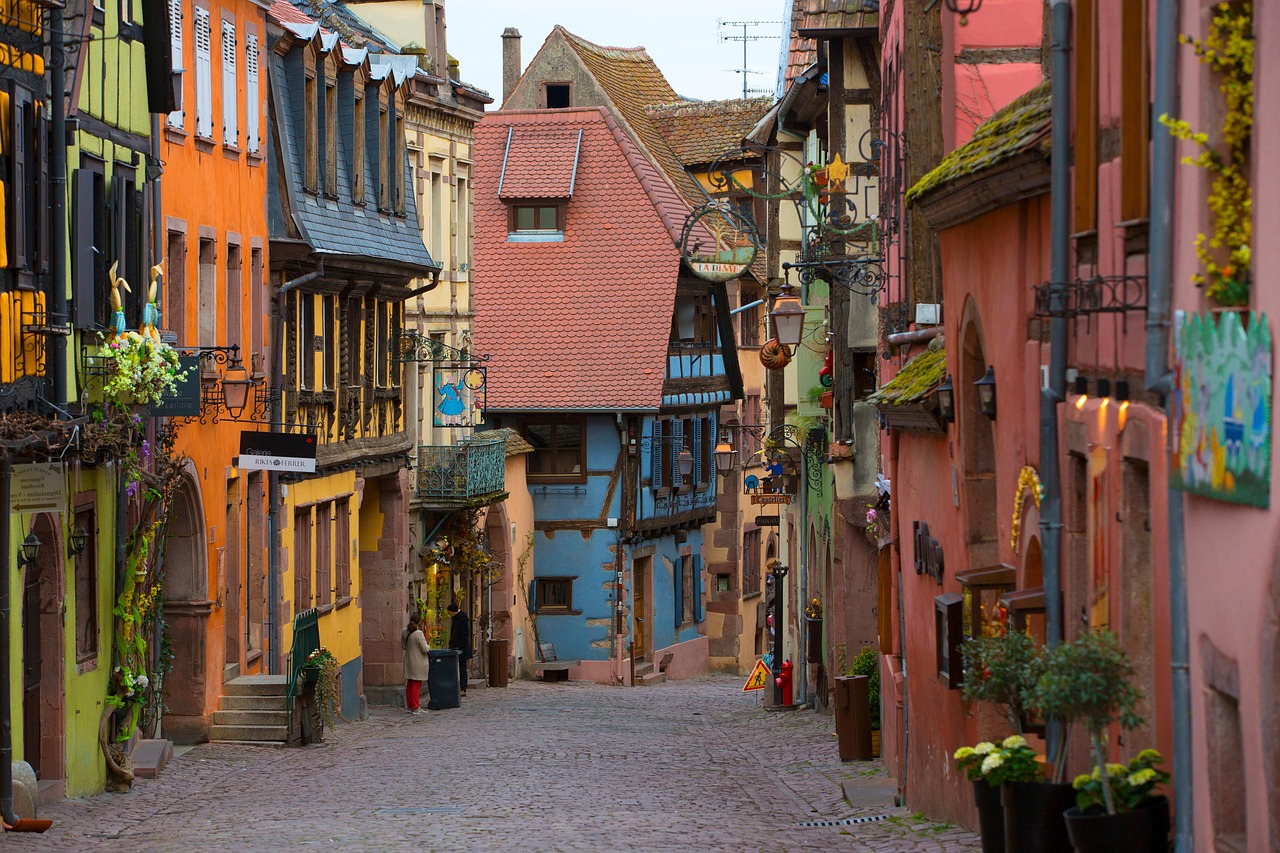
Riquewihr is the kind of village that makes you question whether you’ve accidentally walked onto a movie set. Half-timbered houses in pastel colors lean over cobbled streets, geraniums spill from every window box, and vineyards roll away in green waves to the Vosges mountains. It’s small, walkable, and impossibly photogenic, yet still very much a living wine village rather than an open-air museum.
I’ve been coming to Riquewihr regularly for over a decade – in every season, in sunshine and snow, for lazy long weekends and focused wine-buying trips. Each time I arrive, usually on that final bend where the vineyards open up and the village suddenly appears, I still get the same quiet “wow.” The charm never wears off.
What makes Riquewihr special in 2026 isn’t just its beauty. It’s:
- Perfect scale: Small enough to feel intimate, big enough to fill 3–5 days with things to do in and around the village.
- Wine & food heaven: Some of the best Riesling, Gewurztraminer, and Pinot Gris in the world, paired with hearty Alsatian dishes and refined modern cuisine.
- Storybook architecture: A remarkably preserved medieval center that survived both World Wars with minimal damage.
- Easy access: A straightforward base for exploring the Alsace Wine Route, Colmar, and the Vosges.
- Atmosphere: Romantic in the evenings, fun and colorful by day, and surprisingly family-friendly with plenty of low-key adventures.
If you’re looking for a place where you can wander on foot, taste world-class wines, and step directly from your guesthouse into vineyards at sunrise, Riquewihr is one of the best places to visit in Alsace – and in my admittedly biased opinion, in all of France.
Table of Contents
- Why Visit Riquewihr
- Riquewihr at a Glance (2026 Overview)
- Neighborhoods & Areas to Explore
- 20 Must-See Attractions in Riquewihr
- 3–5 Day Itineraries for Riquewihr
- Local Food & Drink in Riquewihr
- Nightlife, Entertainment & Cultural Experiences
- What’s New & Events in 2026–2027
- Day Trips from Riquewihr
- Local Customs & Cultural Etiquette
- Practical Travel Advice for Riquewihr
- Summary & Best Time to Visit
Riquewihr at a Glance (2026 Overview)
Riquewihr is a small fortified village on the Alsace Wine Route, about 15 km north of Colmar and 70 km south of Strasbourg. Officially, it has fewer than 1,500 residents, but on a busy summer day you’ll swear the streets are shared with half of Europe. Don’t let that put you off: mornings and evenings are magical, and staying overnight transforms your experience.
- Region: Grand Est (Alsace), France
- Known for: Medieval walls, half-timbered houses, Riesling vineyards, Christmas markets
- Best for: Romantic getaways, food and wine trips, slow travel, photography, family weekends
- Languages: French; many locals also speak German and decent English in tourism and wine
- Currency: Euro (€)
- Stay length: 3–5 days is ideal for a mix of Riquewihr and nearby villages
Neighborhoods & Areas to Explore in Riquewihr
Riquewihr is compact, but each part of the village has its own personality. When I stay for a few days, I tend to “anchor” each morning or evening in a different corner.
1. La Grande Rue (Main Street)
The heart of Riquewihr and the place everyone sees. La Grande Rue runs from the lower gate (Porte Basse) up to the famous Dolder Tower. This is where you’ll find the densest concentration of shops, winstubs (traditional Alsatian restaurants), and wine-cellar doors.
Best for: First-time orientation, shopping, people-watching, evening strolls.
Tip: Visit early (before 9:30am) or late (after 7pm) for quieter, more atmospheric walks. I often grab a coffee-to-go and walk the length of the street at sunrise – it feels like the village is yours alone.
2. The Upper Town & Dolder Area
Near the Dolder Tower, the streets narrow and slope upward. Here, it feels slightly more residential, with some of the most photogenic half-timbered houses. It’s gorgeous at blue hour when lanterns flicker on and day-trippers vanish.
Best for: Romantic evening walks, photography, staying in half-timbered guesthouses.
3. Ramparts & Old Walls
On the outer edges of the village, chunks of medieval walls and towers survive, some half-swallowed by houses and ivy. You can trace parts of the old fortifications and get pretty viewpoints back toward the village and over the vineyards.
Best for: Quieter walks, kids exploring ramparts, golden-hour views of the surrounding countryside.
4. The Vineyard Slopes (Côte des Vins)
Step through one of the gates and within five minutes you’re walking between rows of vines. To the west, the vineyards rise toward the wooded Vosges foothills. To the east, they roll gently toward the Rhine plain.
Best for: Morning runs, sunset walks, family-friendly strolls, picnic spots, and of course tasting the terroir in your glass later.
5. Lower Town & Approach Roads
Approaching from Ribeauvillé, the view of Riquewihr sitting in a bowl of vineyards is one of my favorites. Around the parking areas you’ll find a few less-touristy bakeries and practical shops.
Best for: Budget eats, quick snacks, and that first “wow” panorama as you arrive.
20 Must-See Attractions in Riquewihr (With Local Insight)
Below are twenty of the best places to visit in Riquewihr. I’ve included not just the “what” and “where,” but how they actually feel, little details to notice, and travel tips for each. Think of this as your expanded menu of things to do in Riquewihr – you won’t fit them all into 3 days, but it’s fun to try.
1. The Dolder Tower (Le Dolder)
The Dolder is Riquewihr’s postcard child: a 25-meter-high medieval gate tower at the top of the main street, dating from 1291. One side faces the village with brightly painted timber, the other side faces outward in stark stone – a reminder of its defensive role.
I still remember the first time I walked under it on a frosty December evening. The Christmas lights were strung across the street, the tower was softly lit, and the smell of mulled wine drifted out from a nearby stall. It was one of those “I’m really here” moments.
What to do:
- Walk through the gate from both sides to appreciate the contrast between pretty village façade and fortress exterior.
- Climb the interior (when open; usually April–October) to the small museum showcasing Riquewihr’s fortifications and daily life.
- Look out from the windows toward the vineyards and Vosges – the view explains why the village is where it is.
Tips: Go right at opening time if you want the tower (and staircase) to yourself. It’s a great stop on day 1 of any 3 day itinerary for Riquewihr, as it gives context to everything else you’ll see.
2. Riquewihr Old Town & La Grande Rue
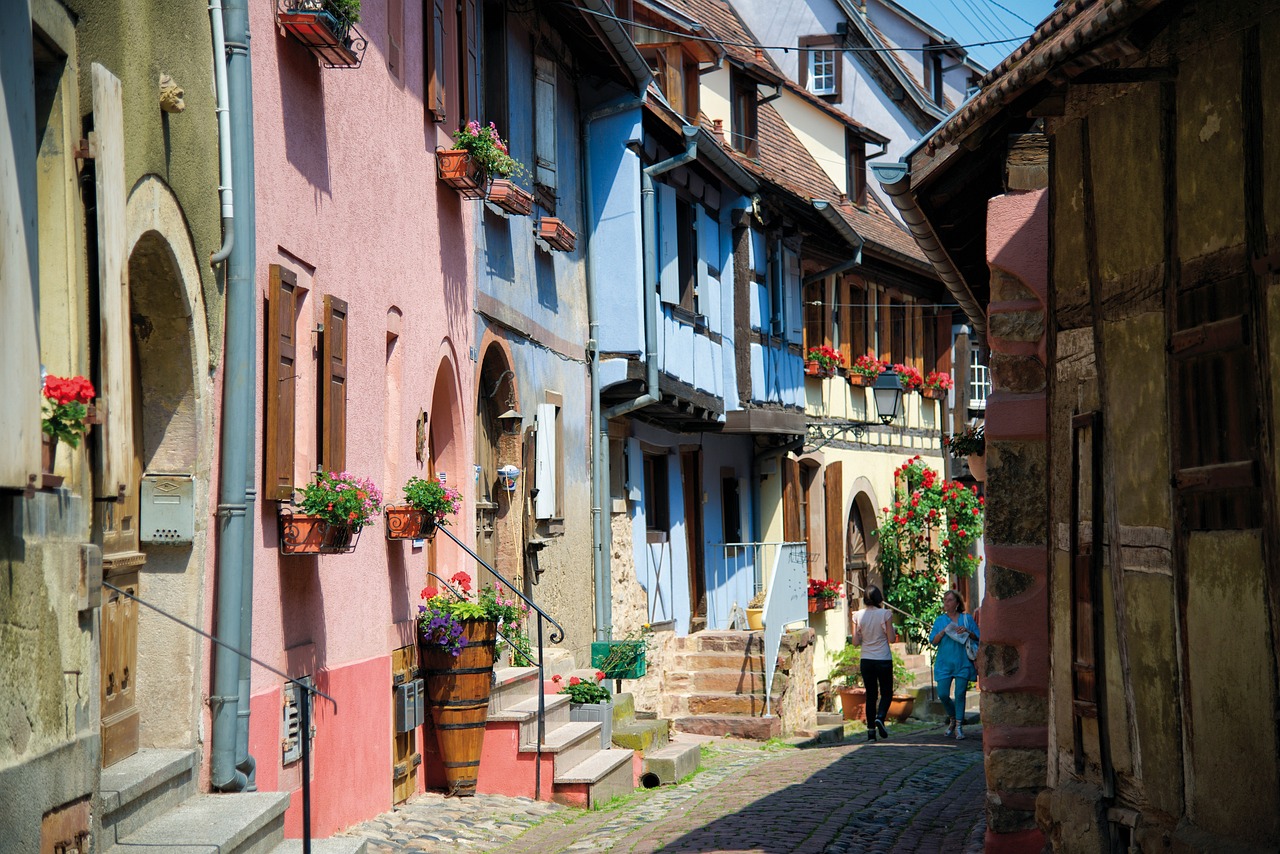
The old town itself is the main attraction. The entire historic center is essentially one long, gently sloping main street with side alleys that reveal hidden courtyards, wine presses, and tiny gardens.
I like to do three different “passes” through the old town whenever I visit:
- Early morning: For quiet photos and chatting with shopkeepers opening for the day.
- Midday: To feel the buzz, watch families with ice creams, and maybe join a group tasting.
- After dark: For romance – lantern-lit timber frames, clinking glasses from winstub windows, and long shadows on the cobbles.
Don’t miss: The little side passages on the right (heading uphill). Some lead to half-hidden courtyards with old wells and wine-making tools.
3. The Thieves’ Tower & Former Prison (Tour des Voleurs)
Just off the main drag, the Thieves’ Tower is a reminder that medieval village life wasn’t all pretty facades and flowers. This 14th-century defensive tower housed the village prison and judicial chambers.
I first visited on a damp autumn afternoon; the interior felt clammy and a bit eerie – perfect, really. The recreated prison cells, with their iron chains and instruments, are fascinating (and a bit chilling) for adults; with kids, I frame it as a history lesson and skip the goriest details.
What to see:
- Old interrogation rooms and cells.
- Displays about justice in medieval Alsace.
- The small garden area outside, where it’s easier to breathe afterward.
Tip: Combine with the Dolder visit if you’re curious about Riquewihr’s defensive system. It’s also a nice break from sun or rain.
4. Historic Winemakers’ Houses
Many of the most beautiful houses in Riquewihr were built by wealthy winegrowers between the 16th and 18th centuries. Look for dates carved above doors, wine-related symbols, and sometimes Latin mottos praising wine and hard work.
On my last visit in spring 2025, I spent an hour just photographing doorways and ornate carved beams. I love the combination of practicality (wide entrances for barrels) and elegance (delicate carved motifs of grape leaves).
Highlights:
- Maison Kiener: Beautiful courtyard and traditional architecture.
- Several maisons on Rue du Général de Gaulle: Look up; the magic is often above eye level.
Tip: Don’t rush. Choose one side of the street, walk it slowly focusing just on upper floors and roofs, then come back down the other side checking doors and ground-level details.
5. Church of Notre-Dame (Église Notre-Dame)
The village church is simpler than some nearby cathedrals, but it’s a calm, cool refuge from busy streets. The current building dates primarily from the 19th century, with older elements and a serene interior.
I like slipping in for five quiet minutes in the late afternoon, especially in summer when the sun is high and hot outside.
What to notice: Stained glass windows, simple stonework, and the way village life continues just outside the doors. If you time it right, you may hear the organ during practice.
6. Village Walls & Fortifications Walk
Riquewihr’s fortifications protected both people and wine. Walking the remaining walls and towers gives you angles and perspectives most visitors miss by staying on the main street.
One of my favorite early-evening rituals is to leave the village through a back gate, walk a semi-circle along the outside of the walls through vineyards, and re-enter near the Dolder as the lights come on.
Tip: Wear proper shoes; some paths are a little uneven. Great for families – kids love “exploring the castle walls.”
7. Vineyard Walking Trails Around Riquewihr
If you only experience Riquewihr from inside the walls, you’re missing half of the story. The vineyards are where the village earns its keep – and where you get some of the best views.
I usually take an hour before breakfast or before dinner to walk a simple loop: out through the northern side, up into the vines, then curving back toward the village for that classic “Riquewihr in the vines” shot.
Family-friendly & romantic: The paths are gentle enough for kids and couples in sandals, especially in summer and autumn. Bring a light jacket in spring and fall; the wind can be cooler than you expect.
8. Wine Tastings & Domaines in Riquewihr
Wine is the lifeblood of Riquewihr. This is Riesling country, but you’ll also find exceptional Pinot Gris, Gewurztraminer, Muscat, and increasingly good Pinot Noir.
Over multiple visits, I’ve gradually learned the rhythm: tastings are best in late morning or late afternoon; weekends can be busy; and asking a few curious but respectful questions often leads to deeper storytelling.
What to expect: Most domain tasting rooms (caves) offer free or low-cost tastings, with the understanding that you’ll likely buy at least a bottle or two. Many ship abroad.
Tip: Make a short list of 2–3 producers you want to try instead of attempting every door. Your palate will thank you.
9. Small Local Museums & House Exhibitions
Riquewihr doesn’t have a huge standalone museum like Colmar, but it does have a handful of small exhibitions in historic houses that reveal more about daily life in centuries past.
I like ducking into these especially on rainy days; they’re never crowded, and you feel like you’ve stepped into a time capsule of Alsatian domestic life.
10. Year-Round Christmas Shops & Winter Magic
Even outside December, parts of Riquewihr feel like Christmas never ended. Several shops are dedicated to ornaments, nutcrackers, and seasonal decorations.
I once visited in July with friends who thought this sounded kitschy; we spent nearly an hour choosing hand-painted baubles and wooden stars. In December, these same streets are part of the famous Riquewihr Christmas market, one of the most atmospheric in Alsace.
Tip: If you’re planning 3 days in Riquewihr in winter, booking early is essential. 2026 dates are expected to mirror previous years (late November through late December).
11. Artisan Workshops & Local Crafts
Beyond souvenirs, look for real crafts: pottery, glass, regional textiles, and woodwork. Several workshops sit just off the main street; if you catch the artisans at work, they’re usually happy to chat about techniques.
Tip: Authentic crafts aren’t the cheapest, but they’re the best souvenirs – and unlike the cookies, they don’t vanish after a week.
12. Traditional Winstubs (Alsatian Wine Taverns)
Winstubs are where Alsace truly tastes like itself: dark wood, checkered tablecloths, local wines, and hearty plates of choucroute, tarte flambée, and baeckeoffe. They are as much cultural experiences as meals.
One rainy evening, I squeezed into a corner table in a tiny winstub with low beams and candles on the tables. The waiter recommended a dry Riesling with my choucroute, and I ended up sharing stories with a German couple at the next table for two hours.
Tip: Reserve for dinner, especially in high season or on weekends. For lunch, you can often just walk in if you’re slightly early (12:00) or a bit late (14:00).
13. Sunrise & Sunset Viewpoints Over Riquewihr
The best free attraction in Riquewihr is the sky. Because the village sits in a gentle bowl of vineyards, you get gorgeous light at both ends of the day.
My personal favorite: a short climb into the vineyards to the west about 30 minutes before sunset. From there, you can watch the light slide across the half-timbered roofs and church spire. In autumn 2024, I watched a hot-air balloon drift quiet and orange above the vines – pure magic.
14. Fountains & Small Squares
Riquewihr’s fountains are tiny hubs of village life. In summer, kids hop around them; in winter, they’re decorated with fir branches and lights. They’re easy to miss if you rush, but pausing by one with a pastry or ice cream is one of the simplest pleasures here.
16. Vineyard Huts & Seasonal Picnic Spots
Scattered among the vines are small huts and shelters used historically during harvest. Some are on public paths and make lovely informal picnic spots. Bring a sandwich from the bakery and a half-bottle of local wine (plus water!).
Tip: Always respect private property: stick to marked paths, don’t climb on structures, and pack out all trash.
17. Local Bakeries & Pâtisseries
Bakeries in and around Riquewihr are excellent and a key part of budget travel here. I often build simple breakfasts and lunches around fresh bread, kougelhopf (Alsatian bundt cake), and seasonal pastries.
Money-saving tip: A bakery picnic in the vineyards is cheaper than a sit-down lunch and just as satisfying on a sunny day.
18. Night Walks Through the Village
Staying overnight in Riquewihr transforms your trip. Around 7–8pm, day visitors start to leave, and by 10pm the streets are nearly empty, especially outside peak summer and December.
I love walking slowly from the lower gate to the Dolder around 10:30pm, camera in hand, when the village glows quietly and you can hear cutlery and conversation drifting from a few open windows.
19. Seasonal & Farmers’ Markets
While larger markets are in nearby towns like Colmar and Ribeauvillé, Riquewihr sometimes hosts small local markets, especially in summer and during harvest season. Expect local cheeses, cured meats, honey, jams, and sometimes food trucks.
Tip: Ask your guesthouse or check the local office de tourisme for market days while you’re in town.
20. Nearby Castles & Viewpoints (Just Outside Riquewihr)
Strictly speaking, these aren’t inside Riquewihr, but they’re so close I count them as part of its “sphere.” The hills above the Alsace Wine Route are dotted with ruined castles and viewpoints.
On one summer trip, I spent a full day doing a loop by car and short hikes to two different ruins, then returned to Riquewihr for dinner. It felt like the perfect mix of adventure and comfort.
3–5 Day Itineraries for Riquewihr (With Personal Stories)
Below are flexible itineraries you can adapt depending on whether you’re planning a 3 day itinerary for Riquewihr, 4 days in Riquewihr, or a 5 day itinerary with more day trips and slow travel. I’ll walk you through each day as I actually tend to experience it.
3 Day Itinerary for Riquewihr
This 3 day itinerary is ideal if you want a balanced mix of must-see attractions in Riquewihr, some vineyard walking, and a taste of neighboring villages.
Day 1 – First Impressions & Old Town Magic
I like to arrive in Riquewihr by late morning so I can check in, drop my bags, and immediately head for La Grande Rue. No matter how many times I’ve been, that first walk up the cobbles to the Dolder feels special.
Morning:
- Arrive, park outside the walls (cheaper and less hassle), and walk in through the lower gate.
- Slow walk up La Grande Rue, popping into a bakery for a quick snack.
- Visit the Dolder Tower for views and basic historical orientation.
Lunch: Choose a winstub on the main street or a quieter side alley. On my last visit, I ordered a simple tarte flambée and a glass of local Pinot Blanc – light enough to keep me walking afterward.
Afternoon:
- Explore side streets and hidden courtyards; let yourself get a bit lost.
- Visit the Thieves’ Tower & old prison for a sense of medieval justice.
- Stop at one wine cellar for a gentle first tasting (keep it to a few glasses; there’s time later).
Evening: After a short rest at your hotel, head back out around sunset. Take a 30-minute walk into the vineyards, circling back to watch the village glow from a distance. For dinner, book a cozy winstub – I usually opt for choucroute garnie on the first night; it feels like a proper Alsace welcome. Finish the day with a slow night walk through the nearly empty streets.
Day 2 – Vineyards, Wine & Nearby Villages
Your second day is perfect for deeper wine experiences and a bit of exploration beyond the walls.
Morning:
- Breakfast at your guesthouse or a local bakery (kougelhopf and coffee is my go-to).
- Vineyard walk: pick a loop of 1–2 hours from Riquewihr toward another village (Ribeauvillé or Kaysersberg direction). Stop often for photos and to notice soil changes underfoot – you can literally feel the terroir shifting.
Lunch: Pack a picnic from the market or bakery and eat among the vines (on a public path), or head back into Riquewihr for a light meal on a terrace.
Afternoon:
- Dedicated wine tasting: visit 2–3 domaines, spacing them out with short walks.
- Spend time chatting with winemakers; ask about 2024–2025 vintages and how climate changes are affecting harvests.
Evening: For a more modern twist, choose a restaurant that does updated Alsatian cuisine with wine pairings. One of my favorite recent evenings was a multi-course menu built entirely around local wines, where the sommelier explained each pairing in friendly, down-to-earth language.
Day 3 – Cultural Details & Relaxed Wandering
Your final of the 3 days in Riquewihr is about catching what you’ve missed and simply enjoying the atmosphere.
Morning:
- Visit the Church of Notre-Dame and sit for a few minutes in quiet reflection.
- Drop into any small museums or house exhibitions you didn’t see on day 1.
- Take one final, slow photography walk through the old town.
Lunch: Try a dish you haven’t yet – maybe baeckeoffe (a slow-cooked casserole) or a salad built around local cheeses and charcuterie if it’s warm.
Afternoon: Last-minute shopping: wine to ship home, artisan crafts, or those Christmas ornaments you couldn’t decide on before. Then either depart mid-afternoon or linger for a coffee and one last look back at the village from the parking area as you leave.
4 Day Itinerary for Riquewihr
If you have 4 days in Riquewihr, you can add a proper day trip and slow down the pace. I recommend using the 3 day plan above and inserting this additional day, usually as Day 3.
Day 3 – Day Trip to Nearby Villages & Castles
On my last 4 day itinerary for Riquewihr, I dedicated a full day to exploring nearby gems, returning to Riquewihr each evening for dinner.
Options:
- Ribeauvillé: A slightly larger town with its own charm and castle ruins above. Great for a few hours of strolling and lunch.
- Kaysersberg: Often cited as one of France’s most beautiful villages; wonderful stone bridge and castle ruin.
- Colmar: For museums, “Little Venice” canals, and more urban energy.
Choose one major stop (e.g., Colmar) and maybe a second, smaller village on the way back. Return to Riquewihr for a leisurely evening walk and a simple dinner – perhaps just cheese, bread, and a bottle of Riesling at your accommodation if you’ve had a big lunch out.
5 Day Itinerary for Riquewihr
With 5 days in Riquewihr, you can blend deep relaxation, multiple day trips, and a very local rhythm. Use the 4 day version and add this extra, slower day – ideally Day 4 or 5 – to really live like a local.
Extra Day – Slow Living, Markets & Personal Favorites
On my favorite 5 day itinerary for Riquewihr, I spend one day doing “almost nothing” by standard sightseeing metrics – and it’s always the day I remember most.
Morning:
- Visit a farmers’ market in a nearby town (check days in advance).
- Stock up on picnic ingredients, then come back to Riquewihr and climb into the vineyards.
Lunch: Long vineyard picnic with a view of the village. Bring a book, a notebook, or just sit and listen to the wind in the vines.
Afternoon:
- Take a nap, read in a courtyard café, or do a gentle bike ride along the wine route.
- Book a final wine tasting with your now-favorite domaine from earlier in the week to pick up bottles to take home.
Evening: Treat yourself to your best dinner yet – maybe a slightly more upscale restaurant or a return to that winstub you loved on day 1. End with a glass of late-harvest Gewurztraminer (vendanges tardives) as a sweet farewell.
Local Food & Drink in Riquewihr
Alsatian cuisine is generous, comforting, and perfectly matched to the region’s wines. Here’s what to try and where, based on many meals (and the occasional food coma).
Must-Try Local Dishes
- Tarte Flambée (Flammekueche): Thin dough topped with crème fraîche, onions, and lardons. I often order one to share as a starter.
- Choucroute Garnie: Sauerkraut with various sausages and meats. Pairs beautifully with dry Riesling.
- Baeckeoffe: Slow-cooked casserole of potatoes, meat, and white wine. Ideal on cold days.
- Kougelhopf: Yeast cake with raisins and sometimes almonds – breakfast heaven.
- Munster cheese: Strong local cheese; try it on a tartine or in a salad if you’re unsure about it solo.
Wine & Local Drinks
- Riesling: From crisp and mineral to richer grand crus – the king here.
- Gewurztraminer: Aromatic, lychee and rose notes; delicious with spicy or strong-flavored dishes.
- Pinot Gris: Versatile, food-friendly, often with a bit more body.
- Crémant d’Alsace: Local sparkling wine; perfect aperitif for a summer evening.
Budget-Friendly Eating Tips
Riquewihr isn’t the cheapest village on the wine route, but you can keep costs reasonable:
- Have one restaurant meal a day (usually dinner) and do bakeries or picnics for breakfast and lunch.
- Order carafes of house wine at winstubs – they’re usually very good and cheaper than by-the-glass premiums.
- Consider sharing a choucroute or baeckeoffe; portions are generous.
Nightlife, Entertainment & Cultural Experiences
Riquewihr is not a nightclub kind of place. Nightlife here means long dinners, wine, conversations, and quiet moonlit walks.
Evening Activities
- Wine bar evenings: A few places offer extended wine lists by the glass – perfect for tasting styles side by side.
- Gourmet dinners: Book one “splurge” night for a more elaborate tasting menu.
- Night photography walks: Tripods are handy, but even phone cameras can capture the ambiance.
Cultural Experiences
- Harvest season (September–October): Vines are busy; some domain offer special tours.
- Christmas markets: Late November to late December; expect choir performances, local crafts, and mulled wine.
- Local festivals: Wine and food events throughout the year (see below for 2026–2027 highlights).
What’s New in 2026–2027: Events & Travel Scene
As of 2026, Riquewihr continues to refine a balance between tourism and village life. Expect some small but meaningful shifts:
- Enhanced vineyard trails: Local authorities have improved signage on several walking routes, making self-guided hikes easier.
- Sustainability focus: More domaines are highlighting organic and biodynamic practices in their tastings.
Major annual events in 2026–2027 (dates approximate, check closer to travel):
- Spring Wine Weekends (April–May 2026 & 2027): Special tastings, open cellars, and vineyard walks along the wine route.
- Harvest Season (September–October 2026 & 2027): Not a single event, but a general buzz – grape picking, early tastings of the new vintage, and sometimes harvest festivals in nearby towns.
- Christmas Markets (Late November–Late December 2026): Riquewihr’s old town becomes a glowing Christmas village with stalls, decorations, and extended opening hours.
Day Trips from Riquewihr
Riquewihr is an ideal base for short explorations along the Alsace Wine Route and into the Vosges.
Colmar
About 20–25 minutes by car or local bus connections via nearby villages. Visit the Unterlinden Museum, the old town, and “Little Venice.” Perfect for one full day.
Ribeauvillé & Its Castles
Just a short drive or bike ride. Charming town with good restaurants and access to hiking trails up to castle ruins with stunning views over the vineyards.
Kaysersberg
Another storybook village with a river and hilltop castle. Combine with a drive through the wine route for a full day.
Vosges Mountains
For more adventurous travelers, head into the Vosges for hiking, cycling, or simply scenic drives along the Route des Crêtes.
Local Customs & Cultural Etiquette in Riquewihr
Riquewihr is touristy, yes, but it’s also a real village where people live and work. A few basic customs go a long way.
Greetings & Politeness
- Always start interactions with “Bonjour” (day) or “Bonsoir” (evening), even in shops.
- “S’il vous plaît” (please) and “Merci, au revoir” (thank you, goodbye) are appreciated.
In Restaurants & Winstubs
- Table service is the norm; don’t seat yourself unless indicated.
- Tipping: service is included, but rounding up or leaving 5–10% for good service is common.
- Lingering over meals is normal; you won’t be rushed out.
Wine Tasting Etiquette
- It’s fine to spit if you’re tasting many wines – professionals do it.
- Buying at least one bottle after a free tasting is courteous.
- Ask permission before photographing people or interior spaces.
Respecting Residents
- Keep noise down after 10pm, especially in residential side streets.
- Don’t peer into private windows or drive into the narrowest streets without a clear reason; they’re often resident-only.
Practical Travel Advice for Riquewihr (2026)
How to Get There
- By air: Closest major airports are Basel–Mulhouse–Freiburg (EuroAirport), Strasbourg, and Zurich.
- By train: Take the train to Colmar, then bus or taxi to Riquewihr.
- By car: Easiest for exploring the wine route. Park outside the walls and walk in.
Getting Around
- In Riquewihr: Entirely walkable; no public transport inside the village.
- Regionally: Car is most flexible; there are also buses linking villages and Colmar, plus bike rentals for the wine route.
Car Rental & Driving
- International driving permits are generally accepted alongside your home license for non-EU visitors (check current rules before travel).
- Speed limits are strictly enforced; watch for speed cameras when leaving villages.
- Many old streets are one-way and narrow; follow local signage carefully.
SIM Cards & Connectivity
- EU travelers roam as at home. Non-EU travelers can buy prepaid SIMs from major French providers (Orange, SFR, Bouygues) in Colmar or at airports.
- eSIM options are increasingly convenient in 2026; install before arrival if possible.
- Wi-Fi is common in hotels and many restaurants, but can be patchy in old stone buildings.
Money & Costs
- Card payments widely accepted; still carry some cash for small purchases and countryside stops.
- Expect mid-range restaurant mains from €15–€25, with wine extra.
- Guesthouses and small hotels inside the walls can be pricier than just outside; booking early gives more choice.
Visa Requirements
- Riquewihr is in France (Schengen Area). Check current Schengen visa rules for your nationality.
- Most non-EU visitors get 90 days within 180 days in Schengen, but always verify up-to-date regulations for 2026.
Best Seasons & What They’re Good For
- Spring (April–May): Blossoms, fewer crowds, fresh greens in vineyards. Great for hiking and lower hotel rates.
- Summer (June–August): Warm, lively, longest days. Best for families and outdoor dining, but can be crowded on weekends.
- Autumn (September–October): Harvest and golden vineyards. My personal favorite time – rich colors, wine buzz, cool evenings.
- Winter (November–March): Quiet outside Christmas market period; atmospheric, especially with snow, but some places may reduce hours.
Hidden Money-Saving Tips
- Travel mid-week instead of weekends for better accommodation prices.
- Stay just outside the walls; you’ll walk 5–10 minutes more but pay less.
- Use bakeries and supermarkets for some meals and splurge selectively on restaurant dinners.
- Plan tastings strategically: a few focused visits instead of every open door; your budget and palate will both be happier.
Summary & Final Recommendations
Riquewihr may be small, but as a travel destination it punches far above its weight. Whether you’re piecing together a 3 day itinerary for Riquewihr, stretching to 4 or 5 days in Riquewihr, or using it as a base for a broader Alsace trip, the village offers an ideal blend of beauty, food, culture, and calm.
Key takeaways:
- Stay at least two nights – three or more if you can – to experience evenings and early mornings without day-tripper crowds.
- Balance time inside the walls with vineyard walks and nearby villages.
- Make local food in Riquewihr and wine tastings central to your plans; they’re the heart of the region.
- Respect local customs in Riquewihr – simple politeness and awareness of village life go a long way.
Best time to visit Riquewihr? For me, it’s a tie between late September–early October (harvest colors, wine energy) and early December (Christmas markets and winter magic). But every season has its charm, and in 2026 the village is as welcoming as ever.
Come with comfortable shoes, an open appetite, and enough space in your luggage for a few bottles. Riquewihr has a way of getting under your skin – and into your cellar – for years to come.