Why Visit Volcanoes of Auvergne Regional Nature Park?
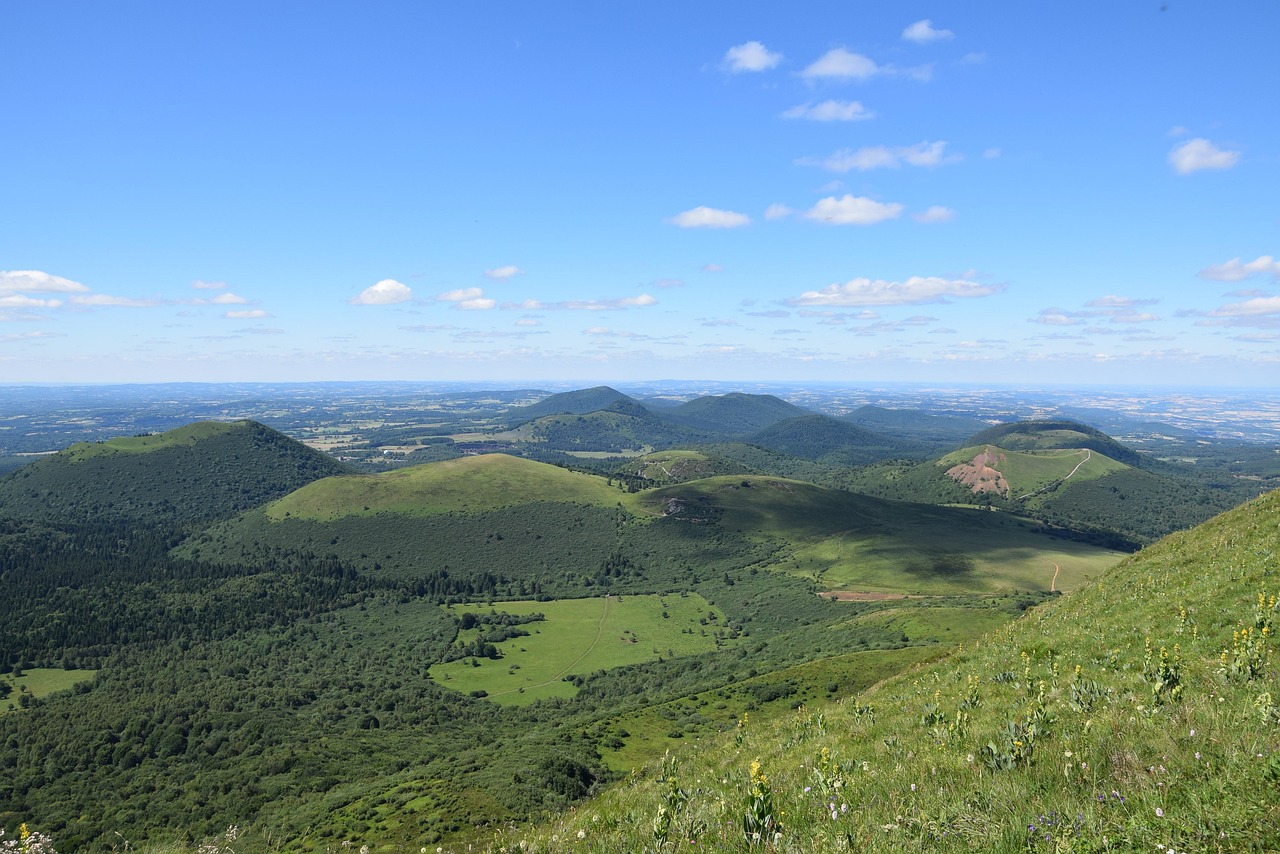
The Volcanoes of Auvergne Regional Nature Park is one of those rare places where Europe still feels big, wild, and wonderfully under-subscribed. Stretching across the heart of central France, it’s the largest regional nature park in mainland France, a green ocean of ancient volcanoes, glacial valleys, peat bogs, beech forests, and tiny stone villages that look almost unchanged since the 19th century.
Geologically, it’s a playground: more than 80 volcanoes in the Chaîne des Puys alone, the eroded horseshoe of the Monts Dore, the wide-open grazing plateaus of the Cantal massif, and the wild, windswept ridges of the Cézallier. Culturally, it’s deeply, stubbornly Auvergnat – hearty mountain food, slow rhythms, and a frank but warm welcome once you make the effort to say a few words in French.
If you’re searching for:
- Family-friendly hikes with easy summits and fun volcanic stories
- Romantic escapes in quiet spa towns and lakeside villages
- Adventurous ridgeline treks and long-distance GR routes
- Local food that makes heavy use of cheese, potatoes, and charcuterie
- Dark skies and real, unhurried quiet
…then the Volcanoes of Auvergne are an outstanding alternative to the overcrowded Alps or Pyrenees. In 2026, with sustainable tourism initiatives growing and new interpretation centres opening around the Chaîne des Puys UNESCO World Heritage site, it’s an especially good time to come.
Table of Contents
- 1. Overview: Key Zones & Gateways of the Volcanoes of Auvergne
- 2. The 15 Must-Experience Trails, Viewpoints & Zones
- 3. Suggested 3, 4 & 5 Day Itineraries (With Personal Stories)
- 4. Where to Eat & Drink: From Farm Inns to Spa-Town Bistros
- 5. Where to Stay: Villages, Cabins, Gîtes & Campgrounds
- 6. After Dark: Stargazing, Quiet Evenings & Night Walks
- 7. What’s New: Events & Changes for 2026–2027
- 8. Day Trips & Nearby Attractions
- 9. Culture, Local Customs & Etiquette
- 10. Practical Travel Tips & Park Logistics
- 11. Summary & Final Recommendations
1. Overview: Key Zones & Gateways of the Park
The Volcanoes of Auvergne Regional Nature Park covers over 390,000 hectares. To plan an effective 3–5 day itinerary in Volcanoes of Auvergne Regional Nature Park, it helps to think in terms of four main mountain zones and a handful of gateway towns.
1.1 Main Mountain Zones
- Chaîne des Puys & Limagne Fault – The iconic volcanic chain just west of Clermont-Ferrand, crowned by Puy de Dôme. Dozens of cinder cones, maars, and domes, with moderate hikes and sweeping views. Ideal for first-timers, families, and short stays.
- Monts Dore & Puy de Sancy – Higher, more alpine terrain around the highest peak of the Massif Central, Puy de Sancy (1,885 m). Think waterfalls, cirques, cable cars, and ski infrastructure repurposed for summer hiking. Great for active travellers and couples.
- Cantal Massif – Vast, ancient stratovolcano radiating out from Plomb du Cantal and Puy Mary. Long ridgelines, sweeping valleys, and some of the best panoramic drives in France. Perfect for hikers, road-trippers, and anyone chasing big-sky scenery.
- Cézallier & Artense Plateaus – High pastoral plateaus, peat bogs, and lonely roads. Subtle landscapes with a strong sense of space and solitude. Ideal if you’ve got more time or you’re seeking hidden gems.
1.2 Gateway Towns & Bases
On my own trips, I tend to string together bases rather than stay in one place. For a 3–5 day itinerary in Volcanoes of Auvergne Regional Nature Park, these are the most useful hubs:
- Clermont-Ferrand – Lively regional capital with good rail connections, car rentals, and a black lava-stone cathedral. The best entry point for the Chaîne des Puys.
- Orcines & Royat – Suburban villages just west of Clermont-Ferrand, close to the Puy de Dôme access road and shuttles.
- Le Mont-Dore – Historic spa town tucked under Puy de Sancy. Great for hikes in the Monts Dore, with plenty of lodging.
- Super-Besse & Besse-et-Saint-Anastaise – Mountain resort and medieval village combo on the southern side of Sancy.
- Murol & Lac Chambon – Lakeside base with a castle and family-friendly vibe.
- Murat, Salers & Vic-sur-Cère – Classic Cantal bases, each with its own character: Murat for train access and practicalities, Salers for medieval charm, Vic-sur-Cère for quiet valley life.
2. The 15 Must-Experience Trails, Viewpoints & Zones
What follows are the places I return to again and again – the core of any serious travel guide for Volcanoes of Auvergne Regional Nature Park. I’ve grouped them roughly from most iconic to more off-the-beaten-path, but all are worth your time. Each subsection reads like a mini-article, so you can mix-and-match into your own 3, 4, or 5 day itinerary.
2.1 Puy de Dôme – The Iconic Summit of Auvergne
Every serious 3 day itinerary for Volcanoes of Auvergne Regional Nature Park should start with Puy de Dôme. I’ve climbed it in blazing August heat and under a squall of late-October snowflakes; every time, the view of the Chaîne des Puys rolling away like a dragon’s spine takes my breath away.
Rising to 1,465 m just west of Clermont-Ferrand, Puy de Dôme is the highest and most famous of the volcanic cones. It’s part of the Chaîne des Puys–Limagne Fault Tectonic Arena, listed as a UNESCO World Heritage site in 2018 for its textbook volcanic forms and fault scarp.
How to Get There
From Clermont-Ferrand, I usually catch the regional bus or drive the 20–25 minutes to the Panoramique des Dômes station near Orcines. There’s a large paid parking area and regular shuttle buses in high season. From here, you have two main options:
- Cog railway (Panoramique des Dômes) – A scenic, accessible ride that whisks you to the summit in about 15 minutes. Perfect for families, mobility-impaired visitors, or if you’re short on time.
- Chemin des Muletiers trail – The historic mule track from the Col de Ceyssat on the western side. It’s a steady 45–60-minute climb, 350 m of elevation gain, suitable for reasonably fit hikers and older kids.
I personally like to go up by train when I’m with friends or family and then walk down the Chemin des Muletiers to stretch the legs.
What to Do at the Summit
Once on top, loop the summit path (about 30–45 minutes) to take in:
- The perfect cone of Puy Pariou to the north
- The long line of volcanoes running south, including Puy de Côme and Puy de la Vache
- The Limagne plain and Clermont-Ferrand on the eastern side
- On clear days, distant views towards the Monts Dore and even the Cantal massif
The remains of a Roman temple dedicated to Mercury lie near the summit – a reminder that humans have revered this peak for two millennia. Interpretation panels explain the site, and in summer there are often guided tours.
Food & Practical Tips
There’s a summit restaurant and café which I mainly use for coffee and dessert (the view does half the work). For value, I prefer to pick up a baguette, Cantal cheese, and saucisson in Clermont-Ferrand and picnic on the grassy slopes away from the crowds.
- Best time of day: Early morning or late afternoon to miss the tour-bus crush and catch softer light.
- Family-friendly? Absolutely. The train plus a short summit stroll makes it one of the best things to do in Volcanoes of Auvergne Regional Nature Park with kids.
- Weather watch: The summit can be windy and 5–10°C cooler than the valley. Bring an extra layer even in summer.
2.2 Puy Pariou – The Perfect Crater
If Puy de Dôme is the icon, Puy Pariou is the postcard: a nearly perfect, grass-lined crater that feels almost unreal when you’re standing on its rim. I still remember the first time I peered over the edge at sunset – the bowl below lit in soft gold, the path tracing its circumference like a pencil sketch.
Trail Overview
The classic loop to Puy Pariou starts near the foot of Puy de Dôme, at the Orcines side. It’s around 6–7 km round trip, 250–300 m of elevation gain, taking 2–3 hours at a relaxed pace. The trail undulates gently through forest and open pastures before climbing steadily to the crater rim.
At the top, a staircase takes you into the crater itself. I like to walk a full lap along the ridge first, then descend to the bottom, where the soundscape changes completely – wind muted, birds amplified, a natural amphitheatre.
Best Time & Tips
- Golden hour: Late afternoon in summer gives beautiful side-light on the crater walls.
- Shoes: In wet weather, the steps and paths can be muddy; lightweight hiking shoes are better than sneakers.
- Combination idea: For a full day, pair Puy Pariou with Puy de Dôme – train up Dôme in the morning, drive or shuttle to the Pariou trailhead in the afternoon.
For couples, this is one of the most romantic short hikes in the park – not too hard, with big views and a sense of intimacy inside the crater.
2.3 Puy de Sancy – Roof of the Massif Central
The first time I climbed Puy de Sancy, it was June, and patches of snow still clung to the north-facing gullies. I set off from Le Mont-Dore in a cool mist and arrived on the summit above a sea of cloud, the Cantal massif floating like an island on the horizon. At 1,885 m, Sancy is the highest point in the Massif Central and one of the must-see attractions in Volcanoes of Auvergne Regional Nature Park for hikers.
Access Routes
The two main approaches:
- From Le Mont-Dore via the Vallée de la Dordogne – A classic, more strenuous hike (6–8 hours return if you make a loop via the ridges). Beautiful waterfalls, steep sections, and airy ridgeline walking. Best for sure-footed hikers.
- From Super-Besse via the cable car – A shorter option: the Télécabine de la Perdrix lifts you up from Super-Besse, from where it’s about 1.5–2 hours round trip on a well-marked path and staircases to the summit. Families often choose this route.
In high summer, I like to take the cable car up from Super-Besse, traverse the ridgeline to the Sancy summit, then descend on foot towards Le Mont-Dore, catching a shuttle or taxi back – a fantastic full-day traverse with big skies and constant views.
Summit Experience
The very top of Sancy is reached via a network of wooden staircases and platforms designed to protect the fragile terrain. It’s busy on August weekends, but on a weekday in shoulder season you might have long, quiet minutes to yourself. Four main ridges radiate out, and on a clear day you can see:
- The jagged cirques of Monts Dore beneath you
- The flat, grassy Cézallier plateau to the south
- The distant Cantal volcano, hazy but unmistakable
Food & Safety Tips
- Weather: Storms build quickly on summer afternoons; I always start early (before 9:00) and aim to be descending by mid-afternoon.
- Pack: At least 1.5 L of water, a windproof jacket, and sun protection; there’s little shade on the upper slopes.
- Lunch: Mont-Dore and Super-Besse both have bakeries; grab sandwiches and pastries before heading up. My ritual is a post-hike crêpe in Le Mont-Dore.
2.4 Puy Mary – Heart of the Cantal Volcano
Puy Mary is to the Cantal massif what Puy de Dôme is to the Chaîne des Puys: a symbol. The difference is that out here, everything feels bigger and more open, and the crowds thin dramatically. My favourite memory of Puy Mary is an October afternoon when the valleys were aflame with beech and chestnut leaves, and a herd of Salers cows grazed quietly just below the summit.
Access & Scenic Drive
The Col du Pas de Peyrol (1,589 m), just below Puy Mary, is one of the highest road passes in the Massif Central and a highlight of any scenic drive in Volcanoes of Auvergne Regional Nature Park. You can approach from Murat, Salers, or Vic-sur-Cère; each approach offers its own drama, especially in late afternoon light.
From the col, a well-built path and steps climb to the summit in about 30–40 minutes. It’s short but steep, with railings in the exposed sections. On clear summer days, families with children of all ages make the ascent.
On the Summit
At the top, a circular viewpoint indicator helps you interpret the star-shaped pattern of valleys radiating from the central volcano. This is one of the best places to understand the Cantal’s glacial and erosional history; ranger-led talks are sometimes offered in July and August.
Practicalities
- Parking: Paid, with overflow areas that fill on August weekends. Arrive early (before 10:00) or later in the day.
- Visitor centre: At the col, a small information centre and snack bar serve simple fare (sandwiches, tarts). I prefer to picnic and then head down to a village auberge for a proper dinner.
- Best season: Late May–October. The road is often closed in winter and early spring due to snow.
2.5 Lac Pavin – A Mysterious Maar Lake
Deep, dark, and perfectly circular, Lac Pavin is one of the youngest volcanoes in France, a maar lake formed by explosive interaction between magma and groundwater. Local legends say it’s bottomless; in reality, it’s about 92 m deep, but the sense of mystery is real, especially on misty mornings.
Why I Love It
I often stop here on my way between Besse-et-Saint-Anastaise and Super-Besse. In summer, families stroll the lakeshore, kids skipping stones; in autumn, the surrounding beech forest turns copper and gold. There’s a short 2.5 km circuit path around the lake, mostly flat, making it one of the easiest and most atmospheric things to do in Volcanoes of Auvergne Regional Nature Park if you’re not up for steep climbs.
Practical Tips
- Parking: Free parking just above the lake; it can get busy midday in August, but spaces generally turn over quickly.
- Food: A lakeside restaurant and café serve decent crêpes and coffee; I’ve had better full meals in Besse itself, but the terrace view is lovely.
- Add-on: Combine with a visit to Besse-et-Saint-Anastaise (medieval village) and, if you’re feeling energetic, a hike up to Puy de Montchal for views over the lake.
2.6 Lac Chambon & Murol – Lakeside Relaxation
When I need a softer day – after a long ridge hike or during a heatwave – I head to Lac Chambon. It’s a dammed volcanic lake on the Couze Chambon, with two supervised beaches, pedal boats, and a family-friendly promenade. For travellers asking for a 3 day itinerary for Volcanoes of Auvergne Regional Nature Park with children, I always slot in an afternoon here.
What to Do
- Swim or paddle in summer (water is usually pleasant from late June to early September).
- Walk the lake circuit (around 4 km, almost flat) with views of the Sancy range and Murol castle.
- Visit the Château de Murol, a well-restored medieval fortress with costumed reenactments in summer – kids love the falconry shows.
Food & Vibe
The lakeshore has several casual restaurants and snack bars. My habit is to grab a simple plat du jour (daily special) with a glass of local wine, then stroll the shore with an ice cream. It’s not haute cuisine, but the setting and relaxed atmosphere make it memorable.
2.7 Monts Dore Valleys & Waterfalls
The Monts Dore area around Le Mont-Dore and La Bourboule is a carved landscape of glacial cirques and waterfalls. On drizzly days – and there are a few in these mountains – I often trade the summits for the valleys, wandering between cascades under the shelter of the forest.
Key Waterfalls & Trails
- Cascade du Queureuilh & Cascade du Rossignolet – A lovely loop from Le Mont-Dore (about 6 km) visits two mossy waterfalls tucked into the forest. Great for families and for photographers.
- Cascade du Voile de la Mariée – “The Bride’s Veil,” a tall, graceful fall accessible via a short hike near Le Mont-Dore.
- Vallée de la Haute Dordogne – Trails follow the young Dordogne river, born from streams under Puy de Sancy.
One rainy July, I spent a full day just wandering these trails, stopping for coffee and pastries in Le Mont-Dore between loops. It turned what could have been a “lost” day into one of my most peaceful.
2.8 Cantal Ridgelines – GR400 Sections
For serious hikers planning 4 or 5 days in Volcanoes of Auvergne Regional Nature Park, the GR400 loop around the Cantal volcano is a jewel. Even if you don’t tackle the entire multi-day route, sampling a section of the ridge is unforgettable.
Favourite Day Segments
- Le Lioran – Plomb du Cantal – Prat de Bouc – Ride the cable car from Le Lioran to Plomb du Cantal, then follow the ridge eastwards. Wide views, often with griffon vultures wheeling overhead.
- Puy Mary – Puy de Peyre Arse – Eylac – A wilder, rockier segment, best in stable summer weather. Not ideal for young children, but thrilling for experienced walkers.
I’ve walked these ridges in both directions; the direction matters less than the weather. On clear days, you can see layer after layer of blue hills fading to the horizon – a real sense of the ancient volcano’s scale.
2.9 Cézallier Plateau – The “Little Mongolia” of Auvergne
The Cézallier isn’t dramatic in the way Puy de Dôme or Puy Mary are, but its rolling grasslands and bogs have an austere beauty that gets under your skin. More than once, I’ve driven the D36 between Allanche and Condat and pulled over for half an hour just to listen to the wind in the grass.
What to Expect
This is high pastoral country: scattered burons (old stone shepherd huts, some converted into auberges), herds of Salers and Aubrac cattle, peat bogs dotted with wildflowers in late spring. Trails are often grassy tracks or farm roads, with gentle ups and downs but little shade.
Highlights
- Sentier des Estives near Allanche – A waymarked trail across the summer grazing lands.
- Lac de Saint-Alyre – A small, quiet lake with peat bogs and rich birdlife.
- Buron auberges – In summer, some burons serve rustic meals; I still dream about a lunch of aligot (cheesy mashed potatoes) eaten on a terrace with nothing but cows and sky for company.
2.10 Lac de Guéry & Plateau
Lac de Guéry is the highest lake in Auvergne and a favourite stop of mine when driving between Clermont-Ferrand and Le Mont-Dore. It sits in a shallow basin ringed by volcanic plateaus and basalt cliffs.
Activities
- A short walk to the Roc de Cuzeau and Tuilière and Sanadoire rocks viewpoints – dramatic columnar basalt outcrops.
- Easy lakeside strolls and picnics on the shore.
- In some winters, ice fishing festivals are held when the lake reliably freezes (less predictable with climate change, but still part of local lore).
In March a few years ago, I parked at a nearly empty lot, trudged through late snow to the viewpoint, and had one of the most peaceful sunsets I’ve ever seen, the lake half-iced, the Sancy peaks glowing pink in the distance.
2.11 Around Salers – Volcanic Villages & Valleys
Technically just outside the strict park boundary but within the broader volcanic region, Salers is a medieval village of dark lava-stone houses and carved wooden balconies, perched above deep valleys. It’s my favourite “base village” in the Cantal.
Why Stay Here
You get:
- Easy access to the Puy Mary region and Cantal ridges.
- A walkable historic centre with several excellent restaurants.
- Local products galore: Salers cheese, beef, and liqueurs.
At sunset, I like to walk out to the village edge and look down into the Maronne valley, the stone houses behind me catching the last light.
2.12 Orcines & Royat – Gateways to the Chaîne des Puys
On the western fringe of Clermont-Ferrand, the villages of Orcines and Royat are where urban Clermont gives way to volcanic slopes. They’re not primary attractions but make convenient bases for those focusing on the Chaîne des Puys without wanting to drive every day from the city centre.
Royat has an old spa quarter – Royatonic – where I’ve soaked tired legs after long hikes, while Orcines sits closer to the Puy de Dôme access point, with a couple of simple hotels and B&Bs.
2.13 Besse-et-Saint-Anastaise – Medieval Stone & Cheese Cellars
If you’re looking for a village with character to anchor a 3 or 4 day itinerary in Volcanoes of Auvergne Regional Nature Park, Besse-et-Saint-Anastaise is a strong candidate. Cobbled lanes, lava-stone houses, vaulted cellars that now serve as wine bars and cheese shops – it’s atmospheric without feeling overly touristy.
I like to stay here when I’m splitting my time between the Sancy area and Lac Pavin / Lac Chambon. Evenings tend to be quiet, with a mix of locals and hikers on restaurant terraces, and starry skies overhead.
2.14 Le Mont-Dore – Belle Époque Spa Town
Le Mont-Dore is one of those slightly faded spa towns that France does so well: ornate thermal baths, grand hotels, and a sense that it’s seen both boom times and quiet years. It’s the most practical base for Puy de Sancy and the Monts Dore valleys.
On my last winter visit, I spent mornings snowshoeing and afternoons in the spa, then slipped out at dusk for a stroll along the Dordogne’s nascent stream, steam rising from the warm vents in the pavement.
2.15 Dark-Sky Spots – Night Under the Volcanoes
One of the underrated things to do in Volcanoes of Auvergne Regional Nature Park is simply to look up after dark. Away from the cities, light pollution is low, and on new-moon nights the Milky Way can be startlingly bright.
Favourite Stargazing Areas
- The Cézallier plateau – Very little artificial light; pull-outs along minor roads make good vantage points (stay well off the tarmac and be respectful of private land).
- Above Lac de Guéry or on minor roads around Lac Pavin.
- High meadows near Prat de Bouc or on ridges in the Cantal (if you’re comfortable navigating at night).
I always pack a headlamp with a red-light mode and extra layers; even in July, temperatures drop quickly once the sun goes down at altitude.
3. Itineraries: 3, 4 & 5 Days in Volcanoes of Auvergne Regional Nature Park
This section is tailored for travellers searching specifically for a 3 day itinerary for Volcanoes of Auvergne Regional Nature Park, as well as those planning 4 days or a more immersive 5 day itinerary. I’ll structure each as if I’m travelling with you – what we actually do, where we eat, and small choices that make or break a day.
3.1 Classic 3 Day Itinerary for Volcanoes of Auvergne Regional Nature Park
This 3 day itinerary for Volcanoes of Auvergne Regional Nature Park focuses on the Chaîne des Puys and Monts Dore, ideal for a first visit. I’ll assume you arrive via Clermont-Ferrand with a rental car (the most flexible option), but I’ll note public transport alternatives as we go.
Day 1 – Chaîne des Puys: Puy de Dôme & Puy Pariou
We start the trip the way I almost always do: by orienting ourselves above the entire region. After an early breakfast in Clermont-Ferrand – coffee and a croissant at a café near the lava-stone cathedral – we pick up a picnic from a local bakery (baguettes, Cantal jeune cheese, cured ham) and drive 20 minutes west to the Panoramique des Dômes station near Orcines.
If you’re using public transport, you’d catch the bus from Clermont-Ferrand’s Jaude area; schedules are well posted in summer, a little thinner outside peak season, so always check the latest times.
We park, buy our return tickets, and board the cog railway. I still get a thrill when the forest gives way to open slopes and the line curves towards the summit station. On top, we do the full summit loop, taking in the UNESCO-listed volcanic chain and pausing at the remains of the Mercury temple. Kids inevitably gravitate to the orientation table, spinning in circles to match names to peaks.
By late morning, we’ve found a spot away from the main terrace and spread our picnic on the grass, watching paragliders launch into the void. If the weather is perfect and you’re game, tandem paragliding flights operate from the summit – a memorable splurge for adventurous couples.
After lunch, we ride the train back down and drive a short way north to the Puy Pariou trailhead. The afternoon is cooler, the light softer. We walk through beech woods, then emerge onto open grassland, the crater’s rim ahead. It’s always a small moment of magic when the path crests and the whole bowl opens up below.
We circle the rim, descend into the crater, and sit quietly at the bottom for a few minutes. The world up top feels far away. Back at the car in late afternoon, we have options: return to Clermont-Ferrand for dinner (I like a simple bistrot around Place de la Victoire) or continue to Le Mont-Dore to sleep closer to tomorrow’s hikes.
For a pure 3 days in Volcanoes of Auvergne Regional Nature Park with minimal driving, I recommend shifting base to Le Mont-Dore tonight. It’s about an hour’s drive, most of it scenic. We check into a small hotel or chambre d’hôtes, then wander the streets, listening to the river and sniffing out dinner. I often end up with a truffade (potato and cheese skillet) shared between two and a carafe of local red.
Day 2 – Puy de Sancy & Monts Dore Valleys
We’re up early, the air cool even in July. After breakfast, we walk through Le Mont-Dore towards the Puy de Sancy trailheads, passing Belle Époque buildings that hint at the town’s spa heyday. The plan is a moderate summit day, but we tailor it based on energy and weather.
Strong hikers can tackle the full loop: up via the Vallée de la Dordogne and cirques, down via another path. Families or those preferring less strenuous climbs might drive to the Val de Courre or even reposition to Super-Besse for the cable car. Whatever the exact route, by late morning we’re on the summit platforms, wind in our faces, the Cézallier and Cantal ranges etched against the horizon.
I always bring a proper picnic on summit days – baguettes, hard cheese, fruit, and plenty of water. There’s something deeply satisfying about eating simple food with that kind of panorama spread out before you.
We descend slowly, knees grateful for trekking poles if you have them, and are back at the valley bottom by mid-afternoon. If legs are still willing, we stroll to nearby waterfalls – the Cascade du Queureuilh loop is a personal favourite – under the shade of the trees.
Back in Le Mont-Dore, we might book a late-afternoon slot at the spa (check 2026 opening times; they sometimes vary by season), letting jets of volcanic water ease tired muscles. Dinner is casual: a mountain tartiflette or grilled trout from local rivers, followed by a digestive stroll through town and an early night.
Day 3 – Lakes & Castles: Lac Chambon, Murol & Lac Pavin
Our final day in this 3 day itinerary for Volcanoes of Auvergne Regional Nature Park is gentler but rich in variety. We check out of Le Mont-Dore and drive 20–25 minutes to Lac Chambon, parking near one of the beaches. The morning is for swimming or paddling, especially if you’re travelling with children. The lake is shallow near shore, with supervised areas in summer.
Late morning, we drive or even walk (for keen walkers) up to Château de Murol. The castle’s basalt walls rise dramatically above the village and lake. In July and August 2026, expect daily reenactments – knights on horseback, falconry, and costumed guides. It’s theatrical, yes, but rooted in real local history, and I’ve happily watched the show more than once.
Lunch is on a terrace in Murol village – perhaps a salade auvergnate with local ham and blue cheese, or an omelette aux cèpes in autumn. For dessert, we grab ice creams and walk a short stretch of the lakeshore before driving 15 minutes further to Lac Pavin.
The afternoon is for the lake circuit: 1–1.5 hours around the shore, with interpretive panels explaining its volcanic origins. If energy is high, we can add the short climb to Puy de Montchal for a bird’s-eye view. Otherwise, we linger at the café for a final coffee, watching the late light skim across the dark water.
From here, it’s about an hour back to Clermont-Ferrand for onward trains or flights, or you can continue south into the Cézallier or east to the Cantal if you’re extending your trip.
3.2 4 Day Itinerary for Volcanoes of Auvergne Regional Nature Park – Adding the Cantal
With 4 days in Volcanoes of Auvergne Regional Nature Park, you can keep the classic Chaîne des Puys and Sancy experiences and add a first taste of the Cantal volcano. I’d follow the 3 day plan above, then:
Day 4 – Puy Mary & Cantal Panoramic Roads
We wake early in Besse or Le Mont-Dore and drive south via the Cézallier or A75 towards Murat and the Cantal. The drive itself is part of the experience: empty roads, high plateaus, glimpses of burons and grazing cattle. By late morning, we’re winding up towards the Col du Pas de Peyrol.
Parking at the col, we tackle the short but steep path to Puy Mary’s summit, pausing often to catch our breath and take photos. On top, the starburst of valleys radiates under our feet. If the weather is good and legs willing, we extend the walk along the ridge towards Puy de Peyre Arse for a wilder feel before looping back.
Lunch options: a simple snack at the col, or a more substantial meal in a nearby village like Dienne or Le Claux. Personally, I prefer to picnic at a quieter roadside pull-out with a view.
In the afternoon, we drive part of the famed Route des Crêtes, a panoramic road that dips and rises along the volcano’s flanks. Each bend reveals a new valley. By late afternoon, we roll into Salers or Vic-sur-Cère for the night.
Evening is for wandering stone streets, tasting Salers cheese in a cellar shop, and savouring a slow, celebratory dinner: perhaps potée auvergnate (hearty stew) or a grilled Salers steak, followed by tarte aux myrtilles if it’s blueberry season.
3.3 5 Day Itinerary for Volcanoes of Auvergne Regional Nature Park – Deep Dive
With 5 days in Volcanoes of Auvergne Regional Nature Park, you can slow down and weave in quieter zones like the Cézallier. I’d keep the first three days similar to the classic plan (Chaîne des Puys, Sancy, lakes), then:
Day 4 – Cézallier Plateau Wanderings
We leave the Sancy area and drive south towards Allanche. The landscape opens up into undulating grasslands, burons dotting the horizon. Today is about space and quiet more than tick-list sights.
We stop at a small information panel near a trailhead – often just a simple board – and choose a Sentier des Estives loop of 8–12 km, depending on mood. The path takes us between pastures, over gentle hills, and past tiny streams. Skylarks sing overhead; cows watch us with mild curiosity.
Lunch is at a buron-restaurant if one is open (they’re typically seasonal, June–September). I still remember one meal of pounti (a kind of herbed meatloaf with prunes) followed by a board of cheeses and a café gourmand (coffee with mini desserts) that stretched luxuriously into mid-afternoon.
In late afternoon, we either continue to the Cantal (Salers or Murat) to position ourselves for Puy Mary the next day, or we base in a small Cézallier village for a more off-grid night.
Day 5 – Cantal Ridges & Return
Our final day is a ridge walk in the Cantal. If we’ve stayed near Le Lioran, we take the cable car up to Plomb du Cantal and walk a section of the GR400, the path rolling along the crest with views into multiple valleys. If we’re basing out of Salers, we might revisit Puy Mary or choose a quieter peak like Puy Violent or Puy Chavaroche.
After a last picnic on the grass – a ritual I never skip – we descend to the valley and begin the journey back to Clermont-Ferrand or onward to your next destination. When I’m heading north, I often time the drive so that I’m crossing the high ground in late afternoon, the light slanting across the hills in long, golden bands.
4. Where to Eat & Drink in and Around the Park
Auvergne’s volcanic landscape has birthed a cuisine that’s unapologetically hearty. If you’re a fan of cheese, potatoes, and slow-cooked meats, you’re in luck. If you’re not, you will still eat well – but you may need to lean on salads, grilled fish, and vegetable tarts more often.
4.1 Signature Dishes to Try
- Truffade – Sautéed potatoes bound with tome fraîche cheese, often served with ham or sausage. Best shared between two; it’s rich.
- Aligot – Elastic mashed potatoes blended with cheese, butter, and garlic. More common further south but appears here too.
- Potée auvergnate – Hearty stew of pork, cabbage, and root vegetables.
- Charcuterie – Local cured hams and sausages, perfect picnic fare.
- Cheeses – Cantal (jeune, entre-deux, vieux), Saint-Nectaire, Bleu d’Auvergne, Salers. You’ll see them on every menu.
- Tarte aux myrtilles – Blueberry tart, especially in summer and early autumn.
4.2 In-Park & Trailside Options
- Puy de Dôme summit restaurant – Scenic but pricey; I usually stick to drinks and desserts here.
- Snack bars at Pas de Peyrol (Puy Mary), Super-Besse, Le Lioran – Convenient for quick, simple lunches (sandwiches, fries).
- Buron auberges in Cézallier and Cantal – Rustic stone huts serving farm-style meals. Check 2026 opening dates; many are summer-only and sometimes cash-only.
4.3 Gateway Town Gems (Personal Favourites)
I won’t list specific business names (they can change), but here’s where I tend to gravitate:
- Clermont-Ferrand – Around Place de Jaude and the cathedral quarter, plenty of bistros doing modern takes on Auvergne classics. Great for your first or last night.
- Le Mont-Dore – Several mountain restaurants on the main drag offer reliable truffade, fondues, and daily specials. Look for places busy with locals in shoulder season.
- Besse-et-Saint-Anastaise – Tiny wine bars in vaulted cellars where you can taste regional wines and cheeses.
- Salers – Higher-end restaurants focused on Salers beef, plus casual spots offering cheese boards and charcuterie.
4.4 Saving Money on Food
- Self-cater breakfasts and picnics using supermarket buys. Local superettes in villages like Besse, Le Mont-Dore, and Murol are well stocked.
- Choose lunch as your main restaurant meal – the menu du jour at midday is often very good value (starter + main + dessert for less than a single à-la-carte evening dish).
- Carry snacks – Nuts, dried fruit, and chocolate from supermarkets are cheaper than constant café stops.
5. Where to Stay in Volcanoes of Auvergne Regional Nature Park
Accommodation in and around the park ranges from simple campgrounds to family-run inns and small hotels. There are no huge resort complexes (aside from ski stations like Super-Besse and Le Lioran), which helps keep the atmosphere low-key.
5.1 Best Bases by Itinerary Length
- 3 days: Split between Clermont-Ferrand (1 night) and Le Mont-Dore (2 nights), or base entirely in Le Mont-Dore if arriving by car.
- 4 days: Le Mont-Dore/Besse area for 2 nights + Salers or Murat for 2 nights.
- 5 days: Clermont-Ferrand (1) + Le Mont-Dore/Besse (2) + Cantal or Cézallier base (2).
5.2 Types of Accommodation
- Hotels & Spa Hotels – Concentrated in Clermont-Ferrand, Le Mont-Dore, La Bourboule, Royat. Good for comfort, spa access, and easy logistics.
- Gîtes & Chambres d’hôtes – Rural guesthouses offering a more personal touch. I’ve had memorable breakfasts of homemade jam and local yoghurt in these places.
- Campgrounds – Around Lac Chambon, near Besse, in the Cézallier, and in the Cantal valleys. A budget-friendly option and great for stargazing.
- Mountain lodges & auberges – Near ski resorts or on plateaus, sometimes with half-board (dinner + breakfast), perfect if you don’t want to drive at night.
5.3 Booking Tips for 2026
- July–August & French holidays: Book well ahead, especially for weekends and family rooms.
- Shoulder seasons (May–June, September–October): My favourite times – quieter, often cheaper, but check opening dates; some accommodations and restaurants close between seasons.
- Winter: Ski areas (Super-Besse, Le Lioran) are busy; other villages can be very quiet with limited options.
6. After-Dark & Quiet Experiences
Evenings in the Volcanoes of Auvergne are generally calm – this isn’t a nightlife destination in the clubbing sense. But if you tune into the slower rhythm, there’s plenty to savour.
6.1 Stargazing & Night Walks
As mentioned earlier, the park offers excellent conditions for astronomy. Some municipalities are actively working to reduce light pollution as part of dark-sky initiatives.
- Join guided night walks – In summer 2026, local associations and park rangers are expected to offer occasional full-moon hikes and bat-watching walks. Check the park’s official website or local tourist offices.
- DIY stargazing – Pick a clear night, drive to a high plateau (Cézallier or near Prat de Bouc), park safely off the road, and bring blankets and hot drinks.
6.2 Village Evenings
In Le Mont-Dore, Besse, and Salers, evenings are for slow dinners, a drink on a terrace, and perhaps a small cultural event – a local music performance, a farmer’s night market in peak season. Ask at the tourist office; in 2026, many villages are ramping up low-key cultural programming to spread visitors beyond the midday peak.
7. Upcoming Events & Changes for 2026–2027
While specific dates and line-ups can shift, here are some recurring and planned highlights in the Volcanoes of Auvergne region for 2026–2027. Always verify details closer to your travel date.
- UNESCO Interpretation Upgrades (Chaîne des Puys) – Throughout 2026, new bilingual panels and digital guides are being rolled out around Puy de Dôme and select Chaîne des Puys trails to better explain the volcanic story.
- Summer Mountain Festivals – Music and cultural festivals in towns like Le Mont-Dore, Besse, and La Bourboule, usually in July and August, often combining concerts with guided hikes and local food tastings.
- Trail Running & Cycling Races – The region is a magnet for trail races and bike events (road and gravel). If you’re travelling in summer 2026, check whether your dates coincide with major events, which can affect accommodation availability and traffic on key roads.
- Astronomy & Dark-Sky Nights – Occasional astronomy weekends in the Cézallier and Cantal areas, with telescopes and talks organised by local clubs.
8. Day Trips & Nearby Attractions
If you have extra time beyond your 3–5 days in Volcanoes of Auvergne Regional Nature Park, or if the weather pushes you to lower elevations, these nearby ideas round out the experience.
8.1 Clermont-Ferrand
Spend half a day exploring the old town: the black lava-stone cathedral, the basilica of Notre-Dame-du-Port (Romanesque gem), and the lively café terraces of Place de Jaude. The L’Aventure Michelin museum is surprisingly engaging, especially for families and car enthusiasts.
8.2 Saint-Nectaire & Cheese Farms
The village of Saint-Nectaire lies southeast of Clermont-Ferrand, with a beautiful Romanesque church perched above and multiple cheese producers offering tours. Visiting a farm to see how Saint-Nectaire cheese is made – and to taste fresh samples – is one of the best cultural experiences near the park.
8.3 Medieval Villages & Romanesque Churches
Towns like Usson, Issoire, and Orcival make for rewarding detours, with volcanic-stone churches, narrow lanes, and viewpoints over the surrounding countryside.
9. Culture, Local Customs & Etiquette
Auvergne is proudly rural and a little reserved on first contact, but warmth follows quickly if you respect a few basics.
9.1 Language
French is the default. English is spoken to varying degrees in tourist offices, some hotels, and by younger people, but don’t assume it. A few simple phrases – bonjour, s’il vous plaît, merci – go a long way.
9.2 Greetings & Politeness
- Always say bonjour when entering a shop, café, or small restaurant, and au revoir when leaving.
- In small villages, it’s normal to nod or say bonjour to people you pass on streets or trails.
- On hiking trails, a simple greeting is appreciated: bonjour or, later in the day, bonsoir.
9.3 Dining Customs
- Lunch is typically 12:00–14:00; dinner from 19:00–21:00. Arriving much earlier or later may mean limited options.
- Tap water (carafe d’eau) is free in restaurants; just ask.
- Tipping is not obligatory but rounding up or leaving a euro or two for good service is appreciated.
9.4 Rural & Trail Etiquette
- Gates & fences: Leave them as you find them (closed or open) to respect farmers’ settings.
- Livestock: Give cows and sheep a wide berth; keep dogs on a lead around animals.
- Private land: Stick to marked paths; many trails cross private property by longstanding agreement.
10. Practical Travel Tips & Park Logistics
10.1 Getting There & Around
By Air: The nearest airport is Clermont-Ferrand Auvergne (CFE), with flights from Paris and some European hubs. Larger airports (Lyon, Toulouse) are 2.5–4 hours away by car.
By Train: Clermont-Ferrand is well connected to Paris (about 3.5–4 hours) and Lyon. From there, regional trains reach Le Mont-Dore, La Bourboule, and Murat, but services can be infrequent.
Car Rental: For flexibility, especially if you’re exploring Cézallier and Cantal, renting a car in Clermont-Ferrand is highly recommended. International driving permits are generally not required for visitors from the EU, UK, or many other countries if your licence is in Latin script, but check current French regulations for your nationality in 2026.
Public Transport Within the Park: Limited but workable around major hubs:
- Seasonal buses between Clermont-Ferrand and Puy de Dôme base station.
- Buses between Le Mont-Dore, La Bourboule, and Super-Besse in high season.
- Local buses in the Cantal connecting Murat, Le Lioran, and some valleys, but often only a few per day.
10.2 SIM Cards & Connectivity
In 2026, major French providers (Orange, SFR, Bouygues, Free) all have decent coverage in towns and along main roads, with patchier signals in valleys and on some plateaus.
- Tourist SIMs/eSIMs: Prepaid options are easy to buy in Clermont-Ferrand (phone shops, some supermarkets). eSIMs can be set up before arrival.
- On the trail: Don’t rely on constant data. Download offline maps (e.g., via Maps.me or offline IGN layers) before heading out.
10.3 Entrance Fees & Permits
One of the joys of a regional nature park is that there’s no general entrance fee. Access to trails and viewpoints is free. However:
- Puy de Dôme cog railway – Ticketed, with 2026 prices to be confirmed (expect similar to other French mountain trains). No reservation normally required, but on peak days trains can be busy.
- Parking fees at major sites like Puy de Dôme base, Pas de Peyrol (Puy Mary), some lake car parks.
- Castles and museums (e.g., Château de Murol, L’Aventure Michelin) have their own entry fees.
10.4 Weather, Seasons & Best Times
The park’s altitude means weather is more mountain than Mediterranean. Always check forecasts (Météo-France) and be prepared for rapid changes.
- Spring (April–May): Unstable weather, lingering snow at higher elevations, but gorgeous wildflowers in late May. Good for lower trails and waterfalls.
- Summer (June–August): Peak season. Best for hiking ridges and summits, family lake days, and most events. Afternoon thunderstorms are common; start hikes early.
- Autumn (September–October): My favourite time. Stable weather, warm colours in the beech forests, fewer crowds. Great for photography and long hikes.
- Winter (November–March): Snow on higher ground, ski season in Super-Besse and Le Lioran. Some roads and trails close; check before driving to high passes like Pas de Peyrol.
For hiking and ridges, June–September is ideal. For wildflowers, late May–June. For fall colours, late September to mid-October. For stargazing, any clear night, but longer nights from autumn to early spring give more hours of darkness.
10.5 Wildlife & Safety
There are no bears or wolves regularly interacting with visitors here (though wolves are recolonising parts of France, they remain elusive). You’re more likely to encounter:
- Cattle & livestock guardian dogs – Give space; don’t get between cows and calves.
- Roe deer, foxes, marmots (in higher zones), birds of prey – A treat to spot, but generally shy.
- Ticks in grassy and forested areas – Wear long trousers, use repellent, and check for ticks after hikes, especially in late spring and summer.
10.6 Leave No Trace & Trail Etiquette
- Pack out all rubbish; bins are often only at car parks.
- Stay on marked trails to prevent erosion and protect habitats.
- Don’t pick flowers or disturb wildlife; photography is the souvenir to take.
10.7 What to Pack
- Footwear: Sturdy walking shoes or light hiking boots; trails can be rocky or muddy.
- Layers: T-shirt, fleece or light sweater, waterproof jacket. Temperatures swing quickly.
- Sun & rain protection: Hat, sunglasses, sunscreen, compact umbrella or rain jacket.
- Daypack essentials: Water bottle (1–2 L), snacks, small first aid kit, map/phone with offline map, headlamp.
10.8 Visas & Entry Requirements (for International Visitors)
For non-EU visitors, France is part of the Schengen Area. Many nationalities (including US, UK, Canada, Australia, New Zealand, etc.) can visit visa-free for short stays (typically up to 90 days within 180 days), but an ETIAS travel authorisation may be required once implemented. Always check the latest French consulate or official EU sources before travelling in 2026.
11. Summary & Final Recommendations
Volcanoes of Auvergne Regional Nature Park is not a place you “do” in a rush; it’s somewhere you settle into. Even in a focused 3 day itinerary for Volcanoes of Auvergne Regional Nature Park, you’ll feel the rhythm of volcanic slopes, lakes, and villages. With 4 or 5 days, you can trace the arc from the Chaîne des Puys through Sancy to the wide-open Cantal.
In 2026, with improved interpretation, growing sustainable tourism initiatives, and still relatively modest visitor numbers compared to France’s big-name parks, this is an exceptional time to come. For hikers, food lovers, families, and couples alike, the best places to visit in Volcanoes of Auvergne Regional Nature Park – Puy de Dôme, Puy de Sancy, Puy Mary, Lac Pavin, Lac Chambon – offer a mix of adventure, romance, and simple joy.
If I had to boil it down:
- Best overall season: June–September, with September as my personal favourite for stable weather and fewer crowds.
- Best for families: July–August, when lakes are warm, activities abundant, and services fully open.
- Best for photographers & hikers: Late May–June (wildflowers) and late September–October (autumn colours).
Come with good shoes, an appetite for cheese and sky, and a willingness to slow down. The volcanoes will do the rest.