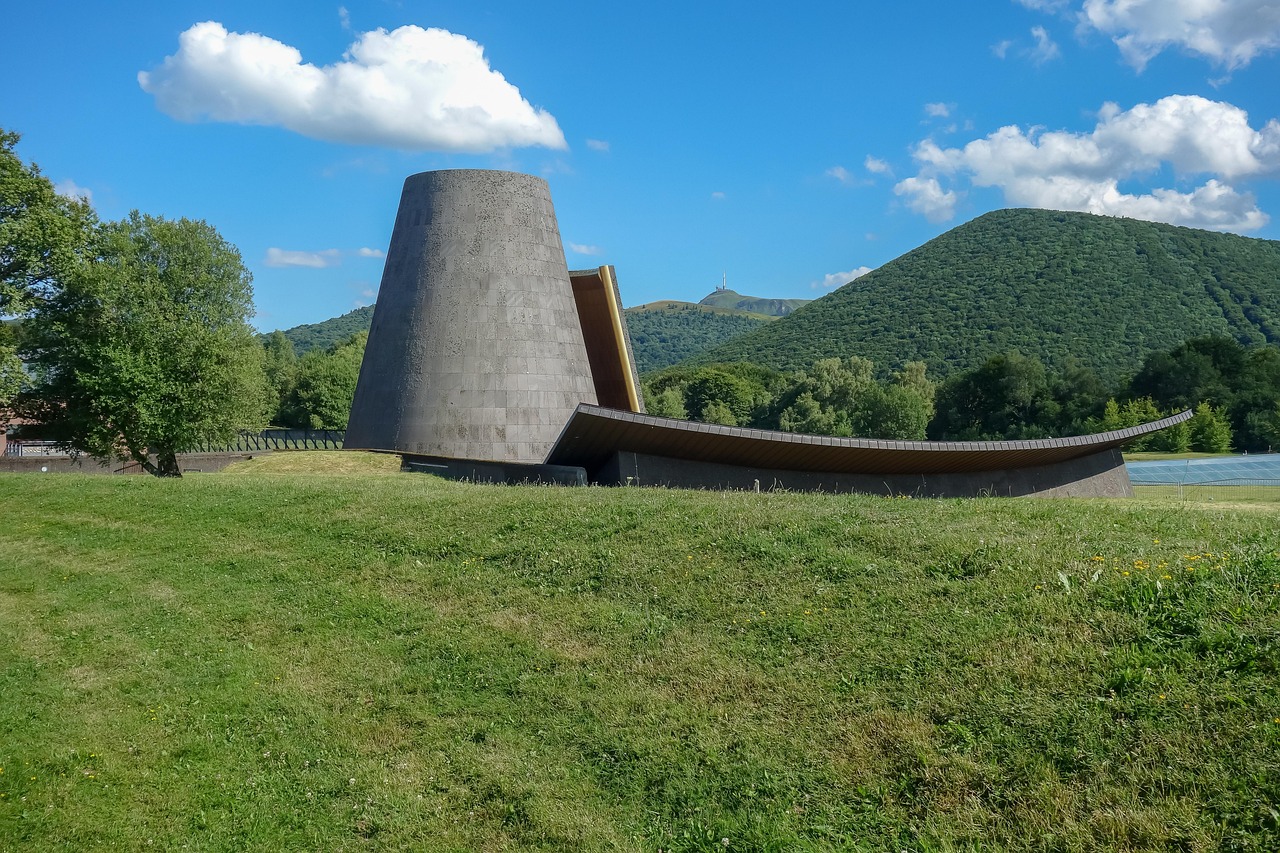
Why Visit Vulcania? What Makes This “Volcano Park” Special
Vulcania is often described—too simply—as a “volcano theme park” in the Auvergne region of central France. That undersells it. Built directly into an old volcanic plateau in the Chaîne des Puys, it’s a hybrid of science museum, immersive attraction, and landscape art installation. Imagine a place where you can plunge into a volcanic crater, ride through magma chambers on motion platforms, watch lightning storms erupt on a 4D screen, then step outside to picnic on a grassy ridge formed by real eruptions millions of years ago.
I live in Clermont-Ferrand, about 25 minutes away, and have visited Vulcania a dozen or so times since 2016—most recently in spring 2026 to check the latest exhibits and evening shows. I’ve seen it in driving rain, in July heatwaves, on crisp October days when the Puy de Dôme is dusted with early snow. What keeps pulling me back is the balance: it’s genuinely educational without being dull, entertaining without being loud and plastic. It’s a place where families, geology nerds, photographers, and casual travelers can all find their angle.
For travelers planning 1 day in Vulcania, or stretching to a 2 day itinerary for Vulcania or even a 3 day itinerary for Vulcania combined with the surrounding volcanoes, this guide is designed as a full, boots-on-the-ground travel guide for Vulcania in 2026. We’ll cover the must-see attractions, the quieter corners, how to time your visit to dodge school groups, where to eat nearby (and what to absolutely avoid), and how to fold Vulcania into a broader Auvergne road trip.
Table of Contents
- Why Visit Vulcania?
- Vulcania at a Glance in 2026–2027
- 1–3 Day Itineraries for Vulcania
- Key Sections, Viewpoints & Adjacent Sites
- 1. The Iconic Cone & Underground Galleries
- 2. Explosive Rides & Simulators
- 3. The Volcano Exhibition Gallery
- 4. The Outdoor Park, Geysers & Play Zones
- 5. The Panoramic Balloon & Chaîne des Puys Views
- 6. Puy de Dôme & Panoramic Train
- 7. Lemptégy Volcano Open-Air Site
- 8. Clermont-Ferrand & Cultural Add-Ons
- Eating Around Vulcania
- Vulcania After Dark & Seasonal Programs
- Events & What’s New in 2026–2027
- Cultural Etiquette & Local Customs
- Practical Travel Advice for Vulcania
- Tickets, Opening Hours & On-Site Logistics
- Summary & Final Recommendations
Vulcania at a Glance in 2026–2027
Vulcania sits about 15 km northwest of Clermont-Ferrand in the Parc Naturel Régional des Volcans d’Auvergne. It opened in 2002 and has steadily reinvented itself with new attractions and updated scientific content. As of 2026, you can expect:
- A compact but dense park: you walk mostly indoors through interconnected underground galleries, with outdoor paths, kids’ play areas, and viewpoints on the volcanic plateau.
- A mix of classic and newer experiences: 4D films, motion rides, interactive science exhibits, and hands-on experiments, many refreshed since 2023.
- Strong family orientation: this is one of the most family-friendly things to do in Vulcania and the wider Auvergne, with lots for ages 4–14, but enough depth to keep adults engaged.
- Seasonal evening shows: summer “nocturnes” with fireworks, projections and sometimes live performances—worth planning around if you can.
In 2026–2027, the park is leaning harder into climate and planetary science—more about Earth’s systems, space weather, and sustainable living. Expect several temporary exhibits and events tied to climate, which makes this an unusually timely destination for travelers curious about science, environment and geology.
Recommended 1–3 Day Itineraries for Vulcania
If you’re debating between a 1 day itinerary for Vulcania, stretching to 2 days in Vulcania, or folding it into 3 days in Vulcania plus the surrounding volcanoes, here’s how I’d structure it, based on several trial-and-error trips with friends, visiting cousins, and one extremely enthusiastic eight-year-old.
Day 1 – Iconic Vulcania Highlights (Essential 1 Day Itinerary)
When I host first-time visitors, this is the blueprint I use for a 1 day itinerary for Vulcania. It hits the best-known attractions without rushing, and weaves in food, a bit of fresh air, and at least one wow-moment viewpoint.
Morning: The Approach & First Descent Underground
I like to arrive just before opening—usually 9:30–10:00 depending on season (always confirm Vulcania opening hours on the official site; they shift slightly each year). The drive from Clermont-Ferrand takes 20–25 minutes: follow signs for “Vulcania / Puy de Dôme” out of the city, then you climb gently into a forested plateau. The moment the conical structure appears through the trees, visitors always go quiet—this is Vulcania’s “oh, wow” establishing shot.
From the parking lot, you walk a few minutes along a landscaped path. On clear mornings you can already see the rounded silhouettes of neighboring volcanoes. I usually pause here to set expectations: Vulcania is more about immersive learning and atmosphere than adrenaline; think “science center with rides” more than “roller coaster park.”
First Stop: The Cone & Central Crater
Head straight toward the cone—an architectural volcano clad in golden volcanic stone. Entering feels a bit like stepping into a Bond villain’s lair. The main hall drops dramatically into the ground, with ramps spiraling around a tall central void known as the crater.
On my last visit in May 2026, we lingered here for a good 20 minutes: I always recommend taking the time to orient yourself, grab a park map, and check the schedule board for showtimes and any closures. If you only have 1 day in Vulcania, timing is everything. Circle your must-see attractions, then work roughly clockwise to avoid backtracking.
Mid-Morning: Hit One Big Ride Before Crowds
By 11:00, school groups from across France descend in waves. Use the first hour to knock out one of the major attractions with the longest lines:
- Earthquake or eruption simulator (names sometimes change with refurbishments): a motion-platform experience that drops you into an erupting volcano or seismic scenario.
- Signature 4D film: a high-production show about Earth’s formation or extreme natural phenomena with seats that move and environmental effects.
On a busy Saturday in July 2025, we made the mistake of saving these for mid-afternoon and spent 45 minutes in queue. In spring 2026, going straight there, we waited 10 minutes. If you’re doing a tight 1 day itinerary for Vulcania, that difference really matters.
Late Morning: Explore the Core Galleries
Once you’ve ticked off a headliner, slow down and wander the underground galleries. These are carved directly into the rock, which gives everything a cool, cavernous feel. Exhibits are bilingual French/English, with occasional German and Spanish summaries.
This is where Vulcania shines for mixed groups: kids can spin wheels, trigger mini-eruptions, and race lava flows, while adults dive into surprisingly in-depth material about tectonic plates and volcanic hazards. I like to follow the paths that lead down toward the lowest levels—you’ll hit interactive models, seismic stations, and sometimes temporary exhibits on climate or deep Earth research.
Lunch: On-Site Buffet vs. Picnic Strategy
For lunch, you have three basic options:
- Self-service restaurant inside: decent, family-oriented, and efficient. Think pasta, grilled meats, salads. Better than many theme parks, but not a culinary highlight of France.
- Snack stands: fries, sandwiches, crêpes, ice cream. Fine for a quick bite but lines spike at 12:30.
- Bring a picnic: my preferred approach. Vulcania has clearly marked picnic areas, including some with partial views of the Chaîne des Puys. Local supermarkets in Clermont-Ferrand or Orcines carry Auvergne cheeses (Saint-Nectaire, Cantal, Bleu d’Auvergne), charcuterie, and good bread—much nicer than standing in line for a lukewarm burger.
I usually aim for an early lunch around 11:45 to avoid queues, then move outdoors for a bit of fresh air. Even in summer, the plateau can be breezy; bring a light layer.
Afternoon: Outdoor Park & Family-Friendly Areas
After lunch, I steer everyone outside. The shift from underground galleries to open sky is a relief, especially for younger kids. The outdoor park features:
- Water features and mini-geysers that erupt on a schedule—kids love racing to stand in the right spot.
- Playgrounds and climbing structures with a volcano theme—lava tunnels, rope bridges, slides.
- Short interpretive trails that explain how the plateau was formed.
This part is particularly good for families and anyone feeling “museum fatigue.” On hot summer days, hats and sunscreen are essential; there’s some shade but not enough for midday sun. I often bring a small towel or spare shirt for children who get drenched in the play fountains.
Late Afternoon: Second Wave of Indoor Attractions
By 15:30–16:00, many families with small children start to fade, and lines for some shows thin out. This is your chance to catch another major attraction or two. I like to prioritize experiences that are unique to Vulcania and less easily replicated elsewhere:
- Immersive film on the Chaîne des Puys that traces local eruptions and links them to the landscapes you’re seeing outside.
- Interactive disaster-preparedness exhibits that, surprisingly, are often a hit with teenagers.
If you’re into photography, this is also a good moment to pop back up to the cone and courtyard to catch late-afternoon light slanting across the stone. The mix of golden rock, blue sky, and dark galleries makes for striking images.
Evening: Sunset & Optional Night Show
If you’ve chosen a day when Vulcania offers late opening and evening shows (usually selected summer dates and holiday periods), don’t rush off. The plateau at golden hour is one of my favorite “after dark” preambles in Auvergne.
On one particularly clear August evening, we walked a short path behind the park’s outer edge (signed local trails) and watched the light fade over a chain of gentle volcanic domes, their silhouettes layered in soft blues and purples. The night show—projections on water screens, fire effects, and fireworks—felt like a natural extension of the day’s theme rather than a separate spectacle.
For a 1 day itinerary for Vulcania, I’d call it a success if you’ve: ridden at least two major simulators, explored a good chunk of the galleries, spent time outdoors, and seen the park in both day and evening light.
Day 2 – Deeper Science, Trails & Viewpoints (Perfect 2 Day Itinerary)
When friends insist on a 2 day itinerary for Vulcania—which I actually recommend for science fans or relaxed families—we use Day 2 to slow down, revisit favorites, and venture further into the volcanic landscape around the park.
Morning: Start with a Quiet Gallery or Temporary Exhibit
On your second morning, resist the urge to dash back to the big rides. Instead, head for the quieter exhibition halls as soon as they open. In 2026, Vulcania is hosting rotating exhibits on topics like space weather, planetary geology, and climate resilience.
Last April, I spent nearly an hour in a hall dedicated to mapping volcanoes on Mars and Venus. Half the time I was alone; everyone else was still queuing for motion rides. If you care about the science side, this is your moment.
Late Morning: Re-Ride Favorites with Strategy
By your second day, you’ll know which rides your group loved. Pick one or two to repeat and slot them in before lunch. With two days, you can afford to stand in a 30-minute line without feeling like you’re sacrificing half your experience.
On my most recent 2-day visit with visiting cousins, we bracketed the day with two different simulators—one mid-morning, one late afternoon—and spent the intervening hours on exhibits and walking.
Lunch: Try a Different On-Site Venue or Picnic Spot
If you picnicked on Day 1, maybe sample the on-site restaurant on Day 2 just for variety. Or bring a second picnic but choose a different seating area—there are a few semi-hidden benches near the edges of the outdoor park where you can eat with more peace and better views of the surrounding forest.
Afternoon: Short Hikes & Local Landscape
Here’s where a 2 days in Vulcania itinerary really wins: you can step outside the park grounds and explore the actual volcanic terrain.
There are several waymarked trails that start within a short drive of Vulcania—check with the park’s information desk; they often have updated maps. Two good options:
- Easy loop through the surrounding forest (1–1.5 hours): gentle, kid-friendly, with occasional interpretive panels on local flora and geology.
- Short climb to a nearby viewpoint (1.5–2 hours): not as spectacular as the Puy de Dôme, but wonderfully quiet. On one grey November afternoon, I didn’t see another soul for the entire circuit.
Even if you’re not a dedicated hiker, walking a bit in this landscape helps contextualize everything you saw inside Vulcania’s exhibits. You can feel the rounded contours underfoot, see the basalt blocks in farm walls, and notice how the volcanoes shape weather and vegetation.
Late Afternoon: Calm Exploration & Gift Shop (Yes, Really)
Back at Vulcania, late afternoon on Day 2 is when I finally wander the gift shop properly. It’s one of the rare theme-park shops where I’d actually recommend buying a book or two—there are well-chosen titles on volcanoes, geology, and local history, plus clever science kits for kids.
This is also a nice time for lingering at favorite exhibits you rushed through on Day 1. Without the pressure of “seeing everything,” you can let curiosity lead. On one visit, I got pulled into a live demonstration about volcanic gases and spent 40 unexpected minutes chatting (in French and English) with a geologist from Clermont-Ferrand University who was leading the session.
Evening: Return to Clermont-Ferrand for Dinner
For a second evening, I usually recommend leaving the plateau and having dinner in Clermont-Ferrand—maybe on Place de la Victoire under the black lava-stone cathedral. It’s a way to close out your 2 day itinerary for Vulcania with a more urban note, while still feeling connected to the region’s volcanic identity (the cathedral itself is built from local volcanic stone).
Day 3 – Volcanoes, Villages & Day Trips (Extending to 3 Days in Vulcania Region)
When travelers ask about a 3 day itinerary for Vulcania, I always clarify: no, you probably don’t need three full days inside the park itself. But 3 days in Vulcania’s region—Vulcania plus the neighboring volcanic sites—is ideal. Day 3 is about getting beyond the park and meeting the real volcanoes.
Morning: Puy de Dôme – The Iconic Summit
The Puy de Dôme is the celebrity of the Chaîne des Puys: a near-perfect volcanic dome with a panoramic view that includes Vulcania’s plateau. It’s a must if you’re building a broader travel guide for Vulcania region itinerary.
From Vulcania or Clermont-Ferrand, drive to the Puy de Dôme base station (Panoramique des Dômes). Park, then either:
- Take the panoramic train (15–20 minutes to the top), or
- Hike up (45–60 minutes on a well-marked path, steeper but manageable for reasonably fit walkers).
On my last spring ascent, we took the train up and walked down—a nice compromise. At the summit, set aside at least 90 minutes to wander the path encircling the top. You’ll see the entire Chaîne des Puys lined up like a procession of green bumps, with Vulcania tucked into the mid-distance. Interpretive panels point out individual volcanoes and explain their eruption types.
On clear days, the view stretches far across the Limagne plain and deeper into Massif Central. Couples often linger here—there’s something quietly romantic about watching clouds drift across ancient craters.
Lunch: Summit Café or Picnic
There’s a café at the summit with basic options and a priceless view. It’s not gourmet, but for a coffee and snack it does the job. I often bring a picnic instead; there are benches and grassy patches where you can eat while scanning the horizon for Vulcania’s cone.
Afternoon: Lemptégy – Inside a Volcano
In the afternoon, drive to Volcan de Lemptégy, an open-air volcanic site carved by former quarrying. Here, unlike at Vulcania, you literally walk through exposed volcanic conduits and lava flows. Guided tours (often French-first, with audio guides in English and other languages) explain each layer.
On my first visit, I expected a somewhat dry geology lecture; instead I found myself genuinely moved. Standing on the floor of a volcanic vent, with rusted quarry machinery still in place, you get a very tangible sense of the deep time Vulcania’s exhibits try to convey.
Evening: Back Roads & Village Dinners
For your final evening in a 3 day itinerary for Vulcania, I like to take the back roads through small Auvergne villages like Orcines or Royat, then settle into a traditional auberge for dinner. Look for menus featuring truffade (potato and cheese dish), lentils from Puy-en-Velay, and local beef.
This is where the region’s volcanic identity shifts from spectacle to background hum: the dark stones in village houses, the mineral water from nearby springs, the gently rolling fields that were once lava flows. It’s a quietly satisfying way to close a three-day arc that started deep underground at Vulcania.
Key Sections, Viewpoints & Adjacent Sites: In-Depth
Below are eight of the most important places and experiences in and around Vulcania, each with enough detail to plan time, understand the context, and know what to look for as you walk through.
1. The Iconic Cone & Underground Galleries
The cone is Vulcania’s calling card—the image you’ve probably already seen in brochures. Designed by architect Adrien Fainsilber, it’s not just a decorative shell; it’s your main portal into the park’s underground world.
Approach & First Impressions
You reach the cone via a gently sloping plaza. The first time I brought my parents, my father stopped halfway and just stared: “You didn’t tell me it was this dramatic.” The cone rises about 28 meters above ground but extends much deeper below. Its cladding of local volcanic stone shifts color throughout the day—grey in morning, honey-gold in late afternoon, almost black in rain.
Descent into the Crater
Inside, ramps and stairs spiral you downward around a central void. This is where visitors first feel that Vulcania is different: you’re not being funneled straight to a ride; you’re being asked to descend, to feel the volume of rock above your head. Along the way, look for subtle design touches—etched lava patterns in the metal rails, glowing fissures in the walls mimicking magma cracks.
What to Look For
- Orientation panels showing a cross-section of the entire park, with your current level highlighted. It’s worth memorizing roughly where the major attractions sit; it makes navigation later easier.
- Light wells cut through the structure, bringing shafts of daylight deep underground. On sunny days, they create stark, almost cathedral-like beams.
- Sound design: the subtle rumble you hear is intentional, echoing distant tectonic movement without being intrusive.
Time Needed & Tips
Allow 20–30 minutes here at the start of your visit, especially on your first day. Don’t rush; this descent sets the tone for everything that follows. If you’re with kids, make a game of spotting the different rock types in the walls. Photographers should come back later in the day as well; the changing light makes the same angles feel entirely different by late afternoon.
2. Explosive Rides & Simulators
These are Vulcania’s adrenaline anchors—the experiences that convince skeptical teenagers and ride-loving adults that a “volcano park” can compete with more traditional theme parks.
The Earthquake/Eruption Simulator
While the branding changes every few years, the core idea remains: you’re seated in a “safe” environment (a research base, a laboratory, a viewing platform) when a catastrophic event hits. The floor shakes, the room tilts, alarms blare. Done badly, this would be cheesy; Vulcania leans on real seismological data and plausible scenarios, which gives the spectacle more weight.
The first time I brought a friend who works in risk management, she came out pale but impressed: “That’s the first time I’ve felt, viscerally, what a mid-sized quake could do to a modern building.”
4D Films & Motion Platforms
- Planetary formation films that swoop you through early Earth, asteroid belts, and magma oceans.
- Extreme weather shows combining volcanoes, storms, and tsunamis, with wind and water effects in the theater.
From a content perspective, these are simplified, but for non-specialists they’re an engaging overview. If you’re prone to motion sickness, sit toward the back and avoid seats at the very edges, where motion feels more pronounced.
Best Strategy
These attractions are among the must-see attractions in Vulcania for many visitors, so lines can spike to 30–50 minutes on peak days. To minimize waits:
- Do one immediately after opening.
- Check showtimes and plan to arrive 15–20 minutes early.
- On rainy days (when everyone stays indoors), aim for lunchtime or near closing; lines sometimes thin then.
Families with small children should double-check height restrictions and intensity ratings posted at each entrance. Staff are generally good about advising if something might be too overwhelming.
3. The Volcano Exhibition Gallery
This is the intellectual heart of Vulcania: a series of interconnected rooms that explain how volcanoes work, why they erupt, and how humans live with them. It’s easy to rush through on your way to rides; I’d argue it’s worth at least an hour of focused attention.
Layout & Flow
The gallery is roughly chronological and thematic: formation, types of volcanoes, eruption styles, monitoring, and human societies. Hands-on stations let you tweak parameters (gas content, viscosity, slope) to see how eruptions change.
Highlights
- Interactive eruption table: you adjust sliders and watch mini-eruptions respond.
- Seismic monitoring station: live feeds from real seismographs around the world, including some in the Auvergne.
- Case studies of famous eruptions—Vesuvius, Pinatubo, Eyjafjallajökull—paired with personal testimonies and archival footage.
Personal Take
On quieter weekdays outside school holidays, I’ve had this gallery almost to myself. Once, in October 2024, I ended up chatting with a retired volcanologist volunteering in the hall; he pointed out subtle design elements in the exhibits I’d missed on previous visits and offered context that made later rides feel richer. It’s a reminder that Vulcania is not just about spectacle; there’s serious science woven through.
4. The Outdoor Park, Geysers & Play Zones
Outside, Vulcania shifts gears. The mood is looser; children run, water sprays, adults sip coffee on benches. But the design remains intentional, echoing geothermal landscapes in miniature.
Key Features
- Timed mini-geysers that spout on a regular schedule, surrounded by warning signs and squealing kids.
- Shallow water channels where kids can dam and divert flows, a tactile lesson in hydrogeology.
- Topographic models of the Chaîne des Puys, often with buttons to light up specific volcanoes.
For Families
If you’re traveling with young children, this area can easily soak up 2–3 hours across a day. I usually treat it as a pressure valve: when attention spans for exhibits wane, we head outside. Bring a change of clothes for water-loving kids and a small towel; there’s nothing worse than re-entering cool underground galleries in damp cotton.
For Adults & Couples
Don’t skip this just because you’re not traveling with children. The outdoor park offers some of the nicest vantage points for photographing both the cone and the wider landscape. It’s also where you feel the sky again after time underground. On my solo visits, I often end up here with a book and a thermos of coffee, watching clouds scud over the volcanic horizon.
5. The Panoramic Balloon & Chaîne des Puys Views
When operational (it’s weather-dependent and occasionally paused for maintenance), the tethered panoramic balloon is one of the most quietly thrilling things to do at Vulcania. You ascend in a large gondola, lifted by a helium balloon anchored to the ground, until the plateau and park lie like a model below you.
Why It’s Worth It
From the air, you finally see how Vulcania fits into the broader volcanic field. The cone becomes a small golden spike in a sea of green. The Chaîne des Puys arcs across the horizon. On clear days you can trace individual crater rims and lava flows.
Timing & Tips
- Check the day’s status at the entrance or information desk; wind, storms, or technical issues can shut it down.
- Go in late afternoon for the best light and longest shadows on the volcanoes.
- Dress for wind; it’s noticeably cooler aloft.
On a calm June evening in 2023, I rode with a mixed group of locals and tourists. Everyone fell into the same awed silence as we rose. A little boy from Lyon pointed toward the Puy de Dôme and whispered, “C’est la maman volcan” (“That’s the mother volcano”)—a surprisingly apt metaphor.
6. Puy de Dôme & Panoramic Train
Though technically separate from Vulcania, the Puy de Dôme is so closely linked geographically and thematically that I consider it part of any complete travel guide for Vulcania.
Getting There
From Vulcania, it’s a 20–25 minute drive to the Panoramique des Dômes base station. There’s a large paid car park. Public transit options from Clermont-Ferrand connect to the base as well, but schedules are limited outside summer—check the latest timetables if you’re car-free.
The Train Ride
The electric cog railway winds around the volcano’s flanks, offering progressively bigger vistas. Sit on the valley-facing side (ask staff which that is when boarding) for the best views. In under 20 minutes you’re atop one of France’s most famous summits.
At the Summit
- 360° walking path encircling the summit, with interpretation panels.
- Remains of a Roman temple dedicated to Mercury, adding an archaeological layer to your volcano day.
- Paragliders launching on good-weather days, adding color to the sky.
Allow 1.5–2 hours at the top minimum; more if you love photography or slow wandering. On one winter visit, ice crystals rimed every fence post and the wind carved sculpted drifts across the path—a reminder that volcanoes can be as much about weather as fire.
7. Lemptégy Volcano Open-Air Site
Volcan de Lemptégy complements Vulcania beautifully. Where Vulcania is immersive and architectural, Lemptégy is raw and open.
History & Significance
Lemptégy was once a quarry extracting volcanic materials for construction. Over time, scientists realized the quarry walls revealed an exceptional cross-section of volcanic structures—vents, dykes, scoria. Quarrying ceased; interpretation began.
The Visit
Your visit may combine a guided walking tour with optional train-like wagons during peak season. Guides explain each layer, often with physical samples you can touch. Audio guides in multiple languages are available; I’ve tested the English version and found it clear and informative.
Personal Impressions
I’ve been three times, in three different seasons. In summer, the red and black rocks glow against bright green vegetation. In autumn, the site feels quieter, more introspective. In early spring 2026, with patches of snow lingering in shaded crevices, the contrasts were stark and beautiful.
If you’re doing a 3 day itinerary for Vulcania, I’d dedicate half a day to Lemptégy. The combination of both sites gives you a well-rounded understanding: one focuses on explanation and simulation, the other on direct observation.
8. Clermont-Ferrand & Cultural Add-Ons
Clermont-Ferrand is the urban anchor for a visit to Vulcania: a university city with a strong volcanic identity and a surprisingly lively cultural scene for its size.
Volcanic Architecture
The Cathedral of Notre-Dame-de-l’Assomption dominates the skyline, built almost entirely from dark lava stone. On sunny days, its spires look almost black against the sky; on cloudy days, it melts into the weather. Inside, colored light filters through stained glass onto basalt columns—a quieter echo of the light wells in Vulcania’s cone.
Museums & Culture
- Bargoin Museum: archaeology and textiles, with occasional exhibits on local prehistory that tie indirectly into volcanic landscapes.
- L’Aventure Michelin: a museum about the Michelin company (born here), including sections on mobility and exploration that resonate with Vulcania’s themes of Earth and travel.
Streets & Squares
For a soft cultural landing after a day at Vulcania, wander Place de Jaude and Place de la Victoire. Terraces here are prime spots for people-watching and trying Auvergne wines. On summer evenings, street musicians sometimes set up near the cathedral, their music echoing softly off dark stone.
Eating Around Vulcania: Where to Refuel
Vulcania’s immediate surroundings are mostly forest and fields, so don’t expect a dense ring of restaurants right outside the gates. That’s not a bad thing: it nudges you toward more authentic places a short drive away.
On-Site Options: Manage Expectations
Inside the park, food is solid but unremarkable. It’s convenient if you’re juggling kids or tight schedules, but if you care about food—and you’re in France, after all—plan at least a couple of meals off-site.
Nearby Villages & Where Locals Actually Go
- Orcines: closest cluster of everyday eateries. A few bistros and brasseries serve staples like steak-frites, salads, and Auvergne classics. I’ve had some very decent lunches here between morning and afternoon sessions at Vulcania.
- Royat & Chamalières: spa towns just outside Clermont-Ferrand, with more atmospheric restaurants in Belle Époque buildings. Good for a slightly dressier dinner after a day in the park.
- Clermont-Ferrand: best range overall, from modern bistros to traditional bouchons-style places. For volcanic flair, look for dishes featuring truffade (potatoes and Tome fraîche), aligot, and local cheeses.
What to Bring with You
- Reusable water bottle: there are fountains and taps where you can refill.
- Snacks: nuts, fruit, simple sandwiches. Great for kids between attractions.
- Picnic basics: if you’re planning a full picnic, pick up supplies in Clermont-Ferrand or Orcines before heading up to Vulcania; there’s no substantial supermarket right at the park.
On my most relaxed visits, we’ve made lunch itself an experience: a spread of Cantal cheese, cured ham, a local baguette, and cherries in season, eaten slowly on a bench under the trees outside Vulcania’s main structure. It beats queuing for fast food every time.
Vulcania After Dark & Off-Hours: When the Park Transforms
Most travelers experience Vulcania during mid-day, amid school groups and family crowds. If you can, deliberately aim for off-hours: early morning arrivals, late afternoon lingerings, and especially the seasonal night openings.
Golden Hour & Blue Hour
In the hour before sunset, the cone’s volcanic stone glows warmly, and long shadows accentuate its jagged contours. This is the best time for photography—both of the architecture and the surrounding Chaîne des Puys. Blue hour, when the sky deepens and the park lights switch on, gives the cone an almost sci-fi aura.
Summer Night Shows (Nocturnes)
Typically from July to late August, selected evenings feature extended opening hours and a nighttime show—often combining projections, fire, and fireworks. In 2026, the program is slated to lean into climate themes, with visuals tracing Earth’s changing face over geologic and human time.
On a hot August night in 2022, I watched one of these shows from the back of the viewing area, slightly elevated. The mix of music, imagery, and the physical backdrop of real volcanoes just beyond the park made it feel less like pure entertainment and more like a meditation on our planet’s power.
Off-Season Quiet
Outside school holidays and summer, Vulcania can feel almost contemplative in the last hour before closing. On a drizzly Wednesday in March 2025, I practically had certain galleries to myself. The low visitor numbers made the gentle rumble of sound design more noticeable and the cone’s vastness more striking.
Events & What’s New in 2026–2027
Vulcania constantly tweaks its programming, but 2026–2027 brings a few notable additions and events, many already teased in regional tourism materials.
Major Upcoming Events (2026–2027)
- “Volcanoes & Climate Futures” Exhibition (2026 season): a temporary but substantial exhibit exploring how volcanic activity interacts with Earth’s climate system, from ancient mega-eruptions to modern aerosol research.
- Enhanced Summer Night Shows (2026–2027): new projection sequences and updated soundtrack, with more emphasis on the Chaîne des Puys’ UNESCO World Heritage status.
- Science Festivals & Conferences: Vulcania periodically hosts science outreach events with researchers from Clermont-Ferrand and beyond. If your visit coincides with one of these, you might catch extra talks or demonstrations.
Travel Scene Changes for 2026
- Improved shuttle connections (planned for summer 2026) between Clermont-Ferrand, Vulcania, and Puy de Dôme on peak days—check closer to your trip for final schedules.
- Incremental digital upgrades to exhibits, with more augmented-reality elements via the official Vulcania app (bring a charged phone and consider a local SIM for data).
Cultural Etiquette & Local Customs Around Vulcania
While Vulcania itself is very international and family-friendly, it sits in a region with a quietly proud local culture. A bit of awareness goes a long way.
Basic French Politeness
- Always greet staff with a “Bonjour” (daytime) or “Bonsoir” (evening) before launching into questions, even in English.
- “S’il vous plaît” (please) and “Merci” (thank you) are expected and appreciated.
- Staff at Vulcania are used to international visitors; many switch to English readily, but starting in French shows respect.
Queuing & Shared Spaces
The French queue in a generally orderly fashion, though lines can bunch around popular rides. Hold your place calmly; aggressive pushing is frowned upon. In shared exhibit spaces, it’s customary to keep voices moderate and not to block entire paths for extended photo sessions.
Eating Customs
- Picnics are welcome in designated areas; avoid sprawling across paths or sitting on fragile landscaping.
- Restaurant timing: lunch service usually runs roughly 12:00–14:00; dinner from 19:00 onwards. Outside these windows, full meals may not be available off-site.
Respect for Nature
Both Vulcania and the surrounding Parc des Volcans emphasize environmental stewardship. Stick to marked trails, don’t pick plants, and pack out any picnic trash. Locals are proud of the region’s UNESCO recognition and react badly to visible disrespect of the landscape.
Practical Travel Advice for Vulcania in 2026
How to Get There
- By car: The most flexible option. From Clermont-Ferrand, follow signs to “Vulcania / Puy de Dôme.” The drive is well-marked and takes around 25 minutes. Large paid car parks are adjacent to the park.
- By public transport: Seasonal shuttles and regional buses run from Clermont-Ferrand to Vulcania, especially in summer and during school holidays. Schedules are limited outside peak season; check the regional transport website or tourist office before relying on this.
- By tour: Some agencies offer combined Vulcania + Puy de Dôme day trips from Clermont-Ferrand, useful if you don’t want to drive.
Getting Around Once There
Inside Vulcania, everything is walkable. Elevators connect different levels for those with mobility issues, but there are still some sloped passages. Outside, a car makes it far easier to combine Vulcania with Puy de Dôme, Lemptégy, and nearby villages in 1–3 days.
Saving Money
- Book online in advance for discounted Vulcania tickets and to secure dates in busy periods.
- Look for combo deals (Vulcania + Lemptégy, or Vulcania + Puy de Dôme) that sometimes appear via regional tourism offices.
- Picnic instead of buying every meal inside the park; even one picnic lunch can save a family a substantial amount.
- Stay in Clermont-Ferrand rather than in more touristy spa towns if budget is tight; you’ll find more mid-range hotel deals.
SIM Cards & Connectivity
France has good mobile coverage, though data can be patchy in some rural pockets. For short stays:
- Pick up a prepaid SIM from Orange, SFR, Bouygues, or Free in Clermont-Ferrand. Orange often has the most reliable coverage in the region.
- eSIM options are increasingly available; check your phone compatibility.
- Vulcania offers Wi-Fi in some areas, but don’t rely on it for heavy use; having your own data is helpful for maps and translation.
Car Rental & Driving
- Car rental is available at Clermont-Ferrand Auvergne Airport and in the city center.
- Foreign driver’s licenses from most non-EU countries are accepted for tourist stays; an International Driving Permit (IDP) is recommended, especially if your license is not in Latin script.
- Roads to Vulcania are well-maintained but can be foggy or icy in winter; drive cautiously in bad weather.
Visa Requirements
France is in the Schengen Area. Nationals of the EU/EEA and many other countries can enter visa-free for short stays (usually up to 90 days). Some travelers will need a Schengen visa in advance. Always check current requirements with your local French consulate or embassy before planning your trip.
Best Seasons & Weather
- Spring (April–June): My favorite time. Fresh green landscapes, wildflowers, moderate crowds, and milder temperatures—ideal for combining Vulcania with hikes.
- Summer (July–August): Peak season. Long days, night shows, family-friendly atmosphere. Also peak crowds and higher prices; book accommodation and tickets well in advance.
- Autumn (September–October): Beautiful foliage, quieter weekdays, often still pleasant weather. Great for couples and photographers.
- Winter (November–March): Limited opening days and hours; some attractions may be closed. The Chaîne des Puys can be magical under snow, but conditions are more unpredictable. Check Vulcania’s calendar carefully.
Vulcania Tickets, Opening Hours & On-Site Logistics
Ticket Types & Timed Entry
- Standard day tickets: Grant access to all regular attractions, shows, and exhibits (some seasonal experiences may have supplements).
- Reduced rates for children, students, seniors, and sometimes off-peak days.
- Family packs and multi-day options may be available—check the official website for 2026 pricing.
In busy periods (summer, French school holidays), Vulcania may use dated or timed entry slots to control crowding. Reservations typically open several months in advance and prime days can sell out, so book early if you have fixed travel dates.
Opening Hours & Peak Times
Typical patterns (subject to annual adjustment):
- Spring & autumn: 10:00–18:00 on selected days.
- Summer: 9:30–19:00 or later, with occasional night openings until around 22:30–23:00 for shows.
- Winter: often closed or open only for special events.
Peak hours inside the park are usually 11:00–16:00. To avoid the worst of the queues, arrive at opening, take a longer lunch, and/or stay into the evening if possible.
Dress Code & Behavior Rules
- No formal dress code, but comfortable walking shoes are essential; you’ll be on your feet most of the day.
- Carry a light jacket or sweater; underground areas can feel cool even in summer.
- Backpacks are generally allowed but may be checked; large luggage is not practical or welcome.
- Smoking is restricted to designated outdoor areas.
Photography Restrictions
- Photography is allowed in most galleries and outdoor spaces; avoid flash where signs request it.
- Rides and 4D cinemas often prohibit photography and filming for safety and copyright reasons—respect signage and staff instructions.
Accessibility
Vulcania strives to be accessible, with elevators, ramps, and adapted restrooms. That said, some sloped corridors and low lighting can be challenging for those with mobility or visual impairments. Check the official accessibility page for detailed information, and don’t hesitate to ask staff for assistance with boarding rides or navigating queues.
Security & Queue Times
- Bag checks at the entrance are standard; allow a few extra minutes at opening and around midday.
- Queue times vary widely by season and weather. In high season, plan for 20–40 minutes for top attractions; in shoulder season weekdays, waits can be under 15 minutes.
Summary & Final Recommendations: Making the Most of Vulcania
Vulcania is more than a stop on a list of things to do in Vulcania; it’s a lens through which to see an entire volcanic landscape. After multiple visits over the years, a few key takeaways stand out:
- One day in Vulcania is enough to experience the highlights—cone, core galleries, at least two major rides, and the outdoor park—especially if you arrive early and stay late.
- Two days in Vulcania (or one and a half days) let you slow down, revisit favorites, and soak up more of the science without rushing, ideal for families and enthusiasts.
- Three days in Vulcania’s region (Vulcania + Puy de Dôme + Lemptégy and nearby villages) is the sweet spot if you want a rounded understanding of volcanoes in both theory and practice.
- Best time to visit Vulcania for most travelers is late spring or early autumn: milder weather, manageable crowds, and beautiful landscapes. Summer adds night shows and a buzzing atmosphere but demands more advance planning.
- Combine science and scenery: don’t treat Vulcania as an isolated theme park. Pair it with real walks in the Chaîne des Puys, meals in Clermont-Ferrand, and at least one summit viewpoint.
If you come with curiosity—about Earth, about landscapes, about how humans live with powerful natural forces—Vulcania will reward you. It’s a place where children learn to pronounce “tectonic,” where adults rediscover a sense of planetary awe, and where, if you time it right, you can watch the sun set over a line of sleeping volcanoes after a day spent exploring their fiery past.