Why Visit the Black Forest High Road?
The Black Forest High Road – the Schwarzwaldhochstraße, or simply the B500 – is one of Germany’s classic scenic routes. It runs along the spine of the northern Black Forest from the spa town of Baden‑Baden to the high plateau near Freudenstadt, rarely dropping below 800–1,000 meters. On a clear day, the views stretch all the way to the Vosges in France and the distant Alps. On a misty day, you drive through rolling waves of cloud, spruce silhouettes, and the smell of resin and woodsmoke.
I’ve driven, ridden, and occasionally trudged along this road in every season over the last decade – most recently in spring and autumn 2026 – and it has never felt the same twice. One year it’s a sun‑drenched motorcycle paradise, the next it’s a snow‑walled corridor to snowshoe trails and steaming saunas. Families come for easy lakeside walks, couples for quiet guesthouses and stargazing, and hikers and cyclists for some of the most rewarding trails in southwest Germany.
What makes the Black Forest High Road special isn’t just the postcard views. It’s the rhythm: short stretches of gorgeous tarmac, followed by a pull‑off with a sweeping panorama, then a traditional inn serving venison stew and Black Forest cake, then a forest path leading to a lonely tower or a silent moor. It’s the kind of road that tempts you to stop every ten minutes “just for one more view.”
In this long‑form travel guide for Black Forest High Road (2026), I’ll walk you through the route in 7–14 easily combined legs, share my personal experiences at more than 18 key stops and viewpoints, and help you decide whether a 7 leg itinerary for Black Forest High Road, an 8 leg itinerary, or even a 10–14 leg itinerary suits your style. We’ll talk about things to do in Black Forest High Road, local food in Black Forest High Road, hidden gems in Black Forest High Road, and plenty of detailed travel tips for Black Forest High Road, from cultural etiquette to where to find late‑night fuel.
1. Overview: How to Drive the Black Forest High Road
The Schwarzwaldhochstraße (B500) is a high‑altitude ribbon of asphalt running roughly 60 km along the main ridge of the northern Black Forest. The classical stretch runs from Baden‑Baden in the north to near Freudenstadt in the south, though in practice most travelers extend it slightly at both ends.
Start & End Points
- Start (North): Baden‑Baden – Elegant spa town, easy to reach by train or car from Frankfurt and Stuttgart; perfect as a base or prologue night.
- End (South): Freudenstadt – Market‑square town with good lodging options and connections into the central Black Forest and the Kinzig Valley.
Between them, the road passes some of the must‑see attractions in Black Forest High Road: Geroldsauer Wasserfall, Bühlerhöhe, Mehliskopf, Mummelsee, Hornisgrinde, Ruhestein, Schliffkopf, Alexanderschanze, Kniebis, and several hidden viewpoints that don’t always feature on tourist maps.
Which Direction to Drive?
I usually recommend driving north to south (Baden‑Baden → Freudenstadt) for first‑timers. You climb quickly out of the valley, get dramatic views over the Rhine plain early, and psychologically it feels like you’re heading “into” the mountains. For photographers, the morning light over the Rhine from Bühlerhöhe and later from Hornisgrinde can be remarkable.
For a second visit, consider a south–north run: starting in Freudenstadt, watching the landscape gradually open, and finishing with a spa evening in Baden‑Baden. Both directions work; just don’t try to rush it in a single afternoon if you actually want to experience the route rather than just tick it off.
2. 7–14 Leg Itinerary Options for the Black Forest High Road
Most travelers will shape their Black Forest High Road road trip itinerary into either a 7 leg itinerary (roughly one leg per day over a week) or extend it into an 8 leg itinerary, 9 leg itinerary, or even a 10–14 leg itinerary by adding more hiking days, detours, and slow‑travel stops. Below is how I tend to structure it for different trip lengths:
Classic 7 Legs of Black Forest High Road
- Leg 1: Baden‑Baden & Geroldsau – warm‑up waterfalls and forest walks.
- Leg 2: Geroldsau to Bühlerhöhe & Plättig – first panoramas.
- Leg 3: Bühlerhöhe to Sand & Mehliskopf – adventure activities.
- Leg 4: Sand to Mummelsee & Hornisgrinde – the iconic heart.
- Leg 5: Mummelsee to Ruhestein – lakes, moors, and national park center.
- Leg 6: Ruhestein to Schliffkopf & Alexanderschanze – high‑moor quietude.
- Leg 7: Alexanderschanze to Kniebis & Freudenstadt – plateau life and town comforts.
Longer 8–14 Leg Itineraries
If you have more time and want a 9 leg itinerary for Black Forest High Road (or 10–14 legs), you can break up hiking days, add side valleys (Sasbachwalden, Ottenhöfen, Baiersbronn), or linger at lakes like Schwarzenbach‑Talsperre.
In the sections below, I’ll describe each leg as if you’re taking your time – staying overnight, detouring to trailheads, and properly tasting the local food. You can compress or expand the legs according to how many days you have, but the sequence remains the same and works whether you’re in a car, on a motorbike, or even doing parts by bus and foot.
3. Leg 1: Baden‑Baden to Geroldsauer Wasserfall & Bühlerhöhe
My 2026 run along the B500 began, as it often does, in Baden‑Baden. I arrived on a drizzly April afternoon, the kind that makes the tiled roofs and chestnut trees of the town glow in soft light. I always give myself at least a half‑day in town before heading up into the high forest; it’s a gentle way to switch from city rhythm to forest rhythm.
Baden‑Baden: Spa Town Prologue
The town is technically just off the B500, but it’s the natural gateway. You have world‑class spas (Caracalla, Friedrichsbad), a handsome old town, and a leafy park along the Oos River where locals stroll in the evening. If you’re arriving from overseas, this is where you shake off jet lag before the road trip.
On my last visit, I checked into a small guesthouse up near the Lichtentaler Allee, parked the car, and walked. In 2026, Baden‑Baden feels a touch calmer than in the pre‑pandemic years, but the cultural scene is still strong – the Festspielhaus continues to pull big names, and the casino remains a curious slice of Belle Époque glamour.
Why Start Here?
- Logistics: Direct trains from Karlsruhe, Stuttgart, Frankfurt; rental cars easily available; multiple EV charging stations.
- Wellness: A spa session before or after the drive is not a cliché – your back will thank you after days of twisting roads.
- Food: Excellent bakeries and cafés to stock up on road snacks. Try a Butterbrezel (butter pretzel) and a slice of Kirschtorte (Black Forest cake) from a proper Konditorei.
Up the Valley to Geroldsauer Wasserfall
When I’m easing friends into the Black Forest, I don’t rush straight for the high ridge. Instead, we follow the B500 south out of Baden‑Baden and take the side road into Geroldsau, a small village in a narrow, wooded valley. From here, it’s a short drive to the trailhead for Geroldsauer Wasserfall.
The walk is easy – more a stroll than a hike – along the Grobbach stream through mixed forest. In May and June, rhododendrons bloom in bursts of pink and purple along the path. In autumn 2026, I went up on a misty morning; the rocks were slick, the air smelled of wet leaves, and the waterfall itself was a pale curtain between mossy cliffs. It’s not a huge cascade, but the setting is intimate and very family‑friendly.
At the small inn near the trailhead, we warmed up with Flädlesuppe (broth with pancake strips) and a plate of Käsespätzle. This – simple, hearty, not precious – is very much the local food in Black Forest High Road country, and you’ll see variations of these dishes all along the route.
Tips for Geroldsauer Wasserfall
- Family‑friendly: Suitable for strollers if you don’t mind a bit of gravel; toddlers love the stream and small wooden bridges.
- Best time: Early morning or late afternoon to avoid crowds, especially on sunny weekends in summer.
- Parking: Small lot near the inn; fills up late morning in peak season.
- Weather: The gorge can feel cooler and damper than the surrounding area – bring a light layer even in summer.
Climbing to Bühlerhöhe & Plättig
Back on the B500, the road begins to climb in earnest. You leave the residential outskirts behind, the hairpins tighten, and glimpses of the Rhine valley flash between the trees. This is where a how to drive Black Forest High Road primer becomes useful:
- Take it slow: The curves are inviting, but local traffic includes delivery vans, coaches, and – in winter – snowplows. Enjoy the rhythm, don’t race.
- Use turnouts: If you’re stopping often for photos (and you will), always pull completely off and use designated lay‑bys.
- Watch for bikers: Motorcyclists love this stretch, especially on weekends.
Bühlerhöhe is more of a high point than a town: historically famous for its grand hotel (currently in flux, with periodic renovation talk), and for the viewpoints over the Rhine plain. In 2026, the main hotel complex remains under long‑term renovation, but the roadside pull‑offs are very much open.
On a clear evening here, I’ve stood with a thermos of coffee watching the lights of Strasbourg flicker on in the distance while the sky burns orange behind the Vosges. On my 2026 spring trip, low clouds filled the valley like a sea; the hills poked through like islands.
Plättig & First Real Ridge Feel
A few kilometers further, Plättig offers another classic stop: a cluster of forest inns and viewpoints. It’s not glamorous, but it’s one of those places where you suddenly feel, “Ah, now I’m really on the High Road.” I once spent a rainy November afternoon holed up in a wood‑paneled Gaststube here, sipping local beer while my wet hiking clothes steamed gently on the radiator.
Overnight Options for Leg 1
You can stay either down in Baden‑Baden (for spa evenings and restaurants) or choose a more isolated inn near Geroldsau or Plättig if you want to wake up in the forest. For a romantic start, I lean towards a small guesthouse in Geroldsau: you get the sound of the stream at night, and you’re already partway up the valley when you start Leg 2.
4. Leg 2: Bühlerhöhe to Sand & Mehliskopf
Leg 2 is where the route begins to feel more openly mountainous, and where the first overtly “adventurous” activities appear. It’s also a good leg for families, thanks to the all‑season offerings at Mehliskopf.
Morning Light Over the Rhine
If you overnighted near Plättig or Bühlerhöhe, set an early alarm. I like to step out before breakfast, walk a few minutes to one of the viewpoints, and watch the sky lighten over France. On cold mornings, you’ll often see Inversionswetterlage – cold air trapped in the valley, warmer air above – so you’ll be standing in sun while the towns below are still in fog.
Sand: Crossroads of Roads & Trails
Sand is little more than a crossroads – where the B500 meets the road dropping down towards the Murgtal – but it’s an important one. Buses stop here, hikers use it as a trailhead, and in winter it becomes a hub for cross‑country skiing.
On a 2025 winter trip, I parked at Sand and clipped into cross‑country skis for a loop along the groomed trails. The snow was crisp, the sky bright, and every now and then the trees parted to reveal long views over the white‑blanketed hills. In 2026, the snow cover has been more inconsistent, but the local operators have become good at grooming what they have, especially in January and February.
Tips for Sand
- Public transport: If you’re doing a mixed hiking/bus itinerary, Sand is one of the key bus stops along the B500.
- Parking: Free but limited; fills quickly on winter weekends.
- Hiking: Several loop trails start here; check the Schwarzwaldverein signboards.
Mehliskopf: Year‑Round Adventure Stop
A short drive from Sand along the B500 brings you to Mehliskopf, a compact adventure center perched on the ridge. This is one of my favorite things to do in Black Forest High Road with kids or adrenaline‑inclined friends, and it’s surprisingly fun even if you’re normally more of a hiker than a coaster‑rider.
In summer, there’s a sommerrodelbahn (summer toboggan run), a high‑ropes course, a climbing wall, and archery. In winter, the slope turns into a small ski hill with lifts – not the Alps, but ideal for beginners and families. On a sunny August afternoon in 2024, I found myself laughing my way down the toboggan track with a seven‑year‑old niece who insisted we “go faster, auntie!” and then demanded hot chocolate at the café at the bottom.
Family‑Friendly & Adventurous
- Sommerrodelbahn: Pay per ride or buy a multi‑ride ticket; kids can ride with adults.
- Ropes course: Multiple difficulty levels; allow 2–3 hours.
- Winter: Small slopes with rental gear; good for first‑time skiers.
- Food: The on‑site café is perfectly fine for schnitzel, fries, and cake; not gourmet, but convenient.
For a romantic twist on Leg 2, skip the adventure park and instead follow one of the quieter forest trails from near Mehliskopf towards hidden viewpoints. On a late September evening in 2026, I walked a short loop trail here with a friend; we saw more deer than people and came back in the blue hour, the silhouettes of spruces sharp against the last light.
Overnight & Pacing
Leg 2 is short in distance, and many people roll it into Leg 3. But if you’re traveling with kids or want to get a proper dose of outdoor fun, it’s worth making Mehliskopf your main stop and then overnighting either back at Sand or starting to edge towards Mummelsee for an early arrival the next morning.
5. Leg 3: Sand to Mummelsee & Hornisgrinde – The Iconic Heart
This leg covers what most people picture when they think of the Black Forest High Road: the dark, round lake of Mummelsee, the open crest of Hornisgrinde, and long views in every direction. It’s also the busiest section in high season, so it pays to time your visit carefully.
Approaching Mummelsee
Driving south from Sand and Mehliskopf, the forest opens periodically to reveal the characteristic shape of Hornisgrinde ahead – a flat‑topped ridge with a transmission tower and wind turbines. The road itself is a joy here: gentle curves, alternating forest tunnels and open slopes, occasional glimpses of the lake far below.
Mummelsee: Tourist Trap, Mythic Lake, and Still Worth It
Mummelsee is a small, circular glacial lake tucked just below the ridge. It’s ringed by a promenade, dominated by the Mummelsee hotel complex and souvenir shops, and almost always busy between 10:00 and 17:00 in peak season. And yet, for all its kitsch, I still stop every time.
On a crisp October morning in 2026, I arrived at 8:00, when the mist was still hanging low over the water, and the only sounds were ducks and the occasional clink of breakfast dishes from the hotel terrace. I walked the short loop around the lake – it takes all of 20 minutes at a leisurely pace – and watched as the sun gradually burned through the mist, turning the water from leaden grey to deep blue.
What to Do at Mummelsee
- Walk the lake loop: Flat, stroller‑friendly, with small info boards explaining local legends about water spirits and lake nymphs.
- Paddle boats (in season): Cheesy but fun for families; kids love the swan‑shaped boats.
- Souvenirs: Wood carvings, local schnapps, and cured sausages. Quality varies; I tend to buy from the back of the shop where the more traditional products are.
- Cake & coffee: The café at the hotel does a solid Black Forest cake; sit on the terrace if the weather allows.
Hidden Gem Tip: Go Early or Late
If your schedule allows, aim for before 9:00 or after 17:00. Tour buses usually cluster in the middle of the day, and the atmosphere changes completely when they’re gone. At dusk, the lake can be wonderfully calm, with reflections of the surrounding trees almost perfectly mirrored on the water.
Hornisgrinde: On the Roof of the Northern Black Forest
From the Mummelsee parking lot, a well‑marked trail climbs up to the Hornisgrinde plateau – at 1,164 m, the highest point in the northern Black Forest. You can also take a toll road up to a separate parking area, but I strongly recommend hiking at least one way; the gradual climb through forest and then open heath gives you a real feel for the mountain.
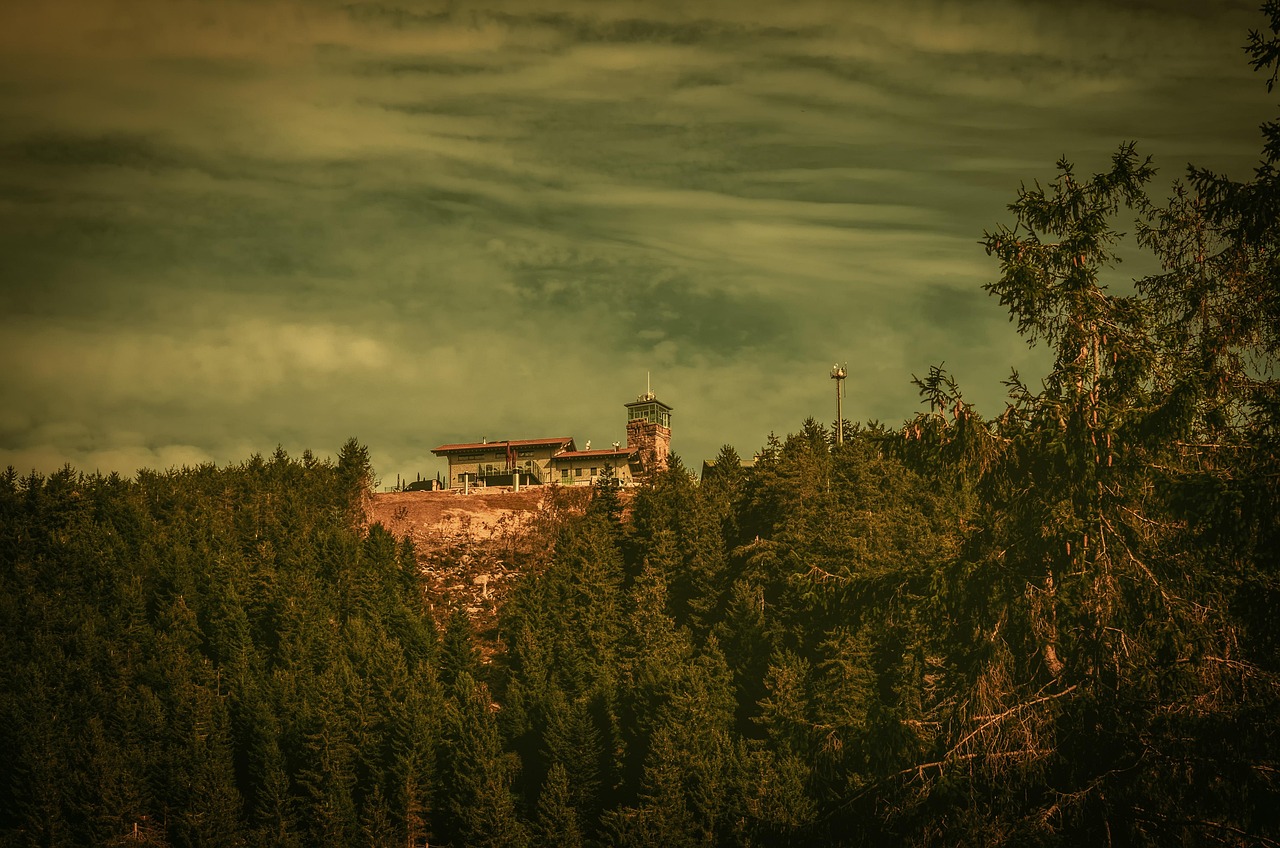
At the top, you’ll find a mix of history and landscape: old military installations, a restored tower you can climb (for a small fee), and long boardwalks skimming over high‑moor bogs that feel almost Scottish in mood. I remember one August afternoon when a storm rolled in from the west; we watched curtains of rain sweep across the Rhine plain while staying miraculously dry on the German side.
Why Hornisgrinde Is a Must‑See
- 360° views: On a clear day, you can see the Alps on the horizon and the Vosges across the Rhine.
- Unique habitat: The raised bogs and heathland are protected; stay on the boardwalks to avoid damaging the fragile ecosystem.
- Photography: Sunset and sunrise are spectacular; bring layers, as it can be windy and significantly cooler than the valleys.
For couples, a sunset hike up Hornisgrinde and a slow walk back down by headlamp can be one of the more romantic cultural experiences in Black Forest High Road – not in the sense of museums, but in the sense of experiencing how locals use the landscape: hiking, picnicking, lingering.
Overnight at Mummelsee
Staying at the lake hotel puts you in pole position for early and late light. The rooms are comfortable rather than luxurious, but waking up to a view over the water never gets old. On my last stay, I watched early‑morning swimmers slice quietly through misty water – a bracing way to start the day.
6. Leg 4: Mummelsee to Ruhestein – Lakes, Moors & National Park Center
Leg 4 keeps you on the high ridge but shifts the vibe from iconic lake to quieter moors and educational centers. It’s also where the Nationalparkzentrum Ruhestein anchors your understanding of the Black Forest as more than just trees and cake.
Drive the Crest: Quiet Viewpoints & Short Pull‑Offs
Leaving Mummelsee southwards, the B500 undulates along the crest, passing lay‑bys and small, unsigned paths that lead to smaller viewpoints. This is where having extra days in a 9 legs of Black Forest High Road or 10 legs of Black Forest High Road itinerary pays off; you can stop every few kilometers and follow your curiosity.
On one of my longer trips, I spent an entire afternoon on this short stretch: parking at almost every lay‑by, walking 10–15 minutes into the forest, and discovering quiet benches and cross monuments that never show up on tourist brochures. One such stop, marked only by a small wooden sign, led to a rocky outcrop overlooking a side valley full of beech and spruce, with a tiny village far below. I sat there alone for an hour, reading and listening to woodpeckers.
Ruhestein National Park Center
Ruhestein is both a pass and a hub. The Nationalparkzentrum Ruhestein is a modern visitor center with interactive exhibits about the Black Forest National Park, including its flora, fauna, and the ongoing efforts to let parts of the forest “return to wilderness.”
I visited again in early 2026 to see the refreshed exhibits. The star remains the big 3D model of the park, where you can press buttons to light up hiking trails and habitat zones. Kids love the animal displays and simulations; adults appreciate the clear information on how the forest is changing with climate shifts.
Things to Do at Ruhestein
- Exhibition: Plan 1–2 hours for the visitor center; most displays are bilingual (German/English).
- Short trails: Several educational loops start right from the center, with signs about forest ecology.
- Longer hikes: It’s a starting point for serious hikes towards the Wildsee and other remote moors.
- Events: Rangers frequently offer guided walks and kids’ programs (check the 2026–2027 schedule on site).
Ruhestein also has a small ski area and ski jump; in winter, this section of the B500 can be snow‑covered and occasionally requires winter tires and, in heavy snow, even chains. In 2026, winter maintenance remains excellent, but it’s wise to check the forecast if you’re driving between December and March.
Overnight Choices
There are a couple of inns and guesthouses near Ruhestein, including some with direct access to cross‑country ski trails in winter. For hikers, staying here makes sense: you can hit the trails early before day‑trippers arrive.
7. Leg 5: Ruhestein to Schliffkopf & Alexanderschanze – High‑Moor Quietude
This leg is one of my personal favorites, and one that many rushed itineraries barely notice. Yet if you’re crafting an 11 leg itinerary for Black Forest High Road or even a 12 leg itinerary, this is where you get your reward: open moorland, quiet trails, and one of the best wellness hotels on the route.
Schliffkopf: Heathland on the Roof
Schliffkopf is a rounded summit with a network of trails threading through heath and dwarf shrubs. The views are more subtle than Hornisgrinde’s wide panoramas, but the atmosphere is special: a mix of alpine meadow and northern heath.
One June morning in 2025, I walked the Schliffkopf loop in low, fast‑moving clouds; the heather was just starting to show color, and droplets clung to spiderwebs between the low shrubs. A pair of ravens followed me for a while, croaking from the spruce tops. It felt remote, even though the B500 was only a few hundred meters away.
Wellness & Romance at Schliffkopf
There’s a well‑known wellness hotel here with saunas, pools, and view terraces. Couples on a romantic Black Forest High Road road trip itinerary often choose to spend a night or two here: hike in the morning, spa in the afternoon, slow dinner in the evening. I’ve treated myself to a night here after a week of camping more than once, and the contrast – from sleeping bag to down duvet and a glass of Riesling – always makes me laugh.
Alexanderschanze: History in the Forest
Alexanderschanze is one of those places where history lies quiet under the moss. The name refers to old fortifications dating back to the 18th century, part of the complex military history of this border region. Today, most visitors see only a parking lot, some waymarked trails, and a peaceful forest.
I remember a drizzly afternoon here in 2023, following a historical trail that pointed out old earthworks now barely distinguishable from natural bumps. It’s not a must for every traveler, but for those interested in history, it provides a different lens on the landscape: these hills weren’t always just for hiking and skiing; they were strategic high ground.
Why This Leg Matters
- Quiet: Fewer buses, more independent travelers; ideal if you’re seeking calm.
- Nature: Unique heath and moor habitats, with clearly marked trails.
- Wellness: One of the best spa options directly on the B500.
For longer itineraries (13 legs of Black Forest High Road or even a 14 leg itinerary), this is a natural place to add a rest day: let the car sit, walk from your hotel, and give your senses a break from driving.
8. Leg 6: Alexanderschanze to Kniebis & Lotharpfad
As you move south from Alexanderschanze, the B500 begins to flirt with the edge of the plateau that drops towards the Kinzig valley. The mood shifts again: more settlements, more signs of everyday life, but still plenty of high‑forest atmosphere.
Kniebis: Village on the Edge
Kniebis is a small village strung along the ridge, with a mix of guesthouses, farm stays, and a modest ski area on its doorstep. I’ve stayed here a few times when hiking the Westweg long‑distance trail; the combination of village life and easy access to trails makes it a good base.
In winter, the cross‑country ski stadium lights up in the evening, and locals glide silently along the tracks. In summer, families rent e‑bikes and explore forest roads. There’s a small church, a bakery, and that sense – very Black Forest – that life is lived at a measured pace, in tune with the seasons.
Lotharpfad: Storm Damage Turned Nature Classroom
Just a short drive from Kniebis lies one of the more fascinating must‑see attractions in Black Forest High Road: the Lotharpfad, a trail through an area devastated by Orkan Lothar, a severe storm that hit on December 26, 1999.
Instead of replanting in the usual tidy rows, the area was left largely to regenerate naturally, and a raised boardwalk and series of stairways allow visitors to walk through the fallen trunks and wild regrowth. The result is a living lesson in forest ecology and resilience.
I first walked Lotharpfad in 2011 and returned in 2026; the transformation is striking. Young trees have shot up between the relics of snapped trunks, creating a chaotic, vibrant mix rather than the uniform spruce stands you see elsewhere. Information boards explain how species diversity has increased.
Family & Educational Value
- Short but intense: The loop is only about 1 km, but includes stairs and uneven ground; not ideal for strollers.
- Kids’ favorite: Many children find the tangle of roots and fallen trunks exciting, like a natural playground (stay on the path, though).
- Photogenic: Great textures and contrasts, especially with low sun.
Overnight in Kniebis
Kniebis makes an excellent overnight choice: quieter than Freudenstadt, but with enough services to be comfortable. Small pensions serve hearty dinners – think venison goulash in autumn, asparagus dishes in May, always with plenty of potatoes and seasonal vegetables.
9. Leg 7: Kniebis Plateau to Freudenstadt & Beyond
The final leg of the classic route drops you gently off the high ridge and into the broad market square of Freudenstadt, where half‑timbered houses, arcades, and cafés ring one of the largest market squares in Germany.
Descent from the High Road
From Kniebis, you have a choice: follow the B500’s modern alignment directly towards Freudenstadt, or take one of the older, narrower roads that snake more dramatically down. Unless you’re nervous about hairpins, I recommend at least one descent on a smaller road: the combination of forest, switchbacks, and occasional valley views is a joy for drivers and motorcyclists alike.
Freudenstadt: Town Life After the Forest
I tend to end my travel guide for Black Forest High Road journeys here, lingering for a day or two. The town’s central square is oddly vast – a legacy of ambitious Renaissance town planning – and dotted with fountains and planters. Under the arcades, you’ll find bakeries, ice‑cream parlors, sports shops, and small boutiques.
On my 2026 visit, I spent a sunny Saturday morning people‑watching from a café terrace, an espresso and a slice of plum cake in front of me, hikers and cyclists passing by with rucksacks and helmets. In the evening, local teenagers gathered around the fountain, while older couples strolled arm‑in‑arm under the arcades.
Things to Do in Freudenstadt
- Climb the church tower: For a bird’s‑eye view over the square and surrounding hills.
- Stadtmuseum: Small museum with exhibits on town history and the region.
- Forest pool (Waldfreibad): A wonderful place on a hot day; natural‑feeling open‑air pool on the edge of the forest.
- Dining: Several good restaurants serve both traditional Swabian dishes and more contemporary cuisine.
End of the Road – or Start of the Next
From Freudenstadt, you can head east towards Stuttgart, west back into the Rhine valley, or south deeper into the central Black Forest. Many travelers weave the High Road into a larger loop: up one side of the Black Forest, along the B500, and down another valley.
For me, the moment when I take one last look at the square, load my bag into the car, and turn the key in the ignition marks the end of the High Road proper – but rarely the end of my time in the Black Forest.
10. Sub‑Articles: 18+ Prominent Route Stops & Viewpoints in Detail
Below, I’ll dive deeper into more than 18 of the best places to visit in Black Forest High Road, with history, significance, and personal anecdotes. Many you’ve already met in the itinerary; others are “side characters” worth starring in your own route.
1. Baden‑Baden
Roman spa, Belle Époque playground, and modern wellness town – Baden‑Baden wears its spa heritage proudly. The thermal waters that bubble up here have been used for over 2,000 years, and in 2021 the town became part of the UNESCO “Great Spa Towns of Europe” listing.
Beyond the baths, the town’s parks and cultural institutions make it more than just a prologue. On a recent autumn visit, I walked the Lichtentaler Allee in the late afternoon, leaves crunching underfoot, before heading to the Caracalla spa for a few hours of steaming and soaking. Emerging into the cool night air afterwards, skin tingling, I felt genuinely reset before heading up to the high road the next morning.
2. Geroldsauer Wasserfall
A small but atmospheric waterfall, framed by mossy rocks and overhanging branches. Historically, such spots were popular with 19th‑century spa guests seeking “nature cures” – gentle walks, fresh air, and the soothing sound of water. Today, it serves the same function for modern road‑trippers.
3. Bühlerhöhe Viewpoints
The viewpoints here were long favored by aristocrats and political elites staying at the grand hotel. In the 20th century, the complex played host to conferences and high‑level meetings; now it stands in semi‑hibernation, a relic of another era. The views, however, are timeless: the Rhine plain stretching away, the Vosges softened by distance.
4. Plättig Inns & Trails
For decades, Plättig has been a refueling point more for people than cars: a place to eat hearty fare, warm up, and start or end hikes. Old black‑and‑white photos on the walls of some inns show skiers in woolen jumpers and wooden skis – a reminder that this has been a recreational corridor for generations.
5. Sand Junction
Not glamorous, but important: Sand is where routes converge. Historically, traders and later tourists used the pass roads here; today, it’s where skiers, hikers, and bus passengers change from one line to another. For the traveler, think of it as a key reference point on any how to drive Black Forest High Road plan.
6. Mehliskopf Adventure Station
Once a simple ski hill, Mehliskopf has reinvented itself as a year‑round adventure spot. Locals I’ve talked to are divided: some miss the quieter days; others welcome the extra income and activities. From a traveler’s perspective, it’s a convenient way to break up a day of driving with a burst of physical fun.
7. Mummelsee
The lake’s name likely derives from “Mummeln,” an old word for water lilies. Folklore speaks of a Seegeist (lake spirit) and water nymphs who lure men into the depths. The tourist development began in the late 19th century; today’s hotel complex is a modern iteration of a long tradition of lakeside hospitality.
8. Hornisgrinde Summit
Once a military restricted area, parts of Hornisgrinde only opened more freely to the public in recent decades. The towers and radar installations whisper of Cold War watchfulness; the bogs and heaths speak of a much older, slower natural history. Standing on the boardwalks, you straddle these timelines.
9. Hidden Moor Trails Between Mummelsee & Ruhestein
Between the headline stops lie quieter treasures: short trails leading to small moor areas, with sphagnum moss, stunted pines, and the occasional dark pool. Many are signed only at the roadside; the names – “Seehütte,” “Grindenpfad” – hint at water and open ground.
10. Ruhestein Pass & Ski Jump
Ruhestein’s ski jump has seen its share of local competitions and training sessions. In winter evenings, the floodlights cast sharp shadows on the snow; you can sometimes hear the thump of landings and the murmur of coaches.
11. Schliffkopf Heath
Formed by centuries of grazing and woodcutting, the open heathland at Schliffkopf is a semi‑natural landscape: human‑made, but now valued as habitat. Conservation efforts maintain it against the encroachment of spruce; without that, it would close up into forest within decades.
12. Wellness Hotel Schliffkopf
One of a string of higher‑end spa hotels along the B500, but uniquely well placed for immediate access to heathland trails. I still remember the contrast of stepping from a hot sauna onto a cold balcony, lungs filling with resinous air, and seeing the last pink light on the distant Vosges.
13. Alexanderschanze Fortifications
Named after Duke Charles Alexander of Württemberg, these fortifications were part of a defensive line built in the 18th century. They were used, reused, and then largely abandoned, slowly sinking back into the forest floor. Walking here with a historical map can be an evocative experience, piecing together what is now mostly invisible.
14. Kniebis Village
Kniebis was historically a monastery settlement; the ruins of the old monastery can still be visited. Over time, it became a way station on trade routes and now a modest tourist base. Talking to a guesthouse owner over breakfast one morning, I learned how the seasons shape life here: winter with skiers, spring quiet, summer hikers, autumn mushroom seekers.
15. Lotharpfad Storm Trail
Named after the Lothar storm, this trail embodies a shift in German forestry attitudes: from strict control and replanting towards allowing natural processes to play out. The decision to let the storm damage largely stand was controversial at the time; now it’s seen as a pioneering move.
16. Kniebis Cross‑Country Ski Center
In winter, this is a hive of quiet activity. I once joined a local night‑skiing event: we shuffled around a lit loop under a starry sky, breath puffing in the cold, then warmed up with mulled wine at a makeshift stand. It’s a reminder that the Black Forest High Road isn’t just a summer drive; it’s an all‑season corridor.
17. Freudenstadt Marktplatz
Laid out in the early 17th century, Freudenstadt’s vast square was part of an idealized city plan. War and fire have reshaped it, but the core idea remains. In the evenings, the illuminated arcades lend it a cozy feel despite its size.
18. Schwarzenbach‑Talsperre (Detour)
A short detour from the B500 leads to this reservoir, built in the 1920s–30s to store water for hydropower. The dam wall is an impressive piece of engineering, and the lake is popular with walkers and anglers. On a warm September day, I walked half the circumference, watching dragonflies and listening to the quiet slap of water against the shore.
11. Eating & Sleeping Along the Black Forest High Road
One of the joys of the Schwarzwaldhochstraße is the density of small inns, guesthouses, and restaurants. You’re rarely more than 15–20 minutes from a hearty meal and a bed, which makes it easy to be flexible with your pacing.
Local Food in Black Forest High Road
Expect a blend of Baden and Swabian influences, with plenty of game, mushrooms, and seasonal vegetables.
- Schwarzwälder Kirschtorte: The famous Black Forest cake – layers of chocolate sponge, cherries, cream, and Kirschwasser. Best enjoyed in a small Konditorei, not a highway rest stop.
- Käsespätzle: Soft egg noodles smothered in cheese and onions; ultimate comfort food.
- Wildgerichte (game dishes): Venison, wild boar, and other game in autumn, often with red cabbage and dumplings.
- Forelle (trout): Often from local streams, pan‑fried or grilled.
- Flammkuchen: Thin, crispy tart with cream, onions, and bacon – more Alsatian in origin but common here.
I tend to plan one proper sit‑down meal per day – usually a late lunch to avoid peak periods – and then a lighter supper at my accommodation. For budget travelers, many guesthouses offer Halbpension (half‑board) deals which can be excellent value, especially for families.
Roadside Diners & Gasthäuser
Along the B500 itself, you’ll find:
- Traditional inns (Gasthäuser): Wood‑paneled, with daily specials on chalkboards. These are my preferred stops; the food is usually homemade, and you get a slice of local life.
- Adventure‑park cafés: At places like Mehliskopf and Mummelsee – convenient, with standard fare.
- Hotel restaurants: Often more formal, with regional menus; good for a “nice night out” on multi‑day trips.
Where to Sleep
Choices range from simple guesthouses to four‑star spa hotels:
- Baden‑Baden: Wide range, from hostels to luxury spa hotels.
- Geroldsau/Plättig: Small inns, good for a forest feel.
- Mummelsee: Lakeside hotel; excellent for sunrise/sunset access.
- Schliffkopf: Wellness hotel with direct access to trails.
- Kniebis: Pensions and farm stays; good for families.
- Freudenstadt: Town hotels and guesthouses; good end‑of‑trip base.
Personal Fuel‑Stop Strategy
Fuel stations directly on the high ridge are sparse; most are down in the valleys. In 2026, I plan fuel stops near Baden‑Baden, in the Murgtal (by detouring down from Sand), and near Freudenstadt. For EVs, charging infrastructure has improved significantly: there are chargers in Baden‑Baden, Mummelsee, Ruhestein area (down in the valley), Kniebis, and Freudenstadt. Still, don’t let your battery drop below 30% before you start looking for a charger.
As for energy for yourself: I keep a small stash of nuts, fruit, and chocolate in the car, especially for shoulder seasons when some inns close mid‑week. Nothing spoils a scenic stop like discovering the only restaurant around is on its Ruhetag (weekly rest day).
12. Evenings on the Road: After‑Dark Life & Starry Nights
Nights along the Black Forest High Road are quieter than in big cities – and that’s part of their charm. Once the day‑trippers roll back down to the valleys, the ridge settles into a slower rhythm.
Small‑Town Main Streets After Dark
In Baden‑Baden and Freudenstadt, you’ll find lively enough evening scenes: people in restaurant terraces in summer, Christmas markets in winter, the occasional live music night. In smaller places like Kniebis, evenings are more about a drink in your guesthouse’s Stube, perhaps a card game or a book by the tiled stove.
Route‑Side Bars & Live Music
Some inns along the B500 host occasional live music – folk evenings, acoustic sets – especially on weekends in summer. Ask at your accommodation; these events are rarely aggressively advertised, but can be memorable. I still think fondly of a July night at an inn near Sand, where a local duo played old German songs while hikers and bikers from three countries joined in on the choruses.
Star‑Camping & Night Walks
If the sky is clear, step outside after dark. Light pollution is relatively low on the ridge, and you can often see the Milky Way as a pale band. Some hotels now offer “Sternenführungen” – guided star walks with simple telescopes and explanations. Even without that, a short walk away from the road, headlamp off, can be both eerie and beautiful: the smell of resin, the crunch of gravel, the occasional rustle of a deer.
Where to Linger vs. Where to Push On
- Linger: Baden‑Baden (for culture and nightlife), Mummelsee (for lake evenings), Schliffkopf (for wellness), Kniebis (for quiet village evenings), Freudenstadt (for town life).
- Push through: Junctions like Sand and Alexanderschanze are better for daytime stops than overnighting, unless you’re there specifically for hiking or skiing.
13. Day Trips & Nearby Attractions
The Black Forest High Road makes a strong backbone for a broader regional trip. From various points along the route, you can branch off into side valleys and neighboring towns.
Sasbachwalden & Wine Villages
Descending westwards from near Mummelsee, you can reach Sasbachwalden, a picturesque wine village with half‑timbered houses and vineyards climbing the slopes. Spend an afternoon wandering, tasting local Riesling and Spätburgunder, and perhaps walking a short section of the Alde Gott wine trail.
Baiersbronn: Gourmet Side Trip
From Kniebis or Freudenstadt, head down into the Baiersbronn valley, famed for its concentration of high‑end restaurants. Even if you’re not booking a Michelin‑starred dinner, the general standard of food here is excellent. It’s also a hiker’s paradise, with well‑marked trails and “Genusswege” (gourmet trails) linking huts and viewpoints.
Murgtal Valley & Historic Railways
From Sand, dropping down into the Murgtal opens up a different landscape: steep, wooded slopes, narrow gorges, and villages strung along the Murg river. The Murgtalbahn railway is a scenic line if you want a car‑free day; you can combine train segments with hikes back up towards the B500.
Strasbourg & Alsace
From Baden‑Baden or the northern end of the B500, France is less than an hour away. Many travelers add a day in Strasbourg – wandering its cathedral district and canals – as a cultural contrast to the forested days on the ridge.
14. Cultural Etiquette & Local Customs
Traveling the Black Forest High Road is as much about people as landscape. A few cultural notes make interactions smoother.
Greetings & Interactions
- Formal vs. informal: Use Guten Tag and the formal “Sie” with strangers, especially older people and in shops/hotels. Switch to “du” only if invited.
- On trails: A simple “Hallo” or “Grüß Gott” when passing other hikers is customary.
- In restaurants: Wait to be seated unless it’s obviously self‑service. It’s normal to say a brief “Mahlzeit” at lunchtime if joining a shared table.
Punctuality & Quiet Hours
Germans value punctuality. If your guesthouse asks you to arrive by 18:00, try to do so or call if you’ll be late. Quiet hours (Ruhezeiten) are generally respected, especially in rural areas: keep noise down after about 22:00.
Cash & Tipping
While card acceptance has improved sharply post‑2020, some smaller inns still prefer cash. Tipping around 5–10% in restaurants is customary if service is good; round up for taxis and café bills.
Nature Etiquette
- Stay on marked trails, especially in protected moor and bog areas.
- Take litter with you; bins can be sparse on higher trails.
- Respect forestry operations; don’t enter active logging zones, and heed closure signs.
15. Practical Travel Advice & Route Logistics (2026–2027)
Getting There & Around
By Air: Nearest major airports are Frankfurt (FRA), Stuttgart (STR), and Basel/Mulhouse (BSL). From there, trains connect to Baden‑Baden and Freudenstadt.
By Train: Baden‑Baden sits on a mainline; Freudenstadt is reachable via regional trains via Karlsruhe or Stuttgart.
Car Rental: Available at all major airports and in Baden‑Baden. For flexibility on the B500, a car is the easiest option.
Vehicle Suitability
- Regular car: Perfectly adequate; roads are paved and well maintained.
- Motorcycle: Extremely popular; bring proper gear for quickly changing weather.
- Campervan/RV: Manageable, but parking at smaller lay‑bys can be tricky; check campsite options in valleys.
- 4x4: Not necessary; off‑roading is not permitted.
Foreign Driver’s Licenses & Visas
For visitors from the EU/EEA/Switzerland, your national license is valid. Many other nationalities (including US, Canada, UK, Australia, New Zealand) can use their home license for short stays; an International Driving Permit is recommended and mandatory for some countries. Check German embassy guidance for your nationality.
Germany is part of the Schengen Area. Depending on your passport, you may need a Schengen visa for entry; always verify current requirements.
Public Transport Options
It’s possible, though slower, to experience parts of the High Road by bus:
- Buses run from Baden‑Baden up to Mummelsee and beyond (seasonal variations apply).
- From Freudenstadt and Baiersbronn, regional buses reach Kniebis and parts of the ridge.
For hikers, a common pattern is to bus up to the ridge, hike a section, then bus back down to a valley town for the night.
SIM Cards & Connectivity
In 2026, coverage along the B500 is decent but with patchy zones, especially around moors and deep side valleys. For visitors:
- eSIMs from major providers (Telekom, Vodafone, O2) can be purchased online.
- Physical prepaid SIMs are sold at supermarkets, electronics stores, and some kiosks in towns.
- Expect some dead spots; download offline maps (Google Maps, Maps.me, Komoot) in advance.
Seasons & When to Go
- Spring (April–June): Fresh green, wildflowers, rhododendrons near Geroldsau. Unpredictable weather; some higher trails may still have snow in April.
- Summer (July–August): Warmest, busiest. Best for swimming and long days, but popular spots like Mummelsee can be crowded.
- Autumn (September–October): My personal favorite: fewer crowds, stable weather, stunning foliage. Great for hiking and photography.
- Winter (December–March): Snow‑covered forests, cross‑country skiing, and a quieter road – but be prepared with winter tires and check for temporary closures during heavy snowfall.
Daily Distances & Pacing
The core B500 stretch is only about 60 km, but with stops and hikes, it easily fills 3–5 days. For a more immersive trip with day hikes and detours, 7–10 days is ideal. In distance terms, I rarely plan more than 80–120 km of actual driving per day when including detours; that leaves plenty of time for stops.
Fuel & Charging
Plan to fill up in:
- Baden‑Baden or nearby junctions before heading up.
- Towns in side valleys (e.g., Bühl, Gernsbach, Baiersbronn, Freudenstadt).
For EVs, check updated charging maps (e.g., PlugShare) before your trip; in 2026, more chargers are appearing but can still be busy on holidays.
Breakdowns & Emergencies
Germany has excellent roadside assistance services (ADAC, etc.). If you’re renting a car, check what coverage is included. Mobile reception may be weak in some spots, but usually you can get a signal by moving a short distance along the road. Emergency number is 112.
Seasonal Closures & Road Works
The B500 is maintained year‑round, but:
- Short sections may close temporarily for road works, especially outside peak summer.
- In severe winter storms, the road can be closed briefly until cleared.
- Some smaller side roads and trails are seasonally closed for wildlife protection or due to snow.
Always check local traffic information or ask at your accommodation for current conditions.
Money‑Saving Tips
- Travel in shoulder seasons (May–June, September–early October) for better rates.
- Use half‑board deals at guesthouses; often cheaper than dining out separately.
- Take advantage of Kurkarte or guest cards, which often include free local bus travel and discounts on attractions.
- Pack picnic supplies; many viewpoints have benches perfect for DIY lunches.
16. Events & Festivals in 2026–2027
While the Black Forest High Road itself isn’t a city‑festival strip, nearby towns host events that can enrich your trip.
2026 Highlights
- Baden‑Baden Festspiele (2026 season): Year‑round classical music, opera, and dance at the Festspielhaus; summer and autumn festivals are particularly vibrant.
- Baden‑Baden Kurpark Summer Concerts: Free or low‑cost open‑air performances on selected evenings.
- Freudenstadt Summer Night Festival (Sommernachtfest 2026): Live music, food stalls, and fireworks around the Marktplatz, typically in July or August.
- Black Forest Trail & Mountain Running Events: Several trail races and mountain runs in the Ruhestein and Baiersbronn areas; if you’re a runner, time your trip to participate or spectate.
- Christmas Markets (2026): Baden‑Baden’s “Christkindelsmarkt” and Freudenstadt’s Weihnachtsmarkt create a festive backdrop if you’re driving the B500 in early December.
2027 Outlook
Looking ahead, 2027 will likely see continued expansion of nature‑focused events: guided night walks, stargazing evenings at Ruhestein and Schliffkopf, and more kids’ programs in the national park. Check local tourism websites closer to your travel dates for updated schedules.
17. Summary & Final Recommendations
The Black Forest High Road is not a place to rush. It’s a route to feel: the way the light shifts through spruce branches, the scent of wet leaves after a storm, the warmth of a tiled stove in a village inn after a cold hike. Whether you choose a compact 7 legs of Black Forest High Road itinerary or stretch it into an 8, 9, 10, 11, 12, 13, or even 14 leg itinerary, the key is to leave room for unplanned stops and slow moments.
Key Takeaways
- Best seasons: Autumn (September–October) for colors and calm; summer for family activities and long days; winter for a quieter, snow‑covered experience; spring for fresh green but more volatile weather.
- Direction: North–south (Baden‑Baden to Freudenstadt) works beautifully for first‑timers; reverse for variety on repeat visits.
- Must‑see stops: Baden‑Baden, Geroldsauer Wasserfall, Bühlerhöhe, Mehliskopf, Mummelsee, Hornisgrinde, Ruhestein, Schliffkopf, Lotharpfad, Kniebis, and Freudenstadt.
- For families: Focus on Mehliskopf, Mummelsee, Ruhestein’s visitor center, Lotharpfad, and Kniebis; keep driving days short.
- For couples: Choose romantic overnights at lakeside or wellness hotels, plan sunset hikes, and linger in Baden‑Baden and Freudenstadt for dining.
- For adventurers: Build in long hikes from Ruhestein and Schliffkopf, trail runs, cross‑country skiing in winter, and perhaps a day of mountain biking in side valleys.
After multiple loops along this ridge over the years, including my latest in 2026, I still catch myself pulling over at some anonymous lay‑by simply because the light on the trees looks a little different, or because a trail sign points to a name I don’t recognize. That, in the end, is the magic of the Schwarzwaldhochstraße: it’s not just a list of sights, but a continuous invitation to wander – by wheel and by foot.