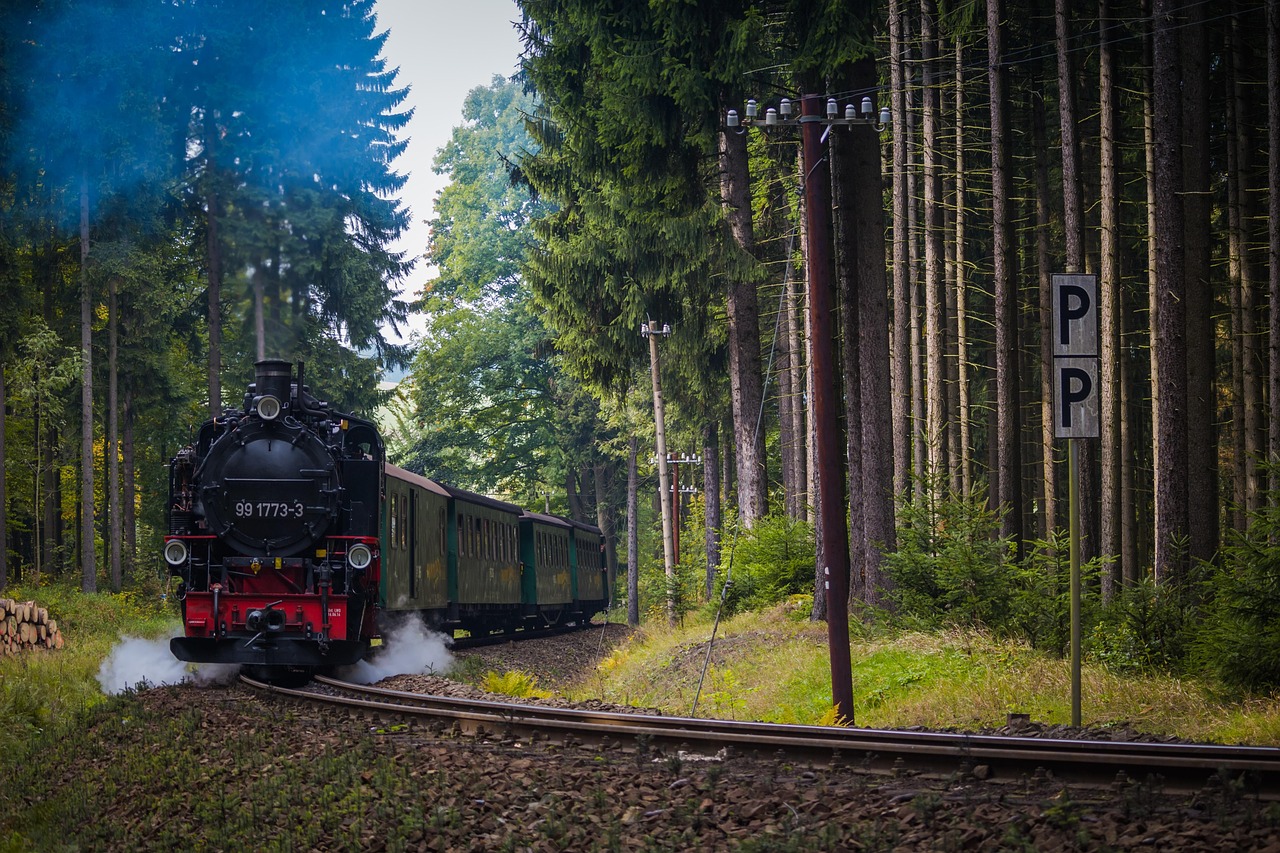
Why Visit the Harz Narrow Gauge Railways?
If you’ve ever dreamed of stepping into a storybook Germany of dark forests, crooked half-timbered towns and slow, rhythmic steam trains, the Harzer Schmalspurbahnen (HSB) – the Harz Narrow Gauge Railways – is where those dreams actually breathe coal smoke.
This 140‑kilometre network of metre‑gauge tracks winds through the Harz mountains between Saxony‑Anhalt and Lower Saxony, climbing from cobbled medieval town squares to the wind‑scoured summit of the Brocken (1,141 m). In 2026, it remains one of Europe’s most atmospheric rail journeys, a living museum that’s also a fully functioning public transport system.
I’ve been riding these lines since my student days in Wernigerode – summer Brocken sunsets with beer in a paper cup, winter rides where frost etched the carriage windows and we pushed our faces against the glass like kids. Over the last fifteen years, I’ve done the full network multiple times in every season, often turning it into a slow, almost pilgrimage‑like journey broken into 7–14 legs.
Why it’s special in 2026:
- Authentic steam, every day: The HSB still runs real steam locomotives on regular timetabled services, not just tourist specials.
- Three distinct lines: The Brocken Railway, the Harzquerbahn (north‑south trunk), and the Selketalbahn (romantic, quieter valley line).
- Story‑rich stops: Half‑timbered towns like Wernigerode and Quedlinburg, East German spa relics at Alexisbad, and tiny forest halts where you can hop off and walk.
- Flexible “leg” itineraries: You can ride this as a 7 leg itinerary for Harz Narrow Gauge Railways or stretch it into a 14 leg itinerary for Harz Narrow Gauge Railways if you want to explore each valley in depth.
- All‑season appeal: Snow‑blanketed winter rides, spring wildflowers along the Selketalbahn, long summer evenings in beer gardens, and golden autumn forests.
This long‑form travel guide for Harz Narrow Gauge Railways is written for travellers who want to do more than just tick off the Brocken. It’s for you if you want to treat the HSB as a multi‑day Harz Narrow Gauge Railways road trip itinerary on rails – with good food, small detours, and unhurried evenings in towns that still go properly quiet after dark.
Understanding the Harz Narrow Gauge Network
The HSB network forms a crooked triangle across the Harz. To plan a 7 leg itinerary for Harz Narrow Gauge Railways or expand it into a 10 legs of Harz Narrow Gauge Railways, it helps to see the lines as three distinct characters:
- Brocken Railway (Brockenbahn): Wernigerode – Drei Annen Hohne – Schierke – Brocken. The celebrity line, steep and spectacular, especially in snow.
- Harzquerbahn (Harz Cross Railway): Wernigerode – Drei Annen Hohne – Benneckenstein – Eisfelder Talmühle – Ilfeld – Nordhausen. The backbone, crossing forests and high moors.
- Selketalbahn (Selke Valley Railway): Quedlinburg – Gernrode – Alexisbad – Harzgerode / Hasselfelde – Eisfelder Talmühle. The oldest section, quieter, winding through secluded valleys.
Most travellers focus on the Brocken round‑trip, but the real magic lies in using the HSB as a spine for an extended journey: hopping off at forgotten halts, spending nights in small towns, walking between stations along forest paths, and treating each segment as a “leg” of a continuous adventure.
How Many Legs? 7–14 Leg Itineraries for Harz Narrow Gauge Railways
You can slice this network in many ways. Here’s how I usually frame it for friends:
Compact 7-Leg Itinerary for Harz Narrow Gauge Railways (5–7 days)
- Leg 1: Wernigerode
- Leg 2: Wernigerode – Drei Annen Hohne
- Leg 3: Drei Annen Hohne – Brocken – Schierke
- Leg 4: Drei Annen Hohne – Benneckenstein – Nordhausen
- Leg 5: Quedlinburg – Alexisbad – Harzgerode
- Leg 6: Alexisbad – Hasselfelde – Eisfelder Talmühle
- Leg 7: Eisfelder Talmühle – Benneckenstein – Wernigerode return
Balanced 10-Leg Itinerary for Harz Narrow Gauge Railways (8–12 days)
This guide roughly follows a 10 leg itinerary for Harz Narrow Gauge Railways but stretches it up to 14 legs for slow travellers. You can compress or expand: think of this as an elastic plan that also works as an 8 leg itinerary or 12 leg itinerary for Harz Narrow Gauge Railways depending how many overnights you add.
Leg 1: Wernigerode – Storybook Gateway & Steam Headquarters
I almost always start my Harz journeys in Wernigerode. It’s practical – easy rail access from Hanover or Berlin – but more than that, it sets the mood. Half‑timbered houses lean over cobbled lanes, the castle perches above town like something from a Grimm tale, and the HSB depot sits right beside Wernigerode Hbf, chuffing and hissing like some mechanical dragon lair.
On my most recent spring visit in 2026, I arrived on a drizzly Friday afternoon. The first thing I did – as always – was walk straight from the DB platform to the narrow‑gauge area.
Here you’re eye‑level with the locomotives. The smell hits you first: coal, hot oil, wet metal. For train‑mad kids (and adults), this is already one of the best places to visit in Harz Narrow Gauge Railways.
Things to Do in Wernigerode
- Stroll the Old Town: Start at the Marktplatz with its flamboyant Rathaus, then wander side streets like Breite Straße and Kochstraße. The half‑timbered patterns are a crash course in Harz architecture.
- Wernigerode Castle: A short, steep walk or mini‑train ride brings you to the castle terrace for sweeping views over town and across to the Brocken. I like coming just before sunset, watching the last steam train head out while the castle bells chime.
- HSB Depot & Yard: You can watch loco servicing from the fence line; on some weekends in 2026 the railway offers short guided yard tours (check HSB’s official site).
Local Food in Wernigerode
For local food in Harz Narrow Gauge Railways towns, Wernigerode is hard to beat. My go‑to pattern:
- Lunch: A plate of Harzer Bratwurst from a grill stand on the market square – smoky, slightly coarse, usually served with mustard and a roll.
- Coffee & Cake: Try a café near the Rathaus for Baumkuchen (tree cake) or Quarkkuchen (curd cheesecake).
- Dinner: Look out for venison from the Harz forests – often on menus as Hirschgulasch. Pair with a local beer, usually from Wernigerode or nearby Ilsenburg.
Where to Sleep
Wernigerode is the ideal first overnight. I favour small, family‑run guesthouses within a 10–15‑minute walk of the station. In 2026, mid‑range doubles hover around 80–120 € per night with breakfast. For a romantic start, one of the half‑timbered B&Bs above the old town gives you rooftop views and quiet mornings.
Practical Tips for Leg 1
- Arrive the afternoon before your first steam ride; give yourself a full evening and morning in town.
- Pick up your HSB network ticket at Wernigerode station if you plan to ride multiple legs; it’s cheaper than buying individual tickets.
- Stock up on snacks and drinks at the supermarket opposite the station; food on board is limited to what you bring.
Leg 2: Wernigerode to Drei Annen Hohne – Into the Forest
The first morning is always the same for me: a slightly too‑early alarm, a quick bakery stop for warm Brötchen, and then that quiet thrill as you step onto the platform and see your steam locomotive simmering at the head of the train.
This stretch is where the journey really becomes a Harz Narrow Gauge Railways road trip itinerary – just on rails instead of tarmac. We’re heading from the urban edge of Wernigerode up into steadily deepening forest, with several must‑see attractions in Harz Narrow Gauge Railways territory along the way.
Route & Signature Viewpoints
Leaving Wernigerode, the train trundles through the outskirts, past gardens and industrial sheds, then begins to climb the tight curves of the Mühlenberg. On my last ride, kids leaned out of the open windows (carefully – keep your head well inside), squealing every time the loco whistled through a crossing.
The first really photogenic moment is after the halt at Hasserode, where the line hugs the hillside and you can look back to see the train snaking below Wernigerode Castle. Then, as we approach Steinerne Renne, the world turns properly green: steep rock walls, the rushing Holtemme river, mossy trunks.
Stop 1: Steinerne Renne
Steinerne Renne is a tiny halt, but it’s one of my favourite hidden gems in Harz Narrow Gauge Railways territory. I sometimes hop off here if I’m not in a hurry and do a short hike up to the waterfall and the old Gaststätte Steinerne Renne (check 2026 opening hours; they’re seasonal).
Family‑friendly? Yes, if your kids can handle 30–40 minutes of uphill walking on a rocky path. Romantic? Very – the river noise drowns out everything, and you’re unlikely to meet many others outside weekends.
Stop 2: Drei Annen Hohne – Junction in the Woods
After about 50 minutes from Wernigerode, the train pulls into Drei Annen Hohne, a forest clearing with a station that feels frozen in the 1950s. This is where the Harzquerbahn and Brockenbahn split, making it a crucial node for any 7 legs of Harz Narrow Gauge Railways or 14 legs of Harz Narrow Gauge Railways plan.
I like to spend at least an hour here, especially on sunny days. There’s a small station café with hearty soups and simple dishes – in winter 2025/26 I warmed up with a steaming bowl of Erbsensuppe (pea soup) while watching locos being coupled and uncoupled.
What to Do at Drei Annen Hohne
- Trainspotting: This is one of the best places to photograph steam trains coming and going, especially with the forest backdrop.
- Short Walks: Several waymarked paths lead into the National Park. Even a 30‑minute stroll gives you a feel for the Harz forest – scented spruce, occasional views across valleys.
- Family Tip: The level, well‑kept paths near the station are perfect for smaller children; you can do a simple “out and back” without committing to a long hike.
Overnight or Continue?
For a compact 8 legs of Harz Narrow Gauge Railways plan, you’ll probably continue up to the Brocken the same day. For a slower 10 or 12 leg itinerary for Harz Narrow Gauge Railways, consider staying in a guesthouse nearby or returning to Wernigerode for another night, then tackling the summit with fresh legs the next morning.
Leg 3: Drei Annen Hohne to Brocken – Iconic Summit Ride
The Drei Annen Hohne – Schierke – Brocken section is the HSB’s headline act, and with good reason. It’s also where crowds concentrate, especially on fine weekends and holidays. On a clear winter day in January 2026, I counted three full Brocken trains in a row, each packed with hikers, families and selfie sticks.
Riding Up to the Brocken
From Drei Annen Hohne, the line almost immediately dives deeper into the conifers, crossing Brockenstraße and beginning its relentless climb. The gradients here reach up to 1 in 30, and you feel the locomotive working hard; the exhaust beats become more insistent, echoing off the rock faces.
There are several signature viewpoints on this ascent:
- Eckerloch curves: Broad S‑bends where you can look back along the train and, if lucky, see the Brocken peeking above the trees.
- View to Wernigerode: Further up, the forest opens for a moment and you can see all the way down to Wernigerode and the northern plains.
Stop: Schierke
At Schierke, once a fashionable spa town, the train often pauses. In winter 2026, snow lay thick on the platforms, and families in colourful ski jackets piled on with sleds and thermos flasks. If you’re into winter hiking, this is your base for trails up to the Brocken or into the national park without necessarily riding the train to the summit.
The Brocken Summit Experience
The final stretch above Schierke is a slow, looping climb, the trees thinning, wind strengthening, and suddenly you’re above the treeline. The Brocken has a complicated history – once a Cold War listening post, long a place of witches and folklore (the famous “Walpurgis Night” stories), and now a national park centrepiece.
On my last autumn visit, cloud clung to the summit buildings when we arrived, but within half an hour it tore open to reveal a vast sweep of forested hills. I’ve seen people cry up here – there’s something about the combination of the long climb, the exposed plateau and the weight of history.
Things to Do on the Brocken
- Loop Walk: A 3.5 km circular path around the summit with information boards (in German, some English) about flora, fauna and history. It’s easy and family‑friendly, though windy.
- Museum: The Brocken Museum in the old listening station tower explores Cold War surveillance, weather observation and folklore. Good for a chilly or foggy day.
- Food: The summit restaurant offers hearty, no‑nonsense fare – Eintopf, schnitzel, cake. I usually grab a Bockwurst and a hot chocolate and sit outside if the wind isn’t too cruel.
Tips for Visiting the Brocken
- Weather: The Brocken has its own climate. Even in July, bring a windproof layer; in winter, proper boots and gloves are essential.
- Timing: For romance, take a late‑afternoon train up in summer and descend on one of the last services – sunset light on the forest is unforgettable.
- Tickets: Brocken tickets are pricier than other sections; if you’re doing a full network tour, calculate whether a HarzTourCard or HSB day pass combination makes more sense.
For this guide’s structure, we treat the Brocken as its own leg – a highlight within any 7–14 legs of Harz Narrow Gauge Railways plan. Many travellers make it a there‑and‑back day, but I often combine it with an overnight in Schierke (see Leg 11) to break the crowds and enjoy quieter forest evenings.
Leg 4: Drei Annen Hohne to Nordhausen – Crossing the High Harz (Harzquerbahn)
If the Brocken is the showpiece, the Harzquerbahn is the soulful backbone. From Drei Annen Hohne westward, the line feels wilder and less touristed, making it prime territory for a more adventurous 9 leg itinerary for Harz Narrow Gauge Railways.
From Drei Annen Hohne to Benneckenstein
Leaving Drei Annen Hohne in the opposite direction from the Brocken, we climb gently through dense forest towards Elend and Sorge. These halts are explored in more depth in Legs 10 and 12, but even if you’re not hopping off, watch for glimpses of old border installations – this was once the inner German frontier.
By the time we reach Benneckenstein, the landscape has opened into rolling meadows and scattered farmsteads. I’ve broken my journey here several times – there’s a quiet, unhurried feel and some excellent walking.
Stop: Benneckenstein
Benneckenstein is one of those best stops on Harz Narrow Gauge Railways that rarely makes international lists but is beloved by German walkers and families.
- Village Walk: Stroll from the station to the village centre for half‑timbered houses and a low‑key main street.
- Borderland History: A short trail leads to markers explaining the former inner‑German border; moving if you remember the division, educational if you don’t.
From Benneckenstein to Eisfelder Talmühle
This section is a favourite of mine – the train snakes along hillsides, dips into cuttings, and suddenly you’re entering the deep, green gorge of the Eisfelder Talmühle. On a warm June afternoon in 2025, I stood in the open vestibule as we descended, wind full of pine and the smell of hot brake shoes.
Stop: Eisfelder Talmühle
We’ll come back here in Leg 9 because Eisfelder Talmühle deserves its own love letter, but for now: this is the atmospheric valley junction where the Harzquerbahn meets the Selketalbahn. The half‑timbered station building, the river rushing beside the platforms, the sight of two steam trains crossing – it’s pure railway romance.
Eisfelder Talmühle to Nordhausen
Beyond Eisfelder Talmühle, the character changes again. The line follows the Zorge river out of the high Harz into more open country, passing Ilfeld and eventually reaching Nordhausen Nord, the terminus. Here, the HSB connects with city trams, creating quirky combinations – standard gauge, narrow gauge and urban light rail all layered together.
Why This Leg Matters
For a 10 legs of Harz Narrow Gauge Railways plan, this leg is your long, contemplative day – the one where you really feel the distance and diversity of the Harz. It works well for:
- Families: Longish but varied; plan a picnic on board and a playground stop in Nordhausen.
- Romantic travellers: Consider a quiet guesthouse near Benneckenstein or Eisfelder Talmühle for starry nights with little light pollution.
- Rail fans: This is the meat of the network – curves, gradients, crossovers, depots.
Leg 5: Nordhausen Surrounds – Stolberg, Walkenried & Hidden Corners
Nordhausen itself is more practical than pretty – heavily damaged in the war and rebuilt – but it’s a good base for a night if you’re following a 9 or 11 leg itinerary for Harz Narrow Gauge Railways. In 2026, the town is slowly rediscovering its charm, with cafés and small museums worth a few hours.
Things to Do in Nordhausen
- Old Town Stroll: The compact centre has a few restored buildings, church towers and a weekly market with local produce.
- Dornröschenpark: A small park perfect for kids to run off energy after the train ride.
- Nordhausen Distillery: Famous for its Korn (grain spirit); tours are available, though I generally recommend this only if you’re not continuing your journey the same day.
Side Trip: Stolberg (Harz)
A short regional bus or car ride from Nordhausen brings you to Stolberg, one of the most beautiful half‑timbered towns in the Harz and a worthy day trip from Harz Narrow Gauge Railways. Narrow lanes, an elegant castle, and barely a chain store in sight. On a sunny Saturday in May 2026, I sat on the market square with a slice of plum cake, watching cyclists roll in and old men play chess under linden trees.
Side Trip: Walkenried Abbey
Another side trip I often recommend is Walkenried Abbey, a haunting set of Gothic ruins just over the ridge from the Harz. The museum is excellent, and the cloistered gardens are wonderfully peaceful – a nice cultural counterpoint to the industrial romance of the railway.
Food & Sleep in Nordhausen
Nordhausen has good, unpretentious restaurants serving Thuringian staples – Thüringer Rostbratwurst, dumplings, roasts. For budget travellers, this is one of the cheaper overnights on the route; mid‑range hotels often run 70–90 € in 2026, with modest guesthouses even less.
Leg 6: Quedlinburg to Alexisbad – Selketalbahn’s Gentle Start
After Nordhausen, I like to “jump” networks by regional train or bus to Quedlinburg, the eastern gateway to the HSB. This is the start of the Selketalbahn, and it feels like stepping into another world: quieter, more intimate, with fewer crowds and more bird song.
Quedlinburg – UNESCO Jewel
Quedlinburg’s old town is so dense with crooked timbered houses that it feels almost theatrical. I’ve lost afternoons here just wandering, peering into courtyards, and climbing up to the Collegiate Church of St. Servatius for views.
Before boarding the Selketalbahn, give yourself at least a half‑day to soak the town in. If your overall schedule allows, make this an overnight stop – the evening light along the cobbles is lovely, and mornings are quiet before day‑trippers arrive.
Quedlinburg to Gernrode to Alexisbad
The Selketalbahn leaves from Quedlinburg’s narrow‑gauge area and quickly trades the town outskirts for meadows and low hills. The carriages here are often lighter and the atmosphere more relaxed than on the Brocken line.
We pass through Gernrode (we’ll return in Leg 8) and then begin to follow the Selke river into a narrowing valley. This is where, on an April morning in 2026, I saw deer grazing in misty clearings and a pair of red kites circling above the train – the kind of soft, slow magic the Selketalbahn specialises in.
Arriving in Alexisbad
Alexisbad is a small spa settlement tucked in a fold of the valley, with a handsome station, a historic Kurhaus, and forest slopes rising on both sides. It’s my favourite base on the Selketalbahn and one of the must‑see attractions in Harz Narrow Gauge Railways land if you enjoy quiet, old‑world spa vibes.
What to Do in Alexisbad
- Riverside Walk: A gentle path follows the Selke; ideal for families and anyone who’s had enough uphill for the day.
- Kurpark: The old spa park is a lovely place to sit with a book or let children run around.
- Hiking Trails: Several marked trails climb to viewpoints like the Verlobungsurne, giving wide views over the valley and railway.
Eating & Sleeping
Alexisbad’s hotels and guesthouses are fewer than Wernigerode’s, but that’s part of the charm. Expect slightly old‑fashioned interiors, generous breakfasts, and hosts who are genuinely delighted you’ve come this far along the Harz lines. Try local trout from the Selke in one of the hotel restaurants – simply grilled with herbs.
Leg 7: Alexisbad to Hasselfelde – Forest Plateaus & Dams
This leg is often overlooked, but if you’re aiming for an 11 or 13 leg itinerary for Harz Narrow Gauge Railways, it’s non‑negotiable. The branch from Alexisbad to Hasselfelde climbs out of the Selke valley onto a quiet plateau, past dams and pine woods that smell of resin on hot days.
Alexisbad to Stiege
The train leaves the river behind and begins climbing steadily. Views open out to scattered farmsteads and wind‑bent trees. At Stiege, there’s a tiny loop which, from above, looks like a toy train set – rail fans love photographing this section.
Stop: Hasselfelde
Hasselfelde itself is a modest town, but it’s strategically placed for a mix of family friendly and adventurous activities.
- Pullman City Harz: A “Western” theme park on the edge of town. Yes, it’s kitschy, but kids love the cowboy shows, pony rides and saloon atmospheres. It’s an odd cultural contrast to medieval Quedlinburg, but that’s the Harz for you.
- Rappbode Dam: A short bus or car ride brings you to Germany’s largest dam structure, with a pedestrian suspension bridge and zipline – very popular with thrill‑seekers.
- Hiking & Biking: Forest tracks radiate in all directions. On a quiet weekday in September 2025, I walked a loop trail where the only sounds were wind and the occasional distant whistle.
Food & Stay
Hasselfelde’s restaurants are more functional than fancy, but you’ll find solid schnitzels, sausages and soups. For overnights, look at guesthouses and holiday apartments (especially if you’re a family); they’re good value in 2026 compared to the Brocken hotspots.
Leg 8: Alexisbad to Harzgerode & Gernrode – Branch Line Charms
Once you’ve explored the Hasselfelde branch, return to Alexisbad and ride the short, pretty spur up to Harzgerode. This little town tucked into the hills feels like a time capsule, and the journey there gives you another angle on the Selketalbahn.
Stop: Harzgerode
Harzgerode’s station is modest, but the walk into town takes you past old villas and a small central square with shops and bakeries. I like to pause here for a slow coffee and to watch everyday Harz life – schoolkids, pensioners with shopping trolleys, a dog tied outside the butcher’s.
Back to Gernrode
Returning via Alexisbad, continue on to Gernrode. This town is often overshadowed by Quedlinburg, but it has its own treasures:
- St. Cyriakus Church: One of the earliest Romanesque churches in Germany – stark, beautiful, atmospheric.
- Timbered Streets: Quieter than Quedlinburg, but with similar half‑timbered charm.
For travellers building a 12 leg itinerary for Harz Narrow Gauge Railways, a night in Gernrode is a good way to slow down, especially if Quedlinburg feels too busy. Guesthouses are friendly and more affordable, and evenings are genuinely sleepy.
Leg 9: Eisfelder Talmühle – The Wild Heart of the Network
Now we return to the valley of Eisfelder Talmühle, where the Selketalbahn and Harzquerbahn intersect in a particularly romantic tangle of tracks, river and forest. For rail fans, this is one of the best places to visit in Harz Narrow Gauge Railways territory; for everyone else, it’s a wonderfully atmospheric picnic spot.
Atmosphere & Activities
There’s a small station restaurant serving simple dishes and drinks. On a late July afternoon in 2024, I sat at one of the outdoor tables with a plate of Jägerschnitzel and a beer, listening to the murmur of the river below the platform and the occasional rumble of a train approaching.
Between services, the valley is quiet enough that you can hear woodpeckers in the forest. Short paths lead down to the water and into the woods – family‑friendly, but bring proper shoes as it can be muddy.
As a Logistics Hub
If you’re building a more complex 13 or 14 leg itinerary for Harz Narrow Gauge Railways, Eisfelder Talmühle is where you might:
- Arrive from the Selketalbahn after Hasselfelde / Harzgerode.
- Switch to the Harzquerbahn northbound to Benneckenstein / Wernigerode.
- Or southbound to Nordhausen.
Check timetables carefully in 2026; waits can be an hour or more, which I actually consider a feature, not a bug – it gives you time to enjoy the valley.
Leg 10: Benneckenstein & Sorge – Quiet Borderland Villages
Between Drei Annen Hohne and Benneckenstein lie two of my favourite slow‑travel stops: Elend and Sorge. They’re small, often overlooked, and perfect if you want to feel what the Harz is like away from the main tourist churn.
Elend
Elend’s claim to fame is its tiny wooden church – once considered the smallest in Germany – and its positioning in a steep, forested valley. Stepping off the train here, I always feel like I’ve slipped into a pocket dimension where time passes more slowly.
- Short Walks: Forest paths lead down to the river and up onto ridges with small viewpoints.
- Peace & Quiet: Even in high season, you might find yourself almost alone on the trails.
Sorge
Sorge (the name means “worry” in German, though the village feels anything but worrying) sits near the line’s highest point, surrounded by moorland and spruce. There are information boards about the former border and small memorials; on a misty day, the atmosphere is powerful.
For adventurous walkers, this is a jumping‑off point for longer hikes along the old border strip, now a “green belt” of nature and memory.
Leg 11: Schierke – Forest Spa & Winter Basecamp
I often tell visitors that if Wernigerode is your gateway to the Harz, Schierke is your basecamp. It’s where the spruce really crowd in, where footpaths start at your doorstep, and where winter feels properly Alpine.
Schierke in Winter
On a February weekend in 2025, I stayed three nights in a guesthouse above the station. Each morning, plumes of steam from Brocken trains rose between the trees; each evening, the village streets glowed with snow‑reflected light.
- Cross‑Country Skiing: Well‑groomed trails lead into the national park; rentals are available in town.
- Winter Hiking: Marked winter routes towards the Brocken and into the forest; check conditions with the national park office.
- Family Fun: Sledging slopes near the village are popular with kids; warm up afterwards with hot chocolate in one of the cafés.
Schierke in Summer & Autumn
In summer, the focus shifts to hiking and mountain biking. The Cold Bode river runs through the valley, and you can follow it upstream on shady paths. Autumn brings spectacular colour – the contrast of golden beech and dark spruce under a steel‑grey sky is one of my favourite Harz sights.
Food & Sleep
Schierke has several restaurants and guesthouses, many of them with old East German spa‑town vibes – think large dining rooms, retro décor, and surprisingly good cakes. Try Harzer Käse (a strong local cheese) if you’re brave, or stick with apple strudel if not.
Leg 12: Elend, Sorge & the Smallest Halts – Slow Travel at its Best
We’ve already touched Elend and Sorge in Leg 10, but this leg is about stringing together several small halts into a day of walking and short train hops – ideal if you want to stretch your legs and feel more like a pilgrim than a passenger.
Suggested Day Plan
- Morning: Train from Wernigerode or Schierke to Elend.
- Late Morning: Walk from Elend along forest paths towards Sorge (2–3 hours, depending on route).
- Afternoon: Explore Sorge’s border trails, then catch a mid‑afternoon train to Benneckenstein or back to Wernigerode.
Why It’s Worth It
This kind of leg doesn’t scream on Instagram, but it’s the one my friends remember years later. You’ll pass old border markers, mossy clearings, hunting stands, and maybe – if you’re quiet – roe deer or foxes slipping through the trees. Trains become background punctuation marks rather than the main event, and that’s healthy on a long itinerary.
Leg 13: Hasselfelde & Pullman City – Family Fun & Forest Trails
We return briefly to Hasselfelde for a more family‑oriented leg. If you’re travelling with children, I’d strongly consider including a night here in your 11 or 13 leg itinerary for Harz Narrow Gauge Railways.
Pullman City Harz
This Western theme park leans into cowboy clichés – wooden sidewalks, staged gunfights, horses, country music – but it’s done with enough gusto that it’s hard not to smile. I brought my niece and nephew in 2023; they barely noticed the drizzle as they chased each other between teepees and watched a birds‑of‑prey show.
Forest & Dam Excursions
- Rappbode Dam Bridge: For adrenaline, the long suspension bridge and zipline offer big views over water and forest.
- Quiet Trails: If the Western town feels too loud, retreat to forest tracks around Hasselfelde, where you can still hear woodpeckers and, with luck, see wild boar tracks.
Leg 14: Harzgerode, Gernrode & Side Trips – Quiet Town Finale
For those stretching their journey into a 14 leg itinerary for Harz Narrow Gauge Railways, I like to end quietly in Gernrode or Quedlinburg. After the drama of the Brocken and the romance of Eisfelder Talmühle, a slow town day is the perfect decompression.
Gernrode Finale
Spend your last full day visiting St. Cyriakus, lingering over coffee in a small café, and perhaps walking a section of the Harzer Klosterwanderweg (monastery trail) which passes nearby.
Quedlinburg Goodbye
If you return to Quedlinburg, mark your final evening with a special meal – perhaps at one of the better bistros around the market square – and an after‑dinner wander through lamplit lanes. When the tourists leave, the town exhales, and you can hear your own footsteps on the cobbles.
Eating & Sleeping Along the Harz Narrow Gauge Railways
One of the quiet joys of a multi‑leg Harz journey is discovering how each town eats and sleeps slightly differently.
Food Highlights
- Sausages: Harzer and Thuringian Bratwurst everywhere – stations, markets, beer gardens.
- Game: Venison and wild boar stews in Wernigerode, Schierke, Benneckenstein.
- Fish: Trout in Alexisbad and along the Selke.
- Cakes: Apple strudel, Baumkuchen, poppy‑seed cakes across the region.
Accommodation Types
- Route‑side inns & B&Bs: Particularly in Wernigerode, Schierke, Alexisbad.
- Holiday apartments (FeWos): Good value for families; common in Hasselfelde, Benneckenstein.
- Spa hotels: In Alexisbad and some Brocken‑facing towns.
My Planning Rhythm
On a typical 10‑leg journey, I plan one “splurge” night (castle view in Wernigerode or boutique in Quedlinburg), several mid‑range guesthouses (Schierke, Alexisbad), and a couple of cheaper overnights (Nordhausen, Hasselfelde). Budget 70–130 € per night for two in 2026, depending on season and level.
Evenings Along the Line – Bars, Walks & Starry Nights
After dark, the Harz doesn’t turn into a party strip – and that’s precisely why I love it.
Where to Linger
- Wernigerode: Best for a genuine bar scene. Try small pubs off the main square; look for local beers on tap.
- Quedlinburg: Cosy wine bars and bistros in medieval buildings – romantic territory.
- Schierke & Alexisbad: Hotel lounges with logs in the fireplace, walkers nursing beers over trail maps.
Star‑Camping & Quiet Nights
For those with a car or hiking gear, campsites and wildish feeling spots near Hasselfelde, Benneckenstein and around the dams offer big skies. Officially, wild camping is restricted – use formal sites or ask local guesthouse owners about legal bivouac options.
Cultural Etiquette & Local Customs
The Harz is friendly but conservative; a little courtesy goes a long way.
- Greetings: Say Guten Tag when entering shops, guesthouses, and even when passing hikers on narrow trails.
- Quiet on Trains: People chat, but loud phone calls are frowned upon. Keep vestibule doors closed to avoid draughts.
- Nature Respect: Stay on marked trails in the National Park; don’t pick mushrooms unless you know what you’re doing and local rules allow it.
- Cash: Cards are increasingly accepted, but small inns and kiosks still prefer cash; carry some euros.
What’s New & Upcoming: 2026–2027 Events
In 2026–2027, several events and trends shape travel on the Harz Narrow Gauge Railways:
- Brockenbahn Anniversary Specials (2026): Expect occasional historic train formations and photo charters – check the HSB website.
- Walpurgis Night (30 April 2026 & 2027): Big celebrations in Wernigerode, Schierke and other towns – witches, bonfires, costumes. Book accommodation months ahead.
- Christmas & Winter Markets (Nov–Dec 2026): Atmospheric markets in Wernigerode and Quedlinburg, with special steam services to the Brocken in Advent periods.
Day Trips & Nearby Attractions
- Stolberg: From Nordhausen or Alexisbad by bus – picture‑perfect half‑timbered town.
- Walkenried Abbey: From Nordhausen by regional train – Gothic ruins and museum.
- Rübeland Caves: From Wernigerode by bus or car – impressive dripstone caves, great with kids on a hot or rainy day.
Practical Logistics & Travel Advice
Getting There & Around
- By Train: DB/IC/ICE to Wernigerode, Nordhausen or Quedlinburg via Hanover, Magdeburg, Halle or Göttingen.
- By Car: A36, B6, B4 and B27 skirt the Harz; park in Wernigerode, Nordhausen or Quedlinburg and ride the HSB from there.
Direction: Which Way to Travel?
For a classic how to drive Harz Narrow Gauge Railways–style itinerary (but by train), I recommend:
- Start in Wernigerode, ride the Brockenbahn, then Harzquerbahn to Nordhausen.
- Hop over to Quedlinburg, ride the Selketalbahn through Alexisbad/Hasselfelde/Eisfelder Talmühle.
- Return via Harzquerbahn to Wernigerode.
Tickets & Budgeting
HSB fares are not cheap, but this is essentially moving museum stock, so think of it as supporting living heritage. Rough 2026 budgeting:
- Single long legs: 20–40 € per adult.
- Brocken return: 50–60 € per adult.
- Network & day passes: Check HSB site; often best value if you’re riding multiple days.
Car Rental & Driving
If you want to combine trains with driving:
- Regular cars are fine; roads are paved and well maintained.
- Winter tyres are mandatory in winter conditions; some high roads can be slick with snow/ice.
- No 4x4 needed unless you’re heading far off the main routes.
Fuel & Charging
Fuel stations exist in all major towns (Wernigerode, Nordhausen, Quedlinburg). EV charging is growing in 2026; most larger towns now have at least one fast charger.
Seasonal Considerations
- Winter (Dec–Feb): Magical snow, but some trails and minor roads may close or require caution. Wear layers and good boots.
- Spring (Mar–May): Quieter, fresh green, some muddy paths.
- Summer (Jun–Aug): Warm, occasionally hot; busiest period, especially for the Brocken.
- Autumn (Sep–Nov): Spectacular foliage, misty mornings, fewer crowds – my personal favourite.
SIM Cards & Connectivity
Germany’s major providers (Telekom, Vodafone, O2) have decent coverage in towns but patchy service deep in the forest. Buy a local eSIM or prepaid SIM at airports or major cities; offline maps are useful on hiking days.
Visas & Driving Licences
- Visas: Germany is in Schengen. Most EU/EEA citizens and nationals of visa‑exempt countries can enter for short stays; others need a Schengen visa.
- Driving Licence: EU/EEA licences are valid. Many other licences are accepted; an International Driving Permit is recommended if your licence is not in Latin script.
Money‑Saving Tips
- Travel in shoulder seasons (spring or autumn) for lower accommodation costs.
- Use regional rail passes to reach the Harz (e.g., Länder‑tickets) and HSB day/network passes on site.
- Self‑cater some meals in holiday apartments; supermarkets in Wernigerode, Nordhausen and Quedlinburg are good value.
Summary & Final Recommendations
The Harz Narrow Gauge Railways are more than a scenic ride; they’re a slow‑moving thread stitching together forests, towns and stories. Whether you opt for a compact 7 leg itinerary for Harz Narrow Gauge Railways or indulge in a 14 legs of Harz Narrow Gauge Railways odyssey, you’ll encounter:
- The iconic summit of the Brocken, with its shifting mists and far views.
- Storybook towns like Wernigerode and Quedlinburg.
- Quiet spa corners like Alexisbad and Schierke.
- Wild, romantic junctions like Eisfelder Talmühle.
- Everyday villages where the train is still a lifeline, not just a tourist toy.
For most travellers, I recommend 7–10 days: start and end in Wernigerode, include at least one night each in Schierke, Alexisbad or Hasselfelde, and Quedlinburg or Gernrode, and give yourself time for one or two side trips beyond the rails.
As for best seasons:
- Autumn for colour, mist and quieter trains.
- Winter for snow, Christmas markets and brooding Brocken vistas.
- Late spring for flowers and long days without peak‑summer crowds.
However you slice your legs, let the trains set your pace. Open the window, listen to the locomotive work the gradients, and allow the Harz to unfold slowly. That’s where the real magic lies.