Why Visit Konigstein Fortress?
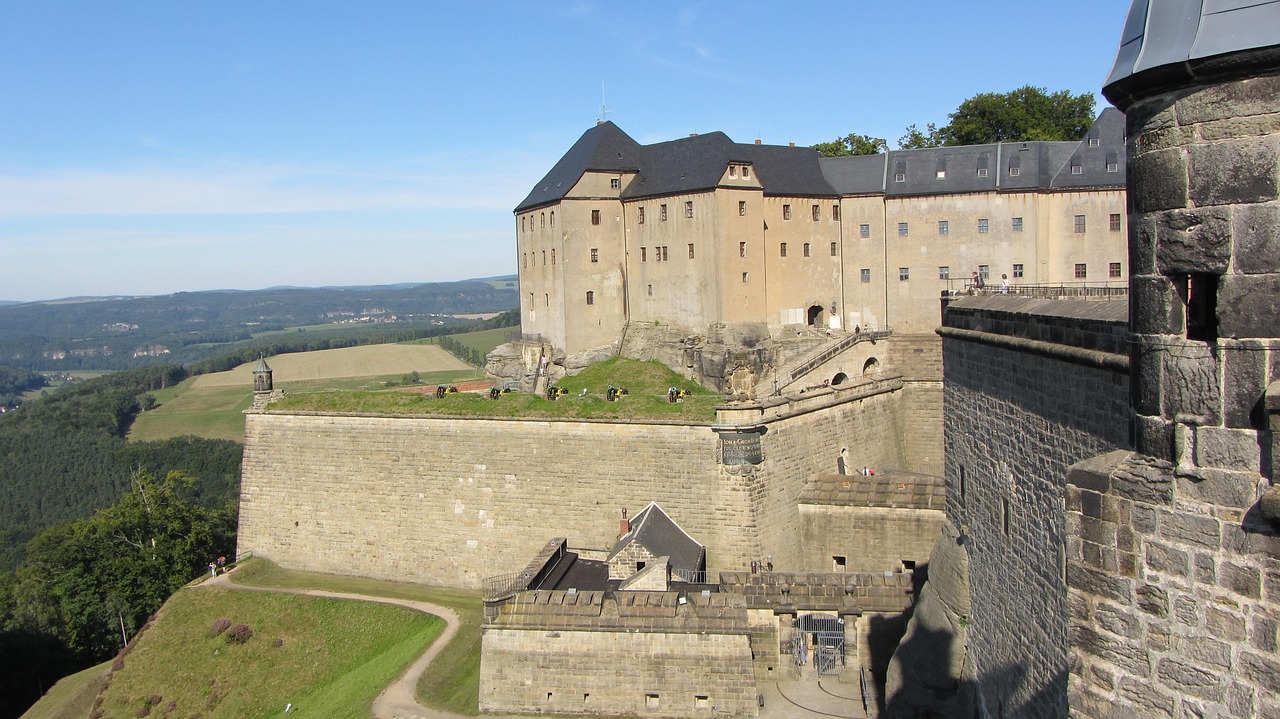
If you’re choosing between a dozen castles in Germany, why should Konigstein Fortress make the cut? Because it’s not just “another castle.” It’s an entire fortified world on a rock table, with 360-degree views over the Elbe Valley, layered history from medieval monastery to Renaissance stronghold to state prison, and a surprisingly relaxed, open-air feel once you get inside.
On my most recent visit in spring 2026, I spent almost eight hours up there without noticing the time. I watched school groups racing along the ramparts, grandparents quietly reading the exhibition panels, and couples sharing a beer at the panoramic beer garden while the evening light turned the sandstone walls honey-gold. The fortress is vast enough that you can always slip away to a quieter corner—even on a busy summer weekend.
Konigstein Fortress is special because it combines:
- Spectacular scenery – sheer cliffs, the Elbe river looping below, distant sandstone towers.
- Authentic architecture – no Disneyland vibe; the defensive works feel serious and real.
- Family-friendly exploration – tunnels, cannons, drawbridges and huge open courtyards.
- Romantic viewpoints – quiet walls at sunset, vistas that look straight out of a painting.
- Adventurous surroundings – hiking, climbing, and river activities in Saxon Switzerland.
Whether you have a 1 day itinerary for Konigstein Fortress or you’re planning 3 days in Konigstein Fortress and the surrounding region, this is one of Germany’s most rewarding historic sites—and far less international-touristy than Neuschwanstein or Heidelberg.
Table of Contents
- Why Konigstein Fortress Belongs on Your Itinerary
- 1–3 Day Itineraries: How Long to Spend & What to See
- The Main Approach & First Impressions
- Walking the Ramparts: The Classic Panoramic Circuit
- The Deep Well & Inner Courtyards
- The Old Arsenal & Military Exhibitions
- Friedrichsburg & the Iconic Viewpoint
- Baroque Casemates & Underground Fortifications
- Chapel, Prison Cells & Everyday Life Behind the Walls
- Adjacent Sites: Town of Königstein, Lilienstein & Elbe Valley
- Eating & Drinking Around Konigstein Fortress
- Where to Stay Nearby
- Konigstein Fortress After Dark & Off-Hours Magic
- Culture, Local Customs & Etiquette
- Events & What’s New in 2026–2027
- Day Trips & Nearby Attractions
- Konigstein Fortress Tickets, Opening Hours & Practical Logistics
- Money-Saving & Travel Tips (SIM, Transport, Visas, Driving)
- Best Time to Visit Konigstein Fortress
- Summary & Final Recommendations
Recommended 1–3 Day Itineraries
I’ve tried all variants over the years: a rushed half-day on a quick Dresden trip, lazy long weekends based in the Elbe valley, and full hiking-focused stays. Below are three flexible itineraries: 1 day itinerary for Konigstein Fortress, 2 days in Konigstein Fortress and surroundings, and a deeper 3 day itinerary for Konigstein Fortress that folds in nearby villages and hiking.
1 Day Itinerary for Konigstein Fortress
If you only have 1 day in Konigstein Fortress, focus on the classic highlights: the ramparts, deep well, casemates, Friedrichsburg, and a bit of time in the town below. This is roughly how I structure it when I bring visiting friends from abroad.
Morning: Arrival & First Sweep of the Ramparts
I usually catch a mid-morning S-Bahn from Dresden to Königstein (about 40 minutes), then either:
- Walk up from the town (steep but scenic, 30–40 minutes), or
- Take the shuttle bus to the fortress entrance and then the glass elevator.
For a first-time visitor with limited time, I actually recommend taking the elevator up. It drops you right into the heart of the experience: the moment the doors open and you step into the upper courtyard, the entire plateau feels like a hidden village in the sky.
After a quick glance at the map (don’t overthink the routes; you’ll naturally loop around), I turn right and head straight for the ramparts. This outer circuit is the best way to “read” the fortress: every few meters gives a different angle on the Elbe, the Bastei bridge in the distance, or the toy-like trains far below.
Allow at least 1.5–2 hours for a first circuit if you like to take photos. There are several big cannons and lookouts—my personal favorite is the stretch facing the Lilienstein mesa, where the light often breaks through clouds in streaks, even on grey days.
Late Morning: Deep Well & Inner Courtyards
Next, I wander back into the heart of the fortress to visit the deep well, one of Europe’s deepest at 152.5 meters. Yes, it’s a well, and yes, it sounds like a niche attraction, but the demonstration is surprisingly fun—especially for kids. A bucket is lowered, a camera shows its journey, and when it hits the water, the echo comes back several seconds later.
Around the well, the inner courtyards unfold like a small town: barracks, the old bakery, storehouses. This is where I like to slow down and imagine the fortress as a living community, not just a military machine. Look for subtle architectural details: carved stone window frames, worn thresholds, and the faint outlines of older structures absorbed into later buildings.
Lunch with a View
By now, hunger has usually kicked in. I often grab a simple lunch at the panoramic beer garden on the south side of the fortress: grilled Bratwurst, Kartoffelsalat (potato salad), and a local Saxon beer. It’s not haute cuisine, but the view over the Elbe makes everything taste better.
If you’re picky about food, bring a picnic: the fortress allows it, and there are several benches with shade. In 2026, there’s also a small kiosk offering vegetarian and vegan wraps—still basic, but a welcome addition.
Afternoon: Casemates, Arsenal & Friedrichsburg
After lunch, I dive into the more structured exhibitions. Start with the Baroque casemates, the underground defensive corridors built to withstand sieges. The temperature drops a few degrees as you enter; on hot summer days, this is bliss. The audio-visual displays are modern without being gimmicky, and kids love the sense of being in a secret tunnel-world.
From there, head to the Old Arsenal. The collection of weapons and uniforms is interesting if you’re into military history, but what I really love is how they explain the logistics of running a fortress this size: grain storage, water supply, and the sheer amount of manpower needed to keep everything ready.
Finally, walk out to the Friedrichsburg, a small, elegant building perched on a rocky spur. This is one of the best viewpoints in the entire complex. On a clear day you can trace the Elbe’s bends for kilometers and see tiny ferries shuttling people across.
Late Afternoon: Descent & Königstein Town
With a one-day itinerary, I suggest leaving the fortress around 16:00–17:00 and walking down the footpath to the town. It’s steep in sections but paved, and the glimpses of the fortress walls between the trees give you a sense of its true scale.
In Königstein town, I like to sit at one of the small cafés near the river—Café Rauschenbach has good cake and coffee—and watch the evening trains and boats. If you’re headed back to Dresden, there are frequent S-Bahn connections; if you’re staying in the valley, this is the perfect time for a riverside stroll.
2 Day Itinerary for Konigstein Fortress
With 2 days in Konigstein Fortress and surroundings, you can spend a more relaxed full day up on the rock and then add a hike or river excursion on day two.
Day 1: Deep Dive into the Fortress
Use the 1 day itinerary for Konigstein Fortress as your base, but slow it down: linger in exhibitions, visit every small chapel and outbuilding, and take breaks at different viewpoints. I often bring a book and spend half an hour on one of the quieter walls, just watching the clouds move over the Elbe Sandstone Mountains.
Day 2: Lilienstein & Elbe River
The next morning, I head across the river to Lilienstein, the mesa you see from the fortress ramparts. It’s a straightforward hike (allow 3–4 hours round-trip from the ferry), with iron staircases in some sections and multiple viewpoints at the top.
In the afternoon, reward your legs with a gentle Elbe river cruise between Königstein and Bad Schandau or Pirna. The historic paddle steamers operated by Sächsische Dampfschiffahrt are wonderfully nostalgic; I always sit on the upper deck with a coffee and just watch the cliffs glide by.
3 Day Itinerary for Konigstein Fortress
3 days in Konigstein Fortress area is ideal if you want to mix history, hiking, and slow travel. Here’s how I usually structure a long weekend with friends or family.
Day 1: Fortress Highlights & Evening in Königstein
Follow the core 1 day itinerary, but time your visit so you’re still in the fortress around golden hour. In summer, this means a later start (arrive around 11:00–12:00 and stay until closing). The light over the Elbe valley at that time is incredible, and the day-tripping crowds have usually thinned out.
Day 2: Bastei Bridge & Rathen
On day two, I recommend visiting the famous Bastei Bridge near Rathen. It’s more crowded than Lilienstein, but the rock formations and viewpoints are unmissable if you’re already in the region. Take the train to Kurort Rathen, cross by ferry, and follow the well-marked path up to the Bastei (about 40–50 minutes). The views back toward Königstein and the Elbe are dramatic.
In the afternoon, relax in Kurort Rathen: rent a paddleboat on the Amselsee, have cake in one of the garden cafés, or catch an outdoor performance at the Rathen rock stage (Felsenbühne Rathen) if the schedule aligns.
Day 3: Slow Fortress Morning & Spa Afternoon
For the final day, I like a slower rhythm. If your ticket options and opening hours allow, revisit Konigstein Fortress for a couple of hours first thing in the morning, when it’s at its quietest. Focus on corners you rushed through before: the chapel, smaller exhibitions, or simply another loop of the ramparts.
In the afternoon, head to Bad Schandau, a small spa town upriver. The Toskana Therme there (thermal spa) is perfect for soaking tired legs. I like to end the trip with a long soak, then dinner in one of Bad Schandau’s riverside restaurants before catching the train back to Dresden or your next destination.
The Main Approach: Getting Up to Konigstein Fortress
Your experience of Konigstein Fortress begins long before you see a cannon or a casemate. The approach itself shapes your sense of scale—and you have two main options: slow and scenic on foot or quick and easy via shuttle and elevator.
Arriving in Königstein
Most visitors arrive by train. The S-Bahn S1 runs from Dresden to Königstein every 30 minutes or so, hugging the banks of the Elbe the entire way. I still prefer this to driving, even when I have a car, because the views from the train windows are fantastic: vineyards, river bends, occasional glimpses of sandstone towers.
From Königstein station, you can:
- Walk into town (5–10 minutes), then follow signs up to the fortress.
- Catch the local fortress shuttle bus during main season.
- Call a taxi if you have heavy luggage or mobility issues.
Walking Up vs. Riding Up
I’ve done the walk up in every season. It’s steep, but not technical: a combination of residential streets, forest path, and a final approach that brings you under the looming fortress walls. If you have the time and reasonable fitness, I recommend walking at least one way. It gives you a visceral sense of how imposing this rock plateau really is.
The shuttle + elevator combo is more practical if:
- You’re traveling with small children or older relatives.
- It’s extremely hot or icy.
- You’re on a tight schedule and want to maximize time inside.
First Impressions at the Gate
However you arrive, you’ll pass through the massive gate complex. Take a moment to look up: the height and thickness of the walls are intimidating, even now. In busy summer periods, there can be a short queue at the ticket office and the glass elevator, but it generally moves quickly outside of absolute peak hours (11:00–14:00 in July–August).
A small but useful tip I’ve learned: check the forecourt bathrooms before you go up. There are facilities on the plateau as well, but if one is temporarily closed for cleaning or busy (common with school groups), it’s nice not to have to backtrack.
Walking the Ramparts: The Panoramic Heart of Konigstein Fortress
The ramparts are where Konigstein Fortress really comes alive. No photo or drone shot quite prepares you for the feeling of standing on the edge of this rock table, the Elbe carving through the valley far below.
The Classic Circuit
I like to walk the ramparts clockwise after entering from the elevator courtyard. This naturally brings you past some of the best viewpoints in a logical order:
- South-facing walls with views over Königstein town and the Elbe.
- Eastern edge facing Lilienstein and towards Bad Schandau.
- Northern arc with glimpses of the Bastei area.
- Western side, usually quieter, with forested slopes below.
The full circuit, with photo stops and a bit of daydreaming, takes me about 60–90 minutes. On a clear winter’s day in early 2026, with snow clinging to the trees below and the Elbe shining steely grey, I took almost two hours—every corner seemed to demand another picture.
What to Look For
As you walk, pay attention not just to the big sky views but also the fortress itself:
- Gun emplacements and bastions – note how they’re angled to cover different approach routes.
- Drainage channels cut into the stone, showing practical engineering for heavy rains.
- Carved dates and initials – some are relatively modern, but others hint at centuries of bored soldiers and workers.
Family, Romantic & Photographic Angles
For families, the ramparts are a giant, safe adventure path. The barriers are solid, but still keep an eye on enthusiastic kids—they’ll want to climb on everything. My niece still talks about “the castle in the sky where the trains look like toys.”
For couples, I recommend timing at least one lap around sunset. In summer, the light can be almost golden-pink as it reflects off the sandstone cliffs across the valley. The eastern side of the ramparts is especially good for this, looking back toward the last light over the river.
For photographers, bring a mid-range zoom lens. Wide-angle is great for capturing the expanse, but a zoom lets you pick out tiny churches on distant hills, trains curving along the Elbe, and climbers on the rock towers in the national park.
The Deep Well & Inner Courtyards
The deep well is both literal and symbolic: it speaks to the fortress’s biggest obsession—self-sufficiency. A fortress that can’t hold water can’t hold out in a siege.
A Well That Feels Bottomless
The well shaft was cut into solid rock in the late 16th century, and it took years of labor with hand tools. In the demonstration, when they drop a bucket or pour water from the top, you wait, and wait, and only then hear the distant splash. Children are usually speechless for a moment, then erupt in delighted chatter.
In practical terms: the well area is indoors and can be a welcome rain or heat break. But it’s compact, so if you’re visiting in peak season, try to hit it in the mid-morning or late afternoon, not exactly at noon when tour groups cluster.
Life in the Inner Courtyards
Around the well and the central courtyard, you’ll find buildings that supported daily life: workshops, kitchens, storage houses. I often like to stand in the middle and do a slow 360-degree turn, imagining the soundscape a few centuries ago: blacksmith hammers, carts, the crackle of fires, shouted orders.
Many of these buildings now house mini-exhibitions—on fortress bakery operations, uniforms, or religious life. None individually demands a huge amount of time, but taken together they give you a sense of a self-contained community.
The Old Arsenal & Military Exhibitions
The Old Arsenal is the intellectual core of the fortress visit if you’re interested in history. It covers Konigstein’s evolution from medieval outpost to Renaissance stronghold to 19th–20th-century state prison and military storehouse.
Highlights Inside
Inside the Arsenal, you’ll find:
- Scale models of the fortress over time, showing how its bastions and buildings grew.
- Weapon collections: cannons, muskets, later rifles, and the logistics behind them.
- Exhibits on Konigstein as a prison, including for high-profile political prisoners.
On a chilly autumn day in 2025, I spent nearly two hours here with a friend who’s obsessed with early modern warfare. We barely scratched the surface. If you’re less of a history buff, give it at least 30–45 minutes and focus on the models and prisoner stories—they’re the most engaging.
Tips for Visiting the Arsenal
- It’s indoors and heated in winter, making it ideal for bad-weather days.
- The signage has improved in recent years with more English translations, but some panels remain German-only; a translation app can help.
- Photography is typically allowed without flash, but check signs at the entrance in case of temporary restrictions.
Friedrichsburg: The Fortress’s Balcony over the Elbe
If the fortress is a giant stone ship, Friedrichsburg is the figurehead. Built as a representative small palace and ceremonial gate in the 16th century, it now serves as one of the most romantic viewpoints on the plateau.
View & Atmosphere
On my last summer visit, I sat on the bench just outside Friedrichsburg for nearly an hour, watching small pleasure boats and bulky cargo ships share the Elbe below. Swallows darted below the cliffs, and I could hear faint echoes from a tour boat’s microphone drifting up.
This is a spot where time stretches. Families tend to move through relatively quickly, so you can often find a quiet moment here even on busier days. It’s also my favorite place for:
- Couple photos – the backdrop is unbeatable.
- Sketching – I’ve seen several locals sit here with notebooks and watercolors.
- Golden hour – the light along the river can be extraordinary.
Baroque Casemates & Underground Fortifications
The Baroque casemates feel like stepping behind the scenes of the fortress. These vaulted underground corridors and chambers were designed to protect artillery and soldiers during bombardment.
What It’s Like Inside
The air is cooler and slightly damp; your footsteps echo on stone. In some sections, multimedia installations project scenes of soldiers preparing cannons or loading supplies. As someone who usually dislikes overly theatrical museum displays, I find these well-judged—they add atmosphere without overwhelming the architecture.
Kids tend to love the labyrinth feeling, so if you’re traveling as a family, allow at least 45–60 minutes. For anyone claustrophobic: the spaces are spacious, not narrow tunnels, and there are frequent exits back to the open air, but you may want to peek in first before committing to the full route.
History in Brief
Built primarily in the 17th and 18th centuries, the casemates were part of Konigstein’s adaptation to changing warfare. Cannon technology had improved; walls alone were no longer enough. The fortress had to become a three-dimensional defense system, with protected firing positions and fallback zones.
Chapel, Prison Cells & Everyday Life Behind the Walls
Beyond cannons and bastions, Konigstein Fortress was also a small, isolated town—complete with spiritual life and strict discipline.
The Fortress Chapel
The small chapel is one of the quietest spaces on the plateau. I like to step inside even on my shortest visits. The simple Baroque interior, wooden pews, and soft light filtering through small windows create a contemplative mood.
Occasionally, you may catch a brief organ rehearsal or a small concert—check the fortress program if you’re visiting in summer or around Christmas. Sitting there, listening to music in that intimate stone space, is one of the more moving experiences I’ve had up here.
Prison Cells & High-Profile Prisoners
Konigstein has long been used to hold important prisoners, from Saxon nobles to 19th-century political figures and even some WWII detainees. A few of the prison cells are open to visitors, with interpretive panels telling the stories of those who were held here.
One of the things that struck me, reading those stories, is how both secure and monotonous life must have been here: impossible to escape, but also impossible to really “live” in any full sense. That contrast between the dramatic exterior views and the inward-turning life of prisoners is powerful.
Adjacent Sites & Viewpoints Linked to Konigstein Fortress
Your ticket and your time in the area open up not just the fortress itself, but a whole network of viewpoints and villages that feel naturally connected to it. These are the places I return to again and again.
Königstein Town
The town of Königstein itself, tucked at the base of the rock, is small, a little sleepy, and authentic. It’s not a checklist destination; it’s a place to stroll and exhale after the fortress visit.
I like to:
- Walk the riverside promenade and watch trains and boats go by.
- Sit at a café on the main square and people-watch.
- Explore the side streets for half-timbered houses and small gardens.
Lilienstein Mesa
Lilienstein is the perfectly shaped mesa you see from the fortress. Hiking it completes a kind of visual circle: from the fortress you look at Lilienstein; from Lilienstein you look back at the fortress.
The hike is moderate but involves some staircases and rocky paths. Wear proper shoes and bring plenty of water in summer. On clear days you can see well into the Czech Republic.
The Elbe Valley & River Cruises
The Elbe is the region’s spine. A short river cruise between Königstein and Pirna or Bad Schandau gives you a different angle on the fortress and the cliffs. Historic paddle steamers run most of the year, with more frequent schedules in high season.
Eating & Drinking Around Konigstein Fortress
Let’s be honest: food inside major attractions is rarely the highlight. Konigstein Fortress is better than average, but the real culinary fun starts a short walk or train ride away.
Inside the Fortress
Inside, you’ll find:
- A panoramic beer garden with grilled sausages, simple hot dishes, and beer.
- Snack kiosks with pretzels, ice cream, and soft drinks.
- A small café-style spot with coffee and cake slices.
My go-to is a classic Bratwurst im Brötchen with mustard: quick, warm, and easy to eat at a viewpoint. Vegetarians can generally find at least one warm option (soup or pasta) in peak season, and in 2026 a falafel-style wrap has appeared on some menus, but choice is still limited.
Around Königstein & Nearby Villages
For a more local feel, eat before or after your fortress visit in the valley. A few personal favorites:
- Gasthaus Zum Türmchen (Königstein) – Solid Saxon classics like Sauerbraten (marinated roast) and Klöße (dumplings), with friendly service.
- Café Rauschenbach (Königstein) – Homemade cakes, good coffee, and occasional seasonal specialties like Zwetschgenkuchen (plum cake).
- Restaurants in Bad Schandau – A short train ride away, with more variety, including vegetarian-friendly menus and river-view terraces.
What to Bring with You
I almost always bring:
- A reusable water bottle (there are toilets and sinks, but not many fountains).
- A small snack (nuts, fruit, or a bakery sandwich from Königstein or Dresden).
- A light picnic if I know I’ll spend the whole day up there.
Where to Stay Near Konigstein Fortress
When I stay overnight in the area, I try to balance easy fortress access with the charm of the Elbe valley and the hiking trails.
Königstein & Direct Surroundings
Staying in Königstein itself means you can walk to the fortress in the morning and down in the evening. Guesthouses are mostly small and family-run. Expect:
- Simple but comfortable rooms.
- Hearty breakfasts (cold cuts, cheese, bread, boiled eggs).
- Often, very friendly hosts who know the area intimately.
Bad Schandau & Kurort Rathen
For a slightly more polished experience, I often base myself in Bad Schandau: more restaurants, spa facilities, and a nice promenade. Kurort Rathen is more compact and very scenic, ideal if you plan to hike the Bastei and still want easy access back to Königstein by train.
Dresden as a Base
If you’re short on time or prefer city amenities, Dresden works perfectly as a base: you can do Konigstein Fortress as a day trip by train and still be back in the city for evening meals and nightlife.
Konigstein Fortress After Dark & Off-Hours
The standard visitor experience is firmly daytime. But if you can, aim for off-hours: early morning, late afternoon, or special evening openings.
Golden Hour & Blue Hour
My favorite times:
- Golden hour (before sunset) – The sandstone cliffs and fortress walls glow, and the Elbe reflects the sky like metal.
- Blue hour (just after sunset) – Particularly atmospheric in winter, when lights in the valley towns flicker on.
Special Evening Events
In recent years, the fortress has hosted occasional evening concerts, torchlight tours, and seasonal programs (for example, during Advent). For 2026–2027, look out for:
- Summer open-air concerts in the courtyards.
- Selected “night at the fortress” tours with limited numbers.
- Advent/Christmas markets or themed weekends (check the official website closer to the date).
These often require advance booking and separate tickets, but they’re magical: walking the ramparts by lantern light, with just a small group, changes your whole sense of place.
Cultural Etiquette & Local Customs
Saxony is friendly but fairly traditional in some ways. A few small gestures go a long way.
Language & Politeness
Basic German greetings are appreciated:
- Guten Tag (good day) when entering shops, cafés, or ticket offices.
- Auf Wiedersehen when leaving.
- Danke (thank you) and Bitte (please/you’re welcome).
Many younger staff in tourism speak some English; older staff may not be as comfortable, but a smile and patience help. Don’t assume everyone speaks English by default—starting in German is seen as respectful.
Behavior at the Fortress
- Stay off barriers and walls. Climbing where prohibited is taken seriously; it’s a safety and preservation issue.
- Keep noise moderate in the chapel and indoor exhibitions.
- Leash dogs and pick up after them; dogs are generally allowed on the plateau but not in some interior spaces.
Tipping & Payments
In restaurants and cafés, it’s customary to leave about 5–10% as a tip, handed directly when paying (not left on the table). Many smaller places still prefer cash, though card acceptance is improving. At fortress kiosks, rounding up small change is appreciated but not obligatory.
Events & What’s New in 2026–2027
Konigstein Fortress regularly updates its exhibitions and seasonal programs. While exact schedules can shift, here’s what’s planned or expected for 2026–2027 based on current announcements and patterns:
- 2026: Expanded multimedia in the Baroque casemates – New interactive elements aimed at families and school groups, with better English-language support.
- Summer 2026 & 2027: Open-air concert series – Classical and folk performances in the inner courtyards on selected weekends (June–August).
- Autumn 2026: Themed “Fortress in Transition” exhibition – Focusing on 19th–20th century political uses of the fortress.
- Advent 2026 & 2027: Fortress Christmas events – Small-scale markets, candlelit tours, and children’s programs on selected Advent weekends.
Always confirm on the official Festung Königstein website a month or two before your trip; events can change with funding and restoration schedules.
Day Trips & Nearby Attractions from Konigstein Fortress
Konigstein Fortress sits in the heart of Saxon Switzerland National Park, one of Germany’s most beautiful regions. With an extra day or two, you can explore:
Bastei & Rathen
Covered in the 3 day itinerary, the Bastei area is an easy half-to-full day trip by S-Bahn. Go early to avoid crowds and combine with Rathen’s lakes and rock stage if time allows.
Bad Schandau & Schrammsteine
Bad Schandau is the main gateway to more serious hiking like the Schrammsteine: jagged rock ridges with iron staircases and exposed viewpoints. This is for reasonably fit, sure-footed hikers—not little kids or those with vertigo—but the views are incredible.
Pirna
Pirna, a charming small town between Dresden and Königstein, has a beautifully restored old town with pastel facades and cobbled streets. It’s a good stop on your way to or from Dresden: have lunch, wander, maybe visit a small local museum, and continue.
Dresden
Dresden is the obvious anchor city. The train connection is so straightforward that it feels almost wrong not to combine the two: fortress by day, Baroque city by evening.
Konigstein Fortress Tickets, Opening Hours & Practical Logistics
Logistics matter, especially if you only have a 1 day itinerary for Konigstein Fortress and want to make every hour count.
Opening Hours (Typical Pattern, 2026)
Exact times vary by season, but roughly:
- April–October: approx. 09:00–18:00 (longer on some days in high summer).
- November–March: approx. 09:00–17:00, with potential reduced hours in very bad weather.
Last entry is usually 30–60 minutes before closing. Check the official site for your exact dates, especially around holidays.
Tickets & Timed Entry
In 2026, Konigstein Fortress uses a mix of on-site and online ticket sales:
- Standard day ticket – full access to ramparts, exhibitions, and regular programs.
- Discounts for children, students, and sometimes family passes.
- Special tickets for evening events or guided tours (book ahead).
On very busy days (summer weekends, public holidays), there may be soft capacity limits on the elevator and some interior spaces, but as of 2026, there is not a strict, universal timed-entry system for all visitors. Still, buying online in advance saves you from potential ticket-office queues.
Peak Hours & How to Avoid Crowds
Based on many visits over many years:
- Peak hours are typically 11:00–15:00, especially on sunny weekends from May to September.
- Arrive at opening time or after 15:30 for a calmer experience.
- School groups are most common on weekday mornings outside school holidays.
Dress Code, Weather & Footwear
There’s no formal dress code, but:
- Wear comfortable walking shoes. You’ll be on cobbles, stone, and occasionally uneven surfaces all day.
- Bring a windproof layer; the plateau can be breezier and cooler than the valley.
- In summer, sun protection is a must; shade is limited on the ramparts.
Photography Restrictions
Outdoor photography is freely allowed and encouraged. Some indoor exhibitions may restrict flash or tripods; watch for signs. Drones are not allowed without special permission, due to safety and conservation concerns.
Accessibility
Konigstein Fortress is more accessible than many historic sites:
- The glass elevator brings you from the base up to the plateau level.
- Many key paths and exhibitions are wheelchair-accessible or have ramps.
- Some older buildings and underground casemates remain less accessible due to steps and uneven floors.
The fortress website publishes a detailed accessibility map; it’s worth checking in advance if mobility is a concern.
Security & Queue Times
Security is present but discreet: bag checks may be conducted during special events, but general entry is usually smooth. Expect:
- 5–15 minutes at the ticket office on busy days if you don’t have an online ticket.
- Short waits for the elevator during peak arrival and departure times.
Practical Travel Tips: Saving Money, Getting Around & Connectivity
How to Get There Without Wasting Time
From Dresden:
- Take the S1 S-Bahn towards Bad Schandau/Schöna and get off at Königstein (about 40 minutes).
- Trains run roughly every 30 minutes during the day.
By car, follow the A17 and B172. Parking is available near the fortress access road and in town, but on peak days it can fill up; arrive early if driving.
Public Transport, Tickets & Passes
The region is well-covered by VVO (Verkehrsverbund Oberelbe). Consider:
- Day tickets covering trains, buses, and some ferries in the area.
- Seasonal offers like the Deutschlandticket (if still in effect in 2026), which offers broad regional travel on local trains for a flat monthly fee.
Car Rental & Foreign Driving Licenses
If you prefer driving:
- Most visitors from the EU, UK, US, Canada, Australia, and many other countries can use their national driving license for short stays in Germany.
- An International Driving Permit (IDP) can be useful as a supplement, especially if your license is not in Latin script or if a rental company requests it.
- Parking in valley towns is generally easier than in Dresden, but always check local signage.
Visa Requirements
Germany is part of the Schengen Area. Visitors from many countries (including the EU, UK, US, Canada, Australia, New Zealand, Japan, and others) can enter visa-free for short stays, usually up to 90 days in a 180-day period. Others will need to obtain a Schengen visa in advance.
Visa rules are subject to change; check your country’s official guidance and the German consulate website well before traveling.
SIM Cards & Connectivity
Mobile coverage at the fortress and in the valley is generally good, though you may hit occasional weak spots in deeper ravines.
- EU visitors can usually roam under “Roam like at home” rules (check your plan).
- Non-EU visitors can buy prepaid SIM cards from major providers (Telekom, Vodafone, O2) at airports, in Dresden, or at larger supermarkets.
- eSIM options are increasingly available and convenient in 2026.
Money-Saving Tips
- Use regional day tickets for the S-Bahn and local buses if making multiple journeys.
- Bring your own snacks and water; buy hot meals either in town or choose selectively in the fortress.
- Travel in the shoulder seasons (April–May, September–October) for lower accommodation prices and fewer crowds.
- Check if there are combined tickets or discounts for families, students, or certain events.
Best Seasons for Different Activities
Konigstein Fortress is open year-round, but the experience shifts with the seasons:
- Spring (April–May): Ideal for mixed fortress + easy hiking; fresh green in the valley, still-quiet trails.
- Summer (June–August): Long days, best for extensive hiking and river cruises, but also peak crowds and higher heat on the plateau.
- Autumn (September–October): My personal favorite: golden forests, comfortable temperatures, fewer visitors, atmospheric mists over the river in the mornings.
- Winter (November–March): Shorter hours and some facilities may be limited, but snow on the fortress and cliffs is magical. Dress very warmly and check weather-related notices.
Hidden Tips from Many Visits
- Start with the ramparts. It orients you for everything else and lets you build your own mental map.
- Carry small cash. Not everywhere takes cards, especially smaller kiosks and rural cafés.
- Pack light but smart. Water, a snack, a light layer, and a small umbrella can save the day.
- Use the early or late hours. The difference in atmosphere compared to midday bus tour rush is enormous.
Best Time to Visit Konigstein Fortress
In terms of pure comfort, late spring and early autumn are the sweet spots:
- May–early June: Fresh green landscapes, longish days, not yet peak season.
- September: Warm days, cooler nights, shifting colors in the trees.
If your main priority is hiking and outdoor adventures in the national park, aim for May–October. If you’re more interested in atmospheric views, quiet ramparts, and maybe a Christmas event, a clear winter day can be unbeatable—as long as you dress for it.
Summary & Final Recommendations
Konigstein Fortress isn’t just one of the best places to visit in Konigstein Fortress area; it’s one of the most compelling fortresses in Central Europe. With its massive ramparts, deep well, Baroque casemates, and soft layers of human history, it rewards slow exploration.
If you only have 1 day in Konigstein Fortress, focus on the ramparts, deep well, casemates, Friedrichsburg, and a stroll in Königstein town. With 2 days, add Lilienstein or an Elbe cruise. With 3 days, fold in Bastei, Bad Schandau, and more hiking.
Plan ahead for tickets and opening hours, respect local customs and etiquette, and time your visit to the early morning or late afternoon where possible. Whether you come as a family, a couple, or a solo traveler with a camera and a curiosity for history, Konigstein Fortress will likely leave you with the same feeling that keeps pulling me back: a sense of having stepped into a self-contained stone world, floating just above everyday life.
And when you stand on the ramparts, watching the Elbe slide quietly below and trains gliding along its banks, remember to turn away from your camera for a moment and simply look. That’s when Konigstein Fortress really sinks in.