Why Visit Lake Chiemsee in 2026
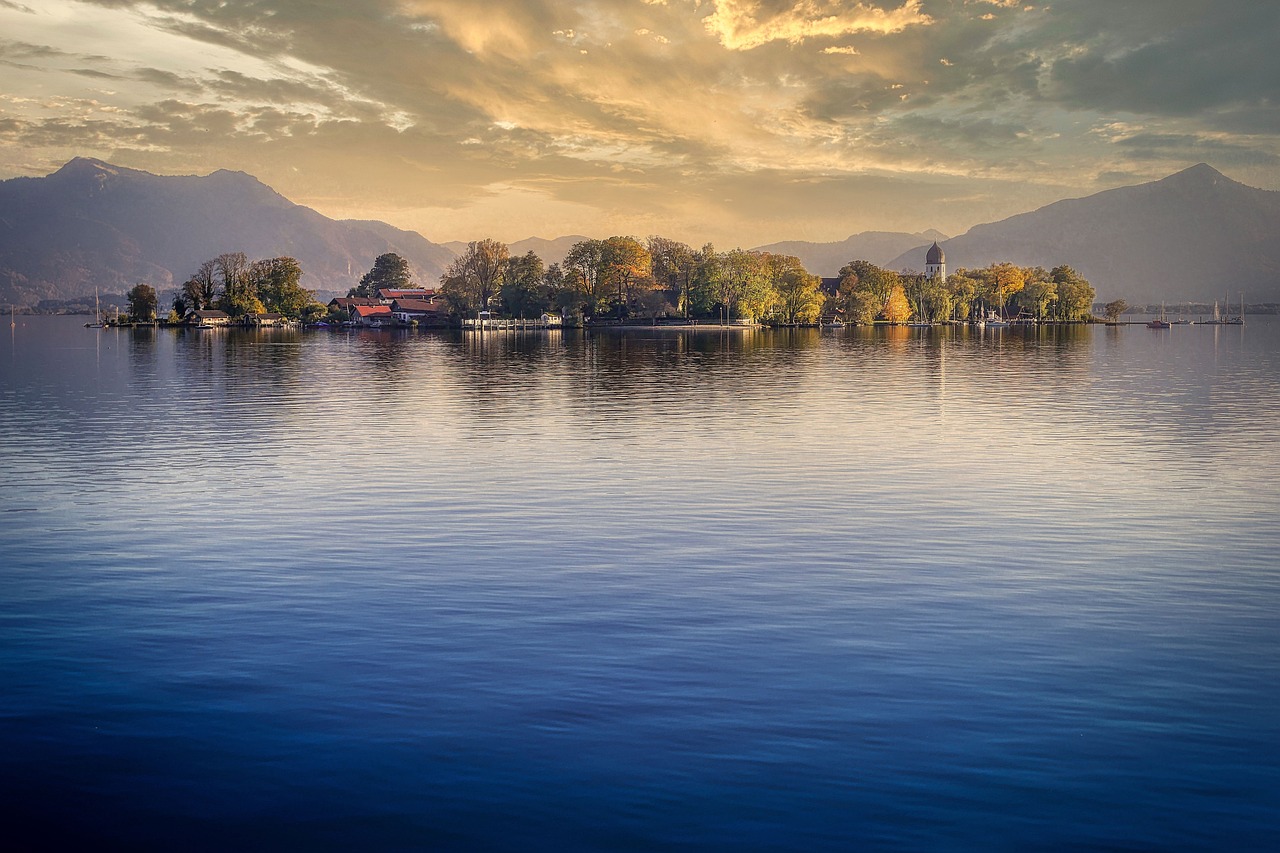
Lake Chiemsee is the lake Bavarians escape to when they want to breathe again. The mountains of the Chiemgau Alps rise blue and soft on the southern horizon, ferries draw white lines across the water, and church towers and onion domes punctuate reed-fringed shores. I first came here in 2011 on a rushed day trip from Munich; by 2026 I’ve lost count of how many times I’ve returned, staying in everything from lakefront guesthouses in Prien to farm stays on the quiet eastern shore.
What makes Chiemsee special isn’t just that it’s beautiful (it is, in that effortless, postcard-Bavaria way). It’s that the lake has layers. You can do the classic circuit: Herreninsel with its Versailles-inspired palace, Fraueninsel with its monastery and beer gardens, Prien and Gstadt with their promenades. But if you stay a few days, you start to notice the rhythm: fishermen heading out before dawn, kids learning to sail in sheltered bays, locals biking between lakeside villages on near-car-free paths, and a soft collective exhale each evening as the last day-trip boat disappears and the lake calms.
In 2026, Chiemsee is as popular as ever with Germans, Austrians, and Swiss travelers, but still strangely under-known internationally compared with Königssee or Lake Garda. That’s good news for you. It’s easy to reach from Munich or Salzburg, yet it still feels like a place where people live first and tour second. You can go fully car-free, spend most of your time on boats and bikes, and eat your body weight in freshwater fish and alpine cheese.
This long-form travel guide is written for travelers who want more than a checklist of “things to do in Lake Chiemsee.” I’ll walk you clockwise around the lake, into the islands, and up into the surrounding hills, sharing where I actually stay, where I swim, the piers I keep to myself, and which villages make the best base depending on whether you’re here for romance, family holidays, or quiet hiking retreats.
Lake Chiemsee at a Glance
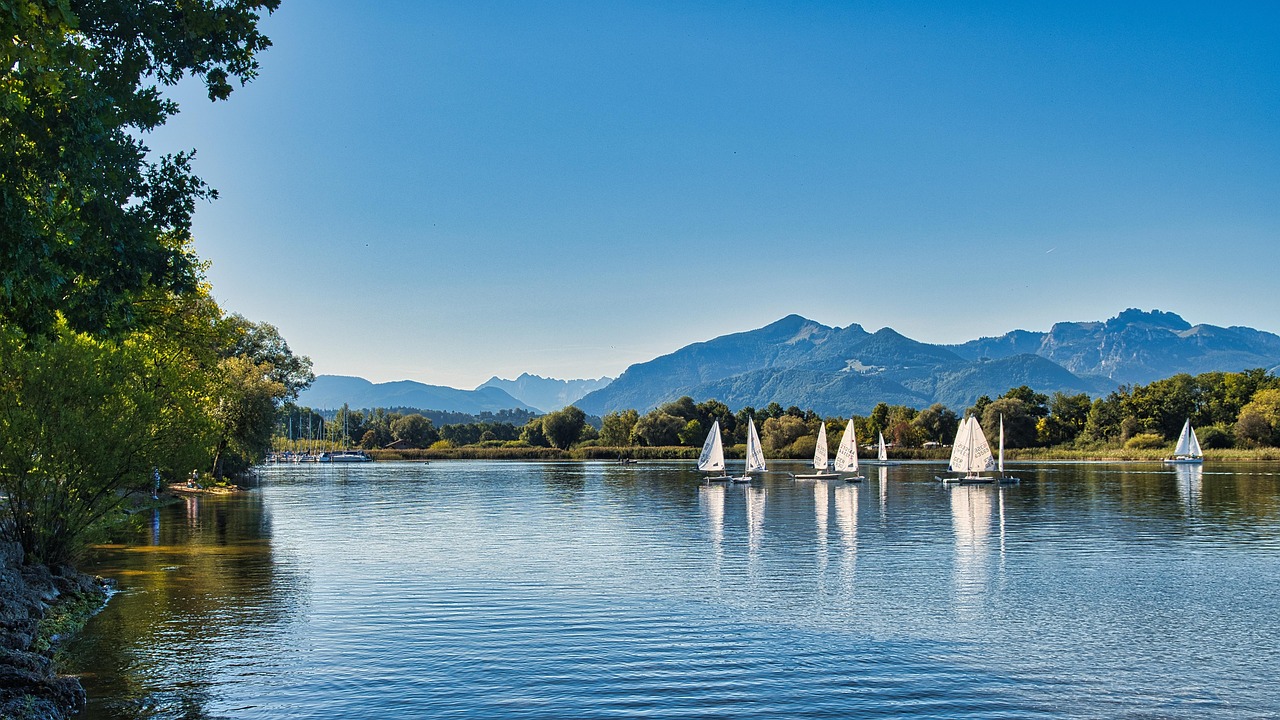
Lake Chiemsee is Bavaria’s largest lake by surface area, covering about 80 square kilometers. It sits at roughly 518 meters above sea level, framed by the Chiemgau Alps to the south and gentle rolling farmland to the north. Three main islands punctuate the lake: Herreninsel (home to King Ludwig II’s palace), Fraueninsel (a living monastery island with a tiny, atmospheric village), and the much smaller Krautinsel (uninhabited, used historically for vegetable gardens).
The character of the lake shifts as you move around it:
- Western shore (Prien, Rimsting): Best for first-time visitors, families, and those arriving by train. This is the main ferry hub with classic promenades, boat rentals, and easy access to both islands.
- Southern shore (Bernau, Felden, Übersee): Broad pebble and grassy beaches, campgrounds, and big-sky views of the Alps. Ideal for swimmers, sunbathers, and watersports, with the most “holiday” feel in summer.
- Eastern shore (Chieming, Seebruck): Quieter, more open, with long bike paths and reed belts. Good for families who want space, cyclists, and those seeking calmer sunsets.
- Northern shore (Gstadt, Breitbrunn): More intimate, with smaller harbors, hidden coves, and a slightly more “local” feel. Fantastic views back towards the islands and the Alps.
- The islands: Herreninsel is your must-see cultural stop; Fraueninsel is where you slow down, eat fish, and debate missing the next boat on purpose.
Chiemsee is well-connected by the A8 motorway and regional trains. Once you’re here, boats, bikes, and your feet are your best allies. In this 2026 travel guide for Lake Chiemsee, I’ll assume you’re open to at least a bit of gentle walking and ferry-hopping—it’s part of the charm.
Itineraries: 2–4 Days in Lake Chiemsee
Below are three editorial itineraries based on trips I’ve actually taken in recent years, tweaked for 2026 schedules and realities. They all start in Prien am Chiemsee, which is the easiest arrival point by train and a solid base for first-timers.
2 Day Itinerary for Lake Chiemsee (Perfect First Visit)
This 2 days in Lake Chiemsee plan is ideal if you’re coming from Munich or Salzburg for a quick escape. You’ll hit the must-see attractions without rushing, with enough time to feel the lake’s slower pulse.
Day 1: Prien Promenade & Herreninsel
I often arrive in Prien on the mid-morning train from Munich (about an hour), emerging from the station just as the village is warming up. From there, you can either walk 20–25 minutes down to the harbor or hop on the dinky Chiemsee-Bahn, a nostalgic narrow-gauge steam train that wheezes you to the waterfront. In 2026 it still runs on a seasonal schedule (roughly April–October, weekends in shoulder seasons), and I still get a small thrill every time I hear its whistle echo off the water.
Once you reach the harbor, the lake opens up in front of you: ferries shuttling to the islands, swans cruising by, and the Alps floating faintly on the horizon. I usually drop my bag at my guesthouse first—lakefront places here book out well ahead in summer, but even a 10-minute walk back from the water gets you better value and quieter nights.
Morning: Stroll the Prien Promenade & Orientation
Walk the curved promenade east and west of the harbor. It’s a soft landing: kids on playgrounds, locals drinking late-morning coffees, rental paddleboats bobbing impatiently. If you’re a swimmer and it’s late May to early September (when water temperatures are usually 18–23°C), you can jump in at one of the designated swimming areas. I like to wake up with a quick dip even before checking in, especially if I’ve come straight from a long-haul flight.
Grab a light early lunch at one of the lakeside cafés—nothing too heavy, because you’ll want to enjoy the palace later. Fresh Forelle Müllerin (trout pan-fried in butter) with parsley potatoes is a safe bet if you’re ready for full-on local food in Lake Chiemsee right away.
Midday & Afternoon: Herreninsel & Herrenchiemsee Palace

From Prien harbor, hop on one of the frequent ferries to Herreninsel (about 15 minutes). I recommend getting there by early afternoon at the latest; most people underestimate how long they’ll want to linger.
Herreninsel is a forested island with the palace tucked away in its interior. From the pier, you can either walk (about 15–20 minutes through lovely woods) or take a horse-drawn carriage. I always walk; the dappled light and birdsong are half the magic.
The star, of course, is Schloss Herrenchiemsee, King Ludwig II’s homage to Versailles. It’s extravagant, unfinished, and slightly tragic. The guided tours (required for the interior) run in multiple languages, but English tours can cluster at certain times; check the 2026 timetable and aim to arrive 20–30 minutes before the start you want. I’ve been through the palace five times now, and the hall of mirrors—facing out towards the symmetrical gardens and the lake—is still my favorite room in Bavaria.
After the tour, wander the formal gardens, then drift into the surrounding parkland. Many visitors miss the quieter paths that loop the island; if you follow the signs for the Rundweg, you can be alone with the trees and snatches of lake views in under ten minutes. On my last autumn visit, mist hung low over the water and the sound of ferry horns felt oddly cinematic through the beech forest.
Late Afternoon: Monastery Museum or Lakeside Pause
Before heading back, consider the small museum in the old Augustinian monastery (the site of the 1948 constitutional convention that founded the Federal Republic of Germany). History buffs will appreciate it; everyone else can at least enjoy the cloister courtyards. If you’re traveling with kids, they may prefer a simple ice cream and a run around the meadows near the pier.
Take a late-afternoon ferry back to Prien, ideally timing it so you’re on deck as the sun starts to lean west. The light on the palace façade and the forested shoreline is often at its best between 4 and 6 pm in spring and autumn.
Evening: Lakefront Dinner in Prien
Prien’s waterfront restaurants can be busy in high summer, but they’re still my go-to for a first night. Book ahead for a terrace table if you’re here in July or August. I like to order Renke (whitefish), a local specialty, grilled simply with lemon and herbs, plus a cold Bavarian wheat beer. The sun sets behind the western hills, and on clear evenings the last pink light catches the snow on the distant peaks—if you’re here in shoulder season, bring a light jacket; the air cools quickly by the water.
After dinner, walk the darkening promenade. This is when the lake really belongs to the people staying overnight; the day-trippers are gone, the boats are quiet, and you can hear the soft slap of waves against the piers.
Day 2: Fraueninsel, Gstadt & Northern Shore
On your second day, you’ll visit perhaps the most atmospheric of all Lake Chiemsee attractions: Fraueninsel, a tiny monastic island that somehow balances tourism with a lived, spiritual quiet.
Morning: Ferry to Fraueninsel
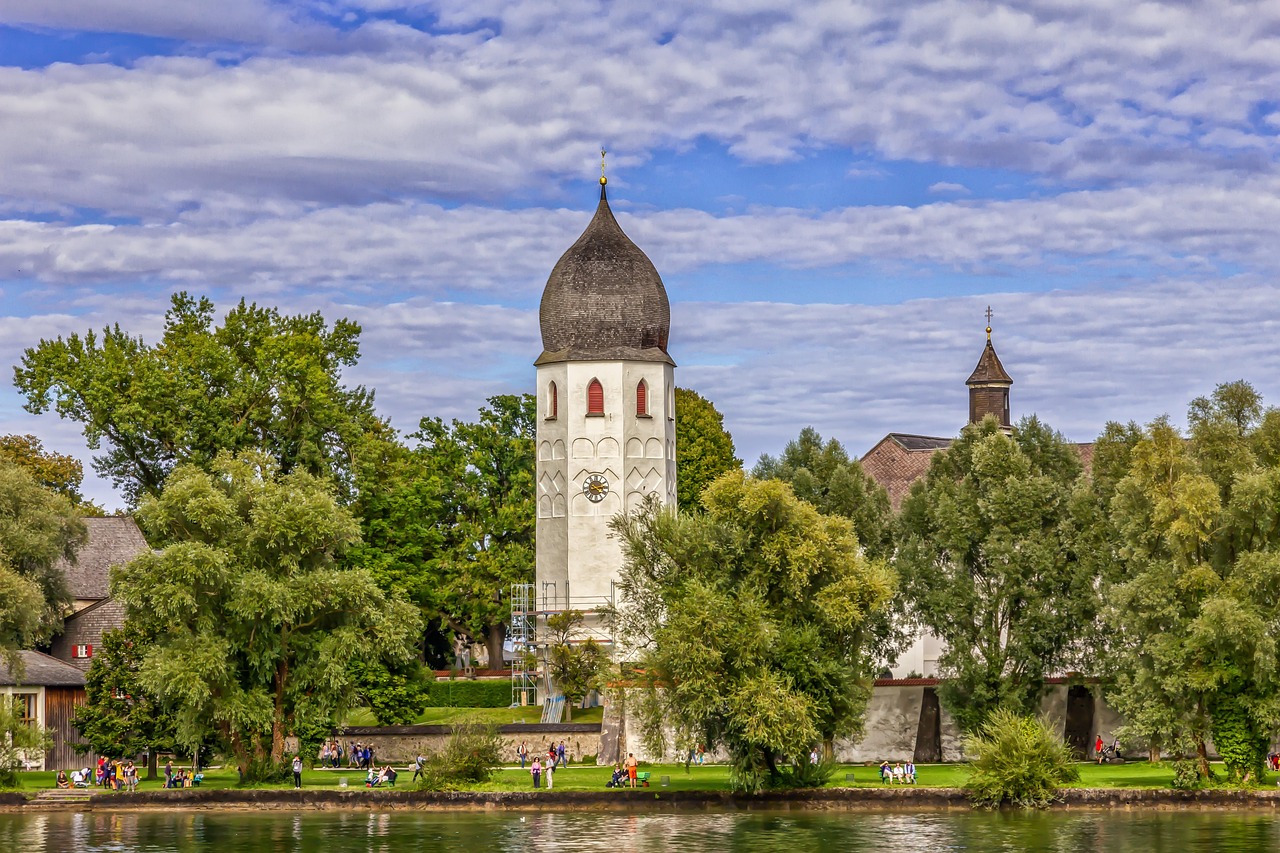
Start early, especially in high season. I’ve made the 9 am-ish ferry from Prien many times and enjoyed relative calm, even on busy weekends. The ride to Fraueninsel is shorter than to Herreninsel, and the approach is lovely: little houses, gardens, and the distinctive onion dome of the Benedictine convent rising above the trees.
Once ashore, slow down. Fraueninsel rewards wandering without an agenda. There’s a circular path around the island that only takes about 20–30 minutes if you walk it straight—but I’ve never managed it in under an hour because I always stop at gardens, tiny chapels, and lake viewpoints.
Things to Do on Fraueninsel
- Visit the monastery church and courtyard: Even if you’re not religious, the quiet here feels grounding. Dress modestly (shoulders covered) and keep voices low inside.
- Shop for monastery goods: The nuns sell liqueurs, herbal remedies, and art. I still have a bottle of their herbal bitters from a 2023 visit—great as a post-heavy-meal digestif.
- Photograph the boathouses: On the north side of the island, traditional boathouses stand on stilts over the water. In soft morning light they’re a photographer’s dream, especially with the Alps faint in the background.
Lunch: Lakeside Beer Garden on Fraueninsel
Pick one of the lakeside restaurants or beer gardens and order fresh fish—often smoked on-site—or a hearty Bavarian classic. One of my recurring rituals is smoked Saibling (char) with bread and horseradish, eaten at a wooden table just meters from the water. If you’re here on a sunny weekend in July, arrive before noon to snag a front-row table.
Afternoon: Gstadt & Northern Shore Stroll
Instead of heading straight back to Prien, take the ferry onward to Gstadt am Chiemsee, a small village on the northern shore that faces the islands directly. It’s less busy than Prien and has a slightly more local, “we live here year-round” feel.
In Gstadt, grab an ice cream or coffee and wander the modest but lovely waterfront. There’s a small bathing area if you want another swim; the water here often feels a bit more open and breezy than in Prien. If you’re traveling with kids, the playground by the shore is an easy win.
From Gstadt, if you’re feeling energetic, you can walk or bike towards Breitbrunn along small roads and lakeside paths, weaving between orchards and meadows. The views back towards Fraueninsel are some of my quiet favorites on the lake.
Late Afternoon: Return to Prien
Catch an afternoon ferry back to Prien or connect via Herreninsel depending on the schedule (the network is a bit of a watery bus system). I like to sit on the upper deck, camera put away, and simply watch the changing angles of mountains and islands.
Evening: Final Lakeside Stroll & Simple Supper
For your last evening, you can either repeat a favorite restaurant from night one or head slightly inland into Prien proper for a more local tavern experience. If money is a concern, this is where you can save: lakefront views command a premium, while restaurants a 5–10 minute walk away often serve excellent food at lower prices.
After dinner, I like to walk the path west of the harbor until the lights thin out. There’s a particular bench I return to—not marked on any map—where the trees part just enough to frame the islands and the faint glow of Fraueninsel’s lights across the water. It’s not a dramatic view, but it’s the one I think of when I’m far away, missing Chiemsee.
3 Day Itinerary for Lake Chiemsee (Adding Beaches & Villages)
If you have 3 days in Lake Chiemsee, you can keep the first two days above more or less as written, and add a third day exploring the southern and eastern shores—my go-to plan when friends visit with children in tow.
Day 3: Bernau, Felden & Übersee Beaches
On my last August trip, a friend’s family joined me in Prien with two small kids and one teenager. Day three was our “low culture, high lake-time” day, and it was a hit with everyone.
Morning: Train or Drive to Bernau-Felden
From Prien, it’s just one stop by regional train or a 10-minute drive to Bernau-Felden on the southern shore. The station is slightly inland, but buses connect to the lakeside area in season, and the walk isn’t bad if you’re traveling light.
The Felden bay area has a broad grassy shore, playgrounds, mini-golf, and places to rent SUP boards and paddleboats. It’s family-friendly without feeling overbuilt. I like to arrive by 10 am to claim a shady patch of grass for the day.
Midday: Swimming & Lakeside Lunch
Water temperatures in high summer are generally warm enough that even cold-sensitive swimmers (like me) can stay in comfortably. There’s something very relaxing about watching paragliders over the distant Kampenwand while you float on your back in the lake.
For lunch, you’ll find casual kiosks and cafés along the shore. This is a good time to indulge in simple Bavarian beach fare: Bratwurstsemmel (sausage in a roll), French fries, and a Radler (beer mixed with lemonade) if you’re so inclined.
Afternoon: Übersee’s Long Beach & Chiemgau Alps Views
In the afternoon, continue east to Übersee am Chiemsee, which, despite being slightly set back from the lake, has one of the longest continuous beach stretches around Chiemsee. The Chiemsee-Strandbad Übersee is popular with younger crowds; there are beach bars where you can sit back with a cold drink and pretend you’re on the Mediterranean—until you turn your head and see the Alps.
If you’re adventurous, this is a great place to try windsurfing or kitesurfing when conditions allow. I’ve had mixed success (my balance is not legendary), but the local schools are patient, and even an hour-long lesson gives you a new perspective on the lake.
Evening: Return via Sunset Ferry & Dinner
Depending on where you’re staying, you can either take a bus or train back to Prien or, if the 2026 timetable aligns (it changes slightly each year), combine a short bus with an evening ferry hop. I’ve occasionally timed it so that we’re on the last or second-to-last boat of the day, with the sun setting behind a fringe of sailboat masts—pure romance, even with sticky, sandy children nodding off on the bench beside you.
Back in your base, keep dinner simple. This is the night when I often opt for Brotzeit (a cold platter of breads, cheeses, meats, pickles) at a local tavern, or I pick up picnic supplies and eat on a quiet pier if the weather is warm.
4 Day Itinerary for Lake Chiemsee (Adding Quiet Shores & Hills)
With 4 days in Lake Chiemsee, you can truly slow down, explore the quieter eastern and northern shores, and get at least one vantage point from above the lake.
Day 4: Eastern Shore Calm & Gentle Hills Above the Lake
On my favorite four-day visit in 2024, I deliberately spent the last day doing “almost nothing”—which in practice meant long walks, coffees, swims, and a sunset I still think about years later.
Morning: Chieming Promenade & Bike Ride
Take a bus or drive to Chieming on the eastern shore. The moment you arrive, you’ll feel a subtle shift: fewer crowds, more open horizon, slower tempo. This side of the lake is especially loved by families staying in vacation apartments, and by cyclists using the flat lakeside paths.
Rent a bike if you haven’t already (in high season, reserve in advance) and follow the signed Chiemsee-Rundweg north or south along the shore. The route is mostly flat and suitable for children; I’ve cycled sections with a friend towing a bike trailer, and we never felt rushed or unsafe.
Lunch: Seebruck & Roman History
Ride north to Seebruck, a small harbor town with an interesting Roman history. In Roman times, this was a settlement on an important road; today, it’s a low-key marina village with a handful of good restaurants and a small archaeology museum (Bedaium), which makes a surprisingly engaging stop if you’re traveling with school-age kids.
Have lunch at a lakeside terrace, watching the sailboats bob. This is also a good place to try Steckerlfisch—fish grilled on a stick over an open fire—if you see it on the menu or at a stand.
Afternoon: Quiet Fields & Gentle Hills
In the afternoon, loop back via a slightly inland route, passing through meadows and small hamlets. The views here are more about open country than dramatic peaks, but when you reach a low hill and glance back, the expanse of lake and mountains beyond feels spacious and calm.
If you don’t want to bike, you can instead take a bus or drive up into the low hills near Rimsting or Greimharting, where small chapels and farms overlook the entire lake. I’ve watched late-summer thunderstorms roll across the water from one of these hilltop benches—safely under a tree, with a quick escape route, of course—and it’s one of my strongest weather-memories of the region.
Evening: Final Sunset at Chieming or Gstadt
For your final evening of this 4 day itinerary for Lake Chiemsee, choose either Chieming or Gstadt for sunset. Chieming gives you a broader, more open-sky feel; Gstadt frames the islands beautifully. Bring a light jacket, a bottle of local white wine or apple juice, and sit on one of the public benches or piers. On my last trip, an older couple quietly danced to music from a tinny phone speaker while the sky went from orange to purple—a small, perfect moment that sums up why I keep coming back here.
Lakeside Towns, Coves, Viewpoints & Trails: A Personal Circuit
In this section I’ll dive deeper into at least a dozen key places around Lake Chiemsee and its immediate surroundings, mixing history, significance, and personal anecdotes. Consider this your narrative map for choosing where to base and what to prioritize.
1. Prien am Chiemsee: The Lively Gateway
Why it matters: Prien is the main hub on the lake: best public transport connections, most ferries, and a solid range of accommodation and dining. If this is your first time, it’s the easiest base.
Character: Somewhere between small town and big village. The waterfront has a holiday-feel; the streets behind still feel very local, with bakeries, butchers, and kids biking to school.
History & significance: Prien’s history goes back many centuries as a trading and fishing village, but its modern shape was set in the 19th century with the arrival of the railway and the rise of lakeside tourism. The narrow-gauge Chiemsee-Bahn, opened in 1887, is one of Germany’s oldest steam railways and still chugs along in summer, linking the station with the harbor.
My experience: I’ve stayed in Prien more times than I can count—sometimes right on the water, sometimes in modest guesthouses tucked on side streets. I like waking before 7 am, grabbing a coffee from a bakery near the station, and walking down to the lake while the mist still hovers. The promenade feels almost private at that hour; the only people you see are dog walkers and the occasional jogger.
What to do:
- Wander the waterfront promenade and harbor.
- Ride the Chiemsee-Bahn at least once; sit by an open window if you can.
- Take ferries to Herreninsel and Fraueninsel (most connections originate here).
- Visit the small local history museum if you like regional culture.
- Rent pedal boats or electric boats for a DIY tour of the bay (respect boating rules and ferry lanes).
Eating & drinking: Lakefront restaurants serve the classic fish dishes and Bavarian staples; walk 5–10 minutes inland for more local taverns where the menu may be only in German but the welcome is warm. My recurring order: Schweinsbraten (roast pork) with dumplings in cooler months; grilled fish and salad when it’s hot.
Best for: First-time visitors, families, travelers without cars, people who like being in the middle of things but want the option to find quiet nearby.
Tip: In July–August, parking near the harbor can be intense by mid-morning. If you’re driving, either arrive early, park near the train station and walk, or stay overnight and leave the car at your accommodation.
2. Bernau & Felden Bay: Family-Friendly Shores
Why it matters: Bernau and its Felden district offer one of the most accessible, family-friendly stretches of shore, with wide views to the Alps and good swimming.
Character: A mellow resort vibe in summer, quieter in shoulder seasons. Lots of German families who come back year after year.
My experience: Bernau is where I go when I want to feel like I’m on holiday without working too hard. I’ve spent entire afternoons here doing almost nothing—just reading under a tree while kids splash in the shallow water, occasionally looking up to check the cloud shapes over the Kampenwand.
What to do:
- Swim and sunbathe at the designated lakeside baths.
- Rent SUP boards or pedal boats.
- Play mini-golf or let kids loose on playgrounds.
- Walk or bike the lakeside paths connecting towards Übersee.
Eating: Casual kiosks serve staples; some hotel restaurants offer more refined dining with lake views. For a budget-friendly day, pack a picnic; there are plenty of grassy spots where you can spread a blanket.
Best for: Families, relaxed groups, swimmers, and anyone wanting a chilled beach day.
3. Übersee & Chiemsee-Strand: Long Beach & Young Energy
Why it matters: Übersee has one of the longest, most open beaches on Chiemsee and a livelier, younger scene in high summer.
Character: Breezy, social, with a hint of surf culture—kites, boards, beach bars.
My experience: I tend to come here when traveling with friends or when I’m craving a bit more buzz. One July evening, we ended up staying far later than planned, lulled by live music drifting from a beach bar and the sight of kids trying to build sandcastles from pebbles.
What to do:
- Lounge on the broad beach; bring water shoes if you’re sensitive to pebbles.
- Try windsurfing, kitesurfing, or SUP with local schools.
- Stay for sunset drinks at the beach bars.
Best for: Young couples, groups of friends, sporty travelers, and anyone who wants their Lake Chiemsee experience with a side of music and social energy.
4. Chieming: Wide Horizons & Slower Travel
Why it matters: Chieming is one of the best bases on the eastern shore, with a relaxed vibe, wide-open lake views, and easy access to cycling routes.
Character: Calm, spacious, family-oriented, with more vacation apartments than hotels.
My experience: I once spent a quiet October week based in Chieming, working in the mornings and walking the shore each afternoon. It was the first time I really “lived” at the lake rather than visited it, and the rhythm has stayed with me: bakery, desk, walk, coffee, lake, repeat.
What to do:
- Stroll the lakefront path, stopping at benches and small piers.
- Cycle the Chiemsee-Rundweg north to Seebruck or south towards Grabenstätt.
- Swim from the lakeside baths in summer.
Eating: A handful of solid cafés and restaurants line the waterfront; you’ll also find kiosks in summer. For more variety, you may drive or bike to neighboring villages.
Best for: Longer stays, digital nomads, families wanting space and calm, and travelers who don’t need nightlife.
5. Seebruck: Marina, Romans & Gentle Water
Why it matters: Seebruck is the main marina town on the north-eastern shore and has a surprisingly rich Roman history.
History: Known as Bedaium in Roman times, this area was a settlement along an important route. Today, the small Roman museum showcases finds and gives a sense of continuity along the lake shore.
My experience: I stopped here almost by accident on a bike trip and ended up staying half the day, drawn into the easy waterfront atmosphere and a long lunch overlooking the marina.
What to do:
- Visit the Bedaium Roman museum.
- Walk the small harbor and photograph boats against the lake.
- Swim at the lakeside baths or nearby beaches.
Best for: Boating enthusiasts, history-inclined travelers, and people doing a full circuit of the lake by bike or car.
6. Gstadt am Chiemsee: Quiet Charm Facing the Islands
Why it matters: Gstadt is one of my personal favorites: smaller and quieter than Prien, but with direct ferry links to the islands and some of the best everyday views.
Character: Understated, local, with a slightly artistic, retreat-like feel. Many people pass through on their way to Fraueninsel but never stay overnight—which is their loss.
My experience: I spent a shoulder-season weekend here in 2022 at a small guesthouse run by a family who had lived on the shore for generations. Each evening, the owner would sit on a bench by the water and just watch the light change. “Never gets old,” she told me. I believe her.
What to do:
- Take ferries to Fraueninsel and Herreninsel (shorter ride than from Prien).
- Walk the compact lakefront and small harbor.
- Swim in summer from the small bathing areas.
- Use Gstadt as a base for walking or biking to neighboring villages.
Eating: A few good restaurants and cafés cluster near the harbor, many with terraces. The food leans traditional Bavarian with a strong fish presence.
Best for: Couples, quieter travelers, and repeat visitors who want to be close to the islands without the bustle of Prien.
7. Breitbrunn & The Northern Shore: Intimate Inlets
Why it matters: Breitbrunn and the northern shore between it and Gstadt offer smaller-scale harbors, reed belts, and tucked-away spots.
Character: Residential, modestly touristic, with more locals than visitors most of the year.
My experience: I came here chasing a tip from a local in Gstadt about a “quiet pier with the best view.” I never found the exact pier he meant, but I did find a half-dozen others where I sat for an hour, feet dangling above the water, watching a heron hunt in the reeds.
What to do:
- Walk or bike between Breitbrunn and Gstadt along lakeside roads and paths.
- Explore small harbors and reed-fringed inlets.
- Take photos of traditional wooden boathouses with the islands in the background.
Best for: Photographers, walkers, and travelers who enjoy subtle, everyday scenes over “must-see attractions.”
8. Herreninsel: Palace, Forest & Political History
Why it matters: This island is home to Schloss Herrenchiemsee, one of King Ludwig II’s most extravagant projects, and the site where post-war Germany’s Basic Law was drafted in 1948.
Character: A mix of manicured grandeur near the palace and quiet, almost wild forest elsewhere.
My experience: My first visit, I did the palace and gardens like everyone else—and nearly missed the forested loop, which is now my favorite part. On a later trip, I spent a full morning just wandering the lesser-used paths, occasionally popping out at little clearings with unexpected lake views.
What to do:
- Tour the palace interior with a guided tour (book ahead in peak season).
- Stroll the formal gardens and fountains.
- Visit the Augustinian monastery and museum, including the constitutional convention rooms.
- Walk the island’s circular forest path for tranquility.
Best for: History lovers, architecture fans, and anyone wanting a substantial half-day cultural experience.
9. Fraueninsel: Monastic Island & Timeless Atmosphere
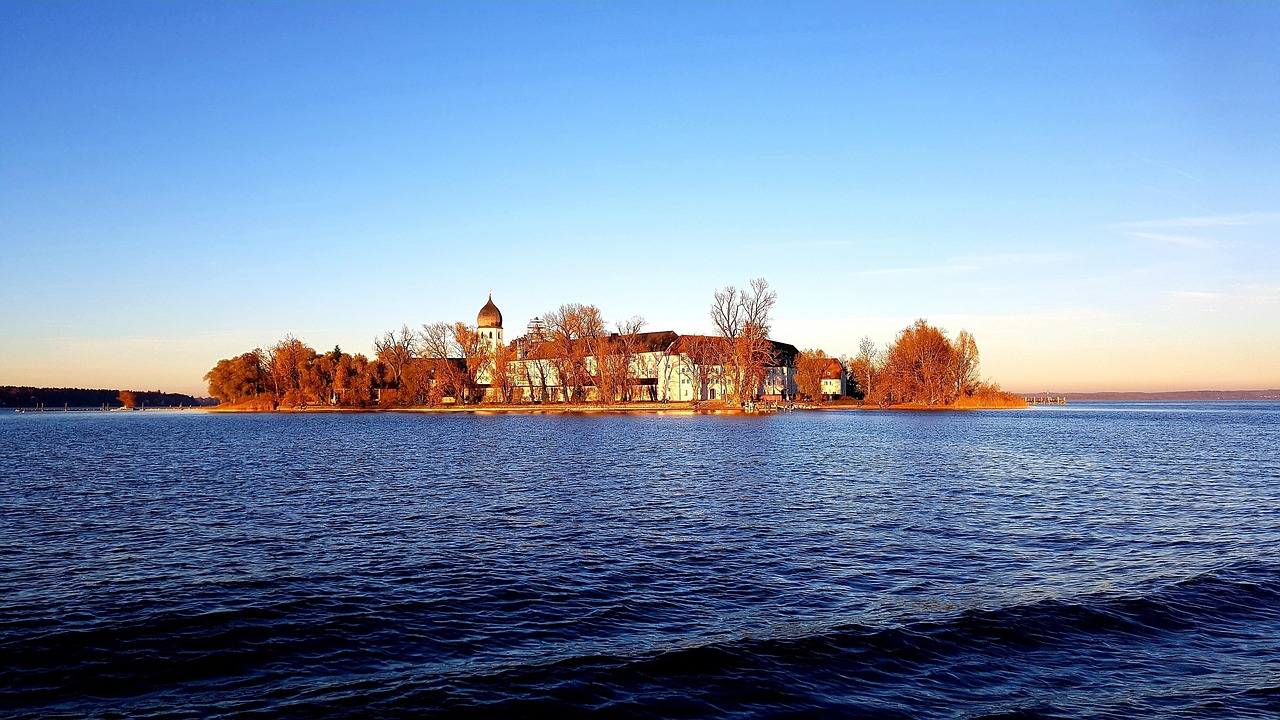
Why it matters: Fraueninsel is tiny but iconic: a living Benedictine convent, a small village, and a ring of gardens, boathouses, and restaurants.
Character: Peaceful but not sterile; spiritual but lived-in. Even with tourists, there’s a sense of continuity and quiet.
My experience: I’ve visited in every season. In summer, I came for fish and beer gardens. In December, I came for the island’s Advent market, when lights and stalls turn the paths into a fairy-tale (this market is one of the most atmospheric Christmas events around the lake). In spring, I came alone, sat on a bench behind the monastery, and listened to the gentle clink of boat masts while reading. Each time I left reluctantly.
What to do:
- Walk the circular island path, stopping at viewpoints and small chapels.
- Visit the monastery church; observe silence and modest dress.
- Eat smoked fish and drink beer at a lakeside beer garden.
- Photograph boathouses with mountain backdrops.
Best for: Everyone, honestly. It’s a must-see attraction in Lake Chiemsee, especially for those seeking cultural experiences and an unusual, small-scale island community.
10. Graswiesen & Eastern Wetlands: Birdsong & Reeds
Why it matters: The eastern and south-eastern shorelines include protected wetland areas, important for birdlife and for the lake’s ecology.
Character: Quiet, natural, often overlooked. You won’t find big attractions here, but you will find herons, reed warblers, and beautiful light on calm mornings.
My experience: A local birder I met in Chieming once took me out at dawn to a small hide overlooking one of these reed belts. We watched grebes nest and heard a chorus of unseen birds. Not a “top Instagram spot,” but one of the most memorable experiences I’ve had at Chiemsee.
What to do:
- Walk or bike the paths skirting the wetlands; respect marked conservation areas.
- Bring binoculars in spring and autumn for migrant birds.
Best for: Nature lovers, birders, and travelers who find joy in quiet details.
11. Rimsting & Hilltop Viewpoints: Chiemsee from Above
Why it matters: The low hills around Rimsting offer some of the best “whole-lake” viewpoints without requiring serious hiking.
Character: Rural, agricultural, with small villages and lots of cows. It’s the backdrop to the lake you see in postcards.
My experience: One late-summer evening, I followed a tip from a local and walked up to a small chapel on a hill just outside Rimsting. From there, Chiemsee spread out below like a map: islands, villages, glints of ferry wakes. The sunset that night was gentle, more silver than gold, but I stayed until the first stars came out.
What to do:
- Drive or bike up to marked viewpoints; look for small chapels and benches.
- Combine with a visit to Prien or Bernau for a varied day.
Best for: Photographers, couples seeking a romantic lookout, and anyone who wants to understand the lake’s geography at a glance.
12. Chiemgau Alps Trails Above the Lake: Kampenwand & Hochfelln
Why it matters: The Chiemgau Alps to the south give Chiemsee its iconic backdrop. A day in the mountains transforms your understanding of the region.
Key peaks & lifts:
- Kampenwand (1,669 m): Cable car from Aschau im Chiemgau. From the top, panoramic views over Lake Chiemsee and, on clear days, deep into the Alps.
- Hochfelln (1,674 m): Cable car from Bergen. Broad summit with a chapel and sweeping vistas, including the lake.
My experience: I’ve taken the Kampenwand cable car up with both hardcore hikers and friends in sandals; each had a great day, choosing routes that fit their comfort. Standing at a viewpoint with Lake Chiemsee shimmering below, you suddenly see how it nestles into the landscape, a silver plate between hills and peaks.
Best for: Hikers, photographers, and anyone staying 3–4 days or more who wants to add an alpine dimension to their Chiemsee trip.
Lakeside Dining & Local Food in Lake Chiemsee
The local food in Lake Chiemsee revolves around three pillars: freshwater fish, classic Bavarian comfort food, and alpine dairy. Most lakeside villages offer a mix of casual kiosks, traditional inns, and a few more refined restaurants with terraces over the water.
What to Eat
- Freshwater fish: Renke (whitefish), trout, char, and pike-perch feature heavily. Try them grilled, pan-fried, or smoked.
- Steckerlfisch: Whole fish grilled on a stick over open fires, often at lakeside stands in summer.
- Bavarian classics: Schweinsbraten (roast pork), Schnitzel, Käsespätzle (cheesy noodles), and Brotzeit platters.
- Desserts: Apple strudel, Kaiserschmarrn (shredded pancakes), and seasonal berry cakes.
Where to Eat (By Setting)
Lakefront terraces: Prien, Gstadt, Chieming, Seebruck, and Fraueninsel all have restaurants with terraces right by the water. I often splurge on at least one terrace dinner per trip; the view is part of the meal.
Beer gardens on the islands: Fraueninsel is my top pick for a long lunch in the shade of chestnut trees, with the lake a few steps away.
Inland taverns: For better value and a more local crowd, walk or drive 5–10 minutes away from the lake. In small villages, look for signs saying Gasthaus or Wirtsstube. Menus may be only in German; staff are usually happy to help translate basic dishes.
Personal Rituals
Each trip, I try to:
- Have one smoked fish lunch on Fraueninsel.
- Eat at least one rustic dinner at an inland tavern with no English menu.
- Have coffee and cake on a terrace in the late afternoon, ideally with a view of sailboats.
Budget Tips
- Eat main meals at lunch; many restaurants have cheaper lunch menus.
- Buy picnic supplies from supermarkets or bakeries and eat on public benches or piers.
- Limit lakefront dinners to one or two special nights; inland you’ll often pay less for larger portions.
Evenings at Lake Chiemsee: After the Boats Go Home
Evening is when Chiemsee softens. The day-trip crowds thin, ferries are fewer, and the water takes on metallic blues and silvers. This is my favorite time of day here.
Sunset Spots
- Prien promenade: Easy, accessible, with restaurants and benches.
- Gstadt harbor: Lovely views towards the islands as the lights come on.
- Chieming shore: Wide horizons and space to breathe.
- Hill viewpoints near Rimsting: Sunset over the whole lake, ideal for photographers and romantics.
Evening Activities
- Dusk boat trips: In high season, occasional evening cruises depart from Prien and other hubs, sometimes with live music.
- Lakeside bars & cafés: Übersee’s beach bars stay lively into the night; elsewhere, expect a quieter, early-evening culture.
- Village festivals: In summer, many lakeside towns host occasional concerts, Fischerfest (fishermen’s festivals), or small regattas. Check local posters and tourist office boards.
One of my most peaceful memories: sitting on a pier in Chieming in late September, wrapped in a light coat, watching the last light leave the mountains while someone in a nearby house played piano with their windows open. The lake reflected both music and sky; for a moment, everything felt perfectly balanced.
Events & What’s New 2026–2027
While exact dates can shift each year, here are recurring and anticipated events for 2026–2027. Always confirm closer to your travel dates.
Recurring Highlights
- Chiemsee Summer Concerts (Prien & Surroundings): A loose series of open-air concerts, classical and contemporary, typically June–August.
- Regattas & Sailing Events: Local sailing clubs around Prien, Seebruck, and Chieming host regattas throughout the warmer months.
- Fraueninsel Advent Market: Late November to mid-December, one of the most atmospheric Christmas markets in Bavaria, with stalls, lights, and mulled wine around the island paths.
- Local Fishermen’s Festivals: Various villages host small-scale fish-themed festivals in summer; look for Fischerfest posters.
Travel Scene in 2026
- More e-mobility: Expect an even wider network of e-bike rentals and charging stations, plus more electric boat options for quiet, eco-friendly lake cruising.
- Enhanced bike infrastructure: Sections of the Chiemsee-Rundweg have been upgraded with smoother surfaces and better signage.
- Digital ticketing: Ferry operators are increasingly offering digital passes and QR-code tickets; useful if you’re planning multiple crossings.
Day Trips from Lake Chiemsee
Lake Chiemsee makes an excellent base for exploring southeastern Bavaria. Here are a few realistic day trips:
1. Aschau & Kampenwand
How to get there: Train from Prien to Aschau im Chiemgau (about 20 minutes), then bus or walk to the Kampenwand cable car.
What to do: Ride up, walk gentle trails near the top or tackle more serious hikes, and enjoy panoramic views back to Chiemsee.
2. Hochfelln from Bergen
How to get there: Train or car to Bergen, then cable car up Hochfelln.
What to do: Summit walks, chapel visit, and sweeping views across the Bavarian Prealps and down towards the lake.
3. Salzburg
How to get there: Direct regional train from Prien to Salzburg (about 50–60 minutes).
What to do: Classic Salzburg sightseeing (old town, fortress, Mozart sites), then back to the lake for a quiet evening.
4. Munich
How to get there: Direct trains from Prien (around an hour).
What to do: Museums, old town, English Garden; combine city culture with lake relaxation over a long weekend.
5. Berchtesgaden & Königssee (Long Day)
How to get there: Car is easiest (about 1.5 hours); by train and bus allow closer to 2.5 hours each way.
What to do: Boat trip on Königssee, visit Berchtesgaden village, then return to Chiemsee. Ambitious but doable in long summer days.
Cultural Experiences, Local Customs & Etiquette
Chiemsee sits in the heart of rural Upper Bavaria, where traditions are alive but not museum pieces. You’ll see traditional dress at festivals, hear brass bands at village events, and notice a generally relaxed but grounded way of life.
Local Customs & How to Respect Them
- Greetings: In shops and restaurants, a simple “Grüß Gott” (traditional Bavarian greeting) or “Hallo” is appreciated. Say goodbye (“Auf Wiedersehen” or “Servus”) when leaving.
- Quiet in churches & monasteries: Dress modestly (covered shoulders, no beachwear), speak softly, and avoid taking photos during services.
- Beer garden etiquette: It’s fine to share tables with strangers; just ask if a spot is free. Return trays and bottles to designated areas.
- Nature respect: Stay on marked trails in wetlands and forests, especially in protected areas around the lake. Don’t disturb nesting birds or wildlife.
- Sunday pace: Sundays are quieter; many small shops close, families take walks, and long lunches are common. Plan supermarket trips accordingly.
Cultural Experiences to Seek Out
- Village festivals: Look for posters advertising Dorffest, Musikfest, or Fischerfest. These are wonderful chances to see local traditions and music.
- Alm visits: In the Chiemgau Alps, many alpine pastures (Almen) serve simple food and drinks in summer. Combine with a hike for an authentic taste of mountain life.
- Advent & Christmas markets: If you visit in late November or December, don’t miss island and lakeside markets, especially on Fraueninsel.
Practical Travel Advice & Lake-Specific Logistics (2026)
Getting There
- By train: Regional trains connect Munich and Salzburg to Prien am Chiemsee regularly (about 1 hour from Munich, slightly less from Salzburg).
- By car: The A8 motorway (Munich–Salzburg) runs just south of the lake, with exits for Bernau, Prien, and Grabenstätt.
Getting Around
- Boats & ferries: Year-round services connect Prien, Gstadt, Herreninsel, and Fraueninsel, with additional stops in high season. In 2026, expect digital ticket options and day passes; check the latest schedule online or at harbors.
- Bikes: The Chiemsee-Rundweg is a mostly flat path circling the lake (about 60 km). Rent bikes or e-bikes in major towns (Prien, Chieming, Seebruck).
- Buses: Regional buses link lakeside towns and nearby villages; useful if you’re car-free. Timetables are posted at stops and online.
- Car: Convenient for reaching hill viewpoints and mountain cable cars, but not essential if you’re focusing on the lake itself.
Boat & Water Logistics
- Schedules: More frequent in April–October, reduced in winter. Last boats can be earlier than you think; always check return times, especially from Fraueninsel.
- Pass options: Day passes may be available for unlimited travel in a day; compare if you plan multiple crossings.
- Motor-boat rules: Private motorboats are restricted; much of the lake is dominated by sailboats, rowboats, and electric boats, keeping noise levels down.
- Swimming: Typical comfortable swimming season is late May to early September, with water temperatures around 18–23°C at peak. Outside this, only strong cold-water swimmers should attempt long swims.
- Safety: Stick to designated swimming areas near busy harbors; always watch for ferry and boat traffic.
Parking
Each main lakeside town has paid parking near the shore. In summer weekends, these fill by late morning. Arrive early, or park slightly further away and walk. Respect no-parking signs in villages; enforcement is real.
Where to Stay
- Lakefront: Prien, Gstadt, Chieming, and Seebruck offer the most options. Higher prices, but you’re steps from the water.
- Nearby villages: Stay 5–10 minutes inland (Rimsting, Bernau village, small hamlets) for better value and quieter nights.
- Farm stays: The surrounding countryside has guest rooms on working farms—great for families and longer stays.
Money-Saving Tips
- Travel in shoulder seasons (May–June, September–early October) for lower prices and fewer crowds.
- Use public transport and ferries rather than renting a car if your focus is the lake.
- Self-cater some meals if you have an apartment; buy from local bakeries and supermarkets.
- Choose one or two paid attractions (palace, cable car) and spend the rest of your time on free pleasures: walking, swimming, watching the lake.
Connectivity & SIM Cards
- Mobile coverage: Generally good around the lake, with some patchier spots in forests and certain valleys.
- SIM options: In 2026, eSIMs and physical SIMs from major German providers (Telekom, Vodafone, O2) are widely available. For short stays, consider EU-wide travel eSIMs you can set up before arrival.
- Wi-Fi: Most hotels, guesthouses, and many cafés offer free Wi-Fi.
Visas & Driving
- Visas: Germany is in the Schengen Area. Many nationalities can enter visa-free for short stays; check official sources for your passport.
- Driving licenses: EU licenses are accepted. Many non-EU licenses are valid; an International Driving Permit (IDP) is recommended if your license is not in Latin script or for peace of mind.
- Driving etiquette: Observe speed limits strictly, especially in villages. Don’t drink and drive; public transport and taxis are safer and cheaper than fines or accidents.
Weather, Seasons & Activity Windows
- Spring (April–May): Cool to mild. Blossoms, fewer crowds, chilly water. Good for walking, cycling, and culture.
- Summer (June–August): Warm to hot, with occasional storms. Best for swimming, beaches, evening ferries, and full operation of boats and lifts.
- Autumn (September–October): Often clear and crisp, with golden light and changing leaves. Water cools but can still be swimmable early in the season. Ideal for photography and quieter stays.
- Winter (November–March): Quiet, with many seasonal services reduced. Occasional snow. The lake rarely freezes fully, but shore ice can form; beautiful in its own way, especially with Advent markets.
Safety Basics
- On the water: Respect weather changes; storms can build quickly on hot days. Don’t venture far in small crafts if you’re inexperienced.
- In the mountains: Weather can change faster at altitude. Check forecasts, wear proper footwear, and carry layers and water.
- Sun & heat: Lakeside breezes can hide strong sun; use sunscreen and hats, especially for kids.
Hidden Tips from Repeat Visits
- Early mornings are magic: Walk the promenades before 8 am for a private-feeling lake.
- Stay at least one night on or near the northern shore: Gstadt or nearby villages give you a different, quieter perspective.
- Carry small cash: While cards are widely accepted, small stands, some parking machines, and rural taverns may still prefer cash.
- Check local noticeboards: Many of the best cultural experiences (concerts, small markets, village fests) are advertised on physical posters rather than big websites.
Summary & Final Recommendations
Lake Chiemsee is more than a single attraction; it’s a small, self-contained world of shorelines, islands, hills, and rhythms. After many visits, my core advice is simple:
- Give it time: Even 2 days in Lake Chiemsee lets you feel the place, but 3–4 days turn a visit into a relationship.
- Mix must-sees and quiet corners: Do Herreninsel and Fraueninsel, but also seek out Gstadt, Chieming, and a hilltop viewpoint.
- Spend time on the water: Use ferries, rent a boat, or simply sit on a pier. The lake is best experienced from, and beside, the water.
- Eat locally: Fresh fish, Bavarian classics, and alpine dairy taste better with lake air in your lungs.
- Respect the pace: This is a place that rewards slowing down. Let your days stretch; don’t over-schedule.
Best Seasons to Visit Lake Chiemsee
- For swimming & full services: Late June to early September.
- For hiking, cycling & fewer crowds: May–June and September–early October.
- For Christmas magic: Late November to mid-December, timed with Fraueninsel’s Advent market and regional Christmas events.
Whenever you come, take at least one moment to stand quietly by the water, breathe in the cool air, and watch the reflections ripple. If you’re like me, you’ll find yourself planning your return before you’ve even left.