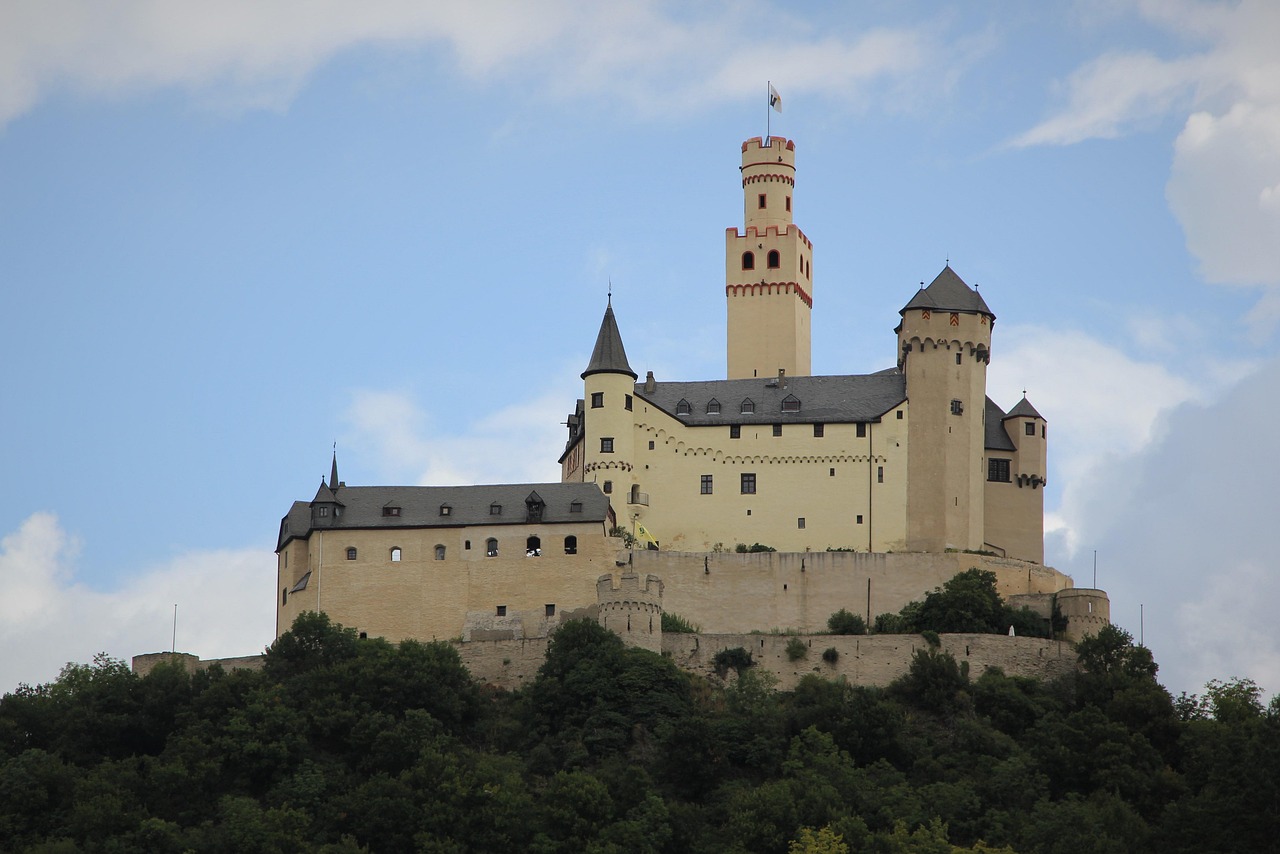
Why Visit Marksburg Castle – What Makes It Special in 2026
Of all the castles that line the Rhine Gorge, Marksburg Castle (Burg Marksburg) is the one I keep returning to. I’ve visited in misty March drizzle, in the blue-gold glow of a July sunset, and once in late October 2025 when the vineyards below were on fire with autumn color. Each time, the same thought hits me as I climb the final cobbled ramp: this place never had to pretend.
Unlike many of its neighbors, Marksburg was never destroyed and rebuilt as a romantic fantasy. What you walk through today is, in essence, the same fortified hilltop that watched over the Rhine for 700+ years. The walls feel narrow and practical, not theatrical. The floors are uneven, doors are low, rooms are compact. It’s one of the very few Rhine castles where you can say, hand on heart, “this is what a real medieval fortress was like.”
For travelers planning a 1 day itinerary for Marksburg Castle or stretching to 2 days in Marksburg Castle and Braubach, this is the site that anchors your plans. And if you’re the kind of person who likes to linger, a 3 day itinerary for Marksburg Castle and the Middle Rhine lets you slow down, weave in vineyards, river cruises, and half-timbered old towns until it all feels like a lived-in story rather than a checklist.
Some reasons I think Marksburg should be on your next Germany trip:
- Authenticity: a genuinely intact medieval castle with original structures, not a 19th-century reconstruction.
- Atmosphere: intimate courtyards, smoky old kitchens, and creaking beams that haven’t been over-polished.
- Views: sweeping vistas over the UNESCO-listed Upper Middle Rhine Valley – vineyards, barges, villages, and distant spires.
- Scale: just big enough to be fascinating, small enough not to overwhelm families or first-time castle-goers.
- Access: easy to pair with Koblenz, Rhine river cruises, and nearby castles like Stolzenfels and Lahneck.
This travel guide for Marksburg Castle is written from the perspective of someone who has climbed that steep approach more times than my knees would like to admit. I’ve done it on rushed day trips, lazy weekends, and one slightly obsessive three-day research stay. Below, I’ll share not just the must-see attractions in Marksburg Castle, but how to time your visit, where to eat nearby (without overpaying at the obvious spots), and how to stitch it into a memorable 1, 2, or 3 day itinerary.
Table of Contents
- Why Visit Marksburg Castle
- Overview & Brief History
- Main Sections & Viewpoints Inside Marksburg Castle
- Suggested Itineraries: 1, 2 & 3 Days in Marksburg Castle & Braubach
- Where to Eat & Drink Around Marksburg Castle
- Where to Stay Nearby
- Marksburg Castle After Dark & Off-Hours Magic
- Cultural Etiquette & Local Customs
- Upcoming Events & Changes in 2026–2027
- Day Trips & Nearby Attractions
- Practical Logistics: Tickets, Opening Hours, Getting There
- General Travel Advice for Visiting Marksburg Castle
- Summary & Final Recommendations
Marksburg Castle in Context – A Brief, Lived-In History
Perched above the small town of Braubach, Marksburg Castle has guarded this stretch of the Rhine since the early 13th century, though fortifications here likely date back earlier. While many Rhine castles were destroyed in wars or fell into picturesque ruin, Marksburg somehow sidestepped total disaster. It was battered, yes, and modified over centuries, but it was never flattened.
From the 15th century onward, the castle’s primary purpose wasn’t glamorous court life. It was duty: watching river traffic, collecting tolls, asserting power. That functional past shows. When I first stepped into the narrow cobbled entrance tunnel years ago, I was struck by how tight it all felt – more like a fortified farm and garrison than a fairy-tale palace.
In the late 19th century, as romanticism swept through Germany, the German Castle Association (Deutsche Burgenvereinigung) took over Marksburg. It became their headquarters and a kind of living museum of medieval fortification. Today, the castle still belongs to them, and they’ve resisted the urge to over-restore. You’ll find explanatory panels, guided tours, and a few carefully curated exhibits, but the overall feeling is still wonderfully unvarnished.
Visiting in 2026, you’ll encounter a site that balances history with accessibility: guided tours in multiple languages, clear Marksburg Castle opening hours, and online ticketing that makes planning a 1 day itinerary for Marksburg Castle surprisingly straightforward – if you know a few tricks, which I’ll share below.
Main Sections & Viewpoints Inside Marksburg Castle
The castle isn’t huge, but it unfolds in layers. Each visit, I notice new details: a carved lintel, a view framed by arrow slits, soot-blackened beams in a kitchen corner. Below are eight of the most prominent areas you’ll actually walk through, and how to get the most from each.
1. The Steep Hilltop Approach & Gatehouse
Every visit to Marksburg starts with a decision: walk up from Braubach or take the castle shuttle / taxi. I’ve done both. On my first visit, fueled by romantic notions and a hearty German breakfast, I opted for the walk from Braubach’s station. The route winds through the town and up through woods and vineyards, taking about 30–40 minutes at a moderate pace. It’s rewarding but steep, with some uneven sections – lovely for active travelers, less ideal if you’re wrangling small kids or dealing with mobility issues.
The approach road loops up to the castle’s parking area, and from there you still have a short but moderately steep cobbled path. This last stretch sets the tone: you’re climbing into a defensive stronghold. Notice the bends in the path – attackers would have been forced to slow down and approach under fire.
At the top, you pass through the gatehouse, with heavy wooden doors and portcullis grooves still visible. I like to pause just outside and glance back: the Rhine curves away below, trains slide along both banks, and the town of Braubach looks almost like a model set. On my autumn visit, low fog hung over the river while the castle sat in golden sun – a surreal feeling, like standing on an island above the clouds.
Time to allow: 10–15 minutes for the final approach and to catch your breath, more if you’re walking up from town. Tip: If you’re planning a packed 1 day itinerary for Marksburg Castle, take the shuttle or taxi up and walk down later to save energy.
2. Outer Bailey & Courtyard – First Impressions Inside
Once inside the gate, you emerge into the outer bailey, a small, roughly triangular space enclosed by thick walls and buildings. This is where groups gather for the start of guided tours, and where you’ll likely orient yourself, perhaps with a quick look at the site map.
When I bring friends here for the first time, I point out two things: the height of the walls relative to the small courtyard, and the surprisingly domestic feel. You’ll see timbered structures, potted plants, and sometimes a cat sunning itself on a ledge. It’s an immediate reminder that this was both fortress and home.
On my 2025 spring visit, a light rain had just passed, and the cobbles were still wet. The pale walls reflected the soft light, and the smell of damp stone – that cool, mineral scent – created a sense of stepping back in time. A guide in a modern fleece jacket shepherded a school group past a cannon, and the juxtaposition was perfect: medieval architecture, 21st-century life going on within it.
What to look for:
- The old well in the courtyard – imagine hauling every bucket by hand.
- Traces of different building phases in the stonework, where older rough stone meets later, more regular masonry.
- The view slivers through arrow slits toward the Rhine – your first hint of the panorama to come.
Time to allow: 10–20 minutes if you’re early for your tour; it’s a good place to gently soak in the atmosphere before diving into the interiors.
3. Knights’ Hall & Great Hall – The Castle’s Social Heart
The Knights’ Hall and adjacent great hall are where Marksburg feels briefly grand. These rooms hosted feasts, meetings, and the practical business of running a territory. They aren’t enormous by palace standards, but they have a gravity that always pulls me in.
On a late winter visit, I joined a small English-language tour where our guide, a university student from nearby Koblenz, described how the hierarchy at the table reflected hierarchy in life. The lord sat near the warmest, safest spot; lower-ranking guests edged toward the draughty ends of the board. As she spoke, a gust of wind found its way in and rattled a window, and everyone instinctively pulled their coats tighter. Medieval heating, or lack thereof, suddenly felt very real.
What to look for:
- The beam ceilings, darkened with age – some still show carpenters’ marks.
- Decorative details like painted coats of arms, which hint at the castle’s past owners and alliances.
- Simple but evocative reconstructed furnishings that show how the space might have looked in use.
This space is particularly fun for kids on family trips: guides often share stories about medieval table manners, which can be wonderfully gross (no forks, shared trenchers, dogs under the table). Couples on a romantic visit will appreciate the slightly softer lighting and the sense of standing where countless feasts once unfolded.
Time to allow: 15–25 minutes as part of the guided circuit. Photography is usually allowed, but avoid flash and be mindful of the group’s flow.
4. The Castle Kitchen & Domestic Rooms – Everyday Life in Stone
If you want to understand a castle, go to the kitchen On a hot July day in 2024, I watched a family from the Netherlands stand quietly in the doorway, the kids inspecting a massive hanging pot while the parents read the interpretive panel. The father pointed at the huge fireplace and then at the small modern fan we had all been huddling near earlier, and they shared a look that said: our camping stove suddenly seems very easy. What to notice: The adjoining domestic rooms – sometimes including a reconstructed bedroom or living space – underscore how compact life was. Beds are short (people slept half-sitting, in part for health beliefs), windows are small, and privacy was a luxury. On my 2025 visit, a German guide gently dispelled the myth that everyone in the Middle Ages was tiny: “The beds were about posture, not height,” she explained, as a very tall teenager tried to stretch out on a demonstration frame. Time to allow: 15–20 minutes for the kitchen and nearby rooms as part of your tour. If you’re particularly interested in domestic history, hang toward the back of the group to grab a few extra seconds of quiet observation.
5. The Castle Chapel – A Quiet Corner of Devotion
The chapel at Marksburg is small, more intimate than imposing. It’s the space that most consistently hushes visitors; even children tend to lower their voices here without being asked. I’ve seen it in all lights – soft morning glow, blazing afternoon, and once in deep grey drizzle – and it always feels a little removed from the rest of the tour.
On an early November afternoon, our guide encouraged us to look closely at the faded wall paintings. Scenes of saints and biblical stories, once brightly colored, now hover like ghosts on plaster. “You’re not seeing ruins,” she said. “You’re seeing survival.” That line has stuck with me: so much of medieval art vanished; what we see here is the sliver that endured war, damp, neglect, and time.
What to look for:
- The simple altar and small windows – light was a carefully controlled, symbolic presence.
- Traces of Gothic details alongside plainer elements that reflect the castle’s practical nature.
- In some seasons, small decorations for special services or events, especially around Advent and Christmas.
For couples on a romantic trip, this is a natural place to pause side by side. For families, it’s a gentle introduction to discussing religion’s role in medieval daily life without needing to be preachy. I often step aside here, let a group file past, and take 30 quiet seconds just to breathe in the stillness.
Time to allow: 10–15 minutes during the tour. Respect the space: remove hats, keep voices low, and avoid blocking the entrance for photos.
6. Armory & Torture Exhibition – Weapons, Armor, and Darker Stories
The armory and the small torture exhibition are among the most visually striking parts of the castle – and the most misunderstood. Rows of armor, racks of halberds, and displays of crossbows immediately grab attention. I’ve watched teenagers’ eyes light up here like they’ve just walked into a live-action game.
On a family visit in 2023, my nephew peppered the guide with questions about how heavy the armor was, how long it took to put on, and whether knights actually fought in full plate on stairs like these. The guide, clearly delighted, explained how armor evolved, and how most soldiers were not knights in shining mail but lightly equipped men trying not to die on a hillside.
The torture room, by contrast, is deliberately sober. Marksburg doesn’t sensationalize it. You’ll see devices like the rack or stocks, but the descriptions focus on legal history and context, not horror-movie theatrics. On one tour, a woman next to me quietly said to her partner, “I’m glad they didn’t make this gimmicky,” and I silently agreed.
What to look for:
- The progression of armor styles from mail to plate, showing technological and tactical changes.
- Explanations of how justice and punishment worked in medieval territories – very different from modern systems.
- Children’s reactions: a good moment to talk about myths vs. reality in medieval warfare.
Time to allow: 20–30 minutes as part of the guided circuit. Sensitive visitors may want to step out of the torture section quickly; it’s small and easy to bypass.
7. The Keep & Upper Viewpoints – Marksburg’s Watchtower
The keep, or main tower, is the castle’s spine – visible from almost anywhere in Braubach and far along the Rhine. You can’t freely wander every level, but parts of the upper complex and adjacent walkways bring you close to its base and offer some of the best views at Marksburg Castle.
On a clear morning in June 2024, I timed my visit so that our tour reached the upper areas just as river traffic was at its busiest. From the parapet, we watched barges and cruise ships thread between villages on both banks. The guide pointed out wayfinding marks and explained how tolls and control of river lanes once gave castles like Marksburg their power.
What to look for:
- The thickness of the walls – sometimes visible in doorways and windows – a reminder of how formidable this structure was.
- Strategic placement: from here, you can see how Marksburg commands the bend in the Rhine and the approaches to Braubach.
- Subtle details like machicolations (openings to drop projectiles) and sightlines for defenders.
Couples often linger longer here for photos, and for good reason: it’s one of the most romantic spots if you angle your shot to include the river, vineyards, and a slice of the tower. Families should keep a careful eye on younger children; railings are solid, but the drops are real.
Time to allow: 15–25 minutes, folded into the tour. If you can, step to the side for a moment of quiet; the crowd tends to cluster at the first viewpoint, leaving corners oddly peaceful.
8. Ramparts, Vineyards & Panoramic Terraces – Marksburg’s Outdoor Magic
No travel guide for Marksburg Castle would be complete without dwelling on the ramparts and terraces. This is where the castle breathes: stone gives way to sky, and the view commands everything. If you’re planning a 2 day itinerary for Marksburg Castle or more, you’ll likely find yourself returning to these spots at different times of day just to watch how the light shifts across the Rhine.
On my 2025 October visit, I spent almost an hour after my official tour just drifting along the outer walkways. The vines below were a riot of gold and red, and the low sun turned the river into a metallic ribbon. A local couple, clearly regulars, had brought a small thermos of coffee and stood in companionable silence near one of the cannons, occasionally pointing out a passing ship.
What to look for:
- The vineyards terraced below the castle – this is wine country, and the patterns on the hillsides tell their own story.
- Different angles on Braubach – notice the church spires, the red roofs, and the regular thrum of trains along the river.
- The play of light at golden hour and blue hour; it’s worth planning your Marksburg Castle tickets and tips around catching at least one of these.
These spaces are ideal for family photos, proposal moments, and quiet contemplation alike. In summer, you may find small temporary installations or information boards about the UNESCO World Heritage status of the Rhine Gorge.
Time to allow: 30–60 minutes outside of your guided tour, especially if you’re doing a 1 day itinerary for Marksburg Castle and want at least one unhurried moment.
Suggested Itineraries – 1, 2 & 3 Days in Marksburg Castle & Braubach
How long you stay depends on how deeply you want to sink into this slice of the Rhine. Below are three itineraries I’ve personally followed (or fine-tuned after multiple visits), designed to help you choose between 1 day, 2 days, or 3 days in Marksburg Castle and its surroundings.
1 Day Itinerary for Marksburg Castle – A Focused Castle Day
If you have just one day, you can still experience the essence of Marksburg without feeling rushed, provided you plan your timing. This is the itinerary I recommend to friends passing through on a Rhine tour or a short Koblenz stay.
Morning: Arrival in Braubach & Climb to the Castle
I like to start early. On my most recent one-day visit in 2025, I caught a mid-morning train from Koblenz to Braubach (about 15 minutes) and was in town by 9:30. From the station, I walked through the old town: half-timbered houses, a few bakeries already smelling of fresh Brötchen, and the castle hovering above like a stone guardian.
Tips for the morning:
- Breakfast: Grab coffee and a pastry in Braubach rather than at the castle; it’s cheaper and better. I often stop at a small local bakery near the main street – look for a place with locals grabbing takeaway bags.
- Getting up: If you’re reasonably fit and the weather is clear, walk up the forest path from Braubach (30–40 minutes). If it’s hot, rainy, or you’re short on time, use the castle shuttle or a taxi from the station or town center.
- Ticket timing: Aim to be at the castle entrance by 10:15–10:30 to join a late morning guided tour. In 2026, English tours typically run at fixed times; check the official website and pre-book if you’re visiting in July–September.
Late Morning: Guided Tour of Marksburg Castle
The core of your 1 day itinerary for Marksburg Castle is the guided tour, usually about 50–70 minutes. You’ll move through the courtyard, Knights’ Hall, kitchen, chapel, armory, and ramparts in a set sequence. On my last visit, our group was a mix of German families, Dutch cyclists, and a retired couple from Canada; the guide toggled between German and English with admirable grace.
How to get the most from the tour:
- Stay mid-pack: not so close that you’re craning your neck, not so far that you miss explanations.
- Ask one or two specific questions (e.g., about daily life, or a particular room) – guides appreciate engaged visitors.
- Take quick photos, but don’t let them dominate; you’ll have time for sweeping shots on the ramparts afterwards.
Early Afternoon: Free Time on the Ramparts & Lunch
After the tour, I always take a lap of my own. On my 2024 spring one-day trip, I spent an extra 40 minutes wandering the outer terraces, letting the crowds ebb and flow around me. I found a quiet corner near a cannon where I could watch barges crawl upriver and imagine them centuries ago, stopping to pay tolls at fortresses like this.
Lunch options:
- The castle café (if open on your visit) is fine for a light snack and drink, but prices are higher and the selection basic.
- For better value, I usually pack a picnic from Braubach: rolls, cheese, cured meats, fruit. Sit on a bench outside the walls or at a viewpoint; just pack out your trash.
Mid-Afternoon: Exploring Braubach
After descending (by foot or shuttle), spend the second half of your 1 day in Marksburg Castle exploring Braubach itself. This is where many visitors shortchange themselves. The old town has a pleasantly sleepy feel, especially outside peak summer weekends.
Things to do in Braubach:
- Stroll the half-timbered streets south of the main road; look for small details like carved beams and date stones.
- Visit the local church (often open) to see how the town’s spiritual life contrasts with the castle’s chapel.
- Walk down to the Rhine promenade and watch trains and ships slide past; kids often love counting barges.
Late Afternoon: Rhine Vistas & Departure
If you have daylight left, consider a short river cruise segment between Braubach and Koblenz or another nearby town; even a one-hour ride gives a fresh perspective on Marksburg’s silhouette. On one summer day, I hopped an afternoon boat to Koblenz, watching the castle gradually recede and then reappear at different angles.
Evening tip: If you’re staying in Koblenz, aim for a relaxed dinner in the old town there – excellent wine bars and regional cuisine – and raise a glass of Riesling to the fortress that watched over your day.
2 Day Itinerary for Marksburg Castle – Castle, River & Wine
A 2 days in Marksburg Castle plan lets you slow down: one day focused on the castle and Braubach, another weaving in the wider Rhine. This is my favorite balance for couples and families who want depth without rushing.
Day 1: Deep Dive into Marksburg & Braubach
Follow the 1 day itinerary above, but with less clock-watching. On my last two-day stay, I:
- Took a mid-morning castle tour.
- Spent extra time sketching in the courtyard (badly, but enjoyably).
- Had a sit-down lunch in Braubach rather than a picnic.
- Wandered side streets, chatting with a local shop owner about how tourism has changed since 2020.
Evening of Day 1:
Stay overnight in Braubach or nearby Koblenz. If you’re in Braubach, enjoy an early evening walk along the riverfront. In summer, golden hour light on Marksburg’s walls is spectacular. Couples will find this particularly romantic; families can let kids burn off energy at small riverside play areas.
Day 2 Morning: River Cruise & Nearby Castles
On the second morning of a 2 day itinerary for Marksburg Castle, start on the water. I’ve done this twice: once heading south toward Boppard and St. Goar, once north toward Koblenz. Both directions are rewarding.
Recommended route: Take a morning cruise from Braubach (or Koblenz) south toward Boppard. You’ll pass a chain of Rhine castles and vineyards, each with its own story. Seeing Marksburg from the river, its profile sharp against the sky, helps you understand why it was built where it was.
Disembark in a town like Boppard for a few hours: stroll, have lunch, maybe ride the chairlift above the river for another stunning viewpoint.
Day 2 Afternoon: Wine Tasting & Return
Back in Braubach or Koblenz by mid-afternoon, dedicate the rest of the day to local wine culture. This region is Riesling country, and many small producers offer tastings. On a 2024 trip, I spent a leisurely two hours at a family-run winery near Braubach, talking about harvest variations and climate change impacts over small pours and bread.
Tips:
- Ask your hotel or guesthouse for trusted local wineries; some offer pickup from Braubach.
- Spit or go light on pours if you’re driving; better yet, stick to trains and taxis.
- Pick up a bottle to enjoy later – many have labels featuring Rhine landscapes and castles.
Return to your base for a relaxed dinner. If you’re in Koblenz, consider a walk to the Deutsches Eck (German Corner) where the Moselle meets the Rhine, a fitting end to two days steeped in river history.
3 Day Itinerary for Marksburg Castle – Slow Travel in the Rhine Gorge
A 3 days in Marksburg Castle and the Middle Rhine turns a simple sightseeing stop into a mini-retreat. This is what I did in 2025 when I wanted to really listen to the castle and its surroundings, not just look at them.
Day 1: Marksburg in Detail
Dedicate your first day to the castle itself, but in more depth than the typical visitor. My 3-day pattern looked like this:
- Arrive in Braubach by mid-morning; check into a guesthouse.
- Walk up to the castle via the forest path, stopping at viewpoints along the way.
- Take a late morning or early afternoon guided tour.
- Spend an extra 1–2 hours afterward exploring terraces, courtyards, and reading interpretive panels at your own pace.
- Sketch, journal, or simply sit on a bench with a coffee and watch the play of light on the river.
That evening, I had dinner at a small local restaurant in Braubach, sharing a long table with a pair of hikers who had arrived via the Rheinsteig trail. Over hearty schnitzel and Riesling, we traded trail and castle stories until the waiter gently hinted at closing time.
Day 2: Hiking & Panoramic Views
On day two, leave the castle behind and explore its landscape. The Rheinsteig, a long-distance trail running along the eastern bank of the Rhine, passes near Braubach and offers some of the best viewpoints of Marksburg and the river gorge.
My favorite route is a circular hike that starts in Braubach, climbs through woods and vineyards to several overlooks where Marksburg appears like a toy fortress, then loops back via quiet farm lanes. Along the way, I:
- Stopped at a rustic bench overlooking the Rhine, sharing an apple with a curious dog whose owner was a local retiree.
- Watched a train snake along the opposite bank while a barge pushed upriver below me – the intersection of old and new transport routes.
- Found a small, unsigned viewpoint with just enough space for two people – a perfect romantic pause.
Tips for hikers:
- Wear sturdy shoes; trails can be rocky and muddy in places.
- Carry water and a snack; some routes have limited refreshment options.
- Download a local hiking app or map; signage is good but not foolproof.
Return to Braubach by late afternoon, reward yourself with cake and coffee at a local café, and let your legs recover.
Day 3: Koblenz, Stolzenfels & Urban Contrast
For your third day, shift gears to nearby Koblenz, about 15 minutes away by train. This riverside city offers a pleasant urban contrast after two days of castle and countryside.
Suggested Day 3:
- Morning: Explore Koblenz’s old town, the Deutsches Eck, and take the cable car up to the Ehrenbreitstein Fortress for yet another mighty viewpoint over the confluence of Rhine and Moselle.
- Afternoon: Visit nearby Stolzenfels Castle (a 19th-century romantic reconstruction) for a very different castle flavor – elegant, picturesque, and more “fairy-tale” than Marksburg’s rugged practicality.
- Evening: Return to Braubach or stay in Koblenz, savoring one last dinner of regional specialties and perhaps a final glass of Rhine wine.
By the end of 3 days in Marksburg Castle and its surroundings, the fortress on the hill will feel less like a sight and more like an acquaintance – one you might find yourself missing long after you’ve gone.
Eating & Drinking Around Marksburg Castle
Marksburg itself has limited food options, and the immediate area at the top of the hill can be pricier and more generic. To eat well, you need to look slightly beyond the obvious.
On-Site & Picnic Options
The castle’s small café or kiosk (open seasonally) offers drinks, simple snacks, and sometimes light meals. It’s convenient but not particularly memorable. I treat it as a place for a quick coffee or ice cream rather than a full lunch.
Instead, I often pack a picnic from Braubach: fresh rolls, cheese, sliced meats, fruit, and maybe a small pastry. There are benches and low walls outside the main gate and along approach paths where you can sit and eat with a view. Just be discreet, avoid blocking passageways, and carry your trash back down.
Where Locals Actually Eat in Braubach
In Braubach, step one block off the most obvious tourist strip and you’ll find more local-frequented spots. Over multiple visits, I’ve had good luck with:
- Traditional Gasthäuser: Small inns or taverns serving schnitzel, sausages, seasonal dishes like Spargel (white asparagus in spring), and always hearty portions. Look for places with handwritten menus and a mix of older locals and hikers.
- Bakeries & Cafés: Ideal for breakfast or afternoon cake. German cakes – from fruit-topped to cream-layered – are a cultural experience in themselves. I still remember a slice of plum cake I devoured after a rainy castle visit, steam rising from my coat as I warmed up inside.
- Wine Taverns: In the right season, you may find a Straußwirtschaft or seasonal wine tavern run by a local vintner. These are wonderful for regional small plates and house wines at fair prices.
What to Try
- Riesling: Dry to off-dry whites are the region’s hallmark. Ask for a recommendation that pairs with your food.
- Flammkuchen: A thin crust topped with crème fraîche, onions, and bacon – not strictly local to this exact region but commonly served and perfect with wine.
- Sausages & Schnitzel: Reliable comfort foods; kids and picky eaters usually love them.
- Seasonal specials: Asparagus in spring, game dishes in autumn, hearty stews in winter.
Tourist Traps to Avoid
Near the most obvious Rhine-front locations you’ll find a few restaurants whose prices are more about the view than the food. They’re not terrible, but you pay a premium. I generally:
- Skip places with laminated menus in five languages displayed aggressively outside.
- Favor spots where German is the dominant language you hear at tables.
- Check opening hours; many smaller operations close one or two days a week.
Where to Stay Near Marksburg Castle
Deciding where to base yourself depends on your priorities: quiet charm vs. city amenities, walking distance vs. nightlife.
Staying in Braubach – For Castle Atmosphere
I’ve stayed in Braubach several times, and it’s my top choice if your focus is Marksburg and the Rhine.
Pros:
- Waking up with a direct view of Marksburg above the town.
- Easy access to trailheads and the castle path.
- Quieter evenings, with few large tour groups staying overnight.
Cons:
- Limited dining options after 9–10 pm.
- Fewer hotel choices; you’ll find mostly guesthouses, B&Bs, and small hotels.
Tip: Book early for peak summer weekends and during Rhine event periods; availability can tighten.
Staying in Koblenz – For Convenience & Variety
For a broader base, Koblenz (15 minutes by train) is a strong contender. I often stay there when I’m combining Marksburg with other regional sights.
Pros:
- More hotels across price ranges, from budget chains to boutique stays.
- Better nightlife and dining options, including riverside bars and wine taverns.
- Easy access to both Rhine and Moselle day trips.
Cons:
- You’ll need to commute to Braubach for the castle (easy, but not as romantic as waking beneath it).
- More urban feel; you lose some of the small-town charm.
Marksburg Castle After Dark & Off-Hours
Most visitors only see Marksburg in daytime, but if you’re staying nearby, take time to appreciate it at other hours. The transformation is subtle but powerful.
Sunset & Blue Hour
From Braubach’s riverfront or certain side streets, you can watch sunset light up the castle. On a still evening in July 2024, I sat on a bench by the Rhine as the last sunbeams turned the walls honey-gold, then slowly slid away, leaving the keep silhouetted against a deepening blue sky.
Best spots:
- The Rhine promenade in Braubach – great for wide shots with river and castle.
- Certain bends in the approach roads where you can pull off safely (if driving) and catch a more angled view.
Night Illumination
On many nights, Marksburg is softly floodlit, turning it into a glowing beacon. Walking through Braubach’s narrow streets with the illuminated castle above feels almost cinematic. I’ve finished more than one late dinner, stepped outside, and just stood there for a moment, looking up.
Evening Tours & Events
In recent years, the castle has occasionally offered special evening tours, concerts, or themed events, particularly in summer and around Christmas. For 2026–2027, keep an eye on:
- Nighttime torchlight tours (selected dates) – a more atmospheric way to experience the courtyards and halls, often with smaller groups.
- Classical or folk concerts in the courtyard or Knights’ Hall – these sell out quickly and can be magical.
- Advent or Christmas-season special openings with limited crowds and seasonal decorations.
Always book ahead via the official Marksburg website or the German Castle Association; these events are popular and often have capacity limits.
Cultural Etiquette & Local Customs at Marksburg & Along the Rhine
Germany is generally relaxed and straightforward, but a few local customs will help you feel more at home while visiting Marksburg Castle and the Rhine region.
At the Castle
- Punctuality: Guided tours start on time. Arrive 10–15 minutes early for your slot; latecomers may not be admitted.
- Respect for history: Don’t touch exhibits, lean on fragile railings, or climb where it’s not allowed. Staff are protective of the castle’s fabric, and rightly so.
- Noise levels: Keep voices moderate, especially in the chapel and interior rooms where sound carries.
- Photography: Generally allowed, but avoid flash in sensitive areas and always follow posted signs.
In Restaurants & Cafés
- Seating: In casual places, it’s often fine to sit yourself. In busier or more formal spots, wait to be seated.
- Payment: Many smaller places still prefer cash, though card acceptance is improving. Always ask “Kartenzahlung möglich?” (Card payment possible?).
- Tipping: Round up the bill or add about 5–10%. Tell the server the total you want to pay, including tip, when they bring the card reader or cash tray.
General Rhine Valley Customs
- Greetings: A simple “Guten Tag” (good day) when entering a small shop or café is appreciated.
- Quiet hours: Many residential areas observe quiet evenings; avoid loud outdoor gatherings late at night.
- Recycling: Germany takes waste separation seriously. Use the correct bins for paper, glass, and residual waste where provided.
Upcoming Events & Changes in 2026–2027
While Marksburg is a timeless presence, the way you can experience it evolves each year. For 2026 and 2027, a few notable trends and events are worth factoring into your plans:
- Expanded English-Language Tours (2026): In response to rising international visitors, the castle is increasing the number of scheduled English tours in high season. This makes it easier to plan a 1 day itinerary for Marksburg Castle without language stress.
- Themed Weekend Events (select dates 2026–2027): Expect occasional medieval-themed weekends with costumed interpreters, craft demonstrations, and children’s activities. These can be great for families but also busier than usual.
- Concert Series: Summer evenings may feature small-scale classical or folk concerts in the courtyard or Knights’ Hall. Tickets are limited; watch the official site or Braubach’s tourism office.
- Infrastructure Upgrades: Ongoing improvements to pathways and safety features may mean temporary route changes inside the castle. Check for notices if accessibility is a concern.
Whenever you’re planning your visit, verify the latest Marksburg Castle opening hours and event calendar online; details can shift from year to year.
Day Trips & Nearby Attractions from Marksburg Castle
Marksburg sits in the heart of one of Germany’s richest sightseeing regions. Even if your anchor is a 1, 2, or 3 day itinerary for Marksburg Castle, consider weaving in one or more of these nearby experiences.
Koblenz & Ehrenbreitstein Fortress
Distance: ~15 minutes by train from Braubach.
Spend a half or full day exploring Koblenz’s old town, the Deutsches Eck, and riding the cable car to Ehrenbreitstein Fortress for sweeping views over the Rhine and Moselle. It’s an illuminating contrast to Marksburg: larger, more open, with extensive museum spaces.
Stolzenfels Castle
Distance: Short train or drive from Koblenz, then a walk.
A 19th-century romantic castle rebuilt in fairy-tale style. Interiors are lighter, more decorative, and very different from Marksburg’s rugged practicality. The gardens and terraces are ideal for couples and photographers.
Boppard & Rhine Bends
Distance: About 30–40 minutes by boat or 25 minutes by train from Braubach.
Boppard offers a pretty riverfront, old town, and a chairlift ride to a famous viewpoint above a dramatic Rhine bend. Combine with a wine tasting or a leisurely lunch.
Rhine River Cruises
Even a short segment – say, from Braubach to Boppard or St. Goar – adds a fresh dimension to your things to do in Marksburg Castle list. Boats generally run more frequently from spring through autumn; schedules thin in winter.
Practical Logistics: Tickets, Opening Hours, Getting There & More
Marksburg Castle Tickets & Entry
Marksburg is typically visited via a guided tour. Free roaming is limited; this protects the site and ensures safety on narrow stairs and uneven surfaces.
- Ticket Types: Standard admission includes the guided tour. Special events (evening tours, concerts) require separate tickets.
- Timed Entry: In peak season (roughly late April–October), tours often run on a timed schedule. It’s wise to pre-book a slot, especially for English-language tours.
- Reservations: For high summer weekends, book at least 1–2 weeks ahead. Weekdays and shoulder seasons are more flexible.
- Peak Hours: Late morning to mid-afternoon (11:00–15:00) is busiest, especially with bus groups. For a calmer experience, aim for opening time or late afternoon.
Marksburg Castle Opening Hours (Typical Pattern)
Exact times vary by month and year, so always confirm online. As a general guide for 2026:
- High Season (roughly April–October): Open daily, with tours starting mid-morning and running into late afternoon.
- Low Season (late autumn–winter): Reduced hours, possible short closures for maintenance or holidays.
How to Get to Marksburg Castle
By Train: The easiest way for most travelers. Take a regional train to Braubach station; from there, it’s about a 20–25 minute walk through town plus a 20–30 minute climb, or a short taxi/shuttle ride.
By Car: Follow signs to Braubach and then up to the castle parking area. Spaces can fill on busy weekends; arrive early. From the lot, you still need to walk a short, steep cobbled path.
By Boat: Some Rhine cruises stop at Braubach. Check if your boat’s schedule aligns with Marksburg Castle opening hours before counting on this as your main access.
Accessibility & Mobility
Marksburg is an authentic medieval fortress, which means steep, uneven paths and many stairs. Unfortunately, this makes it challenging for visitors with significant mobility issues.
- Narrow, winding staircases with irregular steps.
- Cobbled courtyards and sloping passageways.
- Limited handrails in some areas.
If you use a wheelchair or have difficulty with stairs, contact the castle in advance to discuss options; some outdoor viewpoints may still be reachable, but interior access will be restricted.
Dress Code & Practical Wear
No strict dress code, but:
- Wear sturdy, closed shoes with good grip.
- Bring a light jacket, even in summer; interiors can be cool.
- In winter, dress warmly – stone walls and wind exposure make it feel colder than the forecast.
Photography & Behavior Rules
- Photography is generally allowed for personal use; avoid flash where requested.
- Tripods may be restricted, especially on guided tours and in tight spaces.
- Drones are not allowed without special permission.
- Stay behind barriers, don’t climb on walls or cannons, and supervise children closely.
General Travel Advice for Visiting Marksburg Castle & the Rhine
Saving Money
- Transport passes: Regional day tickets on German Rail (e.g., Ländertickets) can dramatically reduce train costs if you’re traveling with others or making multiple stops in a day.
- Food: Eat main meals in Braubach or Koblenz rather than at the castle; pack snacks.
- Season: Shoulder seasons (April–early June, late September–October) often have lower accommodation prices than peak summer.
SIM Cards & Connectivity
Germany has good mobile coverage along the Rhine, though signals may flicker on some hiking trails.
- eSIMs: Many travelers now use international eSIMs; they work well in this region.
- Local SIMs: Available from providers like Telekom, Vodafone, and O2 in larger towns and cities (e.g., Koblenz).
- Wi-Fi is common in hotels and some cafés; less so on trains unless you’re on certain long-distance routes.
Public Transport vs. Car Rental
- Public Transport: Trains along the Rhine are frequent, scenic, and reliable. For most visitors, they’re the easiest way to reach Braubach and nearby attractions.
- Car Rental: Offers flexibility to reach smaller wineries and rural viewpoints, but parking can be tight in old towns. If you drive, be prepared for narrow streets and obey all signage; German traffic fines can be steep.
Visa Requirements & Driving Licenses
As of 2026, Germany is part of the Schengen Area. Many nationalities (including EU, UK, US, Canada, Australia, New Zealand, and others) can enter visa-free for short stays; always confirm based on your passport.
Foreign driver’s licenses from many countries are accepted; an International Driving Permit (IDP) is recommended if your license is not in a Latin alphabet or if your home country’s agreement with the EU requires it. Check current rules before renting.
Best Seasons & Weather
- Spring (April–June): Fresh green hillsides, moderate temperatures, fewer crowds than peak summer. Lovely for hiking and a first visit.
- Summer (July–August): Long days, bustling river traffic, peak crowds. Great for families and river cruises, but book early and expect more people at midday.
- Autumn (September–October): My personal favorite: golden vineyards, harvest season, mellow light. Excellent for photography, wine, and cooler hikes.
- Winter (November–March): Quiet, atmospheric, but with limited opening hours and occasional closures. Can be magical in snow, but plan carefully.
For most travelers, the best time to visit Marksburg Castle is late spring or early autumn – balancing reasonable weather, open services, and manageable crowds.
Summary – Key Takeaways for Visiting Marksburg Castle in 2026
Marksburg Castle isn’t the flashiest fortress on the Rhine; it doesn’t need to be. Its power lies in its authenticity – a rare, largely intact medieval stronghold that still feels like a working place rather than a historical stage set.
To make the most of your trip:
- Plan at least a 1 day itinerary for Marksburg Castle, with a guided tour and time on the ramparts.
- If you can, stretch to 2 days in Marksburg Castle and the Rhine for a river cruise and a taste of local wine culture.
- For slow travelers, a 3 day itinerary for Marksburg Castle and nearby Koblenz/Boppard turns a castle visit into a restorative mini-break.
- Book Marksburg Castle tickets in advance in peak season, aim for early or late tours to avoid crowds, and wear proper shoes for uneven paths.
- Anchor your experience not just in sights, but in cultural experiences: local food, Rhine wines, small-town rhythms, and respectful engagement with a living historical site.
Whether you come as a family seeking adventure, a couple in search of romance, or a solo traveler chasing history, Marksburg has a way of getting under your skin. Each time I leave Braubach by train or boat, I find myself glancing back until the castle disappears from view – already planning, in some quiet corner of my mind, the next return.