Why Visit the Reichstag Building – And Why It’s More Than “Just a Parliament”
If you visit Berlin and skip the Reichstag Building, you’re missing the city’s clearest conversation between past and future. This is where imperial stone and a shimmering glass dome try to make peace with each other – and with history.
I still remember my first visit in a grey February in the mid‑2010s: drizzle on the cobblestones, security queues shuffling forward, and then that sudden sense of light as I stepped into Norman Foster’s glass dome. Since then, I’ve gone back dozens of times – at sunrise, during 35°C heatwaves, in the quiet of a January morning, and on balmy summer nights when the lights of Berlin float like constellations below you.
In 2026, the Reichstag Building is more compelling than ever. The Bundestag has improved its visitor flows, expanded interpretation in English, and continues to push its sustainability credentials. For travelers planning a 1 day itinerary for Reichstag Building or weaving it into 2 days in Reichstag Building (really, Reichstag + central Berlin), this guide walks you through not just the obvious must‑see attractions but the subtler, more human corners that many visitors rush past.
What makes it special?
- A symbolic heart of modern Germany – from empire to fire, dictatorship, division, and reunification, the Reichstag encapsulates the whole story.
- The dome experience – a spiraling walk in glass, with 360° views across Berlin and a direct line of sight down into the debating chamber.
- Architecture as manifesto – Foster’s redesign is a physical statement of transparency and accountability.
- Perfect anchor for 1–3 day Berlin itineraries – Tiergarten, Brandenburg Gate, the Holocaust Memorial, Unter den Linden, and the Spree are all steps away.
- Free tickets (with planning) – one of Europe’s most important buildings remains free to enter if you book ahead.
This long-form travel guide for Reichstag Building is written as if I’m walking beside you: where to stand for the best photos, when to book, how long to spend in each part of the building, and which nearby cafés and parks are actually worth your time.
Table of Contents
- Why Visit the Reichstag Building
- The Story Behind the Stone and Glass
- Main Experiences Inside and Around the Reichstag
- 1–3 Day Itineraries Around the Reichstag
- Eating & Drinking Around the Reichstag
- Where to Stay Near the Reichstag
- Practical Logistics: Tickets, Opening Hours, Security
- Cultural Etiquette & Local Customs
- Upcoming Events & Changes (2026–2027)
- Nearby Attractions & Easy Day Trips
- Travel Advice for Reichstag Visitors
- Summary & Final Recommendations
The Story Behind the Stone and Glass
To understand why the Reichstag feels so charged, you need a quick walk through its history. I usually do this mentally while queuing at security – it turns the wait into part of the experience.
Completed in 1894, the Reichstag was built to house the parliament of the newly unified German Empire. The inscription on the front, “Dem Deutschen Volke” (“To the German People”), wasn’t added until 1916 during World War I – a small but telling sign of how late the monarchy conceded even symbolic power to the people.
Then comes the chapter everyone has heard of: the Reichstag fire of 1933. A blaze gutted the plenary hall and gave Hitler the pretext to crush civil liberties. The Nazis never restored the building for parliamentary use; instead, it languished as a symbol of a democracy on hold.
By the end of World War II, the Reichstag was a burnt-out shell in a bombed landscape. It stood directly on the line between East and West Berlin after 1945; if you look carefully at old photos in the exhibits, you’ll see the building literally gazing across the Wall. West Germany’s capital moved to Bonn, and the Reichstag was frozen in time – patched up in the 1960s but not really reborn.
The turning point, of course, was reunification in 1990. In 1991, the Bundestag voted to move the capital back to Berlin. British architect Sir Norman Foster won the competition to redesign the Reichstag. His solution – to crown a 19th‑century stone palace with a transparent, accessible glass dome – was controversial at first, but has become one of Europe’s most successful architectural statements.
When you walk the ramps inside the dome, you’re literally walking on that story: the empire’s stone at your feet, the scars of war and division in the photos, and the modern, democratic Berlin skyline all around you.
Main Experiences Inside and Around the Reichstag Building
1. The Main Approach via Platz der Republik
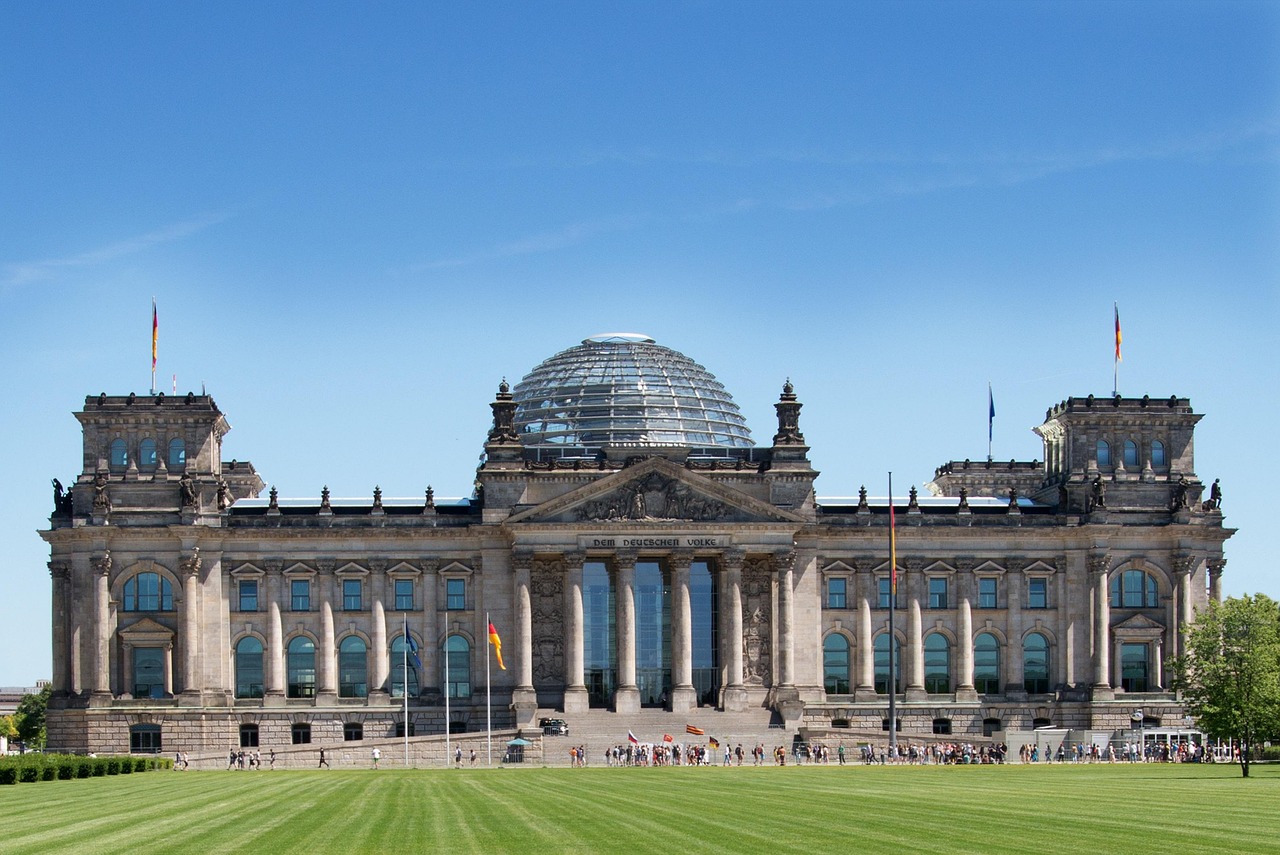
Whenever I bring friends to the Reichstag, I insist we approach across Platz der Republik, the broad lawn on the west side. You emerge from the S‑Bahn at Berlin Hauptbahnhof, cross the Spree, and watch the Reichstag slowly grow on your left – it’s the best slow reveal.
On summer afternoons, the lawn is a patchwork of picnic blankets, frisbees, and people napping in the sun. In winter, it’s mostly empty, with a strong wind coming off the river and the dome glowing like a lantern at the far end. Both moods are worth experiencing.
What to look for:
- The stone facade – look up at the sculpted eagles and allegorical figures; they’re a reminder of the building’s imperial origins.
- The inscription “Dem Deutschen Volke” – carved from cast bronze melted down from captured French cannons, a subtle reminder of 19th‑century power politics.
- The mix of people – school groups, suited politicians, tourists with selfie sticks, Berliners on lunch breaks; this is democracy in its messy, everyday form.
Timing tip: For photography, late afternoon (golden hour) gives you the most flattering light on the west facade. In 2026, with climate patterns skewing warmer, Berlin’s sunsets in late spring and early autumn can be spectacular – orange and pink streaked skies behind the dome.
2. Security, Check‑In & First Impressions
The less glamorous part of visiting the Reichstag is also the most misunderstood: security and entry. Think of it as airport‑style screening without the flight anxiety.
You’ll approach one of several glass pavilions around the building, depending on your reservation type (dome visit, rooftop restaurant, guided tour). Your passport or national ID will be checked against your pre‑registration. Then you pass through a scanner and emerge into a controlled outdoor corridor leading to the building.
From here, the mood shifts. The heavy stone walls press in as you’re guided through a series of staircases and lifts. You’ll catch glimpses of the original fabric of the building – soot‑blackened brick, chunks of historical graffiti left by Soviet soldiers in 1945. These are deliberately preserved, a reminder that history is not just a story but a set of scars.
How long to allow: In my experience, even on busy summer days, you’re through security in 15–30 minutes if you arrive at your allotted time. In shoulder seasons (March, November), it’s often faster.
Family tip: If you’re visiting with kids, prepare them in advance for the formality of security. I usually frame it as “we’re going into a working parliament, like a VIP,” which turns the scan into part of the adventure.
3. The Rooftop Terrace: Berlin at Your Feet
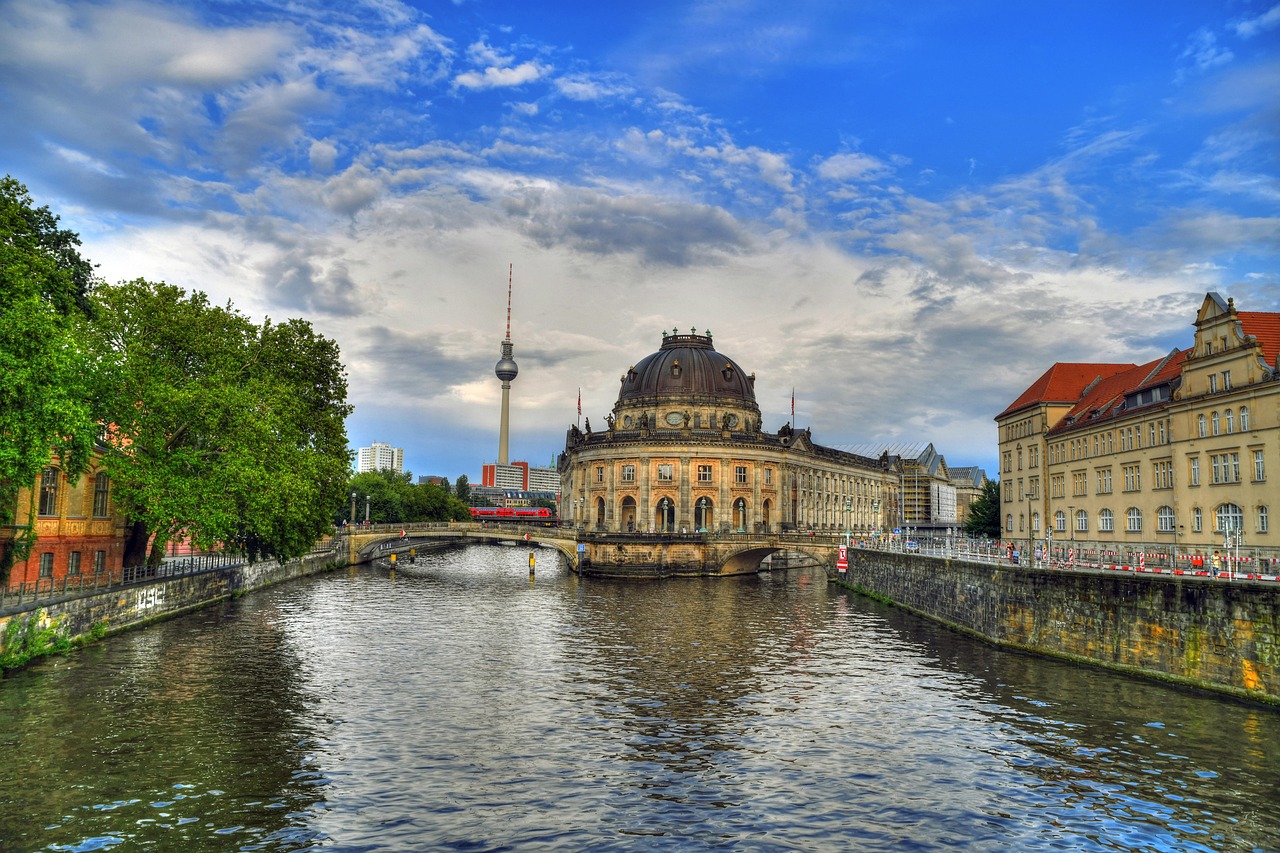
The first wow moment is usually the rooftop terrace. You step out of the stairwell and suddenly Berlin is all around you: the Tiergarten stretching like a green sea to the west, the TV Tower piercing the horizon to the east, the Brandenburg Gate a short walk away to the south.
On my last spring visit in 2026, I arrived around 8:30 pm, just as the sky was turning cobalt blue. Office windows along the Spree flickered on, the Victory Column’s golden angel caught the last light, and a breeze off the river kept the rooftop from feeling crowded, even though every time slot was technically “full.”
What to look for from the terrace:
- South: Brandenburg Gate, Unter den Linden, and beyond them the TV Tower at Alexanderplatz.
- West: The tree canopy of Tiergarten, with the Victory Column’s golden figure of Victoria glinting above it.
- North: The modern government buildings – Paul-Löbe-Haus and Marie-Elisabeth-Lüders-Haus – designed to echo the “Band des Bundes” (Ribbon of the Federation) across the Spree.
- East: Berlin’s historic core, from the Berliner Dom (cathedral) to Museum Island.
How long to spend: If you’re short on time, you can do a quick loop in 15 minutes, but I recommend at least 30–45 minutes to really absorb the view and read the orientation panels.
Romantic angle: The terrace at blue hour is quietly romantic – the sort of place where couples lean on the railing and forget about their timed entry. If you’re planning a proposal, this is one of the more meaningful places in Berlin to do it, though do be prepared for curious onlookers.
4. The Glass Dome & Spiral Walk
The glass dome is the Reichstag’s signature experience – and, honestly, still one of the most satisfying architectural walks I know. Designed as a double-spiral ramp, it lets you ascend gently while the city opens around you.
At the center of the dome is a mirrored cone that funnels daylight down into the plenary chamber below and reflects the skyline back at you as you climb. Audio guides (free, multiple languages) sync to your position in the ramp; they’re genuinely well done, giving you historical context and pointing out landmarks without feeling like a lecture.
On a clear day, you can see for miles. On a foggy morning, the dome becomes an introspective space; the city dissolves, and you’re left with condensation on the glass and the quiet tread of footsteps on the ramp. One November, I spent nearly an hour inside, just watching the mist clear in patches like a curtain lifting on different parts of Berlin.
What to look for inside the dome:
- The view down into the plenary chamber – a literal reminder that the people (you, walking above) are meant to oversee the politicians (below).
- The mirrored panels – they’re angled to bring in daylight but minimize heat gain, part of the building’s sustainability strategy.
- The open oculus at the top (often partially open) – in winter, you’ll feel the chill; in summer, it’s a welcome vent.
Accessibility: The dome ramp is wheelchair accessible, and lifts are available. I’ve visited with friends using mobility aids; staff were unfailingly helpful, and the experience felt thoughtfully designed.
Photography tip: For that classic shot, stand on the upper part of the ramp facing east, with the TV Tower in the background and the curves of the ramp framing your foreground. Early morning visits (before 9 am) tend to be the least crowded.
5. The Plenary Chamber & Guided Tours
Most visitors only see the dome and terrace, but if you’re serious about understanding German democracy – or you’re planning a deeper 2 day itinerary for Reichstag Building – try to secure a guided tour of the plenary chamber.
On my most recent parliamentary tour in 2025 (the format is unchanged in 2026), we were led through the building’s inner circulation spaces: past committee rooms, through art-filled corridors, and finally into the chamber itself, with its pale wood desks, blue chairs, and a large, stylized Federal Eagle overlooking proceedings.
Tour highlights:
- The Federal Eagle (“Fette Henne”) – Berliners jokingly call it the “Fat Hen”; guides will tell you how its design was tweaked after public debate.
- The graffiti walls – original inscriptions by Soviet soldiers in 1945, preserved as a reminder of the war’s end and the cost of dictatorship.
- Explanations of how the Bundestag actually works – party seating, coalition politics, the role of the Bundesrat, and how laws are made.
Family-friendly? Yes, with caveats. Kids over 10 who have some context about World War II and democracy generally find it fascinating; younger children may find the chamber itself a bit abstract but still enjoy the sense of being “behind the scenes.”
Language: Tours are available in German and English; occasionally other languages. Book well ahead, especially for English-language slots in June–September.
6. Art, Architecture & Small Details Many People Miss
Even if you don’t consider yourself an architecture buff, the Reichstag is worth slowing down for. Foster’s redesign is full of subtle gestures that frame the building’s past without being trapped by it.
On one visit, I lingered near a window looking west over Tiergarten and realized the interior columns weren’t aligned symmetrically as I’d assumed; instead, they subtly twist to direct your gaze toward symbolic views. These micro‑decisions are where the building really shines.
Art to notice:
- Large-format photographs and installations in the circulation spaces, many dealing with themes of memory, division, and reunification.
- Discreet references to the Wall and the line it once cut across Berlin, including in some of the outdoor landscaping.
- Integrated works by contemporary German and international artists commissioned specifically for the Bundestag.
Most of these are only visible on guided tours, another argument for going beyond the standard dome visit if your schedule allows.
7. Adjacent Sites: Brandenburg Gate, Tiergarten & the Spree
One of the joys of planning 1–3 days in Reichstag Building (really: Reichstag + central Berlin) is how much else fits into the same compact area. Within a 15‑minute walk you can tie together many of the best places to visit in Reichstag Building’s orbit:
- Brandenburg Gate – Berlin’s most iconic symbol, visible from the Reichstag’s terrace; walk down Ebertstraße to stand beneath it.
- Memorial to the Murdered Jews of Europe – a powerful field of concrete stelae, a short walk south.
- Tiergarten – Berlin’s green lung; perfect for decompressing after the intensity of the Reichstag.
- Spree riverbanks – for relaxing walks, boat tours, and a different angle on the government quarter.
On a typical guiding day, I’ll do the Reichstag dome early, then lead guests through the Brandenburg Gate and down to the Holocaust Memorial before looping into Tiergarten for a coffee break at Café am Neuen See. The contrast between marble-paved memorials and leafy parkland is, in its own way, very Berlin.
8. Reichstag After Dark & Off‑Hours
Most visitors see the Reichstag in full daylight. Yet some of my strongest memories are from the edges of the day – those transitional hours when the building shifts character.
At dawn, especially in winter, you may have the dome almost to yourself. Berlin wakes up slowly; I’ve stood on the terrace at 8 am in January with just a handful of other early risers and watched the first U‑Bahn trains glide across the Spree bridges below.
At golden hour (roughly an hour before sunset), the stone facade warms to honey tones, and the glass dome reflects a softer sky. This is peak time for photography but also for crowds; if you want a romantic stroll, aim for the late evening instead.
At blue hour and after dark, the dome becomes a glowing beacon. Inside, the ramp feels more intimate; the reflections of interior lights on the glass create layered, almost cinematic views of the city. It’s a perfect moment for couples or reflective solo travelers.
While there’s no permanent sound-and-light show on the Reichstag itself, the Bundestag occasionally hosts evening projections and public events on the riverfront government buildings (especially around national anniversaries). In 2026–2027, several such events are planned for Reunification Day (3 October) and the 30th anniversary of the Berlin Republic’s move into the building; check the Bundestag’s official website for updated schedules.
1–3 Day Itineraries Anchored on the Reichstag Building
Now let’s translate all of this into practical 1 day itinerary for Reichstag Building plans, plus suggestions for 2 day itinerary for Reichstag Building and even a richer 3 day itinerary for Reichstag Building and its surroundings.
1 Day Itinerary for Reichstag Building & Central Berlin
This 1-day plan is based on a day I often do with visiting friends who have limited time in Berlin. It’s dense but doable if you’re comfortable walking 10–12 km.
Morning: Early Dome Visit & Brandenburg Gate
08:00–10:30 – Reichstag dome and rooftop terrace
Book the earliest possible dome entry (between 8 and 9 am) for thinner crowds and clearer views. I like to grab a coffee-to-go from the station at Berlin Hauptbahnhof, then stroll across the Spree and Platz der Republik, sipping as the Reichstag comes into view.
Allow about 90 minutes from your time slot: 20–30 minutes for security and check‑in, 45–60 minutes for the terrace and dome walk, plus a few minutes to linger over the view of the plenary chamber below.
10:30–11:30 – Brandenburg Gate
Exit the Reichstag and walk south along Ebertstraße. In five minutes you’ll arrive at Brandenburg Gate, which, like the Reichstag, has seen everything from imperial processions to Cold War standoffs. Step under the gate, look back toward the Reichstag, and imagine the Wall once running right through this space.
Tip: For a slightly less crowded angle, stand on the east side of Pariser Platz and shoot toward the Gate with the Tiergarten trees behind it.
Midday: Memorials & Unter den Linden
11:30–13:00 – Memorial to the Murdered Jews of Europe
A five-minute walk south brings you to the Holocaust Memorial. The undulating field of concrete stelae invites you to walk through them; the experience shifts from open to claustrophobic, from bright to shadowed. There’s an underground information center that adds depth if you have the emotional bandwidth.
Respectful behavior: This is not a playground. Please avoid climbing or jumping on the stelae. Locals are increasingly vocal about calling out insensitive behavior here.
13:00–14:00 – Lunch on Unter den Linden
Head east along Unter den Linden for lunch. Avoid the most obvious tourist traps right on Pariser Platz and instead aim a little further down the boulevard or a block north or south.
Two personal picks within a 10–15 minute walk:
- Restaurant Nolle (near Friedrichstraße) – a throwback brasserie under the railway arches with good German classics.
- Father Carpenter (slightly further into Mitte) – if you’re craving third-wave coffee, light lunches, and something more “Berlin‑hipster.”
Afternoon: Museum Island or Government Quarter Walk
14:00–17:00 – Option A: Museum Island
If this is your only day in Berlin, I recommend heading to Museum Island (about 20 minutes on foot from Brandenburg Gate). Choose one major museum – the Pergamon (note: large parts under renovation through 2027), the Neues Museum (for the Nefertiti bust), or the Altes Museum (for classical antiquities). This pairs well with the Reichstag for a deep culture day.
14:00–17:00 – Option B: Spree & Government Quarter walk
If your brain is already full, stay closer to the Reichstag and do a relaxed walk along the Spree. Cross to the modern government buildings opposite the Reichstag; their stark glass-and-concrete forms provide a nice counterpoint to the older stone. On a sunny day, this is one of my favorite urban strolls.
Evening: Tiergarten Stroll & Nighttime Reichstag Views
17:00–19:00 – Tiergarten & early dinner
From the Reichstag, step into Tiergarten. The park’s labyrinth of paths gives you plenty of options: a short loop around the nearby ponds or a longer walk toward the Victory Column. On warm evenings, I like to end up at Café am Neuen See, where you can sit by the water with a beer and a Flammkuchen (thin-crust “pizza” style dish) while kids paddle in rental boats.
19:00–21:00 – Blue hour at the Reichstag
If your timed entry allowed, you might already have seen the dome at night. If not, you can still appreciate the building from outside as it lights up. Stand back on Platz der Republik to capture the full facade and dome glowing against the twilight sky.
By the end of this 1-day itinerary, you’ll have covered the core things to do in Reichstag Building’s immediate area and many of the city’s must-sees.
2 Day Itinerary for Reichstag Building & Central Berlin
With 2 days in Reichstag Building’s orbit, you can deepen the political and historical themes and still fit in some lighter, local experiences.
Day 1: Reichstag, Memorials & Museum Island (as above)
Follow the 1-day plan for your first day, but don’t overstretch. With two days, you can slow the pace and perhaps spend longer at the Holocaust Memorial or Museum Island.
Day 2 Morning: Plenary Chamber Tour & Political Berlin
09:00–12:00 – Guided tour of the Bundestag
On your second day, book a plenary chamber guided tour. Times vary, but morning slots tend to be less crowded. The tour usually culminates in a dome visit, but I often treat that as a bonus – your main focus is the working heart of German democracy.
Local tip: In 2026, due to occasional heightened security sessions, some tour dates are blocked at short notice. Try to build flexibility into your schedule in case you need to shift this to the afternoon.
Day 2 Afternoon: Alternative Berlin & the Spree
12:00–14:00 – Lunch in the government quarter
Skip the underwhelming cafés right next to the Reichstag. Instead, walk 10–15 minutes toward Friedrichstraße station, where you’ll find a mix of business‑lunch spots and casual eateries frequented by office workers rather than tourists.
14:00–17:00 – Boat tour on the Spree
One of the most relaxed cultural experiences in Reichstag Building’s neighborhood is to see it from the water. Several companies offer 1‑hour or 2‑hour cruises that depart near Friedrichstraße or Museum Island and loop past the Reichstag and government quarter.
As you glide under bridges, you’ll see the Reichstag’s dome peeking over the riverfront buildings; guides (usually live in German, recorded in multiple languages) will give you another angle on the city’s development.
Day 2 Evening: Neighborhood Exploration
17:00–22:00 – Dinner in Mitte or Kreuzberg
Use your second evening to explore a more local-feeling neighborhood. From the Reichstag area, it’s easy to hop on the U‑Bahn or S‑Bahn to Kreuzberg, Neukölln, or Prenzlauer Berg for dinner. This is where you’ll really feel contemporary Berlin: Turkish mezze bars, vegan Vietnamese spots, natural wine bistros, and smoky Kneipen (pubs) all jostling together.
Returning afterward to your hotel near the Reichstag, you’ll appreciate how the building anchors not just the city’s past but its present.
3 Day Itinerary for Reichstag Building & Beyond
With 3 days in Reichstag Building’s orbit and central Berlin, you can weave together politics, memory, art, and local life in a satisfying arc. Here’s how I’d structure it, based on a long weekend I hosted for friends in 2025, updated with 2026 tweaks.
Day 1 – Orientation & Icons
Follow the 1-day itinerary: Reichstag dome, Brandenburg Gate, Holocaust Memorial, and either Museum Island or a Spree walk. Treat this as your orientation day.
Day 2 – Inside Democracy & Alternative Berlin
As in the 2-day plan: parliamentary tour in the morning, Spree boat tour in the afternoon, and dinner in a local neighborhood.
Day 3 – Deep Dive & Day Trips
09:00–13:00 – Optional: Topography of Terror & Checkpoint Charlie
This isn’t right next to the Reichstag, but thematically it fits. The Topography of Terror documentation center, built on the site of the former Gestapo headquarters, gives powerful context for the dictatorship that exploited the Reichstag fire. From here, you can walk to Checkpoint Charlie to understand Cold War divisions.
13:00–18:00 – Day trip or extended Tiergarten loop
In the afternoon, either:
- Do a deeper Tiergarten loop: climb the Victory Column (Siegessäule) for another viewpoint over the city, then walk back toward the Reichstag via leafy paths.
- Or take a short regional train to Potsdam (about 30–40 minutes from Berlin Hauptbahnhof) for palaces and gardens that complement the Reichstag’s political narrative with Prussian grandeur.
By the end of three days, you’ll have a multi-layered understanding of Berlin that radiates out from the Reichstag as its symbolic center.
Eating & Drinking Around the Reichstag Building
The immediate surroundings of the Reichstag are surprisingly thin on excellent food – it’s a government quarter, after all. But within a 10–15 minute walk, you can eat very well if you know where to go.
Skip the Tourist Traps, Walk a Little Further
Right beside the Reichstag and Brandenburg Gate you’ll find a mix of fast food, chain cafés, and overpriced sit‑downs catering to coach groups. I rarely eat within a 300–400 m radius of the building itself.
Where I Actually Eat
- Café am Neuen See (Tiergarten) – Beer garden and lakeside café; great for casual meals, especially in summer. Family‑friendly, lots of space for kids.
- House of Small Wonder (Mitte) – Cozy brunch and lunch spot in Mitte; about a 15–20 minute walk or short U‑Bahn hop from the Reichstag.
- Markthalle Neun (Kreuzberg) – Not nearby, but worth the trip for street-food-style variety; pair it with an evening after a day at the Reichstag.
What to Bring with You
You can’t bring large bags or picnic spreads into the Reichstag, but a small bottle of water and a snack bar are fine. There are restrooms at the rooftop level but no detailed café; for a full meal, plan to eat before or after your visit.
Where to Stay Near the Reichstag Building
Staying walking distance from the Reichstag makes early morning or late evening dome visits easy and slots well into short itineraries.
Best Areas
- Mitte (central) – Closest to the Reichstag, Brandenburg Gate, Museum Island; ideal for first-timers.
- Tiergarten/Potsdamer Platz – Slightly more business-like but convenient and well connected.
- Friedrichstraße corridor – Good for rail access and quick walks to the government quarter.
Personal Experience
When I know I’ll be at the Reichstag early (for dawn photography or a school group visit), I often stay near Berlin Hauptbahnhof. It’s not the most charming area, but the transport connections are unbeatable, and you can be on Platz der Republik in under 10 minutes on foot.
Practical Logistics: Tickets, Opening Hours, Security & Rules
Knowing how to visit Reichstag Building without headaches comes down to three things: reservations, timing, and expectations.
Reichstag Building Tickets & Timed Entry
- Cost: Dome and terrace visits are free, but advance registration is mandatory.
- How to book: Online via the official Bundestag website. You’ll need full names and dates of birth for all visitors.
- When reservations open: Typically about 2 months in advance. For peak summer (June–September) in 2026, morning and sunset slots can sell out within days of release.
- Last-minute options: Occasionally, there’s a short‑notice registration office near the Reichstag where you can try for same‑day or next‑day slots, but availability is limited.
Reichstag Building Opening Hours
The dome is usually open daily from 08:00 to 24:00 (last entry around 21:45–22:00), with occasional closures for maintenance or parliamentary events. Always confirm closer to your travel date; in 2026, a few extra closures are expected around major EU summit dates.
Security & Behavior Rules
- Bring a valid passport or official ID that matches your reservation.
- Large bags, weapons, and sharp objects are prohibited; small daypacks are usually fine but will be scanned.
- Dress code: Casual is fine, but avoid offensive slogans. This is a working parliament, not just a tourist site.
- Photography: Allowed and encouraged in the dome, terrace, and most public areas. Flash may be restricted in some interior spaces on guided tours.
Accessibility
The Reichstag is one of Berlin’s better-executed accessible attractions. Lifts serve all public levels; the dome ramp is gentle and wide. If you have specific mobility needs, mention them when reserving; staff can coordinate assistance.
Best Time of Day & Season to Visit
- Time of day: Early morning (before 9:30) and late evening (after 20:00 in summer) are best for lower crowds and better light.
- Season:
- Spring (April–May): Mild weather, long days, Tiergarten in bloom.
- Summer (June–August): Great for evening visits; book far ahead.
- Autumn (September–October): My personal favorite – golden trees in Tiergarten, crisp air, still longish days.
- Winter (November–February): Moody skies, low light, fewer tourists. Dress warmly; the dome can feel chilly.
Cultural Etiquette & Local Customs in and Around the Reichstag
Berlin is relaxed, but the Reichstag carries a certain gravitas. A few customs and expectations will help you blend in and avoid unintentional faux pas.
Respect for History
The Reichstag is not just “Instagram fodder”; it’s layered with trauma and renewal. Locals tend to be sensitive about trivializing its history. Joking selfies in somber spots or loud behavior in the dome can draw disapproving looks.
Quiet in Reflective Spaces
Inside the dome, a low murmur is fine, but shouting, playing music, or phone calls on speaker are frowned upon. Same goes for adjacent memorials (Holocaust Memorial, etc.).
Photography with Consideration
Photography is welcome, but try not to block walkways or lean over barriers. If people are clearly in a reflective moment, avoid sticking your lens in their faces.
Tipping & Service Culture
In nearby cafés and restaurants, service is not included as in some countries. Rounding up the bill or leaving 5–10% is standard if you’re satisfied.
Upcoming Events & Changes (2026–2027)
While the Reichstag’s core visitor experience remains stable, a few 2026–2027 developments are worth noting:
- Expanded English-language tours (2026): The Bundestag plans more frequent English tours of the plenary chamber, especially on weekends.
- Energy-efficiency upgrades: Some overnight maintenance work on the dome’s ventilation system may cause occasional early closures in winter 2026–27.
- Reunification Day (3 October 2026): Expect special programs, including possible light projections on government buildings and extended opening hours; reservations will be even harder to secure around this date.
- Berlin cultural festivals: Citywide events like Festival of Lights (usually October) often include illuminations in the government quarter; the Reichstag itself is typically illuminated but not used as a projection screen, out of institutional caution.
Nearby Attractions & Easy Day Trips from the Reichstag
While this is a travel guide for Reichstag Building, you’re unlikely to spend your whole Berlin trip just here. From the Reichstag’s central position, several excellent excursions are within easy reach.
Within Walking Distance
- Brandenburg Gate & Unter den Linden – 5–10 minutes south.
- Holocaust Memorial – 10 minutes south.
- Tiergarten & Victory Column – 10–30 minutes west, depending on route.
- Museum Island – 20 minutes east on foot or a short public transport ride.
Potsdam
A classic day trip: trains from Berlin Hauptbahnhof get you to Potsdam in under 40 minutes. Explore Sanssouci Palace and gardens, the Dutch Quarter, and the Glienicke Bridge (famous for Cold War spy swaps). It’s a nice counterpoint to the political heft of the Reichstag – still grand, but more leisurely.
Sachsenhausen (Oranienburg)
For those ready for a heavy, necessary visit, the former concentration camp at Sachsenhausen is reachable by S‑Bahn and bus. It’s a sobering complement to the Reichstag’s narrative of democratic recovery.
Travel Advice for Reichstag Visitors
To wrap up, here are some broader travel tips for Reichstag Building visitors that will also help you navigate Berlin efficiently.
Getting Around
- Public transport: The Reichstag is a 10–15 minute walk from Berlin Hauptbahnhof (regional trains, S‑Bahn, U‑Bahn, trams, buses). You can also use the Brandenburger Tor S‑Bahn/U‑Bahn station for direct access to the gate and a short walk to the Reichstag.
- Tickets: In 2026, Berlin continues with zone‑based fares; a day ticket (Tageskarte) or multi‑day pass is usually best if you’re doing a full sightseeing program.
- Bikes & e‑scooters: Widely available; bike lanes around the Reichstag are decent, but be extra cautious around tourist clusters.
SIM Cards & Connectivity
Prepaid SIMs from major providers (Telekom, Vodafone, O2) are sold at the airport, major train stations, and electronics shops. Expect widespread 5G coverage in central Berlin in 2026. EU residents can usually roam without extra fees; non‑EU visitors will benefit from a local SIM or eSIM.
Money-Saving Tips
- Reichstag entry is free – don’t buy “skip-the-line” tickets from third parties; they’re unnecessary and often scams.
- Use public transport passes instead of taxis; Berlin is compact and well connected.
- Eat your main meal at lunch; many places offer Mittagstisch (lunch specials) that are cheaper than evening menus.
Visa Requirements & Driver’s Licenses
Germany is part of the Schengen Area. Many nationalities can enter visa‑free for short stays (up to 90 days), but always check the current rules for your passport. From 2025 onward, the EU’s ETIAS system is being phased in, so by 2026 you may need to complete online pre‑authorization even if you’re visa‑exempt.
A foreign driver’s license is generally accepted for tourists; an International Driving Permit can be helpful if your license isn’t in Latin script. That said, a car is more liability than asset in central Berlin – parking near the Reichstag is scarce and unnecessary.
Best Seasons for Different Activities
- Spring: Ideal for dome visits + long walks in Tiergarten, plus milder queues.
- Summer: Great for late evening dome visits and river cruises; be prepared for crowds and heat waves.
- Autumn: Best time for photographers; golden foliage against the Reichstag’s stone is gorgeous.
- Winter: Combine Reichstag visits with Christmas markets and indoor museums; dress in layers and expect shorter days, but more atmospheric cityscapes.
Summary & Final Recommendations
Visiting the Reichstag Building is less about ticking off another monument and more about entering a living conversation. Stone and glass, empire and democracy, trauma and renewal – it’s all compressed into this one, surprisingly accessible place.
Key takeaways:
- Book early – secure your dome and, if possible, plenary chamber tour as soon as reservations open.
- Anchor your itinerary here – for 1–3 days in Reichstag Building’s orbit, pair your visit with Brandenburg Gate, the Holocaust Memorial, Tiergarten, and either Museum Island or a Spree boat tour.
- Choose your moment – morning for calm and clarity, evening for romance and city lights; autumn and late spring are the sweet spots overall.
- Look beyond the photos – pay attention to the preserved Soviet graffiti, the view into the plenary chamber, and the way Berliners themselves use the lawns and paths around the building.
If you give the Reichstag Building more than a rushed hour in between other sights, it will reward you with one of Europe’s most layered, meaningful travel experiences – a vantage point not just over Berlin, but over the last century and a half of European history.