Why Visit Rheinfels Castle – What Makes It Special
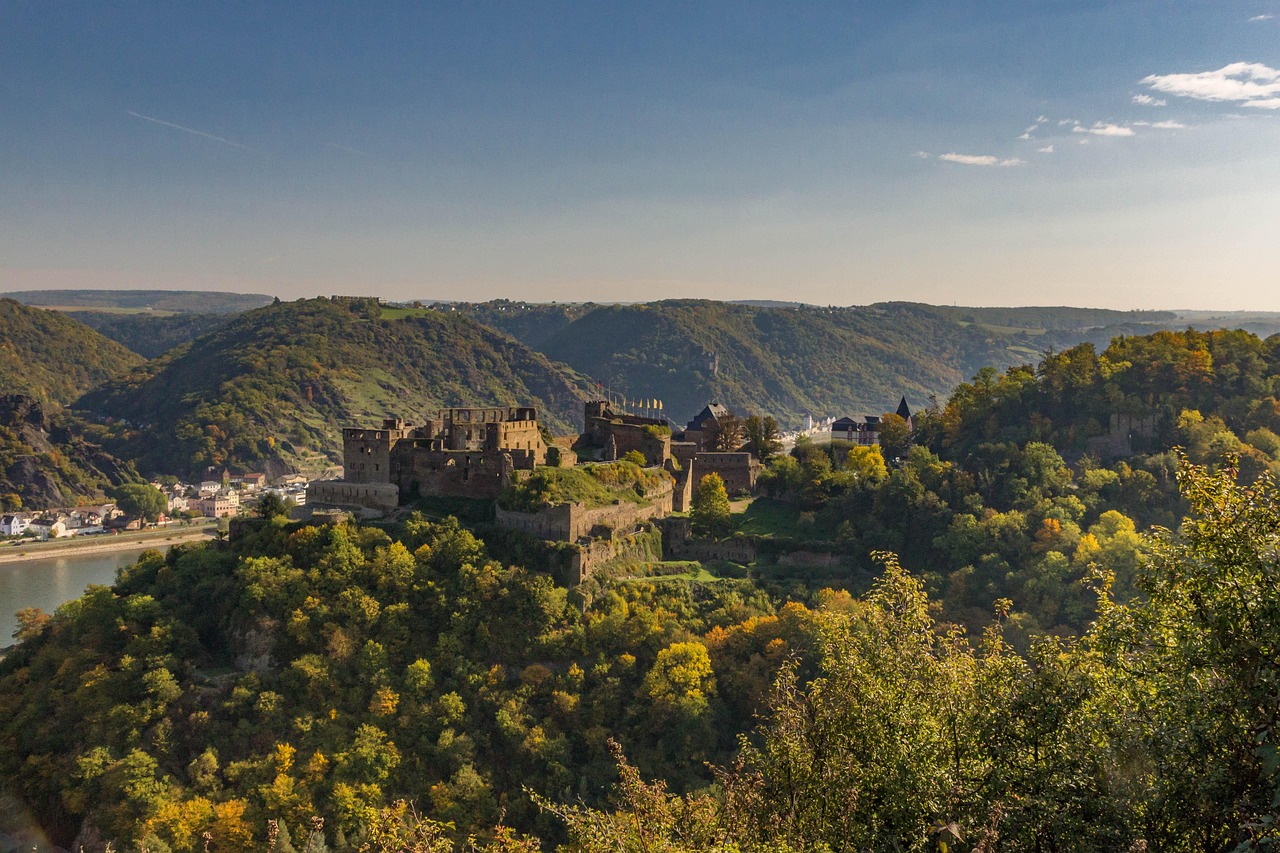
Perched above the half-timbered town of St. Goar, Rheinfels Castle was once the mightiest fortress on the Middle Rhine. In its 16th–18th century prime, it dominated the river, defied sieges, and controlled trade. Today, it’s a ruin—but the kind of ruin that lets you clamber through old mine tunnels, stand on ramparts with the Rhine swirling below, and still see the bones of the original medieval powerhouse.
What sets Rheinfels apart from other Rhine castles is scale and freedom. Marksburg is beautifully preserved but very structured; Pfalzgrafenstein is atmospheric but tiny. Rheinfels, by contrast, sprawls. You wander at your own pace through courtyards, cellars, bastions, and viewpoints. It feels like a cross between an open-air museum and a giant stone playground, with just enough signage to understand what you’re seeing and enough mystery to fire your imagination.
In 2026, Rheinfels remains one of the must-see attractions in the Upper Middle Rhine Valley, whether you’re day-tripping by boat or building a deeper 1 day itinerary for Rheinfels Castle, or even a full 3 day itinerary for Rheinfels Castle with nearby towns and vineyards.
- Families love the tunnels, towers, and open space to roam.
- Couples come for wine, river views, and those endless golden-hour vantage points.
- History buffs and photographers get a fortress that still feels raw and real.
- Hikers and adventurers can link the castle with Rheinsteig and RheinBurgenWeg trails.
If you’re planning 1–3 days in Rheinfels Castle and the surrounding area, this travel guide distills years of repeat visits into a practical, story-driven plan: what to see, when to go, how to avoid the crowds, where to eat, and how to understand the place beyond the usual snapshot.
Table of Contents
- Why Visit Rheinfels Castle
- Essential Overview: How to Visit Rheinfels Castle in 2026
- 1–3 Day Itineraries for Rheinfels Castle
- Main Sections, Viewpoints & Adjacent Sites
- 1. The Main Approach & Castle Gate
- 2. Upper Courtyard & Panoramic Terrace
- 3. Mine Tunnels & Defensive Works
- 4. The Giant Cellars & Museum Wing
- 5. Katz Castle & Rhine Bend Viewpoints
- 6. St. Goar Old Town & Riverside Promenade
- 7. Hiking Trails: RheinBurgenWeg & Local Paths
- 8. Romantic Corners & Quiet Lookouts
- Eating & Staying Near Rheinfels Castle
- Rheinfels Castle After Dark & Off-Hours Magic
- Day Trips & Nearby Attractions
- Cultural Etiquette & Local Customs
- Practical Travel Advice & Logistics
- Tickets, Opening Hours & On-Site Logistics
- Events & What’s New for 2026–2027
- Summary & Best Time to Visit Rheinfels Castle
Essential Overview: How to Visit Rheinfels Castle in 2026
Rheinfels Castle sits above St. Goar, about midway between Koblenz and Bingen along the famous Middle Rhine. Trains on the left bank line (Koblenz–Bingen) stop at St. Goar, and from there it’s a 20–30 minute uphill walk or a short local shuttle/taxi ride to the castle.
For most travelers, the question is how much time to spend. You can absolutely do a 1 day itinerary for Rheinfels Castle with a quick river cruise and still feel satisfied. But if you have the flexibility, two or three days allow you to see the fortress under different lights, hike to hidden viewpoints, linger over Riesling in the evenings, and dip into nearby castles and wine villages.
In 2026, Rheinfels remains easy to visit without complex reservations. It’s not like Neuschwanstein with timed tickets months in advance. Nonetheless, weekends in July–September and long holiday weekends can get busy between late morning and mid-afternoon, especially with coach groups and cruise passengers. To experience the site at its best, aim for:
- Opening time (typically 9:00 or 10:00, season-dependent)
- Late afternoon toward golden hour, especially outside school holidays
Below, you’ll find detailed 1, 2, and 3 day itineraries for Rheinfels Castle, each built from my own repeat visits, factoring in seasonal changes, light, and crowd patterns.
1–3 Day Itineraries for Rheinfels Castle
These are not rigid checklists but lived-in suggestions. I’ve walked these routes in different seasons, tweaked timings after missed ferries and surprise rain showers, and figured out which corners reward lingering and which are fine to glance at on your way to somewhere better.
1 Day Itinerary for Rheinfels Castle – Core Highlights
If you only have 1 day in Rheinfels Castle, this is the day I recommend over and over to friends visiting from abroad. It focuses on the fortress itself and St. Goar, with minimal transit faff and maximum time actually in places.
Morning: Arrival in St. Goar & Ascent to Rheinfels
I like arriving on the mid-morning train from Koblenz or Bingen—usually between 9:00 and 10:00. Stepping onto the platform at St. Goar still gives me a little thrill: you’re hemmed in between steep vine-covered slopes and the broad, busy Rhine. Before heading up, I always duck into the small bakery near the station (look for crusty Brötchen piled in the window) to grab a pretzel or a simple cheese roll for later. The café culture here is low-key; think practical fuel, not latte art.
From the station, wander downhill towards the river, then angle left through the old town lanes. The castle looms above you on the ridge, and the walk up is half the experience. You have two options:
- On foot: 20–30 minutes, moderately steep. Take the signed footpath “Burg Rheinfels” that snakes behind houses and into the trees. This is my preferred way up: you’ll catch glimpses of vineyards, small gardens, and the river widening below.
- Shuttle/taxi: In main season, a small shuttle runs between town and the castle; otherwise taxis can be pre-booked or called from the station or your guesthouse. This is wise if you’re traveling with small children, limited mobility, or heavy luggage.
On my last summer visit, I walked up with a family from the Netherlands who had two school-age kids. We took breaks at benches along the way, and the kids kept spotting river cruise ships below, counting how many flags they could identify. Already, Rheinfels was doing its job: connecting landscape, history, and play.
Late Morning to Early Afternoon: Exploring the Heart of Rheinfels
Plan on 3–4 hours inside the castle if you want a satisfying visit. You buy tickets at the entrance building—more on types and prices in the logistics section—and pass through a short tunnel into the main complex.
My “classic loop” for first-timers:
- Upper Courtyard & Main Walls: Start with the central courtyard, which orients you: information panels outline the castle’s history, and you can already look out over the Rhine and St. Goar. Don’t rush; this is one of the best must-see attractions in Rheinfels Castle for sweeping shots.
- Ramparts & Terraces: Follow the signed paths up to the outer walls. The panoramic terrace on the river-facing side is my pick for your first “wow” view; on clear days, you can see Katz Castle opposite and the narrow Rhine gorge unfolding to the north.
- Cellars & Museum Wing: Head down into the cavernous wine and storage cellars, then through to the small but well-curated museum. The scale of these vaulted spaces still surprises me; I once visited in late October when a light mist hung in the air and it felt like stepping into the lungs of the mountain.
- Tunnels & Outer Defenses: Save the tunnels for last, when you’ve already got a mental map of the site. With a flashlight, you can enter selected mine galleries and covered passageways that once formed the heart of Rheinfels’ defense system.
There are plenty of side branches, dead ends, and alternative stairways. That’s part of the charm. I recommend roughly the following time allocations for a 1-day trip:
- Courtyards & terraces: 60–90 minutes
- Cellars & museum: 45–60 minutes
- Tunnels & bastions: 60–90 minutes (depending on how many you explore)
Lunch: Simple, Scenic, and Local
For lunch on a 1-day itinerary, you have three realistic options:
- Castle terrace restaurant/café: Convenient and scenic, with fair prices for the location. Expect schnitzel, Flammkuchen, and seasonal dishes. I usually order a light Flammkuchen and a glass of dry Riesling, then linger over the view. Service can slow when groups descend; be patient and enjoy the panorama.
- Picnic within the grounds: Allowed in many outdoor areas (check current signage). Grabbing rolls, cheese, and fruit in St. Goar before you climb gives you more flexibility and can save you money.
- Late lunch back in town: If you’ve had a big breakfast or snacks, you can push lunch until after you descend, around 15:00, when riverside restaurants are quieter.
Personally, for first-timers on a tight schedule, I recommend at least a coffee or drink on the terrace. There’s something about sipping wine above the river traffic that makes the whole Middle Rhine story click.
Afternoon: St. Goar Old Town & Riverside Promenade
After you’ve had your fill of ramparts and tunnels, wander back down to St. Goar. The descent is gentler and faster; you’ll likely be back at river level in 15–20 minutes.
In town, I like to loop slowly through:
- Market square & church: Half-timbered façades, small shops, and the modest parish church. Duck inside for a few minutes; the quiet interior is a nice counterpoint to the fortifications you’ve just left.
- Riverside promenade: The Rhine is busy here with barges and cruise ships. Benches line the promenade, and in 2026 you’ll still see plenty of cyclists and long-distance hikers resting along the path.
- Wine shop or tasting room: Pop into a local Weinstube to sample Rieslings from the surrounding slopes. Many offer Riesling flights and small plates of cheese or sausage.
If you’re interested in the Loreley lore but don’t have time for a full detour, look upriver from the promenade to see where the valley narrows dramatically. Signs in town explain the legend of the siren who lured sailors to their doom on the rocks—something I always re-read for the sheer drama of it.
Late Afternoon to Evening: Rhine Cruise or Sunset & Departure
If you can time your departure, one of my favorite ways to close a 1 day itinerary is with a short Rhine cruise from St. Goar. Even an hour-long leg up to Boppard or down to Bacharach gives you a different perspective on Rheinfels: you see how it anchors the bend, how it once commanded the narrowest parts of the traffic lane.
On one September trip, I caught the late-afternoon boat up to Boppard. As we pulled away, the sun slid lower, catching the ruined walls in gold. A pair of older German hikers on deck beside me pointed out various castles and swapped trail stories. It felt like the sort of unplanned encounter that only happens when you leave a little slack in your schedule.
If boats don’t fit your timing, simply stay in St. Goar until early evening. Watch the light change on the water, then take the train onward. For those continuing by rail, trains typically run hourly in both directions, making it easy to return to Koblenz, Mainz, or Frankfurt.
This 1 day itinerary for Rheinfels Castle hits the core things to do in Rheinfels Castle: the fortress, iconic views, a taste of St. Goar, and a sense of the Rhine itself. If you find yourself wishing you had more time—that’s the sign you should come back for a longer stay.
2 Day Itinerary for Rheinfels Castle – Slow Down & Go Deeper
With 2 days in Rheinfels Castle and St. Goar, you can explore at a more human pace, catch sunrise or sunset at the ruins, and add a short hike or boat detour. This is the rhythm I recommend for couples, families with school-age kids, or anyone who wants to balance sightseeing with relaxation.
Day 1: Arrival, Castle Highlights & Golden Hour Above the Rhine
Assume you arrive by midday and spend the afternoon and early evening at the castle, then stay overnight in St. Goar or at the hotel integrated into the castle.
Arrival & Check-In
When I have two days, I like to check into my guesthouse or hotel first, freshen up, drop bags, and then walk up to Rheinfels with just a small daypack. In recent years I’ve stayed a few times in small family-run pensions on the hillsides above St. Goar—nothing fancy, just clean rooms and balconies that catch the afternoon sun. Another option is the hotel directly at the castle complex, which offers unbeatable convenience and views (reserve well ahead for summer weekends).
Afternoon: Castle Visit at an Easy Pace
On a 2-day itinerary, you can stretch the castle visit over a full afternoon without watching the clock. Start with the same core loop described in the 1-day section, but give yourself permission to:
- Read every info panel that catches your eye.
- Take side stairs “just to see where they go.”
- Sit in quiet corners and imagine garrisons and traders moving through the same space.
I like to bring a small notebook and sketch or jot impressions in the museum wing. The mix of artifacts—armour fragments, weapons, household items—grounds the ruin in real lives. There’s a particularly evocative display outlining the 1692 siege; after reading it, I always walk the outer walls again with a new sense of how precarious those centuries were.
Evening: Golden Hour, Blue Hour & Dinner
The real gift of a second day is that you can stay until closing time and catch the late light. In high season (roughly May–September), this means you may watch the sun drop behind the hills as the Rhine turns from silver to deep blue. Photographers will appreciate the silhouettes of towers against the sky; romantics will appreciate the quiet as day-trippers drift away.
Once the castle closes, head back down to St. Goar for dinner. For something low-key but satisfying, I tend to gravitate to a riverside restaurant with outdoor seating, order grilled fish or schnitzel, and pair it with a local Riesling or Spätburgunder. You’ll find menus blending German staples with a few pan-European comfort dishes, which works well if you’re traveling with picky eaters.
Day 2: Hike, River, and Hidden Corners
Morning: Short Hike on the RheinBurgenWeg
On my favorite 2 day itinerary for Rheinfels Castle, I dedicate the second morning to a short hike on the RheinBurgenWeg (Rhine Castles Trail). This long-distance path threads along the slopes above the river, linking castles and viewpoints. You don’t need to do a full stage; even a 2–3 hour out-and-back segment delivers superb views.
From St. Goar, pick up the well-marked trail towards Oberwesel or Boppard, depending on your energy and transport plans. The path runs through vineyards and forest, with occasional benches that overlook both the river and Rheinfels itself. Seeing the castle from different angles, far above the tourist vantage points, gives you a sense of how it anchors this entire stretch of valley.
On one crisp April morning in 2025, I set out just after 8:00. The air smelled of damp earth and last year’s leaves, and mist still clung to the water below. I met exactly three other people in two hours: a local dog walker, a solo hiker from Cologne, and a farmer checking his vines. All of them nodded or wished me a soft “Morgen,” that quiet, everyday courtesy that I’ve come to associate with the Rhine hills.
Lunch: Vineyard or Town
Depending on your route, you can either:
- Return to St. Goar for lunch in town.
- Continue to a nearby village with a Straußwirtschaft (seasonal wine tavern) if you’re visiting in late spring or autumn.
I often plan my hike so I’m back in St. Goar by early afternoon: I’ll reward myself with Flammkuchen or a hearty plate of Bratkartoffeln (fried potatoes) and a fresh salad. By then, your legs will be humming pleasantly from the morning’s climb.
Afternoon: Second Look at Rheinfels or River Cruise
With the afternoon free, you can either:
- Return to Rheinfels using your ticket if it’s still valid (check conditions; often you’ll need a new one). This time, focus on whatever you rushed through before: tunnels, museum, or just quiet corners.
- Take a boat to Bacharach or Boppard for a few hours, then ride the train back in the evening.
I like incorporating a short cruise on the day I leave, so I know I’ve squeezed every last drop from the river before heading back to city life. But there’s also something very calming about a second, quieter walk through the castle, now that all the “must-sees” are already checked off.
This 2 day itinerary for Rheinfels Castle blends fortress exploration, hiking, and river time. It’s ideal for travelers who want more than just a quick photo stop and appreciate having unhurried hours in a single place.
3 Day Itinerary for Rheinfels Castle – Immersive Rhine Fortress Escape
Spending 3 days in Rheinfels Castle and the surrounding Middle Rhine might sound indulgent if you’re on a whirlwind Europe trip, but it’s the sweet spot for fully absorbing the rhythm of the valley. This is where you start to recognize the same barge chugging past multiple times a day, where you have a “usual table” at a wine tavern, where Rheinfels becomes less a site and more a neighbor you drop in on.
Day 1: Orientation & Core Castle Experience
Follow the 1 day itinerary for Rheinfels Castle described earlier: ascend to the castle, explore the courtyards, ramparts, cellars, and tunnels, then unwind in St. Goar with a walk along the river. Don’t try to overcomplicate day 1; you’ll have more time tomorrow and the next day to deepen the experience.
Day 2: Cross-Rhine Perspectives & Katz Castle Viewpoints
On day 2, I like to focus on perspective: seeing Rheinfels from across the river, understanding how it fit into the broader defensive network, and exploring neighboring viewpoints.
Morning: Ferry to St. Goarshausen & Katz Castle View
Start your day with the short ferry ride from St. Goar to St. Goarshausen on the opposite bank. These ferries are workhorses, shuttling locals, cars, and foot passengers back and forth; in 2026 they remain a crucial part of the valley’s transport puzzle.
From St. Goarshausen, you’ll see Katz Castle perched dramatically above town. Unlike Rheinfels, Katz is privately owned and not generally open for casual tours, but the view of it is a destination in itself. Several signed paths climb up to viewpoints; even a short 30-minute uphill walk yields spectacular angles on both Katz and Rheinfels facing each other across the Rhine.
I still remember the first time I stood at one of those overlooks on a hazy August morning. Rheinfels looked both immense and oddly vulnerable from that distance—its ruined walls blending into the hillside, the town a cluster of toy houses at its feet. Understanding the topography from both banks really drives home why this stretch of river was so fiercely contested.
Midday: Loreley Plateau Excursion
If your legs and schedule allow, continue onwards to the Loreley plateau, either by bus or on foot via marked trails. The Loreley rock and its associated visitor facilities have become more polished in recent years, but the core experience remains: a dramatic overlook onto one of the narrowest, most treacherous bends of the Rhine.
You’ll find viewing platforms, explanatory signs, and (in season) a couple of kiosks and cafés. This is one of those places where I always try to arrive early or late in the day; midday in high summer can feel crowded, and the harsh overhead light flattens the drama. With three days, you can time it to your taste and the weather.
Afternoon: Return by Boat or Train & Quiet Time at Rheinfels
Head back to St. Goarshausen, cross by ferry, and either:
- Make a spontaneous decision to revisit Rheinfels for an hour or two, especially if the light is shifting interestingly.
- Or simply sit by the river or in a café with a view, letting the day’s vantage points sink in.
On longer stays, I often find that my most memorable Rheinfels moments are not the “scheduled” ones but the unplanned detours: a last-minute decision to climb a tower again because the sky’s turned dramatic, or to walk up at dusk and watch bats flicker over the ruins before heading back down for dinner.
Day 3: Themed Exploration & Personal Rituals
By day 3, you’ve seen the big hits. This is the day to follow a theme that interests you, or to create your own rituals around the place.
Option A: Deep History & Museum-Focused Day
If you’re a history enthusiast, dedicate a few morning hours to the museum wing and guided tours (if available in your language on that day). With more time, you can delve into:
- The changing military technology that shaped Rheinfels.
- The economic role of tolls and trade on the Rhine.
- The castle’s decline and partial destruction in the 18th century.
Bring questions; local guides often have family roots in the area and will share anecdotes not printed on any panel. I once spent a rainy Sunday morning following a German-language tour largely attended by locals; the guide peppered his explanations with side comments about school trips, youthful pranks in the tunnels, and how the castle has changed since his own childhood.
Option B: Family Adventure & Tunnels Day
For families, day 3 can become a “tunnels and towers” adventure. Come armed with flashlights (or headlamps) and sturdy shoes, and explore all the accessible mine tunnels and outer bastions. These were designed to undermine enemy approaches; today they’re thrillingly dark but signposted and secure within the permitted areas.
Kids love this, but it’s fun for adults too. I still get a jolt of childlike excitement when my flashlight beam picks out carved initials from decades ago or reveals a sudden glimpse of daylight at the end of a long, narrow passage. Allow 2–3 hours if you really want to trace every permitted branch.
Option C: Writer’s or Photographer’s Retreat Day
If you’re creatively inclined, spend your third day using Rheinfels as a studio without walls. Bring a notebook, camera, or sketchbook and choose a few spots to return to at different times of day: the main terrace, a side bastion, a quiet stairwell. Watch how the light and mood change. Eavesdrop (politely) on fragments of conversation in different languages. Capture textures: moss on stone, iron hinges, worn steps.
On one autumn stay, I spent an entire morning just in the outer ward, writing and watching the river. I left with more pages of notes than from some entire city breaks. Rheinfels rewards slowness.
Whichever theme you choose, your 3 day itinerary for Rheinfels Castle turns a simple sightseeing stop into a layered, personal experience—something you’ll remember long after the names of other castles blur together.
Main Sections, Viewpoints & Adjacent Sites – In Depth
Here are at least eight of the most prominent sections and viewpoints in and around Rheinfels Castle, each with background, significance, and the little on-the-ground details that don’t always make it into shorter travel guides.
1. The Main Approach & Castle Gate
Your experience of Rheinfels begins long before you touch its stone. The approach from St. Goar is, in my opinion, one of the most important “rooms” of the castle: a shifting frame through which the fortress grows larger and more imposing with each bend of the path.
Historically, this ascent was more than scenic. Merchants, messengers, and would-be invaders all climbed roughly the same slope you do, albeit with more mud and less Gore-Tex. The castle’s designers understood psychology: as you approach, walls seem to rise, angles tighten, and the gate looms like a mouth in the hillside.
On my first visit back in the early 2010s, I underestimated the climb and rushed up from the station, sweating and slightly annoyed. By the time I reached the ticket office, I was in no mood for subtlety. Now I treat the ascent as a slow ritual: pausing at viewpoints, letting the town fall away behind me, feeling the gradient in my calves. It turns arrival into an act of transition—from the everyday world to the fortified one.
The main gate itself is a layered structure: outer works, then a deeper entry passage that once bristled with portcullises, murder holes, and defenders. Today, the threat is gone, but the sense of compression remains. This is one of those places where I recommend stopping for a moment, looking up at the stonework, and imagining what it would feel like to be unwelcome here in 1692.
Practical tip: in summer, the approach can be hot and exposed in sections. Bring water, and if you’re traveling with small children or older relatives, consider the shuttle up and walking down instead. The path is not stroller-friendly throughout; a baby carrier works better.
2. Upper Courtyard & Panoramic Terrace
The upper courtyard is the castle’s social heart, both historically and today. In its medieval and early modern prime, this space would have been ringed with residential buildings, workshops, and storerooms. Now, it’s an open arena of stone walls, grassy patches, and pathways leading off in all directions. It’s also where most people instinctively gather their bearings.
From here, you can access the panoramic terrace, one of the best places to visit in Rheinfels Castle if you’re craving that iconic Rhine view. The terrace juts out over the slope, with the river curving below, trains threading along both banks, and Katz Castle staring back from across the water. On clear days, bright barges and tourist boats dot the surface like moving toys.
I have a habit of returning to this terrace at least twice every visit: once soon after arriving, when I’m still a bit dazzled by the scale, and once again towards the end, when everything feels more familiar. The second time, I notice more: the exact shape of the hills, the pattern of vineyards, the way sound rises from town in faint, delayed echoes.
On busy summer afternoons, you’ll share the space with tour groups, selfie-takers, and school trips. Don’t let that put you off. There’s some quiet satisfaction in watching people respond to the same view in different ways—gasping, pointing, or quietly leaning on the rail in thought.
Photography tip: in the afternoon, the sun is generally behind you as you face the river from the terrace, giving you good light on the town and Katz Castle. In the morning, you may be shooting more into the light, which can still be beautiful if you like silhouettes and atmosphere.
3. Mine Tunnels & Defensive Works
If the terrace is where Rheinfels charms you, the mine tunnels are where it unnerves you—in the best way. These low, narrow passageways snake through the rock beneath and around the castle, forming part of an elaborate system of outworks designed to counter mining and siege tactics.
Walking into them with a flashlight feels like stepping into the castle’s nervous system. The air cools, sounds dull, and your world shrinks to the beam of light ahead. Not all tunnels are open (for safety reasons), but the accessible ones are clearly marked; some form loops, others dead-end at old mine chambers or blocked exits.
On a rainy November afternoon a few years ago, I ducked into the tunnels just as a storm hit. Outside, wind and rain battered the walls; inside, I could hear only distant rumblings. I turned off my flashlight for a few seconds, letting my eyes adjust to near-total darkness. It was almost meditative, until a group of teenagers came clattering through, laughing nervously and reciting ghost stories in German.
Tips for visiting the tunnels:
- Bring your own flashlight or headlamp. Phone lights work in a pinch but are less comfortable.
- Wear sturdy shoes with good grip; floors can be damp and uneven.
- Mind your head. Ceilings can be low in places; helmets are not provided.
- Young kids: Many absolutely love it, but gauge your child’s tolerance for dark, enclosed spaces. You can always start with shorter sections.
Historically, these tunnels were part of a sophisticated system of counter-mining. If besiegers tried to tunnel under the walls to set explosives, defenders could dig their own tunnels to intercept and collapse them. Standing down here, it’s easier to grasp that castle warfare was as much a slow, subterranean chess match as a clash of swords on the walls.
4. The Giant Cellars & Museum Wing
The cellars at Rheinfels are some of the largest in the region, vast vaulted spaces that once stored wine, provisions, and military supplies. Today, walking into them feels like entering a Romanesque cathedral that’s sunk into the hill. The scale is humbling: high stone arches receding into gloom, shafts of light slicing in from small openings.
I’ve visited these cellars in every season, but they’re especially powerful in extremes: on sweltering August days, the cool, damp air is a relief; on icy January mornings, the temperature barely changes from outside, but the sense of enclosure is comforting. If you speak softly, your voice seems to sit in the air for a moment before dissolving.
Off to one side, you’ll find the museum wing, a compact but thoughtfully curated exhibition of Rheinfels’ history. Artifacts range from weapons, armor fragments, and cannonballs to domestic items and old engravings. There’s enough English information for non-German speakers to follow the story, though you’ll get more nuance if you can read German. Even if you’re not a “museum person,” 30–45 minutes here provides context that deepens the rest of your wanderings.
I make a point of revisiting the room that displays maps and cross-sections of the castle at its height. It’s one thing to read “Rheinfels was once the largest fortress on the Rhine,” and another to see the sheer spread of walls, bastions, and outworks drawn out in ink. The ruin you walk through is only a fraction of its original bulk.
Photography note: tripods are generally discouraged in busy periods for safety, and flash may be restricted in the museum. Check current signage; in any case, low-light handheld shots are feasible with modern cameras if you bump your ISO.
5. Katz Castle & Rhine Bend Viewpoints
One of my favorite games at Rheinfels is “find a new angle on Katz Castle.” From the outer walls and bastions, you can see Burg Katz across the river in dozens of compositions: framed by an arch, peeking over a parapet, rising above a cluster of red roofs.
Historically, the pairing of Rheinfels and Katz formed a formidable choke point for river traffic. Ships passing along this stretch of the Rhine would be under the eyes—and, if necessary, guns—of both castles. Today, that same pairing gives photographers and romantics a field day.
Seek out these viewpoints:
- Outer river-facing bastion: Offers a wide, cinematic sweep including Katz, the river bend, and both towns.
- Higher terrace near the former residential quarters: A slightly elevated angle that flattens the river but enhances the interplay of roofs and towers.
- Small side opening near the defensive walls: A more intimate frame, where Katz appears almost like a secret discovered through a keyhole.
On an overcast day, the view takes on a moody, almost storybook quality: slate roofs, muted greens, and the gray ribbon of the river below. On bright days, colors pop, but mid-afternoon haze can soften distant details. Either way, it’s the kind of landscape that makes you understand why Romantic-era painters and poets went slightly mad over the Rhine.
6. St. Goar Old Town & Riverside Promenade
It’s tempting to treat St. Goar as just a base for the castle, but the town itself rewards a gentle wander. Its compact old town nestles between the river and the steep slope, with narrow lanes, half-timbered houses, and the small parish church at its heart.
I like to start at the river and work my way inward. The riverside promenade is a constant theater: barges pushing against the current, cruise ships easing into dock, trains sliding silently along both banks. Benches invite you to sit and simply watch. In the warmer months, small kiosks and cafés open out onto the promenade, selling ice cream, drinks, and simple snacks.
From there, cut up into the narrow streets. You’ll pass a mix of souvenir shops (yes, there are cuckoo clocks and steins) and more down-to-earth businesses serving locals. The church offers a quiet refuge; step inside for a moment to light a candle or simply enjoy the cool, shadowy interior.
St. Goar’s charm lies in its scale. This isn’t a big, bustling resort town; it’s a place where you quickly recognize faces, where the same shopkeeper might see you three times over a weekend and greet you with a slightly more familiar nod each time. In the evenings, especially outside of peak season, the streets can be very quiet. I’ve had some of my most peaceful travel evenings here, strolling after dinner with only the sound of distant trains and lapping water for company.
7. Hiking Trails: RheinBurgenWeg & Local Paths
For all its stone and history, Rheinfels is also a gateway to landscape. Two major long-distance routes—the RheinBurgenWeg (Rhine Castles Trail) on the left bank and the Rheinsteig on the right—thread near St. Goar, along with a web of local paths.
Even if you’re not a seasoned hiker, a short stretch of trail gives you a sense of the valley’s vertical dimension. You quickly leave the tourist bustle behind and find yourself among vineyards, orchards, and patches of forest. The air smells different up here: more leaf mold, less diesel; more wildflowers, fewer ice cream cones.
I often recommend a simple 2–3 hour loop: up from St. Goar to Rheinfels, then out along a section of the RheinBurgenWeg, and back down via a different path. Signage is generally good; look for the distinctive trail logos. Along the way, you’ll encounter benches with thoughtfully placed views, small shrines, and the occasional information board about local flora, fauna, or wine-growing.
In spring, the hillsides burst into green, and you may find yourself walking through clouds of blossom petals. In autumn, the vines flare to gold and red, and the air takes on that particular crispness that makes a glass of new wine in the afternoon feel like a reward well-earned.
As always, wear sensible shoes, bring water, and check the weather. Trails can be muddy after rain, and some sections are exposed. But in terms of cultural experiences in Rheinfels Castle and its environs, walking the hills is as essential as stepping into the castle gate.
8. Romantic Corners & Quiet Lookouts
Despite its martial origins, Rheinfels has quietly become one of my favorite romantic spots along the Rhine. It’s not the obvious kind of romance with grand ballrooms and gilded mirrors; it’s the kind that lives in half-crumbled arches, ivy-clad walls, and shared silence overlooking water and hills.
Over multiple visits, I’ve mentally mapped a few favorite quiet corners:
- A small side terrace off the main wall walk, just big enough for two, where you can sit with your backs against the stone and watch barges slide past.
- A narrow staircase sheltered by a remaining wall where sunlight pools in late afternoon, perfect for reading or just leaning into each other’s shoulder.
- A grassy patch along an outer bastion, usually overlooked by rushed visitors, where wildflowers push up through old masonry.
On a July evening a couple of years ago, I watched a couple exchange quiet promises there, far from the main flow of visitors. No grand gestures, no staged photoshoot—just two people standing close, looking out over the valley. It felt entirely right that a place built to withstand siege would now be shelter for that kind of intimacy.
Rheinfels is also popular for weddings and special events (more on that in the events section). If you happen to visit on a day when a ceremony is taking place, you might see formal clothes and hear snatches of music drifting through the stone. Be respectful of private moments—give space, keep voices low, and avoid intrusive photos. But do appreciate the continuity: joy and celebration in a fortress once meant for war.
Eating & Staying Around Rheinfels Castle
Rheinfels itself has limited but scenic dining; the real culinary variety lies in St. Goar and neighboring towns. Over the years, I’ve settled into a rhythm of mixing simple local meals with a few splurges and always leaving room (literally and figuratively) for wine.
Where to Eat Near Rheinfels (Beyond the Obvious Tourist Traps)
Within immediate sight of the castle and river dock, you’ll find restaurants that lean heavily on day-trippers: big menus, efficient service, views priced into the bill. They’re not necessarily bad, but if you walk even a few minutes away, you’ll often find better value and a more relaxed atmosphere.
Look for:
- Family-run guesthouses with in-house restaurants a block or two back from the promenade. Their menus often feature seasonal specials, and portions are generous.
- Wine taverns (Weinstuben) that serve hearty, simple dishes alongside local bottles: sausages with sauerkraut, cheese plates, Flammkuchen, and daily soups.
- Bakeries and butchers if you prefer a picnic-style meal: fresh rolls, cured meats, cheeses, and fruit from small grocers make for excellent provisions on the castle terraces.
Typical dishes to try:
- Riesling (trocken) – dry local Riesling is the valley’s signature white; start here.
- Federweißer (in autumn) – cloudy, semi-fermented new wine, often served with onion tart.
- Schnitzel – ubiquitous but satisfying after a long hike.
- Flammkuchen – thin, crisp flatbread with crème fraîche, onion, and bacon or veggies.
What to Bring Onto the Site
For a comfortable day at Rheinfels, I usually pack:
- Water bottle (refillable).
- Light snacks: fruit, nuts, chocolate, or bakery items from town.
- Small flashlight/headlamp for tunnels.
- Light jacket or scarf—even in summer, the tunnels and cellars stay cool.
Alcoholic picnics are best kept modest; check current rules, but in general, discrete enjoyment is fine, loud parties are not. This is still a heritage site, not a beer garden.
Where to Stay Nearby
For overnight stays, you have three main types of accommodation:
- Castle-adjacent hotel: The property integrated into the Rheinfels complex offers a unique experience: waking up to the silhouette of walls outside your window, strolling on the grounds early or late. Book ahead, especially May–September and for weekends.
- Guesthouses and small hotels in St. Goar: My usual choice. You’ll find friendly, mid-range places often with breakfast included, sometimes with Rhine-view balconies. Ask for a room facing the river if possible; falling asleep to the distant hum of barges is oddly soothing.
- Nearby towns: Boppard, Oberwesel, or Bacharach are all within easy reach by train or boat and offer broader dining and lodging options if St. Goar is full.
Prices in 2026 remain relatively reasonable compared to big German cities, but there’s a clear high and low season. Late spring and early autumn are the sweet spots for value and experience.
How to Get There Without Wasting Time
Public transport is your friend here:
- By train: St. Goar lies on the left bank Rhine line between Koblenz and Bingen, with at least hourly regional trains in both directions. From Frankfurt, you can reach St. Goar in around 1.5–2 hours with a change.
- By boat: KD and other operators run seasonal boats that stop at St. Goar. This is slower than the train but more scenic; ideal if you’re not in a hurry.
- By car: Driving along the Rhine is beautiful but parking in St. Goar can be limited on peak days. If you’re staying overnight, confirm parking with your accommodation.
To maximize your time at the castle, aim to arrive in St. Goar by mid-morning at the latest, and check castle opening hours in advance; they vary by season.
Rheinfels Castle After Dark & Off-Hours Magic
While Rheinfels’ interior typically closes in the early evening, its presence after dark is one of the underappreciated things to do in Rheinfels Castle’s orbit. The castle is often illuminated at night, glowing softly above St. Goar like a guardian on the hill.
From the riverside promenade, you can watch its walls outlined in warm light against the dark slope. On some evenings, mist curls up from the water, blurring the edges and making the whole scene look like something out of a romantic painting.
Time-of-day windows that transform the site:
- Golden hour (late afternoon): Warm, angled sunlight sets the stone aglow and deepens shadows in the courtyards and tunnels.
- Blue hour (shortly after sunset): The sky darkens to cobalt while lights in town and on barges twinkle; the castle, if still visible, becomes a silhouette.
- Dawn: Few visitors make it up this early, but if you’re staying nearby and the gates open early enough in your season, a morning visit can feel almost private. Even if you stay below, watching sunrise over the river with Rheinfels above is memorable.
Occasionally, the castle hosts special evening events—concerts, theatrical performances, or guided night tours. These are more frequent in summer and around festivals. If your dates are flexible, check the 2026 events schedule a month or two before your trip; snagging tickets to a night event can be a highlight of a 2 or 3 day itinerary.
On one September evening, I joined a special torchlit tour. Walking the walls by flickering light, with the river below a dark ribbon, gave me a sense of how disorienting and tense nights on watch must have felt for medieval guards. Even the familiar upper courtyard looked different, edges softened and shadows deeper.
Day Trips & Nearby Attractions from Rheinfels Castle
One of the pleasures of basing yourself at Rheinfels is the ease of day trips to other Rhine highlights. With a rail pass or day ticket, you can hop along the valley like a local, combining fortress time with new towns.
Boppard & the Rhine Loop
Just a short train ride north, Boppard offers a charming old town, a riverside promenade even broader than St. Goar’s, and access to the famed Vierseenblick (Four Lakes View) via chairlift or hike. From this viewpoint, the Rhine’s big loop around Boppard creates the illusion of four separate lakes—one of the classic Middle Rhine panoramas.
Practical tip: Combine Rheinfels one day and Boppard the next for a balanced 2 days in Rheinfels Castle region itinerary: one day fortress-focused, one day town- and landscape-focused.
Bacharach & Oberwesel
To the south, Bacharach and Oberwesel are postcard-perfect wine towns with half-timbered houses, towers, and their own castles above. Trains and boats connect them easily with St. Goar.
Bacharach’s lanes invite aimless wandering, while Oberwesel’s intact town walls offer a walk with views over vines and river. You can easily visit one or both in a single day and still be back in St. Goar for dinner.
Marksburg Castle
If Rheinfels is the great ruin of the Middle Rhine, Marksburg near Braubach is its best-preserved medieval hilltop fortress. It’s about 40–60 minutes away by train and bus or combination of train and boat.
Marksburg offers guided tours only, leading you through intact rooms, armories, and kitchens. Visiting both castles in a single trip gives you a fascinating contrast: one fortress frozen in time, the other opened up to sky and imagination.
Cultural Etiquette & Local Customs in Rheinfels & the Rhine Valley
Germany’s Rhine valley is used to visitors, but a few simple habits will help you blend in and show respect.
General Behavior at the Castle
- Stay on marked paths: Ruins can be fragile; climbing unsignposted walls or barriers is frowned upon and dangerous.
- Keep noise moderate: Excited kids are fine; loud music or shouting in tunnels and cellars is not.
- Respect closures: Some areas may be temporarily closed for conservation; don’t duck under ropes “just for a quick photo.”
Greetings & Language
A simple “Guten Tag” or “Hallo” goes a long way with staff and locals. Many people along the Rhine speak at least some English, especially in tourism jobs, but opening in German is appreciated. If someone switches to English, you can follow their lead.
Dining Customs
- Seat yourself in many casual restaurants; in busier places, wait to be directed.
- Cash is still common, though cards are increasingly accepted. Carry some euros, especially in small wine taverns.
- Tipping: Round up the bill or add 5–10% for good service. Hand the total to the server when paying or say the total you’d like to pay.
Quiet Hours & Sundays
Germany takes Ruhezeit (quiet time) and Sundays seriously. Expect reduced shop hours on Sundays and a generally calmer atmosphere. It’s a perfect day for castle visits, hikes, and long lunches.
Practical Travel Advice for Rheinfels Castle (2026 Edition)
Best Time to Visit Rheinfels Castle
Rheinfels is open most of the year, with shorter hours in winter.
- Spring (April–June): Lush hillsides, moderate temperatures, fewer crowds than peak summer. Excellent for hiking and photography.
- Summer (July–August): Long days, busiest season. Expect more coach groups and cruise passengers; visit early or late for quieter hours.
- Autumn (September–October): Vineyards in color, wine festivals in the region, softer light. My personal favorite for a travel guide for Rheinfels Castle recommendation.
- Winter (November–March): Limited hours, some services reduced, but moody atmosphere and near-empty ruins on weekdays. Check opening times carefully.
Saving Money
- Use regional train day passes for flexible, cost-effective travel along the Rhine.
- Picnic lunches from bakeries and supermarkets can significantly cut costs.
- Travel in shoulder seasons (April–May, late September–October) for lower accommodation rates.
SIM Cards & Connectivity
In 2026, EU roaming rules still make it easy for EU visitors to use their home plans. Non-EU travelers can pick up prepaid SIMs from major providers (Telekom, Vodafone, O2) at airports or larger cities before reaching St. Goar. Coverage along the Rhine is generally good, with occasional weaker spots in deep valleys or tunnels.
Public Transport vs. Car Rental
- Public transport: Highly recommended for most visitors. Trains and boats are frequent enough for flexible planning, and you avoid parking hassles.
- Car rental: Useful if you’re combining the Rhine with more remote rural areas. Foreign driver’s licenses are generally accepted; some countries may require an International Driving Permit—check before travel.
Visa Requirements
Germany is part of the Schengen Area. Visitors from many countries can enter visa-free for short stays (typically up to 90 days in a 180-day period). Others require a Schengen visa obtained in advance. Requirements can change; always check official sources (German consulate/embassy, EU or Schengen websites) several months before your trip.
Rheinfels Castle Tickets, Opening Hours & On-Site Logistics
Details can shift year to year, but as of 2026, here’s how things generally stand. Always cross-check with the official Rheinfels or St. Goar tourism website before you travel.
Ticket Types
- Standard entry: Grants access to the castle grounds, courtyards, cellars, tunnels, and museum.
- Reduced tickets: For children, students, and seniors (documentation may be required).
- Family tickets: Discounted combined entry for parents/guardians with children.
- Special events: Separate tickets for concerts, night tours, festivals, or seasonal programs.
In 2026, you can usually buy tickets at the gate without pre-booking, except for special events. Peak hours (late morning to mid-afternoon on summer weekends) may see short queues, but this is not a site that usually sells out on standard days.
Opening Hours
Typical pattern (subject to seasonal adjustment):
- Summer (roughly April–October): Opening between 9:00–10:00, closing between 17:00–19:00 depending on month and day.
- Winter (roughly November–March): Shorter hours, occasional closures for maintenance or severe weather.
Arriving in the first two hours after opening usually guarantees the quietest experience, especially for tunnels and narrow stairways.
Accessibility
Rheinfels is a medieval fortress on a hill; full accessibility is challenging. Still:
- The path from the entrance to the main courtyard is uneven but manageable for many visitors with moderate mobility.
- Stairs and steep sections are unavoidable for some viewpoints and tunnels.
- Wheelchair users may access limited areas near the entrance and some terraces; check up-to-date accessibility info and consider contacting the site in advance.
Dress Code & Photography
- No formal dress code, but sturdy shoes are strongly recommended; avoid slick soles.
- Weather-appropriate layers: wind and temperature can differ from town to hilltop.
- Photography: Allowed for personal use in most outdoor areas; flash and tripods may be restricted indoors or during guided tours. Commercial shoots require permission.
Security & Queues
Security is generally low-key: bag checks are rare but possible during big events. Queue times at the ticket office are typically short, except when a large tour group arrives; waiting 10–20 minutes is uncommon but possible on peak days.
Events & What’s New for 2026–2027
Rheinfels in 2026 continues to evolve as both a heritage site and a cultural venue. While exact dates can shift, you can expect:
- Summer concerts and open-air theatre: Classical performances, local bands, and occasional theater productions in the castle courtyard from June through September.
- Historical reenactments and medieval markets: Selected weekends when costumed performers, craftspeople, and food stalls bring a semi-historical atmosphere to the grounds.
- Wine-related events: Autumn tastings and small festivals highlighting local vineyards, often in collaboration with nearby towns.
For 2026–2027, St. Goar and Rheinfels are also participating in ongoing Upper Middle Rhine Valley World Heritage initiatives, including improved signage, multilingual information, and conservation work on vulnerable sections of the ruin. You may see scaffolding or closed-off areas at times; while it can be disappointing to miss a corner, these works ensure the castle’s survival for future visitors.
Summary & Final Recommendations – How to Visit Rheinfels Castle at Its Best
Across more than a decade of visits, Rheinfels has remained one of my touchstones along the Rhine: a place that’s never quite the same twice, that rewards both hurried day-trippers and those who linger for 2 or 3 days with equal generosity.
Key takeaways for planning your trip:
- Timeframe: One day is enough for the essentials; two days let you add hiking or boat trips; three days create an immersive Rhine retreat.
- Best seasons: Late spring and early autumn for balanced weather, moderate crowds, and beautiful light; summer for long days and events; winter for solitude and atmosphere (with shorter hours).
- Don’t rush: The castle’s magic lies as much in quiet corners, tunnels, and changing light as in any single viewpoint.
- Mix experiences: Combine fortress exploration with river time, wine tasting, and simple walks through town and hills.
- Respect the site: It’s a ruin but also a carefully managed heritage monument; treat it with the same respect you’d give a cathedral.
Whether you’re sketching out a quick 1 day itinerary for Rheinfels Castle or a full 3 day itinerary for Rheinfels Castle and the surrounding valley, let yourself be surprised. Follow that side stair just to see where it leads. Sit a little longer on that terrace bench. Watch one more barge slide beneath the walls. Rheinfels has been watching this river for centuries; it can spare you an extra hour.