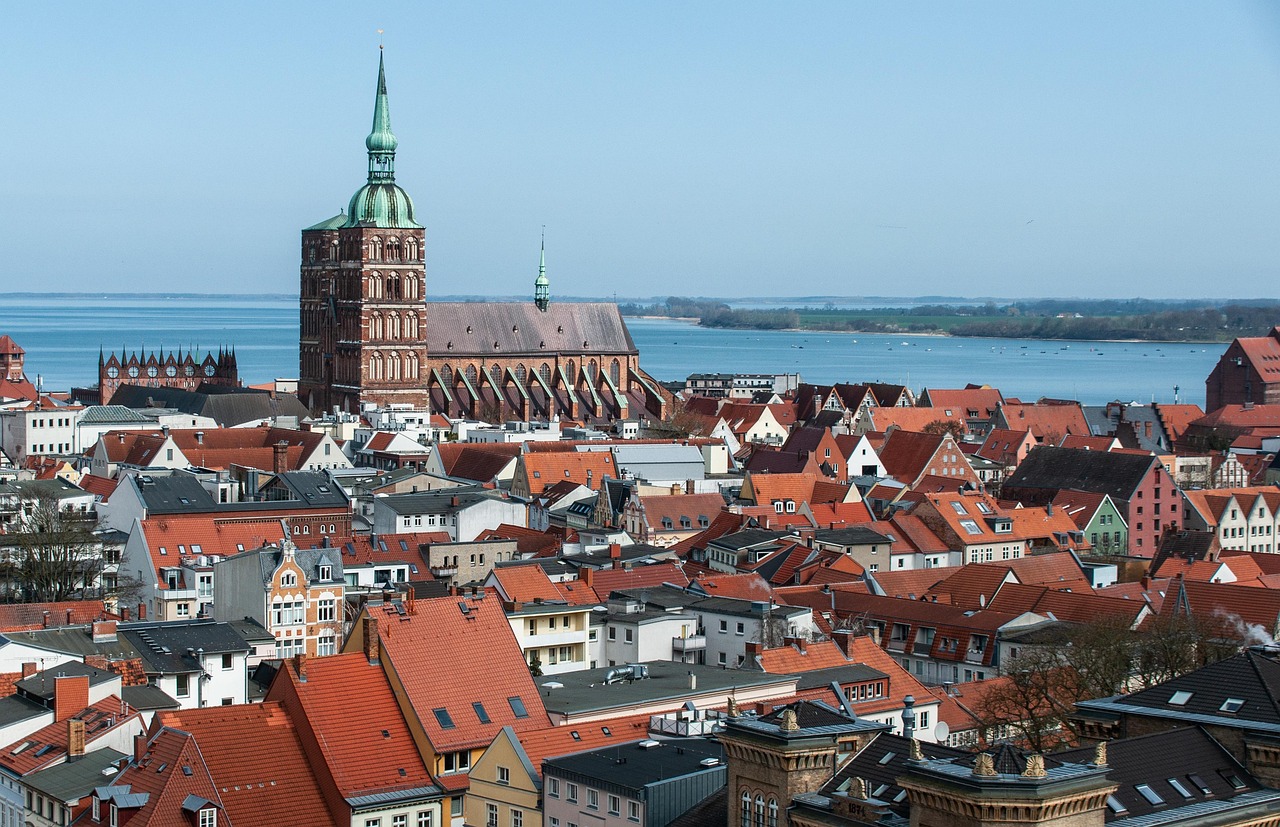
Why Visit Stralsund? What Makes This Baltic City Special
Stralsund is one of those places that sneaks up on you. On the map, it’s a small Hanseatic city on Germany’s Baltic coast, facing the island of Rügen. In person, it feels like walking into a living history book that somehow learned to love good coffee, craft beer, and modern museums.
I’ve been coming to Stralsund regularly since my early twenties, usually for a long weekend escape from Berlin. Over the years, I’ve watched the city polish its Brick Gothic facades, turn forgotten warehouses into waterfront promenades, and quietly become one of northern Germany’s most rewarding city breaks.
Stralsund is perfect if you like:
- Walkable, atmospheric old towns with cobbled streets and gabled houses.
- Waterfront views – harbors, bridges, boats, and the Baltic’s shifting light.
- History you can touch – from medieval Hanseatic wealth to GDR shipyards.
- Low-stress travel – compact, affordable, and rarely overcrowded.
- Family-friendly, romantic, and outdoorsy options all within a small radius.
This travel guide for Stralsund is written as if I’m planning your trip the way I plan my own: slow mornings, scenic walks, a balance of museums and relaxed café time, and enough detail that you don’t have to keep cross-checking another dozen sites.
Table of Contents
- Why Visit Stralsund
- Stralsund in 2026: Overview & What’s New
- Neighborhoods & Areas to Explore
- 20+ Must-See Attractions in Stralsund (Deep Dive)
- 3, 4 & 5 Day Itineraries for Stralsund
- Local Food in Stralsund: What & Where to Eat
- Nightlife, Entertainment & Cultural Experiences
- Day Trips from Stralsund
- Local Customs & Cultural Etiquette
- Practical Travel Tips for Stralsund (Money, SIM, Transit, Visas)
- Best Time to Visit Stralsund
- Summary & Final Recommendations
Stralsund in 2026: What to Expect
Stralsund in 2026 feels quietly confident. The massive Rügen Bridge has long since changed the skyline, the UNESCO-listed Old Town is beautifully restored, and the city leans into its maritime heritage without becoming a theme park.
Over the past few years I’ve noticed three big shifts:
- More cultural events: The city has expanded its summer festivals, maritime events, and outdoor concerts.
- A stronger food scene: More bistros, specialty coffee spots, and modern takes on regional Baltic cuisine.
- Better for slow travel: Walking routes, bike paths, and waterfront upgrades make it easier to explore at your own pace.
Major Events in 2026–2027
- Wallensteintage Stralsund 2026 (Wallenstein Days) – late July. A huge historical festival reenacting the city’s resistance during the Thirty Years’ War. Expect costumes, markets, and fireworks.
- Hanse Sail Stralsund & Rostock (regional) – August. Tall ships and historic vessels gather in the Baltic ports; Stralsund often hosts side events and ship visits.
- Stralsunder Altstadtfest (Old Town Festival) – usually September. Live music, food stalls, crafts, and open-air stages around the historic center.
- Stralsund Christmas Market 2026 & 2027 – late November to just before Christmas. One of the most atmospheric small-city markets in northern Germany.
- OZEANEUM Special Exhibitions 2026–2027 – rotating exhibits on marine conservation and Baltic Sea ecology.
Stralsund’s Neighborhoods & Areas to Explore
Altstadt (Old Town) – The Red-Brick Heart
This is where you’ll probably spend most of your time – and honestly, you should. The Altstadt is a compact island packed with Brick Gothic churches, gabled merchant houses, and narrow lanes that all seem to lead to water.
Most of the best places to visit in Stralsund are here: Alter Markt, Rathaus, St. Nikolai, St. Marien, the OZEANEUM, and the German Oceanographic Museum.
Hafeninsel & Harbor Front – Maritime & Modern
Just north of the Old Town core, the harbor area is where medieval Stralsund meets modern architecture. Old warehouses sit next to the sleek lines of the OZEANEUM, while fishing boats and classic sailing ships share the water with yachts.
Franken Vorstadt – Quiet, Residential, Authentic
Just west of the Old Town, Franken Vorstadt is mostly residential but worth exploring if you stay longer than a couple of days. You’ll find everyday Stralsund – parks, playgrounds, supermarkets, and local restaurants where menus aren’t translated.
Tribseer Vorstadt & Around the Station
South of the historic center is Hauptbahnhof Stralsund and the surrounding district. It’s not “pretty” the way the Old Town is, but there are practical hotels, budget eateries, and the starting point for many buses.
20+ Must-See Attractions in Stralsund – Detailed Local Guide
Below are the must-see attractions in Stralsund, from famous landmarks to quieter corners. I’m including personal anecdotes and tips from multiple visits to each place.
1. OZEANEUM Stralsund
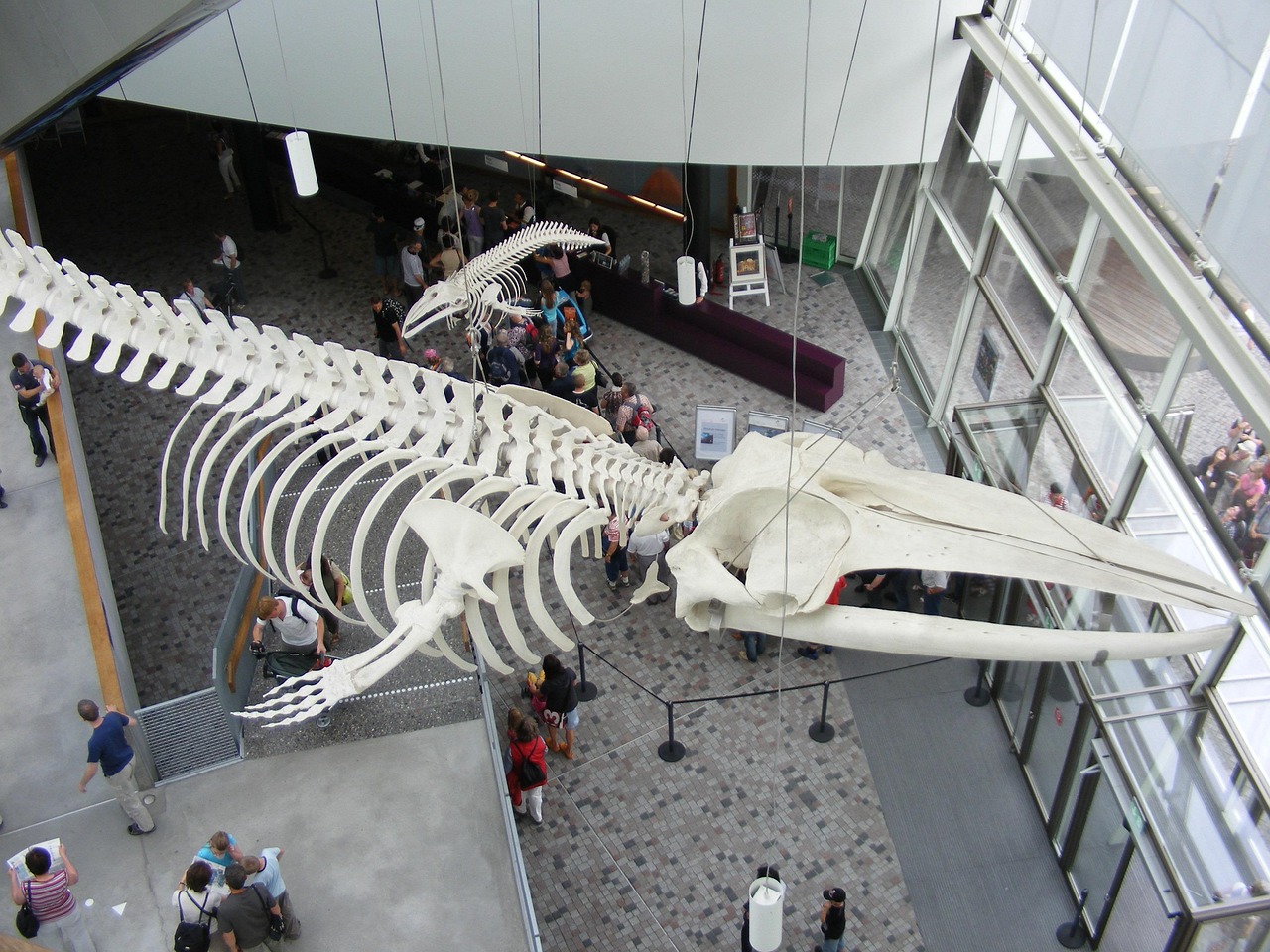
If you only have time for one major attraction, make it the OZEANEUM. This striking white museum on the harbor looks like a cluster of ship hulls and consistently ranks among the top things to do in Stralsund.
I’ve visited three times now, and each time I end up staying longer than planned. The exhibits focus on the oceans of the world with a special emphasis on the Baltic and North Seas. The huge aquariums are hypnotic: jellyfish drifting like slow-motion lanterns, schools of silver fish turning in unison, and a Baltic Sea tank that feels eerily close to the real thing.
The highlight for most visitors is the whale hall – a massive space where life-size whale models hang from the ceiling. I like to come here near closing time, when the crowds thin out and you can just lie on a bench and stare up at them in the dim light.
- Family-friendly? Absolutely. Kids love the interactive displays; there are dedicated children’s areas.
- Romantic? Surprisingly yes – the harbor views at sunset from the rooftop terrace are beautiful.
- Tip: Buy a combined ticket with the German Oceanographic Museum if you’re into marine life; it saves money over separate tickets.
- How to get there: From the Old Town, it’s a 10–15 minute walk north toward the harbor; just follow the signs and the sight of the white building.
- When I go: I aim for early morning opening or late afternoon to avoid school groups.
2. Alter Markt & Stralsund Town Hall (Rathaus)
Alter Markt is the beating heart of Stralsund’s Old Town. If you’ve seen a postcard of Stralsund, it was probably taken here: the Brick Gothic Town Hall with its intricate façade and round windows, flanked by colorful gabled houses and dominated by the twin towers of St. Nikolai Church.
My ritual in Stralsund always begins here. I’ll grab a coffee from a nearby café, sit on the steps of the fountain, and just watch the square wake up – delivery vans, early-morning tour groups, locals on bikes weaving through it all.
You can enter parts of the Rathaus interior, which reveals how powerful Stralsund was as a Hanseatic trading city. The vaulted halls and old council chambers are a strong reminder that this little city once negotiated with kings and dukes as an equal.
- Good for photos: Come in the late afternoon when the brick glows in warm light.
- Seasonal magic: At Christmas, Alter Markt hosts one of the main Christmas market areas, with wooden stalls and mulled wine.
- Tip: Look up – the decorative façade of the Town Hall is full of details people miss because they stay at eye level.
3. St. Nikolai Church (Nikolaikirche)
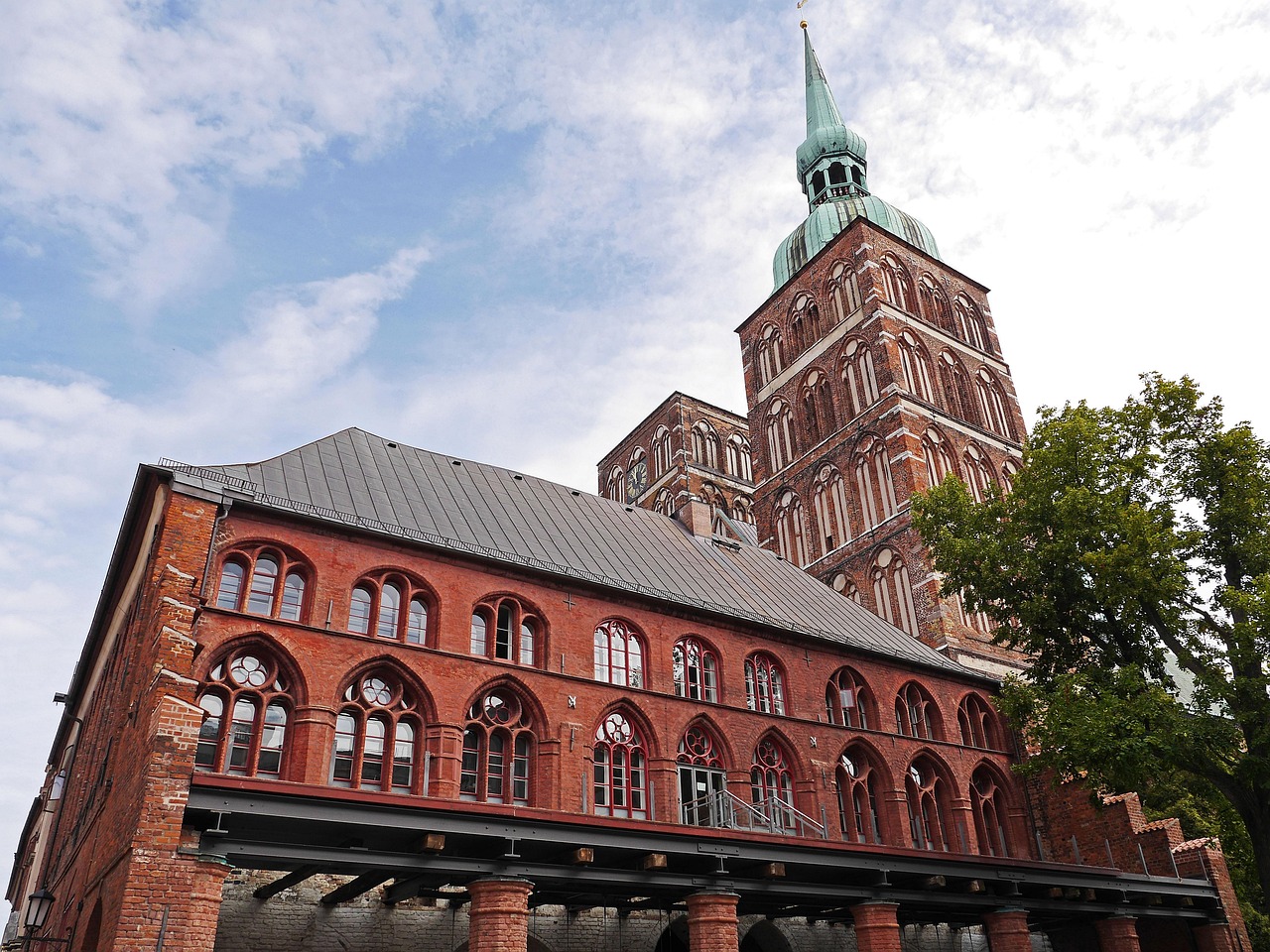
Right on Alter Markt, St. Nikolai is the oldest of Stralsund’s three major churches and, in many ways, the one with the most layered interior. Dedicated to the patron saint of sailors, it reflects centuries of maritime wealth and religious art.
I still remember my first time inside: the cool air, the faint smell of stone and wood, and then the overwhelming height of the nave. The church is filled with detailed altars, carvings, and a magnificent organ. If you’re used to bare Protestant churches, this will surprise you.
- Don’t miss: The Gothic choir stalls and the astronomical clock.
- Tip: Bring a 1-euro coin or two for the light boxes that illuminate specific artworks and altars – it really makes a difference.
- Atmosphere: In the late afternoon, when sunlight slants through the tall windows, it’s quietly stunning.
4. St. Mary’s Church (Marienkirche) & Tower View
If you’re looking for the best skyline view of Stralsund, climb the tower of St. Marien. It’s a bit of a workout, but the reward is a sweeping panorama of red roofs, church spires, the harbor, and the Rügen Bridge arching in the distance.
I try to do this climb on every extended stay in Stralsund. On a clear day, you can see across to Rügen and watch ferries, fishing boats, and sailboats move across the glimmering water.
- Tip: Check opening times for the tower – they vary by season and weather.
- Photography: There are metal grates at the top, but you can usually get your camera lens through for unobstructed shots.
- Inside the church: The vast nave and Baroque interior elements are worth a slow walk, especially the organ and altarpieces.
5. St. Jakobi Church & Cultural Center
St. Jakobi is the quiet sibling among Stralsund’s big churches. It’s no longer used as a parish church but has been repurposed for exhibitions and cultural events. That sounds dry, but the space itself is fascinating: a huge Gothic shell sometimes filled with modern art or installations.
I once stumbled into a photography exhibition here on a rainy afternoon and ended up staying two hours. The contrast between contemporary art and medieval brick makes everything feel sharper.
- Check ahead: Exhibitions change, and sometimes the interior is closed for setup.
- Good for: Culture lovers, architecture fans, and anyone looking for a quieter, less touristy stop.
6. German Oceanographic Museum (Deutsches Meeresmuseum)
This is the older sibling of the OZEANEUM, located inside a former monastery in the Old Town. While the OZEANEUM feels airy and futuristic, the German Oceanographic Museum has a more classic, almost nostalgic museum vibe.
Exhibits focus on marine biology, oceanography, and the history of fishing and seafaring. The aquariums here are smaller, but the setting – vaulted Gothic halls filled with skeletons, models, and tanks – has its own charm.
I especially like the sections on climate change and Baltic Sea ecosystems, which have grown more detailed in recent years. It’s a thoughtful complement to the more visually spectacular OZEANEUM.
- Family-friendly: Yes, particularly for school-age kids who like science.
- Tip: Get the combined ticket with OZEANEUM if you plan to visit both within a couple of days.
7. Historic Harbor & Gorch Fock I
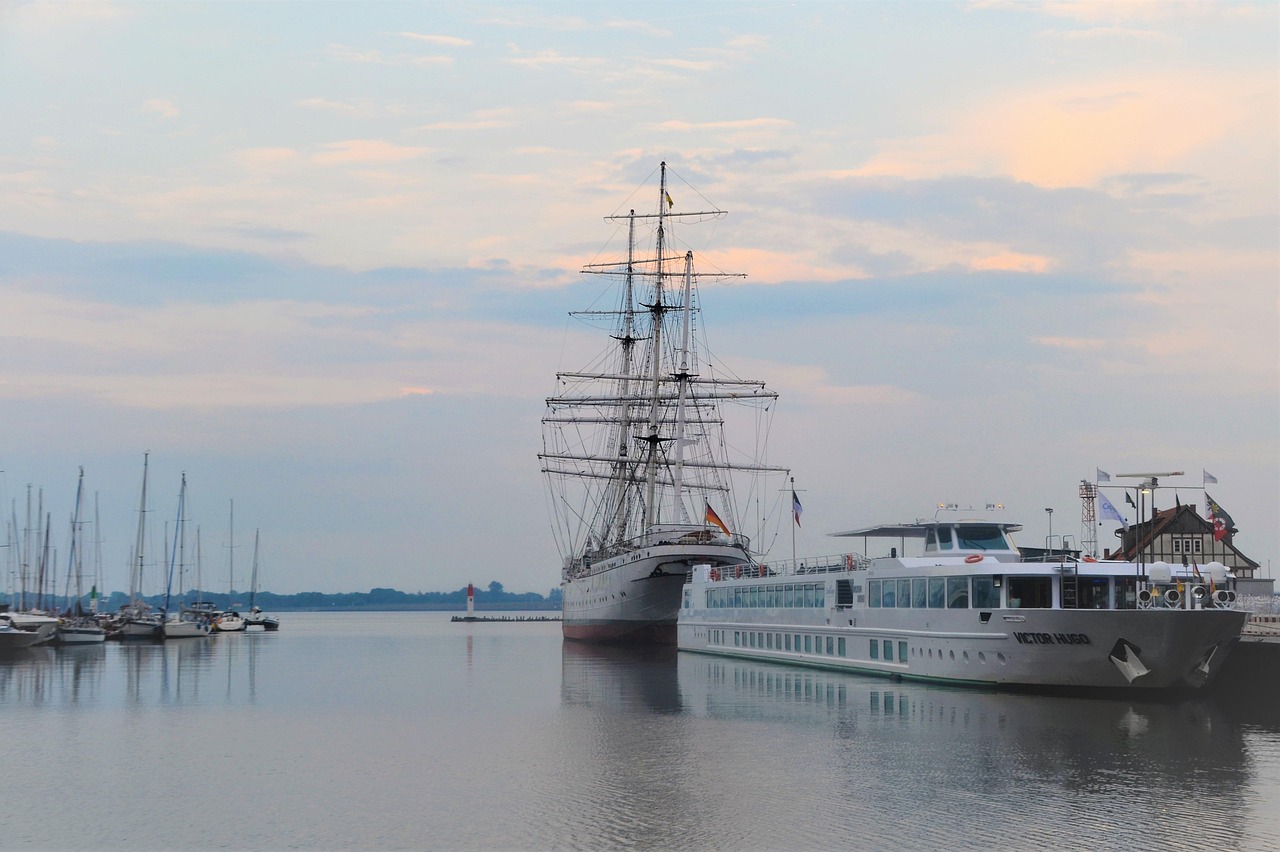
Stralsund’s harbor is where I go when I don’t feel like “sightseeing” but still want to feel like I’m somewhere special. The walk along the waterfront takes you past old warehouses, bobbing fishing boats, ice cream stands, and the striking white hull of the Gorch Fock I, a historic sailing ship now moored as a museum.
In summer, the harbor area feels almost Mediterranean on a sunny day – families licking ice cream, couples on benches watching the sunset, kids feeding gulls (you’re not really supposed to, but they do).
- Gorch Fock I: You can go aboard and explore the decks and some interior spaces. It’s a hit with kids and ship enthusiasts.
- Tip: Come in the evening with a takeaway Fischbrötchen (fish sandwich) and sit on the quayside for a cheap, perfect dinner-with-a-view.
8. Rügen Bridge (Rügenbrücke) Viewpoints
The Rügen Bridge is Stralsund’s modern icon – a sweeping, cable-stayed structure that connects the mainland to the island of Rügen. You’ll most likely cross it if you do any day trips by car or bus, but even if you don’t, it’s worth seeking out a viewpoint.
My favorite spot is along the northern waterfront, near the OZEANEUM and further east along the pedestrian paths. At sunset, the bridge’s silhouette against the pink and orange sky is one of the best views in the city.
- Photography tip: Bring a longer lens if you want tighter compositions of the bridge from town.
- Romantic: Yes – especially on warm summer evenings with a gentle breeze off the water.
9. City Walls & Kütertor / Kniepertor
Stralsund still has remnants of its medieval city walls, including several gates like Kütertor and Kniepertor. They’re not as massive as some in southern Germany, but they add a wonderful storybook feel to walks around the edge of the Old Town.
I like to do a slow loop that starts near Kniepertor, follows the green belt and moat-like ponds, and drops back into the Old Town near St. Marien. It’s a good way to stretch your legs after too much cake and coffee.
- Good for: Casual strolling, low-key photography, a quick breath of green between urban sights.
- Family-friendly: Kids often enjoy spotting “old city walls” and imagining medieval times.
10. Heilgeiststraße & Gabled Houses
Heilgeiststraße is one of my favorite streets in Stralsund to wander without a plan. It’s lined with restored merchant houses, small shops, and cafes. Some facades are meticulously polished; others show their age in the best possible way.
This is where you feel the Hanseatic past most vividly: those tall, narrow gables that once announced wealth and status to the harbor.
- Hidden gem: Look for small side courtyards and passageways; some are open and lead to surprisingly quiet inner worlds.
- Good time: Late morning, when shops are open but it’s not too busy.
11. Johanniskloster (St. John’s Monastery) & Gardens
Johanniskloster is one of Stralsund’s quieter treasures. The monastery complex and ruins have been partially restored and turned into a cultural venue and garden space. It’s the kind of place you wander into “just to have a look” and then realize you’ve been sitting on a bench for half an hour listening to birds.
I like to come here when I need a break from the more crowded spots, especially in summer when the greenery softens the brick ruins.
- Good for: Couples, readers, introverts, and anyone needing a quiet corner.
- Events: Occasionally hosts concerts and open-air events; check local listings.
12. Museumshaus Stralsund (Museum House)
The Museumshaus is a restored merchant’s house that lets you step into the domestic side of Stralsund’s history. Room by room, floor by floor, you see how people lived, traded, stored goods, and decorated their homes over the centuries.
What I love here is the detail – worn floorboards, small objects, reconstructed kitchens and living spaces. It gives context to all those fancy facades you see on the streets.
- Tip: Allow at least an hour if you like historic interiors; more if you read all the captions.
- Not crowded: Often much quieter than the big museums, even in high season.
13. Nautineum on Dänholm Island
On the small island of Dänholm, between Stralsund and Rügen, you’ll find the Nautineum, an open-air maritime museum dedicated to fishing, oceanographic research, and navigation.
This is a bit of a hidden gem; many visitors never make it out here, but if you’re into ships, technology, or just enjoy quiet, slightly offbeat museums, it’s a rewarding detour.
- How to get there: By car or bike over the old Rügen causeway; buses also pass near it.
- Family-friendly: Yes – plenty of big objects to explore and outside space to roam.
14. Zoo Stralsund
Zoo Stralsund is set in a leafy park area south of the Old Town and makes for a relaxed half-day if you’re traveling with kids or just enjoy zoos. It’s not enormous, but it’s thoughtfully laid out.
I went once with friends who have two young children, and what struck me was how unhurried it felt. No overwhelming crowds, plenty of benches, and a nice mix of animals and playgrounds.
- Good for: Families, slow days, picnic afternoons.
- Tip: Combine a visit with a walk in the nearby parks for a full outdoorsy day.
15. Hanseatic History Walk & Wulflamhaus
Rather than a single building, I think of “Hanseatic Stralsund” as an attraction in itself. One of the best individual examples is Wulflamhaus, a richly decorated Gothic patrician house on Alter Markt, once home to a powerful mayor.
From there, you can trace a route past other Hanseatic merchant houses, guild halls, and old warehouses, imagining the days when salt, herring, grain, and cloth flowed through this city.
- Tip: Check if there are any guided “Hanseatic history” walking tours during your stay; they add a lot of color to the stones and bricks you’re seeing.
16. Theater Vorpommern (Stralsund Stage)
For evening culture, Theater Vorpommern in Stralsund offers a mix of opera, theater, ballet, and concerts. It’s a classic German regional theater and a lovely way to dip into local cultural life.
I’ve seen a small-scale opera here and a chamber concert; both times, the audience felt very local, which I loved. You don’t come here for glitzy international productions but for the sense of being woven briefly into everyday Stralsund life.
- Language: Most productions are in German, but music and dance are accessible regardless of language.
- Tip: Check for concerts; they’re the easiest entry point if you don’t speak German.
17. Old Town Pubs & Beer Cellars
Stralsund has a handful of atmospheric old pubs and beer cellars tucked into its medieval buildings. Think low ceilings, brick arches, dark wood, and a steady murmur of conversation.
On my last autumn visit, I ducked into a cellar pub during a sudden downpour and ended up sharing a table with a couple of locals and a sailor from a visiting ship. We drank Stralsunder beer, swapped weather complaints, and watched the rain bead on the window.
- Good for: Casual nightlife, solo travelers (easy to sit at the bar), and anyone seeking a cozy atmosphere.
- Tip: Ask what local or regional beers they have on tap; there’s often something from Stralsund or nearby.
18. Küstenwald & Waterfront Green Spaces
Part of Stralsund’s charm is how quickly you can go from medieval squares to waterfront greenery. Several landscaped paths and small parks wrap around the Old Town’s edges, especially to the north and west.
On long stays, I build these walks into my routine – a morning or late afternoon loop before dinner. The repetition lets you notice small changes in light and tide that most visitors miss.
- Good for: Jogging, stroller walks, decompressing between museums.
19. Stralsund Weekly Markets
On select days, Stralsund holds weekly markets with fresh produce, local cheeses, bread, and sometimes fish and regional specialties. They’re not enormous, but they’re authentic – more for locals than tourists.
I like picking up picnic supplies here: fresh rolls, smoked fish or sausages, fruit, and a slice of cake. Then I’ll find a bench overlooking the water or nearby green space for a budget-friendly lunch.
- Tip: Ask your accommodation which days markets run during your stay; times and locations can vary.
20. Stralsund Christmas Market (Weihnachtsmarkt)
If you visit between late November and just before Christmas, you’re in for a treat. The Stralsund Christmas Market spreads across Alter Markt and surrounding streets, wrapping the Brick Gothic architecture in lights and evergreens.
I’ve spent a couple of pre-Christmas weekends here over the years, and it’s one of my favorite small-city markets. It feels festive without the crush you get in bigger cities. You can actually stand by a mulled wine stall and have a conversation without shouting.
- What to try: Glühwein (mulled wine), roasted almonds, potato pancakes, and local sausages.
- Family-friendly: Yes – often small rides or carousels for children.
3, 4 & 5 Day Itineraries for Stralsund (With Personal Stories)
These sample itineraries are based on how I actually structure my own trips here. They’re flexible – mix and match based on your pace and interests.
3 Day Itinerary for Stralsund – Classic Highlights
If you’re planning 3 days in Stralsund, you can see the major sights, linger in the Old Town, and still have time for the waterfront.
Day 1 – First Taste of the Old Town & Harbor
I remember one particular May morning when I arrived in Stralsund on the early train from Berlin. The sky was that perfect pale-blue Baltic color, and the air smelled faintly of salt as I walked from the station into the Old Town.
For your first of 3 days in Stralsund, I’d suggest:
- Morning: Check into your accommodation, drop your bags, and walk straight to Alter Markt. Grab a coffee or light breakfast at a café on or near the square, then explore the Town Hall (Rathaus) and surrounding streets like Ossenreyerstraße and Heilgeiststraße.
- Late Morning: Visit St. Nikolai – take your time with the interior; it’s more intricate than it first appears.
- Lunch: Find a simple lunch spot in the Old Town – perhaps a place offering daily specials like fish or hearty German dishes. I often choose a daily soup and salad to keep room for cake later.
- Afternoon: Wander north to the harbor front. Tour the Gorch Fock I if you like historic ships, then continue to soak in the harbor atmosphere.
- Evening: Have dinner at a waterfront restaurant with harbor views. Afterward, walk along the water to watch the sunset and see the Rügen Bridge light up in the distance.
Personal tip: On that first May day, I ended up sitting on a bench near the OZEANEUM, sharing a bag of cherries from a market stall with a friend and watching the water until it was almost dark. Leave some unstructured time in your day for exactly that sort of moment.
Day 2 – Museums & Church Towers
On your second day, dive into the must-see attractions in Stralsund that do require tickets and a bit more time.
- Morning: Head to the OZEANEUM as soon as it opens. Spend a good 2–3 hours here; don’t rush the aquariums or the whale hall.
- Lunch: Grab a light lunch at the museum café or one of the nearby harbor spots. I often go for a simple Fischbrötchen and coffee.
- Early Afternoon: Walk back into the Old Town and visit the German Oceanographic Museum. It’s a different angle on the same theme and adds depth to your understanding of the Baltic Sea.
- Late Afternoon: Make your way to St. Marien and climb the tower. Time your climb so you’re at the top about an hour before sunset for the best light over the city and water.
- Evening: Choose a cozy Old Town restaurant or pub for dinner. This is a good night to try local food in Stralsund, like herring, fish dishes, or hearty Mecklenburg-Vorpommern specialties.
Personal tip: On one visit, a sudden rainstorm rolled in while I was in the OZEANEUM. Instead of lamenting, I stretched my time in the exhibits, then emerged to clear skies just in time for the tower climb. Stralsund weather can change quickly; build in flexibility.
Day 3 – Hidden Gems & Slow Wandering
On your last day of this 3 day itinerary for Stralsund, slow down and fill in any gaps.
- Morning: Start at Johanniskloster. Enjoy the quiet of the monastery complex and gardens.
- Late Morning: Visit the Museumshaus to step into a historic merchant’s home. Take your time; this is a detail-rich experience.
- Lunch: Try a café or bistro you haven’t yet – perhaps something off the main tourist streets in a quieter lane.
- Afternoon: Stroll the city walls and gates (Kütertor, Kniepertor), then do some last-minute shopping in the Old Town – local products, small design shops, or regional food items.
- Evening: For your final night, consider catching a performance at Theater Vorpommern or simply enjoying a long, leisurely dinner and a walk along the harbor.
By now, Stralsund will feel familiar – the kind of place you can imagine returning to, even if you’ve “seen the sights.”
4 Day Itinerary for Stralsund – Adding Depth
With 4 days in Stralsund, you can follow the 3-day plan above and add a deeper dive or a half-day excursion.
Day 4 – Dänholm & Nautineum, or Pure Old Town Leisure
On my fourth day in Stralsund, I often feel torn between exploring further and just living like a local. Here are two ways to use your extra day:
- Option A – Nautineum & Waterfront Biking: Rent a bike and ride over to Dänholm Island to visit the Nautineum. Enjoy the quieter, more industrial-maritime vibe. On the way back, follow waterfront paths and explore lesser-known corners of the harbor.
- Option B – Deep Old Town Relaxation: Sleep in, linger over breakfast, revisit your favorite spots, and discover new cafés and side streets. Visit any small museums or churches you missed. Spend time in a park or by the water, reading or people-watching.
Personal note: I once spent a “spare” fourth day just working from a café window seat on Heilgeiststraße, punctuated by walks and snacks. It was one of my best Stralsund days, precisely because nothing was scheduled.
5 Day Itinerary for Stralsund – City + Sea
With 5 days in Stralsund, you can blend the city with at least one full-day excursion and still have breathing room. This is my favorite way to visit; it feels like a proper little life rather than a rush.
Day 4 – Day Trip to Rügen Island
Use one of your days for a day trip from Stralsund to the island of Rügen. Trains and buses run regularly across the Rügen Bridge, or you can go by car.
- Idea 1: Head to Binz or Sassnitz and then to Jasmund National Park to see the famous white chalk cliffs (Kreidefelsen).
- Idea 2: Explore seaside resorts like Sellin with its iconic pier.
I’ve done this as a long summer day: early train from Stralsund, hike along the cliffs, late dinner by the sea, and back to my Stralsund guesthouse by night. The contrast between compact, brick-built Stralsund and Rügen’s wide horizons is fantastic.
Day 5 – Markets, Final Favorites & Slow Goodbyes
On your final day in a 5 day itinerary for Stralsund, keep things slow:
- Visit a weekly market if it coincides with your dates.
- Return to your favorite café or discovery spot from earlier in the trip.
- Pick up any souvenirs – local food products, postcards, small crafts.
- Take one last walk to the harbor and say your quiet goodbye.
One of my favorite Stralsund memories is from such a final day: sitting at an outdoor table, notebook open, writing down everything I wanted to remember before catching the late-afternoon train. Do the same – even just notes in your phone – and your trip will stay sharper in your mind.
Local Food in Stralsund – What & Where to Eat
Stralsund’s food scene is a mix of classic northern German comfort food, fresh Baltic fish, and a slowly growing wave of modern cafés and bistros.
What to Eat in Stralsund
- Fischbrötchen: Fresh fish sandwiches, often with herring, mackerel, or salmon. Best eaten by the harbor.
- Matjes (Young Herring): A regional specialty. Often served with onions, apple, and cream sauce.
- Bratfisch: Simply fried fish – crisp, salty, and perfect with potatoes.
- Labskaus: A traditional sailor’s dish (corned beef, mashed potatoes, beetroot, pickles, sometimes herring and a fried egg). Tastes better than it looks.
- Potato dishes: Northern Germany loves potatoes – boiled, fried, in gratins.
- Regional cakes: Think fruit tarts, cheesecake-style cakes, and seasonal specials – often enjoyed with afternoon coffee (Kaffee und Kuchen).
Where to Eat – Personal Favorites & Types of Places
- Harbor Stalls & Simple Snack Bars: Great for Fischbrötchen and casual meals with a view. I often have at least one harbor-side lunch per trip.
- Traditional German Restaurants: In and around the Old Town, you’ll find several spots with wooden interiors, hearty menus, and local beers.
- Cafés & Bakeries: Ideal for breakfast, light lunches, and afternoon coffee and cake. I like to rotate among different cafés to get a feel for the local rhythm.
- Modern Bistros: A few places are experimenting with fresher, lighter takes on regional cuisine and international flavors.
Saving Money on Food in Stralsund
Compared to bigger German cities, Stralsund is relatively affordable, but costs do add up. Here’s how I keep food spending under control:
- Supermarket picnics: Grab bread, cheese, fruit, and snacks from a supermarket for at least one meal a day.
- Lunch specials: Many restaurants offer cheaper midday menus; eat your big meal then and go lighter in the evening.
- Water: Tap water is safe to drink; refill a bottle instead of buying soft drinks all day.
Nightlife, Entertainment & Cultural Experiences in Stralsund
Low-Key Nightlife
Stralsund is not a clubbing destination, but it does have a pleasant, low-key nightlife scene:
- Pubs & Beer Cellars: Cozy spots in the Old Town with local and regional beers.
- Wine Bars & Cocktail Bars: A few modern venues offering cocktails or good wine lists – ideal for a date night.
- Harbor Evenings: In summer, the harbor becomes an outdoor living room; people linger on benches with takeaway drinks.
Cultural Experiences
- Theater Vorpommern: Opera, theater, and concerts as described above.
- Church Concerts: Look out for organ and choral concerts in St. Nikolai or St. Marien, especially in summer and around Christmas.
- Festivals & Events: Wallenstein Days, Old Town festival, maritime events, and Christmas market all bring extra life to evenings.
Day Trips from Stralsund
One reason I love basing myself in Stralsund is how easy it is to reach other destinations while keeping a calm, beautiful “home base.”
Rügen Island
As mentioned in the 5-day itinerary, Rügen is the classic day trip:
- How to get there: Frequent trains and buses from Stralsund station; driving is straightforward via Rügen Bridge.
- What to do: Chalk cliffs in Jasmund National Park, seaside resorts like Binz and Sellin, old fishing harbor in Sassnitz.
- Tip: Start early; Rügen is big, and travel times add up.
Hiddensee Island (via Rügen or ferry connections)
For a quieter, car-free island experience, consider Hiddensee. In summer, boat connections from the region make this possible as a long day trip, often via Rügen.
Greifswald
The university town of Greifswald lies to the southeast and offers another charming Hanseatic Old Town, plus a younger, studenty feel.
- How to get there: Regional trains; about 30–40 minutes.
- What to do: Explore the Old Town, visit the cathedral, walk the riverfront, and enjoy cafes with a different vibe than Stralsund’s.
Local Customs & Cultural Etiquette in Stralsund
Stralsund is laid-back, but you’re still in northern Germany, where people can seem reserved at first. A few pointers help things go smoothly:
- Greetings: A simple “Guten Tag” or “Moin” (a northern greeting) when entering shops or cafés is appreciated.
- Personal space: People value it; queues are orderly, and strangers don’t usually strike up conversation unless there’s a reason.
- Cash & cards: Cards are widely accepted, but some smaller places still prefer cash. I always carry a bit of cash just in case.
- Tipping: Around 5–10% in restaurants and bars is common; you usually tell the server the total amount including tip when paying.
- Quiet hours: Residential areas are fairly strict about quiet at night (22:00–06:00). Keep noise down if you’re staying in an apartment or small guesthouse.
- Recycling: Germans take it seriously. Follow the bins in your accommodation for separating trash, paper, and bottles.
- Churches: Dress respectfully (no beachwear), keep voices low, and check if photography is allowed.
Practical Travel Tips for Stralsund
How to Get Around Stralsund
- On foot: The Old Town and harbor are very walkable; this is how I get around 90% of the time.
- By bike: Bicycles are great for reaching Dänholm, exploring further afield, or just enjoying the waterfront paths.
- Public transport: Local buses connect the station, neighborhoods, and some surrounding areas. Tickets are bought at machines, via apps, or from the driver (cash).
- Car rental: Useful if you’re planning several day trips (Rügen, regional countryside), but not necessary within Stralsund itself.
Saving Money in Stralsund
- Accommodation: Look for guesthouses (Pension), small hotels, or apartments slightly outside the very center; the city is compact enough that the walk in is still short.
- City cards & combos: Check for combined museum tickets (e.g., OZEANEUM + German Oceanographic Museum) to save on entry fees.
- Self-catering: Even if you don’t cook full meals, having a fridge in your accommodation lets you store snacks and drinks from supermarkets.
SIM Cards & Connectivity
- EU visitors: Many EU phone plans include roaming in Germany at domestic rates; check with your provider.
- Non-EU visitors: Pick up a prepaid SIM from major providers (Telekom, Vodafone, O2) at electronics stores or some supermarkets in larger towns like Stralsund or your arrival city (Berlin, Hamburg, etc.).
- Wi-Fi: Most hotels, guesthouses, and many cafés offer free Wi-Fi.
Visa Requirements & Foreign Driver’s Licenses
- Visas: Germany is in the Schengen Area. Many nationalities can enter visa-free for short stays (up to 90 days) – always check current requirements with official government sources before traveling.
- Foreign driver’s licenses: Visitors from many countries can drive in Germany with their national license for a limited period, sometimes alongside an International Driving Permit. Confirm current rules for your nationality if you plan to rent a car.
Health & Safety
- Safety: Stralsund feels very safe; standard city awareness is enough. I’ve walked back to my guesthouse late many nights without issues.
- Healthcare: Pharmacies (Apotheken) can advise on minor health concerns. For emergencies, 112 is the general emergency number in Germany.
Weather & What to Pack
- Layers: Baltic weather changes quickly; pack layers and a light waterproof jacket even in summer.
- Comfortable shoes: Cobblestones and tower climbs demand them.
- Wind protection: A light scarf or windbreaker is helpful by the water.
Best Time to Visit Stralsund
Spring (April–June)
Spring is one of my favorite times here. Days get longer, trees and parks go green, and the harbor wakes up. It’s a great time for cultural experiences in Stralsund without heavy crowds.
Summer (July–August)
Summer means outdoor festivals, harbor life, and day trips to Rügen. It’s the best season for combining city and sea. It’s busier, but Stralsund rarely feels overwhelmed compared to major tourist hubs.
Autumn (September–October)
Early autumn offers mild weather, golden light on the brick façades, and often fewer visitors. It’s ideal for couples and slower-paced travelers.
Winter (November–March)
Winter is quiet, sometimes starkly beautiful. The highlight is the Christmas market period in late November and December. Outside of that, expect a calm, local feel; perfect if you like atmospheric Old Towns in the cold.
Summary & Final Recommendations
Stralsund is not the loudest city on the travel map, and that’s exactly why it’s worth your time. It combines:
- A UNESCO-listed Old Town with striking Brick Gothic architecture.
- World-class museums like the OZEANEUM and the German Oceanographic Museum.
- A relaxed harbor atmosphere, perfect for strolls and sunsets.
- Easy access to Rügen and other Baltic coast destinations.
For most travelers, a 3 day itinerary for Stralsund covers the essentials; 4 days in Stralsund lets you deepen the experience; and 5 days in Stralsund allows you to blend the city with the surrounding sea and islands.
If you like cities that reveal themselves slowly – through repeated walks across the same square, a favorite café cup of coffee, and the sight of church towers against a Baltic sky – Stralsund will stay with you long after you’ve left.