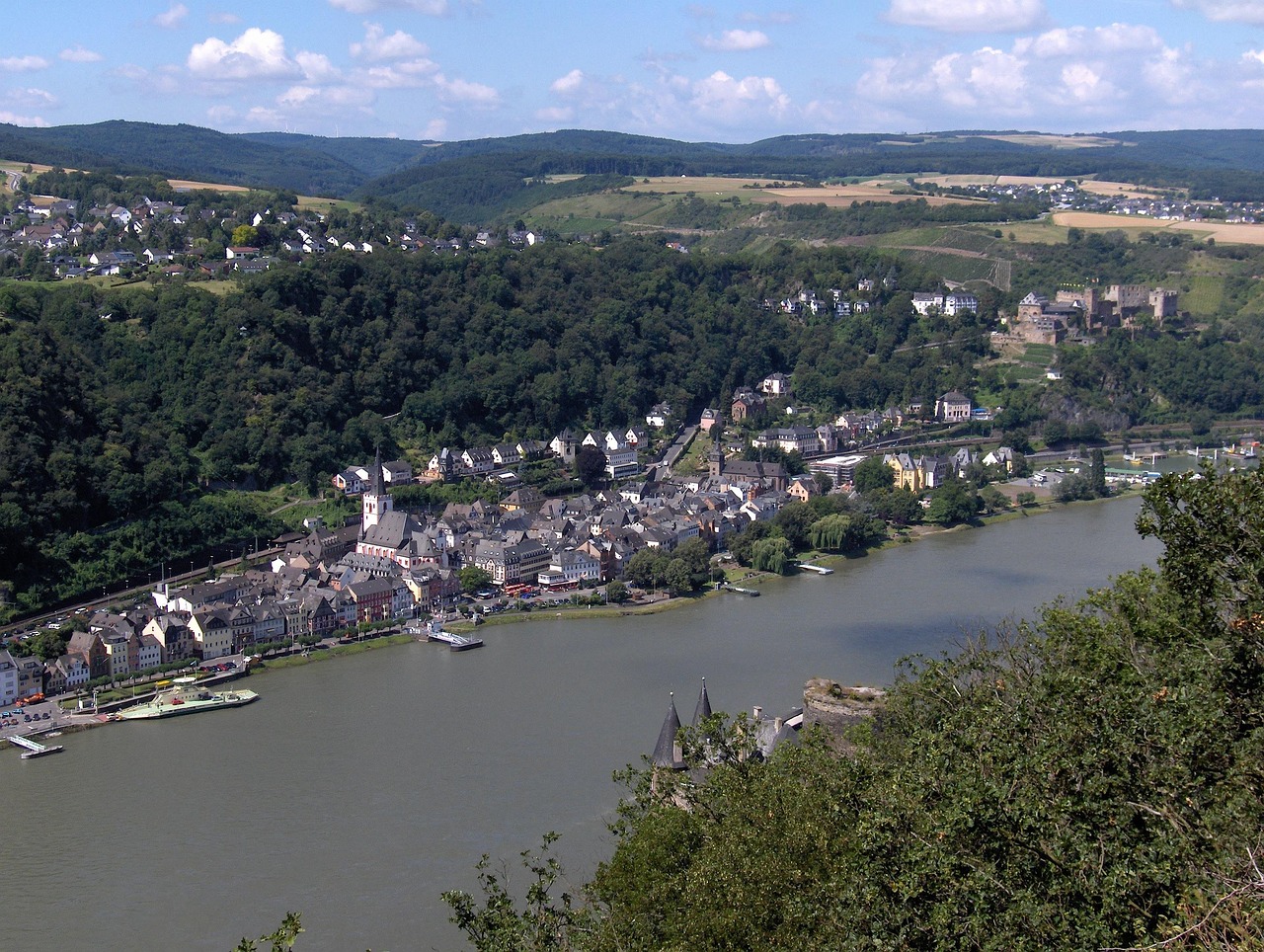
Why Visit the Upper Middle Rhine Valley?
The Upper Middle Rhine Valley – the 65-kilometre UNESCO World Heritage stretch between Bingen/Rüdesheim and Koblenz – is one of those landscapes that never quite leaves you. I’ve been back at least once a year since 2018, in every season, by train, by car, by bike, and by boat. Every time I round a bend and see another castle perched above the river, another tiny village folded into the vineyards, it feels like paging through a living history book.
What makes this valley special isn’t just the postcard beauty. It’s the layering: Roman trade routes, medieval toll castles, Prussian fortresses, 19th‑century Romantic poets, and today’s quietly confident wine culture. It’s the way the river narrows and twists, how trains, ships, and roads all squeeze between cliffs and vineyards, and how small the villages still feel despite centuries of attention from painters, writers, and now Instagram.
If you’re weighing destinations for a 2–4 day itinerary in Germany, the Upper Middle Rhine Valley deserves serious consideration. It’s easy to reach from Frankfurt, Cologne, or Mainz, the distances are short, and the mix of things to do is surprisingly broad:
- Romantic escapes – castle hotels, candlelit wine taverns, evening walks along the riverfront promenades.
- Family‑friendly adventures – short castle hikes, funicular rides, steamships, medieval festivals.
- Active trips – well‑marked hiking trails, the flat Rhine Cycle Route, and side valleys with serious climbs.
- Cultural deep dives – fortresses, Romanesque churches, small local museums, and seasonal festivals.
- Slow travel – unhurried village stays, vineyard tastings, and misty morning ferries.
This 2026 travel guide is written as a long, editorial‑style narrative: part practical handbook, part personal field notes from years of walking, tasting, and riding up and down this valley. You’ll find detailed 2, 3, and 4 day itineraries, in‑depth profiles of the main castles and towns, food and wine advice, cultural etiquette, and nitty‑gritty logistics.
Table of Contents
- Understanding the Layout of the Upper Middle Rhine Valley
- Suggested Itineraries (2–4 Days)
- 12 Key Towns, Quarters, and Monuments
- Koblenz & Ehrenbreitstein Fortress
- Marksburg Castle (Braubach)
- Stolzenfels Castle
- Boppard & the Rhine Bend
- St. Goar & Rheinfels Castle
- St. Goarshausen & Loreley Rock
- Bacharach Old Town
- Oberwesel & City Walls
- Kaub & Pfalzgrafenstein Island Fortress
- Rüdesheim & Niederwald Monument
- Bingen & Hildegard Heritage
- Lesser‑Known Villages: Lorch, Kamp‑Bornhofen, Spay & More
- Traditional Cuisine & Local Wine Culture
- Evenings in the Upper Middle Rhine Valley
- Day Trips & Nearby Attractions
- Cultural Etiquette & Local Customs
- What’s New & Upcoming: Events 2026–2027
- Practical Travel Tips & Logistics
- Summary & Final Recommendations
Understanding the Layout of the Upper Middle Rhine Valley
The Upper Middle Rhine Valley, as defined by UNESCO, runs roughly from Bingen/Rüdesheim in the south to Koblenz in the north. The Rhine flows north here, carving a deep, narrow gorge through slate hills that are now draped in vineyards and crowned with castles.
Over the centuries, the layout of this river corridor has shifted in subtle ways:
- Roman Era – The Rhine is a frontier; Roman forts and watchtowers line the higher ground, trade flows along the water.
- Medieval Period – Dozens of toll castles spring up. Each bend in the river is guarded by a lord who taxes passing ships. Many of the castles you see today were born as these toll stations.
- Early Modern & Napoleonic – Power centralises, some castles are destroyed or fall into ruin, and river engineering begins in earnest.
- 19th‑Century Romanticism – Poets, painters, and early tourists rediscover the ruins. Some castles are rebuilt in a romanticised neo‑medieval style (Stolzenfels, Rheinstein, Sooneck).
- 20th Century to Today – The river is straightened in places, railways are built on both banks, roads squeeze in. Tourism switches from luxury river steamers to a mix of local ferries, cruise ships, and day‑trippers.
Practically speaking, the valley is organised along two banks:
- Left (western) bank – Bingen, Bacharach, Oberwesel, St. Goar, Boppard, Koblenz. Better for frequent trains (RE and RB), slightly more towns, and many classic viewpoints.
- Right (eastern) bank – Rüdesheim, Lorch, Kaub, St. Goarshausen, Kamp‑Bornhofen, Braubach, Lahnstein. A little quieter, with remarkable castles like Marksburg and access to the Loreley.
Ferries knit the two sides together. Part of the pleasure, and the logic of any good 2–4 day itinerary for the Upper Middle Rhine Valley, is hopping back and forth across the river – to catch the best morning light on one bank, then the golden late afternoon on the other.
Suggested Itineraries: 2–4 Days in the Upper Middle Rhine Valley
I’ve tested variations of these itineraries over multiple visits. They are deliberately unhurried: you’re here to feel the valley, not collect sights.
2 Day Itinerary for Upper Middle Rhine Valley
If you have just 2 days in the Upper Middle Rhine Valley, focus on the heart of the gorge between Bingen/Rüdesheim and St. Goar, plus a taste of Koblenz or Boppard. I’ll walk you through the days exactly as I like to do them.
Day 1 – Rüdesheim, Niederwald, and Bacharach
I usually arrive via Frankfurt Airport: S‑Bahn to Wiesbaden, then the local train along the Rhine. By the time the train rolls into Rüdesheim, the valley has already begun to tighten and you see vines zigzagging up slopes that seem almost vertical.
Drop your bags at your guesthouse (staying in the old town makes it easier to enjoy the evening without worrying about trains). I’ve had consistently good experiences in family‑run pensions along quiet side lanes, often with breakfast rooms overlooking the vineyards.
Morning: Drosselgasse & Seilbahn to Niederwald
- Walk through Rüdesheim’s old core, past half‑timbered houses and into the famously narrow Drosselgasse. It’s touristy, yes, but also historically interesting as a lane of wine taverns. Come early before the river cruise crowds.
- Ride the Seilbahn (cable car) up over the vines. The moment the cabins lift off the ground and the town drops away is always a small thrill, even after the fifth time. Below, terraces of Riesling vines fan out in gentle curves.
At the top, stroll to the Niederwald Monument, a hulking 19th‑century statue commemorating German unification. The monument itself is interesting, but the real drama is the panorama: the river makes a wide sweep, with Bingen opposite and the Nahe river joining from the west. This is one of the classic signature views of the Upper Middle Rhine Valley.
Hike the Niederwald to Assmannshausen (Optional)
If you’re up for a short, family‑friendly hike, follow the signed trail through the Niederwald forest to Assmannshausen. It takes about 1.5 hours at a relaxed pace, with viewpoints and a few romantic “stations” from the 19th‑century landscape design era – crumbling walls, faux ruins, and pavilions that delighted early tourists. I once did this on a foggy October morning; the fog lifted in layers and the castles appeared like stage sets across the river.
From Assmannshausen, you can take the chairlift back up (seasonal) or a boat or train back to Rüdesheim or onward to Bingen.
Lunch: Simple and Local
Back in Rüdesheim, look for a Weinstube on a side street rather than on the Drosselgasse itself. Order:
- Spundekäs – a creamy, paprika‑dusted cheese spread served with pretzels.
- Handkäs mit Musik – marinated sour milk cheese with onions and vinegar; rustic, tangy, and very local.
- A glass of dry Riesling labelled Rheingau – this is Riesling country and the wine lists reflect that proudly.
Afternoon: Bingen & River Cruise to Bacharach
Take the short ferry from Rüdesheim to Bingen. Even this tiny crossing gives a fresh angle on the valley; you can feel how wide and powerful the Rhine still is at this southern gate of the gorge.
In Bingen, walk the riverside promenade past the Mouse Tower (Mäuseturm) on its tiny island. This former customs tower looks like it was plucked from a fairy tale. I like to pause here with a takeaway coffee; families often linger at the small playground while long freight trains rumble past on the far bank.
From Bingen, board a scheduled KD or Bingen‑Rüdesheimer ship cruising north towards Bacharach and Oberwesel. For a 2 day itinerary for the Upper Middle Rhine Valley, I recommend doing at least one river segment by boat: it’s still the most atmospheric way to understand why this stretch captivated 19th‑century travellers.
On deck, you’ll pass the first real gorge‑like scenery: steep vineyards, small villages, and your first glimpse of middle‑Rhine castles perched improbably on cliffs.
Late Afternoon & Evening: Bacharach
Disembark at Bacharach, one of the most intact medieval towns on the river. I still remember my first arrival here: the castle above, the church tower, and the dense knot of half‑timbered houses all in one compact cluster.
- Check into a guesthouse or small hotel in the old town. Many are in centuries‑old buildings with sloping floors and creaking staircases. If you’re travelling with kids, ask about room sizes – some old houses have quirky layouts.
- Wander the Poststraße and the lanes radiating from the main square. Look for the Altes Haus, a picture‑perfect 14th‑century timbered house.
- Climb (10–15 minutes) to the ruins of the Wernerkapelle. The pink‑stone Gothic skeleton of this unfinished church is hauntingly beautiful, especially in the late golden light.
Dinner in Bacharach should be slow and wine‑centred. I like to choose a small Weingut (winery) restaurant and order a Riesling flight with regional dishes such as:
- Rheinischer Sauerbraten – pot roast in a sweet‑sour sauce, often with raisins.
- Federweißer & Zwiebelkuchen (in autumn) – partially fermented new wine with onion tart, a local seasonal ritual.
After dinner, walk the town walls. Yes, Bacharach still has substantial stretches of wall you can climb onto. At night, with the castle lit above and the trains humming in the distance, the town feels like a film set between scenes.
Day 2 – Castles and the Loreley: St. Goar, St. Goarshausen & Boppard
Morning: St. Goar & Rheinfels Castle
Take an early boat or train from Bacharach to St. Goar (about 15–20 minutes). St. Goar is a modest riverside town dominated by one of the most exciting castle ruins on the Rhine: Burg Rheinfels.
- Walk up to Rheinfels (20–25 minutes uphill on a paved road, or use the local shuttle if it’s running – useful with small children or mobility issues).
- Rheinfels is more of a fortress complex than a neat fairy‑tale castle. I like to carry a small flashlight for its underground mine tunnels – kids adore this, though be mindful of low ceilings and wet floors.
- The views along the river are expansive: you can see how the Rhine bends and narrows, and how strategically perfect this site was for controlling traffic.
Allow 2–3 hours to explore; there are multiple terraces, a small museum, and plenty of corners where you can sit quietly and imagine 17th‑century soldiers stomping along the same battlements.
Midday: Cross to St. Goarshausen & Loreley Rock
From St. Goar, hop on the short ferry across to St. Goarshausen. The crossing takes just minutes, but again the angle changes everything: Rheinfels looks even more commanding from the far bank.
From St. Goarshausen you can:
- Take the bus up to the Loreley Plateau (check current schedules; in peak season buses run regularly).
- Or hike up via signed trails (about 45–60 minutes, moderately steep). I’ve done this in both summer and cool March weather; in summer, start early to avoid the heat on the exposed slopes.
The Loreley Rock viewpoint is legendary: a sharp bend in the river where currents are tricky and the cliffs rise almost vertically. For centuries this spot was feared for shipwrecks; the legend of the Loreley siren grew from that danger. The 2020s redevelopment of the plateau has added viewing platforms, a small visitor centre, and a gently modernised, family‑friendly park with play areas and seasonal events.
Grab lunch at the Loreley plateau kiosk or back in St. Goarshausen: grilled sausages, simple daily specials, and of course more Riesling for non‑drivers.
Afternoon & Evening: Boppard & the Rhine Bend
In the afternoon, head north by train to Boppard (about 20 minutes from St. Goarshausen via a St. Goar ferry connection, or directly from St. Goar on the left bank). Boppard is where the Rhine performs one of its most graceful S‑shaped bends – a gentle, wide curve that’s a favourite with photographers.
- Stroll the riverfront promenade. Families with strollers will appreciate the flat, wide path and playgrounds.
- Take the chairlift up to the Vierseenblick (“Four Lakes View”) where the bend in the river makes it look like four separate lakes.
- Explore Boppard’s Roman fort remains and the compact old town, which feels lived‑in rather than museum‑like.
Dinner options in Boppard range from slightly upscale hotel restaurants with river views to cosy taverns tucked into back alleys. I like to seek out spots with a mix of locals and visitors – you can usually tell by the volume and the language mix at the bar.
If you’re on a tight schedule, you can end your 2 days in the Upper Middle Rhine Valley here and catch a late train to Koblenz or back to Frankfurt. But if you can spare another night, sleep in Boppard: an evening stroll along the quiet riverfront, with the castle and church towers lit up, is a gentle way to say goodbye to the gorge.
3 Day Itinerary for Upper Middle Rhine Valley
With 3 days in the Upper Middle Rhine Valley, you can add Koblenz and one of the major fortresses – which radically deepens your sense of the valley’s strategic importance.
I usually structure a 3 day itinerary like this:
- Day 1 – Rüdesheim, Niederwald, Bingen, Bacharach (as above).
- Day 2 – St. Goar, Loreley, Boppard (as above).
- Day 3 – Koblenz & Ehrenbreitstein, optional Stolzenfels or Marksburg.
Day 3 – Koblenz & Ehrenbreitstein Fortress
Morning: Deutsches Eck & Old Town
Arrive in Koblenz by mid‑morning from Boppard (about 15 minutes by train). Koblenz is often overlooked as “just a city” compared to the romantic villages, but it’s actually where you feel the river system converge: the Moselle meets the Rhine at the Deutsches Eck, a wedge of land crowned by a monumental equestrian statue.
- Walk the Rheinpromenade to the Deutsches Eck. The wind often picks up here, and you can see far down both river valleys.
- Explore the Altstadt (old town): a mix of reconstructed squares, Baroque churches, and pleasantly lived‑in neighbourhoods. I particularly like the Jesuitenplatz and the lanes around the Liebfrauenkirche.
- Stop at a café for a late breakfast or early lunch: try a slice of Kuchen (cake) – Koblenz has some excellent traditional bakeries.
Midday & Afternoon: Cable Car and Ehrenbreitstein Fortress
The highlight for me – and particularly fun for families – is the Seilbahn Koblenz, the cable car crossing from the Deutsches Eck area up to the Ehrenbreitstein Fortress on the right bank.
- The ride is smooth and offers a spectacular bird’s‑eye view of Koblenz, the confluence of the rivers, and the first stretches of the Middle Rhine Valley heading south.
- At the top, the Ehrenbreitstein complex unfolds as a vast 19th‑century fortress network, built by the Prussians atop older fortifications.
- There are galleries, exhibitions, viewpoints, and huge ramparts to explore; it’s easy to spend 3–4 hours up here without noticing the time.
I’ve visited Ehrenbreitstein in both bright summer sun and moody November drizzle. In summer, the courtyard buzzes with families, and kids dart in and out of tunnels. In off‑season, the fortress can feel almost too big, a reminder of the scale of 19th‑century military ambitions.
Grab a simple lunch or snack at the café inside the fortress, or pack a picnic from Koblenz – there are grassy areas with commanding river views, perfect in mid‑summer.
Late Afternoon: Stolzenfels or Marksburg
Depending on your energy and interests, you can add one more castle visit:
- Stolzenfels Castle – A romantic 19th‑century reconstruction of a medieval castle on the left bank, south of Koblenz. Accessible by bus or train + short walk; interiors are richly decorated. Better for those who enjoy architecture and interiors.
- Marksburg Castle (Braubach) – The only major hilltop castle on the Middle Rhine that was never destroyed. Accessible by train to Braubach + shuttle/hike; guided tours (including in English at set times) take you through authentically cramped, defensive spaces. Better for history buffs and families who like “real” castles with armouries, kitchens, and tight staircases.
If I had to choose just one for a first visit, I’d pick Marksburg. The guided tour brings the architecture alive and you really feel the medieval scale – small, practical rooms rather than sprawling romantic wings.
Return to Koblenz for dinner. For a final evening, consider a stroll through the old town squares as they glow under warm streetlights; the mood is very different from the daytime bustle of shoppers and office workers.
4 Day Itinerary for Upper Middle Rhine Valley
With 4 days in the Upper Middle Rhine Valley, you can slow down, add Oberwesel, Kaub, and perhaps a hike along one of the panoramic trails. This is my favourite rhythm: a blend of boats, trains, and footpaths, with enough time for long lunches and spontaneous detours.
A 4 day itinerary for the Upper Middle Rhine Valley might look like this:
- Day 1 – Rüdesheim, Niederwald, Bingen, Bacharach.
- Day 2 – Bacharach & Oberwesel (walls and vineyards).
- Day 3 – St. Goar, Loreley, Kaub & Pfalzgrafenstein.
- Day 4 – Boppard, Koblenz, and one last castle (Marksburg or Stolzenfels).
Day 2 Variant – Bacharach & Oberwesel
Spend the morning lingering in Bacharach: visit the church, climb to Burg Stahleck (now a youth hostel but with a public terrace), or simply sit in a café watching village life unfold. Then head by boat or train 10 minutes upriver to Oberwesel.
Oberwesel is often quieter than Bacharach, with a remarkably intact ring of city walls and towers. I like to:
- Climb onto the city walls (signed paths lead up between houses).
- Walk the elevated path above the town with vineyard and river views.
- Visit the Liebfrauenkirche, a red‑stone Gothic church whose interior glows in the afternoon light.
In harvest season (late September to early October), you might stumble on small wine festivals in the lanes or at local wineries. I once arrived to find the main square filled with long tables, brass bands, and locals in fleece jackets passing around carafes of fresh Federweißer. It felt like dropping into a private party that visitors were welcome to join so long as they respected the rhythm.
In the afternoon, hike a short segment of the Rheinburgenweg (Rhine Castles Trail) above Oberwesel – even just 1–2 hours can yield cinematic views. The paths are well‑marked; wear proper shoes, as sections can be rocky and steep.
Day 3 Variant – St. Goar & Kaub
After your Loreley visit (as on the 2 day itinerary), continue by train to Kaub. This compact town is dominated by the Pfalzgrafenstein – a white‑and‑ochre fortress on a tiny island mid‑river, like something off a chessboard.
- Take the small shuttle boat from Kaub’s riverside to the island; the short ride gives an electrifying sense of the river’s current.
- Explore the fortress interiors; rooms are surprisingly snug. Displays explain its role as a toll station.
- Back in Kaub, wander the quiet lanes. Kaub feels more like a lived‑in working town than a tourist stage, and I’ve had some of my most genuine conversations with locals here.
Kaub also makes a great base for hikes into the Bacharach–Kaub vineyards or up to ruined castles like Burg Gutenfels (now a hotel; check access to terraces).
Day 4 Variant – Boppard, Marksburg & Farewell to the Valley
Use Boppard as your springboard to visit Marksburg Castle in Braubach, then loop through Koblenz for a last evening. Or, if you’re more into romantic interiors than gritty medieval realities, substitute Stolzenfels for Marksburg.
By the end of 4 days in the Upper Middle Rhine Valley you’ll have seen the gorge from water, rails, hilltops, castle towers, and café chairs – the best possible combination.
12 Key Towns, Quarters, and Monuments in Depth
Below are in‑depth profiles of the core places that, together, define the Upper Middle Rhine Valley. You can think of them as anchor points for your own itinerary building.
Koblenz & Ehrenbreitstein Fortress
Why it matters: Koblenz is the northern gateway to the Upper Middle Rhine Valley and one of the oldest cities in Germany. Its location at the confluence of the Rhine and Moselle has made it strategically important since the Romans built a fort here.
Layout and layers: The old town fans out behind the Deutsches Eck, with a mix of reconstructed Baroque squares and postwar architecture. On the opposite bank, the high plateau of Ehrenbreitstein looms, connected to the city by the cable car since 2010.
What to look for:
- The way the Moselle valley opens out to the west, contrasting with the narrower Middle Rhine to the south.
- Roman and medieval remains woven into later buildings – look for fragments of older stonework in cellar bars and alley walls.
- The historic quarter between Münzplatz and Görresplatz, where you’ll find a denser cluster of surviving prewar fabric.
Personal note: I used to treat Koblenz as a transit hub, a place to change trains. But staying two nights in 2022 changed my mind: evening walks along the Moselle, a glass of Riesling in the calmer side streets, and a morning run along the riverfront showed me a city that lives with its rivers, not just beside them.
Tips for visitors:
- Base yourself in or near the old town if you want to explore on foot; the newer quarters stretch far and are more car‑oriented.
- Buy a combined ticket for the cable car and Ehrenbreitstein to save money; check for family discounts.
- In high season, ride the cable car early morning or late afternoon to avoid queues and harsh midday light for photos.
Marksburg Castle (Braubach)
Why it matters: Marksburg is the only major hilltop castle on the Middle Rhine that was never destroyed. That simple fact makes it invaluable: while other castles along the river are romantic reconstructions, Marksburg shows you the cramped, practical reality of a working medieval fortress.
History in brief: First mentioned in 1231, the castle passed through various noble families before coming under the protection of the German Castle Association in the 19th century. They still manage it today, focusing on preservation over fanciful re‑imagining.
Visiting experience: Access is via guided tour only (including English tours at set times). You’ll:
- Climb steep, uneven stone paths; wear solid shoes.
- See the kitchen, great hall, chapel, and armoury with authentic furnishings.
- Peer through narrow arrow slits down to the Rhine, imagining enemy boats below.
Personal note: The first time I visited, I went in late November. A cold wind whipped along the ramparts, and the guide’s breath clouded in the chilly air as she described sieges and daily life. The castle felt less like a museum and more like a living shell that had simply been left behind by time.
Practical tips:
- Reach Braubach by train; from the station it’s a steep but short walk to the shuttle bus or directly up to the castle.
- Families: kids usually love the armoury and the dungeon; just be prepared for narrow stairs and no stroller access.
- Photography is generally allowed outdoors; indoors, rules may vary – respect signs and guides’ instructions.
Stolzenfels Castle
Why it matters: Stolzenfels, just south of Koblenz, is the quintessence of 19th‑century Rhine Romanticism. Destroyed in the 17th century, the medieval castle was rebuilt from the 1830s onwards as a romantic summer residence for the Prussian crown prince, guided by architect Karl Friedrich Schinkel.
What to see:
- Delicately restored interiors with neo‑Gothic details, frescoes, and period furniture.
- Terraced gardens with framed views of the Rhine – designed to be viewed like landscape paintings.
- The contrast between the fairy‑tale exterior and the underlying medieval masonry.
Personal note: I visited Stolzenfels on a rainy May day. The damp intensified the colour of the stone and the greenery; mist drifted across the river below. Inside, the rooms felt hushed, like a time capsule of aristocratic leisure. It’s a different kind of intimacy from the ruggedness of Rheinfels or Marksburg.
Access and tips: Take a bus or train + walk from Koblenz; the final approach is a gently ascending forest path. Shoes with grip are useful after rain. Interior visits are by timed entry; in peak season, book ahead if possible.
Boppard & the Rhine Bend
Why it matters: Boppard sits at the heart of one of the most photogenic bends in the Middle Rhine. It combines Roman history, a pleasant riverside promenade, and easy access to viewpoints via the chairlift.
Layers and layout: The town’s core still follows the Roman fort outline, with later medieval and early modern houses layered over the grid. The riverfront is lined with hotels and cafés; behind them, narrow lanes lead to squares and churches.
What to do:
- Ride the chairlift to the Vierseenblick and Gedeonseck viewpoints.
- Visit the Roman fort remains and the Carmelite church.
- Stroll the promenade at dusk when the river cruise ships pass silently, lit like moving hotels.
Personal note: I’ve sat more than once at the same bench by the river in Boppard, watching the light fade and listening to the metallic clank of moored boats. It’s not a “sight” in the guidebook sense, but it’s one of those recurring moments that define my memory of the valley.
St. Goar & Rheinfels Castle
Why it matters: St. Goar is the southern half of the Loreley narrows and the gateway to the sprawling ruins of Burg Rheinfels, once the mightiest fortress on the Middle Rhine.
History in brief: Built in the mid‑13th century by the Counts of Katzenelnbogen, expanded over centuries, and partially destroyed by French Revolutionary forces in 1797, Rheinfels was later quarried for stone. What remains is a labyrinth of walls, casemates, and tunnels.
Visiting experience: Rheinfels rewards those who wander. There are official paths and viewpoints, but the magic lies in following side staircases, ducking into tunnels (with a flashlight), and emerging unexpectedly onto balconies with wide‑angle views.
Personal note: I once spent a full afternoon here with a friend who studies military architecture. We moved slowly, tracing how lines of fire would have worked, guessing where supplies were stored. It changed the castle from a picturesque ruin into a machine designed for survival – and made the sunset from the highest terrace feel like a hard‑earned reward.
Town tips: St. Goar itself is compact; look for locally run shops selling hand‑carved wooden items or small wineries offering tastings. Avoid the most aggressively touristic souvenir stores and head one or two streets back from the river for more authentic finds.
St. Goarshausen & the Loreley Rock
Why it matters: On the right bank, facing St. Goar, St. Goarshausen is the practical base for visiting the Loreley Plateau. It also has a grittier, more transport‑oriented feel, with trains and ferries intersecting.
The Loreley legend: The Loreley is a slate cliff about 132 metres high, associated with tales of a siren whose song lured sailors to their doom on the rocks below. The legend crystallised in the 19th century, but it draws on the very real navigational dangers of this narrow, fast‑flowing section of the Rhine.
Visiting today: The plateau has been redesigned over the 2020s with improved trails, a visitor centre, and event spaces. You’ll find:
- Marked viewpoints with safety railings.
- A cultural landscape park with play areas – ideal for families.
- Occasional open‑air concerts and festivals in summer.
Personal note: My favourite Loreley visit was in winter, when drizzle swept across the valley and the viewpoint was almost empty. The silence, broken only by the hum of a distant freight train and the faint rush of the river far below, made the cliffs feel appropriately eerie.
Bacharach Old Town
Why it matters: If you’ve seen a photo of a dreamy Rhine village, it was probably Bacharach: half‑timbered houses leaning over cobbled lanes, a ruined Gothic chapel, and a castle on the hill now functioning as a youth hostel.
Historical layers: Bacharach flourished as a wine‑trading centre in the Middle Ages; its wealth funded elaborate churches and solid town fortifications. The decline of river trade preserved its fabric; 19th‑century Romantics then “rediscovered” it and froze its image in paintings and poems.
What to look for:
- The contrast between tall, narrow houses along the main street and tiny, almost hidden courtyards behind.
- The Wernerkapelle ruins – a reminder of both Gothic ambition and darker histories of anti‑Jewish legends (now acknowledged on‑site).
- The city walls and towers, which you can walk between, offering oblique views into back gardens and over rooflines.
Personal note: I’ve stayed in Bacharach in both high summer and the quiet shoulder seasons. In July, the town hums with international voices late into the night; in March, I’ve walked streets at 9 pm with only the faint sound of cutlery from behind curtains. Both moods suit the town; you just need to choose what you’re after.
Oberwesel & City Walls
Why it matters: Oberwesel is sometimes called the “City of Towers” thanks to its preserved medieval fortifications. It feels slightly more workaday than Bacharach but is all the more rewarding for that.
What to do:
- Walk stretches of the city wall; some towers are open with simple exhibits.
- Visit the Liebfrauenkirche and, if possible, attend an evening concert – the acoustics are superb.
- Climb the gentle slopes behind town into the vineyards for sunset views.
Personal note: One of my favourite Rhine evenings was in Oberwesel during a small wine festival. Locals greeted each other with the casual warmth of people who’ve shared schools and harvests for generations; visitors were folded into the mix without fuss. It felt less like a performance and more like being invited into someone’s backyard.
Kaub & Pfalzgrafenstein Island Fortress
Why it matters: Kaub is your jumping‑off point for one of the most distinctive structures on the Rhine: the Pfalzgrafenstein, a toll station built on a tiny island right in the shipping channel.
History in brief: Built in the 14th century and later expanded, the fortress was basically a tollbooth with walls. Ships had to stop and pay duties here, funnelling wealth into the coffers of the Elector Palatine.
Visiting experience: The shuttle boat from Kaub to the island is half the fun; you feel the river’s muscular flow as you cross. On the island, the fortress is compact: low rooms, cannon positions, and simple quarters. The views back to Kaub and up/downriver are unforgettable.
Personal note: I like the honesty of Pfalzgrafenstein: it’s a piece of pure economic infrastructure dressed in crenellations. Standing on the platform watching container ships glide by, you’re seeing centuries of trade layered into one view.
Rüdesheim & Niederwald Monument
Why it matters: Rüdesheim is the southern gate to the UNESCO stretch and the best‑known tourist town in the Rheingau. It can feel overrun on summer afternoons, but it’s also the easiest place to arrive, orient yourself, and ride into the vineyards.
Key experiences:
- The Seilbahn and Niederwald Monument views.
- Evening strolls through the old town after the day‑trippers have left; suddenly the music softens and locals reclaim the streets.
- Tastings at family wineries a few blocks away from the Drosselgasse; ask locals for recommendations, they’ll usually steer you away from the pure tourist traps.
Personal note: I have a soft spot for Rüdesheim in December, when its Christmas market spills through the old streets. Mulled wine (often made from local Riesling) warms fingers and mood, and the valley’s winter stillness feels briefly festive.
Bingen & Hildegard Heritage
Why it matters: Bingen marks the western entrance to the gorge and is associated with Hildegard of Bingen, the 12th‑century abbess, composer, and polymath.
What to see:
- The Mäuseturm (Mouse Tower) on its island.
- The Kulturufer riverside promenade with art installations.
- Hildegard‑related sites and small exhibitions, plus local wine estates on the slopes behind town.
Personal note: Bingen is where I often start or end my valley trips. It feels more like a small regional centre than a tourist village; I like stocking up on train snacks at its bakeries and watching locals go about their errands.
Lesser‑Known Villages: Lorch, Kamp‑Bornhofen, Spay & More
Lorch – A quieter village south of Bacharach with serious vineyards and good hiking access. I once spent a rainy April afternoon in a small winery tasting room here, talking with the winemaker about how climate change is shifting picking dates and acidity levels. It was one of the most candid conversations I’ve had along the Rhine.
Kamp‑Bornhofen – Known for the twin castles Sterrenberg and Liebenstein (“the Hostile Brothers”). The walk up between them is steep but not long, and the legends about feuding siblings give extra flavour to the panorama.
Spay – A pretty wine village near Boppard, far less touristed than its neighbours. Its Rhinefront houses and narrow streets make a lovely backdrop for an evening walk.
These villages are ideal if you’re seeking hidden gems in the Upper Middle Rhine Valley – places where tourism is present but not dominant, and where you might still be the only foreign voice in a small tavern.
Traditional Cuisine & Local Wine Culture
Food in the Upper Middle Rhine Valley is hearty, seasonal, and shaped by the river and vineyards. This isn’t fine‑dining country (though you can find ambitious kitchens); it’s more about Weinstuben (wine taverns), family‑run inns, and simple riverside terraces.
Signature Dishes
- Rheinischer Sauerbraten – Beef marinated in vinegar, spices, and often raisins before slow cooking; served with red cabbage and dumplings.
- Matjes & Kartoffeln – Pickled herring with potatoes and onions, reflecting the river and trading history.
- Spundekäs & Brezeln – Creamy cheese spread from nearby Rheinhessen and Rheingau, a perfect wine snack.
- Flammkuchen – Thin, crisp flatbread with crème fraîche, onions, and bacon; ideal for sharing.
- Zwiebelkuchen & Federweißer (autumn only) – Onion tart with “new wine” that’s still fermenting; slightly sweet, lightly alcoholic, and closely monitored by locals for its daily progress.
Wine: The Valley’s Backbone
The Middle Rhine is Riesling territory, with steep slate slopes producing wines that range from bone‑dry and razor‑sharp to lusciously sweet. You’ll also find Pinot varieties (Spätburgunder, Weißburgunder) and local oddities.
My advice:
- Skip generic “house wine” and ask for a small tasting flight of local Rieslings. Many taverns are tied to specific estates and happy to showcase them.
- Visit at least one Weingut per day if you’re keen (and not driving). In Bacharach, Oberwesel, Boppard, and Rüdesheim, wineries often have tasting rooms steps from your hotel.
- Don’t fear the word trocken (dry); Middle Rhine dry Rieslings are some of the most food‑friendly wines you’ll find.
Where to Eat: Local vs. Tour Bus Spots
To find the places that survive on locals rather than tour buses:
- Walk one or two streets back from the riverfront or main tourist lane.
- Look for German menus without multilingual boards and a mix of older locals and younger couples.
- In off‑season, the places that are still open mid‑week are usually those with a real local base.
Some of my most satisfying meals have been in anonymous‑looking inns in Oberwesel and Kaub where the menu is short, the wine list is local, and the owner is also your waiter.
Where to Stay: Old Quarter vs. Modern Town
In most towns you have a choice between:
- Old‑town guesthouses – Atmospheric, often with creaky floors and low beams. Perfect for couples and solo travellers who value mood over soundproofing.
- Modern hotels or riverfront properties – More space, elevators, sometimes better for families or those with mobility issues. Some can be affected by train noise; ask for river‑facing rooms where the white noise of the water softens the sound.
Personal tip: I enjoy staying in the old cores of Bacharach, Oberwesel, and Boppard; in Koblenz I prefer being just at the edge of the old town, near but not in the party streets. In Rüdesheim, a room tucked away from the Drosselgasse makes a huge difference.
Navigating Narrow Historic Streets
The cobbles and stepped alleys are part of the charm, but they do require some planning:
- Use backpacks rather than wheeled suitcases where possible; dragging luggage over cobbles at 10 pm is a rite of passage but not an enjoyable one.
- Ask your accommodation in advance about parking and baggage drop‑off; many old towns have restricted access.
- Travellers with mobility issues should prioritise towns with flatter cores (Boppard, St. Goar) and riverfront hotels with elevator access.
Evenings in the Upper Middle Rhine Valley
Evenings along the Middle Rhine are when the valley reveals its most atmospheric side. The trains keep running, the ships glide by, but the day‑tripper swell subsides and the river settles into its own rhythm.
Lit‑Up Monuments & Nighttime Views
- Burg Stahleck above Bacharach, Rheinfels above St. Goar, and several other castles are illuminated at night. Walk to a riverfront bench and watch them glow against the dark hillsides.
- In Koblenz, the Deutsches Eck and waterfront are softly lit; night cable car rides (when offered in summer) make for a memorable experience.
- Boppard’s river bend takes on an almost lake‑like calm at night; the S‑curve of lights around the shore is subtly stunning.
Evening Tours & Performances
Depending on season and town, you’ll find:
- Guided night walks in Bacharach, Oberwesel, or Koblenz, sometimes led by costumed “night watchmen” who mix history with gentle theatrics.
- Organ and choral concerts in major churches like Oberwesel’s Liebfrauenkirche and Koblenz’s Basilika St. Kastor.
- Occasional sound‑and‑light shows or castle illuminations during festivals such as Rhein in Flammen (Rhine in Flames) – more on that below.
Atmosphere: Tourist Hours vs. Quiet Times
Walk the same street at 3 pm and 10 pm and you’ll see two different valleys:
- Mid‑afternoon in Rüdesheim or Bacharach: river cruise groups, souvenir shopping, wine tastings in full swing.
- Late evening: chairs stacked, only a few taverns open, the murmur of local conversations in dialect, and the occasional train horn echoing off the cliffs.
Personal note: My favourite ritual is a late walk along the riverfront in whichever town I’m staying, perhaps with a takeaway ice cream or last glass of wine. The contrast with the daytime busyness sharpens your awareness of the valley as a home, not just a backdrop.
Day Trips & Nearby Attractions
The Upper Middle Rhine Valley sits within easy reach of other compelling regions. If you’re based in Koblenz or Boppard for several nights, consider these:
Moselle Valley (Cochem & Beyond)
From Koblenz, trains follow the Moselle upstream to Cochem in about 50 minutes. Cochem’s hilltop castle, half‑timbered riverside, and even steeper vineyards make it a natural extension of a Rhine trip.
Tip: Regional day tickets often cover both Rhine and Moselle trains; check current offers like the Rheinland‑Pfalz Ticket.
Mainz & Wiesbaden
At the southern end, Mainz (with its Romanesque cathedral and Gutenberg Museum) and Wiesbaden (a refined spa town) are easy train hops from Bingen/Rüdesheim. Both offer an urban contrast to the valley’s small‑town feel.
Taunus & Hunsrück Hills
If you crave forest walks and hilltop views not tied to castles, the Taunus (east of the Rhine) and Hunsrück (west) provide miles of trails and small villages. Local buses and some cable cars (like the one near Boppard) give access to trailheads.
Cultural Etiquette & Local Customs
The Upper Middle Rhine Valley is relaxed and used to visitors, but a few cultural notes will help you blend in.
Basic Etiquette
- Greetings: A simple “Guten Tag” (good day) or “Hallo” when entering shops or cafés is appreciated. When served, “Danke” (thank you) goes a long way.
- Quiet in churches: Many of the valley’s churches are active parishes. Dress modestly (shoulders covered, no swimwear) and speak quietly.
- Cash vs. card: Card acceptance has improved post‑2020, but some small taverns and wineries still prefer cash. Carry some euros, especially in smaller villages.
Dining Customs
- Seat yourself only if it seems customary; in more formal places, wait to be shown to a table.
- Water is usually bottled and not free by default; ask for “Leitungswasser” (tap water) politely if you prefer, but understand not all places will say yes.
- Tipping: rounding up the bill or adding about 5–10% is standard. Tell the server the total you’d like to pay when handing over cash or card.
Wine Tasting Culture
- At small wineries, tastings may be free if you buy bottles; otherwise, expect a modest fee. Ask up front: “Was kostet die Probe?”
- Spitting is acceptable among serious tasters but less common in casual settings; if you plan to spit, ask where you can do so.
Trail & Castle Etiquette
- Stay on marked trails; vineyards are working landscapes and vines are livelihoods.
- In castle ruins, don’t climb barriers or walls for “better” photos; some stones are fragile.
- Keep voices down on guided tours; sound echoes in stone stairwells more than you expect.
What’s New & Upcoming: Events 2026–2027
By 2026, the Upper Middle Rhine Valley continues to adapt to both climate and tourism shifts while preserving its core identity. Some notable trends and events:
Rhein in Flammen (Rhine in Flames)
The traditional series of summer fireworks and illumination events along the Rhine (various towns, May–September) continues with an increasing emphasis on eco‑friendly fireworks or light shows. Expect:
- Boat convoys between Bingen/Rüdesheim, Koblenz, and other towns with illuminated castles.
- Street festivals, live music, and special menus in riverfront taverns.
Tip: Book accommodation months in advance if your 2026–2027 visit coincides with Rhein in Flammen dates.
Wine Festivals & Harvest (Herbst 2026)
Almost every town hosts some version of a Weinfest between late August and early October. In 2026, expect continued focus on:
- Climate‑resilient grapes and new styles of Riesling.
- Small producer showcases and food pairings, especially in Oberwesel, Boppard, and Rüdesheim.
Infrastructure & Trail Updates
By 2026, several stretches of the Rheinsteig and Rheinburgenweg have improved waymarking and digital maps, with QR codes at key trailheads. Look for updated info boards in St. Goar, Kaub, and Boppard.
Practical Travel Tips & Logistics
Getting There & Around
By Air: The nearest major hub is Frankfurt Airport (FRA). From there:
- Trains via Mainz/Wiesbaden to Rüdesheim/Bingen (for the southern end).
- Direct ICE/IC trains to Koblenz (for the northern end).
By Train: Two rail lines run along the valley:
- Left bank (west): Mainz – Bingen – Bacharach – Oberwesel – St. Goar – Boppard – Koblenz; frequent regional trains.
- Right bank (east): Wiesbaden – Rüdesheim – Lorch – Kaub – St. Goarshausen – Kamp‑Bornhofen – Braubach – Koblenz; slightly less frequent but still practical.
Ferries & Boats:
- Numerous car and passenger ferries connect the banks (Rüdesheim–Bingen, Kaub, St. Goar–St. Goarshausen, Boppard–Filsen, etc.). They run year‑round with short gaps overnight.
- Tour boats (KD, Bingen‑Rüdesheimer, etc.) offer hop‑on, hop‑off services in season; check combined ticket options that include castle entries.
Car Rental & Driving: Driving offers flexibility but can be a mixed blessing in the narrowest parts of the valley.
- Parking in small towns is limited; many old cores are traffic‑calmed or permit‑only.
- The roads can be busy with trucks; scenery can be distracting. If possible, use trains and boats for the main movements and a car only for side valleys.
- Foreign driver’s licences from most countries are accepted for short stays; an International Driving Permit is recommended if your licence isn’t in EU languages.
Saving Money
- Use regional day tickets (e.g., Rheinland‑Pfalz Ticket, Hessenticket) for unlimited local trains and some buses within a day; ideal for hopping between towns.
- Consider combined tickets offered by boat companies and castles, especially for families.
- Eat your main meal at lunch when some restaurants offer set menus; in the evening, opt for lighter wine‑tavern fare.
- Stay in guesthouses or Ferienwohnungen (holiday apartments) in smaller villages for better value than the big hotspots.
SIM Cards & Connectivity
Germany’s mobile coverage along the Rhine is generally solid, with a few patchy spots in the deepest parts of the gorge.
- For non‑EU visitors, look for eSIM or prepaid options from major providers (Telekom, Vodafone, O2) at airports or in larger towns like Koblenz or Mainz.
- Many hotels and cafés offer free Wi‑Fi, but speeds vary; don’t rely on it for heavy uploads in small villages.
Visas & Entry
Germany is part of the Schengen Area. For most travellers from Europe, North America, and several other regions, short stays (up to 90 days in 180) are visa‑free; others require a Schengen visa. Always verify requirements with official sources before travel.
Accessibility & Historic‑Area Logistics
The valley’s charm – steep slopes, cobbles, and old buildings – can be challenging for some visitors.
- Cobbles & steps: Use trekking poles if balance is an issue; ask hotels about ground‑floor rooms.
- Castles: Most are not fully accessible; expect uneven surfaces and stairs. Ehrenbreitstein and Stolzenfels are relatively better adapted than Marksburg or Rheinfels.
- Religious sites: Dress modestly, keep shoulders covered, and remove hats. Photography rules vary; look for signs, especially during services.
- Archaeological etiquette: Don’t remove stones, carve initials, or climb off‑limits walls; the valley’s heritage is already under environmental stress.
Best Seasons & Weather
Spring (April–May): Vines leaf out, blossoms in riverfront parks, fewer crowds, cool to mild temperatures. Great for hiking.
Summer (June–August): Warm to hot; boats and towns are busiest. Ideal for evening riverfront life and festivals. Hydrate and wear sun protection on trails and boat decks.
Autumn (September–October): My preferred time. Grape harvest, golden vineyards, wine festivals, and softer light. Nights can be chilly; bring layers.
Winter (November–March): Many tourist services (boats, some castles) reduce hours or close; towns are quiet. Christmas markets in Rüdesheim and Koblenz add charm. Atmospheric misty river scenes but short daylight.
Avoiding Peak‑Hour Crowds & Cruise‑Ship Rushes
- Visit Rüdesheim, Bacharach, and St. Goar in early morning or after 4 pm to dodge the cruise bus surges.
- Plan boat segments for late morning or early afternoon; early afternoon departures are often less crowded than classic 10–11 am boats.
- Explore Oberwesel, Kaub, Lorch, and Spay for quieter alternatives even at peak times.
Summary & Final Recommendations
The Upper Middle Rhine Valley is not a single attraction but a chain of experiences: castles that smell of damp stone and old wood, villages where laundry hangs between half‑timbered houses, vineyards terraced with almost obsessive care, and a river that never stops moving.
For a 2 day itinerary for the Upper Middle Rhine Valley, focus on the southern stretch: Rüdesheim, Bingen, Bacharach, and the Loreley/St. Goar area. With 3 days in the Upper Middle Rhine Valley, add Koblenz and at least one major fortress. With 4 days in the Upper Middle Rhine Valley, slow down further: walk city walls in Oberwesel, cross to Kaub for Pfalzgrafenstein, linger in lesser‑known villages.
In terms of timing, September and early October offer the richest blend of comfortable weather, active vineyards, and festivals; May and June provide fresh greens and long days; winter is for connoisseurs of quiet and mist.
However you structure your trip, give yourself time not just to see the must‑see attractions in the Upper Middle Rhine Valley, but to sit on a bench – perhaps in Boppard at the Rhine bend, or in Bacharach’s walls at sunset – and let the valley’s slow, layered history wash over you. It’s in those unscheduled pauses that the place truly sinks in.