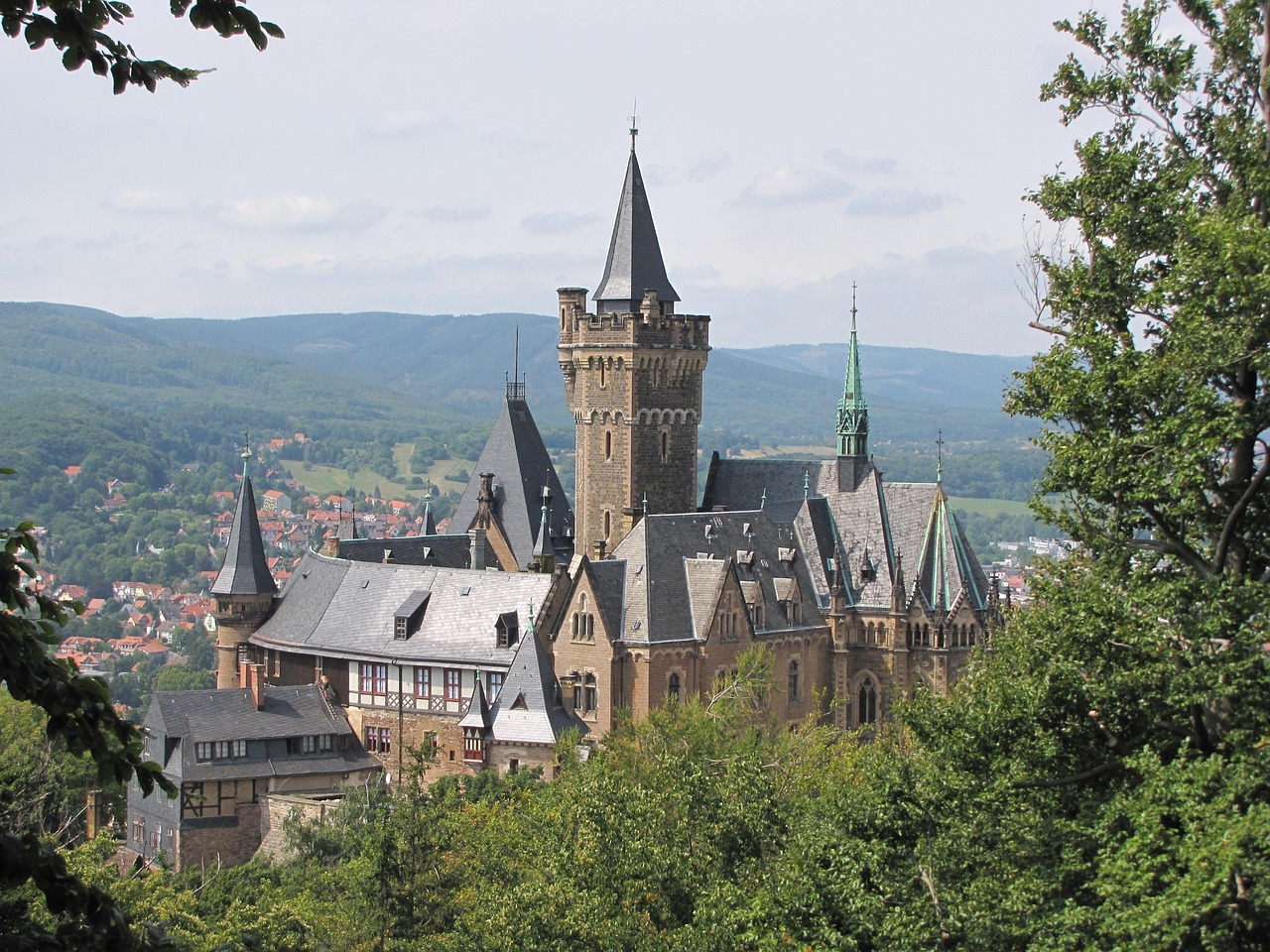
Why Visit Wernigerode Castle?
If you’ve ever dreamt of a storybook castle crowning a half-timbered town, with steam trains puffing through a mountain backdrop, Wernigerode Castle is that dream made real. Perched above the colourful streets of Wernigerode in the Harz Mountains, the castle has the drama of Neuschwanstein without the overwhelming crowds, and the lived-in warmth of a place that’s been quietly evolving for centuries.
I’ve been visiting Wernigerode Castle regularly since 2012, most recently in early 2026, and it’s one of the few places in Germany where I still find something new every time: a quiet terrace with a better view of the Brocken, a tucked-away café with unbeatable plum cake, a guide on the evening tour who adds a story I hadn’t heard before.
Wernigerode Castle is special because it combines several kinds of travel in one place:
- Cultural and historical travel — a former medieval fortress turned romantic 19th-century residence of the Counts of Stolberg-Wernigerode, filled with original furnishings and surprisingly intimate rooms.
- Nature and hiking — forest paths, panoramic viewpoints, and a network of trails right from the castle hill into the Harz Mountains.
- Family-friendly adventure — an accessible hilltop castle, a miniature train up the slope, knights-and-princesses fantasy for kids, and the steam-powered Harz Narrow Gauge Railway nearby.
- Romantic escapes — sunset over the red roofs of Wernigerode, evening illuminations, and quiet corners perfect for lingering.
Unlike many heavily touristed castles, Wernigerode still feels like part of a living town. Locals walk their dogs along the castle paths, school groups chatter in the courtyard, and on quiet winter mornings you can have entire rooms almost to yourself. For anyone planning a 1 day itinerary for Wernigerode Castle or stretching to a full 3 days in Wernigerode Castle and the surrounding area, this guide is meant to be both narrative and practical: what it’s like on the ground, and how to make every hour count.
Table of Contents
- Why Visit Wernigerode Castle?
- Wernigerode Castle at a Glance (2026 Overview)
- 1–3 Day Itineraries Around Wernigerode Castle
- Main Castle Areas & Viewpoints (What You Actually Walk Through)
- Eight Key Sections, Viewpoints & Adjacent Sites (In-Depth)
- Eating & Drinking Around Wernigerode Castle
- Wernigerode Castle After Dark & Off-Hours
- Events, Festivals & What’s New in 2026–2027
- Day Trips & Nearby Attractions
- Cultural Etiquette & Local Customs
- Practical Travel Advice & Logistics
- Tickets, Opening Hours & On-Site Rules
- Best Time to Visit Wernigerode Castle
- Final Summary & Key Takeaways
Wernigerode Castle at a Glance (2026 Overview)
Location: Wernigerode, Saxony-Anhalt, Germany, on the northern edge of the Harz Mountains.
Style: Originally a medieval fortress (12th century), rebuilt and romanticised in the 19th century in historicist style — turrets, oriels, timbered galleries, the full fairytale silhouette.
Current role: Museum and cultural venue, with permanent exhibitions, special shows, concerts, and seasonal events.
Best for: Couples, families, culture lovers, photographers, and anyone crafting a 1, 2 or 3 day itinerary for Wernigerode Castle as part of a Harz Mountains trip.
In 2026, the castle is in excellent visitor shape: multilingual signage has improved, new audio guides include English and French narration with strong storytelling, and online ticketing has made peak-season visits smoother. The castle’s permanent exhibition continues to focus on aristocratic life in the 19th and early 20th centuries, but rotating exhibitions now regularly address regional history, architecture, and art.
1–3 Day Itineraries for Wernigerode Castle
Below are narrative itineraries based on how I actually structure my own visits — with realistic pacing, coffee breaks, and time to simply stand at a balustrade and stare at the Harz.
Day 1: Classic Wernigerode Castle Experience (Perfect 1 Day Itinerary)
If you have just 1 day in Wernigerode Castle, this is the day to fall in love with it. I usually start this classic route with a slow climb from the town centre, then spend the late morning in the castle’s interiors, and the afternoon drifting between viewpoints and the old town below.
Morning: Walk (or Ride) Up & First Impressions
I like to start early, around 9:00, when Wernigerode is still waking up. From the Marktplatz, with its candy-coloured town hall, you can already see the castle perched above you like a watchful guardian.
The classic approach is the Schlossweg, a winding cobbled lane that becomes a forest path. It takes 20–30 minutes at an easy pace. On my last spring visit in 2026, the beech trees were a fresh, flickering green and the only sound was birdsong and the distant whistle of a steam train.
- Alternative for families & mobility issues: Take the little road train “Wernigeröder Bimmelbahn” from near the town hall up to the castle. Kids love it, and it’s much easier with strollers. Taxis can also bring you close to the upper parking area.
- Tip: If you’re planning to do the full interior tour, aim to reach the castle gates by 9:45–10:00 to be among the first inside when it opens. Crowds tend to swell from late morning, especially on sunny weekends.
The first real jaw-drop moment is Schlossvorplatz, the forecourt. You step out from under the trees and suddenly the full, asymmetrical façade rears up: turrets, gables, slate roofs, decorative half-timbering. This is the “postcard” view; I still take a photo here every time.
Late Morning: Touring the Castle Interiors
Inside, the castle is surprisingly intimate. Instead of vast echoing halls, you move through a series of richly furnished rooms: reception suites, private chambers, small studies. On my most recent visit, I spent nearly two hours inside and still felt I’d hurried through some sections.
- Tickets: In 2026, standard tickets cover the main exhibition route and viewpoints. Check the official website for updated pricing. I strongly recommend buying a timed-entry ticket online for weekends and holidays; morning slots (10:00–11:00) are the least congested.
- Audio guide: The English audio guide is worth the small extra fee. The storytelling helps bring the count’s family to life; there are anecdotes about dinner parties and the logistics of heating so many rooms in winter.
- Photography: Non-flash photography is usually allowed in many rooms but may be restricted in special exhibitions. Look for signs, and avoid blocking circulation when you line up your perfect shot of the staircase.
As you follow the visitor route (it’s one-way), look out for:
- The Great Hall: Heraldic banners, dark wood, and chandeliers — it feels theatrical, and you can almost hear the echoes of formal dinners. I always stand at the far end for a minute just to take in the symmetry.
- The “Ladies’ Rooms”: Light-filled salons with views down to Wernigerode. The juxtaposition of heavy, ornate furniture with delicate wallpapers tells you a lot about the 19th-century taste for romantic historicism.
- The Chapel: Small, almost tucked away, but serene. Stained glass colours bounce onto the stone. I’ve seen more than one couple quietly holding hands here.
Time needed: 1.5–2 hours for a first visit if you’re reading labels and listening to the audio guide. Families with small children may want to move faster and focus on the most dramatic rooms.
Lunch: Castle Terrace or Down in Town
By midday, you’ll be hungry. You have two main options:
- Café at or near the castle: There is usually a small café or kiosk offering light fare — think cakes, simple snacks, coffee. Views are excellent, but offerings are basic and prices higher.
- Down in Wernigerode’s old town: My usual choice. I walk back down via the scenic path and aim for one of the restaurants just outside the most touristed ring around the Marktplatz.
In recent years I’ve found myself returning to a couple of places a 3–5 minute walk off the main square, where locals actually eat. More on specific recommendations in the Eating Around Wernigerode Castle section below, but for day one, aim somewhere where you can linger. Try Harzer Forelle (trout) or a hearty Bratkartoffeln (fried potatoes) with a salad — you’ll need the energy for the afternoon walk.
Afternoon: Viewpoints, Ramparts & the Panorama Path
In the afternoon, I like to focus on the castle’s exterior spaces and viewpoints, where the “must-see attractions in Wernigerode Castle” become more about sky, forest and roofs than furniture.
Circle back up to the castle if you went down for lunch. Even if you don’t re-enter the interior, your entry ticket usually allows access to the courtyards and designated viewpoints.
- South Terrace: This is the classic panoramic viewpoint, with sweeping views over Wernigerode’s orange-tiled rooftops and across to the Brocken peak. On clear days you can see the Harz ridge line marching across the horizon.
- Ring Wall Walk: Portions of the medieval ring wall have been integrated into the visitor path. Walking along them gives you a sense of the original fortress and its strategic position.
Panorama Path Tip: From the castle, follow signposts for the Schlossberg Panoramaweg. It loops around the hill with varied angles on the castle silhouette. I like to walk it clockwise; you’ll repeatedly catch glimpses of turrets framed by trees. Allow 45–60 minutes with photo stops.
Late Afternoon & Early Evening: Old Town Wandering
By late afternoon, descend fully into the Altstadt and let yourself drift. This is where a 1 day itinerary for Wernigerode Castle naturally broadens into a travel guide for Wernigerode Castle and town.
- Marktplatz & Town Hall: Take in the iconic stepped-gable town hall, painted in deep reds and blacks with timbering and flower boxes. It’s one of Germany’s most photogenic squares.
- Side streets: Slip away down Breite Straße and the narrow lanes radiating off it. Some of the half-timbered houses truly lean into each other, their beams warped over centuries.
- Ice cream stop: Even in spring or autumn, join the locals for an ice cream. You’ll see families and couples strolling with cones — a small but telling slice of local life.
Sunset: Castle Silhouette & Blue Hour
If you still have energy, position yourself for sunset. Two easy options for the evening:
- From town, looking up: Find a spot along the northern edge of the old town where the castle is framed above the rooftops. As the sky turns pink, the silhouette is irresistible to photographers.
- From the castle terraces: If opening hours and your ticket allow, being up at the castle itself as the sun drops behind the Harz is unforgettable. The “blue hour” after sunset, when the castle lights come on, shows off the architecture beautifully.
For those doing just 1 day in Wernigerode Castle, this is your grand finale. Have dinner in town, then a last slow walk under the castle’s glow before calling it a night.
Day 2: Hidden Corners, Forest Trails & Local Life (Ideal 2 Day Itinerary)
With 2 days in Wernigerode Castle and town, you can go beyond the headline rooms and viewpoints, exploring lesser-known corners and weaving in some local routines. Day 2 is about depth rather than breadth.
Morning: Quiet Paths & Alternative Approaches
On my second day, I like to take an alternate route up to the castle, starting on the opposite side of town. Pick up a bakery breakfast — a still-warm Schokobrötchen or Franzbrötchen — and follow signposted paths through residential streets that gradually thin into woodland.
You’ll encounter far fewer visitors this way. Locals walk their dogs here; older residents sit on benches with views you won’t find on postcards. The castle appears and disappears between the branches.
- Tip: Use a simple offline map app to follow paths labelled Schlossberg or Waldweg. The climb is moderate but can be slippery after rain; wear proper shoes.
Late Morning: Special Exhibitions & Niche Corners
Back at the castle, day two is perfect for anything you skipped the first time: special exhibitions, detailed reading of interpretive panels, or a guided tour (often available in German, with some tours in English on certain dates).
- Rotating exhibitions: In 2026–2027, expect at least one major temporary exhibition per year, often on themes like romantic architecture, regional art, or life in the Harz. These are usually in side wings off the main route.
- Small rooms & details: On my 2026 visit, I spent a quiet half-hour in a small study looking closely at the desk, the ink pots, and the views from the window — tiny glimpses of daily life that most visitors rush past.
Lunch: Picnic with a View
For a second day, I often skip restaurants at midday and pack a picnic. Wernigerode has several good bakeries and supermarkets where you can assemble a simple but satisfying spread: fresh bread, local cheese, cured meats, apples, and a small bottle of sparkling water or juice.
Find a bench along the Panoramaweg or on one of the quieter castle-side clearings. In summer 2025, I sat under a beech tree with a picnic and watched clouds slide across the Brocken for a lazy hour. It was one of my favourite castle memories — no tickets, no schedule, just the castle quietly existing behind me.
Afternoon: Harz Forest Walks & Scenic Overlooks
In the afternoon, extend your range slightly. Without leaving walking distance, you can taste the Harz forest and gain fresh perspectives on the castle.
- Forest Loops: Look for waymarked circular trails (often with coloured blazes). Choose an easy 1.5–2 hour loop if you’re not an avid hiker. You’ll move through mixed forest, cross small streams, and occasionally emerge onto open patches with castle views.
- Photography Tip: The best “castle in the landscape” shots are often taken from these slightly more distant clearings. I like to include a foreground tree trunk or branch to frame the turrets.
Late Afternoon: Café Culture & Local Sweets
Head back down into town for a slow coffee break. Wernigerode has a quietly thriving café culture. I have a soft spot for cafés just outside the busiest lanes, where you can hear German spoken at neighbouring tables and watch life happen at a local pace.
Order a slice of Pflaumenkuchen (plum cake) in late summer, or Streuselkuchen with a cappuccino. It’s a simple ritual, but in my experience, it’s where many of my best travel conversations with locals have started.
Evening: Night Illumination & Castle After Dark
One of the underrated things to do in Wernigerode Castle is simply to see it after dark. The castle is usually illuminated in the evenings, transforming it into a glowing crown above the town.
- Evening walks: Walk a short stretch out of the centre — even to a supermarket parking lot on the edge of town — and turn back to see the castle lit up. The contrast with the dark hill behind is dramatic.
- Special night tours: In some seasons (particularly summer and around Advent), the castle offers evening or torchlight tours. These tend to sell out; book online as soon as dates are announced if your German is up to following the guide. Even if you don’t catch a tour, just being in the vicinity after dark is atmospheric.
By the end of your 2 days in Wernigerode Castle, you’ll have seen it in at least three different lights: bright morning, golden afternoon, and soft night glow. That alone makes the extra day worthwhile.
Day 3: Harz Mountains & Deeper Explorations (Full 3 Day Itinerary)
If you’re lucky enough to have 3 days in Wernigerode Castle and its surroundings, devote day three to the broader Harz region — while still letting the castle remain your visual anchor.
Morning: Steam Train to the Brocken or Scenic Ride
Few experiences are as iconic here as the Harz Narrow Gauge Railway (Harzer Schmalspurbahnen). The station in Wernigerode is your gateway to a slow, steam-powered climb into the mountains.
- Brocken Excursion: Take an early train up to the Brocken, the highest peak in the Harz. The journey takes around 1.5–2 hours each way, winding through forest and eventually emerging above the tree line.
- Shorter scenic ride: If you don’t want to commit to the full Brocken trip, ride just a section out and back for the experience of the steam engine and vintage carriages. Kids, especially, are mesmerised by the hissing, clanking machinery.
On clear days, you’ll occasionally glimpse Wernigerode and its castle shrinking behind you as you climb. I like to sit on the right-hand side (heading up) for more open views, though it varies by carriage.
Lunch: Mountain or Town
Depending on your exact route, you can either:
- Eat at one of the Brocken summit restaurants — functional, with hearty food. The food is secondary to the view and the sense of being on a storied mountain with folklore and Cold War history.
- Return to Wernigerode for a late lunch at a local restaurant, perhaps trying another regional dish like Harzer Käse (strong local cheese) with onions and bread — an acquired taste but culturally significant.
Afternoon: Secondary Sights & Castle as Backdrop
In the later afternoon, you can choose a secondary attraction that still keeps Wernigerode Castle in your orbit:
- Wernigerode Miniature Park (Kleiner Harz): A charming spot where landmarks of the Harz are reproduced in miniature. It’s unexpectedly fun, especially with children, and gives perspective on the region’s geography.
- Local museums: Small town museums often have exhibits on local crafts, mining history, or folk traditions. These change regularly but are worth an hour or two if you enjoy contextual depth.
Evening: Farewell to the Castle
On your final evening, do something simple but memorable: sit somewhere with a good view of the castle — a bench in a small park, a terrace table, or even your hotel balcony if you’ve chosen well — and simply watch the light change.
It’s in these unhurried moments that Wernigerode Castle stops being a checklist item and becomes part of your inner map of places you’ve genuinely known. That’s the goal of any good travel guide for Wernigerode Castle — not just to get you there, but to help you feel you’ve really met it.
Main Castle Areas & Viewpoints (What You Actually Walk Through)
Regardless of whether you follow the 1, 2 or 3 day itinerary, your time at Wernigerode Castle will centre on a few key physical spaces. Understanding them makes it easier to plan your visit.
- The Approach Paths: A mix of cobbled lanes and woodland paths, taking 15–30 minutes from the town centre. The experience of “arriving” is part of the charm, and views unfold gradually.
- The Forecourt (Schlossvorplatz): The main arrival space just outside the ticketed zone. Free to enter, with one of the best frontal views of the façade.
- Ticket Office & Entrance: Usually just beyond the forecourt. Lines form here at peak times; mornings and late afternoons are quieter.
- Inner Courtyards: Once inside, you move through layered courtyards with a mix of medieval stone and 19th-century romantic embellishments. Look for carved coats of arms and decorative timber galleries.
- Main Exhibition Route: A one-way circuit through the interior rooms: great hall, salons, bedrooms, chapel, studies. This route is the heart of the museum experience.
- View Terraces & Ring Wall: Outdoor sections where you can look down on Wernigerode and across the Harz. Some are accessed mid-route; others are at the end, depending on current arrangements.
- Secondary Sites: Depending on the season and ticket type, you may have access to side exhibitions, tower sections, or garden areas. Check the map you receive at the entrance.
Time allocation tip: For a focused visit, plan roughly:
- 30–45 minutes for the approach and forecourt photos
- 1.5–2 hours for the interior rooms and main exhibition
- 45–60 minutes for terraces, ring wall, and panorama path
- Extra time for special exhibitions or just lingering at viewpoints
Eight Key Sections, Viewpoints & Adjacent Sites (In-Depth)
These are the best places to visit in Wernigerode Castle and its near surroundings, each described with history, significance, and personal notes.
1. The Castle Forecourt (Schlossvorplatz)
The forecourt is your introduction to Wernigerode Castle’s theatrical side. Historically, this space mediated between the outside world and the noble residence. Carriages would have rattled in, guests disembarked here, announcements made.
Architecturally, you see the castle’s 19th-century face: complex rooflines, pointed turrets, oriel windows and half-timbered elements layered over earlier stone structures. The Counts of Stolberg-Wernigerode wanted a residence that looked appropriately romantic and historic, and this façade is the visual manifesto of that ambition.
On one crisp autumn afternoon a few years ago, I watched a small wedding party gather here — the bride in a simple dress, the groom in a dark suit, their guests shivering slightly in the cold but glowing with the knowledge that they’d chosen one of Germany’s most photogenic backdrops for their photos. It was a reminder that the castle isn’t just a museum; it’s still woven into the rhythms of local life.
Visitor Tips:
- The forecourt is free to access; you don’t need a ticket to enjoy this view or to sit on the low walls and rest after the climb.
- Morning light (from the east) catches the façade beautifully. By late afternoon the sun is often behind the castle, good for silhouettes but less so for detailed shots.
- This is a convenient meeting point if you’re visiting with friends who arrive at different times, as it’s easy to find.
2. Inner Courtyards & Timber Galleries
Pass through the ticket gate and you enter a series of inner courtyards that feel surprisingly cosy for a hilltop fortress. These spaces reflect centuries of incremental building: rougher stone bases from the medieval period, topped by later wings and the timber-framed galleries of the 19th-century renovations.
The woodwork and detailing here reward slow looking: carvings at the ends of beams, painted patterns along balcony railings, iron brackets for lanterns. In places the architecture almost feels like theatre scenery — a deliberate stage set for aristocratic life.
I often linger here when I’m visiting with friends who aren’t museum people. You can soak up the atmosphere, peek into the surrounding landscape through archways, and take excellent photos without committing to the full interior route (assuming you’ve bought a ticket to enter this far).
Visitor Tips:
- Courtyards can be windy in cooler months. In spring and autumn, bring a light layer even if town feels mild.
- Look for small plaques or signs that explain which parts of the structure date to which era; it gives a sense of the castle’s palimpsest nature.
- This is also where you’ll often find temporary event installations — a stage, seating, or decorations tied to festivals or special evenings.
3. The Great Hall & State Rooms
The heart of the interior visit is the grand suite of halls and salons. Historically, these rooms were used for receptions, balls, and important gatherings. The Counts of Stolberg-Wernigerode entertained high-ranking guests here, and the décor was designed to impress.
The Great Hall feels both imposing and oddly human-scale. Dark panelling rises from the floor, but there’s a warmth to the wood that keeps it from being cold. When I first visited over a decade ago, I admit I rushed through, ticking it off mentally as “standard castle hall”. It was only on a later visit, with a guide explaining the specific coats of arms and portraits, that I realised how rooted this room is in local noble networks and marriage alliances.
Adjacent salons soften the mood: stuccoed ceilings, patterned wallpaper, chandeliers. Here, the castle’s 19th-century romanticism is on full display — an idealised vision of medieval chivalry, filtered through the tastes of the time.
Visitor Tips:
- Use the audio guide or brochure to identify key portraits and motifs; it turns a pretty room into a web of stories.
- If you’re sensitive to crowds, aim to visit these rooms right at opening or closer to last entry, when tour groups are thinner.
- In high season, staff may gently keep visitors flowing; step aside in alcoves if you want a longer look without blocking others.
4. Private Chambers & Everyday Life Rooms
To me, the most affecting spaces at Wernigerode Castle are not the grand halls but the smaller, more intimate rooms: bedrooms with heavy drapes, studies with overflowing desks, sitting rooms with worn upholstery.
These are places where you sense the rhythms of daily life: someone reading by a window, a child falling asleep to the creak of the beams, a family gathering around a table. Many of the furnishings are original or period-appropriate, giving an honest sense of aristocratic comfort (and sometimes clutter). It’s a tangible reminder that castles were homes as well as symbols.
On a winter visit, snowflakes tapping on the windowpanes, I remember standing in a small study and thinking how enclosed yet cocooned it felt. The walls seemed to hold the warmth of hundreds of winters past.
Visitor Tips:
- Slow down. Many visitors breeze through these rooms; give yourself time to notice small details: a photograph, a book spine, a child’s toy.
- Respect barriers: furnishings are usually roped off for preservation. Flash photography, leaning on furniture, or touching fabrics is prohibited.
- If visiting with children, turn it into a “spot the detail” game: how many clocks can you find? How many paintings show horses? It keeps them engaged without disturbing others.
5. The Castle Chapel
The chapel is a small but powerful space, tucked into the castle’s fabric like a heartbeat. Its stained glass and modest altar speak of personal devotion rather than public display.
Historically, chapels like this were essential to aristocratic households, anchoring daily routines of prayer and marking rites of passage. The Wernigerode chapel doesn’t overwhelm; instead, it invites quiet reflection.
I often use this room as a brief reset during my visit — a minute or two of stillness before rejoining the flow of visitors. In the lateral light of late afternoon, dust motes glow in coloured shafts from the windows, and the centuries feel close.
Visitor Tips:
- Keep voices very low; even whispers carry in the small space.
- Photography may be restricted; even when allowed, consider putting the camera down for a moment and simply sitting.
- If you’re interested in religious art, look closely at the iconography in the windows and any plaques; they often reference local saints and noble patrons.
6. View Terraces & Ring Wall Walks
For many, the highlight of Wernigerode Castle is not inside but out: the terraces and ring wall from which you look down on the old town and out across the Harz. These spaces preserve something of the original fortress’s defensive function — you can see how watchmen would have scanned the landscape — but today they’re primarily for pleasure.
On clear days, the red roofs of Wernigerode look almost like a sea, with the harbour of the Marktplatz at its centre. Beyond, the dark band of the forested Harz rises, with the Brocken’s rounded summit often visible in the distance.
I’ve watched every kind of weather from these walls: summer heat shimmering off tiles, autumn fog swallowing the town, winter snow blurring edges into muted shapes. Each mood changes the castle’s character.
Visitor Tips:
- Railings can be low for younger children; keep a close eye and hold hands in narrower sections.
- These paths can be icy in winter; walk carefully, and consider grippy footwear if visiting in colder months.
- Golden hour (the hour before sunset) is prime time for photographers; plan your interior visit earlier to be free for terrace views then.
7. Schlossberg Panorama Path & Forest Loops
Just beyond the castle walls, the Schlossberg Panoramaweg traces a gentle circuit around the hill. It’s one of my favourite “hidden” experiences because many visitors either don’t know it exists or don’t give it the time it deserves.
The path undulates through beech and spruce, with periodic openings that offer different angles on the castle and town. One moment you’re looking up at turrets framed in leaves; the next, you’re gazing down over tiled roofs from a new vantage point.
In spring 2026, I walked this path mid-week and encountered only a handful of people: a jogger, an elderly couple with Nordic walking poles, a young family coaxing a tired toddler along. It felt like the castle’s quieter, more local side.
Visitor Tips:
- Allow at least 45–60 minutes to do the loop justice, more if you stop often for photos.
- There are some gentle gradients but nothing extreme; basic fitness is sufficient.
- In summer, carry water; there are no kiosks directly on the path.
8. Wernigerode Old Town & Castle Views from Below
Although this guide focuses on the castle, the experience is incomplete without the town that supports it. Wernigerode’s old town is a minor masterpiece of half-timbered architecture, meticulously restored yet still lived in.
Many of the best cultural experiences in Wernigerode Castle actually happen down here: chatting with a baker about the day’s bread, watching children spill out of school onto narrow streets, hearing the muffled whistle of a distant train carried on the evening air.
From various corners of the Altstadt, the castle appears above the roofs at different angles. Part of the fun is finding your favourite framing. Mine is from a quiet lane leading towards a small church, where the castle seems to float directly above the steeple.
Visitor Tips:
- Spend at least half a day just wandering the town if you can; it’s as integral to the experience as the castle itself.
- Look for locally owned shops and avoid the most generic souvenir outlets; your euros go further in sustaining real community life.
- Evening strolls are particularly atmospheric, with the castle lit up and the streets softening into warm lamplight.
Eating & Drinking Around Wernigerode Castle
Wernigerode’s dining scene is modest but satisfying, especially if you focus on regional dishes and step just beyond the tourist core. Around the castle itself, options are limited and often overpriced; the trick is to walk 5–10 minutes into town.
Castle Vicinity: What to Expect
Near the castle, you’ll typically find:
- Cafés and kiosks selling coffee, soft drinks, ice cream, and simple snacks.
- Occasional seasonal stands during events or peak holidays, offering sausages, pretzels, or mulled wine.
These are fine for a quick coffee or emergency snack, but they’re not where locals eat. Prices are higher, portions smaller, and atmosphere more transient.
Where Locals Actually Go
Just beyond the main square, you’ll find more authentic options. On my recent visits, I’ve consistently seen locals at:
- Traditional German restaurants serving hearty Harz classics: Braten (roasts), trout, schnitzel, Bratkartoffeln, and seasonal game dishes in autumn.
- Casual bistros and cafés with good lunch specials and homemade cakes.
- Bakeries where you can grab sandwiches, pastries, and coffee for an inexpensive, flexible meal.
I often default to a strategy of “cake and coffee mid-afternoon, light dinner later” to stay energised without feeling weighed down while walking.
What to Eat (Regional Highlights)
- Harzer Käse: A strong, low-fat, sour milk cheese — try it at least once, usually served with onions and vinegar. Locals either love it or politely avoid it; tasting it is a rite of passage.
- Trout (Forelle): Freshwater trout from regional streams, often pan-fried with almonds and served with potatoes and salad.
- Game dishes: In autumn, look for venison or wild boar, reflecting the forested landscape around you.
- Cakes: Pflaumenkuchen, Streuselkuchen, and seasonal berry cakes are consistently good in this region.
What to Bring to the Castle
Inside the ticketed areas, there are usually restrictions on eating to protect the interiors. However, you can bring:
- A refillable water bottle (highly recommended for summer)
- A small snack (nuts, a granola bar) to eat outside on terraces or along the Panoramaweg
For a full picnic, plan to eat on benches outside the core museum zone — for instance, along the forest paths or designated rest areas.
Drinks & Nightlife
Wernigerode is not a nightlife hotspot, but you’ll find:
- Beer gardens and pubs where you can enjoy regional beers and simple fare.
- Wine bars or cosy cafés that stay open into the evening, especially on weekends.
My favourite evenings here are low-key: a beer or glass of wine, a simple meal, and a walk back to the hotel under the castle’s glow.
Wernigerode Castle After Dark & Off-Hours
One of the recurring questions in travel tips for Wernigerode Castle is whether it’s worth thinking about time of day. The answer is yes: the castle changes character dramatically between dawn, midday, golden hour and night.
Sunrise & Early Morning
If you’re an early riser, walking up towards the castle at first light is magical. The town below is quiet, and the forest paths often feel like they’re yours alone. While the interior won’t be open yet, the outer paths and some viewpoints are accessible.
On a misty spring morning, I once watched clouds roll up the hill, briefly covering the castle before sliding away again — a fleeting moment that made the climb absolutely worth it.
Golden Hour (Late Afternoon)
This is arguably the best time for photography and for simply sitting on a terrace soaking up the views.
- Castle terraces: Warm light picks out textures in the stone and timber, and the town below glows.
- Town viewpoints: Looking up at the castle from below, the turrets are haloed by the low sun.
Blue Hour & Night Illumination
As dusk deepens, the castle’s lights come on, bathing it in a soft, even glow. From many angles in town, it looks almost like a film set.
Photographers should plan to be in position about 20–30 minutes after sunset to capture the balance of residual sky colour and artificial light. A small tripod can be very helpful, but be discreet and courteous on narrow streets.
Evening Tours & Events
Specific offerings vary by season, but in 2026–2027 you can expect:
- Occasional evening tours (often in German) that explore the castle by lamplight or torchlight.
- Concerts and cultural events in the castle’s halls, especially during festivals or special series.
- Advent & winter programmes with atmospheric lighting and sometimes Christmas-themed decor.
These events often require separate tickets and can sell out well in advance — keep an eye on the official website or local tourist information listings.
Events, Festivals & What’s New in 2026–2027
As of 2026, Wernigerode Castle continues to be an active cultural venue as well as a museum. While exact dates shift yearly, here’s the pattern you can expect for 2026–2027:
Major Annual & Recurring Events
- Special Exhibitions (2026–2027): At least one major rotating exhibition per year, usually running from spring into autumn, focusing on Harz history, architecture, or art. These are included or modestly surcharged on the main ticket.
- Summer Concert Series: Selected evenings with classical music or chamber concerts in castle halls. Romantic, often candlelit settings; tickets usually sold through local cultural institutions.
- Heritage Days (Tag des offenen Denkmals): In early September, Germany’s heritage day often brings special tours, talks, or behind-the-scenes peeks at the castle.
- Advent & Christmas Season: While Wernigerode’s main Christmas market is in town, the castle often participates with special decoration, evening openings, or concerts. The combination of snow, lights, and half-timbered streets is genuinely enchanting.
What’s New for 2026
- Improved Digital Ticketing: As of 2026, online reservations for Wernigerode Castle tickets have been expanded, including timed entry to spread crowds more evenly through the day.
- Updated Audio Guides: New audio content in multiple languages, with refreshed recordings and improved storytelling, particularly around the personal lives of the castle’s last inhabitants.
- Accessibility Enhancements: Incremental improvements continue, including clearer signage for accessible routes and more seating at intervals in the exhibition.
For up-to-date specifics, check the official Wernigerode Castle website or the Wernigerode tourist information site a few months before your trip, especially if you’re planning your 2 day itinerary for Wernigerode Castle or longer around an event.
Day Trips & Nearby Attractions from Wernigerode Castle
Wernigerode makes an excellent base for exploring the broader Harz region. Here are a few worthwhile excursions that pair well with castle time:
Brocken Mountain
The highest peak in the Harz, reachable by the Harz Narrow Gauge Railway or on foot via hiking trails. Famous for its folklore (witches, Walpurgis Night) and its role as a Cold War listening post.
- From Wernigerode: Take the steam train from Wernigerode station. Reserve tickets in advance during summer and holidays.
- On top: Visit the small museum, walk the summit loop, and enjoy wide-ranging views on clear days.
Quedlinburg
A UNESCO-listed town about an hour away, famous for its dense ensemble of half-timbered houses and Romanesque architecture.
- Getting there: Regional trains connect Wernigerode and Quedlinburg with at least one change; driving is straightforward.
- What to do: Wander the old town, visit the castle hill and collegiate church, and compare its atmosphere with Wernigerode’s.
Goslar
Another UNESCO-listed town with an imperial palace (Kaiserpfalz), about an hour’s drive from Wernigerode.
- Highlights: The Kaiserpfalz, old town lanes, market square, and nearby Rammelsberg mining museum.
Harz Hiking & Nature Trails
If you’re more outdoors-inclined, you can structure a 3 day itinerary for Wernigerode Castle that alternates cultural days with full hiking days. Trails of varying difficulty snake through the forests, with viewpoints, lakes, and rock formations.
- Tip: Pick up local trail maps from the tourist information office; many routes are well signposted but interlinked.
Cultural Etiquette & Local Customs
Germany is generally straightforward for visitors, but a few local habits and expectations around Wernigerode Castle will help you blend in and avoid friction.
At the Castle
- Quiet in interiors: Voices are kept low in the exhibition rooms, especially the chapel. It’s fine to talk, but avoid loud conversations and speakerphone calls.
- Respect ropes and barriers: These protect original furnishings. Leaning, sitting or placing bags on antique furniture is not allowed.
- Photography: Follow posted rules. Flash is often prohibited; tripods may be disallowed inside.
- Queueing: Germans queue orderly and expect you to keep your place and respect personal space.
In Town
- Greetings: A simple “Guten Tag” or “Hallo” is appreciated when entering small shops or cafés; “Tschüss” or “Auf Wiedersehen” when leaving.
- Cash & cards: Card acceptance is now widespread, but small bakeries and kiosks may still prefer cash. Having some euros is wise.
- Tipping: In restaurants, rounding up or adding 5–10% is standard if service is good. Hand the tip directly to the server when paying.
- Quiet hours: Residential streets are generally quiet at night; keep noise down after 22:00.
Dress & Behaviour
- Casual but neat: Germans tend towards practical, neat clothing. At the castle, comfortable walking shoes are more important than fashion.
- Weather-aware layers: The Harz can be cooler and damper than lowland regions; locals dress accordingly. Carry a light jacket or rain shell.
Practical Travel Advice & Logistics
Planning how to visit Wernigerode Castle efficiently can make the difference between a rushed day and a relaxed, memorable stay.
How to Get to Wernigerode
- By train: Regional trains connect Wernigerode with major hubs like Hanover, Magdeburg, and Berlin (with at least one change). From the station, it’s about 15–20 minutes’ walk to the old town.
- By car: Wernigerode is well-connected by regional roads. Parking is available on the edges of the old town and at designated lots; driving into the core historic centre is limited.
Getting from Town to the Castle
- On foot: 20–30 minutes from the Marktplatz via the Schlossweg or forest paths. Moderate incline.
- Mini-train (Bimmelbahn): Tourist road train from near the town hall up towards the castle; runs regularly in high season.
- Taxi: Taxis can bring you to upper parking areas, shortening the walk for those with mobility challenges.
Public Transport vs. Car Rental
- Public transport: Sufficient for reaching Wernigerode and some nearby towns and attractions, especially if you plan mostly castle and town time.
- Car rental: More flexible for exploring the wider Harz, visiting multiple towns in one day, or reaching trailheads. Roads are generally good; winter conditions can be icy at altitude.
SIM Cards & Connectivity
- EU visitors: Roam as at home in most cases; check your plan.
- Non-EU visitors: Consider a local prepaid SIM from major providers (Telekom, Vodafone, O2) purchased at kiosks or electronics stores in larger cities before you arrive. Wernigerode itself has basic options, but selection is better in bigger hubs.
- Coverage: Generally good in town and at the castle, but can be patchy deeper in the Harz forests.
Visa Requirements & Driving Licences
- Visa: Germany is part of the Schengen Area. Many nationalities can enter visa-free for short stays (usually up to 90 days). Always check current requirements with official sources before travel.
- Driving licence: EU licences are valid. Many non-EU licences are accepted; an International Driving Permit (IDP) is advisable if your licence is not in a Latin alphabet or if your rental company requests it.
Saving Money
- Travel passes: Look for regional train passes or day tickets that cover multiple journeys in Saxony-Anhalt or the Harz region.
- Meals: Use bakeries and supermarkets for some meals; a picnic at the castle can be both more atmospheric and cheaper than repeated restaurant lunches.
- Accommodation: Staying slightly outside the most central, picturesque streets can reduce costs while keeping you within walking distance.
Accessibility
Wernigerode Castle, like many historic buildings, presents some challenges for visitors with limited mobility: steps, uneven surfaces, and narrow passages. However, improvements are ongoing.
- Approach: The climb from town is steep; consider a taxi or the mini-train for easier access.
- Interiors: Some rooms may be inaccessible to wheelchairs due to stairs; check the latest accessibility information on the official website.
- Seating: Benches and resting points are available at intervals; take advantage if you tire easily.
Wernigerode Castle Tickets, Opening Hours & On-Site Rules
While exact details can change, here’s how things broadly stand in 2026 for Wernigerode Castle tickets and tips:
Ticket Types
- Standard admission: Includes the main exhibition route and access to designated terraces and viewpoints.
- Concessions: Reduced rates for children, students, and seniors (verify eligibility with ID).
- Family tickets: Often available for two adults with children, offering better value.
- Special exhibitions: Sometimes included, sometimes a small surcharge; signage will be clear.
- Guided tours: Additional fee; may require advance booking, especially for groups or special themes.
Timed Entry & Reservations
- Online booking: Strongly recommended in peak season (summer, school holidays, long weekends). Choose a time slot for entry.
- Walk-up tickets: Usually available off-peak and on weekdays, but can involve waiting during busy times.
- Sell-out time: Popular mid-morning slots can book out days in advance during high season; if you have a fixed travel window, book as soon as your dates are firm.
Opening Hours
Typical patterns (always verify before visiting):
- Summer (roughly April–October): Longer opening hours, often from late morning to late afternoon or early evening.
- Winter (roughly November–March): Shorter hours; some parts of the castle or certain paths may be closed due to weather or maintenance.
- Last entry: Usually 45–60 minutes before closing; don’t cut it too close or you’ll feel rushed.
Dress Code & Behaviour Rules
- No formal dress code, but practical walking shoes and layers are recommended.
- Backpacks: Large packs may need to be worn on the front or left in lockers to avoid knocking into displays.
- Food & drink: Not allowed in the interior exhibition rooms; water bottles are generally okay if used discreetly.
- Pets: Dogs are usually not allowed inside the museum areas; check rules for terraces and grounds if travelling with pets.
Security & Queue Times
- Bag checks may occur at the entrance during busy periods or special events.
- Queues are longest mid-morning (10:30–12:00) on sunny weekends and holidays.
- To minimise waiting, aim for opening time or a late afternoon slot.
Best Time to Visit Wernigerode Castle
There is no single “perfect” time to visit; each season offers a different flavour. Your ideal timing depends on what you want from your trip.
Spring (March–May)
- Pros: Fresh greenery, moderate temperatures, fewer crowds than peak summer. Blossom in town adds colour.
- Cons: Weather can be changeable; some higher trails in the Harz may still be muddy or partially snow-covered.
- Good for: Balanced 2 day itineraries for Wernigerode Castle combining culture and light hiking.
Summer (June–August)
- Pros: Long days, full event calendar, best conditions for hiking and outdoor dining.
- Cons: Busiest crowds; need to book accommodation and tickets early, especially for weekends.
- Good for: Families, longer stays, and those wanting to combine the castle with multiple day trips.
Autumn (September–November)
- Pros: Glorious foliage in the Harz forests, slightly calmer than peak summer, atmospheric light for photography.
- Cons: Shortening days, cooler and sometimes rainy weather.
- Good for: Romantic trips, photography-focused 3 day itineraries for Wernigerode Castle, and food lovers (game season).
Winter (December–February)
- Pros: Snow-dusted castle views, Christmas markets in town, fewer visitors.
- Cons: Short days, potential closures or reduced opening hours, icy paths.
- Good for: Those seeking a fairy-tale winter atmosphere and willing to bundle up.
For most travellers, late spring (May–early June) and early autumn (September) strike the best balance of weather, crowd levels, and open attractions.
Summary: Key Takeaways & Final Recommendations
Wernigerode Castle is not just a tick-box attraction; it’s the anchor of a whole little world — a colourful town, a ring of forests, and a region steeped in stories. Whether you have a 1 day itinerary for Wernigerode Castle or stretch it into a 3 day itinerary for Wernigerode Castle and the Harz, you can craft a trip that feels rich rather than rushed.
- Must-do: Walk up at least once, tour the interiors, spend time on the terraces, and wander the old town with the castle above you.
- Better with two days: Add the Panoramaweg, special exhibitions, forest walks, and evening castle views.
- Best with three days: Fold in a steam train ride, a Harz hike or day trip to a nearby town, and truly settle into the rhythm of the place.
- Best seasons: Late spring and early autumn for comfortable temperatures and evocative light; summer for full activity and family travel; winter for a quieter, snow-dusted fairy tale.
After many visits across different years and seasons, Wernigerode Castle remains one of the German castles I most often recommend. It’s grand without being overwhelming, scenic without being contrived, and, crucially, still embedded in real local life. Plan thoughtfully, give yourself time to do more than rush the highlights, and it will almost certainly become one of your own enduring travel places too.