Why Visit the Amalfi Coast in 2026
The Amalfi Coast is one of those places that lives in your imagination long before you arrive: pastel villages clinging to cliffs, lemon groves tumbling toward a glittering sea, boats bobbing below ancient churches. But what keeps me coming back—five trips and counting—isn’t just the beauty. It’s the rhythm of life here: the clink of espresso cups at 7 a.m., the old men arguing about football in the piazza, the smell of lemon blossoms after a spring rain, the way sunsets slow everyone down to a hush.
In 2026, the Amalfi Coast feels both timeless and subtly renewed. Sustainability has become more than a buzzword here: several towns are limiting cruise-day buses, new walking paths are being restored, and local cooperatives are reviving terraced vineyards that almost disappeared. At the same time, the soul of the coast—family-run trattorias, tiny chapels, fishermen mending nets at dawn—remains reassuringly intact.
If you’re dreaming of a 4 day itinerary for Amalfi Coast or planning 5, 6, or 7 days in Amalfi Coast, this guide is written to feel like having a local friend on call. I’ll walk you through the must-see attractions in Amalfi Coast, the hidden gems only the bus drivers seem to know, and the cultural experiences and local customs that turn a trip into a memory you’ll keep replaying for years.
Table of Contents
- Why Visit the Amalfi Coast in 2026
- Overview of the Amalfi Coast Region
- Best Towns to Use as a Base
- 20 Must-See Attractions & Hidden Corners (Deep Dive)
- 4–7 Day Itineraries (With Personal Stories)
- Local Food & Wine: Eating Your Way Along the Coast
- Evenings on the Amalfi Coast
- Best Day Trips from the Amalfi Coast
- Cultural Etiquette & Local Customs
- Practical Travel Advice & Money-Saving Tips
- What’s New in 2026–2027: Events & Changes
- Summary & Final Recommendations
Overview: The Amalfi Coast at a Glance
The Amalfi Coast (Costiera Amalfitana) is a 50-kilometer stretch of dramatic coastline on Italy’s Sorrentine Peninsula in Campania, south of Naples. Think steep terraced hillsides, tiny pebble coves, churches with majolica-tiled domes, and a network of narrow, winding roads that make every bus ride feel like a mild adventure.
The main towns, from west to east, are:
- Positano: Cliffside glam, boutique hotels, and iconic vertical views.
- Praiano: Quieter, more residential, postcard sunsets.
- Amalfi: Historic maritime republic, central transport hub.
- Atrani: Tiny, atmospheric, almost untouched by mass tourism.
- Ravello: Hilltop gardens, classical music, and sweeping panoramas.
- Minori & Maiori: Beachy, family-friendly, more local.
- Vietri sul Mare: Ceramics capital and the “gateway” to the coast.
Threaded between them are smaller villages—Nocelle, Bomerano, Furore, Scala, Tramonti—each with its own character, often cooler temperatures, and lower prices than the big-name resorts. They’re where you’ll find homemade limoncello in unlabelled bottles, Sunday markets with crates of tomatoes, and that slower, softer Amalfi Coast that day-trippers rarely see.
Best Bases on the Amalfi Coast
Across my visits, I’ve stayed in Positano, Praiano, Amalfi, Ravello, and Minori. Each offers a different experience depending on whether you want nightlife, beaches, hiking, or family-friendly calm.
Positano: Iconic & Romantic
Best for: first-timers, honeymooners, design lovers, those who want “that” Amalfi Coast photo.
Positano is absurdly beautiful—and priced accordingly. Expect lots of stairs, boutiques, boat trips, and Aperol spritz at sunset. It’s not the easiest with strollers or mobility issues, but for 4 days in Amalfi Coast focused on romance and glam, it’s hard to beat.
Amalfi: Central & Convenient
Best for: first-timers without a car, families, people who want a mix of history and beach.
Amalfi is my default recommendation for most travelers. Buses and ferries fan out from here, you have a real town with supermarkets and bakeries, and the vibe is more “lived-in” than Positano. If you’re plotting a 5 day itinerary for Amalfi Coast or longer and want “one base to rule them all,” Amalfi is strong.
Praiano: Quiet & Romantic
Best for: couples, repeat visitors, sunset lovers.
Praiano is where I go when I want the sea but not the crowds. It’s draped between Positano and Amalfi, with fewer tourists and some of the best sunset views. Buses can be crowded, but you’re close to everything while feeling pleasantly removed.
Ravello: Hilltop Serenity
Best for: culture lovers, hikers, summer travelers who hate heat.
Perched high above the coast, Ravello trades beaches for breezes and views. It’s ideal in peak summer when the coastal towns get sultry. I often split a 6 day itinerary for Amalfi Coast between Ravello (2–3 nights) and a coastal town (3–4 nights).
Minori/Maiori: Relaxed & Affordable
Best for: families, budget-conscious travelers, swimmers.
These two towns have long, flat promenades, proper beaches, and more local life. Fewer stairs, more strollers, and better prices on everything from gelato to hotel rooms.
20 Must-See Attractions & Hidden Corners of the Amalfi Coast
This section dives into the best places to visit in Amalfi Coast: not just what they are, but how they feel, when to go, and the tiny details that don’t show up on a map. I’ll keep each subsection concise here, then weave many of these into the 4–7 day itineraries later with more story-driven detail.
1. Positano Village & Spiaggia Grande
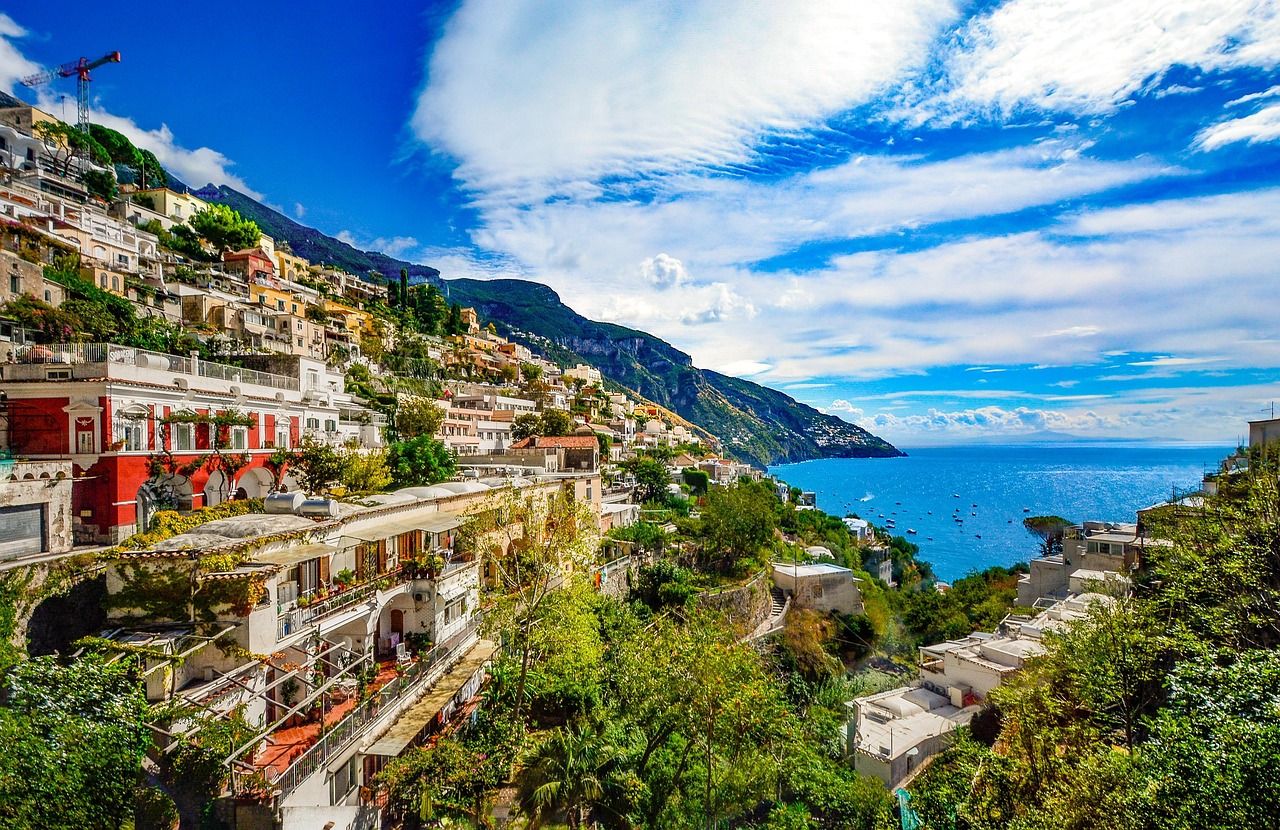
Positano is the Amalfi Coast’s poster child: a cascade of pastel houses tumbling toward a busy pebble beach. The first time I arrived by ferry at 9 a.m. on a clear May morning, I remember thinking the whole scene looked suspiciously like a movie set. The bell tower, the dome of Santa Maria Assunta, the umbrellas already staking their claim on Spiaggia Grande—too perfect to be real.
What to do: Stroll the pedestrian lanes down to the beach, ducking into linen boutiques and ceramic shops. Visit the Church of Santa Maria Assunta to see the Byzantine Black Madonna icon. Walk the coastal path to Fornillo Beach (10–15 minutes) for a calmer swim.
My ritual: I grab a cappuccino and sfogliatella at La Zagara before 8 a.m. and wander the nearly empty streets. By 10 a.m. the day-trippers arrive and everything feels tighter and louder. If you want that iconic beach photo, sunrise or sunset is your moment.
Family-friendly? Yes, if you’re okay with stairs and pebbly beaches. Water is usually calm in summer. Bring water shoes for kids.
How to get there: In season, ferries from Naples, Salerno, Capri, Sorrento, and Amalfi. SITA buses connect from Sorrento and Amalfi, but can be packed.
2. Sentiero degli Dei (Path of the Gods)
The Path of the Gods is the hike that made me fall in love with the “vertical” Amalfi Coast. It runs high above the sea between Bomerano and Nocelle, with views that stretch from Positano all the way to Capri on a clear day. On my last September trip, I started at 7:30 a.m., the air still cool and smelling of wild thyme, and didn’t see another hiker for the first 40 minutes.
What to expect: The classic route (Bomerano to Nocelle) is about 6–7 km, mostly easy to moderate with some uneven steps and exposure. No railings, so not ideal for toddlers or those with vertigo.
Tips:
- Start in Bomerano (Agerola) and end in Nocelle for a net “downhill” feel.
- From Nocelle, either walk down 1,700+ steps to Positano (knee workout!) or catch the local bus.
- Bring at least 1.5 liters of water per person in summer; there’s often a little lemonade stand halfway, but don’t rely on it.
Best for: Adventurous travelers, photographers, couples, fit families with older kids who like hiking.
3. Amalfi Town & Piazza del Duomo
Amalfi was once a powerful maritime republic, rivaling Venice and Pisa. Today, its heart is the Piazza del Duomo, where the striped facade of the Cathedral of Sant’Andrea rises above a wide staircase that doubles as the town’s living room.
My favorite moment: At dusk, when the day-trippers have sailed away, I like to sit on the cathedral steps with a gelato and watch the square shift into local mode: kids chasing pigeons, nonni strolling arm in arm, restaurant hosts greeting neighbors by name.
What to do: Climb the cathedral stairs, pay to visit the crypt and Cloister of Paradise, wander the narrow alleys behind the piazza, and follow the stream inland to see Amalfi’s paper-making past in the Paper Museum (Museo della Carta).
Family-friendly? Very. The main streets are pedestrian and relatively flat. Good for strollers.
4. Ravello & Villa Cimbrone
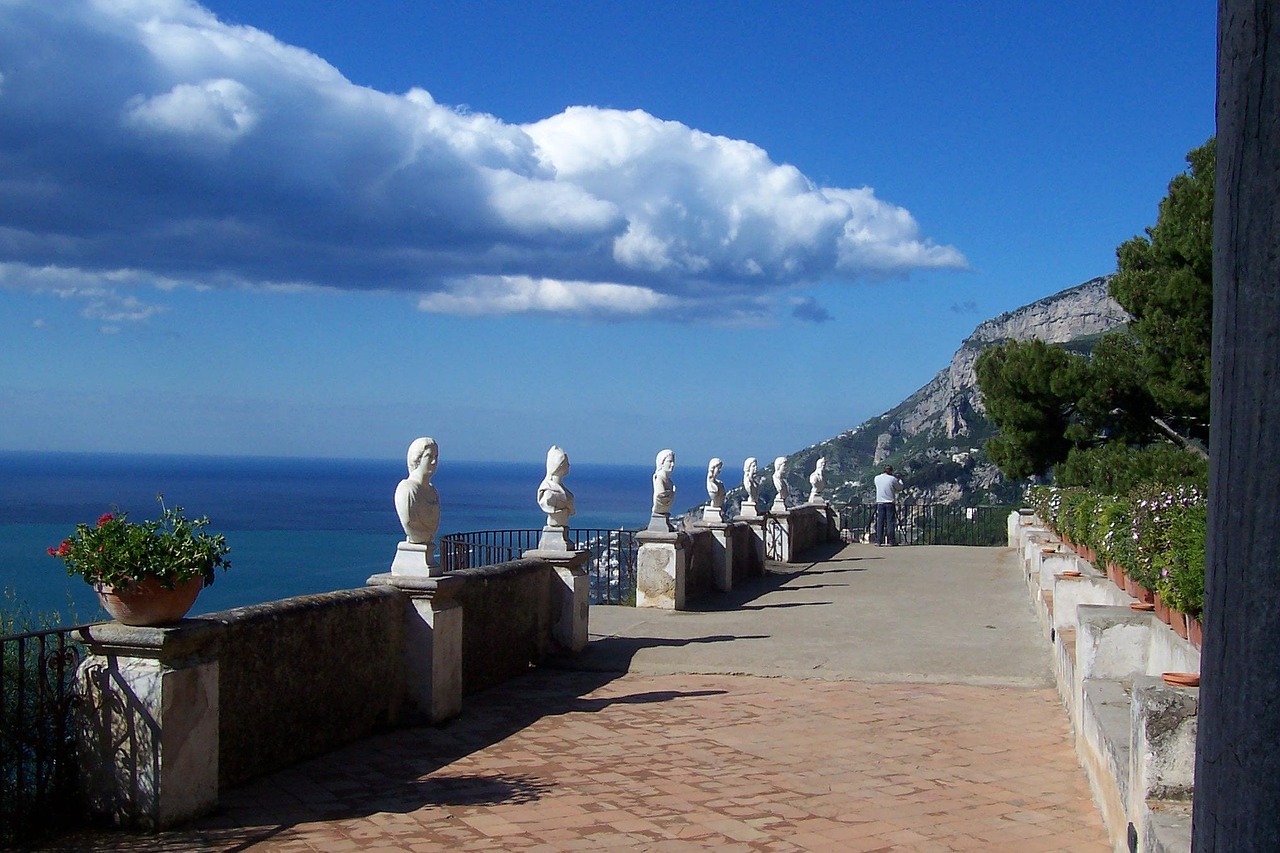
Ravello floats above the coast like a dream. You don’t come here for the beach; you come for the gardens, the music, and the way the light falls across the terraced hills at sunset.
Villa Cimbrone is the showstopper, with its Terrace of Infinity, a long balustrade lined with marble busts staring out into endless blue. The first time I walked out onto that terrace, a low mist hung over the sea, and the villages below seemed to drift in and out of view like ships.
What to do: Wander the gardens, bring a book, and linger on a bench under a pergola. Combine Villa Cimbrone with Villa Rufolo (more on that below) for a full Ravello day.
Romantic? Extremely. Ravello is where I’d come for a special anniversary or to propose.
5. Villa Rufolo & Ravello Music Festival
Villa Rufolo is smaller than Cimbrone but no less magical. Its layered gardens look out over the coast, and in summer, a stage is built seemingly suspended over the sea for the Ravello Festival, one of the most atmospheric classical music events in Europe.
Personal memory: One August evening, I attended a piano recital here. As the sun set behind the Lattari Mountains, the pianist began Debussy’s Clair de Lune. Swifts darted above the stage, and the audience sat in near-complete silence, wrapped in sweaters against the hilltop breeze. It’s one of those travel moments that sets up permanent residence in your brain.
2026 note: The Ravello Festival continues to expand its jazz and world music offerings, so check the 2026–2027 program early if music is your thing.
6. Atrani: The Tiny Time Capsule
Atrani is technically a separate town just a 10-minute walk from Amalfi, but it feels a world apart. Its square, Piazza Umberto I, is small enough that you can see almost every table from any seat, and by your second night, the waiter will probably remember your drink order.
What I love: Walking through the tunnel from Amalfi in late afternoon, emerging into Atrani’s square as kids kick a ball around and older locals play cards under the arches. It’s the kind of easy, everyday life that makes you wish you could press pause and stay a month.
Hidden gem tip: Climb up the narrow steps behind the piazza to the Church of Santa Maria del Bando for sunset. Few tourists bother, and the view toward Amalfi is superb.
7. Minori: Bakeries, Beaches & Lemon Terraces
Minori is where I go when I want to slow down. It has a good-sized beach, a flat promenade, and something most Amalfi Coast towns lack: a feeling that the locals still outnumber the tourists.
Food highlight: The legendary pastry shop Sal De Riso. Their delizia al limone (a dome of sponge cake soaked in lemon cream) is a life event. I once planned an entire afternoon around “researching” their dessert menu and regretted nothing.
Family-friendly? Absolutely. Shallow beach entry, playgrounds, and plenty of gelato.
8. Maiori & the Longest Beach on the Coast
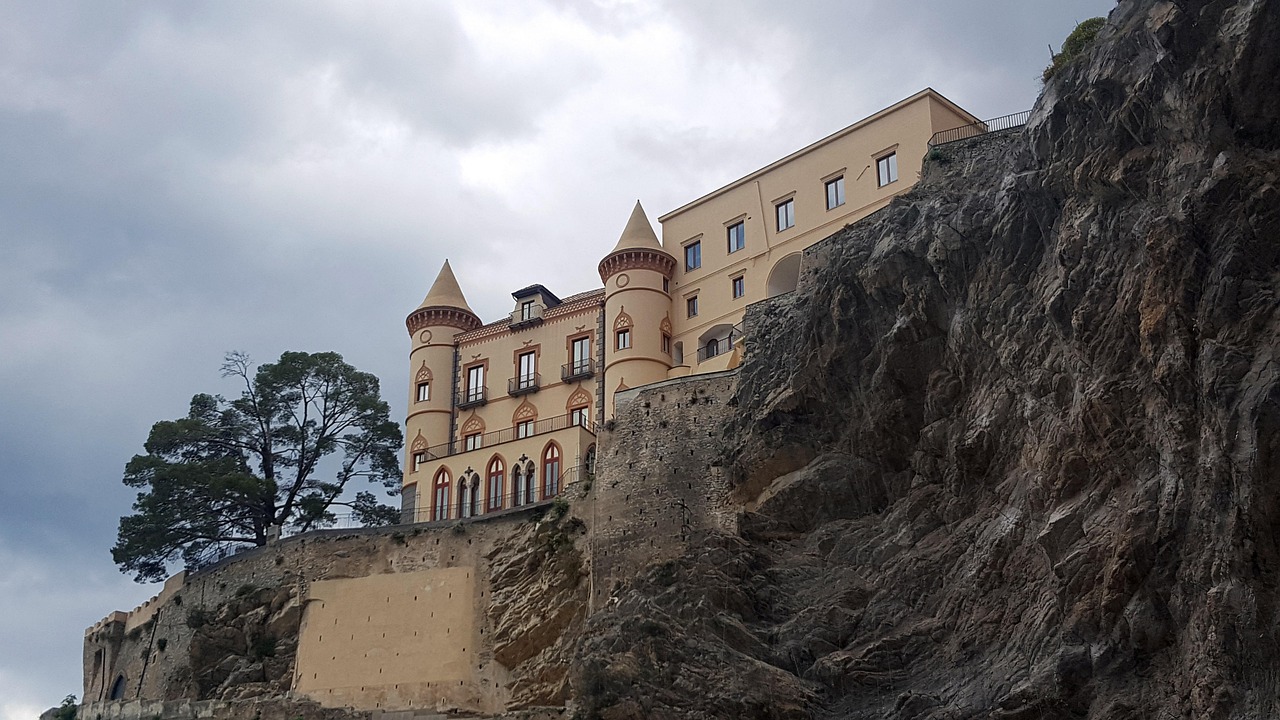
Maiori’s main claim to fame is its long, wide, mostly sandy beach—practically a unicorn on this rocky coastline. It’s not as pretty as Positano, but it’s incredibly practical, especially if you’re traveling with kids or older relatives.
My routine: When I stay in Minori, I often walk the coastal path or take a short bus to Maiori for a full beach day. Rent a sunbed, alternate dips in the sea with long, lazy lunches, and watch local teenagers perfect their volleyball skills.
9. Fiordo di Furore
Fiordo di Furore is a narrow, fjord-like inlet where a tiny beach sits wedged between steep cliffs under a stone bridge. It’s one of the most photographed spots on the coast, and in summer, it’s mobbed by midday.
When to go: Very early (before 9 a.m.) or in the shoulder seasons. On one April morning visit, I shared the cove with just three fishermen and a sleepy cat.
Adventurous angle: In non-peak seasons, local guides sometimes organize canyoning adventures in the surrounding ravines (check availability and safety regulations for 2026).
10. Amalfi Cathedral & Cloister of Paradise
The Duomo di Sant’Andrea is the spiritual heart of Amalfi. Behind its striped facade lies a layered complex of chapels, a peaceful cloister with Moorish arches, and a richly decorated crypt.
Don’t miss: The Cloister of Paradise, where slender white columns surround a small garden. Come in late afternoon when the sun slants through and patterns of light play on the stone.
11. Sorrento: Gateway & Base Option
While technically just outside the official Amalfi Coast, Sorrento is a common base and transit hub. It sits on the Bay of Naples, with easy train access to Pompeii and Naples, and ferries to Capri and Amalfi/Positano.
Why base here: If you’re nervous about coastal driving, want to do multiple day trips (Capri, Pompeii, Naples), or prefer a town with more big-hotel options, Sorrento is a smart choice, especially for a 4 day itinerary for Amalfi Coast that combines coast and ruins.
12. Capri Island (Day Trip)
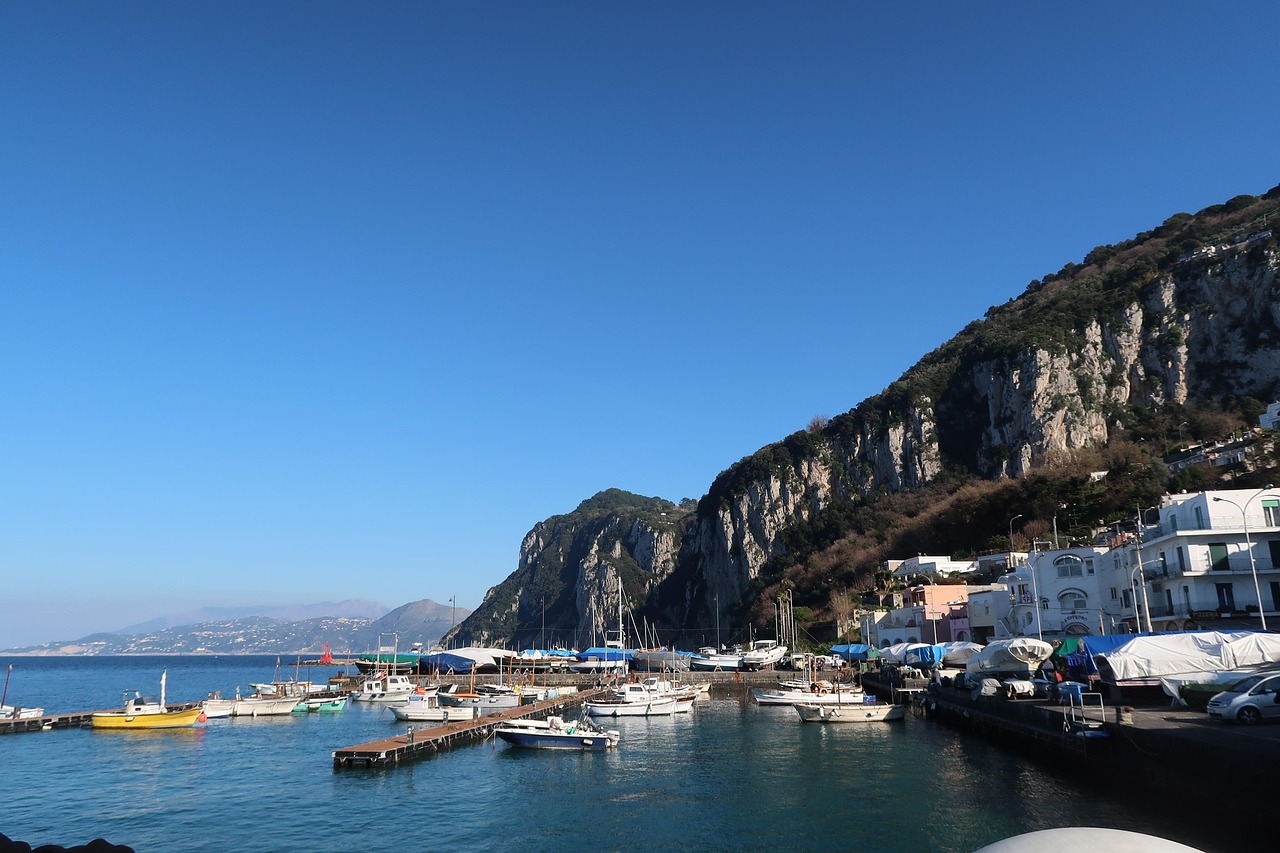
Capri is glamour, cliffs, and impossibly blue water. From the Amalfi Coast, it’s an easy day trip by ferry. Spend your day between the Marina Grande, the hillside town of Capri, and the quieter Anacapri, with optional boat tour around the island to see the Faraglioni rock stacks.
Personal advice: Skip the midday crush in Capri town by heading straight up to Anacapri on arrival, then work your way back later in the afternoon.
13. Pompeii & Herculaneum (From the Coast)
Again, not on the coast but a classic day trip. Walking through the streets of Pompeii, with Mount Vesuvius looming in the distance, is both eerie and fascinating. Herculaneum is smaller, better preserved, and less crowded—my personal favorite for a half-day visit.
Travel tip: For 5 days in Amalfi Coast or more, consider dedicating one full day to ancient ruins, basing in Sorrento or taking an early bus/ferry-train combo.
14. Vietri sul Mare & Its Ceramics
Vietri sul Mare is the eastern gateway to the Amalfi Coast and the region’s ceramics capital. Everywhere you look, there are hand-painted tiles, plates, and vases in bright yellows, blues, and greens.
Why go: For authentic ceramics shopping at better prices than Positano/Amalfi, and to see how the craft is still deeply rooted in local life.
15. Tramonti Vineyards & Wine
High above Maiori and Minori lies Tramonti, a cluster of villages draped in terraced vineyards and chestnut forests. This is the wine heartland of the Amalfi Coast, and where some of the oldest pre-phylloxera vines in Europe cling to the slopes.
Experience: Spend an afternoon at a family-run winery: tour the vineyards, learn about local grapes like Piedirosso, Aglianico, and Biancolella, and linger over a long lunch paired with wines. It’s an unforgettable cultural experience and one of the most authentic things to do in Amalfi Coast beyond the big towns.
16. Agriturismi & Farm-Stay Experiences
Some of my best Amalfi Coast memories aren’t in hotels but at agriturismi—working farms that host guests. Picture stone houses surrounded by lemon or olive terraces, homemade dinners with ingredients grown on-site, and hosts who treat you like extended family.
Why it matters: Agriturismi preserve traditional agriculture and offer a deeper cultural connection than many coastal hotels. They’re also a smart money-saving option, especially for families or groups.
17. Marine Reserves & Boat Excursions
The Amalfi Coast is just as spectacular from the water as from the cliffs. Small-group boat tours (or private hires if budget allows) let you slip into sea caves, swim off hidden coves, and see the villages in their full vertical glory.
Adventure angle: Kayak tours from Amalfi or Positano are great for active travelers, with the bonus of sneaking into small inlets larger boats can’t reach.
18. Local Festivals & Religious Processions
From patron saint festivals to lemon harvest celebrations, the Amalfi Coast’s calendar is dotted with events that light up small-town evenings. Expect marching bands, processions carrying statues through the streets, fireworks over the sea, and plenty of food.
Personal favorite: Amalfi’s Festival of Sant’Andrea (often in June and November), when the cathedral square fills with locals and the statue of the saint is carried down and up the Duomo steps—a powerful cultural experience.
19. Sunset Viewpoints
Sunsets on the Amalfi Coast are an event. Some of the best spots include:
- Praiano’s San Gennaro Church square.
- Ravello’s lanes near Villa Cimbrone (outside the paid gardens).
- The path above Positano near Montepertuso.
My ritual is simple: pick a viewpoint, pack a takeaway slice of pizza or a paper cone of fried seafood, and let the sky do its thing.
4–7 Day Itineraries for the Amalfi Coast (With Personal Stories)
Whether you have 4, 5, 6, or 7 days in Amalfi Coast, you can shape a trip that balances must-see attractions with slower, more local moments. Below are sample itineraries I’ve actually followed (or tweaked for friends), with notes on how to adjust based on your interests. I’ll keep them concise here while still giving enough detail to be practical and evocative; you can mix and match days to build your own 4 day itinerary for Amalfi Coast or stretch to a 7 day itinerary for Amalfi Coast.
4 Day Itinerary for Amalfi Coast
Best for first-timers who want the highlights: Positano, Amalfi, Ravello, and a taste of coastal life.
Day 1 – Arrival & First Taste of Amalfi
On my last 4-day trip, I based in Amalfi to cut down on logistics. I arrived by ferry from Salerno around midday, the town unfolding like a fan as we approached. After checking into a small guesthouse up a quiet side alley, I did what I always do on day one: a slow orientation walk.
Suggested plan:
- Check in, freshen up, and grab a light lunch—try a simple insalata caprese and spritz on the waterfront.
- Explore Piazza del Duomo and visit the cathedral + cloister.
- Wander the back lanes, noting bakeries, small supermarkets, and bus/ferry ticket booths.
- Evening: enjoy dinner in Amalfi, then gelato on the pier while watching ferries glide in and out.
Family tip: Let kids burn off travel energy on the small beach or promenade before dinner.
Day 2 – Positano & Coastal Cruising
I like to dedicate a full day to Positano plus a boat perspective of the coast. In May 2025, I booked a small-group boat trip that departed Amalfi around 9:30 a.m., hugged the cliffs, paused at sea caves, and dropped us in Positano late morning.
Suggested plan:
- Morning: Boat from Amalfi to Positano (public ferry or small-group tour).
- Late morning: Explore Positano’s lanes, visit Santa Maria Assunta, and walk to Fornillo Beach.
- Afternoon: Beach time, shopping, or a coastal hike up to Montepertuso if you’re energetic.
- Return: Ferry or boat back to Amalfi in late afternoon.
Romantic twist: Stay for dinner in Positano, then ferry back under the stars (check last boat times).
Day 3 – Ravello’s Gardens & Hilltop Breezes
On day three, I catch the bus up to Ravello, always grateful for the cooler air and quieter streets. It feels like stepping into a different world—less salt, more pine and jasmine.
Suggested plan:
- Morning: Bus Amalfi–Ravello. Visit Villa Rufolo first while it’s quiet.
- Lunch: Eat in the main piazza, watching locals drift in and out of the bar.
- Afternoon: Stroll to Villa Cimbrone, linger at the Terrace of Infinity.
- Optional: Walk down ancient steps via Scala back toward Amalfi (good knees required) or bus down.
Culture lovers: If your visit coincides with the Ravello Festival, book evening concert tickets and enjoy a magical night before returning to Amalfi.
Day 4 – Minori, Agriturismo Lunch & Departure
For your last of 4 days in Amalfi Coast, slow the tempo. I like to hop over to Minori for a final swim and pastry stop, then, if time allows, head uphill for an agriturismo lunch.
Suggested plan:
- Morning: Short ferry/bus to Minori, swim and pastry at Sal De Riso.
- Midday: Taxi up to a nearby agriturismo for a long, local lunch under lemon trees.
- Afternoon: Return to Amalfi, pick up last-minute ceramics or limoncello, then head to your onward transport.
5 Day Itinerary for Amalfi Coast
With 5 days in Amalfi Coast, you can add a hike or a day trip (Capri or Pompeii) while still keeping a relaxed pace.
Days 1–3: Follow the 4-day plan above (Amalfi, Positano, Ravello).
Day 4 – Path of the Gods Adventure
This is my favorite “active” day. From Amalfi, I take a morning bus to Bomerano (Agerola), grab a coffee in the village bar, and start the Sentiero degli Dei around 9 a.m.
Suggested plan:
- Bus Amalfi–Bomerano, start the hike with good footwear and water.
- Take your time; stop for photos and snacks on rocky outcrops with big views.
- Arrive in Nocelle for a late lunch—try a terrace trattoria with views of Positano.
- Descend the steps or take bus to Positano; ferry or bus back to Amalfi.
Adventurous families: Kids 8+ who like walking often love this, but keep an eye on them near drop-offs.
Day 5 – Capri or Pompeii/Herculaneum
For the last day of this 5 day itinerary for Amalfi Coast, pick your passion:
- Capri: Boat tour, chairlift to Monte Solaro, wander Anacapri, stylish aperitivo in the Piazzetta.
- Pompeii/Herculaneum: Early start via Sorrento, guided tour of ruins, pizza in Naples or Sorrento on the way back.
If you’re a history buff, go ruins; if you want more sea and glamour, choose Capri.
6 Day Itinerary for Amalfi Coast
6 days in Amalfi Coast lets you slow down and add more local experiences like wine-tasting in Tramonti or ceramics in Vietri.
Days 1–3: Amalfi, Positano, Ravello.
Day 4: Path of the Gods (as above).
Day 5 – Tramonti Wine & Farm Life
On my 6-day trip in 2023, this was the surprise highlight. A taxi wound us up into Tramonti, where vines wrap around ancient chestnut poles and the air smells of wood smoke and earth.
Suggested plan:
- Arrange a wine tasting and lunch at a family winery (many will help with transport).
- Tour the vineyards; learn about local grapes and terracing techniques.
- Long, slow lunch with multiple courses and wine pairings.
- Afternoon walk through a nearby village, then taxi back to the coast.
Day 6 – Vietri sul Mare & Beach Time
Round off your 6 day itinerary for Amalfi Coast with ceramics and sea.
Suggested plan:
- Morning bus/ferry to Vietri sul Mare, browse ceramics workshops.
- Late morning swim or relax on the local beach.
- Lunch of seafood pasta at a seaside trattoria.
- Return to your base for one last sunset and farewell dinner.
7 Day Itinerary for Amalfi Coast
A 7 day itinerary for Amalfi Coast is the sweet spot if you can spare it. You get time for iconic towns, hikes, day trips, and full-on relaxation.
Days 1–3: Amalfi, Positano, Ravello.
Day 4: Path of the Gods.
Day 5: Capri or Pompeii/Herculaneum.
Day 6 – Minori & Maiori: Local Life by the Sea
Spend a full day between Minori and Maiori, soaking up a more everyday side of the coast.
Suggested plan:
- Morning: Walk or ferry to Minori, pastry and coffee stop, visit the Roman villa ruins.
- Midday: Walk the promenade path or short bus to Maiori, beach time.
- Afternoon: Hike to the San Nicola de Thoro-Plano fortress above Maiori if you’re up for stairs and views; otherwise, more beach.
- Evening: Dinner on the seafront, then back to base.
Day 7 – Free Day & Hidden Paths
For your final of 7 days in Amalfi Coast, keep it loose:
- Follow an old stairway path between towns (Amalfi–Atrani–Ravello, or Minori–Ravello).
- Take a kayak tour or half-day boat rental.
- Book a cooking class at a farm or in town.
- Revisit your favorite piazza or viewpoint for a second, slower look.
This unscheduled day often ends up being the most memorable, because you finally feel like you’re not chasing the coast—you’re just living on it.
Local Food in Amalfi Coast: What to Eat & Where
Amalfi Coast cuisine is a celebration of what the land and sea provide: fish, tomatoes, lemons, olives, and grapes. Here’s how I eat my way along the coast.
Signature Dishes by Area
- Positano & Praiano: Grilled fish, seafood risotto, scialatielli ai frutti di mare (thick local pasta with mixed seafood).
- Amalfi & Atrani: Impepata di cozze (peppery mussels), anchovy dishes, lemon-based desserts.
- Minori & Maiori: Fresh pasta (Minori’s pasta tradition is strong), fried seafood cones, family-friendly pizzerias.
- Tramonti: Rustic meat dishes, hearty pastas, and serious wine.
- Ravello: Slightly more refined cuisine in garden restaurants, but still rooted in local produce.
Where to Taste the Best
Agriturismi: These are where I’ve had my most memorable meals: eight-course feasts with vegetables just picked, olive oil pressed on-site, house wine that somehow keeps refilling your glass. They’re scattered around Agerola, Tramonti, Scala, and above Minori/Maiori.
Family Trattorias: In Amalfi, Atrani, and Minori especially, look for modest places with hand-written menus and lots of locals. Skip the ones with laminated menus in six languages if you can.
Local Markets: Most towns have small produce shops daily and weekly markets (check with your host). I love buying picnic supplies—sun-warmed tomatoes, mozzarella, olives, focaccia—and finding a quiet bench overlooking the sea.
Evenings on the Amalfi Coast
Nights here unfold slowly. After sunset, the heat eases, lights flicker on along the cliffs, and the towns exhale.
- Piazza life: In Amalfi, Minori, Maiori, and Vietri, evenings mean strolling the promenade, kids on scooters, and couples sharing gelato on benches.
- Harvest festivals: Autumn brings grape and chestnut festivals in Tramonti and the hills, with grilled sausages, new wine, and folk music.
- Local concerts: Summer calendars often include free or low-cost concerts in church squares; check posters taped to walls and bar windows.
- Romantic evenings: In Positano and Praiano, sunset aperitivo on a terrace is almost a ritual. In Ravello, it’s all about moonlit garden walks and concert nights.
Best Day Trips from the Amalfi Coast
Beyond Capri and Pompeii, consider:
- Naples: For pizza, museums, and chaotic charm. Easiest from Sorrento or Salerno.
- Paestum: South of Salerno, with magnificent Greek temples in quiet countryside—worth it for history fans.
- Salerno: Underrated city at the eastern end of the coast, with a lovely promenade and medieval center.
Use fast ferries and regional trains to minimize transfers; driving into Naples is not for the faint of heart.
Cultural Etiquette & Local Customs
The Amalfi Coast may be touristy, but it’s also home to real communities. A few guidelines:
- Greetings: A simple “Buongiorno” (before afternoon) or “Buonasera” (late afternoon/evening) when entering shops or cafes goes a long way.
- Dress: Beachwear stays on the beach. In towns and especially in churches, cover shoulders and midriffs; avoid walking shirtless or in bikinis through streets.
- Dining: Dinner rarely starts before 7:30–8 p.m. Don’t expect rushed service; lingering is part of the culture. Ask for the check (il conto, per favore) when ready.
- Tipping: Service is often included; rounding up or leaving 5–10% for good service is appreciated but not mandatory.
- Noise: Many streets are residential. Late-night shouting in lanes echoes straight into people’s bedrooms.
- Religious events: During processions, step aside, be respectful, and avoid intrusive flash photography.
Practical Travel Advice for the Amalfi Coast
Getting Around: Buses, Ferries, Cars
Buses (SITA): Connect Sorrento–Positano–Praiano–Amalfi–Minori–Maiori–Vietri. They’re cheap but often crowded in summer. Sit on the sea side for views if you don’t get motion sick.
Ferries: In season (roughly April–October), ferries are the most scenic and often fastest way between major towns. They’re perfect for avoiding traffic jams.
Driving: The coastal road is narrow, twisty, and busy. If you’re a confident driver used to tight European roads and want flexibility to explore hill towns, a car can work—especially in shoulder seasons. But parking in historic centers is limited and expensive, and ZTL (limited traffic zones) are strictly enforced.
Rental cars: Best picked up in Naples or Salerno if you must. Avoid picking up in tiny coastal towns if possible.
Distances & Travel Times (Approximate)
- Naples–Sorrento: 1–1.5 hours by Circumvesuviana train.
- Sorrento–Positano: 40–60 minutes by bus; 30–40 by ferry.
- Positano–Amalfi: 30–45 minutes by bus or ferry.
- Amalfi–Ravello: 25–35 minutes by bus.
- Amalfi–Minori/Maiori: 10–20 minutes by bus or ferry.
Saving Money on the Amalfi Coast
- Travel in shoulder seasons: Late April–May and late September–October offer lower prices and fewer crowds.
- Base in smaller towns: Minori, Maiori, Atrani, or Tramonti are often significantly cheaper than Positano.
- Self-cater breakfasts & some lunches: Use local markets and bakeries; splurge on one great restaurant meal a day.
- Use ferries strategically: They cost more than buses but save time; mix both to balance budget and comfort.
- Skip overpriced beach clubs: Seek free sections of beaches and rent just an umbrella if needed.
SIM Cards & Connectivity
For 2026, eSIM options are plentiful. Major Italian carriers (TIM, Vodafone, WindTre) offer tourist packages with data and some calls. You can:
- Buy a physical SIM at Naples airport or main train stations (bring passport).
- Purchase an eSIM online before arrival and activate on landing.
Coverage is generally good, though some cliffside or remote paths may have weak signal.
Visa Requirements & Driving Licenses
Visas: Italy is in the Schengen Area. Many nationalities (including US, Canada, UK, Australia, much of Latin America and Asia-Pacific) can enter visa-free for short stays (typically up to 90 days) but must comply with ETIAS requirements once fully implemented (check official EU sources before 2026 travel). Always verify your specific situation via your government or the Italian consulate.
Driving licenses: Non-EU visitors are generally required to carry an International Driving Permit (IDP) alongside their home license. Car rental companies often ask for it; fines for driving without can be steep.
Best Seasons & What They’re Good For
- Spring (April–May): Wildflowers in the hills, moderate temperatures, ideal for hiking and sightseeing. Some chilly days at the beach, but overall my favorite time.
- Summer (June–August): Hot, busy, buzzing with energy. Best for beach lovers and nightlife, but book early and expect crowds and higher prices.
- Autumn (September–October): Warm sea, grape and olive harvest in the hills, fewer crowds after mid-September. Great balance for 5–7 day itineraries.
- Winter (November–March): Quiet, many hotels and restaurants closed in smaller towns. Amalfi and larger hubs stay partially active. Good for those seeking solitude and lower prices, but ferries and some services are limited.
Transport Logistics in a Multi-Town Region
When planning a multi-night, multi-town trip:
- Try to minimize hotel changes. It’s tempting to hop every night, but moving luggage up and down endless stairs quickly gets old.
- Consider 2-base strategies: e.g., 3–4 nights in Amalfi or Minori + 2–3 nights in Positano or Praiano, or a split between Sorrento (for day trips) and an Amalfi Coast town (for slower days).
- If you rent a car, aim to stay somewhere with dedicated parking and use buses/ferries to visit the more congested hotspots.
What’s New & Notable in 2026–2027
Local calendars evolve year to year, but as of the 2026 update:
- Ravello Festival 2026–2027: Continuing its blend of classical music, jazz, and cross-genre collaborations, with increasing emphasis on sustainable event practices (shuttle buses, reduced plastic use). Dates usually span July–September.
- Lemon Festivals: Towns like Minori and Amalfi plan expanded lemon-focused events, with cooking demos, tastings, and workshops on traditional cultivation.
- Trail Restoration: Regional initiatives continue restoring historic stairways and paths; new waymarking and information boards are expected on routes between villages like Scala, Ravello, and Tramonti.
- Traffic Management: Pilot measures to limit peak-season coach access on certain days may expand, encouraging greater use of ferries and shuttles. Check local updates when planning high-season travel.
Summary & Final Recommendations
The Amalfi Coast is one of those rare places that lives up to its own legend. It can be crowded, expensive, and logistically fussy—but it can also be profoundly beautiful, deeply human, and surprisingly peaceful once you step a few streets back from the main drag.
For a first visit, I usually suggest:
- 4 days in Amalfi Coast: Base in Amalfi or Positano, hit Amalfi, Positano, and Ravello.
- 5 days: Add either Path of the Gods or a day trip to Capri or Pompeii.
- 6 days: Add Tramonti wine country or Vietri ceramics and more beach time.
- 7 days: Build in at least one unscheduled “live like a local” day with no major sights.
Best seasons overall: Late April–May and late September–October for a mix of comfortable weather, open services, and more manageable crowds. Come in high summer if you’re all about beaches and nightlife; come in winter if you want quiet streets and moody seas.
If you let the coast set the pace—walk the old steps, linger over meals, learn a few Italian phrases, and leave gaps in your schedule—you’ll tap into the deeper magic beneath the postcard views. And like me, you might find yourself scheming about your next return trip before you’ve even left.