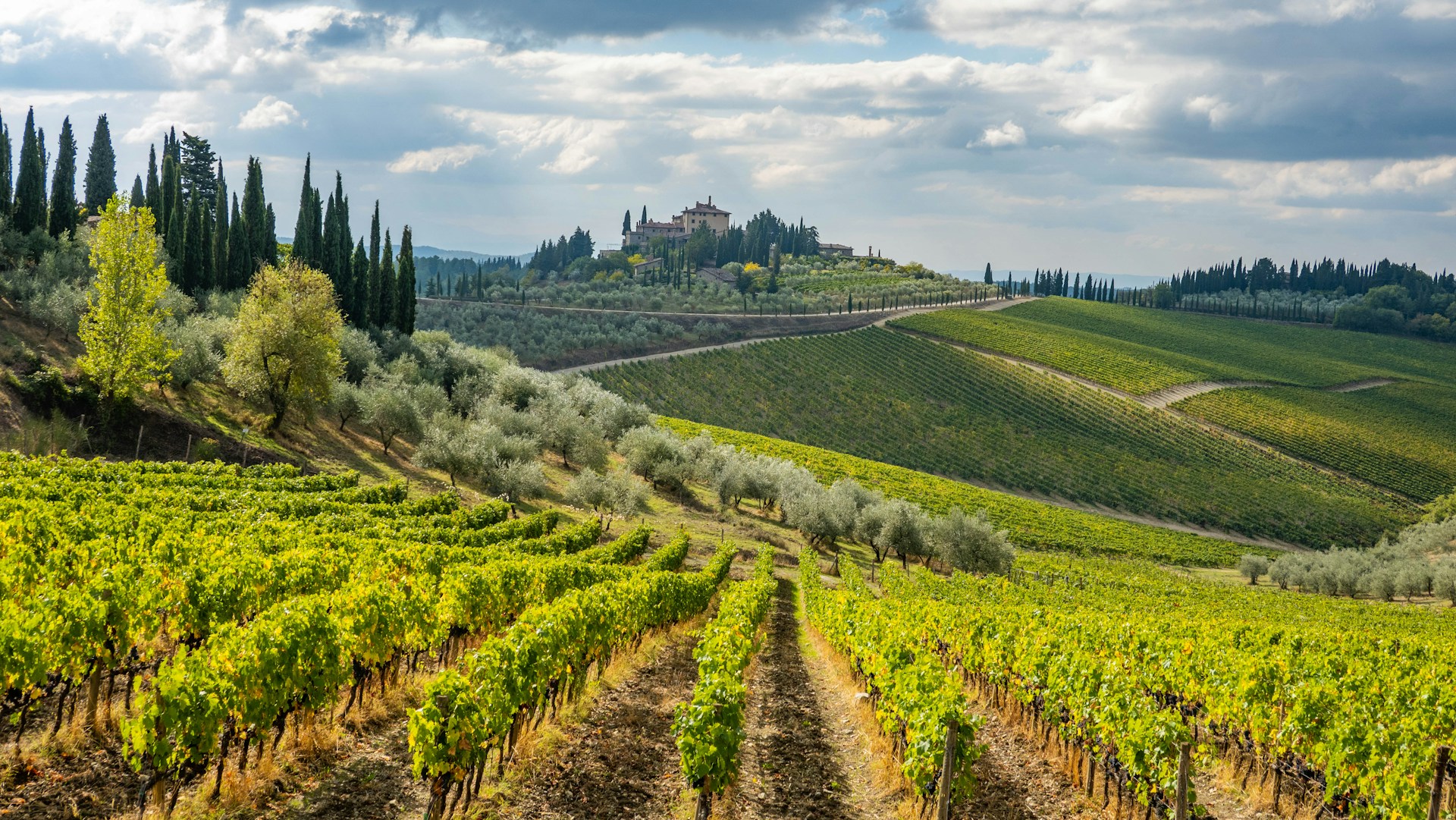
Why Visit Radda in Chianti?
If you’ve ever dreamed of a classic Tuscan hill town where life moves slowly, wine is poured generously, and sunsets look like they were painted just for you, Radda in Chianti is that dream in real life.
Perched on a ridge between vineyards and forested hills, Radda is smaller and quieter than nearby Greve or Castellina, but that’s exactly what makes it special. It’s intimate enough that, by your second evening, the barista at the main café will probably remember how you take your coffee. Yet it’s also perfectly placed in the heart of Chianti Classico, surrounded by world-class wineries, medieval hamlets, and scenic roads that beg for long, lazy drives.
Over multiple trips (including my last one in late 2025), I’ve used Radda as a base for everything: slow romantic getaways, kid-friendly family escapes, and even a hiking-and-wine “adventure” week with friends. This 2026 travel guide to Radda in Chianti pulls together all those experiences: the places I return to every time, the hidden corners I stumbled upon by accident, and the practical details you need to plan 3, 4, or 5 days in Radda in Chianti without stress.
Whether you’re here for a 3 day itinerary for Radda in Chianti or you’re stretching it to 5 days in Radda in Chianti, you’ll find enough must-see attractions, cultural experiences, and local food to keep you happily busy—but never rushed.
Table of Contents
- Why Visit Radda in Chianti
- Quick Overview of Radda in Chianti
- Neighborhoods & Areas to Explore
- 20 Must-See Attractions in Radda in Chianti
- 3–5 Day Itineraries (With Personal Stories)
- Local Food & Wine: What to Eat and Where
- Cultural Etiquette & Local Customs
- Nightlife, Entertainment & Cultural Experiences
- Day Trips from Radda in Chianti
- Practical Travel Advice & Money-Saving Tips
- Events & Festivals in 2026–2027
- Summary & Best Time to Visit
Quick Overview of Radda in Chianti
Radda in Chianti is a small medieval town (population around 1,500) in the province of Siena, in the heart of the Chianti Classico wine region. You’ll recognize it by its stone walls, narrow cobbled lanes, and those classic black-rooster (Gallo Nero) wine labels in every shop window.
It’s compact—you can walk across the entire historic center in ten minutes—but the real magic is how Radda opens up once you start exploring the surrounding countryside: vineyards, castles, monasteries, and tiny hamlets with views in every direction.
- Region: Tuscany (Toscana), Italy
- Nearest major cities: Florence (~1 hour by car), Siena (~45 minutes by car)
- Best for: Wine lovers, couples, families who like quiet, photographers, hikers, and slow travelers
- Not ideal for: Nightclub seekers, big-city shoppers, or anyone needing constant buzz
Neighborhoods & Areas in and Around Radda
Centro Storico (Historic Center)
This is where you’ll probably spend most of your time: a charming knot of stone houses, medieval walls, and small piazzas. I love wandering here in the early morning when deliveries are being made and the town is just waking up—there’s a freshness to the air, and the smell of baking cornetti from the bar on the main square is impossible to resist.
Within the centro storico you’ll find the main churches, the Palazzo del Podestà, tiny artisan shops, and a handful of excellent restaurants and enotecas. It’s also where many small B&Bs and guesthouses are located, perfect if you want to step outside straight into the action (or what counts as “action” in a village this peaceful).
Vineyard Belt (Surrounding Hills and Frazioni)
Just outside town, the road dips and curves into a patchwork of vineyards, olive groves, and forests. Scattered among them are small hamlets and estates: Volpaia, Livernano, Castelvecchi, and others. This is where you’ll find many agriturismi (farm stays) that offer a deeper connection to the land, often with on-site wineries and home-cooked dinners.
If you like waking up to silence broken only by birds and the occasional tractor, this is your area. You’ll need a car, though, or at least a willingness to walk the hilly lanes.
Volpaia
Technically a separate hamlet (frazione) about 7 km north of Radda, Volpaia feels like a movie set: stone houses clustered on a hill, with sweeping views and just enough wine cellars and trattorie to keep you very happy. Local families still live here, and you’ll see children racing bicycles through the tiny piazza in the afternoon.
20 Must-See Attractions in Radda in Chianti (With Personal Notes)
Below are 20 of the best places to visit in Radda in Chianti and its immediate surroundings. Each isn’t just a “thing to do in Radda in Chianti” but a small story, a mood. I’ve revisited many of these spots on different trips—romantic weekends, solo writing retreats, and group getaways—and they’ve never felt the same twice.
1. Radda’s Medieval Walls & Panoramic Walk
The first place I always go, and often the last place I say goodbye from, is the panoramic path that follows the old medieval walls. It’s not long—maybe 10–15 minutes end to end—but I’ve easily spent an hour here watching the changing light over the vineyards.
History & significance: Radda was an important fortified town in the Middle Ages, part of the defensive system between Florence and Siena. The remaining sections of wall and towers hint at that past. Today, instead of defending against invaders, the walls mostly protect you from missing some of the best views in town.
My experience: On my last visit in autumn, I walked this route every evening just before dinner. One night a light fog settled into the valleys, and the vineyards below looked like islands floating in a sea of white. A local older couple passed me, arm in arm, and the woman stopped just to say, “Che spettacolo, eh?”—what a spectacle. We stood together for a moment in comfortable silence, staring at the hills.
Tips for visitors:
- Walk it at least twice: once in the morning, once at golden hour before sunset.
- Family-friendly and stroller-friendly in most parts, though some stretches are cobbled and uneven.
- Free, always open, and easily accessible from the main piazza.
2. Piazza Ferrucci (Main Square) & Everyday Life
If the walls are Radda’s balcony, Piazza Ferrucci is its living room. It’s not a grand piazza by Italian standards, but that’s exactly why I love it. This is where you’ll find kids kicking a ball around, locals catching up over espresso, and visitors like us trying to decide if it’s too early for a glass of Chianti (it never is, as long as you also order some snacks).
What to do: Grab a table at the bar on the square, order a cappuccino or spritz, and just watch. I once spent an entire morning here “working” on my laptop and ended up chatting with the owner about the changes he’s seen in tourism over 30 years. His advice on when to visit (late May or late September) was spot on.
Tips: Prices are surprisingly fair given the central location. This is a great place to start your day or to regroup between activities.
3. Palazzo del Podestà
Facing the main square, the Palazzo del Podestà is Radda’s old town hall, a stone building decorated with coats of arms from the various podestà (governors) who ruled here under Florence.
Why it matters: It’s a tangible reminder that this quiet town was once a strategic political center. Many visitors barely notice it, but if you look closely at the façade you’ll see layers of history in those shields and emblems.
My experience: One rainy afternoon, I ducked under its loggia to escape a passing shower. A local guide was giving a tour to a small group, and I lingered nearby, listening in. He pointed out a nearly faded coat of arms that had survived multiple restorations. I wouldn’t have spotted it otherwise.
Tip: Combine a quick look at the Palazzo with a stroll around the adjacent lanes and small viewpoints—great for photos, especially in soft morning light.
4. Church of San Niccolò
San Niccolò is the main parish church, a simple and peaceful stone building whose interior always feels cooler and calmer than the street outside.
History: The church dates back to medieval times, though it has seen various renovations. Inside, you’ll find some lovely altarpieces and a quiet, well-worn atmosphere that tells you this is still very much a living parish.
My experience: I often step inside San Niccolò before dinner, especially on Sundays when the last mass has just ended and the air still has a trace of incense. One evening, a small choir was rehearsing; I sat in the back pew and let the harmonies echo off the stone. It was better than any paid concert.
Tips: Dress modestly (shoulders covered) and speak softly. It’s fine to take a few photos, but avoid doing so during services.
5. Casa del Chianti Classico (Chianti Classico House)
For wine lovers, this is a must-see attraction in Radda in Chianti. Housed in a former Franciscan convent just outside the historic center, Casa del Chianti Classico is part museum, part tasting room, part temple to the Gallo Nero (black rooster) symbol.
What you’ll find:
- An interactive exhibition explaining the history, terroir, and production of Chianti Classico.
- Tasting experiences that range from basic introductions to themed flights.
- A lovely courtyard and garden with great views—a peaceful spot even if you’re not tasting.
My experience: The first time I came, I booked a late-afternoon tasting and ended up staying much longer, chatting with the sommelier about the differences between vintages. They poured a “blind” sample and challenged me to guess the grape blend. I was way off, but I learned a ton in the process.
Tips:
- Reserve tastings in advance in high season (June–September).
- Perfect for a rainy day or for the first afternoon of your 3 days in Radda in Chianti to get oriented to the region’s wines.
- Family note: kids are welcome; there’s space outside for them to roam while adults taste.
6. Volpaia Hamlet & Wineries
Volpaia is one of those places that stays with you long after you’ve left. It’s tiny—just a handful of streets—but between them, you’ll find some of the most atmospheric wineries and cellars in Chianti.
History: Historically a fortified village, Volpaia has preserved its medieval layout. Many of the wine cellars are tucked beneath the village houses, connected by underground passages. Walking the cobbled alleys, you can almost feel the centuries of winemaking under your feet.
My experience: I first visited Volpaia on a cloudy spring day and did a cellar tour followed by a tasting. The guide pointed out where the original stone presses once stood. Afterward, I had lunch at a terrace restaurant overlooking the hills; by dessert, the clouds had parted and the landscape glowed. I’ve been back twice since, and it’s never lost its magic.
Tips:
- Book winery tours ahead, especially in summer.
- Arrive by late morning and stay through lunch; the light is gorgeous, and you’ll avoid the mid-afternoon lull when some places close.
- Driving is easiest, but taxis can be arranged from Radda—ask your accommodation.
7. Badia a Coltibuono (Ancient Abbey & Winery)
About a 20-minute drive from Radda, Badia a Coltibuono is a former Benedictine abbey turned organic winery, guesthouse, and cooking school. It’s one of my favorite day-trip spots from town.
History: Founded around the 11th century, the abbey played a crucial role in developing viticulture in the region. Today, the estate still feels monastic in its serenity: stone cloisters, herb gardens, and rows of vines stretching into the distance.
My experience: I once took a half-day cooking class here. We made ribollita and fresh pasta in a high-ceilinged kitchen with big windows overlooking the gardens. After lunch, we toured the cellars, cool and dim, with that unmistakable smell of aging wine and oak.
Tips:
- Great romantic outing or gentle adventure for food lovers.
- Check their 2026 schedule for cooking classes and special dinners; they book up early.
- If you’re on a 4 day itinerary for Radda in Chianti, I’d dedicate a half or full day here.
8. Castello di Albola
Castello di Albola sits on a ridge above Radda, surrounded by neat rows of vines. It looks exactly like the Tuscan castle you’ve seen in wine ads—except it’s real, and you can visit.
What to expect: Guided tours of the historic cellars, tastings of their Chianti Classico and Super Tuscans, and wide-open views over the countryside. The castle itself is privately owned, but the accessible areas are atmospheric and beautifully maintained.
My experience: I drove up one late afternoon when the vines were turning gold. The tour was small—just four of us—and our guide was generous with both pours and stories. We finished the tasting outside as the sky turned pink; I bought a bottle I “didn’t need” because the moment was too perfect not to take something home.
Tips:
- Book ahead online for English-language tours.
- The drive up is scenic but a bit curvy; if you’re prone to motion sickness, sit up front.
- Combine with a morning in town for a balanced day.
9. Chianti Classico Wine Route Drives (Strada Chiantigiana & Local Roads)
You can’t talk about must-see attractions in Radda in Chianti without mentioning the roads themselves. The drives around town—especially sections of the Strada Chiantigiana (SR222) and the smaller provincial roads—are among the most beautiful in Tuscany.
My experience: On my “adventurous” trip with friends, we spent an entire day just driving loops: Radda–Gaiole–Castellina and back. We stopped whenever a view caught our eye, which was often. One of my favorite photos from that trip is just a dusty lane lined with cypresses and a farmhouse in the background.
Tips:
- Rent a car; public transport is limited.
- Plan fewer stops than you think you can fit. The distances are short, but the roads are slow, and you’ll want time to wander.
- Bring water and snacks so you’re not rushed into the first touristy restaurant you see.
10. Local Enotecas & Wine Bars in Radda
Some of my favorite cultural experiences in Radda in Chianti have happened in its tiny wine bars. They’re where you meet locals, taste small-producer bottles, and get a sense of what people here actually drink on a Tuesday night.
What to look for: Enotecas that offer by-the-glass options, small plates (crostini, cheeses, cured meats), and shelves lined with both famous labels and lesser-known estates. Ask the staff to pour something “typical” of Radda—they’ll usually pick a Chianti Classico from a nearby vineyard.
My experience: One chilly November evening, I ducked into a small enoteca I hadn’t tried before. The owner insisted I try his favorite local olive oil along with the wine; we ended up in a long conversation about the 2023 harvest. That’s how I learned to always ask about the year’s olive oil—locals are as passionate about it as they are about wine.
11. Olive Groves & Frantoi (Olive Mills)
Wine gets all the attention, but the olive oil around Radda is extraordinary. In late October and November, small olive mills (frantoi) come to life, pressing the new harvest.
My experience: I once visited during the harvest and followed a local friend to a tiny frantoio outside town. The air smelled like fresh-cut grass and pepper. We tasted the new oil on plain toasted bread: bright green, intense, almost spicy. I brought a tin home and rationed it like liquid gold.
Tip: If you’re visiting in late autumn, ask your host or hotel if any frantoi are open for visits. Otherwise, look for “olio nuovo” (new oil) on menus and in shops.
12. Hiking & Walking Trails Around Radda
Radda in Chianti is a great base for gentle hiking. Walking paths wind through vineyards, forests, and small hamlets, offering a slower, more immersive way to explore the landscape.
My experience: One of my favorite mornings was a loop walk from my agriturismo through the woods and down into a valley, following old cart tracks and passing a tiny chapel. I didn’t see another person for hours, just birds and the occasional tractor in the distance.
Tips:
- Ask your accommodation for a simple trail map; many have printed routes.
- Wear proper walking shoes—trails can be rocky and muddy after rain.
- In summer, start early to avoid the midday heat.
13. Local Artisan Shops & Food Stores
Instead of big souvenir shops, Radda has a scattering of small boutiques and food stores where you can find ceramics, local honey, cured meats, cheeses, and wine-friendly snacks.
My experience: I have a small espresso cup I bought from a ceramics shop here on my first visit. Every time I use it, it takes me back to slow mornings in my Radda guestroom. On a later trip, I picked up truffle-infused pecorino from a tiny alimentari—dangerously addictive with a glass of red.
Tip: For saving money on meals, stock up at these food stores and have a picnic lunch instead of eating out every day.
14. Radda’s Small Museums & Cultural Corners
While Radda doesn’t have huge museums, there are small exhibits and cultural spaces that showcase local history, winemaking traditions, and rural life. They’re often low-key and rarely crowded.
My experience: I once spent a rainy hour in a small exhibition on rural tools and farming history—I ended up chatting with the attendant, who had grown up on a nearby farm. His stories did more to bring the objects to life than any label.
Tip: Ask at the tourist office for up-to-date info; opening hours can vary by season.
15. Sunset Viewpoints Around Radda
Radda is all about views, and some of the best are free. Beyond the main walls, there are a few lesser-known spots where you can watch the sun sink behind layers of hills.
My experience: One evening, guided by nothing more than curiosity, I followed a side street that seemed to lead nowhere and ended up at a tiny bench overlooking a valley. I sat there with a gelato, listening to the distant sound of a tractor finishing work in the vines as the sky turned orange.
Tip: Ask locals where they go for sunset; they’ll usually point you to a quieter spot away from the main lookout.
16. Agriturismi & Farm Stays
Staying at an agriturismo just outside Radda is a cultural experience in itself. Many are working farms or wineries that open a few rooms to guests, offering homemade breakfasts and, often, dinners using ingredients from their land.
My experience: On one trip, I stayed in a stone farmhouse surrounded by vines. Mornings started with fresh ricotta, homemade cakes, and views that made it hard to leave the terrace. One evening, the owners invited all the guests to a communal dinner. We shared long tables, more bottles than we could finish, and stories in a mix of Italian and English.
Tip: If you’re planning 4 or 5 days in Radda in Chianti, consider splitting your stay: a couple of nights in the historic center and a couple in the countryside.
17. Local Festivals & Street Events
Radda’s calendar includes small local festivals celebrating wine, food, and traditional culture. They’re some of the best opportunities for genuine cultural experiences in Radda in Chianti.
My experience: I once stumbled into a small street festival where the main square was filled with food stalls, local bands, and kids running around with balloons. An older gentleman insisted I try his homemade cantucci (almond biscuits) dipped in vin santo—who was I to refuse?
18. Cycling Routes Around Radda
For adventurous travelers, cycling the rolling hills around Radda is both challenging and rewarding. Road cyclists especially love these routes, some of which overlap with famous races like L’Eroica (based nearby in Gaiole).
My experience: I’m more of a casual rider, so I rented an e-bike for a day. It turned the steepest climbs into doable efforts and let me focus on the scenery rather than my burning legs. I stopped at a small bar in a hamlet for a quick espresso and felt like I’d earned it.
Tip: Ask about bike rentals in town or through your accommodation. E-bikes are a game-changer if you’re not a serious cyclist.
19. Nearby Castles & Fortified Hamlets
Within a short drive, you’ll find other fortified hamlets and castles: Vertine, Meleto, and others in the Gaiole and Castellina directions. Each has its own story and vantage point over the Chianti landscape.
My experience: One cloudy afternoon, I drove to a nearby castle on a whim. The tour was quiet—just me and one other visitor—and the guide clearly loved her job. She pointed out old frescoes and a tiny chapel I would have missed.
20. Simple Country Roads & “Getting Lost” Time
It may sound vague, but one of the best things to do in Radda in Chianti is to build in time with no fixed plan: pick a direction, follow a small road, and see where you end up. That’s how I’ve found my favorite viewpoints, unlisted chapels, and tiny, family-run trattorie.
My experience: On my second trip, I set aside an entire afternoon with no schedule. I ended up at a small church with a panoramic cemetery, where each grave overlooked the valley. It was quietly beautiful—and I wouldn’t have found it if I’d stuck strictly to a list.
3–5 Day Itineraries for Radda in Chianti (With Personal Stories)
Below are flexible outlines for a 3 day itinerary for Radda in Chianti, with suggestions to expand to 4 or 5 days in Radda in Chianti. Instead of minute-by-minute schedules, I’ll walk you through how I’ve personally structured my days here, with a balance of must-see attractions, hidden gems, and time to breathe.
3 Days in Radda in Chianti: Classic First Visit
Day 1 – Arrival, First Walk, and Intro to Chianti
I still remember my very first arrival in Radda: it was early afternoon, the sun high, and the town quietly dozing. I parked just outside the walls (parking is easy to find with clear signs) and rolled my suitcase up into the historic center, cobblestones announcing my presence.
Morning / Early Afternoon: Settle In & Explore the Centro Storico
Once you’ve checked into your hotel or agriturismo, resist the urge to rush off. Radda is small, and the best way to start is by simply walking without a goal.
- Stroll the main lanes inside the walls, peeking into small shops and food stores.
- Pause in Piazza Ferrucci for a coffee or light snack. This is a great moment to people-watch and get a feel for the town’s rhythm.
- Step into San Niccolò for a quiet moment; even a brief visit helps you shift into “Radda time.”
On my first day, I spent a ridiculous amount of time just walking the same streets back and forth, noticing different details each time: a flower pot on a windowsill, laundry hung between buildings, the sound of a TV drifting from an open window.
Late Afternoon: Panoramic Walls & Casa del Chianti Classico
By mid- to late afternoon, head to the medieval walls and do the full panoramic loop. This is your “pinch me” moment: your first wide-open views of the Chianti hills.
After that, if you’re up for it, walk or drive the short distance to the Casa del Chianti Classico for an introductory tasting. On my first visit, I booked a late-afternoon session and it was the perfect way to learn the basics: what makes Chianti Classico different, why the black rooster matters, and how to decode the labels.
Evening: Dinner in the Historic Center
For your first night, stay in town. Choose a trattoria in the center—ask your hotel for a current favorite, as chefs and menus evolve. I still think about a plate of pappardelle al cinghiale (wide pasta with wild boar ragù) I had on that first evening, eaten at a small table outside while the church bells marked the hour.
Tips for Day 1:
- Keep it light: jet lag and driving in Italy can be tiring. Don’t over-schedule.
- If you’re driving from Florence or Siena, aim to arrive by early afternoon so you have daylight to settle in.
- Make dinner reservations in summer and on weekends, especially in 2026 when tourism is expected to bounce back strongly.
Day 2 – Wine, Volpaia, and Scenic Roads
Day 2 is your deep dive into wine country: a mix of scenic driving, one or two winery visits, and time in the fairytale hamlet of Volpaia.
Morning: Volpaia Hamlet & Cellar Tour
After breakfast, drive to Volpaia (about 15–20 minutes). The road climbs and twists, with views that will tempt you to stop every few minutes. Park just outside the hamlet and wander in.
- Walk the narrow alleys and small piazzas, taking in the preserved medieval architecture.
- Visit one of the wineries with cellars integrated into the village—most offer mid-morning tours and tastings.
On my second trip, I arrived slightly early and ended up having a coffee with one of the staff before the tour. She told me how harvest season transforms the quiet hamlet into a hive of activity.
Lunch: Volpaia with a View
Have lunch at a terrace restaurant overlooking the hills. This is a splurge I never regret: fresh pasta, grilled meats, seasonal vegetables, and that view. If you’re watching your budget, share a couple of dishes and a carafe of house wine instead of going all out on the à la carte menu.
Afternoon: Scenic Loop Drive & Optional Second Winery
After lunch, take a scenic loop drive back toward Radda, perhaps detouring along a smaller road that passes vineyards and olive groves. If you want a more in-depth wine experience, schedule a second winery visit (for example, at Castello di Albola on your way back).
I like to keep it to two formal tastings per day; more than that and it becomes harder to appreciate what you’re drinking (and to drive safely).
Evening: Aperitivo & Light Dinner
Back in Radda, enjoy aperitivo at a wine bar in town. Order a glass of Chianti Classico or a local rosato, and let them bring you a plate of snacks. After a big lunch, I often opt for a lighter dinner: a board of cured meats and cheeses or a simple pizza.
Day 3 – Slow Morning, Hike or Second Hill Town, and Hidden Corners
Your final day in a 3 day itinerary for Radda in Chianti can go one of two ways: more active (a hike or bike ride) or more exploratory (a visit to a nearby town like Gaiole or Castellina). I’ve done both on different trips.
Morning: Slow Start & Local Food Shopping
- Have a leisurely breakfast, then visit local food shops to pick up olive oil, cheese, salumi, or honey to take home.
- Walk the medieval walls again—this time in morning light, which feels completely different from sunset.
Option A – Hike Around Radda
Ask your accommodation for a recommended loop; many farms and hotels have their own maps. On one spring visit, I did a 2–3 hour walk through vineyards and woods, passing an isolated farmhouse and a tiny stone chapel. It was quiet enough to hear bees in the wildflowers.
Option B – Visit a Nearby Town
Drive to Gaiole in Chianti or Castellina in Chianti (around 20–30 minutes). Both have their own charm: Gaiole is associated with L’Eroica cycling race; Castellina has a lovely covered walkway and archaeological touches. Spend a few hours wandering, then return to Radda in the afternoon.
Afternoon: Last Views & Gelato
Back in Radda, treat yourself to gelato and seek out a quiet viewpoint you haven’t discovered yet. On my last day of one trip, I found a bench on a lesser-used lane and sat there with my gelato, feeling that bittersweet mix of satisfaction and reluctance to leave.
Evening: Farewell Dinner
Pick a restaurant you haven’t tried yet for a farewell dinner. This is the time to indulge in that bistecca alla fiorentina (Tuscan steak) or a multi-course meal, pairing each course with local wines. I like to end with vin santo and cantucci—tastes like a toast to the road ahead.
4 Days in Radda in Chianti: Add an Abbey & Deeper Relaxation
If you have 4 days in Radda in Chianti, you can slow down even more and add a full day at Badia a Coltibuono or another abbey/winery experience.
Day 4 Idea: Badia a Coltibuono & Forest Walks
- Morning: Drive to Badia a Coltibuono, tour the historic abbey and gardens.
- Midday: Join a cooking class or tasting lunch. On my visit, we cooked in a sunlit kitchen and ate on a terrace overlooking the hills.
- Afternoon: Short walk in the surrounding woods or simply relax with a book in the gardens or at your agriturismo.
- Evening: Casual dinner back in Radda or at your farm stay, with early night for stargazing—rural skies are often wonderfully dark.
5 Days in Radda in Chianti: Full Immersion & Day Trips
With 5 days in Radda in Chianti, you can experience the town as a true base rather than a quick stop. This is my favorite pace; I’ve done this twice, once as a couple and once with friends.
Day 4: As above (Badia a Coltibuono or similar).
Day 5 Idea: Flex Day – Siena or “Get Lost” Day
- Option A – Siena Day Trip: Drive about 45 minutes to Siena, spend the day exploring the Duomo, Piazza del Campo, and narrow streets, then return to the calm of Radda in the evening.
- Option B – Get Lost Locally: Dedicate a day to unplanned exploration: small roads, unknown hamlets, spontaneous stops at roadside chapels or viewpoints. On my “get lost” day, I found a tiny family-run trattoria with a daily menu and a view I still think about.
By the end of 5 days, you’ll have your own mental map of hidden gems in Radda in Chianti and a sense of belonging that’s hard to get in larger, busier destinations.
Local Food & Wine in Radda in Chianti
Eating and drinking well is non-negotiable in Tuscany, and Radda is no exception. The local food in Radda in Chianti is rustic, seasonal, and built around what the land offers: excellent olive oil, wild game, beans, vegetables, and of course, wine.
What to Eat: Classic Dishes
- Pappardelle al cinghiale: Wide ribbon pasta with slow-cooked wild boar ragù. Rich, deep, and perfect with Chianti Classico.
- Ribollita: Hearty vegetable and bread soup, “reboiled” until thick. Comfort in a bowl, especially in cooler months.
- Bistecca alla fiorentina: Huge T-bone steak, grilled rare. Best shared.
- Crostini toscani: Toasted bread with various toppings—chicken liver pâté, mushrooms, or seasonal spreads.
- Pecorino toscano: Sheep’s milk cheese often served with honey or jam.
What to Drink
- Chianti Classico: The star—look for the black rooster label.
- Chianti Classico Riserva / Gran Selezione: Higher-quality, longer-aged versions.
- Vin Santo: Sweet dessert wine, usually served with cantucci biscuits.
- Local extra virgin olive oil: Drizzle on everything.
Saving Money on Food & Drink
On longer stays, I often alternate splurge meals with simpler ones:
- Stock up at food shops (salumi, cheese, bread, fruit) and make picnic lunches.
- Opt for “menu del giorno” (daily set menus) at lunch—they’re often good value.
- Share big dishes (like bistecca) rather than ordering one each.
- Drink house wine (“vino della casa”)—often local and excellent value.
Cultural Etiquette & Local Customs in Radda in Chianti
Understanding local customs in Radda in Chianti will make your trip smoother and your interactions richer.
- Greetings: A simple “Buongiorno” (before mid-afternoon) or “Buonasera” (later) goes a long way. I’ve seen faces visibly soften when visitors greet shopkeepers in Italian.
- Meal times: Lunch is usually 12:30–14:30; dinner rarely starts before 19:30, often around 20:00. Don’t be surprised if restaurants are empty at 19:00—they’ll fill later.
- Coffee etiquette: Cappuccino is generally a morning drink; locals rarely order it after 11:00. Espresso (caffè) is anytime. Stand at the bar if you want the local feel.
- Noise: Radda is quiet. Keep voices down at night, especially near residential streets.
- Dress: Casual but neat. Cover shoulders and knees in churches.
- Tipping: Not obligatory, but rounding up or leaving 5–10% in restaurants is appreciated if service was good.
Nightlife, Entertainment & Cultural Experiences
Nightlife in Radda in Chianti is low-key. Think wine bars, long dinners, and evening walks, rather than clubs.
- Wine Bars & Enotecas: Ideal for a relaxed evening with good conversation. Some host occasional tastings or small events.
- Summer Events: Outdoor concerts, film screenings, or festivals sometimes take over the square—ask the tourist office for what’s on in 2026.
- Romantic evenings: Dinner on a terrace outside town, followed by a stroll along the walls under the stars.
- Family-friendly: Evening gelato and a walk through the quiet lanes; kids can roam fairly safely while adults linger nearby.
Day Trips & Nearby Attractions
Radda makes an excellent base for exploring central Tuscany.
Siena
About 45 minutes by car. Explore the Duomo, climb the Torre del Mangia, and sit in Piazza del Campo watching the world go by. I love combining Siena’s medieval drama with Radda’s rural calm.
Castellina in Chianti
20–30 minutes. Walk the Via delle Volte (covered passage), visit the small archaeological museum, and enjoy a leisurely lunch.
Gaiole in Chianti & L’Eroica Routes
20 minutes. Great for cycling enthusiasts and castle lovers (Castello di Meleto, Brolio, etc.).
Greve in Chianti
40–50 minutes. Larger than Radda, with a distinctive triangular piazza and lots of food shops—perfect for stocking up on Chianti specialties.
Practical Travel Advice for Radda in Chianti (2026)
Getting To & Around Radda
- By Car: The easiest and most flexible option. From Florence, follow signs toward Greve/Chianti, then Radda; from Siena, head toward Castellina or Gaiole and then Radda. Roads are well-maintained but winding.
- Public Transport: Limited. There are regional buses from Siena and Florence to nearby towns, but schedules can be sparse and not ideal for day trips. For a short stay or if you want maximum freedom, a rental car is strongly recommended.
- Parking: Paid and free lots just outside the historic center; look for “P” signs. Don’t drive inside the oldest streets unless your hotel instructs you to.
Car Rental & Foreign Driver’s Licenses
- EU/EEA licenses: Generally accepted as-is.
- UK, US, Canada, Australia, etc.: Your national license is typically required, and an International Driving Permit (IDP) is strongly recommended and sometimes required by rental agencies in Italy. Get it before you travel.
- Always carry your license, IDP (if applicable), passport, and rental documents when driving.
Visas (2026)
Italy is part of the Schengen Area. As of 2026:
- EU/EEA/Swiss citizens: Can enter and stay freely with an ID card or passport.
- Many non-EU visitors (e.g., US, Canada, UK, Australia): Typically allowed short stays (up to 90 days in 180) visa-free, but must comply with Schengen rules and any new ETIAS pre-travel authorization once fully in force. Check official government websites shortly before travel.
- Other nationalities: May need a Schengen visa; consult your local Italian consulate well in advance.
SIM Cards & Connectivity
- Italian SIMs (TIM, Vodafone, WINDTRE, Iliad) are widely available in cities; in Radda itself, options are more limited, so consider buying a SIM at the airport or in Florence/Siena before arriving.
- Many plans offer generous data for a month at a reasonable price (often 15–30 EUR).
- Most hotels and agriturismi offer free Wi-Fi, though speeds can be slower in rural properties.
Money-Saving Tips
- Visit in shoulder seasons (late April–May, late September–October) for better prices and fewer crowds.
- Stay in an agriturismo with kitchen access and cook some of your own meals with local ingredients.
- Use house wine and daily menus for value eating.
- Do self-guided scenic drives and walks instead of booking every experience as a tour.
Best Seasons & What They’re Good For
- Spring (April–May): Green hills, wildflowers, mild temperatures. Great for hiking, cycling, and photography.
- Summer (June–August): Hot, busy, but lively. Ideal if you like warm evenings and longer daylight. Book well ahead for 2026–2027.
- Autumn (September–October): My personal favorite. Harvest season, golden vineyards, still pleasant temperatures. Excellent for wine-focused trips.
- Winter (November–March): Quiet, some businesses may close or reduce hours. Great if you want solitude and lower prices, but come prepared for cooler, sometimes damp weather.
Events & Festivals in Radda in Chianti (2026–2027)
Exact dates change yearly, but here are typical events and trends expected in 2026–2027:
- Spring Wine Events: Tasting weekends and small festivals celebrating new vintages, often in May or early June.
- Summer Cultural Evenings: Outdoor concerts, film screenings, and food fairs in the main square and nearby estates.
- Harvest Season (September–October): Not always formal festivals, but many wineries host special harvest-themed tastings, vineyard walks, or dinners.
- Christmas & Winter Markets (December): Small-scale markets and events in nearby towns, with Radda sometimes hosting its own intimate celebrations.
For up-to-date 2026 and 2027 event listings, check with the Radda tourist office or the official Comune di Radda in Chianti website a month or two before your trip.
Summary: Key Takeaways & Final Recommendations
Radda in Chianti is not a place to rush. It’s a town for slow mornings, long lunches, and evenings where the main event is watching the light change over vineyards.
- Best length of stay: At least 3 days in Radda in Chianti; 4 or 5 days if you can.
- Best time to visit: Late April–May and late September–October for ideal weather, colors, and crowds.
- Must-see attractions: Medieval walls, Piazza Ferrucci, San Niccolò, Casa del Chianti Classico, Volpaia, and at least one abbey or castle winery.
- Top experiences: Wine tastings, simple walks, agriturismo stays, scenic drives, and unhurried meals featuring local food in Radda in Chianti.
- Who it’s perfect for: Couples seeking romance, families who like nature and calm, solo travelers needing a peaceful base, and anyone who loves wine and landscapes more than nightlife.
Plan loosely, leave space for serendipity, and let Radda’s rhythm become your own. By the time you leave, you’ll understand why so many of us find ourselves coming back—to sit at the same café table, walk the same wall, and watch the same hills, always slightly different, always unforgettable.