Why Visit Vicenza?
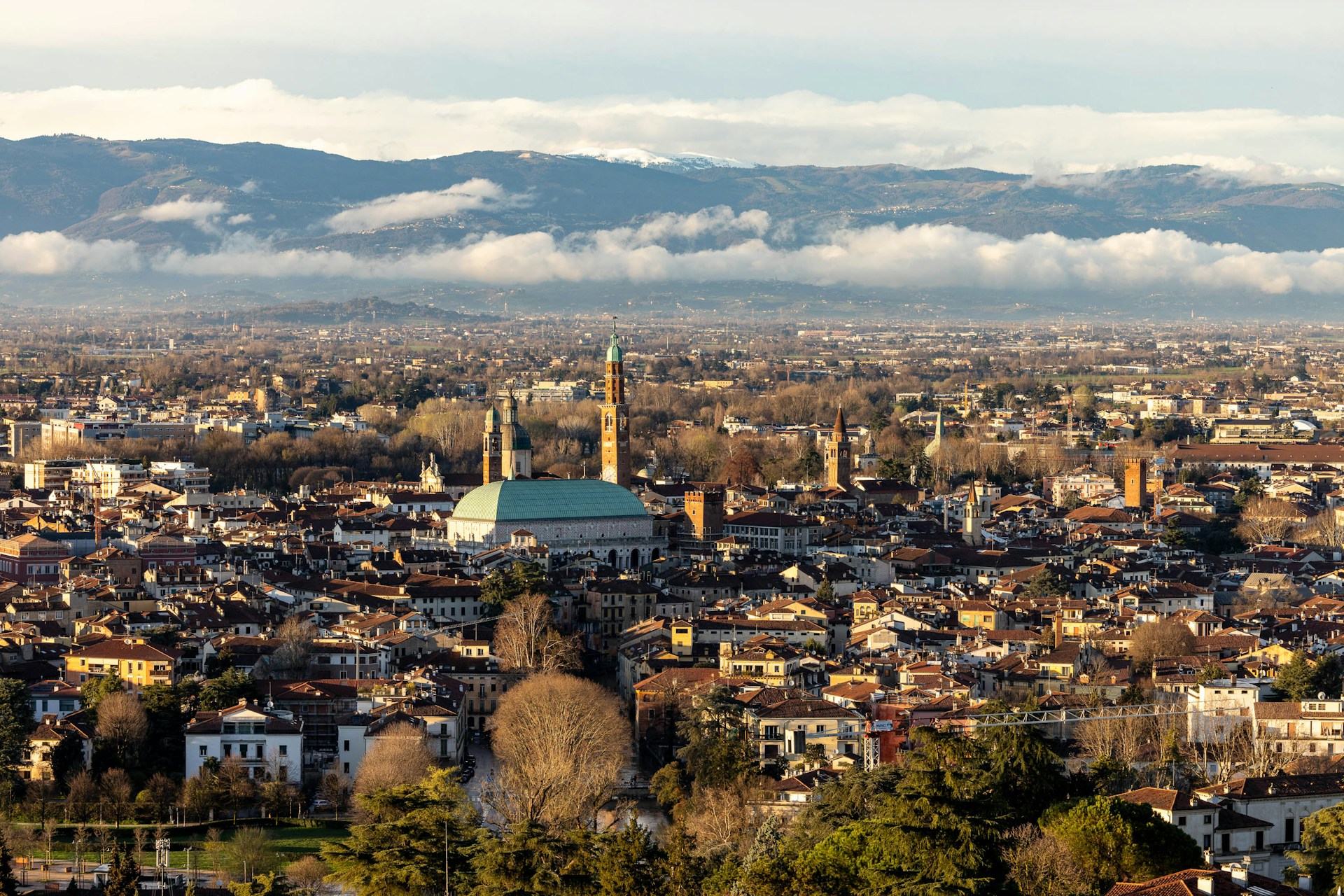
Vicenza is the city I kept visiting “on the way” to Venice or Verona until one day I realized I was planning my trips around Vicenza instead. It’s small enough to feel intimate, yet layered with centuries of art and commerce. Architect Andrea Palladio turned this town into a living textbook of Renaissance architecture, and you can actually walk that textbook in an afternoon (if you don’t stop for too many spritz breaks).
What makes Vicenza special is the combination of:
- World-class architecture – UNESCO-protected Palladian villas, palaces, and the iconic Teatro Olimpico.
- Real-life Italian rhythm – this is not a “tour buses only” kind of city. You’ll see students on bikes, grandparents on evening strolls, and packed coffee bars every morning.
- Strategic location – an easy base between Venice, Verona, Padua, and the Prosecco hills, with great train connections.
- Less crowds, better prices – compared with Venice, your espresso is cheaper, your dinner more relaxed, and your hotel less likely to bankrupt you.
- Food that quietly surprises you – local bigoli pasta, baccalà alla vicentina, and some of the best aperitivo spreads I’ve had in the Veneto region.
Whether you’re planning a 3 day itinerary for Vicenza, spending 4 days in Vicenza as a hub for day trips, or treating yourself to a slow 5 day itinerary for Vicenza, this 2026 travel guide for Vicenza will walk you through the must-see attractions in Vicenza, the hidden gems in Vicenza, and the practical travel tips for Vicenza that locals actually use.
Quick Overview of Vicenza in 2026
By 2026, Vicenza has settled into a sweet spot: more international visitors than a decade ago, but still far from overrun. The historic center remains mostly pedestrian, trains are frequent, and new bike paths connect the city more smoothly to the surrounding countryside.
Highlights of the current travel scene:
- Teatro Olimpico has expanded multilingual tours, including timed light shows on select evenings.
- Several Palladian villas have improved visitor facilities: clearer English signage, online ticketing, and occasional evening openings in summer.
- The aperitivo culture continues to thrive; many bars now offer local natural wines and craft beers alongside classic spritz.
- More small guesthouses and B&Bs have opened in the centro storico, making it easier (and often cheaper) to stay right in the heart of things.
Suggested Itineraries: 3, 4, and 5 Days in Vicenza
I’ve structured these itineraries as I actually travel: a mix of iconic sights, slow wandering, and unscripted coffee breaks. You can adapt them based on how many days you have.
3 Day Itinerary for Vicenza – The Essentials
If you only have 3 days in Vicenza, focus on the absolute core: Palladio’s masterpieces, the historic center, and a taste of the hills.
Day 1 – First Taste of Palladio & the Historic Center
I like to start my trips in Vicenza with a slow wander through the centro storico, letting the city introduce itself. Arrive by late morning if you can, drop your bags at your accommodation, and head straight for Piazza dei Signori.
Morning:
- Walk to Piazza dei Signori and circle the Basilica Palladiana from all sides. Admire the rhythm of arches and columns that made Palladio famous.
- Climb up to the Basilica terrace for a panoramic view of the red rooftops and church towers.
- Grab a quick espresso and pastry at a bar under the porticoes. I usually stand at the counter like locals do; it’s cheaper and more sociable.
Afternoon:
- Visit Teatro Olimpico (10–15 minutes’ walk). Take your time with the audio guide; this is one of the city’s must-see attractions.
- Stroll through the nearby Giardini Salvi for a breather, watching locals chat on benches and kids chase pigeons.
- Wander down Corso Palladio, the main pedestrian spine, popping into courtyards and churches as you go.
Evening:
- Join the locals for aperitivo back around Piazza dei Signori or in the smaller Piazza delle Erbe.
- Dinner at a trattoria in the center – try bigoli al torchio or baccalà alla vicentina if you eat fish.
- Slow night walk through the lit-up piazzas. Vicenza’s center feels very safe, and the stone façades look magical after dark.
Day 2 – Villas & City Views
Day two is all about the villas and viewpoints. Palladio designed villas like stage sets in the landscape, and you’ll understand that once you’re standing on Monte Berico.
Morning:
- Head up to the Sanctuary of Monte Berico, either on foot (a steady uphill walk through arcades) or by bus.
- Take in the panoramic view over the city – it’s one of the best skyline views of Vicenza.
- Visit the sanctuary interior; even if you’re not religious, the atmosphere and artworks are worth your time.
Afternoon:
- Walk or bus to Villa Valmarana ai Nani to admire its Tiepolo frescoes and whimsical garden statues.
- Continue to La Rotonda (Villa Almerico Capra), Palladio’s famous symmetrical villa, for an afternoon visit.
- If the weather is kind, pause at a café or gelateria on the way back to the center.
Evening:
- Dinner in the center or in the Borgo Berga area, depending where you’re staying.
- Optional: check what’s on at the Teatro Comunale or if there’s a concert or event at Teatro Olimpico.
Day 3 – Museums, Markets & Hidden Corners
On your last day, blend culture with simple pleasures: markets, smaller museums, and a bit of aimless wandering.
- Start at a local market if it’s a market day (usually Tuesday and Thursday mornings near the center). Perfect for picnic supplies.
- Visit one or two of the civic museums (Museo Civico at Palazzo Chiericati, or the natural history museum if you’re with kids).
- Seek out lesser-known churches like Santa Corona with its Bellini painting and quiet cloister.
- Spend your final afternoon shopping for local products: grappa, olive oil, or artisan jewelry (Vicenza is historically a city of goldsmiths).
- Finish with one last aperitivo and a slow farewell lap of the piazzas.
This 3 day itinerary for Vicenza hits almost all the key things to do in Vicenza while leaving just enough unscheduled time for your own discoveries.
4 Day Itinerary for Vicenza – Add the Hills or a Half-Day Trip
With 4 days in Vicenza, you can keep the 3-day structure and add a half-day trip into the Berici or Lessini hills, or a more relaxed deep dive into the city’s neighborhoods.
My favorite way to use the extra day is:
- Keep Days 1–3 roughly as above, but make Day 3 lighter.
- Use Day 4 for a half- or full-day trip to Bassano del Grappa (charming and easy by train) or a wine-tasting excursion in the hills south of Vicenza.
Alternatively, you can dedicate Day 4 to:
- Exploring the Riviera Berica by bike.
- Visiting more Palladian villas (Villa Pisani Bonetti, Villa Pojana, or Villa Gazzotti Grimani).
- Taking a long, lazy food day: long lunch, coffee tastings, and pastry-hopping.
I’ll describe specific day-trip options in the Day Trips section below, but know that a 4 day itinerary for Vicenza gives you enough time to enjoy both the city and at least a taste of the surrounding countryside.
5 Day Itinerary for Vicenza – Slow Travel & Side Adventures
When I have 5 days in Vicenza, I really start to live like a local: morning runs along the river, a regular coffee bar, and enough time to plan a couple of side trips without rushing.
A sample 5 day itinerary for Vicenza could look like:
- Day 1: Centro storico highlights, Basilica Palladiana, first aperitivo.
- Day 2: Teatro Olimpico, Monte Berico, Villa Valmarana ai Nani, La Rotonda.
- Day 3: Museums, hidden churches, shopping, and a long lunch.
- Day 4: Full day trip (Bassano del Grappa or Padua).
- Day 5: Countryside excursion, wine-tasting, or a bike ride along the Riviera Berica.
With 5 days in Vicenza, you can also build in a full “do almost nothing” day: reading in a café, picnic by the river, and simply watching local life unfold. This is where Vicenza truly shines as a base for slow travel.
Top 20 Attractions & Experiences in Vicenza – Deep Dive
These are the best places to visit in Vicenza and its surroundings. I’m focusing on what they feel like to visit, not just their dates and architectural terms.
1. Basilica Palladiana & Piazza dei Signori
The first time I stepped into Piazza dei Signori, it was a winter afternoon in January: cold, crisp, and flooded with golden light. The Basilica Palladiana dominates the square with its elegant two-story loggias and green copper roof. It’s not a church, but a civic building that Palladio transformed from a medieval town hall into a harmonious masterpiece.
Why go: It’s the beating heart of Vicenza. In the mornings, workers sip espresso under the arches; in the evenings, students and families fill the bars for aperitivo. The basilica terrace offers one of the best views over the city’s rooftops, especially at sunset.
What to do:
- Walk all the way around the outside, noticing how each arch frames a different slice of the city.
- Climb up to the terrace (check opening hours; they change by season) for a 360-degree view. I like arriving about 30–40 minutes before sunset.
- Duck into the ground-floor shops and temporary exhibitions inside the basilica. They often host art, design, or photo shows.
Eating & drinking nearby: I usually grab coffee at a bar directly opposite the basilica, then move to a quieter spot in a side street for aperitivo to escape the highest prices. Look for bars that offer generous cicchetti (small snacks) included with your drink.
Getting there: If you’re staying in the center, you’ll naturally pass through Piazza dei Signori multiple times a day. From the train station, it’s an easy 15–20 minute walk straight along Viale Roma and Corso Palladio.
Tip: Come at different times of day: early morning (quiet, locals-only vibe), lunchtime (business buzz), and late evening (aperitivo and people-watching).
2. Teatro Olimpico
The Teatro Olimpico is the place where, no matter how many times I visit, I still get goosebumps when I step inside. Completed in 1585 and designed by Palladio, it’s considered the oldest surviving indoor theater in the world. But what makes it unforgettable is the illusion: the stage set creates a fake “street” that recedes into the distance, thanks to clever perspective.
Why go: This is the architectural equivalent of a magic trick. You’re seeing how Renaissance audiences were transported to an imaginary city long before cinema existed.
What to expect:
- You enter through a modest courtyard and small museum, then step into the theater itself.
- Seats are wooden benches; it smells faintly of polished wood and old stone.
- At certain times, there’s a light and sound show that brings the stage to life (check current times; as of 2026 they usually run a few times per day in high season).
How I visit: I like to sit quietly for at least 10–15 minutes, letting groups cycle through. If you wait between tour groups, you often get a few magical minutes almost alone with the space.
Practical tips:
- Consider the combined ticket that includes other civic museums; it’s better value if you plan to see more than one.
- Go early in the day to avoid school groups in spring and autumn.
Family friendly? Yes, kids tend to love the “fake street” illusion. I’ve watched children race each other to the front, then stop dead when they realize the street is flat.
3. Sanctuary of Monte Berico & Panoramic Viewpoint
On my second trip to Vicenza, a local friend insisted: “You haven’t really seen Vicenza until you’ve looked down on it from Monte Berico.” She was right. The Sanctuary of Monte Berico sits on a hill just south of the center, connected by a long porticoed walkway and offering a sweeping view over the city and plains.
Why go: It’s both a spiritual and scenic experience – even if you’re not religious. The view alone is worth the trip, and the sanctuary houses significant artworks.
How to get there:
- On foot: Walk up from the city through the arcades (Portici di Monte Berico). It’s a moderate uphill walk; take your time.
- By bus: City buses from the station or center (routes change; check current timetables) will drop you close to the sanctuary.
- By car: There’s parking near the sanctuary, but it can be busy on Sundays and religious holidays.
What to do:
- Spend time on the terrace overlooking the city. On clear days, you can see distant mountain ranges.
- Visit the church interior; I usually sit in the back pews for a few minutes of quiet, especially if a service isn’t in progress.
- Wander the small neighborhood around the sanctuary; there’s often an old-fashioned café or gelateria open.
When to go: Late afternoon for soft light, or just after sunrise if you’re an early riser. Avoid midday in high summer; it can be hot and hazy.
4. Villa Valmarana ai Nani
If Teatro Olimpico is about illusion, Villa Valmarana ai Nani is about intimacy. Tucked on the slopes below Monte Berico, this villa is famous for its frescoes by Giambattista and Giandomenico Tiepolo, and for the ring of “nani” – dwarf statues – that guard the property.
Why go: The frescoes are exquisite, but I keep coming back for the atmosphere: quiet gardens, views across the valley, and a sense that people really lived here, not just posed for portraits.
Highlights:
- The main villa’s frescoes depict mythological scenes in rich, vivid colors.
- The guesthouse (foresteria) has more intimate, playful scenes, including everyday life and countryside vignettes.
- The garden paths and the “nani” statues, each with a different expression and pose.
My routine: I usually pair Villa Valmarana with Monte Berico and La Rotonda for a full hilltop day. I like to start here late morning, when the light is soft and groups haven’t fully arrived yet, then linger over a coffee or simple lunch nearby before moving on.
Tip: Bring a small notebook or sketchbook. Even if you’re not an artist, there’s something about this place that makes you want to sit and draw or write.
5. Villa Almerico Capra “La Rotonda”
La Rotonda is one of those buildings you’ve probably seen in textbooks or magazines without realizing it was in Vicenza. A perfectly symmetrical villa with four identical facades and a central dome, it has inspired countless buildings around the world.
Why go: To see how Palladio translated classical temple architecture into a country house. And because the approach to the villa, along a quiet lane lined with trees and fields, feels like stepping into another century.
What to expect:
- Check current opening days and hours; interior visits are limited compared to the gardens.
- The gardens and exterior are beautiful enough on their own if the interior is closed when you visit.
- Photography rules may be strict inside; respect them – staff here are protective, and rightly so.
My experience: I’ve visited La Rotonda in all seasons: in spring with wildflowers in the grass, in summer heat with cicadas buzzing, and in autumn with a crisp, almost melancholy light. Each season suits it differently; if I had to choose, I’d pick late afternoon in early autumn.
Romantic? Very. It’s a popular stop for couples and wedding photos. If you’re traveling as a pair, this is an easy place to slow down and just be quietly impressed together.
6. Corso Palladio & Palazzo Chiericati
Corso Palladio is Vicenza’s main pedestrian artery, lined with shops, cafés, and a string of palaces that turn even a casual stroll into an architecture lesson. One of the finest is Palazzo Chiericati, now home to the Museo Civico.
Why go: This is where daily life meets grandeur. You can window-shop, grab gelato, and then step into a palace full of paintings and sculptures.
Palazzo Chiericati highlights:
- Designed by Palladio, the façade with its columns and loggia is a classic example of his style.
- Inside, the museum holds local art, sculpture, and historical artifacts. It’s manageable in size, not overwhelming.
- The small square in front often hosts events or just informal gatherings – I once watched an impromptu jazz duo play here at dusk.
Tip: Use Corso Palladio as your mental “spine” when navigating the city. Many hidden gems in Vicenza are just a turn or two away from it: quiet courtyards, lesser-known churches, and small independent shops.
7. Church of Santa Corona
Santa Corona is one of those churches that doesn’t have the biggest façade or the flashiest decorations, yet leaves a lasting impression. Tucked just off the main streets, it holds important artworks and a peaceful cloister.
Why go: To see works by Bellini and Veronese in a quiet setting, and to step into one of Vicenza’s most atmospheric sacred spaces.
What I love:
- The Bellini altarpiece, subtle and luminous, makes you forget about the outside world for a moment.
- The side chapels, each with their own mood and details.
- The small cloister, where you can sit for a few minutes and let your ears adjust from city noise to birdsong.
Practical tip: Combine Santa Corona with a visit to nearby museums – they’re within a few minutes’ walk. Dress modestly (shoulders covered) and keep voices low; this is an active place of worship.
8. Giardini Salvi (Salvi Gardens)
Right at the edge of the historic center, near the old city walls, the Giardini Salvi are a small but charming park with ponds, statues, and a romantic little loggia. It’s not a grand park, but it’s one of my favorite places to decompress.
Why go: To take a break between museums and palaces, especially if you’re traveling with kids or on a hot day.
What to do:
- Sit on a bench and watch locals pass through on their way to and from work.
- Take photos of the loggia reflected in the water – it’s a classic Vicenza scene.
- Let kids run off some energy before or after seeing more “grown-up” sights.
Tip: It’s a convenient meeting point if you’re splitting up for different activities, thanks to its central location.
9. Parco Querini
On my third visit to Vicenza, a local colleague said, “If you want to see us on Sunday mornings, go to Parco Querini.” He was right. This large park north of the center is where people walk dogs, push strollers, and go for runs.
Why go: To see everyday life and take a break from stone and stucco. There’s a small temple on an island in the park, connected by paths that feel almost like an English landscape garden.
Good for:
- Families – kids can roam, there’s space for picnics.
- Joggers – there are well-trodden running loops.
- Picnics – pick up supplies at a supermarket or market and settle in.
Tip: Bring a light blanket or scarf to sit on; benches fill quickly on sunny weekends.
10. Quartiere delle Piscine & Modern Vicenza
Vicenza isn’t only Renaissance palaces. If you’re curious about how people actually live here now, wander out towards the Quartiere delle Piscine and surrounding modern neighborhoods.
Why go: To balance out your mental image of the city. This is where you’ll find local supermarkets, schools, and non-touristy cafés.
My experience: I sometimes stay in this area when I want cheaper accommodation and easy parking. Evenings here are quiet, with families out for gelato and neighbors chatting under apartment balconies.
Tip: If your budget is tight, consider staying in a guesthouse or Airbnb in this zone and walking or busing into the center each day. It can save a good amount over five nights.
11. Basilica dei Santi Felice e Fortunato
A bit outside the historic core, this early Christian basilica hides some beautiful mosaics and a deeply tranquil interior. I first came here on a rainy afternoon when the city center felt crowded; it was a perfect retreat.
Why go: For a slice of early Christian history and a break from the Renaissance focus. The contrast in style and atmosphere is striking.
Practicalities: It’s walkable from the center (20–25 minutes) or reachable by bus. If you’re interested in religious history, it’s well worth the detour.
12. The Former Jewish Ghetto & Hidden Courtyards
Like many Italian cities, Vicenza once had a Jewish ghetto. Today, the area is fully integrated into the city center, but you can still sense its history in the narrow alleys and tucked-away courtyards around Contrà Porti and nearby streets.
Why go: To get off the main Corso Palladio and feel the city’s layers. Some of my favorite finds in Vicenza have been here: a tiny art gallery, a courtyard café, an antique shop.
How to explore:
- Let yourself get a little lost; the area is compact, and you’ll quickly find your way back to Corso Palladio.
- Look for discreet plaques or markers that mention the area’s history.
- Respect private property; many enticing courtyards are residential. If a door is wide open and clearly public (e.g., a café), you’re fine; otherwise, admire from the threshold.
Tip: Early evening is wonderful here, when lights come on and the air cools. It’s also a good area for more intimate, less touristy wine bars.
13. Jewelry & Goldsmith Traditions
Vicenza is historically a city of gold and jewelry. Even if you’re not planning to buy anything, exploring its goldsmith tradition is a cultural experience in itself.
Why go: To understand a major part of Vicenza’s economic and cultural identity, and maybe bring home a very special souvenir.
What to do:
- Browse jewelry shops in the center, especially around Corso Palladio and adjacent streets.
- Check if there are any temporary exhibits or small museums dedicated to jewelry (these change by year; your hotel can update you).
- Visit during the Vicenzaoro trade fair period (see Events section) if you’re seriously into jewelry – though note that it’s a professional fair, not always geared to casual visitors.
Tip: If you’re buying something significant, ask for a detailed receipt and certification. Most shops are reputable, but paperwork is your friend, especially for customs back home.
14. Riviera Berica & Countryside Drives
South of Vicenza, the Riviera Berica stretches towards the Berici Hills, dotted with villages, vineyards, and smaller villas. I first drove this route on a misty November afternoon, windows down, smelling wood smoke and wet earth.
Why go: To see how the landscape shaped Vicenza’s wealth and architecture. Many Palladian villas were built as country estates in this area.
How to explore:
- By car: Easiest if you want to cover multiple stops; roads are generally good and not too busy.
- By bike: Great in mild weather if you’re an experienced cyclist; some stretches are hilly.
- On a tour: In recent years, small-group tours focusing on villas and wine tasting have become more common; ask your accommodation for recommendations.
Good for: Couples (romantic drives), food and wine lovers, and anyone who needs a break from city streets.
15. Berici Hills Hiking & Wine Tasting
On my last trip, I dedicated a full day to the Berici Hills. A local guide took us through vineyards and forested paths, explaining how the soil and microclimate shape the region’s wines.
Why go: For gentle hiking, scenic views, and the chance to taste local wines in their natural setting.
What to expect:
- Trails range from easy walks to moderate hikes; sturdy shoes are recommended.
- Wine tastings often include small plates of local cheeses and cured meats.
- Some wineries accept walk-ins; others require booking. In 2026, more are moving to online reservation systems.
Tip: If you’re driving, designate a sober driver. Better yet, book a tour that handles transport so everyone can taste.
16. Evening Walks & Night Views of the City
This isn’t a single attraction, but an experience: Vicenza at night. The first time I stayed overnight (instead of doing a day trip), I realized how much I’d been missing. The crowds thin, the stone façades glow under warm lights, and the city’s pace softens.
Why go: To see a different side of the city: relaxed, romantic, and mostly local.
How I do it:
- After dinner, I take a slow loop: Piazza dei Signori → Piazza delle Erbe → Corso Palladio → side streets around Contrà Porti.
- Stop for a final drink or gelato along the way.
- If I’m staying near the river, I’ll add a short riverside stretch to listen to the water.
Romantic? Very. This is prime couple-strolling time, but solo travelers will also feel comfortable; the center feels safe and walkable late into the evening.
17. Local Markets & Food Shopping
One of my travel rituals in Italy is visiting local markets. Vicenza’s aren’t huge, but they’re full of character: produce stalls, cheese vendors, clothing stands, and the occasional surprise (I once watched a knife sharpener at work, sparks flying into the winter air).
Why go: To see what locals actually buy and eat, and to assemble a picnic or self-catered meal if you’re staying in an apartment.
What to buy:
- Seasonal fruit (cherries in late spring, figs in late summer, grapes in autumn).
- Local cheeses (ask for something “tipico della zona”).
- Grissini or fresh bread.
- Olive oil and jars of sott’olio (vegetables preserved in oil) to take home.
Tip: Bring a reusable bag and small bills. Markets are often cash-centric, though more vendors now accept cards.
18. Café Culture & Standing at the Bar
Some of my favorite moments in Vicenza have been entirely unspectacular on paper: five minutes at the bar with a tiny espresso, a quick chat with the barista, the clink of porcelain cups, the sight of regulars reading the paper.
Why go: Because Italian coffee culture is as much about social rhythm as caffeine, and Vicenza’s bars are wonderfully unpretentious.
How to do it:
- Step inside, go straight to the counter, and order: “Un caffè, per favore” (espresso) or “Un cappuccino” (only in the morning is typical).
- Drink standing at the bar; it’s cheaper than table service and gives you more interaction.
- Pay at the register; in many places you pay after drinking, but some prefer you to pay first. Watch what locals do.
Money-saving note: Standing at the bar can halve your coffee cost versus table service in touristy spots near main piazzas.
19. Aperitivo Culture & Spritz Time
In Vicenza, like much of the Veneto, aperitivo is sacred. Around 6–8 pm, bars fill with people unwinding over a spritz, wine, or beer and nibbling on snacks. It’s one of the most enjoyable cultural experiences in Vicenza.
What to order:
- Spritz Aperol – the classic orange spritz, slightly bitter and sweet.
- Spritz Campari – more bitter, deeper red.
- Spritz Select – a Venetian favorite, less sweet.
- Ombra di vino – a small glass of local wine.
Food: Many bars include small bites – chips, olives, tiny sandwiches. Others have generous buffets you can access with your drink. Ask what’s included; it varies.
Tip: If you’re on a budget, a hearty aperitivo can almost double as dinner. Just don’t be shy about asking what’s included with your drink.
20. Seasonal Fairs & Street Events
Throughout the year, the center of Vicenza hosts fairs and events: antiques markets, food festivals, artisan fairs. I once stumbled into a truffle festival in late autumn; the air around Piazza dei Signori smelled incredible.
Why go: To experience the city in “festival mode,” with stalls, tastings, and live music.
How to find them:
- Check posters around town (especially near the tourist office and main piazzas).
- Ask at your hotel or B&B; locals know what’s happening that week.
- Look at the city’s official tourism website before your trip for an events calendar.
Family friendly? Generally yes. Kids love the bustle, and there’s usually food and entertainment suited to all ages.
Neighborhoods & Areas to Explore in Vicenza
Vicenza is compact, but each area has its own feel. Here are the main zones I explore and recommend to stay in.
Centro Storico (Historic Center)
Best for: First-time visitors, short stays, and anyone who wants to walk everywhere.
This is the postcard-perfect heart: Palladian palaces, stone-paved lanes, and most major sights within 10–15 minutes’ walk. It’s where I try to base myself when I’m on a short trip or researching a guide like this.
Pros: Atmosphere, convenience, nightlife, and food options. Cons: Slightly higher prices, limited (or no) parking, some noise on weekend evenings.
Borgo Berga & Around the River
Best for: Longer stays, slightly quieter nights, and access to the hills.
Borgo Berga sits just southeast of the center, close to the river and not far from Monte Berico. It has a mix of older houses and newer buildings, with easy walking or bus access to the centro storico.
Pros: More local feel, good for runners (river paths), easier parking. Cons: Slightly longer walk to main sights.
Station Area (Viale Roma)
Best for: Day-trippers, train-based explorers, and budget travelers.
The zone around the train station is busier and less charming than the center but very practical. Corso Palladio starts just beyond Viale Roma, so you’re not far from the action.
Pros: Transport convenience, cheaper hotels, ideal for early or late trains. Cons: Less atmosphere, more traffic noise.
Residential Belts (Quartiere delle Piscine & Beyond)
Best for: Longer stays, car travelers, and those seeking a local neighborhood vibe.
These areas are where “real life” happens: supermarkets, schools, playgrounds. They’re not full of attractions, but staying here can save money and give a more lived-in perspective.
Pros: Lower prices, everyday amenities, easy parking. Cons: Longer walk or bus ride to the center; less romantic for a first visit.
Local Food in Vicenza & Where to Eat
Vicentine cuisine is hearty, earthy, and quietly delicious. It’s the kind of food that feels just right after a day of walking between villas.
Must-Try Dishes
- Bigoli al torchio: Thick, rustic spaghetti-like pasta, often served with duck ragù or anchovy-based sauces.
- Baccalà alla vicentina: Salt cod slow-cooked in milk, onions, and anchovies, traditionally served with polenta. Much better than it sounds if you’re not used to salt cod.
- Risotti: Rice dishes with seasonal ingredients (asparagus in spring, radicchio in winter).
- Sopressa vicentina: Local cured salami, often served as an antipasto.
- Polenta: A staple side, creamy or grilled, accompanying meats and fish.
What to Drink
- Local white wines: Garganega-based whites, Soave from nearby, and other Venetian varietals.
- Reds from the hills: Merlot and blends from the Berici Hills.
- Grappa: Often from nearby Bassano del Grappa; enjoy it as a digestivo.
- Spritz: As covered, a regional ritual.
Where I Like to Eat (Examples)
I won’t name every single place (restaurants change, chefs move), but here’s the kind of spots I seek out:
- Classic trattorie in the centro storico serving traditional Vicentine dishes. Look for menus with seasonal specials and locals at the tables.
- Wine bars (osterie/enoteche) around Contrà Porti or off Corso Palladio for small plates and good by-the-glass options.
- Neighborhood pizzerias outside the very center for value and a local crowd.
- Pasticcerie (pastry shops) for breakfast – I often replace a full sit-down breakfast with a cappuccino and fresh brioche.
Saving Money on Food
- Eat your main meal at lunch: Many places have more affordable lunch menus than dinner.
- Self-cater breakfast: If your accommodation has a kitchenette, buy yogurt, fruit, and pastries from a supermarket or bakery.
- Use aperitivo: A generous aperitivo spread can act as a light dinner if you’re not very hungry.
Nightlife, Entertainment & Cultural Experiences in Vicenza
Vicenza isn’t a wild nightlife capital, but it has a lively, sociable evening scene centered around food, drink, and culture.
Evening Drinks & Bars
- Piazza dei Signori & Piazza delle Erbe: Main aperitivo hubs, especially in warm months.
- Side streets off Corso Palladio: Smaller, more intimate wine bars and cocktail spots.
- Student bars: Near the university buildings, especially busy on Thursday and Friday nights.
Cultural Nights
- Teatro Comunale di Vicenza: Modern theater with opera, ballet, concerts, and plays.
- Teatro Olimpico: Occasional evening performances; tickets can be pricey but unforgettable.
- Church concerts: Look for posters advertising choral or classical music in historic churches.
Family-Friendly Evenings
- Gelato walks through the center.
- Early-evening park time in Parco Querini during summer.
- Street performances during festivals and special events.
Events & Festivals in Vicenza (2026–2027)
Event dates can shift each year, so always confirm closer to your trip. For 2026–2027, here are recurring highlights to look out for:
Vicenzaoro (Jewelry Fair)
Held twice a year (usually January and September), Vicenzaoro is one of Europe’s major jewelry trade shows. The city fills with industry professionals, hotels book up, and some events spill into the center. Even if you’re not attending the fair, the atmosphere is charged.
Spring & Autumn Food Festivals
Local food-focused fairs celebrate seasonal specialties: asparagus in spring, chestnuts and mushrooms in autumn. Expect tasting booths, cooking demos, and market stalls in or near the historic center.
Summer Music & Theater
From June to August, open-air concerts, film screenings, and occasional performances at Teatro Olimpico animate the evenings. In 2026, the city is planning expanded programming to attract more visitors beyond day-trippers from Venice and Verona.
Christmas Markets (Late November–December)
Vicenza’s Christmas lights and markets are cozy rather than grand. Stalls with crafts, regional foods, and mulled wine appear in main squares. It’s a lovely time to visit if you enjoy winter ambiance without crushing crowds.
Best Day Trips from Vicenza
One of Vicenza’s greatest strengths is its location. Trains and regional roads make it easy to explore much of the Veneto and beyond.
Bassano del Grappa
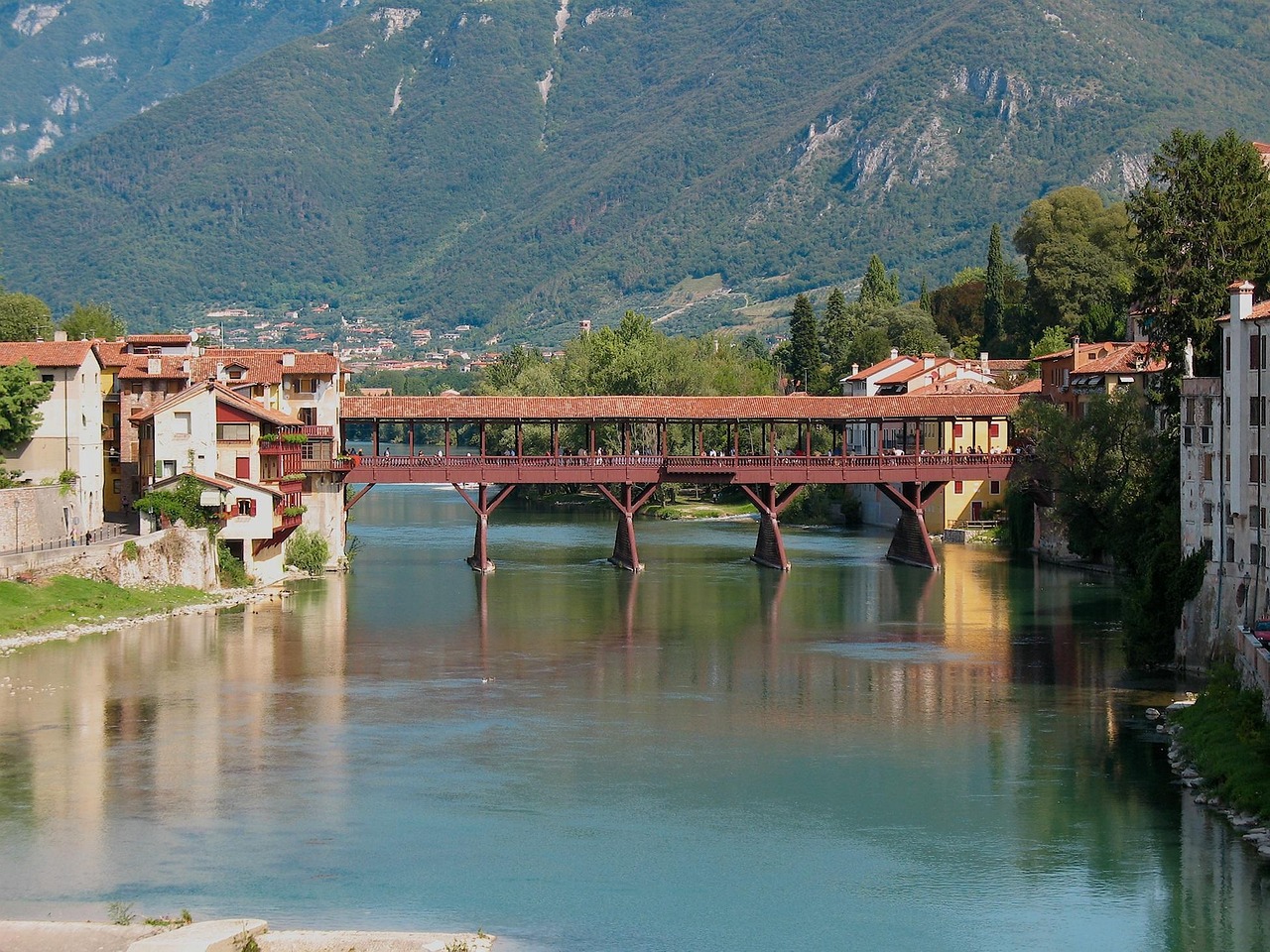
Travel time: ~45 minutes by regional train.
Charming town on the Brenta River, famous for its covered wooden bridge and grappa. I love coming here for a long lunch, river views, and a tasting at a historic grappa distillery.
Verona
Travel time: ~30–40 minutes by train.
Known for its Roman arena and Romeo-and-Juliet lore, Verona is a natural partner for Vicenza in a regional trip. Go early, hit the arena and main sights, then return to quieter Vicenza for the night.
Padua (Padova)
Travel time: ~30–40 minutes by train.
University city with the Scrovegni Chapel, Prato della Valle (one of Europe’s largest squares), and a lively student energy. Makes for a great full-day cultural outing.
Venice
Travel time: ~45–60 minutes by train.
You can absolutely day-trip to Venice from Vicenza, enjoying La Serenissima by day and returning to more affordable, calmer Vicenza by night. Trains run frequently; buy tickets in advance during peak season.
Asiago Plateau
Travel time: 1–1.5 hours by car or bus.
Mountainous plateau known for cheese, WWI history, and alpine landscapes. Wonderful in summer for hiking, in winter for snow activities.
Cultural Etiquette & Local Customs in Vicenza
Vicentini (people from Vicenza) are generally polite but reserved at first. A few etiquette pointers will help you fit in smoothly.
Greetings & Politeness
- Use “Buongiorno” (good day) until late afternoon, then “Buonasera” (good evening).
- “Per favore” (please) and “grazie” (thank you) go a long way.
- In shops, say hello when you enter and goodbye when you leave, even if you didn’t buy anything.
Café & Restaurant Customs
- Breakfast is light; locals often just have coffee and a pastry at the bar.
- Cappuccino is generally a morning drink; ordering it after lunch or dinner is not “wrong,” but marks you as a tourist.
- Tipping is modest: rounding up the bill or leaving 5–10% for very good service is sufficient.
- Table service is slower than in some countries; meals are meant to be enjoyed, not rushed.
Dress & Churches
- Casual but neat clothing is standard; sportswear is for exercise, not restaurant dinners.
- Cover shoulders and knees when entering churches, especially during services.
- Speak quietly and avoid phone calls inside churches and museums.
Quiet Hours & Apartments
- Residential buildings observe informal quiet hours, especially after 10–11 pm.
- Keep noise down in stairwells and courtyards at night; sound carries.
Practical Travel Advice for Vicenza (2026)
How to Get There
- By train: Vicenza is on the main line between Venice and Verona. Fast trains (Frecciarossa/Italo) and regional trains run frequently.
- By air: Nearest major airports: Venice (VCE), Verona (VRN), Bologna (BLQ). From each, continue by train or rental car.
- By car: The A4 autostrada passes near Vicenza. Be prepared for tolls and limited parking in the center.
Getting Around Vicenza
- On foot: The historic center is easily walkable; most sights are within 10–20 minutes of each other.
- Bus: Local buses connect outer neighborhoods and nearby hill areas. Tickets can often be bought at tabacchi or via apps (check current providers in 2026).
- Bike: Bike rentals and bike-share systems are slowly expanding. The terrain is mostly flat in the center, hillier towards Monte Berico.
- Car: Useful for countryside and day trips, but inconvenient in the centro storico. Park in designated lots outside the pedestrian zone.
SIM Cards & Connectivity
- Italy has multiple major carriers; in 2026, eSIM options are widely available from providers like TIM, Vodafone, and WindTre.
- EU visitors often roam at domestic rates; non-EU visitors may find tourist plans with generous data at airport kiosks or city shops.
- Wi-Fi is common in hotels, many cafés, and some public spaces, but mobile data is more reliable when out and about.
Money & Costs
- Currency: Euro.
- Cards are widely accepted, but keep some cash for small bars, markets, and older establishments.
- Vicenza is generally cheaper than Venice or Milan, especially for food and accommodation.
- City tourist taxes apply per person per night; they’re usually paid separately at your accommodation.
Visa Requirements & Entry
Vicenza is in Italy, part of the Schengen Area. Requirements can change, so always check official sources before traveling, but as a general 2026 overview:
- EU/EEA/Swiss citizens: Can enter with a valid ID card or passport and stay freely.
- Many non-EU nationals: May enter visa-free for short stays (typically up to 90 days in 180) depending on your nationality.
- Others: Need to apply for a Schengen visa in advance.
From 2025–2026, the EU is rolling out ETIAS authorization for visa-exempt travelers. Check if it applies to you and obtain it before departure.
Foreign Driver’s Licenses & Car Rental
- Many visitors can drive in Italy with their home license for a limited period, but some nationalities must carry an International Driving Permit (IDP) in addition to their license.
- Car rental companies will specify what they require; check before booking.
- Always carry license, IDP (if needed), passport, and rental documents in the car.
- Pay close attention to ZTL (limited traffic zones) in the center – fines are automatic for unauthorized entry.
Safety
- Vicenza is generally safe, including at night in the center.
- Normal urban precautions apply: keep an eye on bags in crowded areas, especially near the station and markets.
- Emergency number across Italy: 112.
Best Seasons for Activities
- Spring (April–June): Mild weather, blooming countryside, ideal for walking tours and day trips.
- Summer (July–August): Hot, with potential heatwaves; good for evening strolls, festivals, and mountain day trips to Asiago. Some locals go on holiday in August, but Vicenza doesn’t shut down completely.
- Autumn (September–October): Perhaps the best balance: harvest season in the hills, comfortable temperatures, good light for photography.
- Winter (November–March): Quieter, cooler, with foggy romantic days and Christmas markets. Good for museum-hopping and low hotel rates (outside major events).
Hidden Tips for Travelers
- Buy combo tickets: Museum passes and combined tickets (e.g., for Teatro Olimpico + other civic museums) save money if you’re doing multiple sights.
- Use lunch menus: Fixed-price lunch options can be excellent value and often feature local dishes.
- Ask locals: Vicentini might seem reserved, but if you ask politely for a gelato or restaurant recommendation, they often light up and share favorites.
- Check closing days: Many museums and restaurants close one day a week (often Monday), so plan accordingly.
- Pack layers: Even in warm seasons, churches and evenings can feel cool; in winter, fog can make temperatures feel colder than they are.
Summary & Final Recommendations – When to Visit Vicenza
After multiple trips over the years, Vicenza has become one of those cities I return to whenever I can. It’s the perfect size for a 3 day itinerary for Vicenza, rewarding enough for 4 days in Vicenza, and deeply satisfying if you build a whole 5 day itinerary for Vicenza around it with side trips and countryside excursions.
Best Time to Visit
- Overall best: Late April–June and September–October – ideal weather, lively but not too crowded, perfect for architecture walks and hill excursions.
- For festivals & events: Summer months for outdoor concerts and fairs, January/September for jewelry trade buzz (if that interests you).
- For budget & quiet: November–March (excluding Christmas/New Year). Cooler, but great museum and café weather.
Key Takeaways
- Stay in or near the centro storico if it’s your first time; you’ll walk to almost all must-see attractions in Vicenza.
- Don’t skip Teatro Olimpico, Basilica Palladiana, Monte Berico, and at least one Palladian villa.
- Plan at least one slow evening of aperitivo and a night walk through the lit-up piazzas.
- Use Vicenza as a base for day trips to Bassano del Grappa, Verona, Padua, or even Venice if you have more than 3 days.
- Embrace the local rhythm: coffee at the bar, long lunches, quiet afternoons, and sociable evenings.
If you approach Vicenza not only as a checklist of things to do in Vicenza, but as a place to inhabit for a few days – lingering in cafés, watching kids play in Parco Querini, chatting with a barista about the weather – you’ll understand why so many of us who “just passed through” once keep finding reasons to come back.