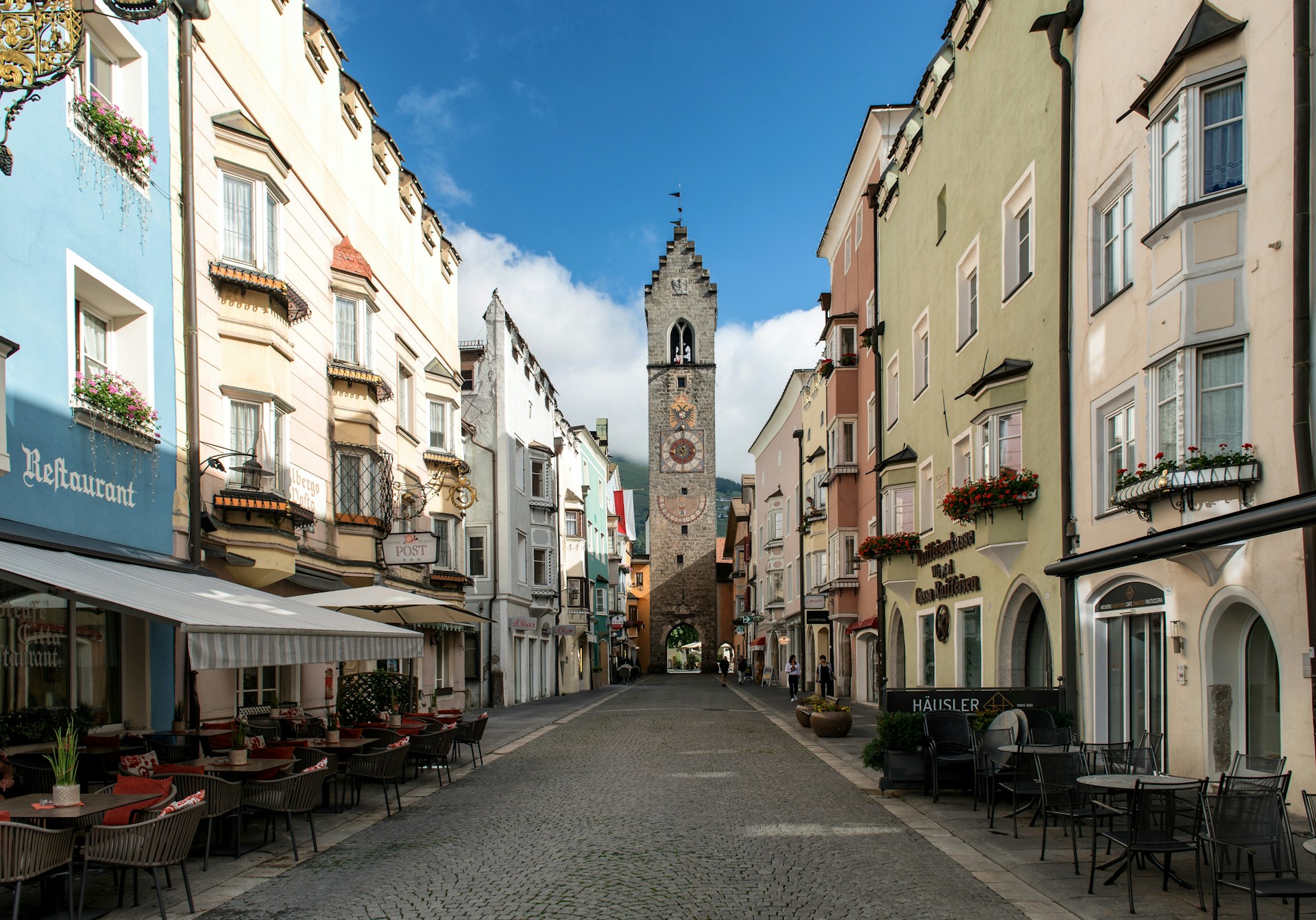
Why Visit Vipiteno?
Vipiteno (Sterzing in German) is one of those Alpine towns that feels almost too perfect to be real: pastel facades, onion-domed church towers, medieval gates, and snow-dusted peaks wrapping around the valley like a protective amphitheater. I’ve been coming back here since my first accidental stopover on a train ride to Innsbruck, and every time I arrive, stepping out of the station feels like walking into a storybook I already know by heart.
What makes Vipiteno special isn’t just its beauty. It’s the way Italian and Austrian cultures overlap in everyday life: espresso and Strudel share the same café counter, you’ll hear both German and Italian in the same sentence, and traditional Tyrolean dress appears casually at festivals in the middle of a very modern ski season.
It’s also a surprisingly flexible base: you can spend 3 days in Vipiteno strolling under frescoed arcades and sipping Aperol in the piazza, or stretch to a 4 or 5 day itinerary for Vipiteno and add high-mountain hikes, castle visits, and easy day trips to nearby valleys. Families, couples, and solo travelers all find their rhythm here.
This 2026 travel guide for Vipiteno is written the way I actually experience the town: slowly, on foot, with lots of food stops, curiosity about local customs, and a few wrong turns up cobbled backstreets that led to my favorite views. I’ll walk you through must-see attractions in Vipiteno, genuine hidden gems in Vipiteno, where to find the best local food in Vipiteno, and very honest travel tips for Vipiteno so you can build the 3, 4, or 5 day itinerary that suits you best.
Table of Contents
- Why Visit Vipiteno?
- Quick Overview & Orientation
- Suggested 3–5 Day Itineraries for Vipiteno
- Neighborhoods & Areas to Explore
- 20 Best Places to Visit in Vipiteno (In-Depth)
- Local Food in Vipiteno & Where to Eat
- Cultural Experiences & Local Customs
- Nightlife & Evening Entertainment
- What’s New in 2026–2027: Events & Festivals
- Day Trips from Vipiteno
- Practical Travel Advice for Vipiteno
- Summary & Best Time to Visit Vipiteno
Quick Overview & Orientation
Vipiteno sits in the northernmost part of Italy, in South Tyrol (Alto Adige), just south of the Austrian border. It’s part of the Isarco Valley, surrounded by the Stubai and Zillertal Alps. The town is small—around 7,000 residents—but it punches well above its weight in history, culture, and scenery.
- Languages: German (Sterzing) and Italian (Vipiteno) are both official. Most locals speak both, plus decent English in tourism.
- Best for: Mountain lovers, food travelers, families, couples, slow travelers, and anyone who wants a quieter alternative to the big Dolomite hotspots.
- Season highlights:
- Winter: skiing, Christmas markets, snowshoeing.
- Spring: wildflower hikes, quieter lanes, lower prices.
- Summer: long alpine hikes, bike rides, festivals.
- Autumn: harvest festivals, larch forests turning golden, Törggelen feasts.
- How long to stay: 3 days in Vipiteno is a great intro; 4–5 days in Vipiteno lets you really settle in and explore nearby valleys.
Suggested 3–5 Day Itineraries for Vipiteno
Below are flexible outlines that you can adapt. I’ll keep them concise here, then go deep into each attraction in the next section.
3 Day Itinerary for Vipiteno
Use this if you’re short on time but want the essential things to do in Vipiteno.
- Day 1: Historic center, Zwolferturn / Torre delle Dodici, main street arcades, Parish Church of Our Lady of the Marshes, evening aperitivo.
- Day 2: Rosskopf / Monte Cavallo cable car for views and easy hiking (or skiing in winter), mountain hut lunch, evening stroll through the Old Town.
- Day 3: Reifenstein Castle (Castel Tasso), Gilfenklamm Gorge if in season, or a relaxed bike ride along the valley.
4 Day Itinerary for Vipiteno
This adds a deeper cultural experience and more local food.
- Days 1–3: Follow the 3-day itinerary.
- Day 4: Visit City Museum and Multscher Museum, explore Neustadt side streets, and schedule a traditional Törggelen meal in autumn or a cheese tasting in a local dairy the rest of the year.
5 Day Itinerary for Vipiteno
My favorite way to do 5 days in Vipiteno: you get time for both mountains and slow city life, plus at least one day trip.
- Days 1–4: Follow the 4-day itinerary.
- Day 5: Day trip to Ridanna Mining Museum or Brenner Pass & Outlet, or a hiking day in the Ridanna Valley or Racines Valley.
Next, I’ll dive into the main attractions—about 20 of them—each with history, personal notes, and specific tips so you can mix and match them into your own itinerary.
Neighborhoods & Areas to Explore in Vipiteno
Vipiteno is compact, but it has distinct areas you’ll start to recognize by feel.
- Altstadt / Città Vecchia (Old Town) – The postcard-perfect core with narrow lanes, colorful medieval houses, and the main shopping street. This is where you’ll spend most of your time.
- Neustadt – Technically still central, but the “newer” part beyond the main gate. Slightly quieter, with some excellent bakeries and more local-focused shops.
- Maria Trens & Surrounding Villages – Small hamlets and chapel-topped hills, ideal for easy walks and an authentic village atmosphere.
- Rosskopf Base Area – Around the cable car station north of town. In winter, full of ski buses and rental shops; in summer, a base for hikers and mountain bikers.
- Industrial & Train Station Area – Less charming, but practical: supermarkets, gas stations, budget stays. Still only a 10–15 minute walk to the Old Town.
20 Best Places to Visit in Vipiteno (In-Depth)
Here’s an in-depth look at the must-see attractions in Vipiteno plus some truly local corners. I’ve organized them roughly from most iconic to more hidden gems.
1. Zwölferturm / Torre delle Dodici (Twelve O’Clock Tower)
The Zwölferturm is the unmistakable stone guardian of Vipiteno’s main street, rising above the pastel facades like a watchful eye. Built in the 15th century, it once separated the merchant quarter from the residential area; now it’s the symbolic heart of the city.
The first time I saw it, I had just stepped off a long train ride from Verona. My legs were stiff, my backpack too heavy, and I turned the corner from the station road into the Old Town—suddenly there it was, framed by mountains and window boxes overflowing with geraniums. It felt like the town was saying, “You’ve arrived.”
What to do:
- Walk under the arch and notice the coats of arms, fresco details, and the way the light shifts between one side of town and the other.
- Climb the tower if it’s open (check at the tourist office; hours vary by season) for a spectacular 360° view of the town roofs and surrounding peaks.
- Time your visit near noon when the bells ring; it’s loud but atmospheric, especially in winter when the sound echoes off the snow.
Best time to visit: Late afternoon in summer, when the façades glow warm and people are out for an aperitivo; or early evening in December when Christmas lights twinkle under the arch.
Practical tip: For photos, stand slightly uphill on the northern side of the main street; you’ll get the tower, a curve of pastel houses, and often a glimpse of the mountains behind.
2. Vipiteno Old Town & Main Street (Altstadt & Neustadt)
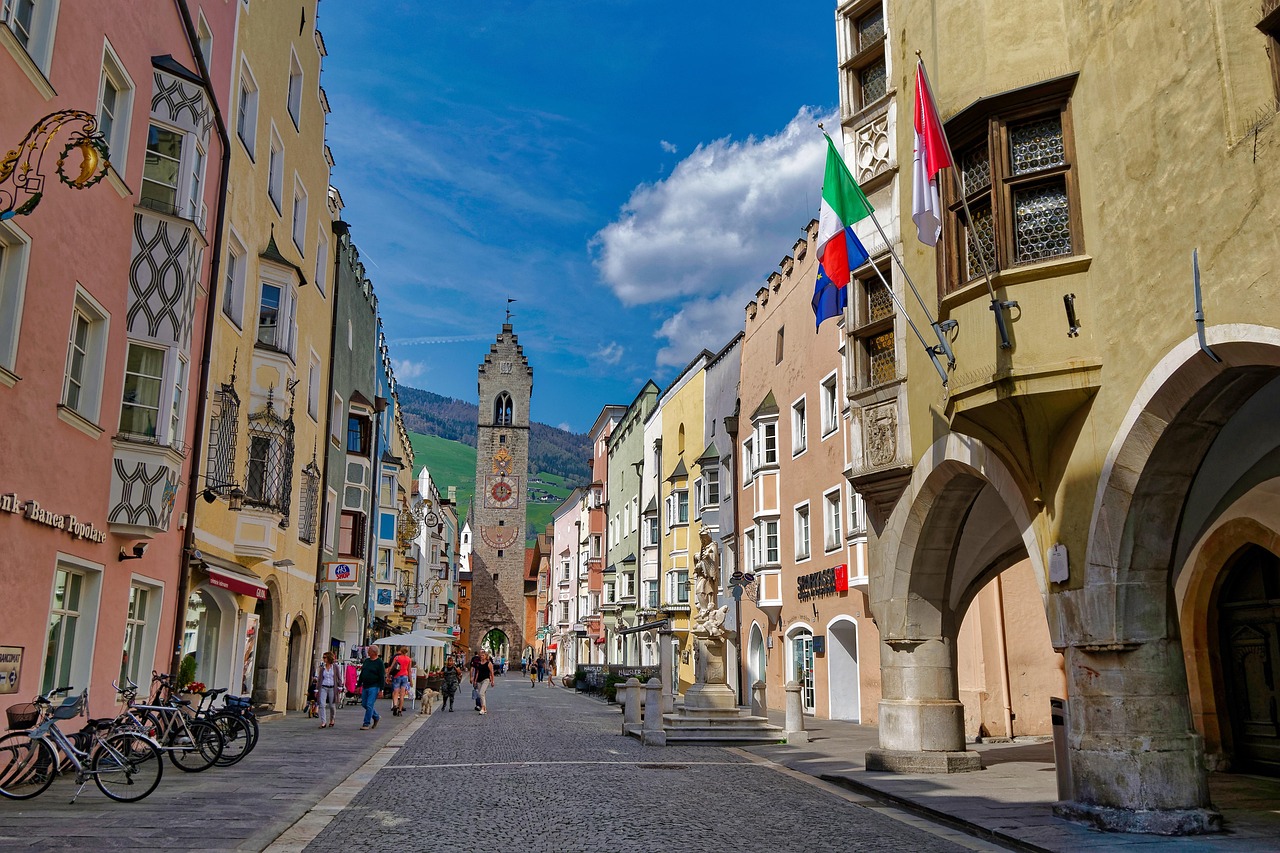
The Old Town is really a single, gently curved main street split into Altstadt and Neustadt, lined with colorful gabled houses, arcades, and wrought-iron signs. It’s where Vipiteno’s daily life unfolds: kids biking through the piazza, older couples chatting in German on benches, teenagers licking gelato in winter coats.
I like to start at one end and walk slowly, ducking into arcades whenever something catches my eye. One rainy April afternoon, I spent two hours doing just that and somehow ended up having a long conversation in a tiny bookstore about local legends and the town’s mining past.
Highlights:
- Pastel facades with stepped gables and painted details—look up, not just into shop windows.
- Arcades (Lauben) with small boutiques selling local products: speck, cheeses, wool, and handmade crafts.
- Public fountains where locals still fill water bottles; the water is cold, clean, and tastes like glacier melt.
Family-friendly: The street is mostly pedestrianized; kids can run fairly safely, and there are frequent benches and gelato stops.
Romantic angle: Evening strolls after dinner, when lights reflect off cobblestones and the town quiets down, are kind of ridiculously charming.
Money-saving tip: For budget meals, look for bakeries or small snack bars just off the main street rather than right on it; prices drop noticeably one block away.
3. Parish Church of Our Lady of the Marshes (Pfarrkirche Unsere Liebe Frau im Moos)
Sitting slightly apart from the main hustle, this Gothic church feels like stepping into a quiet pocket of history. The name “Our Lady of the Marshes” comes from the swampy ground on which it was built, long since tamed.
On a chilly November morning, I slipped inside during a light drizzle. The temperature dropped markedly, and the scent of stone, wax, and old wood wrapped around me. A handful of locals were scattered in the pews, murmuring prayers; the stained glass filtered the gray light into soft colors.
What to look for:
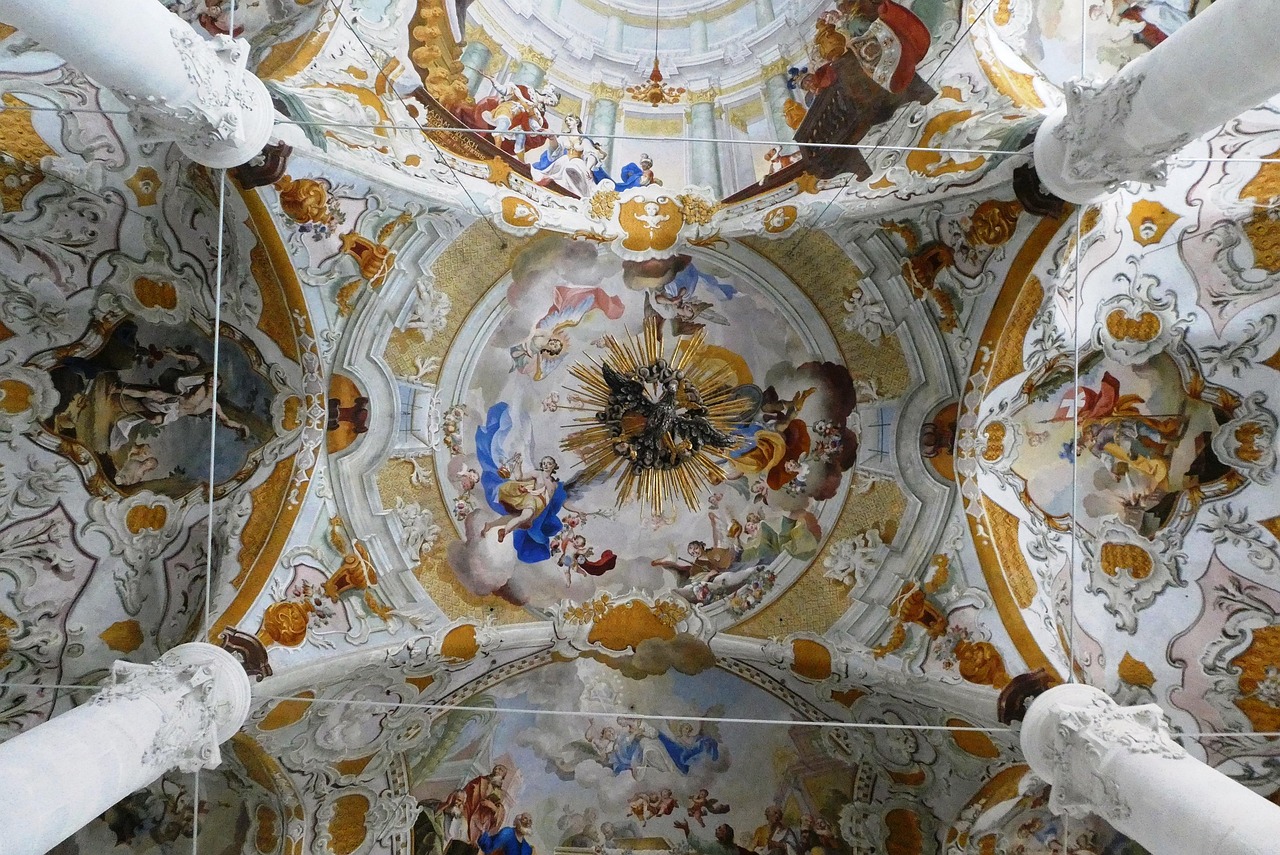
- Beautiful Gothic vaulting and frescoes—take time to let your eyes adjust to the dim light.
- The high altar and side chapels, each telling its own story in carved detail.
- The cemetery outside with iron crosses and flower-laden graves, which says more about local customs and family ties than any guidebook could.
Etiquette: Dress modestly (shoulders covered), keep voices low, and avoid walking near the altar during services. Photography is tolerated but be discreet and skip it during Mass.
Tip: Combine a visit here with a walk along the nearby residential streets to see everyday life—kids heading to school, locals tending gardens.
4. Rosskopf / Monte Cavallo
Rosskopf (Monte Cavallo in Italian) is Vipiteno’s “house mountain”—a quick cable car ride takes you from town to alpine meadows and panoramic trails. In my opinion, Rosskopf is what turns a simple city break into a full Alpine escape.
The first time I went up was in early June. Patches of snow still clung to the north-facing slopes, but the meadows were already exploding with tiny alpine flowers. I followed a gentle trail that curved above the town, and every time I glanced back, the view of Vipiteno’s colorful roofs got smaller and prettier.
Summer activities:
- Easy panoramic hikes suitable for families (there’s even a themed trail for kids with playful installations).
- Mountain hut lunches: Kaiserschmarrn (shredded pancake), Knödel (dumplings), and local beer on sun terraces.
- Paragliding for the truly adventurous (book in advance with local operators).
Winter activities:
- Skiing and snowboarding on intermediate-friendly slopes.
- One of the longest toboggan runs in Italy—7+ km of pure winter joy, accessible by cable car.
- Snowshoe walks with views of the valley (guided tours available).
Practical tips:
- The cable car station is a short walk north from the Old Town; follow signs for “Rosskopf/Monte Cavallo”.
- Buy a return ticket, or a day pass if you plan multiple rides (tobogganing).
- Weather changes fast—bring a light jacket even in summer.
Family-friendly: Very. The trails near the top station are wide and not too steep; there are playground elements and cows to greet (but don’t feed them).
5. Reifenstein Castle (Castel Tasso)
Perched on a rocky hill south of Vipiteno, Reifenstein Castle is one of the best-preserved medieval castles in the region. From a distance, it looks like a film set; up close, it smells like old stone, wood smoke, and stories.
I visited on a crisp October afternoon. Low clouds clung to the mountains, and the castle half-vanished into the mist as I climbed the final path. You can only enter on a guided tour (usually in German/Italian, sometimes English), which adds to the feeling of stepping behind the curtain.
What you’ll see:
- Medieval kitchens, armory, and living quarters.
- A chapel with faded but still moving frescoes.
- Views across the valley from narrow arrow slits and battlements.
Getting there: It’s about a 5–10 minute drive or bus ride south of Vipiteno, then a short uphill walk. In warmer months, I often bike there along the valley path and leave my bike at the bottom.
Tips:
- Check opening times; it’s usually closed in deep winter and has limited hours in shoulder seasons.
- Bring cash for tickets; sometimes card machines are finicky.
- If you’re sensitive to cold, dress warmly—the stone interiors stay chilly even in summer.
Romantic note: Sunset light from the hill near the castle, looking back toward Vipiteno, is one of my favorite views in the area.
6. City Museum & Multscher Museum
This small but rich museum complex is where Vipiteno reveals its layers: medieval art, mining wealth, and everyday life. It’s a great option for a rainy day or a quiet afternoon when you want something more introspective than another hike.
The star here is the Multscher Altar, a late Gothic masterpiece by Hans Multscher. The first time I saw it, I expected “just another medieval altar.” Instead, I found myself drawn into the expressive faces and intricate carving, realizing how long this town has been plugged into wider European currents of art and trade.
What to expect:
- Wooden altarpieces and religious art, contextualized in both Italian and German.
- Exhibits about Vipiteno’s flourishing as a mining town and trading hub.
- Rotating small exhibitions on local culture and crafts.
Good to know: It’s compact; you can see everything in about an hour, but I usually linger for 90 minutes with all the labels and a short break on a bench to absorb it.
Money-saving tip: Ask about combined tickets or museum cards if you’re also visiting other regional museums.
7. Gilfenklamm Gorge (Cascate di Stanghe)
Gilfenklamm, a gorge carved through white marble, is one of the most dramatic natural sights near Vipiteno. Wooden walkways and bridges snake along roaring waterfalls and polished rock walls that seem to glow even on gray days.
I went one hot August afternoon when the valley felt like an oven. The moment I stepped into the gorge, the temperature dropped, and the sound of water drowned out every other thought. Mist collected on my eyelashes; I remember laughing out loud at how immediate the contrast was.
Trail details:
- The walk takes about 1.5–2 hours round trip, depending on stops.
- Mostly wooden walkways and stairs, with some elevation but manageable for reasonably fit visitors.
- Best from late spring to autumn; often closed in winter and early spring due to ice and safety.
Getting there: It’s near Stanghe (Racines), a short drive or bus ride from Vipiteno. I usually combine it with a visit to the Racines Valley.
Tips:
- Wear good shoes with grip; the walkways can be wet.
- Bring a light waterproof layer; you’ll catch spray from the falls.
- Go early or late in the day in high season to avoid crowds.
Family note: Kids tend to love it, but keep a close eye—there are railings, yet the drops and noise can be overwhelming for very young children.
8. Ridanna Valley (Val Ridanna)
Ridanna Valley stretches west of Vipiteno into a beautiful side valley framed by peaks and dotted with farms. It’s less touristy than some Dolomite hotspots but just as striking in its own, gentler way.
One late May, after a stormy week, I rented an e-bike and followed the valley up, passing barns with drying hay and fields already bright green. At one point, a local farmer waved me over and insisted I try some fresh buttermilk—tart, cold, and perfect after the climb.
What to do:
- Easy valley walks along the river, suitable for strollers.
- Longer hikes up to alpine huts and pastures.
- Picnic stops by the water with views of snow-streaked summits.
Best season: Late spring to early autumn. Autumn, especially, turns the larch trees golden.
Tip: Bring a small picnic from Vipiteno (bread, cheese, speck) and find a quiet bench or meadow; just follow Leave No Trace principles and pack out all trash.
9. Ridanna Mining Museum (BergbauWelt Ridnaun)
This open-air and underground museum is one of the most fascinating cultural experiences in the region. For centuries, miners extracted silver, lead, and zinc from the mountains here, and the museum brings that world vividly to life.
I visited on a gray September day when the clouds hung low. The combination of dramatic landscape, industrial relics, and stories of harsh working conditions made for a powerful experience.
What to expect:
- Guided tours through historical processing facilities and, on some tours, into the mine tunnels.
- Exhibits on miners’ lives: tools, clothing, and personal stories.
- Outdoor machinery and rail tracks that kids can clamber around (within reason).
Family-friendly: Yes, especially for older kids fascinated by machinery and history. Some underground tours have age restrictions; check ahead.
Practical tips:
- Wear warm layers; it’s cold in the tunnels even in summer.
- Book tours in advance in high season and confirm language options.
- Combine with a walk or short hike in the Ridanna Valley if you have time.
10. Racines Valley (Val Racines / Ratschings)
Racines is another side valley, perhaps slightly more developed for tourism than Ridanna, but still far from crowded. In winter, it’s a ski area; in summer, it’s a network of trails, huts, and forest roads.
On a bright July day, I took the Racines cable car up and followed a loop trail that visited several mountain huts. Each hut felt like its own little world: some had loud groups of hikers, others were quiet, with just a couple of locals playing cards.
Activities:
- Summer hiking with options for all levels.
- Winter skiing and snowboarding, less hectic than large resorts.
- Connecting to Gilfenklamm (Stanghe) for a full day of nature.
Tip: If you’re choosing between Rosskopf and Racines for a single summer day, Rosskopf is more convenient from Vipiteno and has better town views; Racines offers a slightly wilder feel and more hut-to-hut options.
11. Maria Trens Pilgrimage Church
South of Vipiteno lies the village of Maria Trens, known for its pilgrimage church dedicated to the Virgin Mary. The church sits on a small rise, overlooking fields and farmhouses, and has been a spiritual destination for centuries.
I came here once in late afternoon, when the bells were ringing and people were slowly filtering in for a special service. Even as an outsider, I felt the quiet gravity of the place.
Why go:
- To see a deeply rooted local religious tradition in a non-touristy setting.
- For the peaceful rural surroundings—great for a gentle walk.
- To admire the baroque interior and devotional artworks.
Etiquette: This is a living place of worship. Keep voices low, dress modestly, and avoid intrusive photography, especially of people.
12. Vipiteno City Parks & Riverside Paths
Vipiteno isn’t just old stones and shops. Slip a block or two off the main street, and you’ll find small parks, riverside paths, and quiet benches where locals walk dogs and grandparents push strollers.
My morning ritual when I stay longer than a couple of days is to grab a coffee and take a short loop along the river before the streets fill up. In winter, the breath clouds hang in the air; in summer, the water glints almost painfully bright.
What to look for:
- Simple playgrounds—handy if you’re traveling with kids.
- Views back toward the Old Town and Rosskopf from the riverside.
- Locals out jogging or walking; it’s a great place to feel the town’s everyday rhythm.
Tip: Use these paths as “shortcuts” between attractions instead of the main roads; they’re calmer and prettier.
13. Neustadt Side Streets & Hidden Courtyards
While most visitors stick to the main arcaded street, the real charm often hides one or two turns away: narrow alleys between houses, inner courtyards with potted geraniums, and tiny shrines tucked into walls.
On one of my early visits, I got “lost” on purpose—turning down any lane that looked inviting. I ended up in a small courtyard where an elderly woman was hanging laundry under grapevines. We exchanged a few words in broken German and Italian, and she pointed me to a bakery I still return to years later.
How to explore:
- From the main street, pick any narrow passageway that looks public and follow it until it leads you back out.
- Look for architectural details: wooden balconies, carved doorways, and tiny religious niches.
- Respect privacy—if something looks like a private yard, admire from a distance.
Photographers: This is where you’ll find more unique angles and fewer people in your shots.
14. Brenner Pass & Outlet Center
A short train ride north takes you to the Brenner Pass, the historical border crossing between Italy and Austria. Today, it’s a mix of mountain scenery and a fairly modern outlet center.
On a rainy day when hiking wasn’t appealing, I hopped on the train and spent a few hours browsing shops, sipping coffee, and watching the mix of Italian and Austrian travelers flow past. It’s not the most “authentic” outing, but it can be practical if you need gear or just want a change of scene.
Why go:
- Easy half-day trip accessible by frequent trains.
- Outlet shopping for outdoor gear, clothing, and shoes.
- A sense of the historic north–south route over the Alps.
Tip: Combine with a quick coffee or lunch in the Austrian town of Gries am Brenner if you want a taste of the other side of the border.
15. Traditional Alpine Huts (Malga / Alm) Around Vipiteno
Scattered across the slopes above Vipiteno are dozens of alpine huts—simple wooden buildings serving hearty food to hikers and skiers. Visiting at least one is essential for a complete Vipiteno experience.
One of my most memorable afternoons was at a hut above Vipiteno in September. I arrived sweaty and out of breath, ordered Knödel soup and a Radler, and ended up sharing a table with a family celebrating a birthday. They insisted I try their homemade Schnaps; the hike down was considerably more cheerful.
What to order:
- Speckknödel (bacon dumplings) in broth.
- Kaiserschmarrn with powdered sugar and jam.
- Local beer or herbal teas.
Tips:
- Many huts are cash-only; bring small bills.
- Opening times are seasonal; always check before planning a long hike to one specific hut.
- On sunny weekends, go early to secure a terrace seat.
16. Vipiteno Christmas Market (Mercatino di Natale / Weihnachtsmarkt)
From late November through early January, Vipiteno transforms into a miniature winter fairy tale. Wooden stalls cluster around the main square and Zwölferturm, selling handmade ornaments, wool goods, and local delicacies.
I’ve visited the Christmas market twice, and both times I felt like my inner child was being gently spoiled: spiced wine warming my hands, the smell of roasted chestnuts in the air, and soft music echoing between the buildings.
What to try:
- Glühwein (vin brulé) or Kinderpunsch (non-alcoholic punch).
- Zelten (fruit bread) and Strudel.
- Local cheeses and speck straight from producers.
Family angle: Kids love the lights and occasional small rides or activities; bundle them up well as evenings get very cold.
Tip: Prices at markets can be higher; treat it as a festive experience rather than your main shopping spot if you’re on a budget.
17. Valley Cycling Paths (Pista Ciclabile Isarco)
The valley that Vipiteno sits in is crisscrossed with well-maintained cycling paths following rivers and railway lines. They’re mostly flat, making them ideal for casual cyclists and families.
One sunny June morning, I rented a simple city bike and pedaled south, passing orchards, small chapels, and occasional cows watching me with disinterest. It was one of the most relaxing days I’ve had in the area—no big peaks to conquer, just smooth pedaling and lots of fresh air.
Details:
- Rent bikes in Vipiteno (including e-bikes if you want extra help).
- Signage is good; follow routes toward neighboring villages.
- Picnic tables and rest spots appear regularly along the way.
Tip: In summer, go early or late to avoid midday heat in the exposed sections.
18. Local Farms & Agriturismi
Beyond the town, the slopes are dotted with family-run farms that often double as agriturismi (farm stays) or direct sellers of cheese, milk, and speck. Spending a night or even just an afternoon here gives you a deeper sense of rural South Tyrol.
I once stayed at a farm above Vipiteno in early spring. Each morning, the cowbells provided the alarm clock, and breakfast featured milk, butter, and yogurt all made a few meters away. Watching fog lift off the valley with a mug of hot coffee in hand is one of those quiet travel moments I still think about.
Why visit:
- To taste truly local dairy and cured meats.
- To see traditional barns and architecture up close.
- For kids: to meet cows, goats, and chickens in a safe environment.
Tip: Ask at the tourist office for farms that welcome visitors or offer tastings; not all are set up for drop-ins.
19. Spa & Wellness in and Around Vipiteno
Many hotels in Vipiteno and the surrounding area have small but lovely wellness areas: saunas, steam rooms, and sometimes indoor pools. After a long hike or a day on the slopes, nothing feels better than warming up in a sauna with mountain views.
My personal ritual is to schedule one slow wellness afternoon mid-trip, especially in winter. I bring a book, alternate between sauna and relaxation room, and emerge feeling like I’ve had a full reset.
Good to know:
- Sauna culture here leans more Austrian/German; fully nude is common in saunas, and swimsuits are often not allowed inside the sauna zone. Check the rules at your hotel.
- Many wellness areas are adults-only or have quiet hours; families should ask about child-friendly times.
- Non-hotel spas exist in the wider region; your accommodation can recommend day passes.
20. Viewpoints Above Vipiteno (Short Hikes & Sunset Spots)
Some of the most beautiful moments in Vipiteno come when you leave the center and climb just a little—up to a church on a hill, a farm road, or a bench facing the town.
One evening in August, I walked a short trail that started behind my guesthouse and crept up the hillside. After twenty minutes, I found a bench with an unobstructed view of the town and Rosskopf. I sat there as the sky turned pink, the Zwölferturm lights flicked on, and the sounds of the town softened under the hum of crickets.
How to find them:
- Ask your host or hotel for a “short walk with a view”—they all have favorites.
- Look for small wayside chapels or crosses on hills; often there’s a path leading up.
- Go early enough so you’re not descending in full darkness; bring a small flashlight or phone light just in case.
Romantic: These spots are perfect for a low-key, intimate evening without spending a cent.
Local Food in Vipiteno & Where to Eat
Food in Vipiteno reflects its borderland identity: hearty Tyrolean dishes meet Italian classics, all grounded in local ingredients. Many menus are bilingual; you’ll see Knödel next to pasta, Strudel next to tiramisù.
Must-Try Dishes & Drinks
- Speck: Smoked, cured pork, sliced thin. Try it on a Speckbrett (wooden board) with cheese and bread.
- Knödel: Bread dumplings, often with speck or cheese, served in broth or with sauerkraut.
- Schlutzkrapfen: Half-moon pasta pockets filled with spinach and ricotta, topped with brown butter and chives.
- Strudel: Apple or curd versions, often with warm vanilla sauce.
- Kaiserschmarrn: Shredded pancake with powdered sugar and jam; a hut favorite.
- Local cheeses: From mild to sharply alpine; ask for recommendations.
- Beer & Wine: Local lagers and wheat beers, plus crisp white wines from South Tyrol (Kerner, Gewürztraminer, Pinot Grigio).
Where I Love to Eat (Representative Examples)
I won’t list every restaurant in town, but these types of places are what I seek out whenever I’m in Vipiteno:
- Traditional Gasthaus in the Old Town: Cozy wooden interiors, staff in dirndl and lederhosen, and menus full of Knödel, goulash, and local game in season. I still remember a venison stew I had one snowy January evening—rich, tender, and perfectly paired with a local red wine.
- Mountain Huts on Rosskopf and Racines: Honestly, some of my favorite meals are up here. Simple pasta with mushrooms, a good beer, and that view.
- Family-Run Pizzeria on a Side Street: Away from the main drag, you’ll find pizzerias that cater more to locals. Portions are generous and prices friendlier.
- Bakeries & Konditorei: For breakfast or a budget lunch, grab fresh bread, pastries, and coffee. One bakery in Neustadt makes a nut-filled pastry that I dream about when I’m far away.
Saving Money on Food
- Lunch deals: Many places offer affordable daily specials at lunch—look for “Tagesgericht” or “piatto del giorno”.
- Self-catering: Supermarkets near the station and in the outskirts are well-stocked; even with a simple hotel room, you can picnic easily.
- Avoiding main-street markups: Prices drop the moment you move off the central street; wander into side lanes for better value.
Cultural Experiences & Local Customs in Vipiteno
Vipiteno sits in South Tyrol, a region with a complex history and a distinct identity. Understanding a few local customs will make your stay smoother and more meaningful.
Language & Identity
- Most locals are native German speakers, but Italian is also widely spoken. Many switch effortlessly between the two.
- Using a few words of German (Guten Tag, Danke, Bitte) or Italian (Buongiorno, Grazie, Per favore) is always appreciated.
- Place names often appear in both languages: Sterzing/Vipiteno, Ratschings/Racines, Ridnaun/Ridanna.
Mealtime Etiquette
- Dinner is a bit earlier than in southern Italy; 7–8 pm is normal.
- It’s polite to say “Mahlzeit” (German) or “Buon appetito” (Italian) when food arrives, especially in group settings.
- Tip by rounding up the bill or adding 5–10% for good service, handing it directly to the server.
Religious & Local Traditions
- Churches are living places of worship; dress modestly and be quiet inside.
- Festivals often feature traditional dress, brass bands, and processions—join respectfully, don’t block the procession for photos.
- On Sundays, many shops close or have limited hours; plan accordingly.
Outdoor Etiquette
- Stick to marked trails; many meadows are private property even if they look open.
- Always close gates behind you when crossing pastureland.
- Greet fellow hikers with a simple “Grüß Gott” or “Hallo” as you pass; it’s customary here.
Nightlife & Evening Entertainment in Vipiteno
Vipiteno is not a party town, and that’s part of its charm. Evenings tend to be relaxed: aperitivo on terraces in summer, cozy bars and wine taverns in winter.
What Nights Look Like Here
- Aperitivo Hour: From around 5–7 pm, locals gather in cafés for an Aperol Spritz, Hugo (an elderflower-based spritz), or beer, often with small snacks.
- Wine Bars & Pubs: Several spots in the Old Town offer local wines on tap, craft beers, and small plates.
- Hotel Bars: Many have surprisingly atmospheric lounges; you don’t always need to be a guest to enjoy a drink (ask politely).
Family & Quiet Options
- Evening strolls in the Old Town are safe and pleasant; grab a gelato or hot chocolate depending on the season.
- Occasional concerts or cultural events happen in town—check posters or ask at the tourist office.
For Night Owls
There are a couple of bars that stay open late on weekends, attracting younger locals. Don’t expect clubbing, but you can certainly find a lively drink and music if you look around the main street and ask locals for current favorites.
What’s New in 2026–2027: Events & Festivals
Vipiteno’s calendar shifts slightly each year, but there are recurring themes you can count on, plus some 2026–2027 highlights to keep an eye on.
Recurring Annual Events
- Vipiteno Christmas Market: Late November – early January, with themed weekends and special concerts.
- Summer Music Evenings: Live music in the main square on select summer nights (check local listings).
- Autumn Törggelen Season: Roughly October–November, featuring chestnuts, new wine, and special menus in local taverns.
- Sports Events: Occasional ski races or mountain bike events on Rosskopf and in nearby valleys.
2026–2027 Notes
As of 2026, Vipiteno and the surrounding region are investing in sustainable tourism and trail maintenance. You’ll see improved signage on hiking and cycling routes and more emphasis on eco-friendly options like e-bike rentals and public transport connections to nearby valleys.
For exact festival dates and special one-off events (concerts, themed markets, sports competitions), check the official Vipiteno/Sterzing tourism website or stop by the tourist office on arrival; they always have up-to-date multilingual brochures.
Day Trips from Vipiteno
If you’re staying for a 4 or 5 day itinerary for Vipiteno, adding at least one day trip broadens your sense of the region.
1. Bressanone (Brixen)
A charming town about 30–40 minutes by train south of Vipiteno, with a beautiful cathedral, riverside promenades, and a more Italian-feeling historic center. Great for a change of pace, museum visits, and café hopping.
2. Innsbruck (Austria)
About 1 hour by train north over the Brenner Pass. Innsbruck offers a grander blend of imperial architecture, museums, and alpine vibes. Ideal if you want a “city day” with more shopping and cultural options.
3. Dolomite Excursions
While Vipiteno isn’t right in the classic Dolomite core, you can reach some Dolomite areas by car in 1–1.5 hours. This works best if you have a rental car and an early start; plan your route carefully and check parking options.
4. Nearby Valleys Deep Dive
Instead of a distant trip, you might simply choose to spend a full day in Ridanna or Racines, hiking to more remote huts and really soaking in the alpine atmosphere away from any crowds.
Practical Travel Advice for Vipiteno (2026)
Getting To & Around Vipiteno
- By Train: Regional trains connect Vipiteno (Sterzing) with Bressanone/Brixen and Brenner/Brennero. From there, you can connect to major cities like Bolzano, Verona, Innsbruck, and Munich.
- By Car: Vipiteno lies just off the A22 motorway. Parking is available on the outskirts and in designated lots; avoid driving into the very center unless your hotel provides a spot.
- In Town: The center is walkable. For valleys and ski areas, use local buses or drive.
Public Transport & Tickets
- South Tyrol has an integrated bus and train system; look into regional cards that cover multiple days if you plan to move around a lot.
- Bus schedules can thin out in the evenings; always check the last return time from valleys like Racines or Ridanna.
Car Rental & Driving
- International visitors can usually drive with a valid license; an International Driving Permit is recommended if your license is not in Latin script.
- Winter tires are mandatory in cold months; snow chains may be required for certain roads—ask your rental company.
- Drive cautiously on mountain roads; locals know every curve, you don’t.
SIM Cards & Connectivity
- EU travelers can usually roam at domestic rates.
- Non-EU visitors can buy prepaid SIMs from Italian providers in larger nearby towns (Bressanone, Bolzano) or at airports before arriving; Vipiteno itself may have limited telecom shops.
- Wi-Fi is standard in hotels and many cafés.
Money & Costs
- Currency is the Euro (€).
- Cards are widely accepted, but small mountain huts and some small shops prefer cash.
- Vipiteno is mid-range in price: cheaper than big cities and major Dolomite resorts, but not a rock-bottom budget destination.
Visa Requirements
- Vipiteno is in Italy and the Schengen Area. Visa rules follow Schengen regulations.
- EU/EEA/Swiss citizens can enter with ID; many other nationalities can visit visa-free for short stays (typically up to 90 days) but must check current regulations.
- Always verify requirements with official sources before you travel, as rules can change.
Best Seasons for Which Activities
- Winter (Dec–Mar): Skiing on Rosskopf and Racines, tobogganing, Christmas market (late Nov–early Jan), snowshoeing. Cold but atmospheric.
- Spring (Apr–May): Quieter, some higher trails still snow-covered; good for budget stays, city wandering, and lower-level hikes.
- Summer (Jun–Sep): Hiking, biking, mountain huts, festivals, long days. Most popular season; book ahead.
- Autumn (Oct–Nov): Törggelen feasts, golden larch forests, crisp air, fewer crowds; some high-altitude services start closing by late October.
Hidden Tips for Travelers
- Grocery Store Hours: Plan your shopping before evening; Sunday openings are limited or non-existent.
- Water: Tap water is safe to drink; refill bottles from public fountains marked as potable.
- Quiet Hours: Respect local rest times, especially in residential areas at night; noise carries in the narrow streets.
- Weather Layers: Mountain weather changes fast; even in summer, carry a light jacket and, if hiking, a rain layer.
- Ask Locals: People are generally friendly and happy to recommend a favorite hut, path, or restaurant if you ask politely.
Summary & Final Recommendations
Vipiteno is a town that rewards both first impressions and repeat visits. In just 3 days in Vipiteno, you can wander its Old Town, ride up Rosskopf, and explore a nearby castle or gorge. With 4 or 5 days in Vipiteno, you can slow down: linger over long hut lunches, bike through side valleys, and watch the lights flicker on over the rooftops from a hillside bench.
For mountain lovers, food travelers, couples searching for a romantic but understated base, and families wanting manageable adventures, Vipiteno is a near-ideal blend of old-world charm and accessible nature.
- Best time to visit:
- For hiking, biking, and alpine huts: June–September.
- For skiing and Christmas markets: December–March (with the market peaking late Nov–early Jan).
- For quieter, cheaper stays with local color and Törggelen feasts: October–early November.
- Ideal stay: Plan at least a 3 day itinerary for Vipiteno, and if you can, stretch to a 4 or 5 day itinerary for Vipiteno to fully enjoy both town and mountains.
Each time I leave Vipiteno, I find myself already plotting my return: a new trail to try, a hut I haven’t visited yet, or simply another slow afternoon in the main street watching life drift by under the watch of the Zwölferturm. I hope this guide helps you craft your own version of that story.