Why Visit Cádiz? What Makes This Atlantic Jewel So Special
I’ve lost count of how many times I’ve wandered the sun‑washed streets of Cádiz. Every visit – whether a quick 3 day itinerary for Cádiz or a lazy 5 days in Cádiz – feels like returning to a place that somehow remembers you. Locals greet you with an easy “¡Hola, mi arma!” (an affectionate Andalusian expression), kids play in tiny plazas until midnight, and the Atlantic light bounces off golden stone in a way that makes the whole city look like a movie set.
Cádiz is one of the oldest continuously inhabited cities in Western Europe – more than 3,000 years of history layered into a compact peninsula that you can walk across in about 20 minutes. Think crumbling bastions facing the ocean, Belle Époque facades, palm‑lined plazas, and beaches that melt into spectacular sunsets.
What I love most is how manageable Cádiz is. It’s the perfect city if you want:
- A walkable historic center where the best places to visit in Cádiz are all within strolling distance.
- Authentic local food without the sticker shock of bigger Spanish cities – tapas bars where you can still eat well on a budget.
- Real life, not just tourism – neighbors shouting across balconies, grandparents in the plazas, street musicians by the sea.
- Easy day trips to white villages, sherry bodegas, and wild Atlantic beaches.
Whether you’re planning a 3 day itinerary for Cádiz focused on must‑see attractions, a slower 4 days in Cádiz with beach time, or a deeper 5 day itinerary for Cádiz packed with cultural experiences, this travel guide for Cádiz is designed like we’re planning the trip together – with my personal stories from many visits woven in.
Table of Contents
- Why Visit Cádiz in 2026?
- Overview of Cádiz & Its Neighborhoods
- 20+ Must‑See Attractions & Hidden Gems in Cádiz
- 3, 4 & 5 Day Itineraries for Cádiz (With Personal Stories)
- Local Food in Cádiz: What & Where to Eat
- Nightlife, Entertainment & Cultural Experiences in Cádiz
- Major Events & Festivals in 2026–2027
- Best Day Trips from Cádiz
- Cultural Etiquette & Local Customs in Cádiz
- Practical Travel Tips for Cádiz (Money, SIM, Transport, Visas)
- When to Visit Cádiz & Final Recommendations
Getting Oriented: The Neighborhoods of Cádiz
Cádiz city is essentially a long, thin peninsula attached to the mainland by a narrow isthmus. The part you’ll fall in love with – and where most of this travel guide for Cádiz focuses – is the Casco Antiguo, the old town.
Casco Antiguo (Old Town)
This is where you’ll spend most of your 3 days in Cádiz or more. A maze of narrow streets, tiny plazas, and bar‑lined corners. It’s divided into mini‑barrios:
- El Pópulo – The medieval heart, near the cathedral; atmospheric, slightly gritty, very photogenic.
- La Viña – West side, close to La Caleta beach; lively, local, home of Carnival spirit and endless tapas.
- El Mentidero – Elegant and residential, with pretty plazas and theaters.
- Barrio del Carmen / Santa María – Traditionally working‑class, full of flamenco heritage.
New Cádiz (Puerta de Tierra to Bahía Blanca)
Cross the historic Puerta de Tierra and you’re in the newer part of town: wider avenues, shopping streets, and residential blocks. This is where you’ll find more modern hotels and easier parking.
La Zona de la Playa (Victoria & Cortadura)
Stretching along the isthmus are long, sandy beaches backed by avenues of bars and apartments. Playa de la Victoria is the most famous – great if you want a beachy base and don’t mind a 20–30 minute walk or short bus ride into the old town.
20+ Must‑See Attractions & Hidden Gems in Cádiz
Below are the must‑see attractions in Cádiz that I return to again and again. I’ve included a mix of icons and quiet corners, with history, stories, and tips from my own visits.
1. Cádiz Cathedral & Torre de Poniente

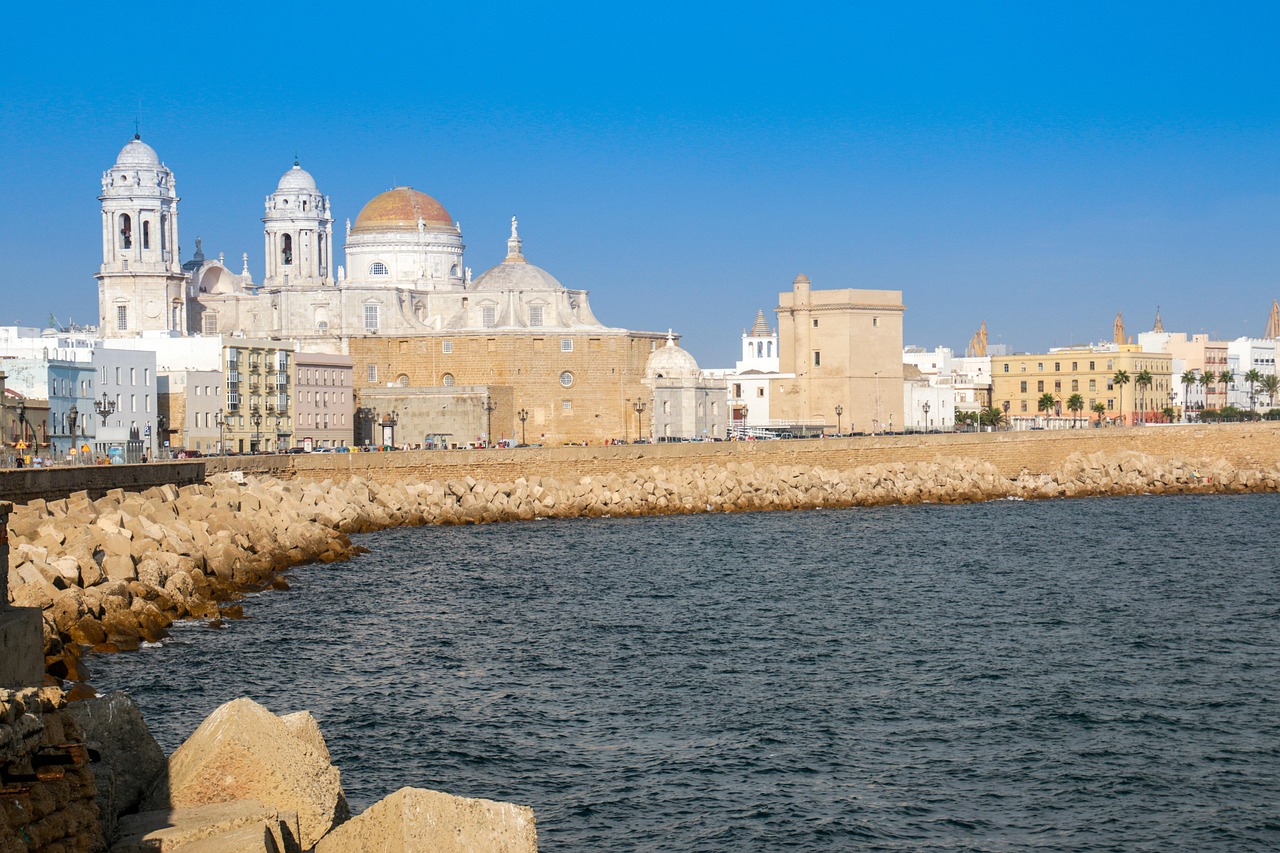
The Cádiz Cathedral dominates the skyline with its golden dome catching the Atlantic light. I still remember the first time I approached it from the sea wall at sunset – the stone turned honey‑colored and the bells started ringing as kids played football in the square below.
Built between the 18th and 19th centuries, the cathedral reflects Cádiz’s Golden Age, when riches from the Americas poured through its port. Inside, it feels both grand and strangely intimate, with a cool, echoing nave that’s perfect on a hot summer day.
Don’t miss: climbing the Torre de Poniente. The ramped spiral up is gentle but long; I’ve done it with kids and my 70‑year‑old aunt (we went slowly, stopping to peek out of tiny windows as the city fell away below us). At the top you get one of the best views of Cádiz: terracotta roofs, the golden dome, and the Atlantic on three sides.
Tips for visitors:
- Go in the late afternoon for soft light on the city – perfect for photos.
- Buy the combined ticket for the cathedral and tower; it’s better value than paying separately.
- Shoulders covered is appreciated, especially during services – a light scarf is handy.
2. Playa de la Caleta
If Cádiz had a soul, it would be La Caleta. This small urban beach, framed by two old fortresses, is where locals swim, gossip, fish, and watch the sun sink into the Atlantic in a blaze of orange.
On my first trip, I arrived in late October expecting an empty beach. Instead, I found families picnicking, older ladies bobbing in the waves with floral swim caps, and teenagers practicing surf pop‑ups on the sand. I ended up staying until dark, sharing a bag of sunflower seeds with a local couple who insisted I try their homemade tortilla.
Why it’s special:
- It’s walkable from anywhere in the old town.
- The sunsets are legendary – bring a beer or a carton of tinto de verano.
- The iconic white Balneario de la Palma (the old bathhouse) gives it a unique, almost film‑set feel.
Family‑friendly: the water is usually calm, and there’s a lifeguard in summer. For kids, bring a bucket for shell hunting along the rocks at low tide.
3. Torre Tavira & the Camera Obscura
Torre Tavira is one of my favorite things to do in Cádiz, especially if you only have 3 days in Cádiz and want a quick overview of the city. It’s one of the many watchtowers that once monitored ships entering the bay, but this one houses a quirky highlight: a camera obscura.
During the 15–20 minute demonstration, a guide manipulates an optical system that projects real‑time images of the city onto a concave screen. The first time I saw it, I felt like a kid again – watching tiny people cross plazas, laundry flutter on rooftops, and waves crash on the sea wall, all in live motion.
Tips:
- Book ahead in high season or arrive early – spaces per session are limited.
- The rooftop terrace offers 360° views; I often come here on my first day to get oriented.
- The show is available in different languages; check schedule when you buy your ticket.
4. Mercado Central de Abastos
The Mercado Central is where Cádiz comes to eat, argue about fish, and catch up on gossip. I try to start at least one morning of every trip here – preferably hungry.
The central courtyard is ringed by fish stalls that look like living still‑lifes: gleaming tuna, fat prawns, tiny clams, and creatures I still can’t name. If you want to understand local food in Cádiz, stand here and watch what people are buying – especially the older ladies. That’s how I finally worked up the courage to try ortiguillas (fried sea anemones) – weirdly delicious, crispy on the outside and briny inside.
How to enjoy it:
- Arrive before 11:00 for peak action at the fish counters.
- Head to the surrounding gastromarket stalls for cheap, tasty tapas – fried fish cones, tuna tartare, and local cheeses.
- Buy fruit and snacks here if you’re on a budget; it’s cheaper than supermarkets near touristy spots.
5. Parque Genovés
Parque Genovés is a lush green oasis on the edge of the Atlantic, and one of the best places to visit in Cádiz when you just want to breathe and slow down. I often bring a book here and end up people‑watching instead.
Curved hedges, exotic trees, a waterfall with a little cave kids can walk through, and sea views just beyond the park wall – it’s a surprisingly romantic setting, especially at golden hour. There’s a tiny café kiosk inside where I’ve spent long, lazy afternoons with a café con leche.
Good for: families (play areas and space to run), couples (quiet benches with sea views), and anyone escaping midday heat in summer.
6. Castillo de San Sebastián
At the far end of a narrow causeway stretching into the Atlantic, the Castillo de San Sebastián looks like something out of a pirate film – which is fitting, because it’s appeared in a few movies, including a James Bond film.
The walk out to the fortress is half the fun: waves crash on both sides, fishermen set up rods along the rocks, and in winter you feel the full force of Atlantic wind. I’ve walked it on calm summer evenings and stormy February mornings; both are unforgettable, but bring a jacket if it’s breezy.
Note for 2026: access to the interior sometimes changes due to restoration works and events. Even when closed, the walk along the causeway is worth it.
7. Castillo de Santa Catalina
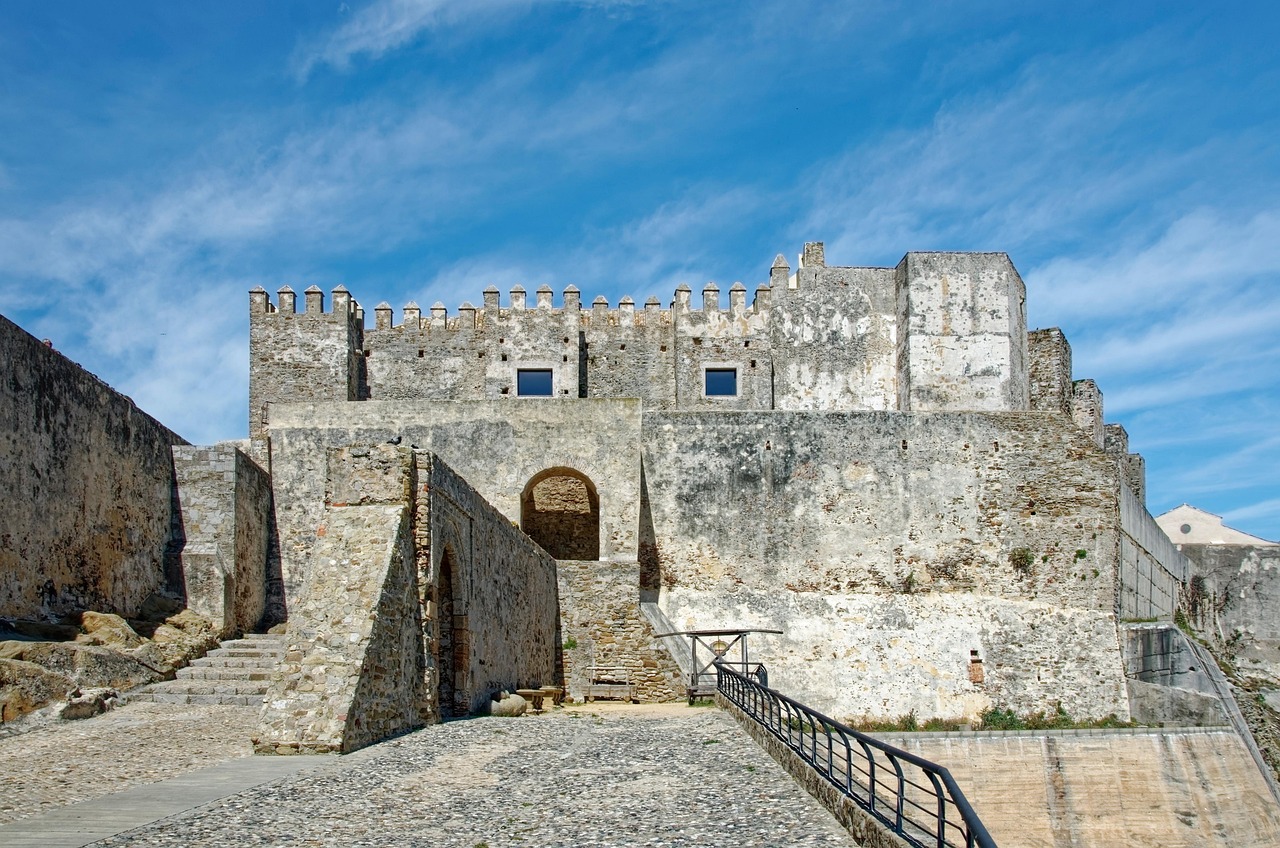
On the other side of La Caleta, Castillo de Santa Catalina is a star‑shaped fortress that now doubles as an art and cultural space. It’s one of those places where you pop in “just to see” and end up spending an hour.
I love wandering the ramparts, watching surfers in the distance and families on La Caleta. Inside, small rooms host rotating exhibits – photography, sculpture, and local artists. I once stumbled on a flamenco guitar recital in the courtyard here at sunset, almost by accident; it remains one of my favorite memories in Cádiz.
Tip: entrance is usually free, and it’s a great shady escape from the beach when the sun is intense.
8. Plaza de España & Monument to the Constitution of 1812
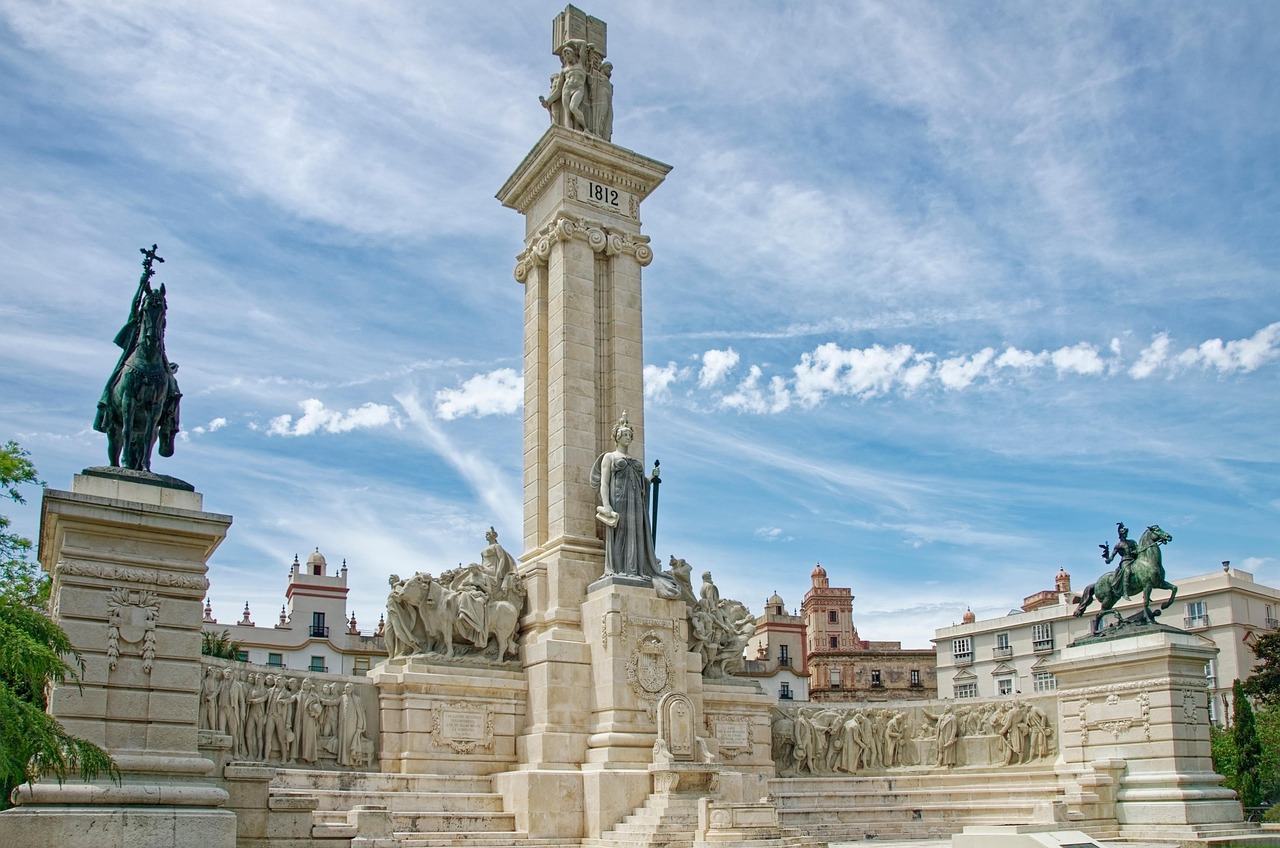
Plaza de España is a grand, tree‑lined square dominated by the Monument to the 1812 Constitution – a reminder that Cádiz played a crucial role in Spain’s early flirtation with liberal democracy.
I like to walk through here at dusk, when office workers are heading home and kids are using the marble steps as impromptu slides. If you’re a history nerd, this is a good spot to reflect on how the city’s isolation (surrounded by water, under siege) gave rise to radical political ideas.
9. Plaza de San Antonio
Plaza de San Antonio feels like Cádiz’s elegant living room. Surrounded by 19th‑century facades and a beautiful church, it’s where I often end up in the late afternoon, sitting on a terrace with a coffee or a glass of sherry.
During Carnival and other festivals, the square turns into a stage for concerts and performances. I once found myself here during a spontaneous chirigotas performance (witty satirical singing groups) – half the crowd knew all the lyrics; I didn’t understand every joke, but the energy was infectious.
10. Gran Teatro Falla
The red‑brick Gran Teatro Falla is the beating heart of Cádiz’s cultural life, especially during Carnival. Architecturally, it’s a beauty, with a neo‑Mudejar facade and an intimate interior.
Even if you’re not in town for Carnival, check the program. I’ve seen a contemporary dance performance here and a classical guitar recital; both times I was surrounded mostly by locals, which always feels like a good sign.
11. Oratorio de San Felipe Neri
This oval‑shaped baroque church is historically significant: it hosted sessions of the Cortes that drafted the 1812 Constitution. Inside, it’s serene and softly lit, with a famous Murillo painting of the Immaculate Conception over the altar.
I like to stop here on hot afternoons; the quiet feels almost suspended in time. There’s a small museum attached that explains Cádiz’s role in Spain’s early parliamentary history – a nice complement to Plaza de España.
12. Barrio de La Viña
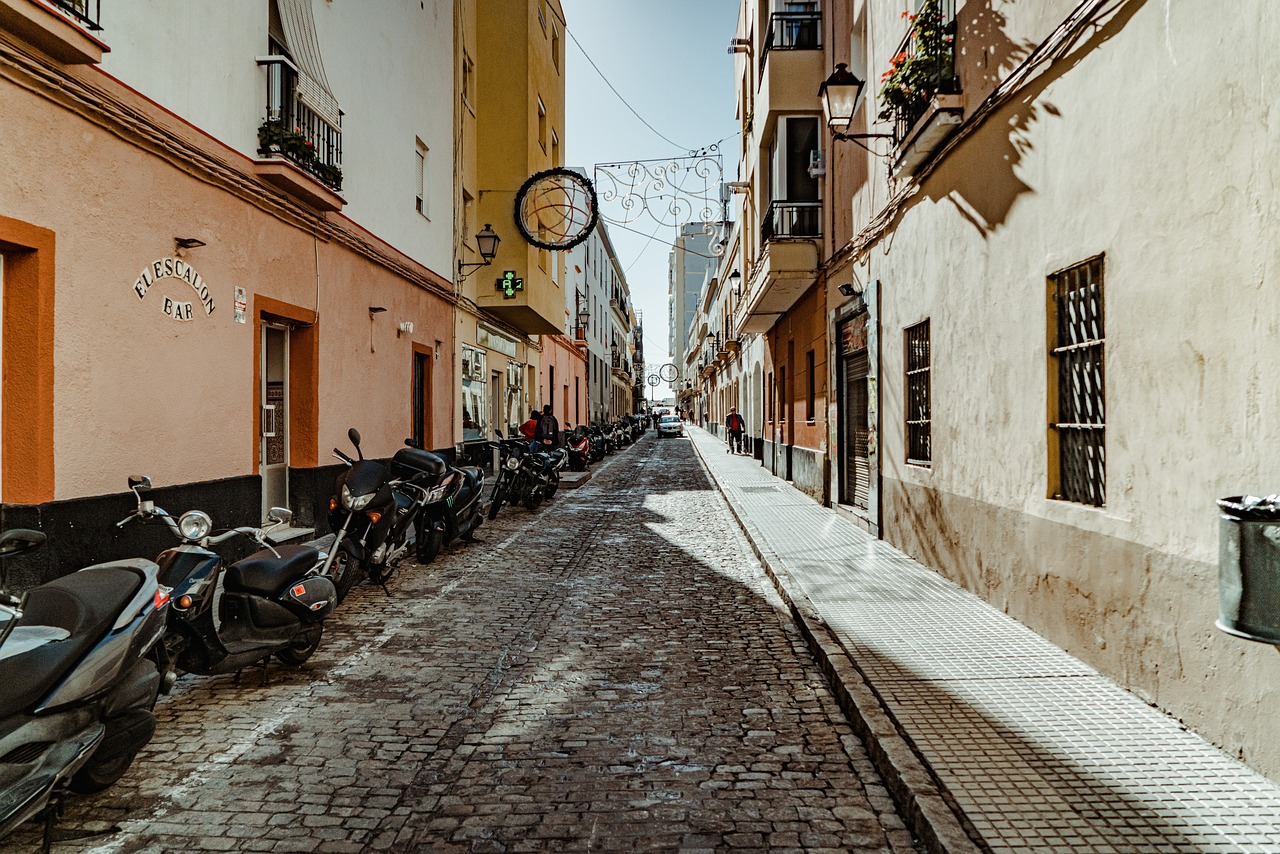
La Viña is Cádiz at its most Cádiz. A former fishing quarter, it’s now the neighborhood of fried fish, loud laughter, and Carnival. If you’re looking for hidden gems in Cádiz, many of them are just unpretentious bars here.
On my last 4 day itinerary for Cádiz, I ended up spending almost every evening in La Viña. I’d wander from bar to bar: a plate of tortillitas de camarones in one, grilled cuttlefish in another, always ending with a slow walk to La Caleta to check the sea.
Don’t miss:
- Tapas bars along calle de la Palma and surrounding streets.
- Colorful Carnival murals and posters on the walls.
- Random street performances during festival season.
13. El Pópulo – Medieval Quarter
El Pópulo is the oldest part of Cádiz – a tangle of narrow lanes near the cathedral, sprinkled with archways and old stone walls. It used to feel a bit rough around the edges; now it’s a mix of that grit and new bars and guesthouses.
At night, this is where I come for a slightly bohemian vibe: indie bars, small terraces, and the occasional street musician under an archway. It’s atmospheric, but still compact and safe to walk around.
14. Plaza de Mina & Museum of Cádiz
Plaza de Mina is a leafy square surrounded by handsome buildings, including the Museum of Cádiz. The square itself is a lovely place to sit under the trees and watch kids on scooters.
The museum is underrated and blissfully cool in summer. It houses an impressive collection of Phoenician sarcophagi, Roman artifacts, and Spanish paintings. I once spent a rainy November afternoon there almost alone, then emerged to find the square glistening after the rain – a small, quiet Cádiz moment I still think about.
15. Paseo Fernando Quiñones
This is the official name of the causeway that leads from La Caleta to Castillo de San Sebastián. It deserves its own mention because it’s one of the most photogenic walks in the city.
At low tide, you’ll see locals picking shellfish on the exposed rocks; at high tide, waves crash close to your feet. I try to walk it at least once at sunset every trip – the silhouettes of the fort and city against the changing sky are unbeatable.
16. Playa de la Victoria
If you’re serious about beach time, Playa de la Victoria is your spot: a long, wide stretch of golden sand along the modern strip of Cádiz. I usually stay near the old town, but on one summer trip I booked a budget hotel here to see what it was like – and I understood why many families choose it.
The beach is clean, with plenty of chiringuitos (beach bars) and showers, and the promenade is perfect for an evening stroll or run. Buses connect it to the old town in about 10–15 minutes.
17. Puerta de Tierra
Puerta de Tierra is the imposing gate that historically protected the city from the mainland. Today, it’s more of a symbolic entrance between old and new Cádiz.
If you arrive by bus or car, you’ll probably pass it without thinking much – but take time to come back on foot. Climb up to the walkways if open; the elevated views of the city and sea are a nice surprise.
18. Alameda Apodaca & Paseo Marítimo
The Alameda Apodaca is one of my favorite architectural corners of Cádiz: tiled benches, wrought‑iron lampposts, manicured trees, and sea views over the stone balustrade. It’s romantic, slightly old‑fashioned, and deeply photogenic.
I like to walk the entire Paseo Marítimo along the northern edge of the old town in the late afternoon, watching fishermen and listening to the waves slap the rocks. Architecturally, you’ll see a mix of 18th‑century facades and later additions, all unified by the Atlantic light.
19. Plaza de San Juan de Dios & City Hall
Stepping off the train or bus, this is often your first real taste of Cádiz. The square opens up toward the port, lined with palm trees and cafés, with the elegant Ayuntamiento (City Hall) presiding.
I’ve sat here many mornings with a tostada and coffee, just watching arrivals and departures from the station, cruise passengers finding their bearings, and locals cutting across the square on their way to work. It’s a great place to feel the everyday pulse of the city.
20. Barrio de Santa María & Flamenco
Santa María is a slightly rough‑around‑the‑edges neighborhood with a deep flamenco heritage. When I want a more intimate, less touristy flamenco experience, I head here.
Over the years, I’ve attended several peña flamenca nights (local flamenco club performances) – packed with neighbors, plastic chairs, and raw, emotional singing that gives you goosebumps even if you don’t understand the lyrics.
Tip: ask your accommodation or the tourist office about flamenco shows in peñas; they’ll often know what’s on in Santa María during your stay.
Perfect 3, 4 & 5 Day Itineraries for Cádiz (With Personal Stories)
Below are flexible outlines you can adapt. I’ll keep them concise here, but each is based on trips I’ve actually done.
3 Day Itinerary for Cádiz – Classic Highlights & Easy Wandering
If you only have 3 days in Cádiz, focus on the core: old town, must‑see attractions, and a taste of the beaches.
Day 1 – First Taste of the Old Town & Cathedral Views
Arrive, drop your bags at your accommodation in the old town (I like staying near Plaza de San Francisco or El Pópulo for central access). Start at Plaza de San Juan de Dios, walk up to the Cádiz Cathedral, explore the interior and climb Torre de Poniente for your first panoramic view.
Lunch at the Mercado Central – grab a mixed fried fish cone and a small plate of tuna. In the afternoon, wander through El Pópulo and Plaza de las Flores, then head to Torre Tavira for the camera obscura session.
Evening in La Viña for tapas, ending with a stroll to La Caleta to watch the sunset. This is usually when my guests fall in love with Cádiz.
Day 2 – Sea Walls, Parks & Hidden Plazas
Morning walk along the Alameda Apodaca and Paseo Marítimo, then cut into Parque Genovés. Visit the Museum of Cádiz by Plaza de Mina if you like history and art.
Afternoon: explore Plaza de San Antonio, peek at Gran Teatro Falla, and wander back through the Mentidero area. Coffee in a sunlit plaza. Evening: try to catch a cultural event or flamenco show (ask at your hotel or the tourist office), followed by dinner in El Pópulo.
Day 3 – Beach Time & Castles
Spend your last morning at La Caleta or take the bus to Playa de la Victoria for a longer beach. Have a simple chiringuito lunch – grilled sardines if they’re in season.
Late afternoon walk the Paseo Fernando Quiñones to Castillo de San Sebastián and visit Castillo de Santa Catalina on your way back. Pack up, grab one last ice cream or coffee by the cathedral, and promise yourself you’ll come back for 4 days in Cádiz next time.
4 Day Itinerary for Cádiz – Add Depth & Local Life
With 4 days in Cádiz, you can slow down and add more local experiences.
Day 1 & 2 – Follow the 3 Day Itinerary
Use the previous plan for your first 2 days – it covers the must‑see attractions in Cádiz nicely.
Day 3 – New Cádiz & Playa de la Victoria
Walk or bus through Puerta de Tierra into the newer city. Explore the seafront promenade, then settle in at Playa de la Victoria for a full beach day. I like to rent a sunbed and alternate between reading, swimming, and people‑watching.
Stay for sunset; the sky often becomes a full gradient of pinks and oranges. Dinner at a promenade restaurant – not the most cutting‑edge food, but the views make up for it.
Day 4 – Santa María & Flamenco
Sleep in and have a late breakfast at a café near your stay. Late morning, head to Barrio de Santa María, wander its backstreets, and visit a flamenco peña if open during the day.
Afternoon free for last‑minute shopping or revisiting your favorite spots (I tend to end up at Parque Genovés again). Try to book an evening flamenco show in Santa María or another venue – a perfect cultural experience in Cádiz to close your trip.
5 Day Itinerary for Cádiz – Deep Dive, Day Trips & Hidden Gems
With 5 days in Cádiz, you can mix city time with a day trip into the surrounding region.
Day 1–3 – Classic Cádiz
Follow the 3 day itinerary for Cádiz outlined above.
Day 4 – Day Trip: Jerez de la Frontera
Take a morning train (about 35 minutes) to Jerez de la Frontera. Tour a sherry bodega, watch the Andalusian horse show if it fits your interests and budget, and have lunch in Jerez’s old town. Return to Cádiz by late afternoon for a relaxed evening by the sea.
Day 5 – Free Day: Your Cádiz, Your Way
Use your last day for whatever you connected with most:
- More beach time (La Caleta or Victoria).
- More wandering and café‑hopping in the old town.
- Bike rental and a ride along the seafront toward Cortadura.
I often spend this “free” day revisiting the market, buying local products to take home (canned tuna, olives, sherry), and lingering in my favorite plazas until I absolutely have to leave.
Local Food in Cádiz: What to Eat & Where
The food in Cádiz is simple, fresh, and deeply tied to the sea. Over many visits, I’ve built a ritual of must‑eat dishes.
Must‑Try Dishes
- Tortillitas de camarones – Paper‑thin shrimp fritters, crispy and addictive.
- Pescaito frito – Mixed fried fish, from anchovies to cuttlefish.
- Atún rojo de almadraba – Bluefin tuna, often served as tartare or grilled.
- Ortiguillas – Fried sea anemones; intense but delicious if you like briny flavors.
- Chicharrones de Cádiz – Thin slices of marinated pork belly, often eaten cold.
- Pan con tomate – Toasted bread with tomato and olive oil for breakfast.
Where I Love to Eat (Examples)
I won’t drown you in a list of every bar, but here are the types of places I seek out:
- Traditional freidurías (fried fish shops) near the market and in La Viña – cheap, filling, and very local.
- Taverns in El Pópulo for simple tapas and local sherry.
- Beachfront chiringuitos on Playa de la Victoria for grilled fish with a view.
Money‑Saving Eating Tips
- Have your main meal at lunchtime, when menus del día (set menus) are cheaper.
- Eat standing at the bar if you’re solo and want quick, cheap bites.
- Buy picnic supplies at the Mercado Central and eat in a park or on the sea wall.
Nightlife, Entertainment & Cultural Experiences in Cádiz
Nightlife in Cádiz isn’t about mega‑clubs; it’s about plazas, bars, and music.
Evening Rhythm
People eat late: dinners start around 21:00 and can go until midnight. After that, people drift to bars in La Viña, El Pópulo, or near Plaza de Mina.
What to Do at Night
- Plaza‑hopping – Choose a plaza (San Antonio, Mina, San Francisco), sit for a drink, and watch life unfold.
- Flamenco shows – Look for authentic peñas or smaller venues; avoid overly staged tourist traps.
- Live music bars – Especially in El Pópulo and Mentidero areas.
- Summer open‑air cinema or concerts – Often held in plazas or parks; check local listings.
Cultural Experiences in Cádiz
For deeper cultural immersion, try:
- A sherry tasting session – even better if combined with a day trip to Jerez.
- A guided walking tour focusing on history, architecture, or Carnival.
- A cooking class focusing on local tapas and seafood.
Major Events & Festivals in Cádiz (2026–2027)
Check exact dates closer to your trip, but here’s what to expect in 2026–2027:
- Carnaval de Cádiz (Feb–Mar 2026 & 2027) – One of Spain’s most famous carnivals, with witty satirical groups, elaborate costumes, and street performances. If you plan a 3 or 4 day itinerary for Cádiz during Carnival, book accommodation months ahead.
- Semana Santa (Holy Week) – Processions with religious floats and penitents; solemn but visually striking.
- Summer concert series at Gran Teatro Falla and open‑air venues – music, dance, and theater.
- Local ferias and maritime festivals in late spring and summer – smaller, more local celebrations often with food stalls and music.
Best Day Trips from Cádiz
Once you’ve seen the main things to do in Cádiz, use an extra day or two for the surroundings.
Jerez de la Frontera
Easy by train (around 35 minutes). Visit a sherry bodega, the Alcázar, and the old town. Great for food and wine lovers.
El Puerto de Santa María
Short ferry ride across the bay from Cádiz (fun in itself) or a quick train ride. Good seafood, beaches, and bodega visits.
White Villages & Sierra de Grazalema
Better with a rental car or an organized tour. Villages like Arcos de la Frontera or Vejer de la Frontera make for stunning day trips.
Atlantic Beaches (Costa de la Luz)
Tarifa, Bolonia, and Zahara de los Atunes are wilder and more dramatic beaches, reachable by bus or car from Cádiz.
Cultural Etiquette & Local Customs in Cádiz
Andalusians are warm, expressive, and informal, but a few customs help you connect.
Basic Etiquette
- Greetings: A friendly “Hola, buenos días/tardes/noches” goes a long way. In social settings, people greet with one kiss on the cheek (women‑women, men‑women).
- Language: English is spoken in tourist areas but not everywhere. A few Spanish phrases are very appreciated.
- Timing: Lunch 14:00–16:00, dinner 21:00 onwards. Some shops still close for siesta in the afternoon.
In Bars & Restaurants
- It’s normal to share plates and stand at the bar for a quick drink and tapa.
- Tipping: Not obligatory but appreciated – rounding up or leaving 5–10% for good service is common.
- Don’t be shy about asking for the bill – say “La cuenta, por favor”. It won’t appear automatically.
Dress & Behavior
- Beachwear is for the beach; cover up a bit in town and when entering churches.
- Locals are generally relaxed about kids out late; family life is very visible in public spaces.
- Noise: Cádiz can be loud (in a good way), but try to respect quiet in residential buildings at night.
Practical Travel Advice for Cádiz
How to Get Around
- On foot: The old town is compact and walkable; this is the best way to experience it.
- Local buses: Connect old town with Playa de la Victoria, the train station, and newer districts. Buy tickets on board or use contactless payment where available.
- Bike: Great along the seafront; several rental shops exist in both old and new town.
- Car: Not recommended inside the old town (narrow streets, limited parking). If you have a rental car, park in a lot near Puerta de Tierra or in the newer areas.
SIM Cards & Connectivity
- Spain has several major providers: Movistar, Vodafone, Orange, and low‑cost brands like Yoigo, MásMóvil, etc.
- For short stays, look for prepaid tourist SIMs offering data packages; buy them in phone shops or larger supermarkets in new Cádiz.
- eSIM options are widely available if your phone supports them.
Money & Costs
- Currency: Euro (€).
- Cards widely accepted, but it’s good to carry some cash for small bars and markets.
- Cádiz is generally cheaper than Madrid or Barcelona, especially for food and drinks.
Visa & Entry Requirements
- Cádiz is in Spain, a Schengen Area country. Check current Schengen visa rules for your nationality.
- Many travelers from the EU, UK, US, Canada, Australia, and others can enter visa‑free for short stays; always confirm updated rules before traveling.
Driving & Foreign Licenses
- EU/EEA licenses are generally valid in Spain.
- For non‑EU visitors, an International Driving Permit (IDP) alongside your home license is recommended.
- Remember: tight streets in the old town and limited parking. I usually only rent a car for day trips beyond the city.
Safety
- Cádiz feels very safe, even at night, especially in main areas.
- Usual precautions apply: watch your bag in crowded areas and on beaches.
- Swimming: heed flags and lifeguard advice; Atlantic currents can be strong, especially on outer beaches.
How to Save Money in Cádiz
- Travel in shoulder seasons (April–June, September–October) for better prices.
- Stay in guesthouses or apartments a few streets back from main plazas.
- Use the Mercado Central for breakfasts, snacks, and picnic supplies.
- Take advantage of free sights – fortresses, parks, promenades, and beaches.
When to Visit Cádiz & Final Takeaways
Best Seasons for Visiting Cádiz
- Spring (March–May): My favorite time. Mild weather, lighter crowds, perfect for walking and cultural experiences. Carnival often falls in late winter/early spring – vibrant but busy.
- Summer (June–August): Hot but tempered by sea breezes. Ideal if you want a beach‑centric 4 or 5 day itinerary for Cádiz. Expect more visitors, especially Spaniards on holiday.
- Autumn (September–October): Warm sea, fewer crowds, great light for photography. Excellent for combining beaches and city exploration.
- Winter (November–February): Quiet, cooler, but often still sunny. Some beach days possible; bring layers for windy days.
Key Takeaways
- Cádiz is perfect for a 3 day itinerary focused on core sights, or 4–5 days mixing city, beaches, and day trips.
- It’s a walkable, safe, and authentic city where life still feels local, not dominated by tourism.
- Must‑see attractions in Cádiz include the Cathedral and Torre de Poniente, La Caleta, Torre Tavira, the Mercado Central, Parque Genovés, and the sea‑facing promenades.
- Local food is simple and excellent – focus on seafood, sherry, and tapas in La Viña and El Pópulo.
- Respect local customs (late meals, relaxed pace, basic Spanish greetings) and you’ll find Cádiz incredibly welcoming.
Every time I leave Cádiz, I walk one last time along the sea wall, letting the wind tangle my hair and the light burn the city into my memory. Whether you’re here for 3 days in Cádiz, 4 days in Cádiz, or a longer 5 day itinerary for Cádiz and beyond, I hope this guide helps you find your own favorite corners – and that the city lingers with you long after you’ve gone.