Why Visit Costa del Sol in 2026?
The Costa del Sol is no secret, but it is often misunderstood. Yes, there are package resorts, high‑rise apartments, and British pubs serving full English breakfasts at noon. But there is also early‑morning sea mist rolling over Nerja’s cliffs, fishermen quietly pushing their boats into the surf at El Palo, and old men in Estepona arguing about anchovies as if they were politics.
In 2026, the Costa del Sol is in an interesting moment. Post‑pandemic demand has stabilized, infrastructure has improved, and several coastal towns—especially Málaga, Estepona, and Nerja—are investing in boardwalk extensions, dune restoration, and cultural programming. At the same time, prices have crept up, and the trick is knowing when and where to lean into the buzz and when to step sideways into quieter corners.
If you’re weighing a beach escape and wondering whether to spend 3 days in Costa del Sol, 4 days, or a full 5 day itinerary, this coast can handle it all. You can do museum mornings in Málaga, lazy chiringuito (beach bar) afternoons in La Carihuela, cliffside sunsets in Nerja, and day trips to whitewashed villages without ever feeling like you’ve left the sea behind.
Table of Contents
- Why Visit Costa del Sol in 2026?
- Essential Overview of Costa del Sol
- 3–5 Day Itineraries (With Personal Stories)
- 10 Iconic Beaches, Coves & Coastal Towns (Deep Dive)
- Seafood, Beach Bars & Boardwalk Eating
- Evenings on the Costa del Sol
- Day Trips & Nearby Attractions
- Cultural Etiquette & Local Customs
- Practical Travel Advice & Logistics
- Beach‑Specific Logistics & Safety
- Events & What’s New in 2026–2027
- Summary & Best Time to Visit
Essential Overview of Costa del Sol
The Costa del Sol runs roughly from Nerja in the east to Manilva and the Cádiz border in the west, with Málaga as its beating urban heart. Think of it less as one place and more as a necklace of distinct moods strung along the same sea: cliffy coves and white towns around Nerja; airport‑adjacent beaches and classic resorts around Torremolinos and Benalmádena; gleaming marinas around Marbella and Puerto Banús; and slower, more local stretches down towards Estepona and Manilva.
For most first‑timers, the core questions are:
- Where to base yourself? Málaga for culture and food, Torremolinos/Benalmádena for easy family logistics, Marbella for polish and nightlife, Nerja for romance and views, Estepona for a quieter, still‑Spanish feel.
- How many days? A focused 3 day itinerary for Costa del Sol works if you hone in on one area plus Málaga. 4 days in Costa del Sol lets you add Nerja or Marbella. 5 days in Costa del Sol gives space for white villages, Ronda, or an extra lazy beach day.
- Car or train? The coastal train (Cercanías C1) is a blessing between Málaga, Torremolinos, Benalmádena, and Fuengirola. Beyond that, buses are decent, but for coves, hill towns, and flexibility, a car changes the game.
3–5 Day Itineraries for Costa del Sol (With Personal Stories)
Below I sketch three overlapping itineraries—from 3 to 5 days—that I’ve actually done (or re‑tweaked) over several visits, most recently in spring and autumn 2026. They’re opinionated, designed to balance the must‑see attractions in Costa del Sol with enough slow, sandy time so you don’t feel like you’re sprinting through a beach holiday.
3 Day Itinerary for Costa del Sol – Classic Coast & Málaga
This is for you if it’s your first time and you want a tight but rich 3 days in Costa del Sol, relying mostly on public transport.
Day 1 – Málaga’s Old Town & Urban Beaches
I like to land in Málaga, drop my bag near the historic center, and walk straight to the sea to reset my internal compass. On my last autumn trip in 2026, my flight landed just after 10:00. By 11:15 I was on the Paseo del Parque, the humid smell of subtropical trees mixing with distant sea salt.
For a 3 day itinerary for Costa del Sol, don’t rush out of Málaga. It’s not just an airport city anymore; it’s one of the most interesting medium‑sized cities in Spain.
Morning – Old Town & Alcazaba
Start with coffee and a pitufo mixto (small toasted sandwich) at a bar around Plaza de la Constitución. Then wind your way up to the Alcazaba, the Moorish fortress that spills down the hillside.
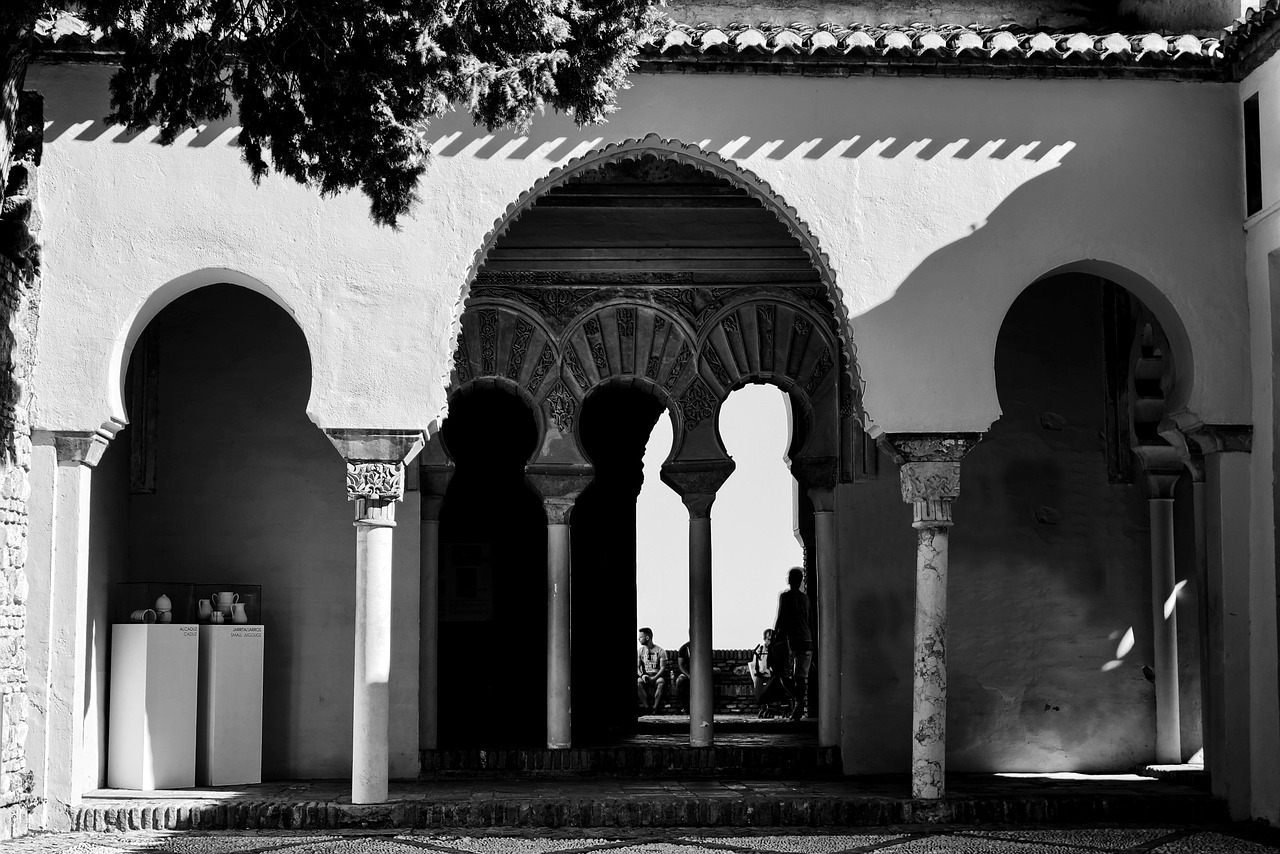
- Time: 1.5–2 hours is comfortable.
- Why go: Terraced gardens, views over the port, and a tangible sense that Málaga has been watched over for a very long time.
- Tip: Go as soon as it opens in summer; the stone bakes by midday.
On my last visit I walked down from the Alcazaba right into the Roman Theater area and then ducked into a tiny bar on Calle Alcazabilla for a midday vermú (vermouth on tap) with a skewer of olives. This is Spain: it’s okay to start slow and social.
Afternoon – Playa de la Malagueta & Pedregalejo
By early afternoon, follow the palm‑lined promenade east towards Playa de la Malagueta and then on to Pedregalejo, Málaga’s old fishing district.
- Best for: Urban beach vibe, easy first swim, families who want showers and lifeguards.
- What I do: Claim a patch of sand just east of the Malagueta sign, swim, then walk further to Pedregalejo for lunch.
In Pedregalejo, the boardwalk is lined with chiringuitos throwing smoke and scent from their espeto boats—old wooden rowing boats turned into sardine grills. My standard order: espeto de sardinas, a mixed fried fish platter, a simple salad, and a cold caña of beer. The last time I was there, a local man at the next table leaned over to tell me the exact second to pull the sardine flesh from the bone: “Ni crudo ni seco, un punto menos que el boquerón.” Not raw, not dry, just a shade less cooked than an anchovy.
Evening – Sunset at Muelle Uno & Rooftop Drinks
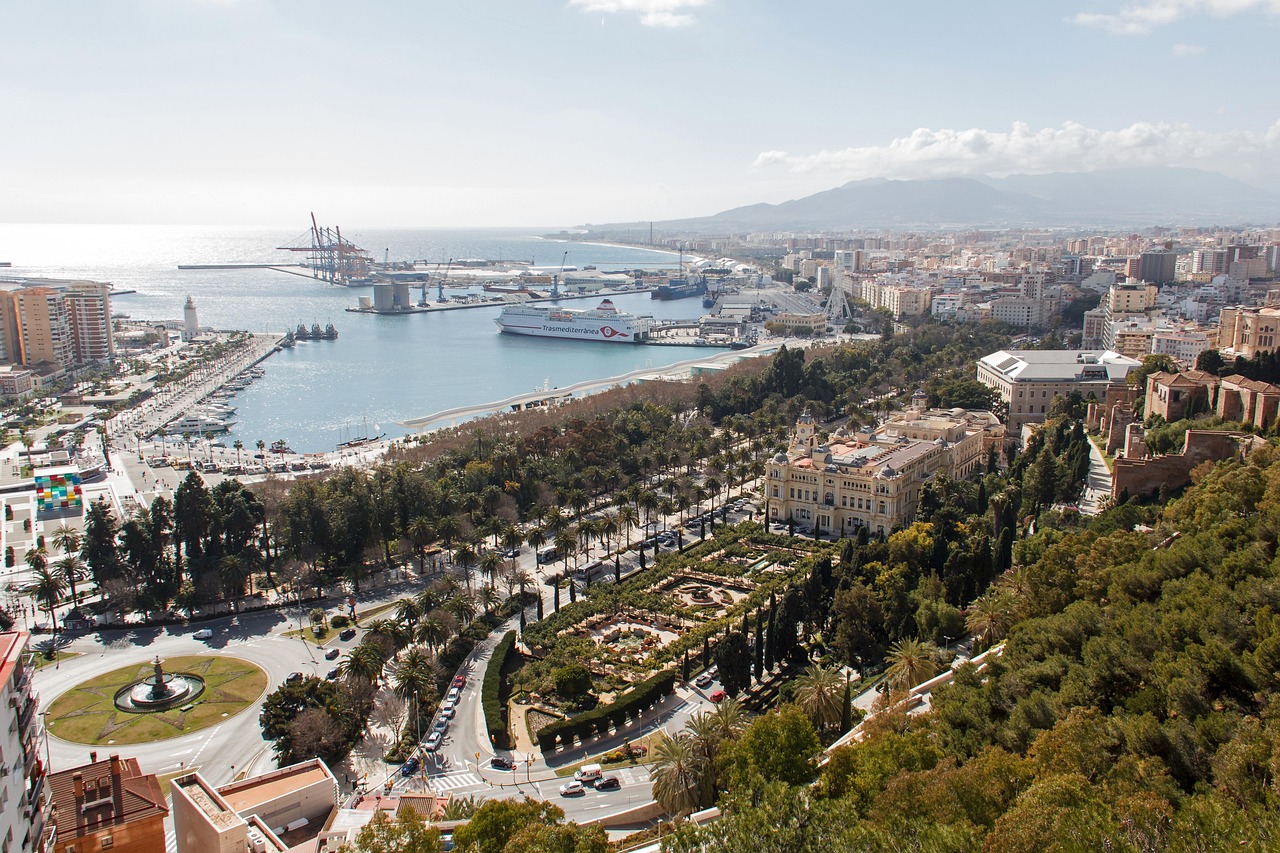
Walk back along the waterfront to Muelle Uno, Málaga’s modern harbor development.
- Family friendly: Car‑free, open spaces, an excellent playground near the Pompidou Centre cube.
- Romantic: Golden hour along the marina, drinks with a view of the cathedral and Gibralfaro hill.
For a first night, I like a simple plan: sunset stroll along the marina, then up to a rooftop bar—either atop the AC Hotel Málaga Palacio or a smaller terrace inside the old town. Watching the cathedral light up while the sea goes ink‑blue is one of the best introductions to the Costa del Sol’s rhythm: hot, bright days; long, soft evenings.
Day 2 – Torremolinos, La Carihuela & Benalmádena
Day two of this 3 days in Costa del Sol plan is all about classic seaside. Torremolinos and Benalmádena are easy to mock if you only see the worst of them, but approached with curiosity—and a willingness to walk away from neon—they can still feel wonderfully old‑school.
Morning – Train to Torremolinos & Playa del Bajondillo
From Málaga Centro Alameda station, catch the Cercanías C1 train toward Fuengirola and hop off at Torremolinos (about 25 minutes). Walk downhill through the center towards Playa del Bajondillo.
- Best for: Families, easy logistics, long sandy walks, first‑timers.
- Facilities: Lifeguards in season, showers, sunbed rentals, many chiringuitos.
I often stop for a second coffee along the way, watching early‑rising locals do their daily paseo with tiny dogs. By late morning I’m usually stretched out under a hired umbrella, alternating between reading and people‑watching: kids building fortresses at the high‑tide line, older Spaniards playing cards at plastic tables, teenagers doing clumsy TikTok dances.
Midday – Stroll to La Carihuela
From Bajondillo it’s an easy, flat walk along the promenade to La Carihuela, the old fishing district that’s now one of the most atmospheric beach sections on the coast.
The first time I walked this stretch, years ago, I made the rookie mistake of stopping at the first busy restaurant. Now I push on until I’m in the older part of La Carihuela, where the streets narrow slightly and you can still glimpse old cottages behind the newer façades.
- Must‑eat: Pescaito frito (assorted fried fish), grilled squid, and, if you’re feeling brave, calamares a la Andaluza with a squeeze of lemon.
- Tip for saving money: Share raciones (large plates) instead of ordering individual dishes. It feels more convivial and keeps the bill lower.
Afternoon – Benalmádena Marina & Boat Trip
Continue along the promenade to Benalmádena Costa and its flamboyant marina. I’m normally wary of overtly designed marinas, but Benalmádena’s Moorish‑fantasy architecture has grown on me over the years; it’s kitsch, but in a committed way.
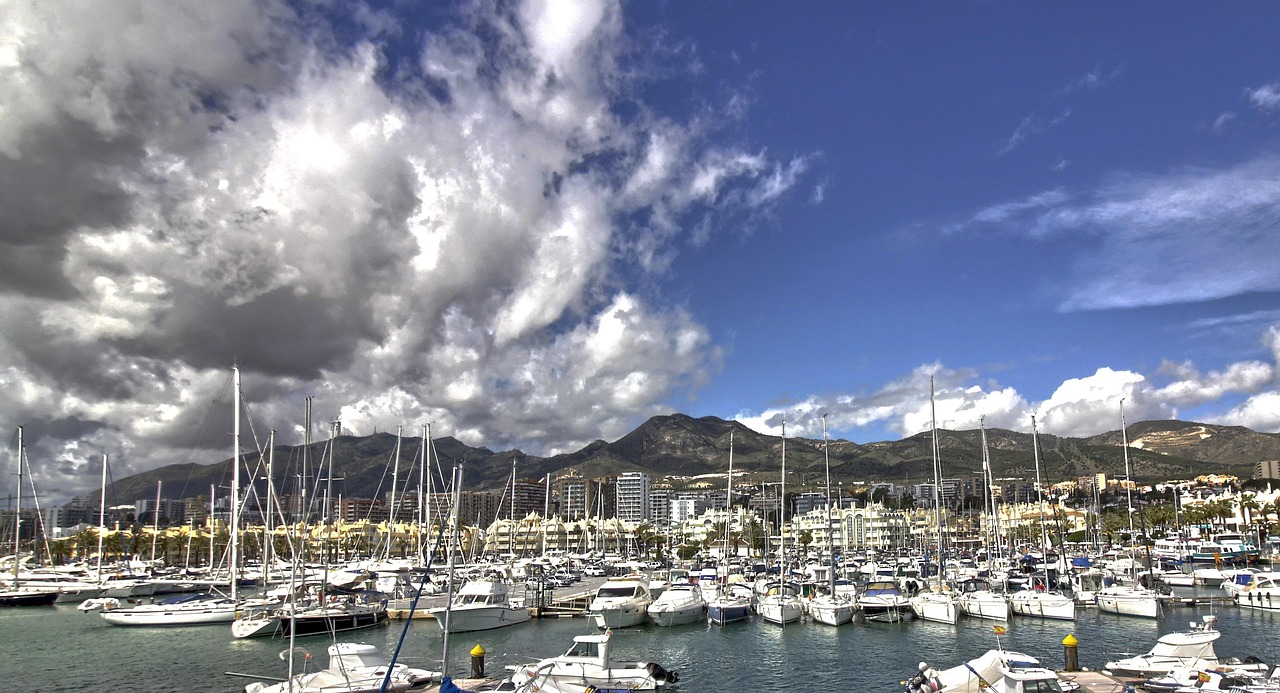
For families, this is a great time to take a short catamaran or dolphin‑watching cruise. Most trips last 1–2 hours. On a breezy April afternoon in 2026, I watched a pod of dolphins surfing our bow wave while a little girl next to me shrieked, “Mira, mira!” so loudly that even the dolphins might have heard.
Evening – Cable Car or Old Town Benalmádena
If you have the energy, take the Teleférico Benalmádena (cable car) up to Mount Calamorro for views over the entire coast. Sunset up here is spectacular on clear days, and paragliders sometimes launch off the slopes.
Alternatively, bus or taxi up to Benalmádena Pueblo, the whitewashed old village, for dinner in one of its squares. I’ve eaten there on sweltering August nights, when the only relief was the occasional cross‑breeze and a cold tinto de verano. It’s a lovely contrast to the beach strip below.
Day 3 – Nerja & the Eastern Cliffs
On the third day of this 3 day itinerary for Costa del Sol, I almost always head east, towards Nerja. It feels like a reward: cliffs, coves, and a town that, despite being very much on the tourist map, still has a romantic aura at dusk.
Morning – Bus or Car to Nerja & Balcón de Europa
From Málaga bus station, ALSA buses run frequently to Nerja (about 1 hour). If you have a car, the A‑7 makes it even easier. Drop your bag at your hotel or day‑use locker and walk straight to the Balcón de Europa.
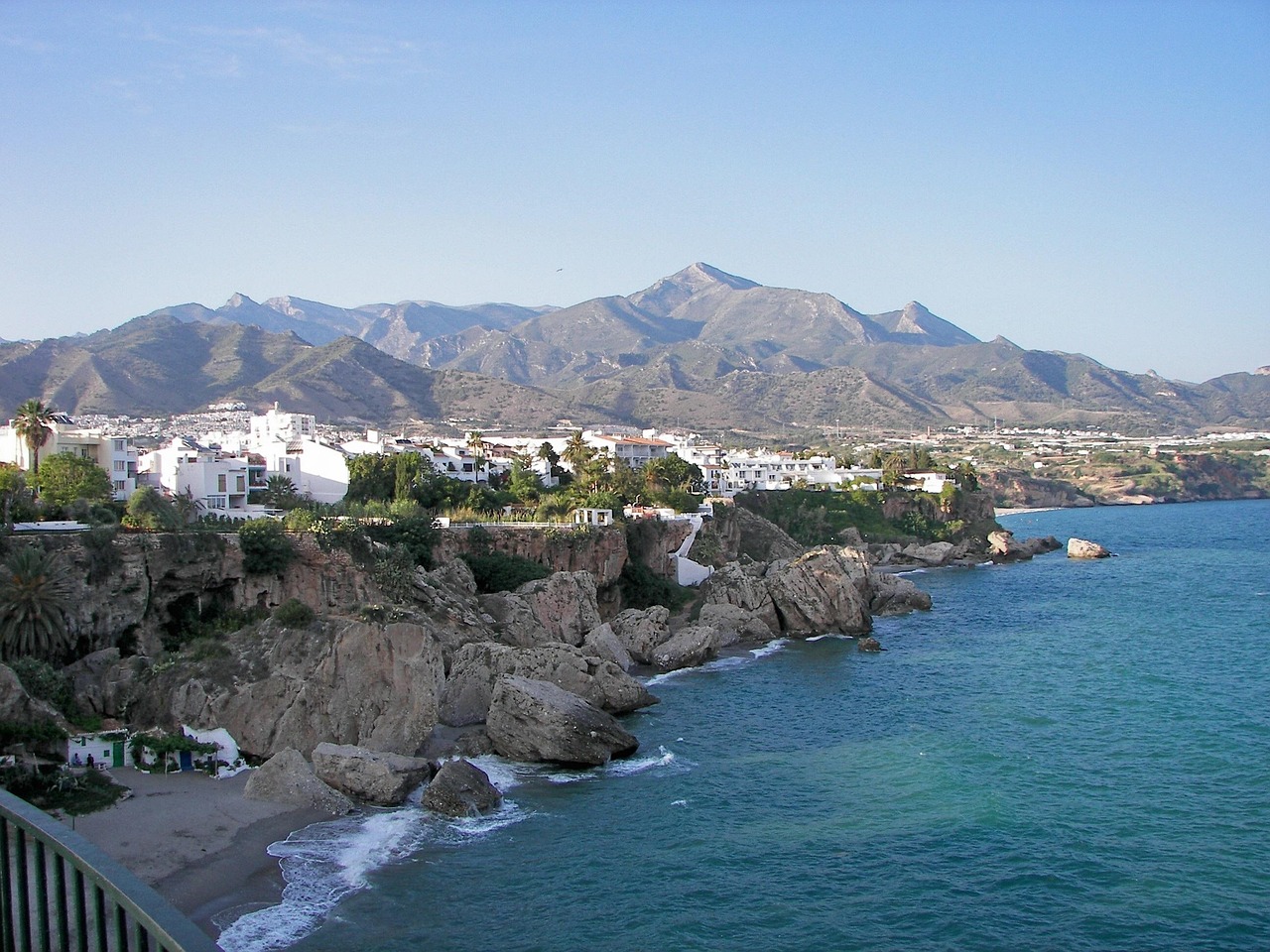
The Balcón is one of those places that’s famous for a reason. It’s a pedestrian promontory that juts out over the sea, cliffs and coves spilling away on either side. I’ve stood here in winter storms watching waves explode against the rocks, and in May sunsets when the horizon is so soft it looks painted.
Midday – Playa de Burriana
Walk or taxi over to Playa de Burriana, Nerja’s main family‑friendly beach, a long curve of sand and pebbles backed by restaurants and shops.
- Best for: Families, first‑timers, easy rentals (kayaks, SUPs), full facilities.
- Activities: Rent a kayak and paddle along the cliffs towards Playa de Maro (on guided tours), or simply swim and laze.
One July afternoon I joined a guided kayak trip from Burriana to the cascades near Maro. Sliding under a waterfall while the guide told stories of smugglers and secret caves felt gloriously far from the image of the Costa del Sol as wall‑to‑wall sunbeds.
Afternoon – Old Town Wandering
Head back into Nerja’s old town for ice cream and aimless wandering: white alleyways, flower‑draped balconies, little squares where kids play football until well past their nominal bedtime.
Evening – Sunset & Return
For a romantic finale to your 3 days in Costa del Sol, linger for sunset on the Balcón or at one of the cliff‑edge terraces, then catch an evening bus or drive back to Málaga. If you can spare it, though, I suggest turning this into a 4 day itinerary for Costa del Sol and spending the night in Nerja—waking up here is worth the small reshuffle.
4 Day Itinerary for Costa del Sol – Adding White Villages & Extra Beach Time
If you have 4 days in Costa del Sol, bolt an extra day onto the 3‑day plan. My preferred version is to spend the extra day focused on Nerja & Frigiliana, or Málaga & Caminito del Rey, depending on whether you’re more about sea or mountains.
Option A, Day 4 – Nerja Coves & Frigiliana (Romantic & Scenic)
Spend the night in Nerja after Day 3, then use this bonus day to explore the coastline more deeply and visit Frigiliana, one of Andalusia’s most photogenic white villages.
Morning – Playa de Maro
Playa de Maro, about 10 minutes’ drive east of Nerja (or reachable by bus plus a walk down), is one of my favorite coves on the entire Costa del Sol. It’s a pebbly little pocket of turquoise water encircled by steep, green cliffs.
- Best for: Couples, strong swimmers, snorkelers, those who prefer wildish to polished.
- Facilities: Limited—small chiringuito in season, kayak rental, basic toilets.
- Access: Steep path down; not ideal for buggies or anyone with mobility issues.
The last time I went, in late September 2026, I arrived just after 9:00 and there were only a handful of people. By midday it was busy but not overwhelming. The visibility for snorkeling around the rocks on the right‑hand side was excellent, with shoals of tiny silver fish moving like mercury.
Afternoon – Frigiliana
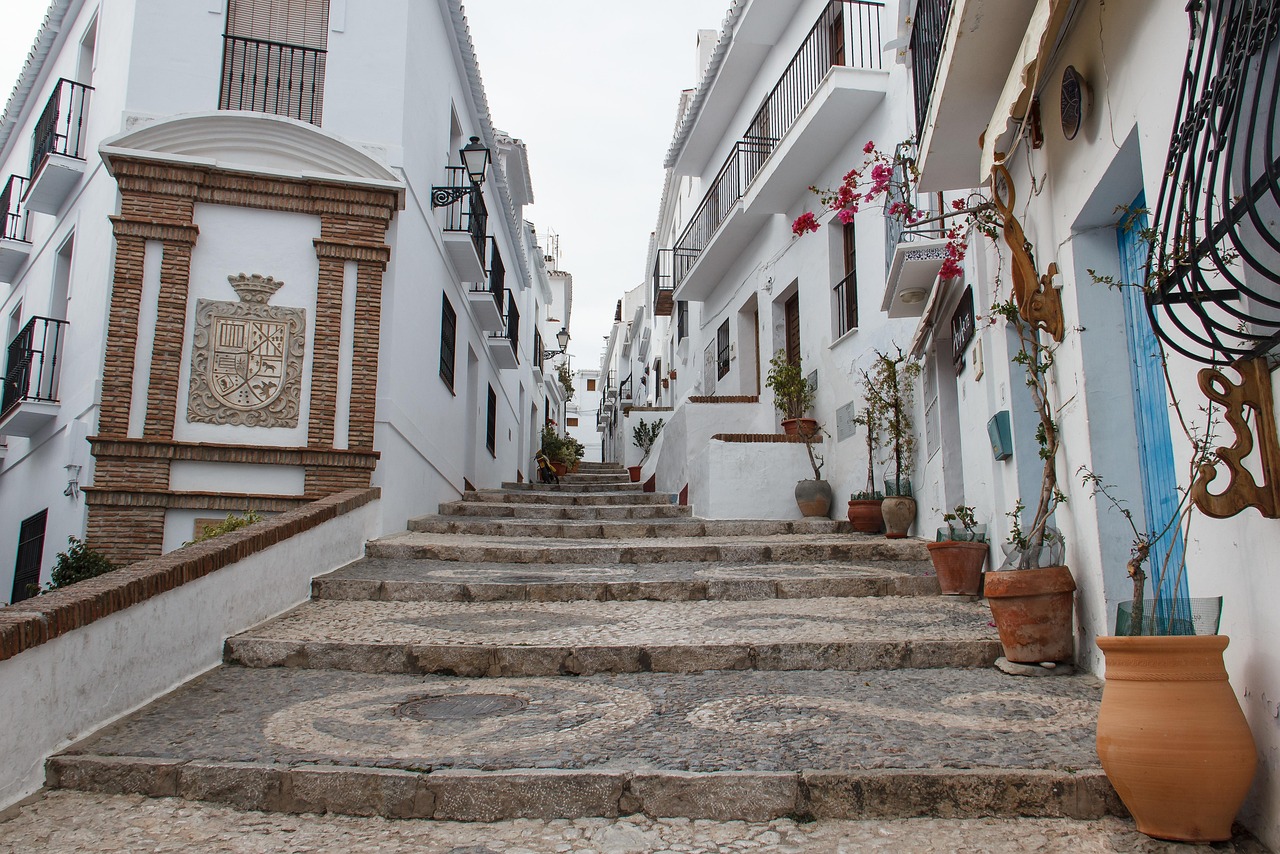
After lunch, drive or bus up to Frigiliana, perched in the hills behind Nerja. While not strictly on the sea, it’s part of the emotional geography of this stretch of coast.
Frigiliana’s old Moorish quarter, with its cobbled lanes and decorative stone mosaics, feels like a film set in late afternoon light. I like to slowly climb towards the upper lookout points, stopping for cold water or a tinto de verano under climbing bougainvillea.
Come evening, you can stay up in Frigiliana for dinner with views of the coast or head back down to Nerja for a final stroll and nightcap by the sea.
Option B, Day 4 – Caminito del Rey & Inland Adventure
For adventurous travelers, I sometimes swap the Frigiliana day for a trip to the Caminito del Rey, the once‑infamous path pinned to the walls of a narrow gorge north of Málaga.
- Best for: Active travelers, older kids/teens, photographers.
- Not ideal for: Anyone with severe vertigo or very young children.
I booked ahead online (essential in high season) and took the train from Málaga to El Chorro, then the shuttle to the trailhead. The walk felt more dramatic than dangerous; the new path is very secure, but the sense of exposure when you look down is still thrilling. Back in Málaga that night, sitting on the beach at La Malagueta with tired legs, the sea felt even more like a reward.
5 Day Itinerary for Costa del Sol – Adding Marbella & Estepona
With 5 days in Costa del Sol, you can experience the major flavors of the coast: Málaga’s culture, the Torremolinos–Benalmádena resort strip, Nerja’s cliffs, and the more polished, western stretch around Marbella and Estepona.
Day 5 – Marbella Old Town & Estepona Promenade
Drive or bus from Málaga to Marbella in the morning. If you’re expecting only bling, Marbella’s old town (Casco Antiguo) may surprise you: a tight web of white streets, orange trees shading café terraces, small churches and art galleries.
I like to have a slow lunch in Plaza de los Naranjos, then walk down to Playa de la Venus for a dip. Marbella’s beaches are not wild, but they’re clean and lively, with plenty of bars and rentals.
In the afternoon, continue west to Estepona—a town that’s quietly reinvented itself over the last decade as one of the coast’s most pleasant bases.
Estepona’s long promenade is planted with tropical gardens and dotted with sculptures. Families cycle, older couples stroll arm‑in‑arm, and the whole scene feels more local than some other parts of the coast. I once spent an entire October afternoon doing little more than moving between a sunbed, the sea, and a café table in Estepona, and I regret nothing.
Stay the night in Estepona or Marbella if your departure allows; waking up on this western stretch gives you a different perspective on the Costa del Sol than Málaga alone.
10 Iconic Beaches, Coves & Coastal Towns (Deep‑Dive Stories)
Below are ten of the best places to visit in Costa del Sol if you care about the sea. Each subsection mixes practical travel tips for Costa del Sol with my own experiences from multiple visits.
1. Málaga’s Playa de la Malagueta & Pedregalejo – Urban Beach Life
History & Feel: Malagueta has been Málaga’s city beach for generations—a working‑class escape long before tourists arrived. The neighborhood behind it, once rough around the edges, has gentrified in waves over the last 15 years. To the east, Pedregalejo remains more village‑like, its low houses and fish restaurants hugging the shore.
My Routine Here: On cool winter mornings I walk from the port to Pedregalejo, watching black‑clad older women gossip on benches while runners weave around them. In August, I come later, around 6pm, when the worst of the heat has lifted and the light is softer. I’ll swim off Malagueta, rinse in the public showers, then keep walking for a seafood dinner in Pedregalejo. The walk back in the dark, with cicadas buzzing in the park, always makes me feel like I live here, if only for a night.
Best For: Short stays without a car; travelers who want to combine museums with daily sea dips; families needing playgrounds, lifeguards, and nearby supermarkets.
Swimming & Conditions: Generally calm, especially in summer. The sand is dark and a bit coarse; the water gets deep relatively quickly. Lifeguards are present in high season. Occasional jellyfish (medusas) swarms can appear; locals check apps and municipal flags before heading out.
Food & Drink: The chiringuitos along the sand are fine for sardines and cold beer, but for better cooking I head to Pedregalejo’s older spots. Order espeto de sardinas, pulpo a la gallega, and a simple tomato salad. Sunset cocktails are pleasant but pricey at Muelle Uno; the view partly justifies it.
Tips: If you’re on a budget, buy picnic supplies from the Mercado Central de Atarazanas and eat on the sand. For runners or walkers, the paved promenade east of Malagueta is one of the nicest easy coastal routes.
2. Torremolinos’ Playa del Bajondillo & La Carihuela – Classic Seaside Strip
History & Significance: Torremolinos was one of Spain’s first big seaside resorts, booming in the 1960s and 70s. It has a storied, sometimes wild past—this was once a playground for artists, actors, and bohemians. La Carihuela, the old fishing district, predates all that, and its narrow streets and seafood traditions give Torremolinos some much‑needed soul.
Atmosphere Today: Despite the souvenir shops and some tired façades, there’s still a charming, almost retro holiday energy here: Spanish families with entire carloads of beach gear, Dutch and British retirees playing cards at beachfront cafés, kids marauding between ice cream stands.
My Days Here: I tend to use Bajondillo as a “reset” beach: when I’ve been moving too fast, I’ll check into a simple seafront hotel for two nights, leave the car parked, and let the days blur. Morning swims, long seafood lunches in La Carihuela, afternoon siestas, and evening strolls. One January, I spent a week here writing in a café looking out at a stormy sea, the beach almost empty save for dog walkers and the occasional hardy swimmer.
Best For: Families with young children; travelers on a mid‑range budget; those who want a no‑stress base close to Málaga airport (10–15 minutes by train).
Swimming & Facilities: The beach is wide, with gentle entry. Strong Levante or Poniente winds can kick up choppier water, but red‑yellow flag systems are clear. Sunbeds and umbrellas are plentiful; negotiate prices if you’re staying several days. There are accessible ramps and some adapted services for travelers with reduced mobility.
Food: La Carihuela is one of the coast’s best areas for traditional pescaito. The trick is to walk a bit away from the most obvious, English‑language menus and look for spots still busy with Spanish families at 3pm.
Tip: For quieter sunbathing, walk early or late; midday in high season is a human tide. If you crave calm, consider visiting in May, June, late September, or October.
3. Benalmádena Costa & Marina – Lively, Family‑Oriented Strip
Character: Benalmádena Costa is unapologetically built‑up: hotels, apartment blocks, a flamboyant marina. But it’s also one of the most convenient places for families and groups who want everything in one place—beaches, boat trips, cable car, theme parks nearby.
My Take: I wouldn’t come here searching for solitude, but when I visited with friends and their kids in 2025, it was ideal. Mornings on the beach near the marina, afternoons on boat trips or in nearby Parque de la Paloma (a surprisingly lovely park inland), and evenings hopping between ice cream spots. One sunset, as we watched a line of small sailboats come back into the harbor, the whole group fell quiet; even in a busy place, the sea can still pull you into its own tempo.
Best For: Multigenerational families, those wanting nightlife without the intensity of Marbella, travelers focused on dolphin‑watching cruises or water sports.
Swimming & Activities: The main beaches here are sandy, with breakwaters that help keep the water calmer for kids. You’ll find jet ski rentals, paddleboats, and parasailing outfits scattered along the shore.
Food & Nightlife: Marina restaurants skew touristy, but some tapas bars in the streets behind the seafront have more local character. Nightlife ranges from family karaoke to clubs open until dawn in high season.
Tip: Use Benalmádena as a base if you want easy access by train to Málaga and Fuengirola; the C1 line makes day trips simple without a car.
4. Fuengirola & Los Boliches – Long Beach & Local Life
Overview: Fuengirola’s coastline is a nearly continuous arc of sand, broken into named sections like Los Boliches and Carvajal. It’s less glamorous than Marbella, less cliffy than Nerja, but more “lived‑in” than many resorts: Spanish families, Scandinavian winter residents, British expats, and day‑trippers all sharing the promenade.
My Experiences: I often stay in Los Boliches in winter when I want long, flat walks and good train access. Sunrise jogs along the Paseo Marítimo, with the distant outline of the Sierra Nevada sometimes visible, are one of my quiet joys. One February, after a storm, I watched locals carefully comb the high‑tide line for driftwood and shells, while municipal crews smoothed the sand ahead of the coming season.
Best For: Long‑term stays, budget‑conscious travelers, people who like to walk or run along the sea every day; families who want playgrounds and calm seas.
Swimming: Generally gentle, especially toward Los Boliches. Some areas shelve more steeply. Lifeguards are present in season. Water quality has improved notably over the last decade, thanks to upgraded infrastructure.
Food: Look one or two blocks inland for better value: traditional tapas bars, simple seafood joints, and bakeries. For local food in Costa del Sol style, try berenjenas con miel (fried aubergine with cane honey) and boquerones al limón.
Tip: If you’re staying a week or more and want to save, Fuengirola often has better apartment deals than Marbella or Málaga, with the train making day trips easy.
5. Marbella’s Beaches & Golden Mile – Polished & Glamorous
Context: Marbella’s name carries weight: the town became a byword for Mediterranean luxury in the late 20th century. While its reputation for flashy wealth is well‑earned in places like Puerto Banús, the broader coastline around Marbella offers a mix of scenes.
Beaches: Central Playa de la Venus and Fontanilla are convenient, with busy promenades and many chiringuitos. The so‑called Golden Mile, stretching west from Marbella town towards Puerto Banús, is lined with upscale hotels, villas, and beach clubs.
My Time Here: I come to Marbella when I’m in the mood to people‑watch and occasionally splurge. One memorable afternoon I rented a bike and cycled the coastal path from Marbella to Puerto Banús and back, stopping for swims and coffees. Watching superyachts in the marina is an odd but compelling sport; the juxtaposition of wealth and the simple sea never quite stops feeling surreal.
Best For: Couples seeking a polished, romantic base; groups of friends wanting nightlife; travelers happy to pay more for manicured beaches and sophisticated dining.
Swimming & Facilities: Sandy beaches, gentle entry. Many sections are lined with private or semi‑private beach clubs, but there are always public strips between them. Expect higher prices for sunbeds and cocktails than in Torremolinos or Fuengirola.
Food: This is a good place to explore the more contemporary side of Andalusian cuisine—stylish tapas bars, creative seafood, and some excellent international options. For budget eats, look into Marbella’s old town squares, where you can still find reasonably priced menu del día lunches.
Tip: If you want the Marbella experience without Marbella prices, base yourself in nearby San Pedro de Alcántara or even Estepona, and day‑trip in.
6. Estepona – Slow, Flower‑Filled Coastal Town
Transformation: Estepona used to fly under the radar, overshadowed by its glossier neighbors. Over the last decade it has quietly blossomed, literally: the old town is filled with color‑coordinated flower pots, street art, and carefully maintained squares. The seafront has been expanded with a wide promenade and cycling lanes.
My Stays: I’ve used Estepona as a writing base three times now, always in shoulder seasons. My days follow a rhythm: early coffee in a little square, a few hours of work, then a long walk east along the promenade. Afternoons are for swims and seaside reading; evenings for tapas crawls through the old town. It’s a place where the Costa del Sol feels both lived‑in and calmly pretty.
Best For: Couples and families who want a quieter base; travelers staying a week or more; those who prefer Spanish to be the predominant language around them.
Beaches: Playa de la Rada is the main town beach, long and sandy, perfect for families. Further east and west, smaller, quieter stretches appear, often with dune restoration projects and boardwalks.
Food: Excellent tapas bars in the old town. On the seafront, chiringuitos do solid grilled fish and rice dishes. Prices are generally a bit lower than Marbella.
Tip: Estepona is also a good jumping‑off point for day trips to Casares, Gaucín, or even Gibraltar, if you have a car.
7. Nerja & Playa de Burriana – White Cliffs & Holiday Ease
History: Nerja remained a fishing village much later than western parts of the coast. Its international “discovery” accelerated after the 1959 uncovering of the Nerja Caves, a few kilometers inland, and then further with Spanish TV series fame in the 1980s. Yet the town has managed to retain much of its charm.
Playa de Burriana: This is Nerja’s main resort beach: a broad crescent beneath low cliffs, lined with restaurants, bars, and shops. It’s an easy place to spend a day, particularly for families—everything you need is within a short, sandy stroll.
My Time Here: I’ve watched New Year’s Day swimmers plunge into cold water here, and honeymooners float in warm September seas. One spring I rented a small apartment just behind the beach and quickly fell into local patterns: early morning swims with a core of year‑round residents, coffee at the same café, daily waves to the same dog walkers. It stopped feeling like “the coast” and started feeling like a neighborhood.
Best For: Families, sun‑seekers, first‑timers to Nerja who want easy logistics and a vibrant atmosphere.
Activities: Kayak and stand‑up paddleboard rentals are widespread. Guided trips along the cliffs to Maro are highly recommended for active travelers and older kids.
Food: Several chiringuitos along Burriana are famous for huge paellas cooked in outdoor pans. Ask when the next batch will be ready; it’s always better fresh. Prices are slightly higher than in Málaga or Torremolinos, but still reasonable by northern European standards.
Tip: In high season, parking around Burriana is a headache. If you’re driving, go early or be prepared to park further up the hill and walk down.
8. Playa de Maro – Wildish Coves & Clear Water
Setting: East of Nerja, the Acantilados de Maro‑Cerro Gordo Natural Area protects a series of cliffs, coves, and underwater habitats. Playa de Maro is the jewel of this stretch: a pebbly, horseshoe‑shaped cove with clear, often calm water.
My Experiences: The first time I came, a decade ago, there were only a handful of people and one tiny kiosk. Now, in 2026, it’s well‑known and busy in summer, but early mornings and shoulder seasons still feel magical. I’ve snorkeled along the rocks watching octopus and schools of tiny fish, kayaked beneath waterfalls, and simply floated on my back listening to the echo of voices off the cliffs.
Best For: Adventurous couples, snorkelers, photographers, strong swimmers; not ideal for anyone who struggles with steep paths.
Swimming & Safety: The water here is usually calmer than on open beaches, but there are no lifeguards outside peak periods. Watch for boat traffic from kayak tours, and wear reef shoes if you have sensitive feet—the seabed is rocky in places.
Access & Tips: Parking is limited at the top. In high season, some access controls are in place to prevent overcrowding; check current regulations (they’ve been tightening slowly since 2024). Bring water, sun protection, and a mask/snorkel if you can.
9. Cabopino & Artola Dunes – Natural Dune System
Overview: Between Marbella and Fuengirola lies Cabopino, a small marina and beach area backed by the protected Artola dunes. It’s one of the last natural dune systems on this stretch of coast, with boardwalks weaving over the sand and pines.
My Visits: I like to come here on slightly overcast days, when the light softens and the dunes feel more moody. One November afternoon, I walked the wooden paths almost alone, the only sounds the wind in the reeds and the distant thud of waves. Then I climbed down to the sand for a brisk swim and a coffee at the marina.
Best For: Nature lovers, walkers, those seeking a less‑developed feel; there is also a well‑known clothing‑optional section, so it’s not the best for very conservative families.
Swimming: Generally good, though waves can be stronger than in more sheltered urban beaches. No breakwaters, so it feels wilder. Lifeguard coverage is seasonal; observe flags.
Tip: Respect the dunes—stick to the boardwalks, as the vegetation is fragile. This is a great place for sunrise or sunset photography along the Costa del Sol coastline.
10. Manilva & Sabinillas – The Quieter Western Edge
Location: At the western end of the Costa del Sol, near the border with Cádiz province, lie the low‑key towns of San Luis de Sabinillas and Manilva. This is where the coast begins to exhale; the density of development drops, and the vibe shifts.
Why I Come: When the main drag of the Costa del Sol feels too frenetic, I drive west. Sabinillas’ promenade is simple but pleasant, with locals outnumbering tourists most of the year. I’ve had some of my quietest, most restorative beach days here—book, towel, umbrella, and the comforting sense that nobody is trying too hard to impress anyone.
Best For: Long‑term renters, those wanting lower prices, travelers combining Costa del Sol with the wilder Costa de la Luz beyond.
Beaches & Swimming: Broad, mostly sandy beaches with some pebbly sections. Sea conditions similar to Estepona; watch flags, especially on windier Poniente days.
Food: Simple chiringuitos serve grilled fish at fair prices. Look for handwritten menus and Spanish families if you want authenticity over Instagrammability.
Seafood, Beach Bars & Boardwalk Eating Around Costa del Sol
One of the great cultural experiences in Costa del Sol is eating within arm’s reach of the tide. The coast is lined with chiringuitos, and while not all are equal, the basic formula—fresh fish, cold drinks, bare feet in the sand—rarely fails.
What to Eat
- Espeto de sardinas: Sardines skewered and grilled over open coals in old boats. Best from May to October, eaten with your fingers.
- Pescaito frito: Mixed fried fish—anchovies, squid, tiny whiting—lightly battered and served on sharing platters.
- Arroz caldoso or paella marinera: Rice dishes studded with seafood; better at places that specialize in them rather than everywhere.
- Boquerones en vinagre: Anchovy fillets marinated in vinegar and olive oil, a tapas staple.
- Ensalada malagueña: Potatoes, orange, cod, and olives—a bright, salty‑sweet salad that tastes like sunshine.
Where Locals Actually Eat
Locals don’t usually pick beachfront spots with laminated, multilingual menus and glossy photos. They gravitate to:
- The middle or far ends of long beaches (less foot traffic, more repeat customers).
- Chiringuitos with big charcoal boats and handwritten boards.
- Places set slightly back from the water in Málaga, Torremolinos, Estepona, and Nerja.
On my last trip, a fisherman in El Palo (east of Málaga) told me, “Si ves más cubiertos que fotos, come allí”—if you see more cutlery than photos, eat there. He wasn’t wrong.
Sunset Cocktails Worth the Price
- Málaga – Muelle Uno: Pricey but gorgeous harbor and cathedral views.
- Nerja – Cliffside bars near the Balcón: Tourist‑heavy but unbeatable at golden hour.
- Marbella – Beach clubs on the Golden Mile: A splurge, but for one special night, it can be fun to lean into the glam.
Saving Money on Food
- Eat your main meal at lunchtime (menú del día offers 2–3 courses and a drink at a fixed price).
- Shop at local markets and supermarkets for breakfast and beach picnics.
- Share raciones among the table rather than ordering separate mains.
Evenings on the Costa del Sol – From Golden Hour to Late Night
As the day cools, the Costa del Sol shifts gears. Sand clears of sunbeds, locals emerge for their paseo, and lights blink on along the promenades.
Boardwalk Strolls & Family Evenings
In Málaga, Torremolinos, Benalmádena, Fuengirola, Marbella, and Estepona, the seaside promenades become open‑air living rooms. Kids ride scooters, grandparents push prams, couples share cones of helado. It’s one of the most relaxing, family‑friendly things to do in Costa del Sol.
Beach Bars & Clubs
Beachfront bars often morph from lunch spots into cocktail lounges as the sun sets. In Torremolinos and Benalmádena, expect a mix of Spanish and international crowds, live music nights, and DJ sets in summer. Marbella and Puerto Banús tilt more upscale: dress codes, bottle service, and long, glittering nights.
Bonfires & Night Swims
Officially, bonfires on the beach are tightly regulated, with the main exception being La Noche de San Juan (23 June), when the entire coastline lights up with controlled fires. On that night, I’ve joined friends in Málaga jumping over tiny flames at midnight and running into the sea fully clothed for luck. Outside festivals, don’t light your own fire unless you’ve confirmed it’s allowed; fines can be steep.
Sunset Cruises
From Málaga, Benalmádena, Marbella, and Estepona, sunset boat trips offer a different angle on the coast. One of my favorite evenings was a low‑key catamaran out of Estepona: plastic cup of wine, pink sky, and the town slowly turning on its lights as we glided back in.
Day Trips & Nearby Attractions from Costa del Sol
Once you’ve had your fill of the beach, there are several classic day trips:
- Ronda: Dramatic gorge, historic bullring, whitewashed streets. Best with a car or tour; driving time from Marbella ~1.5 hours.
- Frigiliana: As described above, easily paired with Nerja; buses connect from Nerja.
- Caminito del Rey: Gorge walk; book tickets ahead. Train from Málaga to El Chorro plus shuttle.
- Mijas Pueblo: White village above Fuengirola; frequent buses climb the hill.
- Gibraltar: British territory at the western edge; bring passport, expect border formalities and some queues.
On my own itineraries, I limit myself to one or two inland day trips on a 5 day itinerary for Costa del Sol; otherwise, you risk spending more time on buses than on beaches.
Cultural Etiquette & Local Customs
Even on a beach holiday, understanding local rhythms makes everything smoother.
Daily Rhythm
- Meals: Lunch 2–4pm, dinner often 9–11pm. Some touristy spots serve earlier, but locals eat late.
- Siesta: Many small shops still close from ~2–5pm, especially inland; big supermarkets and malls stay open.
At the Table
- It’s normal to share plates. Ask for raciones (larger dishes) or medias raciones (half portions).
- Tipping is modest: round up or leave 5–10% for good service; more is appreciated but not expected.
- Asking for tap water (agua del grifo) is increasingly common, though not universal; some places may only offer bottled.
On the Beach
- Topless sunbathing is widely accepted on most beaches; full nudity is limited to designated or de facto nude sections (like parts of Cabopino).
- Keep noise reasonable; Spaniards are lively, but blasting music near others’ towels is frowned upon unless everyone is clearly in party mode.
- Don’t leave cigarette butts or trash in the sand—municipal cleaning is good, but locals care about their coastline.
Language & Politeness
Even a few Spanish words go a long way:
- Buenos días / buenas tardes / buenas noches – Good morning / afternoon / night
- Por favor / gracias – Please / thank you
- La cuenta, por favor – The bill, please
People in tourism speak a lot of English, but starting in Spanish is an appreciated gesture.
Practical Travel Advice for Costa del Sol (2026 Edition)
Getting There & Around
- Airport: Málaga–Costa del Sol (AGP) is the main hub.
- Train: The Cercanías C1 line connects the airport with Málaga, Torremolinos, Benalmádena, and Fuengirola.
- Buses: ALSA and local companies connect Málaga with Nerja, Marbella, Estepona, and beyond.
- Car Rental: Widely available at the airport. In 2026, demand is high in summer; book early for better rates.
Driving & Licenses
- EU/EEA licenses are valid. Many non‑EU licenses (e.g., UK, US, Canada, Australia) are accepted with your passport; an International Driving Permit is recommended and sometimes required by rental agencies.
- Seatbelts are mandatory, phone use while driving is prohibited, and drink‑driving limits are strict.
SIM Cards & Connectivity
- Spain has good coverage along the coast. In 2026, eSIM options from providers like Orange, Movistar, and Vodafone are common.
- Physical SIMs are sold at airports, malls, and phone shops; bring ID.
Money‑Saving Tips
- Travel in May, early June, late September, or October for lower prices and good weather.
- Stay one row back from the seafront—rooms are often 20–40% cheaper with only a short extra walk.
- Use public transport between main towns; rent a car only for days you’ll actually explore inland or remote coves.
Visa Requirements (2026)
- Spain is in the Schengen Area. EU/EEA and many other nationals (including UK, US, Canada, Australia, New Zealand, Japan, etc.) can enter visa‑free for short stays (usually up to 90 days in any 180‑day period). Always check current rules before travel.
- From 2025 onward, the EU’s ETIAS travel authorization system is rolling out for many visa‑exempt travelers; ensure you check if you need to complete it before arriving in 2026.
Beach‑Specific Logistics & Safety
Tides, Swell & Best Months for Swimming vs. Surfing
The Costa del Sol faces the Mediterranean, so tides are modest and there’s no real surf culture like in the Atlantic, but conditions still vary:
- Swimming Season: Late May–October is comfortable for most people. Peak warmth is July–September.
- Surf & Bodyboarding: Onshore windswells can create fun, small waves in winter and early spring, especially around open stretches like Málaga, Torremolinos, and Marbella. Dedicated surfers often drive to Tarifa and the Atlantic, but you can catch the odd rideable session here.
Lifeguards & Flags
Most major beaches (Málaga, Torremolinos, Benalmádena, Fuengirola, Marbella, Estepona, Nerja) have lifeguards from roughly June to September, with some coverage in shoulder months depending on the municipality.
- Green flag: Safe conditions.
- Yellow: Swim with caution; moderate waves or currents.
- Red: No swimming; respect it, even if locals sometimes duck in.
Jellyfish, Currents & Other Hazards
- Jellyfish: Periodic blooms, especially in late spring/summer. Municipal apps or signage often warn of medusas. If stung, rinse with seawater (not fresh), use vinegar or commercial spray where available, and seek help if you have a severe reaction.
- Rip Currents: Less intense than on exposed Atlantic coasts, but can exist near breakwaters or rocky points. If caught, swim parallel to shore until free.
- Sharks: Encounters with dangerous species are extremely rare in this part of the Mediterranean; it’s not something locals worry about.
Equipment Rental
- Umbrellas & Sunbeds: Ubiquitous on urban beaches. Expect 10–20€ per day for two beds and an umbrella on prime stretches; cheaper in less touristy areas.
- Boards & Watersports: SUP and kayak rentals in Nerja, Burriana, Marbella, Benalmádena, and some Málaga beaches. Occasional surfboard rentals in winter when there’s swell.
- Snorkel Gear: Sold cheaply in supermarkets and beach shops; for serious snorkeling, bring your own mask/fins.
Sun Safety
The Costa del Sol sun is deceptively fierce, especially from May to September.
- Use high‑SPF, reef‑safe sunscreen and reapply often.
- Wear hats, sunglasses, and consider UV shirts for kids.
- Plan indoor or shaded breaks from ~1–5pm in peak summer, aligning nicely with the Spanish lunch/siesta rhythm.
Parking Strategy
- Málaga, Nerja, Marbella: Use paid underground car parks near the center; street parking is scarce and often metered.
- Torremolinos, Benalmádena, Fuengirola: Street parking inland is more feasible; walk down to the beach.
- Busy Coves (e.g., Maro, Cabopino): Arrive early (before 9–9:30am in high season) to secure a spot.
Events & What’s New in Costa del Sol in 2026–2027
Each year brings fresh reasons to revisit the coast. For 2026–2027, keep an eye on:
- Málaga Film Festival (Festival de Málaga): Usually in March; the city buzzes with screenings and events.
- Feria de Málaga: August fair with music, dancing, and fairgrounds; the whole city (and beaches) feel more animated.
- San Juan (23 June): Bonfires on the beaches from Nerja to Estepona; an unforgettable night if you’re here.
- Boardwalk Extensions: Ongoing plans to further link coastal promenades, particularly between some western towns, making long seaside walks and bike rides easier.
- Sustainability Initiatives: Continued dune restoration around Cabopino and Estepona, stricter protections at Maro coves, and more Blue Flag certifications for clean beaches.
Summary & Best Time to Visit Costa del Sol
After years of walking this coast, my core conclusion is simple: the Costa del Sol is what you make of it. It can be a week of sunbeds and sangria, or a layered mix of things to do in Costa del Sol: coastal hikes, white villages, museums, seafood feasts, and quiet coves.
Key Takeaways
- For a 3 day itinerary for Costa del Sol, base in Málaga and add Torremolinos/Benalmádena plus Nerja.
- For 4 days in Costa del Sol, extend to Nerja & Frigiliana or Caminito del Rey.
- For a full 5 day itinerary for Costa del Sol, add Marbella and Estepona, or linger longer in your favorite spot.
- Choose your base according to mood: Málaga for culture, Torremolinos/Benalmádena for easy family fun, Nerja for romance, Marbella for polish, Estepona/Manilva for quieter days.
Best Seasons
- May–June: Warm, lively but not yet packed; ideal for swimming, exploring, and balanced prices.
- September–October: Sea at its warmest, crowds thinning, softer light—my personal favorite window.
- July–August: Peak heat, peak crowds, peak prices. Great if you thrive on buzz and late nights.
- November–April: Cooler, some rainy days, but excellent for long walks, city culture, and great deals; swimming for the hardy.
If you come with a bit of Spanish, a willingness to walk one street back from the obvious, and respect for the sea’s moods, the Costa del Sol will reward you. I still find new corners every year—and I suspect, after your first visit, you’ll be planning the next before the sand has fully shaken out of your shoes.