Why Visit Death Valley National Park?
Death Valley National Park has a dramatic name, but every time I drive down Highway 190 and the basin opens up in front of me, it feels less like a place of “death” and more like a giant outdoor planetarium. It’s one of the few places in the United States where you can stand at −282 feet below sea level in the morning, climb to over 11,000 feet by late afternoon, and then fall asleep under some of the darkest skies on Earth.
I’ve been visiting Death Valley for over a decade—quick winter weekends from Las Vegas, longer spring wildflower pilgrimages from Los Angeles, spontaneous detours just to catch a sunset at Zabriskie Point. The park changes constantly: salt polygons shift, dunes migrate, alluvial fans reshape the valley floor. You never really see the “same” Death Valley twice.
Why you should consider Death Valley National Park for your next trip:
- Otherworldly Landscapes: Badlands, salt flats, slot canyons, volcanic craters, multi-hued mountains—it feels like walking through a geology textbook illustrated by a surrealist painter.
- Easy Iconic Sights, Epic Backcountry: Many of the must-see attractions are drive-up or short walks, yet you can also disappear into vast backcountry canyons and remote peaks if you crave adventure.
- Dark-Sky Sanctuary: Death Valley is an International Dark Sky Park. Milky Way arches, meteor showers, and quiet nights are standard, not special occasions.
- Surprisingly Family-Friendly: Kids love the dunes, salt flats, and ghost towns. There are short, safe walks and ranger programs that make the desert approachable.
- Year-Round Possibilities: Winter is perfect for hiking, spring for wildflowers (in good years), late fall for camping, and even summer has its own stark, almost spiritual beauty—if you respect the heat.
This 2026 travel guide is written like I’d plan a trip for close friends: brutally honest about the heat and distances, full of specific tips, and rich with personal stories from many, many sunrises, sunsets, and late-night coffee at the Furnace Creek gas station.
Table of Contents
- Park Overview: Key Zones, Scenic Drives & Gateway Towns
- 20 Must-See Attractions in Death Valley National Park
- 3–5 Day Itineraries (With Personal Stories)
- Where to Eat & Drink In and Around Death Valley
- Where to Stay: Lodges, Campgrounds & Nearby Towns
- After-Dark & Quiet Experiences: Stargazing & More
- What’s New & Upcoming Events 2026–2027
- Day Trips & Nearby Attractions
- Cultural Etiquette & Local Customs
- Practical Logistics & Travel Advice
- Money-Saving Tips, SIM Cards & Transport
- When to Visit & Seasonal Highlights
- Summary & Final Recommendations
Park Overview: Key Zones, Scenic Drives & Gateway Towns
Death Valley is the largest national park in the contiguous United States, and it drives like it: vast distances, big elevation swings, and long stretches without services. Understanding its main regions makes planning your 3–5 day itinerary for Death Valley National Park much easier.
Key Zones & Scenic Drives
- Furnace Creek & Central Valley – The main hub: visitor center, lodging, restaurants, and easy access to Zabriskie Point, Badwater Basin, Artist’s Drive, and Golden Canyon. Best for first-timers and families.
- Stovepipe Wells & Sand Dunes – Gateway to Mesquite Flat Sand Dunes, Mosaic Canyon, and the northern valley. Good compromise between “in the middle of things” and “quiet at night.”
- Panamint Valley & Emigrant Canyon – Western side of the park, more rugged and remote. Ideal if you like mountains, ghost towns, and fewer people.
- Dante’s View & Eastern Ridges – High viewpoints overlooking the valley. Cooler temperatures, phenomenal sunrise/sunset photography, and a great introduction to the park’s scale.
- Ubehebe Crater & Northern Death Valley – Volcanic landscapes, access to Scotty’s Castle area (currently under phased reopening), and the turnoff toward remote Racetrack Playa.
- Backcountry Roads (Saline Valley, Titus Canyon, Racetrack) – For high-clearance or 4x4 vehicles only. These drives feel like mini-expeditions and require planning, extra water, and respect.
Gateway Towns
- Las Vegas, Nevada (east) – The most common entry point for international visitors. About 2–2.5 hours to the park boundary via Pahrump. Great for rental cars and big grocery runs.
- Pahrump, Nevada – Closest town with full services on the Nevada side. Cheaper gas than in the park, large supermarkets, and chain hotels.
- Beatty, Nevada – Quieter, with a frontier feel. Handy for the northeast park area, Titus Canyon, and Rhyolite ghost town.
- Lone Pine & Ridgecrest, California (west) – Good bases if you’re combining Death Valley with the Eastern Sierra. Lone Pine has the best mountain views; both have groceries, gear shops, and motels.
When I plan 3 days in Death Valley National Park for first-time visitors, I usually suggest basing around Furnace Creek or Stovepipe Wells. For 4 or 5 days in Death Valley National Park, a split stay—two nights in the central valley and two nights near Panamint or outside the park—gives you a much richer feel for the different zones.
20 Must-See Attractions in Death Valley National Park (With Personal Notes)
This section dives into the best places to visit in Death Valley National Park. Each sub-article blends practical info, history, and my own experiences to help you decide what to prioritize in your itinerary.
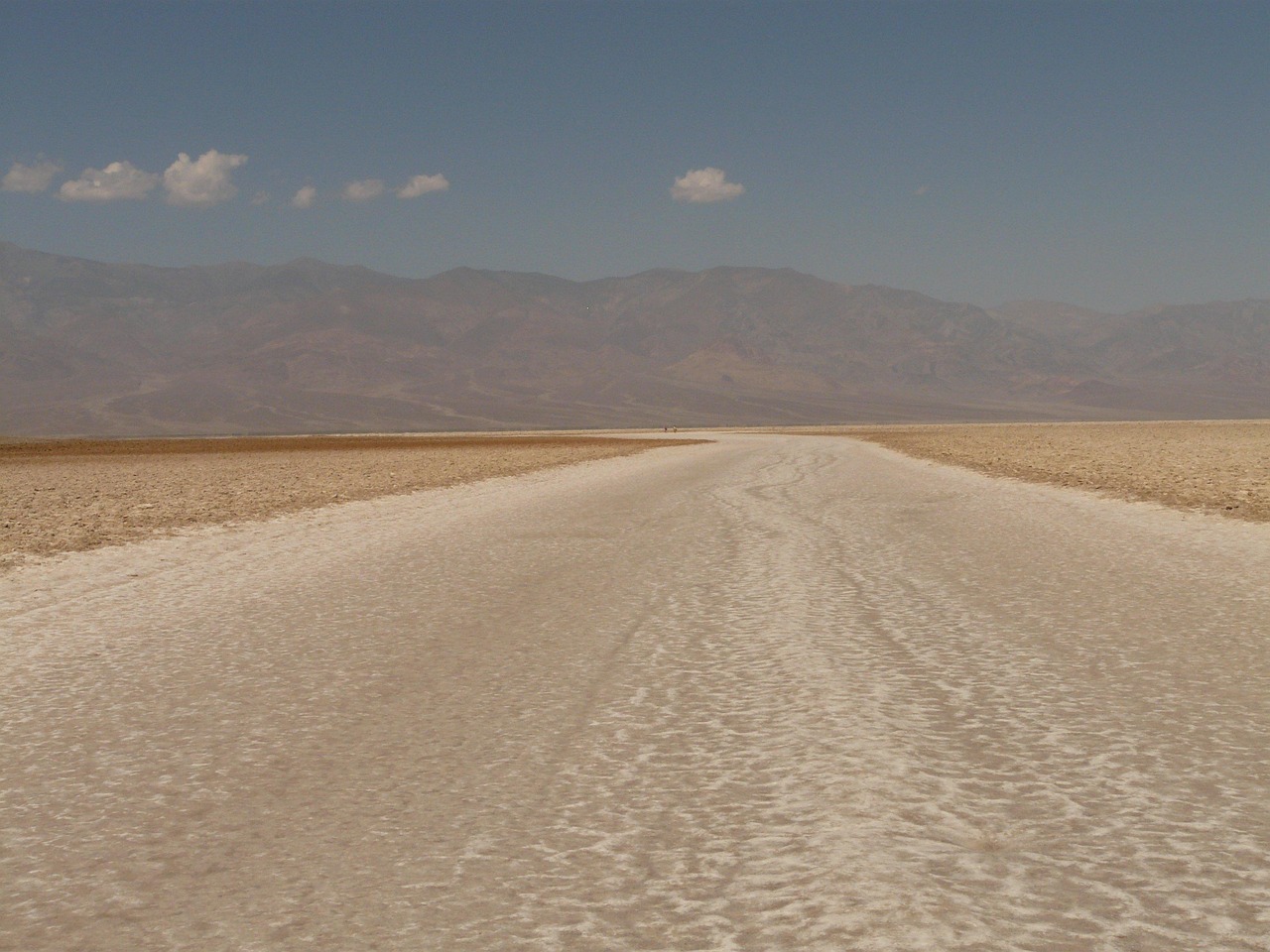
1. Badwater Basin Salt Flats
Why it’s iconic: At 282 feet below sea level, Badwater Basin is the lowest point in North America and an essential stop in any travel guide for Death Valley National Park.
I still remember the first time I stepped onto the blinding white expanse of Badwater. It was late January, the air a crisp 60°F (15°C), the Panamint Mountains glowing with snow in the distance. I walked out onto the salt for what felt like 10 minutes and realized I’d been gone nearly an hour. Distances play tricks on you here.
The first hundred meters from the parking lot are a packed, relatively smooth salt surface that most visitors stick to. But if you keep walking another 10–20 minutes, you reach the classic salt polygons—those hexagonal cracked patterns that look like a mosaic laid by giants. This is where the photography magic happens, especially at sunrise or late afternoon when shadows carve depth into each polygon.
History & geology: Badwater Basin is part of a fault-bounded basin that has filled and evaporated countless times over millions of years, leaving thick layers of salt and minerals. The small pool near the boardwalk is “bad water” because of its high salinity, not because it’s stagnant or dirty.
How to visit:
- Access: About 30 minutes’ drive south of Furnace Creek on Badwater Road. Paved, suitable for all vehicles.
- Best time: Sunrise for soft light and cooler temperatures; sunset can be beautiful but often windier.
- Family-friendly? Yes—short walk, wide-open space, and kids love the crunchy salt underfoot.
- Romantic? Very. Twilight here feels lunar; I’ve seen couples bring picnic blankets and just sit in silence as the stars emerge.
My tip: If you’re planning a 3 day itinerary for Death Valley National Park, hit Badwater either very early or very late on your first full day. In cooler months, you can combine it with Golden Canyon and Artist’s Drive in one loop. In summer, treat Badwater as a quick sunrise stop only—heat radiates off the salt like a mirror.
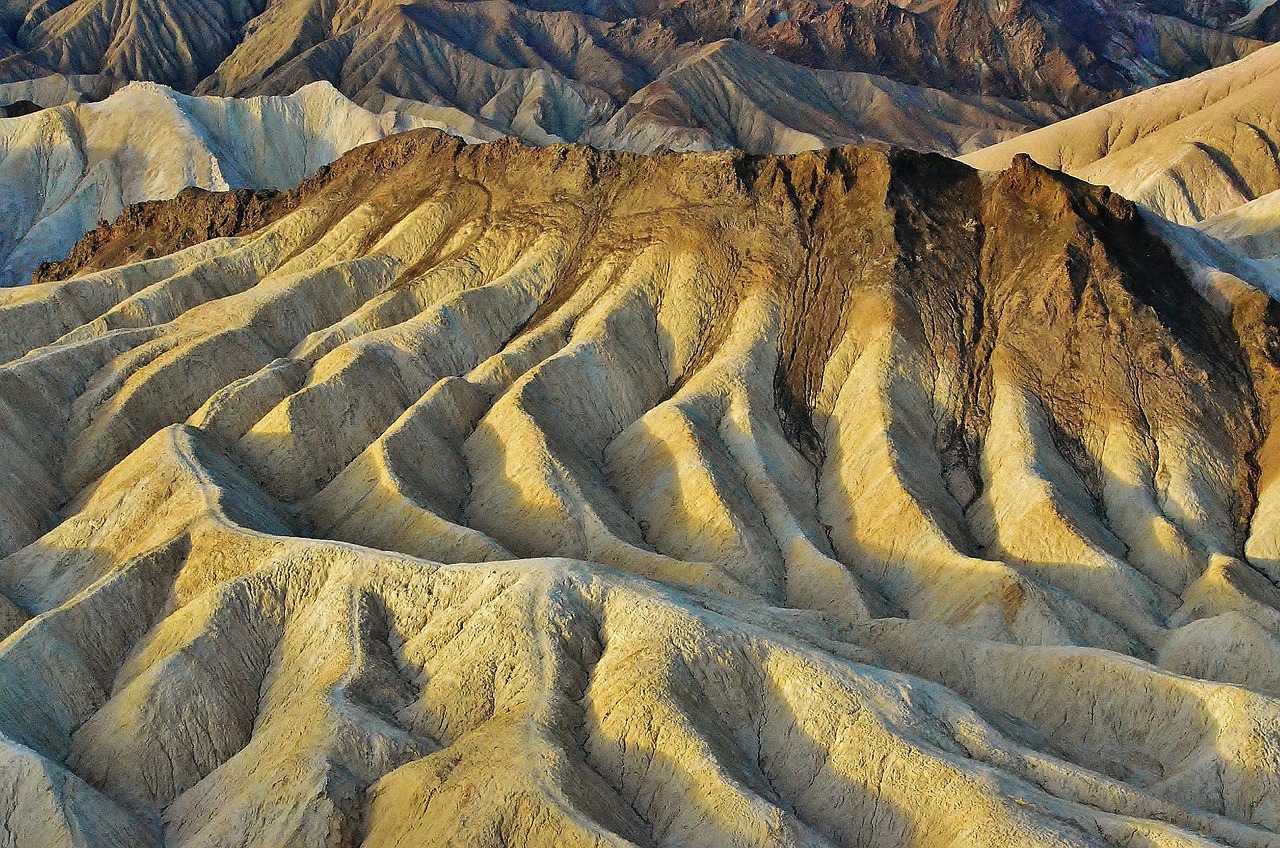
2. Zabriskie Point
Why it’s iconic: If you’ve ever seen a photo of golden, folded badlands at sunrise, it was probably Zabriskie Point. This is where I bring friends on their first morning in the park.
I’ve watched dozens of sunrises from Zabriskie Point, and each one feels different. One cold February morning, thin clouds lit up pink over the Panamints while the badlands stayed a deep, sleepy blue. Another time, summer monsoon storms billowed over the valley, and we watched lightning flicker 20 miles away while staying perfectly dry.
What to do: From the parking lot, it’s a short, paved walk uphill to the main viewpoint—accessible for most visitors. From there, you can simply soak in the view or extend your experience by hiking into the badlands along the Badlands Loop or linking to Golden Canyon and Gower Gulch.
Photography tips:
- Arrive at least 30 minutes before sunrise to catch the pre-dawn hues.
- Use a wide-angle lens to capture the undulating badlands in the foreground and the valley beyond.
- Stay 20–30 minutes after sunrise; that’s when the textures really pop.
How it fits in your itinerary: For 3 days in Death Valley National Park, I recommend Zabriskie at sunrise on Day 1, then a late afternoon return to hike the badlands when temperatures allow.
3. Artist’s Drive & Artist’s Palette
Why it’s special: A 9-mile one-way scenic drive that winds through multi-colored volcanic hills, culminating at Artist’s Palette—an explosion of greens, pinks, purples, and yellows.
The first time I drove Artist’s Drive was by accident. I’d missed a turn after Badwater and figured I’d “just loop back.” Instead I ended up crawling along this narrow road, windows down, saying “wow” every few seconds as the hills shifted from gold to rust to turquoise.
Best time to go: Late afternoon to sunset. The angled light brings out the mineral colors, and you can linger for twilight photographs at Artist’s Palette.
Practical info:
- Access: Off Badwater Road, south of Furnace Creek. One-way, paved, passenger-car friendly. Trailers are prohibited.
- Stops: Several pullouts; the main stop is Artist’s Palette, where you can wander short, informal paths toward the colorful hills.
- Time needed: 45–90 minutes depending on how often you stop.
My tip: Pair Artist’s Drive with Badwater Basin in the late afternoon. Spend golden hour at Artist’s Palette, then head back toward Furnace Creek, stopping at any overlooks that catch your eye. It’s one of the most rewarding low-effort “things to do in Death Valley National Park.”
4. Mesquite Flat Sand Dunes
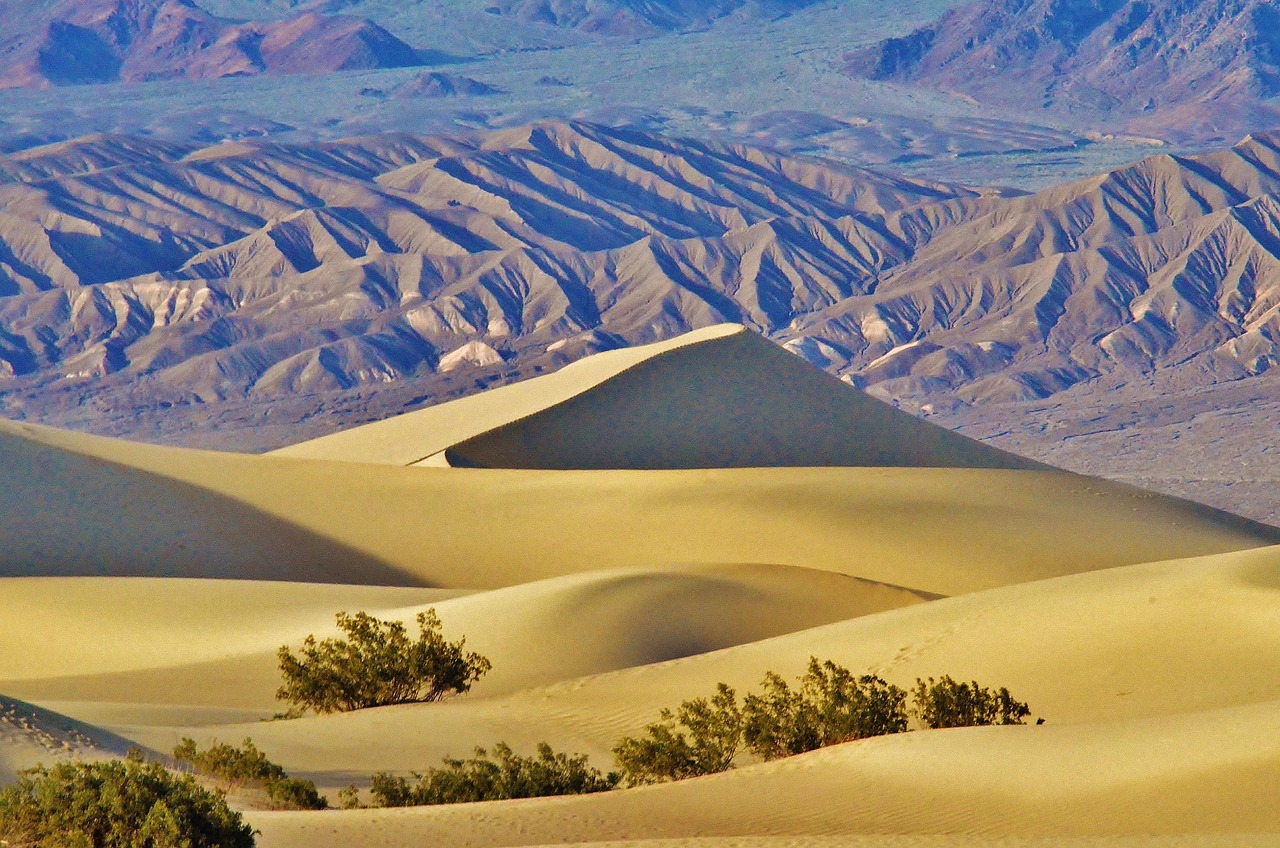
Why it’s special: Classic Sahara-style dunes with easy access, especially magical at sunrise or under moonlight.
Every trip I make to Death Valley includes at least one dune walk. One New Year’s Eve, a group of us carried hot chocolate in thermoses, trudged out onto the dunes under a half-moon, and lay on our backs watching meteor streaks until we couldn’t feel our toes. It remains one of my favorite moments in the park.
What to expect: There’s no official trail here—just a vast dune field where you can wander as far or as little as you like. The highest dunes are about a mile from the parking area, but you don’t need to reach them for great views. Walking on sand is tiring; plan for slow progress.
Best for:
- Families: Kids love rolling down the smaller dunes (just remind them not to disturb any sparse vegetation).
- Photography: Look for ripples, footprints, and sinuous dune crests at low-angle light.
- Romantic evenings: Late twilight dune walks are quiet and intimate; bring a headlamp and know your way back.
My tip: For a 4 day itinerary for Death Valley National Park, dedicate one sunrise to the dunes and one sunset to Badwater or Dante’s View. Mesquite is also a great “second stop” after a slow breakfast at Stovepipe Wells if you’re not a dawn person.
5. Dante’s View
Why it’s special: One of the best high viewpoints in any US national park, perched at about 5,475 feet with sweeping views over Badwater Basin and the Panamints.
On a clear winter day, you can see Mount Whitney—the highest point in the contiguous US—while standing above the lowest point at Badwater below you. That vertical contrast still gives me goosebumps.
Conditions: It’s often 20–30°F (11–17°C) cooler here than on the valley floor. I’ve scraped frost from my car windshield at Dante’s View and then been in a t-shirt at Furnace Creek an hour later. Bring layers.
What to do:
- Walk the short paths along the ridge to find your own vantage point.
- Come for sunrise if you’re up for an early drive; the light spills across the salt flats in a slow, beautiful wave.
- In summer, this is one of the few comfortable places in the park during the day.
My tip: For 3 days in Death Valley National Park, I like to schedule Dante’s View on the day I leave, catching a final sunrise or mid-morning panorama before driving back toward Las Vegas or the Sierra.
6. Golden Canyon & Gower Gulch Loop
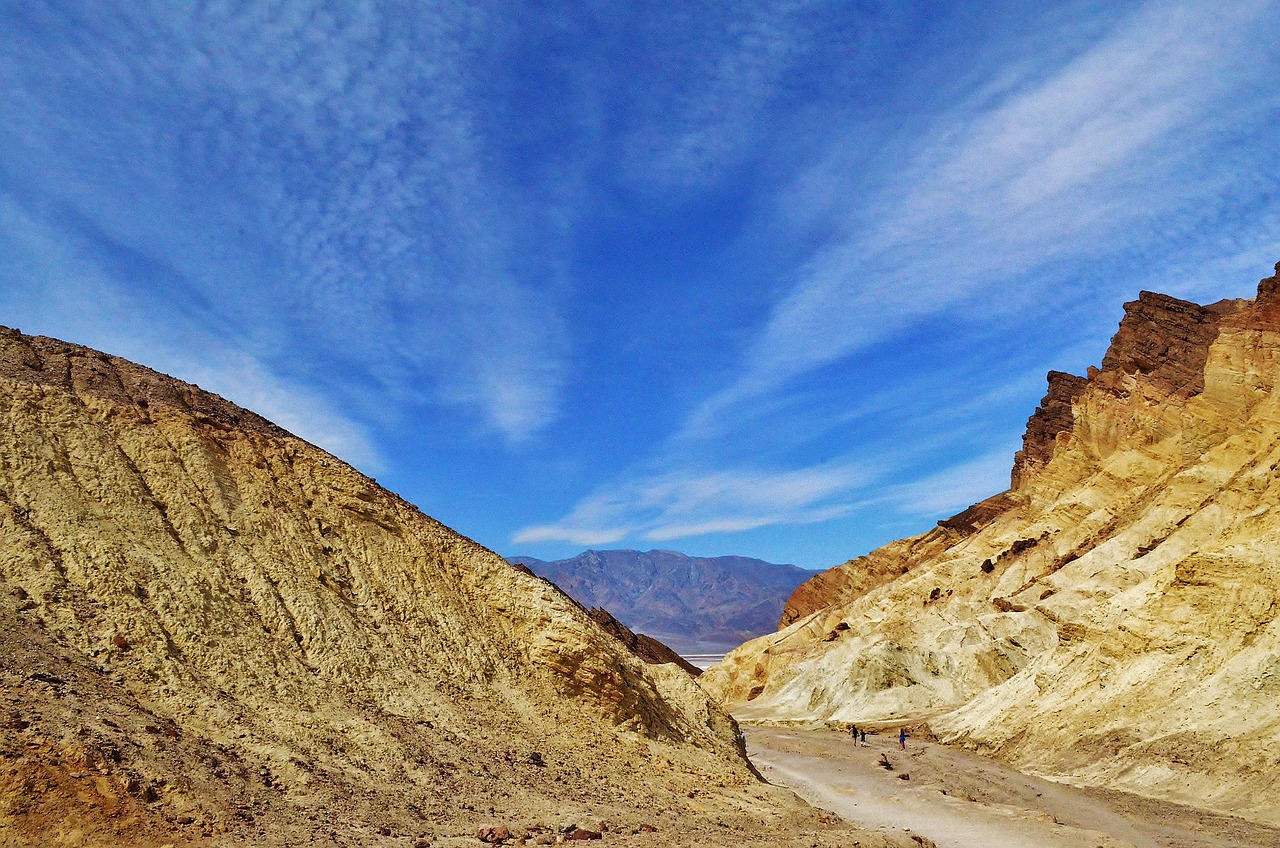
Why it’s special: Accessible badlands and canyon hiking right off the main road, with options from easy strolls to half-day loops.
The Golden Canyon – Gower Gulch loop is my “default recommendation” for hikers with one day in the park who want something more immersive than just viewpoints. One March afternoon, I guided friends along this loop in perfect 70°F weather; we climbed up to the famous Red Cathedral viewpoint, then dropped down through sculpted drainages into Gower Gulch, feeling like we’d walked through multiple mini-landsacpes in just a few hours.
Routes:
- Short option: Out-and-back up Golden Canyon to Red Cathedral (about 3 miles round-trip).
- Longer loop: Golden Canyon – Badlands – Gower Gulch loop (6–7 miles, more exposed and committing).
Trail tips:
- Start early, especially in late spring or fall—there’s almost no shade.
- Bring more water than you think you need; I carry 2–3 liters even in winter.
- Watch for flash-flood warnings in stormy seasons; avoid narrow gulches if rain is possible.
7. Mosaic Canyon
Why it’s special: Polished marble narrows, mosaic-breccia walls, and short scrambles make this one of the most fun slot-style canyons in the park.
I like to bring people here on their second or third day, once they’ve seen the big valley views. The moment you step into the narrow, smooth-walled entrance, Death Valley suddenly feels intimate. We once spent an entire afternoon in Mosaic, clambering up dryfalls, turning around when things felt too exposed, and just marveling at the geology up close.
Practical details:
- Access: Short dirt road from Stovepipe Wells; usually passable by regular cars, but check conditions.
- Distance: Up to 4 miles round-trip, depending how far you go.
- Difficulty: Easy at first, then moderate with some scrambling; families with adventurous kids do well here.
My tip: Bring grippy shoes and be willing to turn around when obstacles feel sketchy. This canyon is about exploration, not “finishing” a trail.
8. Devil’s Golf Course
Why it’s special: A bizarre, spiky salt-crust landscape that looks like something from a sci-fi set.
Devil’s Golf Course is not for walking—those jagged salt pinnacles are sharp and fragile—but it’s a quick, fascinating stop. On a still day, you can sometimes hear the salt popping and cracking as it expands and contracts.
How to visit: A short dirt road leads from Badwater Road to a parking area. I usually stop here for 10–20 minutes when driving between Furnace Creek and Badwater, especially if I’m showing first-timers around.
My tip: Don’t try to hike into the field; it’s easy to twist an ankle and the salt is razor-like. Enjoy the view from the edges, take photos, and move on.
9. Natural Bridge Canyon
Why it’s special: A short hike to a large natural rock bridge, great for families or anyone looking for a quick canyon experience.
I’ve used Natural Bridge as a “heat window” hike more than once—sneaking in an hour-long walk between a cool sunrise and a hot midday. The trail is straightforward: follow a wash up-canyon until the towering natural bridge spans overhead. Beyond it, you can continue further into the canyon to small dryfalls.
Details:
- Distance: About 1–2 miles round-trip depending how far you go.
- Access: Short, sometimes washboarded dirt road off Badwater Road; usually fine for standard cars.
- Best time: Morning in warm seasons; almost any time in winter.
10. Furnace Creek Visitor Center & Surrounds
Why it’s special: The heart of park operations, with exhibits, a bookstore, and that famous thermometer out front.
My first stop on every trip is the Furnace Creek Visitor Center. Even when I think I know what to expect, I still pop in to check the latest weather, road closures, and hiking conditions. Rangers here are bluntly honest about what’s safe, especially in shoulder seasons.
What to do:
- Watch the short orientation film.
- Check the heat advisory board and talk to rangers about your plans.
- Browse the bookstore for geology and history guides; the park’s story is much richer with context.
Nearby: You’re within a short drive of Zabriskie Point, Golden Canyon, Badwater Road, and the main in-park dining and lodging areas.
11. Stovepipe Wells Village & Area
Why it’s special: A smaller, more laid-back alternative to Furnace Creek, with direct access to Mesquite Flat Sand Dunes and Mosaic Canyon.
I like basing in Stovepipe when I want starry nights and easy dune access. Some of my favorite Death Valley evenings have been spent on the porch outside the general store, sipping a cold drink as the sky shifted from cobalt to black and the outlines of the dunes disappeared.
Good for:
- Travelers who value quiet over resort amenities.
- Photographers focusing on dunes and northern valley scenes.
- Budget-conscious trips (rooms and campsites often price lower than Furnace Creek).
12. Panamint Valley & Panamint Dunes
Why it’s special: A quieter, more remote dune system and valley with fewer crowds than Mesquite.
Panamint Dunes require a longer hike and a bit more commitment, which is exactly why I love them. The first time I went, we didn’t see another person the entire afternoon. We had a whole dune field to ourselves, with 360-degree mountain views and absolute silence broken only by the crunch of our footsteps.
Details:
- Access: Remote dirt roads and then a cross-country hike; best for experienced hikers with good navigation.
- Time: Often a half- to full-day outing; not ideal for quick-hit itineraries.
- Best for: Photographers, solitude-seekers, and those on 4 or 5 day itineraries who have already seen the main sights.
13. Telescope Peak & High Country
Why it’s special: The park’s highest point at 11,043 feet, with views that span from the lowest valley floor to snow-capped Sierra peaks.
I’ve only summited Telescope Peak twice—once in late October in blazing fall color, and once in early June when patches of snow still lingered on the shaded north side. Both times the trail felt like stepping into another park entirely: pinyon pines, junipers, and cool, crisp air.
Trail basics:
- Distance: About 14 miles round-trip, strenuous due to elevation and length.
- Season: Typically late spring through fall; snow can linger into early summer.
- Best for: Experienced hikers on a 4 or 5 day itinerary for Death Valley National Park who want a big summit day.
14. Ubehebe Crater
Why it’s special: A dramatic volcanic maar crater in the northern part of the park, with short hikes along the rim.
The first time I looked into Ubehebe Crater, I had that odd sense that the ground had simply fallen away. Dark cinders and layered deposits tell the story of relatively recent (in geologic time) explosive eruptions about 2,000 years ago.
What to do:
- Walk part or all the way around the rim (windy on many days).
- Descend into the crater if conditions allow—remember the climb back up is steep and sandy.
- Extend your drive to the Racetrack turnoff if you have a high-clearance vehicle and solid backcountry prep.
15. Racetrack Playa (Advanced Backcountry)
Why it’s famous: A remote dry lakebed where stones appear to have “sailed” across the playa, leaving long tracks—one of the park’s legendary sights.
Reaching the Racetrack is a serious undertaking. I’ve only gone with high-clearance vehicles and extra tires, and I would never take a standard rental car. The washboarded road is notorious for shredding sidewalls.
If you go:
- Rent a 4x4 from an outfit that allows off-pavement travel, or join a guided tour.
- Carry extra water, food, and a satellite communicator if possible—no cell service.
- Never walk on the playa when it’s wet; footprints can scar the surface for years.
My honest take: For most travelers, especially on 3 day or 4 day itineraries, Racetrack is best left for a future, more specialized trip or done via a reputable tour.
16. Titus Canyon (One-Way Scenic Drive)
Why it’s special: One of the park’s most spectacular drives: colorful badlands, a ghost town, and a narrow limestone canyon you drive right through.
Titus Canyon feels like a condensed geology road trip. I’ve done it in everything from a Subaru Outback to a high-clearance truck; in dry conditions, standard high-clearance vehicles do fine, but check with rangers first.
Highlights:
- Red-pass landscapes at the top of the drive.
- The ghost town of Leadfield, with crumbling ruins and interpretive signs.
- The final narrows section, where canyon walls loom overhead and the road squeezes through.
17. Rhyolite Ghost Town & Goldwell Open Air Museum
Why it’s special: A classic Western ghost town just outside the park boundary, with an outdoor art installation next door.
On cooler afternoons, I love heading to Rhyolite from Beatty. Old bank building facades, a bottle house, and rusting relics of the early 1900s mining boom give you a glimpse into the region’s human history. Next door, the quirky Goldwell Open Air Museum hosts surreal sculptures scattered across the desert.
Good for: Families, history buffs, and anyone wanting a break from pure geology in their list of things to do in Death Valley National Park.
18. Salt Creek Interpretive Trail
Why it’s special: A short boardwalk where, in wetter years, you can spot the rare Desert Pupfish—a tiny survivor in one of the harshest environments on Earth.
This is one of my favorite kid-friendly stops. The loop is short and easy, and interpretive signs explain how life clings on in the salt creek. In spring, you might catch pupfish darting in the shallow water.
19. Badwater Road Scenic Pullouts & Side Canyons
Why it’s special: Some of Death Valley’s lesser-known side canyons and vistas sit just off Badwater Road, away from the big-name stops.
On my longer stays, I’ll often park at an unmarked pullout and wander carefully up a wash or low canyon (staying mindful of flash-flood risks). These quiet corners of the park are where I’ve had my most peaceful desert moments—no signs, no crowds, just the echo of my footsteps and the occasional raven.
20. Emigrant Canyon & Wildrose Charcoal Kilns
Why it’s special: Historic beehive-shaped charcoal kilns in the western high country, surrounded by pinyon-juniper woodland.
The Wildrose Charcoal Kilns look like something out of a fantasy film—ten stone beehives tucked into a mountain slope. Built in the 1870s to produce charcoal for silver-lead smelters, they’re among the best-preserved kilns in the West.
Every fall I try to squeeze in a Wildrose visit. The cooler air, faint smell of pine, and golden afternoon light make it hard to believe you’re in the same park as the blistering valley floor.
3–5 Day Itineraries for Death Valley National Park (With Personal Stories)
Here’s how I’d structure 3, 4, and 5 days in Death Valley National Park based on years of visits, guiding friends, and learning the hard way about distances and heat. These aren’t rigid schedules but flexible frameworks you can adapt to your pace and season.
3 Day Itinerary for Death Valley National Park
If you have 3 days in Death Valley National Park, focus on the greatest hits with enough breathing room to actually enjoy them. Assume you’re arriving from Las Vegas on Day 0 or early Day 1.
Day 1: First Light & First Salt
Morning: Sunrise at Zabriskie Point & Badlands Walk
I like to start every first-timer’s trip with Zabriskie Point. Set your alarm early, bundle up (mornings can be cold even when afternoons are hot), and arrive at the parking lot about 30–40 minutes before sunrise. Walk up the short paved path and stake out a spot along the low walls.
As dawn creeps in, the badlands below change from gray silhouettes to golden folds. On one January trip, we all fell silent for the last 10 minutes before the sun broke the horizon—everyone around us was whispering, as if in a cathedral.
After sunrise, if temperatures are comfortable, walk a short distance down one of the badlands trails. You don’t need to commit to a full loop; even 20–30 minutes of wandering gives you a sense of the landscape’s texture.
Late Morning: Furnace Creek Visitor Center & Orientation
Head to the Visitor Center to check current conditions, road closures, and heat advisories. Ask rangers for up-to-date advice on Golden Canyon, Mosaic Canyon, and any backcountry drives you’re considering.
Pick up a park map and, if you’re a geology nerd like me, a guidebook that explains the features you’ll be seeing.
Lunch: Grab lunch at The Ranch at Death Valley café or pack a picnic and find a shaded spot near Furnace Creek. Hydrate, re-apply sunscreen, and plan your afternoon around the day’s heat.
Afternoon: Badwater Basin & Devil’s Golf Course
Drive south on Badwater Road to Badwater Basin. If it’s cool (winter/early spring), you can comfortably walk out to the salt polygons; in hotter seasons, limit your time and distance. On one April afternoon, even at a “mild” 88°F (31°C), we could feel the heat doubling off the white salt surface.
On your way back, stop at Devil’s Golf Course for a quick look at the jagged salt formations.
Sunset: Artist’s Drive & Artist’s Palette
Time your drive along Artist’s Drive so you reach Artist’s Palette about 45–60 minutes before sunset. Wander the short paths and watch the colors shift as the sun drops. It’s one of the most photogenic spots in the park.
Evening: Dinner back at Furnace Creek or Stovepipe Wells. If you’re not too tired, step outside later for your first look at the stars—especially impressive around new moon.
Day 2: Dunes, Canyons & Stars
Sunrise: Mesquite Flat Sand Dunes
Drive to Mesquite Flat Sand Dunes near Stovepipe Wells in the dark, aiming to arrive 30 minutes before sunrise. Bring a headlamp and wander out onto the dunes until you find a composition you like—maybe a curving ridge, maybe a field of ripples.
On a calm December morning, I sat on a dune crest with a thermos of coffee and watched the first light creep across the valley. The only sounds were a distant raven and, faintly, someone’s laugh half a mile away. The sand glowed soft pink, then gold.
Mid-Morning: Mosaic Canyon
After the dunes, head to Mosaic Canyon. The polished marble narrows stay shaded for part of the morning, making this a good late-morning hike outside of mid-summer. Explore as far as you’re comfortable; turn around whenever the scrambling feels like “enough.”
Lunch: Grab a simple lunch at Stovepipe Wells or picnic in a designated area. In hotter months, this is your siesta window—rest indoors, recharge devices, refill water.
Afternoon: Golden Canyon (Short Version)
Drive back toward Furnace Creek and hike the shorter Golden Canyon out-and-back to Red Cathedral if temperatures and your energy levels allow. If it’s too hot, save this for an early-morning hike on Day 3.
Sunset: Zabriskie or Dante’s View
For your second sunset, choose between a return to Zabriskie Point or the higher, cooler Dante’s View. I often recommend Dante’s for a different perspective; watching the valley floor slowly sink into shadow from up high is mesmerizing.
Night: Stargazing
Pick a turnout or your campground and let your eyes adjust for 20–30 minutes. On one August trip, lying on my back near Furnace Creek, I counted six Perseid meteors in under 15 minutes. If you’re here during a new moon and the sky is clear, you’ll see the Milky Way arch vividly across the sky.
Day 3: Choose Your Own Adventure
For your final day, choose based on your interests:
- History & Ghost Towns: Head to Rhyolite via Beatty, explore the ghost town and Goldwell Open Air Museum, then loop back.
- High Views: Return to Dante’s View or drive toward the Wildrose Charcoal Kilns if roads and season allow.
- Short Hikes & Wildlife: Walk the Salt Creek boardwalk (seasonal water flow), or revisit any favorite spots in better light.
Plan your departure for late afternoon or early evening, giving yourself plenty of daylight for the drive out of the park.
4 Day Itinerary for Death Valley National Park
With 4 days in Death Valley National Park, you can add the northern or western high country and slow your pace significantly.
Follow the 3 day itinerary above, then add:
Day 4: Northern Volcanic Landscapes or Western Mountains
Option A: Ubehebe Crater & Northern Valley
- Drive up to Ubehebe Crater, walk the rim, and explore nearby Little Hebe.
- If you have the right vehicle and preparation, consider extending toward the Racetrack (only if conditions and your skills permit).
- Enjoy the relative solitude of the northern reaches; this area gets far fewer visitors than Furnace Creek.
Option B: Wildrose Charcoal Kilns & High Country Hikes
- Drive to the Wildrose Charcoal Kilns via Emigrant Canyon.
- Hike a portion of the high-country trails, or if you’re fit and conditions are right, plan a full-day hike on the Telescope Peak trail (start very early).
- Enjoy cooler temperatures, forested slopes, and a completely different side of the park.
On my last 4-day trip, we spent the final day almost entirely around the kilns and high country. It felt like a palate cleanser after the valley heat—pine-scented breezes, bird song, and a picnic under the trees.
5 Day Itinerary for Death Valley National Park
With 5 days in Death Valley National Park, you can truly settle in. Mix iconic must-see attractions with hidden gems and unstructured exploring.
Days 1–3:
Follow the 3 day itinerary for Death Valley National Park, adjusting for weather and your energy levels.
Day 4: Remote Corners & Lesser-Known Canyons
Dedicate this day to quieter areas:
- Explore a less-frequented side canyon off Badwater Road (with full awareness of flash-flood risks and navigation).
- Seek out viewpoints not on most maps—simple turns and pullouts that catch your eye.
- Spend extra time at places you rushed through earlier in the trip.
Day 5: High Country or Day Trip Combo
Use your final day as a “choose-your-own-adventure” based on what you loved most:
- Return to the high country for hiking or a relaxed picnic near the Wildrose area.
- Take a more leisurely Titus Canyon & Rhyolite loop if conditions and your vehicle allow.
- Simply slow down: coffee at sunrise, a mid-day nap, and long stargazing sessions at night.
On my longest stays, the last day is always my favorite. I stop chasing checklists and let the park dictate the rhythm: long shadows on the dunes, ravens riding thermals, and the way the light pools and drains across the valley floor.
Where to Eat: Local Food in and Around Death Valley National Park
Death Valley isn’t a foodie destination in the traditional sense, but you can still eat well if you plan ahead. In-park options are limited and pricey; nearby towns offer more variety.
In-Park Dining
- The Oasis at Death Valley (Inn & Ranch) – Sit-down restaurants and a bar. I’ve celebrated a friend’s birthday here, watching dusk settle over the palm trees—surreal after a dusty day of hiking.
- Furnace Creek & Stovepipe Wells Cafés – Burgers, sandwiches, basic breakfast. My go-to for a hot meal when I’m too tired to cook at camp.
- General Stores – Snacks, limited groceries, ice, drinks, and camping basics. Expect high prices but lifesaving convenience.
Gateway Town Eats
- Pahrump – Full-size supermarkets for stocking up on groceries before entering the park; chain restaurants and local diners.
- Beatty – Small-town cafés with hearty breakfasts and simple dinners—perfect fuel for early starts and late returns.
- Lone Pine & Ridgecrest – Wider range of restaurants, from Mexican to pizza to classic American diners.
Money-Saving Food Tips
- Do a big shop in Las Vegas, Pahrump, or Ridgecrest before entering the park.
- Pack a cooler with ice; refill at in-park gas stations or general stores.
- Plan simple meals: oatmeal, sandwiches, wraps, and one-pot dinners.
- Always carry more water than you think you’ll need—both for drinking and for emergencies.
Where to Stay: Lodges, Campgrounds & Nearby Towns
Your choice of base shapes your experience. Here’s how I think about it when planning trips for friends.
In-Park Lodges
- The Inn at Death Valley – Historic, more upscale, ideal for couples or a romantic trip. Beautiful pool and gardens.
- The Ranch at Death Valley – Family-friendly, central location, easier on the budget than the Inn.
- Stovepipe Wells Village – Simpler rooms, quieter setting, great dune access.
Campgrounds
- Furnace Creek Campground – Most central; partial shade on some sites; reservations often needed in peak season.
- Texas Springs & Sunset Campgrounds – Large, open areas near Furnace Creek; basic amenities.
- Stovepipe Wells Campground – Convenient for dunes and Mosaic Canyon; wide-open desert feel.
- Panamint Springs & Wildrose Area – Good for cooler nights and access to western/high-country areas.
Gateway Town Stays
If in-park lodging is full or you prefer more amenities, consider:
- Pahrump & Beatty (NV) – Motels, small hotels, and RV parks; good for trips focused on the eastern and northern parts of the park.
- Lone Pine & Ridgecrest (CA) – Ideal for combining Death Valley with the Eastern Sierra or other desert parks.
After-Dark & Quiet Experiences in Death Valley National Park
Some of Death Valley’s best moments happen when the crowds thin and the temperatures drop.
Stargazing & Dark-Sky Programs
- Furnace Creek Area: Easy walk from lodges or campgrounds; look for ranger-led astronomy talks in cooler months.
- Mesquite Dunes: Hike a short way from the parking area for near-360° sky views—go with a buddy and a headlamp.
- Dante’s View: On clear nights, this high vantage point feels like hanging above the universe. Dress warmly.
Ranger Talks & Campfire Programs
In peak seasons (especially winter and early spring), the park often hosts evening ranger programs on topics like geology, night skies, and desert ecology. Check the schedule at the Visitor Center.
Full-Moon Hikes & Quiet Evenings
Walking the dunes or Badwater Basin under a full moon is unforgettable. The desert glows silver, and you often don’t need a flashlight. Be aware of your route, watch for trip hazards, and stay oriented to the parking area lights.
What’s New & Upcoming Events 2026–2027
For 2026–2027, keep an eye on:
- Phased Reopening of Scotty’s Castle Area: Restoration work has been ongoing after flood damage. Check the official NPS website in 2026 for the latest on tours and access.
- Dark-Sky & Astronomy Events: Periodic stargazing festivals and astronomy weekends are sometimes held in cooler seasons. Ask at the Visitor Center or check park calendars.
- Road & Infrastructure Projects: Roads into backcountry areas like Titus Canyon and the Racetrack sometimes close for repairs or flood damage; 2026–2027 may see temporary closures and reroutes after heavy winter storms.
Day Trips & Nearby Attractions
If you have extra time or are crafting a longer Southwest itinerary, consider these add-ons:
- Red Rock Canyon National Conservation Area (near Las Vegas): Great rock formations and hiking; nice stop between Las Vegas and Death Valley.
- Alabama Hills & Mount Whitney Portal (near Lone Pine): Movie history, boulders, arches, and stunning Sierra views.
- Valley of Fire State Park (Nevada): Fiery red rock landscapes; combine with a Las Vegas-based trip.
- Mojave National Preserve (California): Dunes, Joshua trees, and volcanic cinder cones—excellent if you’re designing a desert road trip.
Cultural Etiquette & Local Customs
Death Valley is remote, but it’s not lawless. Respecting the land, wildlife, and other visitors is a core part of the local “culture.”
- Silence is part of the experience: Many people come for quiet. Keep voices low at viewpoints and on trails.
- Leave No Trace: Pack out all trash, including fruit peels and tissues. Stay on durable surfaces; don’t walk on fragile soil crusts or wet playa.
- Respect Closures & Warnings: If a road or trail is closed, there’s a reason—often safety or resource protection.
- Water is sacred: Don’t bathe or wash dishes in natural water sources; use designated facilities.
- Indigenous Lands: The Timbisha Shoshone people have lived in this area since time immemorial. Be respectful at cultural sites and follow posted guidance.
Practical Logistics & Essential Travel Advice for Death Valley National Park
Entrance Fees & Passes
- Entrance Fee: Collected at kiosks or self-pay stations; valid for 7 consecutive days.
- America the Beautiful Pass: If you’re visiting multiple US national parks in 2026–2027, this annual pass is often the best deal.
Permits & Reservations
- No timed-entry system as of 2026, but check for updates.
- Backcountry camping and some routes may require free or low-cost permits; always verify with NPS.
- Popular campgrounds and lodges often require advance reservations in peak season (winter and spring).
Weather, Seasons & Altitude
- Summer (June–September): Extremely hot—often over 110°F (43°C), sometimes over 120°F (49°C). Limit activities to early morning and evening; some trails are not recommended.
- Winter (December–February): Prime hiking season; cool to cold nights, pleasant days.
- Spring (March–April): Ideal for first-timers; potential wildflowers in good rain years.
- Fall (October–November): Cooling temperatures, great for mixed hiking and camping.
- Altitude: Valley floor is below sea level; high country exceeds 8,000–11,000 feet. If you’re sensitive to altitude, ascend gradually and hydrate.
Wildlife & Safety
- Heat: The number one danger. Always carry more water than you think you need; wear sun protection; never underestimate the sun.
- Snakes & Scorpions: Present but rarely a problem if you watch where you step and don’t stick hands/feet into crevices.
- Coyotes & Ravens: Don’t feed wildlife; secure food and trash.
- No Bears or Bison: Unlike some parks, Death Valley’s hazards are more about heat, terrain, and dehydration than large mammals.
Cell Coverage & Navigation
- Cell service is limited and patchy; don’t rely on it.
- Download offline maps (Google Maps, Maps.me, or Gaia GPS) before your trip.
- Carry paper maps; the park brochure map plus a detailed topographic map are ideal.
Front-Country vs. Backcountry Experiences
- Front-Country: Paved roads, drive-up viewpoints, short marked trails, and campgrounds with facilities. Most of the must-see attractions in Death Valley National Park fall here.
- Backcountry: Dirt roads, remote canyons, and long routes with minimal or no signage. Backcountry travel requires strong preparation, extra water, and ideally high-clearance vehicles.
What to Pack
- Wide-brim hat, sunglasses, sunscreen (reef-safe if possible).
- Lightweight, breathable clothing plus warm layers for nights and high country.
- Reusable water containers (aim for at least 3–4 liters per person per day, more in summer).
- Sturdy hiking shoes; sandals for camp.
- Headlamp, spare batteries, power bank.
- First-aid kit, snacks, and extra food in the car.
Money-Saving Tips, SIM Cards, Transport & Visas
How to Save Money
- Visit in shoulder seasons (late fall or early spring) when lodging may be slightly cheaper.
- Camp instead of staying in lodges, if you’re equipped for it.
- Stock up on groceries and fuel outside the park (Pahrump, Beatty, Ridgecrest, Lone Pine).
- Buy an annual national park pass if you’ll visit several parks in 2026–2027.
SIM Cards & Connectivity
- US Visitors: Your existing plan will work where there’s coverage, but expect large dead zones.
- International Visitors: Consider a US prepaid SIM (e.g., from major carriers) or an eSIM before arriving.
- Do your heavy downloading (offline maps, guide PDFs) while in cities with strong Wi-Fi.
Transport: Car Rental & Public Transit
- There is no meaningful public transport inside Death Valley National Park; you need a car.
- Standard rental cars can reach most front-country attractions and scenic drives.
- High-clearance or 4x4 vehicles are strongly recommended for backcountry roads like Racetrack or remote canyons.
- Refuel whenever you pass a station; gas is sparse and expensive inside the park.
Visa Requirements & Driving Licenses
- Visas: Check official US government sources for current visa requirements or ESTA eligibility.
- Driving Licenses: Many foreign licenses are accepted for short-term rental, but check with your rental agency. An International Driving Permit (IDP) can help, especially if your license is not in English.
When to Visit & Seasonal Highlights
Timing your visit can transform your experience.
- Best for Hiking: Late fall through early spring (roughly November–March).
- Best for Wildflowers: Variable, often March–April in good rain years; “superblooms” are rare and unpredictable.
- Best for Stargazing: Clear nights year-round; winter and shoulder seasons offer comfortable temperatures for standing outside at night.
- Best for Photography: Any season if you work with the light: sunrises, sunsets, and twilight. Summer thunderstorms can create dramatic skies, but heat and flash-flood risks increase.
Summary & Final Recommendations
Death Valley National Park is not a place you “do” in a day. It’s a landscape of extremes and subtleties: brutal summer heat and delicate spring flowers; vast open basins and intimate slot canyons; blazing midday sun and velvet-black night skies.
For most travelers, 3 days in Death Valley National Park provides a solid introduction to the must-see attractions: Badwater Basin, Zabriskie Point, Mesquite Dunes, Artist’s Drive, and a canyon or two. With 4 days, you can add the northern volcanic region or western high country. With 5 days, you can move beyond checklists and let the park’s rhythms guide you—lingering longer at places that speak to you, exploring hidden gems, and savoring quiet nights under the stars.
My final advice:
- Respect the heat, the distances, and your own limits.
- Plan, but leave space for serendipity—an unplanned stop at a side canyon, a second sunrise at a viewpoint you loved.
- Take time to learn the land’s stories—geologic, human, and ecological. Death Valley rewards curiosity.
If you do that, your trip won’t just be about “surviving” Death Valley. It’ll be about one of the most unforgettable, otherworldly landscapes you’ll ever walk through.