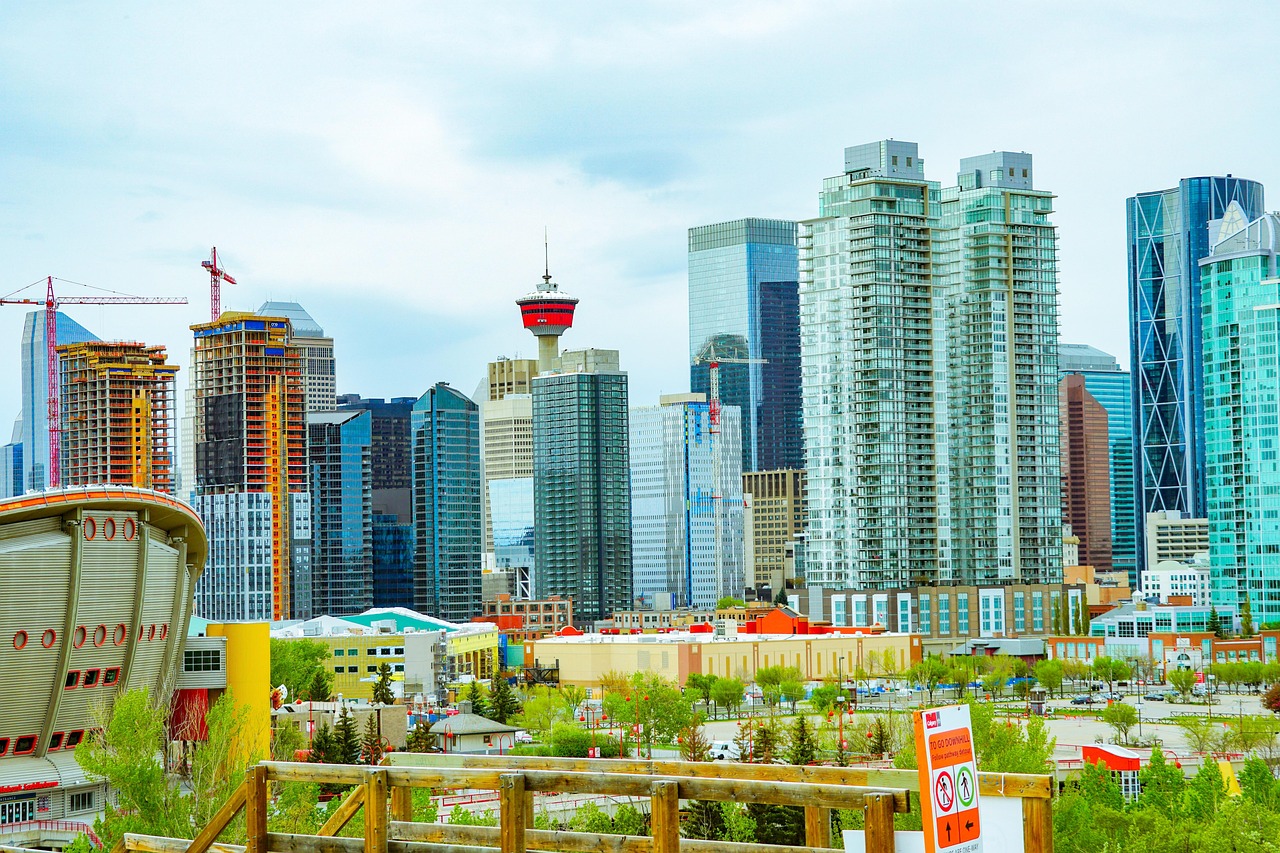
Why Visit Calgary? What Makes It Special
Calgary is one of those cities that quietly gets under your skin. It doesn’t shout like New York or Paris; it grins at you from under a cowboy hat, hands you a craft beer, and points toward the Rockies glowing on the horizon.
I’ve visited Calgary several times over the past decade, most recently in early 2026, and every trip has felt different: once as a broke backpacker staying in a downtown hostel, once as a couple on a winter “escape” (yes, into the cold!), and once as a remote worker who came for a month and stayed for three. Each time, the same things hooked me: the clean, bright light, the unfussy friendliness, and the ease of slipping from city life into nature in under an hour.
Calgary is a perfect base for 3–5 days—or longer—especially if you’re eyeing the Canadian Rockies but still want good restaurants, nightlife, and culture. This 2026–2027 travel guide for Calgary dives deep: detailed itineraries for 3, 4, and 5 days in Calgary, personal stories from 20+ must-see attractions, local food spots, hidden gems, etiquette, and practical travel advice.
Whether you’re planning a 3 day itinerary for Calgary packed with highlights, a slower 4 or 5 day itinerary for Calgary with side trips and local neighborhoods, or you’re just curious about things to do in Calgary, this guide is built to feel like you’re exploring with a local friend.
Table of Contents
- Why Visit Calgary
- Calgary Overview in 2026–2027
- Top 20+ Must-See Attractions in Calgary (With Local Stories)
- Suggested Itineraries: 3, 4, and 5 Days in Calgary
- Neighborhoods & Areas to Explore
- Best Local Food & Drinks in Calgary
- Nightlife, Entertainment & Cultural Experiences
- Day Trips & Nearby Attractions from Calgary
- Cultural Etiquette & Local Customs in Calgary
- Practical Travel Tips for Calgary
- Final Summary & Best Time to Visit Calgary
Calgary in 2026–2027: What’s New & Why It Matters
Calgary in 2026 feels like a city that’s stepped comfortably into its next chapter. The oil-boom swagger has softened into something more balanced: tech startups, film productions, food halls, and a growing arts scene, all framed by those forever mountains.
Major events & trends for 2026–2027:
- Calgary Stampede (July 2026 & 2027): The “Greatest Outdoor Show on Earth” remains the city’s defining event. Book accommodation 6–9 months ahead if your 3–5 days in Calgary overlap with this.
- Chinook Blast Winter Festival (Jan–Feb 2026 & 2027): A city-wide winter celebration with light installations, outdoor performances, and skating—great for families and couples.
- Ongoing CTrain & cycling infrastructure upgrades: Getting around car-free is easier than ever, especially from downtown to the inner neighborhoods.
- Food scene boom: New spots in East Village, Inglewood, and the Beltline are pushing Calgary’s reputation beyond steak and pancakes: think creative Canadian, Indigenous-inspired menus, and serious coffee culture.
All of this makes a 4 day itinerary for Calgary or even a 5 days in Calgary stay feel fully justified, not just as a pre-Banff stopover.
Top 20+ Must-See Attractions in Calgary (With Local Stories & Tips)
Below are the best places to visit in Calgary—from iconic towers to quiet river parks. I’ve organized them roughly from the most famous to the more under-the-radar, weaving in my own visits and practical “travel tips for Calgary” along the way.
1. Calgary Tower

The Calgary Tower is the postcard symbol of the city, and cliché or not, I still go up almost every trip—especially if I’m showing first-timers around.
The tower opened in 1968 as a Centennial project, and at the time it was the tallest structure in Calgary. Today, it’s been dwarfed by glassy skyscrapers, but that actually makes the 360-degree view more interesting: you’re looking through a skyline instead of down on it.
My favorite time to visit is about an hour before sunset. In summer, that means a long golden glow over the Bow River and then the city lighting up; in winter, you get that soft pink alpenglow on the Rockies that makes everyone suddenly quiet.
Don’t miss: the glass floor. It’s gimmicky, but fun. I’ve watched hardened business travelers go pale standing on it.
- Family-friendly? Yes. Kids usually love the elevator ride and glass floor.
- Romantic? Also yes—sunset visits are great for couples.
- Adventurous? Mildly, if you’re afraid of heights.
Practical tips: Book tickets online in high season to skip lines. The tower is downtown, a short walk from most central hotels and CTrain stations. Pair it with a stroll along Stephen Avenue afterward for food and people-watching.
2. Prince’s Island Park & The Bow River Pathway
Prince’s Island Park is where I always end up when I need a breath of air between meetings or writing stints. It’s a green island in the Bow River, connected by pedestrian bridges, with views back to the downtown skyline.
On a warm summer evening, this is Calgary at its best: joggers, families having picnics, buskers, cyclists, and the occasional beaver slipping into the river if you’re lucky. I once spent an entire afternoon here doing nothing more than reading on the grass, watching the sun move over the office towers, and walking for ice cream over to Eau Claire Market.
Events: In July, the Calgary Folk Music Festival turns the island into a multi-stage music wonderland—great for both families and groups of friends. Bring a blanket and layers; evenings cool quickly even in summer.
Tips: Rent a bike or e-scooter and ride east and west along the Bow River Pathway. You’ll see neighborhoods you’d otherwise miss and get a feel for the city’s geography. The paths are mostly flat and well-paved, suitable even for casual riders.
3. Glenbow at The Edison (New Glenbow Museum)
The Glenbow is Calgary’s flagship art and history museum, currently reimagined and relocated (temporarily) into The Edison building while its original site undergoes a massive renovation. I spent a rainy afternoon here in 2026 and barely scratched the surface.
The Glenbow’s strength is how it frames Western Canadian history and contemporary art without romanticizing or sanitizing it. You’ll find exhibits on Indigenous cultures, early settler life, and modern Calgary, plus rotating art installations that lean contemporary and sometimes delightfully weird.
Family-friendly: Yes—look for hands-on exhibits and family programming on weekends.
Tip: Check current admission policies; in recent years the Glenbow has moved toward free or pay-what-you-can models thanks to donations, making it an excellent option if you’re saving money in Calgary.
4. Heritage Park Historical Village
Heritage Park is the kind of place locals grow up visiting on field trips, then rediscover as adults with their own kids—or, in my case, as a curious visitor who expected something kitschy and instead loved it.
It’s a massive living history museum on the Glenmore Reservoir, with costumed interpreters, old-timey streets, a working steam train, paddlewheeler rides, and heritage buildings from across Western Canada.
I first went on a crisp October day. The leaves were turning, there was woodsmoke in the air, and I found myself inside an old baking demonstration, eating fresh bannock and listening to stories about how Calgary grew from a small outpost to a boomtown.
- Ideal for: Families, history buffs, and anyone who likes immersive experiences.
- Plan: Give it at least half a day, more with kids.
- Food: There are several on-site eateries; the bakery is a must for snacks.
Getting there: It’s in the southwest; easiest by car or rideshare, though buses do run. Combine with a walk along the Glenmore Reservoir paths if the weather’s good.
5. Wilder Institute / Calgary Zoo
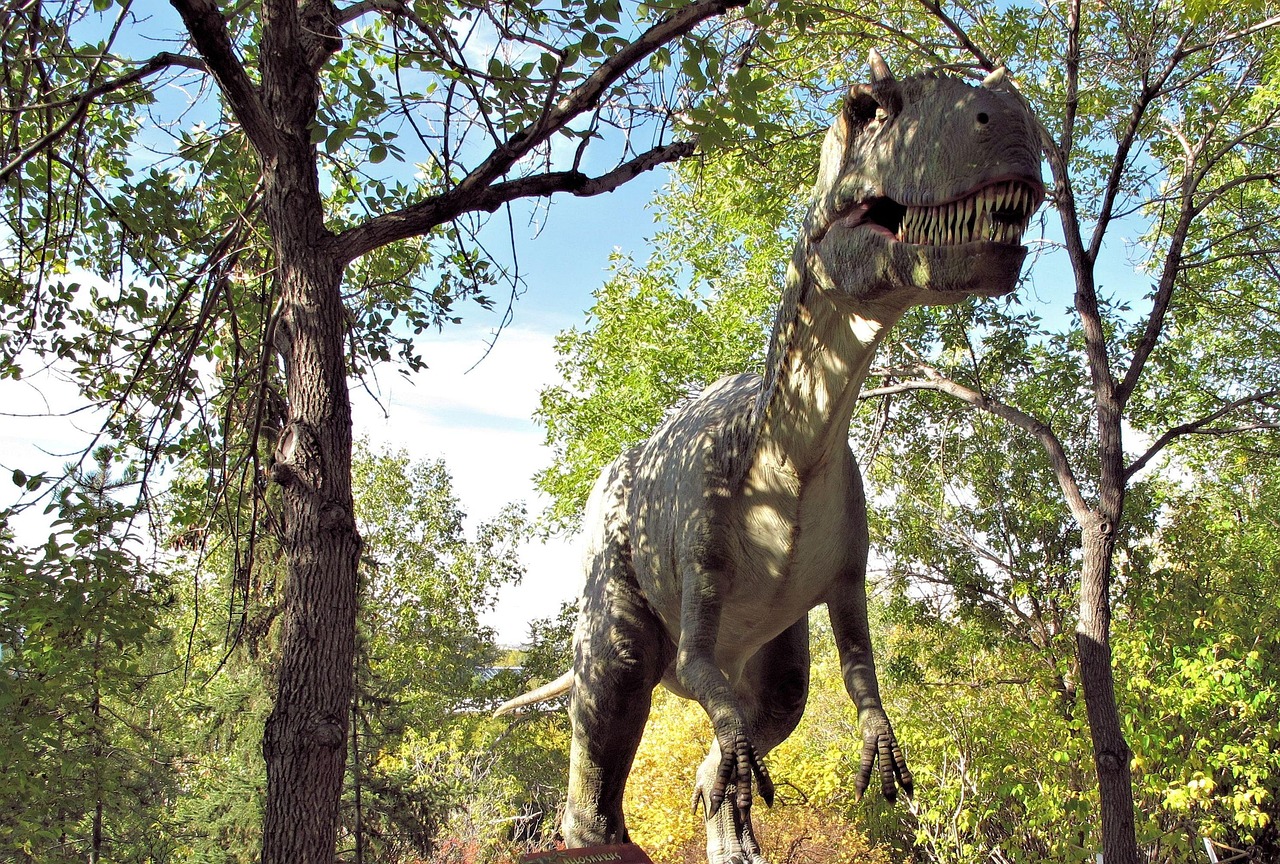
The Calgary Zoo, now branded with its conservation partner as the Wilder Institute / Calgary Zoo, is one of the most respected zoos in Canada thanks to its focus on research and habitat quality.
I went on a chilly November weekday and loved that it wasn’t crowded. The penguins strutted like little celebrities, the Canadian Wilds section felt appropriately rugged, and the Land of Lemurs walk-through was a hit with every kid within sight.
Why go: It’s a great family day out, but also enjoyable for adults who appreciate conservation and animal behavior. The grounds are large, with indoor pavilions for cold or rainy days.
Tip: It’s right by a CTrain station (Zoo Station), making it one of the easiest things to do in Calgary without a car. Wear comfortable shoes; the grounds are extensive.
6. Inglewood: Calgary’s Oldest Neighborhood
Inglewood is my go-to answer when people ask where to find “real Calgary.” It’s technically the city’s oldest neighborhood, just east of downtown, and it has this great mix of music venues, indie shops, breweries, and historic brick buildings.
On one trip, I spent an entire Saturday in Inglewood: brunch at a cozy café, browsing vintage stores, an unplanned stop at a local brewery, and then a concert at the legendary Ironwood Stage & Grill. It felt like several mini trips in one street.
- Highlights: Boutique shops, record stores, breweries, the Inglewood Bird Sanctuary nearby, and a very local vibe.
- Food: Great for brunch and casual dinners. Ask locals for the latest favorites; things change fast here.
- Nightlife: Live music and small venues are a big draw.
Tip: Visit during the day for shopping, then stay into the evening for dinner and a show. It’s walkable from downtown if you don’t mind a longer stroll, or a short rideshare/CTrain+walk combo.
7. Kensington Village
On the north side of the Bow River, Kensington feels a bit like a small town dropped next to the city core: leafy streets, patios, bookstores, and a slightly bohemian edge.
I like to wander here on lazy days: grab coffee, poke around in the indie shops, then walk down to the river pathways. It’s also a great area to stay in if you want to be close to downtown but with a neighborhood feel.
Best for: Casual afternoons, café-hopping, and evenings out without the Beltline’s louder club scene. Very family-friendly during the day and date-friendly at night.
8. Stephen Avenue Walk
Stephen Avenue is downtown Calgary’s historic pedestrian street, lined with sandstone buildings, shops, restaurants, and street performers in warmer months.
I’ve walked this stretch dozens of times—on lunch breaks, on my way to the theatre, in the middle of a snowstorm—and it always feels like the city’s main artery. Summer brings patios and buskers; winter brings overhead heaters, lights, and people rushing in stylish coats.
Architecture: Look up. The blend of ornate old facades and mirrored towers is one of the reasons I love Calgary’s downtown. It’s a striking, vertical city without feeling oppressive.
Tips: Combine with a visit to the Calgary Tower or Glenbow, and plan a meal here—options range from quick bites to upscale dining.
9. Studio Bell, Home of the National Music Centre
Studio Bell is one of Calgary’s most visually striking buildings—curved, copper-toned, and futuristic. Inside, it’s a music lover’s dream: multi-level exhibits on Canadian music history, interactive instruments, and performances.
I spent an entire afternoon here on my second visit to Calgary and still didn’t see everything. You can play instruments, mix tracks, and step into sound booths. It’s one of those rare museums that doesn’t just ask you to read; it asks you to participate.
Family-friendly & date-friendly: Absolutely. I’ve seen kids gleefully banging on drums while their parents get misty-eyed over old rock memorabilia.
Location: In East Village, close to the river pathways—easy to combine with a walk and a snack from one of the neighborhood cafés.
10. TELUS Spark Science Centre
TELUS Spark is where science, art, and play meet. It’s marketed as a science centre, but it’s more like a hands-on creativity lab with everything from physics exhibits to digital art installations.
I went with a local friend and her two kids; we adults ended up playing with the exhibits just as much as they did. The outdoor park is fantastic in summer, and the special exhibitions are usually top-notch.
Tip: Combine TELUS Spark and the Zoo in one long day—they’re close together—but be realistic with kids’ energy levels. Both are large and stimulating.
11. Calgary Stampede Grounds & Events
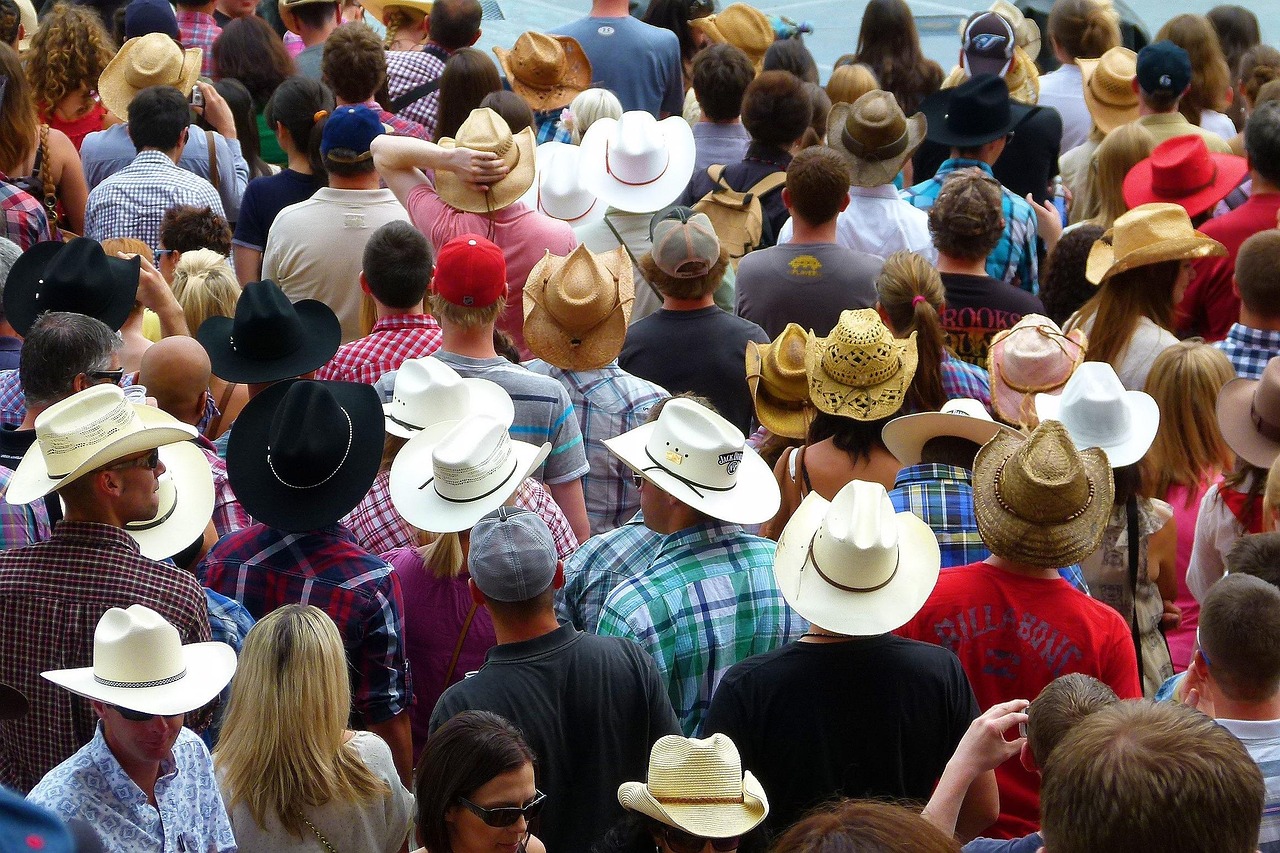
The Calgary Stampede is more than a rodeo; it’s a city-wide identity. Every July, Calgary leans fully into its cowboy roots: pancake breakfasts, live music, midway rides, chuckwagon races, and people wearing boots who clearly bought them just for this week.
I finally timed a trip to coincide with Stampede a few years ago, and nothing prepared me for the sheer scale. The grounds themselves could fill several days: rodeo events, agricultural exhibitions, food stalls serving up everything from deep-fried Oreos to surprisingly good tacos, and late-night concerts.
2026–2027 note: Expect more integration of Indigenous programming, including powwows and cultural exhibits, reflecting an ongoing shift toward more inclusive storytelling.
Tips:
- Book accommodation far in advance for July visits.
- If you’re on a budget, pick one or two marquee events (rodeo, evening show) and enjoy the rest of the grounds more casually.
- Wear comfortable footwear and bring a hat; days are long and dusty.
12. Nose Hill Park
Nose Hill Park is one of the largest urban parks in North America, and it’s where Calgary’s prairie soul really shows. No manicured lawns here—just rolling grasslands, native plants, and wide-open sky.
I came here on a chilly, windy afternoon and loved how quickly the city dropped away. From the top of the hill, you see Calgary’s skyline in the distance and the Rockies shimmering beyond. It’s an incredible place for sunrise or sunset, photography, and dog walking.
Best for: Hikers, runners, nature lovers, and anyone craving a break from pavement.
Tip: There are multiple entrances; choose one with a parking lot and posted maps. Trails are mostly unpaved but easy-moderate. Bring water—there’s little shade.
13. Fish Creek Provincial Park
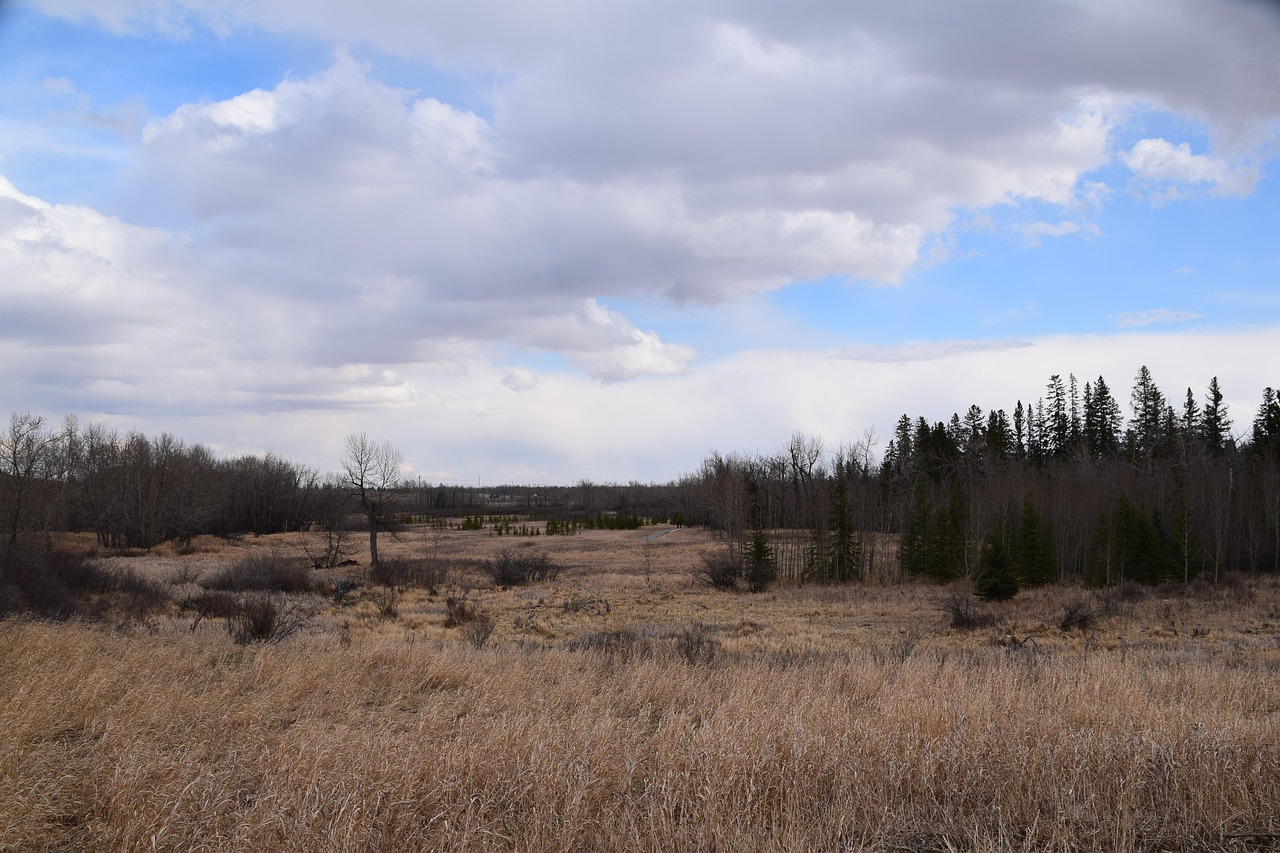
Fish Creek Provincial Park is another mind-bending bit of Calgary geography: a provincial park within city limits, with forests, meadows, a small lake, and over 80 kilometers of pathways.
I rented a bike one summer and spent hours here, picnicking by the creek and watching families barbecue at the day-use areas. It feels like an escape without the long drive—perfect if you only have 3 days in Calgary but still want “nature time.”
Activities: Cycling, walking, birdwatching, winter cross-country skiing, and casual picnics.
Tip: Download a map or use an offline app; the park is big and easy to get turned around in. Facilities and parking lots are spread out.
14. Calgary Central Library
The Calgary Central Library might be my favorite building in the city. Opened in 2018 in East Village, it’s an architectural statement: a curving façade of wood and glass with an arched entryway that looks like a portal.
Inside, it’s all soaring atriums, warm wood, and light. I’ve used it as a coworking space, a meeting spot, and just a place to sit and breathe between activities. Kids’ areas, study nooks, public art, and an onsite café make it a genuine community hub.
Why go: For architecture lovers, photographers, remote workers, and anyone exploring East Village. It’s free, calm, and inspiring.
15. Peace Bridge
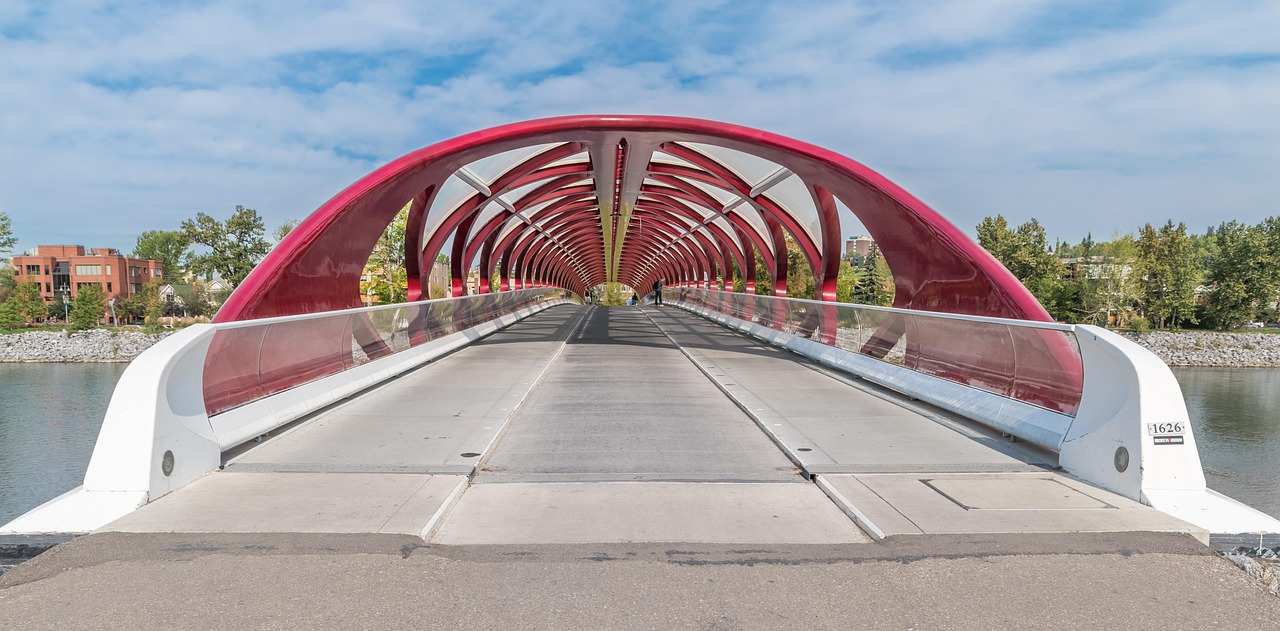
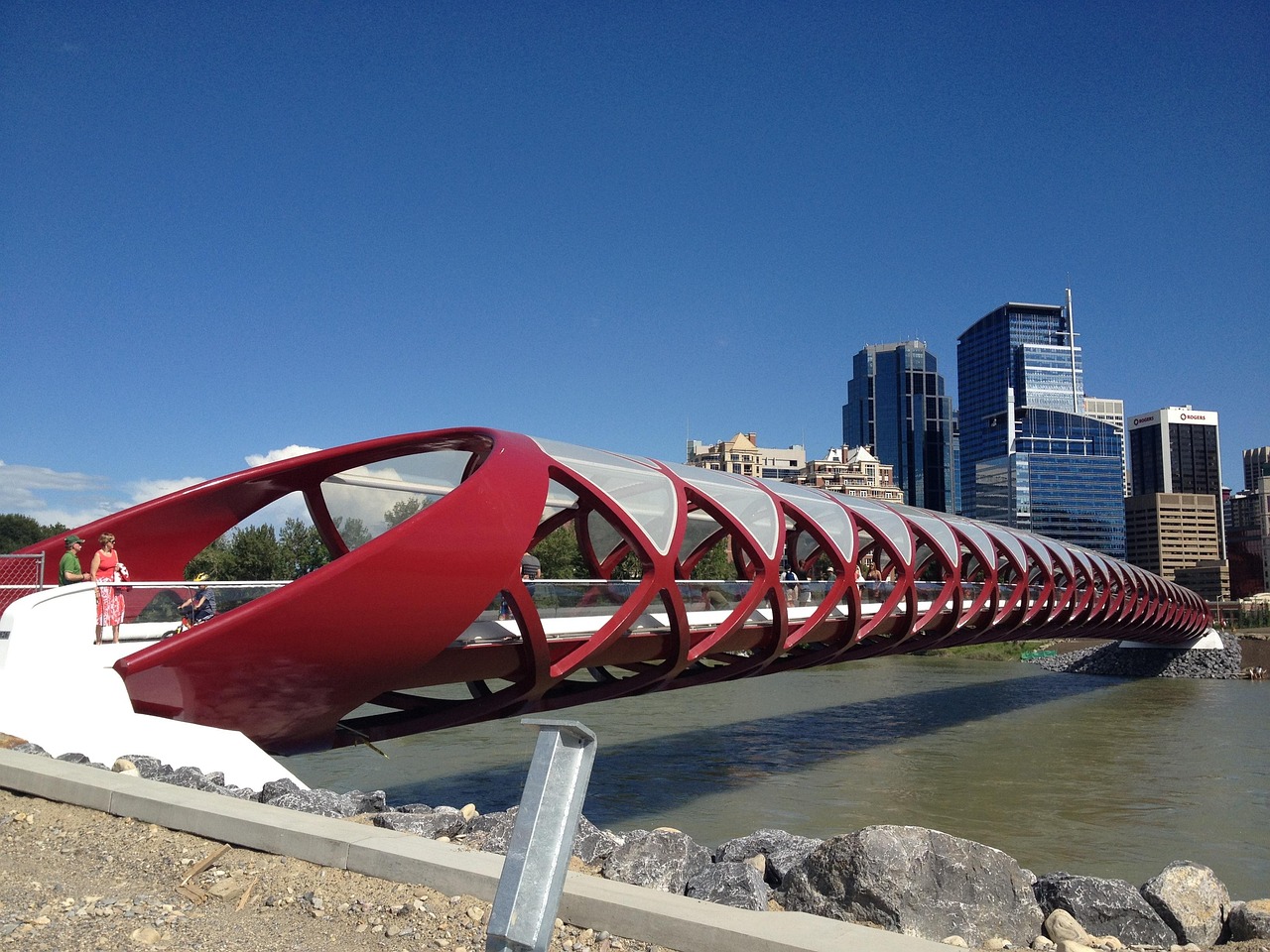
The Peace Bridge is one of Calgary’s most-photographed landmarks: a bright red, tubular pedestrian bridge by architect Santiago Calatrava spanning the Bow River.
It’s as much a symbol of modern Calgary as the Tower is of old Calgary. I like to walk or cycle across at different times of day: early morning when commuters stream through, sunset when the light hits the river, and at night when it glows.
Tip: Combine with a river pathway walk from downtown toward Kensington. It’s also a popular spot for engagement photos and family portraits—you’ll almost definitely see a photographer at work.
16. WinSport Canada Olympic Park
WinSport Canada Olympic Park keeps Calgary’s 1988 Winter Olympics legacy alive. Depending on the season, you’ll find skiing, snowboarding, tubing, mountain biking, and zip-lines here.
I came in winter for the tube park and laughed so hard my face hurt. It’s fast, well-organized, and suitable for almost all ages (height restrictions apply). Friends who ski say it’s not a replacement for the Rockies, but it’s perfect for a quick fix or lessons, especially if you’re staying in the city.
Adventurous? Yes—especially if you try the zip-line or bobsleigh experiences when available.
Tip: Check seasonal offerings and book popular activities ahead of time, especially on weekends and holidays.
17. Calaway Park
Calaway Park, just west of Calgary, is Western Canada’s largest outdoor family amusement park. Think roller coasters, kid rides, carnival games, and loud laughter drifting across the fields.
It’s not a thrill-seeker destination on par with massive theme parks, but for families it’s a full, happy day. I’ve gone with a friend’s kids; the adults ended up competing over who could win more prizes at the midway.
Best for: Summer visits, especially if you have kids or love classic amusement-park vibes.
Getting there: Easiest by car; watch for package deals that combine admission with parking discounts.
18. Inglewood Bird Sanctuary
The Inglewood Bird Sanctuary feels like a secret even though it’s not. Just minutes from Inglewood’s main street, it’s a protected natural area with ponds, walking trails, and an incredible diversity of birdlife.
I visited on a quiet weekday morning and saw herons, ducks, songbirds, and a fox in the distance. It’s peaceful, with lots of benches and viewpoints—perfect if you need a break from urban energy.
Tip: Bring binoculars if you have them and stay on marked trails. It’s free to enter, making it a great hidden gem in Calgary for budget travelers.
19. Bowness Park
Bowness Park on the Bow River in northwest Calgary is one of my top picks for a laid-back local day. In summer, you can rent paddleboats or canoes, stroll shady paths, or barbecue at the picnic areas. In winter, there’s a beautiful skating trail that loops through the park, plus firepits for warming up.
One January evening, I skated here as big snowflakes started falling under the lights. It felt cinematic—like being inside a snow globe. Families, couples, and groups of friends all shared the ice, and the atmosphere was pure joy.
Tip: Check rentals and ice conditions online before heading out in winter. Bundle up more than you think; the river valley can be extra chilly.
20. Elbow Falls (Near Calgary)
While not technically in Calgary, Elbow Falls in Kananaskis Country is close enough (about an hour’s drive) that it often sneaks onto Calgary itineraries—and rightly so.
It’s a compact but stunning waterfall area with short walking trails, turquoise water, and picnic spots. I drove out on a shoulder-season day—too early for full mountain hiking, too late for warm summer—and it was perfect. The air smelled of pine and snow, and the falls roared louder than I expected.
Best for: Half-day trips, families, anyone wanting a mountain “hit” without committing to a full Banff day.
Tip: Combine with Bragg Creek for coffee or a meal. Roads can be snowy or icy outside summer; check conditions and carry appropriate tires.
Other Notable Attractions & Experiences
To round out more than 20 attractions, here are additional spots I often fold into a 3–5 day itinerary for Calgary:
- Fort Calgary: Historic site at the confluence of the Bow and Elbow Rivers; good for context on the city’s origins.
- Lougheed House: A restored Victorian mansion in the Beltline with gardens and rotating exhibits.
- Scotiabank Saddledome & new Events Centre area (coming online 2026–2027): For hockey games, concerts, and big events.
- Riley Park & Sunnyside: Relaxed green space and neighborhood just north of downtown.
- Calgary Farmers’ Market (South & West): Indoor markets with local produce, food stalls, and crafts.
Suggested Itineraries: 3, 4, and 5 Days in Calgary
Here’s how I’d structure 3, 4, or 5 days in Calgary, based on my own repeat visits. These aren’t rigid checklists—more like story-driven frameworks you can adapt. I’ll keep the storytelling relatively concise here for readability, but you can easily deepen each day with more time at your favorite spots.
3 Days in Calgary: Classic Highlights Itinerary
This 3 day itinerary for Calgary is perfect for first-timers who want the must-see attractions, some local food, and a taste of Calgary’s riverfront and neighborhoods.
Day 1: Downtown Icons & the Bow River
I like to start day one downtown to “decode” the city layout quickly.
- Morning: Walk Stephen Avenue, pop into the Glenbow (if open during your visit), and ride up the Calgary Tower for a city overview. Grab coffee from a local café nearby.
- Lunch: Eat along Stephen Avenue or at a nearby food hall if you want variety.
- Afternoon: Walk down to Prince’s Island Park and stroll the Bow River Pathway. Cross the Peace Bridge and loop back through Kensington for a café stop or early dinner.
- Evening: Optional: head back downtown for a show (theatre, comedy, or a concert) or simply enjoy drinks in the Beltline.
Day 2: Culture & East Village
- Morning: Start at the Calgary Central Library (yes, it’s that good), then spend a few hours at Studio Bell—try the interactive exhibits.
- Lunch: East Village has several great spots; grab something casual and eat near the river if it’s warm.
- Afternoon: Either:
- Option A: Head to the Calgary Zoo for the rest of the day, or
- Option B: Explore Inglewood: shops, breweries, and the Inglewood Bird Sanctuary.
- Evening: Dinner and live music in Inglewood (Ironwood or another venue) or a relaxed night back in the Beltline.
Day 3: Nature in the City
- Morning: Choose between Nose Hill Park (big-sky prairie views) or Fish Creek Provincial Park (green, riverine landscapes). Pack snacks or pick something up on the way.
- Lunch: Picnic in the park or head to a nearby neighborhood café.
- Afternoon: If you’re visiting in winter, consider WinSport for tubing or skiing. In summer, Bowness Park is a great place to paddle or stroll.
- Evening: Final dinner downtown or in Kensington, perhaps with a sunset walk by the river.
4 Days in Calgary: Urban Culture & Deeper Neighborhoods
With 4 days in Calgary, you can slow down and layer in more neighborhoods and local experiences.
Day 1: Downtown & Riverfront (As Above)
Follow Day 1 from the 3-day itinerary: downtown icons, Calgary Tower, Prince’s Island, Peace Bridge, and Kensington.
Day 2: Museums & Inglewood Evenings
Similar to Day 2 above, but linger more in East Village and Inglewood. Add:
- More time at the Central Library (especially if you’re a reader or remote worker).
- A longer brewery hop in Inglewood.
- An evening walk along the river between bridges.
Day 3: Heritage Park & Glenmore Reservoir
Dedicate a solid day to Heritage Park Historical Village. Arrive near opening, ride the steam train, chat with costumed interpreters, and visit the exhibits and shops.
Afterward, take a short walk or drive to a viewpoint over the Glenmore Reservoir for sunset. It’s a gentler, more reflective day—great for families or travelers who love history.
Day 4: Nose Hill or Fish Creek + Beltline Nightlife
Use your fourth day for whichever of the big parks you didn’t get to—Nose Hill or Fish Creek. In the evening, focus on the Beltline and 17th Avenue for dinner, cocktails, and nightlife. This is where you’ll find some of the city’s liveliest bars, patios, and late-night eats.
5 Days in Calgary: Deep Dive & Day Trips
With 5 days in Calgary, you can do all of the above and still fit in a proper day trip.
Days 1–3: Follow the 3-Day Itinerary
Cement your understanding of downtown, East Village, Inglewood, and the parks.
Day 4: Day Trip – Elbow Falls & Bragg Creek
Rent a car and drive out to Elbow Falls. Walk the short trails, take photos, and enjoy the mountain air. On the way back, stop in Bragg Creek for coffee, ice cream, or a meal. It’s a small, artsy village with a different pace from the city.
Day 5: Flexible Buffer Day
Use this day for:
- A full day at the Calgary Zoo and TELUS Spark combined;
- WinSport activities (tubing, skiing, biking) depending on season;
- Another neighborhood deep dive—more time in Kensington, Beltline, or a local farmers’ market;
- Or simply repeating your favorite place: I’ve happily spent multiple afternoons reading in Prince’s Island Park.
Having this “buffer day” makes a 5 day itinerary for Calgary feel relaxed instead of rushed.
Calgary Neighborhoods & Areas to Explore
One of the most rewarding parts of any travel guide for Calgary is understanding its neighborhoods. Here’s how I experience them:
Downtown & Eau Claire
Skyscrapers, business energy on weekdays, and easy access to the Bow River. Eau Claire adds parks, pathways, and Prince’s Island Park. Good for first-timers, business travelers, and those who like to be in the middle of things.
East Village
Once industrial, now one of the city’s most interesting redevelopments. Architecturally bold (Central Library, Studio Bell), with new condos, cafés, and river access. Great for design lovers and urban explorers.
Inglewood
Calgary’s oldest neighborhood, full of independent shops, music venues, and a creative scene. Slightly gritty, very charming. A favorite of mine for both day and night.
Kensington / Sunnyside
North of the river, walkable, with small businesses and tree-lined streets. Excellent for brunch, coffee, and casual evenings. Also a pleasant area to stay in, with quick downtown access.
Beltline & 17th Avenue
South of downtown, this is Calgary’s densest, most urban neighborhood outside the core. Apartments, bars, restaurants, and nightlife cluster here. If you’re into going out, this is your spot.
Mission & 4th Street
A bit quieter than Beltline but still central, with an upscale, cozy feel. Great restaurants, wine bars, and easy access to the Elbow River paths.
Bridgeland
East of downtown across the river, historically an Italian neighborhood, now a mix of old bungalows and new builds. Strong café and brunch culture, plus access to the Zoo and TELUS Spark.
Best Local Food & Drinks in Calgary
Calgary’s food scene has grown up. Yes, you can (and should) eat steak here, but there’s so much more: inventive Canadian cuisine, Indigenous-inspired dishes, international flavors, and excellent coffee.
What to Eat: Local Flavors
- Alberta beef: Try a local steakhouse or bistro. Medium-rare is standard for good cuts.
- Bison & game meats: Often featured in creative Canadian menus—burgers, sausages, or hearty mains.
- Craft beer: Calgary’s brewery scene is booming, especially in Inglewood and the “Barley Belt” area of the southeast.
- Brunch culture: Expect lineups at popular spots on weekends; it’s worth it.
Saving Money on Food
To keep your budget in check while sampling local food in Calgary:
- Look for lunch specials at nicer restaurants.
- Use food halls and markets for diverse, affordable options.
- Stay somewhere with a kitchenette to balance restaurant meals with simple breakfasts.
Nightlife, Entertainment & Cultural Experiences in Calgary
For a city of its size, Calgary punches above its weight in live music, theatre, and festivals.
Nightlife Areas
- Beltline & 17th Avenue: Bars, lounges, late-night eats, and people-watching.
- Inglewood: Smaller venues with live music, especially roots, folk, and indie.
- Kensington & Mission: More low-key pubs and wine bars, great for dates.
Cultural Experiences in Calgary
- Glenbow Museum: Art and history of Western Canada.
- Studio Bell: Canadian music history and interactive exhibits.
- Local theatres & festivals: Check listings for performances, film festivals, and seasonal events like Chinook Blast.
Day Trips & Nearby Attractions from Calgary
While this is a travel guide for Calgary, it’s impossible to ignore how well-positioned the city is for day trips.
Banff (Ambitious Day Trip)
About 1.5 hours away, Banff is technically doable as a day trip, though I recommend staying overnight if you can. If you only have 3 days in Calgary, I’d personally focus on the city; but with 4–5 days, a Banff day is tempting.
Kananaskis Country
Less famous than Banff but beloved by locals, Kananaskis offers hiking, lakes, and quieter mountain spaces. Elbow Falls is the easiest intro, but there are many trailheads further west.
Bragg Creek
A small village with art shops, cafés, and access to nearby trails. Easy to combine with Elbow Falls.
Drumheller & the Badlands (Long Day Trip)
To the east, Drumheller’s hoodoos and the Royal Tyrrell Museum (dinosaurs!) make for a long but memorable day. Plan for an early start and a late return.
Cultural Etiquette & Local Customs in Calgary
Calgarians are generally relaxed, friendly, and used to visitors. Still, a few local customs are good to know:
- Politeness: Canadians are famous for “sorry,” and Calgary is no exception. Holding doors, saying please/thank you, and giving people personal space are the norm.
- Tipping: Standard is 15–20% in restaurants and bars, similar to the U.S.
- Indigenous recognition: Many events and institutions begin with land acknowledgments, recognizing that Calgary sits on Treaty 7 territory. Listen respectfully; it’s an important part of modern cultural awareness.
- Outdoor etiquette: On trails, yield to uphill hikers, pack out your trash, and respect wildlife distances. Dogs often must be leashed outside designated off-leash areas.
- Weather awareness: Locals take sudden weather changes seriously—if someone tells you a storm is blowing in with a chinook front, pay attention and pack a layer.
Practical Travel Tips for Calgary (2026–2027)
Best Seasons for Visiting Calgary
Different seasons suit different things to do in Calgary:
- Summer (June–August): Best for patios, river walks, festivals, Heritage Park, and outdoor parks. Ideal for first-timers and families.
- Fall (September–October): Fewer crowds, beautiful foliage, and still good for hiking. Great for couples.
- Winter (November–March): Cold, but magical if you like snow. Perfect for skating at Bowness Park, WinSport skiing/tubing, and winter festivals like Chinook Blast.
- Spring (April–May): Shoulder season; weather can be variable, but prices may be lower and attractions less crowded.
Getting Around Calgary
Public Transport: The CTrain (light rail) runs through downtown (with a free fare zone) and out to several key areas including the Zoo and NE/SW suburbs. Buses fill in the gaps. For a 3–5 day visit staying central, you can get by without a car.
Car Rental: Recommended if you plan day trips or are staying outside the core. Roads are wide and well-maintained, though winter driving requires caution.
Rideshare & Taxis: Uber and local taxis are easy to use and reasonably priced for short hops.
Cycling & Scooters: In summer, e-scooters and bike-share options make it easy to move along river paths and between inner neighborhoods.
SIM Cards & Connectivity
Canada’s mobile data isn’t cheap, but you have options:
- Buy a local prepaid SIM (e.g., from major providers or discount brands) at the airport or malls.
- Consider an eSIM from an international provider if your phone supports it.
- Most hotels, cafés, and libraries (including the Central Library) offer free Wi-Fi.
Money-Saving Tips in Calgary
- Use free attractions: river pathways, Prince’s Island Park, Nose Hill, Fish Creek, the Central Library, Inglewood Bird Sanctuary.
- Take advantage of museum free days or pay-what-you-can policies (e.g., Glenbow when applicable).
- Choose lunch over dinner at pricier restaurants.
- Stay slightly outside downtown (e.g., in Kensington or Beltline) for better accommodation value, but still with easy transit access.
Visa Requirements & Entry
Canada’s visa rules depend on your nationality:
- Citizens of many countries need an eTA (Electronic Travel Authorization) for air travel, which you must obtain online before flying.
- Others require a full visitor visa. Always check the official Government of Canada website well before your trip.
- U.S. citizens typically don’t need a visa for short visits but still need appropriate ID.
Driving & Foreign Licenses
Visitors can usually drive in Alberta with a valid foreign driver’s license for a temporary stay. An International Driving Permit (IDP) is recommended if your license isn’t in English or French. Check Alberta’s latest regulations before your 2026–2027 trip.
Safety & Health
Calgary is generally safe, with typical big-city precautions: watch your belongings, especially at night and in crowded venues. Winter conditions can be icy—walk carefully and wear proper footwear. Healthcare for visitors can be expensive; travel insurance is strongly recommended.
Summary: Key Takeaways & Final Recommendations
Calgary is more than a gateway to the Rockies. It’s a livable, walkable, and surprisingly soulful city that rewards slow exploration as much as checklist sightseeing. With a well-planned 3, 4, or 5 day itinerary for Calgary, you can blend:
- Urban icons: Calgary Tower, Stephen Avenue, Peace Bridge.
- Cultural experiences: Glenbow, Studio Bell, Central Library.
- Neighborhood life: Inglewood, Kensington, Beltline.
- Nature: Prince’s Island, Nose Hill, Fish Creek, Bowness Park.
- Day trips: Elbow Falls, Kananaskis, and beyond.
For most travelers, the best time to visit Calgary is late spring through early fall (May–September) for comfortable weather and full access to parks and festivals. Winter visits, however, offer a completely different charm: skating under fairy lights, snow-draped pathways, and easy access to winter sports.
However long you stay—whether it’s 3 days in Calgary on your way to the Rockies or a full 5 day itinerary for Calgary—come curious, pack for changing weather, and give yourself time to just sit by the river and watch the city move around you. That’s where Calgary’s quiet magic really lives.