Why Visit Monterosso al Mare?
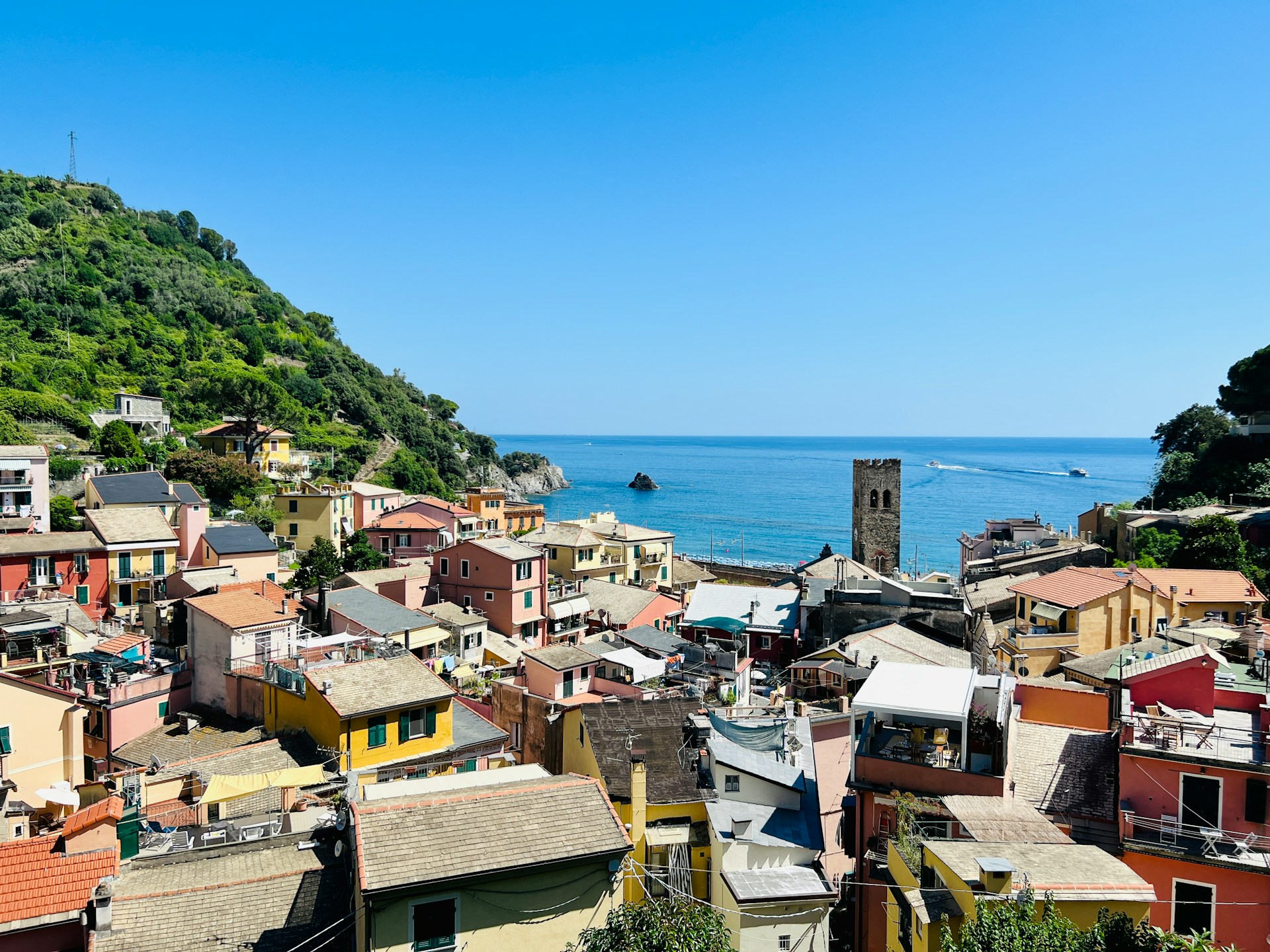
Monterosso al Mare is the largest and most laid-back of the five Cinque Terre villages, and over multiple visits since 2015 it’s the one I keep coming back to. Where the other villages cling dramatically to cliffs, Monterosso spreads out in a gentle curve of sand and pastel houses, with room to breathe, swim, and simply be.
If you’re looking for a place where you can wake up to church bells, spend the day swimming in clear Ligurian water, hike between terraced vineyards, eat absurdly fresh seafood, and finish with limoncino on a quiet piazza—this is it. In 2026, Monterosso still feels like a real village first and a tourist spot second, especially if you know where (and when) to wander.
What makes Monterosso special compared to the other Cinque Terre villages:
- The best beach in Cinque Terre: A long sandy/pebbly stretch perfect for families, sunbathers, and casual swimmers.
- Two distinct neighborhoods: Old Town (Borgo Antico) and Fegina, each with a different vibe and plenty of character.
- Easy logistics: The train station is right by the beach, paths are mostly flat, and it’s the best base if you have luggage or limited mobility.
- Food heaven: Anchovies (acciughe), pesto, focaccia, and local white wines—this is Ligurian comfort food at its best.
- Perfect hub: From here, you can easily visit the other Cinque Terre villages, Levanto, Portovenere, and even Portofino as day trips.
Below is a detailed travel guide for Monterosso al Mare with deep dives into the best places to visit in Monterosso al Mare, local food in Monterosso al Mare, and hidden gems in Monterosso al Mare, plus step-by-step 3 day, 4 day, and 5 day itineraries.
Table of Contents
- Monterosso at a Glance & Neighborhoods
- Top 20+ Attractions & Experiences
- 3–5 Day Itineraries (With Personal Stories)
- Local Food & Where to Eat
- Nightlife, Entertainment & Cultural Experiences
- What’s New & Events in 2026–2027
- Day Trips from Monterosso
- Practical Travel Tips & Money-Saving Advice
- Cultural Etiquette & Local Customs
- Summary & Best Time to Visit Monterosso al Mare
Monterosso at a Glance & Neighborhoods
Monterosso is split into two main areas, connected by a seafront tunnel and a short cliff path. Over several visits, I’ve learned to treat them almost like two villages with one heart.
Fegina: The Beachfront & “Skyline”
Fegina is the newer, more open part of Monterosso where the train station sits. When you step off the train and the sea hits you in the face, that’s Fegina.
- Vibe: Beachy, relaxed, great for families and swimmers.
- Highlights: Long sandy beach, Il Gigante statue, Villa Montale, sunset promenade.
- Architecture: Low-rise villas, seafront hotels, and a broad promenade instead of narrow alleys.
Borgo Antico (Old Town): Medieval Lanes & Local Life
Walk through the tunnel from Fegina and you’re suddenly in a medieval maze: vaulted passageways, tiny squares, and churches layered with history.
- Vibe: More traditional, more locals, intimate and romantic at night.
- Highlights: Church of San Giovanni Battista, Oratorio dei Neri, Torre Aurora, anchovy restaurants.
- Architecture: Tall, narrow Ligurian houses painted in soft pastels with trompe-l’oeil details.
Hills & Vineyards Above Monterosso
Above the village, terraced vineyards and olive groves climb the hills, connected by stone mule paths. This is where Monterosso gets quiet and truly local. On one early October morning, I hiked up here at sunrise and met a farmer carrying crates of grapes on a monorail—a reminder that wine and lemons are still serious work here, not just postcard scenery.
Top Attractions & Experiences in Monterosso al Mare
Below are over 20 of the must-see attractions in Monterosso al Mare, from iconic sights to small moments that make this village unforgettable. I’ve grouped them loosely from most famous to more hidden gems, but the order isn’t a ranking—each has its own charm.
1. Monterosso’s Main Beach (Spiaggia di Fegina)
If you’ve seen a picture of Monterosso, you’ve probably seen Fegina Beach: rows of orange-and-green umbrellas, turquoise water, and a backdrop of pastel houses. It’s the largest and most accessible beach in Cinque Terre, and a cornerstone of any 3 day itinerary for Monterosso al Mare.
My experience: The first time I arrived, it was late May and I had been on the train since dawn. I dropped my bag at my guesthouse and walked straight onto the sand. Within ten minutes I’d rented a lounger, ordered a coffee from the nearby kiosk, and fallen asleep to the sound of waves and Italian chatter—jet lag cured.
What to do:
- Rent a lounger and umbrella from one of the stabilimenti balneari (paid sections) for comfort and showers.
- Use the free sections at either end if you’re on a budget; bring a towel or lightweight beach mat.
- Swim—water is usually calm, with a gentle slope, great for kids.
- Walk the entire curve of the bay at sunset; the light on the facades is pure magic.
Family-friendly? Very. Gentle entry, lifeguards in season, and ice cream within arm’s reach.
Practical tips:
- Season: Loungers appear from roughly late April to October; July–August is busiest.
- Money-saver: Share one umbrella for two people, or use the free beach and spend your savings on an aperitivo.
- What to bring: Water shoes help with pebbly spots, and a light sarong doubles as cover-up and towel.
2. Il Gigante (The Giant Statue)
At the far end of Fegina Beach stands a weathered concrete colossus: Il Gigante, a 14-meter statue of Neptune (or a sea god) holding up a terrace. Built in 1910 and heavily damaged during WWII and storms, it’s one of Monterosso’s most recognizable silhouettes.
My experience: Each trip, I end up at Il Gigante at least once at sunrise. The beach is empty, fishermen are quietly prepping their boats, and the Giant seems more guardian than tourist attraction. It’s also one of my favorite spots for early-morning photos without crowds.
Why it matters: Il Gigante is a relic of Monterosso’s early 20th-century seaside glamour, when villas and terraces were built for wealthy families from Genoa. Even in his battered state, he’s a reminder that the coast has always balanced elegance with rough sea power.
Tips for visitors:
- Walk to the far western end of Fegina; you can’t miss him.
- Go at golden hour (sunset or sunrise) for the best photos and softer light on the stone.
- Combine this with a walk up towards the start of the trail to Levanto for elevated views of the entire bay.
3. Borgo Antico (Old Town Lanes & Squares)
The heart of Monterosso is not the beach but the tight weave of lanes in the old town. This is where I’ve had some of my favorite small travel moments: an old man balancing three loaves of bread on his scooter, kids playing football in a tiny square, and shopkeepers chatting across alleyways.
What to look for:
- Via Roma and its side lanes, with small food shops, bakeries, and wine bars.
- Piazza Garibaldi, the “main” square, perfect for lingering with a spritz.
- Colorful facades with fake window frames and stonework painted on—classic Ligurian trompe-l’oeil.
Romantic? Very. After dinner, stroll with a gelato as the village lights up and laundry flutters above you. It feels cinematic, but it’s utterly real.
Hidden-gem tip: Duck into any alleyway that looks “too quiet.” Some of the prettiest shrines, tiny arches, and painted doorways are down these dead-ends.
4. Church of San Giovanni Battista
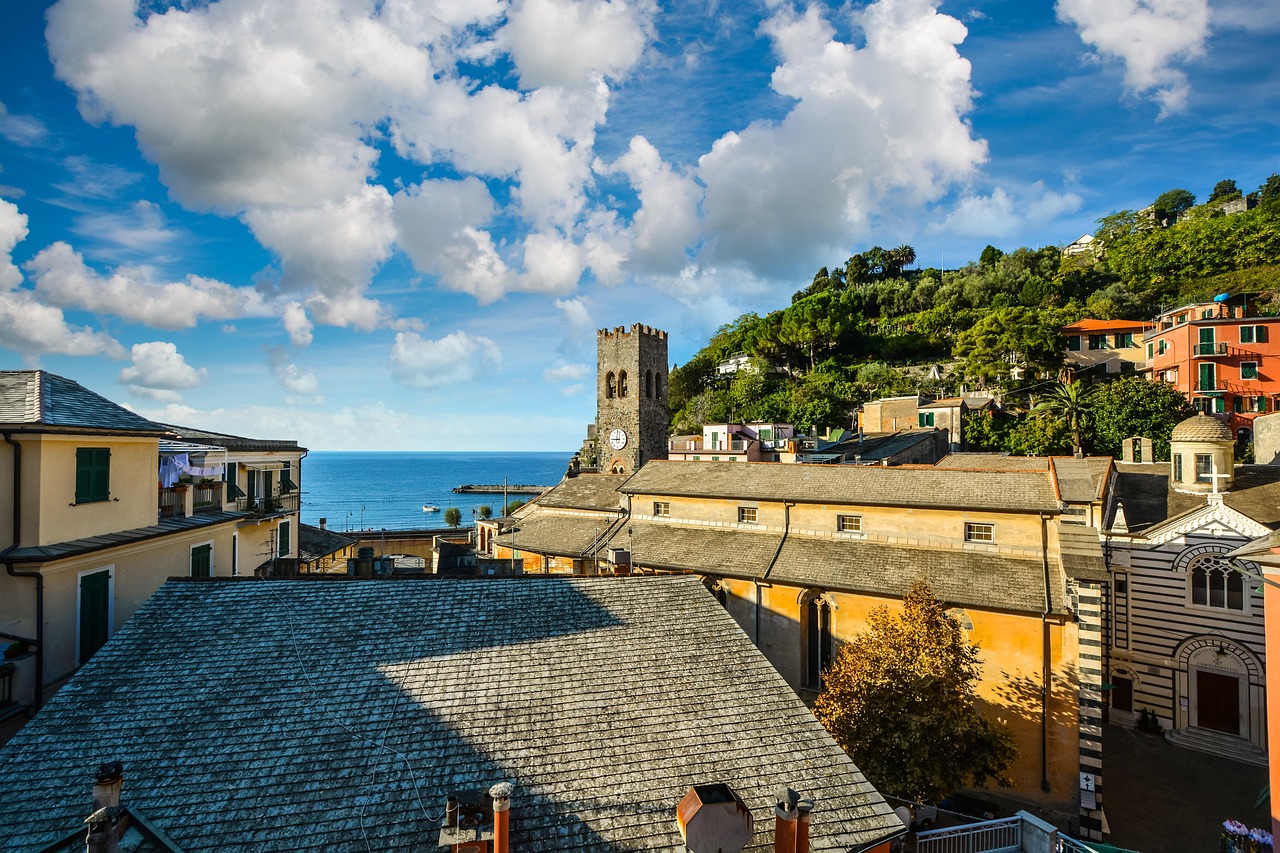
San Giovanni Battista is Monterosso’s main parish church, dating back to the 13th–14th centuries. Its black-and-white striped facade, rose window, and Gothic details feel surprisingly grand for such a small village.
My experience: One hot afternoon, I stepped inside mostly to escape the sun. The cool dark interior, the faint scent of incense, and the muted conversations of a few older women praying created a bubble of calm. It’s a powerful reminder that behind all the tourism, this is still a living religious community.
Highlights:
- Striped marble (or stone) facade—a classic Ligurian church look.
- Rose window with tracery.
- Interior with simple but moving altars and a 15th-century baptismal font.
Tips:
- Dress respectfully (shoulders covered, no beachwear).
- Slip in during the heat of the day for a meditative break.
- Check posted mass times; attending a local mass can be a powerful cultural experience even if you’re not religious.
5. Oratorio dei Neri (Oratory of the Dead)
Just steps from San Giovanni Battista is the Oratorio della Confraternita dei Neri, also known as the Oratory of the Dead. Its facade is decorated with skulls and hourglasses, and inside you’ll find dark wood, religious banners, and a slightly eerie but fascinating atmosphere.
My experience: One late afternoon, I slipped in while a local confraternity member was tidying up. He pointed out the ancient processional crucifixes and explained—in rapid Italian mixed with gestures—that this brotherhood historically cared for the poor and buried the dead. That five-minute chat stuck with me more than any museum audio guide.
Why visit:
- To see the contrast between bright seaside life and the village’s spiritual, sober side.
- To appreciate centuries-old traditions of mutual aid.
Tip: Pair this with the Oratorio dei Bianchi (of the Whites), nearby, for a deeper dive into local religious confraternities.
6. Torre Aurora & the Cliffside Viewpoint
Torre Aurora is a medieval defensive tower perched on the rocky point separating Fegina from the old town. Today, it houses a stylish restaurant-bar, but the star is the view: Monterosso’s “skyline” of clustered houses, the arch of the bay, and the coastline stretching towards Vernazza.
My experience: On my second visit, I reserved a table just before sunset. We nursed a Negroni and a glass of local white wine while the sky turned pastel and boat lights flickered on. It’s touristy, yes—but it’s also unforgettable.
Best for:
- Romantic evenings—this is proposal territory.
- Photographers after the classic panoramic shot of Monterosso.
- Anyone who wants to appreciate the village’s defensive history while sipping something excellent.
Tip: Even if you don’t eat or drink there, walk up to the viewpoint terrace on the path behind for free views.
7. Villa Montale (La Pagoda)
On the Fegina hillside stands Villa Montale, the former summer home of Nobel Prize–winning poet Eugenio Montale. You can see its distinctive tower (nicknamed “La Pagoda”) from the beach. Even if you don’t go inside (it’s not always open to the public), the path up to it offers atmospheric views over the bay.
My experience: I first climbed up here on a slightly overcast day when the sea was steely blue. Reading a few lines of Montale’s poetry on my phone while looking at the same sea he wrote about gave me a new appreciation of the landscape—not just as scenery, but as muse.
Why it’s interesting: Montale’s poems often wrestle with memory, loss, and the sea as both barrier and bridge. Knowing that he paced these terraces adds a literary layer to your visit.
Tip: Bring a bottle of local wine and a takeaway focaccia, sit on a bench along the hillside path, and let the view sink in. It’s a quiet, contemplative spot away from beach crowds.
8. The Sentiero Azzurro & Other Hiking Trails
Monterosso is one end of the famous Sentiero Azzurro, the blue coastal trail linking the Cinque Terre villages. The stretch between Monterosso and Vernazza is one of the most iconic hikes in Italy.
My experience: I’ve done this hike three times: once in brutal midday August heat (don’t do this), once in late September morning mist, and once in early May with wildflowers exploding from every terrace wall. The last was by far the best—cool air, fewer crowds, and Vernazza’s pastel harbor slowly appearing around a headland like a painted stage set.
Monterosso–Vernazza segment:
- Length: About 3.5 km, 1.5–2.5 hours depending on pace and photo stops.
- Difficulty: Moderate—steep initial climb out of Monterosso, then undulating.
- Views: Terraced vineyards, olive groves, and sweeping sea vistas.
Other trails:
- Monterosso–Levanto coastal trail: Quieter, with rugged scenery and forest sections.
- Sanctuaries trail: Up to the Santuario di Soviore above Monterosso (see below).
Tips:
- Check the Cinque Terre National Park website for trail closures and the status of the Cinque Terre Card.
- Start early in summer to avoid heat and crowds.
- Bring water, a hat, and proper shoes (no flip-flops).
9. Santuario di Nostra Signora di Soviore
Perched high above Monterosso is the Santuario di Nostra Signora di Soviore, one of the oldest Marian sanctuaries in Liguria. It’s reachable by hiking trail or bus and offers peace, cool air, and a different perspective on the coast.
My experience: On a hot June day, I escaped the beach crowds and took the bus up. The temperature dropped noticeably as we climbed through the forest. At the sanctuary, a few locals sat in silence, and the only sounds were wind and distant bells. I ate a simple lunch of bread, cheese, and olives on a bench, looking down at the tiny strip of Monterosso far below.
Why go:
- For spiritual calm, religious or not.
- For cooler air in summer.
- For views over the coast and terraced hills.
Tip: Combine this with a hike back down to Monterosso in late afternoon light; your knees will thank you for riding up and walking down instead of the reverse.
10. Anchovy Culture & Fishing Harbor
Monterosso is famous for its acciughe di Monterosso (anchovies). They’re protected by a Slow Food presidium and a point of local pride. You’ll see them on menus in countless variations: marinated in lemon, fried, stuffed, or preserved in salt.
My experience: On my third visit, a local friend persuaded me to join a dawn boat outing with a small fishing family. Watching the nets pulled in, the precision with which the fish were sorted, and the quiet satisfaction when the catch was good gave me a new respect for the little fish on my plate.
Where to see fishing life:
- The small harbor area near the old town, especially early in the morning.
- Informal conversations with older fishermen mending nets along the seafront.
Tip: Look out for menus specifically listing acciughe di Monterosso, not just generic anchovies. Ask for them marinated with lemon and olive oil for the purest taste of the sea.
11. Local Wine Tasting & Sciacchetrà
The steep terraces above Monterosso produce crisp white wines and the legendary dessert wine Sciacchetrà. Winemaking here is heroic—everything is done by hand or with tiny monorails.
My experience: In 2023, I booked a small-group vineyard visit above the village. The winemaker’s family had been cultivating those terraces for generations. We tasted different vintages overlooking the sea, and the conversation drifted from soil composition to how climate change is affecting harvest dates. It was one of the most honest, grounded experiences I’ve had in Cinque Terre.
What to try:
- Dry white Cinque Terre DOC—perfect with seafood.
- Sciacchetrà—amber, complex, sipped slowly with desserts or cheese.
Tip: Book tastings in advance, especially in summer. Many are small operations with limited capacity.
12. Pesto & Focaccia Workshops
Liguria is the birthplace of pesto, and Monterosso is an ideal place to learn to make it properly—with mortar and pestle, not a blender. Several local cooks and small restaurants run morning or late-afternoon classes.
My experience: I joined a tiny class run by a local nonna and her daughter. We picked basil leaves one by one, crushed garlic and pine nuts, and slowly worked in cheese and olive oil. My arm ached, but the result was so fragrant and vibrant that I’ve never been able to enjoy store-bought pesto in the same way again.
Best for:
- Food-loving couples and groups of friends.
- Families—kids get hands-on and are proud to eat what they made.
Tip: Ask if the class includes recipes you can take home and whether they accommodate dietary needs (e.g., nuts).
13. Fegina Promenade & Sunset Walk
The wide seafront promenade in Fegina is Monterosso’s living room. In late afternoon and evening, it fills with families, couples, and solo strollers taking in the sunset.
My experience: My favorite ritual on every trip: early evening, after a shower but before dinner, I wander from the train station to Il Gigante and back. I buy a cone of gelato al limone, nod at the same old men playing cards outside the bar, and watch kids chase each other between benches. It feels wonderfully ordinary, even in such a spectacular place.
Tip: For photos that capture Monterosso’s “skyline,” walk to the old town side and look back towards Fegina as the lights come on.
14. Piazza Garibaldi & Evening Aperitivo
Piazza Garibaldi is the main square in the old town, ringed by cafes and gelaterie. In the evening it buzzes without ever feeling overwhelming.
My experience: One September night, a small brass band appeared seemingly from nowhere and started playing traditional tunes. Locals drifted towards the music, older couples swayed gently, and kids danced in the middle. I sipped my spritz and felt like I’d been let in on a village secret.
What to do:
- Order an aperitivo—a spritz, local wine, or craft beer—with a small plate of snacks.
- People-watch: you’ll see everyone from hikers to elegant older locals.
- Use it as your nightly “anchor” spot before or after dinner.
15. Castle Ruins & Upper Old Town Viewpoints
While Monterosso doesn’t have a fully intact castle like some hilltowns, remnants of its medieval fortifications remain, especially as you climb above the old town.
My experience: Wandering semi-randomly uphill one morning, I ended up on a narrow lane with glimpses of stone walls and old battlements. From certain corners, the view opened onto rooftops, church towers, and the sea framed by bougainvillea. It’s not a single “castle” attraction, but a stitched-together sense of the village’s defensive past.
Tip: Follow signs for trails or just explore upward. The higher you go, the fewer tourists you’ll see.
16. Old Town Beach (Spiaggia del Borgo)
On the old town side, a smaller beach curves under the cliff. It’s more compact and closer to bars and restaurants, giving it a different vibe from Fegina.
My experience: I like this beach in the early morning, when locals take quick dips before work. The backdrop of the old town makes it particularly photogenic, and you can be in the water within three minutes of deciding to go.
Tip: This is a good choice if you’re staying in the old town and don’t want to haul your things to Fegina. It’s also nice for a quick plunge between sightseeing and dinner.
17. Home-Style Cooking Classes & Dinners
Several Monterosso families host small-group cooking classes or home dinners, where you learn to make dishes like trofie al pesto, stuffed mussels, or torta di verdure.
My experience: One rainy evening I joined a group of six at a local family’s home. We rolled pasta, stuffed anchovies, and drank wine while swapping travel stories. The grandmother corrected our technique with good-natured clucks, and by dessert it felt like we’d been invited to a family celebration.
Why it’s special: You see the real rhythms of local life: how kitchens are organized, what’s in the pantry, and which recipes matter most to people here.
Tip: Book early in high season and confirm the exact address—some homes are tucked away in lanes not obvious on Google Maps.
18. Kayaking & Stand-Up Paddleboarding
Seeing the Cinque Terre coast from the water is a revelation. From Monterosso, you can rent kayaks or SUP boards and paddle along the shoreline towards Vernazza or Levanto, discovering tiny coves and rock formations.
My experience: On a calm September afternoon, I paddled out with a friend. Once we rounded the first headland, the beach noise disappeared. We floated near the cliffs, watching swallows dart in and out of crevices, and jumped into the water far from any crowd. It felt like having the Mediterranean to ourselves.
Tips:
- Check wind and wave conditions; don’t go out if the sea is rough.
- Wear a life jacket and secure anything you don’t want to lose (sunglasses, phone).
- Morning usually has calmer water and fewer boats.
19. Sunset & Coastline Boat Tours
Various small boats depart from Monterosso for sunset cruises, day trips along the Cinque Terre, or excursions to nearby coves. It’s one of the most relaxing ways to appreciate the village and the coastal cliffs.
My experience: My favorite evening in Monterosso was on a tiny wooden boat with eight people, local wine, and simple snacks. We drifted off Vernazza as the sun went down, and on the way back we watched the lights of Monterosso grow brighter, the village mirrored in the dark water.
Tip: Choose smaller boats for a more intimate feel and less environmental impact. Ask if they include swimming stops.
20. Local Shops, Markets & Food Stores
Monterosso’s charm lies partly in its small food shops: bakeries selling warm focaccia, tiny grocers with fragrant basil and lemons, wine shops with handwritten labels.
My experience: I love building my own picnic: stopping first for focaccia, then a wedge of cheese, then anchovies, then a bottle of white wine. By the time I’m done, the shopkeepers recognize me and ask how dinner turned out the previous night.
Tip: Look for places where locals shop, not only spots with big “souvenir” signs. Ask for recommendations in basic Italian; you’ll often get a little extra or a discount.
21. Lesser-Known Chapels & Shrines
As you wander, you’ll see countless small shrines tucked into corners: Mary statues behind glass, candles, and offerings of flowers.
My experience: One early evening, I watched a woman stop at a corner shrine, straighten a wilted flower, and whisper a short prayer. It lasted less than 30 seconds, but it encapsulated the quiet religiosity of the place.
Tip: Be respectful; don’t lean on or block shrines for photos. A quick, mindful look is enough.
22. Best Photo Spots & Architecture Views
Monterosso’s architecture is understated but beautiful: pastel facades with painted details, narrow houses with green shutters, and vaulted stone passageways.
My favorite angles:
- From the path near Torre Aurora, looking back at both Fegina and the old town.
- Along Via Roma where multiple facades create a rhythm of color and windows.
- From the hillside near Villa Montale, capturing the whole bay with houses hugging the shore.
Tip: Wake up early once; the empty streets and soft light will give you photos no golden-hour crowd can match.
3–5 Day Itineraries in Monterosso al Mare (With Personal Stories)
Whether you have 3 days in Monterosso al Mare, 4 days, or 5 days, you can build a trip that blends beach time, hikes, food, and local culture. Below I’ll outline flexible itineraries that can be mixed and matched.
3 Day Itinerary for Monterosso al Mare
This 3 day itinerary for Monterosso al Mare focuses on highlights without rushing: perfect if you want a taste of everything—the beach, a hike, and great food.
Day 1 – Arrival, Beach, & Old Town Evening
Morning / Arrival: Step off the train directly into Fegina’s seafront. On my last trip, I arrived around 10:30am, dropped my bag at a small guesthouse near the old town, and resisted the urge to immediately start “checking off” sights. Instead, I grabbed a cappuccino and a slice of focaccia from a bar near the station and sat on the promenade wall, letting my brain catch up with the fact that I was finally back at the sea.
Midday: Head to Fegina Beach. Rent a lounger for a few hours, swim, read, and shake off travel fatigue. For lunch, I often go simple: a takeaway paper cone of fritto misto (fried seafood) and a cold beer from a beachside kiosk, eaten with my feet in the sand.
Afternoon: Check into your accommodation and shower off the salt. Then wander through the tunnel into the old town. Let yourself get “lost” in the lanes: notice laundry lines, tiny shrines, and cats napping on windowsills. Step into San Giovanni Battista and the Oratorio dei Neri for a cool, reflective break.
Evening: Book dinner at a small trattoria in the old town—ideally one known for anchovies. On my last visit, I ordered anchovies three ways (marinated, fried, and stuffed) and a carafe of house white. After dinner, stroll to Piazza Garibaldi for an aperitivo or gelato. Sit, watch, listen to the swirl of languages, and feel the rhythm of village life.
Day 2 – Monterosso–Vernazza Hike & Sunset Aperitivo
Morning: Start with a solid breakfast—coffee, pastries, maybe a yogurt and fruit if your hotel offers it. Pack water, sunscreen, and snacks. Hit the trail to Vernazza by 8:00–8:30am to avoid the worst heat.
As you climb out of Monterosso, glance back often; the view changes with every switchback. I always take a photo at the point where the beach looks like a toy model far below. Along the way, you’ll pass terraced vineyards and stretches of shaded forest. Listen for bees, birds, and the occasional shout from a distant farmer.
Late morning: Arrive in Vernazza, reward yourself with a coffee or juice in the harbor, and maybe a swim off the rocks if it’s warm. Wander the tiny streets, then catch a mid-afternoon train back to Monterosso.
Afternoon: Nap, beach, or simply sit with a book on the promenade. I like stopping by a bakery for an afternoon snack of focaccia al formaggio (cheese-filled focaccia) or something sweet like crostata.
Evening: Reserve a table near Torre Aurora or at another seafront spot for a view-rich dinner. Watch the last light hit the houses and the mountains turn dark silhouettes. Finish with a walk along the promenade, maybe stopping at a wine bar for a glass of Sciacchetrà and biscotti.
Day 3 – Sanctuary or Vineyard, Cooking Class & “Goodbye” Swim
Morning: Choose your flavor of “elevated” experience:
- Option A – Soviore Sanctuary: Take the bus up, explore the sanctuary, enjoy cooler air and views, then hike or bus back.
- Option B – Vineyard Visit: Join a pre-booked small-group tasting in the hills above Monterosso.
Afternoon: Another swim, or some souvenir shopping in the old town: local olive oil, pesto, anchovies in jars, ceramics with lemon motifs. On one trip, I shipped a box of food home and it was the best surprise for my future self.
Late afternoon / Evening: Join a pesto or home-cooking class. You’ll typically prepare multiple courses and then sit down to eat together, turning the class into your farewell dinner. Toast with your new friends, linger over dessert, and take the long way home through the quiet streets.
If you only have three days, this structure lets you say you truly lived Monterosso, not just saw it.
4 Day Itinerary for Monterosso al Mare
With 4 days in Monterosso al Mare, you can slow down further and add a boat perspective or an extra hike.
Days 1–3: Follow the 3-day itinerary above.
Day 4 – Boat Tour & Free Exploration
Morning: Sleep in a bit, then enjoy a leisurely breakfast. Stroll the old town with no agenda. On my four-day stays, I love using this “free” morning to re-visit favorite spots: a particular bench with a view, a quiet lane, a bakery that nailed my coffee order.
Afternoon: Join a small-group boat trip along the Cinque Terre coastline. Swim off the boat in clear coves, see all five villages from the sea, and soak in how rugged and improbable they look from this angle.
Evening: Back in Monterosso, enjoy a final dinner at a restaurant you haven’t tried yet—ask your host or a shopkeeper for their personal favorite. End with a nightcap in Piazza Garibaldi or on the promenade.
5 Day Itinerary for Monterosso al Mare
A 5 day itinerary for Monterosso al Mare lets you truly slow travel: repeat swims, read on the beach, and add a day trip.
Days 1–4: Follow the 4-day itinerary.
Day 5 – Day Trip to Levanto or Portovenere
Option A – Levanto: A quick train ride (about 5 minutes) brings you to this slightly larger, less touristy town with a long beach and more local feel. I like renting a bike and following the converted rail trail through old tunnels to Bonassola and Framura.
Option B – Portovenere: Slightly more involved (train to La Spezia, then bus or boat), but the dramatic church on the point and Byron’s Grotto are worth it.
Evening: Return to Monterosso for one last swim if time allows, then a simple, heartfelt dinner—maybe takeaway and a bottle of wine on the beach, saying goodbye to the village that’s been home for almost a week.
With 5 days, you’ll start to recognize faces around town. That’s when Monterosso stops being just a destination and becomes a place you belong to, at least a little.
Local Food in Monterosso al Mare & Where to Eat
Liguria is one of Italy’s great food regions, and Monterosso is a perfect place to taste its staples without fuss. Here’s what to look for and how to enjoy it without blowing your budget.
Must-Try Dishes
- Acciughe di Monterosso: Local anchovies, especially:
- Acciughe marinate – marinated in lemon and olive oil.
- Acciughe fritte – lightly fried, crisp, addictive.
- Acciughe ripiene – stuffed with herbs and breadcrumbs.
- Pesto Genovese: Served with trofie (twisted pasta) or trenette (linguine-like).
- Focaccia: Plain with olive oil and salt, with onions, or with cheese.
- Farinata: Chickpea pancake, crispy outside and soft inside.
- Stuffed mussels (cozze ripiene): A comforting local favorite.
- Local fish: Sea bream, sea bass, and mixed grilled seafood.
- Lemons: In desserts, granita, and limoncino (Ligurian limoncello-style liqueur).
Drinks to Try
- Cinque Terre DOC white wine: Dry, mineral, perfect with seafood.
- Sciacchetrà: Sweet, complex dessert wine.
- Aperitivo classics: Spritz, local vermouths, or simple vino bianco with olives and chips.
- Italian coffee: Espresso at the bar—drink it standing like locals do.
Saving Money on Food
Monterosso can be pricey, but you can eat well on a budget:
- Have one sit-down meal a day, usually dinner, and keep breakfast and lunch simple (bakery, takeaway, supermarket).
- Use local grocery stores for fruit, cheese, and picnic supplies.
- Order house wine by the carafe instead of bottled wine—it’s usually local and good.
- Ask for the “piatto del giorno” (dish of the day) which often showcases seasonal ingredients at a fair price.
Nightlife, Entertainment & Cultural Experiences
Monterosso is not a party town; its nightlife is more about slow evenings than wild clubs. That’s part of its charm.
Evening Rhythm
- Aperitivo hour: 6–8pm in Piazza Garibaldi or along the promenade.
- Dinner: 7:30–10pm, with later seatings in high summer.
- After-dinner: Gelato walk, quiet wine bar, or sitting on the beach listening to the waves.
Cultural Experiences
- Religious festivals: Processions on saints’ days, especially around Easter and local feasts.
- Small concerts: Occasionally in churches or the main square; ask your host what’s on.
- Cooking and wine events: More common in shoulder seasons when locals have time.
What’s New in Monterosso al Mare in 2026–2027
Looking ahead to 2026–2027, here are notable events and trends (always double-check closer to your travel date):
- Anchovy Festival (Sagra dell’Acciuga): Typically in June, celebrating Monterosso’s anchovy heritage with stalls, tastings, and music.
- Lemon Festival (Sagra del Limone): Usually in May, featuring lemon-themed decorations, sweets, and contests.
- Ongoing trail maintenance: The Cinque Terre National Park continues to invest in stabilizing and improving trails. Expect occasional closures for safety—especially after heavy rain—but also better signage and safer paths long-term.
- Sustainability initiatives: Efforts to manage peak-season crowds and encourage off-season travel will likely continue, with more emphasis on guided hikes and educational programs about terraced agriculture.
Day Trips & Nearby Attractions from Monterosso al Mare
Monterosso makes an ideal base for exploring beyond the village while still returning to a familiar bed.
Levanto
Just one train stop away, Levanto has a long beach, more year-round local life, and a great bike path through tunnels to Bonassola and Framura.
How to get there: 5-minute train ride from Monterosso, frequent departures.
Other Cinque Terre Villages
You’ll almost certainly visit Vernazza, Corniglia, Manarola, and Riomaggiore by train, boat, or hiking trail. Monterosso is the most comfortable base if you have more luggage or want more space.
Portovenere
Dramatic cliffs, a striped church overlooking the sea, and a harbor lined with tall colored houses. Reachable via La Spezia by bus or by seasonal boat.
Practical Travel Tips for Monterosso al Mare
Getting To & Around Monterosso
By train: The easiest option. Regional trains along the Genoa–La Spezia line stop in Monterosso; from the station you’re right by Fegina Beach.
By car: Possible but not recommended. Parking is limited and expensive; roads are narrow and winding. If you must drive, park once and forget the car until departure.
Within Monterosso: You can walk everywhere. The main areas are flat, with one tunnel linking Fegina and the old town.
Public Transport & Cinque Terre Card
The Cinque Terre Card often includes unlimited train rides between the villages and trail access. It can be a good deal if you plan multiple hops in a day. Check current prices and inclusions for 2026 on the official park website.
SIM Cards & Connectivity
For 2026 travel:
- EU residents can usually roam as at home.
- Non-EU visitors can buy local SIMs (TIM, Vodafone, WINDTRE, Iliad) at major stations before reaching Monterosso (e.g., La Spezia or Genoa).
- eSIM plans are increasingly common and may be the easiest option.
Coverage in Monterosso is generally good; you may lose signal on some hiking trails or out at sea.
Money & Budget Tips
- Card payments are widely accepted, but keep some cash for small purchases.
- Eating out twice a day adds up; balance restaurants with picnics and takeaways.
- Shop where locals shop for the best price–quality ratio.
Visas & Entry Requirements
Italy is part of the Schengen Area. Requirements for 2026 may include:
- Short stays (typically up to 90 days in 180) for many nationalities without a visa, but with upcoming ETIAS authorization for some non-EU travelers.
- Check official EU and Italian government sites a few months before travel; rules can change.
Driving & Foreign Licenses
If you do drive in Italy:
- Most non-EU visitors should carry both their national license and an International Driving Permit (IDP).
- Parking in Monterosso is limited; prefer trains for exploring Cinque Terre.
Best Seasons to Visit & What They’re Good For
- Spring (April–early June): Best for hiking, wildflowers, milder temperatures, and fewer crowds than summer.
- Summer (mid-June–August): Best for swimming and beach life; busiest and hottest. Reserve accommodation early.
- Autumn (September–October): Ideal compromise: warm sea, cooler air, harvest season in vineyards.
- Winter (November–March): Quiet, some places closed, but a chance to see village life without crowds. Hiking options depend on weather and trail status.
Cultural Etiquette & Local Customs in Monterosso al Mare
- Greetings: A simple “Buongiorno” (morning/day) or “Buonasera” (evening) goes a long way in shops and cafes.
- Dress: Beachwear is for the beach. Cover up in the village, especially in churches and restaurants.
- Noise: Late-night loudness in narrow lanes carries; be considerate walking home.
- Dining: Meals are meant to be lingered over. Don’t expect rushed service; ask for the bill (il conto) when ready.
- Tipping: Not mandatory like in some countries; rounding up or leaving a small amount for good service is appreciated.
- Photography: Ask before photographing people close-up. Avoid flash in churches.
Summary: Key Takeaways & Final Recommendations
Monterosso al Mare is more than a pretty beach town. It’s a place where terraced vineyards meet clear water, where anchovies are a point of pride, and where evenings unfold slowly between church bells and clinking glasses.
Best time to visit Monterosso al Mare:
- For swimming & sun: Late May–September.
- For hiking & fewer crowds: April–early June, late September–October.
- For quiet reflection: Winter months, understanding some services will be limited.
For a first visit, aim for a 3 or 4 day itinerary for Monterosso al Mare. If you can stretch to 5 days in Monterosso al Mare, you’ll have time for both deep relaxation and meaningful exploration. Wander the old town, swim often, eat anchovies and pesto, hike at least one trail, and leave space in your days for unscripted moments. Those, in my experience, are what make Monterosso unforgettable.