Why Visit Lima, Peru?
Lima is one of those cities that doesn’t seduce you at first glance; it grows on you with every ceviche, every sunset over the Pacific, and every conversation on a noisy combi bus. I’ve been coming back to Lima regularly since the late 2010s and have lived here on and off, and every visit still uncovers something new: a speakeasy behind a bodega, a pre-Incan ruin behind an apartment block, a grandmother selling the best tamales you’ll ever taste.
This guide is written as if you’re a good friend asking me how to spend 3, 4, or 5 days in Lima. We’ll cover the classic must-see attractions, but also the tucked-away spots where Limeños actually hang out. We’ll eat in world-famous restaurants and in markets where lunch still costs less than a fancy coffee back home.
Lima in 2026 is buzzing. The food scene keeps evolving beyond ceviche and pisco sours. Historic neighborhoods like Barranco and the Centro Histórico are getting careful restorations, and there’s a growing wave of cultural projects, street art, and festivals. Whether you’re here for just 3 days in Lima or planning a full 5 day itinerary for Lima, the city offers a layered mix of history, gastronomy, ocean views, nightlife, and everyday local life.
Table of Contents
- Why Visit Lima, Peru?
- Lima in 2026: What’s New & Upcoming Events (2026–2027)
- Lima’s Neighborhoods & Where to Stay
- 20 Must-See Attractions in Lima (In-Depth Guides)
- 3, 4 & 5 Day Itineraries for Lima (With Personal Stories)
- Best Local Food in Lima & Where to Eat
- Nightlife, Entertainment & Cultural Experiences
- Best Day Trips from Lima
- Cultural Etiquette & Local Customs in Lima
- Practical Travel Tips for Lima (Money, SIM, Transport, Safety)
- When to Visit Lima & Final Recommendations
Lima in 2026: What’s New & Upcoming Events (2026–2027)
Lima isn’t static; each year the skyline, the restaurant scene, and even the public spaces shift a bit. Here’s what to expect in 2026–2027.
- Revamped Costa Verde Parks: The coastal parks stretching through Miraflores and Barranco have been upgraded with more bike lanes, sunset viewpoints, and food trucks. Sunset picnics have basically become a local sport.
- Gastronomy Festivals: While the famous Mistura festival has been on-and-off over the years, 2026–2027 sees a cluster of smaller but excellent events like Sabores del Perú (late September) and neighborhood food fairs in Barranco and Pueblo Libre.
- Art & Culture: Street art festivals are increasingly common in Barranco and Callao Monumental, with mural walks and live painting sessions planned through 2026–2027.
- Sporting & Music Events: Regional football tournaments, coastal running races, and regular international concerts at Estadio Nacional and Parque de la Exposición keep the city lively.
So if your travel guide for Lima feels out of date, it probably is. This one is tuned for 2026, but expect even more food pop-ups, craft markets, and rooftop bars by the time you land.
Lima’s Neighborhoods & Where to Stay
Lima is a huge, sprawling city, but visitors usually orbit around a handful of districts. Here’s how they feel on the ground.
Miraflores: Safe, Scenic & Central
Miraflores is where many first-time visitors stay, and for good reason: cliffside parks, ocean views, cafés, and easy access to both the historic center and Barranco. I often recommend Miraflores if you have just 3 or 4 days in Lima.
- Vibe: Modern, relatively polished, active (joggers, surfers, dog walkers).
- Best for: First-time visitors, families, runners, foodies.
- Highlights: Malecón parks, Parque Kennedy, Larcomar, Huaca Pucllana, dozens of top restaurants.
Barranco: Bohemian, Artsy & Romantic
Barranco is my favorite district to simply wander. At night it feels like someone turned the saturation up on Lima: colorful houses, glowing bars, live music spilling onto the street.
- Vibe: Bohemian, artsy, romantic, slightly gritty in a good way.
- Best for: Couples, photographers, nightlife, street art hunters.
- Highlights: Puente de los Suspiros, street murals, galleries, live-music bars, cliffside viewpoints.
Centro Histórico: Colonial Heart of Lima
The Centro Histórico is where Lima shows off its colonial past: grand plazas, ornate balconies, yellow facades. I rarely stay here overnight, but I always spend at least a full day exploring.
- Vibe: Busy, historic, chaotic in pockets, deeply atmospheric.
- Best for: History lovers, architecture fans, budget travelers.
- Highlights: Plaza Mayor, Government Palace, Cathedral, San Francisco Monastery, old churches and balconies.
San Isidro: Business, Parks & Quiet Nights
San Isidro mixes corporate towers with leafy parks and one of the city’s most underrated pre-Columbian sites. When I want quiet evenings and good coffee, this is where I stay.
- Vibe: Residential, upscale, business-oriented, calm at night.
- Best for: Business travelers, longer stays, those who like quiet after dark.
- Highlights: Parque El Olivar, Huaca Huallamarca, excellent restaurants, embassies.
Pueblo Libre & Beyond: Everyday Lima
If you want to experience more “regular Lima,” head to Pueblo Libre or Jesús María. I often come here for museums and pisco bars that aren’t packed with tourists.
- Vibe: Local, lived-in, less polished, more authentic daily life.
- Best for: Museum lovers, budget food, cultural immersion.
- Highlights: Museo Larco, Museo Nacional de Antropología (when open), classic peñas and taverns.
20 Must-See Attractions in Lima (In-Depth Guides)
These are the must-see attractions in Lima that I revisit almost every time. Each sub-section is a mini-guide: history, what to do, what to eat nearby, and my personal tips.
1. Malecón de Miraflores (Clifftop Parks & Pacific Views)
The Malecón is where I take friends on their very first afternoon in Lima. It’s the city’s front-row seat to the Pacific: a series of connected parks stretching along dramatic cliffs, with paragliders drifting overhead and surfers far below.
History & Feel: Once a quiet residential edge, the Malecón became a public playground as Lima expanded. Today it’s dotted with sculptures, bike lanes, and gardens. On weekends, it feels like half the city comes to walk, jog, or sit and watch the waves crash.
What I Usually Do: I start at Parque del Amor (Love Park), with its famous sculpture “El Beso,” then wander north toward Parque Raimondi and the Faro la Marina lighthouse. Around sunset, I’ll grab a coffee or ice cream and find a bench facing the sea. If friends are feeling adventurous, we’ll book a tandem paragliding flight right off the cliffs.
Tips for Visitors:
- Timing: Late afternoon to sunset is perfect. Mornings can be misty (especially May–October).
- Family-friendly: Flat paths, playgrounds, and plenty of green space for kids.
- Romantic: Sunset strolls and the mosaic walls at Parque del Amor make for a classic date.
- Getting there: From central Miraflores, it’s a short walk west; taxis and rideshares know “Malecón” well.
2. Barranco & Puente de los Suspiros (Bohemian Quarter)
Barranco is where Lima lets its hair down. Think colorful colonial houses, street art, hidden cafés, and a cliffside view that glows at sunset. When I want to feel that Lima is truly by the ocean, this is where I come.
History & Significance: Once a summer retreat for Lima’s elite, Barranco evolved into an artists’ district. Musicians, writers, and painters made it their home, and today it’s Lima’s creative heart, with galleries, studios, and some of the best nightlife in the city.
The Puente de los Suspiros (Bridge of Sighs) is the symbolic center. Legend says that if you cross it holding your breath while making a wish, it will come true. I’ve tried more than once; I’ll let you know when mine hits.
What to Do:
- Walk the bridge and follow the stairs down the Bajada de Baños to the sea.
- Hunt for murals along the side streets—many change every year.
- Visit small galleries and artisan shops tucked in old houses.
- End with a drink in a bar overlooking the cliffs or a tiny peña with live criollo music.
Tips:
- Best time: Late afternoon into evening; stay for dinner and drinks.
- Safety: Main streets are generally fine; keep valuables close on quieter side alleys at night.
- Getting there: A short taxi or rideshare from Miraflores (10–20 minutes depending on traffic).
3. Plaza Mayor (Plaza de Armas) & Lima Cathedral
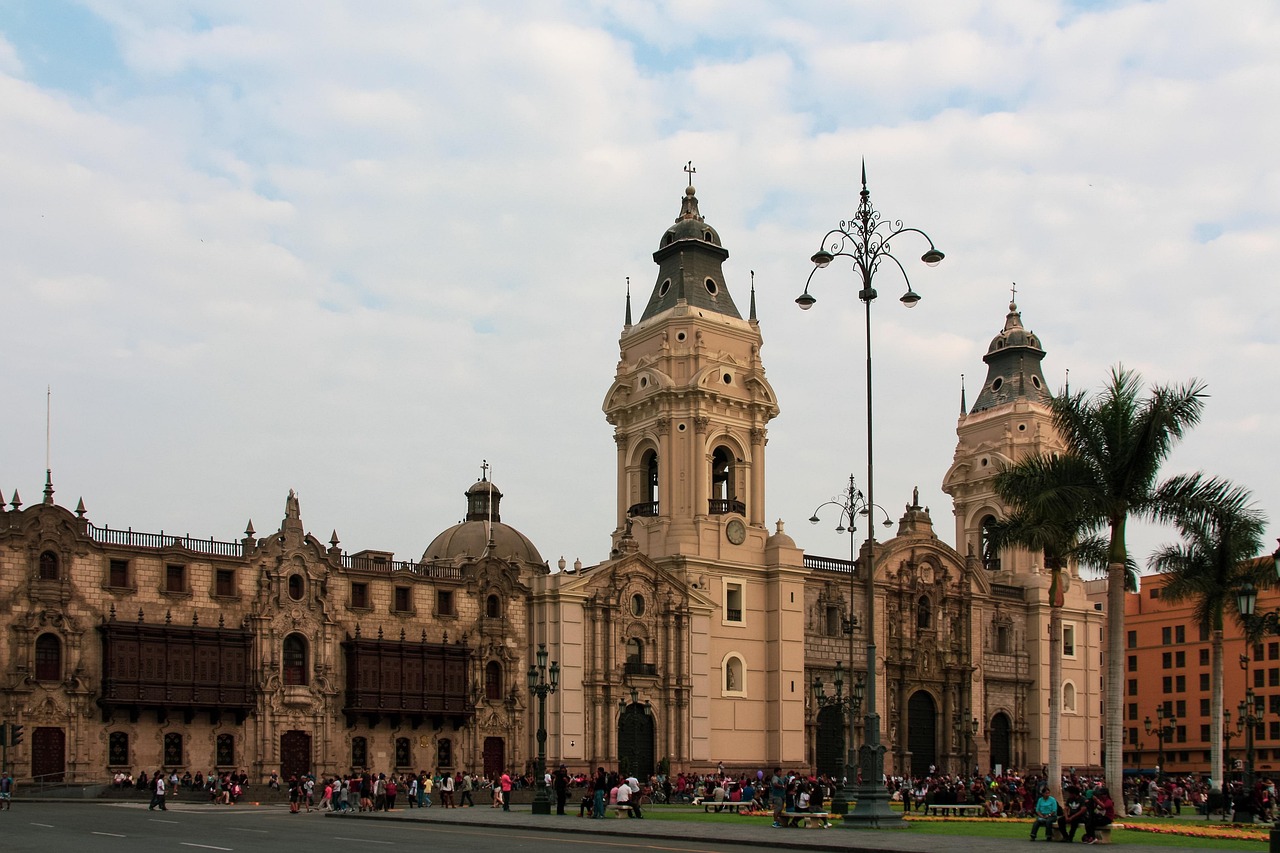
Plaza Mayor is Lima’s historic stage. I remember my first visit watching a changing of the guard at the Government Palace, brass band echoing across the square, pigeons scattering as kids chased them between the fountains.
History: Laid out in 1535 by Spanish conquistador Francisco Pizarro, the Plaza Mayor is the heart of colonial Lima. Around it sit the Government Palace, the Cathedral of Lima, and the Municipal Palace, all with grand facades and carved wooden balconies.
What to Do:
- Step inside the Cathedral to see its chapels and Pizarro’s tomb.
- Watch the Changing of the Guard at the Government Palace (usually late morning; check current times).
- Wander the surrounding streets to spot Lima’s iconic wooden balconies.
Tips: Come early in the morning or late afternoon for softer light and fewer crowds. Combine with nearby San Francisco Monastery for a full historic morning.
4. San Francisco Monastery & Catacombs
The first time I descended into the catacombs of San Francisco, the guide’s voice dropped to a whisper as we walked past neatly arranged bones in old brick vaults. It’s eerie, but also strangely peaceful.
History: The Basílica y Convento de San Francisco dates back to the 17th century and is famous for its cloisters, library, and catacombs, which served as a burial ground until the early 19th century.
What to See:
- Beautiful mosaics and cloisters with religious art.
- The library with thousands of ancient texts (one of my favorite “quiet” spots in Lima).
- The catacombs, with thousands of human remains arranged in patterns.
Tips: Guided tours (often bilingual) are required and run regularly. It’s a bit claustrophobic; if you’re sensitive, stay near the back of the group.
5. Huaca Pucllana (Pre-Incan Pyramid in Miraflores)
There’s something surreal about standing atop an adobe pyramid while looking out at glass towers and apartment blocks. Huaca Pucllana is one of my go-to “wow, Lima is old” spots for first-timers, especially at night when it’s lit dramatically.
History: Built by the Lima culture between 200–700 AD, Huaca Pucllana was a ceremonial and administrative center. The stepped pyramids are made from adobe bricks stacked in a distinctive “bookshelf” style.
My Routine Here: I like to book the late afternoon tour so I catch the site in daylight and then see the lights come on. After the tour, I often splurge on dinner at the on-site restaurant, which has views across the ruins.
Tips:
- Go with a guided tour; the context really matters here.
- Wear sunscreen—there’s very little shade.
- Reserve the restaurant in advance if you’re coming in high season or on weekends.
6. Museo Larco
If you see only one museum in Lima, make it Museo Larco. I come back every couple of years and still learn something new about Peru’s pre-Columbian cultures.
History & Collection: Housed in an 18th-century vice-royal mansion, Museo Larco holds an extraordinary collection of ceramics, textiles, and gold and silver pieces from cultures like the Moche, Nazca, and Inca. The storage rooms are open, so you can actually see thousands of cataloged pieces.
What I Love: The gardens are lush and peaceful—bougainvillea everywhere—and the café is perfect for a long lunch. I usually spend 2–3 hours here, lingering over the detailed explanations (the English signage is excellent).
Tips:
- Combine with a visit to nearby Pueblo Libre for a more local-feeling afternoon.
- Great for families; kids tend to like the ceramics and “treasure” rooms.
- Come in the late morning, then have lunch in the garden café.
7. Circuito Mágico del Agua (Magic Water Circuit)
Even after multiple visits, the Magic Water Circuit still makes me feel like a kid. It’s a huge park full of choreographed fountains, lasers, and light shows.
History: Opened in 2007 in the Parque de la Reserva, this complex of fountains once held a Guinness record as the largest water fountain park in the world.
What to Expect: At night, the fountains are lit in changing colors, with one main show projecting images onto a fan of water—music, lights, and Lima’s history all mixed together. There’s also a tunnel of water and interactive fountains where kids (and plenty of adults) get soaked.
Tips:
- Come after dark (check show times; usually several per evening).
- Bring a light jacket; Lima evenings near the winter can be cool and damp.
- Family-friendly, low cost, and a nice break from museums and churches.
8. Larcomar Shopping Center & Coastal Viewpoint
I have a love-hate relationship with Larcomar: it’s a mall, but what a mall. Built into the cliffs of Miraflores, it offers some of the best casual ocean views in Lima.
What to Do:
- Grab a coffee or dessert and sit facing the ocean—especially around sunset.
- Catch a movie (some in English with subtitles) if you need downtime.
- Use it as a starting or ending point for a long Malecón walk.
Tips: Prices are higher here than in the rest of Lima, but the view is free. For a budget option, grab takeaway snacks and sit on the public benches along the cliffs just outside.
9. Parque Kennedy & Miraflores Center
Parque Kennedy is Miraflores’ living room. I’ve lost count of how many evenings I’ve spent here people-watching, listening to amateur bands, and trying not to adopt one of the many park cats.
What to Expect: Musicians, street food vendors, artists selling paintings, and clusters of locals just chatting. Around the park are cafés, casinos, fast food, and small shops.
Tips:
- Good place to start a city walk or join a free walking tour.
- Watch your belongings after dark; it’s busy and a bit chaotic.
- Try a picaron (Peruvian doughnut) from a nearby street stand.
10. Callao Monumental (Street Art & Port History)
Callao Monumental is where I take friends who think Lima is just Miraflores and colonial churches. It’s a vibrant urban art project set in the historic port area of Callao.
History: The port of Callao has a rough reputation, but this specific enclave has been transformed into a cultural hub with galleries, murals, and creative spaces inside old buildings.
What to Do:
- Join a guided tour for context and safety; they’ll walk you through the best murals and galleries.
- Visit small cafés and artisan shops in restored buildings.
- Combine with a boat trip to the nearby islands if you have time.
Tips: Do not wander far outside the Monumental area on your own. Stick with guides or clearly marked tourist routes, especially if you’re unfamiliar with Lima.
11. Paragliding Over the Costa Verde
Seeing Lima from the sky is a thrill I recommend to anyone even vaguely adventurous. I still feel a rush when the paraglider catches the wind and we glide out over the Pacific.
How It Works: Tandem flights typically take off from a dedicated area in Miraflores (near Parque Raimondi). After a safety briefing, you run a few steps, the chute catches air, and suddenly the cliffs drop away beneath you.
Tips:
- Best conditions are on breezy afternoons; mornings can be too calm.
- Wear a jacket—windchill can be real up there.
- Ask in advance if photos/video are included or extra.
12. Pachacámac Archaeological Site (Day Trip)
Pachacámac is where you really grasp that Lima’s history stretches back thousands of years before the Spanish. I remember standing on a temple platform, looking out over the desert and ocean, and feeling the scale of the place.
History: A major ceremonial center for multiple cultures (Lima, Wari, Ichma, Inca) from around 200 AD until the Spanish conquest. The site includes pyramids, plazas, and a small but excellent site museum.
Tips:
- Go with a guided tour or hire a guide at the entrance.
- It’s usually hot and dusty; bring water, hat, and sunscreen.
- Combine with a lunch stop in a seaside restaurant in the south of Lima.
13. Chorrillos & Morro Solar Viewpoint
For a more local, slightly rough-around-the-edges experience of the coast, I head to Chorrillos. The Morro Solar viewpoint gives a wide panorama over Lima and the ocean.
What to Do:
- Walk around the old Malecón de Chorrillos and small fishing pier.
- Take a taxi up to Morro Solar for views (go with a trusted driver).
- Try fresh fish in a local cevichería away from the tourist crowds.
Tips: Go in the daytime and be street-smart with valuables. This isn’t Miraflores, but it has its own charm.
14. Plaza San Martín & Historic Theaters
Plaza San Martín is where I feel Lima’s early 20th-century elegance—broad avenues, white buildings, and the statue of General San Martín, a hero of independence.
What to Do:
- Walk from Plaza San Martín along Jirón de la Unión toward Plaza Mayor.
- Admire old theaters and façades; some are slowly being restored.
- Have a coffee in a traditional café nearby and watch the city go by.
15. MALI – Museo de Arte de Lima
When I need a break from traffic and noise but still want to feel in the city’s pulse, I duck into MALI, housed in a beautiful 19th-century exposition palace.
Highlights: A broad survey of Peruvian art from pre-Columbian pieces to contemporary works. Rotating exhibits often spotlight emerging Peruvian artists.
Tips: Combine MALI with an evening at the nearby Magic Water Circuit; they’re within easy reach of each other.
16. Huaca Huallamarca (San Isidro Pyramid)
Huaca Huallamarca is smaller and quieter than Huaca Pucllana, but that’s exactly why I like it. In the middle of calm San Isidro streets, this adobe pyramid rises right out of a park.
What to Do: Climb to the top for views of the neighborhood, visit the small on-site museum, and enjoy the contrast between ancient and modern.
Tip: Great stop if you’re already staying or eating in San Isidro; otherwise combine with Parque El Olivar.
17. Parque El Olivar (Olive Grove Park)
When Lima feels hectic, I escape to El Olivar. The centuries-old olive trees give this park an almost Mediterranean feel, right in the middle of the city.
What I Do: I like to bring a book, grab a coffee from a nearby café, and just slow down under the trees for an hour. If you’re traveling with kids, the park is perfect for them to run around safely.
18. Surquillo Market (Local Food Market)
Whenever I want to introduce someone to everyday Peruvian ingredients, I take them to Mercado de Surquillo (especially Market No. 1 and 2). It’s busy, colorful, and wonderfully fragrant.
What to See & Eat:
- Tropical fruits you’ve never heard of—ask vendors for a taste.
- Stalls selling fresh ceviche, chicharrón, and hearty soups.
- Rows of spices, ají peppers, and Andean grains.
Tips: Come in the morning or around lunchtime. This is a great place to eat local food in Lima on a budget. Stick to stalls with high turnover for freshness.
19. Basílica de las Nazarenas & Señor de los Milagros
If you’re in Lima in October, you’ll see a wave of purple in the streets: the faithful celebrating Señor de los Milagros, one of the largest religious processions in the world. The Basílica de las Nazarenas is its spiritual home.
Tip: The area can be extremely crowded during processions; keep valuables secure. Even outside October, visiting the church offers insight into Lima’s deep Catholic traditions.
20. Barranco Sea Cliffs & Bajada de los Baños
The Bajada de los Baños is the sloping walkway that leads from Barranco’s heart down to the ocean. I like to walk it at golden hour, when the sky and sea merge into pastel hues.
What to Do: Start at the Puente de los Suspiros, follow the path down past bars and small seafood restaurants, and end by the old seaside area, feeling the spray from the waves.
Tip: Great for photos; just keep your camera secure and avoid flashing valuables late at night.
3, 4 & 5 Day Itineraries for Lima (With Personal Stories)
Here’s how I’d structure 3 days in Lima if it’s your first time, plus how to extend that into a 4 day itinerary for Lima or even a 5 day itinerary for Lima. These are based on how I actually host friends when they visit.
3 Days in Lima: Essential Highlights
Day 1: Miraflores Cliffs, Huaca Pucllana & Sunset at Larcomar
Morning: After a red-eye flight to Lima, I usually tell friends to drop bags at their Miraflores hotel and head straight for the Malecón. The ocean breeze and gray-blue horizon help reset your body clock. Walk from Parque del Amor toward the lighthouse, stopping often just to look out at the surfers.
Grab a light brunch at a café near the Malecón—something like avocado toast with ají amarillo or a simple butifarra sandwich—and a strong coffee.
Afternoon: Head to Huaca Pucllana for a guided tour. The contrast of ancient adobe pyramids against modern Miraflores is one of those “only in Lima” experiences. If you’re already feeling the food buzz, book a late lunch or early dinner at the on-site restaurant.
Evening: Wander down to Larcomar. Even if you’re not shopping, the terraces offer some of the best sunset views. On my last visit, we watched paragliders silhouetted against a cotton-candy sky while eating lucuma ice cream. End the night with a pisco sour in a nearby bar, or turn in early if jet lag is winning.
Day 2: Historic Center, Museums & Magic Water Circuit
Morning: Take a taxi or rideshare to the Centro Histórico. Start at Plaza Mayor, then tour the Cathedral, walk over to San Francisco Monastery, and explore its catacombs. I like to grab a quick coffee in a traditional café nearby—simple, strong, nothing fancy.
Lunch: Eat at a classic cevichería in the center or head back toward Miraflores/Surquillo for market-style ceviche. It’s one of the best things to do in Lima for food lovers.
Afternoon: If you still have energy, stop by MALI or another central museum; otherwise, rest up back in your neighborhood.
Evening: Make your way to the Circuito Mágico del Agua. The last time I went with friends, we ended up running through one of the interactive fountains and getting half-soaked. Bring a light jacket, and enjoy the main light-and-water show.
Day 3: Barranco’s Bohemian Streets & Local Food
Morning: Taxi to Barranco. Start with a slow coffee in a café inside a restored house. Walk to the Puente de los Suspiros, breathe in, make your wish, and cross the bridge. Wander the Bajada de los Baños down toward the sea.
Lunch: Choose a local restaurant for modern Peruvian or seafood. Barranco has plenty of both. On my last visit, we shared plates of causa, grilled octopus, and tacu tacu.
Afternoon: Go on a self-guided street art hunt, or join an organized walking tour. Visit a couple of small galleries. If you’re feeling active, walk along the cliffs toward Miraflores.
Evening: Barranco at night is a must. Pick a bar or peña with live music. I like to arrive early (8–9 pm) to snag a table, then stay until the band has everyone clapping along to classic criollo songs.
4 Days in Lima: Adding Culture & Pre-Columbian History
If you have 4 days in Lima, add a deep dive into Peru’s ancient cultures.
Day 4: Museo Larco & Pueblo Libre
Morning: Head to Museo Larco. Take your time—there’s a lot to absorb, but the layout makes it easy. I always linger in the gold and silver section, imagining how these pieces once shone in ceremonies.
Lunch: Eat at the museum café (it’s genuinely good), or walk into Pueblo Libre for a more local lunch—ají de gallina, lomo saltado, or seco de cordero.
Afternoon: Stroll around Pueblo Libre’s central plaza, or visit another nearby museum if open. Grab a coffee or juice from a neighborhood spot and watch daily life unfold.
Evening: Either head back to your base or, if you’re not tired, visit a low-key bar or tavern in Pueblo Libre for pisco or craft beer. Then taxi home.
5 Days in Lima: Day Trip & Deeper Neighborhood Exploration
Day 4 (Option A): Pachacámac Day Trip
Book a half-day tour to Pachacámac. It’s about an hour from Lima (traffic willing). I like to leave mid-morning, tour the site and museum, then stop for lunch at a seaside restaurant on the way back. You’ll be back in Miraflores or Barranco by late afternoon.
Day 4 (Option B): Callao Monumental & Coastal Vibes
Alternatively, spend your fourth day exploring Callao Monumental with a guided tour, then have lunch in the area. You can sometimes add a short boat trip to see sea lions and birds off the coast.
Day 5: San Isidro, El Olivar & Markets
Morning: Visit Huaca Huallamarca then wander Parque El Olivar. It’s a gentle, calm way to close your time in Lima.
Afternoon: Head to Surquillo Market for last-minute food souvenirs (coffee, chocolate, ají sauces) and a casual market lunch.
Evening: End your 5 day itinerary for Lima with one more oceanfront sunset. Either repeat your favorite spot or try a new bar or café along the cliffs.
Best Local Food in Lima & Where to Eat
Lima is often called the gastronomic capital of Latin America, and after eating my way through its markets and restaurants for years, I agree. Whether you want a tasting menu at a world-ranked restaurant or a plastic stool in a market, the city delivers.
Must-Try Dishes
- Ceviche: Fresh fish “cooked” in lime juice, with onions, chili, and sweet potato. Eat it at lunch; locals rarely order ceviche at night.
- Lomo Saltado: Stir-fried beef with onions, tomatoes, fries, and rice. The perfect comfort food.
- Aji de Gallina: Shredded chicken in a creamy, mildly spicy ají amarillo sauce.
- Causa Limeña: Layers of seasoned mashed potato with fillings like chicken, tuna, or seafood.
- Anticuchos: Grilled skewers (often beef heart) marinated in spices. Street stalls or simple grills are best.
- Picarones: Pumpkin and sweet potato doughnuts with syrup—my favorite street dessert.
Where to Eat (Personal Picks)
I’ll avoid listing specific “top 50” names since they change, but here’s how I navigate:
- For splurges: Reserve a tasting menu in Miraflores, Barranco, or San Isidro—these are often booked weeks ahead. Amazing for a romantic night.
- For mid-range: Neighborhood cevicherías in Miraflores, Barranco, and Pueblo Libre. Go at lunchtime, look for busy spots with lots of locals.
- For budget eats: Markets like Surquillo, food courts near office areas, and simple menu del día restaurants where a set lunch can be very affordable.
Drinks to Try
- Pisco Sour: Peru’s iconic cocktail—pisco, lime, sugar, egg white, and bitters.
- Chilcano: A lighter pisco drink with ginger ale and lime; easier to drink multiples.
- Chicha Morada: Non-alcoholic purple corn drink with cinnamon and fruit—refreshing and kid-friendly.
- Local Craft Beer: Lima’s craft beer scene has grown; look for bars in Miraflores, Barranco, and San Isidro.
Saving Money on Food
If you’re watching your budget, Lima is still very friendly:
- Look for “menu” lunches—fixed meals with soup, main, and drink for a low price.
- Eat ceviche at markets like Surquillo instead of only at high-end restaurants.
- Buy fruit from local stands; you can eat like a king for very little.
Nightlife, Entertainment & Cultural Experiences in Lima
Lima comes alive at night—especially Thursdays through Saturdays. I’ve had some of my favorite evenings here listening to live criollo music in tiny bars or hopping between cocktail spots in Barranco.
Nightlife Districts
- Barranco: Best for live music, bohemian bars, and late-night dancing. Great for couples and groups of friends.
- Miraflores: More polished bars, lounges, and some clubs. Also a few casinos if that’s your thing.
- Centro Histórico: Some traditional bars and peñas; more low-key and local.
Cultural Experiences
- Peñas: Venues with live criollo or Afro-Peruvian music and dancing. Ask your hotel for current recommendations.
- Theater & Concerts: Check schedules at main theaters and Parque de la Exposición for events; from classical concerts to contemporary dance.
- Street Art Tours: Especially in Barranco and Callao Monumental; a great way to understand modern Lima culture.
Best Day Trips from Lima
If you have a spare day beyond your core 3, 4 or 5 days in Lima, consider these excursions.
Pachacámac
Already covered above, but worth repeating: easy to reach, loaded with history, and combines well with seaside lunches.
Islas Palomino (Sea Lions & Birds)
From the port of Callao, boat tours take you to offshore islands where you can see sea lions and seabirds. Some tours even let you swim near (not with) the sea lions.
Lurín & Southern Beaches
In summer (December–March), Limeños flock to beaches south of the city. If you want to see how locals do beach days, join them—just be prepared for traffic on weekends.
Cultural Etiquette & Local Customs in Lima
Understanding local customs in Lima will make your trip smoother and your interactions warmer.
Greetings & Personal Space
- Common greeting: a handshake or a single kiss on the right cheek (between women, or between men and women who know each other).
- Limeños often stand closer than in some cultures; don’t back away too much or it can feel cold.
Language
Spanish dominates, and English is common in tourist areas but not guaranteed elsewhere. A few key phrases—por favor, gracias, buenos días, disculpe—go a long way.
Dress & Behavior
- Smart-casual is the norm in the city; beachwear is for the beach.
- In churches, dress modestly (covered shoulders and knees recommended).
- Public displays of affection are normal but not over-the-top.
Dining Etiquette
- It’s polite to say buen provecho (enjoy your meal) to tablemates.
- Tip 10% in restaurants if service is not already included.
- Locals often eat lunch between 1–3 pm and dinner from 8 pm onward.
Safety & Common Sense
Lima is a big city; like anywhere, use common sense:
- Keep phones and cameras close, especially in crowded areas.
- Use registered taxis or rideshare apps rather than hailing random cars at night.
- Ask locals or your hotel which areas to avoid after dark.
Practical Travel Tips for Lima
Visas & Entry
Many nationalities can enter Peru visa-free for tourism for up to 90 days, but rules change—always check your local Peruvian consulate in 2026 before flying. Ensure your passport has at least 6 months’ validity.
Money & Costs
- Currency: Peruvian sol (PEN).
- ATMs are widely available; avoid high-fee machines in casinos and tourist traps.
- Cash is useful for markets, small shops, and taxis; cards widely accepted in mid- to high-end places.
SIM Cards & Connectivity
For easy navigation and ride-hailing, get a local SIM. In 2026, major providers like Claro, Movistar, and Entel sell prepaid SIMs in official shops and some malls (bring your passport). E-sim options are increasingly available but check coverage before buying.
Getting Around
- Rideshare: Apps are the easiest, safest way for most visitors to move between districts.
- Buses & Metropolitano: Cheap but can be confusing. The Metropolitano BRT is the most straightforward; avoid rush hour if you dislike crowds.
- Taxis: Use reputable companies or apps; avoid unmarked, unofficial offers.
- Walking: Great within Miraflores, Barranco, San Isidro, and central areas during the day. Use caution at night.
- Car Rental: Not recommended for first-time visitors; traffic is intense, signage inconsistent, and local driving styles… creative.
- Foreign Driver’s License: Generally accepted for short stays, but check current rules; an International Driving Permit is a plus if you must drive.
Health & Safety
- Tap water: Not recommended to drink; stick to bottled or filtered.
- Altitude sickness: Not an issue in Lima (it’s at sea level), but consider it if you’re heading to Cusco afterward.
- Food safety: Eat ceviche at busy, reputable places, especially at lunchtime.
Saving Money in Lima
- Use set lunch menus and markets for affordable meals.
- Walk wherever possible within safe districts.
- Choose mid-range guesthouses or apartments in Miraflores/Barranco or budget hotels in Pueblo Libre or Jesús María.
- Prioritize a few paid attractions (like Museo Larco, Huaca Pucllana) and balance with free ones (Malecón, plazas, markets).
Hidden Tips Only Regular Visitors Tend to Know
- Gray skies are normal: From about May to October, expect Lima’s famous garúa—a misty gray sky. It’s still great for walking, just don’t expect tropical sunshine all day.
- Ceviche timing: Locals eat ceviche for lunch, not dinner; follow their lead for fresher fish.
- Plan around traffic: Add 30–60 minutes to any cross-town journey at rush hour. I often plan my days by “clusters” of neighborhoods to minimize backtracking.
- Ask locals: Limeños love to share recommendations. Ask waiters, baristas, or guides where they eat or go out.
When to Visit Lima & Final Recommendations
Lima’s climate is mild year-round but quirky: cool and cloudy winters, humid summers, and almost no rain.
Seasons & Best Time for Different Activities
- Summer (December–March): Warm, sunnier skies, best for beach days, paragliding, and coastal walks. Higher local tourism.
- Shoulder Seasons (April–May, October–November): Pleasant temperatures, fewer crowds; great for sightseeing, museums, and food. My personal favorite times for city exploration.
- Winter (June–September): Cooler, gray, humid; still very visitable, just bring layers. Good for museums, food, and culture-focused trips.
Key Takeaways
- 3 days in Lima is enough to see major highlights: Miraflores, Barranco, Centro Histórico, and a key museum or two.
- 4 days in Lima lets you add deeper cultural experiences like Museo Larco and more neighborhood wandering.
- 5 days in Lima (or more) lets you include a day trip to Pachacámac or Callao Monumental and really settle into the city’s rhythm.
- Balance your time between historic sites, ocean views, and local food. Eat in markets as well as in restaurants. Walk the Malecón more than once.
- Respect local customs in Lima, learn a few Spanish phrases, and stay open to serendipity—a spontaneous street performance or a tiny café can end up being your favorite memory.
Lima rewards curiosity. It’s not a postcard-perfect city, but if you let it, it will quietly get under your skin—with the salty air on the Malecón, the zing of lime and ají on your tongue, the sound of guitars in a Barranco bar, and the knowledge that under your feet lie centuries of stories.