Why Visit Cincinnati in 2026?
If you only know Cincinnati as a name on a map between Chicago and the East Coast, you’re in for a surprise. Cincinnati is a river city with a soul: 19th-century architecture that looks like it was borrowed from Europe, a food scene that punches far above its weight, neighborhoods with distinct personalities, and a sports culture that borders on religion.
I’ve visited Cincinnati at least once a year for the past decade. I’ve watched Over-the-Rhine go from “locals-only and a little rough” to one of the Midwest’s hippest districts, cheered the Reds on a humid summer evening, and thawed my frozen fingers around mugs of hot cider at winter festivals. It’s the kind of place that feels instantly approachable but keeps revealing new corners every time I return.
What makes Cincinnati special in 2026?
- Walkable historic core: Dense, brick-lined streets, murals everywhere, and a downtown you can actually see on foot in a day.
- Serious food and drink: From chili parlors and goetta to James Beard–level chefs and inventive breweries.
- World-class arts: A top zoo, major museums, a professional ballet and symphony, and a deep German heritage that still shapes local culture.
- Riverfront revival: The Banks area has matured into a vibrant riverfront playground with parks, stadiums, and family-friendly attractions.
- Affordable and relaxed: Compared with New York or San Francisco, your money goes much further, and the vibe is laid-back Midwestern.
Whether you’re planning 3 days in Cincinnati for a quick escape or 4–5 days in Cincinnati for a deeper dive, this travel guide for Cincinnati is designed to feel like a smart local friend walking you through the city.
Table of Contents
- 1. Neighborhoods & Districts of Cincinnati
- 2. 20 Must-See Attractions in Cincinnati (Deep-Dive Guides)
- 3. Suggested Itineraries (3, 4 & 5 Days in Cincinnati)
- 4. Best Local Food & Drinks in Cincinnati
- 5. Nightlife, Entertainment & Cultural Experiences
- 6. Major Events & Festivals in 2026–2027
- 7. Day Trips & Nearby Getaways
- 8. Local Customs & Cultural Etiquette
- 9. Practical Travel Advice for Cincinnati
- 10. Summary & Best Time to Visit Cincinnati
Cincinnati Neighborhoods & Areas to Explore
Downtown Cincinnati
Downtown is compact, walkable, and surprisingly rich in architecture and public art. It’s where I usually base myself when I want easy access to everything: the riverfront, stadiums, museums, and transit.
- Best for: First-time visitors, short stays, business trips.
- Highlights: Fountain Square, Carew Tower, The Banks, the riverfront parks.
Over-the-Rhine (OTR)
Over-the-Rhine is Cincinnati’s poster child for urban revival: 19th-century Italianate buildings, indie boutiques, murals, and a dizzying number of bars and restaurants. I spend at least one full evening here every visit.
- Best for: Nightlife, foodies, architecture lovers.
- Highlights: Washington Park, Findlay Market, Music Hall, breweries and cocktail bars.
The Banks & Riverfront
Wedged between downtown and the Ohio River, The Banks is all about sports, green space, and family-friendly attractions. In summer, it feels like a long festival strip along the water.
- Best for: Families, sports fans, river views.
- Highlights: Great American Ball Park, Paycor Stadium, Smale Riverfront Park, museums.
Mount Adams
Mount Adams is one of my favorite escapes: a hilltop neighborhood with narrow streets, big views, and a bohemian past. It’s romantic at dusk and perfect for an evening drink overlooking the skyline.
- Best for: Romantic evenings, views, quiet walks.
- Highlights: Eden Park overlooks, Holy Cross–Immaculata Church, art galleries, bars with patios.
Northside
Northside is Cincinnati’s artsy, slightly scruffy, LGBTQ+-friendly enclave. It’s where you go for vintage shops, vinyl, and a good dive bar.
- Best for: Alternative culture, live music, thrifting.
- Highlights: Indie boutiques, craft beer, local diners, live-music venues.
Hyde Park & Oakley
Leafy, affluent, and very livable, these east-side neighborhoods are great if you want a calmer base with plenty of cafes and parks.
- Best for: Families, longer stays, runners and walkers.
- Highlights: Hyde Park Square, Oakley Square, boutique shopping, relaxed dining.
Covington & Newport (Northern Kentucky)
Technically across the river in Kentucky, but functionally part of greater Cincinnati life. I always recommend at least one river-crossing: the views back to the skyline are some of the best in town.
- Best for: River views, nightlife, aquarium visits, historic main streets.
- Highlights: Newport on the Levee, Roebling Suspension Bridge, MainStrasse Village, murals.
20 Must-See Attractions in Cincinnati (Deep-Dive Guides)
These are the must-see attractions in Cincinnati I return to again and again. You won’t hit all 20 in a 3 day itinerary for Cincinnati, but with 4–5 days in Cincinnati, you can cover most of them at a relaxed pace.
1. Smale Riverfront Park & The Banks
Smale Riverfront Park stretches along the Ohio River like Cincinnati’s front porch. On my first visit in early summer, I wandered down after a Reds game and ended up staying until the skyline lights came on, swinging lazily on one of the oversized porch swings while kids ran through the fountains.
The park is a series of terraces, gardens, and play areas connecting the stadiums, downtown, and the water. You’ll find giant chess boards, interactive fountains, a labyrinth, and those now-iconic swings facing the river and Kentucky hills.
History & significance: Built as part of the riverfront revitalization, Smale turned what was once parking lots and floodwall into one of the city’s most beloved public spaces. It’s where locals walk dogs, jog before work, and picnic on sunny weekends.
What I love doing here:
- Starting the day with a coffee from a nearby spot at The Banks and strolling the riverwalk.
- Letting kids burn energy on the playgrounds and splash areas (it’s one of the most family-friendly things to do in Cincinnati).
- Watching sunset behind the Roebling Suspension Bridge, then heading to dinner nearby.
Food nearby: The Banks development right above the park has a mix of sports bars, casual restaurants, and a few better-than-you-expect spots. It’s touristy, but convenient if you’ve got a game or a concert.
Getting there: From downtown, it’s a short walk downhill. The Cincinnati Bell Connector (streetcar) has stops near The Banks. Parking garages sit beneath and around the stadiums.
Tips: In summer, bring a change of clothes or towel for kids—they will get soaked. At night after big games, it can be packed and loud; for a quieter vibe, come around sunrise or early morning.
2. Fountain Square

Fountain Square is Cincinnati’s living room: a plaza anchored by the iconic Tyler Davidson Fountain, surrounded by office towers, hotels, and restaurants. I like to use it as a mental compass—if I’m ever turned around downtown, I aim for the sound of the fountain.
History: The square dates back to the 19th century and has long been a gathering place for protests, celebrations, and everyday people-watching. The bronze fountain itself, dedicated in 1871, depicts allegorical figures and the goddess of water.
Experiences over the years: I’ve stumbled onto free concerts here in summer, watched people ice skate in winter (they set up a rink and sometimes curling lanes), and joined spontaneous crowds during playoff runs. There’s almost always something happening—markets, movie nights, cultural festivals.
Food & drink: Surrounding the square are cafes, quick lunches, and a few nicer sit-down options. It’s a good central spot if your group wants different things but still wants to meet back up easily.
Tips: For photos, early morning gives you the fountain with minimal crowds. At night, the lights and water make it especially photogenic. If you’re building a 3 day itinerary for Cincinnati, you’ll pass Fountain Square multiple times without trying—it’s that central.
3. Carew Tower & Art Deco Downtown
Before the era of glass skyscrapers, there was Carew Tower—an Art Deco classic that still offers the best 360° view of the city. My first time up there, on a hazy autumn afternoon, I realized just how hilly and green Cincinnati really is.
History: Completed in 1931, Carew Tower was an early multi-use complex: offices, a hotel, retail—essentially a vertical city. Its design later inspired New York’s Empire State Building. Inside, the lobby still boasts marble, gilded accents, and geometric patterns straight out of the Jazz Age.
The observation deck: The climb up near the top via small elevators and a final stairway feels delightfully old-school. The open-air deck gives you views of the Ohio River, stadiums, OTR’s rooftops, and the Kentucky side. It’s windy, so hold onto hats and cameras.
Photography tip: Late afternoon into golden hour is ideal. If you’re visiting in winter, bundle up; that wind cuts right through.
Nearby architecture walk: After Carew, I like to wander the surrounding blocks, spotting other Art Deco and early skyscraper designs, plus the ornate interiors of a few bank lobbies (when open).
4. Over-the-Rhine & Washington Park
Over-the-Rhine (OTR) is where I fell hardest for Cincinnati. It’s a neighborhood that wears its history on its facades: rows of 19th-century Italianate buildings once home to German immigrants and breweries, now filled with coffee shops, design studios, and cocktail bars.
At the heart of it all is Washington Park, a landscaped square framed by Music Hall on one side and lively bars and restaurants on the other. On summer evenings, the lawn turns into a patchwork of picnic blankets, dogs, kids, and couples with plastic cups of wine.
History & transformation: OTR was once considered one of the country’s most endangered neighborhoods. Over the past two decades, it’s been heavily reinvested in and is now a poster child for urban revitalization, with all the complexity that entails—beautiful restorations, thriving small businesses, but also debates about gentrification and displacement.
What I do here:
- Start with coffee at a local roaster and a slow loop through Washington Park.
- Peek into Music Hall (sometimes you can wander the lobby between events).
- Hop between boutiques, record stores, and galleries on Vine and Main Streets.
- End with dinner and drinks; the hardest part is choosing where.
Family-friendly: The park’s playground, splash area, and frequent family events make it perfect for kids. Check the event schedule; I’ve accidentally arrived during free concerts and outdoor movie nights more than once.
Safety note: Like many rapidly changing urban areas, OTR feels mostly safe along main corridors, especially in the evening when it’s busy. Just use standard big-city awareness at night and stick to well-lit streets.
5. Findlay Market
Findlay Market is Cincinnati’s pantry, and if you care about food at all, it’s non-negotiable. Dating back to 1855, it’s Ohio’s oldest continuously operated public market, and it still has that satisfyingly chaotic market energy: voices, smells, and colors blending into one big temptation.
My ritual: I usually come on a Saturday morning. I grab a coffee, wander the aisles of butchers, bakers, and specialty stalls, then pick up something indulgent—maybe a pastry, maybe a sandwich—and eat it outside while people-watching.
What you’ll find:
- Butchers and charcuterie stalls selling local sausages, goetta, and smoked meats.
- Produce vendors with seasonal Ohio and Kentucky fruits and vegetables.
- Prepared-food stands covering everything from empanadas to falafel.
- Outdoor vendors (in warmer months) selling crafts, spices, and more.
Local flavor: This is a great place to sample local food in Cincinnati beyond chili. Look for stalls selling goetta, regional cheeses, and baked goods with German roots.
Getting there: The streetcar has a stop right by the market, making it an easy addition to any 3 days in Cincinnati trip without needing a car.
Tips: Weekends are lively but crowded. Weekdays are calmer but some vendors may have shorter hours. Many stalls take cards, but I still carry a bit of cash just in case.
6. Cincinnati Music Hall
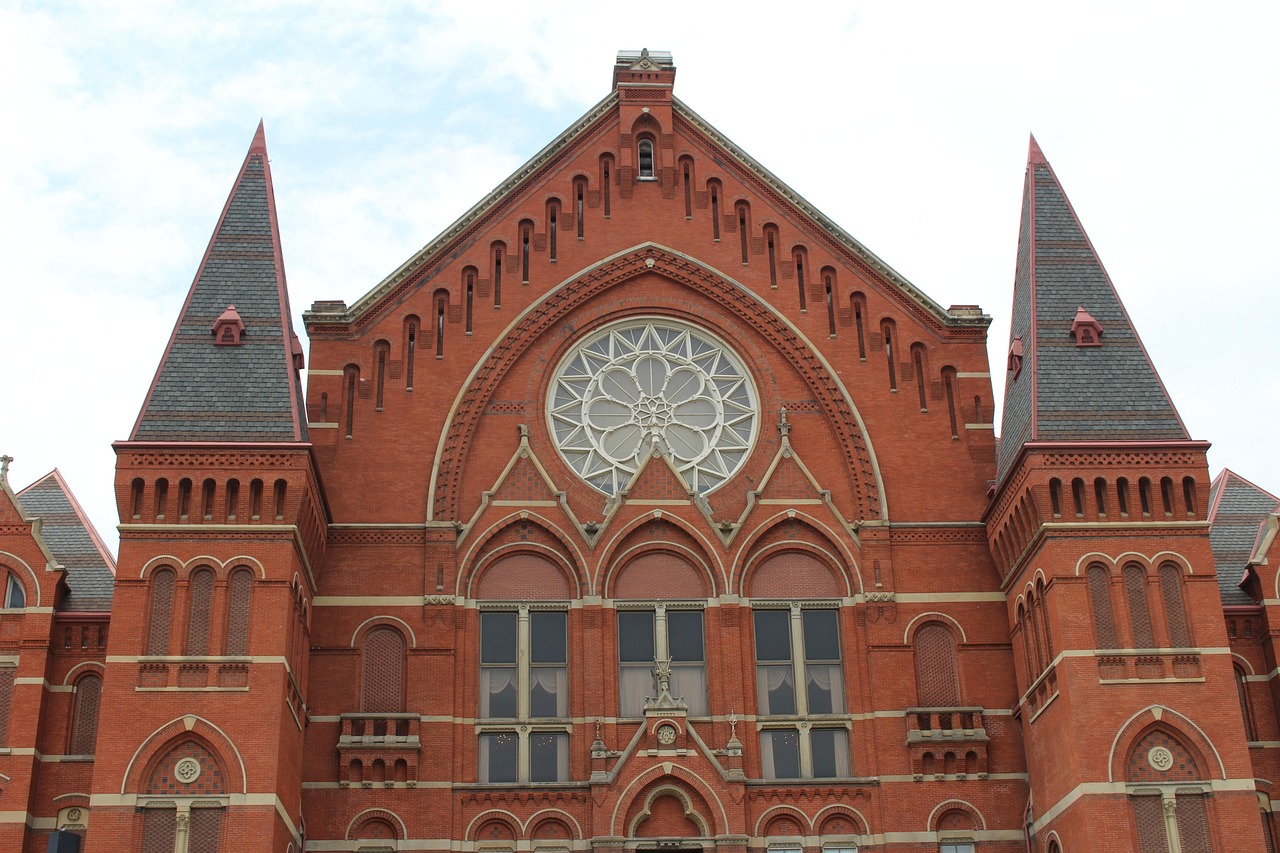
Even if you never set foot inside for a performance, Music Hall is one of the most striking buildings in Cincinnati. Its red brick, steep gables, and large central rose window make it a Gothic Revival icon looming over Washington Park.
History: Opened in 1878, Music Hall has hosted world premieres, political conventions, and countless concerts. It’s home to the Cincinnati Symphony Orchestra, Cincinnati Opera, and Cincinnati Ballet.
My experiences: I’ve been here for a symphony performance—dressed up slightly, joining locals in winter coats and scarves on a snowy evening—and also for a daytime tour that delved into its rumored hauntings (the site was partially built over a former pauper’s cemetery).
Why go:
- To see the main auditorium, which is as grand as any big-city concert hall.
- To enjoy top-tier cultural experiences in Cincinnati without big-city prices.
- To photograph the building’s facade at sunset when the brick glows.
Tips: Check the events calendar in advance; if you’re planning 4 days in Cincinnati or more, it’s worth building one evening around a performance here. For tours, book ahead, as they don’t always run daily.
7. Cincinnati Zoo & Botanical Garden

The Cincinnati Zoo is consistently ranked among the best in the country, and it lives up to the hype. My first visit was partly because I wanted to see Fiona, the prematurely born hippo who became a social-media star. I stayed because the entire place felt thoughtfully designed and genuinely beautiful.
Highlights:
- Well-designed animal habitats that prioritize conservation and education.
- Extensive botanical gardens—if you care more about plants than animals, you’ll still be happy.
- Special exhibits and seasonal events, including spectacular holiday lights.
Family-friendly: This is one of the top things to do in Cincinnati with kids. There are play areas, interactive experiences, and manageable walking distances if you plan your route.
Practicalities: The zoo is in the Avondale neighborhood, a short drive from downtown. There’s on-site parking (paid), and some bus routes connect here. Arrive early to beat both crowds and midday heat in summer.
Tip: If you’re visiting in peak season or on a weekend, buy tickets online in advance. Consider pairing the zoo with a relaxed afternoon in nearby neighborhoods if you’re doing a 3 day itinerary for Cincinnati.
8. Cincinnati Art Museum & Eden Park
Eden Park is Cincinnati’s elevated oasis—winding roads, dramatic overlooks, and a feeling of being far from the city even though you’re just up the hill. Nestled in its greenery is the Cincinnati Art Museum, a free-entry gem that feels both substantial and approachable.
Cincinnati Art Museum:
- Collections span 6,000 years, with strong American, European, and decorative arts.
- Rotating exhibitions keep locals coming back; I’ve lucked into excellent photography and contemporary shows here.
- Compact enough to enjoy in 2–3 hours without feeling overwhelmed.
Eden Park views: After the museum, I always walk (or drive) to the overlooks. The Twin Lakes area and the overlook near the Krohn Conservatory offer spectacular views across the river and towards Kentucky—perfect for photos and quiet moments.
Food: The museum cafe is decent for a light lunch. For something more atmospheric, I usually head to Mount Adams (just next door) after for a meal with a view.
Transport: Eden Park is easiest by car or rideshare. Some bus routes get close, but hills can make walking up from downtown a workout.
9. Krohn Conservatory
Also in Eden Park, the Krohn Conservatory is a glasshouse wonderland of tropical plants, desert landscapes, and seasonal floral shows. On a frigid January day, stepping inside felt like stepping into another climate; my camera lens literally fogged up.
What to expect:
- Permanent collections of tropical, desert, and orchid plants.
- Seasonal shows such as the Butterfly Show, where thousands of butterflies flutter freely among visitors.
- Model train and holiday-themed displays in winter.
Why I love it: It’s calm, fragrant, and relatively compact—a perfect pairing with the Art Museum for a culture-and-nature half day. It’s also a good rainy-day or winter activity.
Tips: Entry is inexpensive, but some special exhibits have separate or timed tickets. Weekends during the Butterfly Show can be crowded; weekdays are more relaxed.
10. John A. Roebling Suspension Bridge
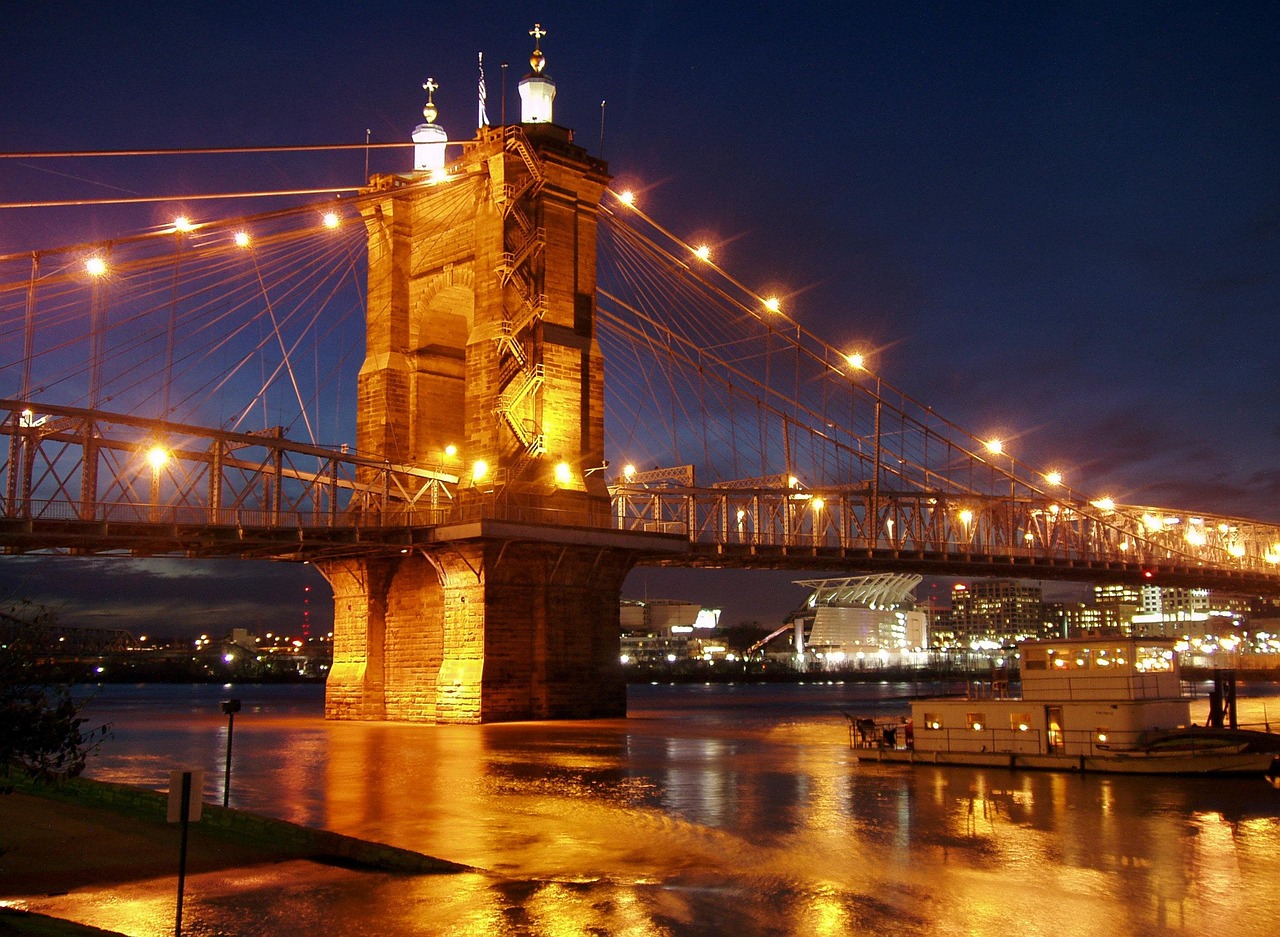
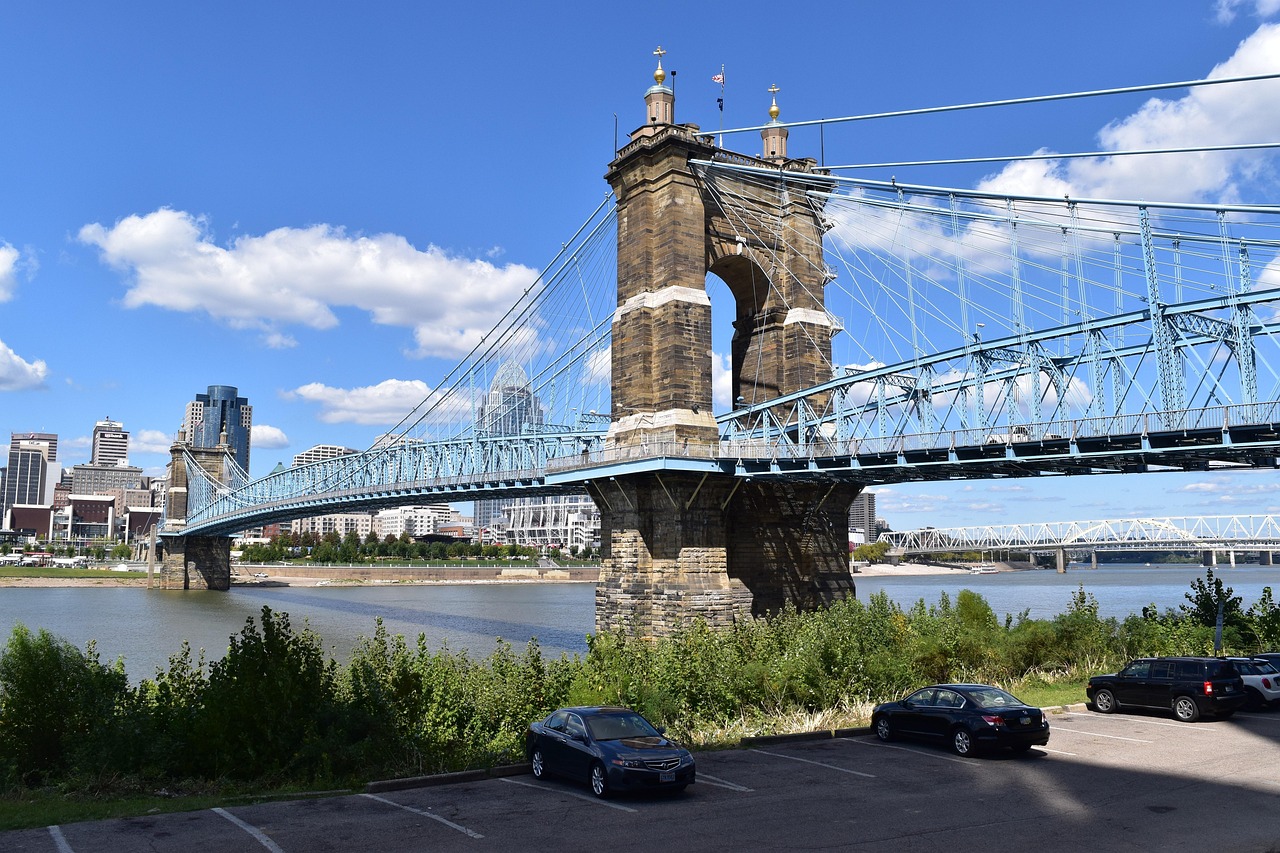
Connecting Cincinnati to Covington, Kentucky, the Roebling Suspension Bridge is both a piece of engineering history and one of the best free experiences in the city. Designed by John A. Roebling before he built the Brooklyn Bridge, it feels like a smaller, quieter cousin.
My ritual: I like to walk from the Cincinnati side around sunset, pausing halfway to look back at the skyline. The blue-painted steel, stone towers, and river reflections make for great photos. On the far side, you can explore Covington’s riverfront or MainStrasse Village.
History: When it opened in 1867, it was the longest suspension bridge in the world. It was crucial for trade and movement across the Ohio River and remains a beloved symbol today.
Tips: There are sidewalks on both sides, but traffic can be loud, so keep an eye on kids. At night, the bridge is beautifully lit. If you’re planning 3 days in Cincinnati, fit this walk into one evening—it’s that worthwhile.
11. Newport Aquarium & Newport on the Levee
Across the river in Newport, Kentucky, the Newport Aquarium is a family favorite and a good all-weather attraction. I’ve visited on both a rainy spring day and a brutally hot July afternoon—both times, it felt like the perfect indoor escape.
Highlights:
- Walk-through tunnels with sharks and rays swimming overhead.
- Interactive touch pools where kids (and adults) can gently touch certain animals.
- Themed exhibits featuring everything from seahorses to alligators.
Newport on the Levee: The aquarium anchors a riverfront development with shops, restaurants, and entertainment. It’s somewhat touristy, but the views back towards the Cincinnati skyline are excellent, especially from upper levels and outdoor terraces.
Getting there: From downtown Cincinnati, you can walk across the Purple People Bridge (pedestrian-only) or the Taylor-Southgate Bridge, then follow signs. There’s also ample parking garages on the Kentucky side.
Tips: Buy tickets online, especially on weekends or holidays. Combine with a riverside walk and maybe dinner in Newport or Covington for a fuller evening.
12. Cincinnati Museum Center at Union Terminal
Union Terminal is one of the most impressive Art Deco train stations in America, now repurposed as a multi-museum complex. The first time I walked into the rotunda, I just stood there, neck craned, staring at the enormous mosaics and golden-hued ceiling.
What’s inside:
- Museum of Natural History & Science – dinosaurs, caves, and more.
- Cincinnati History Museum – immersive exhibits on the city’s past.
- Children’s Museum – hands-on, great for younger kids.
- Rotating special exhibitions and an Omnimax theater.
History: Opened in 1933, Union Terminal was a major rail hub before falling into decline and then being brilliantly reimagined. Its exterior has even appeared as the inspiration for the Hall of Justice in DC Comics.
My tips:
- Allow at least half a day, especially with children.
- Spend a few minutes just appreciating the rotunda before diving into exhibits.
- If you’re short on time, prioritize one museum (natural history or Cincinnati history) plus the building itself.
13. National Underground Railroad Freedom Center
Set on the riverfront, just steps from where enslaved people once crossed from slave states to free states, the National Underground Railroad Freedom Center is one of the most powerful museums in the region. I left my first visit quiet and thoughtful, with a deeper appreciation for the city’s role in abolitionist history.
Focus: The museum explores not only the history of the Underground Railroad but also contemporary struggles for freedom and human rights around the world.
Exhibits:
- Stories of individuals who risked everything for freedom.
- Artifacts from the period, including a slave pen relocated to the museum.
- Interactive and multimedia exhibits linking past and present.
Tips: Set aside at least 2–3 hours. This is an emotionally heavy experience; I suggest following it with some time outside along the river to decompress. Photographs are allowed in many areas but be respectful.
14. Great American Ball Park & Cincinnati Reds
Even if you’re not a huge baseball fan, catching a Reds game at Great American Ball Park is one of the most joyful things to do in Cincinnati on a warm evening. I’ve sat everywhere from the cheap upper deck to seats near the first-base line, and the river views never get old.
Why go:
- Baseball is deeply woven into Cincinnati’s identity—the Reds are the oldest professional team.
- The stadium has open concourses, kid zones, and plenty of local food stands.
- Fireworks nights are especially fun; the post-game show lights up the riverfront.
Food: Grab a local beer, a bratwurst, or a chili dog (yes, Cincinnati-style chili appears here too). It’s stadium pricing, of course, but the atmosphere is worth it.
Tickets: For most regular-season games, you can get same-day tickets without trouble, though marquee matchups can sell out. If your 3 day itinerary for Cincinnati includes a game, check schedules and buy ahead for peace of mind.
15. Paycor Stadium & Cincinnati Bengals
On fall Sundays, the riverfront turns orange and black as Bengals fans stream into Paycor Stadium. I’m not a die-hard football fan, but the energy around a home game is contagious—tailgates in parking lots, chants echoing between buildings, and boats anchored in the river blasting music.
Why go:
- Experience NFL game-day culture at a stadium with river views.
- Tailgating is half the experience; wander through lots (respectfully) to soak up the vibe.
- Even non-game days sometimes offer tours or special events inside.
Tips: Tickets can be pricey in winning years; if you’re on a budget or tight schedule, you can still enjoy the pre-game atmosphere from The Banks area. Public transit and rideshares are preferable to driving on game days.
16. American Sign Museum
The American Sign Museum is one of my favorite hidden gems in Cincinnati. Tucked in an industrial area, it’s a neon wonderland of vintage signage: glowing diner scripts, motel arrows, and hand-painted storefront signs from a bygone America.
What to expect:
- A recreated “Main Street” lined with historic business signs.
- Neon manufacturing demonstrations on certain days.
- Endless Instagram-worthy corners and retro typography.
My take: I thought I’d spend an hour here; I stayed almost three, reading the stories behind individual signs and marveling at the craft. It’s a hit with both design nerds and families.
Getting there: Best by car or rideshare. It’s a bit removed from main tourist areas, which helps it feel like a true discovery.
17. Spring Grove Cemetery & Arboretum
Calling a cemetery a must-see might sound odd, but Spring Grove is different: a 19th-century rural cemetery that doubles as an expansive arboretum, with lakes, winding paths, and elaborate stone monuments. On a crisp fall afternoon, it’s one of the most peaceful places in the city.
History: Founded in 1845, it became a model for cemetery design, blending landscape architecture and memorial art. Many of Cincinnati’s prominent historical figures are buried here.
What I enjoy:
- Slow drives or walks along tree-lined avenues.
- Spotting unusual tree species and seasonal foliage.
- Photography—misty mornings here are especially atmospheric.
Etiquette: This is an active cemetery, so keep voices low and behavior respectful. No picnicking or loud music. It’s more of a contemplative nature-and-history walk than a “tourist attraction.”
18. Over-the-Rhine Brewery District & Underground Tunnels
Cincinnati’s German heritage runs deep, and nowhere is that clearer than in the historic Brewery District north of central OTR. In the late 1800s, the city was one of America’s beer capitals, with massive lagering cellars dug beneath the streets.
Experiences:
- Guided tours that take you into underground beer tunnels and former brewery sites.
- Modern breweries occupying renovated historic spaces.
- Interpretive signage and occasional special events celebrating brewing history.
My favorite visit: I joined an evening tour that descended into cool, brick-lined caverns lit by string lights. Hearing about immigrant labor, Prohibition, and rediscovery of the tunnels while standing in them was unforgettable.
Tips: Book brewery district tours in advance, especially on weekends. Wear shoes you don’t mind getting dusty and bring a light jacket—the tunnels stay cool.
19. Northside Neighborhood & Music Venues
Northside is Cincinnati’s indie heart: a neighborhood of old houses, murals, and small commercial strips filled with bars, diners, and music venues. It feels more like a lived-in community than a polished tourist district, which is exactly why I like it.
What to do:
- Browse vintage and thrift shops.
- Grab a burger or vegan comfort food at a local diner.
- Catch live music or a DJ set at one of the neighborhood venues.
Vibe: Inclusive, LGBTQ+ friendly, creative. If your 4 day itinerary for Cincinnati includes a Friday or Saturday night, consider heading up here for something a bit different from downtown and OTR.
20. Hyde Park, Oakley & East Side Parks
Hyde Park and Oakley are leafier, more residential districts that I gravitate to when I want a slower day: brunch, boutique shopping, and strolls through tree-lined streets.
Highlights:
- Hyde Park Square – central park-like square surrounded by cafes, restaurants, and shops.
- Oakley Square – slightly more low-key but with great eateries and a neighborhood movie theater.
- Nearby parks and trails that make it easy to stretch your legs.
Why go: To see how locals live, away from the main tourist zones. If you’re in town for 5 days in Cincinnati, I highly recommend devoting half a day here to experience a different side of the city.
Suggested Itineraries: 3, 4 & 5 Day Itineraries for Cincinnati
Below are flexible itineraries designed from my repeated visits. You can compress them into a 3 day itinerary for Cincinnati or stretch them into a 4–5 day itinerary for Cincinnati depending on your pace and interests.
3 Days in Cincinnati: First-Time Highlights
If you only have 3 days in Cincinnati, focus on the core: downtown, OTR, and the riverfront, with a half day for a major museum or the zoo.
- Day 1: Downtown landmarks, Carew Tower, Fountain Square, The Banks, Smale Riverfront Park, and a riverfront dinner.
- Day 2: Over-the-Rhine, Washington Park, Findlay Market, Music Hall, and OTR nightlife.
- Day 3: Choice of Cincinnati Zoo & Botanical Garden or Cincinnati Museum Center, then sunset on Roebling Bridge and dinner in Covington or Newport.
4 Days in Cincinnati: Add Art, Views & Neighborhoods
With 4 days in Cincinnati, you can slow down and layer in more cultural experiences and scenic neighborhoods.
- Follow the 3-day plan above.
- Day 4: Eden Park (Cincinnati Art Museum & Krohn Conservatory), Mount Adams views and dinner, optional evening performance at Music Hall or another venue.
5 Days in Cincinnati: Deep Dive & Day Trips
A 5 day itinerary for Cincinnati lets you explore beyond the obvious and even slip in a day trip.
- Follow the 4-day plan.
- Day 5: American Sign Museum, Spring Grove Cemetery & Arboretum, and an evening in Northside or Hyde Park/Oakley. Alternatively, use this day for a nearby day trip (see the Day Trips section).
My 5-Day Cincinnati Story (How I Actually Spend My Time)
On my most recent extended visit in 2025 (updated for 2026), I structured my days like this. Use it as a narrative version of a 5 day itinerary for Cincinnati, mixing iconic spots with quieter local experiences.
Day 1 – First Impressions: Skyline, Squares & the River
I arrived on a Friday morning, dropped my bag at a downtown hotel two blocks from Fountain Square, and walked straight into the city’s core. The air was that early-summer mix of warm and breezy, perfect for walking.
Morning: I started at Fountain Square, circling the Tyler Davidson Fountain and watching office workers cut through the plaza with coffee in hand. After a quick espresso from a nearby cafe, I meandered down to Carew Tower, stepping into its Art Deco lobby. The gold accents and geometric details always make me feel like I’ve time-traveled.
After riding the elevators and climbing the final stairs, I emerged onto the observation deck. The wind snapped at my jacket, and below me the city spread out: red brick OTR to the north, the stadiums and river to the south, the green hills of Kentucky beyond. I spent a good 20 minutes just tracing my finger along potential routes: “There’s Smale… there’s Roebling… there’s Music Hall.”
Lunch: Back at street level, I grabbed a simple lunch downtown—nothing fancy, just a sandwich and soup combo—because I wanted to save appetite for dinner.
Afternoon: I headed downhill toward the river, passing The Banks’ restaurants and bars, and dropped into Smale Riverfront Park. I walked the length of the park, pausing at the giant swings. A family nearby was timing their kids running through the fountains while grandparents watched from a bench. It felt like the whole city had taken a half day off.
I walked all the way to the Roebling Suspension Bridge entrance and took my first crossing of the trip, heading into Covington. Halfway across, I stopped to watch barges move slowly along the Ohio River—a reminder that this is still a working waterway, not just a pretty backdrop.
Evening: On the Covington side, I wandered through MainStrasse Village’s 19th-century streets, grabbed a beer at a local bar, and then crossed back over another bridge as the sun set, the skyline igniting in gold. Dinner was back at The Banks—casual riverfront fare—where I watched as Reds fans poured into the stadium for a night game I could hear but not see. For a first day, it was the perfect sampler: skyline views, historic architecture, and riverfront life.
Day 2 – OTR, Markets & Nightlife
Morning: I hopped on the streetcar (the Cincinnati Bell Connector) from downtown up to Findlay Market, sipping coffee as the car dinged and glided through city streets. At the market, the combination of aromas—fresh bread, spices, sausages sizzling on a grill—hit me immediately.
I did a slow lap indoors, eyeing cuts of meat, cheese displays, and piled produce. I picked up a pastry and a small container of seasonal fruit, then found a sunny spot outside to eat and people-watch. A busker with a guitar played a mellow set, and a group of teenagers debated which stall had the best sandwiches.
Midday: From the market, I walked back toward Washington Park, stopping at murals and storefronts along the way. The park was already buzzing—kids on the playground, dog walkers, and a yoga class setting up on the lawn. I ducked into a cafe on Vine Street for a late-morning second coffee and a quiet half-hour of reading by the window.
Afternoon: The rest of the day was a meander through Over-the-Rhine: browsing boutiques, checking out a small gallery, snapping photos of intricate facades and brightly painted doors. I took a guided walking tour that touched on the neighborhood’s history—German immigrants, brewing, decline, and revitalization. Hearing those stories while standing in front of restored buildings added layers to what could otherwise just feel like a “cute” neighborhood.
Evening: For dinner, I met a friend who lives in Cincinnati at one of OTR’s many farm-to-table restaurants. We lingered over shared plates and local beer, then moved to a nearby bar with a rooftop patio. The air was warm but not oppressive, and from the roof we could see the tops of Music Hall and downtown’s taller buildings. We ended the night with a quick walk through Washington Park, now lit softly with string lights and lampposts, families heading home and couples still nursing drinks on benches.
Day 3 – Animals, Art Deco & the West Side
Morning: Day three was earmarked for the Cincinnati Zoo & Botanical Garden. I arrived close to opening to avoid the midday crowds and heat. I’m always ambivalent about zoos, but Cincinnati’s focus on conservation and education makes the experience feel meaningful, not just entertaining.
I followed the map’s suggested route but allowed myself detours whenever something caught my eye: a particularly lush garden corner, a butterfly resting on a flower, a keeper talk explaining a species’ story. I did stop by to see Fiona and her hippo companions, of course—watching kids light up is a joy in itself.
Afternoon: After a quick lunch near the zoo, I took a rideshare to Union Terminal. Walking into that Art Deco rotunda once again, I tilted my head back to take in the massive murals depicting Cincinnati’s history. I spent most of my time in the Cincinnati History Museum this visit, fascinated by the model cityscapes and stories of river trade, industry, and immigration.
Evening: I wrapped the day with a low-key dinner at a neighborhood spot not far from the museum, then returned downtown. Too tired for nightlife, I picked up a dessert to-go and ate it back in my room overlooking a slice of the skyline, feet sore but content.
Day 4 – Eden Park, Mount Adams & Culture
Morning: I started day four in Eden Park, taking a rideshare up the hill. The morning light filtered through trees as I walked to the Cincinnati Art Museum. Inside, I moved slowly, letting myself get pulled toward pieces that caught my eye rather than trying to see everything.
I lingered in the American paintings section and a contemporary exhibit, then took a break at the cafe. From a window seat, I could see treetops and a sliver of the city below.
Midday: Next was the Krohn Conservatory. Stepping into the tropical room felt like an embrace, humid and green. I wandered through cacti in the desert room, marveled at orchids, and lost track of time in a seasonal exhibit of butterflies, wings flickering in every color.
Afternoon: I walked from Eden Park into Mount Adams, climbing staircases and quiet streets lined with quirky houses. I stopped at an overlook—Cincinnati spread out below, bridges arching over the river, downtown gleaming in the distance.
I grabbed a late lunch in Mount Adams at a pub with a patio, then spent the rest of the afternoon reading on a bench, occasionally eavesdropping on conversations around me—locals planning their weekends, a couple debating paint colors for their new place.
Evening: That night, I treated myself to a performance at Music Hall. I’d booked a ticket to the symphony weeks ahead, and it turned the day into a beautifully cohesive arc: art in the morning, music in the evening. Walking out into Washington Park after the show, the building lit dramatically behind me, felt properly cinematic.
Day 5 – Quirky Museums, Cemeteries & Northside Nights
Morning: My last full day was for Cincinnati’s quirkier side. I booked a mid-morning slot at the American Sign Museum and took a rideshare there. Inside, I wandered slowly through glowing neon, hand-painted signs, and the recreated Main Street. Each sign had a story—some from long-closed diners, others from iconic brands.
Afternoon: From there, it was a short drive to Spring Grove Cemetery & Arboretum. I checked in at the entrance to pick up a map and then drove slowly along the main loop, parking occasionally to walk among towering trees and elaborate monuments. The hush of the place was a welcome contrast to the sensory overload of the morning.
Evening: I finished the trip in Northside. After checking out a couple of thrift and vintage shops, I found a bar with a solid craft-beer list and a small stage. A local band played an early set, people drifted in and out, and I chatted with a few regulars about their favorite under-the-radar places in the city.
By the time I headed back to my hotel, Cincinnati had once again done what it always does: surprised me with how much range it has for a city its size. It’s exactly the kind of place that rewards 4–5 days in Cincinnati—enough time to see the musts and still feel like you’ve slipped briefly into local life.
Local Food & Drink in Cincinnati
Cincinnati’s food scene is an intriguing mix of iconic comfort dishes, German-influenced classics, and a new generation of chefs pushing boundaries. If you’re planning a 3 day itinerary for Cincinnati, you’ll want to prioritize a few essential tastes.
Cincinnati Chili
You can’t talk about local food in Cincinnati without mentioning chili. This is not Texas chili: it’s a thin, spiced meat sauce (with hints of cinnamon and clove) served over spaghetti or hot dogs, topped with a mountain of shredded cheddar.
- “Ways” explained: 3-way (spaghetti, chili, cheese), 4-way (add onions or beans), 5-way (onions and beans).
- Where to try: Skyline and Gold Star are the big chains; for a more local feel, try some of the independent parlors scattered around town.
I usually go once per visit—not because it’s haute cuisine, but because it’s such a unique local ritual. Be warned: people have strong opinions about “their” chili spot.
Goetta
Goetta is a German-American breakfast specialty: a mixture of ground meat (often pork), steel-cut oats, and spices, sliced and pan-fried until crispy. Think of it as Cincinnati’s answer to scrapple or hash.
- Where: Diners, especially on the west side and in older neighborhoods, often have goetta on the menu. Many brunch spots feature a goetta hash or goetta sandwich.
German & Central European Influences
Pretzels, schnitzel, sausages, and beer gardens all reflect Cincinnati’s German heritage. I like to plan at least one hearty, beer-accompanied meal when I’m in town, especially in cooler months.
Modern Dining in Over-the-Rhine
OTR is the epicenter of Cincinnati’s contemporary restaurant scene. You’ll find everything from small-plate wine bars to inventive New American, from ramen to vegan comfort food.
Tips:
- Make dinner reservations for Friday and Saturday nights, especially for popular spots.
- Consider a progressive dinner: drinks and appetizers at one place, mains at another, dessert somewhere else.
Coffee & Bakeries
Cincinnati takes its coffee seriously. Local roasters have multiple outposts, and bakeries turn out excellent pastries, breads, and cookies with Central European flair.
Beer, Breweries & Bars
As a historic brewing city, Cincinnati is now home to a thriving craft-beer scene. Brewery taprooms, especially in OTR and surrounding neighborhoods, are friendly, often family- and dog-welcoming, and a good way to meet locals.
Saving Money on Food
- Eat big at lunch—many places offer more affordable midday menus.
- Use Findlay Market for picnic supplies and snacks instead of multiple restaurant meals.
- Happy hours in OTR and The Banks can significantly cut drink and appetizer costs.
Nightlife, Entertainment & Cultural Experiences in Cincinnati
Performing Arts
Cincinnati punches far above its weight culturally. Between Music Hall, the Aronoff Center, and other venues, you can catch symphony concerts, opera, ballet, touring Broadway shows, and more.
- Cincinnati Symphony Orchestra & Opera: Check schedules months ahead if you’re visiting in peak season.
- Local theaters: Smaller venues showcase regional plays and experimental work.
Bars, Breweries & Live Music
For nightlife, I usually split my evenings between OTR, The Banks, and Northside.
- OTR: Craft cocktails, wine bars, and busy weekend scenes.
- The Banks: Sports bars and high-energy spots, especially on game nights.
- Northside: Live music, dive bars, and a more alternative crowd.
Family-Friendly Evenings
- Evening walks in Smale Riverfront Park with the city lights.
- Summer concerts and movie nights in Washington Park.
- Night games at Great American Ball Park (if kids can handle the bedtime stretch).
Romantic Experiences
- Sunset drinks in Mount Adams with skyline views.
- Strolling hand-in-hand across the Roebling Bridge after dark.
- A dress-up night at Music Hall followed by dessert in OTR.
Major Events & Festivals in Cincinnati (2026–2027)
Dates shift slightly year to year; confirm closer to your trip. For 2026–2027, expect:
- Opening Day Parade (April 2026 & 2027): Cincinnati treats Reds Opening Day like a civic holiday, with a big parade and festivities downtown.
- Oktoberfest Zinzinnati (September 2026 & 2027): One of the largest Oktoberfests in the U.S., celebrating the city’s German heritage with beer, brats, chicken dances, and massive crowds.
- Cincy Fringe Festival (Early Summer): A multi-day celebration of independent theater, comedy, and performance art.
- Bunbury / Local Music Festivals: The exact branding and lineup change, but expect at least one big outdoor music festival on the riverfront.
- Holiday Lights (Nov–Dec 2026 & 2027): Zoo lights, downtown displays, and seasonal markets make winter visits surprisingly festive.
In 2026–2027, also look for ongoing improvements to riverfront parks and potential new restaurant and bar openings, especially in OTR and The Banks. The city’s food and brewery scenes continue to evolve quickly.
Day Trips & Nearby Attractions from Cincinnati
1. Dayton, Ohio
About an hour north, Dayton offers the National Museum of the U.S. Air Force (free, extensive) and a small but charming downtown. Great if you’re an aviation buff.
2. Lexington, Kentucky
Roughly 1.5 hours south, Lexington is horse country. Rolling bluegrass hills, horse farms, and bourbon distilleries make for a very Kentucky-flavored day out.
3. Hocking Hills (Longer Day Trip)
About 2.5–3 hours away, Hocking Hills State Park features caves, waterfalls, and hiking trails. It’s a stretch for a single day but doable if you’re determined. Better as an overnight if you have the time.
4. Local Small-Town Explorations
Closer-in Ohio and Kentucky river towns—like Augusta, KY or small communities along U.S. 52—offer antiques, river views, and a slower pace.
Local Customs & Cultural Etiquette in Cincinnati
Cincinnati is firmly Midwestern in its manners: friendly, polite, and generally low-key.
- Greetings: Expect smiles, “hi there,” and small talk from strangers in shops or on trails.
- Lines & queues: People queue in an orderly way. Don’t cut; apologize if you accidentally do.
- Tipping: Standard U.S. tipping applies—15–20% in restaurants, $1–2 per drink at bars, 10–15% for taxis and rideshares (or round up).
- Sports loyalties: Reds and Bengals fandom runs deep. Light teasing about rival teams is fine; outright trash talk is less appreciated in casual settings.
- Alcohol laws: Open containers are generally not allowed in public except in designated areas during events. Always check and follow posted rules.
- Dress: Casual almost everywhere. Smart-casual for nicer restaurants and performances at Music Hall or similar venues is appreciated but not rigidly enforced.
Practical Travel Advice for Cincinnati (2026 Edition)
Getting Around
- On foot: Downtown, The Banks, and OTR are very walkable.
- Streetcar: The Cincinnati Bell Connector loops between The Banks, downtown, and OTR. It’s inexpensive and useful for hopping between districts.
- Buses: SORTA (Metro) buses cover the city and some suburbs; useful if you’re staying longer and want to reach less central areas.
- Rideshare: Uber and Lyft are widely available and often easiest for reaching places like the zoo, American Sign Museum, or Spring Grove.
- Car rental: Handy if you’re doing day trips or staying outside core neighborhoods. Downtown parking garages are plentiful but can add up.
SIM Cards & Connectivity
If you’re visiting from abroad, consider:
- International roaming plans from your home carrier.
- U.S. prepaid SIMs from major carriers (often sold at airports, big-box stores, or carrier shops in malls).
- eSIM options if your phone supports them—many U.S. carriers and third parties offer short-term data plans.
Visa Requirements & Driving
- Visas: The U.S. requires visas or ESTA authorization for many visitors. Check official government sites well before your trip.
- Foreign driver’s licenses: Many U.S. states accept foreign licenses for short visits. An International Driving Permit (IDP) plus your home license is recommended and sometimes required by rental agencies.
- Driving habits: Standard U.S. rules: drive on the right, seat belts required, right turns allowed on red after a full stop in most cases unless posted.
Money-Saving Tips
- Use free attractions: Smale Riverfront Park, Eden Park, many overlooks, and free-entry museums like the Cincinnati Art Museum.
- Check for combo tickets or city passes that bundle multiple attractions.
- Stay slightly outside downtown (e.g., Covington, Newport, or certain east-side neighborhoods) for better hotel rates, then use transit or rideshare in.
- Grocery stores and markets like Findlay are your friends for breakfasts and snacks.
Best Seasons to Visit & What They’re Good For
- Spring (April–May): Mild temperatures, blooming parks, and baseball season. Great for walking-heavy itineraries.
- Summer (June–August): Festivals, outdoor concerts, and busy riverfront life. Can be hot and humid; plan midday indoor breaks.
- Fall (September–October): Arguably the best time: pleasant weather, fall foliage, Oktoberfest, and a full events calendar.
- Winter (November–February): Cold with occasional snow, but holiday lights and indoor attractions shine. Lower hotel prices, but pack warm layers.
Hidden Tips from Repeated Visits
- Use the streetcar strategically: It’s not fast, but it’s a fun and cheap hop-on, hop-off way to connect The Banks, downtown, and OTR.
- Go early: For big-ticket places like the zoo or Findlay Market on weekends, arriving close to opening saves time and sanity.
- Mix big and small: Pair a large attraction (zoo, Museum Center) with a smaller neighborhood stroll to keep from burning out.
- Talk to locals: Bartenders, baristas, and market vendors are great sources for up-to-the-minute recommendations and genuine hidden gems.
Summary & Final Recommendations
Cincinnati rarely tops global bucket lists, and that’s exactly why it’s such a satisfying place to explore. With 3 days in Cincinnati, you can see the essentials: the riverfront, OTR, a major museum or the zoo, and a taste of the food scene. With 4–5 days in Cincinnati, you can slow down—add Eden Park and Mount Adams, quirky museums, neighborhood evenings, and maybe even a day trip.
The best time to visit Cincinnati is generally spring and fall, when the weather is gentle and festival calendars are full. Summer offers peak energy and events (with a side of humidity), while winter rewards those who don’t mind the cold with lower prices and cozy cultural experiences.
However you structure your 3 day itinerary for Cincinnati, 4 day itinerary for Cincinnati, or 5 day itinerary for Cincinnati, build in time to simply walk: through Smale Riverfront Park at dusk, along OTR’s historic streets, over the Roebling Bridge, and around Eden Park’s overlooks. That’s where the city’s character really reveals itself—one view, one conversation, one mural at a time.