Why Visit Richmond, Virginia?
Richmond (or “RVA” as locals actually call it) is one of those American cities that quietly sneaks up on you. It’s not as loud as New York or as glossy as LA, but spend 3 days in Richmond and you’ll catch yourself thinking, “I could live here.” Stay 4 or 5 days in Richmond, and you’ll be planning your next trip back before you leave.
I’ve been visiting Richmond regularly since 2015, and every year it feels a little different—but never in a slick, overdeveloped way. The city is rooted in history (Revolutionary, Civil War, civil rights), yet full of young energy: riverfront trails, breweries, street art, indie galleries, and some of the best local food in Virginia. It’s as easy to spend your days in world-class museums as it is to float down the James River on a tube.
This 2026 travel guide for Richmond is written the way I actually explore the city: walking, eating, riding the Pulse bus, talking to locals, and chasing sunsets over the river. Whether you have a 3 day itinerary for Richmond or a full 5 day itinerary for Richmond, you’ll find must-see attractions, hidden gems, cultural experiences, and practical travel tips to make your trip smoother and more meaningful.
Table of Contents
- Why Visit Richmond
- Richmond in 2026–2027: What’s New & Upcoming Events
- Top 20 Must-See Attractions in Richmond (Overview)
- In-Depth Guides to 20 Iconic Richmond Attractions
- Best Neighborhoods & Districts to Explore
- Suggested 3–5 Day Itineraries (with Personal Stories)
- Local Food in Richmond: What & Where to Eat
- Nightlife, Entertainment & Cultural Experiences
- Best Day Trips from Richmond
- Cultural Etiquette & Local Customs
- Practical Travel Tips for Richmond
- Final Summary & Best Time to Visit Richmond
Richmond in 2026–2027: What’s New & Upcoming Events
By 2026, Richmond has really grown into its reputation as a mid-sized city with outsized culture. The riverfront has more trails and public art than when I first visited, and neighborhoods like Scott’s Addition and Manchester are buzzing with breweries, lofts, and creative spaces.
Major Events & Festivals (2026–2027)
- Dominion Energy Riverrock (May 2026 & 2027) – A huge outdoor sports and music festival on Brown’s Island with trail running, bouldering, slackline, and live bands. If you like adventure, this is peak RVA.
- Richmond Folk Festival (October 2026 & 2027) – My personal favorite: free, multi-stage festival on the riverfront featuring global music, food, and crafts. Plan your 3 or 4 days in Richmond around this if you can.
- RVA First Fridays (Monthly) – Arts walk on Broad Street downtown, with galleries open late, food trucks, and street performances.
- Richmond Marathon (November 2026 & 2027) – Called “America’s Friendliest Marathon,” with a scenic route and lots of local support.
- Beer, Wine & Cider Festivals – Smaller events dot Scott’s Addition and the riverfront nearly year-round.
In 2026, expect continued expansion of the Pulse Bus Rapid Transit corridor, more bike lanes, and new apartments and eateries opening in Manchester and Church Hill. Museum exhibits rotate frequently at the VMFA and the Virginia Museum of History & Culture, so always check ahead for special shows.
Top 20 Must-See Attractions in Richmond (Quick Overview)
These are the places I return to on almost every trip and that I consistently recommend for any travel guide for Richmond, especially for a 3 day itinerary or longer.
- Virginia Museum of Fine Arts (VMFA)
- Lewis Ginter Botanical Garden
- Maymont
- James River Park System & Belle Isle
- Brown’s Island & T. Tyler Potterfield Memorial Bridge
- Hollywood Cemetery
- Virginia State Capitol & Capitol Square
- American Civil War Museum & Historic Tredegar
- Shockoe Bottom & the Canal Walk
- Church Hill & Libby Hill Park
- Carytown & the Byrd Theatre
- Scott’s Addition (Breweries & Food Halls)
- Manchester & the Southbank Riverfront
- Virginia Museum of History & Culture
- Edgar Allan Poe Museum
- Monument Avenue Historic District
- Virginia Commonwealth University (VCU) & Monroe Park Campus
- Science Museum of Virginia
- Richmond National Battlefield Park (multiple sites)
- Agecroft Hall & Gardens
Below, each of these must-see attractions in Richmond gets a full, detailed section with history, personal stories, and practical advice.
In-Depth Guides to 20 Iconic Richmond Attractions
1. Virginia Museum of Fine Arts (VMFA)
If I had only one afternoon in Richmond, I’d spend it at the Virginia Museum of Fine Arts. It’s free (yes, free), open late most days, and the collection is genuinely world-class—think Fabergé eggs, African art, European masters, and contemporary installations.
Why It’s Special
VMFA opened in 1936 and has since expanded into a bright, glassy complex with sculpture-filled grounds overlooking a peaceful lawn. The museum balances its encyclopedic collection with edgy contemporary shows, making it ideal whether you’re an art nerd or just art-curious.
My Experience
On my last visit in early 2026, I arrived around 4 p.m. on a Friday, grabbed a coffee from the café, and wandered straight to the Fabergé room. I’ve seen those eggs three times now, but watching kids press their noses to the glass and adults whisper “wow” never gets old. I spent another hour in the modern and contemporary wing, then watched the sunset from the sculpture garden as locals picnicked on the lawn.
Tips for Visiting
- Timing: Weekday afternoons are quieter; Thursday/Friday evenings are livelier with events and music.
- Family-friendly: The VMFA is great with kids—look for family guides, activity packs, and interactive spaces, especially on weekends.
- Food: The on-site restaurant and café are solid; I usually grab a light lunch then head to nearby Carytown for dinner.
- Getting there: Take the Pulse bus to the Arts District/Broad Street and then a short rideshare or local bus, or drive—there’s a parking deck (often free or low-cost).
If you’re doing a 3 day itinerary for Richmond, make VMFA your anchor for one afternoon or evening. For 4 days in Richmond, you can linger longer with a guided tour.
2. Lewis Ginter Botanical Garden
Lewis Ginter is where Richmond slows down. About 15–20 minutes north of downtown, this sprawling botanical garden feels like a curated slice of nature, with themed gardens, a conservatory, and seasonal events.
What to Expect
The centerpiece is the domed conservatory, rising like a glass crown above manicured beds. Surrounding it are rose gardens, a children’s garden with splash areas, and wooded trails that feel far from the city. In winter, the GardenFest of Lights (late November–early January) turns it into a glowing wonderland—perfect for romantic evenings or family outings.
My Experience
I like visiting in late spring when the roses are blooming and the air smells like someone bottled “perfect garden afternoon.” I once spent a full morning there with a book, wandering from bench to bench, then had lunch at the café overlooking the lake. Another visit in December was all about the lights—kids in puffy jackets, couples holding hands under twinkling arches, and hot chocolate in gloved hands.
Tips for Visiting
- Best season: Spring and fall are gorgeous; winter is magical for lights; summer can be hot but shady areas help.
- Family-friendly: Very. Plan extra time for the children’s garden.
- Romantic: Arrive late afternoon, stroll at golden hour, and stay through dusk.
- Getting there: Easiest with a car or rideshare; limited public transit.
3. Maymont
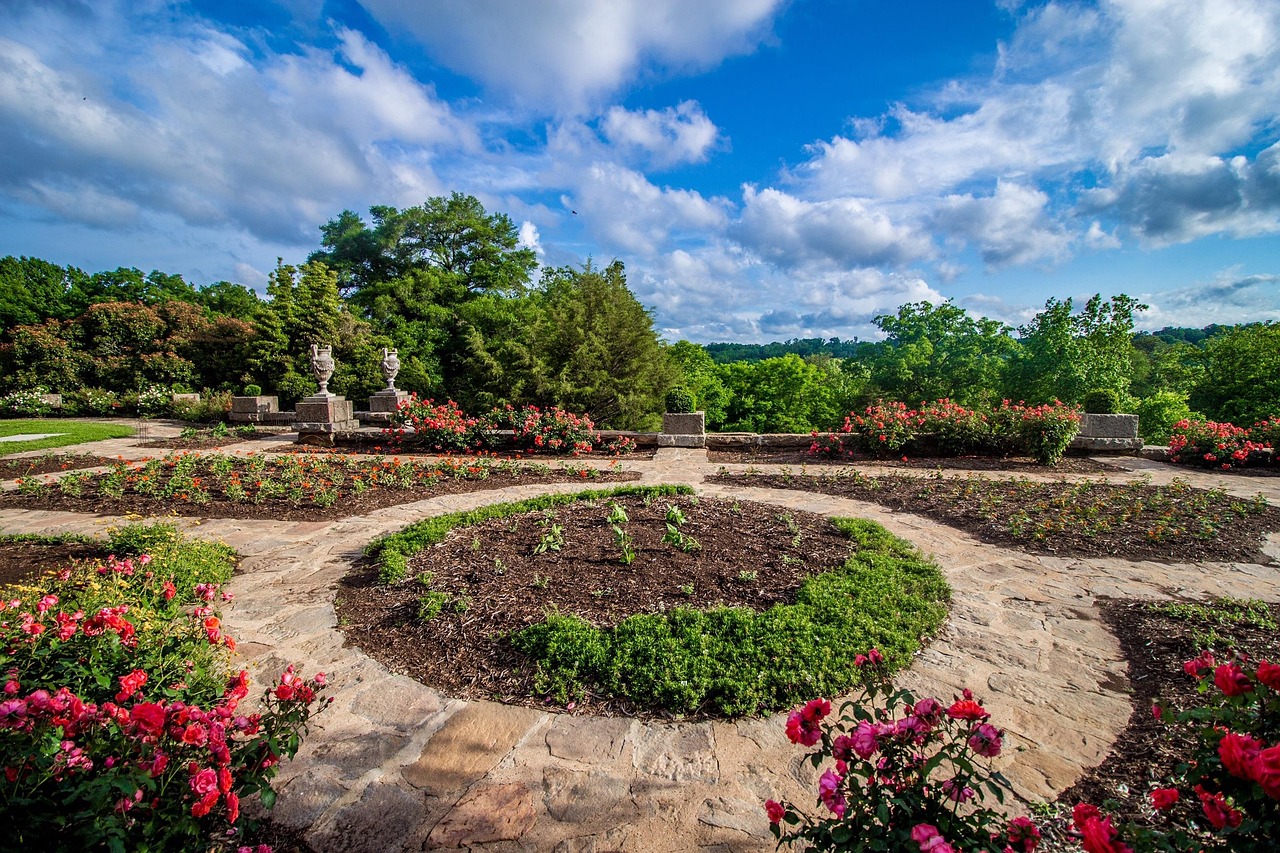
Maymont is one of Richmond’s loveliest surprises: a 100-acre Victorian estate turned public park, with Italian and Japanese gardens, a historic mansion, and farm animals. Admission to the grounds is free (donations encouraged), making it a top choice if you’re watching your budget.
What Makes It Special
It’s all about contrast: manicured lawns and fountains above, romantic Japanese landscaping below, and rolling hills dotted with picnic blankets in between. You can tour the Gilded Age mansion, visit the nature center, or simply wander.
My Experience
I’ve visited Maymont in every season. One spring, I picnicked under the cherry blossoms near the Japanese garden, watching a couple take wedding photos by the waterfall. Another time, I came solo on a misty autumn afternoon, and the estate felt like a movie set—fall leaves swirling around stone staircases and quiet pathways. With kids, the petting farm and nature center are big hits.
Tips for Visiting
- Footwear: Wear good shoes; the grounds are large with some steep paths between the upper and lower gardens.
- Budget: Grounds are free; there are small fees for mansion tours and the nature center.
- Picnics: Bring your own food (no alcohol) and find a shady spot with skyline views.
- Getting there: Short drive or rideshare from downtown; parking lot available.
4. James River Park System & Belle Isle
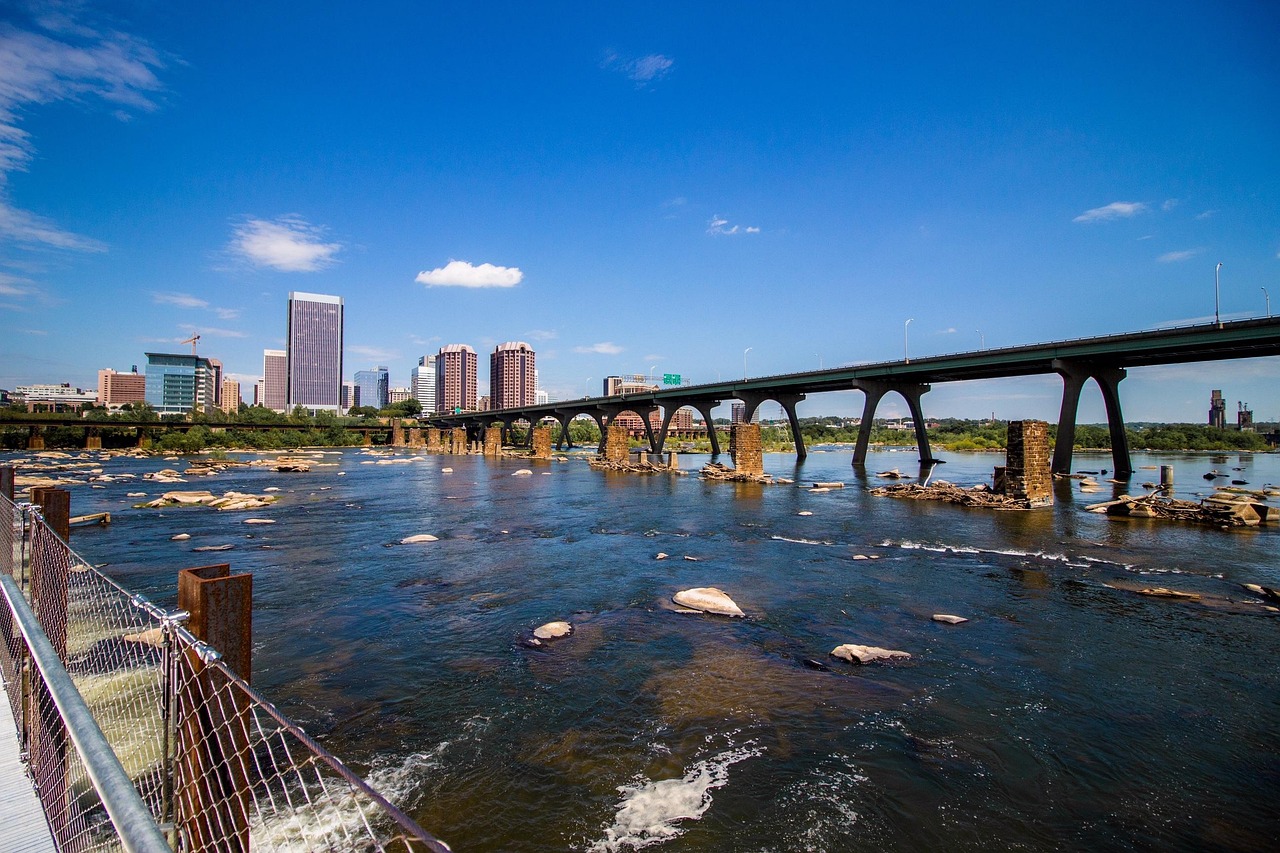
The James River is Richmond’s soul. It runs wild and rocky right through the city, with class III–IV rapids and tree-lined islands, and the James River Park System turns this into a giant urban playground: trails, rocks for sunbathing, suspension bridges, and paddling routes.
Belle Isle
Belle Isle is the easiest way to experience the river. Reach it via the pedestrian suspension bridge under the Robert E. Lee Bridge—walking this alone is an experience, with water rushing below and the skyline ahead. Once on the island, you’ll find flat rocks for lounging, wooded trails, and remnants of Civil War history.
My Experience
On my first summer trip, I spent a whole afternoon hopping from rock to rock at Belle Isle, shoes in hand, feet in the water, watching kayakers tackle the rapids. On a later visit in early fall, I walked the Buttermilk Trail and North Bank, a loop that made me forget I was in a city until the skyline suddenly appeared through the trees.
Adventure Options
- Tubing & rafting: Local outfitters run trips from May to September depending on water levels.
- Hiking & running: The Buttermilk/North Bank loop is a favorite among trail runners.
- Photography: Sunrise and sunset over the river provide some of the best city views.
Tips for Visiting
- Safety: The river is powerful; obey signs and watch water levels. Don’t swim where prohibited.
- What to bring: Water shoes or sandals, sunscreen, and a small daypack.
- Family-friendly: Stick to Belle Isle and the flat paths; supervise kids near the water.
5. Brown’s Island & T. Tyler Potterfield Memorial Bridge
Brown’s Island is Richmond’s outdoor festival hub—a grassy island on the James with stages, sculptures, and skyline views. Right next to it, the illuminated T. Tyler Potterfield (T-Pot) Bridge offers one of the best river walks in town.
My Experience
I’ve been here for the Richmond Folk Festival, for Riverrock, and on random Tuesday evenings. One warm June night I walked the T-Pot Bridge at dusk: joggers passing by, a couple holding hands, cyclists ringing bells, and the downtown skyline turning golden. It’s one of those “this is why I travel” moments.
Tips for Visiting
- Best time: Golden hour into dusk; festivals on weekends; quiet strolls on weekdays.
- Accessibility: The bridge is wide, flat, and accessible for strollers and wheelchairs.
- Food: During events, expect food trucks; otherwise, grab food in nearby Shockoe Slip or downtown.
6. Hollywood Cemetery
Hollywood Cemetery is one of Richmond’s most atmospheric spots: a rolling, garden-style cemetery on a bluff above the James River, with ornate monuments, winding roads, and incredible views.
History & Significance
Founded in 1847, Hollywood is the resting place of U.S. presidents James Monroe and John Tyler, as well as famous Confederate figures. The design resembles a romantic park more than a typical cemetery.
My Experience
I first came on a hazy October afternoon. I walked among towering trees and old stones, then found a vantage point overlooking the river and the railroad tracks below. Trains rattled by, leaves were falling, and the city felt both distant and close. It’s a contemplative place, best visited with respect and a slower pace.
Tips for Visiting
- Respect: This is an active cemetery; keep voices low and be mindful of services.
- Best time: Late afternoon for soft light and river views.
- Getting around: You can drive, bike, or walk; the hills can be steep.
7. Virginia State Capitol & Capitol Square
Designed by Thomas Jefferson and completed in 1788, the Virginia State Capitol is a neoclassical icon perched on a hill overlooking downtown. It’s a must for history buffs and architecture lovers.
My Experience
I joined a free guided tour one chilly February morning, learning about the building’s design and the state’s political history. Afterwards, I wandered Capitol Square, watching locals walk dogs and office workers eat lunch on the grass. In spring, the magnolias and tulips transform the grounds into a postcard.
Tips for Visiting
- Tours: Free guided tours are available; check schedules in advance.
- Security: Expect airport-style screening; bring an ID.
- Combine with: Shockoe Slip/Bottom, Canal Walk, or the American Civil War Museum.
8. American Civil War Museum & Historic Tredegar
Richmond was the capital of the Confederacy, and the city has been actively reframing how that history is told. The American Civil War Museum at Historic Tredegar is one of the most thoughtful, inclusive Civil War museums I’ve visited in the U.S.
What to Expect
Located in the old Tredegar Iron Works buildings by the river, the museum uses artifacts, multimedia, and personal stories from Union, Confederate, and enslaved perspectives. It’s dense but engaging, and it doesn’t gloss over difficult truths.
My Experience
I spent nearly three hours here on a drizzly day, moving slowly through the exhibits, then stepping outside to the river trail to decompress. The juxtaposition of heavy history and rushing water is powerful.
Tips for Visiting
- Emotional impact: Some exhibits are intense; allow time afterwards for reflection.
- Combine with: Canal Walk, Brown’s Island, and the T-Pot Bridge.
- Family note: Older kids and teens with interest in history will get the most out of it.
9. Shockoe Bottom & the Canal Walk
Shockoe Bottom is one of the city’s oldest neighborhoods, set in the low-lying area near the James. Today, it’s a mix of cobblestone streets, bars, lofts, and historical sites, anchored by the Canal Walk.
My Experience
I’ve walked the Canal Walk at all times of day: early morning jogs, midday strolls to see the murals, and late-night wanders after dinner. The path winds past old warehouses, modern apartments, and interpretive panels about Richmond’s past, including its role in the domestic slave trade.
Tips for Visiting
- Evening: The area can be lively (and a bit rowdy) on weekend nights; weekdays are calmer.
- Art & history: Look out for murals and historical markers along the canal.
- Combine with: A meal in Shockoe Slip or Bottom and a walk to Brown’s Island.
10. Church Hill & Libby Hill Park
Church Hill is Richmond’s oldest residential neighborhood, sitting on a hill east of downtown with cobblestone streets, row houses, and some of the city’s best food. At its edge, Libby Hill Park offers a sweeping view that supposedly gave Richmond its name (it reminded the founder of Richmond-upon-Thames in England).
My Experience
One of my favorite Richmond rituals is to have brunch in Church Hill (often at a biscuit or bakery spot), then stroll up to Libby Hill Park with a coffee. On one summer evening in 2025, I joined locals lounging on blankets, someone strumming a guitar, and kids tumbling down the grassy slope as the sky turned pink over the river.
Tips for Visiting
- Food: Church Hill is packed with excellent small restaurants and bakeries—perfect for brunch or dinner.
- Views: Come at sunset for one of the city’s best panoramas.
- Walking: Streets are hilly and some sidewalks are uneven; wear comfortable shoes.
11. Carytown & the Byrd Theatre
Carytown is Richmond’s quirky, colorful shopping and dining strip—indie boutiques, vintage shops, record stores, and eateries in low-rise brick buildings. At its heart sits the beloved Byrd Theatre, a 1928 movie palace.
My Experience
I rarely visit Richmond without at least a few hours in Carytown. I usually start at a coffee shop, wander through bookstores and vintage clothing racks, then catch a film at the Byrd. Watching a movie there—on the cheap, under chandeliers, with an organ performance before certain shows—feels delightfully old-school.
Tips for Visiting
- Budget: The Byrd’s tickets are famously inexpensive; great for families and budget travelers.
- Shopping: Support local shops; this is where you’ll find unique Richmond souvenirs.
- Parking: Street parking can be tight on weekends; arrive a bit early.
12. Scott’s Addition (Breweries & Food Halls)
Scott’s Addition is Richmond’s craft beverage playground: breweries, cideries, distilleries, and trendy eateries packed into former warehouses. It’s industrial-chic and buzzing most evenings.
My Experience
I keep coming back for the variety. One afternoon, I did a self-guided tasting crawl: a hazy IPA at one brewery, a cider flight at another, tacos from a food truck, then gelato from a dessert shop. On a chilly night, I tucked into a food hall with friends, sampling ramen and wood-fired pizza under string lights.
Tips for Visiting
- Don’t drive: If you’re drinking, use rideshare or designate a sober driver.
- Family-friendly: Many breweries welcome kids and dogs during the day; evenings skew more adult.
- Peak times: Friday and Saturday nights are packed; aim for weekday afternoons for a calmer vibe.
13. Manchester & the Southbank Riverfront
Manchester, on the south side of the river, used to be easy to overlook. Now it’s one of the city’s most interesting neighborhoods, with lofts, converted warehouses, and some of the best skyline views back toward downtown.
My Experience
I like coming here at sunset: walking the floodwall, watching the sky shift behind the skyscrapers, and then dipping into a local bar or coffee shop. It feels a bit edgier and less polished than some other parts of town—in a good way.
Tips for Visiting
- Views: The floodwall and riverside paths offer perfect photo ops of the skyline.
- Combine with: A walk across the T-Pot or Lee Bridge and time on Belle Isle.
14. Virginia Museum of History & Culture
Next door to the VMFA, the Virginia Museum of History & Culture focuses on the broader story of Virginia, from Indigenous peoples and colonial times to the present.
My Experience
I paired it with a VMFA visit on a rainy day and ended up spending more time than expected. The exhibits are well-designed, and I appreciated the honest treatment of difficult topics like slavery and segregation.
Tips for Visiting
- Combine with: VMFA (they’re neighbors) for a full day of museums.
- Good for: History lovers and anyone wanting context for what you see around the city.
15. Edgar Allan Poe Museum
In a cluster of 18th-century buildings in Shockoe Bottom, the Edgar Allan Poe Museum celebrates the author’s life and work in the city where he spent much of his youth.
My Experience
I visited on a gray, drizzly day—perfect Poe weather. The museum is small but atmospheric, with manuscripts, artifacts, and a lovely courtyard garden. If you’re a literature fan, it’s a must; if not, it’s still a charming detour.
Tips for Visiting
- Time needed: 1–1.5 hours.
- Best combined with: A walk along the Canal and a meal in Shockoe Bottom.
16. Monument Avenue Historic District
Monument Avenue has been the focus of national attention as Richmond has removed Confederate statues and reimagined its public spaces. What remains is a grand, tree-lined boulevard with stately homes and evolving conversations about memory and space.
My Experience
I’ve walked and driven this stretch many times over the years, watching it change. The absence of certain monuments has opened up room for new interpretations and art installations. The architecture itself—massive homes, churches, and apartment buildings—is worth the trip.
Tips for Visiting
- Context: Read up or take a tour to understand the area’s past and present significance.
- Photography: Respect private property; photograph from sidewalks.
17. VCU & Monroe Park Campus
Virginia Commonwealth University (VCU) infuses Richmond with youthful energy. The Monroe Park campus and surrounding streets are full of students, coffee shops, cheap eats, and street art.
My Experience
On one mild spring afternoon, I walked through Monroe Park and the nearby streets, ducking into coffee shops full of laptops and sketchbooks. The mix of historic row houses and modern campus buildings gives this area a distinctive feel.
Tips for Visiting
- Vibe: Casual, creative, and student-focused—good for people-watching.
- Budget eats: Look around for affordable, student-friendly restaurants.
18. Science Museum of Virginia
Housed in a grand former train station, the Science Museum of Virginia is packed with interactive exhibits on space, weather, health, and more. It’s one of the best family-friendly things to do in Richmond.
My Experience
I visited with a friend’s kids and quickly realized I was having as much fun as they were—launching paper rockets, experimenting with exhibits, then watching a show in the dome theater.
Tips for Visiting
- Family-friendly: Plan at least 3–4 hours with kids.
- Combine with: A walk around the nearby Broad Street Arts District or a trip on the Pulse bus.
19. Richmond National Battlefield Park
Richmond National Battlefield Park is a network of Civil War sites scattered around the metro area: battlefields, fortifications, and visitor centers.
My Experience
On one trip, I spent a day driving between a few sites—Chimborazo, Cold Harbor, and Gaines’ Mill. The fields are peaceful now, and standing there with interpretive signs explaining what happened adds a reflective layer to a Richmond visit.
Tips for Visiting
- Car needed: Sites are spread out; driving is easiest.
- Combine with: Church Hill and other east-end neighborhoods.
20. Agecroft Hall & Gardens
Agecroft Hall is a reconstructed Tudor manor house moved from England to Richmond in the 1920s and rebuilt overlooking the James River. It’s part historic home, part garden escape.
My Experience
I visited on a quiet weekday afternoon and nearly had the place to myself. Walking through dark wood-paneled rooms and manicured gardens, then stepping out to river views, felt wonderfully transportive.
Tips for Visiting
- Tours: Check tour times; interior access is often guided.
- Combine with: Nearby Maymont for a full day of gardens and estates.
Richmond Neighborhoods & Districts to Explore
Richmond’s neighborhoods each have a distinct flavor. Here are the ones I recommend weaving into a 3–5 day itinerary for Richmond.
Downtown, Shockoe Slip & Shockoe Bottom
Historic cobblestones, canal-side paths, and a mix of offices, apartments, and nightlife. Great for river access, the Capitol, Civil War history, and evening walks.
Church Hill
Oldest neighborhood, with some of the best local food in Richmond, panoramic views at Libby Hill Park, and a mix of restored row houses and small parks.
Fan District & Museum District
Tree-lined streets with row houses, pocket parks, and proximity to VMFA and VMHC. The Fan feels residential and lived-in, with corner bars and cafés.
Carytown
Colorful storefronts, indie shops, and the Byrd Theatre. Perfect for leisurely afternoons and evening strolls.
Scott’s Addition
Breweries, cideries, food halls, and industrial-chic spaces. Nightlife and tasting rooms define the vibe.
Manchester
South of the river, with lofts, art spaces, and dramatic skyline views. Still evolving, with a creative, somewhat gritty charm.
Northside & Lakeside
Greener, more residential; home to Lewis Ginter Botanical Garden and some underrated local eateries and antique shops.
Suggested 3–5 Day Itineraries for Richmond
These sample itineraries blend must-see attractions in Richmond with hidden gems in Richmond, designed from my own trips. Adjust based on your pace, interests, and season.
3 Days in Richmond: First-Time Highlights
If you only have 3 days in Richmond, this itinerary hits the essentials—art, history, river, and food.
Day 1: Downtown, Canal Walk & Riverfront
Morning: Start near Capitol Square. Tour the Virginia State Capitol, then wander the grounds. Walk downhill toward the canal, stopping for coffee in Shockoe Slip. Follow the Canal Walk, reading historical panels and snapping photos of murals along the way.
Lunch: Grab a casual bite in Shockoe Bottom—tacos, sandwiches, or a sit-down Southern meal depending on your vibe.
Afternoon: Head to the American Civil War Museum at Historic Tredegar. Plan at least 2 hours. Afterwards, decompress with a stroll on Brown’s Island.
Evening: Cross the T. Tyler Potterfield Bridge at golden hour. Watch the skyline light up as the sun sets. Have dinner either back downtown or in Manchester, then maybe a nightcap at a riverside bar.
Day 2: Museums & Carytown
Morning: Head to the Virginia Museum of Fine Arts (VMFA). Spend a solid 2–3 hours exploring. If you’re an art lover, you could easily double that.
Lunch: Snack at the VMFA café or walk into the surrounding Museum District for a local café or deli.
Afternoon: Pop into the Virginia Museum of History & Culture next door for context on Virginia’s past. Then head to Carytown for shopping, people-watching, and coffee.
Evening: Grab dinner in Carytown (options range from casual burgers to upscale Southern) and end your night with a movie at the Byrd Theatre.
Day 3: River, Maymont & Church Hill
Morning: Get an early start at Maymont. Walk the Italian and Japanese gardens, visit the animals, and tour the mansion if you’re into historic homes.
Lunch: Picnic at Maymont or head to a nearby café in the Fan.
Afternoon: Make your way to the James River Park System—either Belle Isle for a relaxed walk and rock-hopping, or the Buttermilk/North Bank trails if you want a more active hike.
Evening: Finish in Church Hill. Enjoy an early dinner or brunch-for-dinner at one of the neighborhood’s excellent restaurants, then walk up to Libby Hill Park for sunset views over the city.
4 Day Itinerary for Richmond: Art, Food & River Adventures
With 4 days in Richmond, you can add more neighborhood exploration and time on the water.
Day 1: Downtown & Shockoe (as in 3-day itinerary)
Follow Day 1 from the 3-day plan, or swap the Civil War Museum for the Poe Museum if literature is more your thing.
Day 2: Museums & Carytown (as in 3-day itinerary)
Use extra time to roam the Fan District on foot—peek at row houses, stop for a coffee or ice cream, and soak up the local vibe.
Day 3: Gardens & Northside
Morning: Drive or rideshare to Lewis Ginter Botanical Garden. Spend a leisurely morning looping through the gardens and conservatory.
Lunch: Eat at the on-site café or at a nearby spot in Lakeside.
Afternoon: Explore a bit of Northside—antique shops, quiet residential streets, or a park.
Evening: Head back into town for dinner—maybe in the Fan or Church Hill.
Day 4: Scott’s Addition & Nightlife
Morning: Sleep in, then have a leisurely brunch—Church Hill, the Fan, or downtown all have good options.
Afternoon: Make your way to Scott’s Addition. Do a tasting crawl through breweries and cideries, or, if you’re not drinking, check out an escape room, arcade bar (non-alcoholic options available), or dessert spots.
Evening: Continue your Scott’s Addition exploration, or head back downtown for live music or a low-key bar. This day can be as lively or as mellow as you want.
5 Day Itinerary for Richmond: Deep Dive into RVA Culture
A 5 day itinerary for Richmond lets you slow down, revisit favorite spots, and venture further afield.
Days 1–3: Follow the 3-Day Itinerary
Use the 3-day plan as your base, but don’t be afraid to swap days based on weather (sunny days are best for river and gardens; rainy days for museums).
Day 4: History & Hidden Corners
Morning: Visit a few sites within the Richmond National Battlefield Park network, or take a more in-depth tour of the Capitol and nearby historic buildings.
Lunch: Eat in the Fan or downtown.
Afternoon: Explore neighborhoods more deeply: walk Monument Avenue, wander residential streets in the Fan, or seek out street art.
Evening: Catch a performance—maybe at a theater downtown or a small music venue in the Arts District.
Day 5: Day Trip or Deep River Day
Option 1: Take a day trip—to Williamsburg, Charlottesville, or nearby plantations (see the Day Trips section below).
Option 2: Make it a full river day. Go rafting or tubing with a local outfitter, then relax with a picnic by the water. In the evening, revisit your favorite neighborhood for a farewell dinner.
Local Food in Richmond: What & Where to Eat
Richmond punches far above its weight in the food department. From biscuit joints to inventive tasting menus, the city’s culinary scene is one of the main reasons I keep returning. While I won’t list every specific restaurant (places change fast), here’s what to look for and where to find it.
Must-Try Local Flavors
- Biscuits & Brunch: Fluffy Southern biscuits with fried chicken, pimento cheese, or sausage gravy. Church Hill and the Fan are rich in brunch gems.
- Virginia Ham & BBQ: Smoky pulled pork and classic sides; ask locals for their current favorites.
- Seafood: Fresh East Coast oysters and seasonal fish appear on menus citywide.
- Farm-to-Table: Many restaurants highlight local Virginia produce, meats, and cheeses.
- Global Cuisines: Vietnamese, Ethiopian, Mexican, Middle Eastern, and more—especially around the Fan, Near West End, and Southside.
Where to Eat by Area
- Church Hill: Top brunches, bakeries, and intimate dinner spots with views.
- Carytown: Casual, eclectic mix of everything from burgers to sushi.
- Scott’s Addition: Breweries with food trucks, food halls, and modern comfort food.
- Downtown/Shockoe: Upscale Southern, steakhouses, and late-night bites.
- Fan District: Coffee shops, bistros, and cozy neighborhood joints.
Budget-Friendly Eating
For saving money, I often grab breakfast at a café or bakery, make lunch my main meal at a mid-priced spot, then go lighter (or share plates) at dinner. Food halls and student-oriented areas near VCU are especially wallet-friendly.
Nightlife, Entertainment & Cultural Experiences in Richmond
Richmond’s nightlife is more about cozy bars, craft breweries, and live music than mega-clubs—and that suits the city’s personality perfectly.
Breweries & Cideries
Scott’s Addition is ground zero for beer and cider lovers, but you’ll find tasting rooms across the city. Many are kid- and dog-friendly during the day, with food trucks and outdoor seating.
Live Music & Theater
- Small venues downtown and in the Arts District often host indie bands, jazz, and open mics.
- The historic theaters around Broad Street and Grace Street rotate concerts, comedy, and touring shows.
Family-Friendly Evenings
- Stroll along the river or Canal Walk.
- Catch an early movie at the Byrd Theatre.
- Enjoy seasonal events like outdoor movies or light festivals.
Cultural Experiences in Richmond
Beyond nightlife, Richmond’s cultural calendar is busy: art gallery openings (First Fridays), museum late nights, lectures, and festivals. Check local event listings just before your 2026 visit—there’s almost always something happening.
Day Trips from Richmond
One of Richmond’s perks is its central position in Virginia. With a car, you can reach beaches, mountains, and historic towns in 1–2 hours.
Williamsburg & Jamestown
About an hour east. Colonial Williamsburg, Jamestown Settlement, and Busch Gardens (for theme park fans). Great for families and history lovers.
Charlottesville & the Blue Ridge
Roughly 1.5 hours west. Explore college-town Charlottesville, visit Monticello, or drive Skyline Drive in Shenandoah National Park.
Plantations along Route 5
East of Richmond along the James River are several historic plantations with tours and gardens. A reflective, slower-paced outing.
Virginia Beach
About 2 hours east. A full day of sand, boardwalk, and Atlantic views if you’re craving the ocean.
Cultural Etiquette & Local Customs in Richmond
Richmond is a Southern city with a growing, diverse population. People are generally friendly but not overly intrusive, and there are a few local norms worth noting.
General Etiquette
- Politeness: “Please,” “thank you,” and holding doors open go a long way.
- Queues: Line up and wait your turn; cutting is frowned upon.
- Volume: Indoors, moderate your voice, especially in restaurants and public transit.
Discussing History
Richmond’s past is complex—slavery, the Confederacy, civil rights. Locals are increasingly engaged in honest conversations about this, but be respectful and listen more than you lecture. Avoid jokes or casual comments about Confederate history; it’s a sensitive topic.
Tipping
- Restaurants and bars: 18–20% of the pre-tax bill is standard for good service.
- Taxis/rideshare: Round up or 10–15%.
- Hotel housekeeping: A few dollars per day, left daily.
Dress Code
Richmond is mostly casual. Jeans and casual dresses are fine almost everywhere. For nicer restaurants or theater, smart-casual is appreciated but not strictly enforced.
Practical Travel Tips for Richmond
How to Get Around
- On Foot: Great for compact areas (downtown, Fan, Carytown), but distances between neighborhoods can be long.
- Public Transit: The GRTC Pulse Bus Rapid Transit runs east–west along Broad Street and is handy for hitting key districts. Regular buses cover more ground but may be less frequent.
- Rideshare: Uber and Lyft are widely available and often the easiest option at night.
- Car Rental: Very useful if you want to explore widely or take day trips. Parking in most neighborhoods is manageable, though sometimes tight in Carytown and the Fan.
- Biking: Richmond has growing bike infrastructure and some bike-share options. The riverfront and certain neighborhoods are especially pleasant by bike.
How to Save Money
- Take advantage of free attractions: VMFA, Maymont grounds, river trails, and many festivals.
- Use the Pulse bus for cheap east–west travel along the main corridor.
- Eat your main meal at lunch when some restaurants offer specials.
- Stay slightly outside downtown (e.g., near the Museum District or Northside) to find better accommodation rates.
SIM Cards & Connectivity
If you’re visiting from abroad, you can buy prepaid SIM cards from major U.S. carriers (AT&T, T-Mobile, Verizon) at big-box stores or carrier shops, usually in suburban shopping areas. eSIM options are increasingly common—consider setting one up before arrival. Free Wi-Fi is widely available in cafés, many hotels, and some public spaces.
Visa Requirements & Driver’s Licenses
- Visas: Check the latest U.S. entry requirements for your nationality before planning your trip. Some travelers can use the Visa Waiver Program; others need a visa.
- Driving: Most foreign driver’s licenses are accepted for short-term visits in Virginia; an International Driving Permit can help, especially if your license is not in English.
Best Seasons for Activities
- Spring (March–May): Ideal for gardens (Lewis Ginter, Maymont), walking tours, and comfortable river walks. Light layers and a rain jacket recommended.
- Summer (June–August): Hot and humid, but great for river activities (tubing, rafting, rock-hopping) and festivals. Plan indoor breaks in the midday heat.
- Fall (September–November): My favorite time: cooler weather, fall foliage along the river, and major events like the Richmond Folk Festival and the marathon.
- Winter (December–February): Quieter, with occasional cold snaps. Good for museum-hopping, cozy meals, and holiday lights at Lewis Ginter.
Safety & Common-Sense Advice
- Use typical city awareness: keep valuables secure, avoid poorly lit areas late at night, and stick to well-traveled routes.
- Respect river safety signs; currents can be stronger than they appear.
- In summer, stay hydrated and use sunscreen—humidity can be deceptive.
Summary: Key Takeaways & Best Time to Visit Richmond
Richmond is a city that rewards curiosity. In one long weekend, you can stand in a world-class art museum, float down a wild urban river, eat biscuits that haunt your dreams, and watch the sun set over a skyline from a 19th-century park.
For first-time visitors, 3 days in Richmond is enough to see the highlights—VMFA, the riverfront, Maymont, Carytown, and Church Hill. With 4 days in Richmond, you can add gardens, more neighborhood exploration, and a deeper dive into history. A full 5 days in Richmond lets you settle into the pace of local life, return to favorite spots, and even squeeze in a day trip.
In 2026–2027, watch for expanding transit options, new exhibitions at the museums, and evolving public spaces that reflect Richmond’s ongoing conversations about its past and future.
Best time to visit: I recommend spring (April–May) or fall (late September–October) for comfortable weather and vibrant events. Summer is fantastic if you’re eager for river adventures and don’t mind heat; winter is quiet, museum-rich, and cozy.
However long you stay, approach Richmond with an open mind and a flexible itinerary. Leave room in your schedule to linger on a rock by the James, to chat with a barista about their favorite brewery, or to watch the lights come on over the skyline from Libby Hill Park. That’s where the real magic of RVA lives.