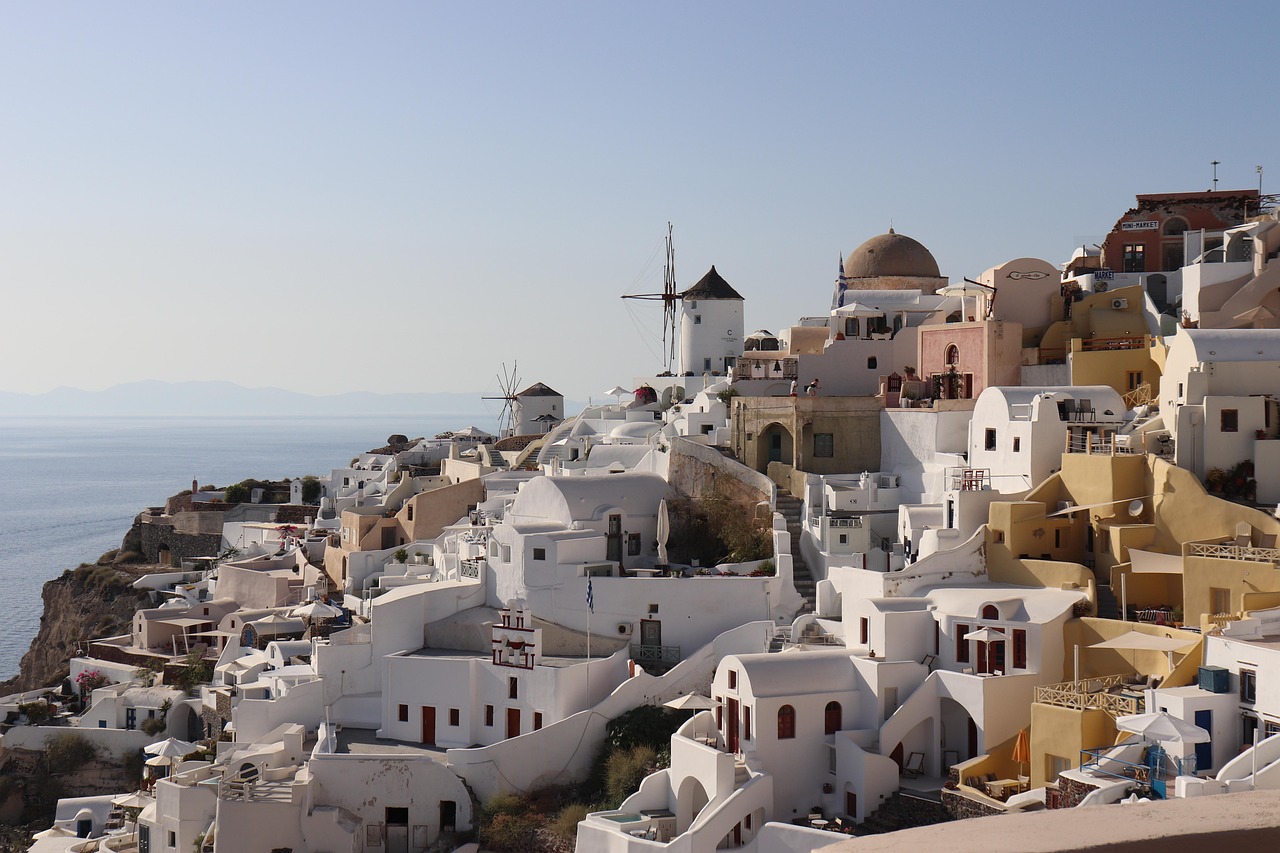
Why Visit Milos? What Makes This Cycladic Island So Special
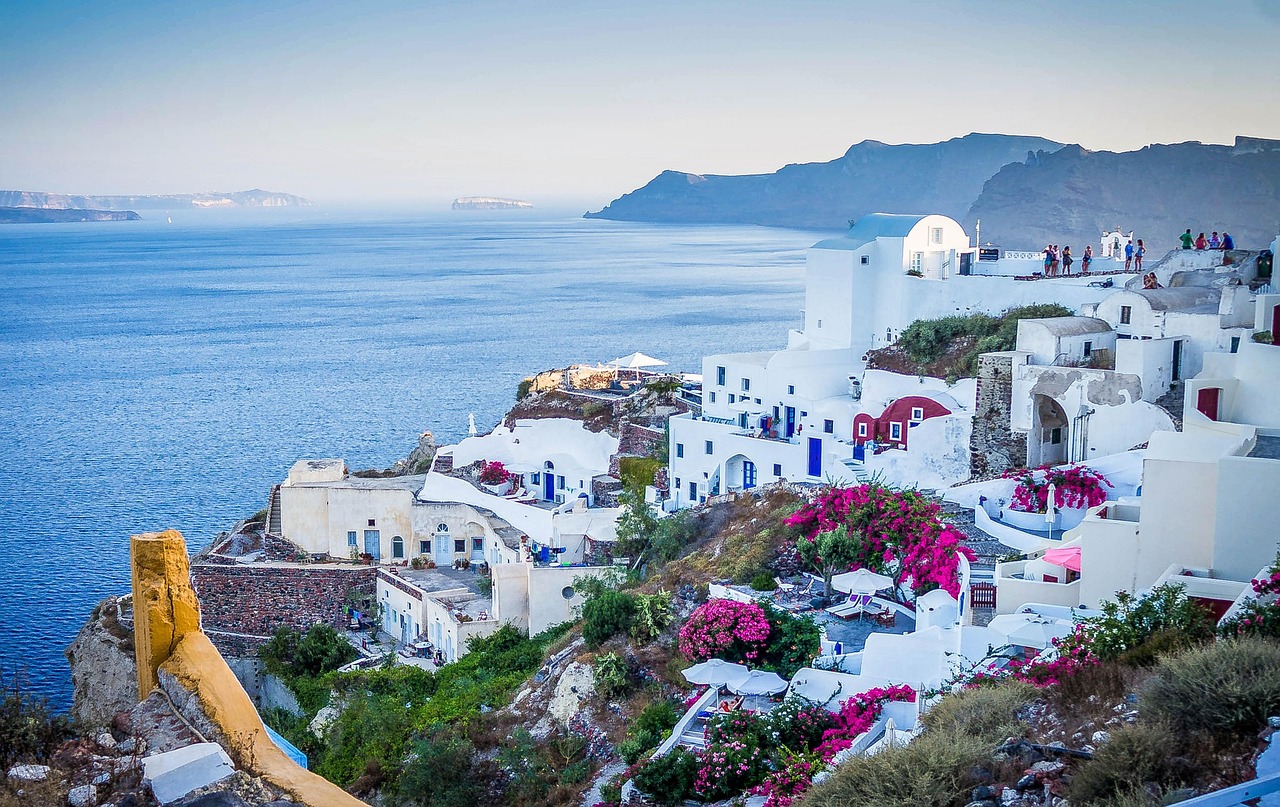
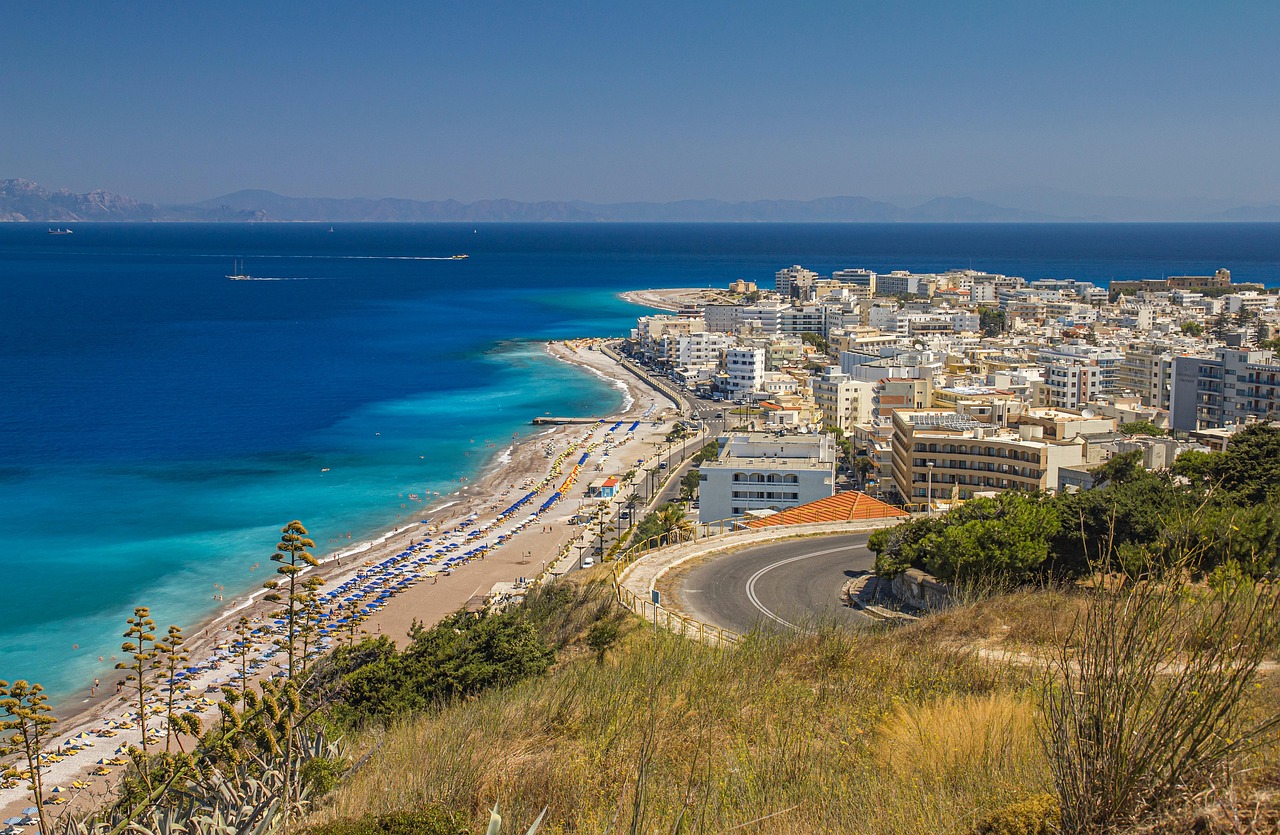
Milos is the island that locals whisper about when they’re tired of explaining Santorini and Mykonos. It’s wilder, softer, and strangely more intimate – a ring of volcanic rock wrapped around one of the largest natural harbors in the Mediterranean, scattered with more than 70 beaches. Many of them feel like they were drawn by a painter obsessed with turquoise.
I’ve been coming to Milos on and off for over a decade, usually at the shoulder seasons when the meltemi winds are kind and the fishermen still outnumber the inflatable unicorns. The island has changed – more stylish rooms, better food, more Instagrammers at Sarakiniko – but the core remains: fishing villages painted in sherbet colors, moon-like rock formations, and that slow, salty rhythm of Greek island life.
What makes Milos stand out among Greek islands:
- World-class beaches: From the lunar landscape of Sarakiniko to the sculpted cliffs of Kleftiko and the red-and-gold curves of Firiplaka.
- Romantic yet real: Perfect for honeymoons and couples, but still very much a working island with functioning fishing villages and local life.
- Family-friendly coves: Shallow, calm beaches like Achivadolimni and Pollonia plus easy boat trips kids will talk about for years.
- Adventure on the water: Sea caves, snorkeling, cliff jumping, kayaking, and boat trips around the island.
- History & culture: Early Christian catacombs, the ancient city of Klima, and the spot where the Venus de Milo was discovered.
- Local food: Fresh seafood, pitarakia (cheese pies), chickpea stews, and family-run tavernas where the owner still sits down for a drink after the rush.
This 2026 travel guide for Milos is written as if I’m planning your trip with you: detailed 3 day itinerary for Milos up to a full 7 day itinerary for Milos, the best places to visit in Milos, the most rewarding cultural experiences in Milos, and plenty of hidden gems in Milos that still feel secret.
Table of Contents
- Why Visit Milos
- Quick Overview & Island Layout
- Top 20 Must-See Attractions in Milos (Deep Dive)
- 3–7 Day Itineraries for Milos (With Personal Stories)
- Eating & Drinking in Milos
- Where to Stay: Best Bases & Areas
- Island Evenings & Nightlife
- Culture, Local Customs & Etiquette
- Day Trips & Nearby Islands
- Practical Travel Tips & Logistics
- What’s New: 2026–2027 Events & Changes
- Summary & Final Recommendations
Quick Overview: How Milos Is Laid Out & Where to Go for What
Milos is shaped like a crooked horseshoe wrapped around a sheltered bay. Once you understand the basic layout, planning your 3 days in Milos or a longer stay becomes much easier.
- North Coast – Sarakiniko, Papafragas, Firopotamos:
- Best for: dramatic coastline, photography, sunrise/sunset walks, some cliff jumping, short swims.
- Character: stark, white volcanic rock, fewer organized beaches, otherworldly.
- South Coast – Firiplaka, Tsigrado, Provatas:
- Best for: protected beaches when north winds blow, swimming, beach days, families and couples.
- Character: colorful cliffs, fine sand, beach bars and loungers in season.
- West Coast – Kleftiko, Sykia, inaccessible coves:
- Best for: boat trips, snorkeling, sea caves, full-day adventures.
- Character: wild, uninhabited, accessible only by sea or serious 4x4.
- East & Northeast – Pollonia, Papafragas, Thiorichia (Sulfur Mines):
- Best for: quiet base with a village feel, food, families, exploring by car.
- Character: gentler, less dramatic than the west but with some striking coves.
- Central & Bay Area – Adamas, Plaka, Tripiti, Klima:
- Best for: practical base (Adamas), sunsets and history (Plaka/Tripiti/Clima).
- Character: mix of port-town hustle and classic Cycladic hill village charm.
Where to base yourself:
- Adamas: Best for first-time visitors, short trips (3–4 days in Milos), and those relying on buses or boats.
- Pollonia: Best for longer stays, families, foodies, and a quieter atmosphere.
- Plaka/Tripiti: Best for couples and sunset-lovers who don’t mind driving to beaches.
Top 20 Must-See Attractions in Milos (With Personal Notes)
Here are the must-see attractions in Milos I return to almost every year, plus a few that still feel like secrets. For each, I’ll share history, what to actually do there, and the kind of traveler it suits (family, romantic, adventurous).
1. Sarakiniko Beach – The Lunar Landscape of Milos
Sarakiniko is the reason half of Instagram discovered Milos. It’s not so much a “beach” as a white volcanic moonscape that spills into electric blue water. The name comes from Saracen pirates who once hid in these coves; on still evenings, when the white rock glows pink, it’s easy to imagine ghost ships offshore.
The first time I came here, back in my twenties, I arrived just before sunrise after a late night in Adamas. I remember stumbling over the rocks, then suddenly the whole amphitheater of Sarakiniko opened up in front of me – luminous white, with the sea still sleepy and flat as glass. I didn’t see another person for almost an hour.
What to do:
- Walk the whole area: Don’t just stop at the main viewpoint. Follow the rock shelf to the right for quieter swimming spots, and to the left to look down into the old shipwreck cove.
- Swim & cliff jump (carefully): There are several popular jumping spots, but always check the water depth and currents first. Locals will often show you safe entry points if you ask politely.
- Photography: Sunrise or sunset are magical. Midday light is harsh but shows off the insane color contrast between rock and sea.
Best time to visit: Early morning (sunrise to 9:30) or late afternoon to avoid both crowds and heat. In July–August 2026, expect more tour groups arriving around 10:00–13:00.
Family, romantic, or adventurous?
- Adventurous: cliff jumping, exploring caves.
- Romantic: sunset walks along the white terraces.
- Families: beautiful but be very attentive with kids near the cliffs; there’s no shade and the rock can be slippery.
How to get there: About 10 minutes by car from Adamas. In high season, there’s usually a bus that stops near the turnoff, but the walk from the main road adds 10–15 minutes. Parking fills up by late morning in July–August.
Local tip: Bring reef-safe sunscreen and water shoes – the white rock can be blisteringly hot in summer and there are sea urchins in some entry spots.
2. Kleftiko Caves – Pirate Hideout of the Aegean
Kleftiko is the poster child of Milos boat trips: towering white arches rising out of absurdly blue water, riddled with caves that once sheltered pirates. You can’t reach it by normal car – only by boat or serious hiking – which keeps it wild and magical.
On my first visit, I went on a small sailing boat with just eight people. We anchored near the arches, slipped into the water, and swam through a labyrinth of caves where our voices echoed off the stone. The captain grilled fresh fish on the deck, and we ate with salty fingers, watching the light change on the cliffs.
History & name: “Kleftiko” comes from “kleftes” – thieves/pirates who used these coves as hideouts during Ottoman times. Today, it’s a protected area and one of the most iconic things to do in Milos.
What to do:
- Boat trip: Choose between a full round-of-Milos cruise or a shorter south-coast trip focusing on Kleftiko.
- Snorkeling: The water clarity is usually outstanding. Look for schools of small fish, colorful sponges, and dramatic underwater rock formations.
- Kayak or SUP (on some tours): Some small-group tours now carry kayaks or stand-up paddleboards for exploring the caves quietly.
Best for: Couples, adventurous families with swimming kids, and anyone who wants that “wow” moment. Not ideal if you get very seasick – though south-coast-only trips are usually calmer.
Practical tips:
- Bring two swimsuits – one often stays wet after the first long swim stop.
- If you burn easily, choose a boat with plenty of shade and wear a lightweight long-sleeve swim shirt.
- Ask in advance if your tour provides snorkeling gear or bring your own mask – the cheap ones sometimes fog or leak.
3. Plaka – Hilltop Capital & Sunset Queen
Plaka is where I always end my first day on the island. The old capital sits on a hill above the bay, its whitewashed alleys twisting toward a Venetian-era castle and a handful of churches that catch the last light.
My routine here is simple: an early evening coffee in the square, a slow wander up to the church of Panagia Thalassitra, and then the final climb to the castle ruins to watch the sun sink beyond the horizon. On clear evenings, you can see several neighboring Cycladic islands in silhouette.
Highlights:
- Castro (castle): A short but steep walk up from the main square leads to views over the entire island. Bring a light jacket in shoulder season; the wind can be fierce.
- Panagia Korfiatissa & Panagia Thalassitra: Two beautiful churches with classic Cycladic architecture; the terrace of Thalassitra is one of the best sunset viewpoints on Milos.
- Archaeological Museum of Milos: Small but well-curated, with a replica of the Venus de Milo and artifacts from the island’s long history of mining and seafaring.
Food & evenings: Plaka has some of my favorite tavernas and wine bars on the island – perfect for a romantic dinner after sunset. Expect more of a village vibe than Adamas; nights are low-key but lively in July and August.
Tip: Cars are not allowed in the narrow lanes of Plaka; park on the outskirts and be prepared to walk uphill. Wear flat sandals – the cobbles are not made for heels.
4. Firopotamos – Photogenic Fishing Cove
Firopotamos is one of those places that looks like it belongs on a postcard: a tiny turquoise bay framed by white cliffs, a few colorful syrmata (fishermen’s boathouses with rooms above), and a small church perched on the rocks.
I’ve swum here in everything from glassy calm to playful chop. On especially still mornings, the water becomes so clear that boats appear to float in mid-air.
What to expect:
- A small pebble beach with shallow entry – good for confident kids.
- Some shade along the back and under the rocks, but not enough in high summer – bring an umbrella if you plan to stay long.
- Simple swimming and relaxing; there’s usually a small seasonal beach bar but no huge infrastructure.
Tip for photographers: Come early or late when the sun hits the boathouses at an angle. Midday light can be harsh and flatten the scene.
5. Klima – Colorful Syrmata & Ancient Echoes
Klima is the most famous of Milos’ syrmata villages – traditional fishermen’s houses with boat garages on the ground level and living quarters above, painted in bright blues, reds, and greens. At golden hour, everything here shimmers.
Above Klima, on the hillside, lie the remains of ancient Melos and the site where the Venus de Milo was discovered in 1820. The original statue now lives in the Louvre, but a plaque marks the spot and a replica stands in the Plaka museum.
What to do:
- Stroll along the narrow waterfront path, watching the light catch on the painted shutters.
- Swim off the small rocky spots – the water can be very clear and calm.
- Book one of the syrmata as accommodation for a few nights if you want a unique, feet-in-the-water experience (perfect for couples).
Best time: Late afternoon into sunset. Klima faces west, so you’ll have full sun dropping into the sea.
Access: Narrow, winding road down from Tripiti – drive carefully and park where designated. In peak season, parking is limited; consider visiting earlier in the day or by taxi.
6. Early Christian Catacombs & Ancient Theater – Milos’ Sacred Side
Just above Klima, carved into the soft volcanic rock, lie the Catacombs of Milos – one of the oldest Christian monuments in Greece, dating back to the 1st–5th centuries AD. Nearby, a beautifully restored ancient theater overlooks the sea, a reminder that Milos was once a powerful city-state.
The first time I visited, I went in the late morning, when the sun was already biting. Stepping down into the catacombs felt like entering another world: cool, quiet, and echoing with centuries of whispered prayers. A guide pointed out carvings and burial niches, bringing the stories to life.
Highlights:
- Catacombs: Join a short guided tour (usually included in the ticket) – it’s the best way to understand the symbolism and history.
- Ancient Theater: A short walk away, partly reconstructed, with a breathtaking view over Klima and the bay. In summer, it occasionally hosts concerts or performances under the stars.
- Venus de Milo discovery site: A simple plaque but powerful when you imagine the moment the statue emerged from this hillside.
Good for: History buffs, families (kids often enjoy the “underground caves”), and anyone needing a break from the sun and sand.
7. Firiplaka Beach – Colorful Cliffs & Soft Sand
Firiplaka is one of my go-to recommendations when someone asks for a classic, beautiful beach on Milos’ south coast. Think long sweep of sand, shallow turquoise water, and multicolored cliffs streaked with red, yellow, and white from the island’s volcanic past.
On one trip, I spent nearly an entire day here with friends, doing nothing more ambitious than alternating between swimming, napping under the cliff’s shade, and picking our way along the rocks to discover smaller coves.
What you’ll find:
- Partly organized beach (in season) with sunbeds, umbrellas, and a simple beach bar serving snacks, salads, and cold drinks.
- Unorganized sections: Walk away from the main hub to find quieter spots where you can spread your own towel.
- Protected waters on windy days: When the north meltemi blows, the south coast is usually calmer.
Good for: Couples, families, and relaxed beach days. The gentle entry into the sea makes it particularly nice for kids and less confident swimmers.
Tip: Arrive before 11:00 in July–August if you want a sunbed in front; parking on the dirt road can get tight later in the day.
8. Tsigrado Beach – The Rope-Ladder Adventure Cove
Tsigrado is the kind of beach that splits opinions: some people call it magical and secluded; others find the descent too stressful. Access is via a narrow gap in the cliff with wooden ladders and ropes to help you down. Once you reach the sand, though, you’re in a tiny cove framed by high cliffs and iridescent water.
The first time I went down, my heart rate spiked. I’m reasonably sure-footed, but the combination of sand, rope, and steepness demands attention. At the bottom, though, floating on my back between those cliffs, I understood why people rave about it.
Is Tsigrado for you?
- Adventurous: Yes – it’s almost a rite of passage.
- Romantic: It can be, if you’re both comfortable with the climb.
- Families: I do not recommend the descent for small children, people with mobility issues, or anyone afraid of heights.
Local tips:
- Wear proper sandals or trainers for the descent, not flimsy flip-flops.
- Be patient and give space to those climbing up or down.
- Visit in the morning when the beach still has sun; by late afternoon, the cove slips into shade.
9. Pollonia – Seaside Village & Foodie Favorite
Pollonia (Apollonia) is a gentle, low-rise village on the northeast tip of Milos, wrapped around a horseshoe bay. Over the years, it’s quietly become a favorite base for those who prefer morning swims and long dinners over late-night bars.
Each time I stay here, I fall into the same rhythm: early swim off the sandy village beach, coffee under the tamarisk trees, a slow exploration of the east coast, then sunset drinks and seafood by the water.
Why base yourself in Pollonia:
- Family-friendly: Shallow, calm village beach, playground, and plenty of space for strollers.
- Food: Some of the island’s best seafood tavernas line the waterfront.
- Quiet evenings: A relaxed, village nightlife – think wine and conversation rather than clubs.
- Day trips: Easy boat departures to nearby Kimolos and around the east coast.
Tip: For 2026, several new boutique guesthouses are opening on the eastern edge of Pollonia – book early if you’re planning 5 days in Milos or more and want a sea-view base.
10. Papafragas Caves & Coves – Dramatic Sea Channels
Papafragas is a raw stretch of north coast where the sea has carved narrow channels and sea caves into the soft rock. There used to be an officially accessible little cove down a steep path, but erosion and safety concerns mean access can change – in recent years, swimming from the top has often been discouraged or fenced off.
I still come here not so much to swim as to stand on the cliff edge (well back from the crumbling bits) and look down into the swirling turquoise water. It feels like looking into the throat of the island.
What to do:
- Walk along the cliff top paths to different viewpoints – each angle shows a new sea cave or channel.
- Combine with nearby beaches (like Pachena) for a full north-coast exploration day.
Safety note: Always respect fences and signs. The cliffs here are fragile; don’t get too close to the edge for photos.
11. Adamas – Port Town & Practical Hub
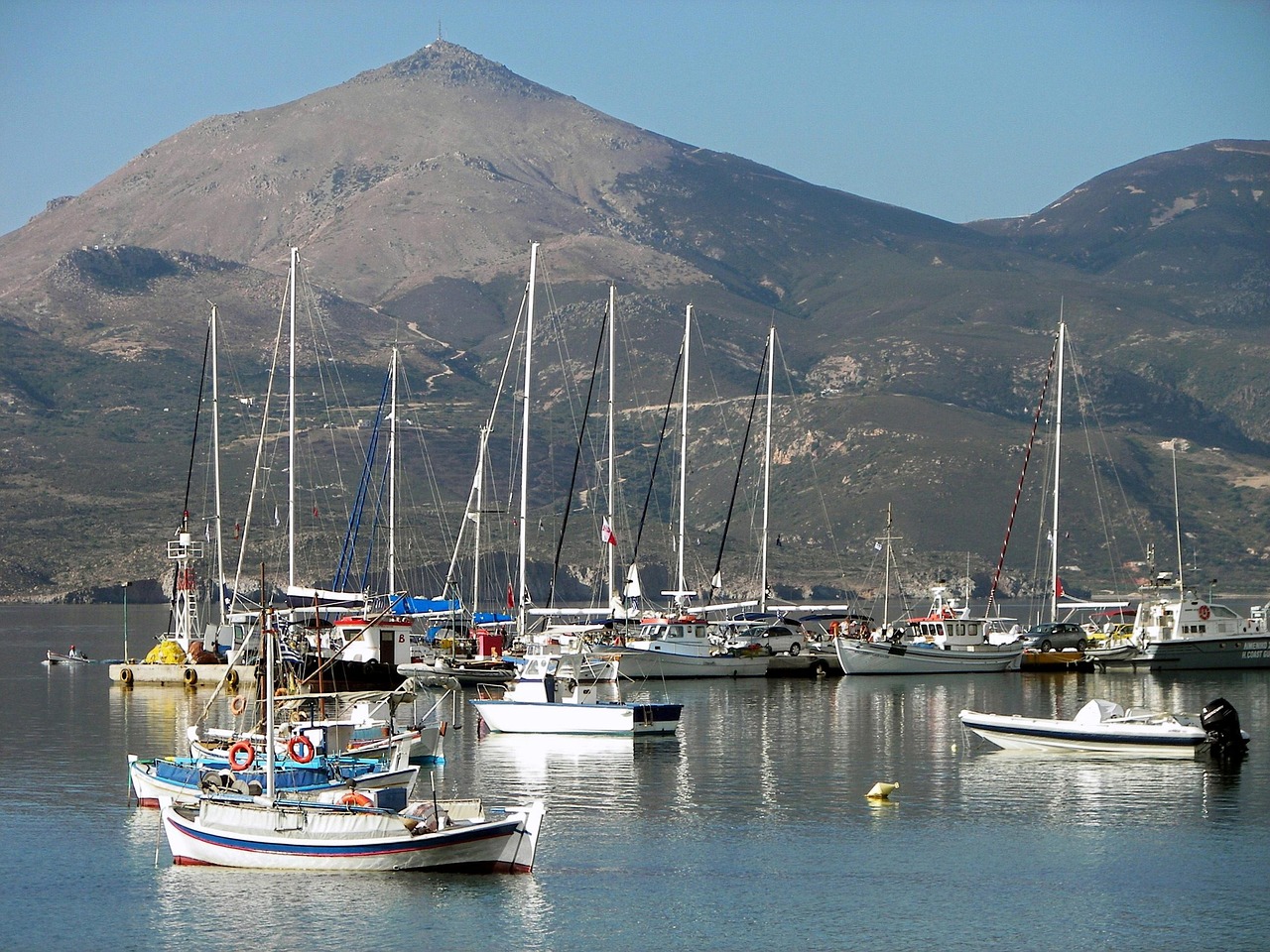
Adamas is where you’ll likely arrive by ferry, a crescent of white buildings around the inner harbor. It’s not as picturesque as Plaka or as cozy as Pollonia, but it’s incredibly practical – and, over time, it’s grown on me.
I like Adamas for its early-morning bakery runs, the sight of fishing boats heading out at dawn, and the way locals gather along the waterfront for evening walks.
What Adamas is good for:
- Boats & tours: Most things to do in Milos involving the sea depart from here – Kleftiko cruises, round-the-island trips, fishing excursions.
- Transport: Bus hub for reaching many beaches if you don’t drive.
- Food & services: Supermarkets, bakeries, ATMs, car rental agencies, cafés, and several good tavernas.
Beaches: There’s a small town beach and a longer one at Lagada – fine for a quick dip but not the island’s best. I usually use Adamas as a base and drive out daily.
12. Achivadolimni – Long Sand & Camping Vibes
On the south side of the bay, Achivadolimni stretches in a long arc of sand with shallow water and views back to Adamas and Plaka on the hills. It gets its name from the nearby small lake (limni), once home to clams (achivades).
I’ve camped here twice, waking up to the sound of waves and walking straight from my tent to the water. There’s a laid-back, almost surfer-ish atmosphere, especially among younger travelers.
Good for:
- Families: Shallow water and lots of space.
- Budget travelers: The organized campsite is one of the most economical bases on Milos.
- Wind sports: On breezy days, you’ll often see windsurfers and kitesurfers here.
13. Provatas Beach – Easygoing South-Coast Favorite
Provatas is a wide, gently shelving sandy beach with calm waters, a few tavernas, and some small hotels above. It’s less dramatic than Firiplaka but more straightforward: park, walk down, swim, eat, repeat.
I like coming here on days when I want no decisions: it’s organized enough to be comfortable but not overbuilt.
Who will like Provatas: Families with younger children, older travelers, and anyone looking for a “no surprises” beach day with a tavern just steps away.
14. Paliochori – Hot Springs & Colorful Shore
Paliochori (Paleochori) is where Milos reminds you it’s still very much volcanic. The beach is backed by red, yellow, and white cliffs streaked with mineral deposits, and in some spots the sand and water are warmed by geothermal activity.
The first time I visited, a local friend buried my feet in the sand near a steaming patch and laughed at my surprise. Some tavernas here even cook food in the hot sand in traditional pots.
What to do:
- Swim and snorkel along the colorful rocks.
- Look for the warm-water patches near the shore (careful – some can be quite hot).
- Enjoy a long lunch at a seaside taverna – Paliochori has some of the better beachside food on the island.
15. Thiorichia (Sulfur Mines) – Ghostly Industrial Beach
On the remote east coast, the abandoned sulfur mines of Thiorichia spill down toward a pebbly turquoise cove. Rusted machinery, crumbling buildings, and old rail tracks make this one of Milos’ most atmospheric “hidden gems.”
Driving here for the first time, I kept wondering if I’d taken a wrong turn – the road turns to dirt and winds past almost nothing. Suddenly, the ruined complex appeared, golden in the late-afternoon sun, and I realized why photographers love this spot.
What to know:
- The buildings are not maintained and can be unstable – explore from a distance and don’t climb on structures.
- The beach is beautiful but remote – bring all water and snacks you’ll need.
- A 4x4 is recommended; in dry conditions, confident drivers can often reach it in a regular car, but check local advice and insurance coverage.
16. Sykia Cave – The Collapsed Sea Dome
Sykia is a giant sea cave whose roof has partially collapsed, creating a hidden circular lagoon open to the sky. You can only reach it by boat, usually on specialized small-group tours or as part of certain Kleftiko trips.
Swimming inside Sykia felt like entering a secret temple. The light filters through the hole in the ceiling, turning the water an almost unreal shade of blue-green, while birds circle high above.
Good for: Adventurous swimmers and photographers. Not all tours stop inside (some only view from the entrance), so ask clearly when booking if entering Sykia is important to you.
17. Mandrakia – Tiny Harbor & Iconic Taverna
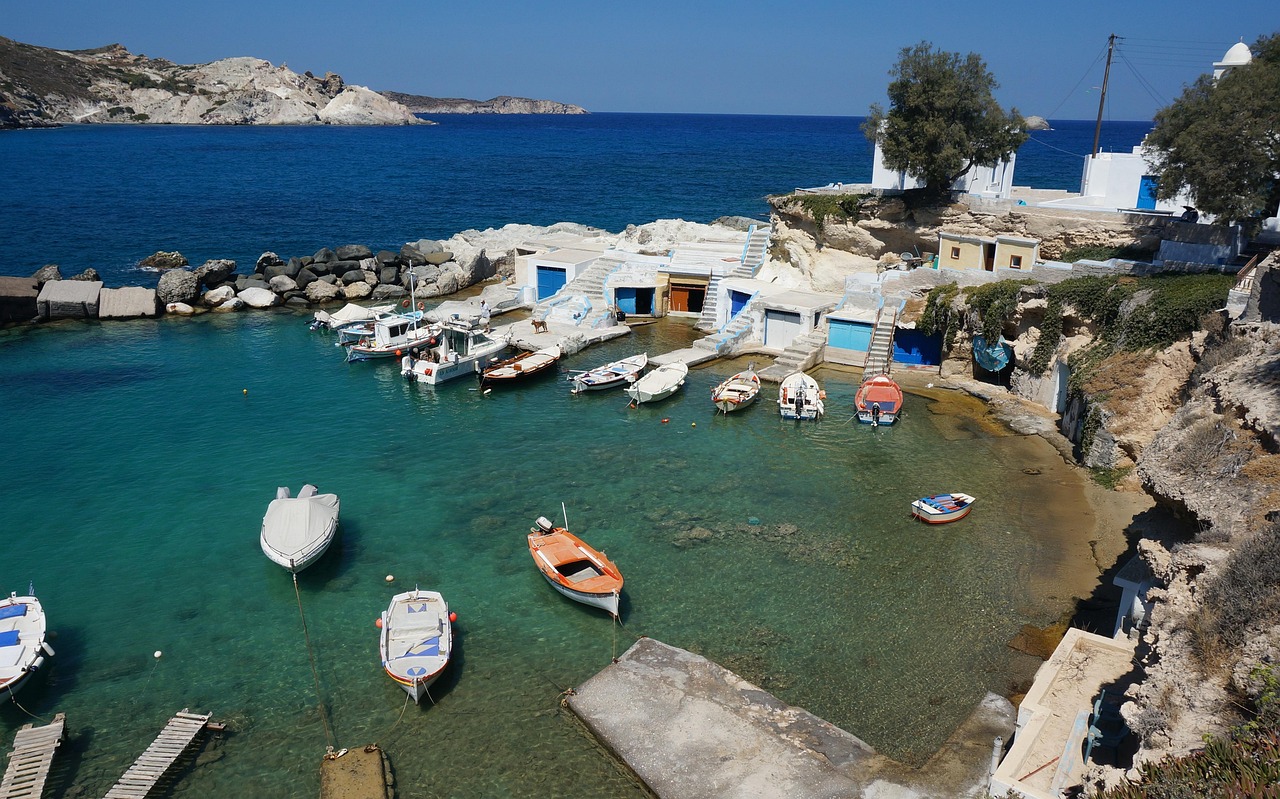
Mandrakia is one of the loveliest little harbors on Milos: a cluster of syrmata hugging a turquoise pool, boats bobbing in front, and one of the island’s best-known fish tavernas overlooking it all.
I often stop here for a long, late lunch after a morning at Sarakiniko – the two pair perfectly for a north-coast day.
Why come:
- Have lunch with your toes almost in the water.
- Stroll along the tiny harbor, watching fishermen mend nets.
- Swim off the rocks in the small cove to the side.
18. Plathiena Beach – Quiet North-Coast Escape
Plathiena is a pretty, crescent-shaped beach on the north side of the bay, not far from Plaka but far enough to feel away from everything. It’s sandy, with clear water and a more relaxed vibe than some of the south-coast stars.
This is where I often go when I want a simple swim after a day exploring Plaka and Tripiti – especially in the late afternoon, when the light softens and families start packing up.
Good for: Couples and families who want an easy, not-too-crowded beach with basic facilities (in season) and gorgeous water.
19. Gerakas – Boat-Only Sand Slope
Gerakas is a boat-access-only beach on the south coast, where a sloping sand dune slides into clear water, backed by white and orange cliffs. Many round-of-Milos cruises stop here for a swim.
Floating off Gerakas, looking back at that sand slope, you get a sense of how varied Milos’ geology is – and how lucky you are to see these spots that are still inaccessible by road.
20. Kimolos (Day Trip) – Quiet Sister Island
Kimolos is Milos’ quiet little sister – a smaller, sleepier island just a short ferry hop from Pollonia. It’s technically a separate destination, but so easy to visit that it deserves a place among the best places to visit near Milos.
I like to take the early morning local ferry over, wander the whitewashed lanes of Chorio (the main village), have a long lunch in Psathi harbor, and swim at one of the nearby beaches before heading back to Milos at sunset.
How to visit:
- Frequent local car ferries run between Pollonia (Milos) and Psathi (Kimolos); the crossing takes about 25 minutes.
- You can go as a foot passenger or bring a rented car/scooter (check rental company rules).
3–7 Day Itineraries for Milos (With Personal Stories)
Whether you have a 3 day itinerary for Milos or a full 7 days in Milos, you can experience the island deeply with a little planning. Below are suggested routes based on trips I’ve actually taken, adjusted for 2026 bus schedules and boat options.
3 Day Itinerary for Milos – “Highlights & Harbors”
If you only have 3 days in Milos, focus on the essentials: Sarakiniko, Kleftiko, and the Plaka–Klima–catacombs triangle, with a taste of south-coast beaches.
Day 1: Arrival, Sarakiniko & Sunset in Plaka
Assuming you arrive by morning or midday ferry/flight, drop your bags in Adamas or Pollonia, grab a quick lunch (gyros or a simple grilled fish), and head straight to the north coast.
I like to start in Sarakiniko in the mid-afternoon, once the midday glare softens. Spend a few hours wandering the lunar landscape, swimming in the small inlet, and, if you’re brave, trying some low cliff jumps where locals do. Keep your sandals on until you reach your final swimming spot – the rock can burn your feet by 15:00 in high summer.
In the late afternoon, drive up to Plaka. Park just outside the village and wander in, stopping for a Greek coffee or fresh orange juice in the main square. As sunset approaches, walk up to Panagia Thalassitra and then to the castle ruins. Watching the sun set from here on my first trip to Milos changed the way I think about Cycladic light – it’s softer, more golden than Santorini’s laser-bright sunsets.
End the evening with dinner in Plaka – maybe grilled octopus, revithada (slow-cooked chickpeas), and a carafe of local white wine. If you’re staying in Adamas, finish with a gentle downhill drive under a sky full of stars.
Day 2: Boat Trip to Kleftiko & the Wild West
Dedicate your second day to the water – this is the heart of any 3 day itinerary for Milos. Most Kleftiko trips depart from Adamas between 9:00 and 10:00. I recommend choosing a small-group boat with a maximum of 10–15 passengers; the experience feels far more personal and you can slip into smaller coves.
As you round the west coast, you’ll see cliffs and caves that are impossible to reach by land. The first time I did the full round-of-Milos cruise, I spent the entire day alternating between the bow and the water, watching the island unfold like a living geology lesson.
Typical stops: Kleftiko (swim + cave exploration), Gerakas or similar south-coast cove, and sometimes Sykia (depending on sea conditions and tour choice). Lunch is usually served on board – fresh salads, grilled meat or fish, and plenty of fruit.
Back in Adamas around 17:00–18:00, rinse off the salt and stroll the waterfront. Have an easy dinner at a harbor taverna; the fried calamari here tastes especially good after a day at sea.
Day 3: Catacombs, Klima & South-Coast Beach Time
On your final day, combine a bit of culture with lazy beach time. Start in the cooler morning hours at the catacombs and ancient theater above Klima. The guided catacomb tour will give you context, and the theater view is one I never skip, no matter how many times I’ve been.
Afterward, drive down to Klima for a short wander among the colorful syrmata, then head toward the south coast. Choose between Firiplaka (more dramatic) and Provatas (more gentle). For a short visit, Firiplaka wins in my book.
Spend the afternoon swimming, snacking at the beach bar, and doing absolutely nothing. Around 17:00–18:00, head back to your base, shower, and go out for a farewell dinner – perhaps in Pollonia if you haven’t visited yet. Think of it as planting a seed for a longer return trip.
4 Day Itinerary for Milos – “Beaches, Villages & a Taste of Kimolos”
With 4 days in Milos, you can slow down slightly and add either more beach time or a half-day trip to Kimolos.
Day 1–2: Follow the 3-Day Plan
Use the same structure as above for your first two days: north coast + Plaka, then a full boat day to Kleftiko.
Day 3: East Coast & Kimolos (Optional)
On my last 4-day trip, I devoted a day to Milos’ quieter east and its neighbor, Kimolos. From Pollonia, take the morning local ferry to Psathi (Kimolos). Wander Chorio’s narrow streets, visit the castle ruins, then swim at Prassa or another nearby beach. Have lunch at a waterfront taverna – the grilled fish here is as fresh as it gets.
Return to Milos in the late afternoon and have a simple dinner in Pollonia, watching kids play along the shore while the sky turns peach.
Day 4: South-Coast Double – Tsigrado & Firiplaka
Dedicate your last day to the south coast. Arrive early at Tsigrado to tackle the descent before it gets too busy, enjoy the small cove, then climb back up and drive to Firiplaka for lunch and a long, lazy afternoon.
This combination gives you both adventure and relaxation – a perfect way to cap a 4 day itinerary for Milos.
5 Day Itinerary for Milos – “Deep Dive into Coves & Culture”
With 5 days in Milos, you can start living like a local: repeating your favorite spots, eating at the same taverna twice, recognizing faces in the bakery.
Days 1–3: Core Highlights
Follow the 3-day plan for your first three days.
Day 4: North Coast Hidden Gems – Mandrakia, Firopotamos & Plathiena
On my favorite 5-day trip, I devoted one full day just to north-coast villages and coves. Start at Mandrakia for a late breakfast by the harbor, then move to Firopotamos for a swim. In the mid-afternoon, when the light softens, head to Plathiena for a quieter, longer beach session and a peaceful sunset.
This day is ideal for couples and families who want a mellow, low-driving day with plenty of swims and good food.
Day 5: Paliochori & Thiorichia (Sulfur Mines) Adventure
Spend your final full day exploring the southeastern side. Start with a few hours at Paliochori, enjoying the warm waters and colorful cliffs. Have an early lunch there, then, if you’re comfortable with dirt roads and have appropriate insurance, drive out toward Thiorichia in the late afternoon.
Arriving at the sulfur mines as the sun lowers makes the ruins glow. This is one of the most atmospheric, slightly eerie places on Milos – and a fitting, contemplative note for the end of a longer stay.
6 Day Itinerary for Milos – “Live Like a Local”
A 6 day itinerary for Milos lets you settle into a real rhythm: repeat your favorite beaches, sleep in, linger over coffee, and maybe even skip an activity just because the sea is too calm and the sun too warm.
Days 1–4: Follow the 4-Day Plan
Use the earlier suggestions as your backbone.
Day 5: Achivadolimni & Bay Day
Dedicate a day to the inner bay: Achivadolimni for long, easy swims and maybe a stroll to the small church of Agios Ioannis nearby. If you like camping vibes, grab a drink or snack at the campsite café and watch the kitesurfers.
In the evening, head back to Adamas, wander the harbor, and catch a low-key bar for a nightcap.
Day 6: Flex Day – Return to Your Favorites
I always plan one “flex day” on a 6-day trip: a day with no fixed schedule. Use it to return to Sarakiniko at sunrise for photos, spend more time in Pollonia, or book a second, different-style boat trip (for example, a fishing excursion or a south-coast-only cruise).
This is the day where Milos stops feeling like a vacation checklist and starts feeling like your temporary home.
7 Day Itinerary for Milos – “One Glorious Week in the Cyclades”
A full 7 days in Milos is my idea of island happiness. You can do everything above, plus truly slow down.
Days 1–5: Highlights, Boat Day & Coves
Follow the 5-day plan as your base.
Day 6: Second Island – Full Day on Kimolos or Extra Boat Trip
If you only dipped into Kimolos earlier, use this day for a full exploration: rent a small car or ATV on Kimolos, circle the island, and discover its surprisingly varied beaches. Alternatively, book a specialized snorkeling or diving trip around Milos – there are wreck dives and rich underwater landscapes for certified divers.
Day 7: Slow Sunday – Local Food & Culture
Spend your final day like many locals do: late breakfast, a short swim at the nearest beach, then a long Sunday lunch at a favorite taverna – maybe in Mandrakia, Pollonia, or on the road between Plaka and Tripiti.
In the late afternoon, visit any cultural site you’ve missed (museum in Plaka, catacombs if you skipped them), then finish with one last sunset from the castle in Plaka. This is the moment when most people I know start planning their return trip.
Eating & Drinking in Milos – Local Food & Island Flavors
Milos doesn’t shout about its food, but it quietly excels – especially in fresh seafood and simple, home-style dishes. Some of my most vivid memories here are of long dinners where the plates kept coming until we couldn’t move.
Signature Local Dishes
- Pitarakia Milou – Small half-moon cheese pies, usually filled with local goat cheese and mint. I order these almost every time I sit down at a taverna.
- Karpathiotiko or ladenia – A kind of Greek “pizza” with tomato, onion, olive oil, and sometimes capers, baked on a thick crust.
- Fresh fish & seafood – Grilled whole fish, fried calamari, octopus in vinegar, and sometimes lobster pasta – ask the waiter what’s truly fresh that day.
- Revithada (chickpea stew) – Slow-cooked chickpeas with herbs and olive oil, often baked overnight in a clay pot.
- Souvlaki & gyros – Budget-friendly staples, good for quick lunches between beaches.
Where to Eat: Types of Places
- Seafood shacks & harbor tavernas – In Adamas, Pollonia, and Mandrakia, these are perfect for long, lazy meals by the water.
- Beach bars – At Firiplaka, Paliochori, and some other beaches, you’ll find places serving salads, burgers, cocktails, and sometimes music at sunset.
- Village restaurants – In Plaka and Tripiti, tavernas focus more on traditional dishes and grilled meats, often with excellent views.
- Bakeries – Essential for budget travelers: grab cheese pies, spinach pies, and pastries for breakfast or beach picnics.
Money-Saving Food Tips
- Share dishes – Greek portions are generous; ordering a few plates “for the table” is cheaper and more fun.
- Ask for the house wine – It’s usually good and significantly cheaper than bottled.
- Picnic lunches – Stock up at supermarkets or bakeries and eat on the beach to balance restaurant dinners.
Where to Stay in Milos – Best Areas & Styles
Choosing the right base shapes your experience, especially for 3–4 days in Milos when you don’t have time to zigzag.
Adamas – Convenient Hub
Best for: Short stays, non-drivers, those doing multiple boat tours.
- Pros: Close to port, bus hub, supermarkets, most boat departures.
- Cons: Less “storybook” pretty, some traffic and noise near the main road.
Pollonia – Seaside Calm
Best for: Families, foodies, couples, and longer stays.
- Pros: Walk-to beach, great tavernas, relaxed vibe, easy Kimolos ferry.
- Cons: Farther from some south-coast beaches and Adamas port.
Plaka/Tripiti – Sunset & Character
Best for: Couples, photographers, those who don’t mind driving to beaches.
- Pros: Gorgeous sunsets, traditional village atmosphere, near historical sites.
- Cons: Not on the sea; narrow streets, parking can be tricky.
Unique Stays
- Syrmata (boathouses) in Klima/Mandrakia – Feet-in-the-water romance; book early.
- Eco-lodges & farm stays – Scattered inland; good if you want quiet nights and stars.
- Camping at Achivadolimni – Budget-friendly and social, with direct beach access.
Island Evenings & Nightlife in Milos
Milos after dark is more about sunsets, wine, and conversations than clubs – closer to Naxos than to Mykonos in style.
Best Sunset Spots
- Plaka castle & Panagia Thalassitra – Classic, with a panoramic horizon.
- Klima waterfront – Sunset reflecting in the syrmata doors.
- Pollonia waterfront – Softer, more open views to the northeast islands, especially in shoulder seasons.
Nightlife Vibe
- Adamas – A few cocktail bars and cafés that stay open late in July–August; casual, not wild.
- Plaka – Wine bars and tavernas; the lanes feel lively until around midnight in high season.
- Pollonia – Mostly tavernas and a few bars; calm and family-friendly.
Seasonal & Full-Moon Events
In 2026–2027, expect occasional full-moon beach parties on more remote stretches (often near Achivadolimni or south-coast coves), plus cultural festivals in Plaka and Adamas during August – see the events section below for specifics.
Culture, Local Customs & Etiquette in Milos
Greek island culture is warm and welcoming, but a few simple gestures go a long way toward respectful cultural experiences in Milos.
Basic Etiquette
- Greetings: A friendly “Kalimera” (good morning) or “Kalispera” (good evening) when entering shops or tavernas is appreciated.
- Churches: Dress modestly (shoulders and knees covered) when entering; speak quietly and avoid flash photography.
- Time: Life runs on “island time” – meals are slow, service is relaxed. Don’t expect rushed check-turnover like in big cities.
Tipping & Payment
- Tipping 5–10% in restaurants is customary if service is good; rounding up the bill is common at cafés and bars.
- Carry some cash; card acceptance is widespread but small kiosks and rural tavernas may prefer cash.
Environmental Respect
- Don’t carve names into rocks or stack stones at Sarakiniko or other natural sites.
- Take all trash with you from remote beaches; bins are not always available.
- Use reef-safe sunscreen to protect marine life, especially when snorkeling.
Day Trips & Nearby Attractions from Milos
Kimolos
Covered above, but worth repeating: an easy, rewarding day trip. Ferries run frequently from Pollonia; check local schedules for 2026–2027 as frequencies increase in high season.
Boat Trips Around Milos
- Round-of-Milos cruise – Full-day, circles the island, usually including Kleftiko, Gerakas, and several swim stops.
- South-coast cruise – Shorter and calmer, ideal for families or those prone to seasickness.
- Fishing trips – Go out with local fishermen, learn about traditional techniques, and eat your catch on board.
Practical Travel Tips & Logistics for Milos
When to Visit & Weather
Milos doesn’t have hurricanes or monsoons, but it does have the meltemi – strong north winds that blow in July–August.
- Best overall months: Late May–June, September–early October – warm seas, fewer crowds, lower prices.
- High season: July–August – busiest, windiest, hottest. Book well ahead for accommodation and boat tours.
- Spring (April–early May): Great for hiking and photography; sea can still be cool.
How to Get to Milos
- By air: Domestic flights from Athens to Milos (about 40 minutes). In 2026, more daily connections are expected in peak season; book early.
- By ferry: High-speed and conventional ferries from Piraeus (Athens) and other Cyclades (e.g., Santorini, Paros, Naxos). Times vary from ~3 to 7 hours depending on route and vessel.
Getting Around the Island
- Car rental: Best flexibility, especially for short stays (3–4 days). Book in advance for July–August 2026.
- Scooters & ATVs: Fun for short distances; be cautious on gravel roads and in wind. Helmets are required by law.
- Public buses: Connect Adamas with major villages and some beaches; good for budget travelers with time.
- Taxis: Limited in number; pre-book for late-night returns, especially from Plaka.
Driving Licenses & Rules
- EU/EEA licenses are accepted. Many rental agencies require an International Driving Permit (IDP) for non-EU licenses – especially for scooters and ATVs. Check and arrange before you travel.
- Drive slowly on narrow village streets and dirt roads; watch for goats and pedestrians.
SIM Cards, Wi-Fi & Connectivity
- Greek providers (Cosmote, Vodafone, Wind) offer tourist SIMs at airports and in larger towns (Adamas). Cosmote usually has the best coverage on Milos.
- Wi-Fi is common in hotels and cafés, but speeds vary; remote beaches have no signal or spotty coverage.
Money, ATMs & Costs
- Currency is the euro (€). ATMs are available in Adamas and Pollonia; fewer in smaller villages.
- Island prices are higher than mainland Greece – everything is shipped in – but Milos is still generally cheaper than Mykonos or Santorini.
- Money-saving tips: Picnic lunches, share car rentals, choose a couple of splurge meals and keep others simple.
Water Safety & Sea Life
- Currents: Most popular beaches are safe for average swimmers, but be cautious on very windy days, especially on the north coast.
- Jellyfish: Occasionally present, usually small; check local info or ask lifeguards if concerned.
- Reef etiquette: Don’t stand on or break rocks with marine growth; avoid chasing or touching wildlife.
Visas & Entry Requirements
- Milos is part of Greece and the Schengen Area. EU/EEA/Swiss citizens can enter freely with ID cards or passports.
- Many non-EU travelers (e.g., US, UK, Canada, Australia) can enter visa-free for short stays; check current Schengen rules and any upcoming ETIAS requirements for 2026–2027.
- No special arrival tax beyond standard Greek accommodation taxes (often collected by hotels at check-in).
Hidden Tips & Local Advice
- Plan around the wind: On strong north-wind days, head to south-coast beaches. On calmer days, explore the north.
- Book boat trips early in your stay; if weather cancels one, you’ll have other days to reschedule.
- Sun protection: The reflection off white rocks and water intensifies UV. Wear hats, sunglasses, and reapply sunscreen often.
- Respect quiet hours: In villages like Plaka and Pollonia, keep noise down late at night out of respect for residents.
What’s New: 2026–2027 Events & Changes in Milos
As of 2026, Milos continues to grow in popularity, but the island is trying to balance tourism with local life and environment.
- 2026 Milos Cultural Summer: Expanded schedule of concerts, theater performances, and art exhibitions in Plaka, Adamas, and the ancient theater (July–September). Check local posters or the municipality’s website once dates are fixed.
- Maritime & Fishermen’s Festivals: Annual celebrations in Pollonia and Adamas featuring boat blessings, live music, and seafood feasts – usually in late August.
- New hiking trails: The municipality is marking and improving several walking routes between Plaka, Tripiti, Klima, and surrounding chapels for 2026–2027 – great news for walkers wanting non-beach things to do in Milos.
- Improved ferry connections: Expect slightly more frequent summer routes linking Milos with Santorini, Paros, and Naxos, making island-hopping easier.
Summary & Final Recommendations
Milos is the island I recommend most often when someone says they want Greek island magic without the full-on party scene. With sculpted coasts, turquoise coves, and villages that still feel real, it suits honeymooners, families, solo travelers, and groups of friends equally well.
For first-timers, a 4 or 5 day itinerary for Milos hits the sweet spot: enough time for a Kleftiko boat day, Sarakiniko, Plaka sunsets, and at least one unhurried beach day. If you can swing a full 7 day itinerary for Milos, you’ll leave with favorite tavernas, a preferred swimming rock, and the feeling that you’ve actually lived here for a while.
Best seasons:
- Late May–June: Ideal balance of weather, crowds, and prices.
- September–early October: Warm sea, softer light, more space on beaches and boats.
Whichever month and itinerary you choose – 3 days in Milos or 7 days in Milos – treat the island gently, move at its pace, and let the rhythm of sun, sea, and stone guide your days. Milos has a way of making you promise you’ll return. Most of us do.