Why Visit Bern in 2026
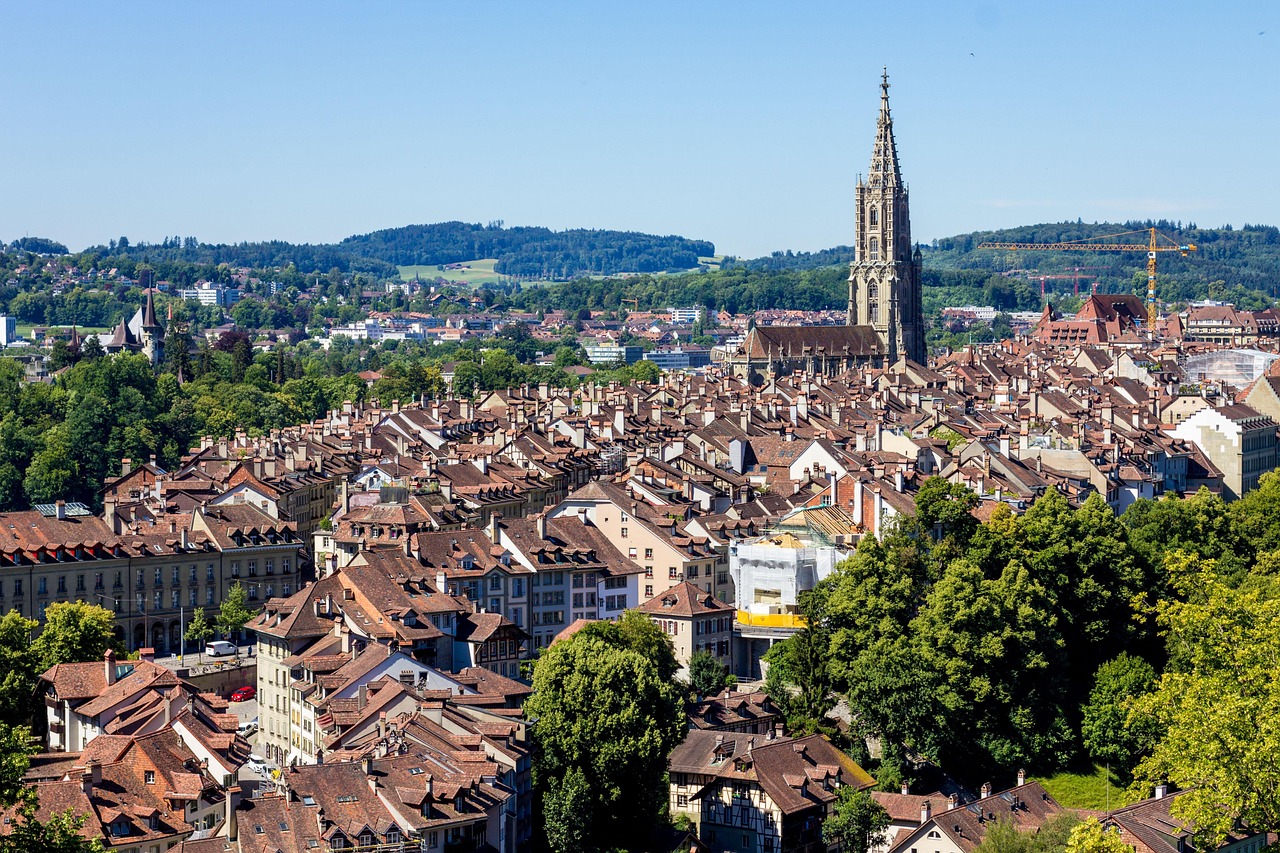
Bern is the kind of city that doesn’t shout; it whispers. At first glance, it’s all terracotta rooftops, arcaded streets, and an emerald river looping like a lazy ribbon around the old town. But stay a few days—3 days in Bern, 4 days in Bern, even 5 days in Bern—and you start to feel its rhythm: slow, precise, quietly joyful.
I’ve been coming to Bern for more than a decade—short work trips that turned into long walks, weekend escapes that stretched into full weeks. Every time I leave, I’m already plotting my next 3 day itinerary for Bern or tinkering with a 5 day itinerary for Bern that will squeeze in just one more riverside café or museum.
In 2026, Bern feels especially alive: new riverside bars along the Aare, evolving food scenes under the old arcades, and a busy calendar of festivals and cultural experiences. Yet the city still holds onto its old-soul charm: the medieval UNESCO-listed Old Town, the chiming Zytglogge clock, and locals sunning themselves on the riverbanks at lunchtime.
If you’re looking for:
- A base for a 3–5 day itinerary in Switzerland that mixes nature, culture, and food without stress
- A city that’s walkable, safe, family-friendly, but also surprisingly romantic
- A slower, more intimate alternative to Zurich, Geneva, or Lucerne
…then Bern is exactly where you want to be.
Table of Contents
- Why Visit Bern in 2026
- Bern at a Glance
- Neighborhoods & Areas to Explore
- 20+ Must-See Attractions in Bern
- Suggested 3–5 Day Itineraries (With Personal Stories)
- Local Food in Bern: What & Where to Eat
- Nightlife, Entertainment & Cultural Experiences
- Best Day Trips from Bern
- Major Events & Festivals in 2026–2027
- Cultural Etiquette & Local Customs
- Practical Travel Advice for Bern
- Summary: Is Bern Worth It & When to Visit?
Bern at a Glance
Bern is the capital of Switzerland, though it often feels more like a peaceful university town than a political center. Its compact size makes it ideal for 3 days in Bern, yet layered enough that I still discover new corners on my 5 day itinerary for Bern.
- Language: Swiss German (Bernese dialect), but High German and English widely understood
- Population: ~145,000 in the city, ~420,000 in the metro area
- Currency: Swiss Franc (CHF)
- Best for: Architecture, riverside swimming, museums, slow travel, families, couples
- Good base for: Jungfrau region, Emmental, Thun, Interlaken, Gruyères
Bern’s Neighborhoods & Districts
To really feel the city—and to build a realistic 3 or 4 day itinerary for Bern—it helps to understand its main areas.
Altstadt (Old Town)
This is the postcard part of Bern: medieval streets lined with 6 km of stone arcades, fountains topped with colorful statues, and those classic red roofs spilling down towards the Aare River. If it’s your first time, most of your “things to do in Bern” will be here.
Matte & Marzili Quarters
Down by the river, the vibe relaxes: wooden houses, small workshops, and the beloved Marzili lido (public pool). On hot days this is the city’s sun deck.
Länggasse & University Area
North of the Old Town, this is café territory—students, bookshops, and leafy streets. Great for cheap eats and a more local feel.
Kirchenfeld & Museum Quarter
Across the Kirchenfeldbrücke, this elegant area hosts several of Bern’s major museums and embassies, plus grand villas with river views.
Breitenrain & Wankdorf
Residential, creative, quietly cool. When I want to escape the tourist path and just sit in a neighborhood café, I come here.
20+ Must-See Attractions in Bern (With Stories, Tips & History)
These are the core of any travel guide for Bern. You don’t need to see them all in 3 days, but they’re the building blocks for any 3, 4, or 5 day itinerary for Bern.
1. Bern Old Town (Altstadt)
The Old Town is where I always start—and where I always end up, even after a decade of visits. It’s a UNESCO World Heritage site, but it still feels lived-in: trams rattling past, locals ducking into arcades to avoid a sudden shower, kids weaving around the fountains on scooters.
History & significance: Founded in the 12th century on a sandstone ridge, Bern’s Old Town grew in long, parallel streets protected by the Aare River. Fires in the 15th century led to the characteristic sandstone buildings you see today. The layout has barely changed for centuries.
My experience: My favorite ritual is a slow early-morning walk from the Bahnhof down Marktgasse, before most shops open. In 2024 I was here in January; snow dusted the rooftops, and the arcades felt like a long, warm corridor sheltering me from the cold. In summer 2025, I did the same walk at 7 am—this time with soft golden light hitting the fountains while delivery trucks and bakers slowly woke the city.
What to do:
- Stroll Marktgasse, Kramgasse, and Gerechtigkeitsgasse under the arcades
- Look up at the Lauben (arcades) and carved window boxes
- Peek into cellar bars and shops below street level
- Photograph the colorful fountains (each has a story)
Best time: Early morning or just before sunset. Midday can be busy with tour groups in high season.
Food tip: For a budget-friendly lunch, grab a takeaway sandwich from a bakery under the arcades and eat it on a bench facing the river near Nydeggbrücke.
2. Zytglogge (Clock Tower)
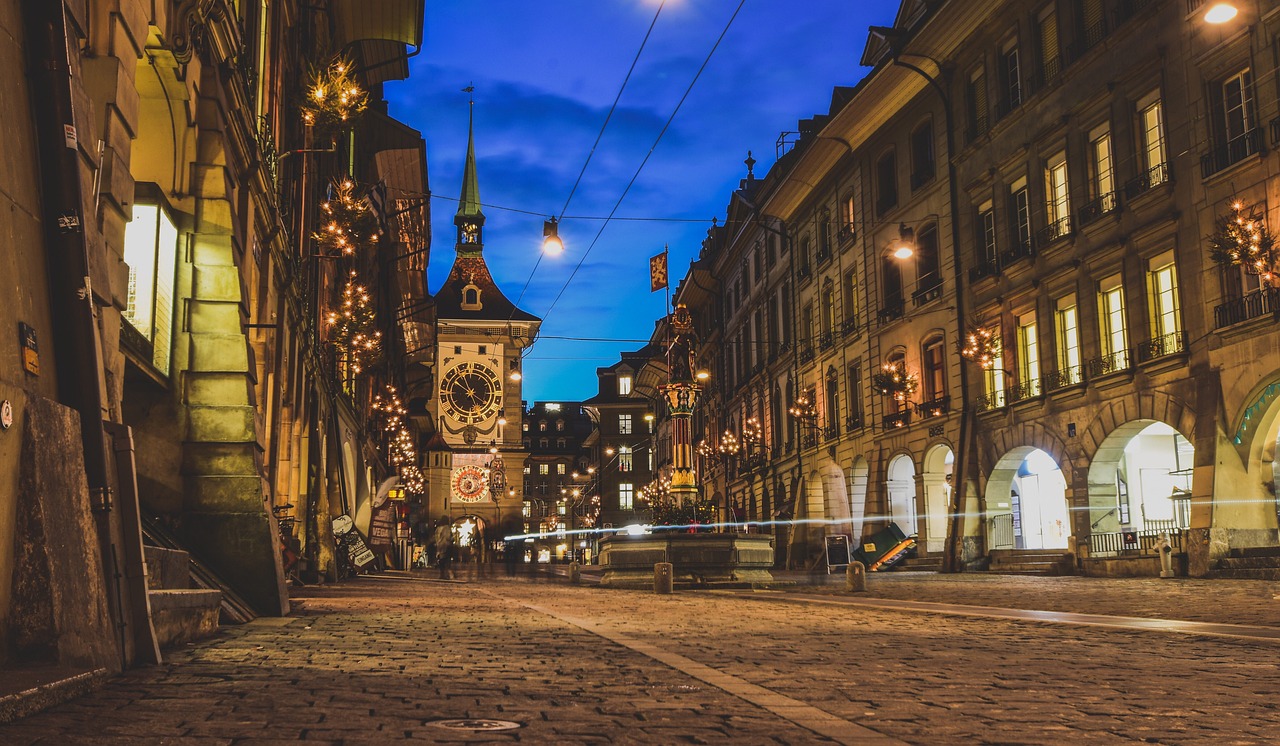
The Zytglogge is Bern’s beating heart—literally, it keeps time for the city—and figuratively, it’s where everyone seems to congregate. I’ve stood in front of it in sleet, in blazing sun, and in a gentle rain, always surrounded by a semi-circle of people waiting for the little show on the hour.
History: Built in the early 13th century as a gate tower, it later became a clock tower. The astronomical clock dates back to the 15th–16th centuries, with dancing bears, a crowing rooster, and a jester that perform every hour.
My experience: The guided interior tour is worth it. On my second visit, I climbed up with a small group, weaving through wooden staircases to see the clock mechanism from behind. Standing behind the clock face, watching the gears turn just before the hour, felt like peeking backstage at a theater.
Tips for visitors:
- Arrive 5–10 minutes before the hour for the full performance.
- Consider the guided Zytglogge tour for history and rooftop views.
- Night-time photos are magical with the tower lit up.
3. Bern Minster (Berner Münster)
The Bern Minster dominates the skyline with its graceful, intricate tower—Switzerland’s tallest church spire. Every time I climb it, I promise myself I’ll count the steps; every time I lose track around the first viewpoint, distracted by the panorama.
History: Construction began in 1421 and continued for centuries. The tower was only completed in the late 19th century. The portal’s Last Judgment sculpture is one of the most impressive in Europe.
My experience: In autumn 2023, I climbed the tower on a crisp, clear day. The reward: a full 360-degree view of the Old Town’s red roofs, the Aare looping around like a moat, and the distant, snowy Alps. I lingered so long that the bell rang right above my head—loud, but unforgettable.
What to do:
- Examine the Last Judgment sculptures at the main entrance.
- Visit the interior (free, donations welcome).
- Pay to climb the tower for the best city view.
- Relax in the Münsterplattform park behind the church.
Tip: Combine a tower visit with a picnic at Münsterplattform—you can pick up cheese, bread, and fruit at the nearby markets for a budget-friendly feast.
4. Aare River & Swimming
If you come to Bern in summer and don’t experience the Aare, you’re missing the soul of the city. The turquoise river encircles the Old Town, and on hot days, locals float along it like it’s the most natural thing in the world—because to them, it is.
My first Aare swim: I resisted it for years, content to watch from the bridges. In July 2022, a Bernese friend finally convinced me. We started in Schwellenmätteli, walked upriver, stashed our clothes in a locker at the Marzili pool, and entered via the designated steps. The current was strong but manageable; for a few minutes I drifted downstream with views of the Old Town above. It was invigorating, slightly terrifying, and completely addictive.
Safety & tips:
- Only swim where it’s clearly allowed and if you’re a confident swimmer.
- Ask locals or lifeguards how to enter/exit safely.
- Use the public pools (Marzili) if you prefer a gentler introduction.
- Water is very cold in spring and early summer; check conditions.
Family-friendly alternative: Play at the shallow edges in Marzili, use the kid pools, or just sit on the grass with an ice cream while watching the swimmers glide by.
5. Bear Park (Bärenpark)
Bern’s symbol is the bear, and the Bear Park is one of the city’s most talked-about attractions. On my early trips I was skeptical—would it feel like a tiny zoo? But the modern Bear Park, sloping down to the river, is thoughtfully designed, and the bears (currently a small family) have plenty of space to roam.
History: Bears have been kept in Bern since at least the 16th century, originally in a much smaller bear pit. That pit still exists but is now preserved as a historical curiosity; the modern Bear Park opened in 2009 and allows the animals to move between grassy slopes and the riverbank.
My experience: I like to come early, when fewer people are around, and watch the bears amble and forage. One misty November morning in 2021, I watched a bear stand up briefly, sniffing the air as the fog lifted off the Aare. It felt oddly poetic.
Tips:
- Free entry; best combined with a walk across Nydeggbrücke and along the river.
- Don’t feed the bears; observe quietly from designated points.
- Good for families; kids love the viewing platforms.
6. Rosengarten (Rose Garden)
If you’ve ever seen a panoramic photo of Bern, it was probably taken from Rosengarten. Perched on a hill above the Bear Park, this park has one of the best city views in Switzerland.
My ritual: I walk up via the path behind the Bear Park (it’s steep but short), usually in the late afternoon. In July 2023, I arrived just as the roses were in full bloom and the light turned honey-gold over the rooftops. I ordered a coffee from the restaurant terrace and watched the city slowly fade into blue as the sun dipped behind the Gurten hill.
Why go:
- Unbeatable photo spot for the Old Town and Aare loop
- Peaceful gardens with labeled rose varieties
- Playground for kids, benches for reading
- Lovely café/restaurant with outdoor seating
Tip: Great for sunset; arrive at least 30–45 minutes before to get a good spot and soak in the changing light.
7. Gurten – Bern’s Local Mountain
Every Swiss city seems to have its “house mountain”; for Bern, that’s Gurten. It’s low by Alpine standards but high enough to give you expansive views of the city and, on clear days, the snow-capped Bernese Alps.
My experience: In September 2022, I took the Gurtenbahn funicular up one chilly morning. I hiked a short loop through the forest, then sat on a bench facing the Alps with a thermos of coffee. The city felt very far away, though it was only a 15-minute tram and 5-minute funicular ride from the center.
Family & couple appeal:
- Playgrounds, a mini train, and wide lawns for kids
- Marked walking trails and viewpoints for couples and photographers
- A restaurant and self-service options at the top
Tip: Check the Gurtenfestival dates if you’re visiting in July—this music festival transforms the mountain into a small city of tents and stages.
8. Federal Palace (Bundeshaus) & Parliament Square
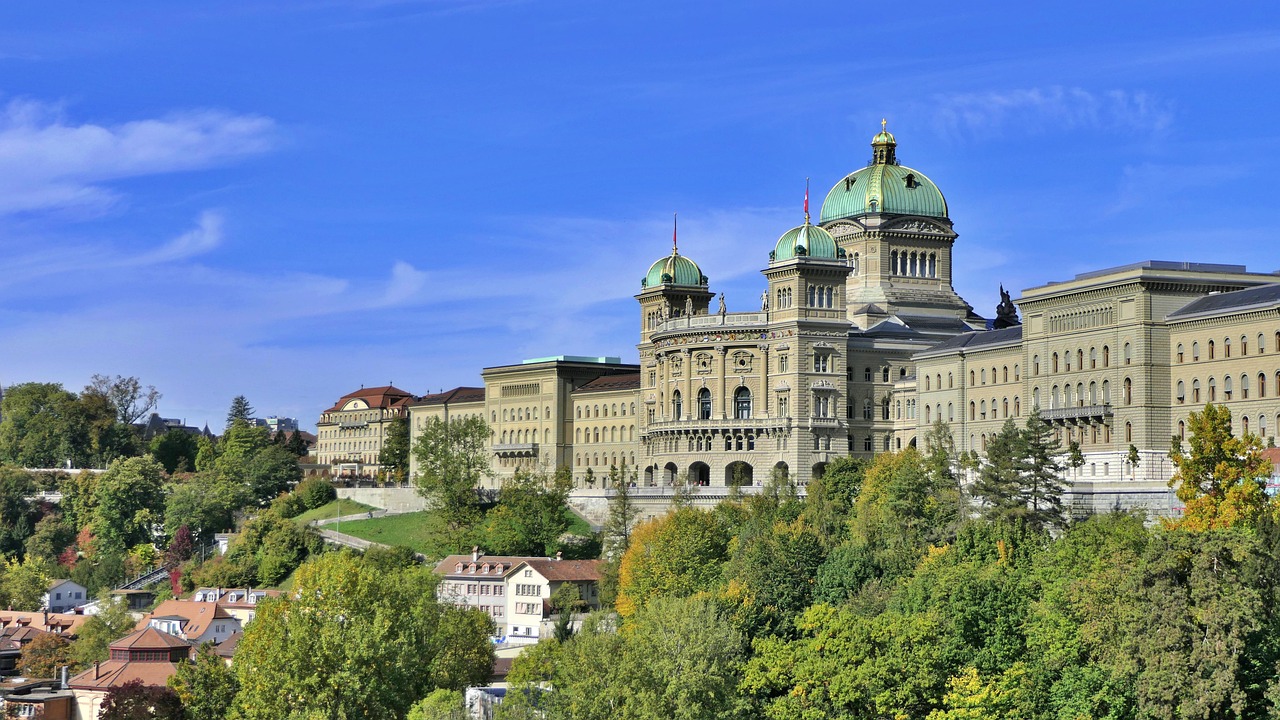
The Federal Palace looks both imposing and approachable—a dignified sandstone building capping the western edge of the Old Town. I like to cut through Parliament Square and then slip around the back to the terrace for a stunning view over the Aare valley.
History: Completed in the early 20th century, the Bundeshaus houses the Swiss Federal Assembly and Federal Council. Its location in Bern reflects Switzerland’s compromise between German-, French-, and Italian-speaking regions.
My experience: One evening in summer 2021, the square filled with children running through the dancing water jets in front of the building while office workers sat with takeaway dinners. In winter, the same square hosted a small Christmas market. It’s a reminder that Bern is a capital that still feels like a village at heart.
Tips:
- Free guided tours of the interior are available (book ahead).
- Don’t miss the back terrace for views and photos.
- Great place to sit with a coffee and people-watch.
9. Einstein House (Einsteinhaus)
In the early 1900s, a young patent clerk named Albert Einstein lived in Bern—and it was here that he developed his theory of special relativity. His former apartment on Kramgasse is now a small museum.
My experience: On a rainy afternoon in March 2020, I ducked into the Einstein House almost on a whim. It’s small, but standing in that modest living room, looking at photos of Einstein at the table where he supposedly worked, gave me goosebumps. The exhibits are compact but thoughtfully curated.
Good to know:
- Can be crowded; better early or late in the day.
- Information panels in multiple languages.
- Plan 30–45 minutes; combine with a walk down Kramgasse.
10. Einstein Museum & Bern Historical Museum
For a deeper dive into Einstein’s life and Bern’s past, head across the Kirchenfeldbrücke to the Bern Historical Museum, which also houses the excellent Einstein Museum.
My experience: I spent a full half-day here in 2022. The Einstein section is immersive, with films, documents, and interactive exhibits; the broader historical collection gives context to Bern’s evolution. It’s one of the city’s best rainy-day activities and a must for anyone interested in science or history.
Tip: The museum is large—prioritize the Einstein section and one or two other areas that catch your interest if you’re tight on time.
11. Zentrum Paul Klee
Just outside the center, three wave-like buildings rise from a grassy field: the Zentrum Paul Klee, dedicated to the Swiss painter Paul Klee, who had close ties to Bern.
My experience: I visited on a calm Tuesday morning in 2021. The architecture alone is worth the tram ride—glass and steel curves that seem to echo the rolling hills outside the city. Inside, the changing exhibitions of Klee’s work are beautifully presented. I’m not usually a huge modern art person, but something about the light, the airy spaces, and Klee’s playful colors felt surprisingly soothing.
Tips:
- Check the temporary exhibition schedule before you go.
- Nice café on site; good for a relaxed lunch or coffee.
- Combine with a walk in the surrounding fields if the weather is nice.
12. Kunstmuseum Bern (Museum of Fine Arts)
For classic and modern art in one place, the Kunstmuseum Bern delivers. It’s not overwhelming like some big-city museums, so it fits nicely into even a 3 day itinerary for Bern.
My experience: I popped in on a snowy afternoon in 2023 after my fingers went numb on the Nydeggbrücke. The permanent collection spans everything from old masters to contemporary works, with an especially strong Swiss section. I ended up losing track of time in front of a series of landscapes that somehow captured the muted, wintery light outside.
Tip: Free or discounted entry days sometimes apply—check their website if you’re trying to save money in Bern.
13. Museum of Communication
This is one of Bern’s most unexpectedly fun museums, especially for families. It explores how humans communicate—from letters and telegraphs to digital media—with lots of interactive exhibits.
My experience: I went with friends and their kids in 2022 and expected to be mildly entertained; I ended up staying longer than the children. We played with old telephones, sent “secret” messages, and watched short films about how technology shapes our conversations.
Family tip: Plan at least 2–3 hours; it’s hands-on enough to keep children (and adults) busy.
14. Tierpark Dählhölzli (Bern Zoo & Animal Park)
Set in a forest along the Aare, this animal park is especially popular with families. There’s a paid zoo section and a large, free-access area with native animals and farm creatures.
My experience: One cool October morning, I walked through the free area with a coffee in hand. Leaves crunched underfoot, and I watched wild boar snuffling around their enclosure as joggers passed on the river path. It felt more like a stroll in the woods than a zoo visit.
Tip: Combine with a riverside walk; ideal if you’re planning 4 days in Bern and want something more relaxed on one of the days.
15. Gurtenfestival (Summer Music Festival)
Every July, the Gurten mountain turns into a music village, with multiple stages, food stands, and thousands of festival-goers. If your 3 or 4 day itinerary for Bern happens to overlap with Gurtenfestival and you like live music, don’t miss it.
My experience: In 2019, I spent one evening at the festival. After a hot day in the city, riding the funicular up into the cooler hillside air felt like stepping into a summer dream—music drifting between trees, views of Bern glowing below, and people dancing barefoot on the grass.
Tip: Book tickets and accommodation early; the city gets busy during the festival.
16. Nydeggbrücke & Untertorbrücke
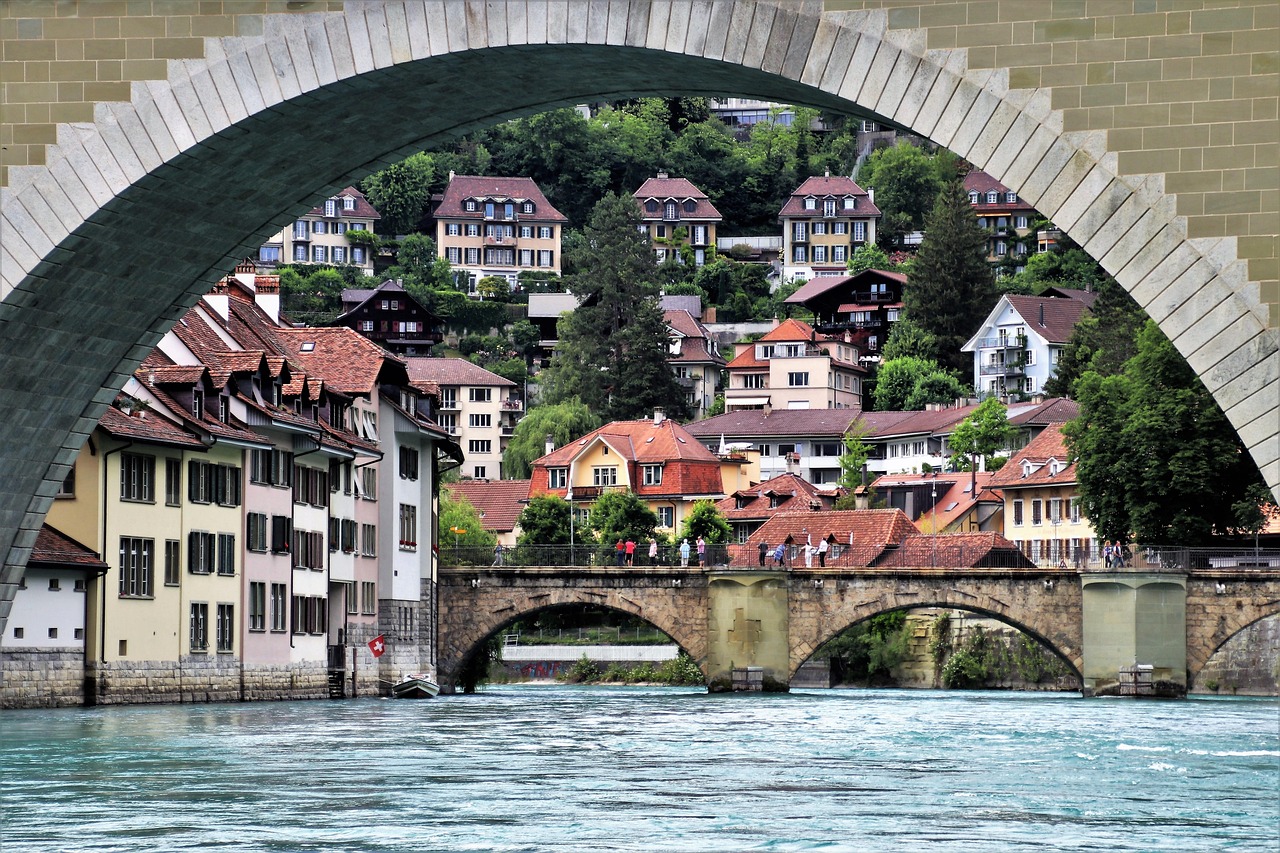
These bridges are not just infrastructure—they’re viewpoints, landmarks, and part of Bern’s personality. Nydeggbrücke connects the Old Town with the Bear Park and Rosengarten, arching gracefully over the Aare.
My experience: I’ve stopped here in every season: in spring, watching the first bold swimmers; in autumn, admiring the trees turning gold along the banks; in winter, seeing frost gather on the railings. At night, the reflections of the Old Town lights in the river make for some of my favorite Bern photos.
Tip: Walk from the city center down to Nydeggbrücke, then continue across to the Bear Park and up to Rosengarten. It’s one of the best short walks in Bern.
17. Marktgasse, Kramgasse & Gerechtigkeitsgasse
These three streets form the spine of the Old Town. Lined with arcades, they house everything from high-street shops to quirky independent boutiques and cellar bars.
My experience: On my last visit in 2025, I spent an entire afternoon doing what I call “arcade drifting”: walking under the Lauben, popping into bookstores, cheese shops, and tiny galleries, then emerging into patches of sunlight at each cross street.
Shopping & food tips:
- Look for local design shops and Swiss-made gifts under the arcades.
- Try a traditional bakery for Züpfe (braided bread) or Nidlechueche (cream tart).
- Don’t miss the cellar-level bars in the evening—they’re cozy and atmospheric.
18. Bern Weekly Markets (Bundesplatz & Bärenplatz)
On market days, Bern’s squares fill with stalls selling fresh produce, flowers, cheeses, cured meats, and street food. This is one of the best places to taste local food in Bern without blowing your budget.
My experience: I love Friday mornings at the market. I wander between the stalls with a paper cup of coffee, sampling cheeses and eyeing plump apricots from Valais. In summer, I often buy picnic supplies here before heading to the river.
Tip: Bring a reusable bag; vendors appreciate it, and you’ll likely end up buying more than planned.
19. Marzili Pool & Riverside Area
Marzili is Bern’s free public pool complex right by the Aare. On summer days it’s packed with locals of all ages: teenagers daring each other to jump in, older couples reading under trees, families picnicking on the lawn.
My experience: I’ve spent entire July afternoons here doing almost nothing: reading, napping, occasionally dipping in the pool or watching the river swimmers. It’s one of the most “local” experiences you can have in Bern for zero francs.
Tip: Arrive earlier on very hot days to claim a good patch of grass. Use the lockers for valuables if you’re going for a swim.
20. Gurtenbahn Funicular & Viewpoints
Technically part of the Gurten experience, the Gurtenbahn itself is worth mentioning. The short ride from Wabern up to the mountain offers a pleasant transition from city to countryside.
My experience: On my last evening ride down in 2022, the cabins glowed warm against the dark trees outside, and the city lights spread out like a carpet below us. It felt like descending from a different world.
Tip: If you’re using a Swiss Travel Pass or some local transport passes, you may get discounts or free rides—check before you pay full fare.
3–5 Day Itineraries for Bern (With Personal Stories)
Use these as flexible frameworks for your own 3 day itinerary for Bern, 4 days in Bern, or even 5 days in Bern. Each day mixes must-see attractions, hidden gems, and local experiences.
Option A: Classic 3 Day Itinerary for Bern
Day 1 – First Impressions & Old Town Icons
This is the day I always recreate for friends visiting Bern for the first time. It’s a gentle loop through the city’s greatest hits without feeling rushed.
Morning: Start at the main station (Bahnhof) and walk straight into the Old Town via Spitalgasse and Marktgasse. Grab a coffee and a light breakfast under the arcades—many bakeries offer takeaway pastries and sandwiches at reasonable prices.
Stroll towards the Zytglogge. Time it so that you’re there 10 minutes before the hour to watch the clock’s mechanical show. I still get a small thrill watching the figures move, even after seeing it dozens of times.
Continue down Kramgasse, pausing at Einstein House if you’re interested in science or history. Take your time; part of the charm is simply walking slowly under the Lauben, looking at shop windows and architectural details.
Lunch: For something casual, head to one of the cafés on Gerechtigkeitsgasse or near Münsterplatz. If you’re on a budget, pick up bread, cheese, and fruit from a supermarket under the arcades and eat at Münsterplattform overlooking the river.
Afternoon: Visit the Bern Minster, then climb the tower if the weather is clear. Spend time in Münsterplattform, watching locals play chess or sit on the benches. Walk down to Nydeggbrücke and cross over to the Bear Park. If you have energy, continue up to Rosengarten for late afternoon views.
Evening: Walk back into the Old Town and choose a cellar restaurant or wine bar for dinner. I often end this day with a quiet drink in one of the vaulted cellar spaces, feeling like I’ve stepped back a few centuries.
Day 2 – Museums, Aare River & Local Life
Morning: Cross the Kirchenfeldbrücke to the museum quarter. Choose between the Bern Historical Museum/Einstein Museum, the Museum of Communication, or the Natural History Museum depending on your interests and whether you’re traveling with kids.
On my last 3 days in Bern with my niece and nephew, we spent the morning in the Museum of Communication. The kids loved the interactive exhibits; I loved watching them forget about their phones in favor of old telegraphs and analog gadgets.
Lunch: There are cafés inside or near the museums, but if it’s sunny, I prefer grabbing a simple takeout meal and heading down to the Aare for a riverside picnic.
Afternoon: Walk along the river towards Marzili. If it’s summer, bring swimwear and experience the pools or just lie on the grass. In cooler months, it’s still a beautiful walk, with the Old Town rising above you.
Evening: Head back into town for dinner. If you’re curious about local food in Bern, try a place that serves Bernese specialties like Berner Platte (a hearty platter of cured meats) or cheese fondue. Finish with a stroll through the illuminated Old Town.
Day 3 – Gurten, Neighborhoods & Markets
Morning: Take tram no. 9 to Wabern and ride the Gurtenbahn up the mountain. Walk one of the short trails, enjoy the playgrounds if you’re with kids, or simply sit at a viewpoint with a coffee.
On a clear morning in 2024, I watched the clouds lift off the Alps from here, revealing peaks I’d only seen in postcards. It felt incredible to be so close to that view on a simple day trip from the city center.
Lunch: Eat at the Gurten restaurant or pack a picnic. Then head back down to Bern.
Afternoon: Explore Länggasse or Breitenrain—wander residential streets, stop at a neighborhood café, and get a taste of everyday Bern. If it’s a market day (Tuesday or Saturday morning is best), weave through the stalls at Bundesplatz and Bärenplatz earlier in the day.
Evening: For your last night, choose between a relaxed bar under the Old Town arcades or catching a performance at one of Bern’s theaters or music venues. If the weather is warm, a simple riverside drink at an outdoor bar feels like the perfect farewell.
Option B: 4 Day Itinerary for Bern – Deeper Dive
If you have 4 days in Bern, you can slow down, add more museums, and include an easy half-day trip.
Day 1 – Old Town & Classics
Follow Day 1 of the 3 day itinerary for Bern (Old Town, Zytglogge, Minster, Bear Park, Rosengarten).
Day 2 – Museums & Aare
Follow Day 2 of the 3 day itinerary, but linger longer in your chosen museum and maybe add a second museum in the afternoon if you’re enthusiastic.
Day 3 – Zentrum Paul Klee & Local Walks
Morning: Take the bus or tram out to Zentrum Paul Klee. Spend a few hours exploring the exhibitions and enjoying the architecture.
Lunch: Eat at the museum café or bring snacks for a simple outdoor lunch if the weather is good.
Afternoon: Walk back towards the city via residential streets, stopping at small parks and viewpoints. Alternatively, explore more of the Kirchenfeld district’s elegant villas and embassies.
Evening: Try a new neighborhood for dinner—perhaps Breitenrain, which has a growing number of small, creative restaurants and bars.
Day 4 – Gurten or Short Day Trip
Use this day for either:
- A relaxed Gurten visit plus more neighborhood exploring; or
- A short day trip to nearby Thun, Emmental, or Murten (see the Day Trips section below for details).
On my own 4 day itinerary for Bern in 2022, I spent the last day in Thun, wandering its lakeside promenade and medieval castle, then returned to Bern in time for a late dinner under the arcades—my favorite combination of small-city and small-town charm.
Option C: 5 Day Itinerary for Bern – Slow & Satisfying
With 5 days in Bern, you can truly live like a local for a little while: repeat favorite spots, discover hidden gems in Bern, and venture further afield.
Day 1–3 – Core Bern Experiences
Follow the 3 day itinerary for Bern for a solid foundation.
Day 4 – Full-Day Trip to the Mountains
Use Bern as a base for a classic Swiss mountain day trip—to Interlaken and Lauterbrunnen, Grindelwald, or Kandersteg. Early train out, hike or cable car during the day, then train back to Bern for dinner.
I’ve done this “mountain sandwich” many times: quiet Bern mornings, spectacular Alpine day, gentle Bern evenings. It’s hard to beat.
Day 5 – Hidden Corners & Favorite Repeats
On your last day, revisit the places that spoke to you the most—maybe another Aare walk, another coffee at Rosengarten, or one more lap under the Old Town arcades.
You can also use this day to explore:
- Less-visited churches and small galleries
- Residential streets in Länggasse or Lorraine
- More time at Marzili if it’s summer
On my most recent 5 day itinerary for Bern, I spent the final morning just sitting on a bench at Münsterplattform, watching the light change on the river. It cost nothing and felt like the perfect farewell.
Local Food in Bern: What & Where to Eat
Swiss food has a reputation for being rich and pricey—but with a few tricks, you can taste the best of Bern without blowing your budget.
Must-Try Dishes & Snacks
- Fondue: Melted cheese with bread cubes. Ideally on a cool evening. I like having it in a cozy Old Town restaurant with stone walls and wooden beams.
- Raclette: Melted cheese scraped over potatoes, pickles, and onions. Often found at winter markets.
- Berner Platte: Traditional Bernese plate of assorted meats and sausages with sauerkraut and potatoes—very hearty.
- Rösti: Swiss-style potato pancake; often served as a side or base for toppings.
- Züpfe: Sunday braided bread—soft, slightly rich, great with butter and jam.
- Nidlechueche: Bernese cream tart; sweet, custardy, and addictive.
- Swiss chocolate: Try local chocolatiers instead of only big brands.
Where I Like to Eat in Bern
(Names kept general to avoid promoting specific businesses too hard, but easy to find on a map or by asking at your hotel.)
- Old Town cellars: For fondue, raclette, and Bernese specialties in vaulted spaces—romantic and cozy.
- Neighborhood cafés in Länggasse & Breitenrain: Great for affordable lunches, coffee, and pastries.
- Market stalls: For quick bites like sausages, sandwiches, and pastries on the go.
- Supermarkets: Excellent for picnic supplies—bread, cheese, fruit, salads. This is how I save money in Bern most days.
Saving Money on Food
Bern is expensive, but you can keep costs reasonable:
- Have one restaurant meal per day, and make the rest picnics or supermarket meals.
- Use lunch specials or set menus when available.
- Refill your water bottle at public fountains; the water is safe and delicious.
- Buy snacks at supermarkets instead of kiosks or cafés.
Nightlife, Entertainment & Cultural Experiences in Bern
Evening Atmosphere
Bern’s nightlife is relaxed rather than wild. Think wine bars in vaulted cellars, riverside terraces in summer, and small music venues rather than giant clubs.
Where to Go at Night
- Old Town cellars: Bars and pubs in historic stone basements—perfect for a drink after dark.
- Riverside bars (summer): Temporary bars along the Aare, especially near Altenberg and Marzili.
- Theaters & concert halls: Check listings for classical concerts, theater, or contemporary performances.
- Student areas: Länggasse has a few casual bars and cafés that stay open later.
Cultural Experiences
- Museum late openings and special events
- Seasonal festivals and markets
- Local choirs and orchestras performing in churches or halls
Best Day Trips from Bern
One of Bern’s strengths is how well-connected it is. For 4 or 5 days in Bern, I always add at least one of these:
Thun & Lake Thun
Travel: About 20–30 minutes by train from Bern.
Why go: Lakeside promenade, medieval castle, mountain views. A perfect relaxed day of strolling, boat rides, and coffee by the water.
Emmental Region
Travel: 30–60 minutes by regional train or bus, depending on destination.
Why go: Rolling hills, traditional farmhouses, and cheese dairies where you can see Emmental cheese being made. Great for families and food lovers.
Murten
Travel: Around 30 minutes by train.
Why go: Small walled town on a lake, with ramparts you can walk and pretty streets to explore.
Interlaken & Lauterbrunnen
Travel: About 1 hour to Interlaken, then further to Lauterbrunnen or Grindelwald.
Why go: Iconic Swiss Alps scenery, waterfalls, cable cars, and hiking. Long but achievable as a day trip from Bern.
Major Events & Festivals in Bern (2026–2027)
Event calendars change, but here are recurring highlights you can expect around 2026–2027 (always confirm exact dates closer to your trip):
- Gurtenfestival (July 2026 & 2027): Multi-day music festival on Gurten, with international and Swiss acts.
- Buskers Bern Street Music Festival (August): Street performers and musicians fill the Old Town—one of my favorite summer events.
- Bern Carnival (Fasnacht, February/March): Costumes, parades, and bands; lively and loud.
- Onion Market (Zibelemärit, late November): A Monday morning festival dedicated to onions, with stalls, decorations, and traditional food. It starts before dawn; I once got up at 5 am just to see locals carrying elaborate onion braids through the streets.
- Christmas Markets (Advent season): Several markets with lights, handicrafts, and seasonal food and drink.
Cultural Etiquette & Local Customs in Bern
General Behavior
- Quiet and considerate: Bernese people value calm and order. Keep your voice down on public transport and in residential areas at night.
- Punctuality: Trains, buses, and people run on time. Arrive a bit early for tours and reservations.
- Greetings: A simple “Grüezi” or “Grüessech” (Swiss German) or “Guten Tag” (High German) is appreciated. In more informal or tourist settings, English is fine.
Dining & Tipping
- It’s polite to say “En Guete” (enjoy your meal) at the table.
- Service is included, but rounding up or leaving about 5–10% for good service is appreciated.
- Don’t be surprised if staff don’t rush you out; you usually have to ask for the bill.
Public Spaces
- Take litter with you or use bins; Switzerland is very clean.
- Respect quiet zones on trains (designated “Ruhezone”).
- Ask before photographing people, especially children.
Aare & Nature Etiquette
- Follow safety signs; the Aare is beautiful but can be dangerous.
- Stay on marked paths in natural areas and parks.
- Don’t feed wildlife or bears at the Bear Park.
Practical Travel Advice for Bern in 2026
Getting Around Bern
- On foot: The Old Town is compact; most must-see attractions in Bern are within walking distance.
- Public transport: Trams and buses are frequent and efficient. If you stay in a Bern hotel, you usually receive a free transport card for your stay.
- Bikes: Bern is increasingly bike-friendly, with lanes and rental options.
Arriving & Leaving
- By train: Bern’s main station is a major hub; connections to Zurich, Geneva, Basel, and the Alps are easy.
- By air: Most visitors arrive via Zurich or Geneva airports, then take a train to Bern (about 1–1.5 hours).
SIM Cards & Connectivity
- Swiss SIM cards are available at major mobile shops and sometimes supermarkets.
- eSIMs with European coverage are an easy option for short stays.
- Free Wi-Fi exists in some public areas and cafés, but don’t rely on it everywhere.
Money & Costs
- Currency is Swiss Franc (CHF); euros sometimes accepted but not guaranteed and often at a poor rate.
- Card payments are widely accepted, even for small amounts.
- Bern is expensive—budget more for food and accommodation than in many European cities.
Accommodation Tips
- Old Town: Most atmospheric, close to everything, but often pricier.
- Near the station: Convenient for trains and trams, good for short stays.
- Residential neighborhoods: Often cheaper and quieter; check Länggasse, Wankdorf, or Breitenrain for apartments and small hotels.
Public Transport vs. Car Rental
- You don’t need a car in Bern; parking is expensive and unnecessary.
- Trains and buses are usually faster and more relaxing than driving, especially into the mountains.
- If you do rent a car, a foreign driver’s license is generally accepted for short stays (check your specific country’s rules); you must obey strict speed limits and parking regulations.
Visa Requirements & Entry
- Switzerland is part of the Schengen Area; many nationalities can enter visa-free for short stays (up to 90 days in 180). Check current rules before travel.
- Make sure your passport is valid for at least 3–6 months beyond your planned departure, depending on your nationality’s requirements.
Best Seasons for Different Activities
- Spring (April–June): Blossoms, milder temperatures, fewer crowds. Great for walking, museums, and early Aare walks.
- Summer (July–August): Aare swimming, outdoor festivals, long days. Best for river life and mountain day trips, but busiest and priciest.
- Autumn (September–October): Golden trees along the Aare, comfortable weather, harvest foods. My personal favorite time for 3–5 days in Bern.
- Winter (November–March): Christmas markets, fondue, nearby ski trips. Bern can be quiet and atmospheric, especially in snow.
Hidden Tips & Small Tricks
- Use fountains as free water refills—carry a bottle.
- Start days early to have major sights like the Zytglogge and Minster almost to yourself.
- Check museum combo tickets or city passes if you plan multiple visits.
- Look for quiet side streets parallel to the main arcades when you need a break from crowds.
- Ask locals—Bernese people may seem reserved, but they’re usually happy to help if you approach politely.
Summary: Is Bern Worth It & When to Visit?
Bern is not a city that overwhelms you on day one; it’s a city that gets under your skin by day three. The longer I stay—whether it’s 3 days in Bern, 4 days in Bern, or a full 5 day itinerary for Bern—the more I appreciate its quiet strengths: walkable streets, layered history, river rituals, and a sense of calm that’s rare in a capital.
Best seasons overall:
- Late spring (May–June): For pleasant temperatures, blooming parks, and fewer tourists.
- Early autumn (September–early October): For golden trees, clear views, and perfect walking weather.
- Summer (July–August): If Aare swimming and festivals are your priority and you don’t mind crowds.
- Winter (December): For Christmas markets, cozy restaurants, and day trips to snowy mountains.
Use this travel guide for Bern as a flexible toolkit: pick a 3 day itinerary for Bern if you’re short on time, stretch it to 4 days in Bern if you want to see more museums and neighborhoods, or enjoy 5 days in Bern if you crave a slower, more local rhythm. However you shape your stay, give yourself enough unscheduled time to simply wander under the arcades, watch the Aare flow by, and let Bern’s understated charm reveal itself.